

Security

Microgrid Technologies
Microgrid technology is an emerging area, and it has numerous advantages over the conventional power grid. A microgrid is defined as Distributed Energy Resources (DER) and interconnected loads with clearly defined electrical boundaries that act as a single controllable entity concerning the grid. Microgrid technology enables the connection and disconnection of the system from the grid. That is, the microgrid can operate both in grid-connected and islanded modes of operation. Microgrid technologies are an important part of the evolving landscape of energy and power systems.Many aspects of microgrids are discussed in this volume, including, in the early chapters of the book, the various types of energy storage systems, power and energy management for microgrids, power electronics interface for AC & DC microgrids, battery management systems for microgrid applications, power system analysis for microgrids, and many others.The middle section of the book presents the power quality problems in microgrid systems and its mitigations, gives an overview of various power quality problems and its solutions, describes the PSO algorithm based UPQC controller for power quality enhancement, describes the power quality enhancement and grid support through a solar energy conversion system, presents the fuzzy logic-based power quality assessments, and covers various power quality indices.The final chapters in the book present the recent advancements in the microgrids, applications of Internet of Things (IoT) for microgrids, the application of artificial intelligent techniques, modeling of green energy smart meter for microgrids, communication networks for microgrids, and other aspects of microgrid technologies.Valuable as a learning tool for beginners in this area as well as a daily reference for engineers and scientists working in the area of microgrids, this is a must-have for any library.C. SHARMEELA, PhD, is an associate professor in the Department of EEE, CEG campus, Anna University, Chennai, India. She has 20 years of teaching experience at both the undergraduate and postgraduate levels and has done a number of research projects and consultancy work in renewable energy, power quality and design of power quality compensators for various industries. She is currently working on future books for the Wiley-Scrivener imprint.P. SIVARAMAN has an M.E. in power systems engineering from Anna University, Chennai and is an assistant engineering manager at a leading engineering firm in India He has more than six years of experience in the field of power system studies and related areas and is an expert in many power systems simulation software programs. He is also currently working on other projects to be published under the Wiley-Scrivener imprint.P. SANJEEVIKUMAR, PhD, is a faculty member with the Department of Energy Technology, Aalborg University, Esbjerg, Denmark. He is a fellow in multiple professional societies and associations and is an editor and contributor for multiple science and technical journals in this field. Like his co-editors, he is also currently working on other projects for Wiley-Scrivener.JENS BO HOLM-NIELSEN currently works at the Department of Energy Technology, Aalborg University and is Head of the Esbjerg Energy Section. Through his research, he helped establish the Center for Bioenergy and Green Engineering in 2009 and serves as the head of the research group. He has vast experience in the field of bio-refineries and biogas production and has served as the technical advisory for many industries in this field.Foreword xxiAcknowledgements xxiii1 A COMPREHENSIVE REVIEW ON ENERGY MANAGEMENT IN MICRO-GRID SYSTEM 1Sanjay Kumar, R. K. Saket, P. Sanjeevikumar and Jens Bo Holm-Nielsen1.1 Introduction 21.2 Generation and Storage System in MicroGrid 61.2.1 Distributed Generation of Electrical Power 61.2.2 Incorporation of Electric Car in Micro-Grid as a Device for Backup 71.2.3 Power and Heat Integration in Management System 81.2.4 Combination of Heat and Electrical Power System 91.3 System of Energy Management 101.3.1 Classification of MSE 101.3.1.1 MSE Based on Conventional Sources 101.3.1.2 MSE Based on SSE 101.3.1.3 MSE Based on DSM 111.3.1.4 MSE Based on Hybrid System 111.3.2 Steps of MSE During Problem Solving 111.3.2.1 Prediction of Uncertain Parameters 121.3.2.2 Uncertainty Modeling 121.3.2.3 Mathematical Formulation 121.3.2.4 Optimization 131.3.3 Micro-Grid in Islanded Mode 131.3.3.1 Objective Functions and Constraints of System 131.3.4 Micro-Grid Operation in Grid-Connected Mode 141.3.4.1 Objective Functions and Constraints of the Systems 141.4 Algorithms Used in Optimizing Energy Management System 161.5 Conclusion 19References 202 POWER AND ENERGY MANAGEMENT IN MICROGRID 25Jayesh J. Joglekar2.1 Introduction 252.2 Microgrid Structure 262.2.1 Selection of Source for DG 272.2.1.1 Phosphoric Acid Fuel Cell (PAFC) 272.2.1.2 Mathematical Modeling of PAFC Fuel Cell 272.3 Power Flow Management in Microgrid 312.4 Generalized Unified Power Flow Controller (GUPFC) 332.4.1 Mathematical Modeling of GUPFC 342.5 Active GUPFC 382.5.1 Active GUPFC Control System 392.5.1.1 Series Converter 402.5.1.2 Shunt Converter 422.5.2 Simulation of Active GUPFC With General Test System 432.5.3 Simulation of Active GUPFC With IEEE 9 Bus Test System 432.5.3.1 Test Case: 1—Without GUPFC and Without Fuel Cell 452.5.3.2 Test Case: 2—Without GUPFC and With Fuel Cell 472.5.3.3 Test Case: 3—With GUPFC and Without Fuel Cell 482.5.3.4 Test Case: 4—With GUPFC and With Fuel Cell 492.5.3.5 Test Case: 5—With Active GUPFC 492.5.4 Summary 522.6 Appendix General Test System 532.6.1 IEEE 9 Bus Test System 53References 553 REVIEW OF ENERGY STORAGE SYSTEM FOR MICROGRID 57G.V. Brahmendra Kumar and K. Palanisamy3.1 Introduction 583.2 Detailed View of ESS 603.2.1 Configuration of ESS 603.2.2 Structure of ESS With Other Devices 603.2.3 ESS Classifications 623.3 Types of ESS 623.3.1 Mechanical ESS 623.3.2 Flywheel ESS 633.3.3 CAES System 643.3.4 PHS System 653.3.5 CES Systems 663.3.6 Hydrogen Energy Storage (HES) 673.3.7 Battery-Based ESS 683.3.8 Electrical Energy Storage (EES) System 713.3.8.1 Capacitors 713.3.8.2 Supercapacitors (SCs) 723.3.9 SMES 733.3.10 Thermal Energy Storage Systems (TESS) 743.3.10.1 SHS 753.3.10.2 Latent 753.3.10.3 Absorption 753.3.10.4 Hybrid ESS 763.4 Comparison of Current ESS on Large Scale 773.5 Importance of Storage in Modern Power Systems 773.5.1 Generation Balance and Fluctuation in Demand 773.5.2 Intermediate Penetration of Renewable Energy 773.5.3 Use of the Grid 803.5.4 Operations on the Market 803.5.5 Flexibility in Scheduling 803.5.6 Peak Shaving Support 803.5.7 Improve the Quality of Power 813.5.8 Carbon Emission Control 813.5.9 Improvement of Service Efficiency 813.5.10 Emergency Assistance and Support for Black Start 813.6 ESS Issues and Challenges 813.6.1 Selection of Materials 823.6.2 ESS Size and Cost 823.6.3 Energy Management System 833.6.4 Impact on the Environment 833.6.5 Issues of Safety 833.7 Conclusion 84Acknowledgment 85References 854 SINGLE PHASE INVERTER FUZZY LOGIC PHASE LOCKED LOOP 91Maxwell Sibanyoni, S.P. Daniel Chowdhury and L.J. Ngoma4.1 Introduction 914.2 PLL Synchronization Techniques 924.2.1 T/4 Transport Delay PLL 954.2.2 Inverse Park Transform PLL 964.2.3 Enhanced PLL 974.2.4 Second Order Generalized Integrator Orthogonal Signal Generator Synchronous Reference Frame (SOGI-OSG SRF) PLL 984.2.5 Cascaded Generalized Integrator PLL (CGI-PLL) 994.2.6 Cascaded Delayed Signal Cancellation PLL 1004.3 Fuzzy Logic Control 1014.4 Fuzzy Logic PLL Model 1034.4.1 Fuzzification 1034.4.2 Inference Engine 1054.4.3 Defuzzification 1084.5 Simulation and Analysis of Results 1104.5.1 Test Signal Generator 1104.5.2 Proposed SOGI FLC PLL Performance Under Fault Conditions 1134.5.2.1 Test Case 1 1134.5.2.2 Test Case 2 1144.5.2.3 Test Case 3 1154.5.2.4 Test Case 4 1154.5.2.5 Test Case 5 1164.5.2.6 Test Case 6 1174.6 Conclusion 118Acknowledgment 118References 1195 POWER ELECTRONICS INTERFACES IN MICROGRID APPLICATIONS 121Indrajit Sarkar5.1 Introduction 1225.2 Microgrid Classification 1225.2.1 AC Microgrid 1225.2.2 DC Microgrids 1245.2.3 Hybrid Microgrid 1265.3 Role of Power Electronics in Microgrid Application 1275.4 Power Converters 1285.4.1 DC/DC Converters 1285.4.2 Non-Isolated DC/DC Converters 1295.4.2.1 Maximum Power Point Tracking (MPPT) 1305.4.3 Isolated DC/DC Converters 1355.4.4 AC to DC Converters 1375.4.5 DC to AC Converters 1395.5 Conclusion 143References 1436 RECONFIGURABLE BATTERY MANAGEMENT SYSTEM FOR MICROGRID APPLICATION 145Saravanan, S., Pandiyan, P., Chinnadurai, T., Ramji, Tiwari., Prabaharan, N., Senthil Kumar, R. and Lenin Pugalhanthi, P.6.1 Introduction 1466.2 Individual Cell Properties 1476.2.1 Modeling of Cell 1476.2.1.1 Second Order Model 1476.2.2 Simplified Non-Linear Model 1486.3 State of Charge 1496.4 State of Health 1506.5 Battery Life 1506.6 Rate Discharge Effect 1516.7 Recovery Effect 1526.8 Conventional Methods and its Issues 1526.8.1 Series Connected 1526.8.2 Parallel Connected 1546.9 Series-Parallel Connections 1546.10 Evolution of Battery Management System 1556.10.1 Necessity for Reconfigurable BMS 1566.10.2 Conventional R-BMS Methods 1566.10.2.1 First Design 1576.10.2.2 Series Topology 1586.10.2.3 Self X Topology 1586.10.2.4 Dependable Efficient Scalable Architecture Method 1596.10.2.5 Genetic Algorithm-Based Method 1606.10.2.6 Graph-Based Technique 1616.10.2.7 Power Tree-Based Technique 1626.11 Modeling of Reconfigurable-BMS 1636.12 Real Time Design Aspects 1646.12.1 Sensing Module Stage 1656.12.2 Control Module Stage 1656.12.2.1 Health Factor of Reconfiguration 1666.12.2.2 Reconfiguration Time Delay and Transient Load Supply 1666.12.3 Actuation Module 1676.12.3.1 Order of Switching 1676.12.3.2 Stress and Faults of Switches 1696.12.3.3 Determining Number of Cells in a Module 1706.13 Opportunities and Challenges 1716.13.1 Modeling and Simulation 1716.13.2 Hardware Design 1716.13.3 Granularity 1716.13.4 Hardware Overhead 1726.13.5 Intelligent Algorithms 1726.13.6 Distributed Reconfigurable Battery Systems 1726.14 Conclusion 173References 1737 LOAD FLOW ANALYSIS FOR MICRO GRID 177P. Sivaraman, Dr. C. Sharmeela and Dr. S. Elango7.1 Introduction 1777.1.1 Islanded Mode of Operation 1787.1.2 Grid Connected Mode of Operation 1787.2 Load Flow Analysis for Micro Grid 1797.3 Example 1797.3.1 Power Source 1807.4 Energy Storage System 1807.5 Connected Loads 1827.6 Reactive Power Compensation 1827.7 Modeling and Simulation 1827.7.1 Case 1 1827.7.2 Case 2 1847.7.3 Case 3 1877.7.4 Case 4 1897.7.5 Case 5 1917.8 Conclusion 193References 1958 AC MICROGRID PROTECTION COORDINATION 197Ali M. Eltamaly, Yehia Sayed Mohamed, Abou-Hashema M. El-Sayed and Amer Nasr A. Elghaffar8.1 Introduction 1978.2 Fault Analysis 2008.2.1 Symmetrical Fault Analysis 2018.2.2 Single Line to Ground Fault 2028.2.3 Line-to-Line Fault 2048.2.4 Double Line-to-Ground Fault 2068.3 Protection Coordination 2088.3.1 Overcurrent Protection 2098.3.2 Directional Overcurrent/Earth Fault Function 2118.3.3 Distance Protection Function 2148.3.4 Distance Acceleration Scheme 2178.3.5 Under/Over Voltage/Frequency Protection 2198.4 Conclusion 221Acknowledgment 224References 2249 A NUMERICAL APPROACH FOR ESTIMATING EMULATED INERTIA WITH DECENTRALIZED FREQUENCY CONTROL OF ENERGY STORAGE UNITS FOR HYBRID RENEWABLE ENERGY MICROGRID SYSTEM 227Shubham Tiwari, Jai Govind Singh and Weerakorn Ongsakul9.1 Introduction 2289.2 Proposed Methodology 2319.2.1 Response in Conventional Grids 2319.2.2 Strategy for Digital Inertia Emulation in Hybrid Renewable Energy Microgrids 2329.2.3 Proposed Mathematical Formulation for Estimation of Digital Inertia Constant for Static Renewable Energy Sources 2359.3 Results and Discussions 2389.3.1 Test System 2389.3.2 Simulation and Study of Case 1 2419.3.2.1 Investigation of Scenario A 2419.3.2.2 Investigation of Scenario B 2439.3.2.3 Discussion for Case 1 2459.3.3 Simulation and Study of Case 2 2469.3.3.1 Investigation of Scenario A 2469.3.3.2 Investigation of Scenario B 2489.3.3.3 Discussion for Case 2 2509.3.4 Simulation and Study for Case 3 2509.3.4.1 Discussion for Case 3 2519.4 Conclusion 252References 25310 POWER QUALITY ISSUES IN MICROGRID AND ITS SOLUTIONS 255R. Zahira, D. Lakshmi and C.N. Ravi10.1 Introduction 25610.1.1 Benefits of Microgrid 25710.1.2 Microgrid Architecture 25710.1.3 Main Components of Microgrid 25810.2 Classification of Microgrids 25810.2.1 Other Classifications 25910.2.2 Based on Function Demand 25910.2.3 By AC/DC Type 25910.3 DC Microgrid 26010.3.1 Purpose of the DC Microgrid System 26010.4 AC Microgrid 26110.5 AC/DC Microgrid 26210.6 Enhancement of Voltage Profile by the Inclusion of RES 26310.6.1 Sample Microgrid 26310.7 Power Quality in Microgrid 26710.8 Power Quality Disturbances 27010.9 International Standards for Power Quality 27010.10 Power Quality Disturbances in Microgrid 27110.10.1 Modeling of Microgrid 27110.11 Shunt Active Power Filter (SAPF) Design 27210.11.1 Reference Current Generation 27410.12 Control Techniques of SAPF 27610.13 SPWM Controller 27710.14 Sliding Mode Controller 27710.15 Fuzzy-PI Controller 27810.16 GWO-PI Controller 27910.17 Metaphysical Description of Optimization Problems With GWO 28110.18 Conclusion 284References 28511 POWER QUALITY IMPROVEMENT IN MICROGRID SYSTEM USING PSO-BASED UPQC CONTROLLER 287T. Eswara Rao, Krishna Mohan Tatikonda, S. Elango and J. Charan Kumar11.1 Introduction 28811.2 Microgrid System 28911.2.1 Wind Energy System 29011.2.1.1 Modeling of Wind Turbine System 29011.2.2 Perturb and Observe MPPT Algorithm 29111.2.3 MPPT Converter 29111.3 Unified Power Quality Conditioner 29311.3.1 UPQC Series Converter 29311.3.2 UPQC Shunt APF Controller 29511.4 Particle Swarm Optimization 29711.4.1 Velocity Function 29711.4.2 Analysis of PSO Technique 29811.5 Simulation and Results 29911.5.1 Case 1: With PI Controller 30011.5.2 Case 2: With PSO Technique 30111.6 Conclusion 304References 30512 POWER QUALITY ENHANCEMENT AND GRID SUPPORT USING SOLAR ENERGY CONVERSION SYSTEM 309CH. S. Balasubrahmanyam, Om Hari Gupta and Vijay K. Sood12.1 Introduction 30912.2 Renewable Energy and its Conversion Into Useful Form 31212.3 Power System Harmonics and Their Cause 31312.4 Power Factor (p.f.) and its Effects 31612.5 Solar Energy System With Power Quality Enhancement (SEPQ) 31712.6 Results and Discussions 32012.6.1 Mode-1 (SEPQ as STATCOM) 32012.6.2 Mode-2 (SEPQ as Shunt APF) 32012.6.3 Mode-3 (SEPQ as D-STATCOM) 32212.7 Conclusion 326References 32713 POWER QUALITY IMPROVEMENT OF A 3-PHASE-3-WIRE GRID-TIED PV-FUEL CELL SYSTEM BY 3-PHASE ACTIVE FILTER EMPLOYING SINUSOIDAL CURRENT CONTROL STRATEGY 329Rudranarayan Senapati, Sthita Prajna Mishra, Rajendra Narayan Senapati and Priyansha Sharma13.1 Introduction 33013.2 Active Power Filter (APF) 33313.2.1 Shunt Active Power Filter (ShPF) 33413.2.1.1 Configuration of ShPF 33413.2.2 Series Active Power Filter (SAF) 33513.2.2.1 Configuration of SAF 33613.3 Sinusoidal Current Control Strategy (SCCS) for APFs 33713.4 Sinusoidal Current Control Strategy for ShPF 34213.5 Sinusoidal Current Control Strategy for SAF 34913.6 Solid Oxide Fuel Cell (SOFC) 35313.6.1 Operation 35413.6.2 Anode 35513.6.3 Electrolyte 35513.6.4 Cathode 35613.6.5 Comparative Analysis of Various Fuel Cells 35613.7 Simulation Analysis 35613.7.1 Shunt Active Power Filter 35813.7.1.1 ShPF for a 3-φ 3-Wire (3P3W) System With Non-Linear Loading 35813.7.1.2 For a PV-Grid System (Constant Irradiance Condition) 36013.7.1.3 For a PV-SOFC Integrated System 36413.7.2 Series Active Power Filter 36613.7.2.1 SAF for a 3-φ 3-Wire (3P3W) System With Non-Linear Load Condition 36613.7.2.2 For a PV-Grid System (Constant Irradiance Condition) 36813.7.2.3 For a PV-SOFC Integrated System 37013.8 Conclusion 373References 37314 APPLICATION OF FUZZY LOGIC IN POWER QUALITY ASSESSMENT OF MODERN POWER SYSTEMS 377V. Vignesh Kumar and C.K. Babulal14.1 Introduction 37814.2 Power Quality Indices 37914.2.1 Total Harmonic Distortion 37914.2.2 Total Demand Distortion 38014.2.3 Power and Power Factor Indices 38014.2.4 Transmission Efficiency Power Factor (TEPF) 38114.2.5 Oscillation Power Factor (OSCPF) 38214.2.6 Displacement Power Factor (DPF) 38314.3 Fuzzy Logic Systems 38314.4 Development of Fuzzy Based Power Quality Evaluation Modules 38414.4.1 Stage I: Fuzzy Logic Based Total Demand Distortion 38514.4.1.1 Performance of FTDDF Under Sinusoidal Situations 38814.4.1.2 Performance of FTDDF Under Nonsinusoidal Situations 38914.4.2 Stage II—Fuzzy Representative Quality Power Factor (FRQPF) 39014.4.2.1 Performance of FRQPF Under Sinusoidal and Nonsinusoidal Situations 39314.4.3 Stage III—Fuzzy Power Quality Index (FPQI) Module 39514.4.3.1 Performance of FPQI Under Sinusoidal and Nonsinusoidal Situations 39714.5 Conclusion 401References 40115 APPLICATIONS OF INTERNET OF THINGS FOR MICROGRID 405Vikram Kulkarni, Sarat Kumar Sahoo and Rejo Mathew15.1 Introduction 40515.2 Internet of Things 40815.2.1 Architecture and Design 40915.2.2 Analysis of Data Science 41015.3 Smart Micro Grid: An IoT Perspective 41015.4 Literature Survey on the IoT for SMG 41115.4.1 Advanced Metering Infrastructure Based on IoT for SMG 41415.4.2 Sub-Systems of AMI 41415.4.3 Every Smart Meter Based on IoT has to Provide the Following Functionalities 41615.4.4 Communication 41715.4.5 Cloud Computing Applications for SMG 41815.5 Cyber Security Challenges for SMG 41915.6 Conclusion 421References 42316 APPLICATION OF ARTIFICIAL INTELLIGENT TECHNIQUES IN MICROGRID 429S. Anbarasi, S. Ramesh, S. Sivakumar and S. Manimaran16.1 Introduction 43016.2 Main Problems Faced in Microgrid 43116.3 Application of AI Techniques in Microgrid 43116.3.1 Power Quality Issues and Control 43216.3.1.1 Preamble of Power Quality Problem 43216.3.1.2 Issues with Control and Operation of MicroGrid Systems 43316.3.1.3 AI Techniques for Improving Power Quality Issues 43416.3.2 Energy Storage System With Economic Power Dispatch 43816.3.2.1 Energy Storage System in Microgrid 43816.3.2.2 Need for Intelligent Approaches in Energy Storage System 44016.3.2.3 Intelligent Methodologies for ESS Integrated in Microgrid 44116.3.3 Energy Management System 44416.3.3.1 Description of Energy Management System 44416.3.3.2 EMS and Distributed Energy Resources 44516.3.3.3 Intelligent Energy Management for a Microgrid 44616.4 Conclusion 448References 44917 MATHEMATICAL MODELING FOR GREEN ENERGY SMART METER FOR MICROGRIDS 451Moloko Joseph Sebake and Meera K. Joseph17.1 Introduction 45117.1.1 Smart Meter 45217.1.2 Green Energy 45317.1.3 Microgrid 45317.1.4 MPPT Solar Charge Controller 45417.2 Related Work 45417.3 Proposed Technical Architecture 45617.3.1 Green Energy Smart Meter Architecture 45617.3.2 Solar Panel 45617.3.3 MPPT Controller 45617.3.4 Battery 45717.3.5 Solid-State Switch 45717.3.6 Electrical Load 45717.3.7 Solar Voltage Sensor 45717.3.8 Batter Voltage Sensor 45817.3.9 Current Sensor 45817.3.10 Microcontroller 45817.3.11 Wi-Fi Module 45817.3.12 GSM/3G/LTE Module 45917.3.13 LCD Display 45917.4 Proposed Mathematical Model 45917.5 Results 462Conclusion 468References 46918 MICROGRID COMMUNICATION 471R. Sandhya and C. Sharmeela18.1 Introduction 47118.2 Reasons for Microgrids 47318.3 Microgrid Control 47418.4 Control Including Communication 47418.5 Control with No Communication 47518.6 Requirements 47818.7 Reliability 47818.8 Microgrid Communication 47918.9 Microgrid Communication Networks 48118.9.1 Wi-Fi 48118.9.2 WiMAX-Based Network 48218.9.3 Wired and Wireless-Based Integrated Network 48218.9.4 Smart Grids 48218.10 Key Aspects of Communication Networks in Smart Grids 48318.11 Customer Premises Network (CPN) 48318.12 Architectures and Technologies Utilized in Communication Networks Within the Transmission Grid 485References 48719 PLACEMENT OF ENERGY EXCHANGE CENTERS AND BIDDING STRATEGIES FOR SMARTGRID ENVIRONMENT 491Balaji, S. and Ayush, T.19.1 Introduction 49119.1.1 Overview 49119.1.2 Energy Exchange Centers 49219.1.3 Energy Markets 49319.2 Local Energy Centers and Optimal Placement 49519.2.1 Problem Formulation (Clustering of Local Energy Market) 49619.2.2 Clustering Algorithm 49619.2.3 Test Cases 49719.2.4 Results and Discussions 49819.2.5 Conclusions for Simulations Based on Modified K Means Clustering for Optimal Location of EEC 50119.3 Local Energy Markets and Bidding Strategies 50319.3.1 Prosumer Centric Retail Electricity Market 50419.3.2 System Modeling 50519.3.2.1 Prosumer Centric Framework 50519.3.2.2 Electricity Prosumers 50519.3.2.3 Modeling of Utility Companies 50719.3.2.4 Modeling of Distribution System Operator (DSO) 50719.3.2.5 Supply Function Equilibrium 50719.3.2.6 Constraints 50819.3.3 Solution Methodology 50919.3.3.1 Game Theory Approach 50919.3.3.2 Relaxation Algorithm 51119.3.3.3 Bi-Level Algorithm 51119.3.3.4 Simulation Results 51219.3.3.5 Nikaido-Isoda Formulation 51319.3.4 Case Study 51319.3.4.1 Plots 51419.3.4.2 Anti-Dumping 51419.3.4.3 Macro-Control 51419.3.4.4 Sensitivity Analysis 514Conclusion 517References 518Index 521
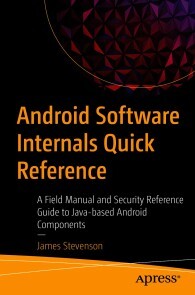
Android Software Internals Quick Reference
Use this handy field guide as a quick reference book and cheat sheet for all of the techniques you use or reference day to day. Covering up to Android 11, this Android Java programming reference guide focuses on non-UI elements with a security focus. You won’t see Android UI development, nor will you see low-level C or kernel techniques. Instead, this book focuses on easily digestible, useful, and interesting techniques in Java and the Android system.This reference guide was created out of the need for myself to jot down all the useful techniques I commonly reached for, and so I’m now sharing these techniques with you, whether you are an Android internals software engineer or security researcher.WHAT YOU WILL LEARN* Discover the differences between and how to access application names, package names, IDs, and unique identifiers in Android* Quickly reference common techniques such as storage, the activity lifecycle, and permissions* Debug using the Android shell* Work with Android's obfuscation and encryption capabilities* Extract and decompile Android applications* Carry out Android reflection and dex class loadingWHO THIS BOOK IS FORProgrammers, developers, and admins with at least prior Android and Java experience.JAMES STEVENSON has been working in the programming and computer security industry for over 4 years, and for most of that has been working as an Android software engineer. Prior to this, James graduated with a BSc in Computer Security in 2017.James has featured articles on both personal websites as well as industry platforms such as InfoSecurity Magazine - covering topics from security principles, android programming and security, and cyber terrorism.At the time of writing James is a full-time security researcher, part-time Ph.D. student, and occasional conference speaker. Outside of Android internals James’ research has also focused on offender profiling and cybercrime detection capabilities. For more information and contact details visit https://JamesStevenson.me.Introduction 1What is this book 1What this book is not 2About the author: 2Special Thanks: 3Contents 4Android Versions 9Fundamentals 13Android Sandbox 13Activities 13Services 14Broadcast Receivers 14Content providers 15Manifest 15Permissions 16Context 16The Activity Lifecycle 184 of 153Android Users 20Application Names, Android Package Name, and ID23Summary 23Java Package Name 24Package ID 25Application ID 26Application Name 30Storage 32Partitions 32External and Internal Storage 36General Files 43Databases 46Shared Preferences 54File Providers 57Assets Folder 60Resources 62Android Unique Identifiers 63Phone Number 63SIM Serial Number 64International Mobile Subscriber Identity (IMSI) 66IMEI and MEID: 67Device Serial Number 68MAC Address 69Android ID (Secure Settings Android ID - SSAID) 705 of 153The Android Shell 71Running commands programmatically 76Obfuscation and Encryption 78Logging 78ProGuard 83Public Key / Certificate Pinning 89AES Encryption 93Applications and Services 95Creating an application without a UI and Launcher95Long-Running Services 101Creating an Android Launcher 129Reflection and Dex Class Loading 136Reflection 136Dex Class Loading 146

Verwaltung von Windows 10 mit Gruppenrichtlinien und Intune
• Der kompakte Leitfaden für die praktische Arbeit mit Gruppenrichtlinien • Eigene Gruppenrichtlinienvorlagen erstellen • Für Profis: AGPM, PowerShell und DSC • Zahlreiche Beispiele aus der administrativen Praxis Die 5. Auflage des Gruppenrichtlinien-Bestsellers wurde für das aktuelle Feature Release von Windows überarbeitet und um Themen wie die Windows-10-Verwaltung über Microsoft Intune und Auditing ergänzt. Das Buch ist Grundlagen-, Praxis- und Nachschlagewerk in einem. Berücksichtigt werden sowohl die Gruppenrichtlinien-Einstellungen in Windows 10 als auch die Windows Server-Versionen 2019, 2016, 2012 und 2008 R2. Gruppenrichtlinien-Know-how für Einsteiger und Profis - Einsteiger führt das Buch von der Basisverwaltung von Gruppenrichtlinien bis hin zur Entwicklung eigener Vorlagen durch alle wichtigen Themen. - Profis finden in diesem Buch Informationen zur Planung von Gruppenrichtlinien, zur Verwaltung (PowerShell und AGMP), zur Erweiterung (per Fremdhersteller-Tools) sowie zur Automatisierung mit PowerShell. Eine Fülle von Beispielen aus der administrativen Praxis zeigt Ihnen, wo Sie welche Einstellungen vornehmen können, wie sich diese auswirken und wie Sie in Ihrer täglichen Arbeit dadurch Zeit sparen können. Zahlreiche Tipps und Hinweise helfen Ihnen bei der Fehlersuche und Problembehebung und warnen Sie vor typischen Fallen.
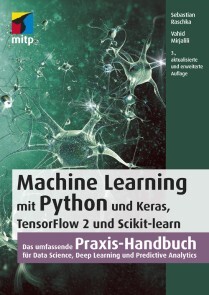
Machine Learning mit Python und Keras, TensorFlow 2 und Scikit-learn
* DATENANALYSE MIT AUSGEREIFTEN STATISTISCHEN MODELLEN DES MACHINE LEARNINGS* ANWENDUNG DER WICHTIGSTEN ALGORITHMEN UND PYTHON-BIBLIOTHEKEN WIE NUMPY, SCIPY, SCIKIT-LEARN, KERAS, TENSORFLOW 2, PANDAS UND MATPLOTLIB* BEST PRACTICES ZUR OPTIMIERUNG IHRER MACHINE-LEARNING-ALGORITHMENMit diesem Buch erhalten Sie eine umfassende Einführung in die Grundlagen und den effektiven Einsatz von Machine-Learning- und Deep-Learning-Algorithmen und wenden diese anhand zahlreicher Beispiele praktisch an. Dafür setzen Sie ein breites Spektrum leistungsfähiger Python-Bibliotheken ein, insbesondere Keras, TensorFlow 2 und Scikit-learn. Auch die für die praktische Anwendung unverzichtbaren mathematischen Konzepte werden verständlich und anhand zahlreicher Diagramme anschaulich erläutert.Die dritte Auflage dieses Buchs wurde für TensorFlow 2 komplett aktualisiert und berücksichtigt die jüngsten Entwicklungen und Technologien, die für Machine Learning, Neuronale Netze und Deep Learning wichtig sind. Dazu zählen insbesondere die neuen Features der Keras-API, das Synthetisieren neuer Daten mit Generative Adversarial Networks (GANs) sowie die Entscheidungsfindung per Reinforcement Learning.Ein sicherer Umgang mit Python wird vorausgesetzt.AUS DEM INHALT:* Trainieren von Lernalgorithmen und Implementierung in Python* Gängige Klassifikationsalgorithmen wie Support Vector Machines (SVM), Entscheidungsbäume und Random Forest* Natural Language Processing zur Klassifizierung von Filmbewertungen* Clusteranalyse zum Auffinden verborgener Muster und Strukturen in Ihren Daten* Deep-Learning-Verfahren für die Bilderkennung* Datenkomprimierung durch Dimensionsreduktion* Training Neuronaler Netze und GANs mit TensorFlow 2* Kombination verschiedener Modelle für das Ensemble Learning* Einbettung von Machine-Learning-Modellen in Webanwendungen* Stimmungsanalyse in Social Networks* Modellierung sequenzieller Daten durch rekurrente Neuronale Netze* Reinforcement Learning und Implementierung von Q-Learning-Algorithmen
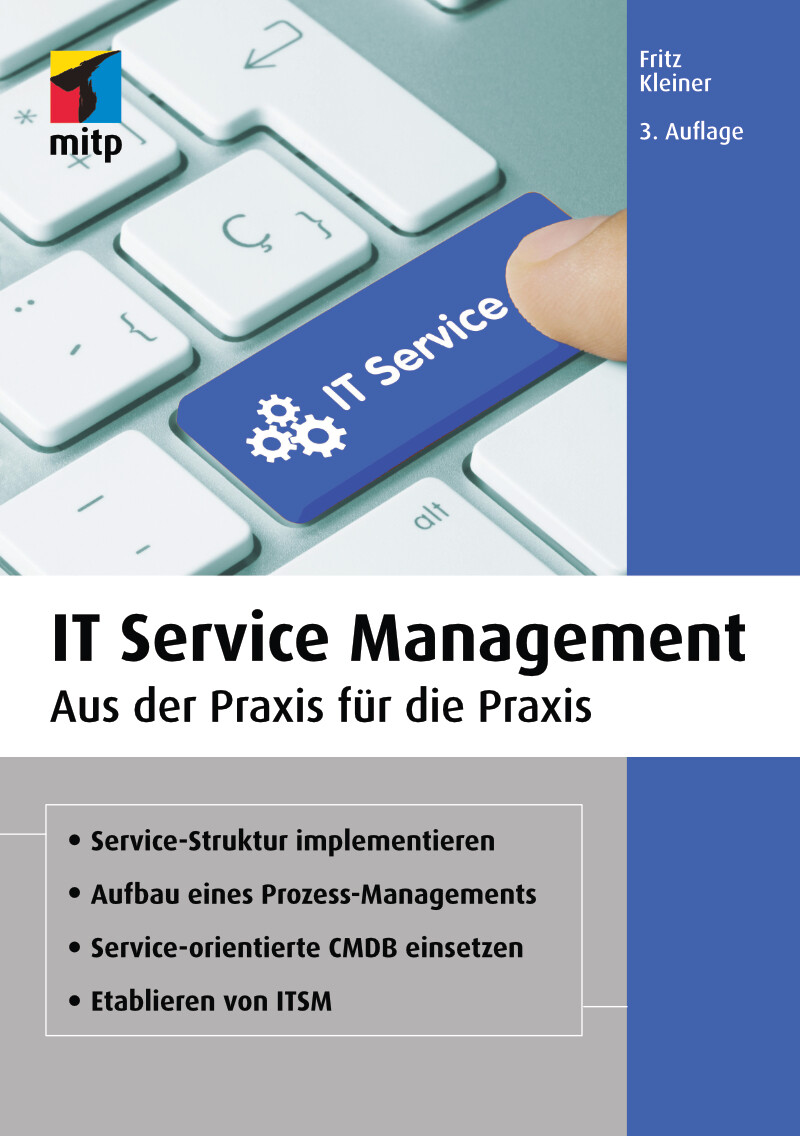
IT Service Management (3. Auflg.)
Aus der Praxis für die Praxis. In 3. Auflage 03/2021.Ein erfolgreich eingeführtes und gelebtes IT Service Management ist für ein Unternehmen ein essenzieller Faktor. Eine schlechte Service-Verfügbarkeit, große Ausfälle wichtiger Informatik-Komponenten oder -Services sowie generell eine zu teure IT können den Unternehmenserfolg massiv beeinträchtigen. Meistens werden in solchen Fällen teure IT-Berater eingekauft, die dem Unternehmen helfen, das IT Service Management inklusive der IT-Kosten zu optimieren.Fritz Kleiner zeigt in dieser aktualisierten Neuauflage basierend auf seinem Erfahrungsschatz als Managing Senior Consultant und Principal, wie Sie IT Service Management ganzheitlich in einem Unternehmen einführen und betreiben können. Anhand vieler Praxisbeispiele erfahren Sie, wie Sie IT-Dienstleistungen standardisieren, IT Service Management in der Führungsebene verankern oder Business IT Services bilden. Besondere Schwerpunkte sind dabei u.a. das Etablieren der Prozesse des IT Service Managements wie Request Fulfillment, Availability Management oder Business Relationship Management.Mit diesem Handbuch verstehen Sie das IT Service Management-Konzept von Grund auf und werden es weitgehend erfolgreich selbstständig im Unternehmen etablieren können.Aus dem Inhalt:Fundierter Überblick über IT Service ManagementEinführung eines IT Service ManagementsEine Prozess-Management-Struktur entwickelnTools und Hilfsmittel einsetzenStandardisierung der IT-DienstleistungenBusiness IT Services und IT Services aufbauenRequest FulfillmentIT Service Management in der FührungsebeneChange ManagementIncident ManagementAvailability ManagementRisk ManagementBusiness Relationship ManagementTransition Planning und SupportDeployment ManagementContinual ImprovementInhalt & Leseprobe (PDF-Link)

Heimautomation mit Arduino, ESP8266 und Raspberry Pi
Das eigene Heim als Smart Home für Heimwerker, Bastler und Maker.Mit diesem umfassenden Praxis-Handbuch erfahren Sie, wie Sie Ihr Heim selbst automatisieren können.Anhand zahlreicher Beispiele lernen Sie Schritt für Schritt die Umsetzung verschiedener Projekte wie z.B. 433-MHz-Sender und -Empfänger, IoT-Gateway mit 433 MHz, drahtlose Infrarot-Fernsteuerung für den Fernseher, Wettermodul, drahtlose Klingel, Strom- und Briefkastenwächter und Aquarium-Timer.Der Autor zeigt Ihnen die praktischen Einsatzmöglichkeiten verschiedener Sensoren und Aktoren im Smart Home wie Licht-, Umwelt- und Barometersensor. Dabei werden zum einen selbst gebaute einfache Elektronik-Module mit Arduino, ESP8266 und Wemos-Modulen realisiert und über eine Schaltzentrale mit Raspberry Pi gesteuert. Zum anderen werden fertige Module wie Bewegungsmelder, Kontakte oder Rauchmelder über einfache Gateways ins System integriert. Dabei wird für die Zentrale Node-Red verwendet, um die Daten und Zustände zu verarbeiten und zu visualisieren.Jedes einzelne Projekt wird mit Stückliste und Steckbrett-Aufbau ausführlich dargestellt und beschrieben.Dieses Buch richtet sich an Bastler und Maker, die bereits etwas Erfahrung mit Arduino und Raspberry Pi gesammelt haben und nun praktische Anwendungen in ihrem Heim aufbauen möchten.Inhalte & Projekte:IoT-Hardware mit Arduino, ESP8266 und Raspberry PiArduino IDE und Node-RedDie Protokolle HTTP und MQTTArduino als SensormodulSchaltmodule mit Tasmota-FirmwareNode-Red als SchaltzentraleWettermodul mit Licht-, Umwelt- und Barometersensor433-MHz-Sender und -EmpfängerIoT-Gateway mit 433 MHzESP8266 als RF-GatewayNode-Red-Schaltzentrale mit Arduino-InterfaceDrahtlose Infrarot-Fernsteuerung für den FernseherDrahtlose KlingelAnalog-Wandler-ModulHomeautomation-PlattformenBriefkastenwächterStromwächterAquarium-TimerLeuchtstreifensteuerungInhalt & Leseprobe (PDF-Link)

Integrierte Werteflüsse mit SAP S/4HANA
Mit diesem Buch optimieren Sie den Wertefluss von der Beschaffung über die Produktion bis hin zum Vertrieb. Andrea Hölzlwimmer weiß genau, wo Probleme in der Integration zwischen MM, PP, SD und FI/CO auftreten, und hilft Ihnen, Ihre Prozesse perfekt aufeinander abzustimmen. Viele Beispiele und Tipps aus der Praxis unterstützen Sie dabei, Optimierungspotenziale zu nutzen und die Kosten zu senken. Profitieren Sie von der Erfahrung, die die Autorin in zahlreichen Optimierungsprojekten gesammelt hat. Praktische Beispiele und eine verständliche Sprache machen es Ihnen leicht, die Abläufe in Ihrem Unternehmen zu verbessern. Diese 4. Auflage ist aktuell zu SAP S/4HANA und behandelt alle wichtigen Neuerungen: Material Ledger, CO-PA u.v.m. Aus dem Inhalt: KreditorenstammRechnungsprüfungPreiskalkulationWarenausgangBesteuerungPlankalkulationPeriodenabschlussErgebnisrechnungMaterial LedgerWerteflüsse zusammenführen Einleitung ... 13 1. Konzept der integrierten Werteflüsse ... 21 1.1 ... Der Begriff »integrierter Wertefluss« ... 21 1.2 ... Definition von Unternehmensprozessen ... 26 1.3 ... Wechselwirkung von Prozessgestaltung und Controllingphilosophie ... 27 1.4 ... Zusammenfassung ... 29 2. Grundlagen der Integration im SAP-System ... 31 2.1 ... Aufbau von SAP-S/4HANA-Systemen ... 32 2.2 ... Entitätenmodell ... 35 2.3 ... Anforderungen der parallelen Rechnungslegung ... 46 2.4 ... Werteflussorientiertes Stammdatenkonzept ... 51 2.5 ... Geschäftspartner ... 67 2.6 ... Zusammenfassung ... 80 3. Beschaffungsprozess ... 83 3.1 ... Beschaffungsprozess und Belegfluss ... 84 3.2 ... Bestellung als Basis des Beschaffungsprozesses ... 86 3.3 ... Fortschreibung von Obligos ... 95 3.4 ... Integration von MM und FI/CO ... 101 3.5 ... Wareneingang ... 128 3.6 ... Rechnungsprüfung ... 130 3.7 ... WE/RE-Konto ... 144 3.8 ... Einkaufskontenabwicklung ... 152 3.9 ... Integration der Kreditorenbuchhaltung ... 153 3.10 ... Darstellung der Umsatzsteuer ... 168 3.11 ... Einbehalt von Quellensteuer ... 172 3.12 ... Zusammenfassung ... 176 4. Vertriebsprozess ... 179 4.1 ... Vertriebsprozess und Belegfluss ... 180 4.2 ... Kundenauftrag als Basis der weiteren Kontierung ... 182 4.3 ... Preiskalkulation als Basis der Wertermittlung ... 189 4.4 ... Warenausgang ... 199 4.5 ... Besteuerung von Verkäufen ... 203 4.6 ... Darstellung von Forderungen ... 216 4.7 ... Abbildung von Umsatzerlösen ... 232 4.8 ... Zusammenfassung ... 255 5. Produktionsprozess ... 257 5.1 ... Produktionsprozess und Belegfluss ... 259 5.2 ... Relevante Stammdaten ... 261 5.3 ... Customizing der Kalkulationsvariante ... 274 5.4 ... Produktkostenplanung ... 301 5.5 ... Kostenträgerrechnung ... 320 5.6 ... Projektfertigung ... 376 5.7 ... Unterstützung der Produktkostenrechnung durch das Material-Ledger ... 392 5.8 ... Zusammenfassung ... 402 6. Der Abschlussprozess im SAP-System ... 405 6.1 ... Vorbereitende Tätigkeiten ... 405 6.2 ... Tätigkeiten in der Anlagenbuchhaltung ... 411 6.3 ... Periodensteuerung ... 426 6.4 ... Fremdwährungsbewertung ... 431 6.5 ... Umgliederung von Forderungen und Verbindlichkeiten ... 437 6.6 ... Wertberichtigung auf Forderungen ... 440 6.7 ... Saldovortrag ... 440 6.8 ... Manuelle Buchungen ... 442 6.9 ... Umlagen und Verteilungen ... 443 6.10 ... Abrechnung ... 451 6.11 ... Abstimmung ... 453 6.12 ... Konsolidierungsvorbereitung ... 457 6.13 ... Zusammenfassung ... 469 7. Zusammenführen der Werteflüsse ... 471 7.1 ... Berichtswesen im Finanzwesen ... 472 7.2 ... Berichtswesen im Controlling ... 477 7.3 ... Berichtswesen in der Ergebnisrechnung ... 478 7.4 ... Aufbau der Deckungsbeitragsrechnung ... 493 7.5 ... Zusammenfassung ... 535 8. Beispiele aus der Praxis ... 537 8.1 ... Redesign der Ergebnisrechnung ... 537 8.2 ... SAP-ERP-Optimierung bei einem Energieversorger ... 548 8.3 ... Upgrade von SAP ERP auf SAP S/4HANA ... 557 8.4 ... Zusammenfassung ... 566 Anhang ... 567 A. Beispiel für einen Abschlussplan ... 569 B. Transaktionen und Menüpfade ... 577 C. Die Autorin ... 605 Index ... 607

Produktionsplanung mit SAP S/4HANA in der Prozessindustrie
Effektiv planen in der Prozessindustrie! Mit diesem Buch lernen Sie alle Funktionen von PP-PI in SAP S/4HANA detailliert kennen und erfahren, wie Sie Ihre Prozesse im System abbilden. Viele Beispiele und Tipps aus der Pharma-, Chemie- und Lebensmittelindustrie unterstützen Sie bei der Auftragsabwicklung, dem Reporting sowie der Koordination und Dokumentation Ihrer Prozesse. Auch der Einsatz von SAP Digital Manufacturing Cloud und die Integration mit anderen SAP-Komponenten und Drittanbietersystemen werden ausführlich erklärt. Aus dem Inhalt: StammdatenProzessauftragsabwicklungProzesskoordinationProduktionsprozesse mit PP-PIReportingProzessdatendokumentationIntegration in andere SAP-KomponentenSchnittstellen und Anbindung von FremdsystemenSAP Digital Manufacturing Cloud (DMC)SAP Extended Warehouse Management (EWM)Embedded Production Planning/Detailed Scheduling (ePP/DS) Einleitung ... 15 1. Einführung in die Produktionsplanung und -steuerung in der Prozessindustrie ... 19 1.1 ... Abgrenzung zwischen PP und PP-PI ... 20 1.2 ... Integration von PP-PI in andere SAP S/4HANA-Komponenten ... 29 1.3 ... Integration von PP-PI in andere SAP-Lösungen ... 31 1.4 ... Zusammenfassung ... 32 2. Stammdaten ... 33 2.1 ... Materialien ... 34 2.2 ... Ressourcen ... 39 2.3 ... Integrierte Stammdatenpflege über Fertigungsversionen ... 55 2.4 ... Struktur und Pflege von Planungsrezepten ... 62 2.5 ... Zusammenfassung ... 96 3. Produktionssteuerung über Prozessaufträge ... 97 3.1 ... Struktur eines Prozessauftrags ... 97 3.2 ... Lebenszyklus eines Prozessauftrags ... 101 3.3 ... Erforderliche Customizing-Objekte einrichten ... 104 3.4 ... Eröffnung eines Prozessauftrags ... 115 3.5 ... Prozessplanung und Auftragsfreigabe ... 131 3.6 ... Materialbereitstellung mit MM und WM ... 152 3.7 ... Materialbereitstellung mit EWM ... 166 3.8 ... Rückmeldung von Prozessaufträgen ... 171 3.9 ... Warenbewegungen zum Prozessauftrag ... 194 3.10 ... Auftragspapiere drucken ... 202 3.11 ... Prozessauftragsabschluss und Archivierung ... 212 3.12 ... Zusammenfassung ... 217 4. Erweiterte Funktionen für die Produktionsabwicklung ... 219 4.1 ... Berücksichtigung von Schichten ... 219 4.2 ... Verteilung von Materialdifferenzen aus der Produktion ... 230 4.3 ... Zusammenfassung ... 236 5. Prozesskoordination ... 237 5.1 ... Elemente und Funktionsweise der Prozesskoordination ... 238 5.2 ... Steuerrezepte ... 242 5.3 ... Prozessmeldungen ... 256 5.4 ... Prozessvorgaben ... 278 5.5 ... XSteps ... 289 5.6 ... SAP-Herstellanweisungen ... 320 5.7 ... Zusammenfassung ... 341 6. Produktionsprozesse mit PP-PI ... 343 6.1 ... Zweistufige prozessindustriespezifische Herstellung ... 343 6.2 ... Kuppel- und Nebenprodukte ... 350 6.3 ... Regulierte Produktion ... 355 6.4 ... Zusammenfassung ... 363 7. Reporting ... 365 7.1 ... Prozessauftragsinformationssystem ... 365 7.2 ... Massenbearbeitung ... 378 7.3 ... Weitere Berichte aus dem Produktionsumfeld ... 394 7.4 ... Zusammenfassung ... 402 8. Integration ... 403 8.1 ... Integration mit QM ... 404 8.2 ... Integration mit SAP APO und ePP/DS ... 429 8.3 ... Integration mit SAP MII ... 453 8.4 ... Anbindung von Fremdsystemen mit der PI-PCS-Schnittstelle ... 476 8.5 ... Integration mit der SAP Rezeptentwicklung ... 485 8.6 ... SAP Digital Manufacturing Cloud ... 499 8.7 ... Zusammenfassung ... 514 9. Prozessdatendokumentation ... 517 9.1 ... Auftragsprotokoll ... 517 9.2 ... Elektronisches Chargenprotokoll ... 521 9.3 ... Zusammenfassung ... 527 Anhang ... 529 A ... Transaktionsverzeichnis ... 529 B ... Das Autorenteam ... 541 Index ... 545

Unternehmensplanung mit SAP Analytics Cloud
Nutzen Sie integrierte Daten für eine fundierte Entscheidungsfindung! Mit diesem Buch lernen Sie, die Planungsfunktionen von SAP Analytics Cloud einzusetzen. Sie werden Schritt für Schritt durch die Datenmodellierung und den Umgang mit Storys geführt: Ein durchgängiges, mit Screenshots illustriertes Beispiel veranschaulicht die praktische Arbeit mit SAP Analytics Cloud. Dazu gehören die Berechtigungen genauso wie der von SAP zur Verfügung gestellte vordefinierte Planungs-Content. Sie lernen auch, wie Sie alle an der Planung Beteiligten mit Kollaborationstools ins Boot holen und Machine-Learning-Werkzeuge für eine vorausschauende Planung verwenden. Aus dem Inhalt: DatenmodellierungErstellung einer StoryBerechtigungs- und SperrkonzeptPlanungskalender und KollaborationAnalytics DesignerSAP Analytics Cloud Add-in für Microsoft 365Planungs-Content Einleitung ... 13 1. Planung mit SAP Analytics Cloud ... 19 1.1 ... SAP Analytics Cloud im Überblick ... 20 1.2 ... Integrierte Unternehmensplanung ... 31 1.3 ... Weitere Produkte im Umfeld der Planung ... 35 1.4 ... Beispiel: Umsatzplanung ... 40 1.5 ... Zusammenfassung ... 43 2. Datenmodellierung ... 45 2.1 ... Einführung ... 46 2.2 ... Die Modellierungsumgebung ... 49 2.3 ... Merkmalsbeziehungen ... 74 2.4 ... Datenintegration ... 77 2.5 ... Zusammenfassung ... 90 3. Planungsintegration in die Story ... 93 3.1 ... Die Story als Umgebung zur Plandatenerfassung ... 94 3.2 ... Die Versionsverwaltung ... 101 3.3 ... Das Planungs-Panel ... 108 3.4 ... Mit der Tabelle arbeiten ... 113 3.5 ... Zusammenfassung ... 151 4. Fortgeschrittene Planungsfunktionen ... 153 4.1 ... Werttreiberbäume ... 154 4.2 ... Datenaktionen ... 168 4.3 ... Kopierschritt ... 180 4.4 ... Modellübergreifender Kopierschritt ... 186 4.5 ... Allokation ... 194 4.6 ... Erweiterte Formeln ... 205 4.7 ... Eingebettete Datenaktionsschritte ... 241 4.8 ... Zusammenfassung ... 245 5. Predictive Planning ... 247 5.1 ... Einführung ... 248 5.2 ... Smart Predict ... 249 5.3 ... Zeitreihenanalyse ... 254 5.4 ... Klassifikation ... 265 5.5 ... Regressionsanalyse ... 273 5.6 ... Zusammenfassung ... 279 6. Steuerung von Planungsprozessen ... 281 6.1 ... Berechtigungskonzept ... 282 6.2 ... Datensperren ... 314 6.3 ... Planungskalender ... 321 6.4 ... Kollaboration ... 351 6.5 ... Auditierfunktionen ... 353 6.6 ... Zusammenfassung ... 359 7. Kundenindividuelle Planungsanwendungen ... 361 7.1 ... Analytics Designer ... 362 7.2 ... Benutzerdefinierte Widgets ... 397 7.3 ... SAP Analytics Cloud, Add-in für Microsoft Office ... 407 7.4 ... Zusammenfassung ... 420 8. Vordefinierter Planungs-Content ... 423 8.1 ... Die Business-Content-Bibliothek ... 424 8.2 ... Integrierte Finanzplanung für SAP S/4HANA ... 431 8.3 ... Zusammenfassung ... 457 Anhang ... 459 A ... Glossar ... 459 B ... Der Autor ... 465 Index ... 467

Getting Started with NSX-T: Logical Routing and Switching
This primer on NSX-T helps you understand the capabilities and features of NSX-T, how to configure and manage NSX-T, and integrate NSX-T with other software. The book is the first in a series that will teach you the basics of NSX-T, which is an update of VMware's original software-defined networking (SDN) architecture aimed at making networks agile and flexible.You will become familiar with VMware's software-defined data center (SDDC) ecosystem and how NSX-T fits in. You will understand NSX-T components such as NSX-T Manager, NSX-T Edge Transport Nodes, and NSX-T Host Transport Nodes. And you will learn how to install and configure network services such as East/West and North/South routing capabilities, layer two switching, VRF, EVPN, multicast, and layer two bridging.The book provides best practices on how to configure routing and switching features, and teaches you how to get the required visibility of not only your NSX-T platform but also your NSX-T-enabled network infrastructure.The book explains security, advanced network features, and multi-site capabilities and demonstrates how network and security services can be offered across multiple on-premise locations with a single pane of glass for networking and security policy management. The interface with public cloud services is discussed and the book explains NSX-T operation in an on-premise private cloud and positioning and integrating NSX-T on a public cloud (off premises).WHAT YOU WILL LEARN* Understand how NSX-T fits in the VMware SDDC ecosystem* Know what NSX-T is, its components, and the terminology used* Install NSX-T* Configure NSX-T network services* Manage the NSX-T networkWHO THIS BOOK IS FORVirtualization administrators, system integrators, and network administratorsIWAN HOOGENDOORN started his IT career in 1999 as a help desk agent. He began learning Microsoft products and obtained MCP, MCSA, MCDBA, and MCSE certifications.While working as a Microsoft Systems Engineer, he developed additional skills and knowledge in computer networking with Cisco products. He dreamed of working for Cisco but first needed to finish his bachelor's degree in ICT, which he completed in 2009.In 2010, Iwan began working for his dream company, Cisco. After finishing his master's degree in computer science at the University of Amsterdam and becoming a CCIE (#13084) in six different technology areas, he wanted to learn something new and network virtualization was the next logical step.Iwan decided to learn VMware NSX and got the opportunity to work for VMware in 2016 as a Senior NSX PSO Consultant. In his time at VMware, he gained more knowledge on private and public clouds and the related products that VMware developed to build the Software-Defined Data Center (SDDC).After working for four years as a Senior NSX PSO Consultant (primarily with VMware NSX-v and NSX-T), Iwan was promoted to Staff SDDC Consultant focusing on the full SDDC stack, including Hyperscaler offerings on public clouds such as AWS (VMC on AWS), Microsoft (Azure VMware Solution), and Google (Google Cloud VMware Engine).Iwan is certified on multiple VMware products, including NSX, and is actively working with VMware certification to develop network-related exams for VMware. He is also AWS and TOGAF certified.· CHAPTER 1o Title: NSX-T AND THE VMWARE SDDC ECOSYSTEMo Chapter Goal: Provide information on the SDDC and what the position is of NSX-T.o Number of Pages: 5o Subtopics:§ The VMware’s SDDC ecosystem§ Compute§ Storage§ Software Defined Networking· CHAPTER 2o Title: AN INTRODUCTION TO NSX-To Chapter Goal: Provide information on the product, the problem that can be solved and use-cases that can be satisfied.o Number of Pages: 10o Subtopics:§ NSX-T Components§ NSX-T Use Cases· CHAPTER 3o Title: THE NSX-T INSTALLATION ON A VSPHERE ENVIRONMENTo Chapter Goal: Explain the components of NSX-T and how these are deployed including the prerequisites.o Number of Pages: 20o Subtopics:§ NSX-T Installation Planning & Prerequisites§ NSX-T Manager Installation§ Edge Transport Installation (VM)§ Edge Transport Installation (BM)§ Host Transport Node Installation (ESXi)· CHAPTER 4o Title: TIER-0 GATEWAYSo Chapter Goal: Configure North/South Routing using the T0 Gateway with different kind of features.o Number of Pages: 20o Subtopics:§ Deploy a T0 Gateway§ Configure Routing§ Configure Multicast§ IPv6 Routing§ T0 High Availability§ VRF Deployment§ EVPN Deployment· CHAPTER 5o Title: TIER-1 GATEWAYSo Chapter Goal: Create and Configure T1 Gateways.o Number of Pages: 5o Subtopics:§ Deploy a T0 Gateway§ Configure Routing· CHAPTER 6o Title: SEGMENTSo Chapter Goal: Create and Configure L2 Segments with various service capabilities.o Number of Pages: 10o Subtopics:§ Attach segments§ DHCP & DHCP Static Binds§ L2 Bridging§ Add a Metadata Proxy Server· CHAPTER 7o Title: HOST SWITCHESo Chapter Goal: Explanation on the interrogability with the vSphere Distributed Switch and the defense between the N-VDS.o Number of Pages: 5o Subtopics:§ NSX-T with the vSphere Distributed Switch§ NSX-T N-VDS§ Enhanced Networking StackCHAPTER 8o Title: VIRTUAL PRIVATE NETWORK (VPN)o Chapter Goal: Know the differ types of VPN and how to configure and monitor them.o Number of Pages: 10o Subtopics:§ IPSEC (L3 VPN)§ L2 VPN§ Configuration of VPN· L3· L4§ Monitoring of VPN sessions· CHAPTER 9o Title: NETWORK ADDRESS TRANSLATION (NAT)o Chapter Goal: Know the difference between SNAT and DNAT and explanation on how to configure NAT.o Number of Pages: 5o Subtopics:§ SNAT§ DNAT§ Configure NAT Services· CHAPTER 10o Title: LOAD BALANCING (LB)o Chapter Goal: Discuss Load Balancing capabilities and configuration.o Number of Pages: 10o Subtopics:§ Load Balancing Concepts§ Distributed Load Balancer§ Setting up the Load Balancer Components· CHAPTER 11o Title: IP ADDRESS MANAGEMENT (IPAM)o Chapter Goal: DNS and DHCP IP address Management using the internal NSX-T Tools.o Number of Pages: 5o Subtopics:§ DNS Zone§ DNS Forwarding Zone§ DHCP Profile§ IP Address Pool§ IP Address Block· CHAPTER 12o Title: NETWORK SETTINGSo Chapter Goal: Getting to know the Network setting that can be configured to finetune your network services.o Number of Pages: 10o Subtopics:§ Multicast§ VNI Pools§ Gateway Settings§ Gateway QoS Profile§ BFD Profile§ IP Discovery Profiles§ MAC Discovery Profiles· CHAPTER 13o Title: SECURITYo Chapter Goal: The theory about the Security Services offered by NSX-T followed by the deployment’s details and steps with proper verification.o Number of Pages: 35o Subtopics:§ Identity based Firewall§ Layer-7 Context Profiles§ Gateway Firewalls§ Distributed Firewall§ Distributed IDS§ East/West Third-party service insertion§ North/South Third-party service insertion§ Security Profiles§ Time-Based Firewall Policy§ Network Introspection Settings§ End-Point Protection§ Bare Metal Server Security· CHAPTER 14o Title: MULTI-SITEo Chapter Goal: Design Principles regarding Multi Site routingo Number of Pages: 30o Subtopics:§ Multi-Site Capabilities§ NSX-T Federation overview§ Networking with Federation§ Security with Federation§ Backup & Restore with Federation· CHAPTER 15o Title: SYSTEM OPERATIONSo Chapter Goal: Monitoring of the NSX-T Fabric using different VMware related tools.o Number of Pages: 15o Subtopics:§ Monitoring / Events and Alarms§ Logging§ vRealize Log insight integration§ vRealize Operations integration§ Other Operation Tools Integration· CHAPTER 16o Title: NETWORK OPERATIONSo Chapter Goal: Tools to verify the Routing and Routing performance.o Number of Pages: 10o Subtopics:§ Network Monitoring§ Logging§ vRealize Network insight integration§ IPFIX§ Network Performance Testing using IPERF Tools· CHAPTER 17o Title: AUTHENTICATION AND AUTHORIZATIONo Chapter Goal: Information on how to integrate NSX-T with an external LDAP server and create user (groups) with different roles and rights (RBAC).o Number of Pages: 5o Subtopics:§ vIDM Integration & LDAP Integration§ LDAP only integration§ RBAC· CHAPTER 18o Title: PUBLIC CLOUD INTEGRATIONo Chapter Goal: NSX-T is also used in all major Public Clouds. This chapter gives you an overview on what is deployed there and how NSX-T can be consumed in these Public Clouds.o Number of Pages: 10o Subtopics:§ Forwarding Policies§ VMC on AWS§ Azure VMware Solution (AVS)§ Google Cloud VMware Engine· CHAPTER 19o Title: AUTOMATIONo Chapter Goal: Get familiar on the out-of-the-box automation capabilities and vRO extensibility.o Number of Pages: 20o Subtopics:§ vCloud Director· Allowing Tenants to Create / Use NSX-T Related automated network and security Services§ vRealize Automation / vRealize Orchestration· Allowing Tenants to Create / Use NSX-T Related automated network and security Services§ NSX-T API Capabilities
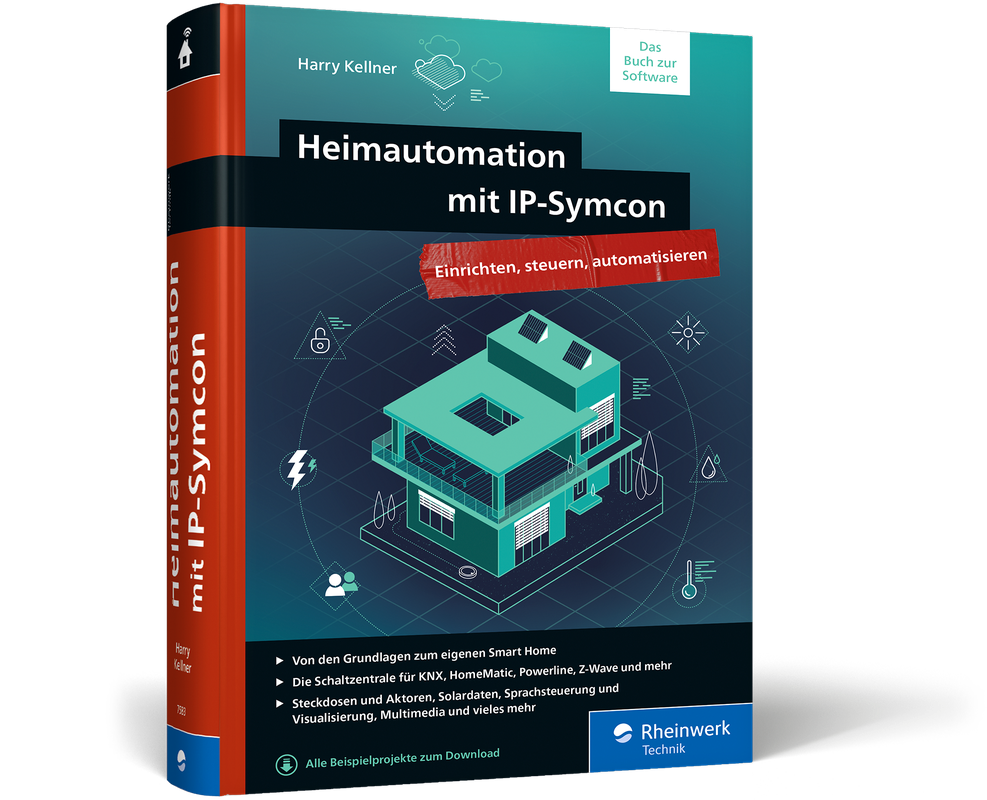
Heimautomation mit IP-Symcon
Der Begleiter für Ihr smartes Zuhause - integrieren, steuern, automatisieren. Mit IP-Symcon können Sie sich ein smartes Zuhause schaffen, das Ihnen das Leben deutlich erleichtert. Dieses Handbuch zeigt Ihnen, wie Sie mit IP-Symcon und Ihrer Hardware ein durchdachtes System zur Heimautomation aufbauen. Sie lernen, wie Sie IP-Symcon konfigurieren sowie Automatisierungsregeln und Visualisierungen einrichten. Planungshilfen und ein ausführlicher Überblick zur Hardware helfen Ihnen, die richtigen Entscheidungen für Ihr Projekt »Smart Home« zu treffen. Eine Einführung in die Grundlagen der Haussteuerung, Anleitungen zu Skripten sowie Sicherheitstipps zu Backup und Systemausfall machen das Buch zum idealen Ratgeber für die Heimautomation mit IP-Symcon. Aus dem Inhalt: Was heißt Smart? Heimautomatisierung im ÜberblickPlanung der Hard- und SoftwareDie Hardware: Vom Netzwerk bis zu den SchaltaktorenWas Sie mit IP-Symcon alles umsetzen könnenIP-Symcon einrichten und konfigurierenInstanzen und ObjekteSysteme einbindenAktionen automatisierenSprachsteuerung und VisualisierungKlimasteuerung und PhotovoltaikSicherheit: Vom Backup bis zur Ausfallsicherung Leseprobe (PDF-Link)

Konzernabschluss mit SAP S/4HANA for Group Reporting
Dieses Buch bietet Ihnen einen umfassenden Einblick in die Funktionen, Einstellungen und Einsatzmöglichkeiten der neuen Konsolidierungslösung von SAP. Ein durchgehendes Praxisbeispiel zeigt Ihnen Schritt für Schritt, wie Sie Stammdaten pflegen, Einzelabschlüsse übernehmen und die Konsolidierung durchführen. Inkl. Vergleich der On-Premise- und der Cloud-Edition. Aus dem Inhalt: Grundlagen und AlleinstellungsmerkmaleIntegration in SAP S/4HANAArchitektur und Schnittstellen DatenmodellStammdatenÜbernahme von EinzelabschlüssenDurchführung der KonsolidierungSelf-Services in der CloudExterne BerichterstattungMigration Danksagung ... 15 Einleitung ... 17 1. Einführung in SAP S/4HANA for Group Reporting ... 21 1.1 ... Konsolidierungslogik ... 22 1.2 ... Etablierte SAP-Lösungen für den Konzernabschluss ... 24 1.3 ... Bereitstellung und Benutzeroberfläche ... 41 1.4 ... Mehrwert und Vorteile ... 53 1.5 ... Neue Möglichkeiten durch SAP S/4HANA for Group Reporting ... 60 2. Architektur, Schnittstellen und Datenmodell ... 67 2.1 ... Architektur von SAP S/4HANA for Group Reporting ... 68 2.2 ... Schnittstellen zu vor- und nachgelagerten Anwendungen ... 73 2.3 ... Optionale Komponenten ... 76 2.4 ... Bedienkonzept von SAP S/4HANA for Group Reporting ... 86 2.5 ... Funktionale Grundlagen ... 87 2.6 ... Konfiguration der Konsolidierungslogik ... 98 2.7 ... Berichtsdimensionen ... 102 2.8 ... Berichtspositionen ... 109 3. Einführung in die Fallstudie und Aktivierung des Group Reportings ... 111 3.1 ... Einführung in die Fallstudie ... 111 3.2 ... SAP S/4HANA for Group Reporting aktivieren ... 114 3.3 ... Globale Parameter ... 119 3.4 ... Globale Systemeinstellungen ... 124 3.5 ... Konsolidierungs-Ledger ... 127 3.6 ... Sicht ... 130 3.7 ... Versionen ... 132 3.8 ... Positionsplan ... 138 3.9 ... Felder für Konsolidierungsdaten ... 140 4. Stammdaten der Konzernberichterstattung ... 147 4.1 ... Fallstudie: Unternehmensstrukturen und Konzernkontenplan ... 149 4.2 ... Implementierung der Unternehmensstrukturen ... 154 4.3 ... Implementierung des Konzernkontenplans ... 180 5. Übernahme und Prozessierung der Einzelabschlüsse ... 225 5.1 ... Fallstudie: Meldung und Verarbeitung der Einzelgesellschaften ... 226 5.2 ... Aufbau des Datenmonitors ... 237 5.3 ... Beleghafte Buchungen ... 244 5.4 ... Saldovortrag ... 249 5.5 ... Datenerfassung zur Übernahme der Einzelabschlüsse ... 254 5.6 ... Ermittlung des Jahresüberschusses ... 271 5.7 ... Validierungen ... 276 5.8 ... Währungsumrechnung ... 296 5.9 ... Intercompany-Matching und -Abstimmung ... 317 6. Erstellung von Konzernabschlüssen ... 347 6.1 ... Fallstudie: Automatisierung der Konsolidierung ... 347 6.2 ... Konzernaufrechnungen ... 351 6.3 ... Vorbereitung für Konsolidierungskreisänderungen ... 373 6.4 ... Manuelle Konzernbuchungsbelege ... 385 6.5 ... Kapitalkonsolidierung ... 390 6.6 ... Aufbau des Konsolidierungsmonitors ... 438 7. Group Reporting in SAP S/4HANA Cloud ... 443 7.1 ... SAP S/4HANA und Group Reporting aus der Cloud ... 445 7.2 ... Wesentliche Unterschiede zur On-Premise-Edition von SAP S/4HANA ... 448 7.3 ... Konfiguration des Group Reportings in SAP S/4HANA Cloud ... 463 7.4 ... Zusätzliche Funktionalitäten des Group Reportings in SAP S/4HANA Cloud ... 475 8. Berichtswesen in SAP S/4HANA for Group Reporting ... 497 8.1 ... Anforderungen an die Konzernberichterstattung ... 498 8.2 ... Berichterstattung via Webbrowser und Microsoft Office als Embedded Analytics ... 499 8.3 ... Embedded Analytics ... 502 8.4 ... Bedienung des analytischen Berichtswesens ... 505 8.5 ... Regelbasierte Berichte ... 512 8.6 ... Reporting-Logik, Reporting-Sichten und Matrixkonsolidierung ... 523 8.7 ... Erstellung von Berichten ... 531 8.8 ... SAP Analytics Cloud und Group Reporting ... 541 8.9 ... SAP Analysis for Microsoft Office und Group Reporting ... 550 9. Migration ... 557 9.1 ... Altdatenübernahme ... 557 9.2 ... Statistik der vorgangsbasierten Kapitalkonsolidierung ... 559 9.3 ... Altdatenübernahme für das Intercompany-Matching ... 560 10. Zusammenfassung und Ausblick ... 561 10.1 ... Zusammenfassung ... 561 10.2 ... Ausblick ... 562 Das Autorenteam ... 565 Index ... 567
SAP Data Intelligence
Lernen Sie SAP Data Intelligence kennen! Mit dem Nachfolger von SAP Data Hub koordinieren und integrieren Sie Big Data nicht nur, Sie können sie auch mit Machine Learning weiterverarbeiten. Damit Sie alle Funktionen kennen, die für Ihr Unternehmen wichtig sind, führt Sie das Autorenteam Schritt für Schritt durch die Anwendungen. Von der Dokumentation datenschutzrelevanter Ereignisse über die Modellierung von Datenflüssen bis hin zur Benutzerverwaltung lernen Sie alles, was Sie wissen müssen. Aus dem Inhalt: Business Intelligence und Predictive AnalyticsAudit Log ViewerConnection ManagementCustomer Data ExportLicense ManagementMetadata ExplorerModelerMonitoringPolicy ManagementSystem ManagementVora ToolsML Scenario Manager Einleitung ... 15 TEIL I Einführung ... 21 1. Geänderte Rahmenbedingungen für das Datenmanagement ... 23 1.1 ... Digitalisierung ... 24 1.2 ... Aktuelle Herausforderungen für das Datenmanagement ... 36 1.3 ... Von Business Intelligence zu Predictive Analytics ... 41 1.4 ... Einsatz von Machine Learning und künstlicher Intelligenz ... 53 1.5 ... SAPs Umgang mit der neuen Datenflut ... 58 1.6 ... Zusammenfassung ... 63 2. Relevante Technologien für das Datenmanagement ... 67 2.1 ... Evolution des Datenmanagements ... 68 2.2 ... Das SAP-Technologieportfolio für das Datenmanagement ... 80 2.3 ... Zusammenfassung ... 92 3. Einführung in SAP Data Intelligence ... 95 3.1 ... Was ist SAP Data Intelligence? ... 95 3.2 ... Funktionen von SAP Data Intelligence im Überblick ... 99 3.3 ... Betrieb und Administration der Applikationen ... 104 3.4 ... Entwicklung von Datenflüssen ... 105 3.5 ... Machine-Learning-Szenarien ... 111 3.6 ... Zusammenfassung ... 112 TEIL II Funktionen von SAP Data Intelligence ... 113 4. Connection Management ... 115 4.1 ... Einführung in das Connection Management ... 115 4.2 ... Verbindungen zu SAP-Systemen ... 127 4.3 ... Verbindungen zu Datenbanken ... 130 4.4 ... Verbindungen zu cloudbasierten Systemen ... 131 4.5 ... Technische Verbindungen ... 136 4.6 ... Zusammenfassung ... 137 5. Metadata Explorer ... 139 5.1 ... Einführung in den Metadata Explorer ... 140 5.2 ... Funktionsbereich »Catalog« ... 150 5.3 ... Funktionsbereich »Rules« ... 192 5.4 ... Funktionsbereich »Business Glossary« ... 210 5.5 ... Administration, Monitor und Einstellungen ... 217 5.6 ... Zusammenfassung ... 229 6. Modeler ... 231 6.1 ... Einführung in den Modeler ... 232 6.2 ... Operatoren ... 235 6.3 ... Graphen modellieren ... 270 6.4 ... Zusammenfassung ... 295 7. Customer Data Export ... 297 7.1 ... Einen Export durchführen ... 298 7.2 ... Ergebnis eines Exports ... 300 7.3 ... Zusammenfassung ... 302 8. Vora Tools ... 303 8.1 ... Einführung in die Vora Tools ... 304 8.2 ... Verarbeitung von Daten aus unterschiedlichen Quellsystemen ... 308 8.3 ... Zusammenfassung ... 324 9. Policy Management ... 325 9.1 ... Berechtigungsverwaltung in SAP Data Intelligence ... 325 9.2 ... Standard-Policys ... 331 9.3 ... Eigene Policys und Berechtigungen erstellen ... 334 9.4 ... Zusammenfassung ... 339 10. System Management ... 341 10.1 ... Einführung in das System Management ... 342 10.2 ... Applikationen verwalten ... 343 10.3 ... Benutzer verwalten ... 352 10.4 ... Dateien verwalten ... 358 10.5 ... Strategien und Lösungen verwalten ... 365 10.6 ... Zusammenfassung ... 371 11. Monitoring ... 373 11.1 ... Zielsetzung der Monitoring-Funktionen in SAP Data Intelligence ... 373 11.2 ... Monitoring mit der Monitoring-Applikation ... 374 11.3 ... Monitoring im Modeler ... 388 11.4 ... Zusammenfassung ... 395 12. Audit Log Viewer ... 397 12.1 ... Datenschutzrelevante Ereignisse zugänglich machen ... 398 12.2 ... Auswertungsmöglichkeiten ... 400 12.3 ... Zusammenfassung ... 403 13. License Management ... 405 13.1 ... Verwaltung von Lizenzen ... 405 13.2 ... Messung lizenzpflichtiger Aktivitäten ... 407 13.3 ... Zusammenfassung ... 409 14. Applikationen für Machine Learning ... 411 14.1 ... Machine-Learning-Szenarien entwickeln ... 412 14.2 ... ML-Applikationen im Überblick ... 426 14.3 ... Einsatz von Jupyter Notebooks ... 458 14.4 ... Zusammenfassung ... 471 TEIL III Einsatzszenarien für SAP Data Intelligence ... 473 15. Beispielszenario ... 475 15.1 ... Überblick über das Beispielszenario ... 475 15.2 ... Benutzer im System Management anlegen ... 479 15.3 ... Kundeneigene Policys im Policy Management erstellen ... 481 15.4 ... Systemverbindungen im Connection Management anlegen ... 487 15.5 ... Daten im Metadata Explorer anreichern ... 490 15.6 ... Graph im Modeler modellieren ... 517 15.7 ... ML-Szenario im ML Scenario Manager erstellen ... 541 15.8 ... Export und Einplanung des Graphen im System Management ... 563 15.9 ... Zusammenfassung ... 569 16. Beispiele für weitere Einsatzmöglichkeiten ... 571 16.1 ... Integration von Clouddatenquellen ... 571 16.2 ... Systemübergreifende Modellierung von Datenflüssen ... 574 16.3 ... Globales Datenmanagement ... 577 16.4 ... Professionelles Machine Learning ... 581 16.5 ... Zusammenfassung ... 583 17. Ausblick auf die weitere Produktentwicklung ... 585 17.1 ... Schnittstellen und Integration ... 586 17.2 ... Metadaten und Governance ... 588 17.3 ... Modellierung von Graphen ... 589 17.4 ... Administration ... 590 17.5 ... Zusammenfassung ... 591 Anhang A. Quellen- und Literaturverzeichnis ... 593 Anhang B. Das Autorenteam ... 595 Index ... 599

Die digitale Transformation der Automobilindustrie
Die vorliegende 2. Auflage des Buches gibt umfassende und pragmatische Handlungsempfehlungen für die digitale Transformation der Automobil- und Zulieferindustrie. Sie wurde um aktuelle Praxisbeispiele und Technologieaspekte besonders in den Bereichen Autonomes Fahren und der Fahrzeug-IT erweitert. Im Mittelpunkt steht der Wandel vom fahrzeugfokussierten hin zu einem mobilitätsorientierten Geschäftsmodell. Ausgehend von den Treibern des digitalen Wandels werden vier Digitalisierungsfelder strukturiert und eine Roadmap zu deren Transformation vorgestellt. Der Weg hin zur automatischen hoch effizienten Abwicklung von schlanken, integrierten Geschäftsprozessen wird ebenso erörtert wie die massive Veränderung von Vertriebs-, Aftersales- und Marketingstrukturen mit der Neugestaltung von Kundenbeziehungen. Umfassende Datennutzung und der Einsatz von künstlicher Intelligenz sind hierbei zentrale Lösungsbausteine. Auch die Möglichkeiten moderner Informationstechnologie wie Hybrid-Cloud Architekturen, container-basierter Microservices und Digital Twin werden aufgezeigt. Die nachhaltige Veränderung der Unternehmenskultur, organisatorische Aspekte und auch agile Methoden zum Projektmanagement und für die Ideenfindung als Basis innovativer Lösungen werden als kritische Erfolgsfaktoren im Detail behandelt. Ausgewählte Praxisbeispiele für innovative Digitalisierungsprojekte vermitteln zusätzliche Ideen und Impulse. Ein Ausblick in die Auto-Mobilität und die Arbeitswelt im Jahr 2040 rundet die Ausführungen ab.

Delivering Applications with VMware App Volumes 4
Acquire the skills to build an App Volumes environment for a proof of concept, a pilot, or a live production environment. Delivering Applications with VMware App Volumes 4 starts with an in-depth overview of where the solution fits within the market and its key features, introducing you to application layering and VMware App Volumes. Next, it explains how to install the software and use its management consoles to configure App Volumes. You will understand how to build and configure application layers for delivery and will learn to build and configure writeable volumes for user data and user-installed applications.In the advanced management section, you will learn to customize package templates and integrate App Volumes with JMP. Along the way you will understand how to deliver published apps in MS RemoteApp using layered apps for scalability. In the next phase of the book you will install and configure App Volumes for different use cases: VMware Horizon View, VMware ThinApp, Microsoft RDSH, and Citrix Virtual Apps and Desktops.Throughout the chapters, you will be given hints and tips, along with best practices, all seen from the eyes of somebody who works with this technology day in, day out, and in many different types of environments and scenarios.WHAT YOU WILL LEARN* Understand the App Volumes architecture * Master the concept of application layering* Work with App Volumes, application packages, and Writable Volumes WHO THIS BOOK IS FORVMware professionals, system integrators, IT professionals, and consultants.PETER VON OVEN is an experienced technical consultant working closely with customers and partners designing technology solutions, to meet business needs. During his career, Peter has presented at key IT events such as VMworld, IP EXPO, and various VMUGs and CCUG events. He has also worked in senior presales roles and presales management roles for Fujitsu, HP, Citrix, and VMware, and has been awarded VMware vExpert for the last six years in a row. In 2016, Peter founded his own company, Droplet Computing, where he works today as the founder and chief executive officer, helping redefine the way applications are delivered today. He is also an avid author, having now written 13 books and made videos about VMware end-user computing solutions. In his spare time, Peter volunteers as a STEM Ambassador, helping the next generation develop the skills and confidence in building careers in technology.VMware App VolumesChapter 1 INTRODUCING APPLICATION LAYERING AND VMWARE APP VOLUMESCHAPTER GOAL: Introduction to app layering, VMware App Volumes and it’s features and architecture1. Overview of app layering2. Introduction to App Volumes3. App Volumes architecture4. App Volumes featuresNO OF PAGES 20Chapter 2: INSTALLING THE VMWARE APP VOLUMES SOFTWARECHAPTER GOAL: Installing the software and components1. Prerequisites and requirements for installing App Volumes2. Installing the App Volumes Manager3. Installing the App Volumes AgentNO OF PAGES 30Chapter 3: APP VOLUMES MANAGEMENT CONSOLECHAPTER GOAL: Using the management consoles to configure App Volumes1. Initial login and configuration2. Navigating the menu optionsNO OF PAGES 20Chapter 4: CREATING AND PACKAGING APPLICATIONSCHAPTER GOAL: How to build and configure application layers for delivery1. Definition of an App Volumes package2. Creating a provisioning machine – OS optimization tool template3. Creating a package4. Assigning packages5. Package lifecycle managementNO OF PAGES 50Chapter 5: WORKING WITH WRITEABLE VOLUMESCHAPTER GOAL: How to build and configure Writeable volumes for user data and user installed applications1. What is a Writeable Volume?2. Creating a Writeable Volume3. Assigning Writeable Volume to end users and desktops4. Managing Writeable VolumesNO OF PAGES 35Chapter 6: ADVANCED MANAGEMENTCHAPTER GOAL: Configuring the advanced management features of App Volumes1. How to customize package templates2. Advanced agent configurationNO OF PAGES 50Chapter 7: INTEGRATING APP VOLUMES WITH JMPCHAPTER GOAL: Configuring App Volumes to deliver apps with the VMware just in time management platform1. JMP architecture overview2. Configuring App Volumes in the JMP management console3. App Volumes JMP assignmentsNO OF PAGES 20Chapter 8: APP VOLUMES AND MICROSOFT REMOTEAPPCHAPTER GOAL: How to deliver published apps in MS RemoteApp using layered apps for scalability1. Building an application package for RemoteApp2. Configuring the RDSH role3. Creating and configuring RDSH-based packages4. Delivering packages to end usersNO OF PAGES 30Chapter 9: APP VOLUMES INTEGRATION WITH CITRIX VIRTUAL APPSCHAPTER GOAL: How to deliver published apps with Citrix Virtual Apps1. Building an application package for Citrix Virtual Apps2. Configuring the RDSH role for Citrix Virtual Apps3. Configuring RDSH-based packages for Citrix Virtual Apps4. Installing the Citrix Virtual Desktop Agent (VDA)5. Installing the App Volumes Agent6. Creating a Machine Group and Delivery Group7. Testing your applicationsNO OF PAGES 30Chapter 10: APP VOLUMES INTEGRATION WITH VMWARE HORIZON APPSCHAPTER GOAL: How to deliver layered apps with VMware Horizon Apps published apps1. Building an application package for Horizon Apps2. Configuring the RDSH role for Horizon Apps3. Configuring RDSH-based packages for Horizon Apps4. Installing the App Volumes Agent5. Installing the Horizon Agent6. Configuring a Horizon App farm7. Configuring a Horizon App pool8. Assigning packages to the Horizon Apps server9. Testing your applicationsNO OF PAGES 30Chapter 11: APP VOLUMES AND VMWARE VIEW VIRTUAL DESKTOPSCHAPTER GOAL: How to deliver layered apps to virtual desktops delivered by VMware Horizon View1. Building an application package for Horizon View2. Installing the App Volumes Agent3. Installing the Horizon Agent4. Optimizing the image5. Configuring a Horizon desktop pool6. Assigning packages to Horizon View end users7. Testing your applicationsNO OF PAGES 30Chapter 12: APP VOLUMES AND CITRIX VIRTUAL DESKTOPSCHAPTER GOAL: How to deliver layered apps to virtual desktops delivered by Citrix Virtual Desktops1. Building an application package for Citrix Virtual Desktops2. Installing the Citrix Virtual Desktop Agent (VDA3. Optimizing the image4. Creating a Machine Group and Delivery Group5. Testing your applicationsNO OF PAGES 30Chapter 13: DELIVERING THINAPP VIRTUALIZED APPS WITH APP VOLUMESCHAPTER GOAL: How to deliver virtualized and isolated apps as app layers with VMware ThinApp1. Overview of ThinApp app virtualization2. Creating a ThinApp AppStack3. Advanced configuration optionsNO OF PAGES 30Chapter 14: UPGRADING TO APP VOLUMES 4CHAPTER GOAL: How to upgrade from a previous version to the latest version of App Volumes1. Upgrading the App Volumes management console2. Upgrading the App Volumes Agent3. Upgrading AppStacks to App Packages4. MigratingNO OF PAGES 20

CompTIA Security+ Practice Tests
GET READY FOR A CAREER IN IT SECURITY AND EFFICIENTLY PREPARE FOR THE SY0-601 EXAM WITH A SINGLE, COMPREHENSIVE RESOURCECompTIA Security+ Practice Tests: Exam SY0-601, Second Edition efficiently prepares you for the CompTIA Security+ SY0-601 Exam with one practice exam and domain-by-domain questions. With a total of 1,000 practice questions, you'll be as prepared as possible to take Exam SY0-601.Written by accomplished author and IT security expert David Seidl, the 2nd Edition of CompTIA Security+ Practice Tests includes questions covering all five crucial domains and objectives on the SY0-601 exam:* Attacks, Threats, and Vulnerabilities* Architecture and Design* Implementation* Operations and Incident Response* Governance, Risk, and CompliancePerfect for anyone looking to prepare for the SY0-601 Exam, upgrade their skills by earning a high-level security certification (like CASP+, CISSP, or CISA), as well as anyone hoping to get into the IT security field, CompTIA Security+ Practice Tests allows for efficient and comprehensive preparation and study.ABOUT THE AUTHORDAVID SEIDL, CYSA+, CISSP, GPEN, GCIH, is the co-author of CompTIA Security+ Study Guide: Exam SY0-601, CompTIA CySA+ Study Guide: Exam CS0-002, CompTIA CySA+ Practice Tests: Exam CS0-002, and CompTIA PenTest+ Study Guide: Exam PT0-001. David is Vice President for Information Technology and CIO at Miami University. Previously, he led the University of Notre Dame security team as Director of Information Security and has served in a variety of technical and IT security roles. Introduction xixChapter 1 Threats, Attacks, and Vulnerabilities 1Chapter 2 Architecture and Design 45Chapter 3 Implementation 81Chapter 4 Operations and Incident Response 129Chapter 5 Governance, Risk, and Compliance 159Appendix Answers and Explanations 185Index 299

5G Mobile Core Network
Get up to speed on 5G and prepare for the roll out of the next generation of mobile technology. The book begins with an introduction to 5G and the advanced features of 5G networks, where you’ll see what makes it bigger, better, and faster. You will learn 5G NSA and SA packet core design along with some design challenges, taking a practical approach towards design and deployment. Next, you will understand the testing of the 5G packet core and how to automate it. The book concludes with some advanced service provider strategies, including architectural considerations for service providers to enhance their network and provide services to non-public 5G networks.5G Mobile Core Network is intended for those who wish to understand 5G, and also for those who work extensively in a service provider environment either as operators or as vendors performing activities such as network design, deployment, testing, and automation of the network. By the end of this book you will be able to understand the benefits in terms of CAPEX and OPEX while considering one design over another. Consulting engineers will be able to evaluate the design options in terms of 5G use cases, the scale of deployment, performance, efficiency, latency, and other key considerations.WHAT YOU WILL LEARN* Understand the life cycle of a deployment right from pre-deployment phase to post-deployment phase* See use cases of 5G and the various options to design, implement, and deploy them* Examine the deployment of 5G networks to large-scale service providers* Discover the MVNO/MVNE strategies that a service provider can implement in 5GWHO THIS BOOK IS FORAnyone who is curious about 5G and wants to learn more about the technology.Rajaneesh Shetty works as a service provider solution specialist and has 20+ years of experience in delivery of turn-key end-to-end mobility solutions for large customer accounts. He has proven credentials as a trusted advisory for customer delivery and solution architecture, software management, system architecture, test architecture, product management, and pre-sales for telecom products using state-of-the-art technologies. He has an excellent track record of technical leadership and management. Rajaneesh has also worked across regions with many tier-1 service providers as a trusted advisor for their telecom solutions.Apart from this, below are a few of his achievements:* Co-authored and published a book: 4G: Deployment Strategies and Operational Implications* Has many patents pending approval from the US patent office, primarily in the 5G core network domain* Has many 5G-related white papers published in various forums including the IEEE.org forum* CHAPTER1: 5G OVERVIEW* Introduction to 5G as a technology* Understand the different use cases offered by 5G* Advanced features of 5G including slicing and automation* Changes in 5G for radio , core network etc* Overview of the Network functionsNUMBER OF PAGES: 35* CHAPTER2: MOBILE EDGE COMPUTING IN 5G* Provide the need for distributed architecture* Design principles for edge and centralized data centres* Distributed RAN architecture and principles.* Core network design for the edge data centreNUMBER OF PAGES: 30* CHAPTER3: 5G NSA PACKET CORE DESIGN AND DEPLOYMENT STRATEGIES* Evolution of the network from 4G to 5gNSA* The different deployment options for 5G NSAKey tenets of CUPS architecture * Redundancy in NSA* Design principles for NSAPAGES: 50* CHAPTER4: 5G SA PACKET CORE DESIGN AND DEPLOYMENT STRATEGIES* Evolution of the network from 4G to 5g SA* The different deployment options for 5G SA* Key tenets of SBA architecture* Redundancy in 5G SA core* Design principles for 5G SAPAGES: 50* CHAPTER 5: 5G PACKET CORE TESTING STRATEGIES* Testing strategies for 5G NSA core network* Testing strategies for 5G SA core network* Redundancy testingMonitoring and reporting * Network analytics and other key metricsPAGES: 40* CHAPTER 6: AUTOMATION IN 5G* Deployment workflow* Day 0 and Day1 automation considerations* Day 2 Automation considerations.PAGES: 20* CHAPTER 7: SERVICE PROVIDER STRATEGIES* Migration strategy from 4G to 5G* MVNO / MVNE strategies* Cloud strategy (public/private)* Security considerations.PAGES:40
Oracle 19c/20c
- Installation, Administration, Architektur, Infrastruktur- Migration in die Cloud, Einsatz der autonomen Datenbank- In-Memory-Technologie, Data Science, Maschinelles LernenDieses Buch behandelt umfassend die Planung, den Einsatz und die Administration von Oracle-Datenbanken und umfasst das Long Term Release 19c und die Version 20c mit ihren neuen Features. Der Autor vermittelt alle Inhalte, die sowohl für einen Einstieg als auch für die fortgeschrittene Anwendung wichtig sind.Zu den Schwerpunkten gehören eine Darstellung von Public und Private Cloud für Oracle-Datenbanken sowie die In-Memory-Technologie. Das Buch unterstützt Sie bei Vorbereitung und Durchführung der Migration in die Cloud, der Verwaltung von Public und Private Cloud sowie von Datenbanken, die On-Premises laufen. Auch aktuelle Themen wie Data Science und Maschinelles Lernen werden berücksichtigt.Der Autor richtet sich an Datenbankadministratoren, Systemberater und Architekten und nicht zuletzt an Entwickler von Oracle-Applikationen. Dieses Buch ist gleichermaßen auch für Einsteiger gedacht, die bereits grundlegende Kenntnisse in der IT besitzen und beginnen wollen, sich in die Oracle-Welt einzuarbeiten. Es ist Einstieg, Handbuch und Nachschlagewerk für alle, die mit Oracle-Datenbanken arbeiten.Aus dem Inhalt:Installation und KonfigurationOracle DatenbankarchitekturInterne Strukturen und ObjekteAufbau einer DatenbankinfrastrukturBackup und RecoveryUpgrades, Patching und CloningRecovery-Szenarien für ExpertenErweiterte SicherheitsthemenPerformance TuningEngineered SystemsIn-Memory-DatenbankData ScienceMaschinelles LernenGlobal Data ServicesReal Application ClustersEnterprise Manager Cloud ControlMigration in die Oracle CloudAutonome DatenbankLutz Fröhlich ist Diplommathematiker und Oracle Certified Master und arbeitet seit 1993 mit Oracle-Datenbanken. Er ist spezialisiert auf die Themen Performance, Hochverfügbarkeit, Datenreplikation und -Streaming sowie Exadata und arbeitet seit mehreren Jahren in den Bereichen Data Science und Maschinelles Lernen. Er hält regelmäßig Seminare und Vorträge zu diesen und anderen Themen. Seine praktischen Erfahrungen basieren auf Consulting-Tätigkeiten für über 35 internationale Unternehmen in den USA und Europa.

Hilfe, ich habe meine Privatsphäre aufgegeben!
Wie uns Spielzeug, Apps, Sprachassistenten und Smart Homes überwachen und unsere Sicherheit gefährdet.Neue Technologien sollen unser Leben komfortabler machen. Doch der Preis, den wir dafür zahlen, ist hoch. Die zunehmende Vernetzung durch Geräte, die permanent mit dem Internet verbunden sind, bringt eine Überwachung von ungeahntem Ausmaß mit sich. Das Absurde dabei ist, dass wir unsere Privatsphäre freiwillig aufgeben – und das, ohne uns der Auswirkungen in vollem Umfang bewusst zu sein.Im Kinderzimmer ermöglichen App-gesteuerte Spielzeug-Einhörner böswilligen Hackern, dem Nachwuchs Sprachnachrichten zu senden. Im Wohnzimmer lauschen mit der digitalen Sprachassistentin Alexa und ihren Pendants US-Konzerne mit und ein chinesischer Hersteller smarter Lampen speichert den Standort unseres Heims auf unsicheren Servern. Nebenbei teilen Zyklus- und Dating-Apps alle Daten, die wir ihnen anvertrauen, mit Facebook & Co.In diesem Buch zeigt Ihnen Barbara Wimmer, was Apps und vernetzte Geräte alles über Sie wissen, was mit Ihren Daten geschieht und wie Sie sich und Ihre Privatsphäre im Alltag schützen können.Wie die zunehmende Vernetzung Ihre Privatsphäre und Sicherheit gefährdet:Smart Home: Überwachung und SicherheitslückenSpielzeug mit Online-Funktionen und die Gefahren für Kind und HeimSicherheitslücken und Unfallrisiken bei Connected CarsLauschangriff der digitalen SprachassistentenDatenmissbrauch zu Werbezwecken durch Apps auf dem SmartphoneContact Tracing mit Corona-AppsGesichtserkennung und Überwachung in Smart CitysPerspektiven: Datenschutz und digitale SelbstbestimmungInhaltsverzeichnis & Leseprobe (PDF-Link)

Haus und Wohnung smart vernetzt
Das umfassende Buch zum Nachschlagen. Praxistipps und Anleitungen zum vernetzten Zuhause.Ob Sie Daten zwischen Smartphone und PC austauschen möchten, vom Tablet drucken, Musik und Medien im ganzen Haus nutzen, Ihr WLAN optimieren, per App aus der Ferne Ihre Heizung anstellen möchten. Oder ob Ihr Kühlschrank selbstständig einkaufen soll, diese und weitere relevante Themen rund um Ihr vernetztes Zuhause werden in diesem Buch ausführlich besprochen. Viele praktische Tipps machen die Umsetzung für Sie leicht nachvollziehbar.Aus dem InhaltPC, Laptop und andere Geräte per LAN oder WLAN verbindenDaten im eigenen Netz freigeben und teilenDie richtigen Einstellungen für den RouterDaten zwischen Smartphone und PC austauschenCloud-Dienste geschickt nutzenDaten per Bluetooth austauschenDigitale Assistenten – Google Assistant, Cortana und Alexa Videos, Musik und Medien im Netzwerk nutzenFernsteuerung und FernwartungLicht und Heizung per App steuernLeseprobe (PDF-Link)

Adversariale Robustheit Neuronaler Netze
Gelernte Klassifikationsverfahren sind nicht sicher, wenn Angreifer gezielte Veränderungen an der Eingabe vornehmen. Obwohl diese Änderungen für den Menschen kaum wahrnehmbar sind, ändert sich die Klassifikation. Um gelernte Modelle in sicherheitskritischen Bereichen anwenden zu können, ist es erforderlich, Methoden zu entwickeln, die Robustheit gegen adversariale Angriffe gewährleisten können. Hier wird eine Übersicht über verschiedene Anwendungsfälle, Angriffe, die daraus entstehenden Problemstellungen, Ansätze zur Verteidigung sowie Gefahren bei der Evaluation dieser gegeben und die Notwendigkeit korrekter Verfahren aufgezeigt.

AWS Certified Security Study Guide
GET PREPARED FOR THE AWS CERTIFIED SECURITY SPECIALTY CERTIFICATION WITH THIS EXCELLENT RESOURCEBy earning the AWS Certified Security Specialty certification, IT professionals can gain valuable recognition as cloud security experts. The AWS Certified Security Study Guide: Specialty (SCS-C01) Exam helps cloud security practitioners prepare for success on the certification exam. It’s also an excellent reference for professionals, covering security best practices and the implementation of security features for clients or employers.Architects and engineers with knowledge of cloud computing architectures will find significant value in this book, which offers guidance on primary security threats and defense principles. Amazon Web Services security controls and tools are explained through real-world scenarios. These examples demonstrate how professionals can design, build, and operate secure cloud environments that run modern applications.The study guide serves as a primary source for those who are ready to apply their skills and seek certification. It addresses how cybersecurity can be improved using the AWS cloud and its native security services. Readers will benefit from detailed coverage of AWS Certified Security Specialty Exam topics.* Covers all AWS Certified Security Specialty exam topics* Explains AWS cybersecurity techniques and incident response* Covers logging and monitoring using the Amazon cloud* Examines infrastructure security* Describes access management and data protectionWith a single study resource, you can learn how to enhance security through the automation, troubleshooting, and development integration capabilities available with cloud computing. You will also discover services and tools to develop security plans that work in sync with cloud adoption.ABOUT THE AUTHORSDARIO GOLDFARB is a Security Solutions Architect at Amazon Web Services in Latin America. He has more than 15 years of experience in cybersecurity. ALEXANDRE M.S.P. MORAES is a Director of Teltec, a Brazilian systems integrator that is highly specialized in Network Design, Security Architectures and Cloud Computing. THIAGO MORAIS is the leader of Solutions Architecture teams at Amazon Web Services in Brazil. He has more than 20 years of experience in the IT industry. MAURICIO MUÑOZ is a Sr. Manager of a Specialist Solutions Architects team at Amazon Web Services in Latin America. He's worked in IT for more than 20 years, specializing in Information Security. MARCELLO ZILLO NETO is a Chief Security Advisor and a former Chief Information Security Officer (CISO) in Latin America. He has over 20 years of experience in cybersecurity and incident response. GUSTAVO A. A. SANTANA is the leader of the Specialist and Telecommunications Solutions Architecture teams at Amazon Web Services in Latin America. FERNANDO SAPATA is a Principal Business Development Manager for Serverless at Amazon Web Services in Latin America. He has more than 19 years of experience in the IT industry. Prolog 91. EINLEITUNG 15Veränderung 17Innovationsfähigkeit: Ohne Druck keine Bewegung 23Vier historische technische Revolutionen und ihrWeg zur Akzeptanz innerhalb der Gesellschaft 28Rückkehr zum eigenständigen, selbstermächtigten Menschen 31Mitarbeitende werden immer essenzieller 33Wissen verdoppelt sich, wenn man es teilt 352. MIT NETZWERKFÜHRUNG IN DIE ZUKUNFT 39Unternehmerische Voraussetzungen für das Gelingen von Netzwerken 42Führen in Netzwerken 48Unternehmensnetzwerke 52Inoffizielle Netzwerke 53Unternehmensinterne Netzwerke 54Unternehmensexterne Netzwerke 623. WAS HAT EIN PERÜCKENMACHER MIT STRATEGISCHER NETZWERKFÜHRUNG ZU TUN? 67Hierarchie und Eigenverantwortung 68Der Purpose geht uns alle an 87Serendipität 125Innovative Vernetzungsformate 134Mut zur Lücke 1634. WIE KANN AKTIV AUS TRENDS UND KRISEN GELERNT WERDEN? 167Wie können Vorbehalte abgebaut werden? 171Beispiel Corona – die Krise aktiv nutzen 172Krisen nutzen, um Gewohnheiten zu ändern 1755. WEITERBILDUNG UND PERSONALENTWICKLUNG ALS BEITRAG ZUR VERNETZUNG 183Disruption 1.0 derWeiterbildung 187Die neue Rolle der Personalentwicklung 191Mit dem TEAK®-Konfigurator auf Erfolgskurs 203Was ist Ihr Beitrag? 2366. DIE UNAUFHALTSAME DYNAMIK DES NETZWERKES AM BEISPIEL DER GROUP SCHUMACHER GMBH 2397. DIE NEUE PERSPEKTIVE DER ZUKUNFT – NACHWORT 249Danksagung 253Die Autorin 257Literaturverzeichnis 259Stichwortverzeichnis 269

Cloud-Based Microservices
Use this field guide as you transform your enterprise to combine cloud computing with a microservices architecture.The recent surge in the popularity of microservices in software development is mainly due to the agility it brings and its readiness for the cloud. The move to a microservices architecture on the cloud involves a gradual evolution in software development. Many enterprises are embarking on this journey, and are now looking for architects who are experienced in building microservices-based applications in the cloud.A master architect should be able to understand the business, identify growth hurdles, break a monolith, design microservices, foresee problems, overcome challenges, change processes, decipher CSP services, strategize cloudification, adopt innovations, secure microservices, prototype solutions, and envision the future. CLOUD-BASED MICROSERVICES provides you with the information you need to be successful in such an endeavor.WHAT YOU WILL LEARN* Be familiar with the challenges in microservices architecture and how to overcome them* Plan for a cloud-based architecture* Architect, build, and deploy microservices in the cloud* Know how security, operations, and support change in this architectureWHO THIS BOOK IS FOREngineers, architects, and those in DevSecOps attempting to move their enterprise software to take advantage of microservices and the cloud and be more nimbleCHANDRA RAJASEKHARAIAH has led multi-million dollar enterprise initiatives in cloud-based microservice development. For the past five years, he has also migrated giant enterprise monoliths to microservices-based applications on the cloud. He has more than 20 years of experience in the software engineering industry as a principal, enterprise architect, solutions architect, and software engineer. His experience includes multiple domains—retail, e-commerce, telecommunications, telematics, travel, electronic payments, automobile—and gives him a broad base to draw parallels, abstract problems, and create innovative solutions. He enjoys architecting, delivering, and supporting enterprise products.PREFACEWhat This Book isWhat This Book is NotCHAPTER 1: CASE STUDY: ENERGENCE CO.Managing Production and DistributionHardware and Software InfrastructureMonolithic Software SolutionsGrowth Opportunities and ObjectivesNext StepsFurther Related ReadingSummaryPoints to PonderCHAPTER 2: MICROSERVICES: WHAT AND WHY?OriginsMicroservices Architecture in a NutshellSuccessful Implementation of MicroservicesOrchestration and ChoreographyMicroservices Migration Plan for EnergenceBreaking a Monolith into ModulesBreaking Modules into Sub-modulesEstablishing Microservices ArchitectureAdvantages and Gains with MicroservicesFurther Related ReadingSummaryPoints to PonderCHAPTER 3: ARCHITECTURAL CHALLENGESIdentifying and Classifying ChallengesAC1: Dispersed Business LogicAC2: Lack of Distributed TransactionsOrchestrated DomainsChoreographed DomainsAC3: Inconsistent Dynamic Overall StateChallenges in Exchanging Data between MicroservicesProblems with ShardingAC4: Difficulty in Gathering Composite DataAC5: Difficulty in Debugging Failures and FaultsAC6: The v2 Dread – Difficulty in EvolvingFurther Related ReadingSummaryPoints to PonderCHAPTER 4: OVERCOMING ARCHITECTURAL CHALLENGESService CatalogSagas (Long-Running Transactions)Ignoring ErrorsCompensating Errors InlineCompensating Errors OfflineImplementing SagasMaintaining Global StatesThe Scenario of Dynamic Overall StateIntermittent-Peek OptionAlways-Listening OptionOther Options and Larger QuestionsCentralized ViewObservabilityContract TestingFurther Related ReadingSummaryPoints to PonderCHAPTER 5: PROCESS CHANGESContinuous IntegrationBuild and Integration EnvironmentsAutomated TestingPerformance TestingContinuous DeliveryInfrastructure as CodDevSecOpsFurther Related ReadingSummaryPoints to PonderCHAPTER 6: CLOUDIFICATION – STRATEGYOverall Setup for Microservices in CloudNetworking and ConnectivityRegions and ZonesComputeIntegrationDatabases and Traditional DatastoresSpecial-Purpose DatastoresCost AnalysisSummaryPoints to PonderCHAPTER 7: CLOUDIFICATION – CORE CONCEPTSVirtualization and ContainerizationContainer OrchestrationService MeshesTraffic ControlEstablishing and Securing CommunicationBuilding Overall ObservabilityChallenges and State of the Art of Service MeshesFaaS, aka, ServerlessStorage and Integration ServicesStorage ServicesIntegration ServicesFurther Related ReadingSummaryPoints to PonderCHAPTER 8: SECURING MICROSERVICES ON CLOUDSecuring MicroservicesReducing the Attack SurfaceSecuring ServicesSecuring Outgoing CommunicationSecuring Microservices on CloudAPI Gateways and Load BalancersIAM of CSPsSecuring Inter-Service CommunicationProcessing IntegrityTrusted BinariesTrusted ExecutionAvailabilityDR-Disaster RecoveryMulti-region SolutionsFurther Related ReadingSummaryPoints to PonderCHAPTER 9: MICROSERVICES, HERE AND BEYONDTrendsSupport and OperationsMicroservices on CloudChanging Security LandscapeAlternate ThoughtsMonoliths are Dead, Long Live the MonolithIN CLOSINGBIBLIOGRAPHYAPPENDIXCOMPARING CSPS

IP Address Management
REDISCOVER FUNDAMENTAL AND ADVANCED TOPICS IN IPAM, DNS, DHCP AND OTHER CORE NETWORKING TECHNOLOGIES WITH THIS UPDATED ONE-STOP REFERENCEThe thoroughly revised second edition of IP Address Management is the definitive reference for working with core IP management technologies, like address allocation, assignment, and network navigation via DNS. Accomplished professionals and authors Timothy Rooney and Michael Dooley offer readers coverage of recent IPAM developments in the world of cloud computing, Internet of Things (IoT), and security, as well as a comprehensive treatment of foundational concepts in IPAM.The new edition addresses the way that IPAM needs and methods have evolved since the publication of the first edition. The book covers the impact of mainstream use of private and public cloud services, the maturation of IPv6 implementations, new DNS security approaches, and the proliferation of IoT devices. The authors have also reorganized the flow of the book, with much of the technical reference material appearing at the end and making for a smoother and simpler reading experience.The 2nd edition of IP Address Management also covers topics like such as:* Discussions about the fundamentals of Internet Protocol Address Management (IPAM), including IP addressing, address allocation and assignment, DHCP, and DNS* An examination of IPAM practices, including core processes and tasks, deployment strategies, IPAM security best-practices, and DNS security approaches* A treatment of IPAM in the modern context, including how to adapt to cloud computing, the Internet of Things, IPv6, and new trends in IPAM* A one-stop reference for IPAM topics, including IP addressing, DHCP, DNS, IPv6, and DNS securityPerfect for IP network engineers and managers, network planners, network architects, and security engineers, the second edition of IP Address Management also belongs on the bookshelves of senior undergraduate and graduate students studying in networking, information technology, and computer security-related courses and programs.MICHAEL DOOLEY is Vice President of Operations for BT Diamond IP division. He has over 20 years of experience managing and developing enterprise-scale software products. His professional expertise includes IP addressing, DHCP, and DNS. He is co-author of IPv6 Deployment and Management and DNS Security Management. TIMOTHY ROONEY is the Product Manager for BT Diamond IP product development and has led the market introduction of NetControl, IPControl, Sapphire Appliances, and ImageControl, four next-gen IP management systems. He is co-author of Introduction to IP Address Management, IP Address Management Principles and Practice, IPv6 Deployment and Management, and DNS Security Management.Preface xixAcknowledgments xxiiiAbout the Authors xxvPart I IPAM Introduction 11 INTRODUCTION 3IP Networking Overview 3IP Routing 6IP Addresses 7Protocol Layering 12OSI and TCP/IP Layers 14TCP/UDP Ports 15Intra-Link Communications 15Are We on the Same Link? 17Limiting Broadcast Domains 18Interlink Communications 19Worldwide IP Communications 20Dynamic Routing 22Routers and Subnets 24Assigning IP addresses 25The Human Element 26Why Manage IP Space? 26Basic IPAM Approaches 27Early History 27Today’s IP Networks and IP Management Challenges 282 IP ADDRESSING 31Internet Protocol History 31The Internet Protocol, Take 1 32Class-Based Addressing 32Internet Growing Pains 35Private Address Space 38Classless Addressing 40Special Use IPv4 Addresses 40The Internet Protocol, Take 2 41IPv6 Address Types and Structure 42IPv6 Address Notation 43Address Structure 45IPv6 Address Allocations 462000::/3 – Global Unicast Address Space 47fc00::/7 – Unique Local Address Space 47fe80::/10 – Link Local Address Space 47ff00::/8 – Multicast Address Space 48Special Use IPv6 Addresses 48IPv4–IPv6 Coexistence 493 IP ADDRESS ASSIGNMENT 51Address Planning 51Regional Internet Registries 51RIR Address Allocation 53Address Allocation Efficiency 54Multi-Homing and IP Address Space 55Endpoint Address Allocation 58Server-based Address Allocation Using DHCP 58DHCP Servers and Address Assignment 61Device Identification by Class 62DHCP Options 62DHCP for IPv6 (DHCPv6) 62DHCP Comparison IPv4 vs. IPv6 63DHCPv6 Address Assignment 64DHCPv6 Prefix Delegation 65Device Unique Identifiers (DUIDs) 66Identity Associations (IAs) 66DHCPv6 Options 67IPv6 Address Autoconfiguration 67Neighbor Discovery 68Modified EUI-64 Interface Identifiers 69Opaque Interface IDs 69Reserved Interface IDs 72Duplicate Address Detection (DAD) 724 NAVIGATING THE INTERNET WITH DNS 75Domain Hierarchy 75Name Resolution 76Resource Records 80Zones and Domains 81Dissemination of Zone Information 83Reverse Domains 84IPv6 Reverse Domains 89Additional Zones 91Root Hints 91Localhost Zones 92DNS Update 925 IPAM TECHNOLOGY APPLICATIONS 93DHCP Applications 93Device Type Specific Configuration 94Broadband Subscriber Provisioning 95Related Lease Assignment or Limitation Applications 101Pre-Boot Execution Environment (PXE) clients 102PPP/RADIUS Environments 103Mobile IP 104Popular DNS Applications 105Host Name and IP Address Resolution 106A – IPv4 Address Record 107AAAA – IPv6 address record 107PTR – Pointer Record 107Alias Host Name Resolutions 108CNAME – Canonical Name Record 108Network Services Location 108SRV – Services Location Record 109Textual Information Lookup 110TXT – Text Record 110Many More Applications 110PART II IPAM MECHANICS 1116 IP MANAGEMENT CORE TASKS 113IPAM Is Foundational 113Impacts of Inadequate IPAM Practice 114IPAM Is Core to Network Management 115FCAPS Summary 116Configuration Management 117Address Allocation Considerations 118Address Allocation Tasks 120IP Address Assignment 133Address Deletion Tasks 135Address Renumbering or Movement Tasks 136Network Services Configuration 140Fault Management 143Monitoring and Fault Detection 143Troubleshooting and Fault Resolution 144Accounting Management 147Inventory Assurance 147Performance Management 151Services Monitoring 151Address Capacity Management 152Auditing and Reporting 152Security Management 153ITIL® Process Mappings 153ITIL Practice Areas 154Conclusion 1627 IPV6 DEPLOYMENT 163IPv6 Deployment Process Overview 164IPv6Address Plan Objectives 165IPv6 Address Plan Examples 166Case 1 166Observations 168Case 2 169Observations 169General IPv6 Address Plan Guidelines 170ULA Considerations 171Renumbering Impacts 172IPv4–IPv6 Coexistence Technologies 173Dual Stack Approach 173Dual Stack Deployment 174DNS Considerations 174DHCP Considerations 175Tunneling Approaches 176Tunneling Scenarios for IPv6 Packets over IPv4 Networks 176Dual-Stack Lite 177Lightweight 4over6 181Mapping of Address and Port with Encapsulation (MAP-E) 181Additional Tunneling Approaches 183Translation Approaches 184IP/ICMP Translation 185Address Translation 186Packet Fragmentation Considerations 187IP Header Translation Algorithm 188Bump in the Host (BIH) 189Network Address Translation for IPv6–IPv4 (NAT64) 192NAT64 and DNS64 193464XLAT 195Mapping of Address and Port with Translation (MAP-T) 195Other Translation Techniques 196Planning Your IPv6 Deployment Process 1978 IPAM FOR THE INTERNET OF THINGS 201IoT Architectures 2016LoWPAN 203Summary 2099 IPAM IN THE CLOUD 211IPAM VNFs 212Cloud IPAM Concepts 212IP Initialization Process 212IP Initialization Implementation 213DHCP Method 214Private Cloud Static Method 216Public Cloud Static Method 218Cloud Automation with APIs 218Multi-Cloud IPAM 220Private Cloud Automation 221Public Cloud Automation 223IPAM Automation Benefits 223Unifying IPAM Automation 224Streamlined Subnet Allocation Workflow 226Workflow Realization 230Tips for Defining Workflows 233Automation Scenarios 234Intra-IPAM Automation 234DHCP Server Configuration 235DNS Server Configuration 236Subnet Assignment 236IP Address Assignment Request 236Extra-IPAM Workflow Examples 237Regional Internet Registry Reporting 237Router Configuration Provisioning 238Customer Provisioning 238Asset Inventory Integration 238Trouble Ticket Creation 239Summary 239PART III IPAM AND SECURITY 24110 IPAM SERVICES SECURITY 243Securing DHCP 244DHCP Service Availability 244DHCP Server/OS Attacks 244DHCP Server/OS Attack Mitigation 245DHCP Service Threats 245DHCP Threat Mitigation 246DHCP Authentication and Encryption 247DNS Infrastructure Risks and Attacks 248DNS Service Availability 249DNS Server/OS Attacks 249DNS Server/OS Attack Mitigation 250DNS Service Denial 250Distributed Denial of Service 251Bogus Domain Queries 251Pseudorandom Subdomain Attacks 252Denial of Service Mitigation 253Reflector Style Attacks 253Reflector Attack Mitigation 254Authoritative Poisoning 254Authoritative Poisoning Mitigation 255Resolver Redirection Attacks 256Resolver Attack Defenses 256Securing DNS Transactions 257Cache Poisoning Style Attacks 257Cache Poisoning Mitigation 259DNSSEC Overview 259The DNSSEC Resolution Process 260Negative Trust Anchors 262DNSSEC Deployment 263Last Mile Protection 264DNS Cookies 264DNS Encryption 264DNS Over TLS (DoT) 264DNS Over HTTPS (DoH) 265Encryption Beyond the Last Mile 26711 IPAM AND NETWORK SECURITY 269Securing Network Access 269Discriminatory Address Assignment with DHCP 269DHCP Lease Query 274Alternative Access Control Approaches 275Layer 2 Switch Alerting 275802.1X 276Securing the Network Using IPAM 277IP-Based Security Policies (ACLs, etc.) 277Malware Detection Using DNS 277Malware Proliferation Techniques 278Phishing 279Spear Phishing 279Software Downloads 279File Sharing 279Email Attachments 280Watering Hole Attack 280Replication 280Brute Force 280Malware Examples 280Malware Mitigation 281DNS Firewall 282DNS Firewall Policy Precedence 284Logging Configuration 285Other Attacks that Leverage DNS 285Network Reconnaissance 285Network Reconnaissance Defenses 286DNS Rebinding Attack 287Data Exfiltration 287Data Exfiltration Mitigation 287DNS as Data Transport (Tunneling) 288Advanced Persistent Threats 289Advanced Persistent Threats Mitigation 29012 IPAM AND YOUR INTERNET PRESENCE 291IP Address Space Integrity 291PublicizingYour Public Namespace 292Domain Registries and Registrars 292DNS Hosting Providers 294Signing Your Public Namespace 295DNSSEC Zone Signing 295Key Rollover 296Prepublish Rollover 297Dual Signature Rollover 298Algorithm Rollover 299Key Security 301Enhancing Internet Application Encryption Integrity 302DNS-Based Authentication of Named Entities (DANE) 303Securing Email with DNS 305Email and DNS 305DNS Block Listing 306Sender Policy Framework (SPF) 307Domain Keys Identified Mail (DKIM) 307Domain-Based Message Authentication, Reporting, and Conformance (DMARC) 308PART IV IPAM IN PRACTICE 31113 IPAM USE CASE 313Introduction 313IPv4 Address Allocation 316First-Level Allocation 317Second-Layer Allocation 318Address Allocation Layer 3 320Core Address Space 323External Extensions of Address Space 323Allocation Trade-Offs and Tracking 324IPAM Worldwide’s Public IPv4 Address Space 325IPAM Worldwide’s IPv6 Allocations 326External Extensions Address Space 329IP Address Tracking 332DNS and IP Address Management 33414 IPAM DEPLOYMENT STRATEGIES 337General Deployment Principles for DHCP/DNS 337Disaster Recovery/Business Continuity 338DHCP Deployment 339DHCP Server Platforms 339DHCP Servers 339Virtualized DHCP Deployment 339DHCP Appliances 339DHCP Deployment Approaches 340Centralized DHCP Server Deployment 340Distributed DHCP Server Deployment 342DHCP Services Deployment Design Considerations 344DHCP Deployment on Edge Devices 347DNS Deployment 348DNS Trust Sectors 349External DNS Trust Sector 350Extranet DNS Trust Sector 355Recursive DNS Trust Sector 357Internal DNS Trust Sector 361Deploying DNS Servers with Anycast Addresses 362Anycast Addressing Benefits 362Anycast Caveats 364Configuring Anycast Addressing 365IPAM Deployment Summary 366High Availability 366Multiple Vendors 366Sizing and Scalability 367Load Balancers 367Lab Deployment 36715 THE BUSINESS CASE FOR IPAM 369IPAM Business Benefits 369Automation 370Outage Reduction 370Rapid Trouble Resolution 370Accurate IPAM Inventory and Reporting 371Expanded IP Services 371Distributed Administration 371Enhanced Security 371Business Case Overview 372Business Case Cost Basis 373Address Block Management 374Subnet Management 381IP Address Assignment – Moves, Adds, and Changes 383Inventory Assurance 386Address Capacity Management 387Auditing and Reporting 392Server Upgrade Management 392Outage and Security Recovery Costs 393IPAM System Administration Costs 396Cost Basis Summary 399Savings with IPAM Deployment 399Business Case Expenses 403Netting it Out: Business Case Results 403Conclusion 40516 IPAM EVOLUTION/TRENDS 407Security Advancements 407Intent-Based Networking 409Artificial Intelligence Applied to IPAM 410IP Address Capacity Management 412DNS Query and Response Analytics 412DNS Malware Detection 413Network Address Intrusions 413IPAM Administration Activity Analysis 414AI Summary 414Edge Computing 414Identifier/Locator Networking 415InformationCentric Networking 416PART V IPAM REFERENCE 41917 IP ADDRESSING REFERENCE 421IP Version 4 421The IPv4 Header 421IP Version 6 423The IPv6 Header 423IPv6 Multicast Addressing 424Flags 425Special Case Multicast Addresses 429Solicited Node Multicast Address 429Node Information Query Address 429IPv6 Addresses with Embedded IPv4 Addresses 430Reserved Subnet Anycast Addresses 43018 DHCP REFERENCE 433DHCPv6 Protocol 433DHCPv6 Packet Format 433DHCPv6 Message Types 433DHCPv6 Failover Overview 437DHCPv6 Options 439DHCP for IPv4 454DHCP Packet Format 454DHCPv4 Message Types 456DHCP Options 47419 DNS REFERENCE 475DNS Message Format 475Encoding of Domain Names 475Name Compression 476InternationalizedDomain Names 478DNS Message Format 479Message Header 480Question Section 482Answer Section 485Authority Section 487Additional Section 487DNS Update Messages 487DNS Extensions (EDNS0) 489The DNS Resolution Process Revisited 494DNS Resolution Privacy Extension 501DNS Resolver Configuration 502DNS Applications and Resource Records 504Resource Record Format 504Host Name and IP Address Resolution 506A – IPv4 Address Record 506AAAA – IPv6 Address Record 506PTR – Pointer Record 507Alias Host and Domain Name Resolutions 507CNAME – Canonical Name Record 507DNAME – Domain Alias Record 508Network Services Location 508SRV – Services Location Record 508AFSDB – DCE or AFS Server Record (Experimental) 509WKS – Well Known Service Record (Historic) 510Host and Textual Information Lookup 510TXT – Text Record 510HINFO – Host Information Record 510DNS Protocol Operational Record Types 512SOA – Start of Authority Record 512NS – Name Server Record 513Dynamic DNS Update Uniqueness Validation 514DHCID – Dynamic Host Configuration Identifier Record 514Telephone Number Resolution 515NAPTR – Naming Authority Pointer Record 517Email and Anti-spam Management 518Email and DNS 519MX – Mail Exchanger Record 519Allow or Block Listing 523Sender Policy Framework (SPF) 523SPF – Sender Policy Framework Formatting for a TXT Record 524Mechanisms 524Modifiers 526Macros 527Macro Examples 528Sender ID (Historical) 528Domain Keys Identified Mail (DKIM) 529DKIM Signature Email Header Field 530DKIM TXT Record 531DMARC TXT Record 532Historic Email Resource Record Types 533MR – Mail Rename Record 533MB – Mailbox Record 533MG – Mail Group Member Record 534MINFO – Mailbox/Mailing List Information 534Security Applications 534Securing Name Resolution – DNSSEC Resource Record Types 534DNSKEY – DNS Key Record 534DS – Delegation Signer Record 536NSEC – Next Secure Record 536NSEC3 – NSEC3 Record 537NSEC3PARAM – NSEC3 Parameters Record 538RRSIG – Resource Record Set Signature Record 539Other Security-oriented DNS Resource Record Types 540TA – Trust Authority Record 540CERT – Certificate Record 540IPSECKEY – Public Key for IPSec Record 541KEY – Key Record 542KX – Key Exchanger Record 543SIG – Signature Record 543SSHFP – Secure Shell Fingerprint Record 544Geographical Location Lookup 544GPOS – Geographical Position Record 544LOC – Location Resource Record 545Non-IP Host-Address Lookups 545ISDN – Integrated Services Digital Network Record (Experimental) 545NSAP – Network Service Access Point Record 545NSAP-PTR – Network Service Access Point Reverse Record 546PX – Pointer for X.400 546X25 – X.25 PSDN Address Record (Experimental) 546RT – Route Through 547The Null Record Type 547NULL 547Experimental Name-Address Lookup Records 547IPv6 Address Chaining – The A6 Record (Experimental) 547APL – Address Prefix List Record (Experimental) 548DNS Resource Record Summary 54920 RFC REFERENCE 555Glossary 583Bibliography 585Index 601