

Knowhow

SharePoint für Anwender (4. Auflage)
SharePoint für Anwender. Das umfassende Handbuch. 4., aktualisierte Auflage (2024).Dieses Buch zeigt Ihnen, wie Sie als Anwender im Unternehmen mit SharePoint schnell zu professionellen Lösungen gelangen. Nicole Enders vermittelt Ihnen anschaulich alle nötigen Grundlagen und führt Sie Schritt für Schritt zu einer Collaboration-Plattform, die zu Ihrem Unternehmen passt. So erstellen Sie ganz einfach z. B. ein Ticketsystem oder eine Wissensdatenbank oder unterstützen Ihre Genehmigungsprozesse – und zwar komplett on-Premises. Mit vielen erprobten Praxistipps und konkreten Beispiellösungen.On-Premises-Lösungen für moderne Collaboration und KommunikationWerkzeuge und Strategien Schritt für Schritt erklärtSofort einsetzbare Lösungen: Team-Arbeitsräume, Dokumentenmanagement, Compliance, Business Intelligence u. v. m.Collaboration mit SharePoint1. SharePoint verstehen und einsetzenSie lernen SharePoint schnell und gründlich kennen. Ob Website, Websitesammlung, Navigation, Vorlagen, Features oder Webparts – im Nu beherrschen Sie die Grundlagen und ihre Anwendung.2. Mitarbeiter, Partner und Kunden vernetzenSie erfahren, wie Sie mit SharePoint ein Intranet aufbauen, das alle wichtigen Unternehmensprozesse abbildet. Auch die Kommunikation nach außen, mit Geschäftspartnern und Kunden, können Sie mit SharePoint kinderleicht unterstützen.3. Sofort einsetzbare Lösungen entwickelnEgal ob Ihr Fachgebiet Controlling, Einkauf, Empfang, Fachabteilung, IT-Support, Management, Marketing, Personalentwicklung, Recruiting oder Vertrieb ist: Mit dem Buch entwickeln Sie Lösungen für Ihre Aufgaben, die Sie sofort einsetzen können.Aus dem Inhalt:SharePoint einführen: Was ist zu beachten?Überblick über Dienste und FeaturesBusiness Intelligence ToolsEin Portal aufbauen und nutzenWebsites administrierenUnternehmensweites VorlagenmanagementEinen Redaktionsprozess unterstützenArbeitsräume für den Informationsaustausch mit KundenProjektmanagement mit SharePointSharePoint on-Premises einsetzenLeseprobe (PDF-Link)

Public Cloud Potenzial in einem Unternehmensumfeld
Die Transformation in die Public Cloud ist mit vielen Herausforderungen verbunden. Das Buch erläutert drei Phasen, die die Grundlage für die Ermittlung der Position eines Unternehmens in der Transformation bilden. Jede Stufe umreißt einen Reifegrad der Transformation. Ein Bewertungsrahmen führt den Leser durch die Analyse der Cloud-Readiness zur Identifikation der derzeitigen Stufe des Unternehmens und um die nächste Stufe zur Ausschöpfung des Mehrwerts der Cloud zu erreichen. Das Framework wird durch praxisnahe Beispiele ergänzt.DER INHALT:* Kombination eines mehrstufigen, ganzheitlichen Frameworks* Bewertung zur Ermittlung des Ausgangspunkts der Cloud-Readiness* Überblick über die Reifegrade der Transformation mit PraxisbeispielenDIE ZIELGRUPPEN* IT-Entscheidungsträger von Unternehmen aus allen BranchenNIKLAS FEIL arbeitet als Consultant für die Accenture GmbH und unterstützt Kunden bei der Planung und Durchführung der Cloud-Transformation.DR. ANDRÉ BÖGELSACK arbeitet als Managing Director bei der Accenture AG und unterstützt Kunden aller Industrien bei der Nutzung von Cloud Services im gesamten Lebenszyklus.RAMÓN SCHULZ arbeitet als Direktor bei der Deloitte Consulting GmbH im Bereich Technology Strategy & Transformation und verantwortet Cloud Journey Advisory für Energy, Resources & Industrials.GABRIEL ABRANTES arbeitet als Direktor bei der Deloitte Consulting GmbH im Bereich Technology Strategy & Transformation mit Schwerpunkt auf Cloud Journey Advisory. Einleitung.- Marktübersicht und Cloud Canvas.- Die drei Phasen der Cloud-Adaption.- Bewertung - Bestimmen Sie Ihren Reifegrad für die Cloud-Readiness.- Stufe 1 - Cloud-Strategie und Startphase.- Stufe 2 - Kosten und Cloud-Nutzung unter Kontrolle halten.- Stufe 3 - Verwendung innovativer Technologien und Ausbau der Cloud-Nutzung.- Zusammenfassung und Ausblick.

Debian GNU/Linux 12
Debian GNU/Linux. Der umfassende Praxiseinstieg. In Erstauflage aus Januar 2024.Debian ist eine stabile, langlebige und professionelle Linux-Distribution, die ein Höchstmaß an Anpassungsfreiheit bietet. Dieses Buch begleitet Sie von der Installation und der Konfiguration bis hin zum produktiven Einsatz – egal, ob Sie Linux-Neuling oder erfahrener Anwender sind.Sie lernen alle Grundlagen, die Sie brauchen, um Debian sowohl als klassisches Desktop-Betriebssystem als auch als leistungsstarken Server einzusetzen. Der Autor führt Sie durch die textbasierte Bedienung mit dem Terminal und zeigt Ihnen, wie Sie Ihr System vor Angriffen schützen und wie Sie es im Fall von technischen Fehlern oder Datenverlust wiederherstellen können. Auch weitere wichtige Aspekte der Systemadministration wie Software- und Firmwareupdates, die Prozessverwaltung mit Systemd und die Automatisierung mit Cron werden leicht verständlich erläutert.Mit diesem Buch können Sie Debian effektiv und professionell auf Ihrem Desktop oder Server einsetzen und das volle Potenzial dieser leistungsstarken Distribution nutzen.Aus dem Inhalt:Live-System und InstallationGrafische Oberflächen: KDE Plasma, GNOME und XFCEPaketverwaltung und AppImagesBenutzer und RechteverwaltungWichtigste Terminal-Befehlesystemd – die SteuerzentraleAutomatisierung mit CronNetzwerkkonfigurationMail- und DNS-ServerApache und MariaDBVirtualisierung mit DockerFirewall konfigurierenBackups und DatenrettungSystemwiederherstellungÜber den Autor:Robert Gödl ist überzeugter Linux-Nutzer mit einer Vorliebe für das Testen von freien Betriebssystemen und freier Software. Nach über 20 Jahren ohne Microsoft Windows möchte er anderen zeigen, dass Linux heute einfach zu installieren, zu nutzen und zu verstehen ist.Leseprobe und Inhaltsverzeichnis (PDF-Link)

Getting Started with Containers in Azure
Master the skills needed to deploy container services on Microsoft Azure using Terraform. This book will take you through the entire process of designing, deploying, and managing container services such as Azure Kubernetes Service (AKS), Azure Container Instances (ACI), Azure Container Registry (ACR), and Azure Web App for Containers.In this fully updated second edition, Author Shimon Ifrah demonstrates how to use Terraform, PowerShell and Azure CLI to provision and manage container services in Azure. As you’ll be using Terraform as the main tool for deployment, a basic knowledge of Terraform is a prerequisite. In addition, you will see how Azure DevOps services can be used to deploy infrastructure and container services with Terraform using Azure Pipelines without using the Azure Portal. The book concludes with a tutorial on how to use Azure Defender for Cloud to safeguard Terraform and infrastructure-as-code against malicious threats, so you can deliver secure applications.Upon completing this book, you will have a thorough understanding of how to use Terraform to deploy secure and efficient cloud applications on Azure.WHAT YOU WILL LEARN* Leverage Terraform for the deployment of containerized services* Understand Azure DevOps Pipelines and Repos to deploy infrastructure and container services.* Safeguard your infrastructure-as-code and detect vulnerabilities using Azure Defender for the cloudWHO THIS BOOK IS FORAzure administrators, developers, and architects who want to get started and learn more about containers and containerized applications on Microsoft Azure.SHIMON IFRAH is a Solution Architect, writer, tech blogger, and author with over 15 years of experience in the design, management, and deployment of information technology systems, applications, and networks. In the last decade, Shimon has specialized in cloud computing and containerized applications on Microsoft Azure, Microsoft 365, Azure DevOps, and .NET. Shimon also holds over 20 vendor certificates from Microsoft, AWS, VMware, Oracle, and Cisco. During his career in the IT industry, he has worked for some of the world's largest managed services and technology companies, assisting them in designing and managing systems used by millions of people every day. He is based in Melbourne, Australia.

API Management
APIs are the enablers for a thriving ecosystem that can drive revenue growth and ROIs for any organization. This book will cover all relevant topics and trends that enterprise architects need to know to build and govern APIs as a product.The second edition of the API Management builds on the foundation established in the first edition to cover recent advances in API development as well as the principles and best practices of building API as a product. It has been updated to cover the latest and emerging trends in API architecture, design, and implementation covering the use of gRPC, graphQL, microservices and service mesh to building and manage a scalable API platform. New chapters cover how to build an effective API strategy for digital transformation and implement an API-First architecture to build and deliver APIs as a Product.Any software architect or developer looking to adopt and build APIs for digital transformation and excellence within their organization will find this book to be an invaluable resource.WHAT YOU WILL LEARN* Understand API Management Architecture and Design best practices* How to build an effective API strategy and build APIs as product* How to design, build and test APIs using API-First approach* How to implement API Security* What are the latest API technology trends and adoption across industryWHO THIS BOOK IS FORCxOs, software architects, and developers who are looking to implement APIs within their organization for digital transformation initiatives.Brajesh is Sr. Director with Fresh Gravity, leading their API Management and Integration practice. He has more than 25 years of industry experience specializing in API Management and Cloud Integration space. He has led many large-scale Digital Transformation projects helping enterprises across industries in laying out API First strategy and executed some of them on multi-cloud platforms. . His innovations are patented and granted across four countries in areas like API Assessment and data veracity. He is a Google-certified Cloud Security architect and MIT-certified Application Security Architect. Before Fresh Gravity he worked with Accenture, Apigee, and Wipro as a Global API capability lead, Principal Architect, and Lead integration architect.Chapter 1: Introduction to APIsChapter Goal: This chapter introduces APIs and their importance in today’s digital economy for all digital transformation programs. We look at some of the associated and similar technologies like SOA, iPaas, and Microservices and understand their differences and relationship with API. The second edition will make updates to the examples for popular public APIs, types of APIs, introduction to iPaas platform for APIs, and some ofNo of pages 12 to 15 pagesChapter 2: Introduction to API ManagementChapter Goal: This chapter discusses the need for an API Management platform for an enterprise. It focuses on the capabilities required for an API management platform viz. API Gateway, Developer Portal, and API Analytics. The second edition of the book will highlight the recent advancements and trends in API Management and new capabilities added to API Management platform products.No of pages: 12 to 15 pagesSub - Topics1. API Gateway2. API Developer Portal3. API Analytics4. Service MeshChapter 3: Designing RESTful APIsChapter Goal: This chapter will cover the concepts and best practices for designing RESTful APIs that developer love. It will introduce the audience to the right use of HTTP verbs, HTTP status codes, versioning guidelines, and resource naming conventions for building restful APIs.No of pages : 18 to 20 pagesSub - Topics:1. REST API Design Principles2. API Naming conventions3. HTTP Verbs and Error codes4. API Design Best PracticesChapter 4: API DocumentationChapter Goal: This chapter will discuss the importance of documentation for APIs and the best practices for documenting APIs. It will discuss the various standards out there for documentation and the differences. Advances and differences in API documentation standards like OAS. RAML and Async APIs will be covered. The 2nd edition of the book will introduce the changes in the API document standardsNo of pages:12 to 15 pagesSub - Topics:1. Importance of good API documentation2. Open API Specifications3. RAML4. Async APIsChapter 5: API Architecture PatternsChapter Goal: This chapter focuses on the various patterns for developing and managing scalable APIs. It discusses the patterns for API Implementation, Traffic Management, API Security, API Deployments, and API Adoption. The 2nd edition will cover the new patterns for the development scalable APIsNo of pages: 20 to 25 pagesSub - Topics:1. API Traffic Management Patterns2. API Security Patterns3. API deployment patterns4. API Operations and adoption patternsChapter 6: API Version ManagementChapter Goal: This chapter will highlight the importance and approaches for versioning APIs for easier life cycle management.Chapter 7: API SecurityChapter Goal: This chapter will discuss the various approaches and technologies available for implementing robust end-to-end security for APIs. The 2nd edition will also focus on the latest advances in API security like WAAP and protection against BoT attacksNo of pages:25 to 30 pagesSub - Topics:1. API Authentication and Authorization2. OAuth3. Open Id Connect4. JwT tokens5. Preventing BoT attacks6. WAAP (Web Application and API Protection)Chapter 8: API MonetizationChapter Goal: This chapter will highlight the various API monetization models and the concepts around creating an API Monetization package. The chapter will also cover some of the pitfalls to avoid while selecting the monetization model. The 2nd edition will update this chapter to cover the pitfalls to avoid while monetizing APIsNo of pages: 8 to 10 pagesSub - Topics:1. API Monetization approach2. API Monetization Models3. Pitfalls to avoid while Monetizing APIsChapter 9: API Testing StrategyChapter Goal: This chapter will focus on the right approach to test APIs with interface testing, functional integration testing, security testing, and load and performance testing. The chapter will also look at some of the popular tools for API testing.No of pages: 12 to 15 pagesSub - Topics:1. API Testing approach2. Best practices for API testing3. API Testing toolsChapter 10: API AnalyticsChapter Goal: This chapter will focus on the various stakeholders and metrics/dashboards to look at for monitoring the performance of APIs.No of pages: 5 to 8 pagesSub - Topics:5. API Analytics6. App Analytics7. Developer AnalyticsChapter 11: API Developer PortalChapter Goal: This chapter will focus on the need for building a rich and user-friendly Developer Portal. It will highlight the necessary components and functionalities to be implemented in a Developer Portal. The 2nd edition of this chapter will introduce the best practices to follow and advanced capabilities that should be built to accelerate the adoption of APIs using the Developer PortalNo of pages: 12 to 15 pagesSub - Topics:1. API Publications2. Developer Onboarding3. API dashboards4. Forums and Blogs5. SupportChapter 12: API GovernanceChapter Goal: This chapter will look into the various personas and their roles in the API lifecycle. It will look at the scope and aim of API Governance. The various API governance models will be discussed in this chapter. The 2nd edition will highlight the best practices to follow for an effective API governanceNo of pages: 8 to 10 pagesSub - Topics:1. API Lifecycle2. Personals and Roles3. API Governance Models4. Best practices for effective API GovernanceChapter 13: Building an effective API StrategyChapter Goal: This new chapter in the 2nd edition will focus on the approach to building an effective API strategy for an organization. It will highlight the components that should be part of the enterprise API strategy.No of pages: 5 to 8 pagesSub - Topics:1. API Business Strategy2. API Technology Strategy3. API Ecosystem StrategyChapter 14: Building an API-First ArchitectureChapter Goal: This new chapter in the 2nd edition will focus on the principles and approaches for building an API-First architecture. It will cover the API principles for API exposure, and various patterns for building scalable and decoupled APIs like orchestration, choreography, event-driven approach, service mesh, service registryNo of pages: 20 to 25 pagesChapter 15: Modern API Architecture StylesChapter Goal: This new chapter in the 2nd edition will introduce the readers to some of the latest advancements in technology for building APIs like graphQL, and gRPC. It will look at the various criteria for making the right technology choices for architecting APIsNo of pages: 10 to 12 pagesSub - Topics:1. graphQL2. gRPCChapter 16: Build APIs as a ProductChapter Goal: This new chapter in the 2nd edition will focus on the principles for building APIs as a product that customers will love. It will also discuss the approaches and best practices to be followed for creating an API Product and launching it in the marketNo of pages: 10 to 12 pagesSub - Topics:1. Pillars of a product mindset2. Guide to API Product Management PrinciplesChapter 17: API Maturity ModelChapter Goal: This new chapter in the 2nd edition will talk about the maturity levels of an enterprise APIs program. It also provides a roadmap that organizations may adopt to evolve and mature their APIs to meet the growing business needsNo of pages: 8 to 10 pagesSub - Topics: 1. API Architecture maturity2. API Governance maturity3. API Developer Community Maturity4. API Development Process Maturity5. API Operations Maturity

Mapping the Enterprise
One of the hardest tasks strategists and enterprise architects face is mapping an enterprise in a form that creates and supports making sense of the whole. This book introduces an alternate approach to create consistency at every level by modelling the enterprise as services with the Enterprise Canvas.This new model type that can be used to describe just about anything in any area and at any level of the enterprise, and that acts as a consistent frame for all the other models that we need in our architectures. It is also simple enough to scribble on the back of a napkin - and engage all of your stakeholders in the enterprise-scale conversations you need. There is also a simple notation for Enterprise Canvas that is suitable for use in service-design toolsets.The book teaches the use of architectural techniques to describe any aspect of the enterprise. It will help you identify the business reasons and business value for every activity, and you will also learn how to align strategy, tactics and operations to enterprise vision and values. By the end of this book, you will understand how an enterprise works as a web of services, and what needs to be done to make your enterprise work in the best possible way.WHAT YOU'LL LEARN* Gain insight into the concepts of service to enhance agility, adaptability and resilience.* Understand how to enhance efficiency and effectiveness throughout the enterprise.* Grasp how an enterprise is made up of services that each serve an overall set of needs WHO THIS BOOK IS FOREnterprise architects, Business architects, IT architects and process designers. TOM GRAVES has been an independent consultant for more than four decades, in systems development, business transformation, enterprise architecture and knowledge management. His clients in Europe, Australasia and the Americas cover a broad range of industries including small-business, banking, utilities, manufacturing, logistics, engineering, media, telecoms, research, defense and government. He has a special interest in whole-enterprise architectures for non-profit, social, government and commercial enterprises.Chapter 1: What is the Enterprise Canvas?.- Chapter 2: The Nature of Service.- Chapter 3: Service Context and Market.- Chapter 4: Service Vision and Values.- Chapter 5: Service Layers.- Chapter 6: Service Actors and Other Entities.- Chapter 7: Service Roles and Relationships.- Chapter 8: Service Structure.- Chapter 9: Service Flows.- Chapter 10: Service Guidance.- Chapter 11: Service investors and Beneficiaries.- Chapter 12: Service Decomposition.- Chapter 13: Service Content.- Chapter 14: Services as Systems.- Chapter 15: Example Patterns.- Chapter 16: Integration with Architectures.- Chapter 17: Rethinking Vision Bottom-up.- Appendix A: Enterprise Canvas – a Visual Summary.- Appendix B: Working with Business Model Canvas.- Appendix C: Enterprise Canvas Notation.- Appendix D: Sources and Resources.

Unleashing The Power of ChatGPT
Explore the role ChatGPT can play in business, including operations, marketing, sales, and delivery. This concise book illustrates how ChatGPT is changing the way individuals interact with machines and how you can take advantage of its capabilities for business.The book starts with an overview of ChatGPT and its impact in the realm of of conversational AI. You will then dive into the technical aspects of ChatGPT and gain an understanding of how machine learning algorithms and natural language processing work in the background. Various business applications of ChatGPT are then discussed, followed by how it can get integrated into your business operations. To wrap things up, you will gain insight into the data and privacy elements that need to be considered while using ChatGPT, and how to maintain its integrity.After completing this book, you will understand the ChatGPT framework and how to integrate it into your own ventures.WHAT YOU WILL LEARN* Understand the various technologies and techniques utilized in ChatGPT* Gain insight into the future of human-machine interaction* Analyze the advantages and disadvantages of ChatGPT for your industry* Explore the ethical implications of using AI WHO THIS BOOK IS FORTech enthusiasts who are passionate about artificial intelligence (AI), machine learning, and human-machine interaction.CHARLES WAGHMARE has worked for a global energy leader since 2019 as a Business Analyst in the Microsoft 365 space. Before that, he worked at Capgemini for eight years in various roles, including Yammer Community Manager and manager of the Drupal-based Enterprise Knowledge Management system. He also developed a knowledge management platform for the Digital Customer Experience (DCX) organization using SharePoint Online to manage Client references and knowledge assets related to Artificial Intelligence and customer experience (CX), using Microsoft Azure Chatbots to automate processes, develop proactive conversations with users, and create new use cases.Charles also worked for ATOS (erstwhile SIEMENS Information Systems limited) for five years. During his tenure there, he was Community Manager of SAP-based communities, where he utilized Technoweb 2.0 – a Yammer-like platform and on-premises SharePoint. Also, Charles was global rollout manager for a structured document-management system built in on-premises SharePoint.Charles loves reading motivational books in his spare time, his favorite being The Monk who sold his Ferrari.Chapter 1: Introduction to ChatGPT.- Chapter 2: Understand ChatGPT’s Underlying Technology. - Chapter 3: Real World Applications for ChatGPT.-Chapter 4: Enhancing Business Communication with ChatGPT.- Chapter 5: Implementing AI Conversation in Business.- Chapter 6: Security and Ethical Considerations When Using ChatGPT.

Creating Infographics with Adobe Illustrator: Volume 3
This full-color book, the third of three volumes, focuses on Adobe Illustrator’s SVG interactivity tools.How can an infographic be made more interactive for an audience? What additional Illustrator tools and Adobe applications can be used to enhance your infographic layout? In this final volume of Creating Infographics with Adobe Illustrator, you will learn the answers to all these questions. Author Jennifer Harder will walk you through creating basic infographics in Illustrator using Illustrator tools for creating SVG files, known as Scalable Vector Graphics, for basic Interactivity on a web page. Then you will review layouts in other Adobe Applications in relation to their connectivity with Illustrator.Upon completing this volume, you will have a thorough understanding of how to design an infographic with basic interactivity for a web page, and how this can improve visualization and convey meaning to your audience. Moreover, you will be able to use this knowledge to create your own infographics using Illustrator’s wide array of tools.WHAT YOU WILL LEARN* Discover how to apply interactivity to an infographic* Gain insight into different infographic layouts and how to finalize your project with your client* Explore other Adobe Creative Cloud applications that may assist you in the future as you create your infographicsWHO THIS BOOK IS FORBeginner-level designers and others who are interested in learning the process of creating infographics for their company, the classroom, for, an article in a magazine, or adding interactivity to webpage.JENNIFER HARDER has worked in the graphic design industry for over fifteen years. She has a degree in graphic communications and is currently teaching Acrobat and Adobe Creative Cloud courses at Langara College. She is also author of several Apress books and related videos.Chapter 1: Interactive Infographics with SVG.- Chapter 2: Ideas: Various 2D and 3D Graphic Layouts, Client Review.- Chapter 3: Next Steps with Infographics Using Adobe Creative Cloud.

Creating Infographics with Adobe Illustrator: Volume 2
This full-color book will teach you how to use Adobe Illustrator's various tools to create infographics, as well as basic page layouts for them. It focuses on Illustrator’s powerful graphing tools and 2D and 3D effects.How can an infographic or graph be altered and adapted to appear more engaging and still display your data accurately? What additional effects can be used on your infographic to produce the results you envision? In this second volume of Creating Infographics with Adobe Illustrator, you will learn the answers to all these questions. Author Jennifer Harder will walk you through creating basic infographics in Illustrator using Illustrator tools such as Graphing Tools as well as how to create 2D effects and 3D shapes with their related materials, including Symbols.Upon completing this volume, you will have an appreciation for how easy it is to design an infographic or graph to display your data and discover how rudimentary shapes and colors can be altered using patterns, as well as 2D and 3D effects, to enhance readability while conveying meaning to your audience. You will be able to use this knowledge to create your own infographics using Illustrator’s wide array of tools.WHAT YOU WILL LEARN* Use Illustrator’s Graphing Tools to create and modify basic charts or graphs* Work with popular 2D effects to enhance your design in Illustrator* Create 3D Shapes using Materials and Symbols and modify your 3D Graphs* Explore basic Image Trace and Perspective options in IllustratorWHO THIS BOOK IS FORBeginner-level designers and others who are interested in learning the process of creating infographics for their company, the classroom, for data visualization, an article in a magazine, or a webpage.JENNIFER HARDER has worked in the graphic design industry for over fifteen years. She has a degree in graphic communications and is currently teaching Acrobat and Adobe Creative Cloud courses at Langara College. She is also author of several Apress books and related videos.Chapter 1: Illustrator’s Graphing Tools: Creating a 2D infographic Part 1.- Chapter 2: Illustrator’s Graphing Tools: Creating a 2D infographic Part 2.- Chapter 3: Altering Graphics using the Image Trace Panel and Project Ideas.- Chapter 4: Illustrator’s 2D Effects for Creating Infographics.- Chapter 5: Illustrator’s 3D Effects for Creating Infographics.- Chapter 6: Creating 3D Infographic Projects and Perspective Basics.

Access
Wann immer Datenbanken benötigt werden, ist häufig Access die erste Wahl – egal, ob im privaten, universitären oder beruflichen Kontext. Mareile Heiting und Carsten Thiele bieten Ihnen einen verständlichen Einstieg, der Schritt für Schritt die Möglichkeiten von Access zeigt: von den notwendigen Grundlagen und dem richtigen Datenbankdesign bis zu Abfragen und dem Einsatz von Formularen und Makros. Alle im Buch vorgestellten Anwendungen werden mit Praxisbeispielen und Screenshots anschaulich gemacht. Nach der Lektüre beherrschen Sie die Software sicher und können Ihre gewünschten Aufgaben mit links umsetzen. Aus dem Inhalt: Access – Eine erste ÜbersichtZwei Beispiele in der VorschauStrukturen definieren – Tabellen anlegenDateneingabe – die Basis erzeugenAbfragen – Informationen finden und auswertenFormulare – Dateneingabe und Bedienung vereinfachenSteuerelemente – kleine Helfer zahlen sich ausBerichte – Ergebnisse darstellen und visualisierenMakros – ein Schritt weiterDatenbanktools – nützliche Helfer Materialien zum Buch ... 9 1. Etwas Grundlagenwissen vorab ... 11 1.1 ... Wozu benötigt man Access eigentlich? ... 11 1.2 ... Relationale Datenbanken einfach erklärt ... 13 1.3 ... Wichtige Empfehlung: Erst die Planung, dann die Umsetzung ... 16 1.4 ... Ein kurzer Ausblick ... 22 2. Access -- eine erste Übersicht ... 24 2.1 ... Los geht es: Access starten ... 24 2.2 ... Ein erster Rundgang: Die Oberfläche von Access ... 28 2.3 ... Datenbankobjekte im Schnelldurchlauf ... 33 2.4 ... Hilfe, wenn es mal nicht weitergeht ... 39 3. Ein einfaches Beispiel: die »Archiv«-Datenbank für private Zwecke ... 43 3.1 ... Der wichtigste Schritt zu Beginn: Das Datenbankmodell entwerfen ... 43 3.2 ... Neue Datenbank erzeugen und Tabellen hinzufügen ... 53 3.3 ... Beziehungen zwischen den Tabellen erzeugen ... 63 3.4 ... Daten direkt oder per Formular eingeben ... 71 3.5 ... Daten suchen, sortieren und mithilfe von Abfragen filtern ... 79 3.6 ... Berichte erstellen und drucken ... 85 4. Tabellen anlegen -- Strukturen definieren ... 89 4.1 ... Tabellen erstellen und sichern ... 90 4.2 ... Felddatentypen und ihre Besonderheiten ... 103 4.3 ... Die Dateneingabe per Feldeigenschaften beeinflussen ... 121 4.4 ... Beziehungen zwischen Tabellen ... 134 4.5 ... Mehr Tempo dank Indizes ... 156 4.6 ... Änderungen an der Tabellenstruktur vornehmen ... 161 5. Dateneingabe -- die Basis erzeugen ... 166 5.1 ... Daten in Tabellen eingeben, ändern und löschen ... 166 5.2 ... Daten importieren ... 181 5.3 ... Tabellen nach Dateneingabe anpassen ... 201 5.4 ... Suchen, ersetzen, sortieren und filtern ... 203 6. Abfragen -- Informationen finden und auswerten ... 211 6.1 ... Einfache Abfragen erstellen ... 211 6.2 ... Berechnungen durchführen und Funktionen nutzen ... 236 6.3 ... Komplexe Abfragen über mehrere Tabellen erstellen ... 248 6.4 ... Den Abfrage-Assistenten nutzen ... 264 6.5 ... Mithilfe von Aktionsabfragen Daten hinzufügen, ändern oder löschen ... 272 6.6 ... Und was ist die SQL-Ansicht? ... 279 7. Formulare -- Dateneingabe und Bedienung vereinfachen ... 283 7.1 ... Ein einfaches Formular erstellen ... 283 7.2 ... Ein Formular in der Layoutansicht anpassen ... 289 7.3 ... Formulare in der Entwurfsansicht anpassen ... 298 7.4 ... Formulareigenschaften ändern ... 304 7.5 ... Ein Formular mit Unterformular erstellen ... 313 8. Steuerelemente -- kleine Helfer zahlen sich aus ... 323 8.1 ... Wissenswertes rund um Steuerelemente ... 324 8.2 ... Bezeichnungs- und Textfelder ergänzen ... 327 8.3 ... Kombinations- und Listenfelder hinzufügen ... 332 8.4 ... Steuerelemente für Dateianlagen ... 340 8.5 ... Grafische Steuerelemente ... 342 8.6 ... Schaltflächen ergänzen ... 344 9. Berichte -- Ergebnisse darstellen und visualisieren ... 348 9.1 ... Das sollten Sie über Berichte wissen ... 348 9.2 ... Einen einfachen Bericht erzeugen und anpassen ... 351 9.3 ... Einen Bericht aus einer Abfrage erzeugen ... 360 9.4 ... Sortieren und Gruppieren in Berichten ... 373 9.5 ... Berichte drucken ... 379 9.6 ... Etiketten erstellen ... 382 10. Makros -- ein Schritt weiter ... 385 10.1 ... Eigenständige Makros erstellen ... 385 10.2 ... Ein eingebettetes Makro erstellen ... 393 10.3 ... Das ereignisgesteuerte Datenmakro ... 396 11. Datenbankoptimierung und -wartung ... 400 11.1 ... Daten exportieren ... 400 11.2 ... Ein Navigationsformular erstellen ... 408 11.3 ... Interessante Datenbanktools ... 418 11.4 ... Access-Optionen im Blick ... 424 Anhang ... 429 A ... Tastenkombinationen ... 429 B ... Namenskonventionen ... 433 C ... Glossar ... 435 Stichwortverzeichnis ... 442

Adobe Illustrator - Das umfassende Handbuch (9. Auflg.)
Generationen von Illustrator-Anwendern haben dieses hilfreiche Nachschlagewerk von Monika Gause bereits im Regal stehen. Klar strukturiert und leicht verständlich erläutert es wirklich alle Werkzeuge und Funktionen und zeigt, wie Sie mit Illustrator kreativ arbeiten können. Ein umfassendes Lern- und Nachschlagewerk für jeden Illustrator-Anwender. Aus dem Inhalt: Die ArbeitsumgebungVektorgrafik-GrundlagenGeometrische Objekte und TransformationenPfade konstruieren und bearbeitenFarbe, Verläufe, VerlaufsgitterFlächen und KonturenTransparenzen, MaskenEffekte, PathfinderText und TypografieDiagramme, Muster, Raster, SymbolePerspektive und 3D-Live-EffekteAustausch, Weiterverarbeitung, Druck
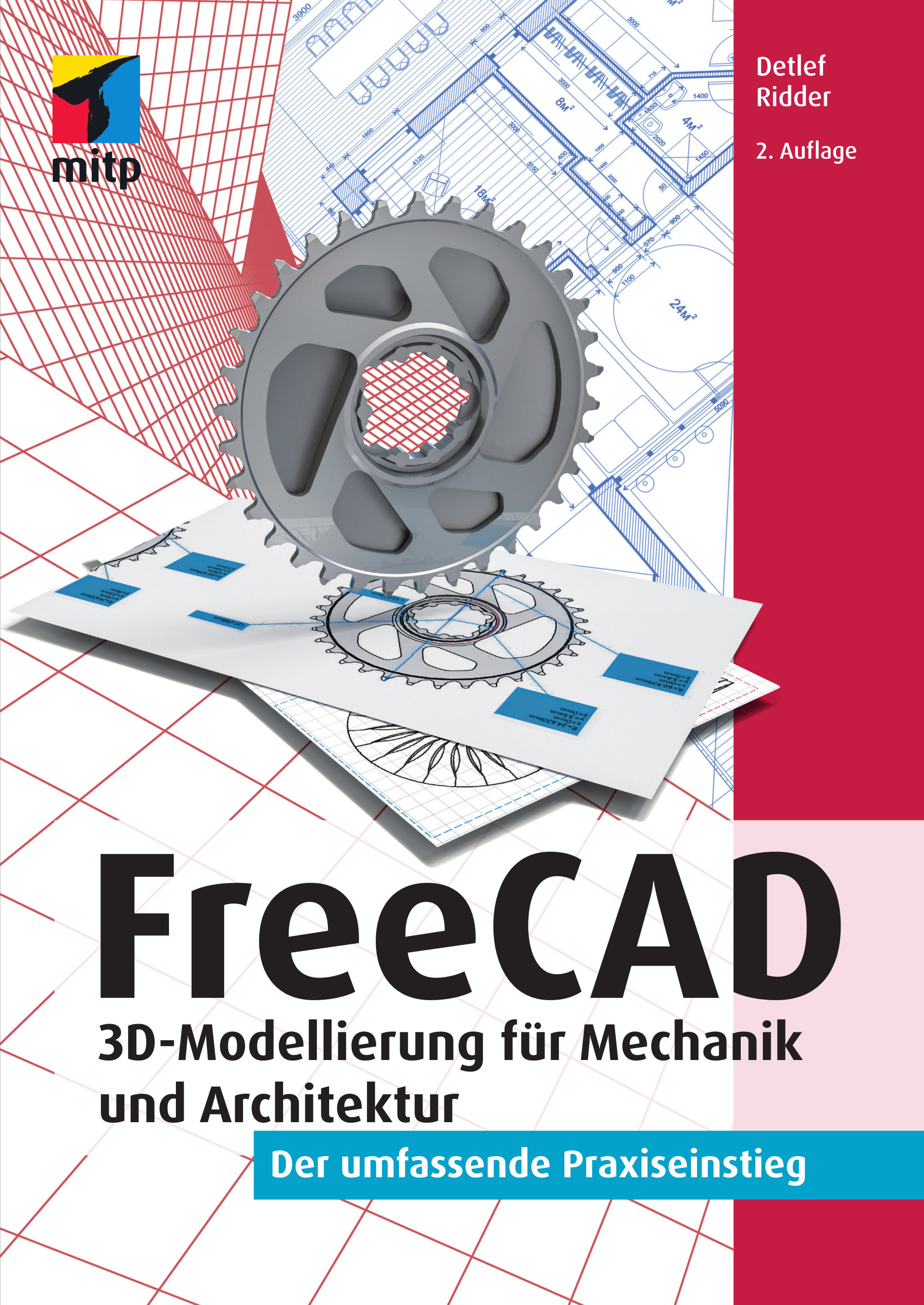
FreeCAD (2. Auflage)
3D-Modellierung für Mechanik und Architektur. Der umfassende Praxiseinstieg in 2. Auflage 2024.FreeCAD ist eine kostenlose Open-Source-Alternative zu professionellen CAD-Programmen und bietet einen vergleichbaren Funktionsumfang. In diesem Buch lernen Sie alle wichtigen Funktionen der Software für die 3D-Modellierung in Mechanik und Architektur kennen: von der Volumenmodellierung über das Ableiten technischer Zeichnungen und den Zusammenbau bis hin zu Festigkeitsberechnungen und der Aufbereitung der Daten für 3D-Druck und NC-Bearbeitungen.Nach einer umfassenden Einführung in die Benutzeroberfläche und Menüstruktur des Programms zeigt der Autor Ihnen Schritt für Schritt das Vorgehen bei der Bauteilkonstruktion. Anhand des Konstruktionsbeispiels eines Schraubenschlüssels können Sie den kompletten Entstehungsprozess praktisch nachvollziehen. Ein ebenfalls vollständiges Beispiel für die Konstruktion eines kleinen Hauses führt Sie leicht nachvollziehbar in die Architekturkonstruktion ein.Ein praktisches Glossar hilft Ihnen, die wenigen noch verbliebenen englischen Begriffe zu verstehen. Nach der Lektüre dieses Buches sind Sie bestens darauf vorbereitet, individuelle Mechanik-Modelle und Architekturkonstruktionen zu erstellen sowie die entsprechenden Fertigungsdaten zu erzeugen und eigene Projekte umzusetzen.Aus dem Inhalt:Einführung in die Benutzeroberfläche inkl. Arbeitsbereiche und WerkzeugkästenFunktionen für die VolumenmodellierungVollständiges Beispiel für ein Mechanik-Modell (Schraubenschlüssel)Funktionen und Beispiel für die ArchitekturkonstruktionAbleiten technischer Zeichnungen (TechDraw) inkl. BemaßungZusammenbau von Baugruppen mit AbhängigkeitenFestigkeitsberechnung (FEM)Ausgabe für 3D-Druck und NC-BearbeitungGlossar für englische Bezeichnungen in der Programmoberfläche zum DownloadAktuell zur FreeCAD-Version 0.21.X für Windows, Linux und macOSDie im Buch verwendeten Konstruktionsbeispiele sowie das Glossar stehen unter www.mitp.de/0796 zum kostenlosen Download zur Verfügung.Leseprobe (PDF-Link)

Konzeption eines IT-basierten Entscheidungsunterstützungssystems für die Gestaltung dezentraler Datenhaltungen in analytischen Informationssystemen
Der steigende Stellenwert von Daten als Ressource und die zunehmende Ausweitung des Aufgabenspektrums der IT-basierten Entscheidungsunterstützung verändern die logischen Architekturen analytischer Informationssysteme. Insbesondere die Datenhaltungen entwickeln sich vermehrt von zentralen Konstrukten hin zu dezentralen Konglomeraten verschiedenster Speicheransätze. Die zunehmend heterogenen Technologien und die häufig unzureichenden Erfahrungen mit neuartigen Konzepten erhöhen die Komplexität in der Planung und dem Betrieb analytischer Systemlandschaften. Das Ziel dieser Arbeit ist daher die Konzeption eines IT-basierten Entscheidungsunterstützungssystems für die Gestaltung dezentraler Datenhaltungen in analytischen Informationssystemen. Es wird ein Fachkonzept für die Überführung von Architekturansätzen aus realen Umgebungen in abstrahierte Architekturmuster sowie für die fallspezifische Ableitung von Handlungsempfehlungen entwickelt, prototypisch als Software-Werkzeug implementiert und evaluiert. Das hierbei entwickelte Verständnis eines Architekturmusters ermöglicht durch die Kombination von fachlichen-orientierten analytischen Capabilitites und technischen Aspekten eine ganzheitliche und systematische Unterstützung von IT-Architekturentscheidungen. Der Autor Julian Ereth ist als Forscher im Themenbereich Business Intelligence & Analytics (BIA) aktiv. Darüber hinaus ist er als Solution Architect beratend in der freien Wirtschaft tätig. Der steigende Stellenwert von Daten als Ressource und die zunehmende Ausweitung des Aufgabenspektrums der IT-basierten Entscheidungsunterstützung verändern die logischen Architekturen analytischer Informationssysteme. Insbesondere die Datenhaltungen entwickeln sich vermehrt von zentralen Konstrukten hin zu dezentralen Konglomeraten verschiedenster Speicheransätze. Die zunehmend heterogenen Technologien und die häufig unzureichenden Erfahrungen mit neuartigen Konzepten erhöhen die Komplexität in der Planung und dem Betrieb analytischer Systemlandschaften. Das Ziel dieser Arbeit ist daher die Konzeption eines IT-basierten Entscheidungsunterstützungssystems für die Gestaltung dezentraler Datenhaltungen in analytischen Informationssystemen. Es wird ein Fachkonzept für die Überführung von Architekturansätzen aus realen Umgebungen in abstrahierte Architekturmuster sowie für die fallspezifische Ableitung von Handlungsempfehlungen entwickelt, prototypisch als Software-Werkzeug implementiertund evaluiert. Das hierbei entwickelte Verständnis eines Architekturmusters ermöglicht durch die Kombination von fachlichen-orientierten analytischen Capabilitites und technischen Aspekten eine ganzheitliche und systematische Unterstützung von IT-Architekturentscheidungen. Einleitung.- Grundlagen und Bezugsrahmen.- Empirische Exploration.- Entwicklung eines Fachkonzepts.- Prototypische Umsetzung und Evaluation.- Schlussbetrachtung.- Literaturverzeichnis. Julian Ereth ist als Forscher im Themenbereich Business Intelligence & Analytics (BIA) aktiv. Darüber hinaus ist er als Solution Architect beratend in der freien Wirtschaft tätig.
Softwarearchitektur für Dummies
TRAGFÄHIGE LITERATUR FÜR IHRE SOFTWAREARCHITEKTURENBesuchen Sie eine Veranstaltung zu Softwarearchitektur oder stehen Sie in einem Projekt vor Architekturentscheidungen und wollen daher die aktuellen Architekturansätze verstehen? Dann hilft Ihnen dieses Buch. Holger Gast erläutert zunächst die grundlegenden Elemente von Architekturen und führt die technischen Hintergründe aus. Er erklärt Ihnen danach die klassischen Stile und Patterns und geht schließlich auf Cloud-Architekturen ein. Durchgängig legt er den Fokus auf konkrete Softwarestrukturen statt auf Theorie und ermöglicht Ihnen so einen verständlichen und zügigen Einstieg in das Thema. SIE ERFAHREN* Wie Sie Entscheidungen zum Aufbau einer Anwendung treffen* Wann bestimmte Architekturen oder Frameworks für Ihr Projekt geeignet sind* Welche Herausforderungen Sie bei der Erstellung oder Weiterentwicklung einer Anwendung lösen müssenHOLGER GAST studierte in Tübingen Informatik, promo-vierte zu Programmiersprachen und habilitierte sich zur Software-Korrektheit. Seit 2006 gibt er an der Universität Tübingen Vorlesungen und Seminare zu Softwarearchitektur und -design und leitet seit 2014 das Steinbeis-Beratungszentrum Agile-Entwicklung von Informationssystemen.

Wissensbasierte KI-Anwendungen
Dieses Buch beschreibt Methoden zur Entwicklung semantischer Anwendungen. Semantische Anwendungen sind Softwareanwendungen, die explizit oder implizit die Semantik, d.h. die Bedeutung einer Domänen-Terminologie, nutzen, um die Benutzerfreundlichkeit, Korrektheit und Vollständigkeit zu verbessern. Ein Beispiel ist die semantische Suche, bei der Synonyme und verwandte Begriffe zur Anreicherung der Ergebnisse einer einfachen textbasierten Suche verwendet werden. Ontologien, Thesauri oder kontrollierte Vokabularien sind das Herzstück semantischer Anwendungen.Das Buch enthält technologische und architektonische Best Practices für den Einsatz in Unternehmen. Die Autoren sind Experten aus Industrie und Wissenschaft mit Erfahrung in der Entwicklung semantischer Anwendungen.THOMAS HOPPE ist Wissenschaftlicher Mitarbeiter und Projektmanager in der Arbeitsgruppe “Data Analytics Center” (DANA) des Fraunhofer-Instituts für Offene Kommunikationssysteme (FOKUS) und Dozent für Datenbanken, Informationssysteme, Suchtechnologie und Bayes’sche Datenanalyse im Studiengang „Angewandte Informatik“ der Hochschule für Technik und Wirtschaft Berlin – University of Applied Sciences. Im Jahr 2008 gründete er zusammen mit drei Partnern die Ontonym GmbH. Außerdem gründete er 2014 das Datenlabor Berlin.BERNHARD HUMM ist Professor am Fachbereich Informatik der Hochschule Darmstadt - University of Applied Sciences, Deutschland. Er koordiniert den Promotionsstudiengang und ist geschäftsführender Direktor des Instituts für Angewandte Informatik Darmstadt (aiDa). Er leitet mehrere nationale und internationale Forschungsprojekte in Zusammenarbeit mit der Industrie und Forschungsorganisationen.ANATOL REIBOLD studierte Mathematik und Maschinenbau an der Universität von Novosibirsk. Derzeit arbeitet er als Supply-Chain-Analyst und Wirtschaftsmathematiker bei der Raiffeisen Waren-Zentrale Rhein-Main eG. Außerdem ist er einer der Mitbegründer von OntoPort und deren Chief Data Scientist.Einführung.- Ontologieentwicklung.- Compliance mit Metadaten.- Variety Management für Big Data.- Text Mining in der Wirtschaft.- Generierung natürlichsprachlicher Texte.- Sentimentanalyse.- Aufbau prägnanter Textkorpora aus Webinhalten.- Ontologiebasierte Modellierung von Webinhalten.- Personalisierte klinische Entscheidungsunterstützung für die Krebsbehandlung.- Anwendungen temporaler konzeptueller semantischer Systeme.- Kontextbewusste Dokumentation in der Smart Factory.- Wissensbasierte Produktionsplanung für Industrie 4.0.- Informationsaustausch in der Rechtsprechung.- Unterstützung des automatisierten Lizenzclearings.- Verwaltung von Kulturgütern: Umsetzung typischer Nutzungsszenarien von Kulturgutarchiven durch Semantic Web-Technologien.- Semantische Anwendungen für das Prozessmanagement.- Domänenspezifische semantische Suchanwendungen.
Revit 2024 for Architecture
THE LATEST AND MOST AUTHORITATIVE VERSION OF THE POPULAR STEP-BY-STEP TUTORIAL FOR REVIT ARCHITECTUREThe newly revised third edition of Revit 2024 for Architecture: No Experience Required is the latest update to the market-leading, real-world guide for learning and building with Revit—the powerful and sophisticated Building Information Modeling (BIM) software used by professionals around the world. This popular, user-friendly book teaches you the Revit interface and helps you understand the foundational concepts and features of the software. You’ll learn to design, document, and present a 3D BIM project with a continuous, step-by-step tutorial that guides you through every phase of the project: from placing walls, doors, windows, structural elements, dimensions, and text, to generating documentation, advanced detailing, site grading, construction scheduling, material takeoffs, and more. In addition, this book helps you prepare for the Autodesk Revit Architecture Certification Exam. Throughout the book, you will find helpful insights directly related to the exam. The last two chapters are dedicated entirely to the exam with a practice test at the end of the book. You’ll also:* Learn each phase of designing, documenting, and presenting a four-story office building using a simple yet engaging continuous tutorial* Follow the tutorial sequentially or jump to any chapter by downloading the project files from the Sybex website* Use the start-to-finish tutorial project as a reference for your own real-world projects and to develop a powerful Revit skillset* Gain thorough knowledge of Revit’s essential concepts and features to make the move from 2D drafting to 3D building information modeling* Get up to speed with advanced features, including new coverage of advanced walls, families, sites, topography, and moreThe Autodesk Revit 2024 for Architecture: No Experience Required, 3rd Edition, is the go-to guide for professionals and students seeking to learn Revit’s essential functions quickly and effectively. ERIC WING lives in Syracuse NY where he is the Director of BIM Services for C&S Companies, and is a popular speaker at events around the world speaking on many topics. Eric is also an author for LinkedIn Learning where he has authored over 70 full courses. Eric has truly been a leader in the AEC industry for over 25 years, and works on multi-scale multi-disciplinary projects daily. He is also currently a Professor at Syracuse University teaching BIM and Advanced BIM at the School of Architecture, and at the School of Engineering.

The Rational software Engineer
This book will serve as a framework for you as a software engineer seeking a fulfilling career and wishing to stay passionate and maintain a healthy mental state. It is filled with protocols to achieve effective life-long learning, navigate career development, adapt to changes, maintain work-life balance, and have a healthy lifestyle.As a successful software engineer you tend to focus on improving your technical skills: learning a new programming language, mastering another tool, or using a library. But you also need to build a solid mental framework that will help you navigate your professional development. You need to develop the skills that will help you be a happy software engineer.This book will help you if you feel frustrated, unmotivated, or unhappy; lost in your career path; or uncertain if you want to be a software engineer. It can help you deal with burnout, high levels of stress, or depression; or if you struggle to be productive while working from home.WHAT YOU WILL LEARN* Efficiently organize your work day* Know when and how to seek a new project, company, or career* Take care of your body and mind in a software engineering context* Understand what contributes to job satisfaction and how to integrate it into your career* Use non-coding activities for your and your company’s benefit* Build healthy relationships with managers and colleaguesWHO THIS BOOK IS FORThe typical reader of this book is a software engineer who is highly skilled in technical areas but may feel frustrated, unmotivated, or unhappy in their current position and looking for a way to navigate their professional development and find a healthy work-life balance.The book also will appeal to audiences of other IT or tech professionals, such as project managers, product owners, or designers, who work closely with software engineers and want to understand the challenges they face in their roles. Additionally, individuals who are considering a career in software engineering or development may benefit from the book by gaining insight into the profession and understanding the skills and mindset required to be successful.Mykyta Chernenko, originally from Kharkiv, Ukraine, now resides in Oslo, Norway. Beginning with Backend with Python, Mykyta soon expanded his toolkit to include Fullstack development and diverse languages like Go, Kotlin, and Typescript. Beyond his main technical focus, Mykyta has experience in DevOps, Data Engineering and Product Management.Throughout his professional journey, Mykyta has been a part of various intriguing projects through his experience in product, outsource, and consultancy companies. He contributed to the Azure integration of Nutanix's cluster discovery project, and played a central technical role at Factmata, taking over the engineering and infrastructure. He further continued to product teams at both Mercell as a Tech Lead and as a Senior Software Engineer at Arundo Analytics.Separate from his project contributions, Mykyta has shown a strong passion for teaching and sharing his experience. He has taken on mentoring roles throughout his career, guiding and supporting over 20 professionals in the field, and expressed himself through his blog, "The Rational Software Engineer" on Hackernoon.Understanding that Software Engineering is driven by people and their thinking, Mykyta consistently tries to broaden his horizons in the psychology and neurobiology realm through books and courses.Now Mykyta is a Co-Founder of Nemlys - a promising tech startup dedicated to helping couples improve their communication through personalized AI questions for their dates.Part 1: Passion.- Chapter 1: Job Satisfaction.- Chapter 2: Work Time Organization.- Chapter 3: There is no Perfect Project.- Chapter 4: Initiative.- Chapter 5: Burnout.- Chapter 6: Avoiding What is Bad in the Long Run.- Chapter 7: Career Change.- Chapter 8: How to Find a Dream Job.- Part 2: Mindset.- Chapter 9: Lifelong Learning.- Chapter 10: Collaboration.- Chapter 11: Values.- Chapter 12: Mental and Physical Health.- Chapter 13: Company Attitude.- Chapter 14: Handling Failures.- Part 3: Learning.- Chapter 15: What to Learn.- Chapter 16: Learning Effectively.- Chapter 17: Feedback.- Chapter 18: Learning from Other People.- Chapter 19: Sharing Your Knowledge.- Chapter 20: Learning the Most Out of Code.- Chapter 21: Rotation.

Augmented Reality im Marketing
Die Einsatzmöglichkeiten von Augmented Reality – der Erweiterung der Realität durch digitale Elemente – im E-Commerce sind vielfältig,. Der Verlauf der Customer Journey bietet eine sinnvolle Struktur, um eine systematische Einordnung verschiedener Augmented-Reality-Anwendungen aufzuzeigen. So wird anhand von zahlreichen Beispielen deutlich, dass die Möglichkeiten dieser Technologie noch bei Weitem nicht ausgeschöpft sind und für zahlreiche Unternehmen großes Potenzial bergen.VITTORIA VON GIZYCKI ist Professorin für Allgemeine Betriebswirtschaftslehre, insbesondere Marketing, an der Hochschule für Wirtschaft und Recht Berlin (HWR). Darüber hinaus nimmt sie Lehraufträge zum Thema E-Commerce und Digital Media wahr. Ihr besonderes Forschungsinteresse gilt den Veränderungen im Kaufprozess von Konsumenten durch digitale Elemente insbesondere durch Augmented Reality und das Metaverse.Augmented Reality – Begriff und Entwicklung.- Augmented Reality in der Customer Journey .- Use Cases.

Coding Art
Finally, a book on creative programming, written directly for artists and designers! This second edition offers expanded and updated content incorporating the latest advancements and trends in the field of creative programming, also for creatives who want to work directly with P5.js and online. It delves deeper into the intricacies of computational art. It includes fresh case studies that explore real-world applications of coding art, inspiring readers to think beyond traditional boundaries.Rather than following a computer science curriculum, this book is aimed at creatives who are working in the intersection of design, art, and education. Following a real-world use case of computation art, you'll see how it relates back to the four key pillars, and addresses potential pitfalls and challenges in the creative process. All code examples are presented in a fully integrated Processing example library, making it easy for readers to get started.This unique and finely balanced approach between skill acquisition and development makes Coding Art, Second Edition the ideal reference book for both creative programming and the creative process for professors and students alike.WHAT YOU’LL LEARN* Review ideas and approaches from creative programming to different professional domains* Work with computational tools like the Processing language* Understand the skills needed to move from static elements to animation to interaction* Use interactivity as input to bring creative concepts closer to refinement and depth* Simplify and extend the design of aesthetics, rhythms, and smoothness with data structures* Leverage the diversity of art code on other platforms like the web or mobile applications* Understand the end-to-end process of computation art through real world use cases* Study best practices, common pitfalls, and challenges of the creative processWHO THIS BOOK IS FORThose looking to see what computation and data can do for their creative expression; learners who want to integrate computation and data into their practices in different perspectives; creative technologists, educators, digital artists and those who already know how to program, seeking creativity and inspiration in the context of computation and data.Chapter 1: Introduction.- Chapter 2: Idea to visuals.- Chapter 3: Composition and structure.- Chapter 4: Refinement and depth.- Chapter 5: Completion and production.- Chapter 6: Taking a larger project through all four steps.- Chapter 7: Flow fields and particle storms with p5.js.- Chapter 8: Making sense of touch and sensors with p5.js.- Chapter 9: Dealing with problems.- Chapter 10: Learning path.- Chapter 11: Creative processes.

NFTs for Business
Move beyond the tech jargon and the hype of non-fungible tokens (NFT)s and become empowered to think through solutions to solve your specific business problems. NFTs are important because they enable the manipulation of digital assets in ways that are closer to the way we manipulate physical assets. This book will serve as an introduction to the space and as a source of inspiration for connecting problem and solution dots. Understanding what core problems NFTs solve and how they solve them will enable business leaders to design solutions and to put together the teams that will help them deliver on the promises of NFTs. This book is focused on explaining what NFTs are, what problems they solve, and what what technology makes them possible. It provides the larger technological, economic, and political context within which NFTs are emerging. You'll learn how NFTs are currently being used, such as in assessing authenticity, creating scarcity, identifying provenance, establishing and confirming ownership, and enabling the tracking and collection of royalties You'll also see how NFTs allow for the creation of unique digital assets that can be owned and traded just like physical assets. NFTs is your guide to the emerging possibilities of ownership and monetization of digital assets in established industries. What You'll Learn See what problems NFTs can solveStudy the fundamentals of blockchain technologyUnderstand what “Web3” means and the possibilities ahead Identify problems that NFTs can solve Deliver NFT and blockchain based solutions Who This Book Is For Entrepreneurs, executives, and product line managers in the following industries: Art, Music, Podcasting, Gaming, Finance, and Real Estate. Additional audiences include Retail, Fashion, Entertainment, Event Management and Supply Chain Management. 1. The Key Problems NFTs Solve.- 2. The Technology Behind NFTs.- 3. Creating and Minting NFTs.- 4. The Art World and NFTs.- 5. The Gaming Industry and NFTs.- 6. The Music Industry and NFTs.- 7. Other Use Cases.-8 The Future of NFTs.

SAP S/4HANA Asset Management
S/4HANA empowers enterprises to take big steps towards digitalization, innovation, and being mobile-friendly. This book is a concise guide to SAP S/4HANA Asset Management and will help you begin leveraging the platform’s capabilities quickly and efficiently. SAP S/4HANA Asset Management begins with an overview of the platform and its structure. You will learn how it can help with data storage and analysis, business processes, and reporting and analytics. As the book progresses, you will gain insight into single, time-based, performance-based, and multiple counter-based strategy plans. Any project is incomplete without a budget, and this book will help you understand how to use SAP S/4HANA to create and manage yours. The book’s real-life examples of asset management from contemporary industries reinforce each concept you learn, and its coverage of newer technologies and offerings in S/4HANA Asset Management will give you a sense of the immense potential offered by the platform. When you have finished this book, you will be ready to begin using SAP/S4HANA Asset Management to improve operational planning, maintenance, and scheduling activities in your own business. What You Will Learn * Position S/4HANA Asset Management within the overall Business Applications suite * Explore essential functionalities for enterprise asset hierarchy mapping * Efficiently map both unplanned and planned maintenance activities * Seamlessly integrate asset management, finance, controlling, and budgeting * Unleash reporting and analytics in Asset Management * Configure Asset Management to meet your S/4HANA requirements Who This Book Is For Consultants, project managers, and SAP users who are looking for a complete reference guide on S/4HANA Asset Management. Chapter 1: SAP S/4HANA for Asset Management- Chapter 2: Organizational Structure for Asset Management.- Chapter 3: Master Data for Asset Management.- Chapter 4: Business Process in Asset Management.- Chapter 5: Preventive Maintenance.- Chapter 6: Controlling and Budgeting.- Chapter 7: Asset Management Integration with Other Business Applications in S/4HANA.- Chapter 8: Innovations with Asset Management.

The Human Firewall
Nicht nur im privaten Umfeld, auch im beruflichen sind Computer, Smartphones und das Internet Begleiter unseres täglichen Lebens. Dabei spielt der Schutz von Informationen eine wichtige Rolle. Über 70% aller Cyber-Angriffe zielen auf den Nutzer ab, lediglich ein kleiner Teil auf die tatsächlichen Systeme. Daher sind geschulte und aufmerksame Mitarbeiter ein unabdingbarer Bestandteil der allgemeinen Sicherheitsstrategie zum Schutz der Informationen. Das Ziel ist dabei der Aufbau einer Kultur der Cyber-Sicherheit, einer sogenannten human firewall.Florian Jörgens ist Chief Information Security Officer der Vorwerk Gruppe. Zusätzlich ist er als Keynote-Speaker, Dozent, Autor und wissenschaftlicher Mitarbeiter an verschiedenen Hochschulen tätig. Darüber hinaus hält er Fachvorträge zu den Themen Informationssicherheit, Awareness und Cybersicherheit.Florian Jörgens wurde im September 2020 vom CIO Magazin mit dem Digital Leader Award in der Kategorie "Cyber-Security" ausgezeichnet.Einführung.- Aufmerksame Mitarbeiter: der beste Schutz.- Pre-Phase.- Durchführung.- Post-Phase.- Kennzahlen und dauerhafte Implementierung.- Fazit.

Excel Formeln und Funktionen für Microsoft 365 und Excel 2013-2021
Funktionen wie SUMME oder MITTELWERT gehören für Excel-Anwender zum täglichen Werkzeug. Darüber hinaus stellt das Programm einen umfangreichen Katalog an Funktionen für (fast) jeden Einsatzzweck bereit – und zudem die Möglichkeit, eigene zu definieren. Dieses Buch vermittelt Ihnen mit gut nachvollziehbaren Anleitungen und Abbildungen das geballte Profiwissen in Excel. Lernen Sie die Datums-, Text-, Logik-, Nachschlage-, Verweis- und Matrixfunktionen sowie ausgewählte Funktionen aus den Bereichen Statistik und (Finanz-)Mathematik mit all ihren Einsatzmöglichkeiten kennen und sicher beherrschen. Außerdem behandelt die Autorin Themen wie die bedingte Formatierung, die Visualisierung mit Diagrammen, die Fehlerbehandlung in Formeln und den viel zu wenig beachteten Solver. Mit seinen zahlreichen praktischen Beispielen dient dieses Handbuch nicht nur als reines Nachschlagewerk, sondern gibt Ihnen auch Tipps, wie Sie die passende Funktion finden.Aus dem Inhalt:- Grundlegende Techniken rund um Formeln und Funktionen- Nützliche Werkzeuge, z. B. Steuerelemente und bedingte Formatierung- Datums-, Uhrzeit- und Textfunktionen- Logische Funktionen und ihre Verwendung (WENN, WENNS, UND, ODER usw.)- Eigene Funktionen definieren ohne Programmierkenntnisse- SVERWEIS & Co., die Nachschlage- und Verweisfunktionen- Tabellen mit neuen Matrixfunktionen filtern und umstellen- Summen, Mittelwerte und Rangfolgen berechnen- Statistische Maßzahlen und Analysen (Verteilungen, Prognosen und Korrelationen)- Zahlen runden und wichtige mathematische Funktionen einsetzen- Verzinsung und Abschreibungen ermitteln- Lösungen mit dem Solver optimieren

Windows 11 - Das große Handbuch (5. Auflg.)
Das Standardwerk für Einsteiger und Fortgeschrittene in neuer 5. Auflage aus November 2023.Das große Standardwerk zu Windows 11! In diesem umfassenden Handbuch erfahren Einsteiger und bereits versiertere Nutzer alles, um das Betriebssystem in seiner neuesten Version sicher und effektiv zu handhaben. Die Windows-Expertin Mareile Heiting hat das geballte Wissen zu Windows 11 für eine reibungslose Anwendung in der Praxis aufbereitet und hält dabei eine Fülle an Insidertipps für Sie parat. So beherrschen Sie alles schnell und mühelos – von der Dateiverwaltung über die Systemwartung bis zum Einrichten von Netzwerken.Aus dem Inhalt:Windows 11 installieren und upgradenSchnelleinstieg in die neue OberflächeStartmenü und Desktop anpassenExplorer und OneDriveEdge und die neuen BrowserfunktionenE-Mails, Termine, Kontakte, Chats und VideokonferenzenWidgets und FenstermanagementProgramme installieren, Geräte verwaltenFotos, Videos, Musik und SpieleComputer vernetzen, Benutzerkonten einrichtenDatensicherheit, Backup und WiederherstellungÜber die Autorin:Mareile Heiting ist seit über zwei Jahrzehnten als IT-Autorin tätig und hat seither zahlreiche Bücher und Artikel für namhafte Fachmedien veröffentlicht. Sie ist spezialisiert auf die Themen Windows, Office, Android, Bild- und Videobearbeitung sowie Webdesign. Ihre Leserinnen und Leser schätzen Ihr Talent, selbst schwierige IT-Themen für Einsteiger verständlich darzustellen.