

Software

Concepts and Semantics of Programming Languages 2
This book – composed of two volumes – explores the syntactical constructs of the most common programming languages, and sheds a mathematical light on their semantics, providing also an accurate presentation of the material aspects that interfere with coding.Concepts and Semantics of Programming Languages 2 presents an original semantic model, collectively taking into account all of the constructs and operations of modules and classes: visibility, import, export, delayed definitions, parameterization by types and values, extensions, etc. The model serves for the study of Ada and OCaml modules, as well as C header files. It can be deployed to model object and class features, and is thus used to describe Java, C++, OCaml and Python classes.This book is intended not only for computer science students and teachers but also seasoned programmers, who will find a guide to reading reference manuals and the foundations of program verification.THERESE HARDIN is Professor Emeritus at the Laboratoire d'Informatique de Paris 6 (LIP6), Sorbonne University, France.MATHIEU JAUME is a lecturer at the Laboratoire d'Informatique de Paris 6 (LIP6), Sorbonne University, France.FRANÇOIS PESSAUX is Associate Professor in the Computer Science and Systems Engineering Unit (U2IS) of ENSTA Paris, France.VERONIQUE VIGUIE DONZEAU-GOUGE is Professor Emeritus at the Centre d'études et de recherche en informatique (CEDRIC) of the Conservatoire national des arts et métiers (Cnam Paris), France.Foreword ixPreface xiCHAPTER 1. NAMESPACES: MODEL AND OPERATIONS 11.1. Reusing, dividing, confining 21.1.1. Analysis of some developer needs 21.1.2. Meeting developer needs 31.2. Namespaces 51.2.1. Namespaces definition 61.2.2. Extending notions of environment and binding 81.3. kit development 121.3.1. Namespace of a kit 141.3.2. Order of fields introduction 151.3.3. Typing kits 151.3.4. kit values 181.3.5. kit export, confining fields 221.3.6. kits import 281.3.7. Stages of kit development 321.4. Incomplete kits 331.4.1. Type and value of an incomplete kit 341.4.2. Completion of an incomplete kit 341.4.3. Confining an incomplete kit 361.5. Parameterized kits 361.5.1. kits parameterized by a type 361.5.2. kits parameterized by types and values 411.5.3. Confinement, parametrization, incomplete kits and export 451.6. Functors of kits 461.7. kit extension 491.7.1. Presentation of extension 491.7.2. Confinement and extension 551.8. Conclusion 59CHAPTER 2. MODULES 612.1. Modules in Ada 622.1.1. Developing modules 622.1.2. Export and confinement 652.1.3. Nesting modules 662.1.4. Importing a module 662.1.5. Flattening an import 672.1.6. Generic modules 682.1.7. Modules and separate compilation 712.2. Modules in OCaml 712.2.1. Module definition 722.2.2. Export and confinement 732.2.3. Confinement of type definitions 782.2.4. Functors 822.3. Modularity, namespaces and W-kit 852.3.1. Declaration interfaces 852.3.2. W-kits 862.3.3. Modularity and header files in C 86CHAPTER 3. CLASS AND OBJECT FEATURES 933.1. Object-oriented features 933.1.1. Objects 943.1.2. Classes 953.2. kits and object features 1043.2.1. Modeling classes 1043.2.2. Modeling objects 1073.2.3. Inheritance, redefinition and late binding 1093.2.4. Incomplete C-kits, parameterized C-kits 1133.2.5. Subclassing, subtyping 1153.2.6. Type languages, classes and objects 119CHAPTER 4. CLASSES IN SELECTED LANGUAGES 1234.1. Classes in Java 1234.1.1. General presentation 1234.1.2. Modules and packages 1244.1.3. Classes 1254.1.4. Marks 1314.1.5. Developing classes 1344.2. Classes in C++ 1444.2.1. Header files, namespaces, confinement 1454.2.2. Classes 1484.2.3. Inheritance and confinement 1554.2.4. Overloading in C++ 1654.2.5. Parameterized classes 1684.3. Classes in OCaml 1744.3.1. Presentation 1744.3.2. An overview of classes 1744.3.3. Marks, incomplete classes, parametrization 1814.3.4. Objects 1864.3.5. Class signatures: confinement and inheritance 1924.3.6. Multiple inheritance 1954.3.7. Other features 1974.4. Presentation of Python 1974.4.1. Getting started 1984.4.2. An overview of classes, modules and types 1994.4.3. Names and assignment 2084.4.4. Assignment and typechecking 2114.4.5. Overloading 2134.4.6. Modules and packages 2174.4.7. Confinement 2184.4.8. Inheritance 2194.4.9. Incomplete C-kits and abstract classes 2214.4.10. Other features 222Appendix: Questions to Guide Learning 225List of Notations 229References 231Index 233

Foundation Db2 and Python
Work with Db2 to write SQL and access databases using optimized code for the fastest response. This book will give you complete documentation on DB2 via Python for the IBM_db module and provide a number of examples for the usage of each module API.Begin by getting your free version of Db2 for Linux and Windows. While the book concentrates more on the Linux version of Db2, it also covers enough of the Windows version so that you're comfortable with obtaining and installing Db2 on your version of Windows. Next, you'll see how to install the sample database that comes with Db2, and take some data from the web to design a database around it, including tables and indexes.For Db2 to be really useful you need to use strong SQL expressions. This book provides specific examples of how to avoid using poor ones that can cause extra processing time for the query. Lastly, you'll look at each API in the ibm_db and ibm_db_dbi module. This module is not sponsored by IBM and must be installed separately from the Db2 database.After reading Foundation Db2 and Python you'll be able to install Db2 on Windows or Linux, and perform backups and restore data.WHAT YOU'LL LEARN* Obtain and install Db2 properly on Linux and Windows* Create databases and load them on Db2* Work with ibm_db and ibm_db_dbi API modules for Python* Write SQL for Db2* Review the future of the ibm_db Python module WHO THIS BOOK IS FORPython programmers and DB2 administrators interested in building application with Python and DB2 W. David Ashley is a technical writer for SkillSoft where he specializes in open source, particularly Linux. As a member of the Linux Fedora documentation team he recently led the Libvert project documentation, and wrote the Python programs included with it. He has developed in 20 different programming languages during his 30 years as a software developer and IT consultant, including more than 18 years at IBM and 12 years with American Airlines. Chapter 1: IntroductionChapter Goal: An introduction to Db2 for Linux and Windows.No. of Pages: 10Sub-Topics:Glossary of termsIntroduction to the Db2Obtaining the install files for Db2What you need as far as your hardware and OS for your Db2 machineHow to organize your file system to support Db2 data basesChapter 2: Installing Db2Chapter Goal: Describes how to install Db2 on Linux and WindowsNo. of Pages: 50Sub-Topics:Preparing your server for Db2Installing Db2 on LinuxInstalling Db2 on WindowsInstalling the ibm_db moduleTest the connection between Python/ibm_db and Db2Chapter 3: Db2 ManagementChapter Goal: Create Python scripts to access Db2No. of Pages: 40Sub-Topics:Layout of the typical Python script to access Db2The ibm_db moduleThe order of processing in almost all Python scripts accessing Db2Using exceptions in your Python scriptsChapter 4: Installing the Db2 sample database and a custom databaseChapter Goal: Learn how to design and create your own databasesNo. of Pages: 35Sub-Topics:Install the Db2 sample databaseWrite some simple Python scripts to access the sample data baseDesign and install the Orbital Launch data baseWrite some simple Python scripts to assess the Orbital Launch data baseChapter 5: Creating Utility Modules for Accessing Db2Chapter Goal: Creating modules that access ibm_dbNo. of Pages: 40Sub-Topics:Create you first utility moduleUse functions or classes in your module, or both?Organizing your module(s)Accessing your moduleChapter 6: Documenting the ibm_db ModuleChapter Goal: Documenting the ibm_db Module APINo. of Pages: 40Sub-Topics:Document each API in the ibm_db moduleDocument all input and outputs to each APIProvide multiple examples for each APIChapter 7: Writing Good SQL for Db2 (this might cover multiple chapters)Chapter Goal: Creating optimized SQL for Db2No. of Pages: 60Sub-Topics:Minimize the passes through the dataCode for concurrencyLocking and isolation levelsHow to avoid writing codeThe importance of indexesOptimizationSequential vs. random data accessTypes of joinsChapter 8: Where is the ibm_db Module GoingChapter Goal: Explain why IBM does not directly support the ibm_db moduleNo. of Pages: 25Sub-Topics:Why ibm_db is open source?How does ibm_db use underlying systems?Why is this module not included with Db2?Some future items to be added to ibm_db moduleChapter 9: Db2 provided utilitiesChapter Goal: Describe some of the utilities that come with Db2 and possibly some extra cost utilitiesNo. of Pages: 50Subtopics:What utilities are covered has yet to be identifiedChapter 10: BLOB data, what is it and how do you use itChapter Goals: Describe what a blob is and how to use oneNo. of Pages: 50Subtopics:Describe the different kinds of BLOBsAccessing BLOB data in PythonWhat kinds of data can be stored in a BLOBUtilizing BLOBs to store Python data, how to keep data and metadata together in Db2

Practical Vaadin
Implement web applications in Java using the open-source Vaadin framework version 20 and later. This easy-to-follow book covers all the key concepts and steps to become competent with modern versions of Vaadin. The book covers everything from setting up the development environment to implementing advanced features such as Server Push and database connectivity. The book helps you become proficient in the Vaadin framework, prepare for Vaadin certifications, and shows you how to apply the power of the Java programming language in developing applications for the web.Author Alejandro Duarte starts with an introduction to web development and its key technologies. He then describes and demonstrates how Vaadin simplifies web development by allowing you to implement web graphical user interfaces using the Java programming language without having to code in JavaScript or HTML. Once a solid foundation on the key web and Vaadin concepts is established, Duarte digs deeper into explaining layouts and user interface components such as combo boxes, dialogs, upload fields, and data grids. He also covers topics such as styling with CSS, data binding, client-side views implementation with TypeScript, and integration with Spring Boot and Jakarta EE.WHAT YOU WILL LEARN* Build web applications in Java using Servlet technology and Vaadin* Combine layouts and user interface components to create views in Java* Connect values in UI components to Java objects in the server through data binding* Customize display styles and add responsive capabilities using CSS* Display tabular data using the Grid component* Implement client-side views using TypeScript* Integrate Vaadin applications with Spring Boot and Jakarta EE* Connect Vaadin applications to SQL databasesWHO THIS BOOK IS FORDevelopers with a basic or higher knowledge of Java programming who want to build on their Java skills to create web graphical user interfaces, Java developers who want to create web applications without having to code in JavaScript, and developers who are preparing to take and pass Vaadin certification examsALEJANDRO DUARTE is a Software Engineer currently working for Vaadin Ltd as their Developer Relations Manager. This is his third book on Vaadin. Alejandro started to code at age 13 using the BASIC programming language on a black screen with a blinking cursor serving as the IDE. He quickly moved to the C and C++ languages—which he still loves and enjoys—and then to Java during his Computer Science studies at the National University of Colombia from where he graduated. Alejandro moved to the UK and later to Finland to foster his career in the open-source software industry. He became one of the well-known faces in the Vaadin and Java communities, having published articles and videos with hundreds of thousands of views in official Vaadin channels and other content portals, and presented technical topics at international Java conferences and Java User Groups. Alejandro splits his free time between his passion for the electric guitar and the photography world. PART I. GETTING STARTED1. The World of Vaadin2. Setting Up the Development EnvironmentPART II. THE FUNDAMENTALS OF VAADIN3. Layouts4. UI Components5. Data Binding6. The Grid ComponentPART III. ADVANCED FEATURES7. Multi-view Navigation and Routing8. Server Push9. The Element API10. Custom Styles and Responsiveness11. Client-side Views with TypeScriptPART IV. INTEGRATIONS AND DATABASE CONNECTIVITY12. Spring Boot13. Jakarta EE

Methoden zur durchgängigen virtuellen Eigenschaftsentwicklung von Fahrzeugen mit Bremsregelsystem
Fabian Fontana zeigt einen durchgängigen virtuellen Entwicklungsprozess zur Eigenschaftsentwicklung von Fahrzeugen mit Bremsregelsystem mitsamt den erforderlichen Methoden. Dabei baut der Autor eine Simulationsumgebung auf und validiert diese nach objektiven Maßstäben. Darüber hinaus wird ein Vorgehen zur Definition objektiver Bewertungskennwerte für Fahrzeugeigenschaften formuliert und auf ein Spurwechselmanöver angewendet, wobei Kriterien für die Stabilität und die Agilität des Fahrzeugs identifiziert werden. Weiterhin wird ein mehrstufiges Verfahren zur Sensitivitätsanalyse definiert und dieses für statische Fahrzeug- und Applikationsparameter des Bremsregelsystems eingesetzt. Abschließend zeigt er den Praxisnutzen der Methoden in einem Anwendungsbeispiel auf. Virtueller Entwicklungsprozess für Fahrzeuge mit Bremsregelsystem.- Objektive Bewertung der Fahrzeugeigenschaften.- Sensitivitätsanalysen und Robustheitsuntersuchung.- Exemplarische Methodenanwendung auf ein Fahrzeugprojekt.
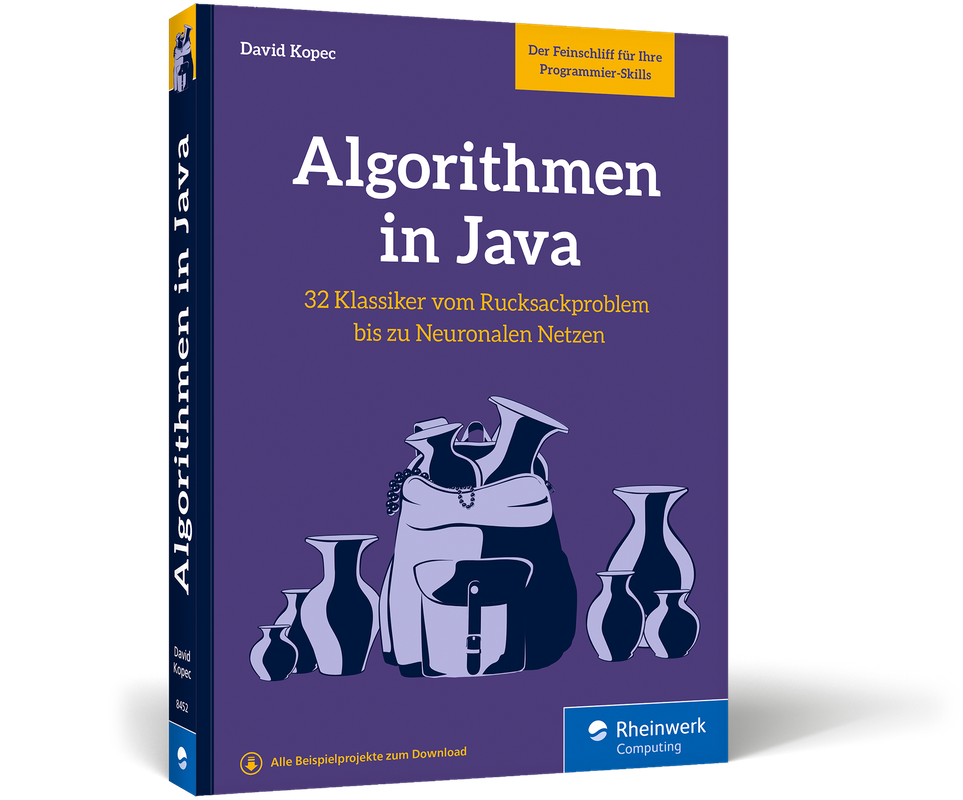
Algorithmen in Java
Programmieren will trainiert werden, und Algorithmen gehören zum Rüstzeug hinzu. Schlagen Sie zwei Fliegen mit einer Klappe und verbessern Sie Ihre Java-Skills anhand klassischer Algorithmen, von der Suche im Binärbaum über k-Means bis zum Rucksackproblem. Dieses Buch ist Grundausbildung und Fundgrube für Coding Workouts zugleich. Profitieren Sie von der Lehr- und Praxiserfahrung des Autors: David Kopec hat 32 Klassiker der Informatik für Sie herausgesucht, die Ihnen wichtige Lösungsstrategien aufzeigen und einen starken Trainingseffekt versprechen.Ideal für alle, die ihre ersten Schritte in der Programmierung hinter sich haben und jetzt voll durchstarten wollen!Aus dem Inhalt:Zum Einstieg: Unknackbare Verschlüsselung, Fibonacci-Folge, die Türme von HanoiSuchalgorithmen: DNS-Suche, Labyrinthe u.v.m.Bedingungserfüllung: Wortsuchrätsel, Acht-Damen-Problem u.v.m.Grafen, kürzeste Wegek-Means-ClusteringEinfache neuronale NetzeMinimax: Tic-tac-toe, Vier gewinntLeseprobe (PDF)

AutoCAD 2022 und LT 2022 für Architekten und Ingenieure
Dieses Grundlagen- und Lehrbuch zeigt Ihnen anhand konkreter Praxisbeispiele aus Architektur, Handwerk und Technik die Möglichkeiten von AutoCAD 2022 und AutoCAD LT 2022 und bietet insbesondere AutoCAD-Neulingen einen gründlichen und praxisnahen Einstieg in CAD.Mit dem Buch und der 30-Tage-Testversion von der Autodesk-Webseite können Sie sofort beginnen und Ihre ersten Zeichnungen erstellen. Sie arbeiten von Anfang an mit typischen Konstruktionsaufgaben aus Studium und Praxis. Zu jedem Kapitel finden Sie Übungsaufgaben, Testfragen und Lösungen.Zahlreiche Befehle werden detailliert erläutert, wie zum Beispiel:Zeichnen mit LINIE, KREIS, BOGEN, Polylinie, Schraffur und weitereBearbeiten (VERSETZ, STUTZEN, DEHNEN, STRECKEN, Skalieren und weitere), Anordnungen rechteckig, polar oder entlang Pfaden, Griffe, Eigenschaften-ManagerKomplexe Objekte: BLOCK, Palette, Editor, Attribute, externe Referenzen3D-Volumenkörper, Netzkörper und NURBS-Flächen (Freiformmodellierung), neue 3D-Grafik (Vorschau)Vergleichsfunktion für Zeichnungen und externe ReferenzenBenutzeroberfläche anpassen, Makro-Aufzeichnung, AutoLISP-ProgrammieranleitungDeutsche Beschreibung der englischen ExpresstoolsAus dem Inhalt:Allgemeine Bedienung mit Multifunktionsleisten, Registern und PalettenSchnelleinstieg ins Zeichnen mit RasterfangExaktes Zeichnen mit Koordinaten, Objektfang und SpurlinienZeichnungsorganisation mit Layern, Vorlagen und StandardsTexte, Schriftfelder und Tabellen, Verbindung zu ExcelBemaßungsbefehle und Bemaßungsstile, SpezialfälleParametrische Variantenkonstruktionen, dynamische BlöckeZusammenarbeit über Web- und Mobil-App, AblaufverfolgungMaßstäbliches Plotten, auch bei verschiedenen Einheiten (mm, cm, m)Neue Funktionen für Web und MobileZahlreiche Übungsfragen mit AntwortenLeseprobe (PDF-Link)

Das PMP-Examen (10. Auflg.)
Die gezielte PrüfungsvorbereitungExamens-Update 2021Beispielfragen zum Download, ein umfangreiches Stichwortverzeichnis sowie eine Formelsammlung machen dieses Buch zu einem perfekten Begleiter auf Ihrem Weg zum zertifizierten PMP.Das PMP-Zertifikat des Project Management Institutes (PMI®) gilt als der international anerkannte Nachweis für Projektmanagementkompetenz. Wenn Sie Ihren Kenntnisstand in diesem Bereich durch ein Zertifikat nachweisen und ein Project Management Professional (PMP) werden wollen, bereitet Sie dieses Buch effektiv auf Ihre Prüfung vor.Die Autoren bieten eine übersichtliche Darstellung der prüfungsrelevanten Inhalte und vermitteln das Wissen, das Sie brauchen, um PMP zu werden. Bereiten Sie sich mit dieser aktualisierten Auflage gezielt auf das Zertifikat vor und erkennen Sie Ihre Schwachstellen. Außerdem erhalten Sie wertvolle Tipps zum Ablauf des Examens selbst.Aus dem Inhalt:Der Ablauf der PrüfungEthik und Maßstäbe für professionelles VerhaltenGrundstrukturen im ProjektmanagementIntegrationsmanagementInhalts- und UmfangsmanagementTerminmanagementKostenmanagementQualitätsmanagementPersonalmanagementKommunikationsmanagementRisikomanagementBeschaffungsmanagementStakeholdermanagementFormelsammlungZugriff auf exemplarische Prüfungsfragent den Mobile AppsLeseprobe (PDF-Link)
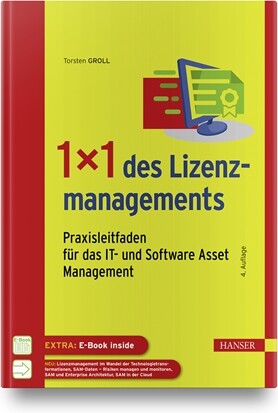
1x1 des Lizenzmanagements (4. Auflg.)
Unter dem Leitsatz »Lizenzmanagement im Wandel der Technologietransformation« wurde die 4. Auflage ausführlich überarbeitet und aktualisiert.Die Transparenz der IT-Assets, ist ein wesentlicher Bestandteil für die Sicherstellung eines wirtschaftlichen und risikoarmen IT-Betriebs in Hybrid-Umgebungen. Die verstärkte Migration der lokalen IT in die Cloud erhöht die Komplexität im Verwalten von Softwarelizenzbedarfen.Zudem sind Cyberrisiken der Software Assets sowie DSGVO-Schwachstellen im IT-Betrieb risikoarm zu managen. Dadurch unterliegt das heutige SAM enormen Veränderungen. Der neue Fokus auf einen lizenzkonformen und wirtschaftlich optimierten SAM-Betrieb bewegt sich weg vom »Zählen, Messen, Wiegen« hin zu Abonnement und Verbrauchsabrechnungsmodellen. Die neuen Herausforderungen, lokale IT-Assets mit Cloud-Services im Hybrid-Modus zu verwalten und zu steuern, bedingen verstärkt ein Nutzungsmanagement statt eines Lizenzmanagements.Althergebrachte Lizenzmodelle werden immer mehr durch Sourcing- und Servicemodelle ersetzt, die eine Berücksichtigung vielfältiger Parameter im SAM-Betrieb erfordern.Aus dem Inhalt:Grundlagen des LizenzmanagementsDer SAM-Lifecycle-Prozess als SteuerungsinstrumentDie technische und kaufmännische Bestandsaufnahme durchführenDie Lizenznachweise erfassen: Best-Practice-VorgehensweiseDas SAM-Projekt planen und umsetzen/Ein SAM-Tool evaluieren, implementieren, betreibenDie SAM-Daten: Berichte erstellen und monitorenDie SAM-Daten: Cyberrisiken monitoren sowie DSGVO und PII-Daten managenDie SAM-Transformationen in Server- und Cloud-UmgebungenDer operative SAM-Betrieb: die wichtigsten AspekteDas Software-Audit: mögliche Risiken erkennen und managenLeseprobe (PDF-Link)
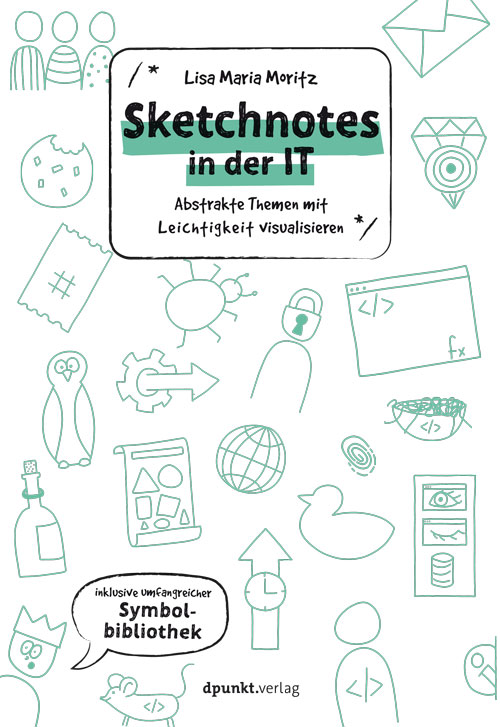
Sketchnotes in der IT
Abstrakte Themen mit Leichtigkeit visualisieren. Die praktische Einführung mit Tipps, Tricks und Symbolen.Im IT-Berufsalltag sammeln sich unzählige Notizen – zu Vorträgen, Meetings, Aufzeichnungen zu komplexen Aufgaben … Häufig sind sie hässlich, lang, unleserlich – und landen schnell im Altpapier. Sketchnotes dagegen sehen nicht nur schick aus, sie helfen auch dabei, sich an die wichtigsten Dinge zu erinnern, und erfreuen Kolleginnen und Kollegen.Dieses Buch gibt eine praktische Einführung in die Welt der Sketchnotes. Schon auf den ersten Seiten erstellst du deine erste Sketchnote – unabhängig von Vorwissen oder Talent. Nach einem Grundlagenkapitel, das Hilfen für den Einstieg bietet, zeigt die Softwareentwicklerin Lisa-Maria Moritz, in welchen Bereichen deines Arbeitsalltags in der IT du Sketchnotes einsetzen kannst. Um dabei die passende Visualisierung zu finden, hat sie eine umfangreiche Bibliothek mit zahlreichen Symbolideen zu abstrakten Begriffen der IT zusammengestellt, deren Erstellung sie in Schritt-für-Schritt-Anleitungen zeigt.

HTML und CSS - Das umfassende Handbuch (4. Auflage)
Moderne Web-Technologien für moderne Websites! In diesem Standardwerk gibt Ihnen Jürgen Wolf alle Werkzeuge an die Hand, die Sie für einen starken Auftritt im Web benötigen. Lernen Sie alle Grundlagen von HTML, CSS und JavaScript kennen und erweitern Sie Ihr Wissen mit diesem umfassenden Lern- und Nachschlagewerk: vom Aufbau eines HTML-Dokuments über die Gestaltung mit CSS bis hin zur Web-Programmierung mit JavaScript. Inkl. einer Einführung in die wichtigen JavaScript-Frameworks React und Angular. Aus dem Inhalt:Syntax und Aufbau von HTML-DokumentenTabellen und HyperlinksBilder, Audio und VideoHTML-Formulare und interaktive ElementeDie Selektoren von CSSVererbung und KaskadeDas Box-ModellResponsive Layouts erstellenEinführung in JavaScript-APIsAjax und jQueryReact und Angular kennenlernenAutor: Jürgen Wolf ist Web- und Softwareentwickler sowie Autor mehrerer Standardwerke zu Programmierung und Fotografie. Ihm gelingt es auf hervorragende Weise, Theorie verständlich zu machen und mit Beispielen aus der Programmierpraxis zu verbinden.

Adobe InDesign: Das umfassende Handbuch
Umfassend, detailliert und auf dem neuesten Stand – mit diesem Bestseller beherrschen Sie Adobe InDesign! Auf 1.200 Seiten erhalten Sie fundiertes Profiwissen zu allen Themen rund um Ihre Software. Die Informationen sind klar gegliedert, sodass sich das Buch gut zum schnellen Nachschlagen eignet. Leicht verständlich erläutert Hans Peter Schneeberger alles, was Sie wissen müssen: von der ersten Layoutarbeit über das Anlegen komplexer Dokumente bis hin zu den modernen Techniken wie EPUB, barrierefreie PDFs, PDF-Formulare und kollaboratives Zusammenarbeiten. Auch Profis kommen voll auf ihre Kosten: Tiefgehende Infos zu Skripten, GREP, zum XML-Publishing und zur Automatisierung lassen die Arbeit schnell von der Hand gehen. Aus dem Inhalt: InDesign einrichtenLayouts anlegen und organisierenRahmen, Ebenen, Hilfsmittel, RasterInhalte für das Layout: Bilder, Text, Farben, Effekte, VektorenText professionell: Tabellen, Formate, Formensatz, Zeichen, AbsätzeLange Dokumente: Musterseiten, Buch, Inhaltsverzeichnis, Index, Listen, Variablen, Bibliotheken, SnippetsDie Print-Produktion: Preflight, PDF-Export, FarbmanagementVariables Layout, interaktive Dokumente, AnimationenEPUB und E-Books: Was geht?PDF-Formulare, barrierefreies PDFAutomatisieren: GREP, Skripte, XMLRedaktionelle Aufgaben, ReviewsHier geht's zur Leserprobe

Essential Java for AP CompSci
Gain the essential skills for computer science using one of today's most popular programming languages, Java. This book will prepare you for AP CompSci Complete, but you don’t need to be sitting that class to benefit. Computer science has become a basic life skill that everyone is going to need to learn. Whether you are going into a career or side hustle in business, technology, creativity, architecture, or almost any other field, you will find coding and computer science play a role.So when we learn programming we are going to focus on three things: what is the process; what is the syntax; and what is the flow. The process is represented as a flowchart. We will learn how to make these to help you plan out what you are going to do before you write a line of code. At first, the flowcharts will be pretty simple, but then they will get more complex. The syntax is the code: this is what you write that translates the process you create in a flowchart to the instructions that the computer can understand. Finally, there is the flow. This is where you trace through the code and see how the data and information it stores along the way changes. You can see how the operation of the program cascades from line to line. You will be building charts that will capture the programming flow so you can better understand how the computer processes code to make your next program easier to conceive and code.Along the way to aid in the learning of the essential Java skills, there will be three kinds of project types throughout this book: business software projects for applications where you work for a company and need to complete an internal project for a team such as the sales, marketing, or data science teams; social good projects where you are working for non-profits or for agencies that are trying to research and provide solutions to economic, environmental, medical, or humanitarian projects; and game development projects for games based on player input, random chance, or other mechanics for the use of entertainment.What is unique about computer science is how it has become a skill, and not just a career. While there are jobs and titles of “computer scientist”, the skill of computer science, and specifically programming, are almost everywhere. After reading and using this book, you'll have the essential skills to think like a computer scientist, even if you are not. As a result you’ll be of greater value to your clients, your company, and yourself.WHAT YOU WILL LEARNDiscover the primary building blocks of programming using the Java programming language * See terminology and best practices of software development* Work with object-oriented programming concepts* Use common-language definitions and examples to help drive understanding and comprehension of computer science fundamentalsWHO THIS BOOK IS FORThose who want to learn programming and want to think like a computer scientist. Ideal for anyone taking AP CompSci Complete.Doug Winnie is director of learning experience at H&R Block, responsible for learning and development platforms supporting associates across the organization. Previously, Doug was principal program manager at Microsoft and LinkedIn leading the LinkedIn Learning instructor community, curriculum strategy for technology learning content, and as a member the Windows Insider team supporting educational and career growth for millions of Windows Insiders worldwide.Throughout his career and consulting with companies such as Adobe, PG&E, Safeway, HP, and the US Army, Doug has worked to help developers and designers through education, product management, and interactive development. Doug was honored with two Webby award nominations with projects for Industrial Light and Magic and has written multiple publications to teach beginners how to code. He is also an AP Computer Science teacher, teaching the next generation of developers. Doug lives in the Kansas City metro area and Palm Springs, California.1. WELCOME TO COMPUTER SCIENCE2. SPRINT 01: INTRODUCTION3. SPRINT 02: SETTING UP THE JAVA JDK AND INTELLIJ4. SPRINT 03: SETTING UP GITHUBa. QUIZ 01b. QUIZ 025. SPRINT 04: PROGRAMMING LANGUAGES6. SPRINT 05: HISTORY AND USES OF JAVA7. SPRINT 06: HOW JAVA WORKSa. QUIZ 038. SPRINT 07: FLOWCHARTINGa. ASSIGNMENT 01: PBJ’Db. QUIZ 049. SPRINT 08: HELLO, WORLDa. QUIZ 0510. SPRINT 09: SIMPLE JAVA PROGRAM STRUCTURE11. SPRINT 10: TEXT LITERALS AND OUTPUTa. ASSIGNMENT 02: EE’D12. SPRINT 11: VALUE LITERALS13. SPRINT 12: OUTPUT FORMATTING14. SPRINT 13: COMMENTS AND WHITESPACE15. SPRINT 14: ABSTRACTION OF NUMBERS16. SPRINT 15: BINARYa. QUIZ 0617. SPRINT 16: UNICODE18. SPRINT 17: VARIABLES19. SPRINT 18: MATH. UGH.a. QUIZ 07b. ASSIGNMENT 03: SILO’D20. SPRINT 19: MATH FUNCTIONS21. SPRINT 20: MANAGING TYPEa. ASSIGNMENT 04: SPACE’Db. QUIZ 08c. QUIZ 09d. QUIZ 10e. QUIZ 1122. SPRINT 21: RANDOM NUMBERS23. SPRINT 22: CAPTURE INPUT24. SPRINT 23: CREATING TRACE TABLES25. SPRINT 24: FUNCTIONSa. ASSIGNMENT 05: ORC’D26. SPRINT 25: NESTED FUNCTIONS27. SPRINT 26: FUNCTIONS AND VALUESa. QUIZ 1228. SPRINT 27: FUNCTIONS AND SCOPEa. QUIZ 13b. QUIZ 14c. QUIZ 15d. ASSIGNMENT 06: ULTIMA’De. ASSIGNMENT 07: CYCLONE’D29. SPRINT 28: BOOLEAN VALUES AND EQUALITYa. QUIZ 16b. ASSIGNMENT 08: SPRINT’Dc. USER STORY: 52-PICKUP30. SPRINT 29: SIMPLE CONDITIONAL STATEMENTSa. USER STORY: YAHTZEEb. USER STORY: YAHTZEE TESTINGc. QUIZ 17d. QUIZ 18e. QUIZ 1931. SPRINT 30: MATCHING CONDITIONS WITH THE SWITCH STATEMENT32. SPRINT 31: THE TERNARY OPERATOR33. SPRINT 32: THE STACK AND THE HEAP34. SPRINT 33: TESTING EQUALITY WITH STRINGSa. ASSIGNMENT 09: ESCAPE’Db. USER STORY: ESCAPE’D WHITE BOX35. SPRINT 34: DEALING WITH ERRORS36. SPRINT 35: DOCUMENTING WITH JAVADOC37. SPRINT 36: FORMATTED STRINGS38. SPRINT 37: THE WHILE LOOPa. QUIZ 20b. QUIZ 21c. QUIZ 2239. SPRINT 38: AUTOMATIC PROGRAM LOOPS40. SPRINT 39: THE DO/WHILE LOOPa. ASSIGNMENT 10: SEQUENCE’Db. USER STORY: DICEYc. USER STORY SOLUTION: DICEYd. USER STORY: CONVERTERe. USER STORY SOLUTION: CONVERTER41. SPRINT 40: PROBABILITY42. SPRINT 41: SIMPLIFIED ASSIGNMENT OPERATORS43. SPRINT 42: THE FOR LOOPa. QUIZ 23b. ASSIGNMENT 11: ODDS’D44. SPRINT 43: NESTING LOOPSa. USER STORY: MAP BUILDER45. SPRINT 44: STRINGS AS COLLECTIONSa. ASSIGNMENT 12: PALINDROME’Db. QUIZ 2446. SPRINT 45: MAKE COLLECTIONS USING ARRAYSa. QUIZ 2547. SPRINT 46: CREATING ARRAYS FROM STRINGSa. ASSIGNMENT 13: ELECTION’Db. QUIZ 2648. SPRINT 47: MULTIDIMENSIONAL ARRAYS49. SPRINT 48: LOOPING THROUGH MULTIDIMENSIONAL ARRAYSa. QUIZ 27b. QUIZ 2850. SPRINT 49: BEYOND ARRAYS WITH ARRAYLISTS51. SPRINT 50: INTRODUCING GENERICS52. SPRINT 51: LOOPING WITH ARRAYLISTSa. ASSIGNMENT 14: LIST’D53. SPRINT 52: USING FOR…EACH LOOPSa. ASSIGNMENT 15: NUMBER’Db. QUIZ 29c. QUIZ 3054. SPRINT 53: THE ROLE-PLAYING GAME CHARACTERa. ASSIGNMENT 16: ROLL’D55. SPRINT 54: POLYMORPHISMa. ASSIGNMENT 17: EXTEN’D56. SPRINT 55: MAKE ALL THE THINGS…CLASSES57. SPRINT 56: CLASS, EXTEND THYSELF!a. QUIZ 3158. SPRINT 57: I DON'T COLLECT THOSE; TOO ABSTRACT.59. SPRINT 58: ACCESS DENIED: PROTECTED AND PRIVATEa. QUIZ 32b. QUIZ 3360. SPRINT 59: INTERFACING WITH INTERFACESa. QUIZ 34b. QUIZ 35c. QUIZ 36d. QUIZ 37e. ASSIGNMENT 18: STARSHIP’D61. SPRINT 60: ALL I'M GETTING IS STATIC62. SPRINT 61: AN ALL-STAR CAST, FEATURING NULL63. ANSWER KEY

Digitale Transformation, Arbeit und Gesundheit
Die digitale Transformation verändert die Arbeitswelt. Wie wird die Digitalisierung gesundheitsgerecht in kleinen und mittleren Unternehmen umgesetzt? Der aktuelle Wissensstand wird zusammengefasst, mit detaillierten Einblicken in die Praxis und Werkzeugen zur Bewältigung betrieblicher Digitalisierungsprojekte.THOMAS ENGEL, Leiter ZeTT – Zentrum Digitale Transformation Thüringen, Friedrich-Schiller-Universität Jena, forscht zum Wandel von Arbeit und Beschäftigung in der Digitalisierung.CHRISTIAN ERFURTH, Professor für Informatik, Ernst-Abbe-Hochschule Jena, beschäftigt sich mit den technologischen und organisatorischen Gestaltungsmöglichkeiten der digitalen Arbeitswelt.STEPHANIE DRÖSSLER arbeitet am Institut und Poliklinik für Arbeits- und Sozialmedizin der Medizinischen Fakultät der TU Dresden zu gesundheitlichen Belastungen und Prävention im digitalen Wandel.SANDRA LEMANSKI arbeitet am Lehrstuhl Gesundheit und Prävention der Universität Greifswald zu Stress im Arbeitskontext und den Gestaltungsmöglichkeiten von Arbeit in der und durch die digitale Transformation.

That's me!
Purpose, das ist mehr als eine lebendige und zeitgemäße Formulierung von Sinn, Zweck oder Bestimmung eines Menschen oder eines Unternehmens. Der echte Purpose, der sich in Geschichten und Entscheidungen und Gründerpersönlichkeiten manifestiert, macht den Unterschied. Warum also tun wir, was wir tun? That’s Me! inspiriert dazu, sich dieser Frage zuzuwenden. Systematisch, doch zugleich kreativ-spielerisch. Sie erfahren, welche Kräfte ein Purpose freisetzen kann – in ihrem Leben und in den Unternehmen, in denen sie gemäß ihrem Purpose wirken. Aus dem Inhalt: Erfolgreiches MatchingPurpose und Passion verbinden Authentische Werte und Work-Life-Balance findenHeldenreisen und FieberkurvenDer erweiterte Golden CircleGeneration YDie Weichen stellen auf Growth Mindset und ImpactVon den besten Unternehmen lernenMit System über sich hinauswachsenIhr Purpose-Puzzle zusammenfügenLernen, mutig die Welt zu verändern Danke ... 12 Einleitung ... 13 FENSTER - Hinsehen, staunen, wirken lassen! Warum Purpose in Zukunft immer wichtiger wird ... 17 Purpose, Sinn, Zweck, Vision - Raus aus dem Dschungel der Begriffe ... 19 Eine Frage des Matchings - Purpose und Passion ... 22 Das wohlige Schnurren der Katze - Resonanz, Purpose, Spitzenleistungen ... 29 Purpose, Profit, Planet - Der neue Dreiklang ... 34 Vorausschauende Rückblicke - Purpose und das langfristige Denken ... 38 Es gibt kein richtiges Leben im falschen - Erfüllung und das Ende der Work-Life-Balance ... 42 Von Status zu Sinn - Die Babyboomer und die Generationen X, Y und Z ... 47 Der Tanz mit dem Purpose - Ein neues Paradigma für Organisationen ... 52 Hallo, wer bist du? - Geschichten, die erzählen, wer und warum wir sind ... 60 Martin Luther und die Tierpfleger - Die helle und die dunkle Seite der Bestimmung ... 66 Gefährliche Kindermädchen - Purpose und die Mechanik des Vertrauens ... 71 Etwas anderes als Listen abhaken - Die psychologische Vermessung des Sinns ... 77 Wofür eine Marke steht - Branding im Zeichen von Purpose ... 83 Wettbewerber wegblasen - Die Neurowissenschaft von Purpose ... 88 Trailblazer und Blacktocats - Von überall arbeiten, um die Welt zu verbessern ... 90 Keine Ausreden mehr - Viktor Frankl und das große Ja zum Leben ... 93 Die Suche nach der Mitte - Aristoteles' Konzept vom guten Leben ... 98 Sind wir schon wieder auf einem Maskenball? - Guter Purpose, schlechter Purpose, gar kein Purpose ... 103 Wie frisch gefallener Schnee - Das Ikigai und die japanische Lebenskunst ... 107 Alles fügt sich - Biografien und Unternehmen als Kunstwerke ... 112 Ist Purpose etwas Rationales oder Emotionales? - Zwölf essenzielle Fragen ... 115 MEDITATION I - Lauschen und Empathie ... 123 SPIEGEL - Erkennen, strukturieren, machen! Wie Sie Purpose finden, formulieren und verankern ... 131 Von Toyota lernen, in die Tiefe zu fragen - Die 5-Why-Methode zur spielerischen Annäherung an Purpose ... 133 Mit dem Why beginnen - Der klassische Golden Circle ... 137 Nicht beim Why aufhören - Der erweiterte Golden Circle ... 147 Ketchup in den Venen - Die eigenen Werte finden und formulieren ... 152 Ein Mindset, das alle anderen schlägt - So wachsen Sie mit System über sich hinaus ... 166 Zu tausend Dingen nein sagen - Purpose und das Igelprinzip ... 170 Liebende und Rebellen - Der archetypische Zugang zu Purpose ... 174 Das 1-1-1-Prinzip - Ein Framework für Philanthropie ... 181 Wirtschaftsprüfer bekämpfen Terrorismus - Machen Sie ein Poster von Ihrem Purpose ... 185 So einfach wie Malen nach Zahlen - Mit dem Purpose-Rad zum ersten Draft navigieren ... 188 Die Baumeister von morgen inspirieren - Die Kunst, ein authentisches Purpose Statement zu verfassen ... 192 Von sozialen Bewegungen lernen - Ihre starke Purpose Story à la Barack Obama erzählen ... 201 Ich werde danach streben, weltweit nachhaltigen Wohlstand zu schaffen - Wir schreiben ein Manifest ... 209 Was wäre, wenn ...? - Wie Sie sich zum Erfolg träumen ... 214 Ein inneres Navigationssystem entwickeln - Das persönliche Purpose-Logbuch ... 218 Von Purpose zu Impact - Das Logbuch für Leader ... 226 Ich, Rolle, Team, Organisation - Das Purpose-Puzzle zusammenfügen ... 234 That's me! - Ihr persönliches Purpose-Canvas ... 238 That's us! - Das Purpose-Canvas für Organisationen ... 239 MEDITATION II - Spüren und Achtsamkeit ... 243 TÜR - Rausgehen, folgen, lernen! So mächtig ist Purpose in der praktischen Anwendung ... 251 Wir sind im Business, um unseren Heimatplaneten zu retten - Purpose und Aktivismus bei Patagonia ... 253 Powerfrauen der jungen Generation - Purpose und Story bei Amanda Gorman, Greta Thunberg und Mai Thi Nguyen-Kim ... 260 Purpose programmieren - Holokratie als neues Betriebssystem für Unternehmen ... 270 Lernen, mutig die Welt zu verändern - Der Spirit der Evangelischen Schule Berlin Zentrum ... 280 Im Reich des Super Purpose - SpaceX, Virgin Galactic und Blue Origin ... 288 Gesellschaftliche Probleme marktorientiert und skalierbar lösen - Wann hat ein Start-up Impact? ... 296 Ein mächtiger Gedanke, aber ... - Die Lücke zwischen Purpose und Praxis bei der Bill & Melinda Gates Foundation ... 300 Besessen von Kundenzufriedenheit - Purpose mit Differenz bei Amazon und Zappos ... 303 Wenn du einen Dollar in der Tasche hast ... oder auch 60 Milliarden - Spenden und Purpose bei Rihanna, Toms Schuhe und MacKenzie Scott ... 310 Den Kopf freihaben, träumen - Von der Managerin zur Professorin zur Malerin ... 317 Du brauchst mehr Empathie, Mann! - Die Bedeutung von Purpose und Mindset für den Change-Prozess von Microsoft ... 320 Erweiterte Diversität - Bei auticon sind alle Consultants Autisten ... 326 Dem Purpose ein Gesicht geben - Fünf Dinge, die Volkswagen von Tesla lernen könnte ... 332 Vom Kostenträger zum Gesundheitslotsen - Purpose mit Bodenhaftung bei der AOK PLUS ... 337 Bella ciao, bella ciao, bella ciao, ciao, ciao - »Haus des Geldes« und die Symbolik des Purpose ... 342 Mut zu mehr gesundem Menschenverstand - Vaude, Pionier im zukunftsweisenden Wirtschaften ... 345 Anhang ... 353 Index ... 361

SAP Mobile Services
Mobile Apps flexibel entwickeln! Dieses Buch stellt Ihnen den kompletten Funktionsumfang der SAP Mobile Services vor (vormals SAP Cloud Platform Mobile Services). Ob Sie native Apps für iOS oder Android programmieren oder Ihren Mitarbeitenden Mobile Cards für den schnellen Zugriff auf Informationen bereitstellen möchten: Für alle App-Typen und SDKs finden Sie ausführliche Beispiele. Die Autoren zeigen Ihnen außerdem, wie Sie Ihre Apps absichern und verwalten. Aus dem Inhalt: Native Apps für iOS und AndroidHybride AppsSAP-Fiori-AppsSAP Mobile CardsPush-BenachrichtigungenOffline-DatenhaltungApp-UpdatesCloud ConnectorNeo- und Cloud-Foundry-UmgebungIdentity Propagation und AuthentifizierungGit Einleitung ... 13 1. Historie der SAP Mobile Services ... 19 1.1 ... Erste Technologien für mobile Apps ... 20 1.2 ... Sybase Unwired Platform ... 22 1.3 ... Syclo Agentry ... 26 1.4 ... SAP Mobile Platform ... 28 1.5 ... SAP Mobile Services ... 31 2. App-Typen ... 39 2.1 ... Native Apps ... 40 2.2 ... Hybride Apps ... 48 2.3 ... SAP Fiori Client ... 51 2.4 ... Mobile Development Kit ... 55 2.5 ... SAP Mobile Cards ... 57 3. Einführung in die SAP Mobile Services ... 59 3.1 ... Funktionsumfang der SAP Mobile Services ... 59 3.2 ... Vergleich zwischen Neo- und Cloud-Foundry-Umgebung ... 107 3.3 ... Migration von der Neo- in die Cloud-Foundry-Umgebung ... 109 4. Entwicklung einer nativen App mit dem SAP BTP SDK for iOS ... 111 4.1 ... Einführung in die SAP Fiori Design Guidelines ... 112 4.2 ... Einführung in SAP Fiori Mentor ... 116 4.3 ... Datenmodell für die im Buch verwendeten Beispiele ... 120 4.4 ... Projekt mit dem SAP BTP SDK Assistant for iOS erstellen ... 123 5. Entwicklung einer nativen App mit dem SAP BTP SDK for Android ... 133 5.1 ... SAP Fiori for Android ... 134 5.2 ... SAP Fiori Mentor für Android ... 136 5.3 ... Projekt mit dem SAP BTP SDK Wizard for Android erstellen ... 140 6. Entwicklung einer hybriden App mit dem Mobile Development Kit ... 157 6.1 ... Entwicklungsumgebung einrichten ... 157 6.2 ... OData-basierte App mit dem Mobile Development Kit erstellen ... 163 7. Entwicklung einer hybriden App mit dem Hybrid Application Toolkit ... 191 7.1 ... Entwicklungsumgebung einrichten ... 192 7.2 ... Eine hybride App in der SAP Web IDE entwickeln ... 196 8. Entwicklung einer Mobile Card ... 215 8.1 ... SAP Mobile Cards installieren und vorbereiten ... 216 8.2 ... Eine Mobile Card erstellen ... 218 9. Integration mit On-Premise- und Cloud-Systemen ... 237 9.1 ... Einführung in den Cloud Connector ... 237 9.2 ... Zugriff auf On-Premise-Systeme ... 255 9.3 ... Zugriff auf Cloud-Systeme ... 270 10. Sicherheit der SAP Mobile Services ... 273 10.1 ... Einführung in die Sicherheitsarchitektur der SAP Business Technology Platform ... 273 10.2 ... Standardrollen für die SAP Mobile Services ... 276 10.3 ... Identity Propagation ... 278 10.4 ... Anwenderauthentifizierung ... 287 10.5 ... SAP Authenticator ... 297 10.6 ... Datenschutz ... 299 11. Softwarelogistik ... 303 11.1 ... Softwarelogistik für mobile Lösungen ... 303 11.2 ... Versionsverwaltung mobiler Apps mit Git ... 305 11.3 ... Continuous Integration und Delivery ... 313 12. Integration von Drittanbieterfunktionalität ... 337 12.1 ... Plug-ins in mobile SAP-Fiori-Apps integrieren ... 339 12.2 ... Plug-ins in iOS-Apps integrieren ... 347 12.3 ... Plug-ins in Android-Apps integrieren ... 350 13. Mobile SAP-Standard-Apps ... 353 13.1 ... SAP Analytics Cloud ... 353 13.2 ... SAP Work Manager ... 356 13.3 ... SAP SuccessFactors Mobile ... 357 13.4 ... Mobile App für SAP Concur ... 359 13.5 ... SAP Sales Cloud ... 360 13.6 ... SAP Jam ... 362 Das Autorenteam ... 365 Index ... 367

Podcasting!
Sie planen schon länger einen eigenen Podcast? Sie möchten mit Ihrem bestehenden Angebot mehr Menschen erreichen? In dieser Anleitung werden Sie fündig. Alle Aspekte des Podcastings werden umfassend und anschaulich dargestellt, von der Formatfindung über Fragen der Produktion und Aufzeichnung bis hin zur Veröffentlichung und Vermarktung. Mit zahlreichen Beiträgen von »alten Hasen« und einem Gastkapitel zu rechtlichen Aspekten von Christian Solmecke. Inkl. Social Audio mit Clubhouse und Co. Aus dem Inhalt: Geeignete Hardware verwendenAufnahmeprobleme behebenEin- und mehrspurig aufnehmenSchneiden mit AudacityMastering und EncodingRechtliche AspekteDen passenden Hoster findenHörer in Fans verwandelnErfolgsmessungMonetarisierung Geleitwort der Fachgutachter ... 18 Vorwort ... 19 1. Ich möchte meinen eigenen Podcast -- wie fange ich das bloss an? ... 23 1.1 ... Sehen Sie sich genau auf dem Podcast-Markt um ... 24 1.2 ... Brauchen Sie ein Pseudonym für das Internet? ... 27 1.3 ... Welcher Titel ist der richtige für Ihren Podcast? ... 28 1.4 ... Welches Format passt zu meinem Podcast? ... 33 1.5 ... Wer soll Ihren Podcast eigentlich hören? ... 49 1.6 ... Lernen Sie, Geschichten zu erzählen ... 50 1.7 ... Schaffen Sie Strukturen mit einem Redaktionsplan ... 51 1.8 ... Wie begrüße und verabschiede ich meine Hörer? ... 53 1.9 ... Checkliste: Bin ich der geborene Podcaster? ... 54 2. Los geht's -- erst mal einkaufen! ... 57 2.1 ... Podcasten ohne viel Aufwand: quick and dirty (oder clean?) mit dem Smartphone ... 57 2.2 ... Das beste Gerät für die mobile Aufnahme von Podcasts ... 65 2.3 ... Podcasting am eigenen PC -- geht das? ... 67 2.4 ... Welches Mikrofon soll ich kaufen? ... 68 2.5 ... Ich möchte ein Profi-Setup -- was brauche ich dafür? ... 73 2.6 ... Von anderen Podcastern lernen: verschiedene Setups ... 78 3. Die (möglichst) perfekte Aufnahme ... 85 3.1 ... Die Tücken der Aufnahme im eigenen Zuhause ... 85 3.2 ... Aufnahmen im Freien ... 95 3.3 ... Hilfe, nicht alle Teilnehmer sind am selben Ort! ... 98 3.4 ... Ablesen oder frei sprechen? ... 111 3.5 ... So führen Sie ein gutes Interview ... 112 3.6 ... Schreiben fürs Hören ... 116 4. Die passende Software für Aufnahme, Schnitt und Nachbearbeitung finden ... 121 4.1 ... Perfekt für Anfänger und kostenlos: Audacity ... 123 4.2 ... Für Mac-User vorinstalliert: GarageBand ... 126 4.3 ... Open Source extra für Podcaster: Ultraschall ... 129 4.4 ... Für Journalisten und Podcaster entwickelt: Hindenburg ... 133 4.5 ... Macht Profis die Nachbearbeitung einer nicht perfekten Aufnahme leichter: iZotope RX 6 ... 135 5. Worauf Sie beim Schnitt achten sollten ... 137 5.1 ... Erster Schritt: der Grobschnitt ... 137 5.2 ... So entfernen Sie Ähs, Atmer und Störgeräusche ... 140 5.3 ... Damit niemand erschrickt: Setzen Sie Fades ein! ... 142 5.4 ... Lautstärke anpassen und Hüllkurven verwenden ... 143 5.5 ... Warum sollten Sie auf mehreren Spuren schneiden? ... 145 5.6 ... Speichern Sie Ihre Podcast-Episode nach dem Schnitt ab ... 146 6. Musik und Geräusche für Ihren Podcast ... 149 6.1 ... Wiedererkennung ist wichtig: Besorgen Sie sich Intro und Outro ... 149 6.2 ... Musikbetten -- unbequem oder gemütlich? ... 161 6.3 ... Machen Sie Ihren Podcast durch Geräusche erlebbar ... 162 7. Kleine Audiokunde: das Mastering ... 163 7.1 ... Wieso muss ich meine Audios »mastern«? ... 164 7.2 ... Diese Werte sind für Ihren Podcast wichtig ... 165 7.3 ... Klingt zu kompliziert? Geht auch einfacher! ... 170 8. Metadaten und das richtige Audioformat ... 175 8.1 ... Welche Komprimierung Sie wählen sollten ... 175 8.2 ... Welche Metadaten braucht mein Podcast? ... 179 8.3 ... Was sind Kapitelmarken -- und lohnt sich der Aufwand? ... 185 9. Wie kann ich meinen Podcast noch besser machen? ... 189 9.1 ... Darum ist das Aussehen Ihres Podcasts so wichtig ... 189 9.2 ... Gönnen Sie Ihrem Podcast eine Internetseite ... 192 9.3 ... Das gehört unbedingt in Ihre Shownotes ... 198 9.4 ... Schaffen und pflegen Sie eine Community ... 201 9.5 ... Produzieren Sie einen Trailer für Ihren Podcast ... 206 9.6 ... Was hat Podcasting mit SEO zu tun? ... 206 9.7 ... Podcasten Sie auch auf YouTube ... 209 9.8 ... Lassen Sie eine eigene App für Ihren Podcast programmieren ... 210 9.9 ... Auch Podcasts brauchen einen Workflow ... 212 9.10 ... Automatisieren Sie möglichst viele Schritte ... 213 9.11 ... Seien Sie immer aufnahmebereit! ... 214 9.12 ... Üben, üben, üben ... 215 9.13 ... Gönnen Sie sich eine Räuspertaste ... 215 10. Podcast & Recht ... 217 10.1 ... Das Urheberrecht am Podcast ... 219 10.2 ... Die Verwendung von Musik in Podcasts ... 225 10.3 ... Persönlichkeitsrechte Dritter ... 237 10.4 ... Werbung in Podcasts ... 243 10.5 ... Rundfunklizenzen für Live-Podcasts ... 250 10.6 ... Die Impressumspflicht ... 254 10.7 ... Gewinnspiele in Podcasts ... 258 10.8 ... Die Datenschutzerklärung ... 263 10.9 ... Fazit ... 269 11. Raus damit! Das Hosting ... 271 11.1 ... Sie müssen sich um nichts kümmern: Podcast-Hoster ... 273 11.2 ... Seien Sie unabhängig mit der Bloggersoftware WordPress ... 277 11.3 ... Halb und halb: die Idee hinter Podseed ... 285 11.4 ... Völlige Unabhängigkeit: Erstellen Sie Ihren Feed selbst, und überprüfen Sie ihn ... 287 11.5 ... Es ist passiert: Sie müssen mit Ihrem Podcast umziehen ... 291 11.6 ... YouTube, Spotify und Co. -- ist das noch ein Podcast? ... 293 12. Live Podcasts und Social Audio: Auf Sendung gehen bei Clubhouse und Co. ... 295 12.1 ... Podcasts im Stream -- Interaktion mit den Usern ... 296 12.2 ... Der Gamechanger »Social Audio« ... 300 12.3 ... Das Beste aus Social Audio herausholen ... 309 13. Finden und halten Sie Ihr Publikum! ... 315 13.1 ... Tragen Sie Ihren Podcast in die gängigen Verzeichnisse ein ... 316 13.2 ... Nutzen Sie neue Plattformen zur Verbreitung ... 325 13.3 ... Werden Sie in der Szene sichtbar ... 333 13.4 ... Das kann Social Media für Ihren Podcast tun ... 334 13.5 ... Binden Sie Ihre Hörer an sich ... 344 14. So messen Sie, ob Ihr Podcast erfolgreich ist ... 347 14.1 ... Diese Ziele können Sie sich und Ihrem Podcast stecken ... 348 14.2 ... Wie viele Hörer hat Ihr Podcast überhaupt? Die Suche nach den Zahlen ... 357 14.3 ... Das Problem: Die Zahlen sind nicht vergleichbar ... 362 14.4 ... Führen Sie eine eigene Qualitätskontrolle ein ... 366 14.5 ... Lernen Sie von denen, die es am besten können ... 367 15. Geld verdienen mit Podcasts ... 369 15.1 ... Lohnen sich Podcasts in Deutschland? ... 370 15.2 ... So finden Sie einen Sponsor oder Auftraggeber ... 374 15.3 ... So werden Sie Premium-Podcaster ... 380 15.4 ... Nutzen Sie Affiliate-Marketing ... 387 15.5 ... Sammeln Sie Spenden für Ihren Podcast ... 389 15.6 ... Verdienen Sie Geld mit Nebenprodukten Ihres Podcasts ... 395 15.7 ... Richten Sie sich einen Wunschzettel ein ... 396 15.8 ... Bieten Sie Live-Shows Ihres Podcasts an ... 397 16. So podcasten Sie für Ihr Unternehmen ... 401 16.1 ... Warum überhaupt in Podcasts investieren? ... 402 16.2 ... Welche Ziele verfolge ich mit meinem Podcast? ... 405 16.3 ... Entwickeln Sie ein hörenswertes Konzept ... 411 16.4 ... Sorgen Sie für die Finanzierung des Podcasts und für personelle Unterstützung ... 422 16.5 ... Suchen Sie sich Hilfe bei Profis ... 423 16.6 ... Ein Podcast nur für Ihre Firma ... 425 16.7 ... Machen Sie Ihren Firmen-Podcast bekannt ... 430 16.8 ... Setzen Sie Ihrem Firmen-Podcast konkrete Ziele ... 431 16.9 ... Empfehlen Sie Ihren Mitarbeitern das Hören fachspezifischer Podcasts ... 432 17. Das Wichtigste zum Schluss: Dranbleiben! ... 435 17.1 ... Machen Sie eine Pause ... 435 17.2 ... Laden Sie sich Gäste in Ihren Podcast ein ... 437 17.3 ... Produzieren Sie in Staffeln ... 438 17.4 ... Denken Sie an Ihre Hörer, um weiterzumachen ... 442 17.5 ... Sorgen Sie für Abwechslung im Podcast ... 444 17.6 ... Fahren Sie Ihren Podcast technisch herunter ... 445 17.7 ... Holen Sie sich Hilfe ... 446 17.8 ... Seien Sie kein Einzelkämpfer -- nehmen Sie Ihre Hörer mit in die Krise ... 447 17.9 ... Wenn alles nichts hilft: Hören Sie auf! ... 448 18. Podcast-Hörtipps ... 451 Index ... 457

OneNote
Mit OneNote, dem digitalen Notizblock von Microsoft, bereiten Sie dem Informationschaos aus Schule, Studium, Arbeit oder Hobby ein Ende. Jürgen Wolf zeigt Ihnen in leicht verständlichen Schritt-für-Schritt-Anleitungen, wie Sie alle Funktionen des Office-Programms und der App in vollem Umfang für sich nutzen können. Ob auf dem Computer, Tablet oder Smartphone: OneNote erlaubt Ihnen Texte, Bilder, Zeichnungen oder handschriftliche Notizen anzulegen und übersichtlich zu organisieren. Sie erfahren, wie Sie Inhalte teilen und mit anderen an gemeinsamen Projekten arbeiten. Aus dem Inhalt: Einstieg in OneNoteNotizbücher erstellen und verwaltenAbschnitte und Seiten organisierenTexte erstellen, formatieren, übersetzenDateien, Listen, Tabellen und Medien einfügenZeichnen und Handschrift mit OneNoteOneNote im täglichen EinsatzSuchen und DruckenNotizbücher freigeben und im Team bearbeitenAufgaben mit Outlook koordinierenErweiterungen für OneNoteSynchronisieren mit der CloudWichtige Einstellungen und Tastaturkürzel Vorwort ... 9 1. Einstieg in OneNote ... 11 Was können Sie von diesem Buch erwarten? ... 11 Was ist OneNote und was kann es? ... 12 Finden Sie Ihren persönlichen Workflow ... 17 Welche unterschiedlichen OneNote-Versionen gibt es? ... 19 Unterschiede zwischen den Systemen ... 25 Durch ein Notizbuch navigieren ... 27 Sicher in der Cloud? ... 30 2. Notizbücher verwalten ... 33 Vorkehrungen treffen ... 34 Notizbuch erstellen ... 35 Notizbuch synchronisieren ... 37 Notizbucheigenschaften ... 41 Notizbuch öffnen und schließen ... 42 Reihenfolge ändern ... 47 Notizbücher auf OneDrive verwalten ... 49 3. Abschnitte und Seiten ... 51 Abschnitte erstellen ... 51 Abschnitte kopieren und verschieben ... 56 Abschnitte gruppieren ... 59 Eigenschaften und Kennwortschutz von Abschnitten ändern ... 64 Abschnitt löschen ... 67 Neue Seite erstellen ... 70 Seiten kopieren und verschieben ... 75 Unterseite erstellen ... 79 Seitenansicht anpassen ... 83 Seite löschen ... 86 4. Texte jeder Art erstellen ... 87 Textcontainer hinzufügen und verwalten ... 87 Verlinken von Notizbüchern, Abschnitten, Seiten und Absätzen ... 94 Rechnen mit Text ... 97 Formatieren von Text ... 100 Formatvorlagen von OneNote verwenden ... 106 Aufgabenlisten und andere Markierungen ... 107 Die Formatierung auf mobilen Geräten ... 111 Kopieren und Einfügen von Text ... 114 Rechtschreibprüfung und Autokorrektur verwenden ... 116 Wörter mit OneNote nachschlagen ... 118 Text übersetzen ... 118 Zeitstempel einfügen ... 121 Datum und Uhrzeit der Seitenerstellung ... 122 5. Weitere Inhalte einfügen ... 125 Tabellen in OneNote verwenden ... 125 Dateien anfügen ... 140 PDF-Dokumente einfügen ... 147 Bilder einfügen ... 153 Onlinevideos einbetten ... 161 Audio aufzeichnen ... 163 Alternativtext ... 165 Outlook-Besprechungen protokollieren ... 167 Outlook-E-Mails an OneNote senden ... 168 Symbole und Aufkleber ... 170 Recherche erstellen ... 172 Barrierefreiheit prüfen ... 175 6. Schreiben und Zeichnen mit OneNote ... 177 Die Stifte von OneNote ... 177 Handschrift mit OneNote ... 179 Formen zeichnen ... 183 Sketchnotes erstellen und wiederverwenden ... 188 Objekte in OneNote markieren und sortieren ... 191 Mathematik mit dem Stift ... 193 7. OneNote im täglichen Einsatz ... 197 Nach Notizen suchen ... 197 Drucken mit OneNote ... 200 Informationen im Web an OneNote weitergeben ... 202 E-Mails an OneNote senden und archivieren ... 213 Standardvorlage festlegen ... 215 Interaktive Wiedergabe (nur Windows) ... 217 Die OneNote-Lerntools ... 219 Den OneNote-Feed verwenden ... 225 8. Notizbücher freigeben und teilen ... 229 Notizbücher teilen ... 229 Zusammen an einem Notizbuch arbeiten ... 233 Zugriffsrechte an einem Notizbuch anpassen ... 234 9. OneNote Classic -- Grundlagen des Office-Desktop-Programms ... 237 Der grundlegende Umgang mit OneNote ... 238 Notizbücher verwalten ... 243 Inhalte erstellen ... 255 Inhalte verwalten ... 261 10. Spezielle Anwendungen von OneNote Classic ... 265 Kleinere Office-Integrationen ... 265 So arbeitet Outlook mit OneNote zusammen ... 274 11. Praxisbeispiele mit OneNote ... 283 OneNote für die Arbeit ... 283 OneNote für die Schule ... 296 OneNote für die Finanzen ... 301 OneNote (nicht nur) für das Private ... 305 Allgemeine Tipps zur Verwendung von Notizbüchern ... 323 A. Einstellungen ... 325 B. Tastenkürzel ... 342 Stichwortverzeichnis ... 347

Adobe InDesign
Umfassend, detailliert und auf dem neuesten Stand – mit diesem Bestseller beherrschen Sie Adobe InDesign! Auf 1.200 farbig gedruckten und übersichtlich gestalteten Seiten erhalten Sie zu allen Themen rund um Ihre Software fundiertes Profiwissen. Die Informationen sind klar gegliedert, so dass sich das Buch gut zum schnellen Nachschlagen eignet. Leicht verständlich erläutert es alles, was Sie wissen müssen: Von der ersten Layoutarbeit über das Anlegen komplexer Dokumente bis hin zu den modernen Techniken wie EPUB, barrierefreie PDFs, PDF-Formulare und kollaboratives Zusammenarbeiten. Auch Profis kommen voll auf ihre Kosten: Tiefgehende Infos zu Skripten, GREP, zum XML-Publishing und zur Automatisierung lassen die Arbeit schnell von der Hand gehen. Aus dem Inhalt: TEIL I: InDesign einrichtenNeu in InDesign 2021Modernes Publishing – vorbereitende Schritte Arbeitsoberfläche TEIL II: LAYOUT ANLEGEN UND ORGANISIERENNeue Dokumente anlegenHilfen für Ihr Layout: Ebenen, Hilfslinien, Lineale, Raster Rahmen erstellen und ändernTeil III: INHALTE FÜR IHR LAYOUTTexte platzieren, bearbeiten und synchronisieren Bilder und Objekte platzieren und organisieren Farben Pfade und Vektoren EffekteTeil IV: TEXT PROFESSIONELLZeichen Absätze Textformatierung Tabellen Formensatz und Text auf Pfad Text suchen und korrigieren TEIL V: LANGE DOKUMENTE EFFIZIENT MEISTERNMusterseiten Buch, Inhaltsverzeichnis und Index Lange Dokumente Recyclen: Objekte wiederverwenden Redaktionelle AufgabenTEIL VI: PRINTPRODUKTION Farbmanagement Transparenzen und TransparenzausgabeAusgabehilfen Schriftprobleme lösen Preflight und Verpacken DruckenPDF-Export für gedruckte Publikationen Alternative Datenformate exportieren TEIL VII: LAYOUT MULTIMEDIALVariables LayoutInteraktive Dokumente und AnimationenDigitale Dokumente exportieren, publizieren und reviewenE-Books erstellenPDF-FormulareBarrierefreies PDF TEIL VIII: INDESIGN AUTOMATISIERENGREP Database-Publishing mit BordwerkzeugenSkriptePublishing mit XML 1. Neu in InDesign ... 37 1.1 ... Änderungen seit 2018 ... 37 1.2 ... Die Ausrichtung des Buchs ... 39 1.3 ... Danksagung ... 40 TEIL I InDesign einrichten ... 41 2. Modernes Publishing -- vorbereitende Schritte ... 41 2.1 ... Installation von InDesign ... 43 2.2 ... InDesign-Voreinstellungen ... 49 2.3 ... Farbeinstellungen vornehmen ... 87 2.4 ... Finetuning in InDesign ... 91 2.5 ... Tastaturbefehle definieren ... 94 2.6 ... Verfahrensangepasste oder medienneutrale ... 96 3. Arbeitsoberfläche ... 106 3.1 ... Farbmotiv ... 109 3.2 ... Die Oberfläche ... 110 3.3 ... Bedienfelder ... 115 3.4 ... Werkzeuge ... 126 3.5 ... Menüs ... 127 3.6 ... Arbeitsbereiche ... 130 3.7 ... Navigation ... 132 TEIL II Layout anlegen und organisieren ... 139 4. Neue Dokumente anlegen ... 141 4.1 ... Dokumente für verschiedene Zielmedien ... 141 4.2 ... Erstellen eines Dokuments ... 143 4.3 ... Die Bereiche eines Dokuments ... 150 4.4 ... Das Seiten-Bedienfeld ... 151 4.5 ... Seitenformat ändern ... 161 4.6 ... Dokumentformat und Satzspiegel ändern ... 166 4.7 ... Alternative Layouts erstellen ... 169 4.8 ... Übernahme von InDesign-Dokumenten ... 173 4.9 ... Aktualisierung alter InDesign-Dateien ... 176 5. Hilfen für Ihr Layout: Ebenen, Lineale, Hilfslinien, Raster ... 179 5.1 ... Überlegungen zu Ebenen ... 181 5.2 ... Das Ebenen-Bedienfeld ... 186 5.3 ... Handhabung von Ebenen ... 188 5.4 ... Lineale ... 194 5.5 ... Hilfslinien ... 195 5.6 ... Liquid-Hilfslinie ... 200 5.7 ... Grundlinien- und Dokumentraster ... 202 6. Rahmen erstellen und ändern ... 203 6.1 ... Rahmenkonzepte ... 205 6.2 ... Rahmen erstellen, positionieren und auswählen ... 208 6.3 ... Rahmen transformieren ... 213 6.4 ... Rahmenformen ändern ... 223 6.5 ... Rahmen und Objekte duplizieren ... 231 6.6 ... Objektanordnung vornehmen ... 235 6.7 ... Objekte ausrichten und verteilen ... 237 6.8 ... Objekte sperren oder ausblenden ... 246 6.9 ... Objektgruppen ... 247 6.10 ... Fortgeschrittene Rahmenfunktionen ... 250 TEIL III Inhalte für Ihr Layout ... 253 7. Texte platzieren, bearbeiten und synchronisieren ... 255 7.1 ... Grundlagen zum Textrahmen ... 255 7.2 ... Schreiben, Kopieren und Platzieren von Texten ... 256 7.3 ... Texte importieren ... 259 7.4 ... Texte markieren und verschieben ... 265 7.5 ... Das Informationen-Bedienfeld in Verbindung mit Text ... 267 7.6 ... Textrahmenoptionen ... 268 7.7 ... Text im Textmodus bearbeiten ... 277 7.8 ... Textfluss und Textverkettung ... 278 7.9 ... Text wiederverwenden ... 281 8. Bilder und Objekte platzieren und verwalten ... 292 8.1 ... Hintergrundinformationen ... 293 8.2 ... Platzieren von Bildern, Grafiken und PDF-Dateien ... 295 8.3 ... Bildimportoptionen ... 297 8.4 ... Bildrahmen und Inhalt bearbeiten ... 306 8.5 ... Das Informationen-Bedienfeld und Bilderrahmen ... 314 8.6 ... Spezielle Funktionen für Bilder ... 315 8.7 ... Bilder, Grafiken und ganze Seiten über Layouts hinweg verwenden ... 327 8.8 ... Arbeiten mit Verknüpfungen ... 334 9. Farben ... 352 9.1 ... Der Farbwähler ... 353 9.2 ... Das Farbfelder-Bedienfeld ... 355 9.3 ... Farben anlegen, löschen und verwalten ... 356 9.4 ... Farben übernehmen ... 366 9.5 ... Farben anwenden ... 370 9.6 ... Das Farbe-Bedienfeld ... 372 9.7 ... Verläufe ... 373 9.8 ... Besonderheiten bei Farben ... 375 9.9 ... Effizientes Arbeiten mit Farben ... 380 10. Vektoren ... 382 10.1 ... Pfade ... 383 10.2 ... Das Aussehen eines Pfads bestimmen ... 397 10.3 ... Pfade, Rahmen und Objekte verschachteln ... 402 11. Effekte ... 408 11.1 ... Hinzufügen von Transparenzeffekten ... 411 11.2 ... Effekte im Detail ... 417 TEIL IV Text professionell ... 425 12. Zeichen ... 427 12.1 ... Das Zeichen-, Steuerung-und Eigenschaften-Bedienfeld 427 ... 427 12.2 ... Besondere Zeichen ... 445 12.3 ... Steuerzeichen ... 457 13. Absätze ... 462 13.1 ... Das Absatz-, Steuerung- und Eigenschaften-Bedienfeld 463 ... 462 13.2 ... Tabulatoren ... 490 13.3 ... Aufzählungszeichen und Nummerierung ... 493 14. Textformatierung ... 498 14.1 ... Möglichkeiten der Textformatierung ... 501 14.2 ... Grundlegende Handhabung von ... 504 14.3 ... Zeichenformate ... 514 14.4 ... Absatzformate ... 522 14.5 ... Effizientes Arbeiten mit Formaten ... 542 15. Tabellen ... 556 15.1 ... Texttabellen ... 557 15.2 ... Tabellen erstellen, umwandeln und importieren ... 560 15.3 ... Tabellen bearbeiten ... 566 15.4 ... Tabellenoptionen ... 578 15.5 ... Zellenoptionen ... 582 15.6 ... Verschiedene Zelleninhalte ... 587 15.7 ... Zellen- und Tabellenformate ... 590 15.8 ... Importierte Inhalte aktualisieren ... 598 16. Formensatz und Text auf Pfad ... 601 16.1 ... Textumfluss und Formsatz ... 603 16.2 ... Texte und Pfade ... 611 17. Text suchen und korrigieren ... 613 17.1 ... Das Fundbüro: Suchen/Ersetzen ... 615 17.2 ... Textsuche ... 618 17.3 ... Rechtschreibung ... 626 17.4 ... Silbentrennung ... 637 TEIL V Lange Dokumente effizient meistern ... 639 18. Musterseiten ... 641 18.1 ... Sinn und Zweck von Musterseiten ... 641 18.2 ... Erstellen einer Musterseite ... 642 18.3 ... Setzen von Abschnitten ... 649 18.4 ... Hierarchische Musterseiten ... 651 18.5 ... Musterseiten verwalten ... 655 18.6 ... Aktuelle Seitenzahl: Feld anpassen ... 656 19. Buch, Inhaltsverzeichnis und Index ... 656 19.1 ... Bücher ... 657 19.2 Inhaltsverzeichnisse ... Automatische Dokumentkonvertierung ... 669 19.3 ... Index erstellen ... 675 20. Lange Dokumente ... 684 20.1 ... Objektformate ... 685 20.2 ... Verankerte Objekte ... 702 20.3 ... Fußnoten und Endnoten ... 714 20.4 ... Listen ... 722 20.5 ... Textvariablen ... 728 20.6 ... Querverweise ... 740 20.7 ... Bedingter Text ... 753 21. Recycling -- Objekte wiederverwenden ... 760 21.1 ... Lokale Bibliotheken ... 763 21.2 ... CC Libraries ... 769 21.3 ... Snippets ... 775 22. Redaktionelle Aufgaben ... 776 22.1 ... Teamwork ... 777 22.2 ... Textänderungen verfolgen ... 778 22.3 ... Notizen ... 783 TEIL VI Printproduktion ... 787 23. Farbmanagement ... 789 23.1 ... Eine kleine Einführung ... 789 23.2 ... Farbeinstellungen ... 793 23.3 ... Mit Profilwarnungen umgehen ... 800 23.4 ... Farbmetrisch korrekte Arbeitsweise ... 803 24. Transparenzen und Transparenzausgabe ... 803 24.1 ... Transparenzformen ... 805 24.2 ... Transparenzen in InDesign ... 807 24.3 ... Der Transparenzfüllraum ... 808 24.4 ... Die Transparenzreduzierung ... 809 24.5 ... Ausgabe von Transparenzen ... 815 24.6 ... Ohne Transparenzreduzierung publizieren ... 816 25. Ausgabehilfen ... 816 25.1 ... Die Bildschirmmodi ... 817 25.2 ... Die Überdruckenvorschau ... 819 25.3 ... Die Reduzierungsvorschau ... 824 25.4 ... Die Separationsvorschau ... 828 25.5 ... Gesamtfarbauftrag-Vorschau ... 829 25.6 ... Hochauflösende Darstellung ... 830 25.7 ... Farb- und Graustufenproof ... 832 26. Schriftprobleme lösen ... 832 26.1 ... Digitale Schrift ... 833 26.2 ... Mögliche Probleme ... 838 26.3 ... Nicht geladene oder fehlende Schriften ... 839 26.4 ... Der »Schriftart suchen/ersetzen«-Dialog ... 840 27. Preflight und Verpacken ... 842 27.1 ... Grundlagen zu Preflight ... 843 27.2 ... Eine Prüfung durchführen ... 844 27.3 ... Parameter eines Preflight-Profils ... 845 27.4 ... Erstellen eines Preflight-Profils ... 853 27.5 ... Mit Profilen arbeiten ... 858 27.6 ... Fehler anzeigen und beheben ... 861 27.7 ... Preflight-Report ... 862 27.8 ... Verpacken ... 863 28. Drucken ... 870 28.1 ... Bereiche des Druckdialogs ... 871 28.2 ... Druckoptionen ... 874 28.3 ... Tintenstrahl- und PCL-Drucker ... 890 28.4 ... Proofen ... 893 28.5 ... Druckvorgaben ... 896 28.6 ... Broschüre drucken ... 900 29. PDF-Export für gedruckte Publikationen ... 904 29.1 ... Allgemeines zur PDF-Technologie ... 905 29.2 PDF exportieren ... Quo vadis PDF? ... 911 29.3 Adobe PDF-Vorgaben ... Das Register »Übersicht« ... 927 30 Alternative Datenformate exportieren ... Das Bedienfeld »Hintergrundaufgaben« ... 928 30.1 ... Textexport ... 929 30.2 ... Bildexport ... 932 30.3 ... Weiterverarbeitung in InDesign und InCopy ... 935 TEIL VII Layout multimedial ... 937 31. Variables Layout ... 939 31.1 ... Layoutmutation versus variables Layout ... 939 31.2 ... Anpassung über den primären Textrahmen ... 940 31.3 ... Layoutanpassung ... 944 31.4 ... Erstellen von alternativen Layouts auf Basis eines variablen Layouts ... 946 32. Interaktive Dokumente und Animation ... 952 32.1 ... Lesezeichen ... 953 32.2 ... Hyperlinks ... 956 32.3 ... Schaltflächen ... 963 32.4 ... Audio und Video ... 973 32.5 ... Seitenübergänge ... 977 32.6 ... HTML einfügen ... 979 32.7 ... QR-Codes ... 982 32.8 ... Objektstatus ... 984 32.9 ... Animation ... 990 32.10 ... Zeitpunkt ... 1001 33. Digitale Dokumente exportieren und reviewen ... 1006 33.1 ... Export vorbereiten ... 1007 33.2 ... HTML ... 1013 33.3 ... Adobe PDF (Interaktiv) ... 1019 33.4 ... Über Adobe veröffentlichen ... 1023 33.5 ... Reviews durchführen ... 1027 34. E-Books erstellen ... 1030 34.1 ... Allgemeines zu E-Books ... 1033 34.2 ... EPUB-Formate aus InDesign ... 1037 34.3 ... InDesign-Dokumente für den umfließenden ... 1038 34.4 ... InDesign-Dokument für einen EPUB-Export mit festem Layout vorbereiten ... 1058 34.5 ... Umfließendes EPUB exportieren ... 1059 34.6 ... EPUB mit festem Layout exportieren ... 1066 34.7 ... EPUBs mit dem Editor nachbearbeiten ... 1068 35. PDF-Formulare ... 1068 35.1 ... Formulardesign und Formularfelder ... 1069 35.2 ... Das Bedienfeld »Schaltflächen und Formulare« ... 1075 35.3 ... Ein Formular erstellen und exportieren ... 1076 36. Barrierefreies PDF ... 1084 36.1 ... Allgemeine Betrachtung ... 1085 36.2 ... InDesign-Dokumente vorbereiten ... 1087 36.3 ... InDesign-Dokumente für den barrierefreien ... 1091 36.4 ... PDF-Erstellung und Prüfung ... 1108 TEIL VIII InDesign automatisieren ... 1113 37. GREP ... 1115 37.1 ... Was ist GREP? ... 1115 37.2 ... Textteile suchen ... 1116 37.3 ... Text austauschen ... 1123 37.4 ... Wiederholungen ... 1124 37.5 ... Entsprechungen und Bedingungen ... 1125 37.6 ... Sinnvoll und kryptisch ... 1126 38. Database-Publishing mit Bordwerkzeugen ... 1126 38.1 ... Vorbereitende Schritte ... 1127 38.2 ... Datenzusammenführung ... 1130 38.3 ... Ausgabe zusammengeführter Daten ... 1132 38.4 ... Weiterführende Hinweise ... 1135 39. Skripte ... 1135 39.1 ... Grundlagen ... 1137 39.2 ... Die Standardskripte verwenden ... 1139 39.3 ... Eigene Skripte erstellen ... 1151 39.4 ... Skripte aus anderen Quellen ... 1154 40. Publishing mit XML ... 1154 40.1 ... Was kann man mit XML erreichen? ... 1155 40.2 ... XML-Struktur ... 1156 40.3 ... XML exportieren ... 1159 40.4 ... XML importieren ... 1168 40.5 ... Praktische Vorgehensweisen ... 1172 Index ... 1173

Get Started with the MAX78000FTHR Development Board
The MAX78000FTHR from Maxim Integrated is a small development board based on the MAX78000 MCU. The main usage of this board is in artificial intelligence applications (AI) which generally require large amounts of processing power and memory. It marries an Arm Cortex-M4 processor with a floating-point unit (FPU), convolutional neural network (CNN) accelerator, and RISC-V core into a single device. It is designed for ultra-low power consumption, making it ideal for many portable AI-based applications.This book is project-based and aims to teach the basic features of the MAX78000FTHR. It demonstrates how it can be used in various classical and AI-based projects. Each project is described in detail and complete program listings are provided. Readers should be able to use the projects as they are, or modify them to suit their applications. This book covers the following features of the MAX78000FTHR microcontroller development board:> Onboard LEDs and buttons> External LEDs and buttons> Using analog-to-digital converters > I2C projects> SPI projects> UART projects> External interrupts and timer interrupts > Using the onboard microphone> Using the onboard camera> Convolutional Neural Network (CNN) > Artificial Intelligence projectsProf Dr Dogan Ibrahim has a BSc degree in electronic engineering, an MSc degree in automatic control engineering, and a PhD degree in digital signal processing. Dogan has worked in many indus-trial organizations before he returned to academic life. Prof Ibrahim is the author of over 60 technical books and over 200 technical articles on microcontrollers, microprocessors, and related fields. He is a Chartered electrical engineer and a Fellow of the Institution of Engineering Technology.

Software Testing Foundations (5th Ed.)
A Study Guide for the Certified Tester Exam – Foundation Level – ISTQB® CompliantProfessional testing of software is an essential task that requires a profound knowledge of testing techniques. The International Software Testing Qualifications Board (ISTQB®) has developed a universally accepted, international qualification scheme aimed at software and system testing professionals, and has created the Syllabi and Tests for the Certified Tester. Today about 673,000 people have taken the ISTQB® certification exams.The authors of Software Testing Foundations, 5th Edition, are among the creators of the Certified Tester Syllabus and are currently active in the ISTQB®. This thoroughly revised and updated fifth edition covers the Foundation Level (entry level) and teaches the most important methods of software testing. It is designed for self-study and provides the information necessary to pass the Certified Tester-Foundations Level exam, version 2018, as defined by the ISTQB®.Topics covered:Fundamentals of TestingTesting and the Software LifecycleStatic and Dynamic Testing TechniquesTest ManagementTest ToolsContents (PDF-Link)

Software Testing Foundations
FUNDAMENTAL KNOWLEDGE AND BASIC EXPERIENCE – BROUGHT THROUGH PRACTICAL EXAMPLES * Thoroughly revised and updated 5th edition, following upon the success of four previous editions * Updated according to the most recent ISTQB® Syllabus for the Certified Tester Foundations Level (2018) * Authors are among the founders of the Certified Tester Syllabus Professional testing of software is an essential task that requires a profound knowledge of testing techniques. The International Software Testing Qualifications Board (ISTQB®) has developed a universally accepted, international qualification scheme aimed at software and system testing professionals, and has created the Syllabi and Tests for the Certified Tester. Today about 673,000 people have taken the ISTQB® certification exams. The authors of Software Testing Foundations, 5th Edition, are among the creators of the Certified Tester Syllabus and are currently active in the ISTQB®. This thoroughly revised and updated fifth edition covers the Foundation Level (entry level) and teaches the most important methods of software testing. It is designed for self-study and provides the information necessary to pass the Certified Tester-Foundations Level exam, version 2018, as defined by the ISTQB®. Topics covered: - Fundamentals of Testing - Testing and the Software Lifecycle - Static and Dynamic Testing Techniques - Test Management - Test Tools

C++ Schnelleinstieg
* C++ PROGRAMMIEREN LERNEN OHNE VORKENNTNISSE * ALLE GRUNDLAGEN FÜR DEN PROFESSIONELLEN EINSATZ* EINFACHE PRAXISBEISPIELE UND ÜBUNGSAUFGABENMit diesem Buch gelingt Ihnen der einfache Einstieg in die C++-Programmierung.Alle Grundlagen werden in 14 Kapiteln anschaulich und leicht nachvollziehbar anhand von Codebeispielen erläutert. Übungsaufgaben am Ende der Kapitel helfen Ihnen, das neu gewonnene Wissen schnell praktisch anzuwenden und zu vertiefen.Der Autor führt Sie Schritt für Schritt in die Welt der Programmierung ein: von den Grundlagen über Objektorientierung bis zur Entwicklung von Anwendungen mit grafischer Benutzungsoberfläche. Dabei lernen Sie ebenfalls, was guten Programmierstil ausmacht und wie man Fehler in Programmtexten finden und von vornherein vermeiden kann.So sind Sie perfekt auf den Einsatz von C++ im professionellen Umfeld vorbereitet.* Alle Grundlagen einfach erläutert* Objektorientierte Programmierung* Einsatz von Open-Source-Bibliotheken* Grafische Benutzungsoberflächen (GUI)* Internetanfragen und JSON-Parsing* Zeiger und virtuelle Methoden* Fehlersuche und Debugging* Moderner Programmierstil* Programmcode, Lösungen und Glossar zum DownloadPhilipp Hasper ist Gründer eines Augmented-Reality-Startups und hat jahrelange Erfahrung in der akademischen und industriellen Entwicklung von KI-Technologien. Er entwickelt mit C++, Java, Python und Typescript und hat bei zahlreichen Open-Source-Projekten mitgewirkt.
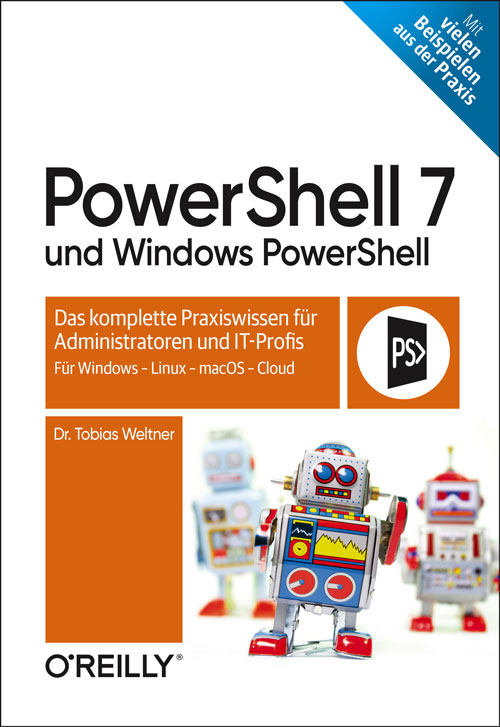
PowerShell 7 und Windows PowerShell
PowerShell steht als top-moderne objektorientierte Open-Source-Shell auf Windows, Linux und macOS, auf Microcontrollern wie Raspberry Pi und in den Clouds von Microsoft und Amazon zur Verfügung und ist obendrein noch kostenlos.Ob Sie als Administrator Ihr Wissen vertiefen und komplettieren wollen oder als Anwender nach intelligenten Skripting-Lösungen für kniffelige Probleme suchen: Dieses Buch begleitet Sie auf Ihrem persönlichen Weg zu einer nachhaltig professionellen Shell-Programmierung. Tobias Weltner erklärt verständlich und unterhaltsam technische Zusammenhänge und demonstriert anhand von vielfältigen Beispielen die wesentlichen Funktionen der PowerShell. So entschlüsseln Sie z.B. mit Webservices unbekannte IP-Adressen und entlarven unsichere Kennwörter, erzeugen QR-Codes, spielen Midi-Musik ab u.v.a.m. Erschließen Sie sich mit diesem Praxisbuch ein ganz neues Computing-Verständnis – ob für Ihren beruflichen Alltag, private Projekte oder im Rahmen Ihrer IT-Ausbildung.Das Buch führt Sie in alle wichtigen Bereiche der PowerShell ein:PowerShell auf verschiedenen Betriebssystemen startklar machenGrundlagen der Automation: passende Befehle finden und produktiv kombinierendie Vorzüge der objektorientierten PipelineZugriff auf .NET-Befehle und Arbeit mit Objekteneigene PowerShell-Funktionen und -Module erstellenPowerShell-Remoting im NetzwerkLeseprobe (PDF-Link)
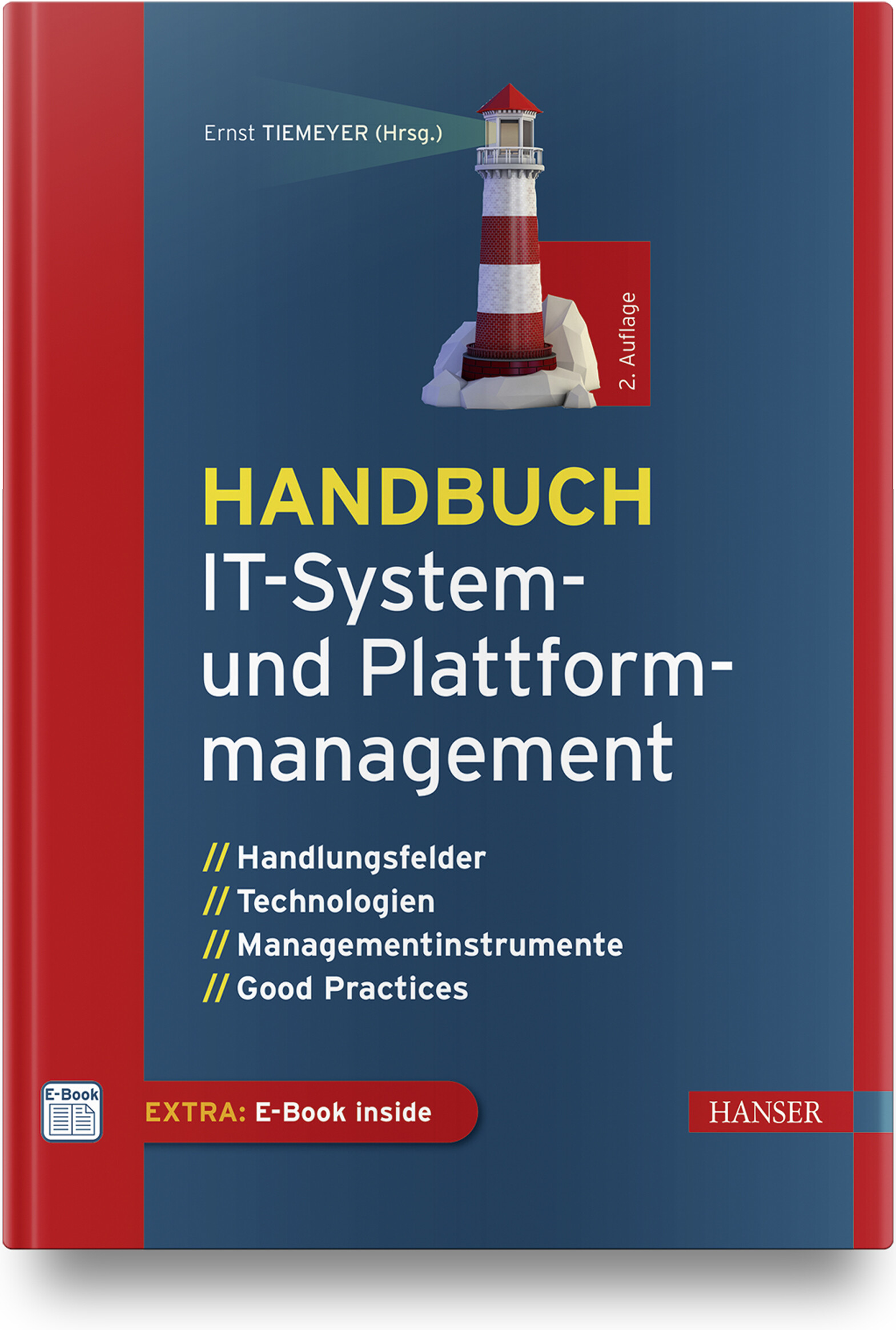
Handbuch IT-System- und Plattformmanagement (2. Auflg.)
Handlungsfelder, Technologien, Managementinstrumente, Good Practices in 2., überarbeitete und erweiterte Auflage.Ein effizientes und ganzheitliches Management der installierten IT-Systeme (Applikationen, Datenbanken, IT-Infrastrukturen) und IT-Plattformen (Cloud, Daten, Integration) ist heute unverzichtbar. Nur so lassen sich Geschäftsprozesse optimal unterstützen und neue Geschäftspotenziale generieren.Dieses Handbuch bietet das relevante Wissen für einen erfolgreichen Einsatz von IT-Systemen in systematischer Form (Darlegung der Methoden, Instrumente und Prozesse). Fragen der Planung und Weiterentwicklung der IT-Systemlandschaft werden genauso behandelt wie Aspekte der Koordination (Auftragsmanagement, Systemsupport) und der sicheren Steuerung der installierten IT-Systeme (Qualitätsmanagement, Risiko- und Sicherheitsmanagement, Notfallplanung etc.).Viele Praxistipps und Beispiele helfen Ihnen, IT-Systeme und die Plattformnutzung zu planen und zu verwalten sowie deren stabilen Betrieb zu gewährleisten.Neu in der 2. Auflage:DevOps-Applikationsentwicklung und ApplikationsbetriebDatenplattformenIntegrationsplattformen und API-ManagementAus dem Inhalt:IT-Systeme und IT-Plattformen planen und betreibenIT-Architekturen und IT-Assets – Planung, Dokumentation undManagement der IT-SystemlandschaftIT-Systeme betreuen und Systemsupport leistenIT-Infrastrukturen und IT-Netzwerke managenIT-Applikationen planen und den Einsatz steuernHandlungsfeld DevOpsCloud-Services managenEnterprise Mobility Management (MDM, EMM)Datenmanagement und Datenplattformen administrierenIT-Integrationslösungen professionell managenAPI-ManagementBeschaffung von IT-Systemen und IT-PlattformenRisikomanagement für IT-SystemeSecurity-Management und NotfallmanagementOrganisations- und Personalfragen für das Managen von IT-SystemenWirtschaftlichen Betrieb von IT-Systemen und IT-Plattformen managenLeseprobe (PDF-Link)