

Software

Online-Dating für Dummies
Online-Dating boomt. Die wenigsten Singles lernen sich heutzutage noch in einer Bar kennen. Allein in Deutschland sind jeden Monat weit über 12 Millionen Singles online auf Partnersuche. Wo und wie findet man da aber, was man wirklich sucht? Und wie sticht man aus der Masse der Singles hervor? Wo finde ich den richtigen Partner für mein Alter, meinen Typ und meine Interessen und Absichten - ob langfristige Beziehung, Flirt oder doch nur Sex? Und wie kann ich sicher daten? Die beiden Dating-Experten Chris Pleines und Andia Bothe führen Sie umfassend durch die digitale Dating-Welt von heute (und morgen). Vor über 10 Jahren gründete Chris Pleines die Website ZU-ZWEIT.de, die heute mit über 3.000 internationalen Testberichten das meistgeklickte Dating-Vergleichsportal in Deutschland ist. Chris Pleines gilt als führender Dating-Experte, man sah ihn im ARD-Mittagsmagazin, bei Pro7 Galileo oder in diversen Zeitungs- und Magazinbeiträgen.Andia Bothe ist studierte Soziologin der LMU München und betrachtet das Thema Online-Dating auf datingjungle.de aus soziologischer Sicht. Sie ist Co-Autorin zahlreicher Online-Dating-Studien und war bereits öfter Ansprechpartnerin für Funk und Fernsehen in Fragen rund um Dating, Sexualität und Partnerschaft - unter anderem für Deutschlandfunk, ZDF und RTL.Über die Autoren 11EINLEITUNG23Über dieses Buch 24Konventionen in diesem Buch 24Was Sie nicht lesen müssen 25Törichte Annahmen über den Leser 25Wie dieses Buch aufgebaut ist 26Teil I: Ein Überblick: Die Online-Dating-Welt von heute 26Teil II: Schritt für Schritt zum ersten erfolgreichen Date 27Teil III: Vorsicht im Netz 28Teil IV: Ein (kurzer) Blick in die Zukunft 29Teil V: Der Top-Ten- Teil 29Symbole, die in diesem Buch verwendet werden 29Wie es weitergeht 30TEIL I: ÜBERBLICK: DIE ONLINE-DATING-WELT VON HEUTE 33KAPITEL 1 ONLINE-DATING: WO UND WIE ALLES BEGANN35Liebe über Zeit und Medien hinweg 35Entwicklung des Online-Dating-Markts in Deutschland 39KAPITEL 2 ONLINE-DATING-ANGEBOT HEUTE43Partnervermittlungen 43Dating-Apps 49Singlebörsen 55Casual-Dating 59Ein kleiner Überblick 64Spezielle Dating-Seiten und Nischen-Dating 66LGBTQ+ 66Christliche Dating-Seiten 67Partnervermittlung Osteuropa 68Dating 50+ 68Online-Swingerklubs 69Portale für Übergewichtige 69Für Menschen mit Behinderung 69Für Singles mit Wunsch nach Altersunterschied 69Andere sehr spezielle Dating-Seiten 70KAPITEL 3 WIESO (NICHT) ONLINE-DATING?73Für wen ist Online-Dating geeignet? 73Vorteile des Online-Datings 74Nachteile des Online-Datings 77TEIL II: SCHRITT FÜR SCHRITT ZUM ERSTEN ERFOLGREICHEN DATE 81KAPITEL 4 LERNEN SIE SICH UND IHRE BEDÜRFNISSE KENNEN83Lang-oder kurzfristige Beziehung? 84Was ist Ihnen bei einem Partner wichtig? 86Kostenpflichtig oder kostenlos? 88Mitgliederzahlen und Neumitglieder 89Wie viel Zeit haben Sie für die Partnersuche? 90Die wichtigsten Fragen auf einen Blick 91Mehrere Portale für mehr Erfolg nutzen? 92KAPITEL 5 ANMELDEPROZESS UND PROFILGESTALTUNG93Die häufigsten Anfängerfehler 93Hinweise in AGB (und »Unterhaltungsrichtlinien«) 94Sensible Daten 94Username 95Bezahlte Mitgliedschaft: ja oder nein? 96Welche Laufzeit ergibt Sinn? 97Kündigung, Wertersatz, Widerruf und Garantien 97Profi-Tipps zum Geld sparen 99Das beste Online-Profil für jede Gelegenheit und Absicht 99Wie sieht das perfekte Partnervermittlungs-Profil aus? 100Wie sieht das perfekte Singlebörsen-Profil aus? 102Wie sieht das perfekte Casual-Dating- Profil aus? 103Gelungene (und weniger gelungene) Profiltexte 103Das perfekte Profilbild 114KAPITEL 6 SWIPEN, SCROLLEN, SUCHEN135Die Suche in Partnervermittlungen 135Die Suche in Singlebörsen 137Die Suche mit Dating-Apps 138Die Suche auf Casual-Dating- Portalen 140Was suchen Singles in der Regel? 140Wieso falle ich nicht auf? Wieso antwortet mir keiner? 142Die besten Tage und Zeiten für Online-Dating 143KAPITEL 7 ERSTE NACHRICHTEN AUSTAUSCHEN145Schritt für Schritt zur ersten Nachricht 146Seien Sie interessiert, statt nur interessant 146Nehmen Sie Bezug auf das Profil 147Finden und benennen Sie Gemeinsamkeiten 147Bonus: Stellen Sie eine ungewöhnliche Frage 147Weitere Tipps für mehr Interesse 148Erste Nachrichten: Dos & Don’ts 148So bitte nicht! Erste Nachrichten, die nicht überzeugen 148Anschreiben, die funktionieren 153Wann und wie oft sollten Sie schreiben? 156Wann sollten Sie zu WhatsApp und Co wechseln? 157Sexting und Nudes 158Videodates zum Kennenlernen 159KAPITEL 8 VOM NETZ INS OFFLINE-LEBEN161Wie viele Personen muss man daten, bevor man einen Partner findet? 161Das erste Date 162Die Zeit 162Der Ort 162Die Begrüßung 162Die Themen 163Die Verabschiedung 164Was tun bei mehreren netten Matches und Dates? 165Wann sollte man sich von der Dating- Seiteabmelden? 166Vom Match zum Traualtar? 166TEIL III: VORSICHT IM NETZ 169KAPITEL 9 GUTE UND WENIGER GUTE DATING-PORTALE171KAPITEL 10 FAKE-PROFILE, IKM-SCHREIBER, SCAMMER UND CO.177Animateure, Controller, Moderatoren und IKM-Schreiber 179Chat-Bots 180Wie vermeidet man die professionellen Fake-Profile? 180Karteileichen 181Romance-Scammer 182Schritt 1: Aufmerksamkeit gewinnen 182Schritt 2: Kontaktaufnahme 183Schritt 3: Ausreden 184Schritt 4: Geldforderungen 184Die Maschen der Romance-Scammer 184Romance-Scammer erkennen 186Verliebt, gescammt und jetzt? 188Rechtliches 188Wie können Sie sich vor Romance-Scammern schützen? 189Lügen haben kurze Beine: Unwahrheiten auf Dating-Portalen 190Die größte Lüge: Catfishing 191Die klassische Lüge: das Aussehen 193Die unschönste Lüge: Der Beziehungsstatus 194Die häufigste Lüge: Ich suche eine feste Beziehung 196Die älteste Lüge: Das Alter 197Die beliebtesten Lügen: Charakterbeschreibungen 197KAPITEL 11 SAFER SURFEN: WIE SCHÜTZE ICH MEINE PRIVATSPHÄRE?201Wie viel ist gut? Daten schützen und teilen 201Geld und Konten schützen 202Persönliche Daten und Identität schützen 202Intimsphäre schützen 203Sicher sein 203Privatleben und Beruf schützen 203Casual-Dating und Blind-Dates – ist das sicher? 204Zu mir oder zu dir? 204Im Auge der Öffentlichkeit 205Doppelt hält besser 205Kontrollanruf und Codewort 206Blocken, Melden, Ignorieren: Schutz vor ungewollten Kontakten 206Auf der Dating-Seite 206Privat: Handy, Mails, Telefon 207Wie sicher ist Online-Dating allgemein? 208TEIL IV: EIN (KURZER) BLICK IN DIE ZUKUNFT DES ONLINE-DATINGS 209KAPITEL 12 WIE SIEHT DIE ZUKUNFT DES ONLINE-DATINGS AUS?211Senior-Dating 211Frauen im Fokus 213Genderpluralität statt Heteronormativität 214Patchwork-Dating 214Love at First Byte & Behavioral Matching 215Geo-Dating 2.0 216Friendgroup-Dating 217DNS-Dating 217Neue Realitäten 219Augmented Reality Dating 220Virtual Reality Dating 221Interactive Dating 221Hologramm-Apps und Smart Speaker 222On-Offline-Dating 223Fazit 223TEIL V: DER TOP-TEN-TEIL 225KAPITEL 13 DIE ZEHN BESTEN DATING-SEITEN FÜR JEDE GELEGENHEIT227Parship 227Tinder 227Badoo 228Lovoo 228Bumble 228LoveScout24 228Finya 228Lablue 229Joyclub 229C-Date 229KAPITEL 14 ZEHN ALLGEMEINE TIPPS FÜR DAS PERFEKTE DATING-PROFIL231Der richtige Username 231Zeigen Sie sich 232Seien Sie transparent 232Seien Sie ehrlich 232Erzählen Sie etwas Besonderes 233Nehmen Sie sich Zeit für ein detailliertes Profil 233Seien Sie offen 233In Maßen, nicht in Massen 234Das Glas ist halb voll 234Nutzen Sie Premium-Funktionen 234KAPITEL 15 ZEHN DINGE, DIE NICHT IM USERNAMEN STEHEN SOLLTEN235Sexy 235Körbchengröße/Zentimeterangaben 235Crazy 236Einsam 236Kuschel/Knuffel/Knuddel 236Bärchen/Schatz/Maus 236Prinz/Prinzessin 236Endungen mit –i oder -chen 237Der Wohnort 237Der eigene Name 2375 Dinge, die Usernamen ansprechender machen 237KAPITEL 16 10 NO-GOS FÜR DAS PROFILBILD239Nur Selfies 239Bewerbungsfotos 240Sonnenbrille 240Gruppenfotos 240Oben ohne 240Verpixelte Fotos 241Poser-Fotos 241Unvorteilhafter Hintergrund 241Promillelastige Fotos 241Catfishing-Filter 2415 Tipps für ein perfektes Profilfoto 242KAPITEL 17 10 DINGE, DIE NICHT IM ONLINE-DATING-PROFIL STEHEN SOLLTEN243Ihre ganze Lebensgeschichte 243Finanzielles 243Krankheiten 244Ex-Beziehungen 244Ellenlange Aufzählungen 244Standardsprüche 244Zu viele Emojis 244Social-Media- Profile 245Private Daten 245Rechtschreibfehler 245KAPITEL 18 10 NO-GOS FÜR ERSTE NACHRICHTEN247Hi 247Hey, wie geht’s? 247Hey, was machst du? 247Einfache Komplimente 248Hey Süße/r 248Plumpe Anmachsprüche 248Reine Selbstdarstellung 248Überschwängliche Komplimente 248Zu viele Fragen 249Keine Fragen 249KAPITEL 19 ZEHN DINGE, DIE SIE BEIM ONLINE-DATING VERMEIDEN SOLLTEN 251Unseriöse Portale 251Zu kleiner Suchradius 252Copy-and-paste-Nachrichten 252Aufdringliches Verhalten 252Keine Informationen 252Zu langes Schreiben 253Vor dem ersten Date nicht telefonieren 253Zu viele Kontakte knüpfen 253Falsche Erwartungen 254Bei Erfolg das Profil nicht löschen 254Stichwortverzeichnis 255

Create Content!
Create Content, das gilt als Zauberformel für mehr Kunden, bessere Zielgruppenansprache, mehr Leads, mehr Reichweite, mehr Relevanz der Marke und des eigenen Produkts. Doch wie kommt man eigentlich an all die kreativen Ideen für Inhalte, die große Emotionen auslösen, für Content mit viralem Potential und spannende Storys, die helfen, Kunden zu erreichen? Die erfahrenen Content-Marketing-Experten Andreas Berens und Carsten Bolk wissen wie. Dieses Workbook vermittelt die wesentlichen Methoden, Tools und Trends für die Entwicklung von wertvollem Content für Print, Digital und Social Media: Aufbau einer Content-Strategie, Konzeption kreativer Ideen und relevanter Themen sowie innovativer Formate und passender Kanäle und erfolgreiche Vermarktung der produzierten Inhalte. Inkl. zahlreicher Beispiele und Übungen Aus dem Inhalt: Grundlagen Content-Marketing & Content-StrategieBrandbuildung & Customer JourneyKreativitätstechniken für Themen und FormateStorytelling & HeldenreiseKampagnen erfolgreich aufbauenContent-Workshop: gute Texte, überzeugende Fotos, bewegende Videos, hörenswerte PodcastsInfografiken & Live ContentSeedingFacebook, Instagram, TikTok oder SnapchatCommunity Building 1. Einleitung -- Create Content! ... 17 1.1 ... Der unerbittliche Wettbewerb um die begrenzte Aufmerksamkeit des Publikums ... 18 1.2 ... »Connecting the dots« -- Content-Kreation als Prozess ... 18 1.3 ... Ein Buchprojekt als Heldenreise ... 20 1.4 ... Dieses Buch ist für Sie, wenn ... ... 21 1.5 ... Content-Kreation in drei Akten ... 23 2. Content-Marketing-Strategie -- Intuition ist gut, Fahrplan ist besser ... 25 2.1 ... Der Mensch im Mittelpunkt -- der unbequeme Paradigmenwechsel im Content Marketing ... 25 2.2 ... Content-Kreation braucht Content-Strategie ... 33 2.3 ... Content Marketing und Content-Strategie -- zwei Seiten einer Medaille ... 35 2.4 ... Content-Marketing-Strategie -- die neun Stufen des Kreationsprozesses ... 39 3. Marken verstehen -- und mit Content führen ... 45 3.1 ... Die Marke macht den Unterschied ... 46 3.2 ... Markenmodelle damals und heute -- auf der Suche nach Alleinstellung ... 48 3.3 ... Eine Marke führen, die Menschen wirklich bewegt -- mit dem Golden Circle ... 50 3.4 ... Übungen: Auf der Suche nach dem eigenen Warum -- mit dem Golden Circle ... 53 3.5 ... Denke Marke, denke limbisch ... 54 3.6 ... Positionieren Sie Ihre Marke in den Herzen Ihrer Community -- mit der Limbic® Map ... 56 3.7 ... Brand Purpose -- gestärkt durch die Krise ... 60 3.8 ... Fazit: Wer andere Menschen anspricht, sollte wissen, wofür er selber steht ... 65 4. Inhalte kreieren, die Marke und Mensch zusammenschweißen ... 67 4.1 ... Mit Content Beziehungen stiften ... 68 4.2 ... So kreieren Sie Content, der Menschen motiviert ... 70 4.3 ... »Create Content so valuable people would pay for it« ... 72 4.4 ... Übung: Mit den vier F zu wertvollem Content ... 75 4.5 ... Unterschiede überbrücken -- Gemeinsamkeiten finden ... 77 4.6 ... Auch Content-Kreation für das B2B-Geschäft funktioniert besser mit Emotion und Motivation ... 78 4.7 ... Guter Content macht, schlechter Content zerstört Marken und Communitys ... 80 4.8 ... Inspiration für Ihre Content-Kreation rund um Motivation, Werte und Emotion ... 81 5. »Ich bin Marke« -- mit Inhalt und Haltung zum Personal Branding ... 83 5.1 ... Die wesentlichen Erfolgsfaktoren einer Personenmarke ... 85 5.2 ... So bauen Sie Ihre Personal Brand auf ... 85 6. Die richtigen Ziele setzen und erreichen -- mit Content-Kreation zum Unternehmenserfolg ... 89 6.1 ... Den Content mit klaren Vorgaben kreieren -- die Zielkaskade ... 90 6.2 ... Die Reichweite mit Content ausbauen ... 95 6.3 ... Die Reputation mit Content gestalten ... 96 6.4 ... Die Retention/Loyalität Ihrer Kunden stärken ... 97 6.5 ... Den Return on Investment (ROI) Ihrer Kreation maximieren ... 98 6.6 ... Die eigenen Ziele verbindlich formulieren und motivierend kommunizieren -- die SMART-Methode ... 98 6.7 ... Praktischer Umgang mit Zielen ... 101 7. Mit der Persona zur besseren Zielgruppe -- Communitys aufbauen und pflegen ... 103 7.1 ... Kreieren Sie Content für Ihre Community ... 104 7.2 ... Mit Persona fokussieren -- hören Sie auf zu raten, was Ihre Community wirklich braucht ... 106 7.3 ... Formulieren Sie eine inspirierende Persona ... 107 7.4 ... Grundregeln und erste Hilfe für die Persona-Erstellung ... 111 7.5 ... Communitys managen -- keine Frage des Ob, sondern des Wie ... 114 8. Insights -- finden Sie Themen, die Menschen bewegen ... 119 8.1 ... Was macht einen guten Insight aus? ... 120 8.2 ... Warum ein guter Insight Menschen bewegt ... 121 8.3 ... Warum ein guter Insight Ihre Content-Kreation erfolgreicher macht ... 122 8.4 ... Fünf Schritte zu einem überzeugenden und inspirierenden Insight ... 123 8.5 ... Ein Fallbeispiel: Sainsbury's -- Werbung, die sich nützlich macht ... 125 8.6 ... Vier grundlegende Recherchetechniken, mit denen Sie Insights auf die Schliche kommen ... 128 9. Customer Journey -- die Reise des Kunden verstehen und mit Inhalten begleiten ... 139 9.1 ... Was ist eine Customer Journey? ... 139 9.2 ... Vorsicht vor der alten Schule -- die AIDA-Formel und der Purchase Funnel ... 140 9.3 ... Die Consumer Decision Journey -- ein Plan für die Content-Kreation ... 142 9.4 ... Das Relevant Set -- denken Sie die Phase vor der Consideration mit ... 145 9.5 ... Die menschliche Krise als Chance für Ihren Content ... 147 9.6 ... Content-Konzeption mit der Heldenreise -- lassen Sie sich inspirieren ... 148 9.7 ... Übung: So entwickeln Sie Content für die Heldenreise ... 152 9.8 ... Predictive Content Marketing -- das Zusammenspiel von Big Data und Kreativität entlang der Customer Journey ... 154 10. Die Content-Marketing-Mission -- das inspirierende Sprungbrett für die Content-Kreation ... 157 10.1 ... Was ist eine Content-Marketing-Mission? ... 158 10.2 ... Hilf ... dabei ... indem -- eine kurze, aber inspirierende Formel für die Content-Kreation ... 158 10.3 ... Der Ideen-Hackathon ... 162 10.4 ... Grundsätzliche Tipps zum Umgang mit der Content-Marketing-Mission ... 165 11. Der kreative Prozess -- der schnelle Weg zur zündenden Idee ... 167 11.1 ... Der Heureka-Moment ... 168 11.2 ... Die drei Irrtümer über Kreativität ... 168 11.3 ... Wie entstehen Ideen? ... 169 11.4 ... Ideenfindung mit Kreativitätstechniken ... 183 11.5 ... Ideenbewertung ... 192 12. Storys -- warum wir Geschichten lieben ... 199 12.1 ... Warum funktionieren Storys? ... 200 12.2 ... Die Grundelemente einer guten Story ... 201 12.3 ... Der Plot ... 204 12.4 ... Die Heldenreise ... 204 12.5 ... Die Plot-Formel S.T.O.R.Y. ... 210 12.6 ... Die zwölf universellen Archetypen ... 213 12.7 ... Beispiel Archetyp Rebell ... 219 12.8 ... Übung im Team ... 219 13. Storytelling -- Geschichten richtig erzählen ... 221 13.1 ... Die drei Ebenen des Storytellings ... 222 13.2 ... Die Arten der narrativen Struktur ... 225 13.3 ... 20 Masterplots ... 226 13.4 ... Das entscheidende Ende ... 243 14. Content-Marketing-Kampagne -- wie Sie mit einer Leitidee crossmedial sichtbar werden ... 247 14.1 ... Zusammenspiel von Content-Marketing-Kampagne und Content-Marketing-Strategie ... 248 14.2 ... Momentum, Haltung und Crossmedialität ... 249 14.3 ... Startpunkt Briefing ... 254 14.4 ... Finden Sie die Big Idea ... 256 14.5 ... Ideen- und Kampagnenbewertung ... 258 14.6 ... Hero-Hub-Help-Modell ... 261 15. Branded Content -- Inhalte mit kreativen Partnern entwickeln ... 269 15.1 ... Wie viel Marke passt in Ihren Content? Eine Frage der Zielsetzung! ... 270 15.2 ... Dos and Don'ts für Branded Content ... 272 15.3 ... So funktioniert Branded Content in Social Media ... 278 16. Visueller Content -- von der Infografik bis zur Fotografie ... 283 16.1 ... Visual Storytelling mit #SheepWithAView ... 284 16.2 ... Sechs Arten von visuellem Content ... 286 16.3 ... Bilddatenbanken und Bildbearbeitung ... 294 16.4 ... Smartphone-Fotografie -- Tipps und Tricks ... 299 17. Video-Content bleibt im Kopf -- mit Bewegtbild begeistern ... 303 17.1 ... Die Video-Vorproduktion ... 305 17.2 ... Die Videoproduktion ... 309 17.3 ... Die Video-Postproduktion ... 312 17.4 ... Die ABC-Kategorien der Bewegtbildproduktion ... 316 17.5 ... Neun Arten von inspirierendem Bewegtbild-Content ... 317 18. Audio-Content -- von Radio bis Podcast ... 325 18.1 ... Warum sich Audio-Content lohnt ... 326 18.2 ... Formate für Audio-Content ... 327 18.3 ... Einen Podcast erstellen ... 331 18.4 ... Ein Podcast-Skript schreiben ... 334 18.5 ... Hilfreiche Podcast-Tools ... 336 18.6 ... Praxisbeispiele für Podcasts ... 337 19. Schreiben können -- das Geheimnis guter Texte ... 341 19.1 ... Texten lernen ... 342 19.2 ... Hilfreiche Textformeln ... 343 19.3 ... Grundprinzipien fürs Texten ... 350 19.4 ... Headlines schreiben ... 353 19.5 ... Short oder Long Copy? ... 356 19.6 ... Für Google texten ... 356 19.7 ... Tools zur Textoptimierung ... 358 19.8 ... Inspiration Social Media ... 359 20. User-generated Content -- authentische Inhalte für Menschen von Menschen ... 361 20.1 ... Warum benutzergenerierte Inhalte? ... 362 20.2 ... Lassen Sie Ihre Fans die Erstellung Ihres Contents übernehmen ... 364 20.3 ... #NutzenSieHashtags ... 368 20.4 ... Immer um Erlaubnis bitten ... 370 20.5 ... Die Vorteile von User-generated Content ... 370 20.6 ... Employee-generated Content ... 372 20.7 ... Erfolgreiche UGC- und EGC-Beispiele ... 376 21. Create Content mit Influencern -- Marketing auf Augenhöhe ... 381 21.1 ... Zielgruppe bestimmen ... 383 21.2 ... Ziele definieren ... 383 21.3 ... Den richtigen Influencer finden ... 383 21.4 ... Always-on-Strategie nutzen ... 387 21.5 ... Kampagnentyp bestimmen ... 389 21.6 ... Ein Influencer-Marketing-Briefing erstellen ... 390 21.7 ... Messen und analysieren ... 393 22. Content Curation und Content Recycling -- mit bestehendem Inhalt neuen Mehrwert bieten ... 395 22.1 ... Content Curation -- Inhalte Dritter für die eigenen Ziele nutzen ... 396 22.2 ... Content Recycling -- eigene Inhalte gekonnt wiederverwerten ... 401 23. Rollen und Kompetenzen -- vom talentierten Einzelkämpfer zum Content-Creator-Team ... 405 23.1 ... Ihre Zeit allein wird nicht reichen ... 406 23.2 ... Wie ein Content-Creator-Team aussieht ... 407 23.3 ... Was Sie beim Teamaufbau im Blick haben sollten ... 412 24. Den Kreationsprozess organisieren -- mit Redaktionsplan, Kanban und im Newsroom ... 415 24.1 ... Der einfache Redaktionsprozess -- schnell am Start ... 416 24.2 ... Der Redaktionsplan -- ein bewährter Standard für die Planung ... 418 24.3 ... Agile Redaktionsplanung -- die Kanban-Methodik produktiv und effizient nutzen ... 423 24.4 ... Mit Kanban und Change Management zum Newsroom ... 428 24.5 ... Das Change Management ist ein notwendiger Teil des neuen Kreationsprozesses ... 431 24.6 ... Die Content-Kreation -- Prozesssteuerung mit Tools ... 433 25. Visibility -- mehr Reichweite und Sichtbarkeit für Ihren Content ... 435 25.1 ... Promotion, Seeding, Sharing, Outreach und SEO ... 436 25.2 ... Das PESO-Modell hilft, Content Distribution zu verstehen und zu planen ... 437 25.3 ... Owned Media -- Sie haben die Kontrolle ... 439 25.4 ... Shared Media -- so platzieren Sie eigene Inhalte auf »geliehenen« Plattformen ... 442 25.5 ... Paid Media -- Sichtbarkeit und Reichweite kann man auch kaufen ... 447 25.6 ... Earned Media -- so nutzen Sie die Strahlkraft vertrauenswürdiger Dritter ... 454 25.7 ... Alles aus den Distributionskanälen herausholen ... 458 26. Social Media strategisch nutzen -- mit den richtigen Kanälen und passenden Formaten ... 461 26.1 ... Videos auf YouTube, Fotos auf Instagram? Wenn die Wahl doch nur so einfach wäre! ... 461 26.2 ... Xing und LinkedIn -- für Business-Netzwerker ... 465 26.3 ... Instagram -- Fotos und Videos kreieren, teilen, liken und ... shoppen ... 468 26.4 ... YouTube: Videos kreieren und bekannt werden ... 474 26.5 ... Vimeo -- die feine Alternative für Filmfans und Videografen ... 476 26.6 ... Facebook -- lohnt sich die Präsenz auf der Plattform für Silver Surfer überhaupt (noch)? ... 477 26.7 ... Twitter -- kurzlebige News mit Durchschlagskraft ... 480 26.8 ... Snapchat -- Image-Messaging unter Freunden ... 482 26.9 ... TikTok -- Hype oder Mehrwert für Marken? ... 486 26.10 ... Pinterest -- Inspiration und Social Commerce mit Bild ... 487 26.11 ... WhatsApp -- alles, nur keine Werbung (mehr), bitte ... 491 26.12 ... Die richtige Plattform -- kurz und knapp ... 494 27. Mehr Engagement -- so triggern Sie Ihre Community ... 497 27.1 ... Wertvolle Inhalte -- wie Sie Interaktion schaffen ... 498 27.2 ... Ermöglichen Sie eine emotionale Diskussion ... 499 27.3 ... Inspirieren Sie! ... 503 27.4 ... Bestätigen Sie Ansichten und Einstellungen ... 505 27.5 ... Widerlegen Sie Argumente von gemeinsamen Gegnern ... 507 27.6 ... Seien Sie empathisch und helfen Sie ... 509 27.7 ... Verhelfen Sie Multiplikatoren zu mehr Aufmerksamkeit ... 510 27.8 ... Create Virals -- Ideen, die zum Hype werden ... 511 28. KPIs und Metriken -- Erfolg lässt sich messen ... 517 28.1 ... Ziele, KPIs und Metriken -- und wie sie zusammenspielen ... 517 28.2 ... KPIs und Metriken im Überblick ... 519 28.3 ... KPIs und Metriken -- wie finden Sie die richtigen? ... 526 28.4 ... KPIs und Metriken entlang der Customer Journey definieren ... 528 28.5 ... Use Cases und Übungen: Konkrete Ziele, KPIs und Metriken festlegen ... 530 28.6 ... Passende KPIs und Metriken für Inhalte auf unterschiedlichen Kanälen festlegen ... 534 28.7 ... Werkzeuge und Hilfe für die Erfassung von KPIs und Metriken ... 536 28.8 ... Mit Dashboards alles im Blick ... 537 29. Budgets bestimmen -- was Content kosten darf ... 541 29.1 ... Das Content-Kreations-Budget -- fixe Vorgabe oder variable Größe? ... 543 29.2 ... Die 70-20-10-Formel -- Budget richtig aufteilen ... 547 29.3 ... Der Kampagnen-Review und seine Lehren ... 548 29.4 ... Make or buy -- eine Frage der Ressourcen ... 549 29.5 ... Ausreichend Budget -- auch eine Frage der internen Verkaufsstrategie ... 552 Index ... 555

UML 2.5
Von den Grundlagen bis zum professionellen Einsatz – in unserem Handbuch erfahren Sie alles, was Sie für erfolgreiche Softwaremodellierung mit der UML wissen müssen. Lernen Sie alle Konzepte, Elemente und Diagrammtypen ausführlich kennen und knüpfen Sie anhand von Praxisbeispielen die Verbindung zum Code. Ob Sie etwas nachschlagen oder die UML von Grund auf verstehen möchten, dieses Handbuch bietet Ihnen das gesammelte UML-Wissen im Komplettpaket. Es behandelt den aktuellen Standard UML 2.5 und die Codebeispiele sind in den beiden wichtigsten Sprachen Java und C# verfasst. Aus dem Inhalt: Grundlagen der Softwaremodellierung mit der UML 2.5Alle Diagrammtypen und NotationselementeUML in Projekten einsetzen Implementierungen mit Java oder C#Liste mit den häufigsten Fehlern und Verbesserungsvorschlägen zu jedem DiagrammtypDIN-A2-Poster mit allen DiagrammtypenZum Download auf der Verlagswebsite: Diagramme und Code der gezeigten Beispiele, Übersicht zu UML-Tools und Poster als PDF-Datei Materialien zum Buch ... 13 Vorwort ... 15 1. Einführung ... 19 1.1 ... Weshalb muss Software modelliert werden? ... 19 1.2 ... Die Phasen bei der Softwareentwicklung ... 20 1.3 ... Was ist die UML? ... 22 1.4 ... Die Geschichte der UML ... 23 1.5 ... Von der UML 1.x zur UML 2.5 ... 24 1.6 ... Diagramme der UML 2.5 ... 26 1.7 ... Realisierung in Java und C# ... 33 TEIL I. Strukturdiagramme ... 35 2. Klassendiagramm ... 37 2.1 ... Anwendungsbereiche ... 37 2.2 ... Übersicht ... 38 2.3 ... Notationselemente ... 39 2.4 ... Lesen eines Klassendiagramms ... 111 2.5 ... Irrungen und Wirrungen ... 114 2.6 ... Zusammenfassung ... 116 3. Objektdiagramm ... 121 3.1 ... Anwendungsbereiche ... 121 3.2 ... Übersicht ... 121 3.3 ... Notationselemente ... 122 3.4 ... Lesen eines Objektdiagramms ... 130 3.5 ... Irrungen und Wirrungen ... 131 3.6 ... Zusammenfassung ... 133 4. Kompositionsstrukturdiagramm ... 135 4.1 ... Anwendungsbereiche ... 135 4.2 ... Übersicht ... 135 4.3 ... Notationselemente ... 136 4.4 ... Lesen eines Kompositionsstrukturdiagramms ... 151 4.5 ... Irrungen und Wirrungen ... 152 4.6 ... Zusammenfassung ... 153 5. Komponentendiagramm ... 155 5.1 ... Anwendungsbereiche ... 155 5.2 ... Überblick ... 155 5.3 ... Notationselemente ... 156 5.4 ... Lesen eines Komponentendiagramms ... 166 5.5 ... Irrungen und Wirrungen ... 167 5.6 ... Zusammenfassung ... 169 6. Verteilungsdiagramm ... 171 6.1 ... Anwendungsbereiche ... 171 6.2 ... Übersicht ... 171 6.3 ... Notationselemente ... 172 6.4 ... Lesen eines Verteilungsdiagramms ... 178 6.5 ... Irrungen und Wirrungen ... 179 6.6 ... Zusammenfassung ... 181 7. Paketdiagramm ... 183 7.1 ... Anwendungsbereiche ... 183 7.2 ... Übersicht ... 183 7.3 ... Notationselemente ... 184 7.4 ... Lesen eines Paketdiagramms ... 201 7.5 ... Irrungen und Wirrungen ... 203 7.6 ... Zusammenfassung ... 204 TEIL II. Verhaltensdiagramme ... 207 8. Anwendungsfalldiagramm ... 209 8.1 ... Anwendungsbereiche ... 209 8.2 ... Übersicht ... 210 8.3 ... Notationselemente ... 210 8.4 ... Lesen eines Anwendungsfalldiagramms ... 219 8.5 ... Irrungen und Wirrungen ... 221 8.6 ... Zusammenfassung ... 222 9. Aktivitätsdiagramm ... 225 9.1 ... Anwendungsbereiche ... 225 9.2 ... Übersicht ... 226 9.3 ... Notationselemente ... 228 9.4 ... Lesen eines Aktivitätsdiagramms ... 295 9.5 ... Irrungen und Wirrungen ... 297 9.6 ... Zusammenfassung ... 299 10. Zustandsdiagramm ... 303 10.1 ... Anwendungsbereiche ... 303 10.2 ... Übersicht ... 304 10.3 ... Notationselemente ... 305 10.4 ... Lesen eines Zustandsdiagramms ... 341 10.5 ... Irrungen und Wirrungen ... 343 10.6 ... Zusammenfassung ... 345 TEIL III. Interaktionsdiagramme ... 349 11. Sequenzdiagramm ... 351 11.1 ... Anwendungsbereiche ... 351 11.2 ... Übersicht ... 352 11.3 ... Notationselemente ... 353 11.4 ... Lesen eines Sequenzdiagramms ... 384 11.5 ... Irrungen und Wirrungen ... 386 11.6 ... Zusammenfassung ... 388 12. Kommunikationsdiagramm ... 393 12.1 ... Anwendungsbereiche ... 393 12.2 ... Übersicht ... 393 12.3 ... Notationselemente ... 394 12.4 ... Lesen eines Kommunikationsdiagramms ... 399 12.5 ... Irrungen und Wirrungen ... 400 12.6 ... Zusammenfassung ... 401 13. Timing-Diagramm ... 403 13.1 ... Anwendungsbereiche ... 403 13.2 ... Übersicht ... 403 13.3 ... Notationselemente ... 404 13.4 ... Lesen eines Timing-Diagramms ... 412 13.5 ... Irrungen und Wirrungen ... 413 13.6 ... Zusammenfassung ... 415 14. Interaktionsübersichtsdiagramm ... 417 14.1 ... Anwendungsbereiche ... 417 14.2 ... Übersicht ... 417 14.3 ... Notationselemente ... 419 14.4 ... Lesen eines Interaktionsübersichtsdiagramms ... 421 14.5 ... Irrungen und Wirrungen ... 423 14.6 ... Zusammenfassung ... 424 TEIL IV. Metamodellierung ... 427 15. Profildiagramm ... 429 15.1 ... Anwendungsbereiche ... 429 15.2 ... Übersicht ... 430 15.3 ... Notationselemente ... 431 15.4 ... Lesen eines Profildiagramms ... 439 15.5 ... Irrungen und Wirrungen ... 441 15.6 ... Zusammenfassung ... 442 Index ... 445
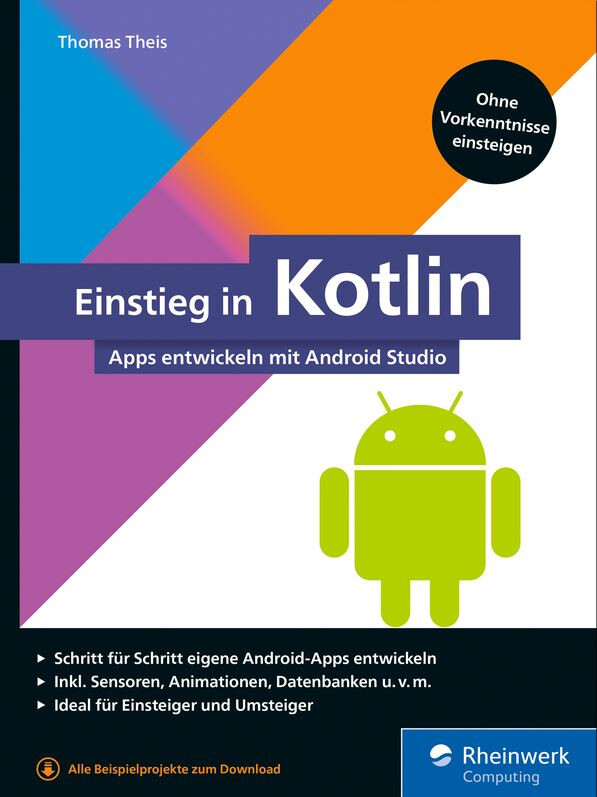
Einstieg in Kotlin
Einfach und strukturiert ohne Vorkenntnisse Kotlin lernen. Alle wichtigen Sprachfeatures Schritt für Schritt erklärt – so entwickeln Sie eigene Apps samt Zugriff auf verschiedenste Sensoren, Datenbanken und Multimedia. Kotlin ist zu Recht beliebt: Nicht nur Java-Kenner werden an Nullsicherheit und Co. ihre Freude haben. Und für Programmierer ist Kotlin genau das richtige für den Einstieg in die App-Entwicklung.Aus dem Inhalt:• Android Studio installieren• Befehle, Schleifen und Co.• Layouts und Menüs aufbauen• Fehler finden und beheben• Eigene Dialoge• Nullsicherheit• Sensoren und Systemdienste auslesen: Lage, Beschleunigung, Standort u.v.m.• Ein Spiel entwickeln• Erweiterungsfunktionen• Gestensteuerung• Zugriffsrechte verwalten

Reinzeichnung
Reinzeichner und Reinzeichnerinnen erstellen perfekt druckfähige und optisch einwandfreie Druckdaten. Klingt einfach? Bei Weitem nicht. Denn ein breitgefächertes Wissen zu technischen Hintergründen, Farbmanagement, Farbe, Typografie und Ausgabe und zur Druckproduktion ist hier nötig. Dieses Buch ist das erste, das alle relevanten Informationen versammelt. Es ist für Einsteiger systematisch aufbereitet, aber auch für alte Grafikdesign-Hasen sehr nützlich, denn es gibt klare Empfehlungen und Checklisten, bietet Hinweise auf Stolperfallen und beachtet alle neuen Standards der Branche. Aus dem Inhalt: Aufgaben der ReinzeichnungProjektablauf, ProjektorganisationFarbmanagement und Farbeinstellungen in der Adobe Creative CloudFarbräume, Farbkonvertierungen, Medienneutraler WorkflowGrundeinstellungen in InDesignDruckobjekte mit unterschiedlichen Seitengrößen, Falztechniken, Grundlinienraster, Templates, MusterseitenFarbeVolltonfarben, Prozessfarben, Anpassen von Volltonfarben, Farbprobleme bei der Ausgabe lösen, Überdrucken, Überfüllen, maximaler Farbauftrag, Farbseparationen, Schwarzdarstellung, TransparenzenSchrift und MikrotypografiePrüfen der Druckbarkeit von Schriften, Optimierung des Textbildes, Einsetzen typografisch korrekter Zeichen, OpenType-Funktionen, GREP-Suche und GREP-StileEinstellungen für Bilder und VektorenSichten der Bilder, Prüfen der Druckbarkeit, Bildauflösung prüfen, Platzieren von Bildern, Illustrator-Dateien und Raw in InDesign platzieren, Bilddateien umwandelnFortgeschrittene InDesign-Funktionen nutzenObjektformate, Bücher, Verankerte Objekte, IHV, Index, Mehrsprachensatz, Arabische Texte, Stanzformen, Veredelungen, Liquid Layout, Alternative Layouts, CC-Libraries, Datenzusammenführung, Korrekturfunktionen mit InCopy und Acrobat, InDesign ReviewReinzeichnung in IllustratorFarben, Bildverknüpfungen, Drucktechnische Einstellungen, Icons aufbereiten, StanzformenAusgabeDruckermarken, Umwandeln von Fonts, Grobdaten/Feindaten, technische Vorschaumöglichkeiten, Farben konvertieren, Haarlinien, Dokument sammeln und verpacken, InDesign-Preflight, PDF und perfekte Druckdaten, Druckvorstufen-Funktionen in AcrobatHintergrundwissen DruckproduktionHalbtonraster, Rasterweiten, Druckverfahren, Weiterverarbeitung Vorwort ... 13 1. Erste Überlegungen zur Reinzeichnung ... 17 1.1 ... Aufgabe der Reinzeichnung: Ein Überblick ... 17 1.2 ... Anforderungen in der Reinzeichnung ... 20 1.3 ... Projektorganisation ... 21 2. Farbmanagement und Farbeinstellungen in der Adobe Creative Cloud ... 23 2.1 ... Creative-Cloud-Farbeinstellungen synchronisieren ... 23 2.2 ... Farbräume ... 27 2.3 ... Farbkonvertierungen in der Creative Cloud ... 30 2.4 ... Grundlagen ICC-Profile und Profilfunktion ... 32 2.5 ... Farbmanagement in InDesign ... 33 2.6 ... Medienneutraler Workflow ... 38 2.7 ... Checkliste: Farbmanagement ... 40 3. Grundeinstellungen in InDesign ... 41 3.1 ... Richtiges Anlegen eines Druckdokuments in InDesign ... 41 3.2 ... Druckobjekte mit unterschiedlichen Seitengrößen in einem Dokument anlegen ... 46 3.3 ... Falztechniken und Buchrücken in InDesign anlegen ... 48 3.4 ... Grundlinienraster ... 56 3.5 ... InDesign-Templates und verborgene Elemente ... 59 3.6 ... Musterseiten ... 64 3.7 ... Checkliste: Grundaufbau in InDesign ... 68 4. Farbe ... 69 4.1 ... Vollton- und Prozessfarben ... 69 4.2 ... Anpassen von Volltonfarben ... 76 4.3 ... Prozessfarben löschen und ersetzen ... 81 4.4 ... Farbprobleme bei der Ausgabe lösen ... 81 5. Umgang mit Transparenz ... 97 5.1 ... Echte und unechte Transparenz ... 97 5.2 ... Mögliche Probleme und Lösungsansätze ... 100 6. Schrift und Mikrotypografie ... 103 6.1 ... Umgang mit Schriften ... 103 6.2 ... Optimierung des Textbildes ... 106 6.3 ... Einsetzen mikrotypografisch korrekter Zeichen ... 119 6.4 ... OpenType-Funktionen ... 130 6.5 ... Zeichen- und Absatzformate ... 136 6.6 ... Tabellenformate ... 146 6.7 ... Wörterbücher und Rechtschreibprüfung ... 149 6.8 ... Suchen und Ersetzen ... 154 6.9 ... GREP-Suche und GREP-Stile ... 156 6.10 ... Checkliste: Typografie ... 163 7. Einstellungen für Bilder und Vektoren ... 165 7.1 ... Prüfen der Druckbarkeit ... 165 7.2 ... Weiteres Sichten der gelieferten Bilder ... 171 7.3 ... Bilddateien umwandeln ... 173 7.4 ... Platzieren von Bildern und Grafiken ... 176 7.5 ... Datenablage der Bilder ... 188 7.6 ... Checkliste: Bilder und Grafiken ... 190 8. Fortgeschrittene InDesign-Funktionen für die Reinzeichnung ... 191 8.1 ... Tipps für das Arbeiten mit Ebenen ... 191 8.2 ... Objektformate erstellen ... 193 8.3 ... Funktionen für den Mengensatz ... 198 8.4 ... Mehrsprachensatz ... 219 8.5 ... Fremdsprachensatz am Beispiel arabischer Texte ... 222 8.6 ... Stanzformen und Veredelungen für eine Verpackung ... 229 8.7 ... Platzieren von PDFs ... 236 8.8 ... Creative Cloud Libraries ... 237 8.9 ... Liquid Layouts und alternative Layouts ... 246 8.10 ... Datenzusammenführung ... 252 8.11 ... Korrekturfunktionen ... 259 9. Reinzeichnung in Illustrator ... 271 9.1 ... Farben ... 271 9.2 ... Bildverknüpfungen ... 274 9.3 ... Drucktechnische Einstellungen ... 276 9.4 ... Icons und Symbole aufbereiten ... 281 9.5 ... Stanzformen ... 284 9.6 ... Zusammenspiel von Illustrator und InDesign ... 285 9.7 ... EPS oder AI ... 285 9.8 ... PDF-Export und Drucken ... 286 9.9 ... Checkliste: Reinzeichnung in Illustrator ... 291 10. Ausgabe vorbereiten ... 293 10.1 ... Druckermarken und Farbkontrollstreifen ... 293 10.2 ... Umwandeln von Fonts in Zeichenwege ... 295 10.3 ... Grobdaten durch Feindaten ersetzen ... 298 10.4 ... Technische Vorschaumöglichkeiten in InDesign ... 299 10.5 ... Farben konvertieren ... 303 10.6 ... Haarlinien korrigieren ... 304 10.7 ... Hintergrundaufgaben in InDesign ... 306 10.8 ... Dokumente sammeln und verpacken ... 307 10.9 ... InDesign-Preflight ... 315 10.10 ... Checkliste: Ausgabe ... 325 11. PDF und Druckdaten ... 327 11.1 ... PDF/X-Zertifizierung ... 327 11.2 ... Adobe PDF Print Engine ... 329 11.3 ... PDF-Export-Einstellungen ... 330 11.4 ... Druckvorstufen-Funktionen in Adobe Acrobat Pro ... 338 11.5 ... Checkliste: PDF und Druckdaten ... 344 12. Grundlagen der Druckproduktion ... 345 12.1 ... Halbtonraster ... 345 12.2 ... Rasterweite ... 347 12.3 ... Druckverfahren ... 347 12.4 ... Schneiden, Falzprinzipien und Verarbeitungsmöglichkeiten ... 352 Index ... 357

Practical Paint.NET
Learn to use the most up-to-date version of Paint.NET, the free, Windows-based program for image editing. This book is ideal for PC users who find Microsoft Paint too lacking, and Photoshop or GIMP too overwhelming. Paint.NET is a lightweight yet capable program that’s easy to navigate and is regularly updated.You’ll quickly become acquainted with this powerful, yet easy-to-learn program’s features; tools, layers, adjustments, and effects. See how to correct exposure, digitally retouch and repair damaged photos, and handle a broad spectrum of photo editing tasks—even how to colorize a black-and-white image. You’ll also learn how to create digital art using the Paint.NET drawing tools and effects. Practice files are provided with step-by-step instructions to jump into photo editing and art creation.Practical Paint.NET highlights this powerful program's rich set of features and capabilities providing you the pathway for just about any kind of image editing. Join the large community behind it today!WHAT YOU'LL LEARN* Use layers, which are essential in any professional quality image editing program* Acquire and install plugins to maximize Paint.NET’s capabilities* Enhance, retouch, and modify digital images* Create compelling digital artwork using the drawing tools and applying artistic filtersWHO THIS BOOK IS FORWindows-based PC users who require the ability to edit digital images without the ongoing cost of subscription-based software, or complex open-source software. This group includes art or photography instructors (especially those in schools systems with limited budgets), small business owners, casual photographers, aspiring graphic designers, or anyone requiring a solid, basic editing program.Phillip Whitt has a passion for images, and has been involved with digital image editing and graphic design since the 1990's. As a freelance photo editing/restoration and graphic design professional, he has retouched and restored countless photographs.Mr. Whitt holds a number of certifications, which include one for Adobe Photoshop CS from Expert Rating, as well as a number of others for demonstrating proficiency in Desktop Publishing, Scribus Basics, GIMP 2.6, and Photo Impact. Mr. Whitt is the author of several Apress titles such as Beginning Photo Retouching and Restoration Using GIMP, Pro Freeware and Open Source Solutions for Business, and Pro Colorizing With GIMP.Introduction* Paint.NET―Quite Possibly the Perfect Solution* What can Paint.NET Do?* What You’ll Learn from this BookPart I: Acquiring, Installing, and Getting to Know Paint.NETChapter 1: An Overview of Paint.NET* Chapter Overview* Acquiring Paint.NET* Downloading and Installing Paint.NET* Overview of the User Interface* Changing The User Interface Color Scheme* Supported File Formats* Installing Plugin Pack* The Main Window* The Title Bar * The Menu Bar* The Tool Bar* The Image List* The Canvas* The Tools Window* The Layers Window* The History Window* The Colors Windows* The Status Bar* Chapter ConclusionChapter 2: Layers* Chapter Overview* Understanding Layers* How Layers Work* Why Layers are Important* Layer Blend Modes* A Closer Look at the Layers Window* Chapter ConclusionChapter 3: An Overview of the Tools* Chapter Overview* The Brush Tools* The Selection Tools* Other Tools* Chapter ConclusionPart II: Working with Digital PhotosChapter 4: Correcting Tonality, Contrast and Exposure* Chapter Overview* An Overview of Image Tonality * Tutorial 1: Correcting Exposure Using the Auto-Level Adjustment * Tutorial 2: Correcting Exposure Using the Brightness/Contrast Adjustment * Understanding the Curves Adjustment* Tutorial 3: Correcting Dull Contrast Using Curves Adjustment * Understanding the Levels Adjustment* Tutorial 4: Correcting Underexposure Using the Levels Adjustment* The Curves Dialog* Tutorial 5: Improving Tonality Using Curves* Tutorial 6: Correcting Local Tonality (Darkening a Light Area) * Tutorial 7: Correcting Local Tonality (Lightening a Dark Area)* Chapter ConclusionChapter 5: Enhancing, Correcting, and Working with Color* Chapter Overview* Tutorial 6: Correcting Color Using the Auto-Level Adjustment * Tutorial 8: Reviving a Faded Color Photo Using Levels * Tutorial 9: Correcting Color Balance (Color Balance Plugin Required) * Tutorial 10: Turning a Color Image to Black and White (Black and White + Plugin Required)* Tutorial 11: Using The Sepia Adjustment* Tutorial 12: Colorizing a Black and White Photo* Chapter ConclusionChapter 6: Modifying, Retouching and Restoring Photos* Chapter Overview* Tutorial 13: Removing Unwanted Objects* Tutorial 14: Straightening An Image * Tutorial 15: Brightening Teeth * Tutorial 16: Removing Blemishes* Tutorial 17 Repairing Scratches and Damage * Chapter ConclusionChapter 7: Compositing Images* Chapter Overview* Tutorial 18: Adding an Element to an Image* Tutorial 19: Simple Background Replacement* Chapter ConclusionPart III: Creating Digital ArtChapter 8: Drawing Basics* Chapter Overview* Using the Pencil and Paint Brush Tools* Tutorial 20: Drawing a Simple Sketch* Tutorial 21: Drawing a Shamrock* Tutorial 22: Drawing a Ladybug* Chapter ConclusionChapter 9: Creating Digital Artwork* Chapter Overview* Tutorial 23: Creating a Scenic Sunset* Tutorial 24: Creating a Starry Night* Tutorial 25: Drawing a Smart Phone* Chapter ConclusionChapter 10: Applying Effects* Chapter Overview* Tutorial 26: Applying a Dream Effect (Dream Plugin Required)* Tutorial 27: Applying an Ink Sketch Effect* Tutorial 28: Applying an Oil Painting Effect (Oil Painting + Plugin Required)* Tutorial 29: Applying a Pastel Effect (Pastel Plugin Required)* Tutorial 30: Applying a Pencil Sketch Effect* Chapter ConclusionAppendix: More About Paint.NET Plugins

Mein Chromebook optimal nutzen
Mein Chromebook optimal nutzen- Den kleinen Alleskönner kennen- und beherrschen lernen.- Von der Installation bis zur unkomplizierten Anwendung.- Schnell, sicher & produktiv: ideal für Privatnutzung & Homeoffice.Chromebooks sind leichte und schnelle Notebooks mit dem Chrome OS-Betriebssystem, die optimal mit Android-Smartphones und allen Google-Onlinediensten zusammenarbeiten. Sie eignen sich für fast alle Aufgaben aus dem privaten Computeralltag, überzeugen durch ihre lange Akkulaufzeit und lassen sich überall dort nutzen, wo es WLAN gibt.Dieses Buch hilft Ihnen dabei, Ihr Chromebook Schritt für Schritt bedienen zu lernen. Richten Sie es individuell nach Ihren Bedürfnissen ein, synchronisieren Sie es mit allen Ihren Android-Geräten und nutzen Sie die vielen praktischen Anwendungen: Vom Verfassen von Textdokumenten über Onlinerecherche, Streaming und Videokonferenzen bis hin zu Fotoverwaltung und -bearbeitung wird das Chromebook Ihr zuverlässiger Begleiter. Und mit der Launcher-Taste finden Sie schnell, wonach Sie suchen: Apps, Dateien und natürlich Antworten aus dem Internet sind stets parat. Freuen Sie sich auf gut nachvollziehbare Anleitungen und hilfreiche Tipps des Profis – für die unkomplizierte und effiziente Nutzung Ihres Chromebooks!Aus dem Inhalt:- Was ist ein Chromebook?- Mit dem Google-Konto anmelden- Daten mit dem Smartphone synchronisieren- Apps installieren und einrichten- Google Drive, der optimale Cloud-Speicher- Texte schreiben mit Google Docs & Word- Videokonferenzen mit Google Meet- Fotos auf dem Chromebook bearbeiten- Google Photos, Snapseed & Lightroom- CAD-Zeichnungen erstellen und editieren- Medien-, Video- und Musikstreaming- Multiplayer Games und E-Sport- Einsatz der Konsole in Chrome OSChristian Immler war viele Jahre als Dozent für Computer Aided Design an der Fachhochschule Nienburg und an der University of Brighton tätig. Seit mehr als 25 Jahren befasst er sich als erfolgreicher Autor mit Spezialthemen wie 3D-Visualisierung, Smartphone-Betriebssysteme, Linux und Windows. Seine Leser schätzen seine Fähigkeit, selbst die kompliziertesten Sachverhalte gut nachvollziehbar zu erklären.
Social Business Transformation
Die Zukunft der Arbeit verlagert sich zunehmend in den digitalen Raum. Deutsche Unternehmen positionieren sich in der Gestaltung dieses Raumes bislang häufig in der Rolle der Nachzügler, weil sie die Bedeutung des Einsatzes sozialer Technologien (z.B. Enterprise Social Networks) für das Unternehmen unterschätzen. Das resultierende Risiko im globalen Wettbewerb unterzugehen, ist gerade für den Mittelstand erheblich.Um zukunftsfähige Wege einzuschlagen, braucht es neue Gestaltungsansätze. Einer davon ist Social Business. Social Business wird im vorliegenden Werk als ganzheitliches Konzept beschrieben, welches durch den systematischen Einsatz digitaler und kollaborativer Werkzeuge neue Möglichkeiten der Innovation und Wertschöpfung schafft. Soziale Technologien ermöglichen eine proaktive Gestaltung unternehmensinterner und -übergreifender Prozesse und bieten insbesondere im Wissensmanagement, in der Kommunikation sowie der Zusammenarbeit produktionssteigernde Potenziale.Im Rahmen dieses Werkes werden praktische Anwendungen, Konzepte zur Umsetzung von Social Business und Leitlinien für den Transformationsprozess wissenschaftlich fundiert und praxisnah präsentiert.DR. CHRISTIAN ZINKE-WEHLMANN arbeitet als Leiter der Service and Knowledge Management Gruppe am Institut für Angewandte Informatik (InfAI) der Universität Leipzig im Bereich sozio-technischer Unterstützungssysteme. Er arbeitet an der Schnittstelle zwischen Technologie, Arbeit und Dienstleistungssystemen und hat 2017 promoviert. Seine Forschung konzentriert sich auf Digitale Zusammenarbeit, Linked Data, Service Engineering und Management sowie Wissensmanagement. Diese Expertise ist in mehr als 40 weiteren Veröffentlichungen zu finden.JULIA FRIEDRICH ist Wissenschaftlerin in der Forschungsgruppe „Service und Knowledge Management“ mit langjähriger Erfahrung in den Bereichen Wissensmanagement und Gamification.Einführung.- Was ist Social Business?.- Wozu braucht es Leitlinien?.- Der Weg zum Social Business.- Darstellung des Transformationsprozesses.- Ein Blick in die Praxis.- Allgemeine Leitlinien und Empfehlungen.

Beginning Windows Mixed Reality Programming
Develop applications and experiences for Microsoft’s HoloLens 2 and other Windows mixed reality devices. This easy-to-follow guide removes the mystery behind creating amazing augmented reality and virtual reality experiences. Mixed reality development tools and resources are provided.BEGINNING WINDOWS MIXED REALITY PROGRAMMING, 2ND EDITION clearly explains all the nuances of mixed reality software development. You will learn how to create 3D objects and holograms, interact with holograms using voice commands and hand gestures, use spatial mapping and 3D spatial sound, build with toolkits such as Microsoft's Mixed Reality Toolkit and Unity’s AR Foundation and XR Platform, create intuitive user interfaces, and make truly awe-inspiring mixed reality experiences. This newly revised edition also includes updated content for HoloLens 2 development, including tutorials for new interactions such as hand tracking and eye tracking.WHAT YOU WILL LEARN* Prototype ideas quickly for the HoloLens 2 and Windows mixed reality devices* Get started with Unity, the preferred tool for developing 3D experiences* Locate and import 3D models for your project, or make your own* Use spatial sound, voice commands, gestures, hand tracking, and eye tracking* Build with Microsoft's Mixed Reality Toolkit and other toolkits to make apps the easy way* Publish to the Windows Store and make money from your appWHO THIS BOOK IS FORProgrammers looking to quickly learn how to create experiences for HoloLens 2. Also for programmers interested in building applications for the growing crop of virtual reality devices that support the Windows Mixed Reality platform.SEAN ONG is an author, engineer, entrepreneur, and tech influencer who has written on topics ranging from renewable energy to augmented reality. Sean and his wife Neisha Ong founded the mixed reality development company, Ong Innovations, in 2014. Sean and his team at Ong Innovations actively work with clients and partners around the globe to push the boundaries of mixed reality and spatial computing. Sean is also co-founder of the VR telepresence robotics platform company, Laborbot, founder of the AR/VR venue-based entertainment company, Manuvr Entertainment Inc., co-founder of the AR/VR app creation platform company, Inflexion Point Inc., and serves as partner and shareholder at numerous other AR/VR startup companies around the globe. He resides in Seattle, WA with his wife and three kids, where he and his family relentlessly build the holographic future of tomorrow using today’s XR devices.PART I: GETTING STARTED1. Gear Up: The Necessary Hardware and Software Tools2. Unity Crash CoursePART II: BUILDING HOLOGRAPHIC EXPERIENCES3. Creating Your First Hologram4. Introduction to the Mixed Reality Toolkit5. Interacting with Holograms6. Using Spatial Awareness7. Spatial SoundPART III: GROWING AS A HOLOGRAPHIC DEVELOPER8. Azure Spatial Anchors9. Shared Experiences10. Awe Inspiring Experiences11. Turning Holograms into Money12. Community Resources
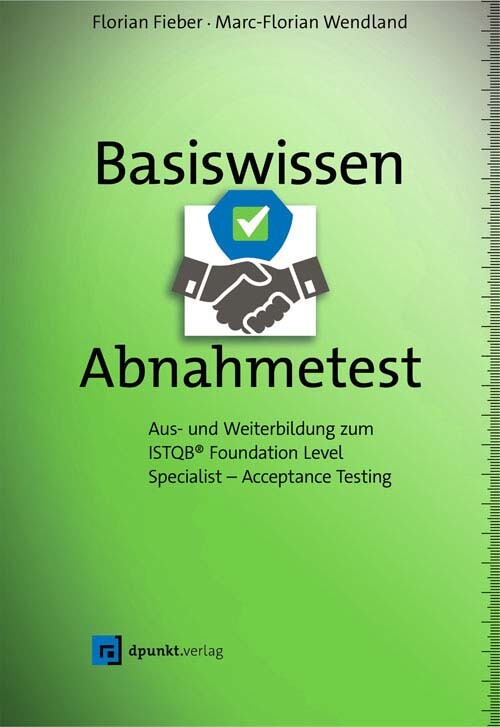
Basiswissen Abnahmetest
Grundlagen des Abnahmetests für Product Owner, Business-Analysten und TesterMit Abnahmetests – Acceptance Testing – wird überprüft, ob eine Software aus Sicht des Benutzers wie beabsichtigt funktioniert und dieser die Software akzeptiert.Das Buch »Basiswissen Abnahmetest« verbindet die Business-Analyse und Softwaretesten mit Blick auf die Konzepte, Methoden und Praktiken der Zusammenarbeit zwischen Business-Analysten und Testern beim Abnahmetest.Business-Analysten und Projektleiter lernen, wie sie durch die Unterstützung bei der Ausrichtung des Produkts an den Geschäftsanforderungen zu den Abnahmetestaktivitäten in einer Organisation beitragen.Tester erfahren, wie sie effizient mit Business-Analysten und anderen Stakeholdern während allen Abnahmetestaktivitäten zusammenarbeiten.Dieses Buch umfasst das erforderliche Wissen als Vorbereitung auf die Prüfung zum »Certified Tester (Foundation Level) – Acceptance Testing« nach ISTQB®-Standard. Ein durchgängiges Fallbeispiel verbindet das theoretische Wissen des Lehrplans mit dessen praktischer Anwendung beim Abnahmetest. Das Buch eignet sich damit nicht nur bestens für die Prüfungsvorbereitung, sondern dient gleichzeitig als kompaktes Basiswerk zu diesen Themen in der Praxis und an Hochschulen.Über die Autoren:Florian Fieber ist Gründer und Geschäftsführer der QualityDojo IT-Consulting GmbH in Berlin und seit knapp 15 Jahren als Berater und Trainer im Bereich der Qualitätssicherung von Softwaresystemen tätig. Seine Schwerpunkte liegen im Testmanagement, der Verbesserung von Testprozessen sowie der Businessanalyse von Enterprise-Anwendungen. Er ist Leiter der Arbeitsgruppe Acceptance Testing beim GTB (German Testing Board e.V.).Marc-Florian Wendland ist wissenschaftlicher Mitarbeiter des Geschäftsbereichs SQC (System Quality Center) im Fraunhofer Institut FOKUS in Berlin. Seine Interessen umfassen die modellgetriebene Softwareentwicklung, den automatisierten Testentwurf und Testautomatisierungsstrategien. Er ist im GTB aktiv in den Arbeitsgruppen „Testautomatisierungsentwickler“ und „Acceptance Testing“. Bei der OMG leitet er die Weiterentwicklung des UML Testing Profile (UTP).
Java Übungsbuch
* TRAINIEREN SIE IHRE JAVA-KENNTNISSE* LEARNING BY DOING ANHAND PRAKTISCHER ÜBUNGEN* MIT VOLLSTÄNDIGEN UND KOMMENTIERTEN LÖSUNGENDieses Buch ist kein Lehrbuch, sondern ein reines Übungsbuch und wendet sich an Leser, die ihre Java-Kenntnisse anhand zahlreicher praktischer Übungen durch »Learning by Doing« vertiefen und festigen möchten. Es ist ideal, um sich auf Prüfungen vorzubereiten oder das Programmieren mit Java praktisch zu üben.Jedes Kapitel beginnt mit einer kompakten Zusammenfassung des Stoffs, der in den Übungsaufgaben dieses Kapitels verwendet wird. Anschließend haben Sie die Möglichkeit, zwischen Aufgaben in drei verschiedenen Schwierigkeitsstufen - von einfach bis anspruchsvoll - zu wählen. Anhand dieser Aufgaben können Sie Ihr Wissen praktisch testen. Am Ende der Kapitel finden Sie vollständige und kommentierte Musterlösungen.ES WERDEN FOLGENDE THEMEN ABGEDECKT:Die Kapitel 1 bis 3 enthalten Aufgaben zur objektorientierten Programmierung mit Java.In Kapitel 4 geht es im Detail um Generics und das Collection Framework, seine generischen Klassen und Interfaces sowie die Definition von Enumerationen. Kapitel 5 erläutert das Exception Handling.Kapitel 6 beschäftigt sich mit den neuen Sprachmitteln von Java 8, Lambdas und Streams. Kapitel 7 bietet einen Einblick in die mit Java 9 vorgenommene Modularisierung der Java-Plattform.In Kapitel 8 werden Weiterentwicklungen aus den Java-Versionen 14 bis 17 behandelt. Dazu gehören die Einführung von Records und Sealed Classes sowie das Pattern Matching (sowohl für den instanceof-Operator als auch für switch). Kapitel 9 enthält viele Aufgaben zu Tests mit JUnit 5 und Gradle sowie eine kurze Einführung in beide Systeme.Nach dem Durcharbeiten des Buches verfügen Sie über fundierte Programmierkenntnisse und einen umfangreichen Fundus an Beispielcode.AUS DEM INHALT:* Klassendefinition und Objektinstanziierung* Abgeleitete Klassen und Vererbung* Abstrakte Klassen und Interfaces* Die Definition von Annotationen* Innere Klassen* Generics und Reflection* Lambdas* Funktionale Interfaces* Switch Expressions* Local Variable Type Inference* Definition und Nutzung von Streams* Das Modulsystem von Java* Records* Sealed Classes und Interfaces* Pattern Matching für den instanceof-Operator* Pattern Matching für switch* Tests mit JUnit 5 und GradleElisabeth Jung ist freie Autorin und wohnhaft in Frankfurt am Main. Nach dem Studium der Mathematik an der Universität Temeschburg in Rumänien hat Elisabeth Jung Grundlagen der Informatik und Fortran unterrichtet. Im Jahr 1982 hat sie bereits eine Aufgabensammlung für Fortran an der gleichen Universität veröffentlicht.
Scrum-Training
Der Praxisleitfaden für Agile CoachesImmer mehr Firmen wollen zu agilen Unternehmen werden und eine »New Work«-Kultur etablieren. Das beliebte agile Rahmenwerk Scrum ist dazu oft ein wichtiger Baustein, um selbstverwaltete Teams zu etablieren. Erfolgreiche Scrum-Trainings helfen, eine agile Transformation wirksam anzustoßen, durchzuführen und insgesamt zu erleichtern.Dieses Buch bietet Ihnen als Agile Coach, Scrum Master, Trainer oder Berater einen bewährten Praxisleitfaden, um die Essenz aus Scrum interaktiv z.B. in Workshops zu vermitteln. Vielfach erprobte Übungen bieten den idealen Rahmen, damit die teilnehmenden Personen selbst zu zentralen Erkenntnissen gelangen. Der klare Tagesplan liefert dabei stets Orientierung.Doch Seminare bergen immer auch Herausforderungen. Daher werden auch der Umgang mit eher skeptischen Menschen, die Gestaltung von Lernreisen und die Steuerung von Gruppendynamik thematisiert. Durch persönliche Beispiele lebt das Autorenteam nahbar vor, wie sich eine persönliche Haltung von Agilität positiv auf das Geschehen und den Fortgang auswirkt.Nach der Lektüre des Buches wissen Sie, wie Sie ein zweitägiges Scrum-Training so aufbauen, dass dieses eine intensive und auch nachhaltige Wirkung auf alle Beteiligten entfaltet.

Optimizing Visual Studio Code for Python Development
Learn Visual Studio Code and implement its features in Python coding, debugging, linting, and overall project management. This book addresses custom scenarios for writing programs in Python frameworks, such as Django and Flask.The book starts with an introduction to Visual Studio Code followed by code editing in Python. Here, you will learn about the required extensions of Visual Studio Code to perform various functions such as linting and debugging in Python. Next, you will set up the environment and run your projects along with the support for Jupyter. You will also work with Python frameworks such as Django and go through data science specific-information and tutorials. Finally, you will learn how to integrate Azure for Python and how to use containers in Visual Studio Code.Optimizing Visual Studio Code for Python Development is your ticket to writing Python scripts with this versatile code editor.WHAT YOU'LL LEARN* Execute Flask development in Visual Studio Code for control over libraries used in an application* Optimize Visual Studio Code to code faster and better* Understand linting and debugging Python code in Visual Studio Code* Work with Jupyter Notebooks in Visual Studio CodeWHO THIS BOOK IS FORPython developers, beginners, and experts looking to master Visual Studio CodeSufyan bin Uzayr is a web developer with over 10 years of experience in the industry. He specializes in a wide variety of technologies, including JavaScript, WordPress, Drupal, PHP, and UNIX/Linux shell and server management, and is the author of four previous books. Sufyan is the Director of Parakozm, Kazakistan a design and development consultancy firm that offers customized solutions to a global clientele. He is also the CTO at Samurai Servers, a server management and security company catering mainly to enterprise-scale audience. He takes a keen interest in technology, politics, literature, history and sports, and in his spare time he enjoys teaching coding and English to students.OPTIMIZING VISUAL STUDIO CODE FOR PYTHON DEVELOPMENTCHAPTER ONE – INTRODUCTION TO VISUAL STUDIO CODEo Basic introduction to Visual Studio CodeCHAPTER TWO – GETTING STARTED WITH PYTHON PROGRAMS IN VS CODEo Getting started with code editingo Required extensionso Lintingo DebuggingCHAPTER THREE – SETTING UP THE ENVIRONMENT AND TESTINGo Setting up your environmento Running your projectso Support for JupyterCHAPTER FOUR – WORKING WITH PYTHON FRAMEWORKSo Django Developmento Flask Developmento Data Science specific information and tutorialsCHAPTER FIVE – WORKING WITH CONTAINERS AND MS AZUREo Integrating Azure for your Python projectso Using containers in VS Codeo Conclusion

IoT Standards with Blockchain
Implement a standardized end-to-end IoT implementation based on best practices and proven successes in IoT across multiple industries. With this book you'll discover the three business strategies for enterprises to adopt and remain relevant in the marketspace —the Customer Engagement strategy, the Business Transformation strategy, and the Business Productivity Improvement strategy. Pick the right strategy for your enterprise to ensure a clear mission and vision is established based on which IoT roadmap can be defined. Subsequently all business processes pertaining to the chosen business strategy are investigated to define use cases where IoT can be adopted to achieve that business strategy.Start by learning the generic industry perspective on digital transformation using IoT. Then move on to the IoT Standards Reference Model. It’s an abstract framework consisting of an interlinked set of clearly defined components for enterprises to successfully implement an IoT solution. The IoT Standards Reference Model can be applied for IoT use cases across any industry and is kept abstract in order to enable many, potentially different, IoT architectures to be implemented based on the model.With IoT thoroughly covered, you’ll dive into Blockchain and AI technology. This book will discuss the importance of using private blockchains for IoT use cases. You’ll also discover the five IoT-Blockchain implementation patterns that enterprises can enable for seamless communication between IoT devices, IoT Smart Gateways, and IoT platforms. These patterns help achieve trust, interoperability, and extendibility. Then you’ll work with AI and the IoT Standards Reference Model. The reference model recommends applying AI patterns to generate insights from data and take appropriate actions automatically.IoT Standards with Blockchain also provides perspective on how and when to apply AI in an IoT Context. In the end, you’ll have a solid methodology to execute large scale, enterprise-level IoT implementations. You’ll have an enterprise digital transformation framework for IoT that will enable your enterprise to operate better.WHAT YOU'LL LEARN* Facilitate IoT interoperability with best practices* Implement IoT platform security* Feed data and analytics to AI modelsWHO THIS BOOK IS FORC-suite leaders and IT program managers across all industries, including manufacturing (Industry 4.0), logistics, oil and gas, transportation, energy, mining and metals, aviation, pharmaceuticals, medical devices, and hospitality. VENKATESH UPADRISTA leads UKI delivery for HCL Technologies—an 8 Billion Solutions IT Services company. He is recognized as an exceptional digital talent leader by UK Tech Nation and speaks at industry conferences on topics covering the Internet of Things and other digital focuses.Part 1: IoT Business StrategyChapter 1: Getting StartedDesigning Business for FutureThe Triple Challenges in IoTChapter 2: IoT Business StrategyCustomer Engagement StrategyBusiness Transformation StrategyBusiness Productivity ImprovementChoosing Between Customer Engagement, Business Transformation, and Business Productivity Improvement StrategyChapter 3: IoT Standards Business Transformation ModelWhat next after your business strategy is chosenThe IoT Use Case Reference Model (IoT UCR ModeL)Applying IoT Treatments on Use CasesPart II: The IoT Reference ModelChapter 4: The IoT Reference ModelTh IoT Standards Reference ModelFullStack IoT PlatformTypical activities performed by Smart IoT gateway and Full Stack IoT PlatformSecurityBlockchainChapter 5: IoT Device and Their CommunicationDevice TypesCommunication ProtocolsChapter 6: The Smart IoT GatewayData Volume and AnalyticsIoT GatewaysSmart IoT GatewaysChoosing the right Smart IoT gatewayIoT gateway ComparisonsChapter 7: IoT Cloud PlatformIoT Basics SixSpecific CapabilitiesProof-of-Concept (PoC)Chapter 8: Security in IoTSecure by DESIGN (Securing the whole IoT ecosystem)Securing IoT Using BlockchainPart III: AI and Blockchain as Enablers for IoTChapter 9: Blockchain with IoTPublic BlockchainPrivate BlockchainIoT Blockchain implementation PatternsChapter 10: Artificial Intelligence in the IoT World (Applied IoT)Robotic process automationArtificial IntelligenceArtificial Intelligence & IoTLessons learned in applying AI in IoT Use Cases (Applied IoT)Part IV: IoT Implementation AspectsChapter 11: Big Data and AnalyticsDebugging Capabilities(Big) Data First Reference ModelChapter 12: Product Mindset for IoT Use Case ImplementationProduct OrganizationIoT Product Lifecycle with Product MindsetChapter 13: IoT Product TeamIoT Product TeamIoT Product Team IdentificationAudience: Intermediate

Qualitätsmanagement in den 20er Jahren - Trends und Perspektiven
Zielsetzung der Gesellschaft für Qualitätswissenschaft e.V. ist es, die Qualitätswissenschaft in Lehre und Forschung zu fördern und den Wissenstransfer in die industrielle Anwendung zu unterstützen. Geschehen soll dies unter anderem durch Pflege des wissenschaftlichen Erfahrungsaustauschs unter den auf diesem Gebiet tätigen Personen und Institutionen und der Verbreitung von Forschungs- und Entwicklungsergebnissen sowie der Unterstützung des Wissenstransfers zwischen Forschung und Praxis. Unter dem Leitthema „Qualitätsmanagement in den 20er Jahren - Trends und Perspektiven“ hat die Gesellschaft für Qualitätsmanagement gemeinsam mit der Hochschule Koblenz zur GQW Tagung 2020 eingeladen. Wir freuen uns, dass wir Ihnen nun den zugehörigen Tagungsband vorstellen können. Wenn man nach den Trends der kommenden Jahre fragt, muss in vielen Branchen und Disziplinen fast zwingend die Digitalisierung genannt werden. So bildet dieses Thema auch einen starken Schwerpunktin diesem Tagungsband. Die Beiträge beschäftigen sich mit künstlicher Intelligenz beim autonomen Fahren, der Rolle der Digitalisierung bei Nachweissystemen für Zusatzqualifikationen und Zutrittszertifikaten sowie der Integration von Industrie 4.0-Elementen in ganzheitlichen Produktionssystemen. Auch die Frage, welche Rolle die Blockchain-Technologie im Qualitätsmanagement spielen könnte, wird betrachtet. Eine weitere Facette bildet der Beitrag über den Einsatz von Eye-Tracking in der Produktentwicklung. Die aktuelle Corona-Krise wird ebenfalls aufgegriffen und erste Analysen zum Einfluss des digitalen Reifegrads auf das Arbeitszeitmodell in Krisenzeiten vorgestellt. Aber auch Beiträge zur Rolle von Erfahrungswissen im Qualitätsmanagement, zur Messung der Qualität in Produkt-Service-Systemen, zur ganzheitlichen Fehleranalyse, zu geometrischen Produktspezifikationen und Montagereihenfolgen finden Sie in diesem Band. Ein breiter Kanon spannender und aktueller Themen also, der zur Diskussion über das Qualitätsmanagement von morgen einlädt.
LEGO®-Roboter bauen, steuern und programmieren mit Raspberry Pi und Python
* BAU- UND PROGRAMMIERANLEITUNGEN FÜR MEHR ALS 10 SPANNENDE ROBOTER-PROJEKTE* LABYRINTHE LÖSEN, PAPPKARTEN PER BILDERKENNUNG ABSCHIEẞEN, FORMEN MIT EINEM NEURONALEN NETZ ERKENNEN U.V.M.* PROGRAMMCODE UND BAUANLEITUNGEN FÜR ALLE ROBOTER ZUM DOWNLOADLEGO®-Steine - sei es als selbstgebaute LEGO®-Fahrzeuge, -Roboter oder als LEGO®-Fertigmodelle - lassen sich hervorragend mit Elektronikkomponenten zum Leben erwecken und programmieren. Hierfür ist der Mikrocontroller Raspberry Pi besonders gut geeignet. Anhand konkreter Projekte zeigt Ihnen der Autor, wie Sie Sensoren und Motoren von LEGO® sowie weitere Elektronikkomponenten mit dem Raspberry Pi verbinden und Ihre Roboter programmieren. Durch den Einsatz der Programmiersprache Python können die Roboter einfache und komplexe Aufgaben lösen bis hin zu Linienverfolgung mit einem neuronalen Netz oder Bilderkennung.Im ersten Teil des Buches erhalten Sie eine kurze Einführung in den Mikrocontroller Raspberry Pi sowie den BrickPi, der für die Verbindung von LEGO®-Sensoren mit dem Raspberry Pi benötigt wird. Außerdem vermittelt der Autor die Grundlagen zu allen Elektronikkomponenten, mit denen Sie Ihre LEGO®-Modelle oder -Roboter ausstatten können. Dazu zählen unter anderem mittlere und große LEGO®-Motoren sowie folgende Komponenten: Color-Sensor, Touch-Sensor und Infrarot-Sensor von LEGO®, Kompass-Sensor und Gyro-Sensor von Hitechnic, Raspberry-Pi-Kamera, Fototransistor, LEDs und Motoren.Im zweiten Teil des Buches finden Sie eine kurze Einführung in die Grundlagen der Programmierung mit Python, gefolgt von einem umfangreichen Projektteil mit 11 spannenden Robotern, die diverse Aufgaben lösen, wie zum Beispiel:* Gegenstände erkennen und diesen ausweichen* Lösen eines Labyrinths mithilfe von künstlicher Intelligenz* Linienverfolgung und Formen erkennen mit einem neuronalen Netz* Pappkarten abschießen per Bilderkennung* Sammeln farbiger Joghurtbecher* Texte morsen inkl. Anleitung zum Basteln eines eigenen Touch-SensorsBei allen Projekten erläutert der Autor sowohl den Bau der Roboter als auch die entsprechende Programmierung.HARDWARE:Für die Projekte im Buch werden sowohl die LEGO®-eigenen Komponenten als auch günstige handelsübliche Motoren und Sensoren eingesetzt. Sie können einen eigenen Roboter bauen, die LEGO®-Roboter im Buch nachbauen oder als Grundlage ein LEGO®-Fertigmodell verwenden. Für alle im Buch verwendeten LEGO®-Roboter gibt es die Bauanleitungen zum kostenlosen Download.Thomas Kaffka hat als Softwareingenieur sowie Projektleiter in Softwarehäusern und Wirtschaftsprüfungs- und Beratungsgesellschaften gearbeitet. Er ist ein echter Maker und beschäftigt sich mit verschiedenen Themen wie etwa dem Bau von LEGO®-Robotern, der Künstlicher Intelligenzforschung sowie dem 3D-Druck.
Die ultimative QNAP NAS Bibel
Mit diesem Praxisbuch zu den vielseitigen NAS-Systemen des Anbieters QNAP bekommen Sie einen umfassenden Einblick in das Thema der Network-Attached-Storage-Geräte.Eine anschauliche Schrittanleitung führt Sie durch den Installationsvorgang. Wenn Sie Ihr NAS schon eingerichtet haben, finden Sie viele praktische Tipps für die optimale und sichere Konfiguration, die Einrichtung eines eigenen Mailservers, die Verwendung als Fotospeicher, Musikarchiv und weitere spannende Funktionen.Die Ergänzung im Beiheft bietet Ihnen Veränderungen und Neuigkeiten der aktuellsten Soft- und Hardware mit weiteren Tipps an,

Cryptography and Cryptanalysis in MATLAB
Master the essentials of cryptography and cryptanalysis and learn how to put them to practical use. Each chapter of this book starts with an introduction to the concepts on which cryptographic algorithms are based and how they are used in practice, providing fully working examples for each of the algorithms presented. Implementation sections will guide you through the entire process of writing your own applications and programs using MATLAB.Cryptography and Cryptanalysis in MATLAB will serve as your definitive go-to cryptography reference, whether you are a student, professional developer, or researcher, showing how a multitude of cryptographic challenges can be overcome using the powerful tools of MATLAB.WHAT YOU WILL LEARN* Discover MATLAB’s cryptography functions* Work with conversion mechanisms in MATLABImplement cryptographic algorithms using arithmetic operations * Understand the classical, simple cryptosystems that form the basis of modern cryptography* Develop fully working solutions (encryption/decryption operations)* Study pseudo-random generators and their real-life implementations* Utilize hash functions by way of practical examples* Implement solutions to defend against practical cryptanalysis methods and attacks* Understand asymmetric and symmetric encryption systems and how to use themLeverage visual cryptography, steganography, and chaos-based cryptographyWHO THIS BOOK IS FORThose who are new to cryptography/analysis. Some prior exposure to MATLAB recommended.MARIUS IULIAN MIHAILESCU, PHD is CEO at Dapyx Solution Ltd., a company based in Bucharest, Romania and involved in information security- and cryptography-related research projects. He is a lead guest editor for applied cryptography journals and a reviewer for multiple publications with information security and cryptography profiles. He authored and co-authored more than 30 articles in conference proceedings, 25 articles in journals, and three books. For more than six years he has served as a lecturer at well-known national and international universities (University of Bucharest, “Titu Maiorescu” University, Kadir Has University in, Istanbul, Turkey). He has taught courses on programming languages (C#, Java, C++, Haskell), and object-oriented system analysis and design with UML, graphs, databases, cryptography and information security. He served for three years as IT Officer at Royal Caribbean Cruises Ltd. where he dealt with IT infrastructures, data security, and satellite communications systems. He received his PhD in 2014 and his thesis was on applied cryptography over biometrics data. He holds two MSc in information security and software engineering.STEFANIA LOREDANA NITA, PHD is a software developer at the Institute of Computer Science of the Romanian Academy and a Fellow PhD with her thesis on advanced cryptographic schemes using searchable encryption and homomorphic encryption. She has served more than two years as an assistant lecturer at the University of Bucharest where she taught courses on subjects such as advanced programming techniques, simulation methods, and operating systems. She has authored and co-authored more than 15 workpapers at conferences and journals, and has authored two books on he Haskell programming language. She is a lead guest editor for special issues on information security and cryptography such as Advanced Cryptography and Its Future: Searchable and Homomorphic Encryption. She holds an MSc in software engineering and two BSc in computer science and mathematics.NEW ToCChapter 01 – IntroductionChapter 02 – MATLAB Cryptography FunctionsChapter 03 – Conversions used in CryptographyChapter 04 – Basic Arithmetic FoundationsChapter 05 – Number TheoryChapter 06 – Classical Cryptography6.1. Caesar Cipher6.2. VigenereChapter 07 – Pseudo Random GeneratorsChapter 08 – Hash FunctionsChapter 09 – Formal Techniques for CryptographyChapter 10 – Symmetric Encryption Schemes10.1. Case Study: The Data Encryption Standard (DES)10.2. Advanced Encryption Standard (AES)Chapter 11 – Asymmetric Encryption Schemes11.1. RSA11.2. El Gamal11.3. Knapsack11.4. Merkle-HellmanChapter 12 – Visual CryptographyChapter 13 – SteganographyChapter 14 – Chaos-based CryptographyPART 1 - FOUNDATIONS.1. Cryptography Fundamentals2. Mathematical Background and Its Applicability3. Large Integer Arithmetic4. Floating-point Arithmetic5. New Features in MATLAB 106. Secure Coding Guidelines7. Cryptography Libraries in MATLABPART 2 – PRO CRYPTOGRAPHY.8. Elliptic-curve Cryptography and Public Key Algorithms9. Lattice-based Cryptography10. Searchable Encryption11. Homomorphic Encryption12. Learning with Errors and Ring Learning with Errors Cryptography13. Chaos-based Cryptography14. Big Data Cryptography15. Cloud Computing Cryptography.PART 3 – PRO CRYPTANALYSIS16. Introduction to Cryptanalysis17. General notions for Conducting Cryptanalysis Attacks18. Linear and Differential Cryptanalysis19. Integral Cryptanalysis20. Attacks21. Text Characterization22. Basic Implementations of Cryptanalysis Methods.

Basic Python for Data Management, Finance, and Marketing
Learn how to gather, manipulate, and analyze data with Python. This book is a practical guide to help you get started with Python from ground zero and to the point where you can use coding for everyday tasks.Python, the most in-demand skill by employers, can be learned in a matter of months and a working knowledge will help you to advance your career. This book will teach you to crunch numbers, analyze big-data, and switch from spreadsheets to a faster and more efficient programming language. You'll benefit from the numerous real-life examples designed to meet current world challenges and from step-by-step guidance to become a confident Python user.Python is used in all aspects of financial industry, from algo trading, reporting and risk management to building valuations models and predictive machine learning programs. Basic Python for Data Management, Finance, and Marketing highlights how this language has become a useful skill with digital marketers, allowing them to analyze data more precisely and run more successful campaigns.WHAT YOU'LL LEARN* Get started with Python from square one* Extend what's possible on excel with Python* Automate tasks with Python* Analyze data more preciselyWHO THIS BOOK IS FORProfessionals who want to find a job in the modern world or advance their careers within field of Python programming language.Art Yudin is a FinTech enthusiast who has a great passion for coding and teaching. He earned a Master of Science in Banking and Finance from Adelphi University, Garden City, New York.Mr. Yudin previously held asset management positions with international financial institutions such as Merrill Lynch and Allianz Investments. Currently, Art Yudin develops FinTech software for well known financial giants. Art Yudin has founded Practical Programming in New York. Practical Programing is a Python bootcamp. Art leads classes and workshops in Python at Practical Programming in New York and Chicago.BASIC PYTHON FOR DATA MANAGEMENT, FINANCE, AND MARKETING1. Getting started with Python- Variables and numeric data types- Python containers to hold our data- Definite loops- Building a mortgage calculator2. Writing your own Python scripts- Custom functions- Indefinite loops- Immutable containers - tuples- Pseudo code to problem solving3. Extending Excel with Python- Dictionaries- Reading and writing csv files with Python- CSV and Urllib modules4. Data Analysis with NumPy and Pandas- NumPy as an extension of Python- Series and DataFrame- Manipulate and plot data with Pandas5. Solving common problems with Pandas- Concatinate and merge datasets- Group by keys- How to use logic in Pandas6. Gathering data with Python- Web Scraping with Python- Reading PDF files with Python- Cleaning data- Storing data7. Building predictive models- User authentication- Linear reression- K-nearest- CART – decision tree- Matplotlib to plot data8. Automating tasks with Python- Sending emails- Deploying your script to a server- Running tasks at specific time

Programming Basics
Explore the basics of the three most popular programming languages: C#, Java, and Python and see what it's like to function in today's world from the perspective of a programmer. This book's uses is highly practical approach with numerous code listings aimed at bringing generations together through the intricacies of technology.You'll learn how understanding the basics of coding benefits non-programmers working with software developers. Those in the gaming/media industry will also benefit from understanding a programmer's point of view. The same applies to software testers and even company executives, who might have an education in business instead of computer science.WHAT YOU'LL LEARN* Think and read code-listings like a programmer* Gain a basic working proficiency in three popular programming languages* Communicate more efficiently with programmers of all experience levels in a work-based environment* Review advanced OOP concepts such as exceptions and error handling* Set up your programming environments for Windows, MacOS, and LinuxWHO THIS BOOK IS FORThose looking to discover programming, including beginners in all fields, and professionals looking to understand how code works.Robert Ciesla is an author and filmmaker from Helsinki, Finland. He is also a freelance-programmer working mostly in the indie game scene. He is the author of Encryption for Organizations and Individuals (2020), Game Development with Ren'Py (2019) and Mostly Codeless Game Development (2017).Chapter 1. Why kids love to code (and you will too)* Motivation for and the benefits of programming* The basic hardware components of a computerChapter 2. What is programming? (and what does it take)* Basic programming concepts explained with some specifics for C#, Java, and Python* What an integrated development environment (IDE) refers to* The gist of variables, variable manipulation, and flow control logicChapter 3. Setting up your programming environments for Windows, MacOS, and LinuxChapter 4. Object-Oriented Programming (OOP)* The object-oriented programming paradigm explained in detail* The basics of UMLChapter 5. File Operations, Multithreading, and Other Wonders of Java* Small tutorials for the language demonstrating the more advanced mechanics of the languageChapter 6. And now for something completely different: Python* More Python techniques (file operations etc.)Chapter 7. C#: A jack of most programming tasks* Deploying C# for desktop, online, and mobile platformsChapter 8. Advanced OOP Techniques* Advanced OOP concepts: exceptions, error handling, etc.Chapter 9. Unified Modeling Language (UML)* Detailed techniques (class relationships and multiplicity, etc.)* Software tools for modeling in UML
Programmieren mit LEGO® MIND-STORMS® 51515 und SPIKE® Prime
Scratch und Python mit der neuen LEGO-Roboter-Generation* Programmieren lernen leicht gemacht: Steuerungsbefehle schreiben und real mit LEGO-Robotern ausführen* Beispiele in Scratch und Python * für die neue LEGO-Mindstorms-Generation "Robot Inventor" und den kompatible Spike PrimeProgrammieren lernen muss nicht theoretisch sein: Zusammen mit den LEGO-Modellreihen Mindstorms Robot Inventor 51515 oder dem kompatiblen Spike Prime können Sie Ihre Programmzeilen direkt mit selbstgebauten Modellen ausprobieren. Die Code-Beispielen in diesem Buch erklären Schritt für Schritt, was gutes und effizientes Programmieren ausmacht. Die direkte Ausführung mit einem Roboter macht mehr Spaß als Befehlebüffeln und führt auf praktische Weise zum Lernerfolg.Das Buch bietet einen methodisch sinnvollen Weg, die zwei Sprachen zu erlernen, die LEGO für die Modellreihen vorsieht. Leserinnen und Leser können die Lösungen zu Programmier-Aufgabenstellungen jeweils in beiden Sprachen verfolgen und lernen dabei ihre Unterschiede und Stärken kennen:- Scratch, das mit grafischen Textblöcken arbeitet, eignet sich besonders gut für Einsteigerinnen und Einsteiger.- Python dient als einfacher Zugang zur textbasierten Programmierung und ermöglicht auch komplizierte Abläufe.- Experimente und intuitives Lernen mit dem exklusiven Beispielroboter, der aus Teilen der Sets gebaut werden kann.Das Robotermodell lässt sich aus Teilen des Sets LEGO Mindstorms Robot Inventor 51515 bzw. demLEGO-Education-Spike-Prime-Set 45678 aufbauen.Alexander Schulze blickt auf eine 35-jährige Erfahrung im Umgang mit Computern und Programmierung zurück und hat sein Hobby nach dem Studium der Technischen Informatik (Berufsakademie) zum Beruf gemacht. Mit mehr als 20 Jahren Erfahrung in der Java-Programmierung arbeitet er als Senior-IT-Architekt in Projekten für Großkunden.Seine LEGO-begeisterten Kinder haben ihn zu LEGO Mindstorms geführt und die Leidenschaft für die Programmierung von Robotern entfacht.Verschiedene Workshops an einer Grundschule sowie die Unterstützung der Robotik-AG an einem Gymnasium im Unterallgäu legten den Grundstein für das Buch "LEGO Mindstorms programmieren – Robotikprogrammierung mit grafischen Blöcken, Basic und Java für LEGO EV3" für den LEGO Mindstorms EV3 und für dieses Buch. Dabei stand von Beginn an die Teilnahme an verschiedenen Wettbewerben mit den Schülern im Vordergrund, um mit ihnen auf ein konkretes Ziel hinzuarbeiten.
Einfach Java
Java lernen – von Anfang an wie ein Experte* Grundlagen der Java-Programmierung leicht und verständlich* Java interaktiv im Selbststudium* Aufgaben und Musterlösungen, Code zum DownloadSie wollen endlich Programmieren lernen und ihre ersten Projekte umsetzen? Dazu bietet sich Java als eine der populärsten Programmiersprachen geradezu an. Dieses Buch erleichtert Ihnen den Einstieg, denn Sie werden auf Ihrer Entdeckungsreise vom Java-Experten Michael Inden begleitet. Er erklärt Ihnen die Grundlagen der Java-Programmierung leicht und verständlich. Insbesondere wird die trockene Theorie auf ein Minimum reduziert und Sie legen immer mit kleinen Beispielen los.Eine große Rolle dabei spielt der interaktive Einstieg mithilfe der JShell. Damit können kleine Programme direkt ausprobiert werden und Erfolgserlebnisse stellen sich schnell ein. Dieses Vorgehen eignet sich ideal, um im eigenen Tempo Java im Selbststudium zu erlernen. Allmählich werden sowohl die Themen anspruchsvoller als auch die zu erstellenden Programme größer. Als Hilfsmittel lernen Sie dann den Einsatz einer Entwicklungsumgebung sowie der objektorientierten Programmierung kennen. Mit den erlernten Grundlagen können Sie sich immer zielsicherer mit eigenen Projekten beschäftigen.Das Buch besteht aus in sich abgeschlossenen, aber aufeinander aufbauenden Kapiteln zu den wichtigen Bereichen der Programmiersprache Java. Jedes Kapitel beschreibt die für den Einstieg wichtigen Sprachelemente.Abgerundet werden viele Kapitel mit Aufgaben und Musterlösungen, sodass das zuvor Gelernte direkt anhand neuer Problemstellungen praktiziert und das Wissen vertieft werden kann. Auch lassen sich die eigenen Fortschritte abschätzen und gegebenenfalls eine Ehrenrunde zur Vertiefung des Wissens einlegen.Zahlreiche kurze Codebeispiele verdeutlichen die Lerninhalte und laden oftmals zum Experimentieren ein. Gleich von Anfang an lernen Sie, ihren Sourcecode sauber zu strukturieren und einen guten Stil zu verfolgen.Dipl.-Inform. Michael Inden ist Oracle-zertifizierter Java-Entwickler. Nach seinem Studium in Oldenburg hat er bei diversen internationalen Firmen in verschiedenen Rollen etwa als Softwareentwickler, -architekt, Consultant, Teamleiter, CTO sowie Leiter Academy gearbeitet. Zurzeit ist er freiberuflich als Autor und Trainer in Zürich tätig.Michael Inden hat über zwanzig Jahre Berufserfahrung beim Entwurf komplexer Softwaresysteme gesammelt, an diversen Fortbildungen und mehreren Java-One-Konferenzen teilgenommen. Sein besonderes Interesse gilt dem Design qualitativ hochwertiger Applikationen sowie dem Coaching. Sein Wissen gibt er gerne als Trainer in internen und externen Schulungen und auf Konferenzen weiter, etwa bei der JAX/W-JAX, JAX London, Oracle Code One, ch.open sowie bei der Java User Group Switzerland.

Microsoft SharePoint - Das Praxisbuch für Anwender
Sie stehen vor der Aufgabe, SharePoint Server 2019 oder SharePoint Online in Ihrem Unternehmen oder in Ihrer Fachabteilung einzuführen bzw. einzusetzen? Dieses Praxisbuch für Anwender zeigt Ihnen, wie. Sie lernen nicht nur die Möglichkeiten der bereitgestellten SharePoint-Technologien von Grund auf kennen, sondern erlernen anhand der praxisorientierten Beispiele auch den sicheren Umgang mit SharePoint und erfahren, wie Sie es effektiv einsetzen.Dieses Buch unterstützt Sie Schritt für Schritt bei Ihrem SharePoint-Projekt. Es richtet sich an alle SharePoint-Anwender ohne spezifisches technisches Vorwissen, die einen Überblick über SharePoint erhalten und effizienter mit dem System arbeiten möchten.Melanie Schmidt gibt Ihnen zahlreiche Tipps und Empfehlungen für das eigene SharePoint-Projekt und erklärt, was Sie bei der Anwendung der unterschiedlichen Technologien beachten sollten und wie Sie typische Fehler vermeiden. Auch alltägliche Aufgaben von der Abteilungsanforderung bis zu Routinearbeiten in der SharePoint-Umgebung werden von der Autorin beschrieben. Außerdem erfahren Sie, welche Entscheidungen und Vorüberlegungen getroffen und welche Voraussetzungen geschaffen werden müssen, damit ein SharePoint-Projekt erfolgreich umgesetzt werden kann. Zusätzlich erklärt sie Ihnen in diesem Buch typische Abteilungsanforderungen anhand konkreter, praktischer Beispiele, sodass Sie schnell eigene Ideen entwickeln und mit der jeweils passenden SharePoint-Technologie realisieren können.Die Autorin orientiert sich dabei immer am SharePoint-Standard und erläutert, welche Funktionen mit welcher SharePoint-Server-Technologie möglich sind. Dadurch können alle Anwender die aufgeführten Beispiele nachvollziehen und in der Praxis anwenden.
Linux Manjaro
Praxiswissen für einen umfassenden EinstiegVon der Installation und den ersten Schritten bis hin zu Sicherheit, Systemoptimierung und AutomationMit diesem Buch gelingt Ihnen der Einstieg in Manjaro ohne Vorkenntnisse. Sie lernen die Distribution mit den unterschiedlichen Desktops KDE Plasma, GNOME und XFCE kennen und erfahren, wie Sie Manjaro entweder als einziges Betriebssystem oder parallel zu Windows auf Ihrem PC installieren.Der Autor zeigt Ihnen Schritt für Schritt, wie Sie Software über die Paketverwaltung installieren und aktualisieren sowie das Terminal (die Kommandozeile von Linux) für zahlreiche Aufgaben einsetzen wie das Suchen, Verschieben und Löschen von Dateien und Verzeichnissen, die Optimierung des Systems und das Einrichten von Automatisierungen.Darüber hinaus werden auch fortgeschrittene Themen wie das Rechtemanagement, Netzwerkfreigaben und Fernzugriff sowie die Sicherheit unter Linux ausführlich und praxisnah erläutert.Mit leicht verständlichen Erklärungen, zahlreichen Schritt-für-Schritt-Anleitungen und praktischen Tipps gibt Ihnen der Autor alle Grundlagen an die Hand, um Linux Manjaro effektiv im Alltag einzusetzen.Aus dem Inhalt:Live-System, Erstinstallation und BootmanagerDesktops: KDE Plasma, GNOME und XFCELinux-Grundlagen: Verzeichnisstruktur, Systemd, Benutzerverwaltung und RechtesystemSoftware installieren und verwaltenDie wichtigsten Terminal-BefehleSoftware-Tipps für den AlltagOpen-Source-Software für professionelle AnforderungenAutomatisierung und System-OptimierungShell-Skript-GrundlagenNetzwerk: SSH, NFS und VPNSicherheit: Firewall, Iptables, Rootkits aufspüren, Backups und mehrLeseprobe (PDF-Link)