

Software

Apple One For Dummies
A BUNDLE OF APPLE SERVICES, ALL IN ONE PLACEAll your favorite Apple services are available in one convenient bundle, and Apple One For Dummies helps you get the full value out of your subscription. What's in this Apple barrel? Everything you need to stream music and TV, keep up with the news, play games, store files online, and even stay in shape. This book gives you a bundle of insight on how to choose the subscription level that's right for you, access and link all the services across your Apple and non-Apple devices, and use all the fun features of each service.This book takes you inside Apple Music, Apple TV+, Apple News+, Apple Arcade, iCloud, and Apple Fitness+, showing you how to make the most of each one. Apple One For Dummies also shows you how to make changes at any time, so you get all the juice out of your subscription!* Get access to 50 million songs on Apple Plus* Discover how the all-new Apple Fitness+ can transform your workout routine* Use iCloud to store your photos and videos* Understand Apple One's subscription options and get the biggest bang for your buckFor Dummies welcomes you to the Apple One-stop-shop that will make your digital life that much simpler.DWIGHT SPIVEY is the Educational Technology Administrator at Spring Hill College in Mobile, Alabama. He is the author of iPhone® For Seniors For Dummies, iPad For Seniors For Dummies, and several other books covering Apple technology.INTRODUCTION 1About This Book 2Foolish Assumptions 3Icons Used in This Book 4Beyond the Book 4Where to Go from Here 5PART 1: SERVICES, PLEASE! 7CHAPTER 1: GETTING A HANDLE ON APPLE SERVICES 9What Are Apple Services? 10Apple Services in a Nutshell 11Apple Music 11Apple TV+ 12Apple Arcade 13Apple News+ 14Apple Fitness+ 15iCloud 16Apple One Plans and Pricing 18CHAPTER 2: COOL DEVICES FOR COOL SERVICES 19Finding Devices Ready for Apple One 19iPhone 20iPad 22Mac 23Apple TV 25Apple Watch 26PCs 28Android 29Apple One on the WWW 30PART 2: ARE YOU NOT ENTERTAINED? 33Chapter 3: Get Yo Groove On 35Access Apple Music 36iPhone and iPad 36Mac 37Windows 37Android 38Website 39Groovin’ with Your Tunes 39iPhone, iPad, and Android 40Mac, Windows, and Website 43CHAPTER 4: NOT JUST TV — TV+! 45Access Apple TV+ 46iPhone and iPad 46Mac 47Apple TV 47Smart TVs and gaming consoles 48Non-Apple streaming devices 49Website 49Watching Your Apple Gogglebox 50iPhone and iPad 50Mac 51Other devices and platforms 52CHAPTER 5: GET YOUR HEAD IN THE GAME! 53Access Apple Arcade 54iPhone and iPad 54Mac 55Apple TV 55Finding and Downloading Games 57iPhone and iPad 57Mac 58Apple TV 59PART 3: LIFESTYLES OF THE FIT AND INFORMED 61CHAPTER 6: STAYING INFORMED WITH APPLE NEWS+ 63Access News and News+ 64iPhone and iPad 64Mac 65All the News That’s Fit to Print (or View) 66Perusing the magazine rack 66CHAPTER 7: FITNESS FANATICS + 73Access Fitness+ 74Supported devices 74iPhone and iPad 74Apple TV 75Finding and Starting Workouts 75Finding a workout 76Starting and tracking a workout 78PART 4: EVERY ICLOUD HAS A SILVER LINING 81CHAPTER 8: WALKING ON ICLOUD NINE 83What Is iCloud? 84The Storage Conundrum 86Signing In and Accessing iCloud 87Signing in to iCloud 87Accessing iCloud 90CHAPTER 9: BUCKLE UP AND DRIVE! 93Accessing iCloud Drive on Your Devices 94iPhone and iPad 94Mac 95Windows-based PC 97iCloud.com 98Organizing Your Stuff 99Creating folders 100Managing folders and files 102CHAPTER 10: PICTURE THIS! 107Enable and Access iCloud Photos 108iCloud.com 108Apple devices 108Windows-based PC 109Working with iCloud Photos 110iCloud.com 110iOS 111macOS and iPadOS 114Windows-based PC 115CHAPTER 11: YOU’VE GOT (ICLOUD) MAIL 117Setting Up iCloud Email 118Creating an iCloud email address 118Accessing your iCloud email 120Sending and Receiving Email 123Creating and sending emails 123Formatting emails 124Receiving and replying to email 127Organizing Email 128Deleting and marking emails 128Utilizing folders and rules 129CHAPTER 12: TYING A DIGITAL STRING ON YOUR FINGER 133The Dating Game: Getting to Know Calendar 134Accessing Calendar 134Working with Calendar in iCloud.com 136Remind Me, Again, Please! 141Access Reminders 142Working with Reminders 144CHAPTER 13: NOTING NOTES AND CONTACTING CONTACTS 153Note to Self 154Access Notes 154Working with Notes 1553 2 1 Contact! 161Access Contacts 161Working with Contacts 162CHAPTER 14: DOCS AND SPREADSHEETS AND PRESENTATIONS, OH MY! 167Accessing and Working with iWork Apps 168Using and Saving Files 170Supported file types 170Creating and Editing Pages Docs in iCloud 172Managing documents 172Working in documents 173Working with Spreadsheets in Numbers 175Managing spreadsheets 176Working in spreadsheets 177Creating Presentations in Keynote 179Managing presentations 180Working in presentations 181CHAPTER 15: DIGITAL LOST-AND-FOUND185Enable and Access Find My 186iCloud.com 186Apple devices 186On the Hunt! 187iCloud.com 188macOS 190iOS and iPadOS 190PART 5: THE PART OF TENS 193CHAPTER 16: TEN ALTERNATIVE APPS 195CHAPTER 17: TEN TIPS AND TRICKS 199Index 203
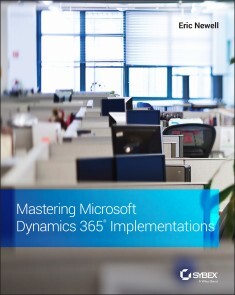
Mastering Microsoft Dynamics 365 Implementations
CONFIDENTLY SHEPHERD YOUR ORGANIZATION’S IMPLEMENTATION OF MICROSOFT DYNAMICS 365 TO A SUCCESSFUL CONCLUSIONIn Mastering Microsoft Dynamics 365 Implementations, accomplished executive, project manager, and author Eric Newell delivers a holistic, step-by-step reference to implementing Microsoft’s cloud-based ERP and CRM business applications. You’ll find the detailed and concrete instructions you need to take your implementation project all the way to the finish line, on-time, and on-budget.You’ll learn:* The precise steps to take, in the correct order, to bring your Dynamics 365 implementation to life * What to do before you begin the project, including identifying stakeholders and building your business case * How to deal with a change management throughout the lifecycle of your project * How to manage conference room pilots (CRPs) and what to expect during the sessions Perfect for CIOs, technology VPs, CFOs, Operations leaders, application directors, business analysts, ERP/CRM specialists, and project managers, Mastering Microsoft Dynamics 365 Implementations is an indispensable and practical reference for guiding your real-world Dynamics 365 implementation from planning to completion.ERIC NEWELL is the Co-Founder and CEO of Stoneridge Software, a Microsoft Gold Partner, focused on Dynamics. Prior to founding Stoneridge, he worked at Microsoft for 13 years in Dynamics-related roles including support engineer, IT lead for support systems, Technical Account Manager and as a Premier Field Engineering team leader. He frequently presents on topics related to implementing Microsoft Dynamics 365, and has spoken at Microsoft conferences over a dozen times. He has served as a project management trainer at Microsoft as well as local universities.Introduction xxviiCHAPTER 1 • STAGES OF AN IMPLEMENTATION OVERVIEW 1What Is Microsoft Dynamics? 1The Client Journey 2Implementation Methodologies 5Waterfall and Sure Step 5Agile and Scrum 7Triple Constraints 8The Bottom Line 9CHAPTER 2 • WHAT TO DO BEFORE YOU BEGIN A PROJECT 11Identify Your Project Team and Stakeholders 11Executive Sponsor 12Project Owner 12Business Process Owner(s) 13Project Manager 13Core Team and a Core Team Lead 14Subject Matter Experts 14IT Resources 15Time Commitment by Role 17Identify Your Processes in Scope 18Clean Up Your Data 19Identify Your “Master” Data 19Develop Naming Conventions 20Identify System Owners 20Find and Resolve Duplicates and Incorrect Data 20Define Your Success Metrics 21Possible Benefits 22Building Your Business Case and Securing Funding 23How Much Should an ERP Project Cost? 24Costs to Include in Your Calculations 24Capitalizing Costs 25Contingency 27Return on Investment (ROI) 27Gaining Approval 28The Bottom Line 29CHAPTER 3 • FOUR KEYS TO CONSIDER WHEN BUYING AN ERP OR CRM SOLUTION 31Selection Process 31Selection Consultant 32Decision Maker 33The Four Keys 33Fit 34Platform 35Implementer 39Cost 41Building Your Scorecard 44The Bottom Line 45CHAPTER 4 • HOW TO EVALUATE AND BUY BUSINESS APPLICATION SOFTWARE 47Buying Process Steps 47Qualification Stage 48Discovery and Demonstration Stage 49Selecting Your Vendor 51Leadership or Board Approval 54Moving Forward 54The Bottom Line 54CHAPTER 5 • ORGANIZING YOUR TEAM FOR SUCCESS AND PROJECT GOVERNANCE 57RACI 57Your Project Team 58Your Partner’s Implementation Team 59Executive Sponsor 60Engagement Manager 60Project Manager 60Solution Architect or Solution Delivery Manager 60Functional Consultant or Consultants 61Technical Consultant 61Development Lead and Developers 61Integration Architect 61Data Migration Specialist 62Project Governance 62Project Communication 62Resource Loading 62Project Schedule 66Document Repository 67Budget Tracking 68Change Requests 68Project Management Plan 68The Bottom Line 69CHAPTER 6 • SPRINTS AND TOOLS NEEDED TO RUN YOUR PROJECT 73Definition of a Sprint 73Length of a Sprint 74Start and End of a Sprint 74Delivering Value in a Sprint 74Backlog 75Project Backlog 75Sprint Backlog 76Allocating Work to Team Members 76Sprint Success Rate 76Sprint Meetings 77Sprint Planning 77Sprint Review 77Sprint Retrospective 78Stand-up Meetings 78Work Definitions 79Epic 79Feature 79User Story 80Requirement 80Research Task 80Design Task 80Development Task 81Test Task 81Other Task 81Test Case 81Test 81Bug (Defect) 81Risk 81Issue 82Change Request 82Code and Changesets 82Azure DevOps 82DevOps Fields 82Progress Reporting 83Analytical Views 83The Bottom Line 84CHAPTER 7 • CHANGE MANAGEMENT THROUGHOUT YOUR PROJECT 87Success Criteria 88Use of Satisfaction Surveys 89Nine Steps to Change Management 90Leadership Alignment 90Organization Evaluation 91Outline Your Business Process Change Steps 92Develop a System Vision that Provides Benefits to All Stakeholders 92Communicate Effectively 92Maximize the Team’s Time in the New System 94Train Effectively 94Set Realistic Expectations for the System Just After Go-Live 94Support Your Team Members After Go-Live 95Steps to Business Process Change 95Importance of Adoption 96The Bottom Line 96CHAPTER 8 • ORGANIZING YOUR BUSINESS BY PROCESSES 99Common Language Businesses Speak 99Operations 100Sales 100Finance and Administration 100Standard Processes 100Process Hierarchy 102Process Category 102Process Group 103Process 103Sub-processes, Tasks, Activities, and Requirements 104Discovering Your Processes 104SIPOC 104Core Team Members 106Rounding Out Your Scope 106The Bottom Line 106CHAPTER 9 • INDEPENDENT SOFTWARE VENDORS—FILLING GAPS AND MANAGING PARTNERSHIPS 109The Purpose of ISVs 109Hosting Providers 110Private Hosting 111SaaS-Style Hosting 111Industry ISVs 111Deciding If You Need an Industry ISV 112Functional ISVs 113Missing Functionality 113Advanced Features 113Missing Connector 113Automation 114Reporting Extensions 114Deciding If You Need a Functional ISV 114Working with ISVs 114Budgeting for ISV Solutions 115Implementation Partner or Customer Managed 115Buying the ISV License or Subscription 115Implementation of ISV Products 116Manage Your ISV Projects Closely 116Microsoft’s AppSource Marketplace 117Product Listing 118Services Listing 118The Bottom Line 119CHAPTER 10 • FACTORS FOR A SUCCESSFUL PROJECT KICKOFF 121Pre-Kickoff Meeting Activities 121Checklist 121Expectations for the Meeting 124Outing 124Kickoff Meeting Content 124Executive Overview 125Introductions and Role Review 125Expectations for Team Members 126Project Management and Communication Plan 126Project Schedule 126Resources 126Navigation Overview [OPTIONAL] 127Wrapping Up 127Executive Message 127Expectations for the Project Team 128Time Commitment 128Decision-Making 129Power of Positivity 129The Bottom Line 130CHAPTER 11 • DESIGNING THE SOFTWARE COLLABORATIVELY 133Joint Application Design Concept 133Joint Process Design and Other Design-Related Definitions 134What Is a Joint Process Design (JPD) Session? 134Happy Path 136“As-Is” vs “To Be” 136Joint Process Design Iterations 137JPD1 137JPD2 139JPD3 140JPD4 140Keys to Successful JPDs 140JPD Output 141SIPOC 142The Bottom Line 143CHAPTER 12 • REQUIREMENTS GATHERING AND STAYING “IN THE BOX” 145Staying in the Box 145Customization vs In-the-Box Examples 146Requirements 147Out-of-the-Box Fields as Requirements 147Requirements Link to Processes 148Functional vs Non-functional Requirements 149Verifying Requirements 150Writing Good Requirements 150Requirements Tips 150Fit/Gap Analysis 151Fit/Gap Spreadsheet 152Trade-Offs 153The Cost of Customizations 154Cloud vs On-Premise Software 155The Bottom Line 155CHAPTER 13 • CONFERENCE ROOM PILOTS 157The Purpose of a Conference Room Pilot 157How to Organize CRPs 158Common Elements of CRPs 159CRP Agenda 159Logistics 160Issues and Questions 160CRP Roles and Responsibilities 161Session Leader 161Helper/Expert 162Business Process Owner 162Users/Students 162Who Not to Invite 163CRP Place in the Overall Schedule 163Can You Do a CRP on One Process Group at the Same TimeThat You Do a JPD? 164Entrance Criteria 164CRP vs UAT 166How They Are Similar 166How They Are Different 166What to Do Between CRP and the End of the Create Stage 167CRP Goals 168The Bottom Line 168CHAPTER 14 • DEALING WITH CHALLENGES MID-PROJECT 171Managing the Project Status 172Status Report 172Colors on a Status Report 173Managing Your Budget 175Project Pulse 177Risks and Issues 177Risk Register 178Issues vs Bugs 179Common Project Challenges 179The Bottom Line 183CHAPTER 15 • CUSTOMIZATIONS VS CONFIGURATIONS AND HOW YOU MANAGE THEM 185Customizations vs Configurations 185Customization 185Configuration 186Integration 186Master Data 187Metadata 187Personalization 187Reference Data 187When to Customize vs Configure 188Why Choose to Customize 188Tracking Configurations 188Configuration Tracker 189Gold Environment 189Lifecycle Services 189Functional Design Documents 190Overview 190Modification 190Testing 190Development Quotation 191Revision and Sign-off 191Updates 191Design Complete 191The Development Process 192Develop the Solution 192Unit Test 192Code Review 193Functional Testing (Part 1) 193Finishing Up 194After Code Complete 194Deploying the Code 194Functional Testing (Part 2) 194Preparing for CRP and UAT 195The Lifecycle of a Customization 195Managing These Tasks 195Wrap-Up 196The Bottom Line 197CHAPTER 16 • DATA MIGRATION—EARLY AND OFTEN 199Data Migration Plan 200Proactive Cleaning 200Before the Kickoff 201Data Migration Tool 202Iterations 203Extract 206Finding the Data 206Extraction Tools 206Transform 208Mapping the Data 208Mapping Tools 208Transforming Mapped Data 209Load 210Order of Operation 210Load Time 210Validating the Data 210Technical Validation 211Business Validation 211Functional Validation 212Go-Live Iteration 212The Bottom Line 213CHAPTER 17 • ENVIRONMENT MANAGEMENT AND DEPLOYMENTS 215Types of Environments 216Developer Environments 216Build 217Test 217Sandbox 218Production 219Environment Plan 220Types of Releases 220Frequency of Code Moves 222Populating Configurations and Master Data 222Deploying Code 223Application Lifecycle Management 223Environment Flow Using DevOps 224Rollback 224Security 225Definitions 225How Best to Manage 226The Bottom Line 227CHAPTER 18 • TESTING 229Definitions 229Types of Testing 230Common Testing Terms 231Pre-Deploy Stage Activities 232Testing Strategy 232Unit Test and Regression Tests 233Developing Test Cases 234UAT Entrance Criteria 235UAT Exit Criteria 236UAT Sessions 236Purpose 236Additional Benefits of UAT Sessions 237UAT Roles and Responsibilities 237Executing Your Test Plans 238Tips for the Sessions 239Post UAT Testing 240Issues List 241Process Sign-Offs 241Scenario Recaps 241The Bottom Line 242CHAPTER 19 • TRAINING FOR ALL 245Learning During Interactive Sessions 246JPDs 246CRPs 246UAT 247Learning Modalities 247In-Person, Classroom Style 248Remote, Synchronous Training 249Asynchronous 251Building Your Training Content 251End User Training Content 251Product Help Content 252Microsoft Learn 253Recording Sessions 253Task Recorder 253How Much to Document 254How to Manage and Distribute Your Content 254Learning Management Systems 255Building Your End User Training Schedule 255Pre-Training Learning 256Train the Trainer 256Synchronous Sessions 257Advanced Concepts 257Testing Users’ Knowledge 257Office Hours 258The Bottom Line 259CHAPTER 20 • GOING LIVE 261Go-Live Criteria 261Cutover Plan 262Bug Criteria 262Data Migration and Security Criteria 263Support Readiness 264Training Review 264Communication Plan 265Go-Live Scorecard 265Mock Cutover and Final Week Activities 266Disaster Recovery 267System Setup Before Cutover 267Go/No-Go Meetings 268When to Have It 268Voting Criteria 268Meeting Agenda 269Order and Outcome of the Votes 269Next Steps 270Live Cutover 270Impact of the Cutover Start Timing 271Completing Cutover Activities 271Rollback Plan 272Acknowledge the Team 272The Bottom Line 272CHAPTER 21 • HYPERCARE 275Go-Live Support 275Day 1 276Week 1 276Project Change Champions 277Prioritizing Issues 277Weeks 2–4 278First Month End 278Duration of Hypercare 279Role of HelpDesk 279Sample SLA 280Project Team Support 280Support Levels 281Refer Users to Training 283Making the Transition to HelpDesk Later 283Post Go-Live Releases 284Planning for Future Releases 285Hotfix Release 285Scheduled Releases 286Project Team Transition 287Rolling Off the Project Team 287Documentation 288Expectations of Support 288After the Transition 289The Bottom Line 289CHAPTER 22 • SUPPORT AND ENHANCE YOUR PROJECT 291Support After Hypercare 291Extending the Transition from Consulting to Support 292Engaging Your Partner for Support 292Microsoft and ISV Support Plans 294After Action Review 295Who to Invite 295How to Run the Meeting 296What to Do with the Feedback 297Ongoing Releases 297Microsoft Dynamics 365 Release Cadence 297Release Testing 297When to Schedule Your Releases 298What to Include in Releases 299Future Enhancements 299New Functionality 299Usability 300Guardrails 301Business Intelligence 301Incorporating Dynamics Data into Your Daily Business 302Integrations 302Machine Learning and Artificial Intelligence 302Calculating Return on Investment 303ROI Checkpoints 304The Bottom Line 305CHAPTER 23 • BRINGING IT ALL TOGETHER 307Align Stage 307Define Stage 308Create Stage 311Deploy Stage 313Empower Stage 314Additional Resources 315The Bottom Line 315APPENDIX • THE BOTTOM LINE 317Chapter 1: Stages of an Implementation Overview 317Chapter 2: What to Do Before You Begin a Project 318Chapter 3: Four Keys to Consider When Buying an ERP or CRM Solution 320Chapter 4: How to Evaluate and Buy Business Application Software 322Chapter 5: Organizing Your Team for Success and Project Governance 323Chapter 6: Sprints and Tools Needed to Run Your Project 325Chapter 7: Change Management Throughout Your Project 326Chapter 8: Organizing Your Business by Processes 328Chapter 9: Independent Software Vendors—Filling Gaps and Managing Partnerships 329Chapter 10: Factors for a Successful Project Kickoff 331Chapter 11: Designing the Software Collaboratively 332Chapter 12: Requirements Gathering and Staying “In the Box” 334Chapter 13: Conference Room Pilots 335Chapter 14: Dealing with Challenges Mid-Project 337Chapter 15: Customizations vs Configurations and How You Manage Them 338Chapter 16: Data Migration—Early and Often 340Chapter 17: Environment Management and Deployments 341Chapter 18: Testing 343Chapter 19: Training for All 344Chapter 20: Going Live 346Chapter 21: Hypercare 347Chapter 22: Support and Enhance Your Project 349Chapter 23: Bringing It All Together 350Glossary 353Index 369
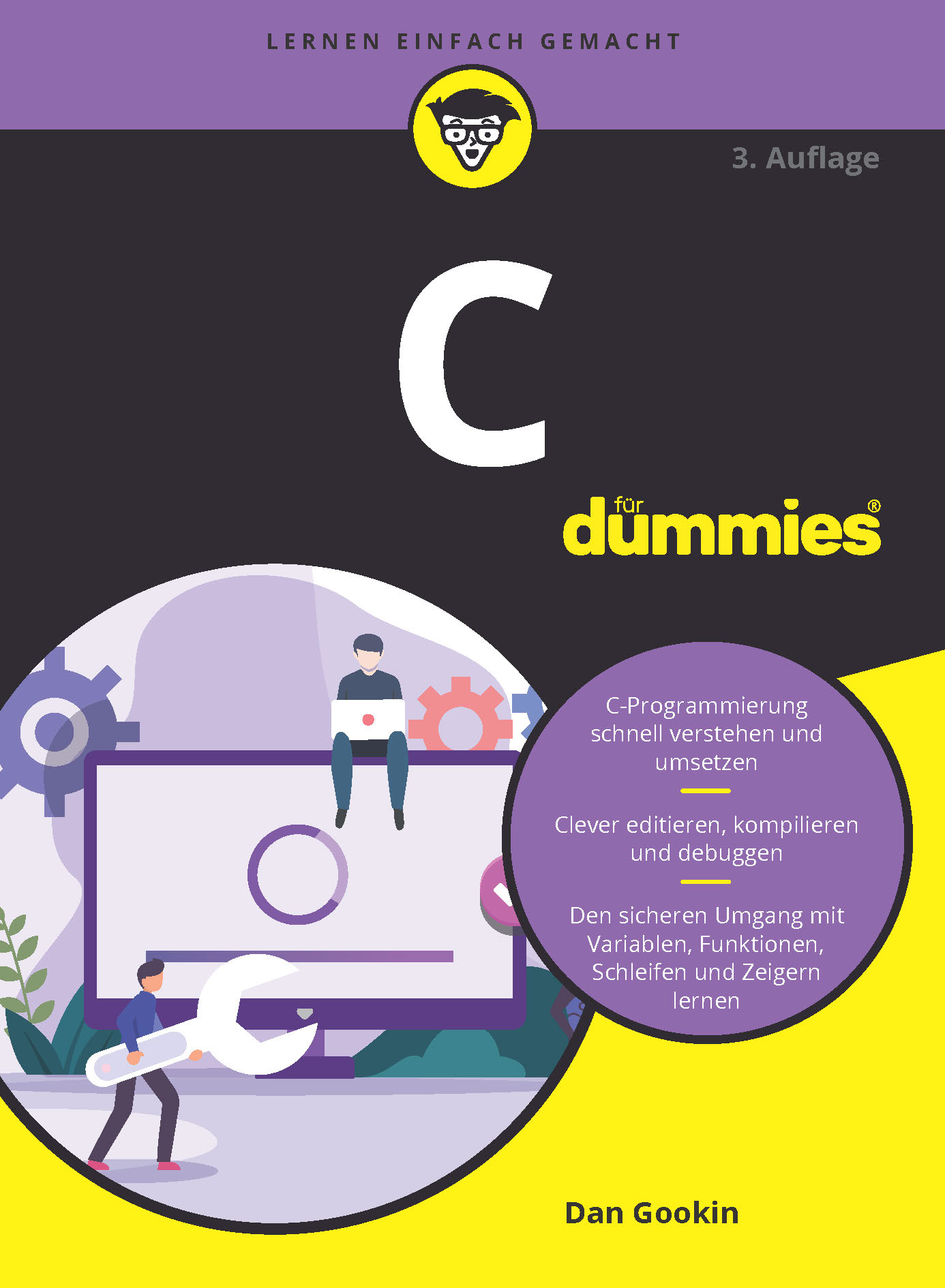
C für Dummies (3. Auflg.)
Der Programmiersprachenklassiker C ist beliebt wie eh und je: denn mit C bringt man Computer zum Laufen. C steckt in der Software vieler Betriebssysteme. Dan Gookin bietet in diesem Buch eine wunderbar anschauliche und humorvolle Einführung.C erfreut sich als Klassiker unter den Programmiersprachen großer Beliebtheit, denn es steckt nach wie vor in vielen Betriebssystemen, Schnittstellen und Treibern, aber auch in Compilern und neueren eingebetteten Systemen. Wer C lernen und dabei auch noch Spaß haben möchte, sollte zu diesem Buch vom Urvater der Dummies, Dan Gookin, greifen. Mit viel Humor und vielen anschaulichen Beispielen macht er die Programmiersprache C lebendig.Dan Gookin schrieb das erste "... für Dummies"-Buch "DOS für Dummies" und hat seitdem unzählige Bücher für die Reihe verfasst. Er versteht es besonders gut, anschaulich und humorvoll zu erklären.

SAP SuccessFactors Talent: Volume 2
Take an in-depth look at SAP SuccessFactors talent modules with this complete guide to configuration, administration, and best practices. This two-volume series follows a logical progression of SAP SuccessFactors modules that should be configured to complete a comprehensive talent management solution. The authors walk you through fully functional simple implementations in the primary chapters for each module before diving into advanced topics in subsequent chapters.In volume 2, you will explore the development module in three more chapters by learning to configure and use development plans, career worksheets, and mentoring. Then, the book examines succession management, covering topics such as configuring, administering, and using the 9-box, the Talent Review form, nominations, succession org charts, talent pools, and succession presentations. The authors then sum up with a review of what you learned and final conclusions.Within each topic, the book touches on the integration points with other modules as well as internationalization. The authors also provide recommendations and insights from real world experience. Having finished the book, you will have an understanding of what comprises a complete SAP SuccessFactors talent management solution and how to configure, administer, and use each module within it.WHAT YOU WILL LEARN* Work with the career worksheet* Build mentoring into your SAP SuccessFactors solution* Display and update relevant talent data in a succession org chartWHO THIS BOOK IS FORImplementation partners and customers who are project managers, configuration specialists, analysts, or system administrators.SUSAN TRAYNOR is an SAP SuccessFactors Certified Professional with more than 21 years of progressive experience in SAP HCM and SuccessFactors implementations. You can follow her on LinkedIn.MICHAEL A. WELLENS, M.S. is a certified SAP SuccessFactors consultant with over 15 years of human resources information systems implementation experience. He has successfully launched a variety of core HR and talent management solutions across a variety of fortune 500 companies around the world. You can follow him on LinkedIn or on Twitter at @mike_wellens.VENKI KRISHNAMOORTHY is an SAP SuccessFactors consultant. Venki has over 15 years of experience as a functional lead, project manager, and program manager in HCM transformation projects. Venki has completed over 35 full lifecycle implementations of SuccessFactors projects across multiple modules. You can follow Venki on LinkedIn or on Twitter at @venki_sap.CHAPTER 1: DEVELOPMENT PLANS (~50 PAGES)1. What is a Career Development Plan?2. Best Practices3. Career Development Set Up in Provisioning4. Configuring the Career Development Plan5. Role-Based Permissions for the Career Development Plan6. Career Development Plan Integration with Succession7. Career Development Plan Integration with Calibration8. Career Development Plan Integration with Employee Profile9. Career Development Plan Integration with Continuous Performance Management (CPM)10. Career Development Plan Integration with Learning Management System (LMS)11. Importing Development Goals12. Using the Career Development Plan from the employee perspective13. Using the Career Development from the manager perspective14. Career Development Goal Plan ReportingCHAPTER 2: CONFIGURING CAREER WORKSHEET (~50 PAGES)* Career Worksheet* Career Worksheet Set up in Provisioning * Career Worksheet Template XML* Role Competency Expected Ratings* Readiness Meter * Gap GraphRole-Based Permissions for the Career Worksheet* Career Paths* Managing Career Paths* Role-Based Permissions for Career Paths* Import Career Paths* Suggested Roles* Configure Suggested RolesRole-Based Permissions for Suggested Roles* Role Readiness Assessment Form* Role Readiness Assessment within the Career WorksheetRole-Based Permissions for Role Readiness Assessment Form * Walkthrough of the Career Worksheet by an employee* Walkthrough of the Career Worksheet by a manager * Career Worksheet Ad hoc Reporting * Deep link to My Current Roles on the Career Worksheet * Career Worksheet Integration with Suggested Successors in Succession Org Chart Career Worksheet Integration with Employee Profile * Career ExplorerCHAPTER 3: USING CAREER WORKSHEET (~30 PAGES)1. 1. Same as above but walk through as end userCHAPTER 4: MENTORING (~40 PAGES)Mentoring Set up In Provisioning* Role-Based Permissions * Managing Mentoring Programs* Creating Open Enrollment Mentoring Programs* Creating Supervised Mentoring Programs* Creating Unsupervised Mentoring Programs* Mentee and Mentor MatchingReview Mentoring Preferences* Using Mentoring* Accessing Mentoring Programs* Mentoring Program Sign Up* Review Mentoring Requests* Set Mentor Availability* Ending Mentoring Relationships* Email Notifications* Ad hoc ReportingCHAPTER 5: SUCCESSION MANAGEMENT INTRO, 9-BOX, AND TALENT REVIEW FORM (~30 PAGES)1. What is Succession Management2. Basic Settings3. 9-Box or Matrix Grid4. Talent Review FormCHAPTER 6: CORE SUCCESSION MANAGEMENT (~50 PAGES)1. Talent Cards2. Nomination Configuration3. Succession Org ChartCHAPTER 7: SUCCESSION MANAGEMENT ADDITIONAL FEATURES ( ~25 PAGES)Talent Search1. Talent Pools2. Position Tile View3. Lineage Chart4. Succession PresentationsCHAPTER 8: CONCLUSION (~5 PAGES)1. Review of concepts across chapters2. Realizing business value and next steps

Ultimate Arduino Uno Hardware Manual
A manual providing up-to-date hardware information for the popular Arduino Uno, the easy to use open-source electronics platform used by hobbyists, makers, hackers, experimenters, educators and professionals.Get all the information that you need on the hardware and firmware found on Arduino Uno boards in this handy reference and user guide.- ldeal for the workbench or desktop- Contains all of the Arduino Uno hardware information in one place- Covers Arduino / Genuino Uno revision 3 and earlier boards- Easily find hardware technical specifications with explanations- Pin reference chapter with interfacing examples- Diagrams and illustrations for easy reference to alternate pin functions and hardware connections- Learn to back up and restore firmware on the board, or load new firmware- Basic fault finding and repair procedures for Arduino Uno boards- Power supply circuits simplified and explained- Mechanical dimensions split into five easy to reference diagrams- Contains circuit diagrams, parts list and board layout reference to easily locate componentsWarwick A. Smith is an electronics engineer and embedded programmer from South Africa with experience in industrial, commercial, and aerospace-related industries.Warwick has a wide interest in various fields of technology, including embedded systems hardware, software, and information technology. His writing style has been described as "clear and concise" as well as "conversational and friendly".

Inside the World of Computing
Computers and the Internet are an undeniable and inextricable part of our daily lives. This book is for those who wish to better understand how this came to be. It explores the technological bases of computers, networks, software and data management, leading to the development of four �pillars� on which the essential applications that have a strong impact on individuals and society are based: embedded systems, Artificial Intelligence, the Internet, image processing and vision.We will travel to the heart of major application areas: robotics, virtual reality, health, mobility, energy, the factory of the future, not forgetting the major questions that this �digitization� can raise. This book is the author�s testimony after fifty years spent in environments that are very open to new technologies. It offers perspectives on the evolution of the digital world that we live in. JEAN-LOIC DELHAYE has a PhD in Artificial Intelligence. He directed the Centre National Universitaire Sud de Calcul, France, before piloting partnerships and the valorization of research at the Centre Inria Rennes?Bretagne Altlantique, France. He has also been very active in national and European collaborations on high performance computing. Foreword xiJean-Pierre BANÂTREPreface xvAcknowledgments xxiCHAPTER 1. FROM THE CALCULATOR TO THE SUPERCOMPUTER 11.1. Introduction 11.2. Some important concepts 11.2.1. Information and data 11.2.2. Binary system 31.2.3. Coding 31.2.4. Algorithm 51.2.5. Program 71.3. Towards automation of calculations 71.3.1. Slide rule 71.3.2. The Pascaline 81.3.3. The Jacquard loom 91.3.4. Babbage’s machine 91.3.5. The first desktop calculators 101.3.6. Hollerith’s machine 111.4. The first programmable computers 121.4.1. Konrad Zuse’s machines 121.4.2. Colossus 131.4.3. ENIAC 131.5. Generations of computers 141.5.1. First generation: the transition to electronics 151.5.2. Second generation: the era of the transistor 171.5.3. Third generation: the era of integrated circuits 201.5.4. Fourth generation: the era of microprocessors 241.6. Supercomputers 281.6.1. Some fields of use 281.6.2. History of supercomputers 291.6.3. Towards exaflops 331.7. What about the future? 351.7.1. An energy and ecological challenge 351.7.2. Revolutions in sight? 36CHAPTER 2. COMPUTER NETWORKS AND THEIR APPLICATIONS 372.1. Introduction 372.2. A long history 382.3. Computer network infrastructure 422.3.1. Geographic coverage: from PAN to WAN 432.3.2. Communication media 442.3.3. Interconnection equipment and topologies 482.3.4. Two other characteristics of computer networks 522.3.5. Quality of service 542.4. Communication protocols and the Internet 552.4.1. The first protocols 552.4.2. The OSI model 562.4.3. The history of the Internet 572.4.4. The TCP/IP protocol 582.4.5. IP addressing 592.4.6. Management and use of the Internet 602.4.7. Evolving technologies 612.4.8. What future? 622.5. Applications 632.5.1. The World Wide Web 642.5.2. Cloud computing 672.5.3. The Internet of Things 682.5.4. Ubiquitous computing and spontaneous networks 722.6. Networks and security 742.6.1. Vulnerabilities 742.6.2. The protection of a network 762.6.3. Message encryption 762.6.4. Checking its security 77CHAPTER 3. SOFTWARE 793.1. Introduction 793.2. From algorithm to computer program 803.2.1. Programs and subprograms 823.2.2. Programming languages 833.3. Basic languages and operating systems 853.3.1. Basic languages 853.3.2. Operating system functions 863.3.3. A bit of history 883.3.4. Universal operating systems 913.3.5. Targeted operating systems 933.4. “High-level” programming and applications 963.4.1. Imperative languages 963.4.2. Functional languages 983.4.3. Object programming 993.4.4. Other programming languages 1003.4.5. The most used languages 1013.5. Software development 1023.5.1. Software categories 1023.5.2. Software quality 1033.5.3. Development methods 1043.5.4. Software engineering 1073.6. Software verification and validation 1073.6.1. Errors with sometimes tragic consequences 1073.6.2. Software testing 1093.6.3. Formal methods 1113.6.4. Software certification 1143.7. Legal protection and distribution of software 1153.7.1. Legal protection of software 1153.7.2. Licenses 1163.7.3. Free software and open source 1173.8. The software market 118CHAPTER 4. DATA: FROM BINARY ELEMENT TO INTELLIGENCE 1214.1. Introduction 1214.2. Data and information 1224.2.1. Digitization of data 1224.2.2. Data compression 1254.3. The structuring of data towards information 1254.3.1. Structured data 1264.3.2. Semi-structured data and the Web 1274.4. Files and their formats 1284.5. Databases 1294.5.1. The main characteristics 1294.5.2. DBMS models 1314.5.3. Database design 1334.5.4. Enterprise resource planning (ERP) systems 1334.5.5. Other types of databases 1344.5.6. Data protection in a DB 1374.6. Intelligence and Big Data 1374.7. Data ownership and Open Data 1414.7.1. Personal data 1414.7.2. Opening up public data: Open Data 142CHAPTER 5. TECHNOLOGY BUILDING BLOCKS 1455.1. Embedded systems 1455.1.1. Specific architectures 1465.1.2. Some fields of use 1475.2. Artificial intelligence (AI) 1505.2.1. A bit of history 1505.2.2. Intelligence or statistics? 1525.2.3. Important work around automatic learning 1525.2.4. A multiplication of applications 1545.2.5. The challenges of AI 1555.2.6. What about intelligence? 1565.3. The Internet 1575.3.1. Mobility 1575.3.2. Social networks 1585.3.3. The Internet of Things 1595.3.4. The Cloud 1595.3.5. Blockchain 1595.3.6. Vulnerabilities 1605.4. Image processing and vision 1605.4.1. A bit of history 1605.4.2. Image sources and their uses 1615.4.3. The digital image 1625.4.4. Image storage and compression 1635.4.5. Computing and images 1645.4.6. Some applications 1655.5. Conclusion 166CHAPTER 6. SOME AREAS OF APPLICATION 1676.1. Robots 1676.1.1. A bit of history 1686.1.2. Fields of use regarding robots today 1696.1.3. Communication in the world of robots 1736.1.4. Fear of robots 1746.1.5. Challenges for researchers 1756.2. Virtual reality and augmented reality 1756.2.1. A bit of history 1766.2.2. Hardware configurations of virtual reality 1776.2.3. Fields of use of virtual reality 1796.2.4. Augmented reality 1806.3. Health 1816.3.1. Health informatics 1826.3.2. Information technology at the service of our health 1846.4. The connected (and soon autonomous?) car 1856.4.1. Levels of autonomy 1866.4.2. Challenges associated with the autonomous car 1876.4.3. Advantages and disadvantages of the autonomous car 1886.5. The smart city 1896.5.1. Smart energy 1906.5.2. Smart buildings 1906.5.3. Smart infrastructure 1916.5.4. Smart governance 1926.5.5. Dangers 1936.6. Smart mobility 1936.7. The factory of the future 1956.7.1. Technologies 1956.7.2. Issues 1976.7.3. The place of the human 198CHAPTER 7. SOCIETAL ISSUES 1997.1. Security 1997.1.1. Specific characteristics 2007.1.2. Some great threats 2007.1.3. Acting to protect oneself 2027.2. The respect of private life 2027.2.1. Our personal data 2027.2.2. Uses of our data 2047.2.3. What about the future? 205x Inside the World of Computing7.3. Influence on social life 2067.3.1. The development of social ties 2067.3.2. Citizen participation 2077.3.3. The socialization of knowledge 2077.4. Dangers to democracy 2087.4.1. The liberation of speech 2087.4.2. Private life under surveillance 2087.4.3. Job insecurity 2097.4.4. The power of the big Internet firms 2097.5. The digital divide 2107.5.1. From division to exclusion 2107.5.2. Digital technology and education 2117.6. Mastering the use of artificial intelligence 2127.7. The intelligent prosthesis and the bionic man 2137.8. Transhumanism 2147.9. What kind of society for tomorrow? 215Bibliography 217Index 219

CRAN Recipes
Want to use the power of R sooner rather than later? Don’t have time to plow through wordy texts and online manuals? Use this book for quick, simple code to get your projects up and running. It includes code and examples applicable to many disciplines. Written in everyday language with a minimum of complexity, each chapter provides the building blocks you need to fit R’s astounding capabilities to your analytics, reporting, and visualization needs.CRAN Recipes recognizes how needless jargon and complexity get in your way. Busy professionals need simple examples and intuitive descriptions; side trips and meandering philosophical discussions are left for other books.Here R scripts are condensed, to the extent possible, to copy-paste-run format. Chapters and examples are structured to purpose rather than particular functions (e.g., “dirty data cleanup” rather than the R package name “janitor”). Everyday language eliminates the need to know functions/packages in advance.WHAT YOU WILL LEARN* Carry out input/output; visualizations; data munging; manipulations at the group level; and quick data exploration* Handle forecasting (multivariate, time series, logistic regression, Facebook’s Prophet, and others)* Use text analytics; sampling; financial analysis; and advanced pattern matching (regex)* Manipulate data using DPLYR: filter, sort, summarize, add new fields to datasets, and apply powerful IF functions* Create combinations or subsets of files using joins* Write efficient code using pipes to eliminate intermediate steps (MAGRITTR)* Work with string/character manipulation of all types (STRINGR)* Discover counts, patterns, and how to locate whole words* Do wild-card matching, extraction, and invert-match* Work with dates using LUBRIDATE* Fix dirty data; attractive formatting; bad habits to avoidWHO THIS BOOK IS FORProgrammers/data scientists with at least some prior exposure to R.WILLIAM A. YARBERRY, JR., CPA, CISA, is principal consultant, ICCM Consulting LLC, based in Houston, Texas. His practice is focused on IT governance, Sarbanes-Oxley compliance, security consulting, and business analytics for cost management. He was previously a senior manager with PricewaterhouseCoopers, responsible for telecom and network services in the Southwest region. Yarberry has more than 30 years’ experience in a variety of IT-related services, including application development, internal audit management, outsourcing administration, and Sarbanes-Oxley consulting.His books include The Effective CIO (co-authored), Computer Telephony Integration, $250K Consulting, DPLYR, 50,000 Random Numbers, Telecommunications Cost Management, and GDPR: A Short Primer. In addition, he has written over 20 professional articles on topics ranging from wireless security to change management. One of his articles, "Audit Rights in an Outsource Environment," received the Institute of Internal Auditors Outstanding Contributor Award.Prior to joining PricewaterhouseCoopers, Yarberry was director of telephony services for Enron Corporation. He was responsible for operations, planning, and architectural design for voice communications servers and related systems for more than 7,000 employees. Yarberry graduated Phi Beta Kappa in chemistry from the University of Tennessee and earned an MBA at the University of Memphis. He enjoys reading history, swimming, hiking, and spending time with family.1: DPLYR2: STRINGR3: Lubridate4: Regular Expressions: Introduction5: Typical Uses6: Some Simple Patterns7: Character Classes8: Elements of Regular Expressions9: The Magnificent Seven10: Regular Expressions in Stringr11: Unicode12: Tools for Development and Resources13: Regex Summary14: Recipes for Common R Tasks15: Data Structures16: Visualization17: Simple Prediction Methods18: Smorgasbord of Simple Statistical Tests19: Validation of Data20: Shortcuts and Miscellaneous21: ConclusionAppendices

Pointers in C Programming
Gain a better understanding of pointers, from the basics of how pointers function at the machine level, to using them for a variety of common and advanced scenarios. This short contemporary guide book on pointers in C programming provides a resource for professionals and advanced students needing in-depth hands-on coverage of pointer basics and advanced features. It includes the latest versions of the C language, C20, C17, and C14.You’ll see how pointers are used to provide vital C features, such as strings, arrays, higher-order functions and polymorphic data structures. Along the way, you’ll cover how pointers can optimize a program to run faster or use less memory than it would otherwise.There are plenty of code examples in the book to emulate and adapt to meet your specific needs.WHAT YOU WILL LEARN* Work effectively with pointers in your C programming* Learn how to effectively manage dynamic memory* Program with strings and arrays* Create recursive data structures* Implement function pointersWHO THIS BOOK IS FORIntermediate to advanced level professional programmers, software developers, and advanced students or researchers. Prior experience with C programming is expected.Thomas Mailund is an associate professor in bioinformatics at Aarhus University, Denmark. He has a background in math and computer science, including experience programming and teaching in the C and R programming languages. For the last decade, his main focus has been on genetics and evolutionary studies, particularly comparative genomics, speciation, and gene flow between emerging species.1. Pointers and the random access memory model2. Memory management3. Strings and arrays4. Recursive data structures5. Function pointers

JavaScript - Das Handbuch für die Praxis
Seit 25 Jahren das begleitende Grundlagenwerk zu JavaScript - Durchgehend überarbeiteter Bestseller in der 7. Auflage - Deckt die Version ES2020 inkl. Tools/Extensions & Node.js ab < - Vermittelt umfassendes und tiefgehendes JavaScript-Know-how JavaScript ist die Programmiersprache des Webs und der Bestseller "JavaScript: Das Handbuch für die Praxis" seit fast 25 Jahren und über sieben Auflagen ein geschätztes Grundlagenwerk für diese Sprache. Umfassend und detailliert dokumentiert Flanagan die wichtigsten client- und serverseitigen APIs. Die 7. Auflage wurde vollständig aktualisiert und deckt die Version 2020 von JavaScript ab. Freuen Sie sich auf spannende und inspirierende Codebeispiele und neue Kapitel über Klassen, Module, Iteratoren, Generatoren, Promises und async/await. Das Buch wendet sich an JavaScript-Neulinge mit Programmierkenntnissen sowie JavaScript-Programmierende, die ihr Verständnis vertiefen wollen. Die Zeit, die Sie in die Lektüre investieren, wird sich durch eine deutlich gesteigerte Produktivität garantiert rasch auszahlen.
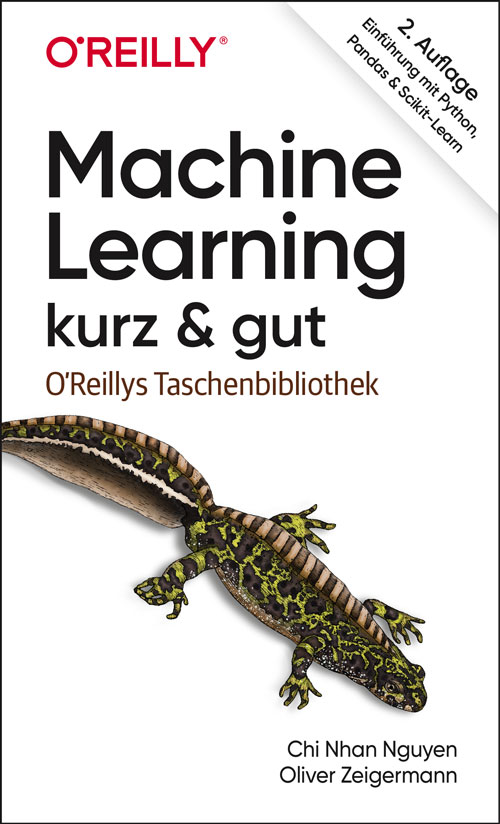
Machine Learning - kurz & gut (2. Auflg.)
Der kompakte Schnelleinstieg in Machine Learning und Deep Learning in der neuen 2. Auflage 04/2021!Machine Learning beeinflusst heute beinahe alle Bereiche der Technik und der Gesellschaft. Dieses Buch bietet Interessierten, die einen technischen Hintergrund haben, die schnellstmögliche Einführung in das umfangreiche Themengebiet des maschinellen Lernens und der statistischen Datenanalyse. Dabei werden folgende Themen behandelt und mit praktischen Beispielen veranschaulicht:Datenimport und -vorbereitungSupervised LearningFeature-Auswahl, ModellvalidierungNeuronale Netze und Deep LearningUnsupervised LearningReinforcement LearningAnhand konkreter Datensätze lernen Sie einen typischen Workflow kennen: vom Datenimport über Datenbereinigung, Datenanalyse bis hin zur Datenvisualisierung. Die Codebeispiele basieren auf Python und den Bibliotheken Scikit-Learn, Pandas, NumPy, TensorFlow und Keras.Nach der Lektüre dieses Buchs haben Sie einen Überblick über das gesamte Thema und können Ansätze einordnen und bewerten. Das Buch vermittelt Ihnen eine solide Grundlage, um Ihre ersten eigenen Machine-Learning-Modelle zu trainieren und vertiefende Literatur zu verstehen.
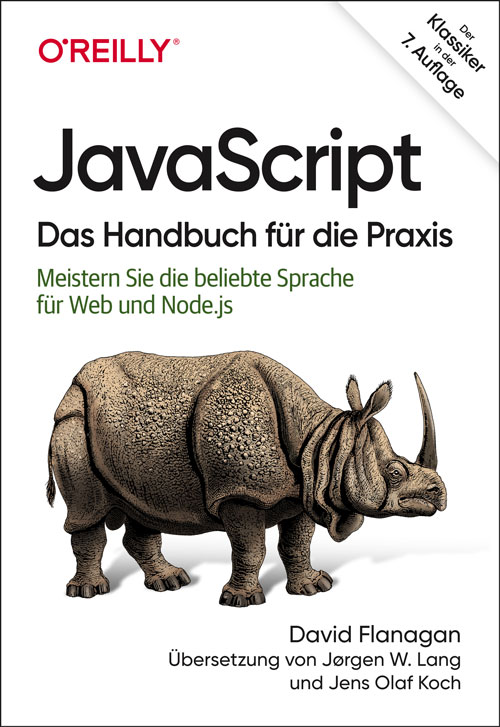
JavaScript - Das Handbuch für die Praxis (7. Auflg.)
Seit 25 Jahren das begleitende Grundlagenwerk zu JavaScript, in 7. Auflage 04/2021JavaScript ist die Programmiersprache des Web und wird heute von mehr Softwareentwicklerinnen und -entwicklern eingesetzt als jede andere Sprache. Seit fast 25 Jahren dient ihnen dieser Bestseller als Praxishandbuch und zuverlässiger Begleiter. Die vorliegende siebte Auflage wurde vollständig aktualisiert und deckt die Version 2020 von JavaScript ab.Sie finden in diesem Buch spannende und aufschlussreiche Codebeispiele sowie neue und erweiterte Kapitel zu Klassen, Modulen, Iteratoren, Generatoren, Promises und async/await. Es richtet sich an Programmiererinnen und Programmierer, die JavaScript lernen möchten, und an alle in der Webentwicklung, die ein tieferes Verständnis für die Sprache entwickeln und sie noch besser beherrschen wollen.Unter anderem werden folgende Themen behandelt:Typen, Variablen, Operatoren, Anweisungen, Objekte und ArraysFunktionen, Klassen, Module, Iteratoren, Generatoren, Promises und async/awaitDie Standardbibliothek von JavaScript: Datenstrukturen, reguläre Ausdrücke, JSON, Internationalisierung und URLsDie Webplattform: Dokumente, Komponenten, Grafiken, Netzwerkoptionen, Speicher und ThreadsNode.js: Puffer, Dateien, Streams, Threads, Kindprozesse, Webclients und WebserverWerkzeuge und Spracherweiterungen für professionelle JavaScript-Entwickler

SAP SuccessFactors Talent: Volume 1
Take an in-depth look at SAP SuccessFactors talent modules with this complete guide to configuration, administration, and best practices. This two-volume series follows a logical progression of SAP SuccessFactors modules that should be configured to complete a comprehensive talent management solution. The authors walk you through fully functional simple implementations in the primary chapters for each module before diving into advanced topics in subsequent chapters.In volume 1, we start with a brief introduction. The next two chapters jump into the Talent Profile and Job Profile Builder. These chapters lay the structures and data that will be utilized across the remaining chapters which detail each module. The following eight chapters walk you through building, administering, and using a goal plan in the Goal Management module as well as performance forms in the Performance Management module. The book also expands on performance topics with the 360 form and continuous performance management in two additional chapters. We then dive into configuring the calibration tool and how to set up calibration sessions in the next two chapters before providing a brief conclusion.Within each topic, the book touches on the integration points with other modules as well as internationalization. The authors also provide recommendations and insights from real world experience. Having finished the book, you will have an understanding of what comprises a complete SAP SuccessFactors talent management solution and how to configure, administer, and use each module within it.You will:· Develop custom talent profile portlets· Integrate Job Profile Builder with SAP SuccessFactors talent modules· Set up security, group goals, and team goals in goals management with sample XML· Configure and launch performance forms including rating scales and route maps· Configure and administrate the calibration module and its best practicesSUSAN TRAYNOR is an SAP SuccessFactors Certified Professional with more than 21 years of progressive experience in SAP HCM and SuccessFactors implementations. You can follow her on LinkedIn.MICHAEL A. WELLENS, M.S. is a certified SAP SuccessFactors consultant with over 15 years of human resources information systems implementation experience. He has successfully launched a variety of core HR and talent management solutions across a variety of fortune 500 companies around the world. You can follow him on LinkedIn or on Twitter at @mike_wellens.VENKI KRISHNAMOORTHY is an SAP SuccessFactors consultant. Venki has over 15 years of experience as a functional lead, project manager, and program manager in HCM transformation projects. Venki has completed over 35 full lifecycle implementations of SuccessFactors projects across multiple modules. You can follow Venki on LinkedIn or on Twitter at @venki_sap.Chapter 1: An Introduction to SAP SuccessFactors Talent ModulesChapter 2: Talent ProfileChapter 3: Job Profile BuilderChapter 4: Basic Goal ManagementChapter 5: Alternate Goal Management Concepts and FunctionalityChapter 6: Introduction to Performance ManagementChapter 7: Performance Form Template SectionsChapter 8: Administering Performance Management FormsChapter 9: Using Performance Management FormsChapter 10: Performance Management XML and TranslationsChapter 11: Ask for Feedback, Get Feedback, Add Modifier, and Add SignerChapter 12: 360Chapter 13: Continuous Performance ManagementChapter 14: Calibration ConfigurationChapter 15: Calibration SessionsChapter 16: Conclusion

Microsoft OneNote
* WIE SIE MIT DEM DIGITALEN NOTIZBUCH KOMFORTABEL UND EFFEKTIV ARBEITEN* WERTVOLLE TIPPS ZUM FLEXIBLEN EINSATZ: IDEEN NOTIEREN, INFORMATIONEN STRUKTURIEREN, MITSCHRIFTEN ERSTELLEN* FÜR ALLE ONENOTE-ANWENDUNGEN: SOWOHL AUF DEM COMPUTER ALS AUCH MOBIL MIT DER ONENOTE-APPOneNote ist als Teil des Microsoft-Office-Pakets auf vielen PCs schon vorinstalliert und auch als kostenlose Online-Version sowie als mobile App verfügbar.Winfried Seimert zeigt Ihnen in diesem praxisnahen Buch, wie Sie mit dem vielseitigen digitalen Notizbuch komfortabel Ordnung und Struktur in Ihr digitales Leben bringen: Sie lernen, Informationen jeglicher Art zu sammeln und zu Ihren persönlichen Notizbüchern zusammenzufassen. Sie erfassen Informationen in Form von Texten oder Tabellen, speichern Links von interessanten Webseiten, integrieren Fotos, Audioaufzeichnungen und Videos - und Dateien können Sie ebenfalls hinzufügen. Außerdem lassen sich Ihre Notizen auch handschriftlich festhalten. Viele praktische Tipps helfen Ihnen dabei, die Möglichkeiten von OneNote flexibel für sich zu nutzen, Ihr gesammeltes Wissen zu strukturieren, gezielt wieder abzurufen und mit anderen zu teilen.Sie lernen außerdem, wie Sie OneNote in Zusammenarbeit mit anderen Office-Programmen wie Outlook oder Word einsetzen, und erfahren, welche fortgeschrittenen Möglichkeiten Ihnen das Add-in Onetastic bietet. So wird OneNote zu einem effektiven Helfer für Ihre Selbstorganisation sowie Ihr Wissens- und Informationsmanagement.AUS DEM INHALT:* Einsatz von Universal-, Web- und Desktop-App* Basiswissen: die Struktur von OneNote verstehen* Notizbücher erstellen und individuell gestalten* Inhalte erfassen: Texte, Tabellen, Bilder, Zeichnungen, Audio und Video* Inhalte verwalten: Sicherungsordner anlegen, Such-optionen nutzen, Dokumente teilen* OneNote für Fortgeschrittene: Mit Onetastic zusätzliche Features verwendenWinfried Seimert ist EDV-Dozent, Consultant und Autor zahlreicher Fachbücher insbesondere zu den Themen Software und Betriebssysteme. Dabei hat er immer den Komfort des Anwenders im Blick und erklärt entsprechend praxisnah. So erfreuen sich seine Bücher aufgrund ihrer durchdachten Strukturierung bereits seit Mitte der neunziger Jahre großer Beliebtheit.
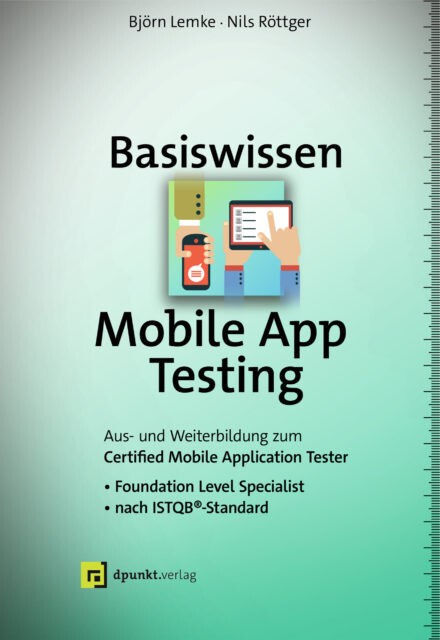
Basiswissen Mobile App Testing
Grundlegende Methoden, Verfahren und Werkzeuge zum Testen von mobilen Applikationen.»Basiswissen Mobile App Testing« vermittelt die Grundlagen des Testens mobiler Apps und gibt einen fundierten Überblick über geeignete Testarten, Testmethoden, den Testprozess und das Testkonzept für mobile Anwendungen. Auch auf Qualitätskriterien, mobile App-Plattformen, Werkzeuge und die Automatisierung der Testausführung wird eingegangen. Viele Beispiele aus realen Kundenprojekten erleichtern die Umsetzung des Gelernten in die Praxis.Die Themen im Einzelnen:Geschäftliche & technische Faktoren, Herausforderungen & Risiken, Teststrategien für mobile AppsTests mit Bezug zur mobilen PlattformÜbliche Testarten und der Testprozess für mobile AppsMobile App-Plattformen, Werkzeuge und UmgebungenAutomatisierung der TestausführungDas Buch ist konform zum ISTQB®-Lehrplan »Certified Mobile Application Tester« und eignet sich mit vielen Beispielen und Übungen nicht nur bestens für die Prüfungsvorbereitung, sondern dient gleichzeitig als kompaktes Basiswerk zum Thema in der Praxis und an Hochschulen.Über die Autoren:Björn Lemke ist Managing Consultant bei der trendig technology services GmbH. Die Schwerpunkte seiner Arbeit sind Softwarequalitätssicherung, Integrated Technology and Operations (ITOps), IT-Service-Management (ITIL), Testmanagement, Testdatenmanagement, Testinfrastrukturmanagement sowie Mobile Application Testing in kleinen bis hin zu sehr grossen Projekten.Nils Röttger arbeitet bei der imbus AG in Möhrendorf als Berater, Projektleiter und Speaker und ist u. a. verantwortlich für die Ausbildung und den Bereich Mobile Testing. In seinen Vorträgen beschäftigt er sich immer wieder mit Themen wie exploratives Testen, Usability oder Ethik im Softwaretest.

Die Erstellung eines digitalen Zwillings
Die Erstellung der ersten digitalen Zwillinge sollte intuitiv sein. In diesem Buch werden Zwillinge aus unterschiedlichen Bereichen vorgestellt, die ohne große Vorkenntnisse aufgebaut werden können. Dem Leser wird durch Praxisbeispiele ein Verständnis für die Handhabung von Simcenter Amesim vermittelt. Ohne tiefgreifende mathematische Fähigkeiten werden beispielsweise Lüftungs- und Tankanlagen, Sonnenkollektoren oder ein einfacher Wagenheber nachgebaut. Jedes Rechenbeispiel schließt mit Arbeitsvorschlägen, um den Umgang mit dem Zwilling zu schulen. Einleitung.- Signale und Mathematik.- Der mechanische Zwilling.- Der thermische Zwilling.- Der hydraulische Zwilling.- Der pneumatische Zwilling.- Fazit.- Haftungsausschluss
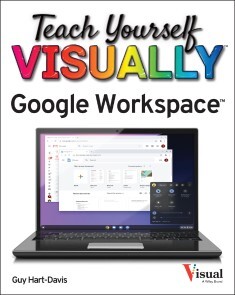
Teach Yourself VISUALLY Google Workspace
MASTER THE INS AND OUTS OF GOOGLE'S FREE-TO-USE OFFICE AND PRODUCTIVITY SOFTWARETeach Yourself VISUALLY Google Workspace delivers the ultimate guide to getting the most out of Google's Workspace cloud software. Accomplished author Guy Hart-Davis offers readers the ability to tackle a huge number of everyday productivity problems with Google's intuitive collection of online tools. With over 700 full-color screenshots included to help you learn, you'll discover how to:* Manage your online Google Calendar* Master the files and folders in your Google Drive storage* Customize your folders and navigate your Gmail account* Create perfect spreadsheets, presentations, and documents in Google Sheets, Slides, and DocsPerfect for anyone who hopes to make sense of Google's highly practical and free online suite of tools, Teach Yourself VISUALLY Google Workspace also belongs on the bookshelves of those who already find themselves using Workspace and just want to get more out of it.GUY HART-DAVIS is the author of more than 100 computing books, including Teach Yourself VISUALLY Chromebook, Teach Yourself VISUALLY MacBook Pro and MacBook Air, and Teach Yourself VISUALLY iPhone.Chapter 1: Getting Started with G SuiteChapter 2: Managing Files and Folders in DriveChapter 3: Performing Common Tasks in Docs, Sheets, and SlidesChapter 4: Inserting Objects in Docs, Sheets, and SlidesChapter 5: Working in DocsChapter 6: Share and Collaborate on FilesChapter 7: Working in SheetsChapter 8: Learning Advanced Sheets FeaturesChapter 9: Working in SlidesChapter 10: Sending and Receiving E-MailChapter 11: Organizing Your LifeChapter 12: Creating Forms

Beginning HCL Programming
Get started with programming and using the Hashicorp Language (HCL). This book introduces you to the HCL syntax and its ecosystem then it shows you how to integrate it as part of an overall DevOps approach.Next, you’ll learn how to implement infrastructure as code, specifically, using the Terraform template, a set of cloud infrastructure automation tools. As part of this discussion, you’ll cover Consul, a service mesh solution providing a full-featured control plane with service discovery, configuration, and segmentation functionality. You’ll integrate these with Vault to build HCL-based infrastructure as code solutions.Finally, you’ll use Jenkins and HCL to provision and maintain the infrastructure as code system. After reading and using Beginning HCL Programming, you'll have the know-how and source code to get started with flexible HCL for all your cloud and DevOps needs.WHAT YOU WILL LEARN* Get started with programming and using HCL* Use Vault, Consul, and Terraform * Apply HCL to infrastructure as codeDefine the Terraform template with HCL * Configure Consul using HCL* Use HCL to configure Vault* Provision and maintain infrastructure as code using Jenkins and HCLWHO THIS BOOK IS FORAnyone new to HCL but who does have at least some prior programming experience as well as knowledge of DevOps in general.PIERLUIGI RITI is a senior DevOps engineer at Coupa Software and Sunchronoss Technologies. Prior to that, he was a senior software engineer at Ericsson and Tata. His experience includes implementing DevOps in the cloud using Google Cloud Platform as well as AWS and Azure. Also, he has over ten years of extensive experience in more general design and development of different scale applications particularly in the telco and financial industries. He has quality development skills using the latest technologies including Java, J2EE, C#, F#, .NET, Spring .NET, EF, WPF, WF, WinForm, WebAPI, MVC, Nunit, Scala, Spring, JSP, EJB, Struts, Struts2, SOAP, REST, C, C++, Hibernate, NHibernate, Weblogic, XML, XSLT, Unix script, Ruby, and Python.DAVID FLYNN is an Associate Analyst in Employee Access Business Operations at Mastercard. He is an Electronic Engineer with experience in telecommunications, networks, software, security and Financial Systems. David started out as a Telecommunications Engineer working on Voice, data and wireless systems for Energis and later Nortel Networks supporting systems such as Lucent G3r, Alcatel E10 & Nortel Passport. He then did some time in Transport and Private security abroad before retraining in Computing, Cyber Security and Cloud Systems plus doing Cyber Security & Telecomm research for the Civil Service. He has completed separate Diplomas in Computing and Cloud focusing on Windows, C# , Google, AWS and Powershell amongst other technologies. David also has worked as a C# Engineer. More recently David has worked for various fintech companies including Bank Of America Merril Lynch focusing on technical & Application Support encompassing such technologies as Rsa Igl, Rsa SecurID, IBM Tam/Isam, Postgres/Oracle databases, Mainframe, Tandem, CyberArk, MaxPro and Active Directory.1 Introduction to HCLDefine the history of HCL, the basic syntax and, show the basic configuration syntax and the basic usage of the HCL2 The Hashicorp ecosystemShow the different software create by Hashicorpt like Vault, Consul, Terraform3 Introduction to GoA small introduction on the Go language, we use Go to define the configuration template described in the book4 Infrastructure As CodeDefine what is the Infrastructure as Code and how we can do that5 Introduction to the Cloud and DevOpsIn this chapter, we have a short introduction to the Cloud and the DevOps6 Use HCL for TerraformWe start to use the HCL for define Terraform template7 Consul HCLIn this chapter we introduce the HCL for Consul, we learn how to configure Consul using the HCL8 Vault HCLUse the HCL for configure Vault9 Infrastructure as Code with HCLDesign the Infrastructure as Code use the Hashicorp language, in particular, we use Terraform, Vault and Consul10 Provisioning and Maintain the Infrastructure as CodeIn this chapter, we see how to use Jenkins and the HCL for provisioning and maintain the infrastructure as code

Deep Learning with Python
Master the practical aspects of implementing deep learning solutions with PyTorch, using a hands-on approach to understanding both theory and practice. This updated edition will prepare you for applying deep learning to real world problems with a sound theoretical foundation and practical know-how with PyTorch, a platform developed by Facebook’s Artificial Intelligence Research Group.You'll start with a perspective on how and why deep learning with PyTorch has emerged as an path-breaking framework with a set of tools and techniques to solve real-world problems. Next, the book will ground you with the mathematical fundamentals of linear algebra, vector calculus, probability and optimization. Having established this foundation, you'll move on to key components and functionality of PyTorch including layers, loss functions and optimization algorithms.You'll also gain an understanding of Graphical Processing Unit (GPU) based computation, which is essential for training deep learning models. All the key architectures in deep learning are covered, including feedforward networks, convolution neural networks, recurrent neural networks, long short-term memory networks, autoencoders and generative adversarial networks. Backed by a number of tricks of the trade for training and optimizing deep learning models, this edition of Deep Learning with Python explains the best practices in taking these models to production with PyTorch.WHAT YOU'LL LEARN* Review machine learning fundamentals such as overfitting, underfitting, and regularization.* Understand deep learning fundamentals such as feed-forward networks, convolution neural networks, recurrent neural networks, automatic differentiation, and stochastic gradient descent.* Apply in-depth linear algebra with PyTorch* Explore PyTorch fundamentals and its building blocks* Work with tuning and optimizing models WHO THIS BOOK IS FORBeginners with a working knowledge of Python who want to understand Deep Learning in a practical, hands-on manner.Nikhil S. Ketkar currently leads the Machine Learning Platform team at Flipkart, India’s largest e-commerce company. He received his Ph.D. from Washington State University. Following that he conducted postdoctoral research at University of North Carolina at Charlotte, which was followed by a brief stint in high frequency trading at Transmaket in Chicago. More recently he led the data mining team in Guavus, a startup doing big data analytics in the telecom domain and Indix, a startup doing data science in the e-commerce domain. His research interests include machine learning and graph theory.Jojo Moolayil is an artificial intelligence, deep learning, machine learning, and decision science professional with over five years of industrial experience and is a published author of the book Smarter Decisions – The Intersection of IoT and Decision Science. He has worked with several industry leaders on high-impact and critical data science and machine learning projects across multiple verticals. He is currently associated with Amazon Web Services as a research scientist. He was born and raised in Pune, India and graduated from the University of Pune with a major in Information Technology Engineering. He started his career with Mu Sigma Inc., the world’s largest pure-play analytics provider and worked with the leaders of many Fortune 50 clients. He later worked with Flutura – an IoT analytics startup and GE. He currently resides in Vancouver, BC. Apart from writing books on decision science and IoT, Jojo has also been a technical reviewer for various books on machine learning, deep learning and business analytics with Apress and Packt publications. He is an active data science tutor and maintains a blog at http://blog.jojomoolayil.com.CHAPTER 1 – INTRODUCTION DEEP LEARNINGA brief introduction to Machine Learning and Deep Learning. We explore foundational topics within the subject that provide us the building blocks for several topics within the subject.CHAPTER 2 – INTRODUCTION TO PYTORCHA quick-start guide to PyTorch and a comprehensive introduction to tensors, linear algebra and mathematical operations for Tensors. The chapter provides the required PyTorch foundations for readers to meaningfully implement practical Deep Learning solutions for various topics within the book. Advanced PyTorch topics are explored as and when touch-based during the course of exercises in later chapter.CHAPTER 3- FEED FORWARD NETWORKS (30 PAGES)In this chapter, we explore the building blocks of a neural network and build an intuition on training and evaluating networks. We briefly explore loss functions, activation functions, optimizers, backpropagation, that could be used for training. Finally, we would stitch together each of these smaller components into a full-fledged feed-forward neural network with PyTorch.CHAPTER 4-AUTOMATIC DIFFERENTIATION IN DEEP LEARNINGIn this chapter we open this black box topic within backpropagation that enables training of neural networks i.e. automatic differentiation. We cover a brief history of other techniques that were ruled out in favor of automatic differentiation and study the topic with a practical example and implement the same using PyTorchs Autograd module.CHAPTER 5 – TRAINING DEEP NEURAL NETWORKSIn this chapter we explore few additional important topics around deep learning and implement them into a practical example. We will delve into specifics of model performance and study in detail about overfitting and underfitting, hyperparameter tuning and regularization. Finally, we will leverage a real dataset and combined our learnings from the beginning of this book into a practical example using PyTorch.CHAPTER 6 – CONVOLUTIONAL NEURAL NETWORKS (35 PAGES)Introduction to Convolutional Neural Networks for Computer Vision. We explore the core components with CNNs with examples to understand the internals of the network, build an intuition around the automated feature extraction, parameter sharing and thus understand the holistic process of training CNNs with incremental building blocks. We also leverage hands-on exercises to study the practical implementation of CNNs for a simple dataset i.e. MNIST (classification of handwritten digits), and later extend the exercise for a binary classification use-case with the popular cats and dogs’ dataset.CHAPTER 7 – RECURRENT NEURAL NETWORKSIntroduction to Recurrent Neural Networks and its variants (viz. Bidirectional RNNs and LSTMs). We explore the construction of a recurrent unit, study the mathematical background and build intuition around how RNNs are trained by exploring a simple four step unrolled network. We then explore hands-on exercises in natural language processing that leverages vanilla RNNs and later improve their performance by using Bidirectional RNNS combined with LSTM layers.CHAPTER 8 – RECENT ADVANCES IN DEEP LEARNINGA brief note of the cutting-edge advancements in the field will be added. We explore important inventions within the field with no implementation details, however focus on the applications and the path forward.

Practical Machine Learning for Streaming Data with Python
Design, develop, and validate machine learning models with streaming data using the Scikit-Multiflow framework. This book is a quick start guide for data scientists and machine learning engineers looking to implement machine learning models for streaming data with Python to generate real-time insights.You'll start with an introduction to streaming data, the various challenges associated with it, some of its real-world business applications, and various windowing techniques. You'll then examine incremental and online learning algorithms, and the concept of model evaluation with streaming data and get introduced to the Scikit-Multiflow framework in Python. This is followed by a review of the various change detection/concept drift detection algorithms and the implementation of various datasets using Scikit-Multiflow.Introduction to the various supervised and unsupervised algorithms for streaming data, and their implementation on various datasets using Python are also covered. The book concludes by briefly covering other open-source tools available for streaming data such as Spark, MOA (Massive Online Analysis), Kafka, and more.WHAT YOU'LL LEARN* Understand machine learning with streaming data concepts* Review incremental and online learning* Develop models for detecting concept drift* Explore techniques for classification, regression, and ensemble learning in streaming data contexts* Apply best practices for debugging and validating machine learning models in streaming data context* Get introduced to other open-source frameworks for handling streaming data.WHO THIS BOOK IS FORMachine learning engineers and data science professionalsDr. Sayan Putatunda is an experienced data scientist and researcher. He holds a Ph.D. in Applied Statistics/ Machine Learning from the Indian Institute of Management, Ahmedabad (IIMA) where his research was on streaming data and its applications in the transportation industry. He has a rich experience of working in both senior individual contributor and managerial roles in the data science industry with multiple companies such as Amazon, VMware, Mu Sigma, and more. His research interests are in streaming data, deep learning, machine learning, spatial point processes, and directional statistics. As a researcher, he has multiple publications in top international peer-reviewed journals with reputed publishers. He has presented his work at various reputed international machine learning and statistics conferences. He is also a member of IEEE.Chapter 1: An Introduction to Streaming DataChapter Goal: Introduce the readers to the concept of streaming data, the various challenges associated with it, some of its real-world business applications, various windowing techniques along with the concepts of incremental and online learning algorithms. This chapter will also help in understanding the concept of model evaluation in case of streaming data and provide and introduction to the Scikit-Multiflow framework in Python.No of pages- 35Sub -Topics1. Streaming data2. Challenges of streaming data3. Concept drift4. Applications of streaming data5. Windowing techniques6. Incremental learning and online learning7. Illustration : Adopting batch learners into incremental learners8. Introduction to Scikit-Multiflow framework9. Evaluation of streaming algorithmsChapter 2: Change DetectionChapter Goal: Help the readers to understand the various change detection/concept drift detection algorithms and its implementation on various datasets using Scikit-Multiflow.No of pages : 35Sub - Topics:1. Change detection problem2. Concept drift detection algorithms3. ADWIN4. DDM5. EDDM6. Page HinkleyChapter 3: Supervised and Unsupervised Learning for Streaming DataChapter Goal: Help the readers to understand the various regression and classification (including Ensemble Learning) algorithms for streaming data and its implementation on various datasets using Scikit-Multiflow. Also, discuss some approaches for clustering with streaming data and its implementation using Python.No of pages: 35Sub - Topics:1. Regression with streaming data2. Classification with streaming data3. Ensemble Learning with streaming data4. Clustering with streaming dataChapter 4: Other Tools and the Path ForwardChapter Goal: Introduce the readers to the other open source tools for handling streaming data such as Spark streaming, MOA and more. Also, educate the reader about additional reading for advanced topics within streaming data analysis.No of pages: 35Sub - Topics:1. Other tools for handling streaming data1.1.1. Apache Spark1.1.2. Massive Online Analysis (MOA)1.1.3. Apache Kafka2. Active research areas and breakthroughs in streaming data analysis3. Conclusion
Introducing Blockchain with Lisp
Implement blockchain from scratch covering all the details with Racket, a general-purpose Lisp. You'll start by exploring what a blockchain is, so you have a solid foundation for the rest of the book. You'll then be ready to learn Racket before starting on your blockchain implementation. Once you have a working blockchain, you'll move onto extending it. The book's appendices provide supporting resources to help you in your blockchain projects.The recommended approach for the book is to follow along and write the code as it’s being explained instead of reading passively. This way you will get the most out of it. All of the source code is available for free download from GitHub.WHAT YOU WILL LEARN* Discover the Racket programming language and how to use it* Implement a blockchain from scratch using Lisp* Implement smart contracts and peer-to-peer support* Learn how to use macros to employ more general abstractionsWHO THIS BOOK IS FORNovices that have at least some experience with programming, as well as some basic working experience with computers. The book also assumes some experience with high school mathematics, such as functions.Boro Sitnikovski has over ten years of experience working professionally as a software engineer. He started programming with assembly on an Intel x86 at the age of ten. While in high school, he won several prizes in competitive programming, varying from 4th, 3rd, and 1st place. He is an informatics graduate - his bachelor’s thesis was titled “Programming in Haskell using algebraic data structures”, and his master’s thesis was titled “Formal verification of Instruction Sets in Virtual Machines”. He has also published a few papers on software verification. Other research interests of his include programming languages, mathematics, logic, algorithms, and writing correct software. He is a strong believer in the open-source philosophy and contributes to various open-source projects. In his spare time, he enjoys some time off with his family.1: Introduction to Blockchain2: Racket Programming Language3: Blockchain Implementation4: Extending the BlockchainConclusionFurther ReadingAppendix A: Macros

C Programming on Raspberry Pi
The Raspberry Pi has traditionally been programmed using Python. Although this is a very powerful language, many programmers may not be familiar with it. C on the other hand is perhaps the most commonly used programming language and all embedded microcontrollers can be programmed using it.The C language is taught in most technical colleges and universities and almost all engineering students are familiar with using it with their projects. This book is about using the Raspberry Pi with C to develop a range of hardware-based projects. Two of the most popular C libraries, wiringPi and pigpio are used.The book starts with an introduction to C and most students and newcomers will find this chapter invaluable. Many projects are provided in the book, including using Wi-Fi and Bluetooth to establish communication with smartphones.Many sensor and hardware-based projects are included. Both wiringPi and pigpio libraries are used in all projects. Complete program listings are given with full explanations. All projects have been fully tested and work.The following hardware-based projects are provided in the book:> Using sensors> Using LCDs> I 2 C and SPI buses> Serial communication> Multitasking> External and timer interrupts> Using Wi-Fi> Webservers> Communicating with smartphones> Using Bluetooth> Sending data to the cloudProgram listings of all Raspberry Pi projects developed in this book are available on the Elektor website. Readers can download and use these programs in their projects. Alternatively, they can customize them to suit their applications.Prof. Dr. Dogan Ibrahim is a Fellow of the Institution of Electrical Engineers. He is the author of over 60 technical books, published by publishers including Wiley, Butterworth, and Newnes. He is the author of over 250 technical papers, published in journals, and presented in seminars and conferences
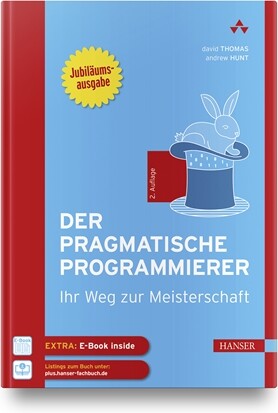
Der pragmatische Programmierer (2. Auflg.)
Ihr Weg zur Meisterschaft - die 2. vollständig überarbeitete Auflage, 04/2021.Der Pragmatische Programmierer ist eines dieser seltenen Fachbücher, die Sie im Lauf der Jahre immer wieder lesen werden. Egal, ob Sie Programmiereinsteiger oder erfahrener Praktiker sind, stets können Sie neue Einsichten gewinnen.David Thomas und Andrew Hunt schrieben 1999 die erste Ausgabe dieses einflussreichen Buches, um ihren Kunden zu helfen, bessere Software zu entwickeln und die Freude am Programmieren wiederzuentdecken. Ihre pragmatischen Profitipps helfen bis heute einer ganzen Generation von Programmierern, den Kosmos der Software-Entwicklung zu erkunden, unabhängig von einer bestimmten Sprache oder Methodik oder einem bestimmten Framework.Ihre »Pragmatische Philosophie« hat den Weg bereitet für Hunderte von Büchern, Screencasts und Hörbüchern sowie Tausende von Karrieren und Erfolgsgeschichten. Zwanzig Jahre später untersuchen die Autoren nun erneut, was einen modernen Programmierer ausmacht. Die Themen reichen von persönlicher Verantwortung über berufliche Entwicklung bis hin zu Architekturtechniken, die Ihren Code flexibel, leicht anpassbar und wiederverwendbar halten.In kurzen Abschnitten, die auch einzeln gelesen werden können, erläutern die Autoren nicht nur die Best Practices, sondern auch Fallstricke bei der Software-Entwicklung. Anschauliche Beispiele und interessante Analogien machen dieses Buch zu einem Lesevergnügen.Egal ob Einsteiger, erfahrener Programmierer oder Manager für Softwareprojekte: Wer die Profitipps der Autoren bei der täglichen Arbeit anwendet, wird seine Produktivität, Genauigkeit und Zufriedenheit rasch steigern und damit als Pragmatischer Programmierer auch langfristig erfolgreich seinErfahren Sie im Buch, wie Sie:den Verfall von Software bekämpfenRedundanz vermeidenflexiblen, dynamischen und anpassungsfähigen Quelltext schreibenIhr Handwerkszeug optimal nutzenvermeiden, mit dem Zufall zu programmierendie richtigen Anforderungen findensich vor Sicherheitslücken schützenProbleme beim nebenläufigen Code lösenTeams aus Pragmatischen Programmierern bildeneffektiv testendas Pragmatic Starter Kit implementierenIhre Anwender begeisternLeseprobe (PDF-Link)
Neuronale Netze mit C# programmieren
Mit praktischen Beispielen für Machine Learning im Unternehmenseinsatz.Sie wollen neuronale Netze und Machine-Learning-Algorithmen mit C# entwickeln? Dann finden Sie in diesem Buch eine gut verständliche Einführung in die Grundlagen und es wird Ihnen gezeigt, wie Sie neuronale Netze und Machine-Learning-Algorithmen in Ihren eigenen Projekten praktisch einsetzen.Mithilfe von Beispielen erstellen und trainieren Sie Ihr erstes neuronales Netz zur vorausschauenden Wartung einer Produktionsmaschine.Im Praxisteil lernen Sie dann, wie Sie TensorFlow-Modelle in ML.NET benutzen oder Infer.NET direkt verwenden können. Des Weiteren nutzen Sie die Predictive- und Sentiment-Analyse, um sich mit Machine-Learning-Algorithmen vertraut zu machen.Alle im Buch vorgestellten Projekte sind in C# programmiert und stehen als Download zur Verfügung. Grundkenntnisse in C# werden für die Arbeit mit dem Buch vorausgesetzt. Alle Projekte lassen sich ohne größere Rechnerressourcen umsetzen.Daniel Basler arbeitet als Lead Developer und Softwarearchitekt. Seine Schwerpunkte liegen auf Cross-Platform-Apps, Android, JavaScript und Microsoft-Technologien. Er entwickelt u.a. Software für Regal- und Flächenlagersysteme sowie Anlagenvisualisierung und setzt in diesem Umfeld verstärkt Machine-Learning-Methoden ein. Darüber hinaus schreibt er regelmäßig Artikel für die Fachzeitschriften dotnetpro und web&mobile Developer.Leseprobe (PDF-Link)

Fit für die digitale Zukunft
Die Digitalisierung verändert die Gesellschaft, sie stellt neue Anforderungen an die Menschen und führt zu neuen Herausforderungen. Das ist inzwischen hinreichend bekannt. Was aber werden konkret die Herausforderungen sein, denen sich die Menschen stellen müssen, welche Fähigkeiten müssen sie sich aneignen und wie können sie sich optimal auf die kommenden Veränderungen vorbereiten? In dem Buch geht es nicht um einen theoretischen Blick in die Kristallkugel, sondern der Autor greift die schon erkennbaren Veränderungen auf und entwickelt daraus Handlungsempfehlungen, um eine Vorbereitung auf die Veränderungen zu ermöglichen. Dabei geht es um einen zusammenhängenden Blick auf die Fragen, die in absehbarer Zukunft relevant werden, wie z.B. Veränderungen in der Art des Zusammenlebens, dem Verhältnis von Staat und Bürger oder der Vermittlung von Fähigkeiten und Wissen. Ziel des Buches ist es, dem Leser nicht einen abstrakten Zugang zu wesentlichen Bereichen der Digitalisierung zu ermöglichen, sondern konkrete Themen, die für den Leser schon sichtbar sind, zu analysieren, die Hintergründe aufzuzeigen und ihm die Angst vor den kommenden Veränderungen zu nehmen.