

Computer und IT
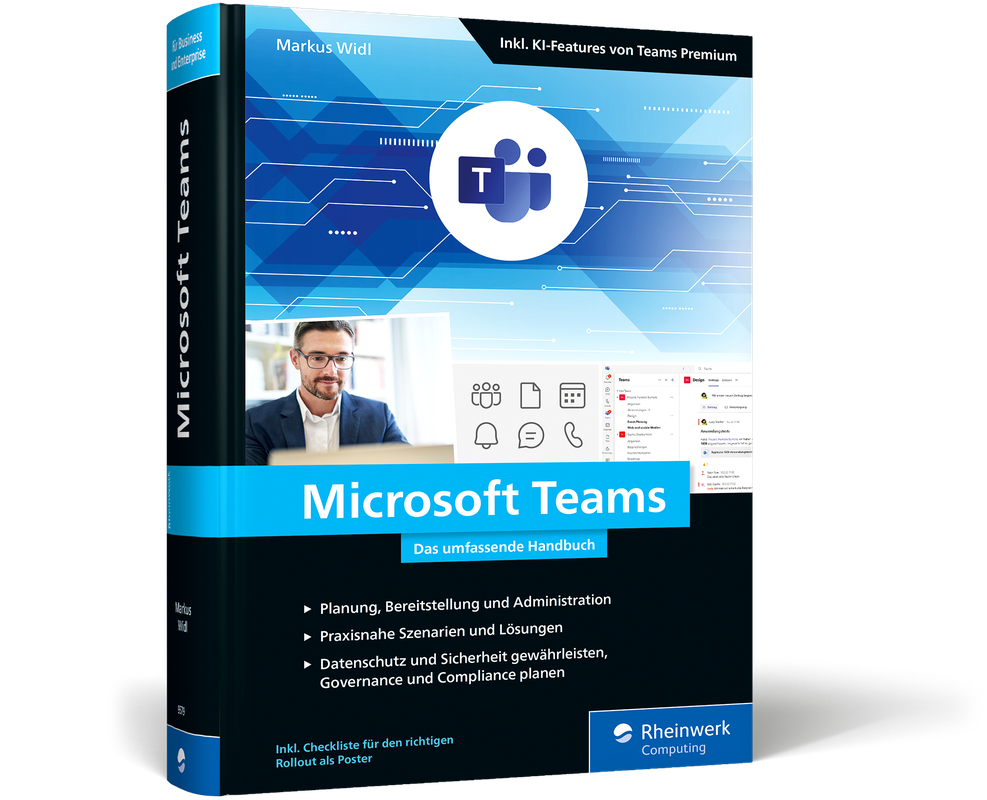
Microsoft Teams - Das umfassende Handbuch
Microsoft Teams. Das umfassende Handbuch.Ohne Teamwork läuft nichts mehr in modernen Unternehmen. Schnelle und unkomplizierte Kommunikationskanäle sind dabei genauso wichtig wie die Möglichkeit, Ideen und Dokumente einfach im Unternehmen zu teilen und zuverlässig Besprechungen in virtuellen Teams zu organisieren. Wie Sie dazu Microsoft Teams in Ihre IT-Infrastruktur integrieren und umfassend von den neuen KI-Features profitieren, zeigt Ihnen Markus Widl.Planung, Bereitstellung und ManagementPraxisnahe Szenarien und LösungenDatenschutz und Sicherheit gewährleisten, Governance und Compliance planenVon Teams und gutem Teamwork profitieren1. Teams administrieren und verwaltenOb remote im Home Office oder vor Ort im Konferenzraum: Mit Microsoft Teams organisieren Sie die Zusammenarbeit in Ihrem Unternehmen reibungslos und effizient. Von der richtigen Planung für einen unkomplizierten Rollout über die Einrichtung der Teams und Geräte bis zur Verwaltung der VoIP-Funktionen finden Sie hier alle Expertentipps, die Sie im Administrationsalltag brauchen.2. Smarter arbeitenDie neuen KI-Features von Teams Premium begleiten Sie in Ihren Meetings und vernetzen verschiedene Informationsquellen für Sie. Automatisiert werden Zusammenfassungen, Protokolle und To-do-Listen erstellt, damit Sie sich auf das Wesentliche konzentrieren können. Wie der neue Teams-Client funktioniert, was Sie bei der Nutzung beachten müssen und was die Zukunft bringt, erfahren Sie von Markus Widl.3. Compliance, Sicherheit und GovernanceWie behalten Sie auch bei sehr vielen Teams den Überblick? Wer kann auf welche Nachrichten zugreifen? Wie wird die Teams-Kommunikation archiviert, welche Sicherheitsprobleme lauern im Betrieb und wie steht es um den Datenschutz sensibler Informationen? Hilfestellungen für diese Fragen finden Sie hier.Aus dem Inhalt:NutzungsszenarienEvergreen: Updates und neue FeaturesArchitektur und PlanungAdministration mit der PowerShellRichtlinien und GovernanceTelefonie, Audiokonferenzen und RaumsystemeSicherheit, Compliance und DatenschutzLizenzenPilotbetrieb und RolloutLeseprobe (PDF-Link)
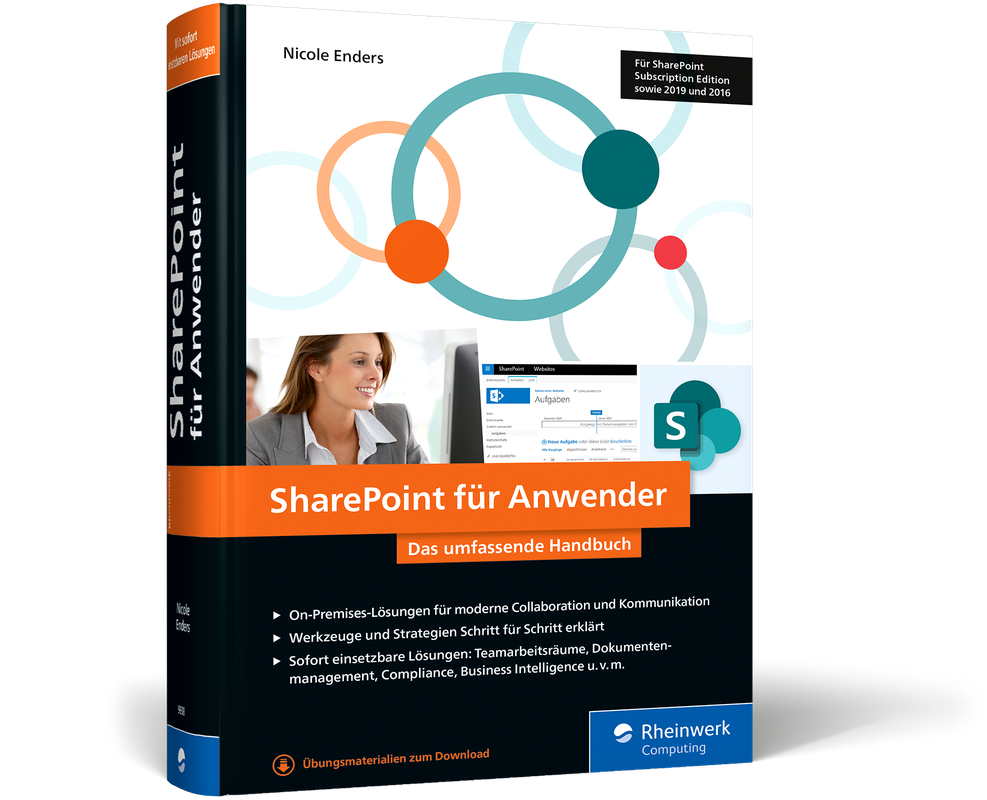
SharePoint für Anwender (4. Auflage)
SharePoint für Anwender. Das umfassende Handbuch. 4., aktualisierte Auflage (2024).Dieses Buch zeigt Ihnen, wie Sie als Anwender im Unternehmen mit SharePoint schnell zu professionellen Lösungen gelangen. Nicole Enders vermittelt Ihnen anschaulich alle nötigen Grundlagen und führt Sie Schritt für Schritt zu einer Collaboration-Plattform, die zu Ihrem Unternehmen passt. So erstellen Sie ganz einfach z. B. ein Ticketsystem oder eine Wissensdatenbank oder unterstützen Ihre Genehmigungsprozesse – und zwar komplett on-Premises. Mit vielen erprobten Praxistipps und konkreten Beispiellösungen.On-Premises-Lösungen für moderne Collaboration und KommunikationWerkzeuge und Strategien Schritt für Schritt erklärtSofort einsetzbare Lösungen: Team-Arbeitsräume, Dokumentenmanagement, Compliance, Business Intelligence u. v. m.Collaboration mit SharePoint1. SharePoint verstehen und einsetzenSie lernen SharePoint schnell und gründlich kennen. Ob Website, Websitesammlung, Navigation, Vorlagen, Features oder Webparts – im Nu beherrschen Sie die Grundlagen und ihre Anwendung.2. Mitarbeiter, Partner und Kunden vernetzenSie erfahren, wie Sie mit SharePoint ein Intranet aufbauen, das alle wichtigen Unternehmensprozesse abbildet. Auch die Kommunikation nach außen, mit Geschäftspartnern und Kunden, können Sie mit SharePoint kinderleicht unterstützen.3. Sofort einsetzbare Lösungen entwickelnEgal ob Ihr Fachgebiet Controlling, Einkauf, Empfang, Fachabteilung, IT-Support, Management, Marketing, Personalentwicklung, Recruiting oder Vertrieb ist: Mit dem Buch entwickeln Sie Lösungen für Ihre Aufgaben, die Sie sofort einsetzen können.Aus dem Inhalt:SharePoint einführen: Was ist zu beachten?Überblick über Dienste und FeaturesBusiness Intelligence ToolsEin Portal aufbauen und nutzenWebsites administrierenUnternehmensweites VorlagenmanagementEinen Redaktionsprozess unterstützenArbeitsräume für den Informationsaustausch mit KundenProjektmanagement mit SharePointSharePoint on-Premises einsetzenLeseprobe (PDF-Link)

Web Coding & Development All-in-One For Dummies
LEARN THE IN-DEMAND SKILLS THAT LET YOU TURN LINES OF CODE INTO WEBSITES AND APPSWeb Coding & Development All-in-One For Dummies is a one-stop resource for would-be developers who need guidance on the languages and steps used to build websites and applications. Learn the coding ropes and expand your existing skillset with this easy-to-understand guide. In these complete mini-books, you’ll walk through the basics of web development, structuring a page, building and processing web forms, and beyond. Learn how to build a website or create your very own app with the advice of web coding and development experts. This edition expands JavaScript and CSS coverage while providing new content on server-side coding and the development stack.* Get essential knowledge of how web development works—even if you’ve never written a line of code in your life* Learn HTML, CSS, JavaScript, and other languages essential for building websites and apps* Discover how to make optimize your sites and apps for mobile devices* Expand on what you already know and improve your employabilityThis Dummies All-in-One is great for you if want to develop coding skills but don’t have a programming background. It’s also perfect for professionals looking to brush up on their web development skills and get up to date on the latest trends and standards. PAUL MCFEDRIES is the president of Logophilia Limited, a technical writing company. He has experience as a programmer, consultant, database developer, and website builder. Paul is the author of more than 100 books with four million in combined sales worldwide, including several bestselling titles in Wiley’s For Dummies and Teach Yourself VISUALLY series.

WordPress All-in-One For Dummies
THE NO-NONSENSE GUIDE TO BUILDING YOUR OWN WORDPRESS SITEWith the help of WordPress All-in-One For Dummies, you can get your first WordPress blog or website set up in no time. Fully updated for the latest WordPress releases, this 8-books-in-1 guide walks you through all the features of this powerful web builder. You’ll discover how to choose and customize a theme, pick the perfect web host and URL, and manage multiple websites with multiple authors. Use WordPress as a content management software (CMS) platform, work with multimedia formats, and add plugins to your site. With state-of-the-art features, WordPress has become the go-to platform for website owners and bloggers who want to be noticed. This beginner-friendly Dummies guide gives you the know-how to make WordPress work for you.* Build a website or blog with WordPress, the leading open-source web builder* Discover the powerful, customizable features of the latest versions of WordPress* Allow multiple people to contribute to your site and keep your content organized* Easily make changes and modifications with the WordPress interfaceBoth WordPress novices and more experienced users looking to dive into new features will love the easy-to-follow instructions and tips in WordPress All-in-One For Dummies.LISA SABIN-WILSON is the co-founder and Chief Operating Officer of WebDevStudios, a company specializing in custom WordPress plugins, themes, and deployments. Lisa is a popular conference speaker and bestselling author of WordPress For Dummies, WordPress All-in-One For Dummies, and WordPress Web Design For Dummies.

Public Cloud Potenzial in einem Unternehmensumfeld
Die Transformation in die Public Cloud ist mit vielen Herausforderungen verbunden. Das Buch erläutert drei Phasen, die die Grundlage für die Ermittlung der Position eines Unternehmens in der Transformation bilden. Jede Stufe umreißt einen Reifegrad der Transformation. Ein Bewertungsrahmen führt den Leser durch die Analyse der Cloud-Readiness zur Identifikation der derzeitigen Stufe des Unternehmens und um die nächste Stufe zur Ausschöpfung des Mehrwerts der Cloud zu erreichen. Das Framework wird durch praxisnahe Beispiele ergänzt.DER INHALT:* Kombination eines mehrstufigen, ganzheitlichen Frameworks* Bewertung zur Ermittlung des Ausgangspunkts der Cloud-Readiness* Überblick über die Reifegrade der Transformation mit PraxisbeispielenDIE ZIELGRUPPEN* IT-Entscheidungsträger von Unternehmen aus allen BranchenNIKLAS FEIL arbeitet als Consultant für die Accenture GmbH und unterstützt Kunden bei der Planung und Durchführung der Cloud-Transformation.DR. ANDRÉ BÖGELSACK arbeitet als Managing Director bei der Accenture AG und unterstützt Kunden aller Industrien bei der Nutzung von Cloud Services im gesamten Lebenszyklus.RAMÓN SCHULZ arbeitet als Direktor bei der Deloitte Consulting GmbH im Bereich Technology Strategy & Transformation und verantwortet Cloud Journey Advisory für Energy, Resources & Industrials.GABRIEL ABRANTES arbeitet als Direktor bei der Deloitte Consulting GmbH im Bereich Technology Strategy & Transformation mit Schwerpunkt auf Cloud Journey Advisory. Einleitung.- Marktübersicht und Cloud Canvas.- Die drei Phasen der Cloud-Adaption.- Bewertung - Bestimmen Sie Ihren Reifegrad für die Cloud-Readiness.- Stufe 1 - Cloud-Strategie und Startphase.- Stufe 2 - Kosten und Cloud-Nutzung unter Kontrolle halten.- Stufe 3 - Verwendung innovativer Technologien und Ausbau der Cloud-Nutzung.- Zusammenfassung und Ausblick.

The Deep Learning Architect's Handbook
Deep learning enables previously unattainable feats in automation, but extracting real-world business value from it is a daunting task. This book will teach you how to build complex deep learning models and gain intuition for structuring your data to accomplish your deep learning objectives.This deep learning book explores every aspect of the deep learning life cycle, from planning and data preparation to model deployment and governance, using real-world scenarios that will take you through creating, deploying, and managing advanced solutions. You’ll also learn how to work with image, audio, text, and video data using deep learning architectures, as well as optimize and evaluate your deep learning models objectively to address issues such as bias, fairness, adversarial attacks, and model transparency.As you progress, you’ll harness the power of AI platforms to streamline the deep learning life cycle and leverage Python libraries and frameworks such as PyTorch, ONNX, Catalyst, MLFlow, Captum, Nvidia Triton, Prometheus, and Grafana to execute efficient deep learning architectures, optimize model performance, and streamline the deployment processes. You’ll also discover the transformative potential of large language models (LLMs) for a wide array of applications.By the end of this book, you'll have mastered deep learning techniques to unlock its full potential for your endeavors.
Database Design and Modeling with Google Cloud
In the age of lightning-speed delivery, customers want everything developed, built, and delivered at high speed and at scale. Knowledge, design, and choice of database is critical in that journey, but there is no one-size-fits-all solution. This book serves as a comprehensive and practical guide for data professionals who want to design and model their databases efficiently.The book begins by taking you through business, technical, and design considerations for databases. Next, it takes you on an immersive structured database deep dive for both transactional and analytical real-world use cases using Cloud SQL, Spanner, and BigQuery. As you progress, you’ll explore semi-structured and unstructured database considerations with practical applications using Firestore, cloud storage, and more. You’ll also find insights into operational considerations for databases and the database design journey for taking your data to AI with Vertex AI APIs and generative AI examples.By the end of this book, you will be well-versed in designing and modeling data and databases for your applications using Google Cloud.
Architecting a Modern Data Warehouse for Large Enterprises
Design and architect new generation cloud-based data warehouses using Azure and AWS. This book provides an in-depth understanding of how to build modern cloud-native data warehouses, as well as their history and evolution.The book starts by covering foundational data warehouse concepts, and introduces modern features such as distributed processing, big data storage, data streaming, and processing data on the cloud. You will gain an understanding of the synergy, relevance, and usage data warehousing standard practices in the modern world of distributed data processing. The authors walk you through the essential concepts of Data Mesh, Data Lake, Lakehouse, and Delta Lake. And they demonstrate the services and offerings available on Azure and AWS that deal with data orchestration, data democratization, data governance, data security, and business intelligence.After completing this book, you will be ready to design and architect enterprise-grade, cloud-based modern data warehouses using industry best practices and guidelines.WHAT YOU WILL LEARN* Understand the core concepts underlying modern data warehouses* Design and build cloud-native data warehousesGain a practical approach to architecting and building data warehouses on Azure and AWS* Implement modern data warehousing components such as Data Mesh, Data Lake, Delta Lake, and Lakehouse* Process data through pandas and evaluate your model’s performance using metrics such as F1-score, precision, and recall* Apply deep learning to supervised, semi-supervised, and unsupervised anomaly detection tasks for tabular datasets and time series applicationsWHO THIS BOOK IS FORExperienced developers, cloud architects, and technology enthusiasts looking to build cloud-based modern data warehouses using Azure and AWSANJANI KUMAR is the Managing Director and Founder of MultiCloud4u, a rapidly growing startup that helps clients and partners seamlessly implement data-driven solutions for their digital businesses. With a background in computer science, Anjani began his career researching and developing multi-lingual systems that were powered by distributed processing and data synchronization across remote regions of India. He later collaborated with companies such as Mahindra Satyam, Microsoft, RBS, and Sapient to create data warehouses and other data-based systems that could handle high-volume data processing and transformation.ABHISHEK MISHRA is a Cloud Architect at a leading organization and has more than a decade and a half of experience building and architecting software solutions for large and complex enterprises across the globe. He has deep expertise in enabling digital transformations for his customers using the cloud and artificial intelligence.SANJEEV KUMAR heads up a global data and analytics practice at the leading and oldest multinational shoe company with headquarters in Switzerland. He has 19+ years of experience working for organizations modeling modern data solutions in multiple industries. He has consulted with some of the top multinational firms and enabled digital transformation for large enterprises using modern data warehouses in the cloud. He is an expert in multiple fields of modern data management and execution including data strategy, automation, data governance, architecture, metadata, modeling, business intelligence, data management, and analytics.Chapter 1: Introduction.- Chapter 2: Modern Data Warehouses.- Chapter 3: Data Lake, Lake House, and Delta Lake.- Chapter 4: Data Mesh.- Chapter 5: Data Orchestration Techniques.- Chapter 6: Data Democratization, Governance, and Security.- Chapter 7: Business Intelligence.
Reverse Engineering with Terraform
This book is a comprehensive guide for employing Terraform in infrastructure as code automation, and its application to infrastructure operations.Reverse Engineering with Terraform begins with an introduction to Terraform’s core functionalities, including state files, configuration files, and providers, followed by a deep dive into the tool. You’ll then learn how to pinpoint problems with Terraform automation and how reverse engineering can help you resolve them. Drilling down, authors Sumit Bhatia and Chetan Gabhane walk you through the various steps in reverse engineering with an eye towards more effective Terraform integration with preexisting and legacy IT infrastructure.Using a real-world reverse engineering example, they demonstrate how to import a preexisting resource into your infrastructure, which can help you develop an automatable and scalable method for Terrraform adoption. You’ll also learn how to create reusable, shareable components to streamline infrastructure code and foster collaboration within teams, and advanced techniques for using Terraform to optimize infrastructure provisioning, configuration, and management.Filled with real-world case studies, tips and tricks, and best practices, this book will leave you with a thorough understanding of the infrastructure as code paradigm, and how to leverage Terraform automation with legacy as well as modern IT infrastructure.WHAT YOU WILL LEARN* Understand Terraform and its infrastructure automation capabilities* Explore how Terraform can be used with other platforms like AWS, Azure and VMware* Master the basic concepts of reverse engineering for legacy infrastructure entities* Enable Terraform in legacy IT environments through reverse engineeringWHO THIS BOOK IS FORIT architects, admins, technical managers, and infrastructure solution experts. Minimal knowledge of Python programming is the only prerequisite.SUMIT BHATIA is a global infrastructure solutions architect with a focus on addressing difficult business challenges and encouraging green IT through intelligent hybrid cloud strategies, advanced automation and cost savings in IT operations to support the global oil and gas industry. With over 15 years in the tech industry, Sumit has a deep knowledge of Python automation, DevOps, cloud, virtualization, storage and backup solutions engineering.CHETAN GABHANE is a seasoned expert with over 15 years of experience as a solution architect and senior technical consultant in the field of hybrid and multi-cloud computing. His major focus is on developing resilient and efficient hybrid cloud architectures that combine the best of on-premises and cloud-based technologies. Chetan has extensive experience adopting cutting-edge DevOps approaches to improve the agility and scalability of cloud infrastructures. Chetan has actively contributed to the creation of cloud solutions seference architecture, white papers, and tech blogs. His commitment to sharing information and best practices has assisted numerous professionals in navigating the complex world of cloud computing with an unwavering dedication to excellence. 1: Terraform Infrastructure as Code.- 2: Deep Dive into Terraform.- 3: Reverse Engineering Basics.- 4: Terraform and Reverse Engineering.- 5: Debugging for import issues.- 6: Lifecycle Management.- 7: Other importing options with Terraform.
Debian GNU/Linux 12
Debian GNU/Linux. Der umfassende Praxiseinstieg. In Erstauflage aus Januar 2024.Debian ist eine stabile, langlebige und professionelle Linux-Distribution, die ein Höchstmaß an Anpassungsfreiheit bietet. Dieses Buch begleitet Sie von der Installation und der Konfiguration bis hin zum produktiven Einsatz – egal, ob Sie Linux-Neuling oder erfahrener Anwender sind.Sie lernen alle Grundlagen, die Sie brauchen, um Debian sowohl als klassisches Desktop-Betriebssystem als auch als leistungsstarken Server einzusetzen. Der Autor führt Sie durch die textbasierte Bedienung mit dem Terminal und zeigt Ihnen, wie Sie Ihr System vor Angriffen schützen und wie Sie es im Fall von technischen Fehlern oder Datenverlust wiederherstellen können. Auch weitere wichtige Aspekte der Systemadministration wie Software- und Firmwareupdates, die Prozessverwaltung mit Systemd und die Automatisierung mit Cron werden leicht verständlich erläutert.Mit diesem Buch können Sie Debian effektiv und professionell auf Ihrem Desktop oder Server einsetzen und das volle Potenzial dieser leistungsstarken Distribution nutzen.Aus dem Inhalt:Live-System und InstallationGrafische Oberflächen: KDE Plasma, GNOME und XFCEPaketverwaltung und AppImagesBenutzer und RechteverwaltungWichtigste Terminal-Befehlesystemd – die SteuerzentraleAutomatisierung mit CronNetzwerkkonfigurationMail- und DNS-ServerApache und MariaDBVirtualisierung mit DockerFirewall konfigurierenBackups und DatenrettungSystemwiederherstellungÜber den Autor:Robert Gödl ist überzeugter Linux-Nutzer mit einer Vorliebe für das Testen von freien Betriebssystemen und freier Software. Nach über 20 Jahren ohne Microsoft Windows möchte er anderen zeigen, dass Linux heute einfach zu installieren, zu nutzen und zu verstehen ist.Leseprobe und Inhaltsverzeichnis (PDF-Link)

Web Coding & Development All-in-One For Dummies
LEARN THE IN-DEMAND SKILLS THAT LET YOU TURN LINES OF CODE INTO WEBSITES AND APPSWeb Coding & Development All-in-One For Dummies is a one-stop resource for would-be developers who need guidance on the languages and steps used to build websites and applications. Learn the coding ropes and expand your existing skillset with this easy-to-understand guide. In these complete mini-books, you’ll walk through the basics of web development, structuring a page, building and processing web forms, and beyond. Learn how to build a website or create your very own app with the advice of web coding and development experts. This edition expands JavaScript and CSS coverage while providing new content on server-side coding and the development stack.* Get essential knowledge of how web development works—even if you’ve never written a line of code in your life* Learn HTML, CSS, JavaScript, and other languages essential for building websites and apps* Discover how to make optimize your sites and apps for mobile devices* Expand on what you already know and improve your employabilityThis Dummies All-in-One is great for you if want to develop coding skills but don’t have a programming background. It’s also perfect for professionals looking to brush up on their web development skills and get up to date on the latest trends and standards. PAUL MCFEDRIES is the president of Logophilia Limited, a technical writing company. He has experience as a programmer, consultant, database developer, and website builder. Paul is the author of more than 100 books with four million in combined sales worldwide, including several bestselling titles in Wiley’s For Dummies and Teach Yourself VISUALLY series.

Visual Studio Extensibility Development
Master Visual Studio extensibility for an enhanced Visual Studio IDE experience. This book is a comprehensive guide that covers every facet of developing, debugging, and publishing extensions that amplify your productivity, tooling, and analysis within the Visual Studio IDE.This new edition is updated for Visual Studio 2022, which is the latest and greatest version of Visual Studio. Since the last edition, Artificial Intelligence (AI) has taken the world by the storm. This revised edition demonstrates how AI can take your extensions to unparalleled heights using ChatGPT.The book begins with an introduction to the essential concepts of Visual Studio, including data structures and design patterns before diving into the fundamentals of the Visual Studio extensibility model. Here you will learn the anatomy of a VSIX and how extensions are discovered and loaded in Visual Studio. Next, you will explore the extensibility model and see how various extensions, such as menus, commands, and tool windows can be plugged into Visual Studio. Moving forward, you’ll cover developing VS extensions and how they can be made configurable by customizing the UI and options page, and you’ll learn to develop a VS extension that leverages ChatGPT. Next, you will see how to extend the most often used component of Visual Studio, the code editor, before creating your own sample code snippets and templates. This is followed by a demonstration of how to deploy extensions using continuous integration (CI). Finally, you will learn tips and tricks for Visual Studio and its extensibility, along with a few highly valuable extensions.After reading Visual Studio Extensibility Development, you will be able to develop, debug, customize, and deploy extensions in Visual Studio IDE.WHAT YOU WILL LEARN* Master the art of personalizing extensions through the creation of dedicated tools option pages* Extend commands, editor, and tool window of Visual Studio* Seamlessly integrate artificial intelligence in Visual Studio extensions* Create project templates, item templates, and code snippets to streamline your development process* Enhance IntelliSense for your custom project needs* Publish your extension in the Visual Studio marketplaceWHO THIS BOOK IS FORDevelopers, Programmers, Engineers, Architects, Instructors, Innovators, Students and Technology enthusiasts leveraging Visual Studio IDE. RISHABH VERMA is a Microsoft certified professional and works at Google India as a Senior Developer Relations Engineer working on Google Cloud C# SDK development. An electronic engineer by education, he has 15+ years of hardcore development experience on the .NET technology stack. He is passionate about creating tools, Visual Studio extensions, and utilities to increase developer productivity. His interests are .NET Compiler Platform (Roslyn), Visual Studio extensibility, code generation and .NET Core. He is a member of .NET foundation, and has authored books on .NET Core 2.0 and .NET Core 3.1 prior to this title.

Getting Started with Containers in Azure
Master the skills needed to deploy container services on Microsoft Azure using Terraform. This book will take you through the entire process of designing, deploying, and managing container services such as Azure Kubernetes Service (AKS), Azure Container Instances (ACI), Azure Container Registry (ACR), and Azure Web App for Containers.In this fully updated second edition, Author Shimon Ifrah demonstrates how to use Terraform, PowerShell and Azure CLI to provision and manage container services in Azure. As you’ll be using Terraform as the main tool for deployment, a basic knowledge of Terraform is a prerequisite. In addition, you will see how Azure DevOps services can be used to deploy infrastructure and container services with Terraform using Azure Pipelines without using the Azure Portal. The book concludes with a tutorial on how to use Azure Defender for Cloud to safeguard Terraform and infrastructure-as-code against malicious threats, so you can deliver secure applications.Upon completing this book, you will have a thorough understanding of how to use Terraform to deploy secure and efficient cloud applications on Azure.WHAT YOU WILL LEARN* Leverage Terraform for the deployment of containerized services* Understand Azure DevOps Pipelines and Repos to deploy infrastructure and container services.* Safeguard your infrastructure-as-code and detect vulnerabilities using Azure Defender for the cloudWHO THIS BOOK IS FORAzure administrators, developers, and architects who want to get started and learn more about containers and containerized applications on Microsoft Azure.SHIMON IFRAH is a Solution Architect, writer, tech blogger, and author with over 15 years of experience in the design, management, and deployment of information technology systems, applications, and networks. In the last decade, Shimon has specialized in cloud computing and containerized applications on Microsoft Azure, Microsoft 365, Azure DevOps, and .NET. Shimon also holds over 20 vendor certificates from Microsoft, AWS, VMware, Oracle, and Cisco. During his career in the IT industry, he has worked for some of the world's largest managed services and technology companies, assisting them in designing and managing systems used by millions of people every day. He is based in Melbourne, Australia.

API Management
APIs are the enablers for a thriving ecosystem that can drive revenue growth and ROIs for any organization. This book will cover all relevant topics and trends that enterprise architects need to know to build and govern APIs as a product.The second edition of the API Management builds on the foundation established in the first edition to cover recent advances in API development as well as the principles and best practices of building API as a product. It has been updated to cover the latest and emerging trends in API architecture, design, and implementation covering the use of gRPC, graphQL, microservices and service mesh to building and manage a scalable API platform. New chapters cover how to build an effective API strategy for digital transformation and implement an API-First architecture to build and deliver APIs as a Product.Any software architect or developer looking to adopt and build APIs for digital transformation and excellence within their organization will find this book to be an invaluable resource.WHAT YOU WILL LEARN* Understand API Management Architecture and Design best practices* How to build an effective API strategy and build APIs as product* How to design, build and test APIs using API-First approach* How to implement API Security* What are the latest API technology trends and adoption across industryWHO THIS BOOK IS FORCxOs, software architects, and developers who are looking to implement APIs within their organization for digital transformation initiatives.Brajesh is Sr. Director with Fresh Gravity, leading their API Management and Integration practice. He has more than 25 years of industry experience specializing in API Management and Cloud Integration space. He has led many large-scale Digital Transformation projects helping enterprises across industries in laying out API First strategy and executed some of them on multi-cloud platforms. . His innovations are patented and granted across four countries in areas like API Assessment and data veracity. He is a Google-certified Cloud Security architect and MIT-certified Application Security Architect. Before Fresh Gravity he worked with Accenture, Apigee, and Wipro as a Global API capability lead, Principal Architect, and Lead integration architect.Chapter 1: Introduction to APIsChapter Goal: This chapter introduces APIs and their importance in today’s digital economy for all digital transformation programs. We look at some of the associated and similar technologies like SOA, iPaas, and Microservices and understand their differences and relationship with API. The second edition will make updates to the examples for popular public APIs, types of APIs, introduction to iPaas platform for APIs, and some ofNo of pages 12 to 15 pagesChapter 2: Introduction to API ManagementChapter Goal: This chapter discusses the need for an API Management platform for an enterprise. It focuses on the capabilities required for an API management platform viz. API Gateway, Developer Portal, and API Analytics. The second edition of the book will highlight the recent advancements and trends in API Management and new capabilities added to API Management platform products.No of pages: 12 to 15 pagesSub - Topics1. API Gateway2. API Developer Portal3. API Analytics4. Service MeshChapter 3: Designing RESTful APIsChapter Goal: This chapter will cover the concepts and best practices for designing RESTful APIs that developer love. It will introduce the audience to the right use of HTTP verbs, HTTP status codes, versioning guidelines, and resource naming conventions for building restful APIs.No of pages : 18 to 20 pagesSub - Topics:1. REST API Design Principles2. API Naming conventions3. HTTP Verbs and Error codes4. API Design Best PracticesChapter 4: API DocumentationChapter Goal: This chapter will discuss the importance of documentation for APIs and the best practices for documenting APIs. It will discuss the various standards out there for documentation and the differences. Advances and differences in API documentation standards like OAS. RAML and Async APIs will be covered. The 2nd edition of the book will introduce the changes in the API document standardsNo of pages:12 to 15 pagesSub - Topics:1. Importance of good API documentation2. Open API Specifications3. RAML4. Async APIsChapter 5: API Architecture PatternsChapter Goal: This chapter focuses on the various patterns for developing and managing scalable APIs. It discusses the patterns for API Implementation, Traffic Management, API Security, API Deployments, and API Adoption. The 2nd edition will cover the new patterns for the development scalable APIsNo of pages: 20 to 25 pagesSub - Topics:1. API Traffic Management Patterns2. API Security Patterns3. API deployment patterns4. API Operations and adoption patternsChapter 6: API Version ManagementChapter Goal: This chapter will highlight the importance and approaches for versioning APIs for easier life cycle management.Chapter 7: API SecurityChapter Goal: This chapter will discuss the various approaches and technologies available for implementing robust end-to-end security for APIs. The 2nd edition will also focus on the latest advances in API security like WAAP and protection against BoT attacksNo of pages:25 to 30 pagesSub - Topics:1. API Authentication and Authorization2. OAuth3. Open Id Connect4. JwT tokens5. Preventing BoT attacks6. WAAP (Web Application and API Protection)Chapter 8: API MonetizationChapter Goal: This chapter will highlight the various API monetization models and the concepts around creating an API Monetization package. The chapter will also cover some of the pitfalls to avoid while selecting the monetization model. The 2nd edition will update this chapter to cover the pitfalls to avoid while monetizing APIsNo of pages: 8 to 10 pagesSub - Topics:1. API Monetization approach2. API Monetization Models3. Pitfalls to avoid while Monetizing APIsChapter 9: API Testing StrategyChapter Goal: This chapter will focus on the right approach to test APIs with interface testing, functional integration testing, security testing, and load and performance testing. The chapter will also look at some of the popular tools for API testing.No of pages: 12 to 15 pagesSub - Topics:1. API Testing approach2. Best practices for API testing3. API Testing toolsChapter 10: API AnalyticsChapter Goal: This chapter will focus on the various stakeholders and metrics/dashboards to look at for monitoring the performance of APIs.No of pages: 5 to 8 pagesSub - Topics:5. API Analytics6. App Analytics7. Developer AnalyticsChapter 11: API Developer PortalChapter Goal: This chapter will focus on the need for building a rich and user-friendly Developer Portal. It will highlight the necessary components and functionalities to be implemented in a Developer Portal. The 2nd edition of this chapter will introduce the best practices to follow and advanced capabilities that should be built to accelerate the adoption of APIs using the Developer PortalNo of pages: 12 to 15 pagesSub - Topics:1. API Publications2. Developer Onboarding3. API dashboards4. Forums and Blogs5. SupportChapter 12: API GovernanceChapter Goal: This chapter will look into the various personas and their roles in the API lifecycle. It will look at the scope and aim of API Governance. The various API governance models will be discussed in this chapter. The 2nd edition will highlight the best practices to follow for an effective API governanceNo of pages: 8 to 10 pagesSub - Topics:1. API Lifecycle2. Personals and Roles3. API Governance Models4. Best practices for effective API GovernanceChapter 13: Building an effective API StrategyChapter Goal: This new chapter in the 2nd edition will focus on the approach to building an effective API strategy for an organization. It will highlight the components that should be part of the enterprise API strategy.No of pages: 5 to 8 pagesSub - Topics:1. API Business Strategy2. API Technology Strategy3. API Ecosystem StrategyChapter 14: Building an API-First ArchitectureChapter Goal: This new chapter in the 2nd edition will focus on the principles and approaches for building an API-First architecture. It will cover the API principles for API exposure, and various patterns for building scalable and decoupled APIs like orchestration, choreography, event-driven approach, service mesh, service registryNo of pages: 20 to 25 pagesChapter 15: Modern API Architecture StylesChapter Goal: This new chapter in the 2nd edition will introduce the readers to some of the latest advancements in technology for building APIs like graphQL, and gRPC. It will look at the various criteria for making the right technology choices for architecting APIsNo of pages: 10 to 12 pagesSub - Topics:1. graphQL2. gRPCChapter 16: Build APIs as a ProductChapter Goal: This new chapter in the 2nd edition will focus on the principles for building APIs as a product that customers will love. It will also discuss the approaches and best practices to be followed for creating an API Product and launching it in the marketNo of pages: 10 to 12 pagesSub - Topics:1. Pillars of a product mindset2. Guide to API Product Management PrinciplesChapter 17: API Maturity ModelChapter Goal: This new chapter in the 2nd edition will talk about the maturity levels of an enterprise APIs program. It also provides a roadmap that organizations may adopt to evolve and mature their APIs to meet the growing business needsNo of pages: 8 to 10 pagesSub - Topics: 1. API Architecture maturity2. API Governance maturity3. API Developer Community Maturity4. API Development Process Maturity5. API Operations Maturity

Quantum Computing by Practice
Learn to write algorithms and program in the new field of quantum computing. This second edition is updated to equip you with the latest knowledge and tools needed to be a complex problem-solver in this ever-evolving landscape. The book has expanded its coverage of current and future advancements and investments by IT companies in this emerging technology. Most chapters are thoroughly revised to incorporate the latest updates to IBM Quantum's systems and offerings, such as improved algorithms, integrating hardware advancements, software enhancements, bug fixes, and more.You’ll examine quantum computing in the cloud and run experiments there on a real quantum device. Along the way you’ll cover game theory with the Magic Square, an example of quantum pseudo-telepathy. You’ll also learn to write code using QISKit, Python SDK, and other APIs such as QASM and execute it against simulators (local or remote) or a real quantum computer. Then peek inside the inner workings of the Bell states for entanglement, Grover’s algorithm for linear search, Shor’s algorithm for integer factorization, and other algorithms in the fields of optimization, and more. Finally, you’ll learn the current quantum algorithms for entanglement, random number generation, linear search, integer factorization, and others.By the end of this book, you’ll understand how quantum computing provides massive parallelism and significant computational speedups over classical computersWHAT YOU'LL LEARN* Write algorithms that provide superior performance over their classical counterparts* Create a quantum number generator: the quintessential coin flip with a quantum twist* Examine the quantum algorithms in use today for random number generation, linear search, and more* Discover quantum teleportation* Handle the counterfeit coin problem, a classic puzzle * Put your knowledge to the test with more than 150 practice exercises WHO THIS BOOK IS FORDevelopers, programmers, computer science researchers, teachers, and students.Vladimir Silva was born in Quito, Ecuador. He received a System's Analyst degree from the Polytechnic Institute of the Army in 1994. In the same year, he came to the United States as an exchange student pursuing an M.S. degree in Computer Science at Middle Tennessee State University. After graduation, he joined the IBM WebAhead technology think tank. His interests include Grid Computing, Neural Nets, and Artificial Intelligence. He also holds numerous IT certifications including OCP, MCSD, and MCP. He has written many technical articles for IBM developerWorks and books in the fields of grid computing, and security. His previous books include: Grid Computing for Developers (Charles River Media), Practical Eclipse Rich Client Platform (Apress), Pro Android Games (Apress), and Advanced Android 4 Games (Apress).CHAPTER 1: QUANTUM FIELDS - THE BUILDING BLOCKS OF REALITYEnter Max Planck, the Father of Quantum MechanicsPlanck Hits the Jackpot, Einstein collects a Novel PrizeQuantum Mechanics comes in many flavors. Which is your favorite?Many Worlds InterpretationSupplementary InterpretationsFrom Quantum Mechanics to Quantum Fields: Evolution or RevolutionChapter 1 ExercisesCHAPTER 2: RICHARD FEYNMAN, DEMIGOD OF PHYSICS, FATHER OF THE QUANTUM COMPUTERMysteries of QFT: The Plague on InfinitiesFeynman Diagrams: Formulas in DisguiseAntimatter as Time Reverse Matter and the Mirror UniverseChapter 2 ExercisesCHAPTER 3: THE QUBIT REVOLUTION IS AT HANDYour Friendly Neighborhood Quantum ComputerLinear Optics vs Super Conducting LoopsThe Many Flavors of QubitChapter 3 ExercisesCHAPTER 4: ENTER THE IBM QUANTUM: A ONE OF A KIND PLATFORM FOR QUANTUM COMPUTING IN THE CLOUDGetting your feet wet with IBM QuantumOpus 1: Variations on Bell and GHZ StatesRemote Access via the REST APIChapter 4 ExercisesCHAPTER 5: MATHEMATICAL FOUNDATION: TIME TO DUST UP THAT LINEAR ALGEBRAQubit 101: Vector, Matrices and Complex NumbersEuler’s Identity: A Wonderful MasterpieceAlgebraic Representation of the QubitChanging the State of a Qubit with Quantum GatesUniversal Quantum Computation delivers shortcuts over Classical ComputationChapter 5 ExercisesCHAPTER 6: QISKIT, AWESOME SDK FOR QUANTUM PROGRAMMING IN PYTHONInstalling the QISKitYour First Quantum ProgramQuantum Assembly: The Power behind the ScenesChapter 6 ExercisesCHAPTER 7: START YOUR ENGINES: FROM QUANTUM RANDOM NUMBERS TO TELEPORTATION, PIT STOP AT SUPER DENSE CODINGQuantum Random Number GenerationSuper Dense CodingQuantum TeleportationCHAPTER 8: GAME THEORY: WITH QUANTUM MECHANICS ODDS ARE ALWAYS IN YOUR FAVORCounterfeit Coin PuzzleMermin-Peres Magic SquareAnswers for the Mermin-Peres Magic Square ExerciseCHAPTER 9: FASTER SEARCH PLUS THREATENING THE FOUNDATION OF ASYMMETRIC CRYPTOGRAPHY WITH GROVER AND SHORQuantum Unstructured SearchInteger Factorization with Shor’s AlgorithmCHAPTER 10: ADVANCED ALGORITHMS FOR QUANTUM CHEMISTRYWhat in an Eigenvalue and why should I careVariational Quantum EigensolverMolecule Ground State ExperimentProtein Folding Experiment

Practical Spring LDAP
This revised edition is your practical, hands-on guide to developing Java-based enterprise applications with big data or batches of data using the Spring LDAP and the Spring Data LDAP frameworks. The book covers these popular Spring project modules and explains the purpose and fundamental concepts of LDAP before giving a comprehensive tour of the latest version of Spring LDAP and Spring Data LDAP as found in Spring Framework 6.The book provides a detailed treatment of LDAP controls and the new features of Spring LDAP such as Object Directory Mapping and LDIF parsing. LDAP has become the de facto standard for storing and accessing information in enterprises. Despite its widespread adoption, developers often struggle when it comes to using this technology effectively. The traditional Java LDAP and JNDI approaches have proven to be painful and have resulted in complex, less modular applications. The Spring LDAP framework provides an ideal alternative.After reading and using this book, you'll come away with a level of comfort for working with large batches of data or big data in your enterprise Spring applications development.WHAT YOU'LL LEARN* Explore "What is Java LDAP?" and understand the Spring LDAP and Spring Data LDAP frameworks* Search LDAP resources* Sort and page your LDAP results* Dive into object directory mapping* Handle LDAP transactions and moreWHO THIS BOOK IS FORIntermediate to advanced Java and Spring software developers; programmers with at least some prior experience in Java, especially the Spring FrameworkBALAJI VARANASI is a software development manager and technology entrepreneur. He has over 13 years of experience architecting and developing Java/.NET applications and, more recently, iPhone apps. During this period, he has worked in the areas of security, web accessibility, search, and enterprise portals. He has a master's degree in computer science and serves as adjunct faculty, teaching programming and information system courses. When not programming, he enjoys spending time with his lovely wife in Salt Lake City, Utah.ANDRES SACCO has been working as a developer since 2007 in different languages, including Java, PHP, Node.js, Scala, and Kotlin. His background is mostly in Java and the libraries or frameworks associated with this language. At most of the companies he worked for, he researched new technologies to improve the performance, stability, and quality of the applications of each company. In 2017, he started to find new ways to optimize the transference of data between applications to reduce the cost of infrastructure. He suggested some actions, some applicable in all of the manual microservices and others in just a few. All of this work includes creating a series of theoric-practical projects (available on Manning.com). Recently, he co-authored an Apress book on Beginning Scala 3. He also, published a set of theoric-practical projects about uncommon ways of testing, such as architecture tests and chaos engineering.

Understanding Microsoft Teams Administration
This book provides solutions, best practices, tips, and workarounds to plan, design, customize, implement, and manage Microsoft Teams in any environment. This revised edition has been updated to reflect all the latest techniques and products, including migration from Skype for Business On-Prem to Microsoft Teams, along with Teams for Education, which includes a range of features and tools that enable teachers and students to collaborate, communicate, and learn in a virtual environment.The book begins with an overview of Microsoft Teams, including its architecture, teams/channels, audio/video meetings, and the phone system. The authors then take you deeper into deployment and management of teams, clients, guests and external access, and live events, followed by a walk-through of network assessment and bandwidth planning for Teams. Here, you will learn about deployment of quality of service and how to configure your phone systems using direct routing and calling plans. Moving forward, you will learn Microsoft Teams administration and policy management along with the migration process of Skype from Business On-Prem to Microsoft Teams. To wrap things up, the authors demonstrate some troubleshooting techniques for call quality issues in Teams, and walk you through various features of Teams for Education and how to utilize them.By the time you turn the last page of Understanding Microsoft Teams Administration, you'll be fully equipped to configure, customize, and control Teams with confidence. Don't just adapt to the future of collaboration—lead it.WHAT YOU WILL LEARN* Kickstart your journey: Get acquainted with the Teams architecture, from teams and channels to audio/video conferencing and beyond* Master the mechanics: Dive deep into deployment, including crucial aspects like guest access, such as events, and network assessment* Elevate call quality: Learn the nuts and bolts of Quality of Service (QoS) and phone systems, including direct routing and calling plans* Admin like a pro: Gain insights into robust policy management, and understand how to navigate the Teams admin portal with finesse* Get a grip on network assessment and bandwidth planning tailored specifically for Teams* Unlock secrets of quality of service, direct routing, and customized calling plans* Migration simplified: Seamlessly shift from Skype for Business On-Prem to Teams without missing a beat* Edu-tech unveiled: Explore Teams for Education and how its myriad features can enrich virtual learning experiences for teachers and students alike* What's new: A dedicated chapter exclusively covering Microsoft Teams for Education, focusing on empowering both educators and studentsWHO THIS BOOK IS FORAdministrators and technical consultants focused on Microsoft Teams. This book serves as an invaluable resource for those looking to optimize team collaboration and communication within their organizations.Balu Ilag is a luminary in the realm of unified communications and collaboration technologies. With an impressive career spanning over 17 years, Balu has carved a niche for himself in messaging, telecom, and modern workplace collaboration. He currently serves as an Office 365 and Collaboration Specialist at Juniper Networks, where he wears multiple hats—from product administration and development to strategic guidance for enterprise customers.Balu holds a plethora of distinguished certifications which reinforce his expertise in the field. He is a Microsoft Certified Trainer (MCT), Microsoft 365 Certified Teams Administrator Associate, and a Microsoft Certified Solutions Expert (MCSE) in communication and productivity. These credentials not only highlight his grasp over Microsoft technologies but also signify his commitment to continuous learning and excellence.An avid writer, Balu has authored an array of blog posts on his blog site www.bloguc.com that serve as a treasure trove of insights on unified communication and collaboration technologies. Whether you're looking for a comprehensive how-to guide or best practices for troubleshooting, chances are Balu has penned a blog post about it. His writings reflect his deep understanding of the complexities involved in modern workplace technologies, making them an invaluable resource for professionals and enthusiasts alike.VIJAY IREDDY is a highly skilled technology professional passionate about innovation and digital transformation. He has extensive experience and expertise with a range of Microsoft and UC Certifications, including being certified as a Teams Administrator Associate, Support Specialist, and Collaboration Communication System engineer.As a Modern Communications Architect at Cyclotron, Vijay works with organizations to evaluate their existing communication and collaboration platforms and helps them transition to the modern Microsoft Teams platform. He has a proven track record of implementing Microsoft Teams with industry-specific best practices while ensuring governance and security. He is dedicated to delivering effective solutions that meet each organization's unique needs and staying up-to-date with the latest technological advancements to help his clients achieve their business goals.Chapter 1: Microsoft Teams Overview.- Chapter 2: Managing and controlling Microsoft Teams.- Chapter 3: Organization Readiness for Microsoft Teams.- Chapter 4: Teams Audio Conferencing and Phone system management.- Chapter 5: Microsoft Teams Governance and lifecycle management.- Chapter 6: Migration from Skype for Business (Lync) on-prem and online to Microsoft Teams.- Chapter 7: Microsoft Teams troubleshooting approaches.- Chapter 8: Teams Reporting and Monitoring. – Chapter 9: Microsoft Teams for Education. - Chapter 10: Microsoft Teams Learning to the Next Level and Get Certified.
Python Debugging for AI, Machine Learning, and Cloud Computing
This book is for those who wish to understand how Python debugging is and can be used to develop robust and reliable AI, machine learning, and cloud computing software. It will teach you a novel pattern-oriented approach to diagnose and debug abnormal software structure and behavior.The book begins with an introduction to the pattern-oriented software diagnostics and debugging process that, before performing Python debugging, diagnoses problems in various software artifacts such as memory dumps, traces, and logs. Next, you’ll learn to use various debugging patterns through Python case studies that model abnormal software behavior. You’ll also be exposed to Python debugging techniques specific to cloud native and machine learning environments and explore how recent advances in AI/ML can help in Python debugging. Over the course of the book, case studies will show you how to resolve issues around environmental problems, crashes, hangs, resource spikes, leaks, and performance degradation. This includes tracing, logging, and analyziing memory dumps using native WinDbg and GDB debuggers.Upon completing this book, you will have the knowledge and tools needed to employ Python debugging in the development of AI, machine learning, and cloud computing applications.WHAT YOU WILL LEARN* Employ a pattern-oriented approach to Python debugging that starts with diagnostics of common software problems* Use tips and tricks to get the most out of popular IDEs, notebooks, and command-line Python debugging* Understand Python internals for interfacing with operating systems and external modules* Perform Python memory dump analysis, tracing, and loggingWHO THIS BOOK IS FORSoftware developers, AI/ML engineers, researchers, data engineers, as well as MLOps and DevOps professionals. DMITRY VOSTOKOV is an internationally recognized expert, speaker, educator, scientist, inventor, and author. He founded the pattern-oriented software diagnostics, forensics, and prognostics discipline (Systematic Software Diagnostics) and Software Diagnostics Institute (DA+TA: DumpAnalysis.org + TraceAnalysis.org). Vostokov has also authored multiple books on software diagnostics, anomaly detection and analysis, software, and memory forensics, root cause analysis and problem-solving, memory dump analysis, debugging, software trace and log analysis, reverse engineering, and malware analysis. He has over thirty years of experience in software architecture, design, development, and maintenance in various industries, including leadership, technical, and people management roles. In his spare time, he presents multiple topics on Debugging.TV and explores Software Narratology and its further development as Narratology of Things and Diagnostics of Things (DoT), Software Pathology, and Quantum Software Diagnostics. His current interest areas are theoretical software diagnostics and its mathematical and computer science foundations, application of formal logic, artificial intelligence, machine learning, and data mining to diagnostics and anomaly detection, software diagnostics engineering and diagnostics-driven development, diagnostics workflow, and interaction. Recent interest areas also include cloud native computing, security, automation, functional programming, applications of category theory to software development and big data, and artificial intelligence diagnostics. Chapter 1: Fundamental Vocabulary.- Chapter 2: Pattern-Oriented Debugging.- Chapter 3: Elementary Diagnostics Patterns.- Chapter 4: Debugging Analysis Patterns.- Chapter 5: Debugging Implementation Patterns.- Chapter 6: IDE Debugging in Cloud.- Chapter 7: Debugging Presentation Patterns.- Chapter 8: Debugging Architecture Patterns.- Chapter 9: Debugging Design Patterns.- Chapter 10: Debugging Usage Patterns.- Chapter 11: Case Study: Resource Leaks.- Chapter 12: Case Study: Deadlock.- Chapter 13: Challenges of Python Debugging in Cloud Computing.- Chapter 14: Challenges of Python Debugging in AI and Machine Learning.- Chapter 15: What AI and Machine Learning Can Do for Python Debugging.- Chapter 16: The List of Debugging Patterns.

Building Real-Time Marvels with Laravel
Dive into the diverse facets of the Laravel ecosystem. This comprehensive guide will put you on the fast track to becoming an expert in Laravel development.Starting with the fundamentals, you’ll explore essential concepts, enabling you to grasp the framework's structure. Subsequent chapters cover intricate topics, such as advanced routing techniques, database management, and eloquent object relational mapping (ORM), allowing developers to build robust applications. The book offers comprehensive insights into building secure applications with authentication and authorization mechanisms, as well as constructing efficient APIs and employing caching techniques for enhanced performance.Chapters on real-time applications and queues offer practical knowledge to optimize application responsiveness. Advanced package development and performance monitoring provide valuable tools for developing high-quality Laravel packages and debugging. You’ll also gain expertise in internationalization, front-end development, and database optimization.Building Real-Time Marvels with Laravel doesn't shy away from the latest trends, featuring chapters on serverless computing, progressive web applications (PWAs), and UI/UX design patterns. It also emphasizes security, DevOps, and infrastructure automation. Bonus appendixes feature a handy Laravel cheat sheet, recommended resources, and a glossary of essential terms, making it a comprehensive reference for Laravel enthusiasts.WHAT YOU WILL LEARN* Gain a comprehensive understanding of advanced routing, database management with eloquent ORM, authentication, and API development.* Study caching, database query optimization, queuing, and scaling strategies for high-traffic applications* Explore advanced middleware, real-time applications, testing, and package development WHO THIS BOOK IS FORIntermediate to advanced developers.SIVA SELVARAJ work focuses on modern technologies and industry best practices. These topics include frontend development techniques using HTML5, CSS3, and JavaScript frameworks; implementing responsive web design and optimizing user experience across devices; building dynamic web applications with server-side languages such as PHP, WordPress, and Laravel; and Database management and integration using SQL and MySQL databases He loves to share his extensive knowledge and experience to empower readers to tackle complex challenges and create highly functional and visually appealing websites.Chapter 1: Understanding the Laravel Ecosystem.- Chapter 2: Advanced Routing Techniques.- Chapter 3: Database Management and Eloquent ORM.- Chapter 4: Authentication and Authorization.- Chapter 5: Building APIs with Laravel.- Chapter 6: Caching and Performance Optimization.- Chapter 7: Advanced Middleware Techniques.- Chapter 8: Real-Time Applications with Laravel.- Chapter 9: Testing and Test-Driven Development.- Chapter 10: Queues and Job Scheduling.- Chapter 11: Advanced Package Development.-Chapter 12: Performance Monitoring and Debugging.- Chapter 13: Scaling Laravel Applications.- Chapter 14: Security Best Practices.- Chapter 15: Advanced Performance Optimization.- Chapter 16: Continuous Integration and Deployment.- Chapter 17: Laravel and Microservices.- Chapter 18: Advanced Laravel Debugging and Troubleshooting.-Chapter 19: Building Internationalized Applications with Laravel.- Chapter 20: Advanced Frontend Development with Laravel.- Chapter 21: Advanced Error Handling and Exception Management.- Chapter 22: Advanced Database Techniques and Optimization.- Chapter 23: Laravel and Serverless Computing.- Chapter 24: Building Progressive Web Applications (PWAs) with Laravel.- Chapter 25: Advanced UI/UX Design Patterns for Laravel.- Chapter 26: Advanced Analytics and Reporting in Laravel.- Chapter 27: Building Microservices with Laravel and Docker.- Chapter 28: Advanced Third-Party Integrations.- Chapter 29: Securing Laravel Applications.- Chapter 30: Advanced DevOps and Infrastructure Automation Appendix A: Laravel Cheat Sheet .- Appendix B: Recommended Resources.- Appendix C: Glossary of Terms

Mapping the Enterprise
One of the hardest tasks strategists and enterprise architects face is mapping an enterprise in a form that creates and supports making sense of the whole. This book introduces an alternate approach to create consistency at every level by modelling the enterprise as services with the Enterprise Canvas.This new model type that can be used to describe just about anything in any area and at any level of the enterprise, and that acts as a consistent frame for all the other models that we need in our architectures. It is also simple enough to scribble on the back of a napkin - and engage all of your stakeholders in the enterprise-scale conversations you need. There is also a simple notation for Enterprise Canvas that is suitable for use in service-design toolsets.The book teaches the use of architectural techniques to describe any aspect of the enterprise. It will help you identify the business reasons and business value for every activity, and you will also learn how to align strategy, tactics and operations to enterprise vision and values. By the end of this book, you will understand how an enterprise works as a web of services, and what needs to be done to make your enterprise work in the best possible way.WHAT YOU'LL LEARN* Gain insight into the concepts of service to enhance agility, adaptability and resilience.* Understand how to enhance efficiency and effectiveness throughout the enterprise.* Grasp how an enterprise is made up of services that each serve an overall set of needs WHO THIS BOOK IS FOREnterprise architects, Business architects, IT architects and process designers. TOM GRAVES has been an independent consultant for more than four decades, in systems development, business transformation, enterprise architecture and knowledge management. His clients in Europe, Australasia and the Americas cover a broad range of industries including small-business, banking, utilities, manufacturing, logistics, engineering, media, telecoms, research, defense and government. He has a special interest in whole-enterprise architectures for non-profit, social, government and commercial enterprises.Chapter 1: What is the Enterprise Canvas?.- Chapter 2: The Nature of Service.- Chapter 3: Service Context and Market.- Chapter 4: Service Vision and Values.- Chapter 5: Service Layers.- Chapter 6: Service Actors and Other Entities.- Chapter 7: Service Roles and Relationships.- Chapter 8: Service Structure.- Chapter 9: Service Flows.- Chapter 10: Service Guidance.- Chapter 11: Service investors and Beneficiaries.- Chapter 12: Service Decomposition.- Chapter 13: Service Content.- Chapter 14: Services as Systems.- Chapter 15: Example Patterns.- Chapter 16: Integration with Architectures.- Chapter 17: Rethinking Vision Bottom-up.- Appendix A: Enterprise Canvas – a Visual Summary.- Appendix B: Working with Business Model Canvas.- Appendix C: Enterprise Canvas Notation.- Appendix D: Sources and Resources.

Learning VMware Workstation for Windows
Master VMware Workstation to create and run virtual machines, containers, and Kubernetes clusters simultaneously on physical devices without having to reformat or dual boot the underlying device. This book provides a practical, step-by-step guide to creating and managing virtual machines using VMware Workstation, a software solution that provides a type-2 hypervisor, or desktop hypervisor, that runs on x64 Windows and Linux-based operating systems. This book focuses on the Windows version.You’ll start with an overview of hypervisors and desktop hypervisors. You'll then look at resources, such as CPU, memory, and networking, and how they are configured in a virtual environment. In the final chapters, you’ll learn how to configure Workstation Pro to run and manage virtual machines before going on to build example virtual machines, including how to build a nested vSphere environment. Once built you’ll see how to manage these virtual machines, before finally upgrading your VMware Workstation Pro environment.In the end, you’ll learn how to build and manage different virtual machines running on different operating systems and build an ESXi lab environment with VMware Workstation.WHAT YOU'LL LEARN* Examine hypervisors and desktop hypervisors* Understand how to install and configure VMware Workstation* Gain practical knowledge on building and managing virtual machines on different OSs* Support and troubleshoot VMware Workstation environments.WHO THIS BOOK IS FORDevelopers, IT professionals that remote, home, and BYODPeter von Oven is an experienced technical consultant working closely with customers, partners, and vendors in designing technology solutions, to meet business needs and deliver outcomes. During his career, Peter has presented at key IT events such as VMworld, IP EXPO, and various VMUGs and CCUG events across the UK. He has also worked in senior presales roles and presales management roles for Fujitsu, HP, Citrix, and VMware, and has been awarded VMware vExpert for the last nine years in a row and vExpert EUC for the last three consecutive years. In 2021, Peter added the vExpert Desktop Hypervisor award to his portfolio of awards. In 2016, Peter founded his own company specializing in application delivery. Today he works with partners and vendors helping drive and deliver innovative technology solutions. He is also an avid author, having now written 18 books and made videos about VMware end-user computing solutions. In his spare time, Peter volunteers as a STEM Ambassador, working with schools and colleges, helping the next generation develop the skills and confidence in building careers in technology. He is also a serving Royal Air Force Reservist working as an instructor with the Air Cadet organization.1. Introduction to hypervisors2. Introduction to VMware Workstation3. Configuring CPU resources4. Configuring Storage Resources5. Configuring Network Resources6. Virtual hardware7. Installing VMware Workstation8. A guided tour of the UI9. Creating a Windows VM10. Installing VMware vSphere11. Configuring VM options12. Managing and working with existing VMs13. Upgrading to a new version of Workstation

Unleashing The Power of ChatGPT
Explore the role ChatGPT can play in business, including operations, marketing, sales, and delivery. This concise book illustrates how ChatGPT is changing the way individuals interact with machines and how you can take advantage of its capabilities for business.The book starts with an overview of ChatGPT and its impact in the realm of of conversational AI. You will then dive into the technical aspects of ChatGPT and gain an understanding of how machine learning algorithms and natural language processing work in the background. Various business applications of ChatGPT are then discussed, followed by how it can get integrated into your business operations. To wrap things up, you will gain insight into the data and privacy elements that need to be considered while using ChatGPT, and how to maintain its integrity.After completing this book, you will understand the ChatGPT framework and how to integrate it into your own ventures.WHAT YOU WILL LEARN* Understand the various technologies and techniques utilized in ChatGPT* Gain insight into the future of human-machine interaction* Analyze the advantages and disadvantages of ChatGPT for your industry* Explore the ethical implications of using AI WHO THIS BOOK IS FORTech enthusiasts who are passionate about artificial intelligence (AI), machine learning, and human-machine interaction.CHARLES WAGHMARE has worked for a global energy leader since 2019 as a Business Analyst in the Microsoft 365 space. Before that, he worked at Capgemini for eight years in various roles, including Yammer Community Manager and manager of the Drupal-based Enterprise Knowledge Management system. He also developed a knowledge management platform for the Digital Customer Experience (DCX) organization using SharePoint Online to manage Client references and knowledge assets related to Artificial Intelligence and customer experience (CX), using Microsoft Azure Chatbots to automate processes, develop proactive conversations with users, and create new use cases.Charles also worked for ATOS (erstwhile SIEMENS Information Systems limited) for five years. During his tenure there, he was Community Manager of SAP-based communities, where he utilized Technoweb 2.0 – a Yammer-like platform and on-premises SharePoint. Also, Charles was global rollout manager for a structured document-management system built in on-premises SharePoint.Charles loves reading motivational books in his spare time, his favorite being The Monk who sold his Ferrari.Chapter 1: Introduction to ChatGPT.- Chapter 2: Understand ChatGPT’s Underlying Technology. - Chapter 3: Real World Applications for ChatGPT.-Chapter 4: Enhancing Business Communication with ChatGPT.- Chapter 5: Implementing AI Conversation in Business.- Chapter 6: Security and Ethical Considerations When Using ChatGPT.

Pro Spring Security
Build and deploy secure Spring Framework and Spring Boot-based enterprise Java applications with the Spring Security Framework. This book explores a comprehensive set of functionalities to implement industry-standard authentication and authorization mechanisms for Java applications.Pro Spring Security, Third Edition has been updated to incorporate the changes in Spring Framework 6 and Spring Boot 3. It is an advanced tutorial and reference that guides you through the implementation of the security features for a Java web application by presenting consistent examples built from the ground up.This book also provides you with a broader look into Spring security by including up-to-date use cases such as building a security layer for RESTful web services and JSON Web Token applications.WHAT YOU WILL LEARN* Explore the scope of security and how to use the Spring Security Framework* Master Spring security architecture and design * Secure the web tier in Spring * Work with alternative authentication providers* Take advantage of business objects and logic security* Extend Spring security with other frameworks and languages* Secure the service layer* Secure the application with JSON Web TokenWHO THIS BOOK IS FORExperienced Spring and Java developers with prior experience in building Spring Framework or Boot-based applicationsMASSIMO NARDONE has more than 27 years of experience in information and cybersecurity for IT/OT/IoT/IIoT, web/mobile development, cloud, and IT architecture. His true IT passions are security and Android. He has been programming and teaching how to program with Android, Perl, PHP, Java, VB, Python, C/C++, and MySQL for more than 27 years. He holds an M.Sc. degree in computing science from the University of Salerno, Italy. Throughout his working career, he has held various positions starting as programming developer, then security teacher, PCI QSA, Auditor, Assessor, Lead IT/OT/SCADA/SCADA/Cloud Architect, CISO, BISO, Executive, Program Director, OT/IoT/IIoT Security Competence Leader, etc.In his last working engagement, he worked as a seasoned Cyber and Information Security Executive, CISO and OT, IoT and IIoT Security competence Leader helping many clients to develop and implement Cyber, Information, OT, IoT Security activities.His technical skills include Security, OT/IoT/IIoT, Android, Cloud, Java, MySQL, Drupal, Cobol, Perl, web and mobile development, MongoDB, D3, Joomla!, Couchbase, C/C++, WebGL, Python, Pro Rails, Django CMS, Jekyll, and Scratch. He has served as a visiting lecturer and supervisor for exercises at the Networking Laboratory of the Helsinki University of Technology (Aalto University).He stays current to industry and security trends, attending events, being part of a board such as the ISACA Finland Chapter Board, ISF, Nordic CISO Forum, Android Global Forum, etc.He holds four international patents (PKI, SIP, SAML, and Proxy areas). He currently works as a Cyber Security Freelancer for IT/OT and IoT. He has reviewed more than 55 IT books for different publishers and has coauthored Pro JPA 2 in Java EE 8 (Apress, 2018), Beginning EJB in Java EE 8 (Apress, 2018), and Pro Android Games (Apress, 2015).CARLO SCARIONI is a passionate software developer, motivated by learning and applying innovative and interesting software development tools, techniques, and methodologies. He has worked for more than 18 years in the field and moved across multiple languages, paradigms, and subject areas. He also has many years of experience working with Java and its ecosystem. He has been in love with Spring since the beginning and he is fascinated by how Spring allows building complex applications out of discrete, focused modules and by the clever use of decorators to add cross-cutting functionalities. In the last few years he has been working mostly with data engineering solutions. He has been creating solutions around the use of modern data stack components in cloud environments, while at the same time developing software using technologies such as Spark, Python, and others.
Microsoft Windows Server 2022 Essentials - Das Praxisbuch
Microsoft Windows Server 2022 Essentials. Active Directory, Dateifreigabe, VPN, Microsoft 365 und Home Office in kleinen und mittleren Unternehmen. Dezember 2023.Dieses Buch hilft kleinen und mittleren Unternehmen, das Beste aus Windows Server 2022 Essentials herauszuholen, auch bei kleinerem Budget. Mit vielen Praxisbeispielen und detaillierten Anleitungen lernen Sie alles, was Sie über Windows Server wissen müssen, von der Installation über Administration und Konfiguration, Hyper V und Active Directory, Freigaben und Berechtigungen, Datensicherung und Troubleshooting, Hochverfügbarkeit und Sicherheit bis zur Anbindung an die Cloud und Microsoft 365. Außerdem gibt IT-Experte Thomas Joos Ihnen praktische Tipps zum Betrieb eines eigenen VPNs, damit im Homeoffice alles glatt läuft, und zeigt Ihnen, wie Sie auch mithilfe von vorinstallierten oder kostenlosen Tools wie Veeam Backup und Open-Source-Software ein stabiles und sicheres Netzwerk betreiben.Aus dem Inhalt:Die Grundlagen und ersten Schritte in Windows Server 2022 Essentials Der Windows Admin CenterServer mit Azure Arc remote verwaltenVPNs mit Open Source einrichten- Active Directory, DNS und DomänencontrollerBenutzer und Gruppen verwaltenDatenträger partitionieren, verkleinern und erweiternOrdnerfreigaben und Berechtigungen verwaltenDatensicherung und Schutz vor Ransom- und Malware Gruppenrichtlinien erstellen Windows-Update automatisieren Überwachung und Fehlerbehebung Netzwerke, DHCP und InfrastrukturProblemlösung mit PowerShellÜber den Autor:Thomas Joos ist selbstständiger IT-Consultant und seit über 20 Jahren in der IT-Branche tätig. Er schreibt Fachbücher und berät Unternehmen in den Bereichen Active Directory, Exchange Server und IT-Sicherheit. Durch seinen praxisorientierten und verständlichen Schreibstil sind seine Fachbücher für viele IT-Spezialisten eine wichtige Informationsquelle geworden. Neben vielen erfolgreichen Büchern schreibt er für zahlreiche IT-Publikationen wie z. B. c't, Computerwoche und IT-Administrator sowie LinkedIn. Seinen Blog finden Sie auf http://thomasjoos.wordpress.com.Leseprobe (PDF-Link)