

Computer und IT
Digitale Selbstverteidigung für Dummies
DER SCHWARZE GÜRTEL FÜR DAS NETZ Sie wollen Ihre Privatsphäre und Ihre digitale Identität schützen? Dabei hilft Ihnen dieses Buch. Christina Czeschik klärt Sie darüber auf, wo Sie welche Daten und Metadaten hinterlassen, und hilft Ihnen dann dabei, darüber die Kontrolle zu behalten und so digital selbstbestimmt zu sein. Konkret erklärt sie Ihnen, wie Sie den Schutz Ihrer Privatsphäre bei E-Mails, Chats, Videocalls, in sozialen Netzwerken, beim Einkaufen, Surfen und Streamen sicher stellen. Zudem wirft sie einen kritischen Blick auf Smartphones, Apps und zuletzt auch unsere eigenen Gewohnheiten rund um das Internet. SIE ERFAHREN* Was es mit dem Konzept der digitalen Souveränität auf sich hat* Wie Sie PGP und S/MIME für E-Mail-Verschlüsselung und digitale Signatur nutzen* Welche Einstellungen für bessere Privatsphäre Sie im Browser treffen können * Wie Sie mit Tor (fast) anonym browsen könnenDR. CHRISTINA CZESCHIK, M.SC., ist Ärztin und Medizininformatikerin. Seit 2015 ist sie freie Autorin und schreibt und bloggt über Digitalisierung, digitale Gesundheit, Informationssicherheit und digitale Privatsphäre. Unter dem Pseudonym Jo Koren schreibt sie Science-Fiction.

Authentifizierung und Autorisierung in der IT
- die Grundlagen der Authentifizierung und Autorisierung erklärt- anhand praxisrelevanter Anwendungsfälle dargelegt- die sinnvollen Lösungsmöglichkeiten erläutert- effektive Kombinationen und Entscheidungswege beschrieben- keine bis wenige Vorkenntnisse nötig- Ihr exklusiver Vorteil: E-Book inside beim Kauf des gedruckten BuchesDas Buch beschreibt grundsätzlich verschiedene Methoden der Authentifizierung und Autorisierung im Rahmen betrieblicher Informationssysteme. Startpunkt ist die Problemstellung, dass Daten und Informationen, Datenflüsse und Informationsflüsse sowohl im Lokalen als auch im Netzwerk geschützt werden müssen. Dazu identifiziert das Buch mehrere Bereiche und Schutzmaßnahmen, wie diese zu kombinieren sind und wie sie sich auf Basis vorhandener Technologien umsetzen lassen. Auch potenzielle Implementierungspattern sind beschrieben.Sie erfahren, wie Sie Daten insbesondere im Rahmen der DSGVO und der immer stärkeren Verteilung auf Basis von Cloud-native Architekturen schützen können. So reicht es nicht mehr aus, eine einfache Benutzeranmeldung zu implementieren, sondern es müssen auf unterschiedlichsten Ebenen abhängig von der Kritikalität mehr oder weniger umfangreiche und sehr feinmaschige Sicherheitsmechanismen umgesetzt werden.AUS DEM INHALT //Ressourcen schützen/Anwendungsfälle/OpenID/OAuth 2.0/OpenID Connect/JSON Web Token/UMA/SAML/XACML/Policy Enforcement/Hashfunktionen/Asymmetrische Verschlüsselung/Abschließender Vergleich Andreas Lehmann ist Lead IT Architekt bei der msg. Als leidenschaftlicher Technologe arbeitet er heute im Crossbereich msg Research. Dort beschäftigt er sich mit Cloud Technologien und Automatisierung bei AWS und Azure, gibt Schulungen und hilft internen und externen Projekten, technologische Herausforderungen zu meistern. Nach seinem Informatik Studium arbeitete er zuvor zwei Jahrzehnte in verschiedenen Rollen bei der msg DAVID GmbH und unterstützte dort hauptsächlich die Automobilindustrie bei der Digitalisierung. Er lebt in Schladen.Mark Lubkowitz ist Journalist und Software-Architekt. Als Lead IT Consultant ist er bei msg Research im Bereich Technologieberatung, Software Engineering und Strategieentwicklung unterwegs. Er leitet das Center of Competence für Web Technologies. In diesem Rahmen analysiert und bewertet er Architekturen, optimiert und schult Engineering-Prozesse, recherchiert und veröffentlicht zu relevanten Themen. Dabei ist er stets branchen- und produktneutral unterwegs und fokussiert vielfältig einsetzbare und nachhaltige Lösungen. Er lebt in Ismaning.Dr. Bernd Rehwaldt ist seit über 35 Jahren in der Informatik zu Hause und entwickelte bereits für verschiedene Branchen Anwendungen. Seit vielen Jahren ist er als Berater unterwegs und hilft seinen Kunden bei der Gestaltung und Integration ihrer IT-Systeme. Er profitiert dabei von seinen umfassenden Kenntnissen von Architekturansätzen und Integrationsmustern. Von der klassischen Anwendungsentwicklung kommend begleitet er seit einigen Jahren die Anwendungstransformation in die Cloud und gestaltet Cloud-native Lösungen. Eine besondere Passion gilt der Authentifizierung und Autorisierung, die Kunden immer wieder vor Herausforderungen stellt. Er lebt in Berlin.
Kanban (Band 1, Better with Kanban)
Kanban. Der evolutionäre Weg zu agilen Organisationen. (Februar 2024)»Kanban – der evolutionäre Weg zur agilen Organisation« beschreibt die Ursprünge und den Grundgedanken der Kanban-Methode und wie die Konzepte aus der physischen Industrie für die moderne Wissensarbeit des 21. Jahrhunderts angepasst und übernommen wurden. Darüber hinaus erläutert und illustriert das Buch die Praktiken, Prinzipien und Werte der Kanban-Methode anhand realer Fallstudien von Microsoft und zwei weiteren Technologieunternehmen aus Seattle und San Francisco. Es umfasst die kritischen Elemente eines erfolgreichen organisatorischen Wandels und stellt das Kanban-Reifegradmodell vor.Die hier vorgestellten Konzepte bilden die Grundlage für die gesamte Kanban-Methode und die neue Buchreihe »Better with Kanban«. Das Buch ist ein Muss für alle Wissensarbeiter, ganz gleich, ob Sie ein erfahrener Kanban-Praktiker sind, ob Sie bereits nach der Kanban-Methode zertifiziert sind und nach weiteren Anleitungen suchen, oder ob Sie ein Neueinsteiger, der sich ein solides Verständnis der Kanban-Methode aneignen möchte.David J Anderson ist ein Innovator von Managementkonzepten für die Geschäftswelt des 21. Jahrhunderts. Er ist Vorsitzender von Lean Kanban Inc., einem Unternehmen für Trainings, Beratung, Veranstaltungen und Veröffentlichungen, das Führungskräften weltweit neue Ideen zugänglich macht. David verfugt über mehr als 30 Jahre Erfahrung in der Hightechindustrie, wo er in den frühen 80er-Jahren im Umfeld der Spieleentwicklung begann. Er arbeitete für IBM, Sprint, Motorola und Microsoft sowie für eine Reihe von Start-up-Unternehmen. David ist der Begründer sowohl der Kanban-Methode als auch von Enterprise Services Planning, ist regelmäßiger Sprecher auf intern. Konferenzen und hat mehrere Bücher veröffentlicht.Übersetzer: Sven Günther ist Berater bei der it-agile GmbH in Hamburg. Seit 1997 entwickelt er in Java und C-Sprachen sowohl im Enterprise- Umfeld als auch für mobile Geräte. Agile Entwicklungsmethoden hat er 2007 für sich entdeckt und ist seitdem begeistert von ihnen. Sein besonderes Interesse gilt der Verbesserung von Arbeitsabläufen mit Kanban. Wolfgang Wiedenroth ist ausgebildeter Fachinformatiker der Fachrichtung Anwendungsentwicklung . Von 2007 an arbeitete er als Scrum Master in verschiedenen Unternehmen. Seit 2010 liegt sein Schwerpunkt auf der Kanban-Methode. Heute arbeitet er bei it-agile als Berater. Wolfgang ist akkreditierter Kanban Trainer (AKT) und Kanban Coaching Professional (KCP). Er bloggt auf agilemanic.com und twittert als @wwiedenroth.Leseprobe (PDF-Link)

Smart Edge Computing
This book pioneers the synergy between state-of-the-art edge computing technologies and the power of operations research. It comprehensively explores real-world applications, demonstrating how various operations' research techniques enhance edge computing’s efficiency, reliability and resource allocation. Innovative solutions for dynamic task scheduling, load balancing and data management, all tailored to the unique challenges of edge environments, are displayed.Starting with operation research methodologies with foundations, applications and research challenges in edge computing and an overview of digital education, this book continues with an exploration of applications in the health sector using IoT, intelligent payment procedures and performance measurement of edge computing, using edge computing and operation research. Smart or AI-based applications are also explored further on and the book ends with insight into ultralightweight and security protocols with solutions for IoT using blockchain.RAJDEEP CHAKRABORTY is Associate Professor in Computer Science and Engineering at the University Institute of Engineering, Chandigarh University, India.ANUPAM GHOSH is Professor of Computer Science and Engineering at Netaji Subhash Engineering College in Kolkata, India, and is Head of the same department.JYOTSNA KUMAR MANDAL is Professor of Computer Science and Engineering at the University of Kalyani, India.TANUPRIYA CHOUDHURY is Professor at Symbiosis Institute of Technology, Lavale Campus of Symbiosis International University in Pune, India.PRASENJIT CHATTERJEE is Professor of Mechanical Engineering and Dean (Research and Consultancy) at MCKV Institute of Engineering, India.Preface xiiiRajdeep CHAKRABORTYAcknowledgments xviiCHAPTER 1 INTRODUCTION TO OPERATIONS RESEARCH METHODOLOGIES 1Trishit BANERJEE and Arup DASGUPTA1.1 Introduction 11.2 Decision-making framework/models for operations research 31.3 Operations research in IoT, IIoT, edge and smart edge computing, sensor data 81.4 Paradigms and procedures 111.5 Conclusion 181.6 References 19CHAPTER 2 EDGE COMPUTING: THE FOUNDATION, EMERGENCE AND GROWING APPLICATIONS 25P.K PAUL2.1 Introduction 252.2 Objective of the work 272.3 Methods adopted 272.4 Edge computing and edge cloud: basics 272.5 Edge computing and edge devices 292.6 Edge computing: working fashions, buying and deploying and 5G 292.7 Functions and features of edge computing 302.8 Edge computing: applications and examples 322.9 Drawbacks, obstacles and issues in edge computing 382.10 Edge computing, cloud computing and Internet of Things: some concerns 392.11 Future and emergence of edge computing 412.12 Conclusion 422.13 Acknowledgment 432.14 References 43CHAPTER 3 UTILIZATION OF EDGE COMPUTING IN DIGITAL EDUCATION: A CONCEPTUAL OVERVIEW 47Ritam CHATTERJEE3.1 Introduction 473.2 Objectives 483.3 Methodology used 493.4 Digital education 493.5 Education and information science 493.6 Edge computing 513.7 Conclusion 613.8 Acknowledgment 613.9 References 61CHAPTER 4 EDGE COMPUTING WITH OPERATIONS RESEARCH USING IOT DEVICES IN HEALTHCARE: CONCEPTS, TOOLS, TECHNIQUES AND USE CASES 65Shalini RAMANATHAN, Mohan RAMASUNDARAM, Tauheed KHAN MOHD and Anabel PINEDA-BRISENO4.1 Overview 664.2 The smartness of edge across artificial intelligence with the IoT 684.3 Promising approaches in edge healthcare system 744.4 Impact of smartphones on edge computing 774.5 Tools, techniques and use cases 844.6 Significant forthcomings of edge healthcare IoT 894.7 Software and hardware companies developing healthcare tools 904.8 Summary 904.9 References 91CHAPTER 5 PERFORMANCE MEASURES IN EDGE COMPUTING USING THE QUEUING MODEL 97Shillpi MISHRRA5.1 Introduction 975.2 Methodology 1005.3 Conclusion 1095.4 Future scope 1095.5 References 109CHAPTER 6 A SMART PAYMENT TRANSACTION PROCEDURE BY SMART EDGE COMPUTING 113Animesh UPADHYAYA, Koushik MUKHOPADHYAY, Amejul ISLAM, Shaon Kalyan MODAK and Debdutta PAL6.1 Introduction 1136.2 Related works 1156.3 Ethereum 1166.4 Ethereum’s components 1186.5 General-purpose blockchains to decentralized applications (DApps) 1206.6 Ether currency units 1216.7 Ethereum wallet 1216.8 A simple contract: a test Ether faucet 1236.9 Ethereum clients 1256.10 Conclusion 1296.11 References 129CHAPTER 7 STATISTICAL LEARNING APPROACH FOR THE DETECTION OF ABNORMALITIES IN CANCER CELLS FOR FINDING INDICATION OF METASTASIS 133Soumen SANTRA, Dipankar MAJUMDAR and Surajit MANDAL7.1 Introduction 1337.2 Edge computation: a new era 1377.3 Impact of edge computation in cancer treatment 1387.4 Assessment parameters operational methodologies 1397.5 Shape descriptor analysis: statistical approach 1417.6 Results and discussion 1417.7 Conclusion 1457.8 References 146CHAPTER 8 OVERCOMING THE STIGMA OF ALZHEIMER’S DISEASE BY MEANS OF NATURAL LANGUAGE PROCESSING AS WELL AS BLOCKCHAIN TECHNOLOGIES 149Kaveri BANERJEE, Priyanka BHATTACHARYA, Sandip ROY and Rajesh BOSE8.1 Introduction 1508.2 Alzheimer’s disease 1528.3 Alzheimer’s disease types 1538.4 NLP in chat-bots/AI companions 1558.5 Proposed methodologies for reduction of stigma 1588.6 Blockchain technology for securing all medical data 1608.7 Conclusion 1708.8 Future scope 1708.9 Acknowledgments 1718.10 References 171CHAPTER 9 COMPUTER VISION-BASED EDGE COMPUTING SYSTEM TO DETECT HEALTH INFORMATICS FOR ORAL PRE-CANCER 175Animesh UPADHYAYA, Vertika RAI, Surajit BOSE, Dipankar BHATTACHARYA and Jayanta CHATTOPADHYAY9.1 Introduction 1759.2 Related works 1779.3 Materials and methods 1779.4 Results 1839.5 Conclusion 1859.6 References 186CHAPTER 10 A STUDY OF ULTRA-LIGHTWEIGHT CIPHERS AND SECURITY PROTOCOL FOR EDGE COMPUTING 189Debasmita PAUL, Aheli ACHARYA and Debajyoti GUHA10.1 Introduction 18910.2 Ultra-lightweight ciphers 19210.3 Ultra-lightweight security protocols 20310.3.4 Comparison between LEAP, MIFARE and RFB protocols 21010.4 Conclusion 21110.5 References 213CHAPTER 11 A STUDY ON SECURITY PROTOCOLS, THREATS AND PROBABLE SOLUTIONS FOR INTERNET OF THINGS USING BLOCKCHAIN 215Debajyoti GUHA11.1 Introduction 21611.2 IoT architecture and security challenges 21711.3 Security threat classifications 21811.4 Security solutions for IoT 22111.5 Blockchain-based IoT paradigm: security and privacy issues 22411.6 IoT Messaging Protocols 22611.7 Advantages of edge computing 23011.8 Conclusion 23111.9 References 231List of Authors 237Index 241
Netzwerken mit XING und LinkedIn für Dummies (2. Auflg.)
DAS EINMALEINS DES PROFESSIONELLEN NETZWERKENSProfessionelles Netzwerken ist mehr als die Erstellung eines Profils bei XING und LinkedIn. Stephan Koß und Constanze Wolff helfen Ihnen, das Potenzial von XING und LinkedIn auszuschöpfen. Beginnend bei der Registrierung geben die beiden Ihnen Tipps zum Kontaktmanagement, erklären, wie Sie ein Unternehmensprofil anlegen, sich als Profi positionieren und spannende Inhalte oder Kontakte finden. So lernen Sie, wie Sie XING und LinkedIn wirkungsvoll für Ihre Zwecke nutzen – egal ob Sie selbstständig sind, im Marketing oder Vertrieb angestellt, einen Job suchen oder sich als Arbeitgeber präsentieren möchten. SIE ERFAHREN* Was professionelles Netzwerken ist* Wie Sie ein Business-Profil aufbauen* Wie Sie Kundschaft, Inhalte, Jobs oder Mitarbeitende finden* Wie Sie sich als Profi positionierenSTEPHAN KOẞ bloggt unter »LinkedInsider« und hilft seit 2014 Unternehmen, sich in sozialen Netzen zu orientieren. CONSTANZE WOLFF ist Texterin und PR-Beraterin und berät Unternehmen unter anderem zum professionellen Einsatz von Social Media.

Next Generation Internet
Die Entwicklung des Internets, insbesondere des WWW, stößt aktuell an ihre Grenzen – sowohl technisch als auch sozio-kulturell und ökonomisch. Als Lösung wird ein neues Internet versprochen, das die Grenzen der realen und der virtuellen Welt überwinden und Realität und Digitalität verschmelzen soll – das Metaversum. Technische, semantische und organisatorische Details greifen hierzu eng ineinander. Was aber bedeutet dies bei genauerer Betrachtung? Welche technisch-technologischen Herausforderungen müssen bewältigt werden, um ein solches Verschmelzen zu erreichen? Welche ökonomischen Möglichkeiten eröffnen sich– und welche verbieten sich möglicherweise? Wie kann erreicht werden, dass ein offenes und für jeden benutzbares Metaversum entsteht? Und wie kann vermieden werden, dass auch in diesem neuen Metaversum wenige große Anbieter ihre proprietären Ideen durchsetzen? Für diese Fragen soll dieses Buch Antworten aufzeigen.DR. PETER HOFFMANN, einerseits Hochschullehrer für Wirtschaftsinformatik, andererseits Medieninformatiker mit Herz und Seele, beschäftigt sich seit mittlerweile mehr als 20 Jahren mit den Fragen danach, was „digitale Medien“ und „virtuelle Welten“ eigentlich sind und wie der Benutzer mit ihnen interagieren kann.Metaversum?.- Woher … wohin … oder: was überhaupt.- Das Verschmelzen von Welten und …versen.- Eine andere Dimension: Ökonomisches Verschmelzen.- Was nicht fehlen darf: Kritik.- Die wirkliche Vision.- Jetzt ist die Zeit zum Bauen!.- Nachtrag 1 - Weil es so aktuell ist: Künstliche Intelligenz im Metaversum?.

Systemnahe Programmierung mit C und Linux
Alles zur systemnahen Anwendungsprogrammierung: von den E/A-Funktionen, dem Zugriff auf Systeminformationen über Prozesse, Signale, Interprozesskommunikation und Threads bis hin zu Netzwerkprogrammierung, Datenbanken und GUIs. Für alle, die Programme schreiben wollen und alte Software warten oder portieren müssen. Alle Beispiele sind auch auf dem Raspberry Pi ausführbar. Solide C- und Linux-Kenntnisse werden vorausgesetzt. Aus dem Inhalt: E/A-FunktionenAttribute von Dateien und VerzeichnissenZugriff auf SysteminformationenDevices – eine einfache Verbindung zur HardwareSystem- und BenutzerdateienDämonen, Zombies und ProzesseSignaleIPC – InterprozesskommunikationThreadsNetzwerkprogrammierungDatenbanken (MySQL, PostgreSQL)GUIs mit GTK+Werkzeuge für Programmierer Materialien zum Buch ... 23 1. Einführung ... 25 1.1 ... Anforderungen an den Leser ... 25 1.2 ... Anforderungen an das Betriebssystem ... 26 1.3 ... UNIX, der Vorgänger von Linux ... 27 1.4 ... Die Entwicklung von Linux ... 29 1.5 ... Der Compiler GCC -- eine kurze Einführung ... 31 1.6 ... POSIX, X/OPEN und ANSI C ... 37 1.7 ... Übersicht zu diesem Buch ... 40 1.8 ... Schreibkonventionen ... 42 1.9 ... Weitere Hilfen ... 43 2. E/A-Funktionen ... 45 2.1 ... Elementare E/A-Funktionen ... 45 2.2 ... Filedeskriptoren ... 47 2.3 ... Funktionen, die einen Filedeskriptor verwenden ... 50 2.4 ... Standard-E/A-Funktionen ... 99 2.5 ... Die Arbeit mit Verzeichnissen ... 113 2.6 ... Fehlerbehandlung ... 134 2.7 ... Ausblick ... 137 3. Attribute von Dateien und Verzeichnissen abfragen und ändern ... 139 3.1 ... Die Struktur stat ... 139 4. Zugriff auf Systeminformationen ... 157 4.1 ... Informationen aus dem /proc-Verzeichnis herausziehen ... 157 4.2 ... Hardware-/Systeminformationen ermitteln ... 160 4.3 ... Prozessinformationen auslesen ... 166 4.4 ... Kernel-Informationen in /proc ... 171 4.5 ... Verschiedene Dateisysteme unter Linux verwalten ... 180 4.6 ... Weiterführendes ... 181 5. Devices -- eine einfache Verbindung zur Hardware ... 183 5.1 ... Die Gerätedateitypen ... 183 5.2 ... Die Gerätedateinummern ... 185 5.3 ... Zugriff auf die Gerätedateien ... 186 5.4 ... Gerätenamen ... 188 5.5 ... Spezielle Gerätedateien ... 190 5.6 ... Gerätedateien in der Praxis einsetzen ... 191 6. System- und Benutzerdateien ... 227 6.1 ... Die Datei /etc/passwd ... 227 6.2 ... Die Datei /etc/shadow ... 234 6.3 ... Die Datei /etc/group ... 239 6.4 ... uname -- Informationen zum lokalen System erfragen ... 243 6.5 ... Das Verzeichnis /etc/skel und Network Information Service (NIS) ... 245 6.6 ... Dateien für Netzwerkinformationen ... 246 7. Prozesse, Dämonen und Zombies ... 247 7.1 ... Was ist ein Prozess? ... 247 7.2 ... Prozesskomponente ... 248 7.3 ... Prozesse überwachen mit ps, top und kpm ... 258 7.4 ... Der Lebenszyklus eines Prozesses ... 261 7.5 ... Umgebungsvariablen eines Prozesses ... 263 7.6 ... Ressourcenlimits eines Prozesses ... 271 7.7 ... Prozesserkennung ... 275 7.8 ... Erzeugung von neuen Prozessen mit fork() ... 277 7.9 ... Warten auf einen anderen Prozess ... 288 7.10 ... Die exec-Familie ... 296 7.11 ... Kommandoaufrufe aus dem Programm -- system() ... 302 7.12 ... Dämonprozesse ... 304 7.13 ... Mehr über die Ausführung von Prozessen ... 315 7.14 ... Zusammenfassung und Ausblick ... 330 8. Signale ... 331 8.1 ... Grundlagen zu den Signalen ... 331 8.2 ... Das neue Signalkonzept ab Kernel 2.6.18 ... 338 8.3 ... Die Signalmenge initialisieren ... 339 8.4 ... Elemente zu der Signalmenge hinzufügen oder aus ihr entfernen ... 339 8.5 ... Signale einrichten und abfragen ... 340 8.6 ... Signale an andere Prozesse senden mit kill() ... 347 8.7 ... Eine Zeitschaltuhr einrichten mit alarm() ... 348 8.8 ... Prozesse stoppen, bis ein Signal eintritt, mit pause() ... 349 8.9 ... Prozesse für eine bestimmte Zeit stoppen mit sleep() und usleep() ... 349 8.10 ... Die Signalmaske erfragen oder ändern mit sigprocmask() ... 350 8.11 ... Einen Prozess während einer Änderung der Signalmaske stoppen mit sigsuspend() ... 351 8.12 ... Prozesse synchronisieren ... 351 9. IPC -- Interprozesskommunikation ... 355 9.1 ... Unterschiedliche Interprozesskommunikations-Techniken im Überblick ... 356 9.2 ... Gründe für IPC ... 364 9.3 ... Pipes ... 365 9.4 ... System-V-Interprozesskommunikation ... 408 9.5 ... Semaphore ... 410 9.6 ... Message Queues ... 419 9.7 ... Shared Memory ... 432 10. Threads ... 443 10.1 ... Unterschiede zwischen Threads und Prozessen ... 443 10.2 ... Thread-Bibliotheken ... 444 10.3 ... Kernel- und User-Threads ... 445 10.4 ... Scheduling und Zustände von Threads ... 445 10.5 ... Die grundlegenden Funktionen der Thread-Programmierung ... 447 10.6 ... Die Attribute von Threads und das Scheduling ... 459 10.7 ... Threads synchronisieren ... 465 10.8 ... Threads abbrechen (canceln) ... 493 10.9 ... Erzeugen von threadspezifischen Daten (TSD) ... 498 10.10 ... Mit pthread_once() einen Codeabschnitt auf einmal ausführen ... 501 10.11 ... Thread-safe-Funktionen (thread-sichere Funktionen) ... 504 10.12 ... Threads und Signale ... 505 10.13 ... Zusammenfassung und Ausblick ... 510 11. Netzwerkprogrammierung ... 513 11.1 ... Einführung ... 513 11.2 ... Aufbau von Netzwerken ... 514 11.3 ... TCP/IP -- Aufbau und Struktur ... 520 11.4 ... TCP-Socket ... 524 11.5 ... Das Kommunikationsmodell der Sockets ... 525 11.6 ... Grundlegende Funktionen zum Zugriff auf die Socket-Schnittstelle ... 525 11.7 ... Aufbau eines Clientprogramms ... 535 11.8 ... Aufbau des Serverprogramms ... 540 11.9 ... IP-Adressen konvertieren, manipulieren und extrahieren ... 545 11.10 ... Namen und IP-Adressen ineinander umwandeln ... 552 11.11 ... Pufferung bei Netzwerk-Sockets ... 562 11.12 ... Standard-E/A-Funktionen verwenden ... 563 11.13 ... Parallele Server ... 565 11.14 ... Synchrones Multiplexing mit select() ... 582 11.15 ... POSIX-Threads und Netzwerkprogrammierung ... 604 11.16 ... Optionen für Sockets setzen und abfragen ... 610 11.17 ... Das UDP-Protokoll (User Datagram Protocol) ... 615 11.18 ... Unix Domain Sockets ... 624 11.19 ... Multicast-Socket ... 630 11.20 ... Nicht blockierende I/O-Sockets ... 639 11.21 ... Streams, TLI, Raw Socket und XTI ... 642 11.22 ... IPv4 und IPv6 ... 644 11.23 ... Netzwerksoftware nach IPv6 portieren ... 646 11.24 ... Sicherheit und Verschlüsselung ... 647 12. MySQL und PostgreSQL ... 649 12.1 ... Relationale Datenbanksysteme ... 649 12.2 ... Der relationale Datenbankserver ... 653 12.3 ... SQL-Server im Überblick ... 653 12.4 ... Die MySQL-Datenbank ... 654 12.5 ... Die MySQL-C-API ... 684 12.6 ... Beispiel: Ein einfaches Newssystem ... 728 12.7 ... Neue SQL-Funktionen für die Shell -- MySQL erweitern ... 759 12.8 ... MySQL-Funktionen mit der UDF-Schnittstelle entwerfen ... 760 12.9 ... PostgreSQL: Ein objektrelationales Datenbankverwaltungssystem ... 771 13. Terminal-E/A und Benutzerschnittstellen für die Konsole ... 813 13.1 ... termios ... 813 13.2 ... Terminalinformationen in terminfo ... 837 13.3 ... Halbgrafik erstellen mit ncurses ... 847 14. GTK+ ... 891 14.1 ... Was ist GTK+? ... 891 14.2 ... GTK+-Anwendungen übersetzen ... 896 14.3 ... Eine Einführung in die GLib-Bibliothek ... 897 14.4 ... Grundlagen der GTK+-Programmierung ... 923 14.5 ... Fenster anlegen mit GtkWindow ... 935 14.6 ... Anzeigeelemente ... 944 14.7 ... Behälter für Widgets ... 953 14.8 ... Buttons und Toggled-Buttons ... 967 14.9 ... Dateneingaben auswerten ... 977 14.10 ... Menüs und Toolbars erstellen ... 989 14.11 ... Mehrzeiligen Text erstellen ... 1009 14.12 ... Auswählen von Widgets (Selection) ... 1023 14.13 ... Events auswerten ... 1033 14.14 ... Weitere Widget- und GTK+-Elemente im Überblick ... 1039 15. Übersicht über weitere beliebte GUI-Bibliotheken ... 1043 15.1 ... gtkmm -- GTK+ für C++ ... 1043 15.2 ... wxWidgets ... 1047 15.3 ... FLTK ... 1051 15.4 ... Qt ... 1053 15.5 ... Die niedrige Ebene: X-Window-Programmierung ... 1056 15.6 ... Multimediabibliotheken ... 1057 16. Werkzeuge für Programmierer ... 1065 16.1 ... Der Compiler GCC ... 1065 16.2 ... make ... 1074 16.3 ... Eigene Bibliotheken erstellen ... 1091 16.4 ... RPM-Pakete ... 1101 16.5 ... RCS und CVS ... 1114 16.6 ... Laufzeitmessung von Programmen ... 1143 16.7 ... Debuggen mit GDB und DDD ... 1151 16.8 ... STRACE -- Systemaufrufe verfolgen ... 1164 16.9 ... Memory Leaks und unerlaubte Speicherzugriffe ... 1167 16.10 ... Ausblick ... 1175 Anhang ... 1177 A ... Sicherheit unter Linux ... 1179 B ... Funktionsreferenz ... 1201 C ... Linux/UNIX-Kommandoreferenz ... 1283 Index ... 1365
Meine digitale Sicherheit für Dummies
DIGITAL EINFACH BESSER GESCHÜTZT!Wie Sie Ihre Daten zuhause und im Internet vor Betrügern schützen, vermittelt Ihnen dieses Buch. Sichere Passwörter, Browser, Online-Banking, Schutz Ihres Heimnetzwerks und Ihrer Endgeräte, Backups wichtiger Daten oder deren Wiederherstellung: Leicht verständlich und systematisch lernen Sie, sich digital zu schützen. Sie erfahren, welche menschlichen Eigenschaften Angreifer ausnutzen, um beim Phishing oder anderen Angriffen erfolgreich zu sein. Mit konkreten Schutzmaßnahmen für alle gängigen Betrugsmaschen und technischen Schutzvorkehrungen sind Sie ab sofort gewappnet. SIE ERFAHREN* Alles über zentrale Grundlagen der digitalen Sicherheit* Welche Betrugsmaschen es gibt und wie Sie sich schützen* Wie Sie Ihre Daten, Ihr Netzwerk und Ihre Endgeräte absichern* Wie Sie sich zum Beispiel bei Bankgeschäften online wirklich sicher bewegenMATTEO GROẞE-KAMPMANN, Professor für Verteilte Systeme an der Hochschule Rhein-Waal, und CHRIS WOJZECHOWSKI sind geschäftsführende Gesellschafter der AWARE7 GmbH, einem IT-Security-Unternehmen in Gelsenkirchen, das Penetrationstests, Live-Hackings und Seminare anbietet. Sie forschen, halten Vorträge und sind Funk- und TV-Experten für IT-Sicherheit.

Social-Media-Marketing für Dummies (2. Auflg.)
MIT SOCIAL MEDIA IN DIE HERZEN IHRER KUNDEN Kein Zweifel: Über soziale Medien erreichen Sie Ihre Kunden authentisch und persönlich. Allerdings ist die Komplexität von Social-Media-Marketing hoch und die Gefahr groß, Zeit und Geld zu verpulvern. Dieses Buch gibt Ihnen einen einfachen Leitfaden an die Hand, mit dem Sie erfolgreich im Social Web werden. Profitieren Sie von der Erfahrung des Autors: Gero Pflüger zeigt Ihnen, wie Sie Ihren Wunschkunden finden, Ihre Ziele definieren, eine Marketingstrategie passend zu Ihren Ressourcen planen, Ihren Erfolg messen und Ihren Arbeitseinsatz optimieren. SIE ERFAHREN* Wie Sie eine Social-Media-Strategie entwickeln* Wie Sie die richtigen Plattformen auswählen* Warum Sie keine Follower und Interaktionen kaufen sollten* Wie Sie richtig auf Social-Media-Krisen reagierenGERO PFLÜGER beschäftigt sich seit 2007 mit Content- und Social-Media-Marketing. Als selbstständiger Kommunikationsberater entwickelte er strategische Herangehensweisen, hielt Vorträge und führte Schulungen für Unternehmen durch, darunter auch international tätige Konzerne. Aktuell arbeitet er bei einem Softwareunternehmen.
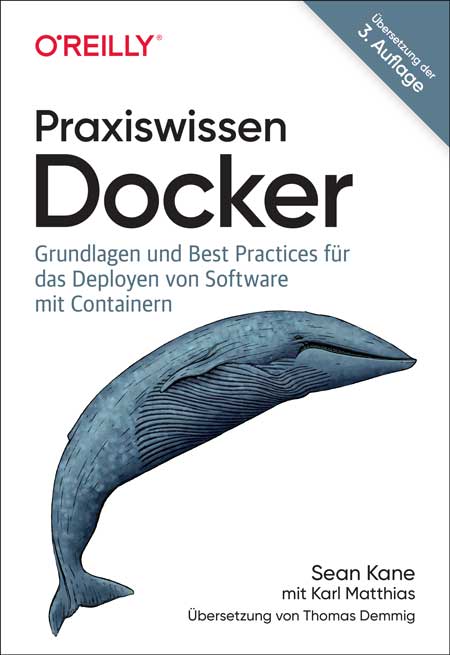
Praxiswissen Docker (3. Auflg.)
Praxiswissen Docker. Grundlagen und Best Practices für das Deployen von Software mit Containern. (Januar 2024)Docker und Linux-Container haben die Art und Weise, wie Unternehmen Software entwickeln, bereitstellen und ausführen, grundlegend verändert. Daher ist es wichtig zu verstehen, was diese Tools genau leisten und wie Sie sie erfolgreich in das Ökosystem Ihres Unternehmens integrieren.Sean Kane und Karl Matthias haben dieses Handbuch vollständig überarbeitet und erweitert. Sie vermitteln Entwicklern, Ops, Architektinnen und IT-Managern ein umfassendes Verständnis von Docker und beschreiben, wie Container nahezu jeden Aspekt der modernen Softwarebereitstellung und -verwaltung verbessern können.Die Übersetzung der 3. US-Auflage dokumentiert die vielfältigen Möglichkeiten, die Docker ein Jahrzehnt nach der ersten Veröffentlichung bietet. Kane und Matthias beschreiben aktuelle Best Practices und neue Funktionen wie BuildKit, die Unterstützung von Multi-Architektur-Images, Rootless Container u.v.a.m.Behandelte Themen sind:Wie Docker und Linux-Container mit Cloud-Diensten und Kubernetes integriert werdenDas Erstellen von OCI-Images sowie die Bereitstellung und Verwaltung von Linux-Containern über leistungsstarke Befehlszeilen-ToolsWie OCI-Images das Dependency Management und den Deployment-Workflow für Anwendungen vereinfachenPraktische Techniken für das Deployment und Testen von Linux-Containern in der ProduktionContainer in der Produktion dort bereitstellen, wo sie benötigt werdenFortgeschrittene Themen einschließlich Deployment-Tools, Networking, Orchestrierung, Sicherheit und Konfiguration.Leseprobe (PDF-Link)
Conversational Artificial Intelligence
Conversational AI combines natural language processing (NLP) with traditional software like chatbots, voice assistants, or an interactive voice recognition system to help customers through either a spoken or typed interface. Conversational chatbots that respond to questions promptly and accurately to help customers are a fascinating development since they make the customer service industry somewhat self-sufficient. A well-automated chatbot can decimate staffing needs, but creating one is a time-consuming process. Voice recognition technologies are becoming more critical as AI assistants like Alexa become more popular. Chatbots in the corporate world have advanced technical connections with clients thanks to improvements in artificial intelligence. However, these chatbots’ increased access to sensitive information has raised serious security concerns. Threats are one-time events such as malware and DDOS (Distributed Denial of Service) assaults. Targeted strikes on companies are familiar and frequently lock workers out. User privacy violations are becoming more common, emphasizing the dangers of employing chatbots. Vulnerabilities are systemic problems that enable thieves to break in. Vulnerabilities allow threats to enter the system, hence they are inextricably linked. Malicious chatbots are widely used to spam and advertise in chat rooms by imitating human behavior and discussions, or to trick individuals into disclosing personal information like bank account details.ROMIL RAWAT, PHD, is an assistant professor at Shri Vaishnav Vidyapeeth Vishwavidyalaya, Indore. With over 12 years of teaching experience, he has published numerous papers in scholarly journals and conferences. He has also published book chapters and is a board member on two scientific journals. He has received several research grants and has hosted research events, workshops, and training programs. He also has several patents to his credit.RAJESH KUMAR CHAKRAWARTI, PHD, is a professor and the Dean of the Department of Computer Science & Engineering, Sushila Devi Bansal College, Bansal Group of Institutions, India. He has over 20 years of industry and academic experience and has published over 100 research papers and chapters in books.SANJAYA KUMAR SARANGI, PHD, is an adjunct professor and coordinator at Utkal University, Coordinator and Adjunct Professor, Utkal University, Bhubaneswar, India. He has over 23 years of academic experience and has authored textbooks, book chapters, and papers for journals and conferences. He has been a visiting doctoral fellow at the University of California, USA, and he has more than 30 patents to his credit.PIYUSH VYAS, PHD, is an assistant professor of computer information systems at Texas A&M University Central-Texas, USA. He has published numerous journal and conference articles in scholarly journals and conferences.MARY SOWJANYA ALAMANDA, PHD, is an associate professor in the Department of Computer Science and Systems Engineering at Andhra University College of Engineering, Visakhapatnam, India. She has four patents to her credit and has published more than 80 research publications in scholarly journals and conferences.KOTAGIRI SRIVIDYA, PHD, is an associate professor and Head of the Department of Computer Science at the GMR Institute of Technology, Rajam, India. He has 18 years of teaching experience.K. SAKTHIDASAN SANKARAN is a professor in the Department of Electronics and Communication Engineering at Hindustan Institute of Technology and Science, India. He is a reviewer and an editorial board member for several scholarly journals, and he has published more than 70 papers. He also has three books to his credit.Preface xxiii1 A Glance View on Cloud Infrastructures Security and Solutions 1Srinivasa Rao Gundu, Charanarur Panem and J. Vijaylaxmi2 Artificial Intelligence Effectiveness for Conversational Agents in Healthcare Security 17Ahmad Mateen Buttar and Abdul Hyee3 Conversational AI: Security Features, Applications, and Future Scope at Cloud Platform 31Ahmad Mateen Buttar, Faisal Shahzad and Uzma Jamil4 Unsupervised BERT-Based Granular Sentiment Analysis of Literary Work 59N. Shyamala Devi and K. Sharmila5 Extracting and Analyzing Factors to Identify the Malicious Conversational AI Bots on Twitter 71Gitika Vyas, Piyush Vyas, Prathamesh Muzumdar, Anitha Chennamaneni, Anand Rajavat and Romil Rawat6 Evolution and Adoption of Conversational Artificial Intelligence in the Banking Industry 85Neha Aggarwal and Kriti Bhaswar Singh7 Chatbots: Meaning, History, Vulnerabilities, and Possible Defense 95Divya Nair8 Conversational Chatbot-Based Security Threats for Business and Educational Platforms and Their Counter Measures 107Hriakumar Pallathadka, Domenic T. Sanchez, Larry B. Peconcillo, Jr., Malik Jawarneh, Julie Anne T. Godinez and John V. De Vera9 Identification of User Preference Using Human–Computer Interaction Technologies and Design of Customized Reporting for Business Analytics Using Ranking Consistency Index 127Martin Aruldoss, Miranda Lakshmi Travis and Prasanna Venkatesan Venkatasamy10 Machine Learning for Automatic Speech Recognition 147Hrishitva Patel, Ramakrishnan Raman, Malik Jawarneh, Arshiya S. Ansari, Hriakumar Pallathadka and Domenic T. Sanchez11 Conversational Artificial Intelligence at Industrial Internet of Things 169Dhirendra Siddharth, DilipKumar Jang Bahadur Saini, Mummadi Ramchandra and Summathi Loganathan12 Performance Analysis of Cloud Hypervisor Using Network Package Workloads in Virtualization 185J. Mary Ramya Poovizhi and R. Devi13 Evaluation of Chabot Text Classification Using Machine Learning 199P. Kumaraguru Diderot, K. Sakthidasan Sankaran, Malik Jawarneh, Hriakumar Pallathadka, José Luis Arias-Gonzáles and Domenic T. Sanchez14 Enhanced Security in Chatbot 219Ambika N.15 Heart Disease Prediction Using Ensemble Feature Selection Method and Machine Learning Classification Algorithms 237A. Lakshmi and R. Devi16 Conversational AI: Dialoguing Most Humanly With Non-Humans 249Rehan Khan, Shadab Pasha Khan and Syed Adnan Ali17 Counterfeit Pharmaceutical Drug Identification 269Sajidha S. A., Aakif Mairaj, Amit Kumar Tyagi, A. Vijayalakshmi, Nisha V. M., Siddharth Nair, C.K.M. Ganesan, Ram Gunasekaran and Hitarth Menon18 Advanced Security Solutions for Conversational AI 287Ranjana Sikarwar, Harish Kumar Shakya, Ajay Kumar and Anjali Rawat19 Security Threats and Security Testing for Chatbots 303Domenic T. Sanchez and Rodel S. Sartagoda20 ChatBot-Based Next-Generation Intrusion Detection System 319Tzu-Chia Chen21 Conversational Chatbot With Object Recognition Using Deep Learning and Machine Learning 335A. Mahesh Babu, Malik Jawarneh, José Luis Arias-Gonzáles, Meenakshi, Kishori Kasat and K.P. Yuvaraj22 Automatic Speech Recognition Design Modeling 353Babu Rao.K, Bhargavi Mopuru, Malik Jawarneh, José Luis Arias-Gonzáles, Samuel-Soma M. Ajibade and P. Prabhu23 The Future of Modern Transportation for Smart Cities Using Trackless Tram Networks 369Samson Arun Raj A. and Yogesh P.24 Evaluating the Performance of Conversational AI Tools: A Comparative Analysis 385Deepika Chauhan, Chaitanya Singh, Romil Rawat and Manoj Dhawan25 Conversational AI Applications in Ed-Tech Industry: An Analysis of Its Impact and Potential in Education 411Deepika Chauhan, Chaitanya Singh, Romil Rawat and Mukesh Chouhan26 Conversational AI: Introduction to Chatbot's Security Risks, Their Probable Solutions, and the Best Practices to Follow 435Vivek Bhardwaj, Balwinder Kaur Dhaliwal, Sanjaya Kumar Sarangi, T.M. Thiyagu, Aruna Patidar and Divyam Pithawa27 Recent Trends in Pattern Recognition, Challenges and Opportunities 459S. Kannadhasan and R. Nagarajan28 A Review of Renewable Energy Efficiency Technologies Toward Conversational AI 477S. Kannadhasan and R. Nagarajan29 Messaging Apps Vulnerability Assessment Using Conversational AI 495Tzu-Chia Chen30 Conversational AI Threat Identification at Industrial Internet of Things 513Boussaadi Smail, Meenakshi, José Luis Arias-Gonzáles, Malik Jawarneh, P. Venkata Hari Prasad and Harikumar Pallathadka31 Conversational AI—A State-of-the-Art Review 533Vivek Bhardwaj, Mukesh Kumar, Divyani Joshi, Ankita Chourasia, Bhushan Bawaskar and Shashank Sharma32 Risks for Conversational AI Security 557Vivek Bhardwaj, Safdar Sardar Khan, Gurpreet Singh, Sunil Patil, Devendra Kuril and Sarthak Nahar33 Artificial Intelligence for Financial Inclusion in India 589Samir Xavier Bhawnra and K.B. Singh34 Revolutionizing Government Operations: The Impact of Artificial Intelligence in Public Administration 607Aman Kumar Mishra, Amit Kumar Tyagi, Sathian Dananjayan, Anand Rajavat, Hitesh Rawat and Anjali Rawat35 Conversational AI and Cloud Platform: An Investigation of Security and Privacy 635V. Durga Prasad Jasti, Devabalan Pounraj, Malik Jawarneh, Meenakshi, P. Venkata Hari Prasad and Samrat Ray36 Chatbot vs Intelligent Virtual Assistance (IVA) 655Ajit Noonia, Rijvan Beg, Aruna Patidar, Bhushan Bawaskar, Shashank Sharma and Hitesh Rawat37 Digital Forensics with Emerging Technologies: Vision and Research Potential for Future 675Anand Kumar Mishra, V. Hemamalini and Amit Kumar Tyagi38 Leveraging Natural Language Processing in Conversational AI Agents to Improve Healthcare Security 699Jami Venkata Suman, Farooq Sunar Mahammad, M. Sunil Kumar, B. Sai Chandana and Sankararao Majji39 NLP-Driven Chatbots: Applications and Implications in Conversational AI 713A. Mary Sowjanya and Kotagiri SrividyaReferences 724About the Editors 727Index 729

Windows 11 für Senioren (5. Auflg.)
Der Lernkurs für Späteinsteiger – mit extra großer Schrift und vielen Merkhilfen.Windows 11 mühelos Bild für Bild und Schritt für Schritt kennenlernen! Das wünschen sich sicher nicht nur Einsteiger der sogenannten Generation 50 plus. Diese Anleitung zum aktuellen Windows-Betriebssystem ist sehr verständlich geschrieben. Zahlreiche Kurzzusammenfassungen, Merkhilfen und Hinweise zur Sicherheit sowie zu möglichen Stolperfallen machen den Lernkurs zu einem Vergnügen für alle, die sich Windows und seine vielfältigen Möglichkeiten ohne weitere Hilfe aneignen möchten. In extra großer Schrift und in Farbe.Aus dem Inhalt:Neueinsteigen oder von Windows 10 wechselnWindows 11 sicher anwendenWichtige Einstellungen vornehmenApps und Programme nutzenDokumente gestalten und druckenKontakte, Termine und das Wetter im BlickFotoalben und Diashows erstellenVideogespräche und Chats mit TeamsDateien ordnen und Daten schützenSicher im Internet surfenE-Mails schreiben und versendenKünstliche Intelligenz in Windows 11 nutzenLeseprobe (PDF-Link)

Grundlagenwissen der Software-Entwicklung
Das Buch erklärt wichtige Begriffe der modernen Software-Entwicklung. Sämtliche Ausführungen betrachten das jeweilige Thema aus Sicht eines Managers mit Fokus auf die Bedeutung im unternehmerischen Prozess der Entwicklung einer Software und weniger aus der Perspektive eines Programmierers. Die vermittelten Kenntnisse dienen als Basis, um technologische Probleme in ihrer Schwere und Komplexität erfassen und Entscheidungen in ihrer Auswirkung einschätzen zu können. Zudem ermöglicht das dargebotene Grundwissen eine unmissverständliche und reibungslose Kommunikation zwischen IT-Fachkräften und der Zielgruppe der Manager. Das Werk beschränkt sich nicht nur auf eine Zusammenfassung aller wichtigen Fakten zu einem Thema, sondern vermittelt auch den Umgang in der Praxis und damit verbundene Vor- und Nachteile bzw. potentielle Gefahren.PHILIPP WINNIEWSKI absolvierte 2016 sein Masterstudium im Fach Informatik an der Julius-Maximilians-Universität Würzburg. Anschließend war er als Entwickler in einem mittelständischen Software-Unternehmen tätig. Dort sammelte er nicht nur Erfahrung in Sachen Programmierung, sondern war für interne und externe Projekte verantwortlich, leitete Teams und entwickelte Lösungen in enger Zusammenarbeit mit Großkunden. 2019 gründete er nebenberuflich sein eigenes Unternehmen Frequture, dem er sich inzwischen ganz widmet und über welches er Software-Lösungen und diverse IT-Dienstleistungen wie Consulting anbietet.Agile Software-Entwicklung - API - Architektur - Automation - Betriebssystem - Breaking-Change - Bugs - Bus - Bus-Faktor - Clean Coding - Cloud - Code-Monkey - Code-Review - Compiling - Computer - Cookies - Daten und Informationen - Datenbank - Deadlock - Deployment - Einrichtungszeit und Kontextwechsel - Entwicklungs-Team - Entwurfsmuster - Exception - Framework - Frontend und Backend - GUI - Hacking und Attacken - IDE - IP und Ports - ISO/OSI - JSON - Kodierung - Komplexität - LaTeX - Laufzeit - Logik - Machine-Learning - Methoden und Funktionen - Pair-Programming - Performanz gegen Persistenz - Programmieren nach Vertrag - Programmiersprache - Redundanz - Refaktorierung - Server - Stack Overflow - Technische Schulden - Technischer Overhead - Technologie-Stack - Testen - Threads - UML - UUID und GUID - Verschlüsselung - Versionskontrolle - Virtualisierung - Warteschlange - WYSIWYG - XML
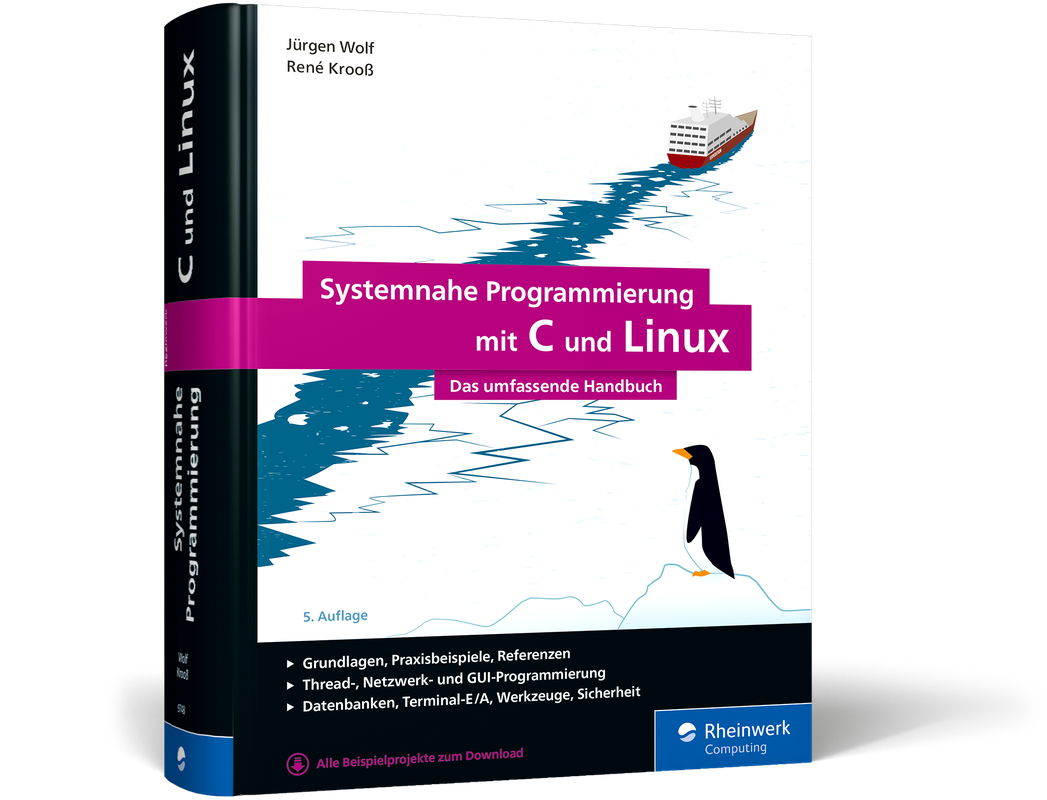
Systemnahe Programmierung mit C und Linux (5. Auflg.)
Das umfassende Handbuch in 5. aktualisierter Auflage aus Januar 2024.Alles zur systemnahen Programmierung unter Linux! Von E/A-Funktionen, dem Zugriff auf Systeminformationen über Prozesse, Signale und Threads bis hin zu Netzwerkprogrammierung, Datenbanken und GUIs. Entwickler*innen mit soliden Kenntnissen von Linux-Betriebssystemen und der Sprache C kommen hier voll auf ihre Kosten. Alle Beispiele sind auch auf dem Raspberry Pi ausführbar.Zum Inhalt:E/A-FunktionenDämonen, Zombies und ProzesseThreadsIPC – InterprozesskommunikationNetzwerkprogrammierungMySQL und PostgreSQLGUI-Programmierung mit GTKWerkzeuge für ProgrammiererLeseprobe (PDF-Link)Zu den Autoren:Jürgen Wolf ist Softwareentwickler und Autor aus Leidenschaft. Er programmiert seit Jahren auf Linux- und Unix-Systemen.René Krooß ist Diplom-Informatiker, begeisterter Programmierer und Experte für Prozessorstrukturen, Betriebssysteme, Hardware-Programmierung und Algorithmen.

Archicad 27
* MIT VIELEN KONSTRUKTIONSBEISPIELEN AUS DER PRAXIS* EINFüHRUNG IN DIE WICHTIGSTEN BEDIENELEMENTE* ZAHLREICHE Ã?BUNGSFRAGEN MIT LöSUNGENDieses Grundlagen- und Lehrbuch zeigt Ihnen anhand typischer Konstruktionsaufgaben aus Studium und Berufsleben die Möglichkeiten von Archicad 27. Der Autor richtet sich dabei insbesondere an Archicad-Neulinge, die Wert auf einen praxisnahen Einstieg legen. Alle Elemente und Befehle erlernen Sie anhand von Beispielen.Sie beginnen mit der Konstruktion eines einfachen Grundrisses, um die generelle Arbeitsweise und die grundlegenden Schritte einzuüben. Dabei lernen Sie die Benutzeroberfläche, die Eingabemöglichkeiten für Koordinaten sowie den Einsatz von Fanghilfen, Fangpunkten und Hilfslinien kennen. Dann demonstriert der Autor die Architektur-Elemente (Wände, Fenster, Eckfenster u.v.m.) im Grundriss und im 3D-Fenster.Weiterhin berücksichtigt er die Möglichkeiten für grafische Ã?berschreibungen und die Regeln für Schichtaufbau und Verschneidungen bei Wänden, Decken, Dächern und Schalen. Zusätzlich wird der HKLSE-Modeler kurz vorgestellt.Ein Schwerpunkt liegt auf der Einübung von Bearbeitungsbefehlen, insbesondere der Nutzung von Pet-Paletten, die automatisch durch Markieren von Elementen aktiviert werden und dann ganz spezifische Ã'nderungsaktionen anbieten. In weiteren Bearbeitungsschritten lernen Sie, die Konstruktion durch Hinzufügen von individuellen und automatischen BemaÃ?ungen zu ergänzen sowie Schnitte und Ansichten zu erzeugen. Auch das Vorgehen zum Erstellen und zur Auswahl von Varianten wird beschrieben.Um Ihr Projekt eindrucksvoll zu präsentieren, erstellen Sie schlieÃ?lich fotorealistische Visualisierungen.Am Ende jedes Kapitels finden Sie Ã?bungsfragen mit dazugehörigen Lösungen im Anhang. Im letzten Kapitel wird abschlieÃ?end als Beispiel ein Einfamilienhaus mit dokumentierten Befehlseingaben konstruiert.AUS DEM INHALT:* Schnelleinstieg mit dokumentiertem Beispiel* Benutzeroberfläche: Wichtigste Paletten, das Pfeil-Werkzeug und Ansichtsmanipulationen* Positionen eingeben: Koordinaten, Tracker, Punkte* Dynamische Hilfslinien, relative Konstruktionsmethoden* 2D-Zeichnen* Werkzeuge: Wand, Fenster, Tür, Decke, Dach, Schale, Ã-ffnungen, Stützen mit Segmenten, Träger mit Segmenten und Biegung, Freiflächen, Geländer, Treppe mit Kopffreiheit, Fassade mit eigenen Mustern, Morph-Elemente etc.* Bearbeitungsfunktionen: Menüs, Kontextmenüs, Pet-Paletten* BemaÃ?ung, Text* Zeichnungsstruktur, Raumstempel, Listen* Schnitte, Ansichten, Innenansichten, Details, 3D-Dokumente und Variantenmanagement* Plot, Druck, grafische Ã?berschreibungen* Realistische Bilder, Animationen, Sonnenstudien* Ã?bersichten über Menüs, Paletten und Symbolleisten* Praxisbeispiel: Einfamilienhaus* Ã?bungsfragen mit AntwortenDetlef Ridder hat bereits zahlreiche Bücher zu AutoCAD, Inventor, Revit und Archicad veröffentlicht und gibt Schulungen zu diesen Programmen und im Bereich CNC.
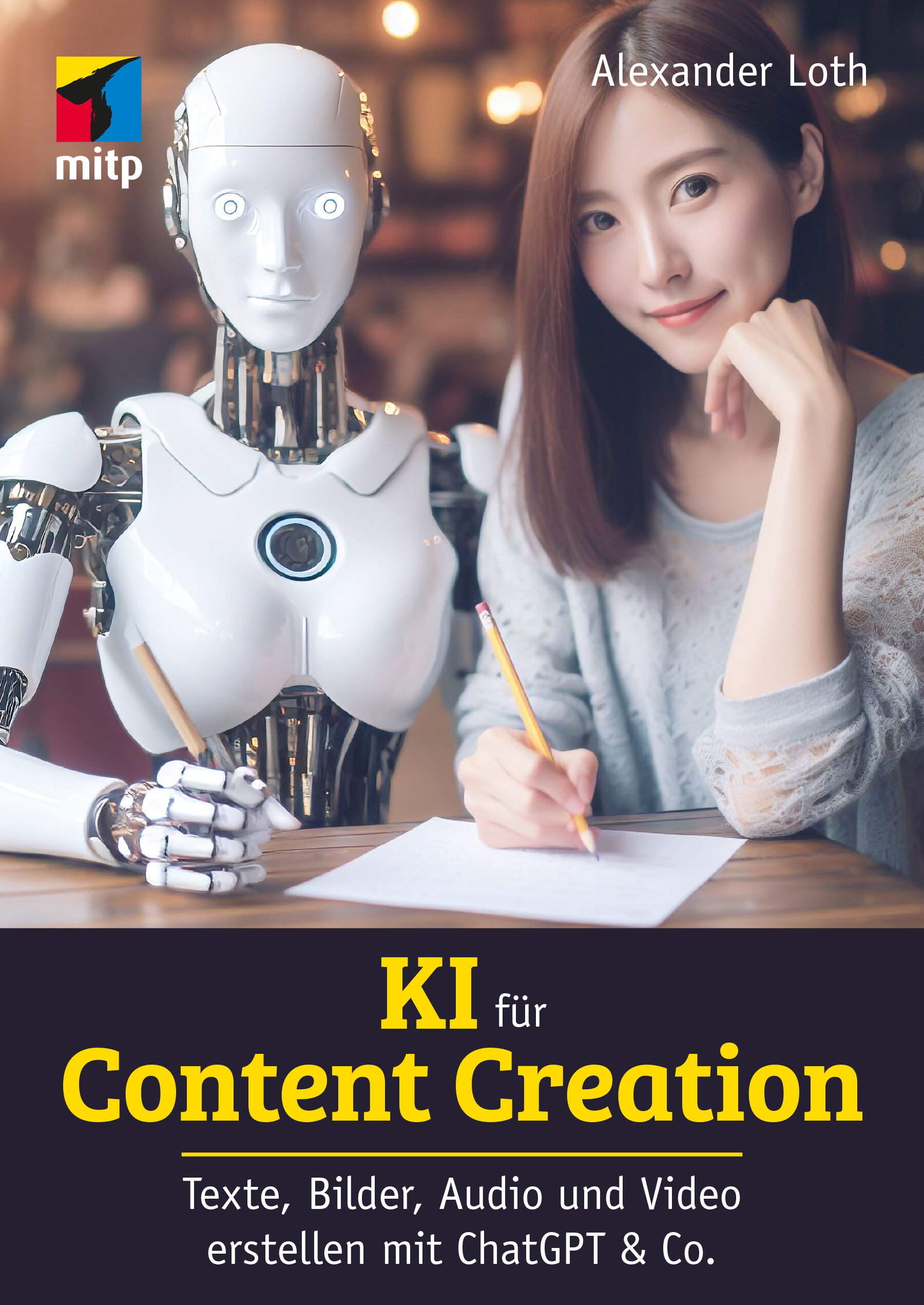
KI für Content Creation
Texte, Bilder, Audio erstellen mit ChatGPT & Co.Mit KI-Tools wie ChatGPT und Co. ist Content Creation um ein Vielfaches einfacher geworden – zumindest wenn man weiß, wie diese Tools effektiv eingesetzt werden können.Alexander Loth erläutert detailliert, wie Sie mit KI-Tools arbeiten können, so dass diese Ihnen dabei helfen, schnell guten Content zu erstellen. Dabei kommt es darauf an zu wissen, wie Sie mit Prompts arbeiten, die den KI-Tools möglichst genau vorgeben, was sie tun sollen, damit sie gute und möglichst hilfreiche Ergebnisse liefern.ChatGPT kann z.B. nicht nur beim Erstellen von Texten helfen, sondern in den gesamten Workflow des Schreibens integriert werden und auch beim Strukturieren, bei Überschriften und vielem mehr helfen. So können Sie sich auch dabei helfen lassen, eine Pressemitteilung in einen Blogpost und davon ausgehend weiter in einen Social-Media-Beitrag umzuschreiben.KI-Tools können auch hervorragend in den Content-Marketing-Prozess und in eine bestehende Content-Marketing-Strategie integriert werden.Außerdem zeigt Loth anhand verschiedener Beispiele, welche Ergebnisse Sie von verschiedenen KI-Bildgeneratoren wie DALL-E, Midjourney, Adobe Firefly und Stable Diffusion erwarten können. Des Weiteren erläutert er hilfreiche Tools zum Erstellen von Audio und Video.Sie finden zahlreiche praxisnahe Anwendungen und reale Fallstudien sowie vor allem konkrete Tools, Beispiele und Strategien, die Sie sofort anwenden können.Das Buch richtet sich an alle Content-Ersteller: von freiberuflichen Kreativen über Marketingexperten und PR-Agenturen bis hin zu Unternehmern, die KI-Tools effektiv für die Content-Erstellung nutzen wollen.Über den Autor:Alexander Loth kommt aus der datenintensiven Kernforschung und arbeitet für Microsoft. Er hat unter anderem einen MBA von der Frankfurt School of Finance & Management und war als Data Scientist am CERN, sowie in der Software-Entwicklung bei SAP tätig. In den letzten Jahren hat er sich auf die Bereiche Digital Transformation, Künstliche Intelligenz, Machine Learning und Business Analytics spezialisiert und berät Unternehmen bei ihrer digitalen Transformation. Alexander Loth hat nicht nur die Anerkennung der Fachpresse erhalten – die BNN bezeichneten ihn als "den Daten-Verarbeiter" – sondern wurde auch von Brandwatch als einer der einflussreichsten Autoren im Kontext der Digitalen Transformation gewürdigt.

AI for Good
DISCOVER HOW AI LEADERS AND RESEARCHERS ARE USING AI TO TRANSFORM THE WORLD FOR THE BETTERIn AI for Good: Applications in Sustainability, Humanitarian Action, and Health, a team of veteran Microsoft AI researchers delivers an insightful and fascinating discussion of how one of the world’s most recognizable software companies is tacking intractable social problems with the power of artificial intelligence (AI). In the book, you’ll learn about how climate change, illness and disease, and challenges to fundamental human rights are all being fought using replicable methods and reusable AI code.The authors also provide:* Easy-to-follow, non-technical explanations of what AI is and how it works* Examinations of how healthcare is being improved, climate change is being addressed, and humanitarian aid is being facilitated around the world with AI* Discussions of the future of AI in the realm of social benefit organizations and effortsAn essential guide to impactful social change with artificial intelligence, AI for Good is a must-read resource for technical and non-technical professionals interested in AI’s social potential, as well as policymakers, regulators, NGO professionals, and, and non-profit volunteers.

Interfaceless
Explore the possibilities spatial computing and its integration with AI can provide beyond the confines of a traditional user interface. Spatial computing brings together physical and virtual worlds and systems. This book offers an insightful journey into harmonizing user-centered design with the vast potential of AI in spatial computing.You'll start by exploring key concepts and processes in relation to conscious design and traditional computer interfaces. You'll then be introduced to the Mindful Spatial Design Framework (MSDF) and the rapidly evolving world of generative AI and its potential to transform design processes.Once the key concepts are mastered, you'll start to put them into practice and see how to design, prototype, and test interfaceless systems and environments that are seamless and user-friendly. In doing so you'll consider topics such as functionality and aesthetics, as well as how AI can improve automation and testing. The book concludes by looking at ethical AI considerations and best practices as well as looking at next steps and future developments of spatial computing and interfaceless design.As these invisible interfaces become more prevalent, understanding the key principles of conscious design is pivotal. Interfaceless will expand your knowledge base in these areas.WHAT YOU'LL LEARN* Incorporate conscious design principles in spatial computing projects.* Leverage AI to enhance UX in spatial contexts.* Develop strategies to address design challenges as we move beyond physical interfaces.* See how VR/XR apps, devices, and generative AI are rapidly changing how we perceive and interact with the digital realm.WHO THIS BOOK IS FORUX/UI designers, developers, and tech enthusiasts eager to grasp the future of HCI.Diana Olynick stands at the crossroads of design, engineering and spatial computing innovation. As a registered Professional Engineer, she brings a blend of technical acumen and design creativity to the XR field with over a decade of experience. Beyond academia, Diana's voice has resonated globally, with invitations to speak at several esteemed international conferences. She has dedicated herself to educating the next generation, guiding them through the intricacies of spatial computing and conscious design. Her ability to deconstruct and demystify complex XR topics for a wide audience sets her apart. In a rapidly evolving digital landscape, Diana is a leader fostering the transformative potential of interfaceless design.Diana’s educational contributions can be found at: https://www.dianaolynick.comChapter 1: Setting the Stage for the 'Interfaceless' Future.- Chapter 2: Exploring Generative AI and Its Transformative Power.- Chapter 3: Principles of Mindful and Conscious Design.- Chapter 4: The Evolving Role of AI: Automation and Beyond.- Chapter 5: Complexity, Simplicity, and True Minimalism.- Chapter 6: A Deep Dive into Interfaceless Environments.- Chapter 7: From Theory to Practice: Implementing 'Interfaceless' Designs.- Chapter 8: Ethical Design in an AI-Driven World.- Chapter 9: The Road Ahead: Predictions and Preparations.- Chapter 10: Concluding Thoughts and the Future Vision.- Appendix A: Resources and Tools for 'Interfaceless' Design.- Appendix B: Glossary of AI, Design and Key Terms.- Appendix C: Resources for Further Learning.- Appendix B: References.
Ethik künstlicher Intelligenz
Künstliche Intelligenz ist zum vielschichtigen Gegenstand ethischer Debatten geworden. Ob Richtlinien fairer Digitalisierung und vertrauenswürdiger Algorithmen, Gestaltung nachhaltiger Geschäftsmodelle, informatische Grundbildung in Schulen oder Existenzfragen freiheitlich-demokratischer Gesellschaften – KI-Ethik steht vor komplexen Herausforderungen. Grundsätzlicher Klärungsbedarf entsteht durch die verschiedenen Zugänge, Interessen und Begrifflichkeiten, die aufeinandertreffen. Vorliegendes essential präsentiert auf zugängliche Weise wissenschaftliches Überblickswissen zur KI-Ethik. Als praktische Orientierungshilfe im komplexen Terrain dient eine thematische Topographie, einschließlich zentraler Begriffe. Zusammenhänge zwischen Industrie 5.0, Regulierung, Post- und Transhumanismus, selbstfahrenden Autos, moralischen Maschinen, nachhaltiger Digitalisierung oder dem Anthropozän werden mit Blick auf KI-Ethik systematisch sichtbar gemacht. KI-Ethik populär: Debatte und Science Fiction. KI-Ethik wissenschaftlich: Philosophie und Transdisziplinarität. KI-Ethik zentral: Regulierung und Policy Making. KI-Ethik dezentral: Datensouveränität und Lebenskunst. KI-Ethik designt: Informatik und Verantwortung. KI-Ethik kontrovers: Moralische Maschinen und strittiger Humanismus. KI-Ethik resilient: Ökologie und Sicherheitsarchitekturen. KI-Ethik gebildet: Medien und soziale Innovation. KI-Ethik wirtschaftlich: Geschäftsmodelle und Technikakzeptanz. KI-Ethik zukünftig: Orientierung und Zweifel. UNIV.-ASS. DR. MICHAEL FUNK forscht an der Fakultät für Informatik der Universität Wien zur Technikethik und leitet die Vorlesung „Informatik und Gesellschaft“.

Fighting Phishing
KEEP VALUABLE DATA SAFE FROM EVEN THE MOST SOPHISTICATED SOCIAL ENGINEERING AND PHISHING ATTACKSFighting Phishing: Everything You Can Do To Fight Social Engineering and Phishing serves as the ideal defense against phishing for any reader, from large organizations to individuals. Unlike most anti-phishing books, which focus only on one or two strategies, this book discusses all the policies, education, and technical strategies that are essential to a complete phishing defense. This book gives clear instructions for deploying a great defense-in-depth strategy to defeat hackers and malware. Written by the lead data-driven defense evangelist at the world's number one anti-phishing company, KnowBe4, Inc., this guide shows you how to create an enduring, integrated cybersecurity culture.* Learn what social engineering and phishing are, why they are so dangerous to your cybersecurity, and how to defend against them* Educate yourself and other users on how to identify and avoid phishing scams, to stop attacks before they begin* Discover the latest tools and strategies for locking down data when phishing has taken place, and stop breaches from spreading* Develop technology and security policies that protect your organization against the most common types of social engineering and phishingAnyone looking to defend themselves or their organization from phishing will appreciate the uncommonly comprehensive approach in Fighting Phishing.ROGER A. GRIMES has 35 years of experience in computer security and has authored 13 previous books on the topic. He is the Data-Driven Defense Evangelist at KnowBe4, a security awareness education company, and a senior computer security consultant and cybersecurity architect.
Technische Probleme lösen mit C/C++ (6. Auflg.)
Technische Probleme lösen mit C+/C++. Von der Analyse bis zur Dokumentation. In 6., aktualisierter und erweiterter Auflage. Januar 2024. Anhand von konkreten Beispielen aus dem technisch-wissenschaftlichen und mathematischen Bereich vermittelt dieses Lehrbuch Programmier- und Dokumentationstechniken mit C/C++. Aufbauend auf einer gut verständlichen und fundierten Einführung in die Arbeit mit C/C++ geht es Schritt für Schritt zur professionellen Softwareentwicklung.Die Probleme sind nach steigendem Schwierigkeitsgrad geordnet - von einfachen Anwendungen wie der Reihung von Widerständen bis hin zu komplexen Fragestellungen aus der Schaltalgebra. Vorkenntnisse sind nicht erforderlich. Sie lösen unter anderem Probleme wie die Umrechnung von Temperatursystemen oder die Programmierung eines eigenen Funktionsplotters. Die Beispiele werden mit Microsoft Visual C++ umgesetzt, das kostenlos verfügbar ist. Auf plus.hanser-fachbuch.de finden Sie zu diesem Titel die im Buch dargestellten Codebeispiele zum Download.Für die Neuauflage wurde das gut eingeführte Lehrbuch aktualisiert und um weitere Beispiele ergänzt.Die gut verständliche Einführung und die vielen technischen Beispiele machen dieses Lehrbuch zum idealen Begleiter für Fachschüler:innen und Bachelor-Studierende. Dipl.-Math. Norbert Heiderich arbeitet als Lehrer u.a. für Programmierung am Berufskolleg des Kreises Kleve in Kleve.Dipl.-Ing. Wolfgang Meyer war Leiter des Heinz-Nixdorf-Berufskollegs. Er unterrichtete Datenverarbeitungstechnik und Programmieren. Er ist Beauftragter für Ingenieur-Studiengänge der FOM Hochschule.Leseprobe (PDF-Link)

Java Schritt für Schritt
Die Programmiersprache Java von Anfang bis Ende durchzuarbeiten und zu erlernen scheint für viele Studierende eine große Hürde zu sein. Nicht mit diesem Arbeitsbuch. Es führt Schritt für Schritt und leicht verständlich in die Programmiersprache ein. Das Buch umfasst 14 Kapitel: Einführung in Java; Variablen, Datentypen, Operatoren; Kontrollstrukturen; Felder / Arrays; Methoden; Sichtbarkeit / Gültigkeit; Objektorientierte Konzepte; Ausnahmen / Exceptions; Zeichenketten / Strings; Lineare Datenstrukturen; Datenströme / Streams; Datenbanken mit Java; Graphische Benutzeroberflächen mit Swing: Einführung; komplexere Oberflächen. Zahlreiche Übersichten und Zusammenfassungen erleichtern das Verständnis. utb+: Begleitend zum Buch steht den Leser:innen ein eLearning-Kurs für die Prüfungsvorbereitung zur Verfügung. Erhältlich über utb.de.Prof. Dr. Marcus Deininger lehrt Informatik an der Hochschule für Technik Stuttgart.Prof. Dr. Thomas Kessel lehrt Wirtschaftsinformatik an der Dualen Hochschule Baden-Württemberg in Stuttgart.VorwortInhaltsübersichtInhaltsverzeichnisSchritt 1: Einführung in JavaSchritt 2: Variablen, Datentypen, OperatorenSchritt 3: KontrollstrukturenSchritt 4: Felder / ArraysSchritt 5: MethodenSchritt 6: Sichtbarkeit / GültigkeitSchritt 7: Objektorientierte KonzepteSchritt 8: Ausnahmen / ExceptionsSchritt 9: Zeichenketten / StringsSchritt 10: Lineare DatenstrukturenSchritt 11: Datenströme / StreamsSchritt 12: Datenbanken mit JavaSchritt 13: Graphische Benutzeroberflächen mit Swing: EinführungSchritt 14: Graphische Benutzeroberflächen mit Swing: komplexere OberflächenStichwortverzeichnisSchritt 1: Einführung in Java1.1 Historie1.2 Begriffe1.3 Besonderheiten von Java1.4 Konventionen und Notationen1.5 Das erste Java-ProgrammSchritt 2: Variablen, Datentypen, Operatoren2.1 Datentypen2.2 OperatorenSchritt 3: Kontrollstrukturen3.1 Anweisungen3.2 Sequenz3.3 Auswahl3.4 Schleifen / WiederholungenSchritt 4: Felder / Arrays4.1 Werte in Arrays anordnenSchritt 5: Methoden5.1 Anweisungen in Methoden zusammenfassenSchritt 6: Sichtbarkeit / Gültigkeit6.1 Java-Komponenten6.2 Das Geheimnisprinzip und Zugriffsmodifier6.3 Qualifikation und Import6.4 Gültige und sichtbare Elemente6.5 Innere ElementeSchritt 7: Objektorientierte Konzepte7.1 Klassen und Objekte7.2 Erweiterung / Vererbung7.3 Abstrakte Klassen und Methoden7.4 Schnittstellen / Interfaces7.5 Aufzählungstypen / Enumerations7.6 Polymorphismus7.7 Best Practices der objektorientierten ProgrammierungSchritt 8: Ausnahmen / Exceptions8.1 Ausnahmen auslösen und behandelnSchritt 9: Zeichenketten / Strings9.1 Die Klassen String und StringBuilder9.2 Erzeugung von Strings9.3 Vergleich von Strings9.4 Extraktion von Zeichen oder Teilstrings9.5 Umwandeln von Strings9.6 Umwandlung von elementaren Datentypen in Strings9.7 Verarbeitung von Zeichenketten mit der Klasse StringBuilderSchritt 10: Lineare Datenstrukturen10.1 Überblick10.2 Typisierung von Collections10.3 Das Interface Collection10.4 Die Liste / List10.5 Die Menge / Set10.6 Die Schlange / Queue10.7Der Keller / Stapel / Stack10.8 Die Assoziationsliste / MapSchritt 11: Datenströme / Streams11.1 Datenquellen und -senken11.2 Daten- und Stream-Arten11.3 Lesen und Schreiben von Strömen in Java11.4 Lesen und Schreiben von Byte-Strömen11.5 Lesen und Schreiben von Textdateien11.6 Lesen und Schreiben von Java-Daten11.7 Objekte speichern und lesenSchritt 12: Datenbanken mit Java12.1 Java und Datenbanken12.2 Relationale Datenbanken und SQL12.3 Datenbankzugriff mit JDBCSchritt 13: Graphische Benutzeroberflächen mit Swing: Einführung13.1 Benutzeroberflächen13.2 Aufbau von Swing-Oberflächen13.3 Einfache Widgets13.4 Interaktion mit WidgetsSchritt 14: Graphische Benutzeroberflächen mit Swing: komplexere Oberflächen14.1 Komplexere Oberflächen14.2 Übersicht über das Anwendungsbeispiel14.3 MVC: Trennung von Oberfläche und Anwendung14.4 Weitere Widgets: Auswahllisten14.5 Layout-Manager14.6 Strukturierung der Oberfläche14.7 Weitere WidgetsStichwortverzeichnis
Software-Metriken (2. Auflg.)
GUT GEMESSEN, SCHON GEWONNEN- Erfahren Sie, wie Software in den drei Dimensionen Quantität, Komplexität und Qualität gemessen werden kann.- Lernen Sie Methoden zur besseren Planung, Schätzung und Steuerung von Softwareprojekten kennen.- Profitieren Sie von vielfach in der Praxis bewährten Software- und Projekt-Metriken.- Die zahlreichen Beispiele, Tipps und Best Practices aus der Erfahrung der Autoren helfen Ihnen, diese auf ihre Projekte anzuwenden.- Neu in der 2. Auflage: Berücksichtigung aktueller Entwicklungen im Bereich der Metriken und deren Bedeutung in DevOps und Agilität.Metriken und Messgrößen werden in der Regel verwendet, um einen Zustand, Mengen und Volumina, physikalische und zeitliche Größen, Relationen, Abweichungen und Veränderungen zu ermitteln. Aus den Ergebnissen kann man den Ist-Zustand und die Vergangenheit bewerten und Ableitungen für die Zukunft ziehen. Die Software- und Projekt-Metriken in diesem Buch helfen in vielen Situationen, ein tieferes Verständnis der Ausganglage und fundierte Informationen für die Planung und Steuerung von traditionellen und agilen Softwareprojekten zu gewinnen. Für die Wartung oder Weiterentwicklung eines Softwaresystems oder dessen Neuentwicklung ist eine gute Bestandsaufnahme und Bewertung der Software eine wichtige Entscheidungsgrundlage. Das Wissen um die eigene Produktivität und Effizienz auf der Basis verlässlicher Informationen ist essenziell für die Optimierung der gewählten Vorgehensweise.In diesem Praxisbuch finden Sie Methoden und Metriken, um Softwareartefakte von den Anforderungen über das Softwaredesign und den Code bis hin zu den Testmitteln in den drei Dimensionen Quantität, Komplexität und Qualität zu messen und zu bewerten. Sie helfen Ihnen, Projekte besser zu gestalten, einen Überblick über Produkte und Legacy-Systeme zu erhalten und den Projektfortschritt besser zu verwalten.AUS DEM INHALT //- Softwaremessung- Softwarequantität- Softwarekomplexität- Die Messung der Softwarequalität- Anforderungsmessung- Entwurfsmessung- Codemetrik- Testmetrik- Produktivitätsmessung in der Softwareentwicklung- Die Messung der Wartungsproduktivität- Softwaremessung in der Praxis Richard Seidl ist seit über 20 Jahren als Softwaretest-Experte und Agile Quality Coach in Deutschland und Österreich tätig.Manfred Baumgartner ist seit Beginn seiner beruflichen Laufbahn im Bereich der Software-Qualitätssicherung tätig und arbeitet als Berater bei der Nagarro GmbH in Wien.Harry M. Sneed ist ein Pionier des Softwaretestens im deutschsprachigen Raum, wofür er auch mit dem Deutschen Preis für Softwarequalität ausgezeichnet wurde.

Scrum Think big (2. Auflg.)
SCRUM THINK B!G //- Vor welchen Herausforderungen steht das Management großer Projekte?- Wie sinnvoll sind agile Skalierungsschablonen?- Welche Voraussetzungen sollten für eine erfolgreiche Skalierung erfüllt sein?- Welche Skills brauchen Mitarbeitende in agilen Projekten?- Wie wird aus einem Projekt eine fraktal skalierte Organisation?- Neu in der 2. Auflage: wie Sie den passenden Rahmen für die agile Skalierung in Ihrer Organisation abstecken, mögliche Entwicklungspfade sowie neue Beispiele und Aktualisierungen.In kleinen Teams hat sich Scrum als Weg für die erfolgreiche Produktentwicklung längst etabliert. Doch jetzt geht es um andere Dimensionen: Unter dem Druck der Digitalisierung wollen Unternehmen die Erfahrungen aus agilen Pilotprojekten auf immer größere Teile der Organisation übertragen. Agile Skalierungsframeworks versprechen schnelle und einfache Lösungen, doch diese vorgefertigten Strukturen führen nicht zum eigentlichen Ziel: dem agilen Unternehmen.Boris Gloger und Carsten Rasche beschreiben in diesem Buch einen anderen Weg, der auf Praxiserfahrungen basiert. Bei der Skalierung von Scrum geht es nicht um die Multiplikation einer Methode, sondern um einen neuen Blick auf das große Projekt als fraktal skalierte Organisation. Gefragt sind entkoppelte Produktarchitekturen, das konsequente Denken aus Sicht der Kunden, das Projektmanagement- Office als umsichtiger Scrum Master, die Lust auf frische Skills, gestützt durch moderne Infrastrukturen. Und schließlich braucht es eine Führung, die ihre wichtigste Aufgabe darin sieht, Zusammenarbeit über alle Ebenen hinweg zu ermöglichen.AUS DEM INHALT //- Die Umfeldbedingungen des Skalierens- Kommunikations- und Produktarchitektur- Die passende Infrastruktur- Skills und Professionalität- Produktentwicklung- myScaled Agile – Toolbox für die individuelle Skalierung- Führung und Werte als Grundlage der fraktal skalierten Organisation- Der Weg zur fraktal skalierten Organisation Boris Gloger ist in der DACH-Region der bekannteste Proponent von Agilität. Mit seinem Team der borisgloger consulting GmbH bringt er Agilität in namhafte nationale und internationale Unternehmen.Carsten Rasche ist Berater bei der borisgloger consulting GmbH und begleitet Business-Transformationen von der strategischen Planung bis zur praktischen Umsetzung.