

Computer und IT
Beginning ReactJS Foundations Building User Interfaces with ReactJS
QUICKLY LEARN THE MOST WIDELY USED FRONT-END DEVELOPMENT LANGUAGE WITH EASE AND CONFIDENCEReact JS Foundations: Building User Interfaces with ReactJS - An Approachable Guide walks readers through the fundamental concepts of programming with the explosively popular front-end tool known as React JS. Written by an accomplished full-stack engineer, speaker, and community organizer, React JS Foundations teaches readers how to understand React and how to begin building applications with it. The book:* Explains and clarifies technical terminology with relevant and modern examples to assist people new to programming understand the language* Helps experienced programmers quickly get up to speed with React* Is stocked throughout with practical and applicable examples of day-to-day React workPerfect for beginner, intermediate, and advanced programmers alike, React JS Foundations will quickly bring you up to speed on one of the most useful and widely used front-end languages on the web today. You can start building your first application today. ABOUT THE AUTHORCHRIS MINNICK is an accomplished author, trainer, and web developer with experience working on web and mobile projects with both small and large companies. The companion website at www.reactjsfoundations.com provides code listings for each chapter, plus examples and downloads that can be used to test out the various ReactJS techniques in the book. Introduction XxviiCHAPTER 1: HELLO, WORLD! 1React without a Build Toolchain 1Interactive “Hello, World” with Create React App and JSX 7Summary 9CHAPTER 2: THE FOUNDATION OF REACT 11What’s in a Name? 11UI Layer 12Virtual DOM 13The Philosophy of React 14Thinking in Components 15Composition vs. Inheritance 15React Is Declarative 16React Is Idiomatic 17Why Learn React? 17React vs.... 18React vs. Angular 18React vs. Vue 19What React Is Not 19React Is Not a Web Server 20React Is Not a Programming Language 20React Is Not a Database Server 21React Is Not a Development Environment 21React Is Not the Perfect Solution to Every Problem 21Summary 21CHAPTER 3: JSX 23JSX Is Not HTML 23What Is JSX? 30How JSX Works 30Transpiler . . . Huh? 31Compilation vs. Transpilation 31JSX Transform 31Introducing Babel 31Eliminating Browser Incompatibilities 33Syntax Basics of JSX 33JSX Is JavaScript XML 33Beware of Reserved Words 33JSX Uses camelCase 33Preface Custom Attributes in DOM Elements with data-34JSX Boolean Attributes 34Use Curly Braces to Include Literal JavaScript 35Remember to Use Double Curly Braces with Objects 35Put Comments in Curly Braces 35When to Use JavaScript in JSX 36Conditionals in JSX 36Conditional Rendering with if/else and Element Variables 36Conditional Rendering with the && Operator 37Conditional Rendering with the Conditional Operator 38Expressions in JSX 38Using Children in JSX 40React Fragments 40Summary 41CHAPTER 4: ALL ABOUT COMPONENTS 43What Is a Component? 43Components vs. Elements 44Components Define Elements 44Elements Invoke Components 45Built-in Components 47HTML Element Components 47Attributes vs. Props 52Passing Props 52Accessing Props 52Standard HTML Attributes 54Non-Standard Attributes 56Custom Attributes 56User-DefinedComponents 56Types of Components 56Class Components 57Stepping through a React Class Component 68React.Component 68Importing React.Component 68The Class Header 69The Constructor Function 69Managing State in Class Components 71The Render Function 73Creating and Using Props 74Function Components 76What Are Function Components? 79How to Write Function Components 79Optimizations and Function Component Shortcuts 80Managing State in Function Components 83Differences between Function and Class Components 84React Component Children 84this.props.children 85Manipulating Children 86React.Children 86isValidElement 87cloneElement 87The Component Lifecycle 89Mounting 90constructor() 90static getDerivedStateFromProps 90render 90componentDidMount() 90Updating 90shouldComponentUpdate 91getSnapshotBeforeUpdate 91componentDidUpdate 92Unmounting 92componentWillUnmount 92Error Handling 92getDerivedStateFromError 92componentDidCatch 92Improving Performance and Avoiding Errors 92Avoiding Memory Leaks 93React.PureComponent 96React.memo 97React.StrictMode 98Rendering Components 98Rendering with ReactDOM 98Virtual DOM 100Other Rendering Engines 101React Native 101ReactDOMServer 102React Konsul 103react-pdf 103Component Terminology 103Summary 104CHAPTER 5: REACT DEVTOOLS 105Installation and Getting Started 105Inspecting Components 107Working with the Component Tree 108Searching for Components 110Using the Search Input Box 110Using Regular Expressions 110Filtering Components 112Selecting Components 114Editing Component Data in DevTools 114Working with Additional DevTools Functionality 118Profiling 119Summary 121CHAPTER 6: REACT DATA FLOW 123One-WayData Flow 123Understanding One-WayData Flow 124Why One-WayData Flow? 125Props 126Components Receive Props 126Props Can Be Any Data Type 126Props Are Read-Only 127Validating Incoming Props with PropTypes 129What Is PropTypes? 130Getting Started with PropTypes 131What Can PropTypes Validate? 133Default Props 141React State 145What Is state? 146Initializing state 146Initializing state in Class Components 146Initializing State in Function Components 147The Difference between state and props 149Updating state 149Updating a Class Component’s state with setState 150Updating state with Function Components 154What to Put in State 161Building the Reminders App 161What Not to Put in State 168Where to Put State 168Lifting State Up 170About the key Prop 177Filtering the Reminders 183Implementing the isComplete Changing Functionality 188Converting to Class Components 190Summary 198CHAPTER 7: EVENTS 199How Events Work in React 199What Is SyntheticEvent? 201Using Event Listener Attributes 202The Event Object 203Supported Events 204Event Handler Functions 211Writing Inline Event Handlers 211Writing Event Handlers in Function Components 212Writing Event Handlers in Class Components 213Binding Event Handler Functions 214Using bind 215Using Arrow Functions 216Passing Data to Event Handlers 218Summary 219CHAPTER 8: FORMS 221Forms Have State 221Controlled Inputs vs. Uncontrolled Inputs 222Updating a Controlled Input 223Controlling an Input in a Function Component 224Controlling an Input in a Class Component 224Lifting Up Input State 226Using Uncontrolled Inputs 228Using Different Form Elements 229Controlling the Input Element 230Controlling a textarea 230Controlling a Select Element 231Preventing Default Actions 231Summary 232CHAPTER 9: REFS 233What Refs Are 233How to Create a Ref in a Class Component 234How to Create a Ref in a Function Component 234Using Refs 234Creating a Callback Ref 236When to Use Refs 238When Not to Use Refs 238Examples 239Managing Focus 239Automatically Selecting Text 239Controlling Media Playback 241Setting Scroll Position 241Summary 242CHAPTER 10: STYLING REACT 243The Importance of Styles 243Importing CSS into the HTML File 244Using Plain Old CSS in Components 245Writing Inline Styles 247JavaScript Style Syntax 248Why to Use Inline Styles 249Why Not to Use Inline Styles 249Improving Inline Styles with Style Modules 249CSS Modules 250Naming CSS Module Files 251Advanced CSS Modules Functionality 252Global Classes 252Class Composition 252CSS-in- JS and Styled Components 253Summary 255CHAPTER 11: INTRODUCING HOOKS 257What Are Hooks? 257Why Were Hooks Introduced? 257Rules of Hooks 259The Built-in Hooks 259Managing State with useState 260Setting the Initial State 262Using the Setter Function 262Passing a Value to a Setter 263Passing a Function to a Setter 263Setter Function Value Comparison 264Hooking into the Lifecycle with useEffect 264Using the Default useEffect Behavior 265Cleaning Up After Effects 265Customizing useEffect 266Running Asynchronous Code with useEffect 270Subscribing to Global Data with useContext 272Combining Logic and State with useReducer 273Memoized Callbacks with useCallback 275Caching Computed Values with useMemo 278Solving Unnecessary Renders 278Solving Performance Problems 279Accessing Children Imperatively with useRef 279Customizing Exposed Values with useImperativeHandle 280Updating the DOM Synchronously with useLayoutEffect 281Writing Custom Hooks 281Labeling Custom Hooks with useDebugValue 283Finding and Using Custom Hooks 285use-http 285react-fetch-hook 286axios-hooks 286react-hook- form 286@rehooks/local-storage 287use-local- storage- state 287Other Fun Hooks 288Lists of Hooks 288Summary 288CHAPTER 12: ROUTING 289What Is Routing? 289How Routing Works in React 291Using React Router 293Installing and Importing react-router- dom 293The Router Component 294Selecting a Router 294Using the Router Component 295Linking to Routes 296Internal Linking with Link 296Internal Navigation with NavLink 298Automatic Linking with Redirect 302Creating Routes 302Restricting Path Matching 304Using URL Parameters 304The component Prop 305Render Props 306Switching Routes 307Rendering a Default Route 308Routing with Redirect 308Behind the Scenes: location, history, and match 309The history Object 310The location Object 313The match Object 313React Router Hooks 317useHistory 317useLocation 317useParams 317useRouteMatch 317Summary 318CHAPTER 13: ERROR BOUNDARIES 319The Best Laid Plans 319What Is an Error Boundary? 320Implementing an Error Boundary 323Building Your Own ErrorBoundary Component 323getDerivedStateFromErrors Is a Static Method 324getDerivedStateFromErrors Runs During the Render Phase 325getDerivedStateFromErrors Receives the Error as a Parameter 325getDerivedStateFromErrors Should Return an Object for Updating State 325Testing Your Boundary 326Logging Errors with ComponentDidCatch() 327Using a Logging Service 328Resetting the State 333Installing a Pre-Built ErrorBoundary Component 334What Can’t an Error Boundary Catch? 336Catching Errors in Error Boundaries with try/catch 336Catching Errors in Event Handlers with react-error- boundary 337Summary 338CHAPTER 14: DEPLOYING REACT 339What Is Deployment? 339Building an App 339Running the build Script 340Examining the build Directory 340The Built index.html 341The static Directory 342asset-manifest. json 342What’s in a Name? 343How Is a Deployed App Different? 343Development Mode vs. Production 343Putting It on the Web 344Web Server Hosting 344Node Hosting 345Deploying with Netlify 345Enabling Routing with Netlify 347Enabling Custom Domains and HTTPS 348Summary 349CHAPTER 15: INITIALIZE A REACT PROJECT FROM SCRATCH 351Building Your Own Toolchain 351Initializing Your Project 352The HTML Document 352The Main JavaScript File 353The Root Component 353Running in the Browser 354How Webpack Works 357Loaders 358Plugins 358Automating Your Build Process 358Making an HTML Template 359Development Server and Hot Reloading 360Testing Tools 360Installing and Configuring ESLint 360ESLint Configuration 361How to Fix Errors 362Testing with Jest 363Creating NPM Scripts 364Structuring Your Source Directory 365Grouping by File Type 366Grouping by Features 367Summary 367CHAPTER 16: FETCHING AND CACHING DATA 369Asynchronous Code: It’s All About Timing 369JavaScript Never Sleeps 370Where to Run Async Code in React 374Ways to Fetch 376Getting Data with Fetch 377Getting Data with Axios 377Using Web Storage 379Two Types of Web Storage 379When to Use Web Storage 380When Not to Use Web Storage 380Web Storage Is Synchronous 380Working with localStorage 381Storing Data with localStorage 381Reading Data from localStorage 382Removing Data from localStorage 384Summary 385CHAPTER 17: CONTEXT API 387What Is Prop Drilling? 387How Context API Solves the Problem 388Creating a Context 388Creating a Provider 389Consuming a Context 390Using Context in a Class Component 390Using Context in a Function Component 391Common Use Cases for Context 391When Not to Use Context 392Composition as an Alternative to Context 392Example App: User Preferences 396Summary 398CHAPTER 18: REACT PORTALS 399What Is a Portal? 399How to Make a Portal 399Why Not Just Render Multiple Component Trees? 403Common Use Cases 403Rendering and Interacting with a Modal Dialog 404Managing Keyboard Focus with Modals 409Summary 411CHAPTER 19: ACCESSIBILITY IN REACT 413Why Is Accessibility Important? 413Accessibility Basics 414Web Content Accessibility Guidelines (WCAG) 414Web Accessibility Initiative –Accessible Rich Internet Applications (WAI-ARIA) 415Implementing Accessibility in React Components 415ARIA Attributes in React 416Semantic HTML 416Form Accessibility 417Focus Control in React 418Skip Links 418Managing Focus Programmatically 419Media Queries in React 420Media Queries in Included CSS 421Using useMediaQuery 422Summary 422CHAPTER 20: GOING FURTHER 425Testing 425Mocha 426Enzyme 426Chai 427Assert 427Expect 428Should 428Karma 428Nightwatch.js 428Server-SideRendering 429Flux 430Redux 430GraphQL 432Apollo 433React Native 434Next.js 434Gatsby 434People to Follow 435Useful Links and Resources 435Summary 436Index 437
Cloud Security For Dummies
EMBRACE THE CLOUD AND KICK HACKERS TO THE CURB WITH THIS ACCESSIBLE GUIDE ON CLOUD SECURITYCloud technology has changed the way we approach technology. It’s also given rise to a new set of security challenges caused by bad actors who seek to exploit vulnerabilities in a digital infrastructure. You can put the kibosh on these hackers and their dirty deeds by hardening the walls that protect your data.Using the practical techniques discussed in Cloud Security For Dummies, you’ll mitigate the risk of a data breach by building security into your network from the bottom-up. Learn how to set your security policies to balance ease-of-use and data protection and work with tools provided by vendors trusted around the world.This book offers step-by-step demonstrations of how to:* Establish effective security protocols for your cloud application, network, and infrastructure * Manage and use the security tools provided by different cloud vendors * Deliver security audits that reveal hidden flaws in your security setup and ensure compliance with regulatory frameworks As firms around the world continue to expand their use of cloud technology, the cloud is becoming a bigger and bigger part of our lives. You can help safeguard this critical component of modern IT architecture with the straightforward strategies and hands-on techniques discussed in this book.TED COOMBS is a direct descendant of King Edward of England, a former world record holder for most miles roller skated in a day, and a longtime technology guru and author. He’s written over a dozen technology books on a wide array of topics ranging from database programming to building an internet site. Along the way he helped create early artificial intelligence tools and served as cybersecurity professional focused on computer forensics. INTRODUCTION 1About This Book 2Foolish Assumptions 3Icons Used in This Book 3Beyond the Book 3Where to Go from Here 4PART 1: GETTING STARTED WITH CLOUD SECURITY 5CHAPTER 1: CLOUDS AREN’T BULLETPROOF 7Knowing Your Business 8Discovering the company jewels 8Initiating your plan 8Automating the discovery process 8Knowing Your SLA Agreements with Service Providers 10Where is the security? 10Knowing your part 11Building Your Team 11Finding the right people 12Including stakeholders 12Creating a Risk Management Plan 13Identifying the risks 14Assessing the consequences of disaster 15Pointing fingers at the right people 15Disaster planning 16When Security Is Your Responsibility 17Determining which assets to protect 17Knowing your possible threat level 20Van Gogh with it (paint a picture of your scenario) 21Setting up a risk assessment database 22Avoiding Security Work with the Help of the Cloud 24Having someone else ensure physical security 25Making sure providers have controls to separate customer data 25Recognizing that cloud service providers can offer better security 25CHAPTER 2: GETTING DOWN TO BUSINESS 27Negotiating the Shared Responsibility Model 28Coloring inside the lines 29Learning what to expect from a data center 29Taking responsibility for your 75 percent 31SaaS, PaaS, IaaS, AaaA! 31SaaS 31SaaS security 32PaaS 32PaaS security 33IaaS 33IaaS security 34FaaS 34SaaS, PaaS, IaaS, FaaS responsibilities 34Managing Your Environment 35Restricting access 36Assessing supply chain risk 36Managing virtual devices 38Application auditing 38Managing Security for Devices Not Under Your Control 39Inventorying devices 39Using a CASB solution 40Applying Security Patches 41Looking Ahead 42CHAPTER 3: STORING DATA IN THE CLOUD 43Dealing with the Data Silo Dilemma 44Cataloging Your Data 45Selecting a data catalog software package 46Three steps to building a data catalog 46Controlling data access 47Working with labels 49Developing label-based security 50Applying sensitivity levels 50Assessing impact to critical functions 50Working with Sample Classification Systems 51Tokenizing Sensitive Data 54Defining data tokens 54Isolating your tokenization system 55Accessing a token system 55Segmenting Data 56Anonymizing Data 56Encrypting Data in Motion, in Use, and at Rest 58Securing data in motion 59Encrypting stored data 59Protecting data in use by applications 60Creating Data Access Security Levels 60Controlling User Access 61Restricting IP access 61Limiting device access 62Building the border wall and other geofencing techniques 63Getting rid of stale data 64CHAPTER 4: DEVELOPING SECURE SOFTWARE 65Turbocharging Development 65No more waterfalls 66CI/CD: Continuous integration/continuous delivery 68Shifting left and adding security in development 68Tackling security sooner rather than later 69Putting security controls in place first 70Circling back 70Implementing DevSecOps 71Automating Testing during Development 71Using static and dynamic code analysis 72Taking steps in automation 73Leveraging software composition analysis 74Proving the job has been done right 76Logging and monitoring 76Ensuring data accountability, data assurance, and data dependability 77Running Your Applications 78Taking advantage of cloud agnostic integration 79Recognizing the down sides of cloud agnostic development 80Getting started down the cloud agnostic path 81Like DevOps but for Data 82Testing, 1-2-3 84Is this thing working? 85Working well with others 85Baking in trust 85DevSecOps for DataOps 86Considering data security 87Ending data siloes 88Developing your data store 89Meeting the Challenges of DataSecOps 90Understanding That No Cloud Is Perfect 92CHAPTER 5: RESTRICTING ACCESS 95Determining the Level of Access Required 95Catching flies with honey 96Determining roles 97Auditing user requirements 97Understanding Least Privilege Policy 98Granting just-in-time privileges 99The need-to-know strategy 99Granting access to trusted employees 99Restricting access to contractors 100Implementing Authentication 101Multifactor authentication (Or, who’s calling me now?) 101Authenticating with API keys 102Using Firebase authentication 102Employing OAuth 103Google and Facebook authentication methods 103Introducing the Alphabet Soup of Compliance 104Global compliance 104Complying with PCI 105Complying with GDPR 106HIPAA compliance 107Government compliance 109Compliance in general 110Maintaining Compliance and CSPM 110Discovering and remediating threats with CSPM applications 112Automating Compliance 113Integrating with DevOps 113Controlling Access to the Cloud 114Using a cloud access security broker (CASB) 115Middleware protection systems 117Getting Certified 121ISO 27001 Compliance 121SOC 2 compliance 122PCI certification 124PART 2: ACCEPTANCE 125CHAPTER 6: MANAGING CLOUD RESOURCES 127Defending Your Cloud Resources from Attack 128Living in a Virtual World 129Moving to virtualization 130Addressing VM security concerns 130Using containers 131Securing Cloud Resources with Patch Management 132Patching VMs and containers 133Implementing patch management 133Keeping Your Cloud Assets Straight in Your Mind 134Keeping Tabs with Logs 136Using Google Cloud Management software 136Using AWS log management 137Using Azure log management 139Working with third-party log management software 139Logging containers 140Building Your Own Defenses 141Creating your development team 141Using open-source security 142Protecting your containers 143Protecting your codebase 143CHAPTER 7: THE ROLE OF AIOPS IN CLOUD SECURITY 145Taking the AIOps Route 146Detecting the problem 148Using dynamic thresholds 149Catching attacks early in the Cyber Kill chain 149Prioritizing incidents 150Assigning tasks 150Diagnosing the root problem 151Reducing time to MTTR 151Spotting transitory problems 152Digging into the past 152Solving the problem 153Achieving resolution 154Automating security responses 154Continually improving 155Making Things Visible 155Implementing resource discovery 155Automating discovery 156Managing Resources, CMDB-Style 157Seeing potential impacts 157Adding configuration items 158Employing CSDM 158Using AIOps 159Gaining insights 159Examining a wireless networking use case 159Using Splunk to Manage Clouds 161Observability 161Alerts 162Splunk and AIOps 163Predictive analytics 163Adaptive thresholding 163Views of everything 164Deep Dive in Splunk 164Event Analytics in Splunk 164Splunk On-Call 165Phantom 166Putting ServiceNow Through Its Paces 167AIOps require an overhead view 167React to problems 167Gauge system health 168Automation makes it all happen 169Getting the Job Done with IT Service Management 170How ITSM is different 170Performance analytics 170Changing Your Team 171A (Not So Final) Word 172CHAPTER 8: IMPLEMENTING ZERO TRUST 173Making the Shift from Perimeter Security 174Examining the Foundations of Zero Trust Philosophy 175Two-way authentication 175Endpoint device management 176End-to-end encryption 177Policy based access 179Accountability 181Least privilege 182Network access control and beyond 182CSPM risk automation 184Dealing with Zero Trust Challenges 185Choose a roadmap 186Take a simple, step-by-step approach 186Keep in mind some challenges you face in implementing zero trust 190CHAPTER 9: DEALING WITH HYBRID CLOUD ENVIRONMENTS 195Public Clouds Make Pretty Sunsets 196Controlling your environment 197Optimizing for speed 197Managing security 198Private Clouds for Those Special Needs 199Wrapping Your Mind around Hybrid Cloud Options 200Hybrid storage solution 201Tiered data storage 202Gauging the Advantages of the Hybrid Cloud Setup 203It’s scalable 203The costs 203You maintain control 203The need for speed 204Overcoming data silos 204Compliance 206Struggling with Hybrid Challenges 207Handling a larger attack surface 207Data leakage 207Data transport times 208Complexity 208Risks to your service level agreements 208Overcoming Hybrid Challenges 209Asset management 209SAM 210HAM 211IT asset management 211Latency issues 212On the Move: Migrating to a Hybrid Cloud 213Data migration readiness 213Making a plan 213Picking the right cloud service 214Using a migration calendar 215Making it happen 215Dealing with compatibility issues 215Using a Package 216HPE Hybrid Cloud Solution 216Amazon Web Services 216Microsoft Azure 217CHAPTER 10: DATA LOSS AND DISASTER RECOVERY 219Linking Email with Data Loss 220Data loss from malware 221The nefarious ransomware 222Ransomware and the cloud 223Crafting Data Loss Prevention Strategies 224Backing up your data 226Tiered backups 226Minimizing Cloud Data Loss 229Why Cloud DLP? 229Cloud access security brokers 229Recovering from Disaster 232Recovery planning 232Business continuity 232RTO and RPO 233Coming up with the recovery plan itself 233Chaos Engineering 235Practical chaos engineering 236Listing what could go wrong 238Seeing how bad it can get 239Attaining resiliency 239PART 3: BUSINESS AS USUAL 241CHAPTER 11: USING CLOUD SECURITY SERVICES 243Customizing Your Data Protection 244Validating Your Cloud 244Multifactor authentication 245One-time passwords 245Managing file transfers 250HSM: Hardware Security Modules for the Big Kids 251Looking at HSM cryptography 252Managing keys with an HSM 253Building in tamper resistance 255Using HSMs to manage your own keys 255Meeting financial data security requirements with HSMs 256DNSSEC 256OpenDNSSEC 257Evaluating HSM products 258Looking at cloud HSMs 259KMS: Key Management Services for Everyone Else 259SSH compliance 260The encryption-key lifecycle 262Setting Up Crypto Service Gateways 263CHAPTER 12: WHEN THINGS GO WRONG 265Finding Your Focus 265Stealing Data 101 266Landing, expanding, and exfiltrating 267Offboarding employees 273Preventing the Preventable and Managing Employee Security 276Navigating Cloud Native Breaches 280Minimizing employee error 281Guarding against insider data thefts 283Preventing employee data spillage 284Cleaning up after the spill 285CHAPTER 13: SECURITY FRAMEWORKS 289Looking at Common Frameworks 290COBIT 290SABSA 291Federal Financial Institutions Examination Council (FFIEC) Cyber Assessment Tool (CAT) 292Federal Risk and Authorization Management Program (FEDRAMP) 292Personal Information Protection and Electronic Documents Act (PIPEDA) 293Payment Card Industry — Data Security Standard (PCI–DSS) 293GLBA 293SCF 294DFARS 252.204-7012/ NIST 800-171 294ISO/IEC 27000 Series 295CIS Critical Security Controls 295CIS Benchmarks 295Common Criteria 296FDA regulations on electronic records and signatures 296ITIL 297Introducing SASE Architecture 298The sassy side of SASE 299Sassy makeup 300The Cloud Native Application Protection Platform 303Working with CWPP 304Managing with CSPM 305NIST Risk Management Framework 305Federal Information Security Modernization Act 306Cybersecurity Strategy and Implementation Plan 307CHAPTER 14: SECURITY CONSORTIUMS 311Doing the Right Thing 311Membership in the Cloud Security Alliance 313Company membership 314Individual membership 315Getting that Stamp of Approval 317CCSK Certification 317CISA: Certified Security Information Systems Auditor 317CRISC: Certified Risk and Information Systems Control 318CCAK: Certificate of Cloud Auditing Knowledge 318Advanced Cloud Security Practitioner 318GDPR Lead Auditor and Consultant 319Information Security Alliances, Groups, and Consortiums 319Words for the Road 321PART 4: THE PART OF TENS 323CHAPTER 15: TEN STEPS TO BETTER CLOUD SECURITY 325Scoping Out the Dangers 326Inspiring the Right People to Do the Right Thing 327Keeping Configuration Management on the Straight and Narrow 328Adopting AIOps 329Getting on board with DataOps 330Befriending Zero Trust 330Keeping the Barn Door Closed 331Complying with Compliance Mandates 332Joining the Cloud Security Club 333Preparing for the Future 333CHAPTER 16: CLOUD SECURITY SOLUTIONS 335Checkpoint CloudGuard 335CloudPassage Halo 336Threat Stack Cloud Security Platform 336Symantec Cloud Workload Protection 336Datadog Monitoring Software 337Azure AD 338Palo Alto Prisma 338Fortinet Cloud Security 338ServiceNow AIOps 339Lacework 340Index 341

Jedes Team ist anders
Ein Praxisbuch für nachhaltige TeamentwicklungTeamentwicklung ist ein kontinuierlicher, komplexer Prozess. Er verlangt vom Team-Coach neben Einfühlungsvermögen in die Situation und die aktuellen Bedürfnisse seines Teams ein abgestimmtes, schrittweises Vorgehen und ständige Reflexion. Die Autoren präsentieren ein Modell für nachhaltige Teamentwicklung, das auf fünf sich teils gegenseitig beeinflussenden und aufeinander aufbauenden Handlungsfeldern (Psychologische Sicherheit, Wissen, Erfahrung, Werte, Haltung) basiert. Dabei verdeutlichen in Wort und Bild illustrierte Team-Personas typisches Verhalten in Teams und unterstützen den Team-Coach bei der Einschätzung der Situation in seinem Team und der Festlegung des nächsten Entwicklungsschritts, indem sie die zugehörigen möglichen Handlungsfelder benennen. Ein ausführliches Praxisbeispiel zeigt den Einsatz von Modell und Leitfaden bei der nachhaltigen Teamentwicklung. Das Buch vermittelt dem Team-Coach wertvolle Anregungen für die tägliche Arbeit und hilft, sowohl das Team als auch sich selbst kontinuierlich weiterzuentwickeln und dabei gut auf sich zu achten.Zielgruppe: FührungskräfteVerantwortliche in ProjektteamsPersonalverantwortliche(Agile) CoachesScrum Master Autoren: Holger Koschek ist selbstständiger Berater, Trainer und Coach für fortschrittliches Management in Projekten und Organisationen. Dabei legt er Wert auf eine klare Vision, wirksame Kommunikation, eine dynamische Arbeitsorganisation und eine von gemeinsamen Werten getragene Zusammenarbeit. Er ist u.a. (Ko-)Autor von „Geschichten vom Scrum“ (dpunkt), „Neue Geschichten vom Scrum“ (dpunkt), „Scrum – kurz & gut“ (O’Reilly) und „Management Y“ (Campus). Markus Trbojevic ist ausgebildeter Fachinformatiker und hat Softwareentwicklung von der Pike auf gelernt. Er macht die Projektwelt insbesondere für Teams, aber auch für deren Kunden, jeden Tag ein bisschen besser. Als Coach für seine Teams ist es sein Ziel, sich selbst so weit wie möglich überflüssig zu machen.

Python for Cybersecurity
DISCOVER AN UP-TO-DATE AND AUTHORITATIVE EXPLORATION OF PYTHON CYBERSECURITY STRATEGIESPython For Cybersecurity: Using Python for Cyber Offense and Defense delivers an intuitive and hands-on explanation of using Python for cybersecurity. It relies on the MITRE ATT&CK framework to structure its exploration of cyberattack techniques, attack defenses, and the key cybersecurity challenges facing network administrators and other stakeholders today.Offering downloadable sample code, the book is written to help you discover how to use Python in a wide variety of cybersecurity situations, including:* Reconnaissance, resource development, initial access, and execution* Persistence, privilege escalation, defense evasion, and credential access* Discovery, lateral movement, collection, and command and control* Exfiltration and impactEach chapter includes discussions of several techniques and sub-techniques that could be used to achieve an attacker's objectives in any of these use cases. The ideal resource for anyone with a professional or personal interest in cybersecurity, Python For Cybersecurity offers in-depth information about a wide variety of attacks and effective, Python-based defenses against them.HOWARD E. POSTON III is a freelance consultant and content creator with a professional focus on blockchain and cybersecurity. He has over ten years’ experience in programming with Python and has developed and taught over a dozen courses teaching cybersecurity. He is a sought-after speaker on blockchain and cybersecurity at international security conferences. Introduction xviiCHAPTER 1 FULFILLING PRE- ATT&CK OBJECTIVES 1Active Scanning 2Scanning Networks with scapy 2Implementing a SYN Scan in scapy 4Performing a DNS Scan in scapy 5Running the Code 5Network Scanning for Defenders 6Monitoring Traffic with scapy 7Building Deceptive Responses 8Running the Code 9Search Open Technical Databases 9Offensive DNS Exploration 10Searching DNS Records 11Performing a DNS Lookup 12Reverse DNS Lookup 12Running the Code 13DNS Exploration for Defenders 13Handling DNS Requests 15Building a DNS Response 15Running the Code 16Summary 17Suggested Exercises 17CHAPTER 2 GAINING INITIAL ACCESS 19Valid Accounts 20Discovering Default Accounts 20Accessing a List of Default Credentials 21Starting SSH Connections in Python 22Performing Telnet Queries in Python 23Running the Code 24Account Monitoring for Defenders 24INTRODUCTION TO WINDOWS EVENT LOGS 25Accessing Event Logs in Python 28Detecting Failed Logon Attempts 28Identifying Unauthorized Access to Default Accounts 30Running the Code 30Replication Through Removable Media 31Exploiting Autorun 31Converting Python Scripts to Windows Executables 32Generating an Autorun File 33Setting Up the Removable Media 34Running the Code 34Detecting Autorun Scripts 34Identifying Removable Drives 35Finding Autorun Scripts 36Detecting Autorun Processes 36Running the Code 36Summary 37Suggested Exercises 37CHAPTER 3 ACHIEVING CODE EXECUTION 39Windows Management Instrumentation 40Executing Code with WMI 40Creating Processes with WMI 41Launching Processes with PowerShell 41Running the Code 42WMI Event Monitoring for Defenders 42WMI in Windows Event Logs 43Accessing WMI Event Logs in Python 45Processing Event Log XML Data 45Running the Code 46Scheduled Task/Job 47Scheduling Malicious Tasks 47Checking for Scheduled Tasks 48Scheduling a Malicious Task 48Running the Code 49Task Scheduling for Defenders 50Querying Scheduled Tasks 51Identifying Suspicious Tasks 52Running the Code 52Summary 53Suggested Exercises 53CHAPTER 4 MAINTAINING PERSISTENCE 55Boot or Logon Autostart Execution 56Exploiting Registry Autorun 56The Windows Registry and Autorun Keys 57Modifying Autorun Keys with Python 60Running the Code 61Registry Monitoring for Defenders 62Querying Windows Registry Keys 63Searching the HKU Hive 64Running the Code 64Hijack Execution Flow 65Modifying the Windows Path 65Accessing the Windows Path 66Modifying the Path 67Running the Code 68Path Management for Defenders 69Detecting Path Modification via Timestamps 69Enabling Audit Events 71Monitoring Audit Logs 73Running the Code 75Summary 76Suggested Exercises 76CHAPTER 5 PERFORMING PRIVILEGE ESCALATION 77Boot or Logon Initialization Scripts 78Creating Malicious Logon Scripts 78Achieving Privilege Escalation with Logon Scripts 79Creating a Logon Script 79Running the Code 79Searching for Logon Scripts 80Identifying Autorun Keys 81Running the Code 81Hijack Execution Flow 81Injecting Malicious Python Libraries 82How Python Finds Libraries 82Creating a Python Library 83Running the Code 83Detecting Suspicious Python Libraries 83Identifying Imports 85Detecting Duplicates 85Running the Code 86Summary 86Suggested Exercises 87CHAPTER 6 EVADING DEFENSES 89Impair Defenses 90Disabling Antivirus 90Disabling Antivirus Autorun 90Terminating Processes 93Creating Decoy Antivirus Processes 94Catching Signals 95Running the Code 95Hide Artifacts 95Concealing Files in Alternate Data Streams 96Exploring Alternate Data Streams 96Alternate Data Streams in Python 97Running the Code 98Detecting Alternate Data Streams 98Walking a Directory with Python 99Using PowerShell to Detect ADS 100Parsing PowerShell Output 101Running the Code 102Summary 102Suggested Exercises 103CHAPTER 7 ACCESSING CREDENTIALS 105Credentials from Password Stores 106Dumping Credentials from Web Browsers 106Accessing the Chrome Master Key 108Querying the Chrome Login Data Database 108Parsing Output and Decrypting Passwords 109Running the Code 109Monitoring Chrome Passwords 110Enabling File Auditing 110Detecting Local State Access Attempts 111Running the Code 113Network Sniffing 114Sniffing Passwords with scapy 114Port- Based Protocol Identification 116Sniffing FTP Passwords 116Extracting SMTP Passwords 117Tracking Telnet Authentication State 119Running the Code 121Creating Deceptive Network Connections 121Creating Decoy Connections 122Running the Code 122Summary 123Suggested Exercises 123CHAPTER 8 PERFORMING DISCOVERY 125Account Discovery 126Collecting User Account Data 126Identifying Administrator Accounts 127Collecting User Account Information 128Accessing Windows Password Policies 128Running the Code 129Monitoring User Accounts 130Monitoring Last Login Times 130Monitoring Administrator Login Attempts 131Running the Code 132File and Directory Discovery 133Identifying Valuable Files and Folders 133Regular Expressions for Data Discovery 135Parsing Different File Formats 135Running the Code 136Creating Honeypot Files and Folders 136Monitoring Decoy Content 136Creating the Decoy Content 137Running the Code 138Summary 138Suggested Exercises 139CHAPTER 9 MOVING LATERALLY 141Remote Services 142Exploiting Windows Admin Shares 142Enabling Full Access to Administrative Shares 143Transferring Files via Administrative Shares 144Executing Commands on Administrative Shares 144Running the Code 144Admin Share Management for Defenders 145Monitoring File Operations 146Detecting Authentication Attempts 147Running the Code 148Use Alternative Authentication Material 148Collecting Web Session Cookies 149Accessing Web Session Cookies 150Running the Code 150Creating Deceptive Web Session Cookies 151Creating Decoy Cookies 151Monitoring Decoy Cookie Usage 153Running the Code 153Summary 154Suggested Exercises 155CHAPTER 10 COLLECTING INTELLIGENCE 157Clipboard Data 158Collecting Data from the Clipboard 158Accessing the Windows Clipboard 159Replacing Clipboard Data 159Running the Code 160Clipboard Management for Defenders 160Monitoring the Clipboard 161Processing Clipboard Messages 161Identifying the Clipboard Owner 161Running the Code 162Email Collection 162Collecting Local Email Data 162Accessing Local Email Caches 163Running the Code 163Protecting Against Email Collection 164Identifying Email Caches 165Searching Archive Files 165Running the Code 166Summary 166Suggested Exercises 166CHAPTER 11 IMPLEMENTING COMMAND AND CONTROL 169Encrypted Channel 170Command and Control Over Encrypted Channels 170Encrypted Channel Client 171Encrypted Channel Server 172Running the Code 173Detecting Encrypted C2 Channels 174Performing Entropy Calculations 175Detecting Encrypted Traffic 175Running the Code 176Protocol Tunneling 176Command and Control via Protocol Tunneling 176Protocol Tunneling Client 177Protocol Tunneling Server 177Running the Code 179Detecting Protocol Tunneling 179Extracting Field Data 181Identifying Encoded Data 181Running the Code 181Summary 182Suggested Exercises 182CHAPTER 12 EXFILTRATING DATA 183Alternative Protocols 184Data Exfiltration Over Alternative Protocols 184Alternative Protocol Client 185Alternative Protocol Server 186Running the Code 188Detecting Alternative Protocols 189Detecting Embedded Data 190Running the Code 191Non- Application Layer Protocols 191Data Exfiltration via Non- Application Layer Protocols 192Non- Application Layer Client 193Non- Application Layer Server 193Running the Code 194Detecting Non- Application Layer Exfiltration 195Identifying Anomalous Type and Code Values 196Running the Code 196Summary 197Suggested Exercises 197CHAPTER 13 ACHIEVING IMPACT 199Data Encrypted for Impact 200Encrypting Data for Impact 200Identifying Files to Encrypt 201Encrypting and Decrypting Files 202Running the Code 202Detecting File Encryption 203Finding Files of Interest 204Calculating File Entropies 204Running the Code 205Account Access Removal 205Removing Access to User Accounts 205Changing Windows Passwords 207Changing Linux Passwords 207Running the Code 207Detecting Account Access Removal 208Detecting Password Changes in Windows 209Detecting Password Changes in Linux 210Running the Code 211Summary 211Suggested Exercises 212Index 213
Der Weg zum Python-Profi
Ein Best-Practice-Buch für sauberes Programmieren. Der Brückenschlag zu einer anderen Ebene der Python-Programmierung.Sie haben ein grundlegendes Python-Programmiertutorial absolviert oder bereits erste Erfahrungen im Programmieren. Was ist der nächste Schritt auf dem Weg zur fähigen, kompetenten Softwareentwickler:in? Der Weg zum Python Profi ist mehr als eine bloße Sammlung meisterhafter Tipps für das Schreiben von sauberem Code. Es zeigt Ihnen, wie Sie die Kommandozeile bedienen und andere professionelle Tools wie Code-Formatierer, Type Checkers, Linters und Versionskontrolle verwenden können. Al Sweigart führt Sie durch bewährte Praktiken für die Einrichtung Ihrer Entwicklungsumgebung, die Benennung von Variablen und die Verbesserung der Lesbarkeit und geht dann auf Dokumentation, Organisation, Leistungsmessung, objektorientiertes Design und sogar Big-O-Algorithmus-Analyse ein. Die Hinweise und Anleitungen des Buchs werden Ihre Programmierfähigkeiten deutlich verbessern - nicht nur in Python, sondern in jeder Sprache.Sie werden lernen:wie Sie Pythons automatisches Formatierungswerkzeug Black für sauberen Code verwendenwie Sie häufige Fehlerquellen erkennen und sie mit Static analyzers aufspürenwie Sie die Dateien in Ihren Code-Projekten mit dem Cookiecutter-Template-Tool strukturierenerschließen Sie sich funktionale Programmiertechniken wie Lambda- und Funktionen höherer Ordnungwie Sie die Geschwindigkeit Ihres Codes mit den in Python integrierten Modulen timeit und cProfile verbessern könnenwie Sie Ihre Kommentare und Dokumentationsstrings informativ gestalten und wie oft Sie sie schreiben solltenAutor: Al Sweigart arbeitet als Softwareentwickler und bringt Jugendlichen und Erwachsenen das Programmieren bei. Er ist Autor mehrerer Bücher für Einsteiger, u.a. „Eigene Spiele programmieren mit Python“.
Blender 3
Das umfassende Handbuch. Blender verstehen und anwenden – aktuell zum großen Update 3!Das große Handbuch zu allen wichtigen Funktionen von Blender 3. Dieses Buch bietet einen soliden Einstieg in die 3D-Software und in die Grundlagen des 3D-Designs. Aber es geht noch weiter: Es begleitet Sie vom Modelling über Texturing und Shading, die Beleuchtung, Rigging und Animation bis hin zu Simulation, Rendering und Postproduktion. In Schritt-für-Schritt-Anleitungen konstruieren, texturieren und animieren Sie Ihre eigenen 3D-Objekte und setzen das Gelernte direkt in die Praxis um. Das verlässliche Lern- und Nachschlagewerk für alle Anwender! Aus dem Inhalt: Arbeitsoberfläche, Navigation und ObjekteModelling und SculptingShading, Texturing und MappingLichtquellen, Kameras und TrackingAnimationen mit Keyframes, Pfaden und DrivernPartikelsysteme, Haare und KollisionenRauch, Feuer und FlüssigkeitenDie neuen Geometry Nodes2D-Animationen mit Grease PencilRendering mit Eevee und CyclesCompositing, Schnitt und TonImport und Export Leseprobe (PDF-Link)Autor: Andreas Asanger ist als technischer Redakteur und Medienentwickler in den Bereichen Grafik, Visualisierung und 3D-Animation tätig.
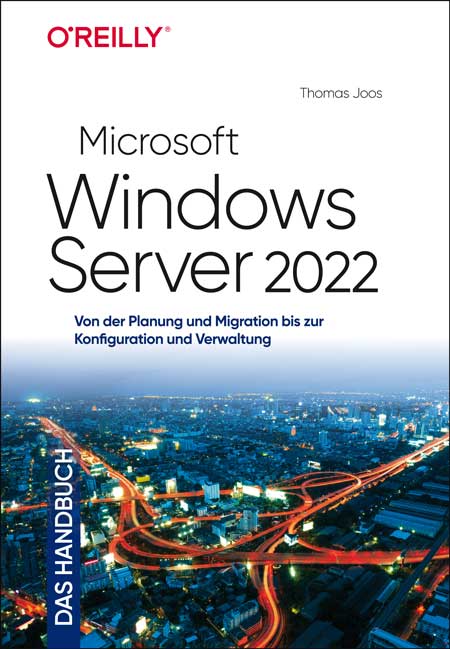
Microsoft Windows Server 2022 - Das Handbuch
Das Standardwerk zur neuen Version: praxisnah und kompetent Diese komplett überarbeitete und aktualisierte Auflage des Klassikers zu Windows Server gibt Ihnen einen tiefgehenden Einblick in den praktischen Einsatz von Windows Server 2022. Das Buch richtet sich sowohl an Neueinsteiger:innen in Microsoft-Servertechnologien als auch an Umsteiger:innen von Vorgängerversionen. Planung und Migration, Konzepte und Werkzeuge der Administration sowie die wichtigsten Konfigurations- und Verwaltungsfragen werden praxisnah behandelt. Alle wichtigen Funktionen werden ausführlich vorgestellt, ebenso die effiziente Zusammenarbeit mit Windows 10-Clients. Es erwarten Sie mehr als 1.000 Seiten praxisnahes und kompetentes Insiderwissen mit vielen hilfreichen Anleitungen und Profitipps.Aus dem Inhalt: Alle Neuerungen von Windows Server 2022 und Änderungen im Vergleich zu Windows Server 2019Lizenzierung und Installation Secured Core Server, Secure DNS und weitere Sicherheitsneuerungen in der PraxisLokale Rechenzentren an Microsoft Azure anbindenBetreiben und Erweitern von Active DirectoryVerwaltung mit dem Windows Admin CenterHochverfügbarkeit und LastenausgleichWindows Server Update Services (WSUS)Diagnose und Überwachung für System, Prozesse und DiensteWindows Server Container, Docker und Hyper-V-ContainerVirtualisierung mit Hyper-VFehlerbehebung Leseprobe (PDF-Link)Autor: Thomas Joos ist selbstständiger IT-Consultant und seit 20 Jahren in der IT-Branche tätig. Er schreibt Fachbücher und berät Unternehmen im Mittelstandsund Enterprise-Bereich in den Themenfeldern Active Directory, Exchange Server und IT-Sicherheit. Durch seinen praxisorientierten und verständlichen Schreibstil sind seine Fachbücher für viele IT-Spezialisten eine wichtige Informationsquelle geworden. Seinen Blog finden Sie auf http://thomasjoos.wordpress.com. Neben vielen erfolgreichen Büchern schreibt er für zahlreiche IT-Publikationen wie z.B. c’t, iX, ITAdministrator und tecchannel.de.Zielgruppe: Administrator*innen

Beginning Scala 3
Learn the latest version of Scala through simple, practical examples. This book introduces you to the Scala programming language, its object-oriented and functional programming characteristics, and then guides you through Scala constructs and libraries that allow you to assemble small components into high-performance, scalable systems.Beginning Scala 3 explores new Scala 3 language features such as Top-level declarations, Creator applications, Extension methods to add extra functionality to existing types, and Enums. You will also learn new ways to manipulate types via Union types, intersection, literal, and opaque type aliases. Additionally, you’ll see how Implicits are replaced by given and using clauses.After reading this book, you will understand why Scala is judiciously used for critical business applications by leading companies such as Twitter, LinkedIn, Foursquare, the Guardian, Morgan Stanley, Credit Suisse, UBS, and HSBC – and you will be able to use it in your own projects.WHAT YOU WILL LEARN* Get started with Scala 3 or Scala language programming in general* Understand how to utilitze OOP in Scala* Perform functional programming in Scala* Master the use of Scala collections, traits and implicits* Leverage Java and Scala interopability* Employ Scala for DSL programming* Use patterns and best practices in ScalaWHO THIS BOOK IS FORThose with a background in Java and/or Kotlin who are new to Scala. This book is also for those with some prior Scala experience who want to learn Scala version 3.DAVID POLLAK has been writing commercial software since 1977. He wrote the award-winning Mesa spreadsheet, which in 1992 was the first real-time spreadsheet. Wall Street companies traded billions of dollars a day through Mesa. In 1996, David sold his company to CMP Media and became CTO of CMP Media's NetGuide Live and was one of the first large-scale users of Java and WebLogic to power an Internet site. In 1998, David released Integer, the world's first browser-accessible, multiuser spreadsheet. Since 2000, David has been consulting for companies including Hewlett-Packard, Pretzel Logic/WebGain, BankServ, Twitter, and SAP. David has been using Scala since 2006 and is the lead developer of the Lift Web framework.VISHAL LAYKA is the chief technology officer of Star Protocol. He is involved in the architecture, design, and implementation of distributed business systems, and his focus is on consulting and training with the JVM languages. His language proficiencies include Java, Groovy, Scala, and Haskell. Vishal is also the lead author of Beginning Groovy, Grails, and Griffon (Apress, 2012). When he needs a break from technology, Vishal reads eclectically from calculus to star formation.ANDRES SACCO has been a professional developer since 2007, working with a variety of languages, including Java, Scala, PHP, NodeJs, and Kotlin. Most of his background is in Java and the libraries or frameworks associated with it, but since 2016, he has utilized Scala as well, depending on the situation. He is focused on researching new technologies to improve the performance, stability, and quality of the applications he develops.BEGINNING SCALA 3 (3E)1. Getting started with Scala2. Basics of Scala3. OOP in Scala4. Functional programming in Scala5. Pattern matching6. Scala Collections7. Traits8. Types and Implicits9. Scala and Java Interoperability10. SBT11. Building web applications with Scala12. DSL13. Scala Best practices

Learn JavaFX 17
This unique in-depth tutorial shows you how to start developing rich-client desktop applications using your Java skills and provides comprehensive coverage of JavaFX 17's features. Each chapter starts with an introduction to the topic at hand, followed by a step-by-step discussion of the topic with small snippets of code. The book contains numerous figures aiding readers in visualizing the GUI that is built at every step in the discussion. This book has been revised to include JavaFX 17 and earlier releases since previous edition.It starts with an introduction to JavaFX and its history. It lists the system requirements and the steps to start developing JavaFX applications. It shows you how to create a Hello World application in JavaFX, explaining every line of code in the process. Later in the book, authors Kishori Sharan and Peter Späth discuss advanced topics such as 2D and 3D graphics, charts, FXML, advanced controls, and printing. Some of the advanced controls such as TableView, and WebView are covered at length in separate chapters.This book provides complete and comprehensive coverage of JavaFX 17 features; uses an incremental approach to teach JavaFX, assuming no prior GUI knowledge; includes code snippets, complete programs, and pictures; covers MVC patterns using JavaFX; and covers advanced topics such as FXML, effects, transformations, charts, images, canvas, audio and video, DnD, and more. So, after reading and using this book, you'll come away with a comprehensive introduction to the JavaFX APIs.WHAT YOU WILL LEARN* How to build JavaFX User Interfaces and Java clients* What are properties, bindings, observable collections, stages, scenes; how to use these* How to play with colors, styling nodes and event handling* How to add user interactivity (mouse, keyboard, DnD)* How to do tables, trees and tree tables* How to do 2D shapes, text nodes, 3D shapes* How to apply effects, transformations, animations, images* How to draw; play audio and videoWHO IS THIS BOOK FOR:Developers new to the JavaFX platform. Some prior Java experience is recommended.KISHORI SHARAN has earned a Master of Science in Computer Information Systems degree from Troy State University, Alabama. He is a Sun Certified Java 2 programmer. He has vast experience in providing training to professional developers in Java, JSP, EJB, and Web technology. He possesses over ten years of experience in implementing enterprise level Java application.PETER SPÄTH graduated in 2002 as a physicist and soon afterward became an IT consultant, mainly for Java-related projects. In 2016, he decided to concentrate on writing books on various aspects, but with a main focus on software development. With two books about graphics and sound processing, three books on Android app development, and a beginner’s book on Jakarta EE development, the author continues his effort in writing software development-related literature.Chapter 1. Getting Started with JavaFXChapter 2. Properties and BindingsChapter 3. Observable CollectionsChapter 4. Managing StagesChapter 5. Making ScenesChapter 6. Understanding NodesChapter 7. Playing with ColorsChapter 8. Styling NodesChapter 9. Event HandlingChapter 10. Understanding Layout PanesChapter 11. Model-View-Controller PatternChapter 12. Understanding ControlsChapter 13. Understanding TableViewChapter 14. Understanding TreeViewChapter 15. Understanding TreeTableViewChapter 16. Browsing Web PagesChapter 17. Understanding 2D ShapesChapter 18. Understanding Text NodesChapter 19. Understanding 3D ShapesChapter 20. Applying EffectsChapter 21. Understanding TransformationsChapter 22. Understanding AnimationChapter 24. Understanding ImagesChapter 25. Drawing on a CanvasChapter 26. Understanding Drag-and-DropChapter 27. Understanding Concurrency in JavaFXChapter 28. Playing Audios and VideosChapter 29. Understanding FXMLChapter 30. Printing
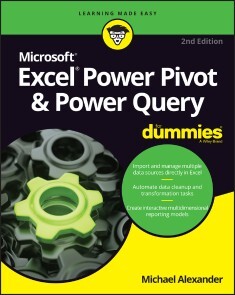
Excel Power Pivot & Power Query For Dummies
LEARN TO CRUNCH HUGE AMOUNTS OF DATA WITH POWERPIVOT AND POWER QUERYDo you have a ton of data you need to make sense of? Microsoft’s Excel program can handle amazingly large data sets, but you’ll need to get familiar with PowerPivot and Power Query to get started. And that’s where Dummies comes in. With step-by-step instructions—accompanied by ample screenshots—Excel PowerPivot & Power Query For Dummies will teach you how to save time, simplify your processes, and enhance your data analysis and reporting. Use Power Query to discover, connect to, and import your organization’s data. Then use PowerPivot to model it in Excel. You’ll also learn to:* Make use of databases to store large amounts of data* Use custom functions to extend and enhance Power Query* Add the functionality of formulas to PowerPivot and publish data to SharePointIf you’re expected to wrangle, interpret, and report on large amounts of data, Excel PowerPivot & Power Query For Dummies gives you the tools you need to get up to speed quickly. MICHAEL ALEXANDER is a senior consultant at Slalom Consulting with more than 15 years’ experience in data management and reporting. He is the author of more than a dozen books on business analysis using Microsoft Excel and has been named Microsoft Excel MVP for his contributions to the Excel community.INTRODUCTION1About This Book 2Foolish Assumptions 3Icons Used in This Book 3Beyond the Book 4Where to Go from Here 4PART 1: SUPERCHARGED REPORTING WITH POWER PIVOT 5CHAPTER 1: THINKING LIKE A DATABASE 7Exploring the Limits of Excel and How Databases Help 7Scalability 8Transparency of analytical processes 9Separation of data and presentation 10Getting to Know Database Terminology 11Databases 11Tables 11Records, fields, and values 12Queries 13Understanding Relationships 13CHAPTER 2: INTRODUCING POWER PIVOT 17Understanding the Power Pivot Internal Data Model 18Linking Excel Tables to Power Pivot 20Preparing Excel tables 21Adding Excel Tables to the data model 22Creating relationships between Power Pivot tables 24Managing existing relationships 26Using the Power Pivot data model in reporting 27CHAPTER 3: THE PIVOTAL PIVOT TABLE 29Introducing the Pivot Table 30Defining the Four Areas of a Pivot Table 30Values area 30Row area 31Column area 31Filter area 32Creating Your First Pivot Table 33Changing and rearranging a pivot table 36Adding a report filter 37Keeping the pivot table fresh 38Customizing Pivot Table Reports 40Changing the pivot table layout 40Customizing field names 41Applying numeric formats to data fields 42Changing summary calculations 43Suppressing subtotals 44Showing and hiding data items 47Hiding or showing items without data 49Sorting the pivot table 51Understanding Slicers 52Creating a Standard Slicer 54Getting Fancy with Slicer Customizations 56Size and placement 56Data item columns 57Miscellaneous slicer settings 58Controlling Multiple Pivot Tables with One Slicer 58Creating a Timeline Slicer 59CHAPTER 4: USING EXTERNAL DATA WITH POWER PIVOT 63Loading Data from Relational Databases 64Loading data from SQL Server 64Loading data from Microsoft Access databases 70Loading data from other relational database systems 72Loading Data from Flat Files 75Loading data from external Excel files 76Loading data from text files 78Loading data from the Clipboard 81Loading Data from Other Data Sources 82Refreshing and Managing External Data Connections 83Manually refreshing Power Pivot data 83Setting up automatic refreshing 84Preventing Refresh All 85Editing the data connection 86CHAPTER 5: WORKING DIRECTLY WITH THE INTERNAL DATA MODEL 89Directly Feeding the Internal Data Model 89Managing Relationships in the Internal Data Model 95Managing Queries and Connections 96Creating a New Pivot Table Using the Internal Data Model 97Filling the Internal Data Model with Multiple External Data Tables 98CHAPTER 6: ADDING FORMULAS TO POWER PIVOT 103Enhancing Power Pivot Data with Calculated Columns 103Creating your first calculated column 104Formatting calculated columns 105Referencing calculated columns in other calculations 106Hiding calculated columns from end users 107Utilizing DAX to Create Calculated Columns 108Identifying DAX functions that are safe for calculated columns 108Building DAX-driven calculated columns 110Month sorting in Power Pivot–driven pivot tables 112Referencing fields from other tables 113Nesting functions 115Understanding Calculated Measures 116Creating a calculated measure 116Editing and deleting calculated measures 118Free Your Data with Cube Functions 119CHAPTER 7: DIVING INTO DAX 121DAX Language Fundamentals 121Using DAX operators 125Applying conditional logic in DAX 126Working with DAX aggregate functions 128Exploring iterator functions and row context 129Understanding Filter Context 133Getting context transitions with the CALCULATE function 135Adding flexibility with the FILTER function 137PART 2: WRANGLING DATA WITH POWER QUERY 141CHAPTER 8: INTRODUCING POWER QUERY 143Power Query Basics 144Starting the query 144Understanding query steps 150Refreshing Power Query data 152Managing existing queries 153Understanding Column-Level Actions 155Understanding Table Actions 157CHAPTER 9: POWER QUERY CONNECTION TYPES 159Importing Data from Files 160Getting data from Excel workbooks 160Getting data from CSV and text files 161Getting data from PDF files 163Getting data from folders 164Importing Data from Database Systems 165A connection for every database type 165Getting data from other data systems 167Walk-through: Getting data from a database 168Managing Data Source Settings 170Data Profiling with Power Query 171Data Profiling options 172Data Profiling quick actions 173CHAPTER 10: TRANSFORMING YOUR WAY TO BETTER DATA 175Completing Common Transformation Tasks 176Removing duplicate records 176Filling in blank fields 178Concatenating columns 179Changing case 181Finding and replacing specific text 181Trimming and cleaning text 183Extracting the left, right, and middle values 184Splitting columns using character markers 187Pivoting and unpivoting fields 189Creating Custom Columns 193Concatenating with a custom column 195Understanding data type conversions 196Spicing up custom columns with functions 197Adding conditional logic to custom columns 199Grouping and Aggregating Data 201Working with Custom Data Types 203CHAPTER 11: MAKING QUERIES WORK TOGETHER 207Reusing Query Steps 208Understanding the Append Feature 211Creating the needed base queries 212Appending the data 213Understanding the Merge Feature 216Understanding Power Query joins 216Merging queries 217Understanding Fuzzy Match 221CHAPTER 12: EXTENDING POWER QUERY WITH CUSTOM FUNCTIONS 225Creating and Using a Basic Custom Function 225Creating a Function to Merge Data from Multiple Excel Files 229Creating Parameter Queries 236Preparing for a parameter query 236Creating the base query 238Creating the parameter query 239PART 3: THE PART OF TENS 243CHAPTER 13: TEN WAYS TO IMPROVE POWER PIVOT PERFORMANCE 245Limit the Number of Rows and Columns in Your Data Model Tables 246Use Views Instead of Tables 246Avoid Multi-Level Relationships 246Let the Back-End Database Servers Do the Crunching 247Beware of Columns with Many Unique Values 248Limit the Number of Slicers in a Report 248Create Slicers Only on Dimension Fields 249Disable the Cross-Filter Behavior for Certain Slicers 250Use Calculated Measures Instead of Calculated Columns 250Upgrade to 64-Bit Excel 251CHAPTER 14: TEN TIPS FOR WORKING WITH POWER QUERY 253Getting Quick Information from the Queries & Connections Pane 253Organizing Queries in Groups 254Selecting Columns in Queries Faster 255Renaming Query Steps 256Quickly Creating Reference Tables 257Viewing Query Dependencies 258Setting a Default Load Behavior 259Preventing Automatic Data Type Changes 259Disabling Privacy Settings to Improve Performance 261Disabling Relationship Detection 261Index 263
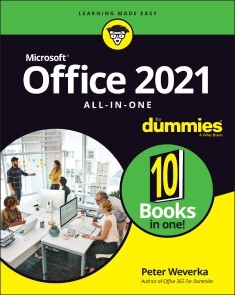
Office 2021 All-in-One For Dummies
SAY HELLO TO OFFICE PRODUCTIVITY WITH THIS ONE-STOP REFERENCEWith Office 2021 All-in-One For Dummies, you can get up and running with Microsoft's legendary software suite. This update covers all the tweaks you can find in the latest version of Word, Excel, PowerPoint, Outlook, and Teams. You'll also learn how to make these apps work harder for you, because we dig deep into the tips and features that casual Office users might not know about. This edition also offers expanded coverage of Teams and other collaborative tools, so you can nail working from home, or just get a few of those meetings out of the way without having to leave your desk. How can you quickly give documents the same format in Word? What was that one useful Excel function, again? And how does setting up a meeting on Teams work? Office 2021 All-in-One For Dummies serves up quick and simple answers to these questions, along with hundreds of other answers you're expected to know when you work in Office.* Learn how Microsoft Office works and get the most out of Word, Excel, PowerPoint, Outlook, and Teams* Make amazing charts and graphs that you can plug into your documents, spreadsheets, and presentations* Get better at working collaboratively with file sharing options and other neat features* Do more, faster with expert tips and guidance on the full suite of Office software for 2021Whether you're new to Office or just need a refresher for the newest updates, the nine mini-books inside are your keys to getting stuff done. PETER WEVERKA is a long-time For Dummies technology author who’s written some of the series’ top-selling titles, including Office 365 All-in-One For Dummies.INTRODUCTION 1BOOK 1: COMMON MICROSOFT OFFICE TASKS 5Chapter 1: Office Nuts and Bolts 7Chapter 2: Wrestling with the Text 27Chapter 3: Speed Techniques Worth Knowing About 47BOOK 2: WORD 2021 55Chapter 1: Speed Techniques for Using Word 57Chapter 2: Laying Out Text and Pages 77Chapter 3: Word Styles 103Chapter 4: Constructing the Perfect Table 121Chapter 5: Taking Advantage of the Proofing Tools 145Chapter 6: Desktop Publishing with Word 165Chapter 7: Getting Word's Help with Office Chores 183Chapter 8: Tools for Reports and Scholarly Papers 203BOOK 3: EXCEL 2021 227Chapter 1: Up and Running with Excel 229Chapter 2: Refining Your Worksheet 247Chapter 3: Formulas and Functions for Crunching Numbers 261Chapter 4: Making a Worksheet Easier to Read and Understand 293Chapter 5: Advanced Techniques for Analyzing Data 311BOOK 4: POWERPOINT 2021 329Chapter 1: Getting Started in PowerPoint 331Chapter 2: Fashioning a Look for Your Presentation 353Chapter 3: Entering the Text 367Chapter 4: Making Your Presentations Livelier 385Chapter 5: Delivering a Presentation 401BOOK 5: OUTLOOK 2021 421Chapter 1: Outlook Basics 423Chapter 2: Maintaining the People App 435Chapter 3: Handling Your Email 445Chapter 4: Managing Your Time and Schedule 467BOOK 6: ACCESS 2021 479Chapter 1: Introducing Access 481Chapter 2: Building Your Database Tables 497Chapter 3: Entering the Data 525Chapter 4: Sorting, Querying, and Filtering for Data 535Chapter 5: Presenting Data in a Report 557BOOK 7: PUBLISHER 2021 563Chapter 1: Introducing Publisher 565Chapter 2: Refining a Publication 577Chapter 3: Putting on the Finishing Touches 589BOOK 8: WORKING WITH CHARTS AND GRAPHICS 601Chapter 1: Creating a Chart 603Chapter 2: Making a SmartArt Diagram 623Chapter 3: Handling Graphics and Photos 643Chapter 4: Drawing and Manipulating Lines, Shapes, and Other Objects 659BOOK 9: OFFICE 2021: ONE STEP BEYOND 693Chapter 1: Customizing an Office Program 695Chapter 2: Ways of Distributing Your Work 709BOOK 10: FILE SHARING AND COLLABORATING 717Chapter 1: Up and Running on OneDrive 719Chapter 2: File Sharing and Collaborating 731INDEX 739
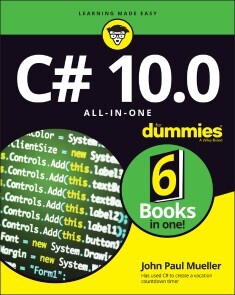
C# 10.0 All-in-One For Dummies
LOOK SHARP—LEARN OR REFRESH YOUR C# SKILLS WITH THE LATEST VERSIONC# is one of the most popular programming languages, and frequent updates help it keep pace as the world of coding changes. You can keep pace too, thanks to C# 10.0 All-in-One For Dummies, where you'll learn the basics of the language itself, how to code in Visual Studio, and how to take advantage of the new features in the latest release. At every stage of your career, you'll need to know the cutting-edge trends and techniques that clients want. This book has your back, with info on object-oriented programming, writing secure code, building web applications, and more. The six standalone mini-books you'll find inside this all-in-one will take you through the changes to C# and the practical applications and dev tools that you need to know. New features covered include records, init only setters, top-level statements, pattern matching enhancements, fit and finish features, and a lot more. Plus, this version is packed with more examples and code snippets, so you can sharply see C# in action!* Learn the very basics of C# programming, even if you have no prior experience* Refresh your knowledge of the language and learn how to use the new features in the 10.0 version release* Read six mini-books on hot coding topics like object-oriented programming, Visual Studio, and Windows 10 development* Enhance your employability and join the 6.5-million-strong community of C# developersYou need an easy-to-read C# guide that will help you understand the incoming updates, and this For Dummies reference is it. JOHN PAUL MUELLER is an author and technical editor with experience in application development, database management, machine learning, and deep learning. He has written hundreds of books and articles helping everyday people learn everything from networking to database management.INTRODUCTION 1About This Book 1Foolish Assumptions 2Icons Used in This Book 3Beyond the Book 3Where to Go from Here 4BOOK 1: THE BASICS OF C# PROGRAMMING 5CHAPTER 1: CREATING YOUR FIRST C# CONSOLE APPLICATION 7Getting a Handle on Computer Languages, C#, and NET 8What’s a program? 8What’s C#? 9What’s NET? 9What is Visual Studio 2022? 10Creating Your First Console Application 11Creating the source program 11Taking it out for a test drive 17Making Your Console App Do Something 17Reviewing Your Console Application 18The program framework 19Comments 19The meat of the program 19Replacing All that Ceremonial Code: Top-Level Statements 20Introducing the Toolbox Trick 21Saving code in the Toolbox 22Reusing code from the Toolbox 22Interacting with C# Online 23Working with Jupyter Notebook: The Short Version 23CHAPTER 2: LIVING WITH VARIABILITY — DECLARING VALUE-TYPE VARIABLES 25Declaring a Variable 26What’s an int? 27Rules for declaring variables 28Variations on a theme: Different types of int 28Representing Fractions 30Handling Floating-Point Variables 31Declaring a floating-point variable 31Examining some limitations of floating-point variables 32Using the Decimal Type: Is It an Integer or a Float? 34Declaring a decimal 35Comparing decimals, integers, and floating-point types 35Examining the bool Type: Is It Logical? 36Checking Out Character Types 36The char variable type 36Special chars 37The string type 37What’s a Value Type? 39Comparing string and char 40Calculating Leap Years: DateTime 41Declaring Numeric Constants 43Changing Types: The Cast 44Letting the C# Compiler Infer Data Types 46CHAPTER 3: PULLING STRINGS 49The Union Is Indivisible, and So Are Strings 50Performing Common Operations on a String 51Comparing Strings 52Equality for all strings: The Compare() method 52Would you like your compares with or without case? 56What If I Want to Switch Case? 56Distinguishing between all-uppercase and all-lowercase strings 56Converting a string to upper- or lowercase 57Looping through a String 58Searching Strings 59Can I find it? 59Is my string empty? 60Using advanced pattern matching 60Getting Input from Users in Console Applications 61Trimming excess white space 62Parsing numeric input 62Handling a series of numbers 64Joining an array of strings into one string 66Controlling Output Manually 67Using the Trim() and Pad() methods 67Using the Concatenate() method 69Go Ahead and Split() that concatenate program 71Formatting Your Strings Precisely 72Using the String.Format() method 72Using the interpolation method 77StringBuilder: Manipulating Strings More Efficiently 77CHAPTER 4: SMOOTH OPERATORS 81Performing Arithmetic 81Simple operators 82Operating orders 82The assignment operator 84The increment operator 84Performing Logical Comparisons — Is That Logical? 85Comparing floating-point numbers: Is your float bigger than mine? 86Compounding the confusion with compound logical operations 87Matching Expression Types at TrackDownAMate.com 89Calculating the type of an operation 89Assigning types 91Changing how an operator works: Operator overloading 92CHAPTER 5: GETTING INTO THE PROGRAM FLOW 95Branching Out with if and switch 96Introducing the if statement 97Examining the else statement 100Avoiding even the else 101Nesting if statements 102Running the switchboard 104Here We Go Loop-the-Loop 110Looping for a while 111Doing the do while loop 114Breaking up is easy to do 115Looping until you get it right 116Focusing on scope rules 120Looping a Specified Number of Times with for 120A for loop example 121Why do you need another loop? 122Nesting loops 123CHAPTER 6: LINING UP YOUR DUCKS WITH COLLECTIONS 125The C# Array 126The argument for the array 126The fixed-value array 127The variable-length array 129Initializing an array 132Processing Arrays by Using foreach 133Working with foreach loops in a standard way 133Relying on GetEnumerator support 134Sorting Arrays of Data 136Using var for Arrays 139Loosening Up with C# Collections 140Understanding Collection Syntax 141Figuring out 142Going generic 142Using Lists 143Instantiating an empty list 143Creating a list of type int 144Converting between lists and arrays 144Searching lists 144Performing other list tasks 145Using Dictionaries 145Creating a dictionary 145Searching a dictionary 146Iterating a dictionary 146Array and Collection Initializers 147Initializing arrays 148Initializing collections 148Using Sets 149Performing special set tasks 149Creating a set 150Adding items to a set 150Performing a union 151Performing an intersection 152Performing a difference 153CHAPTER 7: STEPPING THROUGH COLLECTIONS 155Iterating through a Directory of Files 156Using the LoopThroughFiles program 156Getting started 157Obtaining the initial input 157Creating a list of files 159Formatting the output lines 160Displaying the hexadecimal output 161Running from inside Visual Studio 163Iterating foreach Collections: Iterators 164Accessing a collection: The general problem 164Letting C# access data foreach container 167Accessing Collections the Array Way: Indexers 169Indexer format 169An indexer program example 170Looping Around the Iterator Block 173Creating the required iterator block framework 174Iterating days of the month: A first example 176What a collection is, really 177Iterator syntax gives up so easily 178Iterator blocks of all shapes and sizes 180CHAPTER 8: BUYING GENERIC 187Writing a New Prescription: Generics 188Generics are type-safe 188Generics are efficient 189Classy Generics: Writing Your Own 190Shipping packages at OOPs 190Queuing at OOPs: PriorityQueue 191Unwrapping the package 194Touring Main() 196Writing generic code the easy way 197Saving PriorityQueue for last 198Using a (nongeneric) Simple Factory class 201Understanding Variance in Generics 205Contravariance 206Covariance 208CHAPTER 9: SOME EXCEPTIONAL EXCEPTIONS 209Using an Exceptional Error-Reporting Mechanism 210About try blocks 211About catch blocks 211About finally blocks 212What happens when an exception is thrown 213Throwing Exceptions Yourself 215Can I Get an Exceptional Example? 216Working with Custom Exceptions 220Planning Your Exception-Handling Strategy 221Some questions to guide your planning 221Guidelines for code that handles errors well 222How to find out which methods throw which exceptions 223Grabbing Your Last Chance to Catch an Exception 225Throwing Expressions 226CHAPTER 10: CREATING LISTS OF ITEMS WITH ENUMERATIONS 229Seeing Enumerations in the Real World 230Working with Enumerations 231Using the enum keyword 231Creating enumerations with initializers 233Specifying an enumeration data type 234Creating Enumerated Flags 235Defining Enumerated Switches 237Working with Enumeration Methods 238BOOK 2: OBJECT-ORIENTED C# PROGRAMMING 241CHAPTER 1: SHOWING SOME CLASS 243A Quick Overview of Object-Oriented Programming 244Considering OOP basics 244Extending classes to meet other needs 244Keeping objects safe 245Working with objects 246Defining a Class and an Object 246Defining a class 247What’s the object? 249Accessing the Members of an Object 250Working with Object-Based Code 250Using the traditional approach 250Using the C# 9.0 approach 252Discriminating between Objects 253Can You Give Me References? 254Classes That Contain Classes Are the Happiest Classes in the World 256Generating Static in Class Members 257Defining const and readonly Data Members 259CHAPTER 2: WE HAVE OUR METHODS 261Defining and Using a Method 262Method Examples for Your Files 263Understanding the problem 264Working with standard coding methods 265Applying a refactoring approach 268Working with local functions 271Having Arguments with Methods 273Passing an argument to a method 273Passing multiple arguments to methods 274Matching argument definitions with usage 276Overloading a method doesn’t mean giving it too much to do 276Implementing default arguments 278Using the Call-by-Reference Feature 280Defining a Method with No Return Value 281Returning Multiple Values Using Tuples 282Using a tuple 283Relying on the Create() method 284Creating tuples with more than two items 284CHAPTER 3: LET ME SAY THIS ABOUT THIS 287Passing an Object to a Method 288Comparing Static and Instance Methods 290Employing static properties and methods effectively 291Employing instance properties and methods effectively 293Expanding a method’s full name 295Accessing the Current Object 296What is the this keyword? 298When is the this keyword explicit? 299Using Local Functions 300Creating a basic local function 300Using attributes with local functions 301CHAPTER 4: HOLDING A CLASS RESPONSIBLE 303Restricting Access to Class Members 303A public example of public BankAccount 304Jumping ahead — other levels of security 306Why You Should Worry about Access Control 307Accessor methods 308Working with init-only setters 309Access control to the rescue — an example 311Defining Class Properties 313Static properties 315Properties with side effects 315Accessors with access levels 316Using Target Typing for Your Convenience 316Dealing with Covariant Return Types 319Getting Your Objects Off to a Good Start — Constructors 320The C#-Provided Constructor 321Replacing the Default Constructor 322Constructing something 324Initializing an object directly with an initializer 326Seeing that construction stuff with initializers 326Initializing an object without a constructor 327Using Expression-Bodied Members 329Creating expression-bodied methods 329Defining expression-bodied properties 329Defining expression-bodied constructors and destructors 330Defining expression-bodied property accessors 330Defining expression-bodied event accessors 331CHAPTER 5: INHERITANCE: IS THAT ALL I GET? 333Why You Need Inheritance 334Inheriting from a BankAccount Class (a More Complex Example) 335Working with the basic update 336Tracking the BankAccount and SavingsAccount classes features 339IS_A versus HAS_A — I’m So Confused_A 342The IS_A relationship 342Gaining access to BankAccount by using containment 343The HAS_A relationship 345When to IS_A and When to HAS_A 346Other Features That Support Inheritance 346Substitutable classes 346Invalid casts at runtime 347Avoiding invalid conversions with the is operator 348Avoiding invalid conversions with the as operator 349CHAPTER 6: POLY-WHAT-ISM? 353Overloading an Inherited Method 354It’s a simple case of method overloading 354Different class, different method 355Peek-a-boo — hiding a base class method 355Polymorphism 361Using the declared type every time (Is that so wrong?) 362Using is to access a hidden method polymorphically 364Declaring a method virtual and overriding it 365Getting the most benefit from polymorphism 368C# During Its Abstract Period 368Class factoring 369The abstract class: Left with nothing but a concept 373How do you use an abstract class? 374Creating an abstract object — not! 377Sealing a Class 377CHAPTER 7: INTERFACING WITH THE INTERFACE 379Introducing CAN_BE_USED_AS 379Knowing What an Interface Is 381How to implement an interface 382Using the newer C# 8.0 additions 383How to name your interface 386Why C# includes interfaces 386Mixing inheritance and interface implementation 387And he-e-e-re’s the payoff 387Using an Interface 388As a method return type 389As the base type of an array or collection 389As a more general type of object reference 390Using the C# Predefined Interface Types 390Looking at a Program That CAN_BE_USED_AS an Example 391Creating your own interface at home in your spare time 391Implementing the incomparable I Comparable interface 392Creating a list of students 394Testing everything using Main() 395Unifying Class Hierarchies 396Hiding Behind an Interface 399Inheriting an Interface 401Using Interfaces to Manage Change in Object-Oriented Programs 402Making flexible dependencies through interfaces 403Abstract or concrete: When to use an abstract class and when to use an interface 404Doing HAS_A with interfaces 405CHAPTER 8: DELEGATING THOSE IMPORTANT EVENTS 407E.T., Phone Home — The Callback Problem 408Defining a Delegate 408Pass Me the Code, Please — Examples 411Delegating the task 411First, a simple example 412Considering the Action, Func, and Predicate delegate types 413A More Real-World Example 415Putting the app together 416Setting the properties and adding event handlers 418Looking at the workhorse code 419Shh! Keep It Quiet — Anonymous Methods 421Defining the basic anonymous method 421Using static anonymous methods 422Working with lambda discard parameters 424Stuff Happens — C# Events 424The Observer design pattern 425What’s an event? Publish/Subscribe 425How a publisher advertises its events 426How subscribers subscribe to an event 427How to publish an event 427How to pass extra information to an event handler 428A recommended way to raise your events 429How observers “handle” an event 430CHAPTER 9: CAN I USE YOUR NAMESPACE IN THE LIBRARY? 433Dividing a Single Program into Multiple Source Files 434Working with Global using Statements 435Dividing a Single Program into Multiple Assemblies 437Executable or library? 437Assemblies 437Executables 438Class libraries 439Putting Your Classes into Class Libraries 439Creating the projects for a class library 439Creating a stand-alone class library 440Adding a second project to an existing solution 442Creating the code for the library 445Using a test application to test a library 446Going Beyond Public and Private: More Access Keywords 448Internal: For CIA eyes only 448Protected: Sharing with subclasses 451Putting Classes into Namespaces 453Declaring a namespace 454Using file-scoped namespaces 456Relating namespaces to the access keyword story 456Using fully qualified names 458Working with partial classes 459Working with Partial Methods 463Defining what partial methods do 463Creating a partial method 464CHAPTER 10: IMPROVING PRODUCTIVITY WITH NAMED AND OPTIONAL PARAMETERS 465Exploring Optional Parameters 466Working with optional value parameters 466Avoiding optional reference types 468Looking at Named Parameters 470Using Alternative Methods to Return Values 470Output (out) parameters 471Working with out variables 471Returning values by reference 472Dealing with null Parameters 473CHAPTER 11: INTERACTING WITH STRUCTURES 475Comparing Structures to Classes 476Considering struct limits 476Understanding the value type difference 477Determining when to use struct versus class 477Creating Structures 478Defining a basic struct 478Including common struct elements 479Using supplemental struct elements 482Working with Read-only Structures 485Working with Reference Structures 487Using Structures as Records 489Managing a single record 489Adding structures to arrays 489Overriding methods 490Using the New Record Type 491Comparing records to structures and classes 491Working with a record 492Using the positional syntax for property definition 493Understanding value equality 494Creating safe changes: Nondestructive mutation 494Using the field keyword 495BOOK 3: DESIGNING FOR C# 497CHAPTER 1: WRITING SECURE CODE 499Designing Secure Software 500Determining what to protect 500Documenting the components of the program 501Decomposing components into functions 502Identifying potential threats in functions 502Building Secure Windows Applications 503Authentication using Windows logon 503Encrypting information 507Deployment security 507Using System.Security 508CHAPTER 2: ACCESSING DATA 509Getting to Know System.Data 510How the Data Classes Fit into the Framework 512Getting to Your Data 512Using the System.Data Namespace 513Setting up a sample database schema 513Creating the data access project 514Connecting to a data source 514Working with the visual tools 519Writing data code 521CHAPTER 3: FISHING THE FILE STREAM 525Going Where the Fish Are: The File Stream 525Streams 526Readers and writers 527StreamWriting for Old Walter 528Using the stream: An example 529Using some better fishing gear: The using statement 534Pulling Them Out of the Stream: Using StreamReader 537More Readers and Writers 539Exploring More Streams than Lewis and Clark 541CHAPTER 4: ACCESSING THE INTERNET 543Getting to Know System.Net 544How Net Classes Fit into the Framework 545Understanding the System.Net subordinate namespaces 545Working with the System.Net classes 548Using the System.Net Namespace 549Checking the network status 549Downloading a file from the Internet 551Emailing a status report 553Logging network activity 556CHAPTER 5: CREATING IMAGES 559Getting to Know System.Drawing 560Graphics 561Pens 562Brushes 563Text 563How the Drawing Classes Fit into the Framework 564Using the System.Drawing Namespace 565Getting started 565Setting up the project 567Handling the score 567Creating an event connection 569Drawing the board 570Printing the score 572Starting a new game 574CHAPTER 6: PROGRAMMING DYNAMICALLY! 575Shifting C# Toward Dynamic Typing 576Employing Dynamic Programming Techniques 578Putting Dynamic to Use 580Classic examples 580Making static operations dynamic 581Understanding what’s happening under the covers 581Running with the Dynamic Language Runtime 582Using Static Anonymous Functions 585BOOK 4: A TOUR OF VISUAL STUDIO 587CHAPTER 1: GETTING STARTED WITH VISUAL STUDIO 589Versioning the Versions 590An overview of Visual Studio 2022 updates 590Community edition 592Professional edition 594Enterprise edition 594MSDN 595Installing Visual Studio 596Breaking Down the Projects 597Exploring the Create a New Project dialog box 600Understanding solutions and projects 601CHAPTER 2: USING THE INTERFACE 603Designing in the Designer 604Universal Windows Platform (UWP) application 604Windows Presentation Foundation (WPF) 607Windows Forms 609Data View 609Paneling the Studio 610Solution Explorer 610Properties 613The Toolbox 614Server Explorer 615Class View 617Coding in the Code Editor 618Exercising the Code Editor 618Exploring the auxiliary windows 619Using the Tools of the Trade 621The Tools menu 622Building 623Using the Debugger as an Aid to Learning 623Stepping through code 623Going to a particular code location 624Watching application data 625Viewing application internals 626CHAPTER 3: CUSTOMIZING VISUAL STUDIO 627Setting Options 628Environment 629Language 630Neat stuff 631Creating Your Own Templates 632Developing a project template 632Developing an item template 635BOOK 5: WINDOWS DEVELOPMENT WITH WPF 639CHAPTER 1: INTRODUCING WPF 641Understanding What WPF Can Do 642Introducing XAML 643Diving In! Creating Your First WPF Application 644Declaring an application-scoped resource 647Making the application do something 648Whatever XAML Can Do, C# Can Do Better! 650CHAPTER 2: UNDERSTANDING THE BASICS OF WPF 653Using WPF to Lay Out Your Application 654Arranging Elements with Layout Panels 655The Stack panel 656The Wrap panel 660The Dock panel 661Canvas 662The Grid 662Putting it all together with a simple data entry form 669Exploring Common XAML Controls 672Display-only controls 672Basic input controls 674List-based controls 677CHAPTER 3: DATA BINDING IN WPF 681Getting to Know Dependency Properties 682Exploring the Binding Modes 683Investigating the Binding Object 683Defining a binding with XAML 684Defining a binding with C# 686Editing, Validating, Converting, and Visualizing Your Data 687Validating data 693Converting your data 697Finding Out More about WPF Data Binding 705CHAPTER 4: PRACTICAL WPF 707Commanding Attention 708Traditional event handling 708ICommand 709Routed commands 710Using Built-In Commands 711Using Custom Commands 713Defining the interface 713Creating the window binding 714Ensuring that the command can execute 714Performing the task 715Using Routed Commands 717Defining the Command class 717Making the namespace accessible 718Adding the command bindings 718Developing a user interface 718Developing the custom command code-behind 719CHAPTER 5: PROGRAMMING FOR WINDOWS 10 AND ABOVE 721What is the Universal Windows Platform (UWP)? 722Devices Supported by the UWP 725Creating Your Own UWP App 726Configuring Developer Mode 726Defining the project 732Creating an interface 734Adding some background code 738Choosing a test device 739Working with NET Core Applications 740BOOK 6: WEB DEVELOPMENT WITH ASP.NET 743CHAPTER 1: CREATING A BASIC ASP.NET CORE APP 745Understanding the ASP.NET Core Templates 746Starting with nothing using ASP.NET Core Empty 746Creating a basic app using the ASP.NET Core Web App 748Fumbling around with HTTPS-enabled sites 749Building in business logic using ASP.NET Core App (Model-View-Controller) 751Developing a programming interface using ASP.NETCore Web API 752An overview of those other weird templates 753Developing a Basic Web App 754Creating the project 754Considering the development process 756Adding web content 757Making some basic changes to the first page 759CHAPTER 2: EMPLOYING THE RAZOR MARKUP LANGUAGE 761Avoiding Nicks from Razor 762Comparing Razor to its predecessors 762Considering the actual file layout 763Understanding the syntax rules for C# 766Working with some Razor basics 767Creating Variables 770Keeping Things Logical 771Starting simply by using if 771Sleeping at the switch 771Implementing Loops 772Creating an array 772Performing tasks a specific number of times using for 773Processing an unknown number of times using for each and while 773CHAPTER 3: GENERATING AND CONSUMING DATA 775Understanding Why These Projects Are Important 776Serialized Data Isn’t for Breakfast 777Developing a Data Generator and API 778Creating the WeatherForecast project 778Making the data believable 781Looking at the API configuration 783Checking the API for functionality 784Creating a Consumer Website 786Creating the RetrieveWeatherForecast project 786Developing a user interface 787Getting and deserializing the data 789Seeing the application in action 793Index 795
Microsoft 365 For Dummies
AMP UP YOUR COLLABORATION SKILLS AND ROCK THE MODERN WORKPLACE BY HARNESSING THE POWER OF MICROSOFT 365 WITH THIS ONE-STOP GUIDE TO THE WORLD'S LEADING PRODUCTIVITY PLATFORMThe Microsoft 365 productivity solution for the workplace is a cloud-based service with many features for effective and secure collaboration virtually or in person. Whether you start your day with meetings in Teams, respond to Outlook emails, create documents with Office apps, or even automate your work with artificial intelligence, Microsoft 365 has you covered. But first, you must unlock the potential of this powerful solution to showcase your ability to keep up with the modern workplace and make an impact in your organization. To do that, you need Microsoft 365 For Dummies!This book walks you through the steps to get your work done anytime, anywhere, on any device, with Microsoft Teams as the central hub. Discover how to chat online in real time; conduct online meetings; co-author documents in the cloud; develop no-code applications; and even prioritize your well-being. The insights and step-by-step guidance in Microsoft 365 For Dummies will help you stay connected and engaged with your colleagues.* Level up your teamwork game with the latest meeting and collaboration best practices from Microsoft Teams * Stretch your use of Office apps (Word, Excel, PowerPoint, Outlook, and OneNote) by infusing artificial intelligence into your everyday tasks * Save time (and look really smart) by automating your work with the Power Platform apps * Take a break from work and focus on your health and well-being at home or in the office Whether you’re a Microsoft 365 newbie or a superuser looking for details on what's new, Microsoft 365 For Dummies is the friendly and authoritative how-to book you need. Discover the benefits of cloud technology today!JENNIFER REED is Founder of Cloud61, a firm offering IT consulting products and services. She is the author of Office 365 For Dummies, Migrating to Office 365 For Dummies, Office 365 Backup For Dummies, and Office 365 for Higher Education. She recently launched a startup (www.hydrojennfarms.com) aimed at promoting locally grown food and regenerative farming practices using modern technologies like Microsoft 365.INTRODUCTION 1About This Book 1Foolish Assumptions 2Icons Used in This Book 2Beyond the Book 3Where to Go from Here 3PART 1: KEEPING UP WITH MICROSOFT 365 5CHAPTER 1: WHAT’S IN IT FOR YOU: OVERVIEW OF FEATURES 7Tasting the Flavors of Microsoft 365 8Understanding the versions for home 9Exploring the options for the workplace 9Honing in on the Workplace Features 11Reining in the apps and services 11No, the robots have not taken over 12Connecting the dots to get work done 13CHAPTER 2: WORK, MEET LIFE: THE NEW WORLD OF WORK 17Going Native, Digitally 18How to get your colleague’s attention 18Turn back the hands of time with version history 20Prioritizing Self-Care and Well-Being 21Viva la vida loca! 21Taming the “too-connected” beast 22Calling it a day with Virtual Commute 24PART 2: REIMAGINING TEAMWORK 25CHAPTER 3: UNLOCKING DIGITAL COLLABORATION 27There’s a Purpose for That App 28Office 365 versus Microsoft 365: What’s the diff? 28Installing the Office 365 apps 29The right tools for the right purpose 30Connecting Experiences Across Apps 32The lowdown on connected experiences 32Look Ma, no hands! Using the Dictation feature 34CHAPTER 4: ZOOMING IN ON TEAMS 37Getting to Know Teams 38Touring the Teams interface 38Co-authoring documents in Teams 41Don’t get ghosted — use Read Receipts 42Reading instead of listening to voicemail 43Creating a Humanistic Workplace 44To hide or not to hide the kids (or pets) 45The many ways to see each other 46Eat chips without being annoying 48CHAPTER 5: ROCKING YOUR MEETING LIKE A BOSS 51The Things You Do Before 52Get meeting insights from Outlook 52Chat with attendees to prep 54Preload agenda and documents 56The Stuff You Do During 57Present like a pro with one monitor 57Reporting live from your home office! 58Follow along with live captions or live transcriptions 60The Actions to Take After 62Play back the meeting 63Track action items 63Continue to engage via chat 64CHAPTER 6: FACILITATING MEETINGS AND BREAKOUT SESSIONS 67The Basics of Teams Meetings 68Scheduling a meeting 69Calling for an impromptu meeting 70Joining a meeting 71Meeting within a Meeting with Breakout Rooms 72Creating Breakout rooms 73Starting the breakout session 75Rejoining the main session 76CHAPTER 7: ALL ABOUT WEBINARS AND LIVE EVENTS 79Calling the Shots with a Webinar 80Preparing for a webinar 80Creating the webinar event 81Delivering the webinar 85So, You Want to be a Producer 86Getting ready to produce a live event 86Scheduling a live event 87Producing the live event 88PART 3: MODERNIZING THE WORKPLACE WITH OFFICE APPS 91CHAPTER 8: GETTING THE MOST OUT OF WORD 93It’s Alive! Your Document, That Is 94Jazz it up with pictures 94Your screen is paper, draw on it 97Immerse yourself in your reading 99Becoming a Better Writer 100Make your writing so much better 101Support your facts with Researcher 103That Time When Word Helped Your Career 104Sprucing up your resume 104Smashing the language barrier 105CHAPTER 9: STEPPING UP YOUR EXCEL CHOPS 107Excelling in Excel 108Everyday Excel tasks 108Get it all sorted out 110Talk to your team from your workbook 111Taking a Shortcut to Completing Tasks 114Get to know Office Scripts 114Stop the repetition; create a script 114Run and share your script 116So, You’re a Data Analyst Now? 118Around the world with data types 119Giving yourself permission to be curious 121You’ve got questions, Excel has answers 123CHAPTER 10: WOWING YOUR AUDIENCE WITH POWERPOINT 125More than Just the Basics of PowerPoint 126Navigating the web and desktop apps 127Have an interesting topic? There’s’ a deck for that! 128The Art of Creating a Deck 131Be artsy (even when you’re not) with Designer 131Mastering the Slide Master 133Reuse, recycle decks with templates 134The Science of Presenting a Deck 135Practice with AI makes perfect 135Give a unique experience with Live Presentations 138Experiencing Live Presentations as an audience 141CHAPTER 11: GOING DIGITAL WITH ONENOTE 145Exploring Basic Functions 146Understanding the different versions 146Getting around the user interface 149Creating a new notebook 150Moving a notebook to a new location 152Stepping Up the Notetaking Game 153Tagging content for later use 154Viewing and restoring page versions 155Sharing your notebook 156CHAPTER 12: STAYING CONNECTED WITH OUTLOOK 159The Not-Just-Basic of Outlook 160Just a few words will do 162My thoughts exactly: When AI reads minds 164Ask questions, naturally 167Schedule Management with the Calendar 168Click to meet from an email 168Color your world with categories 169Don’t get between your colleagues and their lunch 171Outlook Out of the Ball Park 173Sliding into a Teams chat from Outlook 173Notes and Sticky Notes integration 174Play my emails, please 175PART 4: STORING YOUR DATA IN THE CLOUD 177CHAPTER 13: CENTRALIZING DATA IN SHAREPOINT 179Getting to Know SharePoint Online 180No-code website in a flash? Yes you can! 181Who let the dogs in? Setting permissions 184The Wonders of Microsoft Lists 187Creating and editing a List 187A view for different points of view 189Never miss an update with alerts 191The Marvels of Document Libraries 192Contributing to a document library 192Help, I changed my mind! Versioning to the rescue 193CHAPTER 14: GOODBYE HARD DRIVE, HELLO ONEDRIVE 197Storing and Syncing Files in OneDrive 198Ready, get set, sync! Using the sync app 198What’s in a name? Work or School versus Home 201What’s the diff? OneDrive versus SharePoint 202The Many Ways to Share Files 204May I have a quick link, please? 204Managing access before it gets out of hand 206PART 5: GIVING POWER TO THE PEOPLE LIKE YOU AND ME 209CHAPTER 15: UNDERSTANDING THE POWER PLATFORM 211What Is the Power Platform? 212Creating Workflows with Power Automate 213Getting to Know Power Apps 214Telling a Story with Data in Power BI 217Advanced Concepts 218Meet the AI Builder 219About the Microsoft Dataverse 219CHAPTER 16: CREATING A POWER-AUTOMATED APPROVAL PROCESS 221Gathering What You need 222Nailing the scenario 222Building the library 223Picking the template 224All Systems Go, Let’s Flow! 226Building the flow, making the connections 226Testing the workflow 230Checking for approvals in Teams 231Turning off the flow 232CHAPTER 17: DEVELOPING YOUR FIRST APP WITH POWER APPS 233Before Building the App 234Creating the list to hold data 235Managing access to the list 236Fine-tuning the properties of the list 238Specifying the survey questions 240Building the App 243Designing the app 244Connecting the data source 244Building the Survey screen 247Adding buttons and labels to the form 250Building the Welcome screen 253Building the Thank You screen 255Finalizing the Survey screen 255Launching the App 256Saving and sharing the app 257Updating the app 257Reviewing the data 258CHAPTER 18: DASHBOARDING WITH POWER BI 259Understanding Power BI Concepts 260What’s in it for you? 261How Power BI is licensed 261It’s the elements, dear Watson 262Exploring a Sample Data Set 263Navigating the Power BI Service 263Loading the dataset 266Interacting with the dashboard 267PART 6: BEING YOUR OWN IT DEPARTMENT 271CHAPTER 19: GETTING UP CLOSE AND PERSONAL 273Let’s Get Personal 274Paint a thousand words with your picture 274Spice things up with a custom cover photo 276Don’t be shy, toot your own horn 276IT Tasks You’re Empowered to Do 277Updating your security information 278Changing your password 279Self-service password reset 280CHAPTER 20: REINING IN YOUR DEVICES 283Managing Your Devices 284Securing your devices 284Auditing and disabling devices 285Checking for impossible travel 287You Have Left the Building — Virtually 288Signing out from devices all at once 288Disconnecting a BYOD 289PART 7: THE PART OF TENS 293CHAPTER 21: TEN MORE APPS THAT GET THE WORK DONE 295People 296MyAnalytics 296Kaizala 297Stream 298Whiteboard 298Lists 299Forms 300Yammer 301Sway 302Planner 302CHAPTER 22: TEN WAYS TO ROCK DELVE 305Know Thyself with MyAnalytics 306Delve Away, Your Docs Are Safe 306Delve Consumes OneDrive and SharePoint data 307The Search Is On for People and Docs 308Act On a Document 309Favorite Documents for Later Use 309Group Documents in a Board 310Documents-at-a-Glance with Cards 311Popularity Contest for Documents 311Get to Know Your Colleagues 311CHAPTER 23: TEN MICROSOFT 365 REMOTE WORK TIPS 313Set Lunch Hours and Enjoy Your Meal 314Chill and Decompress: Go Meditate 315Start Your Zero-Carbon Commute 315Keep Your Promises with Help from AI 316Work Late but Let Others Not 316Make Your Meeting Worth Their Time 317Wrap It Up in Five Minutes 317Say Thanks with Praise 318Your Status Is Not Complicated 318Give a Heads Up with Signatures 319Index 321
Pro iPhone Development with SwiftUI
You know the basics. Your Swift code flows with logic and ease. This isn't your first time building a workable app for iOS platforms. Now, it's time to build a magical app for iOS platforms! Move beyond what you mastered in the best-selling Beginning iPhone Development with SwiftUI. Debug Swift code, use multi-threaded programming with Grand Central Dispatch, pass data between view controllers, and design apps functional in multiple languages.Not only will your apps run like magic under the hood but, with the new standard of SwiftUI, you'll add animations, scaling, multiscreen support, and so much more to your interfaces. You’ll also see how to integrate audio and video files in your apps, access the camera and send pictures to and from the Photos library, use location services to pinpoint your user's position on a map, and display web pages in-app. Don't just stop at flawless code and stickily engaging interfaces. Give your apps a mind with Apple’s advanced frameworks for machine learning, facial and text recognition, and augmented reality.Pro iPhone Development with SwiftUI enlightens you to the world of rich design, solid code, and thoughtful processing needed to make apps that wow. Integrate all these extraordinary iOS features and embrace the world of possibilities in the Swift programming language with SwiftUI.WHAT YOU WILL LEARN* Save and retrieve data when apps close or get pushed in the background* Recognize speech with Apple’s advanced frameworks * Create augmented reality apps* Understand spoken commands with SiriWHO THIS BOOK IS FORAspiring iOS app developers familiar with the Apple Swift programming language and/or the iOS SDK, but ready to move to the next level.WALLACE WANG is a former Windows enthusiast who took one look at Vista and realized that the future of computing belonged to the Mac. He's written more than 40 computer books, including Microsoft Office for Dummies, Beginning Programming for Dummies, Steal This Computer Book, My New Mac, and My New iPad. In addition to programming the Mac and iPhone/iPad, he also performs stand-up comedy, having appeared on A&E s "Evening at the Improv," and having performed in Las Vegas at the Riviera Comedy Club at the Riviera Hotel & Casino. When he’s not writing computer books or performing stand-up comedy, he also enjoys blogging about screenwriting at his site, The 15 Minute Movie Method, where he shares screenwriting tips with other aspiring screenwriters who all share the goal of breaking into Hollywood.Chapter 1: Organizing CodeChapter 2: Debugging CodeChapter 3: Understanding ClosuresChapter 4: Multithreaded Programming with Grand Central DispatchChapter 5: Understanding the Application Life CycleChapter 6: Understanding Data PersistenceChapter 7: Passing Data Between FilesChapter 8: Translating with LocalizationChapter 9: Using 3D TouchChapter 10: Detecting Motion and OrientationChapter 11: Using Location and MapsChapter 12: Playing Audio and VideoChapter 13: Using the CameraChapter 14:Using WebKitChapter 15: Displaying AnimationChapter 16: Using Machine LearningChapter 17: Using Facial and Text RecognitionChapter 18: Using SpeechChapter 19: Understanding SiriKitChapter 20: Understanding ARKitChapter 21: Interacting with Augmented Reality.

OPPO A54 5G
Die verständliche Anleitung für Ihr Smartphone:- Alle Funktionen & Einstellungen auf einen Blick- Schritt für Schritt erklärt – mit praktischen TippsMit diesem smarten Praxisbuch gelingt Ihnen der schnelle und sichere Einstieg in Ihr Smartphone. Lernen Sie Ihr Handymodell von Grund auf kennen und beherrschen! Anschauliche Anleitungen, Beispiele und Bilder zeigen Ihnen gut nachvollziehbar, wie Sie Ihr mobiles Gerät optimal handhaben – von der Ersteinrichtung und Personalisierung über die große Funktionsvielfalt bis zu den wichtigsten Anwendungen. Nutzen Sie darüber hinaus die übersichtlichen Spicker-Darstellungen: Damit können Sie jene Bedienungsschritte, die man am häufigsten braucht, aber immer wieder vergisst, auf einen Blick finden und umsetzen. Freuen Sie sich auf viele hilfreiche Tipps und legen Sie ganz einfach los!Aus dem Inhalt:- Alle Bedienelemente des Smartphones auf einen Blick- Ersteinrichtung und Tipps zum Umzug- Google-Konto erstellen und verwalten- Die Benutzeroberfläche Ihres Smartphones personalisieren- Apps aus dem Play Store herunterladen- Kontakte anlegen und im Adressbuch verwalten- Anrufe tätigen und SMS austauschen - Nachrichten über Mail und WhatsApp versenden und empfangen- Uhr, Kalender, Maps und andere praktische Apps nutzen - Fotos sowie Videos aufnehmen, verwalten und teilen- Ins Internet gehen über WLAN und mobile Daten - Updates, Datenschutz und Sicherheit
Search Engine Optimization All-in-One For Dummies
GET SEARCH ENGINES TO RANK YOUR SITE AS THE NO. 1 RESULT WITH HELP FROM THIS COMPREHENSIVE RESOURCEWhat's the best hiding place in the world? The second page of Google's search results! If you want your website to be found, you need to make sure it appears prominently on search engines. In Search Engine Optimization All-in-One For Dummies, you'll find practical and easy-to-follow advice to increase your site's chances of landing that coveted No. 1 spot on Google, Bing, and other popular search engines. You'll discover how search engines decide which websites to rank highly, how to optimize your site for your best chance at the first page of organic results, what keywords to target, and even how to make your site internationally visible. You'll also find out how to:* Optimize your webpage with responsive design that makes it irresistible to Google* Create a keyword strategy that keeps interested and engaged visitors flowing to your website* Generate the backlinks that will teach Google you're a trusted resource and help you climb the search engine results pagePerfect for webmasters, bloggers, e-commerce professionals, and anyone else looking for more online visibility, Search Engine Optimization All-in-One For Dummies is a must-have guide to improving the quantity and quality of your web traffic. BRUCE CLAY is considered by many to be the father of search engine optimization, or SEO. He has over 25 years’ experience coaching companies to improve their online presence and search results and increase their audience.KRISTOPHER B. JONES is the founder and former CEO of digital marketing agency and affiliate network Pepperjam, which he sold to eBay in 2009. He most recently founded three-time SEO agency of the year finalist LSEO.com and DIY Software company DoItYourselfSEO.com.
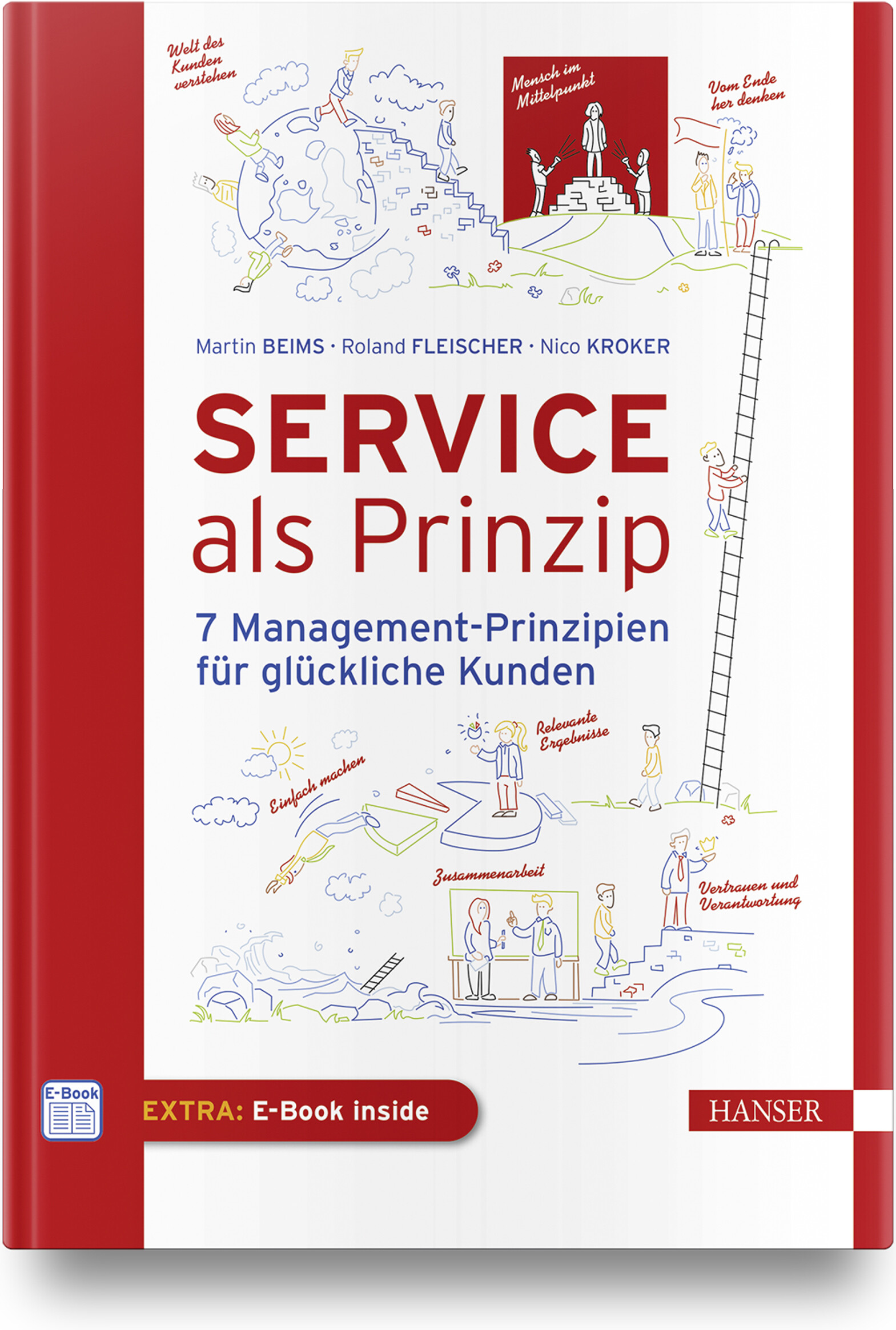
Service als Prinzip
7 Management-Prinzipien für glückliche KundenService ist aus unserem Leben nicht wegzudenken. Jeder von uns nimmt täglich verschiedene Services in Anspruch: Vom Friseur über öffentliche Verkehrsmittel bis hin zu Telefon, Internet und komplexen B2B Services. Das Management solcher Service ist dabei reifer geworden, aber auch komplexer. Und so existiert inzwischen eine unübersichtliche Vielzahl von Methoden, Werkzeugen und Techniken, die sich auch noch nach Branchen unterscheiden. Sie alle spiegeln den Versuch wider, die unterschiedlichsten Erfahrungen in konkrete Handlungsanweisungen zu überführen. Manager wie Mitarbeiter in Serviceorganisationen erhoffen sich davon Unterstützung in der täglichen Arbeit. In der Praxis führt das aber zu unübersichtlich vielen Regeln und Ausnahmen.In dieser Situation helfen wenige einfache, aber starke Prinzipien, die – mit gesundem Menschenverstand eingesetzt – Sinn und Nutzen stiften. Das Buch stellt diese Prinzipien mit Hilfe von Beispielen aus der Praxis vor und gibt Ihnen Anstöße und Tipps zur praktischen Anwendung.Aus dem Inhalt: Der Service der ZukunftDie Welt des Kunden verstehenDen Menschen in den Mittelpunkt stellenSysteme zur Zusammenarbeit schaffenVom Ende her denkenRelevante Ergebnisse erzeugenMit Vertrauen und Verantwortung führenEinfach machenLeseprobe (PDF-Link)Autoren:Martin Beims ist ein geschätzter Impulsgeber für Servicemanagement und Gründer der aretas GmbH. Neben seiner Arbeit als Servicementor gibt er bereits seit vielen Jahren seine Erfahrungen in seinen Büchern weiter.Dr. Roland Fleischer ist geschäftsführender Gesellschafter bei der aretas GmbH. Er verfügt über 20 Jahre Erfahrungen im Service Management.Nico Kroker, MBA Gründer und Geschäftsführer der aretas. Er verfügt über langjährige Erfahrung als Produktmanager, verantwortlicher Prozessmanager und als Managementberater.

Go programmieren für Dummies
Go ist eine der neueren Programmiersprachen, die Softwareentwickler in ihrer Werkzeugkiste haben sollten. Die Sprache wurde mit dem Ziel entwickelt, besonders gut lesbar, benutzerfreundlich und effizient zu sein, und ist eine gute Wahl für Entwickler, die Anwendungen für die Cloud erstellen. Dieses Buch zeigt Ihnen die ersten Schritte in Go. Steigen Sie ein und beginnen Sie mit dem Schreiben von Code, der Daten aus der Cloud holt und sie in die Hände der Benutzer legt.Wei-Meng Lee ist Gründer des Unternehmens Developer Learning Solutions, das Schulungen zu den neuesten mobilen Technologien anbietet. Nach dem Motto »Learning by Doing« legt er in seinen Kursen besonderen Wert auf Praxisorientierung und schafft es dank seiner langjährigen Erfahrung, komplexe Technologietrends verständlich zu erklären. Wei-Meng Lee schreibt regelmäßig für Online- und Printpublikationen und ist Autor mehrerer Bücher.

Excel Tipps und Tricks für Dummies (4. Auflg.)
Erfahren Sie, wie Sie mit Excel noch schneller, besser und effizienter arbeiten! Zeigen Sie im Excel-Alltag richtiges Fachwissen. Verwenden Sie gelungene Mixturen aus raffinierten Formeln und Funktionen. Holen Sie zum Beispiel mehr aus WENN-Funktionen heraus, ohne dass es ein ABER gibt. Nutzen Sie im Programm Verborgenes. Dieses Buch zeigt Ihnen neben vielen Tipps, Tricks und Tastenkombinationen auch Top-Secrets für den direkten Einsatz, die nicht jeder kennt und im Geheimen schlummern.Rainer Schwabe sammelt akribisch Excel-Tipps, schreibt regelmäßig Excel-Artikel für Computerzeitschriften wie die c't und ist renommierter Autor zahlreicher Office-Bücher. Er führt bundesweit Schulungen durch und ist ein gefragter Ansprechpartner für Unternehmen, wenn es um praxisbezogene Lösungen in Excel geht.

Pro Go
Best-selling author Adam Freeman explains how to get the most from Go, starting from the basics and building up to the most advanced and sophisticated features. You will learn how Go builds on a simple and consistent type system to create a comprehensive and productive development experience that produces fast and robust applications that run across platforms.Go, also known as Golang, is the concise and efficient programming language designed by Google for creating high-performance, cross-platform applications. Go combines strong static types with simple syntax and a comprehensive standard library to increase programmer productivity, while still supporting features such as concurrent/parallel programming.Each topic is covered in a clear, concise, no-nonsense approach that is packed with the details you need to learn to be truly effective. Chapters include common problems and how to avoid them.WHAT YOU WILL LEARN* Gain a solid understanding of the Go language and tools* Gain in-depth knowledge of the Go standard library* Use Go for concurrent/parallel tasks* Use Go for client- and server-side development WHO THIS BOOK IS FORExperienced developers who want to use Go to create applicationsADAM FREEMAN is an experienced IT professional who has held senior positions in a range of companies, most recently serving as chief technology officer and chief operating officer of a global bank. Now retired, he spends his time writing and long-distance running.Part 1 - Understanding the Go Language1. Your First Go App2. Putting Go in Context3. Using the Go Tools4. Basic Types, Values, and Pointers5. Operations and Conversions6. Flow Control7. Using Arrays, Slice, and Maps8. Defining and Using Functions9. Using Function Types10. Defining Structs11. Using Methods and Interfaces12. Creating and Using Packages13. Type and Interface Composition14. Using Goroutines and Channels15. Error HandlingPart 2 - Using the Go Standard Library16. String Processing and Regular Expressions 17. Formatting and Scanning Strings 18. Math Functions and Data Sorting 19. Dates, Times, and Durations 20. Reading and Writing Data 21. Working with JSON Data 22. Working with Files 23. Using HTML and Text Templates 24. Creating HTTP Servers 25. Creating HTTP Clients 26. Working with Databases 27. Using Reflection 28. Using Reflection, Part 2 29. Using Reflection, Part 3 30. Coordinating Goroutines 31. Unit Testing, Benchmarking, and LoggingPart 3 - Applying Go32. Creating a Web Platform33. Middleware, Templates, and Handlers34. Actions, Sessions, and Authorization 35. SportsStore: A Real Application 36. SportsStore: Cart and Database 37. SportsStore: Checkout and Administration 38. SportsStore: Finishing and Deployment
Excel Data Analysis For Dummies
TURN JUMBLES OF NUMBERS INTO GRAPHICS, INSIGHTS, AND ANSWERS WITH EXCELWith Microsoft Excel, you can, well, excel at data analysis. And Excel Data Analysis For Dummies can help, with clear and easy explanations of the mountain of features for creating, visualizing, and analyzing data. PivotTables, charts, what-if analysis, statistical functions—it's all in here, with examples and ideas for Excel users of all skill levels. This latest edition covers the most recent updates to Excel and Microsoft 365. You'll beef up your data skills and learn powerful techniques for turning numbers into knowledge. For students, researchers, and business professionals, Excel is the spreadsheet and data application of choice—and Dummies is the best choice for learning how to make those numbers sing.* Learn how to use Excel's built-in data analysis features and write your own functions to explore patterns in your data* Create striking charts and visualizations, and discover multiple ways to tell the stories hidden in the numbers* Clean up large datasets and identify statistical operations that will answer your questions* Perform financial calculations, database operations, and more—without leaving ExcelExcel Data Analysis For Dummies is the go-to resource for Excel users who are looking for better ways to crunch the numbers. PAUL MCFEDRIES is the owner of Logophilia Limited, a successful technical writing firm. He has 25 years’ experience writing instructional computer books and is the author of over 100 books that have sold a combined 4 million copies worldwide.Introduction 1PART 1: GETTING STARTED WITH DATA ANALYSIS 5Chapter 1: Learning Basic Data-Analysis Techniques 7Chapter 2: Working with Data-Analysis Tools 31Chapter 3: Introducing Excel Tables 55Chapter 4: Grabbing Data from External Sources 77Chapter 5: Analyzing Table Data with Functions 99PART 2: ANALYZING DATA USING PIVOTTABLES AND PIVOTCHARTS 113Chapter 6: Creating and Using PivotTables 115Chapter 7: Performing PivotTable Calculations 137Chapter 8: Building PivotCharts 161PART 3: DISCOVERING ADVANCED DATA-ANALYSIS TOOLS 181Chapter 9: Dealing with Data Models 183Chapter 10: Tracking Trends and Making Forecasts 203Chapter 11: Analyzing Data Using Statistics 227Chapter 12: Analyzing Data Using Descriptive Statistics 245Chapter 13: Analyzing Data Using Inferential Statistics 261PART 4: THE PART OF TENS 279Chapter 14: Ten Things You Ought to Know about Statistics 281Chapter 15: Ten Ways to Analyze Financial Data 293Chapter 16: Ten Ways to Raise Your PivotTable Game 303Appendix: Glossary of Data Analysis and Excel Terms 317Index 327
Data-Science-Crashkurs
Eine interaktive und praktische Einführung: Data Science praxisnah erklärt»Data Science Crashkurs« bietet einen praxisnahen Einstieg in Data Science, angereichert mit interaktiven Elementen, der die Breite der Möglichkeiten der Datenanalyse aufzeigt. Dieses Buch geht tief genug, um Vorteile, Nachteile und Risiken zu verstehen, aber steigt dennoch nicht zu tief in die zugrunde liegende Mathematik ein. Es wird nicht nur erklärt, wofür wichtige Begriffe wie Big Data, maschinelles Lernen oder Klassifikation stehen, sondern auch anschaulich mit zahlreichen Beispielen aufgezeigt, wie Daten analysiert werden. Ein breiter Überblick über Analysemethoden vermittelt das nötige Wissen, um in eigenen Projekten geeignete Methoden auszuwählen und anzuwenden, um das gewünschte Ergebnis zu erreichen. Der benötigte Python-Quelltext, der z.B. zur Durchführung von Analysen oder zur Erstellung von Visualisierungen verwendet wird, ist in Form von Jupyter-Notebooks frei verfügbar. Zielgruppe: Data ScientistsDatenanalyst*innenDaten- und InformationsverantwortlicheStudierende der Informatik und Wirtschaftsinformatik Autor: Dr. Steffen Herbold ist Professor für Methoden und Anwendungen maschinellen Lernens am Institut für Software und Systems Engineering der Technischen Universität Clausthal, wo er die Forschungsgruppe AI Engineering leitet. Zuvor hat er an der Universität Göttingen promoviert und habilitiert und am Karlsruher Institut für Technologie einen Lehrstuhl vertreten. In der Forschung beschäftigt er sich mit der Entwicklung und Qualitätssicherung der Lösung von Problemen durch maschinelles Lernen, z.B. zur effizienteren Softwareentwicklung, der Prognose von Ernteerträgen oder auch der Erkennung von aeroakustischen Geräuschquellen.
(ISC)2 SSCP Systems Security Certified Practitioner Official Study Guide
THE ONLY SSCP STUDY GUIDE OFFICIALLY APPROVED BY (ISC)2The (ISC)2 Systems Security Certified Practitioner (SSCP) certification is a well-known vendor-neutral global IT security certification. The SSCP is designed to show that holders have the technical skills to implement, monitor, and administer IT infrastructure using information security policies and procedures.This comprehensive Official Study Guide—the only study guide officially approved by (ISC)2—covers all objectives of the seven SSCP domains.* Security Operations and Administration* Access Controls* Risk Identification, Monitoring, and Analysis* Incident Response and Recovery* Cryptography* Network and Communications Security* Systems and Application SecurityThis updated Third Edition covers the SSCP exam objectives effective as of November 2021. Much of the new and more advanced knowledge expected of an SSCP is now covered in a new chapter "Cross-Domain Challenges." If you're an information security professional or student of cybersecurity looking to tackle one or more of the seven domains of the SSCP, this guide gets you prepared to pass the exam and enter the information security workforce with confidence.ABOUT THE AUTHORMICHAEL S. WILLS, SSCP, CISSP, CAMS, is Assistant Professor of Applied Information Technologies in the College of Business at the Embry-Riddle Aeronautical University’s Worldwide Campus. He has many years of experience designing, building, and operating cutting-edge secure systems, and wrote (ISC)2’s official training courses for both the SSCP and CISSP. He is also the creator of ERAU’s Master of Science in Information Security and Assurance degree program. Introduction xxvAssessment Test xlviiiPART I GETTING STARTED AS AN SSCP 1CHAPTER 1 THE BUSINESS CASE FOR DECISION ASSURANCE AND INFORMATION SECURITY 3Information: The Lifeblood of Business 4Policy, Procedure, and Process: How Business Gets Business Done 10Who Runs the Business? 20Summary 24Exam Essentials 24Review Questions 26CHAPTER 2 INFORMATION SECURITY FUNDAMENTALS 33The Common Needs for Privacy, Confidentiality, Integrity, and Availability 34Training and Educating Everybody 47SSCPs and Professional Ethics 47Summary 49Exam Essentials 50Review Questions 54PART II INTEGRATED RISK MANAGEMENT AND MITIGATION 61CHAPTER 3 INTEGRATED INFORMATION RISK MANAGEMENT 63It’s a Dangerous World 64The Four Faces of Risk 75Getting Integrated and Proactive with Information Defense 83Risk Management: Concepts and Frameworks 89Risk Assessment 95Four Choices for Limiting or Containing Damage 107Summary 114Exam Essentials 114Review Questions 120CHAPTER 4 OPERATIONALIZING RISK MITIGATION 127From Tactical Planning to Information Security Operations 128Operationalizing Risk Mitigation: Step by Step 134The Ongoing Job of Keeping Your Baseline Secure 164Ongoing, Continuous Monitoring 174Reporting to and Engaging with Management 182Summary 183Exam Essentials 183Review Questions 189PART III THE TECHNOLOGIES OF INFORMATION SECURITY 197CHAPTER 5 COMMUNICATIONS AND NETWORK SECURITY 199Trusting Our Communications in a Converged World 200Internet Systems Concepts 206Two Protocol Stacks, One Internet 218Wireless Network Technologies 240IP Addresses, DHCP, and Subnets 243IPv4 vs. IPv6: Important Differences and Options 248CIANA Layer by Layer 251Securing Networks as Systems 262Summary 273Exam Essentials 273Review Questions 280CHAPTER 6 IDENTITY AND ACCESS CONTROL 285Identity and Access: Two Sides of the Same CIANA+PS Coin 286Identity Management Concepts 288Access Control Concepts 295Network Access Control 305Implementing and Scaling IAM 310User and Entity Behavior Analytics (UEBA) 329Zero Trust Architectures 332Summary 333Exam Essentials 334Review Questions 343CHAPTER 7 CRYPTOGRAPHY 349Cryptography: What and Why 350Building Blocks of Digital Cryptographic Systems 358Keys and Key Management 367“Why Isn’t All of This Stuff Secret?” 373Cryptography and CIANA+PS 375Public Key Infrastructures 381Applying Cryptography to Meet Different Needs 399Managing Cryptographic Assets and Systems 405Measures of Merit for Cryptographic Solutions 407Attacks and Countermeasures 408PKI and Trust: A Recap 418On the Near Horizon 420Summary 423Exam Essentials 424Review Questions 429CHAPTER 8 HARDWARE AND SYSTEMS SECURITY 435Infrastructure Security Is Baseline Management 437Securing the Physical Context 442Infrastructures 101 and Threat Modeling 444Endpoint Security 457Malware: Exploiting the Infrastructure’s Vulnerabilities 462Privacy and Secure Browsing 466“The Sin of Aggregation” 469Updating the Threat Model 469Managing Your Systems’ Security 470Summary 471Exam Essentials 472Review Questions 478CHAPTER 9 APPLICATIONS, DATA, AND CLOUD SECURITY 483It’s a Data-Driven World…At the Endpoint 484Software as Appliances 487Applications Lifecycles and Security 490CIANA+PS and Applications Software Requirements 498Application Vulnerabilities 504“Shadow IT:” The Dilemma of the User as Builder 507Information Quality and Information Assurance 511Protecting Data in Motion, in Use, and at Rest 514Into the Clouds: Endpoint App and Data Security Considerations 522Legal and Regulatory Issues 533Countermeasures: Keeping Your Apps and Data Safe and Secure 535Summary 536Exam Essentials 537Review Questions 548PART IV PEOPLE POWER: WHAT MAKES OR BREAKS INFORMATION SECURITY 555CHAPTER 10 INCIDENT RESPONSE AND RECOVERY 557Defeating the Kill Chain One Skirmish at a Time 558Harsh Realities of Real Incidents 564Incident Response Framework 566Preparation 571Detection and Analysis 578Containment and Eradication 584Recovery: Getting Back to Business 587Post-Incident Activities 590Summary 594Exam Essentials 595Review Questions 601CHAPTER 11 BUSINESS CONTINUITY VIA INFORMATION SECURITY AND PEOPLE POWER 607What Is a Disaster? 608Surviving to Operate: Plan for It! 609Timelines for BC/DR Planning and Action 615Options for Recovery 617Cloud- Based “Do- Over” Buttons for Continuity, Security, and Resilience 623People Power for BC/DR 626Security Assessment: For BC/DR and Compliance 633Converged Communications: Keeping Them Secure During BC/DR Actions 634Summary 637Exam Essentials 637Review Questions 641CHAPTER 12 CROSS-DOMAIN CHALLENGES 647Operationalizing Security Across the Immediate and Longer Term 648Supply Chains, Security, and the SSCP 657Other Dangers on the Web and Net 662On Our Way to the Future 666Enduring Lessons 672Your Next Steps 677At the Close 678Exam Essentials 678Review Questions 683Appendix Answers to Review Questions 689Chapter 1: The Business Case for Decision Assurance and Information Security 690Chapter 2: Information Security Fundamentals 693Chapter 3: Integrated Information Risk Management 695Chapter 4: Operationalizing Risk Mitigation 698Chapter 5: Communications and Network Security 701Chapter 6: Identity and Access Control 704Chapter 7: Cryptography 707Chapter 8: Hardware and Systems Security 709Chapter 9: Applications, Data, and Cloud Security 712Chapter 10: Incident Response and Recovery 715Chapter 11: Business Continuity via Information Security and People Power 718Chapter 12: Cross- Domain Challenges 722Index 727

Kompatibilitätsverfahren für Profinet-Hardware mit Ethernet Time Sensitive Networks
Die Vernetzung von industriellen Produktionssystemen soll in Zukunft auf Basis von Ethernet Time Sensitive Networks (TSN) umgesetzt werden. Die Einführung einer neuen Netzwerktechnik in die Feldebene der industriellen Produktion stellt jedoch eine besondere Herausforderung dar, da neben Netzwerkfunktionen eine echtzeitfähige Implementierung von Protokollen und spezifischen Anwendungen in die Feldgeräte erforderlich ist. Bei häufig geringen Stückzahlen der anwendungsspezifischen Geräte sind derartige Neuentwicklungen häufig wirtschaftlich nicht tragbar. Migrationsstrategien kommt daher eine entsprechend große Bedeutung zu.Die Forschungsfrage dieser Arbeit lautet: Wie können bestehende Geräte des Echtzeit-Ethernet-Systems PROFINET mit den geforderten Funktions- und Leistungsmerkmalen wie Zeitsynchronisation und synchronisierte Kommunikation kompatibel mit Ethernet TSN-Netzwerken genutzt werden? Der Autor entwickelte Kompatibilitätsverfahren, mit denen dies möglich wird. Das zentrale Kompatibilitätsverfahren ist der Ethernet TSN-kompa¬tible Bridging-Modus Time Aware Forwarding (TAF), der zeitgesteuerte Kommunikation auf der Basis der Empfangszeit zeitrichtig weiterleitet und per Softwareupdate auf bestehender PROFINET-Hardware implementiert werden kann. Diese Geräte können damit in TSN-Netzwerke integriert werden und synchronisierte Kommunikation mit einem Jitter kleiner als 1 µs nutzen.SEBASTIAN SCHRIEGEL absolvierte eine Berufsausbildung als Kommunikationselektroniker und studierte anschließend an der Technischen Hochschule Ostwestfalen-Lippe Elektrotechnik (Dipl.-Ing. FH) und Mechatronische Systeme (M.Sc.). Er arbeitet bei Fraunhofer IOSB-INA in Lemgo und schloss 2021 eine Promotion an der Universität Bielefeld (Dr.-Ing.) ab.Einleitung.- Entwicklung der industriellen Kommunikation und der Anforderungen.- Stand der Wissenschaft und Technik.- Analyse der Kompatibilität von Ethernet TSN und PROFINET-Hardware.- Kompatibilitätsverfahren.- Validierung der Verfahren.- Zusammenfassung und Bewertung.