

Computer und IT
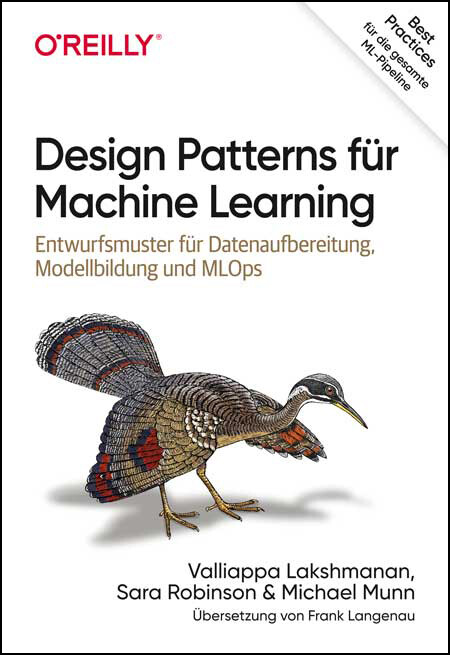
Design Patterns für Machine Learning
Entwurfsmuster für Datenaufbereitung Modellbildung und MLOpsDie Design Patterns in diesem Buch zeigen praxiserprobte Lösungen für wiederkehrende Aufgaben im Machine Learning. Die Autor:innen – ML-Experten bei Google – beschreiben Methoden, die Data Scientists helfen, typische Probleme im gesamten ML-Prozess zu bewältigen. Die Entwurfsmuster verdichten die Erfahrungen von Hunderten von Expert:innen zu klar strukturierten, zugänglichen Best Practices. Das Buch bietet detaillierte Erläuterungen zu 30 Mustern für die Daten- und Problemdarstellung, Operationalisierung, Wiederholbarkeit, Reproduzierbarkeit, Flexibilität, Erklärbarkeit und Fairness. Zu jedem Muster erhält man eine Beschreibung des Problems, eine Vielzahl möglicher Lösungen sowie Empfehlungen, welche Technik die beste für Problemstellungen ist. Aus dem Inhalt:Herausforderungen beim Trainieren, Bewerten und Deployen von ML-Modellen erkennen und überwindenDaten für verschiedene ML-Modelltypen mit Einbettungen, Feature Crosses und mehr darstellenden richtigen Modelltyp für bestimmte Fragestellungen auswähleneine robuste Trainingsschleife mit Checkpoints, Verteilungsstrategie und Hyperparameter-Tuning erstellenskalierbare ML-Systeme deployen, die bei erneutem Training aktuelle Daten berücksichtigenModellvorhersagen für Stakeholder interpretierenModellgenauigkeit, Reproduzierbarkeit, Resilienz und Fairness verbessernAutoren:Valliappa Lakshmanan ist Global Head für Datenanalyse und KI-Lösungen bei Google Cloud. Sara Robinson ist Developer Advocate im Google-Cloud-Team, sie ist spezialisiert auf Machine Learning. Michael Munn ist ML Solutions Engineer bei Google. Er unterstützt Kunden bei der Entwicklung, Implementierung und Bereitstellung von Machine-Learning-Modellen.
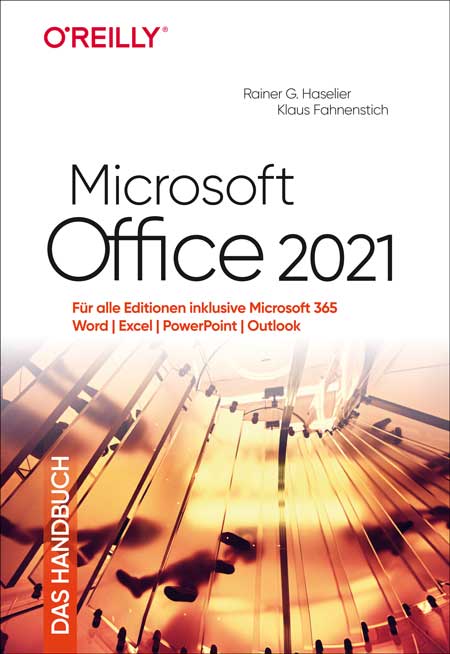
Microsoft Office 2021 - Das Handbuch
Sie möchten sich schnell in Office 2021 zurechtfinden und die neuen Möglichkeiten sofort in die Praxis umsetzen? Ob auf dem Desktop oder in der Cloud – dieses Handbuch bietet Ihnen das notwendige Know-how für den erfolgreichen Einsatz von Word, Excel, PowerPoint und Outlook. Nach einer Einführung in die neuen Funktionen und die Benutzeroberfläche erlernen Sie in den folgenden Kapiteln Schritt für Schritt die wichtigsten Arbeitstechniken. Übersichten erleichtern Ihnen den Überblick und Profitipps helfen Ihnen, Zeit zu sparen – so erledigen Sie Ihre Aufgaben effizient, auch mit Office 2019 oder in der Cloud mit Microsoft 365. Zielgruppe:Einsteiger*innen und Fortgeschrittene Autoren: Rainer G. Haselier und Klaus Fahnenstich beschäftigen sich seit mehr als 20 Jahren intensiv und hauptberuflich mit der Wissensvermittlung rund um Computer und Software. Ihre Erfahrungen aus praxisorientierten Schulungen von Office-Anwendern sind inzwischen in weit über 100 Buchveröffentlichungen eingeflossen. Damit gehören sie zu den erfolgreichsten Computerbuchautoren im deutschsprachigen Raum. Aus dem Inhalt: Office 2021: Neue Funktionen und Benutzeroberfläche, programmübergreifende Funktionen, Dokumente im Team bearbeiten, Speichern auf dem Desktop und in der CloudWord 2021: Erste Schritte, Formatvorlagen, grafische Elemente, Seitenlayout, Tabellen, Serienbriefe, eigene VorlagenExcel 2021: Tabellenblätter formatieren, Rechnen, Funktionen, Tabellenblätter organisieren, Daten sortieren und filtern, Daten mit PivotTable-Berichten auswerten, Arbeitsblätter verknüpfen, Diagramme, DruckenPowerPoint 2021: Text eingeben und formatieren, Gliederungsansicht, Drucken, Vorlagen, Animationen, Präsentieren und VeröffentlichenOutlook 2021: Neues für Umsteiger, Grundlagen und fortgeschrittene Techniken, Profile und E-Mail-Konten, Datendateien, Kontakte/Personen, Aufgaben

LoRaWAN-Knoten im IoT
LoRaWAN hat sich als Kommunikationslösung im IoT hervorragend entwickelt. The Things Network (TTN) hat hierzu seinen Beitrag geleistet. Aktuell wird The Things Network auf The Things Stack Community Edition (TTS (CE)) aktualisiert. Die Cluster von TTN V2 werden gegen Ende 2021 geschlossen.Der Autor zeigt Ihnen die notwendigen Schritte, damit Sie in gewohnter Weise LoRaWAN-Knoten mit Hilfe von TTS (CE) betreiben und vielleicht auch das Netz der Gateways durch ein eigenes Gateway erweitern. Mittlerweile gibt es sogar für den mobilen Einsatz geeignete LoRaWAN-Gateways mit denen Sie über Ihr Mobiltelefon Verbindung zum TTN-Server aufbauen können.In diesem Buch werden eine Reihe kommerzieller und Arduino-basierter LoRaWAN-Knoten als auch neue, kostengünstige und für den Batteriebetrieb geeignete Hardware zum Aufbau autonomer LoRaWAN-Knoten vorgestellt.Die Registrierung von LoRaWAN-Knoten und Gateways im TTS (CE) sowie die Bereitstellung der erhobenen Daten über MQTT und die Visualisierung über Node-RED, Cayenne, Thingspeak und Datacake ermöglichen komplexe IoT-Projekte und völlig neue Anwendungen zu sehr geringen Kosten.Das vorliegende Buch versetzt Sie in die Lage, mit batteriebetriebenen Sensoren (LoRaWAN-Knoten) erfasste Daten drahtlos im Internet bereitzustellen und zu visualisieren.Sie lernen die Grundlagen für Smart-City- und IoT-Anwendungen, die beispielsweise die Messung von Luftqualität, Wasserständen, Schneehöhen, das Ermitteln von freien Parkfeldern (Smart Parking) und die intelligente Steuerung der Straßenbeleuchtung (Smart Lighting) u.a.m. ermöglichen.Dr. Claus Kühnel studierte Informationstechnik an der Technischen Universität Dresden und hat über viele Jahre Embedded Systems für Geräteder Labordiagnostik u.a. entwickelt. In diesem interdisziplinären Spannungsfeld kam er mit der Maker-Szene in Berührung. Er hat zahlreiche Artikel und Bücher zu Hard- und Software von Mikrocontrollern im In- und Ausland verö entlicht. Mit Leidenschaft befasst er sich mit neuen Technologien rund um das Thema Mikrocontroller

The Definitive Guide to Modern Java Clients with JavaFX 17
Build enhanced visual experiences and design and deploy modern, easy-to-maintain, client applications across a variety of platforms. This book will show you how these applications can take advantage of JavaFX’s latest user interface components, 3D technology, and cloud services to create immersive visualizations and allow high-value data manipulation. The Definitive Guide to Modern Java Clients with JavaFX 17 is a professional reference for building Java applications for desktop, mobile, and embedded in the Cloud age. It offers end-to-end coverage of the latest features in JavaFX 17 and Java 17.Among the many new or updated JavaFX features covered are the FX Robot API, for simulating user interaction; customized step repeat timing for the Spinner control; Marlin FX; the ColorPicker color palette; and the GetCenter method.After reading this book, you will be equipped to upgrade legacy client applications, develop cross-platform applications in Java, and build enhanced desktop and mobile native clients.Note: source code can be downloaded from https://github.com/Apress/definitive-guide-modern-java-clients-javafx17.WHAT YOU WILL LEARN:* Create modern client applications in Java using the latest JavaFX 17 and Java 17 LTSBuild enterprise clients that will enable integration with existing cloud services * Use advanced visualization and 3D features* Deploy on desktop, mobile, and embedded devicesWHO THIS BOOK IS FOR:Professional Java developers who are interested in learning the latest client Java development techniques to fill out their skills set.STEPHEN CHIN is Senior Director of Developer Relations at JFrog, author of Raspberry Pi with Java and co-author of Pro JavaFX Platform. He has keynoted numerous Java conferences around the world, including Oracle Code One (formerly JavaOne), where he is an 8-time Rock Star Award recipient. Stephen is an avid motorcyclist who has done evangelism tours in Europe, Japan, and Brazil, interviewing hackers in their natural habitat. When he is not traveling, he enjoys teaching kids how to do embedded and robot programming together with his teenage daughter.JOHAN VOS started to work with Java in 1995. He was part of the Blackdown team, porting Java to Linux. His main focus is on end-to-end Java, combining back-end systems and mobile/embedded devices. He received a Duke Choice award in 2014 for his work on javafx on mobile. In 2015, he co-founded Gluon, which allows enterprises to create (mobile) Java Client applications leveraging their existing backend infrastructure. Gluon received a Duke Choice award in 2015. Johan is a Java Champion and an Oracle Developer Champion, a member of the BeJUG steering group, the Devoxx steering group and he is a JCP member. He has been a speaker at numerous conferences on Java.JAMES WEAVER is a Java developer, author, and speaker with a passion for cloud-native applications, machine learning, and quantum computing. He is a Java Champion, and a JavaOne Rockstar. James has written books including Inside Java, Beginning J2EE, the Pro JavaFX series, and Java with Raspberry Pi. As a Pivotal Developer Advocate, James speaks internationally at software technology conferences. He tweets as @JavaFXpert.1: Getting Started with Client Java2: JavaFX Fundamentals3: Properties and Bindings4: JavaFX Controls Deep Dive5: Mastering Visual and CSS Design6: High Performance Graphics7: Bridging Swing JavaFX Style8: JavaFX 3D9: JavaFX to Web and Cloud10: Packaging Apps for the Desktop11: Native Mobile Apps12: JavaFX 11 on Raspberry Pi13: Maching Learning and JavaFX14: Java Science

Practical Event-Driven Microservices Architecture
In the simplest terms, event-driven architectures are like onions; they are manageable as a single layer (like a monolith) but when you get into them, they begin to cascade apart and you quickly realize that there are many complex layers (distributed microservices architecture). And that’s when the tears begin.This prescriptive guide takes you through the steps of moving a platform with millions of users from a monolith to a microservices event-driven architecture. You will learn about the challenges and complexities that arise in high-throughput environments that often contain upwards of hundreds of microservices. This book is designed to be your single best resource for learning how to apply event-driven architectures in real-world scenarios and offers hundreds of patterns to overcome the common and not so common challenges.While event-driven architectures have been the standard for decoupled, pluggable, evolutionary architectures for years, they have only recently been adopted by enterprises for the purpose of distributed microservices and there is little information about adopting them. Using them at scale can save valuable resources, but requires different considerations, including the added complexity of supporting several moving parts and getting the event schema right from the start in order to avoid large restructuring later on.Author Hugo Rocha understands that these kinds of challenges, as well as many others, need to be considered from the beginning, and helps teach you the mindset needed to create a deliberate strategy upfront. This book offers learning approaches and patterns to get you up to speed in order to sustainably build and manage event-driven architectures.WHAT YOU WILL LEARN* Understand the real-world challenges of event-driven architectures and the patterns to deal with those challenges and the trade-offs of each solution* Leverage the advantages of event-driven architectures to build scalable solutions and address legacy applications* Plan successful future implementations to avoid common pitfalls and apply proven patterns to deal with challenges in a real-world platform with millions of users* Decide whether event-driven solutions are the right choice for the requirements at hand* Discuss and understand advanced concepts about event-driven architecturesWHO IS THIS BOOK FORSoftware engineers and software architects. Anyone currently working with microservice architectures, primarily event-driven microservices, will greatly benefit from this book. Readers working with monoliths will benefit, as the book explores migration from a monolithic application to an event-driven microservice architecture.HUGO ROCHA has nearly a decade of experience working with highly distributed event-driven microservices architectures. He currently is an engineering lead for the leading global ecommerce platform for luxury products (Farfetch), providing services to millions of active users, backed by an event-driven architecture with hundreds of microservices processing hundreds of changes per second. Before that, he worked for several reference telecommunications companies that transitioned from monolithic applications to microservice-oriented architectures. Hugo has managed several teams that directly face the caveats of event-driven architectures every day. He designed solutions for critical pieces of the platform’s highly distributed backoffice platform, handling hundreds of changes per second, concurrently, scalably, and with high performance.CHAPTER 1. EMBRACING EVENT-DRIVEN ARCHITECTURES1.1. The truth about monoliths1.1.1. Anatomy of a typical monolith1.1.2. It's not all bad1.1.3. When monoliths become the business constrictor knot1.1.4. Using event-driven architectures to move away from a monolith1.2. What are microservices and how do they relate to event-driven1.3. SOA, microservice, and event-driven architectures1.4. The promise of event-driven microservices1.5. When should you use event-driven microservices?1.6. Overview of the challenges in event-driven architectures1.7. SummaryCHAPTER 2. MOVING FROM A MONOLITH TO AN EVENT-DRIVEN ARCHITECTURE2.1. Is migrating to an event-driven architecture your best option?2.2. How to decide where to start2.3. Using an event-driven approach to migrate data2.4. Using change data capture (CDC)2.4.1. Event-driven and change data capture (CDC), a real-world example2.5. Event-driven as a source of truth for both systems2.6. Managing dependencies between the two systems2.6.1. Dependency from new event-driven services to the monolith2.6.2. Dependency from the monolith to new event-driven services2.7. Gradually moving traffic2.8. Two-way synchronization and living with two sources of truth2.9. SummaryCHAPTER 3. DEFINING AN EVENT-DRIVEN MICROSERVICE AND ITS BOUNDARIES3.1. Building event-driven microservices3.1.1. Durable vs. ephemeral message brokers and GDPR3.1.2. Message types3.1.3. When to use documents over events3.1.4. Common event-driven messaging patterns3.1.5. Event-driven service topologies3.1.6. Common event-driven pitfalls and anti-patterns3.2. Organizing event-driven microservice boundaries3.3. Brief and practical introduction to domain-driven design and bounded contexts3.4. The impact of aggregate size and common pitfalls3.5. Request-driven vs. event-driven services3.6. Adding functionality to an existing microservice vs. creating a new one3.7. SummaryCHAPTER 4. EVENT-DRIVEN STRUCTURAL PATTERNS AND HIGH-LEVEL PROCESSES4.1. The challenges of transactional consistency in distributed systems4.1.1. Why abandon a monolithic database in the first place?4.1.2. The limitations of distributed transactions4.1.3. Managing multi-step processes with Sagas4.2. Event-driven orchestration pattern4.3. Event-driven choreography pattern4.4. Orchestration, choreography, or both?4.5. Data retrieval in event-driven architectures and associated patterns4.5.1. CQS, CQRS and when to use them4.5.2. The different flavors of CQRS4.5.3. When and how to use event sourcing4.5.4. Using command sourcing and its applicability4.6. Building multiple read models4.7. The pitfall of microservice spaghetti architectures and how to avoid it4.8. SummaryCHAPTER 5. HOW TO MANAGE EVENTUAL CONSISTENCY5.1. The impacts of eventual consistency and the need for alignment with the business5.2. Using event schema to leverage eventual consistency5.3. Applying domain boundaries to leverage eventual consistency5.4. Event versioning to manage delays5.5. Saving state to avoid eventual consistency5.6. End-to-end argument: a real-world use case5.7. For most use cases, it's not eventual if nobody notices5.7.1. Autoscaling use case with Prometheus and Kafka5.8. Tradeoffs of each solution5.9. SummaryCHAPTER 6. DEALING WITH EVENT-DRIVEN CONCURRENCY AND OUT OF ORDER MESSAGES6.1. Why is concurrency different in a monolith from an event-driven architecture?6.2. Pessimistic vs. optimistic concurrency, when and when not to use6.2.1. Pessimistic vs. optimistic approaches6.2.2. Solving concurrency by implementation and by architecture6.3. Using optimistic concurrency6.4. Using pessimistic concurrency6.4.1. Distributed locks6.4.2. Database transactions6.5. Dealing with out-of-order events6.5.1. How can events lose their order?6.5.2. Solving out of order events with versioning6.6. Using end-to-end message partitioning to handle concurrency and guarantee message ordering6.6.1. The relevance of message routing and partitioning6.6.2. Real-world example of message routing using Kafka6.6.3. Using end-to-end partitioning6.6.4. Limitations of end-to-end partitioning6.7. SummaryCHAPTER 7. ACHIEVING RESILIENCE AND EVENT PROCESSING RELIABILITY IN EVENT-DRIVEN MICROSERVICES7.1. Common failures in microservice architectures and how they relate to event-driven architectures7.1.1. Cascading failures and event-driven services7.1.2. Load balancing and rate limiters in event-driven services7.2. Understanding message delivery semantics7.3. Avoiding inconsistencies when saving state and publishing events7.3.1. Event stream as the only source of truth7.3.2. Outbox pattern7.3.3. Transactions and compensating actions7.4. Applying ACID 2.0 as a resilience strategy7.5. Avoiding message leak7.6. Applying common resilience patterns7.6.1. Retries7.6.2. Circuit breakers7.7. Recovering data and repairing state7.8. Bulkhead pattern7.9. SummaryCHAPTER 8. CHOOSING THE CORRECT EVENT SCHEMA DESIGN8.1. Event storming8.2. Event headers and envelopes8.2.1. Headers vs envelopes8.2.2. Relevant event contextual information8.3. Town crier events8.4. Bee events8.5. The event schema goldilocks principle8.6. Denormalized event schema8.7. Schema evolution8.7.1. Event stream versioning8.7.2. Using a downscaler/upscaler8.8. SummaryCHAPTER 9. HOW TO LEVERAGE THE USER INTERFACE9.1. Using an aggregating layer9.2. Backends for frontends9.3. UI Decomposition9.3.1. Application decomposition9.3.2. Page decomposition9.3.3. Section decomposition9.4. The limitations of API composition9.5. Task-based UIs9.6. Event-driven APIs9.7. SummaryCHAPTER 10. OVERCOMING THE CHALLENGES IN QUALITY ASSURANCE10.1. The only happens in production syndrome10.2. Component tests vs integration tests10.3. The correct mix of component validation and production validations10.4. Monitoring and alarmistic from the ground up10.5. SummaryCHAPTER 11. ORGANIZATIONAL COST OF EVENT-DRIVEN MICROSERVICES11.1. The epic journey to be onboarded11.2. When implementation overhead impacts time to market11.3. Dependencies management11.4. Summary

Microsoft Office 2021 - Das Handbuch
DER KLASSIKER FÜR DAS ARBEITEN MIT MICROSOFT OFFICE – AKTUELL ZU OFFICE 2021 UND MICROSOFT 365 * Für alle Office-Editionen geeignet * Für Einsteiger und Fortgeschrittene * Alle wichtigen Office-Apps in einem Buch Sie möchten sich schnell in Office 2021 zurechtfinden und die neuen Möglichkeiten sofort in die Praxis umsetzen? Ob auf dem Desktop oder in der Cloud – dieses Handbuch bietet Ihnen das notwendige Know-how für den erfolgreichen Einsatz von Word, Excel, PowerPoint und Outlook. Nach einer Einführung in die neuen Funktionen und die Benutzeroberfläche erlernen Sie in den folgenden Kapiteln Schritt für Schritt die wichtigsten Arbeitstechniken. Übersichten erleichtern Ihnen den Überblick und Profitipps helfen Ihnen, Zeit zu sparen – so erledigen Sie Ihre Aufgaben effizient, auch mit Office 2019 oder in der Cloud mit Microsoft 365. - Office 2021: Neue Funktionen und Benutzeroberfläche, programmübergreifende Funktionen, Dokumente im Team bearbeiten, Speichern auf dem Desktop und in der Cloud - Word 2021: Erste Schritte, Formatvorlagen, grafische Elemente, Seitenlayout, Tabellen, Serienbriefe, eigene Vorlagen - Excel 2021: Tabellenblätter formatieren, Rechnen, Funktionen, Tabellenblätter organisieren, Daten sortieren und filtern, Daten mit PivotTable-Berichten auswerten, Arbeitsblätter verknüpfen, Diagramme, Drucken - PowerPoint 2021: Text eingeben und formatieren, Gliederungsansicht, Drucken, Vorlagen, Animationen, Präsentieren und Veröffentlichen - Outlook 2021: Neues für Umsteiger, Grundlagen und fortgeschrittene Techniken, Profile und E-Mail-Konten, Datendateien, Kontakte/Personen, Aufgaben

Entwurfsmuster von Kopf bis Fuß
JETZT AKTUALISIERT UND ERWEITERT: DAS STANDARDWERK ZU ENTWURFSMUSTERN * »Dieses Buch vereint Spaß, herzhaftes Lachen, profundes technisches Verständnis und geniale Praxistipps zu einem denkwürdigen Lesegenuss.« Richard Helm, Gang of Four * Softwareentwickler wollen das Rad nicht neu erfinden: Mit Entwurfsmustern können Sie von den Erfahrungen und Best Practices anderer profitieren * Die Design Patterns werden detailliert und verständlich erklärt, inklusive Herleitung und geeigneten Anwendungsfällen Dieses Buch ist ein moderner Klassiker zum Thema Entwurfsmuster. Mit dem einzigartigen Von-Kopf-bis-Fuß-Lernkonzept gelingt es den Autoren, die anspruchsvolle Materie witzig, leicht verständlich und dennoch gründlich darzustellen. Jede Seite ist ein Kunstwerk für sich, mit vielen visuellen Überraschungen, originellen Comic-Zeichnungen, humorvollen Dialogen und geistreichen Selbstlernkontrollen. Spätestens, wenn es heißt "Spitzen Sie Ihren Bleistift", wird Leser:innen klar, dass bei diesem Buch Mitmachen gefragt ist. Das ist nicht nur unterhaltsam, sondern auch effektiv: Komplexe Sachverhalte lassen sich nach Erkenntnis der modernen Lernwissenschaft am gründlichsten über mehrere verschiedene Kanäle verstehen. Das Buch verspricht Ihnen daher nicht nur Spaß beim Lernen, Sie werden nach der Lektüre auch die Herausforderungen des Softwaredesigns meistern können.
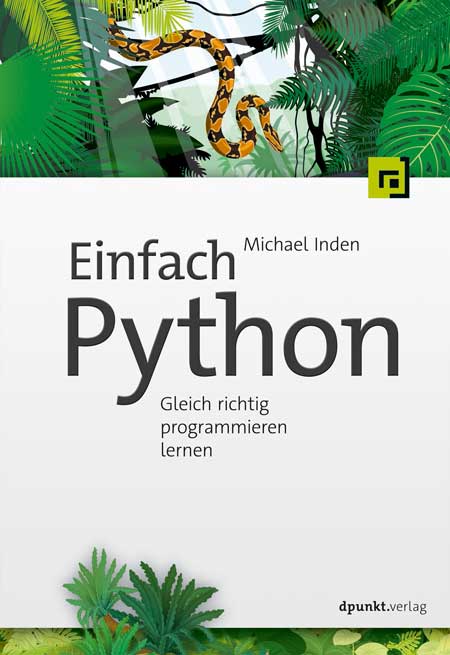
Einfach Python
Gleich richtig programmieren lernen - das Profi-Buch von Michael Inden in Erstauflage, November 2021.Endlich programmieren lernen und die ersten Projekte umsetzen. Hierfür bietet sich Python als eine der populärsten Programmiersprachen an. Mit diesem Buch gelingt es mühelos ein Einstieg, denn man wird auf einer Entdeckungsreise vom erfahrenden Trainer Michael Inden begleitet. Er erklärt die Grundlagen der Python-Programmierung leicht und verständlich. Generell wird die trockene Theorie auf ein Minimum reduziert. Ergänzend werden immer wieder auch Python-spezifische Besonderheiten wie Built-in-Funktionen, Slicing, Comprehensions, Generatoren usw. erklärt, die das Entwicklen erleichtern und Programme gleich von Anfang an Python-like, stilistisch schön – kurz Pythonic – machen. Eine große Rolle spielt der interaktive Einstieg mithilfe der Python-Kommandozeile. Damit können kleine Programme direkt ausprobiert werden und Erfolgserlebnisse stellen sich schnell ein. Dieses Vorgehen eignet sich ideal, um sich Python im Selbststudium sowie im eigenen Tempo anzueignen. Allmählich werden die Themen anspruchsvoller und die zu erstellenden Programme größer. Schließlich erfährt man wie man eine Entwicklungsumgebung einsetzen, und lernt die objektorientierte Programmierung kennen. Mit den erworbenen Grundlagen kann man sich immer gezielter mit eigenen Projekten beschäftigen. Erste Ideen liefern drei etwas umfangreichere Programmierbeispiele aus der Praxis, die zudem einen Einblick in das schrittweise, erfolgreiche Entwickeln von Applikationen geben. Das Buch besteht aus in sich abgeschlossenen, aufeinander aufbauenden Kapiteln zu den wesentlichen Bereichen der Programmiersprache Python und den relevanten Sprachelementen. Aufgaben und Musterlösungen runden viele Kapitel ab, sodass Sie das zuvor Gelernte direkt anhand neuer Problemstellungen praktizieren und Ihr Wissen vertiefen können. Zahlreiche kurze Codebeispiele verdeutlichen die Lerninhalte und laden zum Experimentieren ein. Gleich von Anfang an lernen Sie, Ihren Sourcecode sauber zu strukturieren und einen guten Stil zu entwickeln. Dabei hilft ein Kapitel zu Programmierregeln, sogenannten Coding Conventions und zum Testen mit Pytest.Inhalt (PDF-Link)Autor:Dipl.-Inform. Michael Inden ist Oracle-zertifizierter Java-Entwickler. Nach seinem Studium in Oldenburg hat er bei diversen internationalen Firmen in verschiedenen Rollen etwa als Softwareentwickler, -architekt, Consultant, Teamleiter, CTO sowie Leiter Academy gearbeitet. Zurzeit ist er freiberuflich als Autor und Trainer in Zürich tätig.Michael Inden hat über zwanzig Jahre Berufserfahrung beim Entwurf komplexer Softwaresysteme gesammelt, an diversen Fortbildungen und mehreren Java-One-Konferenzen teilgenommen. Sein besonderes Interesse gilt dem Design qualitativ hochwertiger Applikationen sowie dem Coaching. Sein Wissen gibt er gerne als Trainer in internen und externen Schulungen und auf Konferenzen weiter, etwa bei der JAX/W-JAX, JAX London, Oracle Code One, ch.open sowie bei der Java User Group Switzerland.
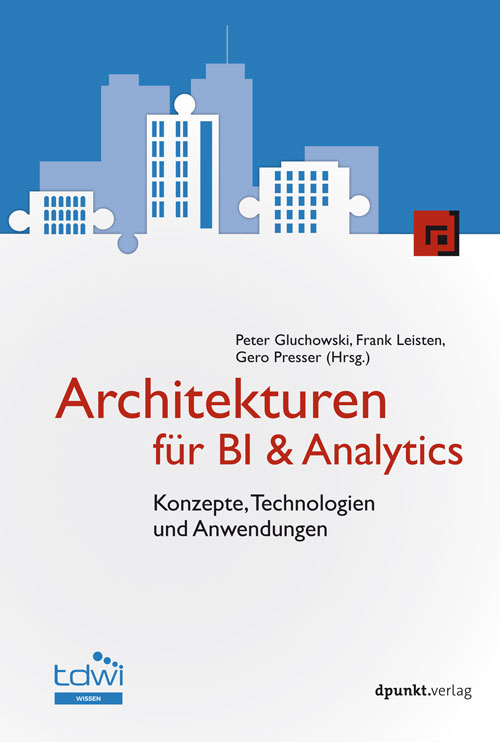
Architekturen für BI & Analytics
Konzepte, Technologien und Anwendung - Erstauflage aus November 2021.Sowohl regulatorische Vorgaben als auch gesteigerte Anforderungen seitens der Fachanwender haben in den letzten Jahren zu immer komplexeren Business-Intelligence- und Analytics-Landschaften geführt, die es zu entwickeln und betreiben gilt. So setzt sich eine heute übliche Architektur aus zahlreichen Einzelkomponenten zusammen, deren Zusammenspiel und funktionale Abdeckung als wesentlicher Erfolgsfaktor für zugehörige BIA-Initiativen zu werten ist.»Architekturen für Business Intelligence & Analytics« setzt sich das Ziel, die derzeit gebräuchlichen Architekturmuster zu beschreiben und dabei einen Überblick über die aktuell verwendeten Technologien zu liefern. Dabei werden nicht nur die architektonischen Frameworks der großen Produktanbieter aufgegriffen, sondern darüber hinaus Lösungen für konkrete Anwendungsfälle präsentiert. Im Einzelnen werden behandelt:Anforderungen an eine ganzheitliche BIA-ArchitekturArchitekturen und Technologien für Data LakesDatenzugriffsstrategien für AnalyticsEnterprise Application IntegrationCloud-Konzepte und -ArchitekturenEinfluss regulatorischer AnforderungenDatenvirtualisierungBIA-Architekturen für KMU Das Buch vermittelt wertvolle Einblicke und hilfreiche Anregungen für die erfolgreiche Konzeptionierung und Realisierung von BIA-Ökosystemen und -Landschaften in der Praxis. Zielgruppe:Business-Intelligence-Manager*innenDaten- und InformationsverantwortlicheProjektleiter*innenStudierende der Informatik und Wirtschaftsinformatik Autoren:Prof. Dr. Peter Gluchowski leitet den Lehrstuhl für Wirtschaftsinformatik, insb. Systementwicklung und Anwendungssysteme, an der Technischen Universität in Chemnitz und konzentriert sich dort mit seinen Forschungsaktivitäten auf das Themengebiet Business Intelligence & Analytics. Er beschäftigt sich seit mehr als 25 Jahren mit Fragestellungen, die den praktischen Aufbau dispositiver bzw. analytischer Systeme zur Entscheidungsunterstützung betreffen. Seine Erfahrungen aus unterschiedlichsten Praxisprojekten sind in zahlreichen Veröffentlichungen zu diesem Themenkreis dokumentiert. Frank Leisten ist passionierter Berater für datengetriebene Vorhaben mit modernen Technologien. Seine Expertise in den Funktionen des Datenmanagements sowie jahrelange Praxiserfahrung in verschiedenen IT-Domänen und Rollen kommen seinen Kunden bei der Orchestrierung sowie der kulturellen und strategischen Entwicklung ihrer Transformationen zugute. Dr. Gero Presser ist Mitgründer und Geschäftsführer bei der QuinScape GmbH, einem Dortmunder IT-Dienstleistungsunternehmen mit 170 Mitarbeitern und Fokus auf Data & Analytics. Er organisiert die Meetup-Gruppe „Business Intelligence & Analytics Dortmund“ mit über 1.000 Mitgliedern und ist Vorsitzender des TDWI Roundtable Ruhrgebiet.
Prinzipien des Softwaredesigns
Entwurfsstrategien für komplexe SystemeDie Prinzipien guten Softwaredesigns zu verstehen, hält John Ousterhout für eine Schlüsselqualifikation in der Softwareentwicklung. Sein Buch gibt Impulse für eine anregende und notwendige Diskussion und bietet praxistaugliche Hilfestellungen für gute Designentscheidungen. Ausgehend von der Frage »Wie können wir die Komplexität in großen Softwaresystemen reduzieren und managen?« arbeitet John Ousterhout Prinzipien für das Softwaredesign heraus, die als Leitlinie für den gesamten Softwareentwicklungsprozess dienen können. Ousterhout stellt Überzeugungen infrage, die weit verbreitet sind: Er rät davon ab, die Anzahl der Codezeilen einer Methode oder Klasse als Gradmesser für die Komplexität von Software zu verstehen, und plädiert dafür, sich auf ihre »Tiefe« zu konzentrieren – wie gut sie also Komplexität verstecken. Und während viele Entwicklerinnen und Entwickler meinen, dass sich gut geschriebene Programme von selbst dokumentierten, zeigt Ousterhout, wie essenziell Kommentare sind: Das Schreiben guter Kommentare ermöglicht Abstraktion, und es wird zu besserem Softwaredesign führen.Zielgruppe:Softwareentwickler*innenProgrammierendeSoftwarearchitekt*innenAutor:John Ousterhout ist Professor für Informatik an der Stanford University. Er hat die Entwicklung weit verbreiteter Softwaresysteme wie Raft, Tcl/Tk, Sprite und Magic geleitet und eigene Unternehmen gegründet. Er ist Mitglied der National Academy of Engineering und erhielt zahlreiche Auszeichnungen wie den U.C. Berkeley Distinguished Teaching Award.Aus dem Inhalt:Wie man komplexe Systeme in möglichst unabhängige Module mit einfachen Schnittstellen zerlegen kannWie Spezialisierung in Modulen zu vermeiden istWie man die Anzahl der Stellen im Code minimieren kann, an denen Exceptions behandelt werden müssenWie Kommentare und gut gewählte Namen genutzt werden können, um den Code verständlicher zu machenWie es zu vermeiden ist, dass sich Komplexität einschleicht, wenn Systeme sich weiterentwickelnWelche Warnhinweise darauf hindeuten, dass Designentscheidungen überprüft werden sollten

UX-Strategie (2. Auflg.)
User-Experience-Strategie schließt die Wissenslücke zwischen Geschäftsstrategie und UX-Design, aber bis jetzt gab es kein einfach anzuwendendes Framework für die Umsetzung. Dieser praktische Leitfaden stellt leicht verständliche Strategie-Tools und -Techniken vor, die Ihnen und Ihrem Team helfen, innovative Multi-Device-Produkte zu entwickeln, die von den Nutzern gerne verwendet werden.Die erfolgreiche UX-Strategin Jaime Levy zeigt UX/UI-Designer*innen, Produktmanager*innen und angehenden Strateg*innen einfache bis fortgeschrittene Methoden, die sofort angewendet werden können. Durch Business Cases und anschauliche Praxisbeispiele erhalten Sie wertvolle Einblicke und ein topaktuelles Kapitel über die Durchführung qualitativer Online-Nutzerforschung rundet das Buch ab.
Spring Boot
Cloud-native Anwendungen mit Java und Kotlin erstellenMit mehr als 75 Millionen Downloads pro Monat ist Spring Boot das populärste und am weitesten verbreitete Java-Framework. Dank seiner Benutzerfreundlichkeit und Leistungsfähigkeit hat es die Anwendungsentwicklung von Monolith-Architekturen und Microservices revolutioniert. Doch die Einfachheit von Spring Boot kann zunächst auch irritieren. Was brauchen Entwickler:innen, um sofort produktiv zu werden? Dieses praxisorientierte Buch zeigt, wie das Framework genutzt werden kann, um erfolgreich unternehmenskritische Applikationen zu entwickeln. Mark Heckler von VMware, der Firma hinter Spring, leitet durch die Architektur und die Konzepte von Spring Boot und behandelt auch Themen wie Debugging, Testen und Deployment. Wenn man mit Spring Boot schnell und effektiv Cloudnative Java- oder Kotlin-Anwendungen entwickeln will – inklusive reaktiver Programmierung, dem Erstellen von APIs und dem Einrichten von Datenbankzugriffen aller Art – dann ist dieses Buch genau das Richtige. Zielgruppe:Java-Entwickler*innen Autor:Mark Heckler ist Softwareentwickler und Spring Developer Advocat bei VMware. Als Java Champion und Google Developer Expert für Kotlin konzentriert er sich auf die Entwicklung innovativer, produktionsreifer Software für die Cloud. Mark engagiert sich in Open-Source-Projekten und ist Autor und Kurator des Blogs Hecklers in Development, brewing stronger Java (https://thehecklers.com).Aus dem Inhalt:Wie Spring Boot die Entwicklung und das Deployment Cloud-nativer Anwendungen vereinfachtErstellung reaktiver Anwendungen und Erweiterung der Kommunikation über die Netzwerkgrenzen hinaus, um verteilte Systeme zu erstellenWie der Spring-Boot-typische Ansatz die Produktivität steigert und die Portabilität von Anwendungen verbessertDeploying von Spring-Boot-Anwendungen, schnell und zuverlässig für die Arbeitslast in der ProduktivumgebungÜberwachung des Anwendungs- und Systemzustand für optimale Performance und ZuverlässigkeitDebuggen, testen und sichern von Cloud-basierten Anwendungen mit State-of-the-Art-Techniken

UX-Strategie
MIT DER RICHTIGEN STRATEGIE ZEIT UND GELD SPAREN UND KUNDEN ÜBERZEUGEN * Das Buch verbindet UX-Design mit Geschäftsstrategie. * Übersetzung der zweiten englischen Auflage mit topaktuellen Beispielen und Techniken, inkl. Online-Nutzerforschung * Voller Praxisbezug und einem kostenlosen Toolkit zum Herunterladen und Loslegen User-Experience-Strategie schließt die Wissenslücke zwischen Geschäftsstrategie und UX-Design, aber bis jetzt gab es kein einfach anzuwendendes Framework für die Umsetzung. Dieser praktische Leitfaden stellt leicht verständliche Strategie-Tools und -Techniken vor, die Ihnen und Ihrem Team helfen, innovative Multi-Device-Produkte zu entwickeln, die von den Nutzern gerne verwendet werden. Die erfolgreiche UX-Strategin Jaime Levy zeigt UX/UI-Designer*innen, Produktmanager*innen und angehenden Strateg*innen einfache bis fortgeschrittene Methoden, die sofort angewendet werden können. Durch Business Cases und anschauliche Praxisbeispiele erhalten Sie wertvolle Einblicke und ein topaktuelles Kapitel über die Durchführung qualitativer Online-Nutzerforschung rundet das Buch ab. - Definieren Sie Wertversprechen und validieren Sie Zielkunden durch provisorische Personas und Techniken zur Kundenfindung - Erkunden Sie Marktchancen durch die Durchführung von Wettbewerbsforschung und -analyse - Entwerfen Sie Experimente mit schnellen Prototypen, die auf das Geschäftsmodell ausgerichtet sind - Führen Sie Online-Nutzerforschung durch, um schnell und mit jedem Budget wertvolle Erkenntnisse zu gewinnen - Testen Sie Geschäftsideen und validieren Sie Marketingkanäle, indem Sie Online-Werbung und Landing-Page-Kampagnen durchführen

Entwurfsmuster von Kopf bis Fuß (2. Auflg.)
Mit Design Patterns flexible objektorientierte Software erstellen. Worum geht es in diesem Buch? Entwurfsmustern bieten die geballte Erfahrung von Entwicklern, die elegante, übertragbare Lösungen für typische Herausforderungen des Softwaredesigns gefunden haben. Dieses Buch zeigt auf spielerische, visuell abwechslungsreiche Art bewährte Muster, mit denen man flexible Software entwerfen kann. Es zeigt, auf welche Muster es ankommt, wie diese für eigene Designs eingesetzt werden können und auf welchen objektorientierten Entwurfsprinzipien sie beruhen. Mit diesem modernen Klassiker werden Sie – wie schon Hunderttausende Entwicklern vor Ihnen – Ihr Wissen über Softwaredesign entscheidend verbessern. Wieso sieht dieses Buch so anders aus? Das Buch ist ein Workbook mit zahlreichen visuellen Überraschungen, das Spaß macht und auf die Arbeitsweise Ihres Gehirns zugeschnitten ist: Statt einschläfernder Bleiwüsten werden verschiedenste Textformen und Selbstlernkontrollen verwendet, die Ihnen das Wissen direkt ins Hirn spielen. Spätestens, wenn es heißt »Spitzen Sie Ihren Bleistift«, wird klar, dass hier Mitmachen gefragt ist. Zielgruppe: Programmierer*innenStudent*innenSoftwareentwickler*innen Autoren: Eric Freeman ist Informatiker, Technologieautor, Unternehmer und ehemaliger CTO der Walt Disney Company. Er hat einen Doktortitel in Informatik von der Yale University. Aktuell ist er Kodirektor der Head-First-Reihe, die in Deutschland als Von-Kopf-bis-Fuß-Reihe bekannt ist. Bei der von ihm mitgegründeten Online-Lernplattform WickedlySmart widmet er seine Zeit der Erstellung von Print- und Video-Inhalten, die über die führenden Bildungskanäle vertrieben werden. Eric lebt in Austin, Texas. Elisabeth Robson ist Softwareentwicklerin, Autorin und IT-Trainerin. Seit ihren Studententagen an der Yale University, wo sie ihren Master in Informatik erworben hat, ist sie mit Leib und Seele Informatikerin. Sie ist Mitbegründerin von WickedlySmart, einer Online-Lernplattform für Softwareentwickler:innen, für die sie Bücher, Artikel und Videos erstellt. Zuvor hat sie als Director of Special Projects bei O’Reilly Media Präsenz-Workshops und Onlinekurse zu einer Vielzahl von technischen Themen gestaltet.

Mastering VMware Horizon 8
Learn all about designing, installing, configuring, and managing VMware Horizon, with a core focus on how to deliver virtual desktops using Horizon. This book allows you to follow the complete process for deploying VMware Horizon and covers the design, deployment, and management of solutions.You'll start by reviewing remote solutions, from virtual desktops to published applications, including the benefits and what the different solutions deliver. Once through the high-level technology you'll then look at the VMware Horizon solution focusing on the architecture and the components that make up the solution and how to design a production-ready environment. Other VMware EUC technologies that complement the core Horizon solution will also be incorporate into it.Armed with the knowledge of how to design a solution, you'll move onto the installation phase and start to build a test lab environment. Once your lab is installed, you'll move onto the configuration stage where you will understand how to build, configure, and optimize virtual desktops, and desktop pools ready for end-users to use. As part of this you will also look at delivering published applications with Horizon Apps.With resources built and configured you can optimize the end-user experience with Horizon clients. The final sections of the book will focus on the other complementary solutions introducing you to VMware App Volumes and VMware Dynamic Environment Manager before finishing with how to manage the solution where we will look at some advanced configuration options and troubleshooting techniques.WHAT YOU WILL LEARN* See the core components of VMware Horizon and their functionality* Design and install a Horizon environment* Deliver the best end-user experience* Manage the deployed solution* Use VMware reference architectures to create real-life scenario examples* Review the minimum requirements for designing a solutionWHO THIS BOOK IS FORVMware professionals, system integrators, IT professionals, and consultants.PETER VON OVEN is an experienced technical consultant working closely with customers and partners designing technology solutions, to meet business needs. During his career, Peter has presented at key IT events such as VMworld, IP EXPO, and various VMUGs and CCUG events. He has also worked in senior presales roles and presales management roles for Fujitsu, HP, Citrix, and VMware, and has been awarded VMware vExpert for the last six years in a row. In 2016, Peter founded his own company, Droplet Computing, where he works today as the founder and chief executive officer, helping redefine the way applications are delivered today. He is also an avid author, having now written 13 books and made videos about VMware end-user computing solutions. In his spare time, Peter volunteers as a STEM Ambassador, helping the next generation develop the skills and confidence in building careers in technology.Chapter 1: What Are Remote Desktop Solutions?Chapter 2: Getting Started with VMware HorizonChapter 3: Architecting Horizon for DeploymentChapter 4: Installing and Configuring Your Horizon EnvironmentChapter 5: Creating Virtual Desktop Images for DeploymentChapter 6: Building and Configuring Desktop PoolsChapter 7: Managing Horizon with Active Directory GPOsChapter 8: Horizon Computer GPOs Settings (split from chapter 7)Chapter 9: Horizon User GPO Settings (split from chapter 7)Chapter 10: Managing the End User Environments (former chapter 8)Chapter 11: Horizon Apps (former chapter 9)Chapter 12: Horizon Published Desktop (former chapter 10)Chapter 13: Connecting End Users (former chapter 11)Chapter 14: Horizon Enterprise Edition (former chapter 12)Chapter 15: Upgrading Horizon (former chapter 13)Chapter 16: Running Horizon in the Cloud (former chapter 14)Chapter 17: Horizon Troubleshooting (former chapter 15)Online Resource: Advanced Configuration and Management (former chapter 16)

Samsung Galaxy A32 / A32 5G
Die verständliche Anleitung für Ihr Smartphone:- Alle Funktionen & Einstellungen auf einen Blick- Schritt für Schritt erklärt – mit praktischen TippsMit diesem smarten Praxisbuch gelingt Ihnen der schnelle und sichere Einstieg in Ihr Smartphone. Lernen Sie Ihr Handymodell von Grund auf kennen und beherrschen! Anschauliche Anleitungen, Beispiele und Bilder zeigen Ihnen gut nachvollziehbar, wie Sie Ihr mobiles Gerät optimal handhaben – von der Ersteinrichtung und Personalisierung über die große Funktionsvielfalt bis zu den wichtigsten Anwendungen. Nutzen Sie darüber hinaus die übersichtlichen Spicker-Darstellungen: Damit können Sie jene Bedienungsschritte, die man am häufigsten braucht, aber immer wieder vergisst, auf einen Blick finden und umsetzen. Freuen Sie sich auf viele hilfreiche Tipps und legen Sie ganz einfach los!Aus dem Inhalt:- Alle Bedienelemente des Smartphones auf einen Blick- Ersteinrichtung und Tipps zum Umzug- Google-Konto erstellen und verwalten- Die Benutzeroberfläche Ihres Smartphones personalisieren- Apps aus dem Play Store herunterladen- Kontakte anlegen und im Adressbuch verwalten- Anrufe tätigen und SMS austauschen - Nachrichten über Mail und WhatsApp versenden und empfangen- Uhr, Kalender, Maps und andere praktische Apps nutzen - Fotos sowie Videos aufnehmen, verwalten und teilen- Ins Internet gehen über WLAN und mobile Daten - Updates, Datenschutz und Sicherheit
Practical Go
YOUR PRACTICAL, HANDS-ON GUIDE TO WRITING APPLICATIONS USING GOGoogle announced the Go programming language to the public in 2009, with the version 1.0 release announced in 2012. Since its announcement to the community, and the compatibility promise of the 1.0 release, the Go language has been used to write scalable and high-impact software programs ranging from command-line applications and critical infrastructure tools to large-scale distributed systems. It’s speed, simplicity, and reliability make it a perfect choice for developers working in various domains.In Practical Go - Building Scalable Network + Non-Network Applications, you will learn to use the Go programming language to build robust, production-ready software applications. You will learn just enough to building command line tools and applications communicating over HTTP and gRPC.This practical guide will cover:* Writing command line applications* Writing a HTTP services and clients* Writing RPC services and clients using gRPC* Writing middleware for network clients and servers* Storing data in cloud object stores and SQL databases* Testing your applications using idiomatic techniques* Adding observability to your applications* Managing configuration data from your applicationsYou will learn to implement best practices using hands-on examples written with modern practices in mind. With its focus on using the standard library packages as far as possible, Practical Go will give you a solid foundation for developing large applications using Go leveraging the best of the language’s ecosystem.AMIT SAHA is a software engineer at Atlassian, located in Sydney, Australia. He has written Doing Math with Python: Use Programming to Explore Algebra, Statistics, Calculus, and More! (No Starch Press, 2015) and Write Your First Program (PHI Learning, 2013). His other writings have been published in technical magazines, conference proceedings, and research journals. He can be found ONLINE AT HTTPS://ECHORAND.MEIntroduction xviiGetting Started xxiCHAPTER 1 WRITING COMMAND-LINE APPLICATIONS 1Your First Application 1Writing Unit Tests 8Using the Flag Package 14Testing the Parsing Logic 20Improving the User Interface 22Removing Duplicate Error Messages 23Customizing Usage Message 24Accept Name via a Positional Argument 25Updating the Unit Tests 28Summary 32CHAPTER 2 ADVANCED COMMAND-LINE APPLICATIONS 33Implementing Sub-commands 33An Architecture for Sub-command-Driven Applications 37Testing the Main Package 43Testing the Cmd Package 45Making Your Applications Robust 47User Input with Deadlines 48Handling User Signals 52Summary 56CHAPTER 3 WRITING HTTP CLIENTS 57Downloading Data 57Testing the Data Downloader 59Deserializing Received Data 61Sending Data 66Working with Binary Data 72Summary 80CHAPTER 4 ADVANCED HTTP CLIENTS 81Using a Custom HTTP Client 81Downloading from an Overloaded Server 81Testing the Time-Out Behavior 85Configuring the Redirect Behavior 88Customizing Your Requests 91Implementing Client Middleware 92Understanding the RoundTripper Interface 93A Logging Middleware 94Add a Header to All Requests 96Connection Pooling 99Configuring the Connection Pool 103Summary 104CHAPTER 5 BUILDING HTTP SERVERS 105Your First HTTP Server 105Setting Up Request Handlers 108Handler Functions 109Testing Your Server 112The Request Struct 114Method 115Url 115Proto, ProtoMajor, and ProtoMinor 116Header 116Host 116Body 116Form, PostForm 116MultipartForm 117Attaching Metadata to a Request 118Processing Streaming Requests 121Streaming Data as Responses 126Summary 132CHAPTER 6 ADVANCED HTTP SERVER APPLICATIONS 133The Handler Type 133Sharing Data across Handler Functions 134Writing Server Middleware 139Custom HTTP Handler Technique 139The HandlerFunc Technique 140Chaining Middleware 142Writing Tests for Complex Server Applications 147Code Organization 147Testing the Handler Functions 153Testing the Middleware 155Testing the Server Startup 157Summary 159CHAPTER 7 PRODUCTION- READY HTTP SERVERS 161Aborting Request Handling 161Strategies to Abort Request Processing 165Handling Client Disconnects 169Server-Wide Time- Outs 173Implement a Time- Out for All Handler Functions 173Implementing Server Time- Out 174Implementing Graceful Shutdown 179Securing Communication with TLS 184Configuring TLS and HTTP/2 184Testing TLS Servers 188Summary 192CHAPTER 8 BUILDING RPC APPLICATIONS WITH GRPC 193gRPC and Protocol Buffers 193Writing Your First Service 197Writing the Server 198Writing a Client 203Testing the Server 207Testing the Client 211A Detour into Protobuf Messages 214Marshalling and Unmarshalling 214Forward and Backward Compatibility 219Multiple Services 220Error Handling 226Summary 228CHAPTER 9 ADVANCED GRPC APPLICATIONS 229Streaming Communication 229Server- Side Streaming 230Client- Side Streaming 237Bidirectional Streaming 239Receiving and Sending Arbitrary Bytes 247Implementing Middleware Using Interceptors 256Client- Side Interceptors 257Server- Side Interceptors 263Wrapping Streams 269Chaining Interceptors 271Summary 272CHAPTER 10 PRODUCTION- READY GRPC APPLICATIONS 275Securing Communication with TLS 275Robustness in Servers 278Implementing Health Checks 278Handling Runtime Errors 286Aborting Request Processing 289Robustness in Clients 297Improving Connection Setup 298Handling Transient Failures 300Setting Time- Outs for Method Calls 305Connection Management 306Summary 309CHAPTER 11 WORKING WITH DATA STORES 311Working with Object Stores 312Integration with Package Server 313Testing Package Uploads 323Accessing Underlying Driver Types 325Working with Relational Databases 327Integration with Package Server 328Testing Data Storage 339Data Type Conversions 343Using Database Transactions 346Summary 348Appendix A Making Your Applications Observable 349Logs, Metrics, and Traces 349Emitting Telemetry Data 352Command- Line Applications 352HTTP Applications 360gRPC Applications 364Summary 366Appendix B Deploying Applications 367Managing Configuration 367Distributing Your Application 370Deploying Server Applications 372Summary 373Index 375
PowerPoint For Dummies, Office 2021 Edition
MAKE POWERPOINT THE MOST “POWER”FUL WEAPON IN YOUR OFFICE ARSENAL AND CAPTIVATE YOUR AUDIENCEPresentations are your opportunity to stand out from the crowd, impress your colleagues, and be the smartest person in the room. And upping your PowerPoint game is the key to making your next talk one to remember. But where do you start? Luckily, the trusted For Dummies series is here to help you put the umph back in your PowerPoint decks, one compelling slide at a time.Don’t worry if you’re completely new to PowerPoint, or even Microsoft Office in general. PowerPoint For Dummies, Office 2021 Edition quickly gets you up to speed on the basics of this world-famous presentation software, starting with understanding and using the interface. You’ll learn to create a new presentation from scratch, leverage free templates to accelerate the making of your next slide deck, and even import data from other applications.Already know the fundamentals? Then skip straight to the sizzle with step-by-step instructions on integrating charts and graphics into your next presentation. Knock your audience’s socks off with attention-grabbing videos, special effects that make it impossible to look away, and seamless slide transitions.Organized for easy and fast reference, this practical guide walks you through the strategies and techniques you’ll need to:* Keep your presentation audiences engaged from the first slide to the very last * Collaborate with team members and colleagues, and share your presentation with others * Take advantage of all the latest features in the newest version of PowerPoint that will help you drive your deck past the finish line Your next presentation is your chance to deliver your best ideas with power, dynamism, and enthusiasm. Get the tools you need to engage your audience in PowerPoint For Dummies, Office 2021 Edition. You’ll soon discover that creating a slide deck, whether it’s your first or your fiftieth, can be fun, easy, and exciting.DOUG LOWE is a professional IT director who has been managing networks and giving presentations for more than 20 years. He is the author of PowerPoint 2019 For Dummies and PowerPoint 2016 For Dummies.INTRODUCTION 1About This Book 1Foolish Assumptions 2Icons Used in This Book 2Beyond the Book 3Where to Go from Here 3PART 1: GETTING STARTED WITH POWERPOINT 5CHAPTER 1: WELCOME TO POWERPOINT 7What in Sam Hill Is PowerPoint? 7Getting PowerPoint 9Introducing PowerPoint Presentations 10Understanding Presentation Files 11What’s in a Slide? 12Starting PowerPoint 14Creating a Blank Presentation 14Navigating the PowerPoint Interface 16Unraveling the Ribbon 17The View from Here Is Great 18Editing Text 19Adding a New Slide 20Moving from Slide to Slide 22Adding Some Style 22Displaying Your Presentation 24Saving Your Work 25Closing a Presentation 25Getting Help 26Exiting PowerPoint 27CHAPTER 2: TAKING THE BACKSTAGE TOUR 29Welcome to Backstage View 30Considering Themes and Templates 31Saving Your Presentation 35Saving to a location on your computer 36Saving to OneDrive 37Saving a copy of a presentation 38Opening a Presentation 39Pinning a Presentation for Easy Access 40CHAPTER 3: EDITING SLIDES 43Moving from Slide to Slide 44Working with Objects 44Selecting objects 45Resizing or moving an object 46Editing a Text Object 48Selecting Text 49Using Cut, Copy, and Paste 50Duplicating an Object 52Using the Clipboard Task Pane 52Oops! I Didn’t Mean It (The Marvelous Undo Command) 53Working with Slide Layouts 54Deleting a Slide 56Duplicating a Slide 56Finding Text 56Replacing Text 58Rearranging Your Slides in Slide Sorter View 59CHAPTER 4: WORKING IN OUTLINE VIEW 63Calling Up the Outline 63Selecting and Editing an Entire Slide 65Selecting and Editing One Paragraph 65Promoting and Demoting Paragraphs 65Adding a New Paragraph 66Adding a New Slide 67Moving Text Up and Down 68Collapsing and Expanding the Outline 68CHAPTER 5: PROOFING YOUR PRESENTATIONS 69Checking Spelling as You Go 70Spell Checking After the Fact 71Using the Thesaurus 74Capitalizing Correctly 75Using the AutoCorrect Feature 76CHAPTER 6: DON’T FORGET YOUR NOTES! 79Understanding Notes 80Adding Notes to a Slide 81Adding an Extra Notes Page for a Slide 82Adding a New Slide from Notes Page View 83Printing Notes Pages 83Displaying Notes on a Separate Monitor 84CHAPTER 7: SHOW TIME! 85The Quick Way to Print 86Printing from Backstage View 86Printing more than one copy 87Changing printers 87Printing part of a document 88Using Print Preview 89Setting Up a Slideshow 89Starting a Slideshow 90Working in Presenter View 91Controlling Your Presentation with the Keyboard and Mouse 93Using Presentation Tools 94Using the Laser Pointer feature 95Scribbling on your slides 96Rehearsing Your Slide Timings 97Using Custom Shows 98Creating a custom show 99Showing a custom show 100Hiding slides 100Showing Your Presentation Online 100PART 2: CREATING GREAT-LOOKING SLIDES 103CHAPTER 8: ALL ABOUT FONTS AND TEXT FORMATTING 105Changing the Look of Your Text 106Changing the size of characters 108Choosing text fonts 109Adding color to your text 109Adding shadows 110Big Picture Text Formatting 110Biting the bulleted list 111Creating numbered lists 112Setting tabs and indents 114Spacing out 115Lining things up 115Making columns 117Creating Fancy Text with WordArt 117CHAPTER 9: DESIGNING YOUR SLIDES 121Looking at the Design Tab 121Working with Themes 122Applying themes 123Using theme colors 124Using theme fonts 128Applying theme effects 128Changing the Slide Size 129Applying Background Styles 130Using a gradient fill 131Using other background effects 133Using the Design Ideas Feature to Design Your Slides 134CHAPTER 10: ANIMATING YOUR SLIDES 135Using the Transitions Tab 135Creating a slide transition 136Using the Morph transition effect 139Using the Animations Tab 140Using advanced animations 142Timing your animations 150CHAPTER 11: THE ART OF INKING YOUR SLIDES 155Drawing on Your Slides 156Using the Ruler 158Converting Windows Ink to Text 160Converting Windows Ink to Shapes 161Converting Windows Ink to a Math Formula 162Animating Windows Ink 163CHAPTER 12: MASTERS OF THE UNIVERSE MEET THE TEMPLATES OF DOOM 165Working with Masters 166Modifying the slide master 167Modifying the handout master 172Modifying the notes master 173Using Masters 174Overriding the master text style 174Hiding background objects 174Using Headers and Footers 175Adding a date, number, or footer to slides 176Adding a header or footer to notes or handouts pages 177Editing the header and footer placeholders directly 178Yes, You Can Serve Two Masters 178Creating a new slide master 178Applying masters 180Preserving your masters 181Restoring Lost Placeholders 181Working with Templates 182Creating a new template 183Creating a presentation based on a template 183Working with Presentation Sections 184PART 3: EMBELLISHING YOUR SLIDES 187CHAPTER 13: INSERTING PICTURES 189Exploring the Many Types of Pictures 190Bitmap pictures 190Victor, give me a vector 191Inserting Pictures in Your Presentation 192From the web 192From your computer 194From the stock library 196Moving, Sizing, Stretching, and Cropping Pictures 197Adding Style to Your Pictures 199Applying a picture border 200Applying picture effects 200Applying Artistic Effects 201Removing picture backgrounds 202Correcting Sharpness, Brightness, Contrast, and Color 205Compressing Your Pictures 206Working with 3D Models 208CHAPTER 14: DRAWING ON YOUR SLIDES 211Some General Drawing Tips 211Zooming in 211Displaying the ruler, gridlines, and guides 212Sticking to the color scheme 213Saving frequently 213Remembering Ctrl+Z 213Drawing Simple Objects 214Drawing straight lines 215Drawing rectangles, squares, ovals, and circles 216Creating Other Shapes 216Drawing a shape 217Drawing a polygon or free-form shape 219Drawing a curved line or shape 220Creating a text box 221Styling Your Shapes 222Setting the shape fill 222Setting the shape outline 222Applying shape effects 223Flipping and Rotating Objects 224Flipping an object 224Rotating an object 90 degrees 224Using the rotate handle 225Drawing a Complicated Picture 225Changing layers 226Line ’em up 227Using the grids and guides 227Group therapy 228CHAPTER 15: CHARTING FOR FUN AND PROFIT 231Understanding Charts 232Adding a Chart to Your Presentation 233Adding a new slide with a chart 233Adding a chart to an existing slide 237Pasting a chart from Excel 238Changing the Chart Type 238Working with Chart Data 239Switching rows and columns 240Changing the data selection 241Editing the source data 242Refreshing a chart 242Changing the Chart Layout 242Changing the Chart Style 243Embellishing Your Chart 245Using Treemap and Sunburst Charts 247Using Map Charts 249CHAPTER 16: WORKING WITH SMARTART 253Understanding SmartArt 253Creating a SmartArt Diagram 255Tweaking a SmartArt Diagram 258Editing the SmartArt Text 259Working with Organization Charts 261Adding boxes to a chart 262Deleting chart boxes 262Changing the chart layout 263CHAPTER 17: LIGHTS! CAMERA! ACTION! (ADDING SOUND AND VIDEO) 265Adding Sound to a Slide 266Investigating sound files 266Inserting an audio sound object 267Setting audio options 269Adding Video to Your Slides 271Finding a video to add to your presentation 271Inserting a video clip 272Setting video options 273Compressing Media 277CHAPTER 18: MORE THINGS TO INSERT ON YOUR SLIDES 279Inserting Tables 279Creating a table in a Content placeholder 280Inserting a table on a slide 281Drawing a table 281Adding style to a table 283Working with the Layout tab 285Inserting WordArt 288Using Hyperlinks 289Creating a hyperlink to another slide 291Creating a hyperlink to another presentation or to a website 292Adding Action Buttons 293Assigning button actions 294Choosing button shapes 294Creating a button 294Creating a navigation toolbar 297Inserting Equations 298Inserting Icons 302PART 4: WORKING WITH OTHERS305CHAPTER 19: COLLABORATING ON PRESENTATIONS 307Understanding Collaboration 307Working with OneDrive 309Managing OneDrive features 312Sharing a OneDrive presentation 314Working with Teams 319Collaborating in Real Time 324Using Comments 325CHAPTER 20: STEALING SLIDES FROM OTHER PRESENTATIONS 327Misdemeanor Slide Theft 328Building a Slide Repository 330CHAPTER 21: EXPORTING YOUR PRESENTATION TO OTHER FORMATS 333Creating a PDF File 334Crafting a Video 335Adding timings and narration 336Creating a video 338Creating an Animated GIF 340Packaging Your Presentation on a CD 343Creating Handouts in Microsoft Word 345Publishing a Presentation to Microsoft Stream 347PART 5: THE PART OF TENS 351CHAPTER 22: TEN POWERPOINT COMMANDMENTS 353I Thou Shalt Frequently Savest Thy Work 353II Thou Shalt Storeth Each Presentation in Its Proper Folder 354III Thou Shalt Not Abuseth Thy Program’s Formatting Features 354IV Thou Shalt Not Stealeth Copyrighted Materials 354V Thou Shalt Abideth by Thine Color Scheme, Auto-Layout, and Template 355VI Thou Shalt Not Abuse Thine Audience with an Endless Array of Cute Animations or Funny Sounds 355VII Keep Thy Computer Gurus Happy 355VIII Thou Shalt Backeth Up Thy Files Day by Day 355IX Thou Shalt Fear No Evil, for Ctrl+Z Is Always with Thee 356X Thou Shalt Not Panic 356CHAPTER 23: TEN TIPS FOR CREATING READABLE SLIDES 357Try Reading the Slide from the Back of the Room 357Avoid Small Text 358No More Than Five Bullets, Please 358Avoid Excessive Verbiage Lending to Excessively Lengthy TextThat Is Not Only Redundant But Also Repetitive and Reiterative 358Use Consistent Wording 358Avoid Unsightly Color Combinations 359Watch the Line Endings 359Keep the Background Simple 360Use Only Two Levels of Bullets 360Avoid Bullets Altogether If You Can 360Keep Charts and Diagrams Simple 361CHAPTER 24: TEN WAYS TO KEEP YOUR AUDIENCE AWAKE 363Don’t Forget Your Purpose 363Don’t Become a Slave to Your Slides 364Don’t Overwhelm Your Audience with Unnecessary Detail 364Don’t Neglect Your Opening 364Be Relevant 365Don’t Forget the Call to Action 365Practice, Practice, Practice 365Relax! 366Expect the Unexpected 366Don’t Be Boring 366Index 367PART 4: WORKING WITH OTHERS 305

Design Patterns in Modern C++20
Apply the latest editions of the C++ standard to the implementation of design patterns. As well as covering traditional design patterns, this book fleshes out new design patterns and approaches that will be useful to modern C++ developers. Author DMITRI NESTERUK presents concepts as a fun investigation of how problems can be solved in different ways, along the way using varying degrees of technical sophistication and explaining different sorts of trade-offs.Design Patterns in Modern C++20, Second Edition also provides a technology demo for modern C++, showcasing how some of its latest features (e.g., coroutines, modules and more) make difficult problems a lot easier to solve. The examples in this book are all suitable for putting into production, with only a few simplifications made in order to aid readability.WHAT YOU WILL LEARN* Use creational patterns such as builder, factories, prototype and singleton* Implement structural patterns such as adapter, bridge, decorator, facade and more* Work with the behavioral patterns such as chain of responsibility, command, iterator, mediator and more* Apply functional design patterns such as the Maybe MonadWHO THIS BOOK IS FORThis book is for both beginner and experienced C++ developers.DMITRI NESTERUK is a quantitative analyst, developer, course and book author, and an occasional conference speaker. His interests lie in software development and integration practices in the areas of computation, quantitative finance and algorithmic trading. His technological interests include C# and C++ programming as well high-performance computing using technologies such as CUDA and FPGAs. He has been a C# MVP since 2009.1. IntroductionPart- I: Creational Patterns2. Builder3. Factories4. Prototype5. SingletonPart- II: Structural Patterns6. Adapter7. Bridge8. Composite9. Decorator10. Façade11. Flyweight12. ProxyPart- III: Behavioral Patterns13. Chain of Responsibility14. Command15. Interpreter16. Iterator17. Mediator18. Memento19. Null Object20. Observer21. State22. Strategy23. Template Method24. Visitor

Learn to Program with Assembly
Many programmers have limited effectiveness because they don't have a deep understanding of how their computer actually works under the hood. In Learn to Program with Assembly, you will learn to program in assembly language - the language of the computer itself.Assembly language is often thought of as a difficult and arcane subject. However, author Jonathan Bartlett presents the material in a way that works just as well for first-time programmers as for long-time professionals. Whether this is your first programming book ever or you are a professional wanting to deepen your understanding of the computer you are working with, this book is for you. The book teaches 64-bit x86 assembly language running on the Linux operating system. However, even if you are not running Linux, a provided Docker image will allow you to use a Mac or Windows computer as well.The book starts with extremely simple programs to help you get your grounding, going steadily deeper with each chapter. At the end of the first section, you will be familiar with most of the basic instructions available on the processor that you will need for any task. The second part deals with interactions with the operating system. It shows how to make calls to the standard library, how to make direct system calls to the kernel, how to write your own library code, and how to work with memory. The third part shows how modern programming language features such as exception handling, object-oriented programming, and garbage collection work at the assembly language level.Additionally, the book comes with several appendices covering various topics such as running the debugger, vector processing, optimization principles, a list of common instructions, and other important subjects.This book is the 64-bit successor to Jonathan Bartlett's previous book, Programming from the Ground Up, which has been a programming classic for more than 15 years. This book covers similar ground but with modern 64-bit processors, and also includes a lot more information about how high level programming language features are implemented in assembly language.WHAT YOU WILL LEARN* How the processor operates * How computers represent data internally * How programs interact with the operating system* How to write and use dynamic code libraries* How high-level programming languages implement their features WHO THIS BOOK IS FORAnyone who wants to know how their computer really works under the hood, including first time programmers, students, and professionals.JONATHAN BARTLETT is a software developer, researcher, and writer. His first book, Programming from the Ground Up, has been required reading in computer science programs from DeVry to Princeton. He has been the sole or lead author for eight books on topics ranging from computer programming to calculus. He is a technical lead for ITX, where his specialty is getting stuck projects unstuck.Chapter 1: IntroductionChapter 2: The Truth About ComputersPart I: Assembly Language BasicsChapter 3: Your First ProgramChapter 4: Registers and Simple ArithmeticChapter 5: Comparison, Branching and LoopingChapter 6: Working with Data in MemoryChapter 7: Data RecordsChapter 8: Signed Numbers and Bitwise OperationsChapter 9: More Instructions You Should KnowPart II: Operating System BasicsChapter 10: Making System CallsChapter 11: The Stack and Function CallsChapter 12: Calling Functions from LibrariesChapter 13: Common and Useful Assembler DirectivesChapter 14: Dynamic Memory AllocationChapter 15: Dynamic LinkingPart III: Programming Language TopicsChapter 16: Basic Language Features Represented in Assembly LanguageChapter 17: Tracking Memory AllocationsChapter 18: Object-Oriented ProgrammingChapter 19: Conclusion and AcknowlegmentsPart IV: AppendicesAppendix A: Getting Set Up with DockerAppendix B: The Command LineAppendix C: Debugging with GDBAppendix D: Nasm (Intel) Assembly Language SyntaxAppendix E: Common x86-64 InstructionsAppendix F: Floating Point NumbersAppendix G: The Starting State of the StackAppendix H: ASCII, Unicode, and UTF-8Appendix I: OptimizationAppendix J: A Simplified Garbage CollectorAppendix K: Going to an Even Lower Level

Soziale Roboter
Soziale Roboter sind sensomotorische Maschinen, die für den Umgang mit Menschen oder Tieren geschaffen wurden. Sie können über fünf Dimensionen bestimmt werden, nämlich die Interaktion mit Lebewesen, die Kommunikation mit Lebewesen, die Nähe zu Lebewesen, die Abbildung von (Aspekten von) Lebewesen sowie – im Zentrum – den Nutzen für Lebewesen. Bei einem weiten Begriff können neben Hardwarerobotern auch Softwareroboter wie gewisse Chatbots, Voicebots und Social Bots dazu zählen. Die Disziplin, die soziale Roboter – ob als Spielzeugroboter, als Serviceroboter (Pflegeroboter, Therapieroboter, Sexroboter, Sicherheitsroboter etc.) oder als Industrieroboter in der Art von Kooperations- und Kollaborationsrobotern (Co-Robots bzw. Cobots) – erforscht und hervorbringt, ist die Soziale Robotik.Das Buch schafft Grundlagen in technikwissenschaftlicher, wirtschaftswissenschaftlicher, philosophischer, psychologischer und soziologischer Hinsicht. Es stellt dar, was soziale Roboter ausmacht, wie sie gebaut und programmiert werden, welche Anwendungsmöglichkeiten existieren und welche Herausforderungen sich ergeben.Das Kapitel 2 wird auf link.springer.com unter der Creative Commons Namensnennung 4.0 International Lizenz veröffentlicht.Prof. Dr. Oliver Bendel promovierte an der Universität St. Gallen. Er ist Dozent für Wirtschaftsinformatik, Informationsethik und Maschinenethik und forscht in Informations-, Maschinen- und Roboterethik.
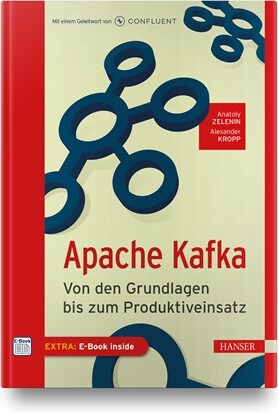
Apache Kafka
Die Zukunft eines Unternehmens ist sicher, wenn es mit Daten richtig umgeht. Neben dem Sammeln, Speichern und Auswerten ist der Austausch von Daten zwischen unterschiedlichen Systemen hierbei von immenser Bedeutung. Denn er soll zuverlässig und möglichst in Echtzeit erfolgen. Diese Anforderungen sind der Grund, weshalb sich Apache Kafka als Standard etabliert hat. Immer mehr Unternehmen setzen Apache Kafka heute als Streaming-Plattform und Messaging-System ein, um die Komplexität moderner IT-Architekturen beherrschbar zu machen. Um bei dieser Mission erfolgreich zu sein, ist Wissen entscheidend. Dieses Buch nimmt Software-Architekten, Entwickler und Administratoren gleichermaßen auf eine spannende Apache-Kafka-Mission mit. Eine Mission, die von den Grundlagen bis zum Produktiveinsatz von Kafka-basierten Daten-Pipelines reicht. Erleben Sie, wie Apache Kafka Zuverlässigkeit und Performance erreicht und wie Sie Komplikationen frühzeitig meistern können. Anhand zahlreicher Praxisbeispiele lernt man zudem, wie Best-Practice-Lösungen im eigenen Unternehmen umgesetzt werden können. Aus dem Inhalt:Warum Kafka? – Motivation für Kafka und verbreitete NutzungsartenWas ist Kafka? – Kafka als verteilter LogWie erreicht Kafka seine Performance? – Partitionen und Consumer GroupsWie erreicht Kafka seine Zuverlässigkeit? – Replikation, ACKs und Exactly OnceNachrichten produzieren und konsumieren: Was passiert in den Clients und auf den Brokern?Nachrichten aufräumen: Wie können nicht mehr benötigte Daten gelöscht und Speicherplatz frei geräumt werden?• Einblicke in das Kafka-Ökosystem: Kafka über Kafka Connect mit anderen Systemen wie Datenbanken und externen Systemen verbindenAutoren: Anatoly Zelenin vermittelt als IT-Trainer hunderten Teilnehmern Apache Kafka in interaktiven Schulungen. Seine Kunden aus dem DAX-Umfeld und dem deutschen Mittelstand schätzen seit über einem Jahrzehnt seine Expertise und seine begeisternde Art. Darüber hinaus ist er nicht nur IT-Berater und -Trainer, sondern erkundet auch als Abenteurer unseren Planeten. Alexander Kropp ist seit seiner Kindheit leidenschaftlicher Informatiker und programmiert seit er 10 Jahre alt ist. Als Forscher und Berater unterstützt Alexander seit einem Jahrzehnt namhafte Unternehmen bei der Digitalisierung und Prototypen-Entwicklung. Parallel ist er als Dozent und Trainer im Cloud-Umfeld tätig
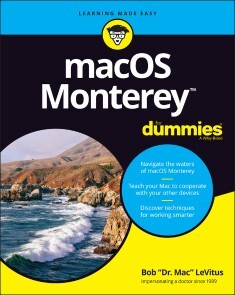
macOS Monterey For Dummies
UNLOCK THE POTENTIAL OF MACOS MONTEREY WITH THIS UPDATED GUIDE FROM "DR. MAC" HIMSELFMacs are famously an absolute pleasure to use. But it's even more fun discovering all the cool things a new version of macOS can do. macOS Monterey, introduced in 2021, makes the latest macOS features available to Mac users everywhere. macOS Monterey For Dummies is your personal roadmap to finding every single awesome new bell and whistle in this world-famous operating system.You'll read about upgrades to the accessibility options, how to use Live Text to grab text from all of your photos, manage your iPhone from your Mac and vice versa, and use the new Universal Control to seamlessly transition between Apple devices.You can also:* Learn how to watch TV or a movie with friends while you're on a FaceTime call* Explore the new "Shared With You" feature so you can access the content people send to you directly in the relevant app* Explore the online world with the Safari browser included with every installation of MacOS MontereyPerfect for anyone who wants to take full advantage of the latest version of Apple's intuitive and user-friendly operating system, macOS Monterey For Dummies is the fastest, easiest way to master the newest features and the coolest capabilities included with macOS Monterey. With hundreds of pages of simple instructions and images of the macOS interface, this is the last handbook you'll need to make the most of the newest macOS.BOB LEVITUS, better known as Dr. Mac, has been writing on all things Mac since 1996. He’s a regular contributor to technology publications and has penned over 90 how-to books on macOS, iPhone, iPad, Office for the Mac, and GarageBand.INTRODUCTION 1About This Book 1Foolish Assumptions 3Icons Used in This Book 3Beyond the Book 4Where to Go from Here 4PART 1: MACOS BASICS 5CHAPTER 1: MACOS MONTEREY 101 (PREREQUISITES: NONE) 7Gnawing to the Core of macOS 8A Safety Net for the Absolute Beginner (or Any User) 10Turning the dang thing on 10What you should see on startup 11Shutting down properly 14A few things you should definitely not do with your Mac 15Point-and-click 101 16Not Just a Beatles Movie: Help and the Help Menu 18CHAPTER 2: DESKTOP AND WINDOWS AND MENUS (OH MY!) 23Touring Finder and Its Desktop 24Anatomy of a Window 25Top o’ the window to ya! 27A scroll new world 29(Hyper)active windows 30Dialog Dealie-Boppers 32Working with Windows 34Opening and closing windows 34Resizing windows and window panes 35Moving windows 35Shuffling windows 36Menu Basics 38The ever-changing menu bar 39Contextual (shortcut) menus: They’re sooo contextual! 39Recognizing disabled options 41Navigating submenus 42Under the Apple menu tree 43Using keyboard shortcut commands 44CHAPTER 3: WHAT’S UP, DOCK? 45A Quick Introduction to Your Dock 46The default icons of the dock 47Trash talkin’ 49Opening application menus on the dock 51Reading dock icon body language 53Opening files from the dock 54Customizing Your Dock 54Adding dock icons 54Removing an icon from the dock 57Resizing the dock 58What should you put on your dock? 58Setting your dock preferences 60CHAPTER 4: GETTING TO KNOW FINDER AND ITS DESKTOP 65Introducing Finder and Its Minions: The Desktop and Icons 66Introducing the desktop 66Bellying up to the toolbar 68Figuring out what an icon is 71Identifying your Finder icons in the wild 72Aliases Are Awesome! 73Creating aliases 75Deleting aliases 76Hunting down an alias’s parent 76The View(s) from a Window 76Moving through folders fast in Column view 77Perusing in Icon view 79Listless? Try viewing folders as a list 79Hangin’ in the Gallery (view) 81What’s next on the (View) menu? 82Finder on the Menu 84The actual Finder menu 84Like a road map: The current folder’s pop-up menu 87Going places with the Go menu 88Customizing Finder Windows 90Adding folders to the sidebar 90Setting Finder preferences 90Digging for Icon Data in the Info Window 93CHAPTER 5: DELVING EVEN DEEPER INTO MONTEREY’S DESKTOP AND FINDER 97Cleaning Up Your Desktop Automatically with Stacks 97Managing your Stacks 100Quick Actions: Now Playing All Over Monterey 101Getting the most out of Markup 101Trimming video without launching an app 104Do It Quicker with Finder Quick Actions 105Creating PDFs without launching an app 105Creating custom Finder Quick Actions 106Four More Cool Monterey Tricks 107Shooting screens 107Dynamic desktop images 109PART 2: HOW STUFF WORKS 111CHAPTER 6: HAVING IT YOUR WAY 113Introducing System Preferences 113The Desktop & Screen Saver System Preferences Pane 115The Desktop tab 116The Screen Saver tab 117The General System Preferences Pane 118Adjusting the Keyboard, Mouse, Trackpad, and Other Hardware 121The Keyboard System Preferences pane 122The Mouse System Preferences pane 126The Bluetooth System Preferences pane 127The Trackpad System Preferences pane 127The Sound System Preferences Pane 129Changing sound effects 129Choosing output and input options 130CHAPTER 7: OPENING AND SAVING FILES 131A Quick Primer on Finding Files 132Understanding the macOS Folder Structure 132Understanding nested folders 134From the top: The Computer folder 135Peeking into the Applications folder 136Visiting the Library folders 136Let it be: The System folder 137There’s no place like Home 137Your personal library card 139Saving Your Document Before It’s Too Late 141Stepping through a basic save 142Save As versus Duplicate: Different names for the same result 148Open, Sez Me 150With drag-and-drop 152With a Quick Look 152When your Mac can’t open a file 153With the application of your choice 154CHAPTER 8: FILE AND FOLDER MANAGEMENT MADE EASY 157Organizing Your Stuff in Folders 157Files versus folders 158Organizing your stuff with subfolders 158Creating new folders 160Navigating with spring-loaded folders 161Smart folders 162Shuffling Files and Folders 164Moving files and folders 165Selecting multiple icons 166Playing the icon name game: Renaming icons 167Renaming multiple icons at once 168Compressing files 168Getting rid of icons 168The Incredible iCloud+ (and iCloud Drive) 169CHAPTER 9: COMPREHENDING THE MACOS CLIPBOARD 171Introducing the Clipboard 171Copying Files and Folders 173Pasting from the Clipboard 175Monterey’s Universal Clipboard 175PART 3: GETTING THINGS DONE 177CHAPTER 10: FIVE TERRIFIC TIME-SAVING TOOLS 179With a Quick Look 180Share and share alike with the Share menu 181Slide into Slideshow (full-screen) mode 182Spotlight on Finding Files and Folders Faster 183Using the Find command 184Using the Spotlight menu and its keyboard shortcut 186Blast Off with Mission Control 187The Mission Control pane: It’s painless 187Hot corners are hot stuff! 189Mission Control’s Spaces from 30,000 feet (an overview) 190Getting around in space(s) 192Taking Control of Essential Settings 193Launchpad: The Place for Applications 194CHAPTER 11: ORGANIZING YOUR LIFE 197Keeping Track with Calendar 198Navigating Calendar views 198Creating calendars 199Deleting a calendar 200Creating and managing events 201Reminders: Protection Against Forgetting 203Getting started with Reminders 204To do or not to do: Setting reminders 205Sharing lists and assigning reminders 206Everything You Need to Know about Notification Center 207Tweaking Notification settings 207Widget management 101 209Using Notification Center 210Getting focused 210Use Notes for Making Notes 211Take a Quick Note with Quick Note 215Tracking Productivity with Screen Time 215CHAPTER 12: ARE YOU SIRI-OUS? 217What Siri Can Do for You 217Working with Siri 219Making Siri Your Own 220CHAPTER 13: MAPS ARE WHERE IT’S AT 223Finding Your Current Location with Maps 223Finding a Person, Place, or Thing 224Views, Zooms, and Pans 225Maps and Contacts 227Time-saving Map Tools: Favorites, Guides, and Recents 228Favorites 228Guides 229Recents 230Smart Map Tricks 230Get route maps and driving directions 230Get walking directions 231Get directions for public transportation 232Get traffic info in real time 232Flyovers and look arounds 232Do more on the Info sheet 233CHAPTER 14: APPS BORN IN IOS 235Taking Stock of the Market with Stocks 236Adding and deleting stocks, funds, and indexes 237Details, details, details 237Charting a course 238Read All about It in News 239What are your interests? 239How News works 240Managing your news 240Recording Memos with Voice Memos 241Recording a voice memo 241Listening to a voice memo 242Naming a voice memo 243Trimming a voice memo 243Automating Repetitive Tasks with Shortcuts 244Controlling Lights, Locks, and More with Home 245PART 4: GETTING ALONG WITH OTHERS 247CHAPTER 15: (INTER)NETWORKING 249Getting Connected to the Internet 250Your internet service provider and you 251Plugging in your internet-connection settings 251Browsing the Web with Safari 253Owning your toolbar 254Using the Safari sidebar 255Checking out Help Center 260CHAPTER 16: DEALING WITH PEOPLE 261Collecting Your Contacts 261Adding contacts 262Importing contacts from other programs 263Creating a basic group 264Setting up a smart group (based on contact criteria) 266Deleting a group or smart group 266Sync + Contacts = your contacts everywhere 267Audio and Video Calls with FaceTime 268About SharePlay 269CHAPTER 17: COMMUNICATING WITH MAIL AND MESSAGES 271Sending and Receiving Email with Mail 271Setting Up Mail 272A quick overview of the toolbar 272Composing a new message 274Sending email from the Contacts app 276Checking your mail 278Dealing with spam 279Mailboxes smart and plain 280Changing your preferences 282Sign here, please 283Mail rules rule 284Take a (Quick) look and (Slide) show me some photos 286Markup and Mail Drop 286Communicating with Messages 288What the heck is an iMessage? 289Chit-chatting with Messages 289CHAPTER 18: SHARING YOUR MAC AND LIKING IT 293Introducing Networks and File Sharing 294Portrait of home office networking 295Three ways to build a network 297Setting Up File Sharing 299Access and Permissions: Who Can Do What 300Users and groups and guests 300Creating users 302macOS knows best: Folders shared by default 306Sharing a folder or disk by setting permissions 307Useful settings for permissions 311Unsharing a folder 314Connecting to a Shared Disk or Folder on a Remote Mac 314Changing Your Password 318Changing your account password on your Mac 319Changing the password of any account but your own on your Mac 319More Types of Sharing 320Sharing a screen 320Sharing the internet 321And yet more ways to share 322PART 5: GETTING CREATIVE 323CHAPTER 19: THE MUSICAL MAC 325Apple Music and iTunes Match Rock! 326Introducing Music (the App Formerly Known as iTunes) 327Working with Media 330Adding songs 330Listening to Radio 332All about Playlists 334Creating a regular playlist 334Working with smart playlists 336Working with the Genius playlist 337Burning a playlist to CD 338CHAPTER 20: THE MULTIMEDIA MAC 341Playing Movies and Music in QuickTime Player 342Watching TV 343Using the Books App 344Buying an e-book or audiobook 345Shopping for e-books without Apple 347Finding and Listening to Podcasts with the Podcasts App 348You’re the Star with Photo Booth 349Viewing and Converting Images and PDFs in Preview 351CHAPTER 21: WORDS AND LETTERS 353Processing Words with TextEdit 354Creating and composing a document 354Working with text 355Adding graphics to documents 358Font Mania 359Types of fonts 360Managing your fonts with Font Book 360CHAPTER 22: PUBLISH OR PERISH: THE FAIL-SAFE GUIDE TO PRINTING 363Before Diving In 364Ready: Connecting and Adding Your Printer 364Connecting your printer 365Setting up a printer for the first time 365One last thing: Printer sharing 368Set: Setting Up Your Document with Page Setup 368Print: Printing with the Print Sheet 370Printing a document 370Choosing among different printers 371Choosing custom settings 371Saving custom settings 374Preview and PDF Options 374PART 6: CARE AND FEEDING 377CHAPTER 23: FEATURES FOR THE WAY YOU WORK 379Finally, a Dark Mode 380App Shopping, Improved 381Using Your iPhone as Your Mac’s Camera or Scanner 383Talking and Listening to Your Mac 386Keyboard System Preferences pane: You talk and your Mac types 386Commanding your Mac by voice 388Listening to your Mac read your screen 389Automatic Automation 392Script Editor app: Write and edit AppleScripts 392Automator app: Automate almost anything 394A Few More Useful Goodies 396Accessibility System Preferences pane: Make your Mac more accessible 396Battery and Energy Saver System Preferences panes: For energy conservation and sleep 398Bluetooth System Preferences pane: Where Bluetooth lives 399Ink System Preferences pane: Visible to pen-input tablet users only 400Automatic Login in the Users & Groups System Preferences pane: Don’t bother with the login screen 400Allow your Apple Watch to unlock your Mac 401Boot Camp Assistant app: Run Windows on your Mac really 401AirPlay and AirPlay to Mac 402Handoff 403Universal Control 404CHAPTER 24: SAFETY FIRST: BACKUPS AND OTHER SECURITY ISSUES 405Backing Up is (Not) Hard to Do 406Backing up with Monterey’s excellent Time Machine 406Backing up by using the manual, brute-force method 409Backing up by using commercial backup software 410Why You Need Two Sets of Backups 411Non-Backup Security Concerns 412About viruses and other malware 412Install recommended software updates 414Protecting Your Data from Prying Eyes 415Blocking or limiting connections 416Locking down files with FileVault 416Setting other options for security 417CHAPTER 25: UTILITY CHEST 419In the Applications and Utilities Folders 419Calculator 419Activity Monitor 421Disk Utility 422Keychain Access 427Passwords System Preferences pane 429Migration Assistant 429System Information 430Terminal 430Screenshot 431The best keyboard shortcut to memorize 432Monterey screen-shooting options 433Monterey screen recording 434CHAPTER 26: TROUBLESHOOTING MACOS 435About Startup Disks and Booting 435Finding or creating a startup disk 436They call it a prohibitory sign for a reason 436Recovering with Recovery HD 438Step 1: Run First Aid 438Step 2: Safe boot into Safe mode 439Step 3: Zapping the PRAM/NVRAM 440Step 4: Reinstalling macOS 441Step 5: Things to try before taking your Mac in for repair 441If Your Mac Crashes at Startup 442Managing Storage 442PART 7: THE PART OF TENS 445CHAPTER 27: TEN WAYS TO SPEED UP YOUR MAC EXPERIENCE 447Use Those Keyboard Shortcuts 447Improve Your Typing Skills 448Try a Different Keyboard 449Change Your Resolution 450Purchase a Faster Mac 450Add RAM 451Add a Second Display 451Use Your iPad as a Second Display 452Upgrade to a Solid-State Drive (SSD) 452Get More Storage 453CHAPTER 28: TEN GREAT WEBSITES FOR MAC FREAKS 455The Mac Observer 456Macworld 456TidBITS 456iMore 457AppleWorld.Today 457The Wirecutter 457Apple Support 458Other World Computing 458Apple’s Refurbished and Clearance Store 459Six Colors 459Index 461

Statistical Analysis with Swift
Work with large data sets, create statistical models, and make predictions with statistical methods using the Swift programming language. The variety of problems that can be solved using statistical methods range in fields from financial management to machine learning to quality control and much more. Those who possess knowledge of statistical analysis become highly sought after candidates for companies worldwide.Starting with an introduction to statistics and probability theory, you will learn core concepts to analyze your data's distribution. You'll get an introduction to random variables, how to work with them, and how to leverage their properties in computations. On top of the mathematics, you’ll learn several essential features of the Swift language that significantly reduce friction when working with large data sets. These functionalities will prove especially useful when working with multivariate data, which applies to most information in today's complex world.Once you know how to describe a data set, you will learn how to create models to make predictions about future events. All provided data is generated from real-world contexts so that you can develop an intuition for how to apply statistical methods with Swift to projects you’re working on now.You will:• Work with real-world data using the Swift programming language• Compute essential properties of data distributions to understand your customers, products, and processes• Make predictions about future events and compute how robust those predictions are JIMMY M ANDERSSON is a software engineer in the automotive industry, specializing in acquiring and visualizing real-time data collected from cars. He is also a graduate student at Chalmers University of Technology, currently working towards a master's degree in data science and artificial intelligence. Outside of work and studies, Jimmy writes software development articles focusing on the Swift programming language. He also develops the StatKit library - a collection of statistical analysis tools for Swift developers. StatKit is open-source and available for anyone who wants to incorporate statistical methods into their programs.CHAPTER 1: SWIFT PRIMER• Introduction to Swift and its pros when working with large data sets• Provided data sets and how to load them using the Decodable protocol• Higher-Order Functions (map, filter, reduce, apply)CHAPTER 2: INTRODUCTION TO PROBABILITY AND RANDOM VARIABLES• What is a random variable?• Sample spaces• Laws and axioms of probability• Variable Independence• Conditional probabilityCHAPTER 3: DISTRIBUTIONS AND RANDOM NUMBERS• Mass and density functions• Discrete distributions• Discrete uniform distribution• Bernoulli trials• Binomial distribution• Poisson distribution• Continuous distributions• Continuous uniform distribution• Exponential distribution• Normal distribution• Implement a random number generator that samples from a given distributionCHAPTER 4: PREDICTING HOUSE SALE PRICES WITH LINEAR REGRESSION• Central tendency measures• Variance measures• Association measures• Stratification of data• Linear regressionCHAPTER 5: HYPOTHESIS TESTING• T Testing• Null and Alternative Hypotheses• P-value• Determining sample sizesCHAPTER 6: DATA COMPRESSION USING STATISTICAL METHODS• Measurement scales• Calculate the distribution of example data• Compute a Huffman Tree• Encode the original data in a smaller package• Decode the compressed dataCHAPTER 7: MOVIE RECOMMENDATIONS USING CLUSTERING• Data transformation• Similarity measurements• Simple movie recommendation systemCHAPTER 8: BRINGING IT ALL TOGETHER• Applying to new, real-world projects• Building your data intuition