

Computer und IT
Social Business Transformation
Die Zukunft der Arbeit verlagert sich zunehmend in den digitalen Raum. Deutsche Unternehmen positionieren sich in der Gestaltung dieses Raumes bislang häufig in der Rolle der Nachzügler, weil sie die Bedeutung des Einsatzes sozialer Technologien (z.B. Enterprise Social Networks) für das Unternehmen unterschätzen. Das resultierende Risiko im globalen Wettbewerb unterzugehen, ist gerade für den Mittelstand erheblich.Um zukunftsfähige Wege einzuschlagen, braucht es neue Gestaltungsansätze. Einer davon ist Social Business. Social Business wird im vorliegenden Werk als ganzheitliches Konzept beschrieben, welches durch den systematischen Einsatz digitaler und kollaborativer Werkzeuge neue Möglichkeiten der Innovation und Wertschöpfung schafft. Soziale Technologien ermöglichen eine proaktive Gestaltung unternehmensinterner und -übergreifender Prozesse und bieten insbesondere im Wissensmanagement, in der Kommunikation sowie der Zusammenarbeit produktionssteigernde Potenziale.Im Rahmen dieses Werkes werden praktische Anwendungen, Konzepte zur Umsetzung von Social Business und Leitlinien für den Transformationsprozess wissenschaftlich fundiert und praxisnah präsentiert.DR. CHRISTIAN ZINKE-WEHLMANN arbeitet als Leiter der Service and Knowledge Management Gruppe am Institut für Angewandte Informatik (InfAI) der Universität Leipzig im Bereich sozio-technischer Unterstützungssysteme. Er arbeitet an der Schnittstelle zwischen Technologie, Arbeit und Dienstleistungssystemen und hat 2017 promoviert. Seine Forschung konzentriert sich auf Digitale Zusammenarbeit, Linked Data, Service Engineering und Management sowie Wissensmanagement. Diese Expertise ist in mehr als 40 weiteren Veröffentlichungen zu finden.JULIA FRIEDRICH ist Wissenschaftlerin in der Forschungsgruppe „Service und Knowledge Management“ mit langjähriger Erfahrung in den Bereichen Wissensmanagement und Gamification.Einführung.- Was ist Social Business?.- Wozu braucht es Leitlinien?.- Der Weg zum Social Business.- Darstellung des Transformationsprozesses.- Ein Blick in die Praxis.- Allgemeine Leitlinien und Empfehlungen.
Intelligent Security Systems
INTELLIGENT SECURITY SYSTEMSDRAMATICALLY IMPROVE YOUR CYBERSECURITY USING AI AND MACHINE LEARNINGIn Intelligent Security Systems, distinguished professor and computer scientist Dr. Leon Reznik delivers an expert synthesis of artificial intelligence, machine learning and data science techniques, applied to computer security to assist readers in hardening their computer systems against threats. Emphasizing practical and actionable strategies that can be immediately implemented by industry professionals and computer device’s owners, the author explains how to install and harden firewalls, intrusion detection systems, attack recognition tools, and malware protection systems. He also explains how to recognize and counter common hacking activities. This book bridges the gap between cybersecurity education and new data science programs, discussing how cutting-edge artificial intelligence and machine learning techniques can work for and against cybersecurity efforts. Intelligent Security Systems includes supplementary resources on an author-hosted website, such as classroom presentation slides, sample review, test and exam questions, and practice exercises to make the material contained practical and useful. The book also offers:* A thorough introduction to computer security, artificial intelligence, and machine learning, including basic definitions and concepts like threats, vulnerabilities, risks, attacks, protection, and tools * An exploration of firewall design and implementation, including firewall types and models, typical designs and configurations, and their limitations and problems * Discussions of intrusion detection systems (IDS), including architecture topologies, components, and operational ranges, classification approaches, and machine learning techniques in IDS design * A treatment of malware and vulnerabilities detection and protection, including malware classes, history, and development trends Perfect for undergraduate and graduate students in computer security, computer science and engineering, Intelligent Security Systems will also earn a place in the libraries of students and educators in information technology and data science, as well as professionals working in those fields. LEON REZNIK, PHD, is Professor in the Department of Computer Science at Rochester Institute of Technology, USA. He received his doctorate in Information and Measurement Systems in 1983 at the St. Petersburg State Polytechnic University. He has published four books and numerous book chapters, conference papers, and journal articles.Acknowledgments ixIntroduction xi1 COMPUTER SECURITY WITH ARTIFICIAL INTELLIGENCE, MACHINE LEARNING, AND DATA SCIENCE COMBINATION: WHAT? HOW? WHY? AND WHY NOW AND TOGETHER? 11.1 The Current Security Landscape 11.2 Computer Security Basic Concepts 71.3 Sources of Security Threats 91.4 Attacks Against IoT and Wireless Sensor Networks 131.5 Introduction into Artificial Intelligence, Machine Learning, and Data Science 181.6 Fuzzy Logic and Systems 311.7 Machine Learning 351.8 Artificial Neural Networks (ANN) 431.9 Genetic Algorithms (GA) 501.10 Hybrid Intelligent Systems 51Review Questions 52Exercises 53References 542 FIREWALL DESIGN AND IMPLEMENTATION: HOW TO CONFIGURE KNOWLEDGE FOR THE FIRST LINE OF DEFENSE? 572.1 Firewall Definition, History, and Functions: What Is It? And Where Does It Come From? 572.2 Firewall Operational Models or How Do They Work? 652.3 Basic Firewall Architectures or How Are They Built Up? 702.4 Process of Firewall Design, Implementation, and Maintenance or What Is the Right Way to Put All Things Together? 752.5 Firewall Policy Formalization with Rules or How Is the Knowledge Presented? 822.6 Firewalls Evaluation and Current Developments or How Are They Getting More and More Intelligent? 96Review Questions 104Exercises 106References 1073 INTRUSION DETECTION SYSTEMS: WHAT DO THEY DO BEYOND THE FIRST LINE OF DEFENSE? 1093.1 Definition, Goals, and Primary Functions 1093.2 IDS from a Historical Perspective 1133.3 Typical IDS Architecture Topologies, Components, and Operational Ranges 1163.4 IDS Types: Classification Approaches 1213.5 IDS Performance Evaluation 1313.6 Artificial Intelligence and Machine Learning Techniques in IDS Design 1363.7 Intrusion Detection Challenges and Their Mitigation in IDS Design and Deployment 1593.8 Intrusion Detection Tools 163Review Questions 172Exercises 174References 1754 MALWARE AND VULNERABILITIES DETECTION AND PROTECTION: WHAT ARE WE LOOKING FOR AND HOW? 1774.1 Malware Definition, History, and Trends in Development 1774.2 Malware Classification 1824.3 Spam 2144.4 Software Vulnerabilities 2164.5 Principles of Malware Detection and Anti-malware Protection 2194.6 Malware Detection Algorithms 2294.7 Anti-malware Tools 237Review Questions 240Exercises 242References 2435 HACKERS VERSUS NORMAL USERS: WHO IS OUR ENEMY AND HOW TO DIFFERENTIATE THEM FROM US? 2475.1 Hacker’s Activities and Protection Against 2475.2 Data Science Investigation of Ordinary Users’ Practice 2735.3 User’s Authentication 2885.4 User’s Anonymity, Attacks Against It, and Protection 301Review Questions 309Exercises 310References 3116 ADVERSARIAL MACHINE LEARNING: WHO IS MACHINE LEARNING WORKING FOR? 3156.1 Adversarial Machine Learning Definition 3156.2 Adversarial Attack Taxonomy 3166.3 Defense Strategies 3206.4 Investigation of the Adversarial Attacks Influence on the Classifier Performance Use Case 3226.5 Generative Adversarial Networks 327Review Questions 333Exercises 334References 335Index 337

Beginning Windows Mixed Reality Programming
Develop applications and experiences for Microsoft’s HoloLens 2 and other Windows mixed reality devices. This easy-to-follow guide removes the mystery behind creating amazing augmented reality and virtual reality experiences. Mixed reality development tools and resources are provided.BEGINNING WINDOWS MIXED REALITY PROGRAMMING, 2ND EDITION clearly explains all the nuances of mixed reality software development. You will learn how to create 3D objects and holograms, interact with holograms using voice commands and hand gestures, use spatial mapping and 3D spatial sound, build with toolkits such as Microsoft's Mixed Reality Toolkit and Unity’s AR Foundation and XR Platform, create intuitive user interfaces, and make truly awe-inspiring mixed reality experiences. This newly revised edition also includes updated content for HoloLens 2 development, including tutorials for new interactions such as hand tracking and eye tracking.WHAT YOU WILL LEARN* Prototype ideas quickly for the HoloLens 2 and Windows mixed reality devices* Get started with Unity, the preferred tool for developing 3D experiences* Locate and import 3D models for your project, or make your own* Use spatial sound, voice commands, gestures, hand tracking, and eye tracking* Build with Microsoft's Mixed Reality Toolkit and other toolkits to make apps the easy way* Publish to the Windows Store and make money from your appWHO THIS BOOK IS FORProgrammers looking to quickly learn how to create experiences for HoloLens 2. Also for programmers interested in building applications for the growing crop of virtual reality devices that support the Windows Mixed Reality platform.SEAN ONG is an author, engineer, entrepreneur, and tech influencer who has written on topics ranging from renewable energy to augmented reality. Sean and his wife Neisha Ong founded the mixed reality development company, Ong Innovations, in 2014. Sean and his team at Ong Innovations actively work with clients and partners around the globe to push the boundaries of mixed reality and spatial computing. Sean is also co-founder of the VR telepresence robotics platform company, Laborbot, founder of the AR/VR venue-based entertainment company, Manuvr Entertainment Inc., co-founder of the AR/VR app creation platform company, Inflexion Point Inc., and serves as partner and shareholder at numerous other AR/VR startup companies around the globe. He resides in Seattle, WA with his wife and three kids, where he and his family relentlessly build the holographic future of tomorrow using today’s XR devices.PART I: GETTING STARTED1. Gear Up: The Necessary Hardware and Software Tools2. Unity Crash CoursePART II: BUILDING HOLOGRAPHIC EXPERIENCES3. Creating Your First Hologram4. Introduction to the Mixed Reality Toolkit5. Interacting with Holograms6. Using Spatial Awareness7. Spatial SoundPART III: GROWING AS A HOLOGRAPHIC DEVELOPER8. Azure Spatial Anchors9. Shared Experiences10. Awe Inspiring Experiences11. Turning Holograms into Money12. Community Resources
Basiswissen Abnahmetest
Grundlagen des Abnahmetests für Product Owner, Business-Analysten und TesterMit Abnahmetests – Acceptance Testing – wird überprüft, ob eine Software aus Sicht des Benutzers wie beabsichtigt funktioniert und dieser die Software akzeptiert.Das Buch »Basiswissen Abnahmetest« verbindet die Business-Analyse und Softwaretesten mit Blick auf die Konzepte, Methoden und Praktiken der Zusammenarbeit zwischen Business-Analysten und Testern beim Abnahmetest.Business-Analysten und Projektleiter lernen, wie sie durch die Unterstützung bei der Ausrichtung des Produkts an den Geschäftsanforderungen zu den Abnahmetestaktivitäten in einer Organisation beitragen.Tester erfahren, wie sie effizient mit Business-Analysten und anderen Stakeholdern während allen Abnahmetestaktivitäten zusammenarbeiten.Dieses Buch umfasst das erforderliche Wissen als Vorbereitung auf die Prüfung zum »Certified Tester (Foundation Level) – Acceptance Testing« nach ISTQB®-Standard. Ein durchgängiges Fallbeispiel verbindet das theoretische Wissen des Lehrplans mit dessen praktischer Anwendung beim Abnahmetest. Das Buch eignet sich damit nicht nur bestens für die Prüfungsvorbereitung, sondern dient gleichzeitig als kompaktes Basiswerk zu diesen Themen in der Praxis und an Hochschulen.Über die Autoren:Florian Fieber ist Gründer und Geschäftsführer der QualityDojo IT-Consulting GmbH in Berlin und seit knapp 15 Jahren als Berater und Trainer im Bereich der Qualitätssicherung von Softwaresystemen tätig. Seine Schwerpunkte liegen im Testmanagement, der Verbesserung von Testprozessen sowie der Businessanalyse von Enterprise-Anwendungen. Er ist Leiter der Arbeitsgruppe Acceptance Testing beim GTB (German Testing Board e.V.).Marc-Florian Wendland ist wissenschaftlicher Mitarbeiter des Geschäftsbereichs SQC (System Quality Center) im Fraunhofer Institut FOKUS in Berlin. Seine Interessen umfassen die modellgetriebene Softwareentwicklung, den automatisierten Testentwurf und Testautomatisierungsstrategien. Er ist im GTB aktiv in den Arbeitsgruppen „Testautomatisierungsentwickler“ und „Acceptance Testing“. Bei der OMG leitet er die Weiterentwicklung des UML Testing Profile (UTP).

Systematic Cloud Migration
This book is your systematic cloud migration guide. Experiences shared by the author are drawn from real-life migration projects and contain practical advice, as well as step-by-step architecture, design, and technical implementation instructions using sample application code on GitLab. Following the guidance in this book will provide much needed support to your teams, and help you successfully complete the application cloud migration journey.SYSTEMATIC CLOUD MIGRATION consists of four major parts. Part one starts with a fundamental introduction of cloud computing to establish the context for migration, including paradigm changes in five important areas: software application, DevSecOps, operations, infrastructure, and security. And these are the areas that the book follows throughout. Next, it introduces a real-life migration process that your team can follow.Part two presents the migration process for the application code, including architecture diagrams and presented by demo application code and supporting infrastructure in AWS cloud. Part three dives into DevSecOps and automation. In addition to concepts, a real-life migration diagram and sample pipeline code implemented with GitLab are include. Part four deals with efficient cloud operations.Each chapter has a practical structure: objectives, roles, inputs, process/activities, outputs/deliverables, best practices, and summary. There is a wealth of cloud production-grade template style artifacts that can be used as is.WHAT YOU WILL LEARN* Design applications in the cloud, including determining the design criteria (e.g., solution cost is a design criterion, same as security, and is not an afterthought)* Understand the major migration areas: software development (application code, data, integration, and configuration), software delivery (pipeline and automation), and software operations (observability)* Migrate each application element: client and business components code, data, integration and services, logging, monitoring, alerting, as well as configurations* Understand cloud-critical static application security testing (SAST), dynamic application security testing (DAST), containers compliance and security scanning, and open source dependency testing* Know the directions and implementation details on cost-efficient, automated, cloud-native software operationsWHO THIS BOOK IS FORPrimarily designed with software developers, team leads, development managers, DevOps engineers, and software architects in mind. Their day-to-day activities include architecting, designing, developing, delivering, and operating software in the cloud environment. In addition, this book will benefit infrastructure, network, security, and operations engineers, who in turn, can provide better support for the software development product teams.TARAS GLEB is a pragmatic and hands-on cloud solutions architect focused on software delivery, strategy, and innovation. He has been leading software development and digital transformation projects in business applications, big data, reporting, machine learning, DevSecOps, and automation. He has 25+ years of experience in design and implementation of mission-critical, customer-oriented, software solutions for institutional investors, governments, insurance companies, banks, capital markets, and power utilities. While delivering these solutions, he is applying advanced software architecture and development methodologies. His focus is on building cloud-native, secure, innovative, and cost-efficient solutions that deliver business value in an agile manner. Taras is a life-long learner who holds degrees in engineering, business administration and various industry certifications. He is continuously searching for ways to proactively apply the latest technologies and methodologies to software architecture and development.PROLOGUETARGET AUDIENCEHOW THIS BOOK IS STRUCTUREDPART I INTRODUCTION TO CLOUD COMPUTINGCHAPTER 1 TITLE: CLOUD COMPUTING PRIMER1.1 Section Title: What is Cloud Computing?1.2 Section Title: Cloud Advantages and Drawbacks1.3 Section Title: Cloud Paradigm Shifts1.4 Section Title: SummaryCHAPTER 2 TITLE: CLOUD MIGRATION FUNDAMENTALS2.1 Section Title: Cloud Organizational Structure (People)2.2 Section Title: Cloud Migration Framework (Technology)2.3 Section Title Cloud Migration Process (Process)2.4 Section Title: SummaryPART II SOFTWARE DEVELOPMENT MIGRATIONCHAPTER 3 TITLE: DEVELOP TARGET ARCHITECTURE3.1 Section Title: Input3.2 Section Title: Process & Activities3.3 Section Title: Output & Deliverables3.4 Section Title: Tools, Techniques & Best Practices3.5 Section Title: SummaryCHAPTER 4 TITLE: BUILD & SECURE CLOUD ENVIRONMENT4.1 Section Title: Input4.2 Section Title: Process & Activities4.3 Section Title: Outputs & Deliverables4.4 Best Practices, Tools & Techniques4.5 Section Title: SummaryCHAPTER 5 TITLE: MIGRATE SOFTWARE APPLICATION5.1 Section Title: Input5.2 Section Title: Process & Activities5.4 Section Title: Outputs & Deliverables5.5 Section Title: Tools, Techniques & Best PracticesBest Practices5.5 Section Title: SummaryCHAPTER 6 TITLE: ADD LOGGING MONITORING & ALERTING6.1 Section Title: Input6.2 Section Title: Process & Activities6.3 Section Title: Outputs & Deliverables6.4 Section Title: Tools, Techniques & Best PracticesBest Practices6.5 Section Title: SummaryPART III SOFTWARE DELIVERY MIGRATIONCHAPTER 7 TITLE: PROCURE SOFTWARE DELIVERY ENVIRONMENT7.1 Section Title: Input7.2 Section Title: Process & Activities7.3 Section Title: Outputs & Deliverables7.4 Section Title: Tools, Techniques & Best Practices7.5 Section Title: SummaryCHAPTER 8 TITLE: BUILD AUTOMATED PIPELINE8.1 Section Title: Input8.2 Section Title: Process & Activities8.3 Section Title: Outputs & Deliverables8.4 Section Title: Tools, Techniques & Best Practices8.5 Section Title: SummaryPART IV SOFTWARE OPERATIONS MIGRATIONCHAPTER 9 TITLE: EXECUTE FOR OPERATIONAL EXCELLENCE9.1 Section Title: Inputs9.2 Section Title: Process & Activities9.3 Section Title: Outputs & Deliverables9.4 Section Title: Tools, Techniques & Best Practices9.5 Section Title: SummaryCHAPTER 10 TITLE: TRANSITION WITH RUNBOOK & DISASTER RECOVERY10.1 Section Title: Inputs10.2 Section Title: Process & Activities10.3 Section Title: Outputs & Deliverables10.4 Section Title: Tools, Techniques & Best Practices10.5 Section Title: SummaryEPILOGUEREFERENCESAPPENDIX
Java Übungsbuch
* TRAINIEREN SIE IHRE JAVA-KENNTNISSE* LEARNING BY DOING ANHAND PRAKTISCHER ÜBUNGEN* MIT VOLLSTÄNDIGEN UND KOMMENTIERTEN LÖSUNGENDieses Buch ist kein Lehrbuch, sondern ein reines Übungsbuch und wendet sich an Leser, die ihre Java-Kenntnisse anhand zahlreicher praktischer Übungen durch »Learning by Doing« vertiefen und festigen möchten. Es ist ideal, um sich auf Prüfungen vorzubereiten oder das Programmieren mit Java praktisch zu üben.Jedes Kapitel beginnt mit einer kompakten Zusammenfassung des Stoffs, der in den Übungsaufgaben dieses Kapitels verwendet wird. Anschließend haben Sie die Möglichkeit, zwischen Aufgaben in drei verschiedenen Schwierigkeitsstufen - von einfach bis anspruchsvoll - zu wählen. Anhand dieser Aufgaben können Sie Ihr Wissen praktisch testen. Am Ende der Kapitel finden Sie vollständige und kommentierte Musterlösungen.ES WERDEN FOLGENDE THEMEN ABGEDECKT:Die Kapitel 1 bis 3 enthalten Aufgaben zur objektorientierten Programmierung mit Java.In Kapitel 4 geht es im Detail um Generics und das Collection Framework, seine generischen Klassen und Interfaces sowie die Definition von Enumerationen. Kapitel 5 erläutert das Exception Handling.Kapitel 6 beschäftigt sich mit den neuen Sprachmitteln von Java 8, Lambdas und Streams. Kapitel 7 bietet einen Einblick in die mit Java 9 vorgenommene Modularisierung der Java-Plattform.In Kapitel 8 werden Weiterentwicklungen aus den Java-Versionen 14 bis 17 behandelt. Dazu gehören die Einführung von Records und Sealed Classes sowie das Pattern Matching (sowohl für den instanceof-Operator als auch für switch). Kapitel 9 enthält viele Aufgaben zu Tests mit JUnit 5 und Gradle sowie eine kurze Einführung in beide Systeme.Nach dem Durcharbeiten des Buches verfügen Sie über fundierte Programmierkenntnisse und einen umfangreichen Fundus an Beispielcode.AUS DEM INHALT:* Klassendefinition und Objektinstanziierung* Abgeleitete Klassen und Vererbung* Abstrakte Klassen und Interfaces* Die Definition von Annotationen* Innere Klassen* Generics und Reflection* Lambdas* Funktionale Interfaces* Switch Expressions* Local Variable Type Inference* Definition und Nutzung von Streams* Das Modulsystem von Java* Records* Sealed Classes und Interfaces* Pattern Matching für den instanceof-Operator* Pattern Matching für switch* Tests mit JUnit 5 und GradleElisabeth Jung ist freie Autorin und wohnhaft in Frankfurt am Main. Nach dem Studium der Mathematik an der Universität Temeschburg in Rumänien hat Elisabeth Jung Grundlagen der Informatik und Fortran unterrichtet. Im Jahr 1982 hat sie bereits eine Aufgabensammlung für Fortran an der gleichen Universität veröffentlicht.
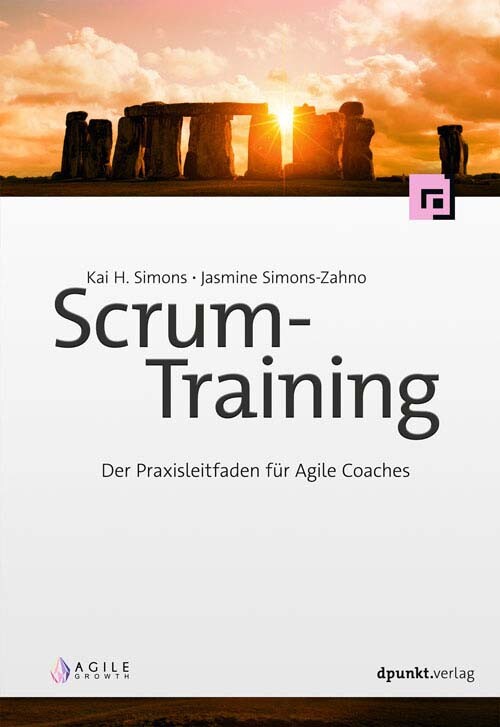
Scrum-Training
Der Praxisleitfaden für Agile CoachesImmer mehr Firmen wollen zu agilen Unternehmen werden und eine »New Work«-Kultur etablieren. Das beliebte agile Rahmenwerk Scrum ist dazu oft ein wichtiger Baustein, um selbstverwaltete Teams zu etablieren. Erfolgreiche Scrum-Trainings helfen, eine agile Transformation wirksam anzustoßen, durchzuführen und insgesamt zu erleichtern.Dieses Buch bietet Ihnen als Agile Coach, Scrum Master, Trainer oder Berater einen bewährten Praxisleitfaden, um die Essenz aus Scrum interaktiv z.B. in Workshops zu vermitteln. Vielfach erprobte Übungen bieten den idealen Rahmen, damit die teilnehmenden Personen selbst zu zentralen Erkenntnissen gelangen. Der klare Tagesplan liefert dabei stets Orientierung.Doch Seminare bergen immer auch Herausforderungen. Daher werden auch der Umgang mit eher skeptischen Menschen, die Gestaltung von Lernreisen und die Steuerung von Gruppendynamik thematisiert. Durch persönliche Beispiele lebt das Autorenteam nahbar vor, wie sich eine persönliche Haltung von Agilität positiv auf das Geschehen und den Fortgang auswirkt.Nach der Lektüre des Buches wissen Sie, wie Sie ein zweitägiges Scrum-Training so aufbauen, dass dieses eine intensive und auch nachhaltige Wirkung auf alle Beteiligten entfaltet.

Die Arbeit hat das Gebäude verlassen
Wie sich unsere Zusammenarbeit nach dem Corona-Kulturschock ändert.Die Corona-Pandemie hat einen kollektiven Kulturschock auf die Arbeitswelt ausgelöst. Gewohnte Routinen sind verschwunden. An ihre Stelle ist eine große Unsicherheit getreten sowie die Notwendigkeit, sich ständig neu anzupassen und zu verändern. Welche Folgen das für unsere Arbeitskultur hat, beschreibt Jitske Kramer aus einer anthropologischen Perspektive. Wie kann eine Unternehmenskultur an diesen neuen Kontext angepasst werden? Wie funktioniert Führung remote? Wie wird die Verbindung im Team aufrechterhalten, wenn man sich nur digital treffen kann? Wie sorgt man dafür, dass das Arbeiten von zu Hause aus ein Erfolg wird, dass niemand vereinsamt oder gerade jetzt unter der Arbeitslast zusammenbricht? Wie werden neue Mitarbeiterinnen und Mitarbeiter eingearbeitet? Dieses Buch bietet praxisorientierte Antworten auf all diese Fragen und stellt einen Leitfaden für den Umgang mit der »neuen Normalität« dar. Wertvolle Überlegungen, Einsichten und eingängige Ratschläge unterstützen Sie dabei, die Herausforderungen der kulturellen Veränderung in der Arbeitswelt wie auch im privaten Alltag zu meistern und als Chance zu nutzen, um gewohnte Arbeits- und Lebensweisen zu überdenken.

Optimizing Visual Studio Code for Python Development
Learn Visual Studio Code and implement its features in Python coding, debugging, linting, and overall project management. This book addresses custom scenarios for writing programs in Python frameworks, such as Django and Flask.The book starts with an introduction to Visual Studio Code followed by code editing in Python. Here, you will learn about the required extensions of Visual Studio Code to perform various functions such as linting and debugging in Python. Next, you will set up the environment and run your projects along with the support for Jupyter. You will also work with Python frameworks such as Django and go through data science specific-information and tutorials. Finally, you will learn how to integrate Azure for Python and how to use containers in Visual Studio Code.Optimizing Visual Studio Code for Python Development is your ticket to writing Python scripts with this versatile code editor.WHAT YOU'LL LEARN* Execute Flask development in Visual Studio Code for control over libraries used in an application* Optimize Visual Studio Code to code faster and better* Understand linting and debugging Python code in Visual Studio Code* Work with Jupyter Notebooks in Visual Studio CodeWHO THIS BOOK IS FORPython developers, beginners, and experts looking to master Visual Studio CodeSufyan bin Uzayr is a web developer with over 10 years of experience in the industry. He specializes in a wide variety of technologies, including JavaScript, WordPress, Drupal, PHP, and UNIX/Linux shell and server management, and is the author of four previous books. Sufyan is the Director of Parakozm, Kazakistan a design and development consultancy firm that offers customized solutions to a global clientele. He is also the CTO at Samurai Servers, a server management and security company catering mainly to enterprise-scale audience. He takes a keen interest in technology, politics, literature, history and sports, and in his spare time he enjoys teaching coding and English to students.OPTIMIZING VISUAL STUDIO CODE FOR PYTHON DEVELOPMENTCHAPTER ONE – INTRODUCTION TO VISUAL STUDIO CODEo Basic introduction to Visual Studio CodeCHAPTER TWO – GETTING STARTED WITH PYTHON PROGRAMS IN VS CODEo Getting started with code editingo Required extensionso Lintingo DebuggingCHAPTER THREE – SETTING UP THE ENVIRONMENT AND TESTINGo Setting up your environmento Running your projectso Support for JupyterCHAPTER FOUR – WORKING WITH PYTHON FRAMEWORKSo Django Developmento Flask Developmento Data Science specific information and tutorialsCHAPTER FIVE – WORKING WITH CONTAINERS AND MS AZUREo Integrating Azure for your Python projectso Using containers in VS Codeo Conclusion

IoT Standards with Blockchain
Implement a standardized end-to-end IoT implementation based on best practices and proven successes in IoT across multiple industries. With this book you'll discover the three business strategies for enterprises to adopt and remain relevant in the marketspace —the Customer Engagement strategy, the Business Transformation strategy, and the Business Productivity Improvement strategy. Pick the right strategy for your enterprise to ensure a clear mission and vision is established based on which IoT roadmap can be defined. Subsequently all business processes pertaining to the chosen business strategy are investigated to define use cases where IoT can be adopted to achieve that business strategy.Start by learning the generic industry perspective on digital transformation using IoT. Then move on to the IoT Standards Reference Model. It’s an abstract framework consisting of an interlinked set of clearly defined components for enterprises to successfully implement an IoT solution. The IoT Standards Reference Model can be applied for IoT use cases across any industry and is kept abstract in order to enable many, potentially different, IoT architectures to be implemented based on the model.With IoT thoroughly covered, you’ll dive into Blockchain and AI technology. This book will discuss the importance of using private blockchains for IoT use cases. You’ll also discover the five IoT-Blockchain implementation patterns that enterprises can enable for seamless communication between IoT devices, IoT Smart Gateways, and IoT platforms. These patterns help achieve trust, interoperability, and extendibility. Then you’ll work with AI and the IoT Standards Reference Model. The reference model recommends applying AI patterns to generate insights from data and take appropriate actions automatically.IoT Standards with Blockchain also provides perspective on how and when to apply AI in an IoT Context. In the end, you’ll have a solid methodology to execute large scale, enterprise-level IoT implementations. You’ll have an enterprise digital transformation framework for IoT that will enable your enterprise to operate better.WHAT YOU'LL LEARN* Facilitate IoT interoperability with best practices* Implement IoT platform security* Feed data and analytics to AI modelsWHO THIS BOOK IS FORC-suite leaders and IT program managers across all industries, including manufacturing (Industry 4.0), logistics, oil and gas, transportation, energy, mining and metals, aviation, pharmaceuticals, medical devices, and hospitality. VENKATESH UPADRISTA leads UKI delivery for HCL Technologies—an 8 Billion Solutions IT Services company. He is recognized as an exceptional digital talent leader by UK Tech Nation and speaks at industry conferences on topics covering the Internet of Things and other digital focuses.Part 1: IoT Business StrategyChapter 1: Getting StartedDesigning Business for FutureThe Triple Challenges in IoTChapter 2: IoT Business StrategyCustomer Engagement StrategyBusiness Transformation StrategyBusiness Productivity ImprovementChoosing Between Customer Engagement, Business Transformation, and Business Productivity Improvement StrategyChapter 3: IoT Standards Business Transformation ModelWhat next after your business strategy is chosenThe IoT Use Case Reference Model (IoT UCR ModeL)Applying IoT Treatments on Use CasesPart II: The IoT Reference ModelChapter 4: The IoT Reference ModelTh IoT Standards Reference ModelFullStack IoT PlatformTypical activities performed by Smart IoT gateway and Full Stack IoT PlatformSecurityBlockchainChapter 5: IoT Device and Their CommunicationDevice TypesCommunication ProtocolsChapter 6: The Smart IoT GatewayData Volume and AnalyticsIoT GatewaysSmart IoT GatewaysChoosing the right Smart IoT gatewayIoT gateway ComparisonsChapter 7: IoT Cloud PlatformIoT Basics SixSpecific CapabilitiesProof-of-Concept (PoC)Chapter 8: Security in IoTSecure by DESIGN (Securing the whole IoT ecosystem)Securing IoT Using BlockchainPart III: AI and Blockchain as Enablers for IoTChapter 9: Blockchain with IoTPublic BlockchainPrivate BlockchainIoT Blockchain implementation PatternsChapter 10: Artificial Intelligence in the IoT World (Applied IoT)Robotic process automationArtificial IntelligenceArtificial Intelligence & IoTLessons learned in applying AI in IoT Use Cases (Applied IoT)Part IV: IoT Implementation AspectsChapter 11: Big Data and AnalyticsDebugging Capabilities(Big) Data First Reference ModelChapter 12: Product Mindset for IoT Use Case ImplementationProduct OrganizationIoT Product Lifecycle with Product MindsetChapter 13: IoT Product TeamIoT Product TeamIoT Product Team IdentificationAudience: Intermediate
Qualitätsmanagement in den 20er Jahren - Trends und Perspektiven
Zielsetzung der Gesellschaft für Qualitätswissenschaft e.V. ist es, die Qualitätswissenschaft in Lehre und Forschung zu fördern und den Wissenstransfer in die industrielle Anwendung zu unterstützen. Geschehen soll dies unter anderem durch Pflege des wissenschaftlichen Erfahrungsaustauschs unter den auf diesem Gebiet tätigen Personen und Institutionen und der Verbreitung von Forschungs- und Entwicklungsergebnissen sowie der Unterstützung des Wissenstransfers zwischen Forschung und Praxis. Unter dem Leitthema „Qualitätsmanagement in den 20er Jahren - Trends und Perspektiven“ hat die Gesellschaft für Qualitätsmanagement gemeinsam mit der Hochschule Koblenz zur GQW Tagung 2020 eingeladen. Wir freuen uns, dass wir Ihnen nun den zugehörigen Tagungsband vorstellen können. Wenn man nach den Trends der kommenden Jahre fragt, muss in vielen Branchen und Disziplinen fast zwingend die Digitalisierung genannt werden. So bildet dieses Thema auch einen starken Schwerpunktin diesem Tagungsband. Die Beiträge beschäftigen sich mit künstlicher Intelligenz beim autonomen Fahren, der Rolle der Digitalisierung bei Nachweissystemen für Zusatzqualifikationen und Zutrittszertifikaten sowie der Integration von Industrie 4.0-Elementen in ganzheitlichen Produktionssystemen. Auch die Frage, welche Rolle die Blockchain-Technologie im Qualitätsmanagement spielen könnte, wird betrachtet. Eine weitere Facette bildet der Beitrag über den Einsatz von Eye-Tracking in der Produktentwicklung. Die aktuelle Corona-Krise wird ebenfalls aufgegriffen und erste Analysen zum Einfluss des digitalen Reifegrads auf das Arbeitszeitmodell in Krisenzeiten vorgestellt. Aber auch Beiträge zur Rolle von Erfahrungswissen im Qualitätsmanagement, zur Messung der Qualität in Produkt-Service-Systemen, zur ganzheitlichen Fehleranalyse, zu geometrischen Produktspezifikationen und Montagereihenfolgen finden Sie in diesem Band. Ein breiter Kanon spannender und aktueller Themen also, der zur Diskussion über das Qualitätsmanagement von morgen einlädt.
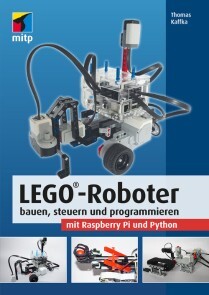
LEGO®-Roboter bauen, steuern und programmieren mit Raspberry Pi und Python
* BAU- UND PROGRAMMIERANLEITUNGEN FÜR MEHR ALS 10 SPANNENDE ROBOTER-PROJEKTE* LABYRINTHE LÖSEN, PAPPKARTEN PER BILDERKENNUNG ABSCHIEẞEN, FORMEN MIT EINEM NEURONALEN NETZ ERKENNEN U.V.M.* PROGRAMMCODE UND BAUANLEITUNGEN FÜR ALLE ROBOTER ZUM DOWNLOADLEGO®-Steine - sei es als selbstgebaute LEGO®-Fahrzeuge, -Roboter oder als LEGO®-Fertigmodelle - lassen sich hervorragend mit Elektronikkomponenten zum Leben erwecken und programmieren. Hierfür ist der Mikrocontroller Raspberry Pi besonders gut geeignet. Anhand konkreter Projekte zeigt Ihnen der Autor, wie Sie Sensoren und Motoren von LEGO® sowie weitere Elektronikkomponenten mit dem Raspberry Pi verbinden und Ihre Roboter programmieren. Durch den Einsatz der Programmiersprache Python können die Roboter einfache und komplexe Aufgaben lösen bis hin zu Linienverfolgung mit einem neuronalen Netz oder Bilderkennung.Im ersten Teil des Buches erhalten Sie eine kurze Einführung in den Mikrocontroller Raspberry Pi sowie den BrickPi, der für die Verbindung von LEGO®-Sensoren mit dem Raspberry Pi benötigt wird. Außerdem vermittelt der Autor die Grundlagen zu allen Elektronikkomponenten, mit denen Sie Ihre LEGO®-Modelle oder -Roboter ausstatten können. Dazu zählen unter anderem mittlere und große LEGO®-Motoren sowie folgende Komponenten: Color-Sensor, Touch-Sensor und Infrarot-Sensor von LEGO®, Kompass-Sensor und Gyro-Sensor von Hitechnic, Raspberry-Pi-Kamera, Fototransistor, LEDs und Motoren.Im zweiten Teil des Buches finden Sie eine kurze Einführung in die Grundlagen der Programmierung mit Python, gefolgt von einem umfangreichen Projektteil mit 11 spannenden Robotern, die diverse Aufgaben lösen, wie zum Beispiel:* Gegenstände erkennen und diesen ausweichen* Lösen eines Labyrinths mithilfe von künstlicher Intelligenz* Linienverfolgung und Formen erkennen mit einem neuronalen Netz* Pappkarten abschießen per Bilderkennung* Sammeln farbiger Joghurtbecher* Texte morsen inkl. Anleitung zum Basteln eines eigenen Touch-SensorsBei allen Projekten erläutert der Autor sowohl den Bau der Roboter als auch die entsprechende Programmierung.HARDWARE:Für die Projekte im Buch werden sowohl die LEGO®-eigenen Komponenten als auch günstige handelsübliche Motoren und Sensoren eingesetzt. Sie können einen eigenen Roboter bauen, die LEGO®-Roboter im Buch nachbauen oder als Grundlage ein LEGO®-Fertigmodell verwenden. Für alle im Buch verwendeten LEGO®-Roboter gibt es die Bauanleitungen zum kostenlosen Download.Thomas Kaffka hat als Softwareingenieur sowie Projektleiter in Softwarehäusern und Wirtschaftsprüfungs- und Beratungsgesellschaften gearbeitet. Er ist ein echter Maker und beschäftigt sich mit verschiedenen Themen wie etwa dem Bau von LEGO®-Robotern, der Künstlicher Intelligenzforschung sowie dem 3D-Druck.

Die ultimative QNAP NAS Bibel
Mit diesem Praxisbuch zu den vielseitigen NAS-Systemen des Anbieters QNAP bekommen Sie einen umfassenden Einblick in das Thema der Network-Attached-Storage-Geräte.Eine anschauliche Schrittanleitung führt Sie durch den Installationsvorgang. Wenn Sie Ihr NAS schon eingerichtet haben, finden Sie viele praktische Tipps für die optimale und sichere Konfiguration, die Einrichtung eines eigenen Mailservers, die Verwendung als Fotospeicher, Musikarchiv und weitere spannende Funktionen.Die Ergänzung im Beiheft bietet Ihnen Veränderungen und Neuigkeiten der aktuellsten Soft- und Hardware mit weiteren Tipps an,
Ransomware Protection Playbook
AVOID BECOMING THE NEXT RANSOMWARE VICTIM BY TAKING PRACTICAL STEPS TODAYColonial Pipeline. CWT Global. Brenntag. Travelex. The list of ransomware victims is long, distinguished, and sophisticated. And it's growing longer every day.In Ransomware Protection Playbook, computer security veteran and expert penetration tester Roger A. Grimes delivers an actionable blueprint for organizations seeking a robust defense against one of the most insidious and destructive IT threats currently in the wild. You'll learn about concrete steps you can take now to protect yourself or your organization from ransomware attacks.In addition to walking you through the necessary technical preventative measures, this critical book will show you how to:* Quickly detect an attack, limit the damage, and decide whether to pay the ransom* Implement a pre-set game plan in the event of a game-changing security breach to help limit the reputational and financial damage* Lay down a secure foundation of cybersecurity insurance and legal protection to mitigate the disruption to your life and businessA must-read for cyber and information security professionals, privacy leaders, risk managers, and CTOs, Ransomware Protection Playbook is an irreplaceable and timely resource for anyone concerned about the security of their, or their organization's, data.ROGER A. GRIMES is a 34-year computer security expert and author on the subject of hacking, malware, and ransomware attacks. He was the weekly security columnist at InfoWorld and CSO Magazines between 2005 and 2019. He is frequently interviewed and quoted, including by Newsweek, CNN, NPR, and the WSJ.Acknowledgments xiIntroduction xxiPART I: INTRODUCTION 1CHAPTER 1: INTRODUCTION TO RANSOMWARE 3How Bad is the Problem? 4Variability of Ransomware Data 5True Costs of Ransomware 7Types of Ransomware 9Fake Ransomware 10Immediate Action vs. Delayed 14Automatic or Human-Directed 17Single Device Impacts or More 18Ransomware Root Exploit 19File Encrypting vs. Boot Infecting 21Good vs. Bad Encryption 22Encryption vs. More Payloads 23Ransomware as a Service 30Typical Ransomware Process and Components 32Infiltrate 32After Initial Execution 34Dial-Home 34Auto-Update 37Check for Location 38Initial Automatic Payloads 39Waiting 40Hacker Checks C&C 40More Tools Used 40Reconnaissance 41Readying Encryption 42Data Exfiltration 43Encryption 44Extortion Demand 45Negotiations 46Provide Decryption Keys 47Ransomware Goes Conglomerate 48Ransomware Industry Components 52Summary 55CHAPTER 2: PREVENTING RANSOMWARE 57Nineteen Minutes to Takeover 57Good General Computer Defense Strategy 59Understanding How Ransomware Attacks 61The Nine Exploit Methods All Hackers and Malware Use 62Top Root-Cause Exploit Methods of All Hackers and Malware 63Top Root-Cause Exploit Methods of Ransomware 64Preventing Ransomware 67Primary Defenses 67Everything Else 70Use Application Control 70Antivirus Prevention 73Secure Configurations 74Privileged Account Management 74Security Boundary Segmentation 75Data Protection 76Block USB Keys 76Implement a Foreign Russian Language 77Beyond Self-Defense 78Geopolitical Solutions 79International Cooperation and Law Enforcement 79Coordinated Technical Defense 80Disrupt Money Supply 81Fix the Internet 81Summary 84CHAPTER 3: CYBERSECURITY INSURANCE 85Cybersecurity Insurance Shakeout 85Did Cybersecurity Insurance Make Ransomware Worse? 90Cybersecurity Insurance Policies 92What’s Covered by Most Cybersecurity Policies 93Recovery Costs 93Ransom 94Root-Cause Analysis 95Business Interruption Costs 95Customer/Stakeholder Notifications and Protection 96Fines and Legal Investigations 96Example Cyber Insurance Policy Structure 97Costs Covered and Not Covered by Insurance 98The Insurance Process 101Getting Insurance 101Cybersecurity Risk Determination 102Underwriting and Approval 103Incident Claim Process 104Initial Technical Help 105What to Watch Out For 106Social Engineering Outs 107Make Sure Your Policy Covers Ransomware 107Employee’s Mistake Involved 107Work-from-Home Scenarios 108War Exclusion Clauses 108Future of Cybersecurity Insurance 109Summary 111CHAPTER 4: LEGAL CONSIDERATIONS 113Bitcoin and Cryptocurrencies 114Can You Be in Legal Jeopardy for Paying a Ransom? 123Consult with a Lawyer 127Try to Follow the Money 127Get Law Enforcement Involved 128Get an OFAC License to Pay the Ransom 129Do Your Due Diligence 129Is It an Official Data Breach? 129Preserve Evidence 130Legal Defense Summary 130Summary 131PART II: DETECTION AND RECOVERY 133CHAPTER 5: RANSOMWARE RESPONSE PLAN 135Why Do Response Planning? 135When Should a Response Plan Be Made? 136What Should a Response Plan Include? 136Small Response vs. Large Response Threshold 137Key People 137Communications Plan 138Public Relations Plan 141Reliable Backup 142Ransom Payment Planning 144Cybersecurity Insurance Plan 146What It Takes to Declare an Official Data Breach 147Internal vs. External Consultants 148Cryptocurrency Wallet 149Response 151Checklist 151Definitions 153Practice Makes Perfect 153Summary 154CHAPTER 6: DETECTING RANSOMWARE 155Why is Ransomware So Hard to Detect? 155Detection Methods 158Security Awareness Training 158AV/EDR Adjunct Detections 159Detect New Processes 160Anomalous Network Connections 164New, Unexplained Things 166Unexplained Stoppages 167Aggressive Monitoring 169Example Detection Solution 169Summary 175CHAPTER 7: MINIMIZING DAMAGE 177Basic Outline for Initial Ransomware Response 177Stop the Spread 179Power Down or Isolate Exploited Devices 180Disconnecting the Network 181Disconnect at the Network Access Points 182Suppose You Can’t Disconnect the Network 183Initial Damage Assessment 184What is Impacted? 185Ensure Your Backups Are Still Good 186Check for Signs of Data and Credential Exfiltration 186Check for Rogue Email Rules 187What Do You Know About the Ransomware? 187First Team Meeting 188Determine Next Steps 189Pay the Ransom or Not? 190Recover or Rebuild? 190Summary 193CHAPTER 8: EARLY RESPONSES 195What Do You Know? 195A Few Things to Remember 197Encryption is Likely Not Your Only Problem 198Reputational Harm May Occur 199Firings May Happen 200It Could Get Worse 201Major Decisions 202Business Impact Analysis 202Determine Business Interruption Workarounds 203Did Data Exfiltration Happen? 204Can You Decrypt the Data Without Paying? 204Ransomware is Buggy 205Ransomware Decryption Websites 205Ransomware Gang Publishes Decryption Keys 206Sniff a Ransomware Key Off the Network? 206Recovery Companies Who Lie About Decryption Key Use 207If You Get the Decryption Keys 207Save Encrypted Data Just in Case 208Determine Whether the Ransom Should Be Paid 209Not Paying the Ransom 209Paying the Ransom 210Recover or Rebuild Involved Systems? 212Determine Dwell Time 212Determine Root Cause 213Point Fix or Time to Get Serious? 214Early Actions 215Preserve the Evidence 215Remove the Malware 215Change All Passwords 217Summary 217CHAPTER 9: ENVIRONMENT RECOVERY 219Big Decisions 219Recover vs. Rebuild 220In What Order 221Restoring Network 221Restore IT Security Services 223Restore Virtual Machines and/or Cloud Services 223Restore Backup Systems 224Restore Clients, Servers, Applications, Services 224Conduct Unit Testing 225Rebuild Process Summary 225Recovery Process Summary 228Recovering a Windows Computer 229Recovering/Restoring Microsoft Active Directory 231Summary 233CHAPTER 10: NEXT STEPS 235Paradigm Shifts 235Implement a Data-Driven Defense 236Focus on Root Causes 238Rank Everything! 239Get and Use Good Data 240Heed Growing Threats More 241Row the Same Direction 241Focus on Social Engineering Mitigation 242Track Processes and Network Traffic 243Improve Overall Cybersecurity Hygiene 243Use Multifactor Authentication 243Use a Strong Password Policy 244Secure Elevated Group Memberships 246Improve Security Monitoring 247Secure PowerShell 247Secure Data 248Secure Backups 249Summary 250CHAPTER 11: WHAT NOT TO DO 251Assume You Can’t Be a Victim 251Think That One Super-Tool Can Prevent an Attack 252Assume Too Quickly Your Backup is Good 252Use Inexperienced Responders 253Give Inadequate Considerations to Paying Ransom 254Lie to Attackers 255Insult the Gang by Suggesting Tiny Ransom 255Pay the Whole Amount Right Away 256Argue with the Ransomware Gang 257Apply Decryption Keys to Your Only Copy 257Not Care About Root Cause 257Keep Your Ransomware Response Plan Online Only 258Allow a Team Member to Go Rogue 258Accept a Social Engineering Exclusion in Your Cyber-Insurance Policy 259Summary 259CHAPTER 12: FUTURE OF RANSOMWARE 261Future of Ransomware 261Attacks Beyond Traditional Computers 262IoT Ransoms 264Mixed-PurposeHacking Gangs 265Future of Ransomware Defense 267Future Technical Defenses 267Ransomware Countermeasure Apps and Features 267AI Defense and Bots 268Strategic Defenses 269Focus on Mitigating Root Causes 269Geopolitical Improvements 269Systematic Improvements 270Use Cyber Insurance as a Tool 270Improve Internet Security Overall 271Summary 271Parting Words 272Index 273
MCA Microsoft 365 Teams Administrator Study Guide
THIS STUDY GUIDE HELPS YOU UNDERSTAND THE JOB ROLE AND RESPONSIBILITIES OF A MICROSOFT 365 TEAMS ADMINISTRATOR. IT'S YOUR ONE-STOP RESOURCE FOR LEARNING NEW SKILLS, PREPARING TO TAKE THE EXAM, AND BOOSTING YOUR CAREER!Cloud technology has become a major component of how services are delivered to customers. It's creating new roles and expanding others in all areas of technology. The Microsoft 365 Certified Associate Teams Administrator certification shows you're keeping pace with today's technology. MCA Microsoft 365 Certified Teams Administrator Study Guide is your best resource for understanding the job roles and responsibilities of a Teams Administrator and preparing to take the certification Exam MS-700.Microsoft 365 Teams Administrators focus on efficient and effective collaboration and communication in an enterprise environment. This Study Guide can help you understand best practices for configuring, deploying, and managing Office 365 workloads for Microsoft Teams that focus on efficient and effective collaboration and communication in an enterprise environment. Test your knowledge of all key exam objectives, including planning, deploying, and managing Teams chat, apps, channels, meetings, audio conferencing, live events, and calling. This Sybex Study Guide also covers upgrading from Skype for Business to Teams, managing Teams settings by using PowerShell, and understanding integration points with other apps and services.* Review everything you need to know to pass the Exam MS-700 and you’re your Microsoft 365 Certified Associate Teams Administrator certification* Use Sybex’s exclusive online test bank to improve your ability to plan and configure a Microsoft Teams Environment* Master the process of managing Chat, Calling, and Meetings within Microsoft Teams* Become an expert at configuring Teams and App Policies, including integrating third-party apps and servicesReaders will also have access to Sybex's online test bank, including hundreds of practice questions, flashcards, and a glossary. Take your career to a new level with this Study Guide!ABOUT THE AUTHORBEN LEE has spent most of his professional career working with Microsoft technologies, and for the last 10+ years he has specialized in their Unified Communications and Collaboration stack. Since Teams entered the market, he has been helping organizations to understand how to deploy and adopt it successfully. He has helped organize many IT User Groups and enjoys sharing knowledge and lessons learned through online platforms and speaking engagements. He currently works as the Microsoft Technology Lead for a global Direct Routing as a Service provider, helping companies migrate their telephony workload into Teams. Introduction xxiAssessment Test xxixAnswers to Assessment Test xxxviiiCHAPTER 1 INTRODUCING TEAMS 1Using Teams: The Basics 3Accessing Teams 9O365 E3 Trial 10Customer Immersion Experience 10Fully Paid E3 10Using Teams as Part of O365 10Home User Plans 12Small/Medium Business Plans 12Enterprise Plans 13Managing Teams 15Management Tools 15Policy Management 24Summary 26Exam Essentials 27Exercises 28Review Questions 30CHAPTER 2 GETTING TEAMS UP AND RUNNING 33Migrating from Skype for Business 34Coexistence Modes 36Interoperability 42Coexistence Modes and Migration/Upgrade Paths 46Meeting Migration Service 48Managing Skype for Business to Teams Migrations 51Preparing Your Network for Teams 57Internet Breakout 58Networking Best Practices 59Network Quality 64Network Capacity 73Deploying Clients Required for Teams 84Clients 84Devices 88Summary 99Exam Essentials 99Review Questions 106CHAPTER 3 TEAMS CORE FUNCTIONALITY 111Creating Teams 112Teams Memberships 114Types of Teams and Discoverability 116Making a Team from Scratch 118Upgrading an Existing Resource to a Team 127Org-Wide Teams 134Managing Features Inside Teams 139Messaging Policies 139Managing Channels 148Managing Settings in a Team 152Manage Settings for Teams 156Managing Guests and External Access 162External Access vs. Guest Access 162Managing External Access 165Managing Access for Guest Users 166Reviewing Guest Access 173Meetings with Teams 173Teams Meetings 174Teams Live Events 188Summary 196Exam Essentials 197Exercises 199Review Questions 207CHAPTER 4 ADVANCED TEAMS FUNCTIONALITY AND MANAGEMENT 213Admin and User Management 214Teams Admin Roles 215Manual Team Membership 223Dynamic Membership 225Access Reviews 231Lifecycle and Governance 236Team Templates 236Group Creation Policies 242M365 Group Naming Policy 247M365 Group Expiration 252Archiving, Deleting, and Restoring Teams 255Data Security and Compliance 260Sensitivity Labels 260Retention Policies 267Data Loss Prevention Policies 272Segmentation and Information Barriers 279eDiscovery 286Security and Compliance Alerts 297Teams Apps 302App Policies 304Using Custom Apps 311Summary 315Exam Essentials 316Review Questions 326CHAPTER 5 ADDING TELEPHONY 331Phone System Overview 333Delivery Method 333Licensing 336Number Types 339Device Types 339Emergency Calling 341Phone System Delivery 351Calling Plans 351Direct Routing 365Controlling Phone System Features 380Calling Features 380Calling Workflows/Voice Apps 389Summary 407Exam Essentials 408Exercises 410Review Questions 417CHAPTER 6 REVIEW USAGE AND MAINTAIN QUALITY 421Adoption and Deployment Approach 422Deployment Planning 423User Adoption 425Monitoring Collaboration 427Teams Usage Reports 428Microsoft 365 Usage Reports 433Monitoring Telephony 434Call Analytics 437Call Quality Dashboard 441Summary 451Exam Essentials 452Exercises 453Review Questions 456APPENDIX ANSWERS TO REVIEW QUESTIONS 459Chapter 1: Introducing Teams 460Chapter 2: Getting Teams Up and Running 460Chapter 3: Teams Core Functionality 463Chapter 4: Advanced Teams Functionality and Management 465Chapter 5: Adding Telephony 467Chapter 6: Review Usage and Maintain Quality 470Index 471
Fight Fire with Fire
Organizations around the world are in a struggle for survival, racing to transform themselves in a herculean effort to adapt to the digital age, all while protecting themselves from headline-grabbing cybersecurity threats. As organizations succeed or fail, the centrality and importance of cybersecurity and the role of the CISO—Chief Information Security Officer—becomes ever more apparent. It's becoming clear that the CISO, which began as a largely technical role, has become nuanced, strategic, and a cross-functional leadership position.Fight Fire with Fire: Proactive Cybersecurity Strategies for Today's Leaders explores the evolution of the CISO's responsibilities and delivers a blueprint to effectively improve cybersecurity across an organization.Fight Fire with Fire draws on the deep experience of its many all-star contributors. For example:* Learn how to talk effectively with the Board from engineer-turned-executive Marianne Bailey, a top spokesperson well-known for global leadership in cyber* Discover how to manage complex cyber supply chain risk with Terry Roberts, who addresses this complex area using cutting-edge technology and emerging standards* Tame the exploding IoT threat landscape with Sonia Arista, a CISO with decades of experience across sectors, including healthcare where edge devices monitor vital signs and robots perform surgeryThese are just a few of the global trailblazers in cybersecurity who have banded together to equip today’s leaders to protect their enterprises and inspire tomorrow’s leaders to join them.With fires blazing on the horizon, there is no time for a seminar or boot camp. Cyber leaders need information at their fingertips. Readers will find insight on how to close the diversity and skills gap and become well-versed in modern cyber threats, including attacks coming from organized crime and nation-states.This book highlights a three-pronged approach that encompasses people, process, and technology to empower everyone to protect their organization. From effective risk management to supply chain security and communicating with the board, Fight Fire with Fire presents discussions from industry leaders that cover every critical competency in information security.Perfect for IT and information security professionals seeking perspectives and insights they can’t find in certification exams or standard textbooks, Fight Fire with Fire is an indispensable resource for everyone hoping to improve their understanding of the realities of modern cybersecurity through the eyes of today’s top security leaders.RENEE TARUN is the Deputy CISO at Fortinet with a focus on enterprise security, compliance and governance, and product security. She has over 25 years of experience in the information technology and cybersecurity fields with leadership experience within the U.S. Intelligence Community, Department of Defense, law enforcement, and private sector organizations around the world. Prior to joining Fortinet, she served as Special Assistant to the Director of the National Security Agency (NSA) for Cyber and as Director of the NSA's Cyber Task Force.Introduction 1PART ONE PEOPLE 3Chapter 1 From Technologist to Strategist 9Sanju MisraChapter 2 Communicating with the Board 21Marianne BaileyChapter 3 Building a Culture of Security 29Susan KoskiChapter 4 Who Is Behind the Evolving Threat Landscape? 43Jenny MennaChapter 5 Addressing the Skills and Diversity Gap 59Lisa DonnanPART TWO PROCESS 69Chapter 6 Effective Cyber Risk Management Requires Broad Collaboration 75Suzanne Hartin and Maria S ThompsonChapter 7 Blending NOC and SOC 91Mel T MigriñoChapter 8 Security by Design: Strategies for a Shift-Left Culture 103Anne Marie ZettlemoyerChapter 9 From Enforcer to Strategic Partner: The Changing Role of Governance, Risk, and Compliance 117Beth-Anne BygumChapter 10 Don’t Let Cyber Supply Chain Security Be Your Weakest Link 135Terry RobertsPART THREE TECHNOLOGY 155Chapter 11 Cybersecurity in the Cloud 161Fatima BoolaniChapter 12 The Convergence of Cyber and Physical: IoT and Edge Security 169Sonia E AristaChapter 13 Security-Driven Networking 181Laura DeanerChapter 14 Achieving End-to-End Security 193Renee TarunGlossary 205Resources We Rely On 215Index 223

Cryptography and Cryptanalysis in MATLAB
Master the essentials of cryptography and cryptanalysis and learn how to put them to practical use. Each chapter of this book starts with an introduction to the concepts on which cryptographic algorithms are based and how they are used in practice, providing fully working examples for each of the algorithms presented. Implementation sections will guide you through the entire process of writing your own applications and programs using MATLAB.Cryptography and Cryptanalysis in MATLAB will serve as your definitive go-to cryptography reference, whether you are a student, professional developer, or researcher, showing how a multitude of cryptographic challenges can be overcome using the powerful tools of MATLAB.WHAT YOU WILL LEARN* Discover MATLAB’s cryptography functions* Work with conversion mechanisms in MATLABImplement cryptographic algorithms using arithmetic operations * Understand the classical, simple cryptosystems that form the basis of modern cryptography* Develop fully working solutions (encryption/decryption operations)* Study pseudo-random generators and their real-life implementations* Utilize hash functions by way of practical examples* Implement solutions to defend against practical cryptanalysis methods and attacks* Understand asymmetric and symmetric encryption systems and how to use themLeverage visual cryptography, steganography, and chaos-based cryptographyWHO THIS BOOK IS FORThose who are new to cryptography/analysis. Some prior exposure to MATLAB recommended.MARIUS IULIAN MIHAILESCU, PHD is CEO at Dapyx Solution Ltd., a company based in Bucharest, Romania and involved in information security- and cryptography-related research projects. He is a lead guest editor for applied cryptography journals and a reviewer for multiple publications with information security and cryptography profiles. He authored and co-authored more than 30 articles in conference proceedings, 25 articles in journals, and three books. For more than six years he has served as a lecturer at well-known national and international universities (University of Bucharest, “Titu Maiorescu” University, Kadir Has University in, Istanbul, Turkey). He has taught courses on programming languages (C#, Java, C++, Haskell), and object-oriented system analysis and design with UML, graphs, databases, cryptography and information security. He served for three years as IT Officer at Royal Caribbean Cruises Ltd. where he dealt with IT infrastructures, data security, and satellite communications systems. He received his PhD in 2014 and his thesis was on applied cryptography over biometrics data. He holds two MSc in information security and software engineering.STEFANIA LOREDANA NITA, PHD is a software developer at the Institute of Computer Science of the Romanian Academy and a Fellow PhD with her thesis on advanced cryptographic schemes using searchable encryption and homomorphic encryption. She has served more than two years as an assistant lecturer at the University of Bucharest where she taught courses on subjects such as advanced programming techniques, simulation methods, and operating systems. She has authored and co-authored more than 15 workpapers at conferences and journals, and has authored two books on he Haskell programming language. She is a lead guest editor for special issues on information security and cryptography such as Advanced Cryptography and Its Future: Searchable and Homomorphic Encryption. She holds an MSc in software engineering and two BSc in computer science and mathematics.NEW ToCChapter 01 – IntroductionChapter 02 – MATLAB Cryptography FunctionsChapter 03 – Conversions used in CryptographyChapter 04 – Basic Arithmetic FoundationsChapter 05 – Number TheoryChapter 06 – Classical Cryptography6.1. Caesar Cipher6.2. VigenereChapter 07 – Pseudo Random GeneratorsChapter 08 – Hash FunctionsChapter 09 – Formal Techniques for CryptographyChapter 10 – Symmetric Encryption Schemes10.1. Case Study: The Data Encryption Standard (DES)10.2. Advanced Encryption Standard (AES)Chapter 11 – Asymmetric Encryption Schemes11.1. RSA11.2. El Gamal11.3. Knapsack11.4. Merkle-HellmanChapter 12 – Visual CryptographyChapter 13 – SteganographyChapter 14 – Chaos-based CryptographyPART 1 - FOUNDATIONS.1. Cryptography Fundamentals2. Mathematical Background and Its Applicability3. Large Integer Arithmetic4. Floating-point Arithmetic5. New Features in MATLAB 106. Secure Coding Guidelines7. Cryptography Libraries in MATLABPART 2 – PRO CRYPTOGRAPHY.8. Elliptic-curve Cryptography and Public Key Algorithms9. Lattice-based Cryptography10. Searchable Encryption11. Homomorphic Encryption12. Learning with Errors and Ring Learning with Errors Cryptography13. Chaos-based Cryptography14. Big Data Cryptography15. Cloud Computing Cryptography.PART 3 – PRO CRYPTANALYSIS16. Introduction to Cryptanalysis17. General notions for Conducting Cryptanalysis Attacks18. Linear and Differential Cryptanalysis19. Integral Cryptanalysis20. Attacks21. Text Characterization22. Basic Implementations of Cryptanalysis Methods.
Strategisches Prozessmanagement - einfach und effektiv
Prozessmanager, Unternehmensarchitekt oder Business Analyst sehen Sie vielleicht angesichts der Fülle Ihrer Detailprozesse „den Wald vor lauter Bäumen“ nicht mehr. Dann müssen Sie eine ganzheitliche Sicht auf die Prozesslandschaft und ihre Abhängigkeiten schaffen, damit auf dieser Basis strategische Unternehmens- oder Projektentscheidungen getroffen werden können. Das ist die strategische Seite des Prozessmanagements.In diesem Leitfaden vermitteln Ihnen die Autoren anhand vieler Praxisbeispiele einen Einblick, was für das Strategische Prozessmanagement wirklich notwendig ist. Und sie geben Ihnen eine Schritt-für-Schritt-Anleitung von der Identifikation und Dokumentation der Geschäftsprozesse (end-to-end) bis zur Analyse und Gestaltung der zukünftigen Prozesslandschaft. Dafür stellen sie Ihnen erprobte Modelle und Methoden vor und zeigen, wie diese für die Business-Planung und für das strategische IT-Management wirkungsvoll genutzt werden können.Mit dieser Unterstützung können Sie einfach und effektiv adäquate Prozesslandkarten sowie die für das Management erforderlichen Sichten erstellen. So schaffen Sie einen Überblick über die für die aktuelle und zukünftige Geschäftsentwicklung wesentlichen Geschäftsprozesse und deren Zusammenspiel – und damit die Voraussetzung, um zur richtigen Zeit das Richtige zu tun.AUS DEM INHALT EinleitungStrategisches ProzessmanagementErgebnistypenAufbau der Basisdokumentation und des Prozessmanagement-ReportingsAusbau des Strategischen ProzessmanagementsBusiness Capability ManagementGlossar (RODC)

Meine digitale Sicherheit Tipps und Tricks für Dummies
Identitätsdiebstahl, Schadsoftware auf dem Rechner, Phishing-Mail? Wir wissen alle, welche Gefahren uns im digitalen Alltag drohen und doch verschließen wir oft die Augen davor. Dieses Buch zeigt Ihnen, warum eine skeptische Grundhaltung vonnöten ist und wie Sie pragmatisch und mit so wenig Zeitaufwand wie möglich wichtige Schutzmaßnahmen für sich und Ihre Familie ergreifen. Pflegen Sie Ihre Accounts, finden Sie sichere Online-Anbieter und erkennen Sie Spam- und Phishingmails auf einen Blick. Damit Sie nachts besser schlafen können. Matteo Große-Kampmann und Chris Wojzechowski sind geschäftsführende Gesellschafter der AWARE7 GmbH, einem IT-Security-Unternehmen in Gelsenkirchen, das professionelle Penetrationstests, Live-Hacking-Shows und Seminare zur IT-Sicherheit anbietet. Sie halten Fachvorträge auf Kongressen, bei Firmenevents, bei Verbraucherzentralen und anderen Institutionen und Organisationen, veröffentlichen regelmäßig Forschungsartikel und stehen in Funk und Fernsehen Rede und Antwort zu aktuellen Fragen der IT-Sicherheit.Über die Autoren 7Vorworte 17EINLEITUNG 19Über dieses Buch 20Törichte Annahmen über den Leser 20Konventionen in diesem Buch 20Symbole, die in diesem Buch verwendet werden 21KAPITEL 1 BASISWISSEN UND SOFTSKILLS23Digitale Sicherheit bei digitalen Gefahren 23Schaffen Sie Risikobewusstsein 24Der souveräne Umgang mit Geräten, Apps und Cloud 25KAPITEL 2 STRUKTUR UND ORGANISATION27Die Ordnung in Jahren – Eine gewohnte Routine! 27Von Anfang an an die Account-Hygiene denken 29Webseiten in Kategorien einteilen und individuelle E-Mail-Adressen verwenden 30Für jede Kategorie eine eigene E-Mail-Adresse verwenden 32Die E-Mail-Adresse einfach erweitern 33Schöne, saubere digitale Welt 34KAPITEL 3 SOFTWARE37Der Virenschutz – Hilfe gegen Schadsoftware 38Ich verwende Windows Da sollte ich einen Virenscanner installieren, oder? 38Ist ein kostenpflichtiger Virenschutz besser als ein kostenfreier? 38Braucht mein Apple-Computer mit macOS einen Virenscanner? 39Ich verwende Linux Da brauche ich keinen Virenscanner, oder? 39Braucht mein Smartphone einen Virenscanner? 39Wann Sie einen Virenscanner benutzen sollten! 39Browser, Plugins und Pannen 40Passwort-Safe – Das digitale Bankschließfach 41Verschlüsselte Festplatten und USB-Sticks 43Massenspeicher verschlüsseln 44Verschlüsselten Massenspeicher verwenden 49KAPITEL 4 ACCOUNT-PFLEGE55Trennung von Accounts nach Anwendungsfall 57Starke Passwörter – Eine sichere Grundlage 58Die Zwei-Faktor-Authentifizierung – Eine zusätzliche Hürde 60Soziale Netzwerke 61Facebook 62Twitter 69Instagram 69TikTok 72Ein Wort zu beruflichen Netzwerken 74Xing 74LinkedIn 76Messenger-Dienste 77WhatsApp 77Signal 80Threema 80Telegram 81Wire 82Element 83KAPITEL 5 ENDGERÄTE ABSICHERN 85Mobile Geräte 85Automatische Updates 86Sichere Zugangsdaten auf dem Mobilgerät 89Drittanbieter-Sperre 91Sperren von Apps mit Biometrie 92Vorbereitet auf Verlust 94Stationäre Geräte 100Automatische Updates 100Sichere Zugangsdaten zum Rechner 104Offline-Backup 107Nutzerkonto ohne Admin-Rechte 109Verschlüsselung des Systems 112KAPITEL 6 SICHERE ONLINE-ANBIETER FINDEN UND PRÜFEN117Die Seriosität einer Internetadresse erkennen 117Das »s« in »https« steht nicht für Vertrauenswürdigkeit 118Wenn ein Betrüger versucht, Ihnen ein X für ein U zu verkaufen 118Die Bestandteile einer Internetadresse – Das www ist nicht nötig 119Merkmale einer vertrauenswürdigen Webseite 122Warnhinweise erkennen und beachten 123Verdächtige Webseiten überprüfen lassen 125Gütesiegel erkennen und prüfen 126Unternehmensregister und andere Unternehmensdaten sinnvoll nutzen 128Ist die Umsatzsteuer-Identifikationsnummer gültig? 128Sind Bilanzen und andere Dokumente veröffentlicht? 129Für die letzten Zweifel: Der Handelsregisterauszug 130Sicher bezahlen im Internet 132Zahlung auf Rechnung 134SEPA-Lastschrift 135Abbuchungsauftrag unterschreiben 135Zahlung mit Kreditkarte 135Online-Bezahlsysteme 136KAPITEL 7 SPAM-UND PHISHING-MAILS ERKENNEN137Wie erkenne ich bösartige Nachrichten? 139Spear-Phishing – Die gezielte Phishing-Attacke 142Die gesunde Portion Skepsis 142Netiquette und die richtige Kommunikation 143Vishing – Der falsche Telefonanruf 145KAPITEL 8 HÄUFIG GESTELLTE FRAGEN 147Ich habe auf einen Phishing-Link geklickt.as kann ich nun tun? 147Brauche ich eine Anti-Viren-Software? 147Ich glaube, ich wurde gehackt Wie gehe ich am besten vor? 148Ich will, dass ein Anbieter meine Daten löscht.Wie schaffe ich das? 149Die Polizei hat mich mit der 110 angerufen.Ist der Anruf echt? 150Ist es sicher, Passwörter im iCloud-Schlüsselbund zu sichern? 150Ich weiß nicht, wo ich angemeldet bin, kann ich das irgendwo nachgucken? 151Warum wird das Darknet nicht verboten? 151Ich habe nichts zu verstecken Warum sollte ich meine Daten schützen? 152Ich werde per E-Mail erpresst Woher hat der Erpresser mein Passwort? 152Wie anonym bin ich im Inkognito-Modus der Standard-Browser? 153Wie kann ich meine Kinder zum sicheren Umgang im Netz bewegen? 153Welche Maßnahmen sind beim Betreiben von SmartTVs zu empfehlen? 154Ich suche online eine Ferienwohnung. Welche Betrugsmaschen gibt es? 154Was muss ich bei Gewinnspielen im Internet beachten? 155Beim Surfen öffnen sich ständig Fenster, auf die ich nicht geklickt habe 156Ich werde immer wieder auf Seiten weitergeleitet, die unseriös sind 156KAPITEL 9 ZEHN TYPISCHE BETRUGSMASCHEN IM INTERNET157Ware existiert nicht, wird aber trotzdem verkauft 157Wie schützen Sie sich? 157Der Dreiecksbetrug – Vorsicht, schwer zu durchschauen! 158Wie schützen Sie sich? 158Die Stellenanzeige -Zuverlockend? Vorsicht ist geboten 159Wie schützen Sie sich? 159Romance Scamming – Wenn digitale Liebe nicht echt ist 160Wie schützen Sie sich? 161Paketbetrug per SMS – Ein Klick vom Betrüger entfernt 161Wie schützen Sie sich? 162Einsammeln von Daten – Besser nicht ins Netz gehen 162Wie schützen Sie sich? 163Windows Updates – Return of the Suchleiste 163Wie schützen Sie sich? 163Erpressung in allen Formen und Varianten 164Wie schützen Sie sich? 164Gutscheinbetrug – Tausche Plastik gegen Geld 165Wie schützen Sie sich? 165Vorschussbetrug – Wenn Geld auch nicht gegen Geld fließt 165Wie schützen Sie sich? 166Inhaltsverzeichnis 15KAPITEL 10 DIE ZEHN BESTEN TIPPS FÜR DAS SICHERE SURFEN IM INTERNET167Erneuern, verwalten und pflegen Sie Ihre Passwörter! 167So viel Software wie nötig, so wenig wie möglich … und mit Update! 168Daten, die privat sind, sollten privat bleiben! 168Vorbereitet sein, Backup erstellen, sich sicher fühlen! 168Drei Augen sehen mehr: Nutzen Sie Antivirus-Software! 169Phishing? Schlagen Sie den Angreifern die Tür vor der Nase zu! 169Gehen Sie nicht auf ungeschützte Webseiten! 170Vermeiden Sie ungesicherte öffentliche Netzwerke! 170Prüfen und pflegen Sie Ihre Einstellungen! 171Virtual Private Network nutzen und unterwegs sicherer sein! 171Stichwortverzeichnis 173

Samsung Galaxy S20 FE / S20 FE 5G
Die verständliche Anleitung für Ihr Smartphone:- Alle Funktionen & Einstellungen auf einen Blick - Schritt für Schritt erklärt – mit praktischen Tipps Mit diesem smarten Praxisbuch gelingt Ihnen der schnelle und sichere Einstieg in Ihr Smartphone. Lernen Sie das Samsung Galaxy S20 FE bzw. S20 FE 5G kennen und beherrschen! Anschauliche Anleitungen , Beispiele und Bilder zeigen Ihnen gut nachvollziehbar, wie Sie Ihr mobiles Gerät optimal handhaben – von der Ersteinrichtung und Personalisierung über die große Funktionsvielfalt bis zu den wichtigsten Anwendungen . Nutzen Sie darüber hinaus die übersichtlichen Spicker-Darstellungen : Damit können Sie jene Bedienungsschritte, die man am häufigsten braucht, aber immer wieder vergisst, auf einen Blick finden und umsetzen. Freuen Sie sich auf viele hilfreiche Tipps und legen Sie ganz einfach los! Aus dem Inhalt: - Alle Bedienelemente des Galaxy S20 FE / S20 FE 5G auf einen Blick - Ersteinrichtung und Tipps zum Umzug - Google-Konto erstellen und verwalten - Die Benutzeroberfläche Ihres Smartphones personalisieren - Apps aus dem Play Store herunterladen - Kontakte anlegen und im Adressbuch verwalten - Anrufe tätigen und SMS austauschen - Nachrichten über Mail und WhatsApp versenden und empfangen - Uhr, Kalender, Maps und andere praktische Apps nutzen - Fotos sowie Videos aufnehmen, verwalten und teilen - Ins Internet gehen über WLAN und mobile Daten - Updates, Datenschutz und Sicherheit

Basic Python for Data Management, Finance, and Marketing
Learn how to gather, manipulate, and analyze data with Python. This book is a practical guide to help you get started with Python from ground zero and to the point where you can use coding for everyday tasks.Python, the most in-demand skill by employers, can be learned in a matter of months and a working knowledge will help you to advance your career. This book will teach you to crunch numbers, analyze big-data, and switch from spreadsheets to a faster and more efficient programming language. You'll benefit from the numerous real-life examples designed to meet current world challenges and from step-by-step guidance to become a confident Python user.Python is used in all aspects of financial industry, from algo trading, reporting and risk management to building valuations models and predictive machine learning programs. Basic Python for Data Management, Finance, and Marketing highlights how this language has become a useful skill with digital marketers, allowing them to analyze data more precisely and run more successful campaigns.WHAT YOU'LL LEARN* Get started with Python from square one* Extend what's possible on excel with Python* Automate tasks with Python* Analyze data more preciselyWHO THIS BOOK IS FORProfessionals who want to find a job in the modern world or advance their careers within field of Python programming language.Art Yudin is a FinTech enthusiast who has a great passion for coding and teaching. He earned a Master of Science in Banking and Finance from Adelphi University, Garden City, New York.Mr. Yudin previously held asset management positions with international financial institutions such as Merrill Lynch and Allianz Investments. Currently, Art Yudin develops FinTech software for well known financial giants. Art Yudin has founded Practical Programming in New York. Practical Programing is a Python bootcamp. Art leads classes and workshops in Python at Practical Programming in New York and Chicago.BASIC PYTHON FOR DATA MANAGEMENT, FINANCE, AND MARKETING1. Getting started with Python- Variables and numeric data types- Python containers to hold our data- Definite loops- Building a mortgage calculator2. Writing your own Python scripts- Custom functions- Indefinite loops- Immutable containers - tuples- Pseudo code to problem solving3. Extending Excel with Python- Dictionaries- Reading and writing csv files with Python- CSV and Urllib modules4. Data Analysis with NumPy and Pandas- NumPy as an extension of Python- Series and DataFrame- Manipulate and plot data with Pandas5. Solving common problems with Pandas- Concatinate and merge datasets- Group by keys- How to use logic in Pandas6. Gathering data with Python- Web Scraping with Python- Reading PDF files with Python- Cleaning data- Storing data7. Building predictive models- User authentication- Linear reression- K-nearest- CART – decision tree- Matplotlib to plot data8. Automating tasks with Python- Sending emails- Deploying your script to a server- Running tasks at specific time

Programming Basics
Explore the basics of the three most popular programming languages: C#, Java, and Python and see what it's like to function in today's world from the perspective of a programmer. This book's uses is highly practical approach with numerous code listings aimed at bringing generations together through the intricacies of technology.You'll learn how understanding the basics of coding benefits non-programmers working with software developers. Those in the gaming/media industry will also benefit from understanding a programmer's point of view. The same applies to software testers and even company executives, who might have an education in business instead of computer science.WHAT YOU'LL LEARN* Think and read code-listings like a programmer* Gain a basic working proficiency in three popular programming languages* Communicate more efficiently with programmers of all experience levels in a work-based environment* Review advanced OOP concepts such as exceptions and error handling* Set up your programming environments for Windows, MacOS, and LinuxWHO THIS BOOK IS FORThose looking to discover programming, including beginners in all fields, and professionals looking to understand how code works.Robert Ciesla is an author and filmmaker from Helsinki, Finland. He is also a freelance-programmer working mostly in the indie game scene. He is the author of Encryption for Organizations and Individuals (2020), Game Development with Ren'Py (2019) and Mostly Codeless Game Development (2017).Chapter 1. Why kids love to code (and you will too)* Motivation for and the benefits of programming* The basic hardware components of a computerChapter 2. What is programming? (and what does it take)* Basic programming concepts explained with some specifics for C#, Java, and Python* What an integrated development environment (IDE) refers to* The gist of variables, variable manipulation, and flow control logicChapter 3. Setting up your programming environments for Windows, MacOS, and LinuxChapter 4. Object-Oriented Programming (OOP)* The object-oriented programming paradigm explained in detail* The basics of UMLChapter 5. File Operations, Multithreading, and Other Wonders of Java* Small tutorials for the language demonstrating the more advanced mechanics of the languageChapter 6. And now for something completely different: Python* More Python techniques (file operations etc.)Chapter 7. C#: A jack of most programming tasks* Deploying C# for desktop, online, and mobile platformsChapter 8. Advanced OOP Techniques* Advanced OOP concepts: exceptions, error handling, etc.Chapter 9. Unified Modeling Language (UML)* Detailed techniques (class relationships and multiplicity, etc.)* Software tools for modeling in UML
Programmieren mit LEGO® MIND-STORMS® 51515 und SPIKE® Prime
Scratch und Python mit der neuen LEGO-Roboter-Generation* Programmieren lernen leicht gemacht: Steuerungsbefehle schreiben und real mit LEGO-Robotern ausführen* Beispiele in Scratch und Python * für die neue LEGO-Mindstorms-Generation "Robot Inventor" und den kompatible Spike PrimeProgrammieren lernen muss nicht theoretisch sein: Zusammen mit den LEGO-Modellreihen Mindstorms Robot Inventor 51515 oder dem kompatiblen Spike Prime können Sie Ihre Programmzeilen direkt mit selbstgebauten Modellen ausprobieren. Die Code-Beispielen in diesem Buch erklären Schritt für Schritt, was gutes und effizientes Programmieren ausmacht. Die direkte Ausführung mit einem Roboter macht mehr Spaß als Befehlebüffeln und führt auf praktische Weise zum Lernerfolg.Das Buch bietet einen methodisch sinnvollen Weg, die zwei Sprachen zu erlernen, die LEGO für die Modellreihen vorsieht. Leserinnen und Leser können die Lösungen zu Programmier-Aufgabenstellungen jeweils in beiden Sprachen verfolgen und lernen dabei ihre Unterschiede und Stärken kennen:- Scratch, das mit grafischen Textblöcken arbeitet, eignet sich besonders gut für Einsteigerinnen und Einsteiger.- Python dient als einfacher Zugang zur textbasierten Programmierung und ermöglicht auch komplizierte Abläufe.- Experimente und intuitives Lernen mit dem exklusiven Beispielroboter, der aus Teilen der Sets gebaut werden kann.Das Robotermodell lässt sich aus Teilen des Sets LEGO Mindstorms Robot Inventor 51515 bzw. demLEGO-Education-Spike-Prime-Set 45678 aufbauen.Alexander Schulze blickt auf eine 35-jährige Erfahrung im Umgang mit Computern und Programmierung zurück und hat sein Hobby nach dem Studium der Technischen Informatik (Berufsakademie) zum Beruf gemacht. Mit mehr als 20 Jahren Erfahrung in der Java-Programmierung arbeitet er als Senior-IT-Architekt in Projekten für Großkunden.Seine LEGO-begeisterten Kinder haben ihn zu LEGO Mindstorms geführt und die Leidenschaft für die Programmierung von Robotern entfacht.Verschiedene Workshops an einer Grundschule sowie die Unterstützung der Robotik-AG an einem Gymnasium im Unterallgäu legten den Grundstein für das Buch "LEGO Mindstorms programmieren – Robotikprogrammierung mit grafischen Blöcken, Basic und Java für LEGO EV3" für den LEGO Mindstorms EV3 und für dieses Buch. Dabei stand von Beginn an die Teilnahme an verschiedenen Wettbewerben mit den Schülern im Vordergrund, um mit ihnen auf ein konkretes Ziel hinzuarbeiten.
Einfach Java
Java lernen – von Anfang an wie ein Experte* Grundlagen der Java-Programmierung leicht und verständlich* Java interaktiv im Selbststudium* Aufgaben und Musterlösungen, Code zum DownloadSie wollen endlich Programmieren lernen und ihre ersten Projekte umsetzen? Dazu bietet sich Java als eine der populärsten Programmiersprachen geradezu an. Dieses Buch erleichtert Ihnen den Einstieg, denn Sie werden auf Ihrer Entdeckungsreise vom Java-Experten Michael Inden begleitet. Er erklärt Ihnen die Grundlagen der Java-Programmierung leicht und verständlich. Insbesondere wird die trockene Theorie auf ein Minimum reduziert und Sie legen immer mit kleinen Beispielen los.Eine große Rolle dabei spielt der interaktive Einstieg mithilfe der JShell. Damit können kleine Programme direkt ausprobiert werden und Erfolgserlebnisse stellen sich schnell ein. Dieses Vorgehen eignet sich ideal, um im eigenen Tempo Java im Selbststudium zu erlernen. Allmählich werden sowohl die Themen anspruchsvoller als auch die zu erstellenden Programme größer. Als Hilfsmittel lernen Sie dann den Einsatz einer Entwicklungsumgebung sowie der objektorientierten Programmierung kennen. Mit den erlernten Grundlagen können Sie sich immer zielsicherer mit eigenen Projekten beschäftigen.Das Buch besteht aus in sich abgeschlossenen, aber aufeinander aufbauenden Kapiteln zu den wichtigen Bereichen der Programmiersprache Java. Jedes Kapitel beschreibt die für den Einstieg wichtigen Sprachelemente.Abgerundet werden viele Kapitel mit Aufgaben und Musterlösungen, sodass das zuvor Gelernte direkt anhand neuer Problemstellungen praktiziert und das Wissen vertieft werden kann. Auch lassen sich die eigenen Fortschritte abschätzen und gegebenenfalls eine Ehrenrunde zur Vertiefung des Wissens einlegen.Zahlreiche kurze Codebeispiele verdeutlichen die Lerninhalte und laden oftmals zum Experimentieren ein. Gleich von Anfang an lernen Sie, ihren Sourcecode sauber zu strukturieren und einen guten Stil zu verfolgen.Dipl.-Inform. Michael Inden ist Oracle-zertifizierter Java-Entwickler. Nach seinem Studium in Oldenburg hat er bei diversen internationalen Firmen in verschiedenen Rollen etwa als Softwareentwickler, -architekt, Consultant, Teamleiter, CTO sowie Leiter Academy gearbeitet. Zurzeit ist er freiberuflich als Autor und Trainer in Zürich tätig.Michael Inden hat über zwanzig Jahre Berufserfahrung beim Entwurf komplexer Softwaresysteme gesammelt, an diversen Fortbildungen und mehreren Java-One-Konferenzen teilgenommen. Sein besonderes Interesse gilt dem Design qualitativ hochwertiger Applikationen sowie dem Coaching. Sein Wissen gibt er gerne als Trainer in internen und externen Schulungen und auf Konferenzen weiter, etwa bei der JAX/W-JAX, JAX London, Oracle Code One, ch.open sowie bei der Java User Group Switzerland.