

Security

Decentralized Business
Embark on a journey to business evolution grounded in the real-world experiences and challenges faced by those at the forefront of the Web2 revolution. In a landscape where adaptability is paramount, this book is a guiding light amidst a sea of uncertainty. Crafted by seasoned Web2 professionals, it offers a unique perspective on transitioning from traditional cloud computing to decentralized technologies.Delving beyond theory, this book provides actionable insights and strategies to navigate the complexities of Distributed Ledger Technologies (DLTs). Rather than just discussing the implementation of DLTs, it explores the intricacies of execution, offering tangible guidance to facilitate a seamless transition to the decentralized landscape. Moreover, this book doesn't stop at transition—it's a blueprint for thriving in the Web3 era. By offering strategic perspectives and tactical advice, it equips businesses of all sizes to not only survive but flourish in the decentralized economy. Whether you're a startup poised for disruption or an established enterprise seeking innovation, 'Decentralized Business' empowers you to confidently embrace the future.The time for passive observation is over; the future of business is decentralized, and _Decentralized Business_ is your guide to navigating this evolution. Join the ranks of forward-thinkers shaping tomorrow's economy—secure your copy now and begin the journey of transformation and opportunity.WHAT YOU WILL LEARN* Understand the foundational concepts of DLTs and their relevance to Web2 professionals.* Review security considerations and best practices for implementing decentralized solutions.* Apply strategies for integrating DLTs into existing cloud-based infrastructures.WHO THIS BOOK IS FORIT managers and executives looking to explore the potential of decentralized solutions; technology consultants advising businesses on digital transformation and cloud-based strategies; professionals and architects are seeking to expand their knowledge into the realm of DLTsSYED MOHAMED THAMEEM NIZAMUDEEN is a distinguished Information Technology leader with a rich history of leadership roles at Oracle, Ernst & Young (EY), and PriceWaterhouseCoopers (PWC). His expertise lies in cloud computing, cloud security, big data, machine learning, AI, and Application Modernization, where he applies his vast knowledge to pioneer innovative solutions.Syed has worked with C-Suite executives of Fortune 100 firms in the past advising them on their Application Modernization efforts in aspects of IaaS, PaaS, SaaS, Cloud Security, Multi-cloud, Internet of Things during his tenure with reputed technology Advisory firms –PricewaterhouseCoopers and Ernst & Young. Syed is committed to advancing technology’s role in shaping the business landscape. Syed can be reached at smthameem@gmail.com.GAURAV DESHMUKH is a highly-skilled technology leader with over a decade of experience driving transformative software engineering initiatives. Throughout his career, he has held pivotal technical roles at prominent companies such as Guidewire, Cigna, Home Depot, American Agricultural Laboratory (AmAgLab), Tata Exlsi, and Amdocs. Gaurav's expertise encompasses a range of cutting-edge technologies, including cloud computing, cybersecurity, software automation, data engineering, and full-stack development with various programming languages and web technology frameworks. He employs his vast knowledge to create innovative solutions that optimize workflows and drive business growth.Gaurav holds both an MBA and a Master's degree in Computer Science, with a focus on data warehousing and computer vision. He is dedicated to elevating the strategic role of software engineering in delivering business value. As a distinguished leader, Gaurav can be reached at gauravkdeshmukh89@gmail.com to explore transformative technical initiatives.Chapter 1: Introduction: Decentralized Business In The Web3 Era.- Chapter 2: Understanding Distributed Ledger Technologies (DLTs).- Chapter 3: Distributed Ledger Technologies: Relevance for Cloud Professionals.- Chapter 4: Use Cases of DLTs in Cloud Computing.- Chapter 5: Integrating DLTs into Cloud-Based Infrastructures.- Chapter 6: Challenges and Security Considerations in Decentralized Implementations.- Chapter 7: Web3 Strategies for Cloud Professionals.- Chapter 8: Case Studies: Successful Transitions.- Chapter 9: Regulatory Considerations in Decentralized Cloud Solutions.- Chapter 10: Future Trends: The Intersection of Cloud and Decentralized Technologies.- Chapter 11: Conclusion: Navigating the Web3 Landscape.

Mastering VMware Cloud Disaster Recovery and Ransomware Resilience
Examine the complexities of detecting ransomware and the potential rocky road to recover after it has infected a system environment. This book addresses the topic of Disaster and Ransomware Recovery in the VMware Cloud.You’ll start by examining the challenge of implementing a robust disaster recovery solution, and how to address it through a Disaster Recovery-as-a-service (DRaaS) approach. The book then introduces the basics of the VMware Live Cyber Recovery solution and how it is fully integrated with VMware Cloud on AWS to offer an easy-to-use SaaS-based solution with a pay-as-you-go model for a faster recovery at a very low TCO. It also provides a technical deep dive into VMware Live Cyber Recovery architecture by detailing the features and capabilities of the solution including the concepts of Protected Sites, Protection Groups, Disaster Recovery Plans, and Failover testing.In subsequent chapters, you’ll review in depth the Ransomware recovery case where you will learn more on the impact of Ransomware on IT organizations and how to address ransomware recovery. Finally, you’ll take a deep dive into the technical architecture and features of the VMware Live Cyber Recovery Ransomware recovery capabilities, and how it can address ransomware threats with a very flexible, on-demand and easy-to-use SaaS delivery model with cloud economics. _Mastering VMware Cloud Disaster Recovery and Ransomware Resilience_ provides you with the best practices on how to recover from ransomware.WHAT YOU’LL LEARN* Review the different concepts of VMware Live Cyber Recovery* Understand the complexity of ransomware attacks and how it can impact your business.* Recover data after a ransomware attack* Implement a ransomware recovery solution.WHO THIS BOOK IS FORIT managers, IT architects, Cloud architects, network engineers, security officers, backup administrators, and infrastructure managersCHRISTOPHE LOMBARD is an IT Architect with 26 years of experience in designing and delivering complex solutions in both consultative and technical leadership with a specific focus on Cloud and IT Transformation. He has worked within large organizations like NEC, CSC, EMC, DELL, and more recently in a startup called Cloudreach. He has helped dozens of IT professionals and organizations achieve their business objectives through business and consultative engagements. During his career, he has served as a Network engineer, project manager, consultant and cloud architect.He started developing his knowledge in VMware in 2005 and his cloud expertise in 2015. He is passionate about the development of innovation in companies using new technologies: cloud, IaaS, infrastructure as code, microservices, and big data. His two areas of expertise opened a door for him at VMware in 2020 during the pandemic.As a Lead Cloud Solution Architect, Christophe helpsdrive VMware Cloud on AWS and VMware Cloud Disaster Recovery products adoption with key customers. He loves to learn, to enable and to educate people including customers, partners, and colleagues on all the cloud technologies he is focused on.Christophe holds an AWS Certified Solution Architect - Associate certification and has following VMware certifications: VMware Cloud (VCP-VMC) 2022, VCP & VCAP DCV, VCP & VCAP - Design NV 2021, and is vExpert 2021/2022/2023. Christophe also promotes and shares his knowledge on VMware technology and cloud solutions on his blog: vminded.com.In his spare time, he enjoys working on his creative pursuits such as photography. Find Christophe at linkedin.com/in/lombardchristopheChapter 1: Introduction-Disaster Recovery Context.- Chapter 2: Understanding VMware Live Cyber Recovery.- Chapter 3: Ransomware Threat and Recovery Strategies.
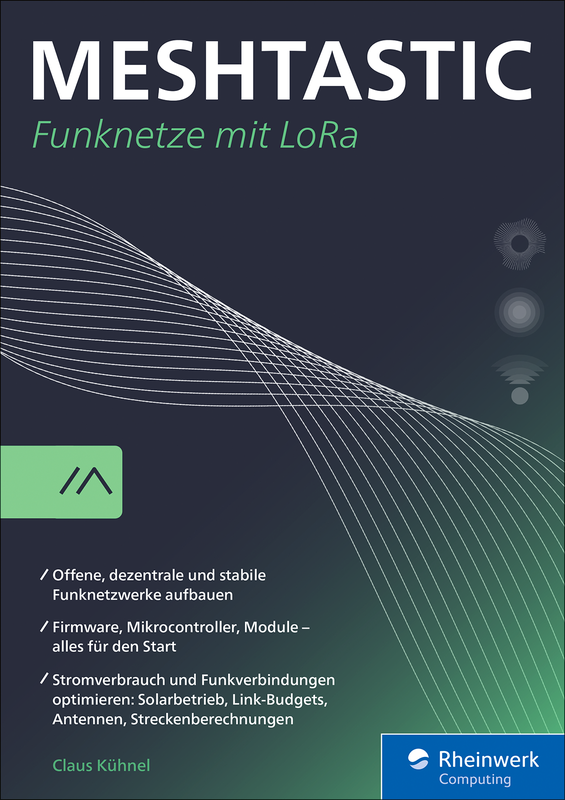
Meshtastic
Eigene Funknetze aufbauen mit LoRa, im heise shop als E-Book erhältlich.Mit der Funktechnologie LoRa als Basis können Sie drahtlose Maker-Projekte realisieren. So weit, so gut: Aber was ist, wenn Sie ein ganzes Netzwerk für den stabilen, dezentralen Austausch von Daten brauchen? Mit Meshtastic bauen Sie sowohl öffentliche als auch lokale Netze auf und sind unabhängig vom Handynetz und Kabelverbindungen. Im Batteriebetrieb oder mit Solarzellen funken Sie off-the-grid und erreichen echt Autarkie, wenn Sie Daten zuverlässig teilen müssen. Wie das geht, zeigt Ihnen Claus Kühnel in dieser Einführung. Aus dem Inhalt: Lokale IoT-Netze aufbauenMikrocontroller für MeshtasticFirmware aufspielen und Geräte konfigurierenEin Meshtastic-Netzwerk aufbauenVerbindungen ins InternetAnwendungstestsSpannungsversorgung mit Batterien und SolarOptimierung der FunkverbindungenBauliche GegebenheitenNetiquette und Traffic Observer

IAPP CIPP / US Certified Information Privacy Professional Study Guide
PREPARE FOR SUCCESS ON THE IAPP CIPP/US EXAM AND FURTHER YOUR CAREER IN PRIVACY WITH THIS EFFECTIVE STUDY GUIDE - NOW INCLUDES A DOWNLOADABLE SUPPLEMENT TO GET YOU UP TO DATE ON THE CURRENT CIPP EXAM FOR 2024-2025!Information privacy has become a critical and central concern for small and large businesses across the United States. At the same time, the demand for talented professionals able to navigate the increasingly complex web of legislation and regulation regarding privacy continues to increase. Written from the ground up to prepare you for the United States version of the Certified Information Privacy Professional (CIPP) exam, Sybex's IAPP CIPP/US Certified Information Privacy Professional Study Guide also readies you for success in the rapidly growing privacy field. You'll efficiently and effectively prepare for the exam with online practice tests and flashcards as well as a digital glossary. The concise and easy-to-follow instruction contained in the IAPP/CIPP Study Guide covers every aspect of the CIPP/US exam, including the legal environment, regulatory enforcement, information management, private sector data collection, law enforcement and national security, workplace privacy and state privacy law, and international privacy regulation.* Provides the information you need to gain a unique and sought-after certification that allows you to fully understand the privacy framework in the US* Fully updated to prepare you to advise organizations on the current legal limits of public and private sector data collection and use* Includes 1 year free access to the Sybex online learning center, with chapter review questions, full-length practice exams, hundreds of electronic flashcards, and a glossary of key terms, all supported by Wiley's support agents who are available 24x7 via email or live chat to assist with access and login questionsPerfect for anyone considering a career in privacy or preparing to tackle the challenging IAPP CIPP exam as the next step to advance an existing privacy role, the IAPP CIPP/US Certified Information Privacy Professional Study Guide offers you an invaluable head start for success on the exam and in your career as an in-demand privacy professional. ABOUT THE AUTHORSMIKE CHAPPLE, PHD, CIPP/US, is Teaching Professor of Information Technology, Analytics, and Operations at Notre Dame’s Mendoza College of Business. He is the bestselling author of over 25 technical books. He is also the Academic Director of the University’s Master of Science in Business Analytics program. JOE SHELLEY, CIPP/US, is the Vice President for Libraries and Information Technology at Hamilton College in New York. He oversees the information security and privacy programs, IT risk management, business intelligence and analytics, and data governance. ContentsIntroduction xixAssessment Test xxixChapter 1 Privacy in the Modern Era 1Introduction to Privacy 2What Is Privacy? 3What Is Personal Information? 4What Isn’t Personal Information? 5Why Should We Care About Privacy? 7Generally Accepted Privacy Principles 8Management 9Notice 9Choice and Consent 10Collection 10Use, Retention, and Disposal 11Access 11Disclosure to Third Parties 12Security for Privacy 12Quality 14Monitoring and Enforcement 14Developing a Privacy Program 15Crafting Strategy, Goals, and Objectives 15Appointing a Privacy Official 16Privacy Roles 17Building Inventories 18Conducting a Privacy Assessment 18Implementing Privacy Controls 20Ongoing Operation and Monitoring 20Online Privacy 20Privacy Notices 21Privacy and Cybersecurity 21Cybersecurity Goals 22Relationship Between Privacy and Cybersecurity 23Privacy by Design 24Summary 25Exam Essentials 25Review Questions 27Chapter 2 Legal Environment 31Branches of Government 32Legislative Branch 32Executive Branch 33Judicial Branch 34Understanding Laws 36Sources of Law 36Analyzing a Law 41Legal Concepts 43Legal Liability 44Torts and Negligence 45Summary 46Exam Essentials 46Review Questions 48Chapter 3 Regulatory Enforcement 53Federal Regulatory Authorities 54Federal Trade Commission 54Federal Communications Commission 60Department of Commerce 61Department of Health and Human Services 61Banking Regulators 62Department of Education 63State Regulatory Authorities 63Self-Regulatory Programs 64Payment Card Industry 65Advertising 65Trust Marks 66Safe Harbors 66Summary 67Exam Essentials 68Review Questions 69Chapter 4 Information Management 73Data Governance 74Building a Data Inventory 74Data Classification 75Data Flow Mapping 77Data Lifecycle Management 78Workforce Training 79Cybersecurity Threats 80Threat Actors 81Incident Response 86Phases of Incident Response 86Preparation 87Detection and Analysis 88Containment, Eradication, and Recovery 88Post-incident Activity 88Building an Incident Response Plan 90Data Breach Notification 92Vendor Management 93Summary 94Exam Essentials 95Review Questions 97Chapter 5 Private Sector Data Collection 101FTC Privacy Protection 103General FTC Privacy Protection 103The Children’s Online Privacy Protection Act (COPPA) 104Future of Federal Enforcement 107Medical Privacy 110The Health Insurance Portability and AccountabilityAct (HIPAA) 111The Health Information Technology for Economic andClinical Health Act 119The 21st Century Cures Act 120Confidentiality of Substance Use Disorder PatientRecords Rule 121Financial Privacy 122Privacy in Credit Reporting 122Gramm–Leach–Bliley Act (GLBA) 125Red Flags Rule 129Consumer Financial Protection Bureau 130Educational Privacy 131Family Educational Rights and Privacy Act (FERPA) 131Telecommunications and Marketing Privacy 132Telephone Consumer Protection Act (TCPA) andTelemarketing Sales Rule (TSR) 133The Junk Fax Prevention Act (JFPA) 136Controlling the Assault of Non-solicited Pornographyand Marketing (CAN-SPAM) Act 136Telecommunications Act and Customer ProprietaryNetwork Information 138Cable Communications Policy Act 139Video Privacy Protection Act (VPPA) of 1988 140Driver’s Privacy Protection Act (DPPA) 141Digital Advertising and Data Ethics 142Web Scraping 143Summary 143Exam Essentials 144Review Questions 146Chapter 6 Government and Court Access to Private SectorInformation 151Law Enforcement and Privacy 152Access to Financial Data 153Access to Communications 157National Security and Privacy 162Foreign Intelligence Surveillance Act (FISA) of 1978 162FISA Amendments Act Section 702 164USA-PATRIOT Act 165The USA Freedom Act of 2015 167The Cybersecurity Information Sharing Act of 2015 168Civil Litigation and Privacy 169Compelled Disclosure of Media Information 170Electronic Discovery 171Summary 173Exam Essentials 173Review Questions 175Chapter 7 Workplace Privacy 179Introduction to Workplace Privacy 180Workplace Privacy Concepts 180U.S. Agencies Regulating Workplace Privacy Issues 181U.S. Antidiscrimination Laws 182Privacy Before, During, and After Employment 185Automated Employment Decision Tools 186Employee Background Screening 186Employee Monitoring 190Investigation of Employee Misconduct 194Termination of the Employment Relationship 196Summary 197Exam Essentials 198Review Questions 200Chapter 8 State Privacy Laws 205Federal vs. State Authority 206Elements of State Privacy Laws 207Applicability 207Data Subject Rights 208Privacy Notice Requirements 209Data Protection 209Enforcement 211Data Breach Notification 212Elements of State Data Breach Notification Laws 212Key Differences Among States 214Significant Developments 215Other Recent Updates to State Breach Notification Laws 218Comprehensive State Privacy Laws 220California Consumer Privacy Act (2018) andCalifornia Privacy Rights Act (2020) 220Virginia Consumer Data Protection Act 223Colorado Privacy Act 226Connecticut Data Privacy Act 229Utah 231Florida 232Oregon 234Texas 237Montana 239Subject-Specific State Privacy Laws 241Health and Genetic Information 241Online Privacy 243Biometric Information Privacy Regulations 247AI and Automated Decision-Making 249Data Brokers 250Financial Privacy 251California Financial Information Privacy Act 252Recent Developments 253Marketing Laws 254Summary 255Exam Essentials 256Review Questions 258Chapter 9 International Privacy Regulation 263International Data Transfers 264European Union General Data Protection Regulation 265Adequacy Decisions 268Binding Corporate Rules 272Standard Contractual Clauses 273Other Approved Transfer Mechanisms 273APEC Privacy Framework 274Cross-Border Enforcement Issues 276Global Privacy Enforcement Network 276Resolving Multinational Compliance Conflicts 276Summary 277Exam Essentials 277Review Questions 279Appendix Answers to Review Questions 283Chapter 1: Privacy in the Modern Era 284Chapter 2: Legal Environment 285Chapter 3: Regulatory Enforcement 287Chapter 4: Information Management 289Chapter 5: Private Sector Data Collection 291Chapter 6: Government and Court Access to Private SectorInformation 293Chapter 7: Workplace Privacy 294Chapter 8: State Privacy Laws 296Chapter 9: International Privacy Regulation 298Index 301

DevOps Simplified: Zero-Maintenance Strategies for AWS EKS
Gain the knowledge and practical skills needed to deploy a fully functional, secure, and scalable application in AWS EKS. This book is a hands-on guide designed to help you navigate and manage infrastructure in the AWS EKS environment.The book starts by reviewing the concept of DevOps flexibility, emphasizing adaptability to manage changes effectively. It covers foundational elements like IAM basics, user management, and the use of Terraform for infrastructure as code, highlighting the importance of version stability and unique CIDR blocks. Moving forward, you’ll explore Kubernetes, and its initial set-up steps, such as configuration management, access control, and storage. You’ll also see how to bridge Kubernetes with AWS resources, touching upon service accounts, identity federation, and policy assignment.In the final chapters, the book guides you through the complete setup of a fully working application using Terraform. The book culminates with a step-by-step walkthrough of deploying a complete application environment where you’ll generate and distribute access credentials, configure persistent storage, and manage RBAC for users, all using Terraform._Zero-Maintenance Strategies for AWS EKS_ will provide you with a solid foundation and a toolkit of proven strategies for managing cloud infrastructure.WHAT YOU WILL LEARN* Understand the concept of DevOps flexibility and its practical applications* Acquire foundational knowledge in IAM basics and user management.* Manage external access to your applications while consolidating load balancing through a single, entry point.* Securely configure DNS and SSL, ensuring your application is both accessible and protected.WHO THIS BOOK IS FORDevOps professionals, IT managers, and software developers who are looking to adopt or improve their DevOps practices, and students and educators in IT-related fields.Dmytro Kozhevin is an accomplished DevOps Engineer and Educator with over 18 years of experience, now channeling his expertise into building a DevOps practicing platform. His professional journey has been marked by a commitment to innovation and excellence in DevOps, particularly within cloud environments like AWS. He aims to demystify complex DevOps challenges and present accessible, scalable solutions. Dmytro is currently employed with Luxoft in Ukraine as a DevOps Trainer specializing in CI/CD, Kubernetes, and cloud infrastructure, focusing on AWS EKS.Chapter 1: Setting Our Sights.- Chapter 2: Starting from Scratch.- Chapter 3: Building the Infrastructure Base.- Chapter 4: Sculpting Kubernetes: The Initial Steps.- Chapter 5: Bridging Kubernetes and AWS Resources.- Chapter 6. The Structure of Application.- Chapter 7. Be a Good Kubernetes Citizen.- Chapter 8: The Intricacies of Helm.- Chapter 9: Choosing the Right CI/CD Platform.- Chapter 10: Wrapping Up.

PHP 8 Objects, Patterns, and Practice: Volume 1
Develop elegant and rock-solid systems using PHP, aided by three key elements: object fundamentals, design principles, and best practices. Now in its 7th edition, this book has been fully updated for PHP 8.3 and split into two volumes to better accommodate its wealth of new content. Volume 1 covers objects and patterns, while Volume 2 focuses on tools and best practices. You’ll begin this volume by reviewing PHP's object-oriented features including key topics such as class declarations, inheritance, and reflection. The second part of the book is devoted to design patterns. It explains the principles that make patterns powerful and covers many of the classic design patterns, as well as enterprise and database patterns. This volume provides a solid grounding in PHP's support for objects and builds on this foundation to apply the core principles of software design. New topics covered include read only classes, enumerations, typed class constants, as well as various additions to argument and return types. The knowledge gained from this book will help you master the object-oriented enhancements and the design patterns available for PHP 8, paving the way for developing best practices in Volume 2. You will: * Master advanced object-oriented features, including static methods and properties. * Manage error conditions with exceptions and create abstract classes and interfaces. * Use design principles to deploy objects and classes effectively in your projects. * Discover a set of powerful patterns that you can implement in your own projects. Develop elegant and rock-solid systems using PHP, aided by three key elements: object fundamentals, design principles, and best practices. Now in its 7th edition, this book has been fully updated for PHP 8.3 and split into two volumes to better accommodate its wealth of new content. Volume 1 covers objects and patterns, while Volume 2 focuses on tools and best practices. You’ll begin this volume by reviewing PHP's object-oriented features including key topics such as class declarations, inheritance, and reflection. The second part of the book is devoted to design patterns. It explains the principles that make patterns powerful and covers many of the classic design patterns, as well as enterprise and database patterns. This volume provides a solid grounding in PHP's support for objects and builds on this foundation to apply the core principles of software design. New topics covered include read only classes, enumerations, typed class constants, as well as various additions to argument and return types. The knowledge gained from this book will help you master the object-oriented enhancements and the design patterns available for PHP 8, paving the way for developing best practices in Volume 2. What You Will Learn * Work with object fundamentals. * Write classes and methods, instantiate objects, and create powerful class hierarchies using inheritance. * Master advanced object-oriented features, including static methods and properties. * Manage error conditions with exceptions and create abstract classes and interfaces. * Use design principles to deploy objects and classes effectively in your projects. * Discover a set of powerful patterns that you can implement in your own projects. Who This Book Is For Anyone with at least a basic knowledge of PHP who wants to use its object-oriented features in their projects. Matt Zandstra has worked as a web programmer, consultant, and writer for over two decades. In addition to this book, he is the author of SAMS Teach Yourself PHP in 24 Hours (three editions) and is a contributor to DHTML Unleashed. He has written articles for Linux Magazine, Zend, IBM DeveloperWorks, and php|architect Magazine, and also writes fiction. Matt was a senior developer/tech lead at Yahoo and API tech lead at LoveCrafts. He now runs an agency that advises companies on their architectures and system management, and develops systems primarily with PHP, Python, and Java. Part I. Objects.- 1. PHP: Design and Management.- 2. PHP and Objects.- 3. Object Basics.- 4. Advanced Features.- 5. Object Tools.- 6. Objects and Design.- Part II. Patterns.- 7. What Are Design Patterns? Why Use Them?.- 8. Some Pattern Principles.- 9. Generating Objects.- 10. Patterns for Flexible Object Programming.- 11. Performing and Representing Tasks.- 12. Enterprise Patterns.- 13. Database Patterns.

Redefining Cross-Border Financial Flows
Analyse how AI and other cutting-edge technologies affect the complex web of international financial transactions. The global remittance sector and artificial intelligence (AI) work together in a way that is testament to the revolutionary force of innovation in the always changing financial and technology landscape. As we stand at the threshold of a new age, this book aims to explore the layers of complexity underlying the confluence of AI and remittances.Your investigation will go beyond the current state of affairs and into the future, whereby predictive analytics and autonomous financial transactions will fundamentally alter the way that we send and receive money internationally. This process's incorporation of AI technology represents a revolution rather than a simple progression, one that might improve millions of people's lives by streamlining, securing, and lowering the cost of financial transactions. This book breaks down the complex workings of AI prediction models, reveals how blockchain integration may be used to facilitate safe and transparent transactions, and examines how biometric authentication can strengthen the security of financial transactions. It dives into the complexities of regulatory compliance, understanding the difficult balance between innovation and conformity to existing standards.When machines carry out transactions based on complex algorithms and current market circumstances, what does it entail for people and economies? What effect does this change have on how people make financial decisions? This book is an invitation to imagine a future in which financial systems are not just efficient but also naturally intelligent. It is a call to reflect on the moral ramifications, the effects on society, and the obligations that accompany the dawn of a new era of financial opportunity. Remittances are about to undergo a revolution, and you have a crucial role to play in determining how this will play out.WHAT YOU’LL LEARN* Understand the integration of AI and other technology in remittances to enhance efficiency, security, and cost-effectiveness of cross-border financial transactions.* Examine the impact of AI-driven cross border flows on global economic development, particularly in communities heavily reliant on remittances.* Investigate the social benefits and potential challenges posed by AI in maintaining or altering familial and community ties through remittance flows* Critically evaluate regulatory and ethical challenges while fostering innovation and adhering to existing financial laws and standards.* Explore future scenarios where AI governs autonomous financial transactions and the role of humans in an AI-driven financial ecosystem.* Debate how such changes might redefine personal and communal financial interactions.WHO THIS BOOK IS FORFinTech practitioners, Finance students, professionals in working in Payments and/or RemittancesHari Prasad Josyula is a FinTech product transformation expert with over 15 years’ experience in delivering innovative customer-centric solutions. He is currently product analyst at Dow Jones. He is a functional solution architect across banking, asset and wealth management, financial services, regulatory compliance and reporting, logistics and supply chains. He is also a certified scrum product owner, ITIL service manager, and scrum master with a strong background in data analytics, business analysis, and agile methodologies.His research interests including artificial intelligence (AI) in banking (anti-money laundering, fraud and risk management), generative AI for operational efficiency in financial services, open banking, blockchain and cryptocurrencies, central bank digital currencies. Embedded payments, programmable payments, financial risk management, product, program and portfolio management.Josyula has a MBA in Finance from Suffolk University, Boston, MA and a MS in Physical Sciences from Andhra University, India.www.linkedin.com/in/harijscholar.google.com/citations?user=n88bVlgAAAAJ&hl=enwww.researchgate.net/profile/Hari-Prasad-JosyulaChapter 1: Remittance Revolution.- Chapter 2: Understanding Remittance Challenges.- Chapter 3: The Role of AI in Financial Technology.- Chapter 4: Innovations in Remittance Platforms.- Chapter 5: Enhancing Security and Compliance.- Chapter 6: Impact on Financial Inclusion.- Chapter 7: AI and Cryptocurrencies in Remittances.- Chapter 8: Overcoming Ethical and Social Challenges.- Chapter 9: AI-Powered Market Insights and Global Remittance Trends.- Chapter 10: Future Trends and Predictions.- Chapter 11: Recommendations and Strategies.- Chapter 12: Conclusion.

Learning VMware Workstation Pro for Windows: Volume 2
VMware Workstation is a software solution that provides a type-2 hypervisor, or desktop hypervisor, that runs on x64 Windows and Linux-based operating systems. It enables users to create and run virtual machines, containers, and Kubernetes clusters simultaneously on their physical devices without having to reformat or dual-boot the underlying device. There are several use cases for VMware Workstation. For IT pros, it allows them to test applications and operating system builds, as well as enable remote control of vSphere datacenter infrastructure. Developers can run multiple different operating systems or different versions of operating systems on a single device giving them the platform flexibility to test, develop, and troubleshoot applications cost-effectively. Finally, for the greater workforce, VMware Workstation can enable BYOD device initiatives allowing employees to run a full corporate environment on their device without deleting or reformatting it. Learning VMware Workstation Pro for Windows – Part 2 provides the reader with a practical, step-by-step guide to creating and managing virtual machines using VMware Workstation, starting with an overview of hypervisors and desktop hypervisors. Next, it talks about each resource, such as CPU, memory, and networking, and how these are configured in a virtual environment. After that, it demonstrates the installation of VMware Workstation, configuration, and then building and managing different virtual machines running on different operating systems such as ChromeOS, and Linux, and building an ESXi lab environment. Towards the end, readers will learn how to use command line tools, such as the REST API, and vmrun, before going on to discuss upgrading and troubleshooting your VMware Workstation environment. By the end of this book, readers will have full knowledge of VMware Workstation Pro. This book is a continuation of " Learning VMware Workstation Pro for Windows – Part 1 " where readers learn how to build and manage different virtual machines running on different operating systems and build an ESXi lab environment with VMware Workstation. You Will: * Learn how to run containers on a VMware workstation * Understand how to use the command line to configure and control Workstation Pro and virtual machines * Practice the use of REST API for Workstation Pro VMware Workstation is a software solution that provides a type-2 hypervisor, or desktop hypervisor, that runs on x64 Windows and Linux-based operating systems. It enables users to create and run virtual machines, containers, and Kubernetes clusters simultaneously on their physical devices without having to reformat or dual-boot the underlying device. There are several use cases for VMware Workstation. For IT pros, it allows them to test applications and operating system builds, as well as enable remote control of vSphere datacenter infrastructure. Developers can run multiple different operating systems or different versions of operating systems on a single device giving them the platform flexibility to test, develop, and troubleshoot applications cost-effectively. Finally, for the greater workforce, VMware Workstation can enable BYOD device initiatives allowing employees to run a full corporate environment on their device without deleting or reformatting it. Learning VMware Workstation Pro for Windows – Part 2 provides the reader with a practical, step-by-step guide to creating and managing virtual machines using VMware Workstation, starting with an overview of hypervisors and desktop hypervisors. Next, it talks about each resource, such as CPU, memory, and networking, and how these are configured in a virtual environment. After that, it demonstrates the installation of VMware Workstation, configuration, and then building and managing different virtual machines running on different operating systems such as ChromeOS, and Linux, and building an ESXi lab environment. Towards the end, readers will learn how to use command line tools, such as the REST API, and vmrun, before going on to discuss upgrading and troubleshooting your VMware Workstation environment. By the end of this book, readers will have full knowledge of VMware Workstation Pro. This book is a continuation of " Learning VMware Workstation Pro for Windows – Part 1 " where readers learn how to build and manage different virtual machines running on different operating systems and build an ESXi lab environment with VMware Workstation. You Will: * Learn how to run containers on a VMware workstation * Understand how to use the command line to configure and control Workstation Pro and virtual machines * Practice the use of REST API for Workstation Pro This book is for: Developers, IT professionals, VMware certified professionals both remote and Bring your device (BYOD). Peter von Oven is an experienced technical consultant working closely with customers, partners, and vendors in designing technology solutions, to meet business needs and deliver outcomes. During his career, Peter has presented at key IT events such as VMworld, IP EXPO, and various VMUGs and CCUG events across the UK. He has also worked in senior presales roles and presales management roles for Fujitsu, HP, Citrix, and VMware, and has been awarded VMware vExpert for the last nine years in a row and vExpert EUC for the last three consecutive years. In 2021, Peter added the vExpert Desktop Hypervisor award to his portfolio of awards. In 2016, Peter founded his own company specializing in application delivery. Today he works with partners and vendors helping drive and deliver innovative technology solutions. He is also an avid author, having now written 19 books and made numerous videos about VMware end-user computing solutions. In his spare time, Peter volunteers as a STEM Ambassador, working with schools and colleges, helping the next generation develop the skills and confidence in building careers in technology. He is also a serving Royal Air Force Reservist currently working as an instructor with the Air Cadet organization. Chapter 1: Working with containers.- Chapter 2: Working with the command line.- Chapter 3: Using the vmrun Command to Control Virtual Machines.- Chapter 4: RESTAPI.- Chapter 5: Support and Troubleshooting.- Chapter 6: Workstation Player.- Chapter 7: Installing additional operating systems.- Chapter 8: Unattended installation.- Chapter 9: What's New?.

Kryptografie lernen und anwenden mit CrypTool und SageMath
Kryptografie: Die unsichtbare Macht hinter unserer digitalen WeltSeit Jahrhunderten schützen Könige, Feldherren und Geheimdienste ihre Nachrichten durch Kryptografie. Heute sichert sie den Alltag von uns allen – ob in Browsern, Smartphones, Herzschrittmachern, Bankautomaten, Autos oder der Cloud – unsichtbar, aber unverzichtbar.Dieses Buch bietet eine umfassende und aktuelle Einführung in Kryptografie und Kryptoanalyse. Es beleuchtet sowohl die wissenschaftlichen Grundlagen als auch praxisrelevante Anwendungen (Risikomanagement, Empfehlungen BSI und NIST).Kostenlose Open-Source Lern-Software wie CrypTool wird benutzt, um auch komplexe Themen greifbar und spielerisch-interaktiv erfahrbar zu machen. Viele Aussagen werden anhand von lauffähigen SageMath-Beispielen durchgerechnet. Diese einzigartige Kombination macht das Buch besonders wertvoll. Die Themen wurden gemeinsam mit Experten entwickelt und erscheinen erstmals in dieser Form auf Deutsch.Für historisch Interessierte, autodidaktisch Lernende, Studierende und Lehrende, aber auch Praktiker bietet dieses Werk einen besonderen Zugang zur Welt der Kryptografie.Leseprobe (Link zu lehmanns.de)»Das Gebiet der Kryptografie ist so umfangreich, es könnte ganze Bibliotheken füllen. Bernhard Esslinger bringt einen Rundumschlag zu den wichtigsten Aspekten in einem dicken Buch unter – und das praxisorientiert und lehrreich.Da selbst der Platz auf den nahezu 900 Seiten des Buches begrenzt ist, schneidet der Autor ein paar Themen lediglich kurz an. Manchmal wären zusätzliche Erklärungen wünschenswert gewesen, aber das ist Meckern auf hohem Niveau. Das Buch will Nachschlagewerk, Anleitung, Lektüre und Lehrmaterial in einem sein und Esslinger schafft einen hervorragenden Balanceakt, um alle Facetten der Kryptografie zu beleuchten.«Wilhelm Drehling, c't-Redaktion in c't 16/25Zum Autor:Bernhard Esslinger, Professor für IT-Sicherheit und Kryptografie an der Universität Siegen. Schwerpunkte sind angewandte Kryptografie, Awareness und Didaktik. Freut sich, wenn Studierende sich weiterentwickeln. Betreute über 200 Bachelor- und Masterarbeiten.

Networking All-in-One For Dummies
THE ESSENTIALS YOU NEED TO LEARN ABOUT NETWORKING—10 BOOKS IN ONE!With over 900 pages of clear and trustworthy information, Networking All-in-One For Dummies is the perfect beginner's guide AND the perfect professional reference book. Small networks, large networks, business networks, cloud networks—it's all covered. Learn how to set up a network and keep it functioning, using Windows Server, Linux, and related technologies. This book also covers best practices for security, managing mobile devices, and beyond. Maybe you're just getting started with networking, or maybe you know what you're doing and need a resource with all the knowledge in one place. Either way, you've found what you need with this Dummies All-in-One* Plan a network from scratch and learn how to set up all the hardware and software you'll need* Find explanations and examples of important networking protocols* Build remote and cloud-based networks of various sizes* Administer networks with Windows Server and other versions* Secure your network with penetration testing and planning for cybersecurity incident responsesEvery network administrator needs a copy of Networking All-in-One For Dummies, the comprehensive learning resource and reliable desk reference. DOUG LOWE is the information technology director for a civil engineering firm in Clovis, California. He has been managing networks at publishing companies and nonprofits for 40 years. His 50+ technology books include more than 30 in the For Dummies series. Doug has demystified everything from memory management to client/server computing.

Das Standard-Datenschutzmodell (SDM) (2. Auflg.)
Das Standard-Datenschutzmodell (SDM) gilt spätestens seit 2020 deutschlandweit als etabliert, um normative Anforderungen der DSGVO in funktionale Anforderungen an die Praxis der Datenverarbeitungen zu transformieren.Wenn die Juristin zum Beispiel sagt: Diese Daten sind unverzüglich zu löschen! Dann ist aus juristischer Sicht alles Erforderliche gesagt. Für Praktiker*innen, die diese vermeintlich leichte Anforderung umzusetzen haben, können sich Unmengen an komplizierten Fragen stellen: Wie gesichert muss gelöscht werden? Kann man den installierten Löschprogrammen trauen? Wie muss das Löschen von Daten in welcher Auflösung dokumentiert und protokolliert werden? Wer ist eigentlich befugt, zu löschen, auch in den Backup-Dateien?Das SDM hilft, bei solchen Fragestellungen der Umsetzung zu begründeten Entscheidungen zu gelangen, um an ein vollständiges Set von aufeinander abgestimmten, wirksamen Schutzmaßnahmen zu gelangen. Dies ist von zentraler Bedeutung bei der Durchführung von Datenschutz-Prüfungen und -Beratungen, Datenschutz-Folgenabschätzungen und dem Betrieb eines Datenschutz-Managements.Die 2. Auflage wurde umfassend für das SDM in der Version 3.1 aktualisiert und erweitert. Neu hinzugekommen sind u.a. Kapitel über SDM-Tools und -Schulungen sowie über SDM-Konformität. Was meint „Datenschutz“? Überblick Verarbeitung Recht Gewährleistungsziele Datenschutzrisiken Technisch-organisatorische Maßnahmen SDM anwenden SDM im Kontext anderer Methoden und Standards Anstelle einer Zusammenfassung: SDM-Konformität Nachwort Anhang MARTIN ROST ist Mitarbeiter des Unabhängigen Landeszentrums für Datenschutz in Schleswig-Holstein und Leiter des „Unterarbeitskreis Standard-Datenschutzmodell“ des „Arbeitskreis Technik“ der Konferenz der Datenschutzbeauftragten des Bundes und der Länder.

Networking All-in-One For Dummies
THE ESSENTIALS YOU NEED TO LEARN ABOUT NETWORKING—10 BOOKS IN ONE!With over 900 pages of clear and trustworthy information, Networking All-in-One For Dummies is the perfect beginner's guide AND the perfect professional reference book. Small networks, large networks, business networks, cloud networks—it's all covered. Learn how to set up a network and keep it functioning, using Windows Server, Linux, and related technologies. This book also covers best practices for security, managing mobile devices, and beyond. Maybe you're just getting started with networking, or maybe you know what you're doing and need a resource with all the knowledge in one place. Either way, you've found what you need with this Dummies All-in-One* Plan a network from scratch and learn how to set up all the hardware and software you'll need* Find explanations and examples of important networking protocols* Build remote and cloud-based networks of various sizes* Administer networks with Windows Server and other versions* Secure your network with penetration testing and planning for cybersecurity incident responsesEvery network administrator needs a copy of Networking All-in-One For Dummies, the comprehensive learning resource and reliable desk reference. DOUG LOWE is the information technology director for a civil engineering firm in Clovis, California. He has been managing networks at publishing companies and nonprofits for 40 years. His 50+ technology books include more than 30 in the For Dummies series. Doug has demystified everything from memory management to client/server computing.

Qualitätsmanagement mit SAP S/4HANA
In diesem Buch lernen Sie Schritt für Schritt, wie Sie Ihre QM-Prozesse in SAP S/4HANA abbilden und die notwendigen Customizing-Einstellungen vornehmen. Das erfahrene Autorenteam erklärt Ihnen die zentralen Stammdaten und Steuerinstrumente in QM. Sie erfahren außerdem, welche neuen Funktionen SAP Extended Warehouse Management bereitstellt. Aus dem Inhalt: Quality Issue ResolutionBeschaffung, Wareneingang, Produktion und LieferungChargen und MHD-ÜberwachungWiederkehrende und zeitgesteuerte PrüfungenZeugnis, Qualitätsmeldung und Nonconformance ManagementPrüfmittelverwaltungQualitätskostenAuswertungenAudit-Management, FMEA und PLPQualitätslenkungIntegration mit SAP EWMSAP S/4HANA und SAP Fiori Einleitung ... 23 1. QM-Funktionen in SAP S/4HANA -- Überblick und Einordnung ... 31 1.1 ... Was ist SAP S/4HANA? ... 32 1.2 ... Optionen zur Nutzung von SAP S/4HANA ... 33 1.3 ... Release- und Wartungsstrategie von SAP S/4HANA ... 37 1.4 ... Benutzeroberflächen in SAP S/4HANA ... 40 1.5 ... Wichtige technische Veränderungen und Neuerungen ... 61 1.6 ... Weiterführende Informationen zu QM in SAP S/4HANA ... 68 2. Überblick über die Qualitätsprozesse ... 71 2.1 ... Prüfungen in der logistischen Kette ... 71 2.2 ... Reklamationsbearbeitung ... 75 2.3 ... Zeugnisabwicklung ... 79 2.4 ... Prüfmittelverwaltung ... 80 2.5 ... Qualitätskosten ... 80 2.6 ... Audit-Management ... 81 2.7 ... FMEA/Produktionslenkungsplan ... 82 2.8 ... Stabilitätsstudie ... 83 2.9 ... Wiederkehrende Prüfung ... 83 3. Grundeinstellungen im Customizing ... 85 3.1 ... Voreinstellung auf Mandantenebene ... 85 3.2 ... Voreinstellungen auf Werksebene ... 88 4. Grunddaten ... 95 4.1 ... Vorüberlegung ... 95 4.2 ... Stichprobenplan ... 96 4.3 ... Stichprobenverfahren ... 99 4.4 ... Dynamisierungsregel ... 106 4.5 ... Prüfmethode ... 111 4.6 ... Prüfmerkmal/Klassenmerkmal ... 118 4.7 ... Katalog ... 127 4.8 ... Arbeitsplatz ... 134 5. Logistik-Stammdaten ... 137 5.1 ... Materialstamm ... 137 5.2 ... Q-Infosatz Beschaffung ... 149 5.3 ... Q-Infosatz Vertrieb ... 153 6. Prüfplanung ... 157 6.1 ... Plantypen ... 157 6.2 ... Prüfplan ... 159 6.3 ... Standardplan ... 178 6.4 ... Arbeitsplan/Linienplan ... 180 6.5 ... Prüfpunkt aktivieren ... 181 6.6 ... Planungsrezept ... 185 6.7 ... Materialspezifikation ... 187 6.8 ... Engineering Workbench ... 188 6.9 ... Allgemeine Funktionen zum Prüfplan ... 194 6.10 ... Änderungsdienst ... 198 6.11 ... Customizing der Prüfplanung ... 200 6.12 ... SAP 3D Visual Enterprise ... 203 7. Dokumentenverwaltung ... 209 7.1 ... Dokumenten-Infosatz ... 210 7.2 ... Materialstamm ... 212 7.3 ... Prüfmethode ... 214 7.4 ... Lieferbedingung ... 214 7.5 ... Lieferantenvereinbarung ... 216 7.6 ... Kundenvereinbarung ... 216 7.7 ... Qualitätsmeldung ... 218 7.8 ... Kataloge ... 219 7.9 ... Prüflos ... 220 7.10 ... Customizing der Dokumentarten ... 220 7.11 ... Objekte zum Dienst ... 222 8. Prüfablauf ... 227 8.1 ... Übersicht über den Prüfablauf ... 227 8.2 ... Ereignis der Prüfloserzeugung ... 229 8.3 ... Funktionen im Prüflos ... 240 8.4 ... Ergebniserfassung ... 244 8.5 ... Fehlererfassung ... 269 8.6 ... Verwendungsentscheid ... 276 8.7 ... Langzeitprüfung ... 286 8.8 ... Serialnummer ... 288 9. Prüfung zum Wareneingang in EWM ... 291 9.1 ... Vorüberlegung ... 291 9.2 ... Customizing-Einstellungen ... 295 9.3 ... Prüfregel in EWM ... 303 9.4 ... Prüfloserzeugung in einem EWM-verwalteten Lager ... 306 9.5 ... Verwendungsentscheid mit Folgeaktion ... 315 10. Qualitätsmanagement in der Beschaffung ... 319 10.1 ... Voraussetzung ... 319 10.2 ... Sperrfunktionen ... 325 10.3 ... An-/Abnahmeprüfung ... 327 10.4 ... Zeugnis zum Lieferanten ... 330 10.5 ... QM-System ... 334 11. Qualitätsmanagement in der Produktion ... 341 11.1 ... Vorüberlegung ... 342 11.2 ... Produktionsbegleitende Prüfung ... 342 11.3 ... Prüfung beim Wareneingang aus der Produktion ... 358 11.4 ... Prüfung zum Serienauftrag ... 363 12. Arbeit mit Chargen im Qualitätsmanagement ... 367 12.1 ... Chargen anlegen ... 368 12.2 ... Chargeneigenschaften ... 369 12.3 ... Chargenklasse im Qualitätsmanagement ... 372 12.4 ... Wiederkehrende Prüfung/MHD-Überwachung von Chargen ... 379 12.5 ... Auswertungen ... 384 13. Zeitgesteuerte Prüfung/Prüfmittelverwaltung ... 393 13.1 ... Stammdaten/Voraussetzung ... 394 13.2 ... Ablauf der Prüfung ... 408 13.3 ... Arbeitslisten ... 413 13.4 ... Customizing ... 414 14. Stabilitätsstudie ... 417 14.1 ... Stammdaten ... 418 14.2 ... Customizing der Stabilitätsstudie ... 421 14.3 ... Ablauf der Stabilitätsstudie ... 423 14.4 ... Auswertung ... 434 15. Prüfungen bei Kundenretouren ... 437 15.1 ... Retourenauftrag aus der Meldung anlegen ... 437 15.2 ... Retourenauftrag bearbeiten ... 439 15.3 ... Materialinspektion ohne Prüflos ... 442 15.4 ... Materialinspektion mit Prüflos ... 446 15.5 ... Customizing der erweiterten Retourenabwicklung ... 447 16. Weitere Funktionen in der Prüfabwicklung ... 453 16.1 ... Probenverwaltung ... 454 16.2 ... Dynamisierungen/Qualitätslage ... 467 16.3 ... Multiple Spezifikation ... 476 16.4 ... Subsystem -- Schnittstelle QM-IDI ... 482 16.5 ... Formulare ... 488 16.6 ... Ergebniskopie ... 490 16.7 ... Digitale Signatur im Prüfablauf ... 493 16.8 ... Genehmigungen ... 497 17. Zeugnis ... 499 17.1 ... Zeugnisvorlage ... 500 17.2 ... Manuelle Ausgabe ... 510 17.3 ... Zeugnis zur Lieferung ... 515 17.4 ... Archivanzeige ... 519 18. Nonconformance Management (Abweichungsmanagement) ... 521 18.1 ... Was hat sich mit SAP S/4HANA geändert? ... 522 18.2 ... Das Konzept des »unabhängigen« Fehlers ... 524 18.3 ... Fehlererfassung ... 524 18.4 ... Fehlerbearbeitung ... 535 18.5 ... Qualitätsmaßnahmen ... 538 18.6 ... Problemlösungsprozess ... 543 18.7 ... Bestandsbuchung über Folgeaktion durchführen ... 554 18.8 ... Fehler in eine Meldung übertragen ... 557 18.9 ... Auswertungen ... 566 18.10 ... Customizing des Nonconformance Managements ... 571 19. SAP Quality Issue Resolution ... 583 19.1 ... Problemlösungsprozesse anlegen ... 585 19.2 ... Einordnung in das SAP-Produktportfolio ... 586 19.3 ... Konfiguration von SAP Quality Issue Resolution ... 587 19.4 ... Problemlösungsprozesse bearbeiten ... 593 19.5 ... Technische Informationen ... 609 20. Qualitätsmeldungen ... 613 20.1 ... Allgemeine Funktionen ... 614 20.2 ... Arbeit mit Arbeitsvorräten ... 642 20.3 ... Beispiele: Meldungsablauf ... 652 20.4 ... Customizing von Qualitätsmeldungen ... 680 20.5 ... Genehmigungspflicht/Signaturstrategie ... 699 20.6 ... Übersicht über Formulare der Meldung ... 703 21. Qualitätskosten ... 705 21.1 ... Prüfkosten ... 705 21.2 ... Fehlerkosten ... 719 22. Audit-Management, FMEA und Produktionslenkungsplan ... 723 22.1 ... Audit-Management ... 723 22.2 ... Fehlermöglichkeits- und -einflussanalyse (FMEA) ... 735 22.3 ... Produktionslenkungsplan ... 769 23. Qualitätslenkung/Auswertung ... 777 23.1 ... Allgemeine Einstellmöglichkeiten ... 777 23.2 ... Zentrale Dashboards ... 779 23.3 ... Auswertungen in Arbeitsplätzen ... 782 23.4 ... Weitere Auswertungen ... 784 23.5 ... Auswertung aus Originalbelegen im SAP GUI bzw. SAP-Fiori-Apps ... 790 23.6 ... Lieferantenbeurteilung ... 797 23.7 ... Auswertungen zu Kundenretouren ... 799 24. Systemanpassungen ... 801 24.1 ... SAP-Erweiterungspakete ... 801 24.2 ... Aktivierung QM-Funktionen ... 802 24.3 ... Erweiterbarkeit von SAP-Fiori-Apps ... 804 24.4 ... SAP-Erweiterungen/User-Exits ... 805 24.5 ... Business Add-ins ... 807 Anhang ... 809 A ... Transaktionen und Menüpfade ... 809 Das Autorenteam ... 821 Index ... 823

SAP Fiori - Administration und Konfiguration
Das neue Standardwerk für die SAP-Fiori-Administration! Hier finden Sie praxisnahe Anleitungen für die effiziente Verwaltung Ihrer Fiori-Implementierung. Von Installation bis Benutzerverwaltung werden alle Aspekte behandelt. Inklusive der Anbindung an die Services SAP Mobile Start, SAP Build Work Zone und UI Flexibility Service. Aus dem Inhalt: Systemlandschaft und KomponentenBenutzerverwaltungRollenzuweisungInstallation und KonfigurationFiori in SAP S/4HANAMit SAP BTP hybride Szenarien umsetzenCloud ConnectorSAP Build Work ZoneSAP Mobile StartUI Flexibility Service Einleitung ... 13 1. Einführung in SAP Fiori ... 19 1.1 ... Vereinfachung von Geschäftsanwendungen durch nutzerzentrierte Ansätze ... 20 1.2 ... User Centered Design ... 21 1.3 ... SAP Fiori ... 25 1.4 ... SAP Fiori Launchpad ... 33 1.5 ... Technologien ... 41 1.6 ... SAP-Fiori-Anwendungstypen ... 68 1.7 ... SAP Fiori in Unternehmen einführen ... 72 1.8 ... SAP Fiori Apps Reference Library ... 75 2. Systemlandschaft und deren Komponenten ... 87 2.1 ... Komponenten einer SAP-Fiori-Infrastruktur ... 87 2.2 ... System aufsetzen ... 100 2.3 ... SAP-Fiori-Komponenten aufsetzen ... 116 2.4 ... Monitoring und Troubleshooting ... 142 2.5 ... Entwicklungsinfrastruktur ... 152 2.6 ... Weiterführende Informationen ... 157 3. Objektmodell ... 161 3.1 ... Semantische Objekte und Aktionen ... 161 3.2 ... SAP-Fiori-Kataloge ... 165 3.3 ... Rollen ... 167 3.4 ... Gruppen ... 168 3.5 ... Pages and Spaces ... 169 3.6 ... Common Data Model (CDM) ... 172 4. SAP-Fiori-Inhalte on-premise bereitstellen ... 177 4.1 ... Vorgehen und Tools für die Content-Bereitstellung ... 178 4.2 ... Schnelle Aktivierung von Benutzerrollen ... 183 4.3 ... Launchpad-Bereiche und -Seiten verwalten ... 190 4.4 ... Launchpad-App-Manager ... 203 4.5 ... Launchpad-Content-Manager ... 211 4.6 ... SAPUI5-Anwendungen bereitstellen ... 225 4.7 ... Klassische UIs bereitstellen ... 235 4.8 ... Troubleshooting ... 239 5. SAP Business Technology Platform ... 243 5.1 ... Einführung ... 243 5.2 ... Arbeiten mit SAP-BTP-Accounts ... 246 5.3 ... SAP-BTP-Services ... 255 5.4 ... Berechtigungen und User Management ... 257 6. SAP BTP -- Cloud und on-premise ... 269 6.1 ... Einführung des Cloud Connectors ... 269 6.2 ... Installation und Konfiguration des Cloud Connectors ... 271 6.3 ... Konfiguration von Verbindungen ... 288 6.4 ... Principal Propagation konfigurieren ... 300 7. Konfiguration von SAP Build Work Zone ... 319 7.1 ... Mit SAP Build Work Zone starten ... 320 7.2 ... SAP Build Work Zone aufsetzen ... 325 7.3 ... SAP Build Work Zone konfigurieren ... 329 7.4 ... Mit lokalen Inhalten arbeiten ... 346 7.5 ... Integration von On-Premise-SAP-Fiori-Anwendungen ... 366 7.6 ... Integration von Cloud-Anwendungen ... 386 7.7 ... Kurzüberblick über Themes ... 391 8. SAP Mobile Start ... 405 8.1 ... Onboarding ... 406 8.2 ... Admin Cockpit ... 412 9. SAPUI5 Flexibility ... 429 9.1 ... Einführung ... 430 9.2 ... Perspektive der Endanwenderinnen und Endanwender ... 435 9.3 ... Perspektive der Key User ... 441 9.4 ... Verwalten von Varianten ... 452 9.5 ... Konfiguration von SAP-Fiori-Launchpad-Content ... 456 9.6 ... Ausblick: Entwicklerperspektive ... 460 Die Autoren ... 467 Index ... 469

Flutter App Development
Create apps for iOS and Android phones and tablets using Flutter, a Google framework that produces two outputs for a single app. Let's face it, creating iOS apps using Apple tools such as Swift and Xcode is extremely complicated. Creating Android apps with Kotlin and Android Studio is just as difficult. This book breaks down complex concepts and tasks into easily digestible segments with examples, full-color pictures, and hands-on labs with starters and solutions.As you work through the accompanying lab exercises, you'll learn the Dart programming language; the entire Flutter development toolchain; the differences between stateful and stateless widgets; and a working knowledge of the architecture of apps. You’ll work with themes and styles, develop custom widgets, and even teach your app to respond to gestures like taps, swipes, and pinches. You’ll also design, create, and control the layout of your app. Create tools to handle form data entry from users. And ultimately create killer multiscreen apps with navigation, menus, and tabs.You’ll see that with Flutter, you can write an app one time that produces two outputs: one that can be submitted to the Apple App Store and another that can be uploaded to the Google Play Store. In short, one code creates the same app that runs on iPhones, iPads, Android phones and tablets, virtually all devices. And if you like, it can also create a version that runs on Macs, Windows, Linux, and in browsers!_Flutter App Development_ explains difficult topics in plain, everyday terms that simplify the process of writing mobile apps.WHAT YOU'LL LEARN* Get the most out of great Flutter widgets* Create custom widgets, both stateless and stateful* Exercise expert control over your Flutter layouts* Manage data in stateful widgets and with libraries like Riverpod* Exchange data actively with RESTful API serversWHO THIS BOOK IS FORDevelopers who have coded in JavaScript, Python, Java, C#, C++, or any similar language. Managers, product owners, and business analysts who need to understand Flutter's capabilities.RAP PAYNE started Agile Gadgets, a mobile app development company in 2003. Through it, Rap is a consultant, trainer, and entrepreneur who has written apps, mentored developers, and taught software development classes for Fortune 500 companies like Boeing, Walmart, Coca-Cola, Wells Fargo, Honda, CVS, Chase, HP, Lockheed, Exxon-Mobil, Lowe's, Nike, J.C. Penney, USAA, Raytheon, and government agencies like the NSA, the FBI, US Air Force, Navy, Army, NASA, Britain's GCHQ, Canada's postal service, and several provincial governments, to name a few.As a professional mentor and trainer, Rap has mastered teaching highly complex ideas in easy-to-understand ways. And as a real-world developer, he understands the need to teach these topics using practical and realistic examples and exercises. Rap and his wife Becky have been married for over 30 years. In addition to their five children (all home educated), Rap is a spiritual father to many younger men whom he has mentored over the years. Rap is a middle-of-the-pack marathoner, triathlete, and power lifter.Chapter 1: Hello, Flutter.- Chapter 2: Developing in Flutter.- Chapter 3: Everything is Widgets.- Chapter 4: Value Widgets.- Chapter 5: Gestures.- Chapter 6: Navigation.- Chapter 7: Managing State.- Chapter 8: State Management Libraries.- Chapter 9: Making RESTful Calls with HTTP.- Chapter 10: Styling with Themes.- Chapter 11: Laying Out the Scene.- Chapter 12: Layout - Positioning Widgets.- Chapter 13: Layout - Fixing Overflows.- Chapter 14: Layout - Filling Extra Space.- Chapter 15: Layout - Fine Tuning Positioning.- Chapter 16: Layout - Special Presentation Widgets.- Appendix A: Dart Language Overview.- Appendix B: Futures, Async, and Await.- Appendix C: Including Packages in Your Flutter App.- Appendix D: How to Work with Files.- Appendix E: How to Debug Your Layout.

IT-Sicherheit (2. Auflage)
Für Unternehmen ist es existenziell, die Sicherheit ihrer Informationen, Systeme und Produkte zu gewährleisten. Dies trifft heute mehr denn je zu, denn mit zunehmender Vernetzung wächst auch die Angriffsfläche: Jedes vernetzte Gerät ist ein potenzielles Einfallstor für Gefährdungen, und das erhöht das Risiko zusätzlich. Doch wie können Sie Ihr Unternehmen vor diesen Gefährdungen schützen und Sicherheit gewährleisten?Die Antwort auf diese Frage – und viele hilfreiche Impulse und Best Practices – bietet Ihnen dieser Praxisratgeber zum Thema IT-Sicherheit. Es werden alle für Entscheider:innen relevanten Aspekte der IT-Sicherheit beschrieben und das für weiterführende Entscheidungen erforderliche Know-how zielgerichtet vermittelt. Das Buch dient als Leitfaden auf Ihrem Weg zur konsequenten und gleichzeitig effizienten Sicherstellung und Umsetzung von IT-Sicherheit im Unternehmen.Aus dem InhaltZiele von IT Security (Vertraulichkeit, Integrität, Verfügbarkeit)Grundlegende Maßnahmen (Berechtigungen zuteilen, Ausfallplanung, Tests etc.)Absicherung der IT-Infrastruktur im UnternehmenIT Security in der CloudSystematische Umsetzung von Bedrohungs- und RisikoanalysenSichere ProduktentwicklungSicherheit in Produktionsnetzen und -anlagenRechtliche RahmenbedingungenOrganisation des IT-Sicherheitsmanagements im UnternehmenSicherheitsstandards und -zertifizierungenRelevante Wechselwirkungen zwischen Datenschutz und IT-SicherheitAutoreninfo:Prof. Dr. Michael Lang ist Professor für Wirtschaftsinformatik an der Technischen Hochschule Nürnberg. Seine Forschungs- und Lehrschwerpunkte liegen in den Bereichen Digitale Transformation, Business Analytics und IT-Management.Dr. Hans Löhr ist Professor für Informatik mit Schwerpunkt in den Bereichen IT-Sicherheit und Kryptografie an der Technische Hochschule Nürnberg Georg Simon Ohm. Er promovierte am Horst-Görtz-Institut für IT-Sicherheit der Ruhr-Universität Bochum und war daraufhin langjährig in der zentralen Konzernforschung der Robert Bosch GmbH und danach bei der SUSE Software Solutions Germany GmbH tätig.

Future Networking Essentials
Explore virtualized networking environments through the Cloud, Edge, and 5G core networks, and their applications. This book covers the primary approaches related to setting up and experimenting with related cloud and networking environments using virtual networks, and virtual network functions.You’ll start by experimenting with future networking environments and learn a variety of Docker basics and essential networking skills. Specifically, containers, networking, volumes, iptables (for Docker environment security) and default orchestration features are discussed to help set up custom cloud, edge, and 5G core networking environments. Hands-on activities related to Docker networking and services features for publishing, scaling, and monitoring of services are also provided. By the end of Part 1, you’ll be able to set up a variety of custom networking environments easily using Docker compose features and secure the set-up using iptables.Part 2 introduces Network Function Virtualization (NFV) architecture, and its roles in Cloud and 5G core networks. You’ll learn to deploy an open source 5G core platform from OpenAirInterface (OAI) using Docker. Then, you’ll set up and evaluate Virtual Network Functions (VNF) over suitable virtual networks. Hands-on activities are featured to guide you through the process of setting up and deploying VNFs such as DHCP, DNS, and proxy servers.Finally, Part 3 discusses key virtual networks such as IP VLANs, MAC VLANs, and overlay networks using Docker cluster setups. You’ll use interesting hands-on activities to easily experiment and learn cloud and 5G core network set-up related virtual networks, overlay networks, and network slicing. When done, you’ll be able to set up a variety of VNFs, carefully deploying VNFs, and conducting slicing activities over Docker cluster setups.WHAT YOU’LL LEARN* Explore Cloud, Edge, and 5G core networking using Docker networking features.* Build and evaluate a variety of virtual networks and deploy Virtual Network Functions (VNFs) and Network Slices using Docker swarm setups.* Set up and deploy an open source 5G core network using Docker for experimenting.* Enhance cloud environment and applications security using linux security features such as Capabilities, Seccomp, and AppArmors.* Develop and evaluate network security experiments using Scapy and Docker networks.WHO THIS BOOK IS FORNetwork engineers, cloud engineers, students, faculty, and cloud and networking researchers.Dr Anil Kumar Rangisetti received his PhD in the field of computer science and engineering from IIT Hyderabad. He has nearly 10 years of teaching and research experience in computer science and engineering. During his career, he worked at prestigious Indian institutions such as IIIT Dharwad, SRM-AP, and GMR, and worked at MNC such as ARICENT, IRL-Delhi. Currently he is working as Assistant Professor in the Department of CSE, IIITDM Kurnool.Broadly his research interests include Wi-Fi, Next Generation Mobile Networks, SDN, NFV, and Cloud computing. He published a number of novel research publications with IEEE, Springer, Elsevier, Wiley in the field of a variety of networking technologie such as Wi-Fi, 4G/5G, SDN , NFV and Cloud technologies. He guided a significant number of undergraduate and postgraduate students for project works. Besides research activities, he is interested in writing books on computer science technologies and programming languages.Part 1: Docker Basics and Networking.- Chapter 1: Getting started with Future Networking Environments.- Chapter 2: Exploring Docker Networking features.- Chapter 3: Setting up realistic networking scenarios.- Part 2: Network Function Virtualization and Virtual Networks Basics.- Chapter 4: Virtualizing network functions in cloud and telecom core networks.- Chapter 5: Experiment with VNFs over Docker Containers.- Chapter 6: Importance of virtual networks in cloud and telecom networks.- Part 3: Cloud and Networking Security.- Chapter 7: Learning Docker Security for experimenting with Cloud Security.- Chapter 8: Explore Scapy for experimenting with networking environments security.- Chapter 9: Recreating and analyzing realistic network security scenarios.

Car IT kompakt Reloaded
Die vielen neuen Funktionen, die im vernetzten Auto Realität werden, finden Sie in diesem Buch übersichtlich beschrieben. Dabei geht es von der Einbindung von Google und Facebook bis hin zu Diensten, die Ihnen helfen Ihren Parkplatz wiederzufinden, per App Ihr Auto einzuparken oder das Sonnendach aus der Ferne zu schließen, wenn es regnet.Als Ziel dieser Entwicklung wird das autonome Fahren definiert inklusive aktueller Entwicklungen, Implementierungsvarianten und den wesentlichen Herausforderungen bezüglich der Sicherheit und Rechtslage. Das Buch gibt darüber hinaus Auskunft zu notwendigen Qualitätsstandards in der Entwicklung komplexer Fahrzeug-IT-Systeme.Zum Abschluss werden die Auswirkungen auf Wirtschaft, Gesellschaft und Politik beschrieben. Dabei werden speziell Fahrzeugnutzer sowie Fahrzeughersteller und ihre Lieferanten berücksichtigt.ROMAN MILDNER ist Berater, Projektmanager und Buchautor für die Themen Projektorganisation und Prozessqualität in der Automobilindustrie.THOMAS ZILLER ist Projektmanager, der zudem sein umfassendes Wissen als Dozent an der Fachhochschule Heilbronn weitergibt.FRANCO BAIOCCHI ist ein Intacs™-zertifizierter Competent Assessor und Projektmanager, der seit 2021 als selbstständiger Berater wirkt.Fahrzeugindustrie zwischen Tradition und Innovation.- Das autonome Fahren.- Das vernetzte Fahrzeug.- Automobile Qualität.- Herausforderung automobiles Projektmanagement.- CORE SPICE.- Automobile Strategie im Fokus.- Automobile Zukunft.

SAP Information Lifecycle Management
Um Daten in den SAP-Systemen DSGVO-konform zu verwalten, kommen Sie an SAP Information Lifecycle Management (SAP ILM) nicht vorbei. Lernen Sie in diesem Buch z. B., wie Sie das Retention Management implementieren und nutzen. Die Autorin macht Sie mit den Kernfunktionen und mit weiteren, ergänzenden Werkzeugen vertraut. Diese zweite Auflage wurde u. a. um Informationen zur Datenvernichtung von Anlagen, dem Information Retrieval Framework und neuen Stammdaten-Sperrfunktionen ergänzt. Aus dem Inhalt: Grundfunktionen von SAP ILMRetention Management und Retention WarehouseVereinfachtes Sperren und LöschenDatenschutz in SAP HCM for SAP S/4HANABerechtigungssteuerungInformation Retrieval FrameworkData Controller Rule FrameworkDatentransparenzLegal Case ManagementSystemstilllegungDaten kundeneigener Anwendungen verwalten Vorwort der »Väter« von SAP ILM ... 17 Vorwort des DSAG-Arbeitskreises Datenarchivierung und ILM ... 19 Vorwort des Finanzvorstands SAP SE zur ersten Auflage ... 20 1. Einführung in SAP Information Lifecycle Management ... 21 1.1 ... Von der Datenarchivierung zu ILM: Wo der Schuh drückte und was Abhilfe schaffte ... 21 1.2 ... Aufbewahrung und rechtliche Rahmenbedingungen ... 28 2. Grundfunktionen von SAP ILM ... 39 2.1 ... Archivierungsobjekt und Datenvernichtungsobjekt ... 40 2.2 ... Das ILM-Objekt ... 40 2.3 ... Das Prüfgebiet -- Ihr Grund zur Definition von Aufbewahrungsregeln ... 46 2.4 ... Regelwerkkategorien ... 63 2.5 ... Regelwerke -- die Schatzkiste mit den Regeln ... 66 2.6 ... Vom WebDAV und der BC-ILM-Zertifizierung zum ILM Store Browser ... 95 2.7 ... Datenvernichtungsfunktionen ... 123 3. Systemeinstellungen ... 177 3.1 ... Benötigte Business Functions ... 177 3.2 ... Benötigte HTTP-Services ... 179 3.3 ... ILM-Rollen und -Transaktionen ... 181 4. Sperren von personenbezogenen Daten vorbereiten ... 183 4.1 ... Wie die DSGVO SAP ILM zur Blütezeit verhalf ... 183 4.2 ... Vereinfachtes Sperren und Löschen personenbezogener Daten: Lösungsübersicht ... 189 4.3 ... Vorbereitungen für das Sperren von Stammdaten in Transaktion SPRO ... 195 4.4 ... Vorbereitungen für das Sperren von Bewegungsdaten in Transaktion SPRO ... 207 4.5 ... Vorbereitungen für das Sperren von Stammdaten in SAP ILM ... 207 4.6 ... Vorbereitungen für das Sperren von Bewegungsdaten in SAP ILM ... 217 4.7 ... Anwendungsregelvarianten ... 222 4.8 ... Vorbereitungen für das Archivieren von Stamm- und Bewegungsdaten ... 229 4.9 ... Vorbereitungen aus der Sicht des abhängigen und führenden Stammdatensystems ... 232 5. Sperren von personenbezogenen Daten durchführen ... 237 5.1 ... Sperren von Bewegungsdaten im Geschäftsprozess ... 237 5.2 ... Anzeige von gesperrten Bewegungsdaten im Geschäftsprozess ... 238 5.3 ... Sperren von Stammdaten im Geschäftsprozess ... 242 5.4 ... Lokaler EoP-Check (Zwischenprüfung ohne Setzen des Sperrkennzeichens) ... 254 5.5 ... Anzeige von gesperrten Stammdaten im Geschäftsprozess ... 256 5.6 ... Entsperren von Stammdaten im Geschäftsprozess ... 262 5.7 ... Mögliche Kombinationen und Reihenfolgen für das Sperren personenbezogener Daten ... 266 5.8 ... Ergänzende Beispiele: das Sperren von Benutzerstammdaten ... 270 6. Zusatzfunktionen im Retention-Management-Szenario ... 275 6.1 ... ILM-Benachrichtigungen ... 275 6.2 ... ILM-Erweiterungen der Archivverwaltung ... 285 6.3 ... ILM Work Center ... 288 6.4 ... ILM Store ... 303 6.5 ... Data Controller Rule Framework ... 318 6.6 ... Legal Case Management ... 344 6.7 ... Information Retrieval Framework ... 359 7. SAP ILM in SAP S/4HANA Cloud Public Edition ... 373 7.1 ... Generelle Unterschiede in SAP S/4HANA Cloud Public Edition ... 373 7.2 ... Benötigte Benutzerrollen und Anwendungskataloge ... 375 7.3 ... Prüfgebiete ... 375 7.4 ... ILM-Objekte ... 381 7.5 ... Regelwerke ... 382 7.6 ... Objektgruppen und Regelgruppen ... 385 7.7 ... Archivierung ... 388 7.8 ... Stammdatensperrung ... 401 7.9 ... ILM-Geschäftsregeln verwalten ... 406 7.10 ... Datenvernichtungsfunktionen ... 407 8. Sperren und Vernichten in SAP HCM for SAP S/4HANA ... 415 8.1 ... Einführung ... 415 8.2 ... Personalnummern nach Austrittsmaßnahme sperren ... 426 8.3 ... Zeitraumabhängige Berechtigungssteuerung in SAP HCM for SAP S/4HANA ... 430 8.4 ... Datenvernichtung in SAP HCM for SAP S/4HANA mit SAP ILM ... 446 8.5 ... Komplettlöschung eines Personalfalls in SAP HCM for SAP S/4HANA ... 514 8.6 ... Weitere vernichtungsrelevante Daten in SAP HCM for SAP S/4HANA ... 526 8.7 ... Überblick über die Funktionen und Transaktionen ... 538 9. Umsetzung eines SAP-ILM-DSGVO-Projekts ... 539 9.1 ... Bestandsaufnahme ... 540 9.2 ... Phasen eines SAP-ILM-DSGVO-Projekts ... 542 9.3 ... Typische Systemlandschaften im SAP-ILM-DSGVO-Projekt ... 577 9.4 ... Typische Anforderungen in einem SAP-ILM-DSGVO-Projekt ... 591 9.5 ... Spezialfälle und wie man sie mit SAP ILM umsetzt ... 605 10. Systemstilllegung mit SAP ILM Retention Warehouse ... 611 10.1 ... Grundlagen und Begriffsklärung ... 611 10.2 ... Systemarchitektur ... 613 10.3 ... Replikation von Daten aus dem Altsystem ins SLT-System ... 616 10.4 ... Archivierung von Daten aus dem Altsystem ... 627 10.5 ... Übernahme der Archivdateien ins RW-System ... 636 10.6 ... Reporting über Daten im RW-System ... 641 11. Den Datenlebenszyklus kundeneigener Entwicklungen mit SAP ILM verwalten ... 657 11.1 ... Entscheidungskriterien für einen ILM-Anschluss ... 657 11.2 ... ILM-Fähigkeit des Archivierungsobjekts ... 661 11.3 ... ILM-Fähigkeit des Archivschreibprogramms ... 664 11.4 ... Das Datenvernichtungsobjekt -- die Alternative zum Archivierungsobjekt ... 671 11.5 ... Ein ILM-Objekt anlegen -- Transaktion IRM_CUST ... 684 Anhang ... 739 A ... Literaturhinweise ... 739 Die Autorin und das Beiträgerteam ... 741 Index ... 745

SAP Business Technology Platform
Kennen Sie alle Funktionen der SAP BTP? Mit diesem Buch erhalten Sie eine aktuelle Einführung in Entwicklung, Integration und Administration hybrider Systemlandschaften mit dieser Cloud-Plattform. Sie erfahren, welche Services Ihnen zur Verfügung stehen und für welche Anwendungsfälle Sie sie einsetzen können. Aus dem Inhalt: Das intelligente UnternehmenGeschäftsprozesse erweitern und integrierenDatenbank- und DatenmanagementSAP Business AIAnalyseAnwendungsentwicklungProzesse automatisierenBusiness ServicesAccount-Struktur definieren und verwaltenClean CoreSoftware Lifecycle Management SicherheitUnternehmensarchitektur gestalten Einleitung ... 17 Teil I. Die SAP Business Technology Platform im Kontext des intelligenten Unternehmens ... 21 1. Das intelligente und nachhaltige Unternehmen ... 23 1.1 ... Bausteine eines Unternehmens ... 24 1.2 ... Gründe für die Anpassung der Unternehmensbausteine ... 28 1.3 ... Eigenschaften eines intelligenten Unternehmens ... 34 1.4 ... Zusammenfassung ... 38 2. Die Rolle der SAP Business Technology Platform für Unternehmen ... 39 2.1 ... Anforderungen an die Unternehmens-IT ... 40 2.2 ... Geschäftsprozesse erweitern ... 43 2.3 ... Geschäftsprozesse integrieren ... 54 2.4 ... Geschäftsprozesse optimieren ... 60 2.5 ... Produktiver mit künstlicher Intelligenz ... 65 2.6 ... Wertschöpfung aus Daten ... 72 2.7 ... Zusammenfassung ... 75 3. Funktionsbereiche der SAP Business Technology Platform ... 77 3.1 ... Übersicht der Funktionsbereiche ... 78 3.2 ... Daten und Analyse ... 80 3.3 ... Anwendungsentwicklung ... 88 3.4 ... Automatisierung ... 98 3.5 ... Integration ... 101 3.6 ... Künstliche Intelligenz ... 108 3.7 ... Zusammenfassung ... 115 4. Konzepte der SAP Business Technology Platform ... 117 4.1 ... Administration der SAP BTP ... 118 4.2 ... Booster ... 129 4.3 ... Destinations für den Zugriff auf externe Systeme ... 130 4.4 ... Laufzeitumgebungen ... 132 4.5 ... Multi-Cloud ... 135 4.6 ... Low-Code-/No-Code- und Pro-Code-Entwicklungsansätze ... 136 4.7 ... Offenes und standardisiertes Ökosystem ... 137 4.8 ... Vordefinierter Content und Business Services ... 139 4.9 ... Lizenzierungsmodelle ... 143 4.10 ... Service Level Agreements und Compliance ... 146 4.11 ... SAP Store ... 147 4.12 ... Zusammenfassung ... 148 5. Beispiele zur Nutzung der SAP Business Technology Platform ... 149 5.1 ... Grundlegendes Set-up der SAP BTP zur Anwendungsentwicklung und Erweiterung ... 149 5.2 ... Erweitertes Set-up ... 157 5.3 ... Anwendungsszenario ... 160 5.4 ... Zusammenfassung ... 166 Teil II. Die SAP Business Technology Platform in der Praxis ... 167 6. Administration und Konfiguration der SAP Business Technology Platform ... 169 6.1 ... Tools zur Administration ... 170 6.2 ... Account-Struktur definieren ... 172 6.3 ... Serviceberechtigungen und Servicekontingente definieren ... 178 6.4 ... Nutzungsanalyse der Servicekontingente ... 180 6.5 ... Benutzerkonten ... 181 6.6 ... Subskription mandantenfähiger Anwendungen (SaaS) ... 183 6.7 ... Zusammenfassung ... 185 7. Integration und Zugriff auf Anwendungen und Prozesse ... 187 7.1 ... Integrationsmethodik und -ansätze ... 187 7.2 ... SAP Connectivity Service und Cloud Connector ... 191 7.3 ... Prozessintegration mit Cloud Integration ... 197 7.4 ... Integration Advisor ... 215 7.5 ... API Management ... 217 7.6 ... Graph ... 227 7.7 ... SAP Event Mesh und SAP Advanced Event Mesh ... 228 7.8 ... Zusammenfassung ... 231 8. Daten in der SAP Business Technology Platform verarbeiten ... 233 8.1 ... Entwicklung und Bedeutung von Datenbanken ... 233 8.2 ... Multimodale Datenplattform mit SAP HANA Cloud ... 237 8.3 ... Data Fabric mit SAP Datasphere ... 251 8.4 ... NoSQL-Datenbanken ... 273 8.5 ... Unstrukturierte Daten ... 278 8.6 ... Zusammenfassung ... 281 9. Erweiterungen und Anwendungen programmieren ... 283 9.1 ... Erweiterungsmöglichkeiten von SAP-Anwendungen ... 285 9.2 ... Side-by-Side-Erweiterungsszenarien ... 286 9.3 ... Erweiterungsprojekte konfigurieren ... 288 9.4 ... Entwicklungsumgebungen ... 291 9.5 ... Entwicklungs-Frameworks ... 303 9.6 ... Laufzeitumgebungen ... 309 9.7 ... Services für die Digital Experience ... 315 9.8 ... Zusammenfassung ... 329 10. Arbeitsabläufe digitalisieren und automatisieren ... 331 10.1 ... SAP Build Process Automation ... 331 10.2 ... Geschäftsprozesse erstellen und erweitern ... 335 10.3 ... Formulare und Genehmigungen ... 341 10.4 ... Prozesslogik und Entscheidungen ... 346 10.5 ... Auf Anwendungen zugreifen ... 351 10.6 ... Prozessschritte mit Software-Bots automatisieren ... 353 10.7 ... Dokumente verarbeiten ... 357 10.8 ... Lifecycle und Monitoring von Prozessen ... 359 10.9 ... Vordefinierte Inhalte ... 363 10.10 ... Zusammenfassung ... 364 11. Künstliche Intelligenz ... 367 11.1 ... Allgemeine KI-Tools und -Frameworks ... 368 11.2 ... SAP AI Foundation ... 370 11.3 ... SAP AI Business Services ... 373 11.4 ... KI-Szenarien mit dem SAP AI Launchpad verwalten ... 376 11.5 ... KI-Modelle trainieren und bereitstellen mit SAP AI Core ... 385 11.6 ... Large Language Models für generative AI-Szenarien verwenden ... 408 11.7 ... Maschinelles Lernen mit SAP HANA Cloud ... 413 11.8 ... Zusamenfassung ... 418 12. Betrieb und Software-Lifecycle-Management ... 421 12.1 ... Bereitstellung von Anwendungen oder Prozesserweiterungen ... 422 12.2 ... Multitarget Applications ... 424 12.3 ... Transport von Anwendungen ... 427 12.4 ... Continuous Integration und Continuous Delivery ... 432 12.5 ... Benachrichtigungen und Automatisierung ... 438 12.6 ... Zusammenfassung ... 441 13. Sicherheit auf der SAP Business Technology Platform ... 443 13.1 ... Sichere Anwendungen und Prozesserweiterungen ... 443 13.2 ... Authentifizierung ... 448 13.3 ... Zusammenfassung ... 458 Teil III. Die SAP Business Technology Platform aus Sicht der Unternehmensarchitektur ... 459 14. Gestaltung einer Unternehmensarchitektur ... 461 14.1 ... Ziele einer Unternehmensarchitektur ... 462 14.2 ... Beschreibung einer Unternehmensarchitektur ... 464 14.3 ... Entwicklung einer Unternehmensarchitektur ... 469 14.4 ... Ordnungsrahmen einer Unternehmensarchitektur ... 473 14.5 ... Zusammenfassung ... 476 15. Die SAP Business Technology Platform als Teil der Unternehmensarchitektur ... 477 15.1 ... Architecture Building Blocks der SAP BTP ... 478 15.2 ... Anwendungsszenarien für die Unternehmensarchitektur ... 483 15.3 ... Zusammenfassung ... 496 16. Entwicklung einer Architektur für SAP-BTP-Projekte ... 497 16.1 ... Einführung in die Lean Architecture Development Method ... 497 16.2 ... Zusammenfassung ... 527 Anhang ... 529 A. Glossar ... 529 B. Der Autor ... 539 Index ... 541

FPGAs
Field Programmable Gate Arrays – kurz FPGAs – sind die ideale Basis für anspruchsvolle Maker-Projekte. Dank effizienter Parallelverarbeitung und hoher Flexibilität lassen sich mit diesen frei programmierbaren Logikbausteinen komplexe digitale Schaltungen mühelos realisieren. In diesem Praxisbuch zeigt Ihnen Jörg Rippel anhand kreativer Beispielprojekte mit den benutzerfreundlichen FPGAs von Lattice und Gowin Semiconductor, wie Sie Ideen schnell umsetzen. Durch den Einsatz einer Chat-KI generieren Sie ohne Vorkenntnisse die benötigten Verilog-Codes. Im Handumdrehen basteln Sie Lichteffekte, Animationsanzeigen, verarbeiten Sensordaten und realisieren Ihr persönliches Traumprojekt. Aus dem Inhalt: Grundlagen der FPGAs und hardwarenahen ProgrammierungEffizientes Pairprogramming mit künstlicher Intelligenz wie ChatGPTPraxisnaher Einstieg: FPGAs programmieren und die Toolchain beherrschenAnbindung und Verarbeitung von Sensordaten über gängige SchnittstellenInteraktive Steuerung und Kommunikation über serielle VerbindungenSteuern von Displays, RGB-LEDs und vielfältigen AusgabenTestbenchsysteme entwickeln zum Simulieren und DebuggenEinrichten der Open-Source-Entwicklungsumgebung auf dem Raspberry Pi Materialien zum Buch ... 13 1. Los geht's: FPGAs für Maker und Kreative ... 15 1.1 ... Über dieses Buch: Was Sie lernen werden und was Sie schon können sollten ... 15 1.2 ... Ihr Weg durch dieses Buch ... 18 1.3 ... Was sind FPGAs? ... 20 1.4 ... Sprachen, Tools und Konzepte ... 23 TEIL I. Einstieg in die FPGAProgrammierung ... 27 2. FPGAs verstehen ... 29 2.1 ... Grundlagen und Überblick: Die FPGA-Technologie verstehen ... 30 2.2 ... Die FPGAs, die in diesem Buch verwendet werden ... 59 2.3 ... Was ist der richtige FPGA für Ihr Projekt? ... 68 2.4 ... Andere FPGAs und Regulatorien ... 73 2.5 ... Open-Hardware- und EDU-Boards ... 75 3. Offener Quellcode, offene Hardware ... 85 3.1 ... Kein Ablaufdatum und zeitlos gültig: Open-Source-Software und -Hardware ... 85 3.2 ... Die Open-Source-Toolchain und die Freiheit der Entwicklung ... 87 3.3 ... Das IceZero-Board für den Raspberry Pi ... 88 3.4 ... Der Tang Nano 9K ... 91 3.5 ... Die Vor- und Nachteile der Anschlüsse beider FPGA-Boards ... 92 3.6 ... Die Open-Source-Toolchain für das IceZero- und das Tang-Nano-Board ... 95 3.7 ... Die Hersteller-IDE für den Tang Nano 9K ... 95 3.8 ... Beide FPGAs gleichzeitig am Raspberry Pi nutzen ... 96 4. Software-Entwicklung leicht gemacht ... 99 4.1 ... Die Hardware-Beschreibung mit Verilog ... 100 4.2 ... Hardware-Beschreibung vs. Programmierung ... 101 4.3 ... Die Idee und die FPGAs im Rampenlicht, KI im Support ... 102 4.4 ... Einen FPGA mit Prompts designen ... 111 4.5 ... Tipps und Tricks beim Prompten ... 115 5. Offene Tools und Setup ... 119 5.1 ... Unsere Steuerzentrale: Der Raspberry Pi ... 120 5.2 ... Die Entwicklungsumgebung einrichten ... 125 6. Erste Schritte mit FPGAs und dem Raspberry Pi ... 143 6.1 ... Der iCE40HX auf dem IceZero-Board ... 147 6.2 ... Der Tang Nano 9K ... 158 6.3 ... Sind die Toolchain-Komponenten austauschbar? ... 171 6.4 ... Quellcode-Editoren für Verilog ... 172 6.5 ... Die Ausgabeinformationen der Toolchain verstehen ... 177 7. Die Grundlagen von Verilog ... 183 7.1 ... Aufbau und Struktur ... 183 7.2 ... Ein erstes Code-Beispiel ... 186 7.3 ... Datentypen ... 187 7.4 ... Konstrollstrukturen ... 194 7.5 ... Von der Software zur Hardware: Automatische Codegenerierung für FPGAs ... 196 8. Ablauf eines FPGA-Designs ... 201 8.1 ... Entwicklungsschritte ... 201 8.2 ... Aufbau und Ablauf der FPGA-Projekte in diesem Buch ... 204 TEIL II. Praxis und Projekte ... 207 9. Projekte mit dem IceZero ... 209 9.1 ... I/O: Interaktion mit der Außenwelt ... 210 9.2 ... Einen Takt ausgeben ... 224 9.3 ... Einen Zähler implementieren ... 233 9.4 ... RGB-LEDs ansteuern ... 237 9.5 ... Serielle Daten übertragen ... 252 9.6 ... Web-Control-Server ... 276 9.7 ... Retrospektive: Erlernte Grundlagen ... 283 9.8 ... Mehr zu Testbench-Techniken: Simulation und Test von digitalen Signalverarbeitungssystemen ... 287 9.9 ... Mehr zu Makefiles: Automatisierung ... 293 10. Projekte mit dem Tang Nano 9K ... 295 10.1 ... I/O: Die 48 GPIO-Pins des Tang Nano 9K ... 295 10.2 ... Die Taster des Tang Nano 9K ... 301 10.3 ... Der Takt des Tang Nano 9K ... 301 10.4 ... Der Speicher eines FPGAs ... 301 10.5 ... Eine UART-Schnittstelle ... 310 10.6 ... Ein SPI-LCD ansteuern ... 331 10.7 ... Ein OLED-Display ansteuern ... 337 10.8 ... Ein OLED-Display mit Bildanzeige ... 364 10.9 ... Ein OLED-Display mit Text-Engine ... 370 10.10 ... Ein OLED-Display mit Bargraphen (und die Frage, wann Zufall wirklich zufällig ist) ... 403 10.11 ... Ein OLED-Display mit ADC-Ausgabe ... 427 10.12 ... Einen Servo steuern ... 477 10.13 ... Retrospektive: Wie passt das alles zusammen? ... 483 11. Spezialthemen -- kurz angerissen ... 487 11.1 ... Schleifen ... 487 11.2 ... Generate-Anweisungen ... 490 11.3 ... Pipelining ... 492 11.4 ... Taktdomänen (Clock Domains) ... 496 11.5 ... Crossing Clock Domains ... 499 11.6 ... Die Bezeichnungen »größer« und »breiter« ... 502 11.7 ... Die Simulation stoppen ... 504 11.8 ... IP-Cores ... 505 11.9 ... Grundlagen zu SerDes in FPGA-Systemen ... 507 11.10 ... Phase-Locked Loops (PLL) ... 509 11.11 ... Delay-Locked Loops (DLL) ... 510 11.12 ... Multiplexer und Demultiplexer ... 512 11.13 ... Das Shift-Register ... 513 11.14 ... RISC-V-Softcore-CPU ... 514 11.15 ... Retrospektive: Gut, mal gehört zu haben ... ... 518 12. Die Community und weiterführende Ressourcen ... 519 12.1 ... Machen Sie bei Open-Source-Communitys für Maker mit ... 519 12.2 ... Retro-Messen: Entdecken Sie 8-Bit-Computer und Emulatoren ... 521 12.3 ... Der MEGA65 ... 522 12.4 ... Im Gespräch mit einem FPGA-Entwickler ... 530 13. Ihr Traumprojekt: Legen Sie los! ... 533 Danke und bis bald! ... 535 Index ... 537
LoRaWAN für Maker
Sensoren auslesen, Daten teilen, Projekte umsetzen. Im heise shop als E-Book erhältlich.Mit LoRaWAN realisieren Sie drahtlose Maker-Projekte, die weder auf Steckdosen noch auf WLAN-Router angewiesen sind. Praxisorientiert lernen Sie dazu in diesem E-Book, wie Sie mithilfe von Hardware von ELV und The Things Stack Sensoren auslesen, Daten sammeln und Aktoren schalten können – und das alles über beeindruckende Reichweiten, die weit über die Möglichkeiten von WLAN und Bluetooth hinausgehen. Harry Kellner begleitet Sie Schritt für Schritt von den Grundlagen bis zur Umsetzung Ihrer eigenen kreativen Projekte. Sie erfahren, wie Sie das Basismodul konfigurieren, Sensoren anschließen und die gesammelten Daten mithilfe von Automatisierungslösungen und Webhooks auswerten und nutzen können. Aus dem Inhalt: LoRa – ein Protokoll erobert die WeltEin passendes Gateway wählenModule und KnotenSensoren für alle AufgabeDas ELV-Modul-SystemThe Thing StackEine eigene Wetterstation aufbauen: Temperatur und Luftfeuchtigkeit messenTüren, Fenster und Briefkästen überwachen

Java Microservices and Containers in the Cloud
Spring Boot helps developers create applications that simply run. When minimal configuration is required to start up an application, even novice Java developers are ready to start. But this simplicity shouldn't constrain developers in addressing more complex enterprise requirements where microservice architecture is concerned. With the need to rapidly deploy, patch, or scale applications, containers provide solutions which can accelerate development, testing as well as production cycles. The cloud helps companies to scale and adapt at speed, accelerate innovation and drive business agility, without heavy upfront IT investment. What if we can equip even a novice developer with all that is required to help enterprises achieve all of this, this book does this and more._Java Microservices and Containers in the Cloud_offers a comprehensive guide to both architecture and programming aspects to Java microservices development, providing a fully hands-on experience. We not only describe various architecture patterns but also provide practical implementations of each pattern through code examples. Despite the focus on architecture, this book is designed to be accessible to novice developers with only basic programming skills, such as writing a "Hello World" program and using Maven to compile and run Java code. It ensures that even such readers can easily comprehend, deploy, and execute the code samples provided in the book. Regardless of your current knowledge or lack thereof in Docker, Kubernetes, and Cloud technologies, this book will empower you to develop programming skills in these areas.There is no restriction on beginners attempting to understand serious and non-trivial architecture constraints. While mastering concurrency and scalability techniques often requires years of experience, this book promises to empower you to write microservices, as well as how to containerize and deploy them in the cloud. If you are a non-programming manager who is not afraid to read code snippets, this book will empower you to navigate the challenges posed by seasoned architects. It will equip you with the necessary understanding of specialized jargon, enabling you to engage in more meaningful discussions and break through barriers when collaborating with programmers, architects and engineers across the table.The code examples provided in the book are intentionally designed to be simple and accessible to all, regardless of your programming background. Even if you are a C# or Python programmer and not familiar with Java, you will find the code examples easy to follow and understand.YOU WILL* Acquire proficiency in both RPC-style and Messaging-style inter-microservice communication* Construct microservices utilizing a combination of SQL (PostgreSQL) and NoSQL (MongoDB) databases* Leverage Liquibase, a database schema version control tool, and administer UI in conjunction with PostgreSQL* Leverage both GraphQL and conventional REST approaches side by side* Gain practical experience in implementing Hexagonal and Onion Architectures through hands-on exercises* Integrate asynchronous processing into your Java applications using powerful APIs such as DeferredResult and CompletableFutureWHO IT'S FOR:Developers, programmers and Architects who want to level up their Java Micoservices and Archtecture knowledge as well as managers who want to brush up on their technical knowledge around the topic.BINILDAS A. CHRISTUDAS is an experienced architect and developer, specializing in building distributed software solutions for the Airlines, Hospitality, and Telecommunications domains ever since the inception of Java. He is currently working in IBS Software, a leader in Airline Cargo software domain as Vice President, heading Technology Services. Binildas is currently engaged in architecting highly resilient and highly available software solutions for some of the world's largest Cruise and Airline companies. He specializes in ensuring data consistency across distributed and decentralized systems, encompassing various scenarios such as cross-region deployments across major public cloud.Binildas is a Mechanical engineer from the College of Engineering, Trivandrum (CET) with a post-graduation in Systems from the Institute of Management Kerala (IMK). Leveraging over 25 years of experience in distributed systems, Binil currently dedicates his focus to architecting Conflict-Free, Replicated, and Eventually Consistent systems thathandle streaming data and big data and is the author of “_Practical Microservices Architectural Patterns_” by Apress and “_Service Oriented Java Business Integration_” by Packt. Binildas was the captain of Kerala University Power Lifting team and was the national champion during his studies. He has been awarded patent for “_A Method and a System for Facilitating Multitenancy of Services_” by the USPTO.Binildas can be contacted through www.linkedin.com/in/binildasca/1: Microservices for the Enterprise.- 2 More Hands-on Microservices .- 3: Onion and Hexagonal Architecture in Practice.- 4: Message Oriented Microservices,- 5: Microservices Integration in Practice.- 6: Production Grade Message Oriented Microservices.- 7: Introducing Docker.- 8: Microservices Containers.- 9: Composing Multi Service Containers.- 10: Microservices with Kubernetes.- 11: Message Oriented Microservices in Kubernetes.- 12:Automating Kubernetes Deployment and Helm Packaging.-13: CI/CD for Microservices in Containers.- 14: Microservices in AWS Elastic Compute Cloud (EC2).-15: Microservices in AWS Elastic Kubernetes Service (EKS).

Biotech and IoT
Dive into the intricacies of biotech and IoT integration with a meticulously crafted journey through the chapters. This book unveils the synergies between lab-based biotech processes and cloud-connected technologies, promising a paradigm shift in healthcare, agriculture, and beyond.Beginning with an introduction to IoT applications and biotechnological principles, the book navigates historical developments and convergence. Chapters unfold transformation of laboratories into smart spaces, revolutionizing healthcare through remote patient monitoring and personalized medicine. Explore the world of IoT-enabled biomedical devices and their impact, while delving into data management, security challenges, and ethical considerations. The narrative extends to precision agriculture, environmental monitoring, and synergy of biometric security systems with wearable devices. Bioinformatics and cloud analytics take center stage, unraveling their role in the biotech IoT landscape. Finally, gaze into the future, anticipating trends, innovations, and global collaborations, concluding with practical insights for professionals and enthusiasts alike.On completion, you will emerge from this enlightening journey equipped with a deep understanding of the transformative power at the intersection of biotechnology and IoT. Gain insights into the historical context, current applications, and future trends shaping the landscape. Armed with a wealth of technical knowledge, readers will navigate smart laboratories, healthcare revolutions, environmental interventions, and more. This book not only opens doors to the intricacies of biotech IoT but also provides practical guidance for navigating the evolving field.WHAT YOU WILL LEARN* Understand the core principles of IoT and its versatile applications across various fields* Review the integration of IoT in laboratories, witnessing the metamorphosis of traditional labs into intelligent, connected spaces* Explore real-world applications of IoT in healthcare, agriculture, and environmental monitoringWHO THIS BOOK IS FORProfessionals in healthcare, agriculture, or laboratory settings with a foundational knowledge of biotechnology or IoT looking to deepen their understanding of how these technologies converge and impact their respective industries would greatly benefit from this book.DR. ALOK KUMAR SRIVASTAV is an accomplished Assistant Professor in the Department of Health Science at the University of the People, Pasadena, California, USA. His academic background includes a Ph.D., M.Tech, M.Sc. in Bio-Technology, a Post-Doctoral Fellowship (Research) in Bio-Technology from Lincoln University College, Malaysia, and an MBA in Human Resource Management. He is a distinguished figure in Academia and Research, honored with the "International Pride of Educationist Award" at AIT, Thailand in 2022, for pioneering contributions to advancing education in the digital era and receiving a prestigious accolade "Innovative Academic Researcher Award" at HULT, France, UK in 2024 for his exceptional creativity, innovation, and impact in academic research.DR. PRIYANKA DAS serves as an Assistant Professor in the Department of Health Science at the prestigious University of the People in Pasadena, California, USA. She holds a Ph.D., M.Tech, and M.Sc. in Biotechnology along with an MBA in Human Resource Management. Prior to her current position, she was a Post-Doctoral Fellow (Research) in Biotechnology at Lincoln University College, Malaysia. Dr. Priyanka Das is a dedicated scholar, contributing significantly to the field of Biotechnology.ASHISH KUMAR SRIVASTAVA is renowned in the industry for expertise in IoT and smart connected products, with a proven track record of collaborating across functions to develop assets in new products, R&D, and portfolios. As a seasoned manager, Ashish effectively launched smart connected products, providing value in processes, designs, and business models. Leading product development in IoT platforms, Ashish excels in stakeholder alignment and managing client relationships. With extensive experience in IoT and cloud architecture, Ashish has spearheaded the development of innovative solutions in categories such as smart home, security, and sensors. Beyond corporate achievements, Ashish has contributed significantly to community building, mentoring in Intel CAG youth empowerment programs and leading projects in diverse areas such as robotics, embedded systems, and innovation. Ashish is an active participant in Intel College excellence programs, offering hands-on training and workshops on IoT projects. As an accomplished author, Ashish brings a wealth of knowledge and a commitment to advancing technology.Chapter 1: Introduction to Biotechnology and IoT Integration.- Chapter 2: Historical Development and Convergence.- Chapter 3: Smart Laboratories and IoT Transformation.- Chapter 4: Healthcare Revolution.- Chapter 5: Connected Biomedical Devices and Digital Integration.- Chapter 6: Data Management, Security, and Ethical Considerations.- Chapter 7: Precision Agriculture and Environmental Monitoring.- Chapter 8: Biometric Security Systems and Wearable Devices.- Chapter 9: Bioinformatics and Cloud Analytics.- Chapter 10: Future Trends, Innovations, and Global Collaboration.