

Security

CompTIA Network+
Fundiertes und umfassendes Wissen zu Computer-Netzwerken TCP/IP, Drahtlostechnologien, Administration, Fehlersuche, Notfallplan u.v.m. Mit aktuellen Vorbereitungsfragen und Übungen zu jedem Fachgebiet Wegweiser zum Netzwerk-Experten Ohne Netzwerke ist eine moderne Unternehmens-IT nicht mehr realisierbar. Hierfür braucht man Fachleute, die die dafür notwendigen Technologien beherrschen und die entsprechenden Anwendungen einrichten und administrieren, sei es zur Nutzung gemeinsamer Ressourcen, zur Anbindung der Firma ans Internet oder zur Einrichtung einer Kommunikationsinfrastruktur. Netzwerke konfigurieren und Zertifizierung meistern Dieses Buch verfolgt zwei Ziele: Sie lernen grundlegend den Einsatz von Computer-Netzwerken in Unternehmen, damit Sie diese planen, konfigurieren und Ihre Kunden damit arbeiten können. Zugleich bereitet es Sie auf die entsprechende aktuelle Zertifizierung als Techniker oder Technikerin CompTIA-Network+ vor. Verständnis für alle Netzwerk-Wissensgebiete Die Zertifizierung CompTIA Network+ ist in mehrere Wissensgebiete unterteilt. In der aktuellen Fassung der Prüfung N10-009 sind dies: Netzwerkkonzepte Netzwerk-Implementationen Netzwerkbetrieb Netzwerksicherheit Netzwerk-Troubleshooting Markus Kammermann behandelt die genannten Themenbereiche ausführlich und vermittelt Ihnen in diesem Buch die für die Zertifizierung notwendigen Kenntnisse. Im Zentrum steht dabei der Aufbau eines umfassenden Verständnisses für die Thematik IT-Netzwerke. So erhalten Sie die notwendigen Grundlagen, um die Prüfung CompTIA Network+ erfolgreich zu bestehen. Aus dem Inhalt: Netzwerkmodelle und ihr Praxisbezug Grundbegriffe der Telematik Hardware für den Netzwerkaufbau Topologie und Verbindungstypen Die Standards der IEEE-802.x-Reihe Aktuelle Drahtlostechnologien von 802.11ax bis Internet of Things (IoT) Verbindung bis ins Weltall - WAN-Technologien IPv4 und IPv6 Die TCP/IP-Protokoll-Familie Dienstprotokolle von Routing bis Web Administration des Netzwerks Sicherheitsverfahren im Netzwerkverkehr Angriff und Verteidigung in Netzwerken Sicherer Zugang im Homeoffice Netzwerkmanagement und -dokumentation Fehlersuche im Netzwerk Risikomanagement und Notfallplanung Praxisübungen: Einrichtung eines Netzwerks, Einrichtung eines WLANs, Steigerung der Netzeffizienz Übungen für die eigene Praxis Beispielprüfung in vollem Umfang des Examens N10-009MARKUS KAMMERMANN, ausgebildeter ICT-Projektleiter und Erwachsenenausbilder für CompTIA Network+, ist seit mehr als fünfundzwanzig Jahren in der System- und Netzwerktechnik tätig. Er ist Dozent in der höheren beruflichen Bildung und Autor zahlreicher Fachbücher.

Open-Source Security Operations Center (SOC)
A COMPREHENSIVE AND UP-TO-DATE EXPLORATION OF IMPLEMENTING AND MANAGING A SECURITY OPERATIONS CENTER IN AN OPEN-SOURCE ENVIRONMENTIn Open-Source Security Operations Center (SOC): A Complete Guide to Establishing, Managing, and Maintaining a Modern SOC, a team of veteran cybersecurity practitioners delivers a practical and hands-on discussion of how to set up and operate a security operations center (SOC) in a way that integrates and optimizes existing security procedures. You’ll explore how to implement and manage every relevant aspect of cybersecurity, from foundational infrastructure to consumer access points. In the book, the authors explain why industry standards have become necessary and how they have evolved – and will evolve – to support the growing cybersecurity demands in this space. Readers will also find:* A modular design that facilitates use in a variety of classrooms and instructional settings* Detailed discussions of SOC tools used for threat prevention and detection, including vulnerability assessment, behavioral monitoring, and asset discovery* Hands-on exercises, case studies, and end-of-chapter questions to enable learning and retentionPerfect for cybersecurity practitioners and software engineers working in the industry, Open-Source Security Operations Center (SOC) will also prove invaluable to managers, executives, and directors who seek a better technical understanding of how to secure their networks and products. ALFRED BASTA, PHD, CCP (CMMC), CISM, CPENT, LPT, OSCP, PMP, CRTO, CHPSE, CRISC, CISA, CGEIT, CASP+, CYSA+, is a professor of mathematics, cryptography, and information security as well as a professional speaker on internet security, networking, and cryptography. He is a member of many associations, including ISACA, ECE, and the Mathematical Association of America. Dr. Basta’s other publications include Pen Testing from Contract to Report, Computer Security and Penetration Testing, Mathematics for Information Technology, Linux Operations and Administration, and Database Security. In addition, Dr. Basta is the chair of EC-Council’s CPENT Scheme Committee. He has worked as a faculty member and curriculum advisor for programming and cyber security programs at numerous colleges and universities. NADINE BASTA, MSC., CEH, is a professor of computer science, cybersecurity, mathematics, and information technology. Her numerous certifications include CEH, MCSE, MSDBA, CCDP, NCSE, NCTE, and CCA. A security consultant and auditor, she combines strong “in the field” experience with her academic background. She is also the author of Computer Security and Penetration Testing, Mathematics for Information Technology, and Linux Operations and Administration. Nadine has extensive teaching and research experience in computer science and cybersecurity. WAQAR ANWAR is a Cybersecurity Curriculum Specialist with over 10 years of experience in the field. He also develops and delivers training to faculty and staff on cybersecurity topics and conducts research on cybersecurity topics. Mr. Anwar is a frequent speaker at industry conferences. He is also a member of several cybersecurity organizations including SysAdmin, Audit, Network and Security SANS, CYBRARY, and Information Systems Security Association International ISSA. MOHAMMAD ILYAS ESSAR is a Certified OSCP, CRTO, HTB CPTS, CASP+, PENTEST+, and CEH Master. He is currently employed as a Senior Cybersecurity Analyst in Canada. He is highly passionate and dedicated to the field of cybersecurity. With a solid career background in this domain, he brings five years of progressive experience spanning various domains. Ilyas specializes in Red Teaming, offensive security, and penetration testing, consistently achieving exceptional results. Ilyas is constantly driven to excel in his field, actively participating in Capture The Flag (CTF) competitions, where he dedicates a significant portion of his time to honing his skills as a Pentester and Red Teamer. He is also part of Synack Red Team, where he performs bug bounty hunting. Preface xiii1 INTRODUCTION TO SOC ANALYSIS 1Overview of Security Operations Centers (SOCs) 1Importance of SOC Analysis 1Objectives and Scope of the Book 2Structure of the Book 3Challenges in SOC 4SOC Roles and Responsibilities 6SOC Team Structure and Roles 7SOC Models and How to Choose 8Choosing the Right SOC Model 10Evaluate Where You Are 11Define the Business Objectives 12Designing an SOC 13Future Trends and Developments in SOCs 15SOC Challenges and Best Practices 16Best Practices for SOC Management 17Case Studies and Examples of Successful SOCs 18References 192 SOC PILLARS 21Introduction 21Definition of SOC Pillars 21People 22Process 23Technology 25Data 26Importance of SOC Pillars in Cybersecurity 28Levels of SOC Analysts 28Processes 31Event Triage and Categorization/The Cyber Kill Chain in Practice 31Prioritization and Analysis/Know Your Network and All Its Assets 33Remediation and Recovery 34Assessment and Audit 34Threat Intelligence 34Threat Intelligence Types 35Threat Intelligence Approaches 36Threat Intelligence Advantages 36References 363 SECURITY INCIDENT RESPONSE 39The Incident Response Lifecycle 39Incident Handling and Investigation Techniques 40Post-incident Analysis: Learning from Experience to Strengthen Defenses 42The Importance of Information Sharing for Effective Incident Response 44Handling Advanced Persistent Threats and Complex Incidents 47Communication Strategies During and After Incidents 49Cross-functional Coordination in Incident Response 51Leveraging Technical Key Performance Indicators 53Navigating Incident Impacts Through Decisive Prioritization 55Adaptive Access Governance 56Maintaining Response Communications and Integrations 57Incident Response in Diverse IT Environments 58Addressing International and Jurisdictional Challenges in Incident Response 60Mental Health and Stress Management for SOC Analysts and Incident Responders 62Case Studies and Real-World Incident Analysis: A Crucial Practice for Enhancing Incident Response 63Analyzing the 2021 Microsoft Exchange Server Vulnerabilities 64References 644 LOG AND EVENT ANALYSIS 67The Role of Log and Event Analysis in SOCs 67Advanced Log Analysis Techniques 70Detecting Anomalies and Patterns in Event Data 71Integrating Log Analysis with Other SOC Activities 72Enhancing Log Data Security and Integrity 80Reconstructing the Attack Chain 81Leveraging APIs for Advanced Threat Detection 83Cross-platform Log Analysis Challenges and Solutions 88Developing Skills in Log Analysis for SOC Analysts 90Spotting Cloud Cryptojacking 91Integration of Log Analysis with Threat Intelligence Platforms 93Evaluating Log Analysis Tools and Solutions 94Addressing the Volume, Velocity, and Variety of Log Data 95Building a Collaborative Environment for Log Analysis 96Democratized Threat Intelligence 97References 975 NETWORK TRAFFIC ANALYSIS 99Traffic Segmentation and Normalization 99Threat Intelligence Integration 100Contextual Protocol Analysis 103Security Regression Testing 107Network-based Intrusion Detection and Prevention Systems (NIDS/NIPS) 109Vulnerability Validation 113Impact Examination 114Inspecting East–West Traffic 116Analyzing Jarring Signals 122Modeling Protocol Behaviors 125Utilizing Flow Data for Efficient Traffic Analysis 131Constructing an Implementation Roadmap 134Performance Optimization Techniques for Traffic Analysis Tools 134References 1366 ENDPOINT ANALYSIS AND THREAT HUNTING 139Understanding Endpoint Detection and Response Solutions 139Techniques in Malware Analysis and Reverse Engineering 141Data and Asset-Focused Risk Models 144The Role of Behavioral Analytics in Endpoint Security 146Principles for Minimizing Endpoint Attack Surfaces 149Advanced Managed Endpoint Protection Services 154Adapting Monitoring Strategies to Fragmented Cloud Data Visibility 156Responding to Events at Scale 161Case Study: Financial Services Organization 167References 1687 SECURITY INFORMATION AND EVENT MANAGEMENT (SIEM) 169Fundamentals of SIEM Systems 169Distributed Processing 172Next-gen Use Cases 175Accelerated Threat Hunting 176Compliance and Regulatory Reporting with SIEM 178Infrastructure Management 181The Insider Threat Landscape 185SIEM Log Retention Strategies and Best Practices 187Automated Response and Remediation with SIEM 189Threat Hunting with SIEM: Techniques and Tools 191SIEM and the Integration of Threat Intelligence Feeds 193Common SIEM Capability Considerations 197Operational Requirements 199Comparing Commercial SIEM Providers 202Proof of Concept Technical Evaluations 203References 2048 SECURITY ANALYTICS AND MACHINE LEARNING IN SOC 207Behavioral Analytics and UEBA (User and Entity Behavior Analytics) 209Machine Learning Algorithms Used in Security Analytics 211Challenges of Operationalizing Predictive Models 215Custom Machine Learning Models Versus Pre-built Analytics 217Optimizing SOC Processes with Orchestration Playbooks 219Anomaly Detection Techniques and Their Applications in SOC 220Investigative Analysis 223Challenges in Data Normalization and Integration 225References 2289 INCIDENT RESPONSE AUTOMATION AND ORCHESTRATION 231Introduction 231Evaluating the Impact of Automation in SOCs 233The Role of Playbooks in Incident Response Automation 235Threat-Specific Versus Generic Playbooks 237Automated Threat Intelligence Gathering and Application 240Automating Collection from Diverse Sources 241Measuring the Efficiency and Effectiveness of Automated Systems 245Critical Success Factors for High-Performance SOCs 246Improving SOC Performance 247Centralizing Cloud Data and Tooling 251Maintaining Compliance Through Automated Assurance 253Injecting Human-Centered Governance 255References 25610 SOC METRICS AND PERFORMANCE MEASUREMENT 259Introduction 259Core Areas for SOC Metrics 259Advancing Cyber Resilience with Insights 261Performance Measurement 265Utilizing Automation for Real-Time Metrics Tracking 266Anomaly Detection 267Integrating Customer Feedback into Performance Measurement 268Metrics for Evaluating Incident Response Effectiveness 270Assessing SOC Team Well-being and Workload Balance 271Skills Investment Gap Assessment 272Financial Metrics for Evaluating SOC Cost Efficiency and Value 274Metrics for Measuring Compliance and Regulatory Alignment 276Artificial Intelligence and Machine Learning 279Strategies for Addressing Common SOC Performance Challenges 280Future Trends in SOC Metrics and Performance Evaluation 289Unifying Metrics for Holistic SOC Insights 292References 29211 COMPLIANCE AND REGULATORY CONSIDERATIONS IN SOC 295Introduction 295Regulatory Challenges Across Geographies 297Just-in-Time Security Orchestration 298Managing Incident Responses in a Regulatory Environment 303Healthcare Data Breaches 305Financial Services Data Security 306Energy and Utility Incident Response 306Future Trajectories 307Continuous Incident Readiness Assessments 307Integrating Compliance Requirements into SOC Policies and Procedures 308Unified GRC Dashboard Visibility 310Open Banking Third-Party Risk Mitigations 311The Role of SIEM in Achieving and Demonstrating Compliance 313Emerging Technology Compliance Gap Forecasting 316Crown Jewels Risk Assessments 319Navigating International Compliance and Data Sovereignty Laws 321The Impact of Emerging Regulations 322Case Studies: SOC Adaptations 323NIS Directive Response Planning 324References 32612 CLOUD SECURITY AND SOC OPERATIONS 327Introduction 327Cloud Access Security Brokers (CASBs) Integration with SOC 330Continuous Compliance Monitoring 332Container Sandboxing 334Compliance Validation and Drift Detection 336Centralizing IAM Across Hybrid and Multicloud Deployments 337Data and Key Management for Encryption 339Preserving Recoverability and Governance 340Securing Multicloud and Hybrid Cloud Environments 342Establishing a Root of Trust Across Fragmented Cloud Key Infrastructures 343Mapping Dependency Context Across Managed Cloud Services 345Best Practices for Cloud Incident Response Planning 347Remediating Drift through Policy as Code Frameworks 349The Role of APIs in Cloud Security and SOC Operations 352Applying Machine Learning Models to API Data 353Innovating Detection and Response Capabilities Purpose Built for Cloud 355Future Trends in Cloud Security and Implications for SOCs 358References 35913 THREAT INTELLIGENCE AND ADVANCED THREAT HUNTING 361Advanced Threat-hunting Methodologies 364Lifecycle Intelligence for Automated Response 366Operationalizing Threat Intelligence for Proactive Defense 368The Importance of Context in Actionable Threat Intelligence 370Threat Intelligence Sharing Platforms and Alliances 372Estimating Campaign Impacts Optimizing Investment Prioritization 375Applying Generative Analytics for Incident Discovery 377Techniques for Effective Threat Hunting in the Cloud 379Behavioral Analytics for Detecting Insider Threats 382Developing Skills and Competencies in Threat Hunting 384Codify Analytic Techniques Targeting Specific IoCs 388Case Studies: Successful Threat Intelligence and Hunting Operations 390References 39314 EMERGING TRENDS AND THE FUTURE OF SOC ANALYSIS 395Introduction 395Emerging Trends and the Future of SOC Analysis 395The Impact of Cloud Security on SOC Operations 397Predicting Future Directions in SOC Analysis 398The Rise of Security Orchestration, Automation, and Response (SOAR) 400Blockchain Technology for Enhanced Security Measures 403Zero-trust Security Model and SOC Adaptation 406Enhancing SOC Capabilities with Augmented and Virtual Reality 407The Impact of 5G Technology on Cybersecurity Practices 408Post-Quantum Cryptography 411Financial Sector Complexity 414Anatomy of Modern APTs 414Deception Techniques 416The Future Role of Human Analysts in Increasingly Automated SOCs 417Tiered Analyst Workforce 418References 41915 CYBERSECURITY AWARENESS AND TRAINING IN SOC OPERATIONS 421Designing Effective Cybersecurity Training Programs for SOC Teams 423Role of Continuous Education in Enhancing SOC Capabilities 425Case Studies: Impact of Training on Incident Response and Management 426Implementing Continuous Feedback Loops 428The Evolving Role of SOCs 431Gamification for Engagement 433The Impact of Remote Work on Cybersecurity Training and Awareness 437Future Trends in Cybersecurity Training and Awareness for SOCs 439References 441Index 443
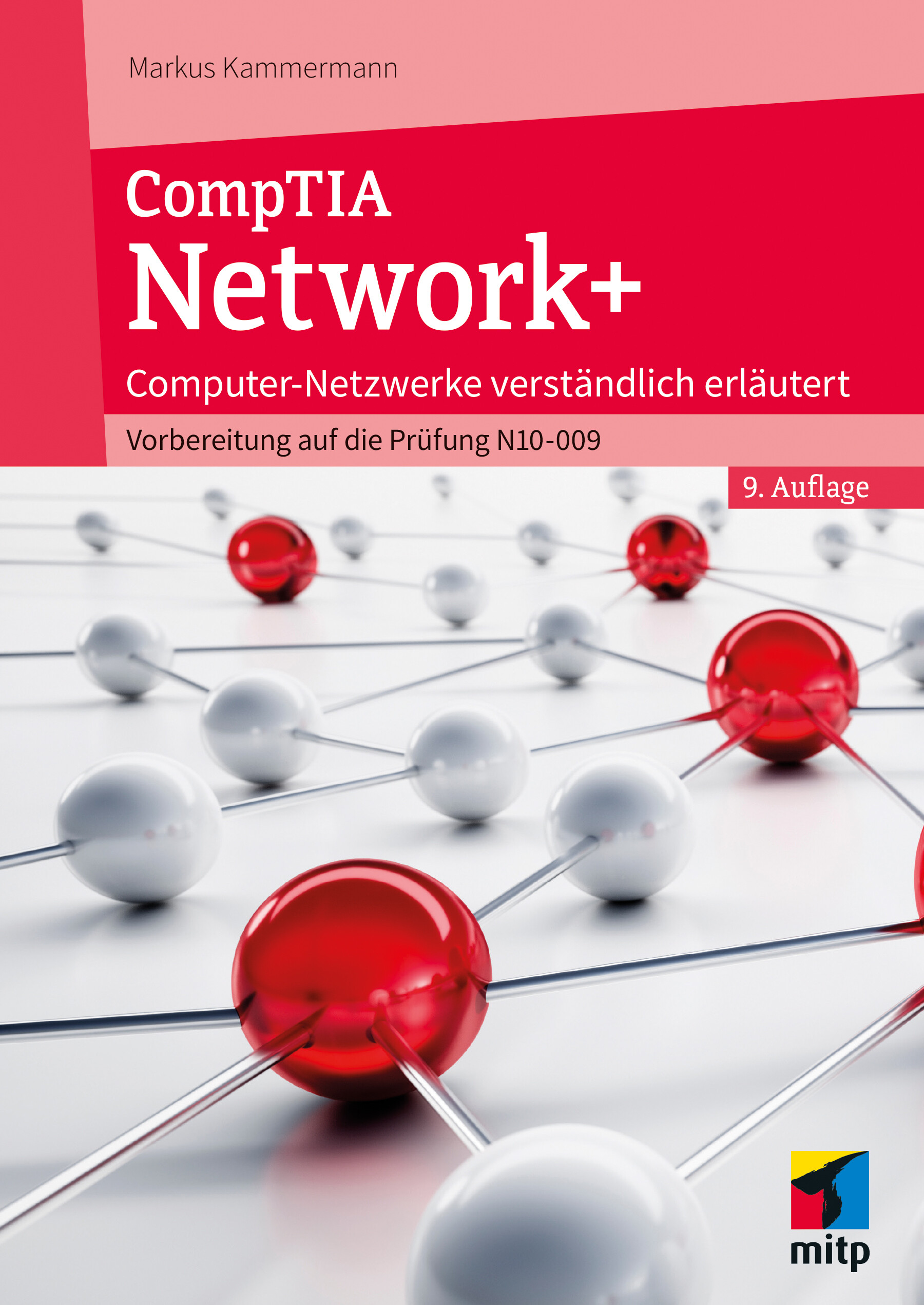
CompTIA Network+ (9. Auflg.)
CompTIA Network+. 9. Auflage 2024.Wegweiser zum Netzwerk-ExpertenOhne Netzwerke ist eine moderne Unternehmens-IT nicht mehr realisierbar. Hierfür braucht man Fachleute, die die dafür notwendigen Technologien beherrschen und die entsprechenden Anwendungen einrichten und administrieren, sei es zur Nutzung gemeinsamer Ressourcen, zur Anbindung der Firma ans Internet oder zur Einrichtung einer Kommunikationsinfrastruktur.Netzwerke konfigurieren und Zertifizierung meisternDieses Buch verfolgt zwei Ziele: Sie lernen grundlegend den Einsatz von Computer-Netzwerken in Unternehmen, damit Sie diese planen, konfigurieren und Ihre Kunden damit arbeiten können. Zugleich bereitet es Sie auf die entsprechende aktuelle Zertifizierung als Techniker oder Technikerin CompTIA-Network+ vor.Verständnis für alle Netzwerk-WissensgebieteDie Zertifizierung CompTIA Network+ ist in mehrere Wissensgebiete unterteilt. In der aktuellen Fassung der Prüfung N10-009 sind dies:NetzwerkkonzepteNetzwerk-ImplementationenNetzwerkbetriebNetzwerksicherheitNetzwerk-TroubleshootingMarkus Kammermann behandelt die genannten Themenbereiche ausführlich und vermittelt Ihnen in diesem Buch die für die Zertifizierung notwendigen Kenntnisse. Im Zentrum steht dabei der Aufbau eines umfassenden Verständnisses für die Thematik IT-Netzwerke. So erhalten Sie die notwendigen Grundlagen, um die Prüfung CompTIA Network+ erfolgreich zu bestehen.Aus dem Inhalt:Netzwerkmodelle und ihr PraxisbezugGrundbegriffe der TelematikHardware für den NetzwerkaufbauTopologie und VerbindungstypenDie Standards der IEEE-802.x-ReiheAktuelle Drahtlostechnologien von 802.11ax bis Internet of Things (IoT)Verbindung bis ins Weltall – WAN-TechnologienIPv4 und IPv6Die TCP/IP-Protokoll-FamilieDienstprotokolle von Routing bis WebAdministration des NetzwerksSicherheitsverfahren im NetzwerkverkehrAngriff und Verteidigung in NetzwerkenSicherer Zugang im HomeofficeNetzwerkmanagement und -dokumentationFehlersuche im NetzwerkRisikomanagement und NotfallplanungPraxisübungen: Einrichtung eines Netzwerks, Einrichtung eines WLANs, Steigerung der NetzeffizienzÜbungen für die eigene PraxisBeispielprüfung in vollem Umfang des Examens N10-009Leseprobe (PDF-Link)Über den Autor:Markus Kammermann, ausgebildeter ICT-Projektleiter und Erwachsenenausbilder für CompTIA Network+, ist seit mehr als zwanzig Jahren in der System- und Netzwerktechnik tätig. Er ist Dozent in der höheren beruflichen Bildung und Autor zahlreicher Fachbücher.

Resource Management on Distributed Systems
COMPREHENSIVE GUIDE TO THE PRINCIPLES, ALGORITHMS, AND TECHNIQUES UNDERLYING RESOURCE MANAGEMENT FOR CLOUDS, BIG DATA, AND SENSOR-BASED SYSTEMSResource Management on Distributed Systems provides helpful guidance by describing algorithms and techniques for managing resources on parallel and distributed systems, including grids, clouds, and parallel processing-based platforms for big data analytics. The book focuses on four general principles of resource management and their impact on system performance, energy usage, and cost, including end-of-chapter exercises. The text includes chapters on sensors, autoscaling on clouds, complex event processing for streaming data, and data filtering techniques for big data systems. The book also covers results of applying the discussed techniques on simulated as well as real systems (including clouds and big data processing platforms), and techniques for handling errors associated with user predicted task execution times. Written by a highly qualified academic with significant research experience in the field, Resource Management on Distributed Systems includes information on sample topics such as:* Attributes of parallel/distributed applications that have an intimate relationship with system behavior and performance, plus their related performance metrics.* Handling a lack of a prior knowledge of local operating systems on individual nodes in a large system.* Detection and management of complex events (that correspond to the occurrence of multiple raw events) on a platform for streaming analytics.* Techniques for reducing data latency for multiple operator-based queries in an environment processing large textual documents.With comprehensive coverage of core topics in the field, Resource Management on Distributed Systems is a comprehensive guide to resource management in a single publication and is an essential read for professionals, researchers and students working with distributed systems. SHIKHARESH MAJUMDAR is Chancellor’s Professor & Director at Real Time and Distributed Systems Research Centre, Carleton University, Canada. Professor Majumdar earned his PhD in Computational Science from the University of Saskatchewan in 1988 and is a Senior Member of the IEEE and a Fellow of Institute of Engineering and Technology (IET). Professor Majumdar’s research interests include Parallel and Distributed Systems, Operating Systems, Middleware, and many more. He has had many papers published in Journals and Refereed Conference Proceedings, has provided various contributions to many books and is the recipient of multiple awards. About the Author xvPreface xviiAcknowledgments xxiii1 INTRODUCTION 11.1 Introduction to Distributed and Parallel Computing 11.2 Types of Computing Environments 21.3 Units of Computation 31.4 Principles Underlying Resource Management 51.5 Evolution of Distributed Systems 91.6 Summary 202 CHARACTERIZATION OF PARALLELISM IN APPLICATIONS 252.1 Introduction 252.2 The Precedence Graph Model 262.3 Graph-Based Characteristics 272.4 Single-Point Characteristics 302.5 Performance Metrics 322.6 Impact of Parallelism Characteristics on Performance 362.7 Energy Performance Trade-Off 392.8 Summary 473 RESOURCE MANAGEMENT TECHNIQUES FOR DISTRIBUTED COMPUTING SYSTEMS 513.1 Resource Allocation 523.2 Task/Process Scheduling 623.3 Grid Scheduling with Deadlines 673.4 Scheduling on Client–Server Systems 703.5 Summary 744 RESOURCE MANAGEMENT ON SYSTEMS SUBJECTED TO UNCERTAINTIES ASSOCIATED WITH WORKLOAD AND SYSTEM PARAMETERS 794.1 Introduction 794.2 Handling Errors Associated with User Estimates of Job Execution Times 804.3 Underestimation of Job Execution Times 824.4 Handling Uncertainties Associated with the Local Scheduling Policy 864.5 Any Schedulability Criterion 884.6 Matchmaking in the Dark: AS Criterion-Based Matchmaking 914.7 Soft Advance Reservation Requests 964.8 Summary 1005 RESOURCE AUTO-SCALING 1055.1 Introduction 1055.2 Request Characteristics 1075.3 Horizontal Auto-Scaling 1085.4 Hybrid Auto-Scaling 1175.5 Summary 1206 RESOURCE MANAGEMENT FOR SYSTEMS RUNNING MAPREDUCE JOBS 1276.1 Introduction 1276.2 MapReduce 1286.3 Resource Management Techniques for MapReduce Job Requests to be Satisfied on a Best Effort Basis 1306.4 Resource Management Techniques for MapReduce Job Requests with Service Level Agreements 1326.5 The Constraint Programming-Based MapReduce Resource Management Technique 1356.6 Errors Associated with User Estimates of Task Execution times 1416.7 Summary 1457 ENERGY AWARE RESOURCE MANAGEMENT 1497.1 Introduction 1497.2 DVFS-Based Resource Management Techniques 1527.3 The EAMR-RM Algorithm 1537.4 Configurable Resource Manager for Processing a Batch of MapReduce Jobs 1587.5 Performance Analysis of CRM 1617.6 Reducing the Number of Active Servers 1647.7 Summary 1668 STREAMING DATA AND COMPLEX EVENT PROCESSING 1698.1 Introduction 1698.2 Management of Streaming Data 1708.3 Dynamic Priority-Based Scheduling 1718.4 Data-Driven Priority Scheduler (DDPS) 1748.5 Multitennant Systems 1798.6 Complex Event Processing 1868.7 Remote Patient Monitoring System 1918.8 Summary 1969 DATA INDEXING AND FILTERING TECHNIQUES FOR BIG DATA SYSTEMS 2019.1 Introduction 2019.2 Harnessing Big Data 2029.3 Data Indexing 2039.4 Inverted Index 2039.5 Graph-Based Indexing 2059.6 Boolean AND Queries 2079.7 Performance Analysis 2109.8 Data Filtering 2139.9 Parallel Processing Platforms 2149.10 Motivations for Data Reduction 2179.11 Data Filtering 2199.12 Performance Analysis 2249.13 Streaming Data 2279.14 Handling User Preferences Comprising Keywords Connected by Boolean Operators 2309.15 Summary 23210 SENSOR-BASED SYSTEMS 23710.1 Introduction 23710.2 Middleware Services 23910.3 Sensor-Based Bridge Management 24210.4 Research Collaboration Platform for Management of Sensor-Based Smart Facilities 24410.5 Resource Management on Wireless Sensor Networks 24710.6 Scheduling on WSNs 25010.7 Sensor Allocation 25510.8 Summary 26211 SUMMARY 26711.1 Chapter Entitled Introduction 26711.2 Chapter Entitled Characterization of Parallelism in Applications 27011.2.1 Graph-Based Characteristics 27011.3 Chapter Entitled Resource Management Techniques for Distributed Computing Systems 27111.4 Chapter Entitled Resource Management on Systems Subjected to Uncertainties Associated with Workload and System Parameters 27211.5 Chapter Entitled Resource Auto-Scaling 27411.6 Chapter Entitled Resource Management on Systems Running MapReduce Jobs 27611.7 Chapter Entitled Energy-Aware Resource Management 27811.8 Chapter Entitled Streaming Data and Complex Event Processing 27911.9 Chapter Entitled Data Indexing and Filtering Techniques for Big Data Systems 28111.10 Chapter Entitled Sensor-Based Systems 282Index 285

Synology NAS
Moderne NAS-Systeme können viel mehr als nur Daten speichern. Wie Sie aus Ihrer Synology DiskStation die Schaltzentrale für Ihr lokales Netzwerk oder für Ihr Unternehmen machen, erfahren Sie hier. Dennis Rühmer und Daniel van Soest zeigen Ihnen in diesem umfassenden Begleiter, wie Sie alles aus Ihrer DiskStation herausholen. Zusammen mit den Netzwerkprofis richten Sie automatisierte Backups ein, geben Daten über Ihre persönliche Cloud frei, konfigurieren detaillierte Benutzersteuerungen, nutzen Collaboration-Dienste und integrieren die DiskStation in Ihre Domain. Aus dem Inhalt: DSM 7 installieren und Benutzer verwaltenFunktionen mit Zusatzpaketen erweiternDas NAS als MultimediazentraleDie DiskStation als private CloudVPN-Zugriff, SSH-Zugriff und fortgeschrittene AdministrationRAID-Konfigurationen einrichtenSmarte Collaboration: Kalender, Dokumente, Mails austauschenAlles für die Sicherheit: Firewalls, Verschlüsselung, FreigabenZusatzhardware: SSD-Cache, Festplatten, USVDocker-Container auf der DiskStationDas NAS im UnternehmensnetzwerkIntegration ins AD & Domain Controller Vorwort ... 17 1. Die Einrichtung des Geräts ... 23 1.1 ... Die Ersteinrichtung Ihres NAS-Geräts ... 23 1.2 ... Die ersten Schritte im System ... 41 1.3 ... Benutzerkonten einrichten und Rechte verwalten ... 50 2. Grundlegende Funktionen ... 61 2.1 ... Die Systemsteuerung ... 61 2.2 ... Die File Station ... 68 2.3 ... Die Datendienste und Ordnerfreigaben ... 85 2.4 ... Das Paket-Zentrum ... 110 2.5 ... Das DSM-System aktualisieren, sichern und zurücksetzen ... 119 3. Die DiskStation als Multimediazentrale ... 131 3.1 ... Mediendateien mit dem UPnP/DLNA-kompatiblen Media Server streamen ... 132 3.2 ... Ein Mediacenter mit der DiskStation nutzen ... 146 3.3 ... Fotos mit Synology Photos verwalten und betrachten ... 158 3.4 ... Musik mit der Audio Station hören und verwalten ... 171 3.5 ... Videos mit der Video Station anschauen und verwalten ... 190 4. Die DiskStation über das Internet nutzen: Ihre private Cloud ... 219 4.1 ... Über das Internet sicher auf die DiskStation zugreifen ... 219 4.2 ... Die DiskStation mit Synology Drive um Cloud-Funktionen erweitern ... 242 4.3 ... Cloud-Dienste aus dem Internet mit der DiskStation synchronisieren ... 275 4.4 ... Den VPN-Server der DiskStation nutzen ... 279 5. Erweiterte Einstellungen und Funktionen ... 303 5.1 ... Die verschiedenen RAID-Modi ... 303 5.2 ... Volumes und Speicherpools ... 316 5.3 ... Berechtigungen ... 333 5.4 ... Netzwerkkonfiguration ... 339 5.5 ... Der Zugriff auf die DiskStation via SSH ... 353 5.6 ... Der DNS-Server der DiskStation ... 357 6. Fortgeschrittene Anwendungen ... 371 6.1 ... Die Kameraüberwachung mit der Surveillance Station ... 371 6.2 ... Einen E-Mail-Server betreiben ... 399 6.3 ... Kalenderfunktionen mit Synology Calendar und CalDAV nutzen ... 425 6.4 ... Der Aufgabenplaner im Kalender ... 433 6.5 ... Das Adressbuch mit CardDAV verwenden ... 435 7. Die DiskStation sicher betreiben und den Betrieb überwachen ... 441 7.1 ... Benachrichtigungen und Protokoll-Center ... 441 7.2 ... Den Ressourcen-Monitor nutzen ... 456 7.3 ... Den verwendeten Speicherplatz mit dem Speicher-Analysator überprüfen ... 461 7.4 ... Das Info-Center in der Systemsteuerung ... 465 7.5 ... Den Aufgabenplaner für Tasks konfigurieren ... 467 7.6 ... Monitoring mit SNMP ... 472 7.7 ... Die Firewall der DiskStation ... 475 7.8 ... Erweiterte Schutzfunktionen der DiskStation einstellen ... 483 7.9 ... Die 2-Faktor-Authentifizierung verwenden ... 494 7.10 ... Die adaptive mehrstufige Authentifizierung verwenden ... 500 7.11 ... Den Sicherheitsberater befragen ... 501 7.12 ... Mit verschlüsselten Ordnern arbeiten ... 507 7.13 ... Mit WORM-Ordnern arbeiten ... 512 7.14 ... Einen Virenscanner verwenden ... 515 8. Datenverlust vorbeugen ... 521 8.1 ... Daten der DiskStation mit Hyper Backup sichern ... 521 8.2 ... Auslagerungssicherung ... 540 8.3 ... Der Dateidienst rsync ... 553 9. Die Funktion der DiskStation mit Hardware erweitern ... 559 9.1 ... Externe Geräte ... 559 9.2 ... SSD-Cache ... 564 9.3 ... Erweiterungseinheiten ... 572 9.4 ... Eine fehlerhafte Festplatte austauschen bzw. eine Festplatte ergänzen ... 575 9.5 ... Unterbrechungsfreie Stromversorgung (USV) ... 583 10. Virtuelle Maschinen und Entwicklungsplattformen ... 589 10.1 ... Virtuelle Maschinen mit dem Virtual Machine Manager betreiben ... 589 10.2 ... Docker mit »Container Manager« ... 622 10.3 ... Versionskontrolle mit Git ... 636 10.4 ... Eigene Websites mit der Web Station hosten ... 646 10.5 ... Fertige Webanwendungen installieren und betreiben ... 668 11. Anwendungen zur Nutzung im Unternehmensumfeld ... 693 11.1 ... Das Chat-System ... 693 11.2 ... Das Notizbuch ... 705 11.3 ... Das Active Backup ... 714 11.4 ... Das Central Management System (CMS) ... 728 12. Erweiterte Netzwerkkonfiguration ... 739 12.1 ... Basiswissen ... 739 12.2 ... Fortgeschrittene Konfiguration ... 745 13. Verzeichnisdienste ... 757 13.1 ... Die graue Theorie ... 757 13.2 ... LDAP Server ... 760 13.3 ... Synology Directory Server: AD auf Ihrem NAS ... 770 13.4 ... Die DiskStation als Client ... 787 13.5 ... Single Sign-on (SSO) ... 790 14. SAN mit iSCSI ... 797 14.1 ... Etwas Theorie vorab ... 797 14.2 ... Der SAN Manager ... 801 14.3 ... Initiatoren ... 804 14.4 ... Keine Schnapsidee: Snapshots ... 808 14.5 ... Sonstiges ... 812 Die Autoren ... 817 Index ... 819
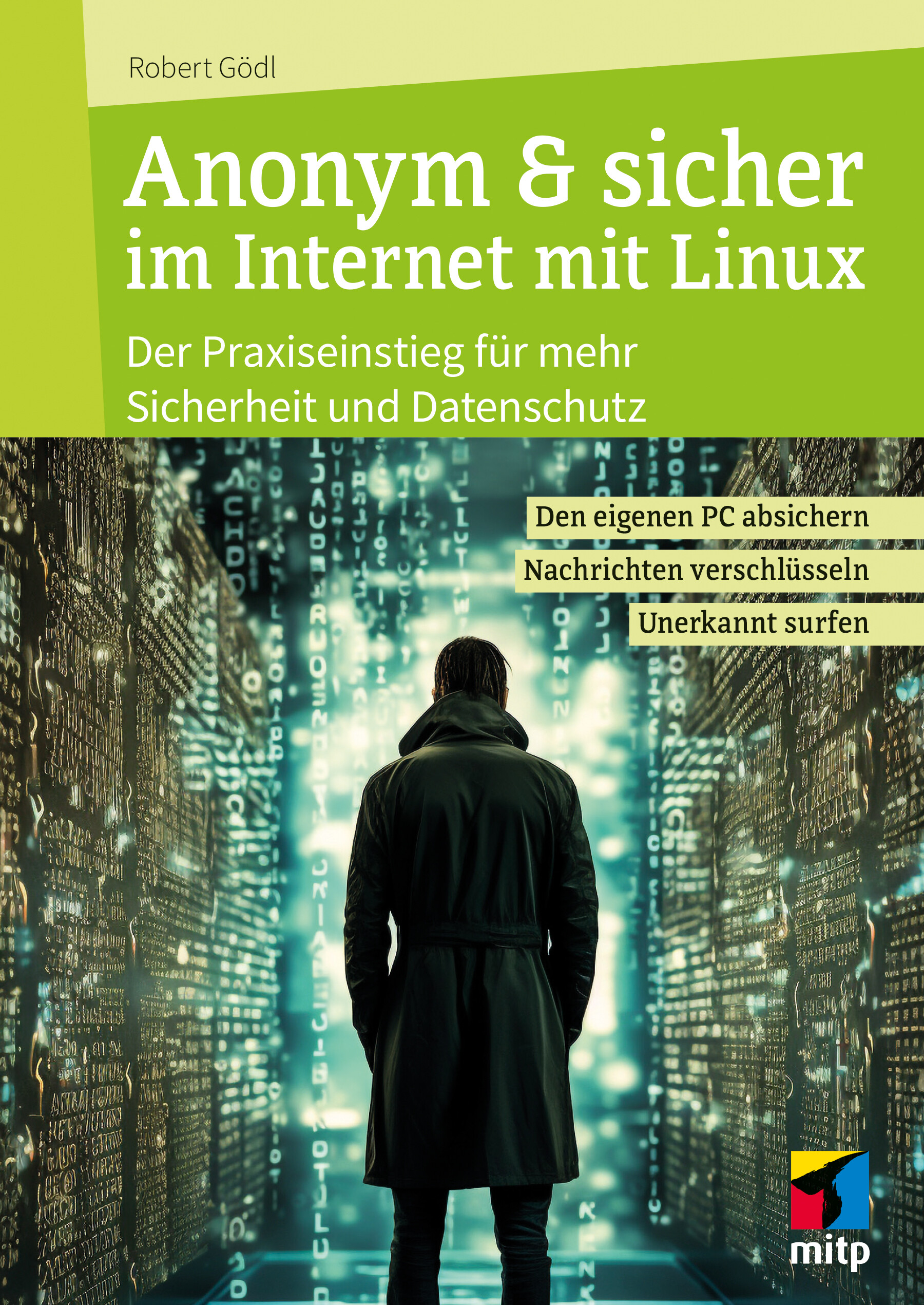
Anonym & sicher im Internet mit Linux
Anonym & sicher im Internet mit Linux in Erstauflage 2024. Der Praxiseinstieg für mehr Sicherheit und Datenschutz.In diesem Buch lernen Sie alle Grundlagen, die Sie brauchen, um anonym im Internet zu surfen sowie Ihre Privatsphäre und Ihre Daten zu schützen. Da Linux als Betriebssystem hierfür am besten geeignet ist, erhalten Sie eine umfassende Einführung in die Installation und Nutzung von Linux Mint.Daten und Privatsphäre schützenÜberall im Internet sind Unternehmen und böswillige Hacker auf Ihre Daten aus. Hier lernen Sie anhand leicht verständlicher Schritt-für-Schritt-Anleitungen, wie Sie Ihr System mit einer Firewall und zusätzlichen Tools absichern, Ihre Daten und E-Mails verschlüsseln, privat surfen, eine sichere VPN-Verbindung herstellen, eine eigene private Cloud betreiben und vieles mehr.Fortgeschrittene Methoden für noch mehr Anonymität und SicherheitEin Mindestmaß an Sicherheit ist bereits mit geringem Aufwand und wenigen Tools zu erreichen. Für alle mit höheren Anforderungen bietet dieses Buch außerdem fortgeschrittene Techniken wie die Verwendung von Proxy-Servern, um den eigenen Standort zu verschleiern, sowie die Nutzung sogenannter virtueller Maschinen und des Tor-Netzwerks.Aus dem Inhalt:Linux Mint installieren und kennenlernenVerwendung des TerminalsSoftware unter Linux installieren und aktualisierenAnonym surfen mit dem Tor BrowserCookies und Werbung blockierenSystem, Daten und Backups verschlüsselnVerschlüsselte Kommunikation via E-Mail und ChatDNS-Server und ProxysVirtuelle MaschinenDie private Cloud: NextcloudPasswortsicherheit und SpamfilterFirewall konfigurierenVPN einrichtenEinführung in Tor und TailsLeseprobe (PDF-Link)Errata (PDF-Link)Über den Autor:Robert Gödl ist überzeugter Linux-Nutzer mit einer Vorliebe für das Testen von freien Betriebssystemen und freier Software. Er arbeitet im Bereich Monitoring und Logging mit Linux sowie an Aufbau und Instandhaltung der IT-Infrastruktur. Nach über 20 Jahren ohne Microsoft Windows möchte er anderen zeigen, dass Linux heute einfach zu installieren und nutzen ist.

A Comprehensive Guide to the NIST Cybersecurity Framework 2.0
LEARN TO ENHANCE YOUR ORGANIZATION’S CYBERSECURIT Y THROUGH THE NIST CYBERSECURIT Y FRAMEWORK IN THIS INVALUABLE AND ACCESSIBLE GUIDEThe National Institute of Standards and Technology (NIST) Cybersecurity Framework, produced in response to a 2014 US Presidential directive, has proven essential in standardizing approaches to cybersecurity risk and producing an efficient, adaptable toolkit for meeting cyber threats. As these threats have multiplied and escalated in recent years, this framework has evolved to meet new needs and reflect new best practices, and now has an international footprint. There has never been a greater need for cybersecurity professionals to understand this framework, its applications, and its potential. A Comprehensive Guide to the NIST Cybersecurity Framework 2.0 offers a vital introduction to this NIST framework and its implementation. Highlighting significant updates from the first version of the NIST framework, it works through each of the framework’s functions in turn, in language both beginners and experienced professionals can grasp. Replete with compliance and implementation strategies, it proves indispensable for the next generation of cybersecurity professionals. A Comprehensive Guide to the NIST Cybersecurity Framework 2.0 readers will also find:* Clear, jargon-free language for both beginning and advanced readers* Detailed discussion of all NIST framework components, including Govern, Identify, Protect, Detect, Respond, and Recover* Hundreds of actionable recommendations for immediate implementation by cybersecurity professionals at all levelsA Comprehensive Guide to the NIST Cybersecurity Framework 2.0 is ideal for cybersecurity professionals, business leaders and executives, IT consultants and advisors, and students and academics focused on the study of cybersecurity, information technology, or related fields. JASON EDWARDS, DM, is an accomplished cybersecurity leader with extensive experience in the technology, finance, insurance, and energy sectors. Holding a Doctorate in Management, Information Systems, and Technology, Jason specializes in guiding large public and private companies through complex cybersecurity challenges. His career includes leadership roles at industry giants like Amazon, USAA, Brace Industrial Group, and Argo Group International. He is a former military cyber officer, adjunct professor, and avid reader and popular on LinkedIn. Preface xixAcknowledgments xx1 Introduction 12 Understanding the NIST Cybersecurity Framework 2.0 53 Cybersecurity Controls 114 Compliance and Implementation 155 Organizational Context (GV.OC) 216 Risk Management Strategy (GV.RM) 397 Roles, Responsibilities, and Authorities (GV.RR) 618 Policy (GV.PO) 739 Oversight (GV.OV) 8110 Cybersecurity Supply Chain Risk Management (GV.SC) 9111 Asset Management (ID.AM) 12112 Risk Assessment (ID.RA) 14313 Improvement (ID.IM) 17314 Identity Management, Authentication, and Access Control (PR.AA) 18715 Awareness and Training (PR.AT) 20716 Data Security (PR.DS) 21517 Platform Security (PR.PS) 22718 Technology Infrastructure Resilience (PR.IR) 24519 Continuous Monitoring (DE.CM) 25720 Adverse Event Analysis (DE.AE) 27521 Incident Management (RS.MA) 29522 Incident Analysis (RS.AN) 31123 Incident Response Reporting and Communication (RS.CO) 32524 Incident Mitigation (RS.MI) 33325 Incident Recovery Plan Execution (RC.RP) 34126 Incident Recovery Communication (RC.CO) 359A Appendix A: Glossary of Terms 365B Appendix B: Descriptions of NIST 800-53 Controls 371Index of 800-53 Controls used in the CSF 425

Become GCP Cloud Digital Leader Certified in 7 Days
Unlock opportunities in the IT industry through the entry level Google Cloud Platform (GCP) and embark on a journey of Cloud Digital Leader certification. In this book, aspiring IT professionals, IT leaders, and enthusiasts will find a comprehensive resource that simplifies the basic technological elements of GCP and the spread of its products and services that are needed to thrive in the digital age.You’ll begin by reviewing the details of GCP’s role in digital transformation and how cloud technology is revolutionizing businesses around the globe. Next, the book covers the use of data in GCP and AI and machine learning implementations in GCP. Further, it discusses use cases involving data lakes and data warehouses. Following this, you’ll examine cloud infrastructure, including technologies around virtual machines, containerization, and serverless computing. The last section focuses on security, managing operations, and monitoring using GCP. You will also gain insight into Google’s framework for service reliability engineering (SRE).This book also serves as an invaluable companion for those pursuing the Cloud Digital Leader Certification. Follow the structured learning path and find detailed insights into the exam objectives, ensuring you are well-prepared for success. The ideas, technology concepts, and frameworks discussed in this book will help IT leaders, IT professionals, and students prepare for the GCP: Cloud Digital Leader certification. It will also help build a good technical understanding for future related GCP certifications._Become GCP Cloud Digital Leader Certified in 7 Days_ allows you to dive into the world of Google Cloud Platform with confidence, armed with the knowledge to navigate the dynamic landscape of IT and emerge as a digital leader.WHAT YOU’LL LEARN* Cloud computing and its functions* Products and services offered by GCP, including security features* GCP infrastructure, virtual machines, containers, and serverless functions* Google’s role in artificial intelligence and machine learning* Insights into DevOps, SRE and observabilityWHO THIS BOOK IS FORThose who are in leadership at IT organizations. The book is also for all IT professionals and students preparing for the Google Cloud Platform: Cloud Digital Leader certification.ABHINAV KRISHNA KAISER is a highly accomplished professional working as a partner at a prestigious consulting firm, where he plays a pivotal role in leading digital transformation programs for clients across diverse sectors. He is part of the Distinguished Member of Technical Staff (DMTS) cadre, which represents a select group of best-in-class technologists. With a proven track record in the industry, Abhinav is recognized for his expertise in guiding organizations through complex and innovative changes to stay ahead of the curve in today's dynamic business environment.Abhinav spearheads various digital transformation initiatives demonstrating a keen understanding of the unique challenges and opportunities presented by different industries. His leadership is characterized by a strategic and holistic approach, ensuring that clients not only adapt to current market trends but also position themselves for future success. His portfolio includes successfully steering multiple digital transformation programs, showcasing his ability to navigate and drive change in organizations of varying sizes and complexities. His hands-on experience in implementing cutting-edge technologies and methodologies has contributed to the enhanced efficiency and competitiveness of his clients.In addition, Abhinav is a multifaceted professional with a prolific career as an accomplished writer. He boasts an impressive literary portfolio of five published books, each delving into the intricacies of digital transformation, DevOps, and ITIL. Abhinav's written works serve as authoritative guides, offering valuable insights and practical solutions to professionals navigating the complexities of modern business and technology landscapes.Beyond his contributions in the written domain, Abhinav is a panel speaker, captivating audiences with his expertise at industry conferences and events. His commitment to knowledge-sharing extends to digital platforms, where he actively engages as a YouTuber and blogger. Through these media, he imparts knowledge, shares best practices, and explores emerging trends, reaching a wider audience eager to enhance their understanding of digital transformation, DevOps, and ITIL. As a thought leader in the digital space, Abhinav's online presence further solidifies his influence, making him a go-to resource for professionals and enthusiasts alike.Chapter 1: Introduction to GCP.- Chapter 2: GCP 101.- Chapter 3: GCP Infrastructure.- Chapter 4: GCP Virtual Machines.- Chapter 5: Containers.- Chapter 6: Serverless and Cloud Functions.- Chapter 7: Application Modernization.- Chapter 8: Data in GCP.- Chapter 9: Machine learning.- Chapter 10: Financial Governance.- Chapter 11: Security on GCP Cloud.- Chapter 12: Monitoring and Observability.- Chapter 13: Examination preparation.

Anonym & sicher im Internet mit Linux
ANONYM UND SICHER MIT LINUXIn diesem Buch lernen Sie alle Grundlagen, die Sie brauchen, um anonym im Internet zu surfen sowie Ihre Privatsphäre und Ihre Daten zu schützen. Da Linux als Betriebssystem hierfür am besten geeignet ist, erhalten Sie eine umfassende Einführung in die Installation und Nutzung von Linux Mint.DATEN UND PRIVATSPHÄRE SCHÜTZENÜberall im Internet sind Unternehmen und böswillige Hacker auf Ihre Daten aus. Hier lernen Sie anhand leicht verständlicher Schritt-für-Schritt-Anleitungen, wie Sie Ihr System mit einer Firewall und zusätzlichen Tools absichern, Ihre Daten und E-Mails verschlüsseln, privat surfen, eine sichere VPN-Verbindung herstellen, eine eigene private Cloud betreiben und vieles mehr.FORTGESCHRITTENE METHODEN FÜR NOCH MEHR ANONYMITÄT UND SICHERHEITEin Mindestmaß an Sicherheit ist bereits mit geringem Aufwand und wenigen Tools zu erreichen. Für alle mit höheren Anforderungen bietet dieses Buch außerdem fortgeschrittene Techniken wie die Verwendung von Proxy-Servern, um den eigenen Standort zu verschleiern, sowie die Nutzung sogenannter virtueller Maschinen und des Tor-Netzwerks.AUS DEM INHALT:* Linux Mint installieren und kennenlernen* Verwendung des Terminals* Software unter Linux installieren und aktualisieren* Anonym surfen mit dem Tor Browser* Cookies und Werbung blockieren* System, Daten und Backups verschlüsseln* Verschlüsselte Kommunikation via E-Mail und Chat* DNS-Server und Proxys* Virtuelle Maschinen* Die private Cloud: Nextcloud* Passwortsicherheit und Spamfilter* Firewall konfigurieren* VPN einrichten* Einführung in Tor und TailsROBERT GÖDL ist überzeugter Linux-Nutzer mit einer Vorliebe für das Testen von freien Betriebssystemen und freier Software. Er arbeitet im Bereich Monitoring und Logging mit Linux sowie an Aufbau und Instandhaltung der IT-Infrastruktur. Nach über 20 Jahren ohne Microsoft Windows möchte er anderen zeigen, dass Linux heute einfach zu installieren, zu nutzen und zu verstehen ist.

FAIK
LEARN TO NAVIGATE A WORLD OF DEEPFAKES, PHISHING ATTACKS, AND OTHER CYBERSECURITY THREATS EMANATING FROM GENERATIVE ARTIFICIAL INTELLIGENCEIn an era where artificial intelligence can create content indistinguishable from reality, how do we separate truth from fiction? In FAIK: A Practical Guide to Living in a World of Deepfakes, Disinformation, and AI-Generated Deceptions, cybersecurity and deception expert Perry Carpenter unveils the hidden dangers of generative artificial intelligence, showing you how to use these technologies safely while protecting yourself and others from cyber scams and threats. This book provides a crucial understanding of the potential risks associated with generative AI, like ChatGPT, Claude, and Gemini, offering effective strategies to avoid falling victim to their more sinister uses. This isn't just another book about technology – it's your survival guide to the digital jungle. Carpenter takes you on an insightful journey through the "Exploitation Zone," where rapid technological advancements outpace our ability to adapt, creating fertile ground for deception. Explore the mechanics behind deepfakes, disinformation, and other cognitive security threats. Discover how cybercriminals can leverage even the most trusted AI systems to create and spread synthetic media and use it for malicious purposes. At its core, FAIK is an empowering exposé in which Carpenter effectively weaves together engaging narratives and practical insights, all aimed to equip you with the knowledge to recognize and counter advanced tactics with practical media literacy skills and a deep understanding of social engineering. You will:* Learn to think like a hacker to better defend against digital threats.* Gain practical skills to identify and defend against AI-driven scams.* Develop your toolkit to safely navigate the "Exploitation Zone."* See how bad actors exploit fundamental aspects of generative AI to create weapons grade deceptions.* Develop practical skills to identify and resist emotional manipulation in digital content.Most importantly, this is ultimately an optimistic book as it predicts a powerful and positive outcome as a period of cooperation, something now inconceivable, develops as it always does during crises and the future is enhanced by amazing new technologies and fabulous opportunities on the near horizon.Written by an expert, yet accessible to everyone, FAIK is an indispensable resource for anyone who uses technology and wants to stay secure in the evolving digital landscape. This book not only prepares you to face the onslaught of digital deceptions and AI-generated threats, but also teaches you to think like a hacker to better defend against them. PERRY CARPENTER is a multi-award-winning author, podcaster, and speaker, with over two decades in cybersecurity focusing on how cybercriminals exploit human behavior. As the Chief Human Risk Management Strategist at KnowBe4, Perry helps build robust human-centric defenses against social engineering-based threats. Foreword ixIntroduction: Riddle Me This, Chatgpt XICHAPTER 1: THE ETERNAL BATTLE FOR THE MIND: WHY YOU SHOULD CARE 1Whispers from the Static 1Pleased to Meet You, Hope You Guessed My Name 2The Historical Context of Deception and Scams 4The Digital Age: A New Era of Deception 5The Far-Reaching Implications of Synthetic Media 11Why Synthetic Media Slips Right Past Our Defenses 11Cognitive Security 101: Protecting Our Minds in the Digital Age 13Takeaways 15CHAPTER 2: THE NEW FRONTIERS OF DECEPTION: AI AND SYNTHETIC MEDIA 17Whispers from the Static 17Inflection Points 18Brief History of AI Advances 19Is AI Alive and Does It Really Understand? 30Takeaways 34CHAPTER 3: THE MINDSET AND TOOLS OF A DIGITAL MANIPULATOR 37Whispers from the Static 37How Hackers Approach Technology and Problem Solving 40Deceptionology 101: Introduction to the Dark Arts 43Peering Down the Rabbit Hole 53Takeaways 57CHAPTER 4: BIAS, DATA POISONING, & OUTPUT ODDITIES 59Whispers from the Static 59Hallucinations: AI’s Double-Edged Sword of Creativity 61The Big Bias Problem 64Embarrassing F{ai}lures to Control Bias 68The Consequences and Way Forward 76Takeaways 77CHAPTER 5: THE DIGITAL DISINFORMATION PANDEMIC 79Whispers from the Static 79Lies, Darn Lies, and the Internet 80The Landscape of AI-Driven Disinformation 87Types and Tactics of AI-Generated Disinformation 89CHAPTER 6: DEEPFAKES AND THE SPECTRUM OF DIGITAL DECEPTION 97Whispers from the Static 97On the Internet, Nobody Knows You’re a Dog 99What Really Is a Deepfake, Anyway? 100The Chilling Effectiveness of Low-Tech Deception 104Breaking Bad: How Bad Actors Can Corrupt the Morals of AI Systems 110When Jailbreaking Is Overrated: Uncensored AI Systems 125Weaponizing Innocent Outputs 128An Inconvenient Truth About Digital Deceptions 131Takeaways 131CHAPTER 7: THE NOW AND FUTURE OF AI-DRIVEN DECEPTION 133Whispers from the Static 133Into the Exploitation Zone 135The Pillars of Deception, Scams, and Crime 138AI-Powered Scams: Old Tricks, New Tools 141Emerging Threats 146A Personal Story: How I Created Multiple GenAI-Powered ScamBots 152Finding Hope 154Takeaways 155Contents viiCHAPTER 8: MEDIA LITERACY IN THE AGE OF AI: YOUR FIRST LINE OF DEFENSE 157Whispers from the Static 157The Fight for Truth 159A Quick Note before We Jump In 161Media Literacy in the Digital Age: Your Survival Guide to the Information Jungle 165The Fact-Checking Paradox: Seeking Truth in a World of Lies 172Takeaways 183CHAPTER 9: COGNITIVE AND TECHNICAL DEFENSE STRATEGIES: TOOLS FOR PROTECTION 187Whispers from the Static 187Building Our Cognitive Defenses 189Tech-Based Defenses 203Wrapping Up: Vigilance in the Digital Age 211Let’s Make It Fun: Sharpen Your Mental and Digital Defense Skills 212Takeaways 214CHAPTER 10: A NEW HOPE 217Whispers from the Static 217Criminals Have Means, Motive, and Opportunity. But so Do We 220Let’s Make It Fun: Make It Real 224Takeaways 227Appendix: Tips, Tricks, and Resources 233Notes 241Acknowledgments 255About the Author 259Index 261

Produktionsplanung und -steuerung mit SAP S/4HANA
Flexibilität und Termintreue dank PP! Unser praxisorientiertes Handbuch führt Sie Schritt für Schritt durch die Prozesse der Produktionsplanung und -steuerung. Von der Verwaltung von Organisations- und Stammdaten bis hin zum Einsatz spezifischer PP-Funktionen in verschiedenen Fertigungsarten wie der Diskreten Fertigung, Serienfertigung und Prozessfertigung – dieses Buch lässt keine Fragen offen. Erlernen Sie anhand konkreter Beispiele, wie Sie wesentliche Transaktionen nutzen und die Möglichkeiten der SAP-Fiori-Apps voll ausschöpfen. Darüber hinaus bieten wir Ihnen detaillierte Einblicke in Planungstools wie das Sales and Operations Planning (SOP), das Material Requirements Planning (MRP) und PP/DS. In dieser 2. Auflage finden Sie ein brandneues Kapitel über die Produktionsbereitstellung. Aus dem Inhalt: Diskrete Fertigung, Serien- und ProzessfertigungAbsatz- und ProduktionsgrobplanungProgrammplanungLangfristplanungMaterialbedarfsplanung mit MRP LiveKapazitätsplanungProduktions- und Feinplanung mit PP/DSDemand-Driven ReplenishmentMonitoring und ReportingSAP-Fiori-Apps in der Produktion Einleitung ... 15 1. Produktionsplanung mit SAP S/4HANA ... 25 1.1 ... Das Systemumfeld ... 25 1.2 ... Produktionsplanung als End-to-End-Prozess ... 44 1.3 ... Fertigungsarten und Anwendungsgebiete der Produktionsplanung ... 47 1.4 ... Planungswerkzeuge der SAP-Produktionsplanung ... 63 2. Organisationsdaten in der Produktion ... 69 2.1 ... Organisationsebenen ... 69 2.2 ... Rollen ... 79 3. Stammdaten in der Produktion ... 87 3.1 ... Auftragsarten ... 89 3.2 ... Materialstamm ... 93 3.3 ... Produktionsversorgungsbereiche ... 110 3.4 ... Stücklisten ... 113 3.5 ... Arbeitsplätze und Ressourcen ... 126 3.6 ... Arbeitspläne und Planungsrezepte ... 136 3.7 ... Fertigungsversionen ... 145 3.8 ... Steuerungsprofile ... 147 4. Diskrete Fertigung ... 151 4.1 ... Spezielle Stammdaten der diskreten Fertigung ... 152 4.2 ... Prozesse der diskreten Fertigung ... 187 5. Serienfertigung ... 229 5.1 ... Spezielle Stammdaten der Serienfertigung ... 231 5.2 ... Prozesse der Serienfertigung ... 260 6. Prozessfertigung ... 291 6.1 ... Spezielle Elemente der Prozessfertigung ... 293 6.2 ... Prozesskoordination ... 319 6.3 ... Prozesse der Prozessfertigung ... 343 7. Absatz- und Produktionsgrobplanung ... 381 7.1 ... SAP Integrated Business Planning for Supply Chain ... 382 7.2 ... Konfiguration der Absatz- und Produktionsgrobplanung ... 385 7.3 ... Prozesse der Absatz- und Produktionsgrobplanung ... 397 8. Programmplanung ... 415 8.1 ... Planprimärbedarfe ... 416 8.2 ... Planungsstrategien ... 417 8.3 ... Abbau von Planprimärbedarfen ... 433 8.4 ... Verfügbarkeitsprüfung ... 434 9. Materialbedarfsplanung (MRP) ... 439 9.1 ... Dispositionsverfahren ... 440 9.2 ... Nettobedarfsrechnung und Sicherheitsbestandsplanung ... 442 9.3 ... Losgrößenrechnung ... 445 9.4 ... Bezugsquellenfindung ... 450 9.5 ... Terminierung ... 452 9.6 ... Durchführung des Planungslaufs ... 458 9.7 ... Optionale Planungsfunktionen ... 471 9.8 ... Predictive MRP ... 476 9.9 ... Steuerung der Werksparameter und Dispositionsgruppen ... 480 10. Kapazitätsplanung ... 485 10.1 ... Prozessübersicht ... 486 10.2 ... Konfiguration ... 487 10.3 ... Ausführung ... 514 11. Produktions- und Feinplanung (Detailed Scheduling, PP/DS) ... 531 11.1 ... Einführung ... 531 11.2 ... Materialstammdatenintegration und Core Interface ... 535 11.3 ... Ziele und Ablauf der Planung ... 538 11.4 ... Der PP/DS-Planungslauf und MRP Live ... 582 11.5 ... Reporting und Monitoring ... 590 12. Demand-Driven Replenishment (DDR) ... 595 12.1 ... Einführung ... 595 12.2 ... Buffer Positioning -- strategische Entkopplung des Materialflusses ... 600 12.3 ... Buffer Sizing -- dynamische Berechnung der Puffermengen ... 611 12.4 ... Replenishment Planning -- Nachschubplanung innerhalb der Entkopplungspunkte ... 614 12.5 ... Replenishment Execution -- Ausführung und Überprüfung des Nachschubs ... 616 13. Produktionsnahe Logistik ... 619 13.1 ... Synchrone Warenbewegungen (Integration mit Embedded EWM) ... 620 13.2 ... Produktionsmaterialanforderung ... 631 13.3 ... JIT-Produktionsversorgung der nächsten Generation ... 636 13.4 ... Kanban ... 645 14. Monitoring und Reporting ... 653 14.1 ... Grundlagen zu Reports ... 654 14.2 ... Informationssysteme ... 658 14.3 ... Frühwarnsystem ... 669 14.4 ... SAP-Fiori-Apps für das Monitoring ... 674 Die Autoren ... 683 Index ... 685

Modern Workplace mit Microsoft 365
Modern Workplace bedeutet: Digitalisierung am Arbeitsplatz auf der Höhe der Zeit. Microsoft 365 bietet dafür mächtige Werkzeuge – allerdings in Form vieler Dienste, die ausgewählt und geschickt verknüpft werden müssen. Manchmal gilt es zwischen Alternativen zu wählen, manchmal bringt erst die geschickte Kombination mehrerer Dienste den gewünschten Effekt. Dieses Buch führt durch den Dschungel. Ob Online-Konferenzen, Teamarbeitsräume, Aufgabenmanagement oder Social Intranet: Modern-Workplace-Expertin Nicole Enders zeigt Ihnen relevanten Dienste und Features und gibt viele Tipps und Tricks für den gelungenen Einsatz in Ihrem Unternehmen. Inklusive SharePoint, Hybrid- und Übergangsszenarien von On-Premise in die Cloud. Aus dem Inhalt: Überblick und EinstiegTeamraum aufsetzen in 5 MinutenOnline-KonferenzenOrtsunabhängiges ArbeitenWie modernes Teamwork gelingtMicrosoft Teams, OneDrive, Yammer u. v. m.PowerAppsWord, PowerPoint, Excel und Co.Hybrid-Szenarien zwischen Cloud und On Premise Materialien zum Buch ... 15 Geleitwort ... 17 Vorwort ... 19 TEIL I. Grundlagen des modernen Arbeitsplatzes ... 23 1. Herausforderungen im Arbeitsalltag ... 25 1.1 ... Was ist das Ziel dieses Buches? ... 28 1.2 ... Anforderungen an moderne Teamarbeit in einer hybriden Arbeitswelt ... 32 1.3 ... Was bedeutet Collaboration im Vergleich zu Teamwork? ... 39 1.4 ... Digitalisierung als Motor von Collaboration ... 40 1.5 ... Wichtige Bereiche der Zusammenarbeit an einem modernen Arbeitsplatz ... 50 1.6 ... Allgemeine Einflussfaktoren hinsichtlich der Zusammenarbeit ... 70 1.7 ... Der Einfluss künstlicher Intelligenz auf den modernen Arbeitsplatz ... 80 2. Wie finde ich durch den Tool-Dschungel in Microsoft 365? ... 83 2.1 ... Microsoft Teams als Ihre persönliche Mitarbeiter-App ... 85 2.2 ... Aufgabenmanagement mit Planner und Microsoft-Listen ... 104 2.3 ... Informations- und Wissensmanagement mit Microsoft Viva ... 106 2.4 ... Die Mitarbeitenden einbeziehen -- mit Viva Pulse, Viva Glint, Viva Goals und Microsoft Forms ... 110 2.5 ... Dokumentenmanagement mit SharePoint und OneDrive ... 114 2.6 ... Prozessunterstützung mit der Power Platform und Dynamics 365 ... 117 2.7 ... Persönliche Assistenten mit Copilot, Copilot Studio & Co. ... 127 2.8 ... Auswahl des passenden Cloud-Angebots ... 131 2.9 ... Checkliste für die Auswahl Ihrer Microsoft-365-Tools ... 140 TEIL II. Verschiedene Formen der Zusammenarbeit in Teams ... 147 3. Zusammenarbeit beginnt bei jedem Einzelnen ... 149 3.1 ... Kommunikation via E-Mail oder mithilfe eines (Gruppen-)Chats ... 150 3.2 ... Ein Dokument gemeinsam bearbeiten ... 155 3.3 ... Microsoft Loop für den schnellen Informationsaustausch nutzen ... 162 3.4 ... Verwalten Sie Ihre persönlichen Aufgaben ... 172 3.5 ... Zeitliche Verfügbarkeiten über Bookings anbieten ... 182 3.6 ... An einer Besprechung teilnehmen ... 192 3.7 ... Mit Microsoft Places die Team-Zusammenkünfte unterstützen ... 197 3.8 ... Ihr persönliches Dashboard als zentrale Anlaufstelle mit Viva Insights ... 200 4. Mit Teamarbeitsräumen die Zusammenarbeit verbessern ... 211 4.1 ... Vom Gruppenchat zum virtuellen Teamraum ... 211 4.2 ... Teamarbeitsräume in 5 Minuten einrichten ... 212 4.3 ... Wie gehe ich damit um, wenn mein Team wächst? ... 236 4.4 ... Anpassungen zur Unterstützung geografisch verteilter Teams vornehmen ... 246 4.5 ... Aufgaben im Team gemeinsam bearbeiten ... 249 4.6 ... Wie kann ein Teamraum an die Bedürfnisse des Teams angepasst werden? ... 256 4.7 ... Mit Kunden, externen Mitarbeitenden und Partnern zusammenarbeiten ... 266 4.8 ... Netiquette für eine harmonische Zusammenarbeit am modernen Arbeitsplatz ... 283 5. Mit Online-Besprechungen den Informationsaustausch fördern ... 289 5.1 ... Grundlagen einer Besprechung anhand eines spontanen Anwendungsfalls ... 289 5.2 ... Eine Besprechung planen, durchführen und nachbereiten ... 311 5.3 ... Knigge für produktive Online-Besprechungen ... 330 5.4 ... Besondere Anwendungsfälle ... 332 6. Communitys im Unternehmen etablieren ... 357 6.1 ... Netzwerke zwischen Kollegen aufbauen ... 357 6.2 ... Eine Community gründen und Kollegen einladen ... 359 6.3 ... Kampagnen ... 374 6.4 ... Informationen auch außerhalb einer einzelnen Community teilen ... 382 6.5 ... Communitys teilen Ihr Wissen mithilfe von Videos ... 392 6.6 ... Teams für Communitys nutzen ... 409 TEIL III. Konzeption und Aufbau eines modernen Arbeitsplatzes ... 421 7. Collaboration meets Social Intranet ... 423 7.1 ... Aufbau eines Social Intranets und Integration in Microsoft Teams mit Viva Con nections ... 423 7.2 ... Informationsverteilung mit Viva Amplify ... 456 7.3 ... Aktives Lernmanagement mit Viva Learning ... 468 7.4 ... Umfragen und ein Quiz zur Einbindung der Mitarbeitenden ... 473 7.5 ... Ihre persönlichen Informationen verwalten ... 495 8. Ausgewählte Unternehmensprozesse unterstützen ... 507 8.1 ... Standard, Low-Code-Lösung oder Individuallösung? ... 508 8.2 ... Unternehmensweite Prozesse mit Dynamics 365 ... 510 8.3 ... Quick Wins mit der Power Platform erzielen ... 547 8.4 ... Mit SharePoint Premium und dem AI Builder Informationen extrahieren, verarbeiten oder generieren ... 564 8.5 ... Copilot und generative KI nutzen und so Informationen schneller finden und Prozesse steuern ... 571 9. Verwalten und Sichern von Informationen ... 577 9.1 ... Informationen suchen und untersuchen ... 578 9.2 ... Klassifizierung von Informationen ... 595 9.3 ... Datenschutz nach der DSGVO ... 602 9.4 ... Weitere Möglichkeiten zur Sicherung von Informationen ... 604 TEIL IV. Weiterführende Informationen ... 607 10. Hybride Einsatzmöglichkeiten von Microsoft 365 und SharePoint On-Premises ... 609 10.1 ... SharePoint On-Premises vs. Microsoft 365 ... 609 10.2 ... Eine hybride Umgebung einrichten ... 610 10.3 ... Inhalte in einer hybriden Umgebung suchen ... 612 10.4 ... Businessanwendungen in einer hybriden Umgebung ... 614 10.5 ... Entscheidungshilfe: Welche Inhalte kommen auf welche Plattform? ... 615 11. Einführung und Weiterentwicklung eines modernen Arbeitsplatzes mit Microsoft 365 ... 617 11.1 ... Eine Vision des modernen Arbeitsplatzes entwickeln ... 619 11.2 ... Stakeholder identifizieren und einbinden ... 625 11.3 ... Den Bedarf an einer Cloud-Transition klären ... 628 11.4 ... Themen für den Betriebsrat, das Datenschutz-Team sowie die IT-Abteilung ... 630 11.5 ... Roadmap entwerfen und kontinuierlich aktualisieren ... 632 11.6 ... Governance für Microsoft 365 allgemein sowie einzelne Dienste aufbauen ... 634 11.7 ... Eine Pilotgruppe für neue Funktionen und Preview-Funktionen bestimmen ... 639 11.8 ... Change Management und User Adoption ... 642 12. Kommen Sie gut durch den Dschungel ... 645 Index ... 647
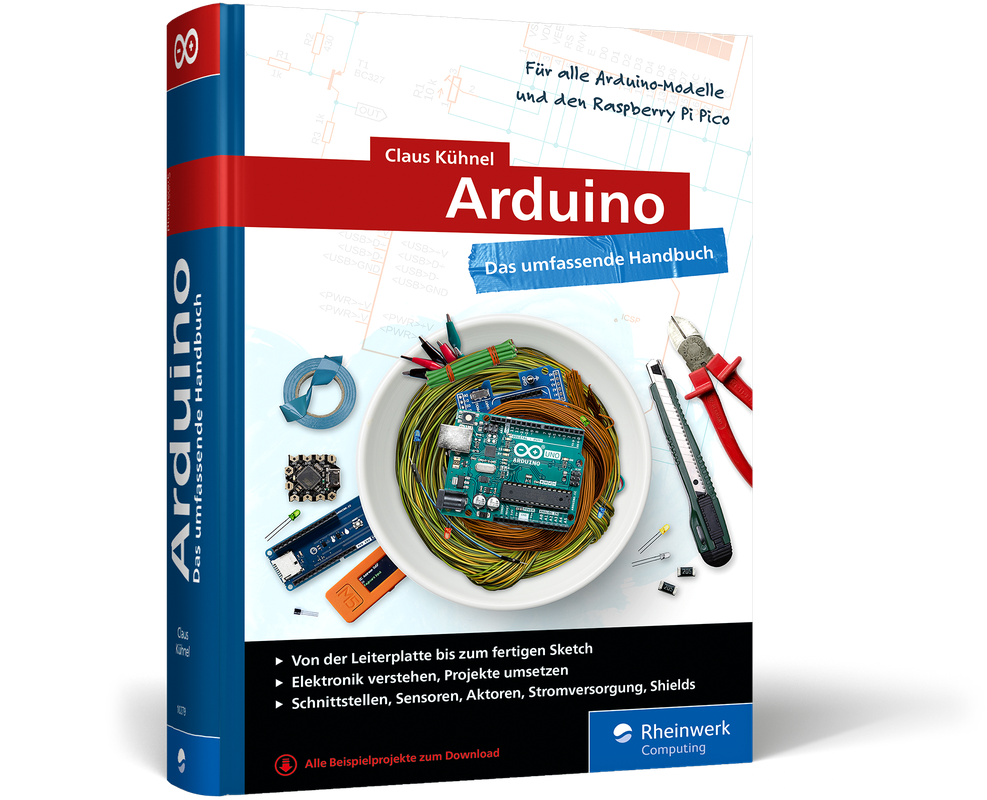
Arduino (3. Auflg.)
Die Arduino-Community stellt Makern eine ausgezeichnete Grundlage für eigene Projekte zur Verfügung. Die offene Mikrocontroller-Architektur und eine komfortable Entwicklungsumgebung machen den Arduino zum idealen Ausgangspunkt für eigene Bastelprojekte. Dass Sie mit dem Arduino aber noch viel mehr machen können als nur LEDs leuchten zu lassen, beweist dieses umfassende Handbuch: Von der Temperaturmessung bis zum maschinellen Lernen und der anspruchsvollen Auswertung von Daten finden Sie hier Beispiele und Erklärungen zu allen Fragen, die Elektronikbegeisterte interessieren.Alles Wichtige für Maker1. Programmier- und SchaltungsgrundlagenSie lernen die Arduino-Architektur bis ins Detail kennen und erfahren, wie sie programmiert und geschaltet wird. Crashkurs in C++ sowie in die Grundlagen der E-Technik inklusive.2. Die Arduino-FamilieDer Arduino Uno ist der verbreitetste Mikrocontroller der Arduino-Familie, die meisten Beispiele im Buch orientieren sich an ihm. Sie lernen aber auch leistungsfähigere Varianten und deren Einsatzmöglichkeiten kennen.3. Der Werkzeugkasten für Elektronik-MakerZahlreiche Schaltungsskizzen, kommentierte Codebeispiele und Datenblattauszüge zu den Boards und dem Zubehör helfen Ihnen genauso bei der Umsetzung eigener Projekte wie ein Überblick über die Werkstatt: Breadboards, Löten, Fritzing und mehr.Aus dem Inhalt:Modellübersicht: Mikrocontroller für MakerBreadboards, Löten, StromversorgungEntwicklungsumgebung und ProgrammierungSchaltungsdesign mit Fritzing und EagleSensoren: Temperatur, Feuchtigkeit, Bewegung, Ultraschall, Luftqualität u. v. m.Displays: LED, LCD, OLED, TouchscreensRelais, Motoren, SchaltaktorenSpeicher: EEPROM, FRAMWLAN, Bluetooth, BLE, GSM, LoRa, LoRaWAN, LTE-M, NB-IoTUART, SPI, I²C, 1-WireIoT-Anwendungen in der Cloud: WQTT, Thingspeak, Pushover, Dweet.ioProjektideen für Maker: von der Messung des Raumklimas und Radioaktivität bis zum Einsatz von KamerasÜber den Autor:Dr. Claus Kühnel studierte Informationstechnik an der Technischen Universität Dresden und hat über viele Jahre unter anderem Embedded Systems für die Labordiagnostik entwickelt. Seit langem ist er von der Maker-Bewegung fasziniert. Er hat zahlreiche Artikel und Bücher zu Hard- und Software von Mikrocontrollern im In- und Ausland veröffentlicht. Von der Zeitschrift Elektronik erhielt sein Beitrag „Arduino & Co“ die Auszeichnung „Artikel des Jahres 2011“. Mit Leidenschaft gibt er sein umfangreiches und fundiertes Wissen an interessierte Leserinnen und Leser weiter.

Salesforce Developer I Certification
This book is a comprehensive learning guide tailored for professionals who primarily work as non-coders within the Salesforce ecosystem. By providing clear and practical insights, it serves as a roadmap to inspire individuals, regardless of their coding background, to embark on a systematic journey towards acquiring programming skills while navigating the Salesforce platform.This understanding of programming fundamentals is not only valuable for professional growth but also to cover exam preparation for certification as a Salesforce Developer I. Because it includes materials and practical code examples specifically tailored to the exam preparation. In addition the book equips readers with the practical knowledge and confidence to leverage potential of Salesforce's capabilities.This book covers a range of important topics, including Salesforce platform fundamentals and architecture, automatization tools, Apex as a programming language with code examples like triggers, methods, SOQL, SOSL, testing, Lightning web components, deployment tools, and various other subjects, including declarative programming methods by using Flow. Many of these topics are interconnected with relevant code examples or explanations tailored for the Developer I exam as well.Due to retirement and replacement of Workflow and Process Builder with Flow as a more universally applicable declarative tool in recent releases, it is essential to offer an integrated understanding of this context in relation to Apex programmatic methods. It helps for a better understanding of choosing the right methods and tools in certain use cases. Additionally, it's important to provide code examples and explain the structure to help beginners grasp the new Lightning Web Components (LWC) framework as a separate part from the classic Apex methodology.WHAT YOU WILL LEARN* Valuable insights into Salesforce Apex programming and Lightning Web Components in a straightforward and structured manner.* Detailed explanations alongside numerous code examples tailored for non-coders.* Salesforce platform fundamentals, the structure of Apex and Lightning Components, and declarative programming, alongside an overview of the capabilities provided by native Salesforce and additional tools.WHO THIS BOOK IS FOR:Based on estimates, Salesforce Developer Edition (available for free) has a user base of approximately three million individuals. This diverse group includes not only developers but also a significant number of other users, such as certified Salesforce professionals who do not code. Included are administrators, consultants, marketers, and more. This audience is typically interested in various resources for preparing for the Developer I certification exam.Further, a substantial portion of additional user group comprises individuals who may not currently be assigned to Developer Edition but actively engaged with another Salesforce clouds and seeking additional guidance and information.Chapter 1. Salesforce Fundamentals and Architecture.- Chapter 2. Objects and data management.- Chapter 3. Salesforce Automatization Tools.- Chapter 4. Apex Programming.- Chapter 5. Triggers and Bulk Processing.- Chapter 6. SOQL and SOSL.- Chapter 7. Salesforce Lightning.- Chapter 8. Security vulnerabilities.- Chapter 9. Testing.- Chapter 10. Declarative programming with Flow.- Chapter 11. Debug and Deployment.

Practical Cyber Intelligence
OVERVIEW OF THE LATEST TECHNIQUES AND PRACTICES USED IN DIGITAL FORENSICS AND HOW TO APPLY THEM TO THE INVESTIGATIVE PROCESSPractical Cyber Intelligence provides a thorough and practical introduction to the different tactics, techniques, and procedures that exist in the field of cyber investigation and cyber forensics to collect, preserve, and analyze digital evidence, enabling readers to understand the digital landscape and analyze legacy devices, current models, and models that may be created in the future. Readers will learn how to determine what evidence exists and how to find it on a device, as well as what story it tells about the activities on the device. Over 100 images and tables are included to aid in reader comprehension, and case studies are included at the end of the book to elucidate core concepts throughout the text. To get the most value from this book, readers should be familiar with how a computer operates (e.g., CPU, RAM, and disk), be comfortable interacting with both Windows and Linux operating systems as well as Bash and PowerShell commands and have a basic understanding of Python and how to execute Python scripts. Practical Cyber Intelligence includes detailed information on:* OSINT, the method of using a device’s information to find clues and link a digital avatar to a person, with information on search engines, profiling, and infrastructure mapping* Window forensics, covering the Windows registry, shell items, the event log and much more * Mobile forensics, understanding the difference between Android and iOS and where key evidence can be found on the device Focusing on methodology that is accessible to everyone without any special tools, Practical Cyber Intelligence is an essential introduction to the topic for all professionals looking to enter or advance in the field of cyber investigation, including cyber security practitioners and analysts and law enforcement agents who handle digital evidence. ADAM TILMAR JAKOBSEN works for the Danish National Police Agency’s special crime unit hunting down cyber criminals. Throughout his career he has worked on international cases with Europol and the FBI. Adam’s journey into cybersecurity and intelligence began in the Danish Army Intelligence, where he honed his skills in SIGINT, OSINT, HUMINT, and all-source intelligence. In this role, he executed a wide range of defense, intelligence, and attack missions. Transitioning to Bluewater Shipping, Adam initially served as a Solution Architect before pivoting towards information security, where he oversaw critical security operations. About the Author xviiiPreface xixAcknowledgments xxIntroduction xxi1 INTELLIGENCE ANALYSIS 11.1 Intelligence Life Cycle 11.2 Cyber Threat Intelligence Frameworks 101.3 Summary 132 DIGITAL FORENSICS 152.1 Device Collection 162.2 Preservation 172.3 Acquisition 182.4 Processing 192.5 Analysis 202.6 Documentation and Reporting 212.7 Summary 223 DISK FORENSICS 233.1 Acquisition 233.2 Preparation 253.3 Analysis 253.4 File and Data Carving 313.5 Summary 324 MEMORY FORENSICS 334.1 Acquisition 344.2 Analysis 354.3 Summary 385 SQLITE FORENSICS 395.1 Analyzing 405.2 Summary 436 WINDOWS FORENSICS 456.1 New Technology File System (NTFS) 456.2 Acquisition 516.3 Analysis 526.4 Evidence Location 606.5 Summary 937 MACOS FORENSICS 957.1 File System 957.2 Security 977.3 Acquisition 987.4 Analysis 1007.5 Evidence Location 1007.6 Summary 1048 LINUX FORENSICS 1058.1 File System 1058.2 Security 1078.3 Acquisition 1088.4 Analysis 1098.5 Evidence Location 1098.6 Summary 1159 IOS 1179.1 File System 1179.2 Security 1189.3 Applications 1199.4 Acquisition 1209.5 iCloud 1229.6 Analysis 1229.7 Evidence of Location 1249.8 Summary 13410 ANDROID 13710.1 File Systems 13710.2 Security 13710.3 Application 13810.4 Acquisition 13810.5 Analysis 14510.6 Evidence of Location 14611 NETWORK FORENSICS 15311.1 Acquisition 15311.2 Analysis 15811.3 Summary 16512 MALWARE ANALYSIS 16712.1 Acquiring Malware Samples 16812.2 Handling Malware Samples 16912.3 Analysis 17012.4 Summary 17413 OSINT 17713.1 Methodology 17813.2 Documentation 17913.3 Securing Yourself (OPSEC) 18013.4 Search Engines 18213.5 Profiling 18413.6 Hunt for Data 18913.7 Infrastructure Mapping 19413.8 Automation of OSINT Tasks 20813.9 Summary 20914 CASE STUDIES 21114.1 Case of “The Missing Author” 21114.2 The Insider Threat 21215 ENDING 21315.1 What’s the Next Step? 213Index 215
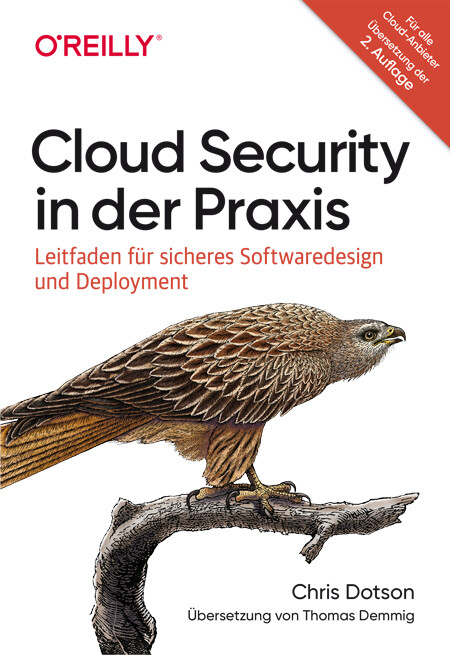
Cloud Security in der Praxis (2. Auflage)
Cloud Security in der Praxis. Leitfaden für sicheres Softwaredesign und Deployment. Übersetzung der 2. US-Auflage.In diesem Praxisbuch erfahren Sie alles Wichtige über bewährte Sicherheitsmethoden für die gängigen Multivendor-Cloud-Umgebungen – unabhängig davon, ob Ihr Unternehmen alte On-Premises-Projekte in die Cloud verlagern oder eine Infrastruktur von Grund auf neu aufbauen möchte.Entwicklerinnen, IT-Architekten und Sicherheitsexpertinnen lernen Cloud-spezifische Techniken zur sicheren Nutzung beliebter Plattformen wie Amazon Web Services, Microsoft Azure und IBM Cloud kennen. Sie erfahren, wie Sie Data Asset Management, Identity and Access Management (IAM), Vulnerability Management, Netzwerksicherheit und Incident Response effektiv in Ihrer Cloud-Umgebung umsetzen.Informieren Sie sich über neueste Herausforderungen und Bedrohungen im Bereich der Cloud-SicherheitManagen Sie Cloud-Anbieter, die Daten speichern und verarbeiten oder administrative Kontrolle bereitstellenLernen Sie, wie Sie grundlegende Prinzipien und Konzepte wie Least Privilege und Defense in Depth in der Cloud anwendenVerstehen Sie die entscheidende Rolle von IAM in der CloudMachen Sie sich mit bewährten Praktiken vertraut, um häufig auftretende Sicherheitszwischenfälle zu erkennen, zu bewältigen und den gewünschten Zustand wiederherzustellenErfahren Sie, wie Sie mit verschiedensten Sicherheitslücken, insbesondere solchen, die in Multi-Cloud- und Hybrid-Cloudarchitekturen auftreten, umgehenÜberwachen Sie PAM (Privileged Access Management) in Cloud-UmgebungenLeseprobe (PDF-Link)Über den Autor:Chris Dotson ist IBM Distinguished Engineer und leitender Sicherheitsarchitekt in der IBM CIO Organisation. Er verfügt über 11 professionelle Zertifizierungen, darunter die Open Group Distinguished IT Architect-Zertifizierung, und über 25 Jahre Erfahrung in der IT-Branche. Chris wurde bereits mehrfach auf der IBM-Homepage als Cloud-Innovator vorgestellt. Zu seinen Schwerpunkten gehören Cloud-Infrastruktur und -Sicherheit, Identitäts- und Zugriffsmanagement, Netzwerkinfrastruktur und -sicherheit und nicht zuletzt schlechte Wortspiele.

Cloud Security in der Praxis
Cloud-typische Sicherheitsthemen verständlich und praxisnah erklärt - Strategien und Lösungsansätze für alle gängigen Cloud-Plattformen, u.a. AWS, Azure und IBM Cloud - Deckt das breite Spektrum der Security-Themen ab - Gezieltes Einarbeiten durch den modularen Aufbau; mithilfe von Übungen können Sie Ihren Wissensstand überprüfen - Experten-Autor: IBM Distinguished Engineer mit zahlreichen Zertifizierungen und 25 Jahren Branchenerfahrung In diesem Praxisbuch erfahren Sie alles Wichtige über bewährte Sicherheitsmethoden für die gängigen Multivendor-Cloud-Umgebungen – unabhängig davon, ob Ihr Unternehmen alte On-Premises-Projekte in die Cloud verlagern oder eine Infrastruktur von Grund auf neu aufbauen möchte. Entwicklerinnen, IT-Architekten und Sicherheitsexpertinnen lernen Cloud-spezifische Techniken zur sicheren Nutzung beliebter Plattformen wie Amazon Web Services, Microsoft Azure und IBM Cloud kennen. Sie erfahren, wie Sie Data Asset Management, Identity and Access Management (IAM), Vulnerability Management, Netzwerksicherheit und Incident Response effektiv in Ihrer Cloud-Umgebung umsetzen. - Informieren Sie sich über neueste Herausforderungen und Bedrohungen im Bereich der Cloud-Sicherheit - Managen Sie Cloud-Anbieter, die Daten speichern und verarbeiten oder administrative Kontrolle bereitstellen - Lernen Sie, wie Sie grundlegende Prinzipien und Konzepte wie Least Privilege und Defense in Depth in der Cloud anwenden - Verstehen Sie die entscheidende Rolle von IAM in der Cloud - Machen Sie sich mit bewährten Praktiken vertraut, um häufig auftretende Sicherheitszwischenfälle zu erkennen, zu bewältigen und den gewünschten Zustand wiederherzustellen - Erfahren Sie, wie Sie mit verschiedensten Sicherheitslücken, insbesondere solchen, die in Multi-Cloud- und Hybrid-Cloudarchitekturen auftreten, umgehen - Überwachen Sie PAM (Privileged Access Management) in Cloud-Umgebungen

Empowering the Public Sector with Generative AI
This is your guide book to Generative AI (GenAI) and its application in addressing real-world challenges within the public sector. The book addresses a range of topics from GenAI concepts and strategy to public sector use cases, architecture patterns, and implementation best practices. With a general background in technology and the public sector, you will be able to understand the concepts in this book.The book will help you develop a deeper understanding of GenAI and learn how GenAI differs from traditional AI. You will explore best practices such as prompt engineering, and fine-tuning, and architectural patterns such as Retrieval Augmented Generation (RAG). And you will discover specific nuances, considerations, and strategies for implementation in a public sector organization.You will understand how to apply these concepts in a public sector setting and address industry-specific challenges and problems by studying a variety of use cases included in the book in the areas of content generation, chatbots, summarization, and program management.WHAT YOU WILL LEARN* GenAI concepts and how GenAI differs from traditional AI/ML * Prompt engineering, fine-tuning, RAG, and customizing foundation models* Strategy, methodologies, and frameworks for the public sector* Public sector use cases in the areas of content generation, summarization, and chatbots, plus program management, analytics, business intelligence, and reporting* Architecture and design patterns * Implementation, operations, and maintenance of GenAI applicationsWHO THIS BOOK IS FORTechnology and business leaders in the public sector who are new to AI/ML and are keen on exploring and harnessing the potential of Generative AI in their respective organizations.SANJEEV PULAPAKA is Principal Solutions Architect at Amazon Web Services (AWS). He leads the development of AI/ML and Generative AI solutions for the US Federal Civilian team. Sanjeev has extensive experience in leading, architecting, and implementing high-impact technology solutions that address diverse business needs in multiple sectors (including commercial, federal, and state and local governments). He has published numerous blogs and white papers on AI/ML and is an active speaker and panelist at various industry conferences, including AWS Public Sector Summit and AWS re:Invent. Sanjeev has an undergraduate degree in engineering from the Indian Institute of Technology and an MBA degree from the University of Notre Dame.SRINATH GODAVARTHI has over 20 years of experience serving public sector customers and he held leadership positions with global technology and consulting companies ,including Amazon and Accenture. In his previous roles, Srinath led cloud strategy, architecture, and digital transformation efforts for a number of federal, state, and local agencies. Srinath specializes in AI/ML technologies and has published over a dozen white papers and blogs on various topics (including AI, ML, and Healthcare). He has been a speaker at various industry conferences, including the AWS Public Sector Summit, AWS re:Invent, and the American Public Human Services Association. He holds a master’s degree in computer science from Temple University and completed a Chief Technology Officer program from the University of California, Berkeley.SHERRY DING is an artificial intelligence and machine learning (AI/ML) technologist and evangelist with 20 years of experience in AI/ML research and applications. She currently works at Amazon Web Services as an AI/ML Specialist Solutions Architect, serving public sector customers on their AI/ML related business challenges, and guiding them to build highly reliable and scalable AI/ML applications on the cloud. Sherry holds a PhD in computer science from Korea University. She has authored more than 30 publications (including journal articles, book chapters, white papers, conference proceedings, and blogs) on different topics related to AI/ML. She is an active public speaker who has presented at various academia and industry conferences such as IEEE conferences, AWS re:Invent, and AWS Summits.Chapter 1: Introduction to Generative AI.- Chapter 2: Generative AI in the Public Sector.- Chapter 3: Gen AI Strategy: A Blueprint for Successful Adoption.- Chapter 4: Building a Generative AI Application.- Chapter 5: Content Generation.- Chapter 6: Chatbots and Enterprise Search.- Chapter 7: Summarization.- Chapter 8: Program Management, Business Intelligence, and Reporting.- Chapter 9: Implementation Considerations.- Chapter 10: Conclusion.- Appendix A.- Appendix B.- Appendix C.- Appendix D.- Appendix E.
Praxisbuch ISO/IEC 27001 (5. Auflg.)
Informationen sind das wertvollste Kapital vieler Organisationen. Geraten sie in falsche Hände, kann sogar das Überleben eines Unternehmens gefährdet sein. Zur Informationssicherheit müssen alle ihren Beitrag leisten, von der Arbeitsebene bis zum Topmanagement. Die ISO / IEC 27001 stellt dabei die wichtigste internationale Norm dar, an der man praktisch in keiner Branche vorbeikommt. Ein dieser Norm entsprechendes Informationssicherheitsmanagementsystem (ISMS) ist zunehmend Voraussetzung für die Erfüllung von Kunden-Anforderungen sowie von gesetzlichen und behördlichen Vorgaben, u. a. im Rahmen des IT-Sicherheitsgesetzes.In diesem Buch erhalten Sie die optimale Unterstützung für den Aufbau eines wirksamen ISMS. Die Autoren vermitteln zunächst das notwendige Basiswissen zur ISO / IEC 27001 sowie zur übergeordneten Normenreihe und erklären anschaulich die Grundlagen. Im Hauptteil finden Sie alle wesentlichen Teile der deutschen Fassung der Norm, DIN EN ISO / IEC 27001, im Wortlaut. Hilfreiche Erläuterungen, wertvolle Praxistipps für Maßnahmen und Auditnachweise helfen Ihnen bei der Umsetzung der Norm. Ebenfalls enthalten sind Prüfungsfragen und -antworten, mit deren Hilfe Sie sich optimal auf Ihre persönliche Foundation-Zertifizierung vorbereiten können. Das Buch schließt mit einem Abdruck der kompletten Norm DIN EN ISO/ IEC 27001:2024.Aus dem Inhalt:Einführung und BasiswissenDie Standardfamilie ISO / IEC 27000 im ÜberblickGrundlagen von InformationssicherheitsmanagementsystemenISO / IEC 27001Spezifikationen und MindestanforderungenMaßnahmen im Rahmen des ISMSVerwandte Standards und RahmenwerkeZertifizierungsmöglichkeiten und Begriffsbildung nach ISO/ IEC 27000Abdruck der vollständigen DIN EN ISO / IEC 27001:2024Vergleich der Normenfassungen von 2017 und 2024Prüfungsfragen mit Antworten zur ISO / IEC 27000 FoundationDie Autoren:Michael Brenner, Nils gentschen Felde, Wolfgang Hommel, Stefan Metzger, Helmut Reiser und Thomas Schaaf arbeiten u. a. an der Ludwig-Maximilians-Universität München, der Universität der Bundeswehr München und am Leibniz-Rechenzentrum der Bayerischen Akademie der Wissenschaften. Als Mitglieder der Forschungsgruppe Munich Network Management Team (www.mnmteam.org) forschen und lehren sie alle zu den Themen Informationssicherheitsmanagement und IT-Service-Management.Leseprobe (PDF-Link)

Praxisbuch ISO/IEC 27001
- Das umfassende Praxisbuch zum Management der Informationssicherheit- Enthält die vollständige Norm DIN EN ISO/IEC 27001:2024- Unentbehrlich für Betreiber kritischer Infrastrukturen (-> IT-Sicherheitsgesetz)- Mit 80 Prüfungsfragen zur Vorbereitung auf die Foundation-Zertifizierung- Ihr exklusiver Vorteil: E-Book inside beim Kauf des gedruckten BuchesInformationen sind das wertvollste Kapital vieler Organisationen. Geraten sie in falsche Hände, kann sogar das Überleben eines Unternehmens gefährdet sein. Zur Informationssicherheit müssen alle ihren Beitrag leisten, von der Arbeitsebene bis zum Topmanagement. Die ISO / IEC 27001 stellt dabei die wichtigste internationale Norm dar, an der man praktisch in keiner Branche vorbeikommt. Ein dieser Norm entsprechendes Informationssicherheitsmanagementsystem (ISMS) ist zunehmend Voraussetzung für die Erfüllung von Kunden-Anforderungen sowie von gesetzlichen und behördlichen Vorgaben, u. a. im Rahmen des IT-Sicherheitsgesetzes.In diesem Buch erhalten Sie die optimale Unterstützung für den Aufbau eines wirksamen ISMS. Die Autoren vermitteln zunächst das notwendige Basiswissen zur ISO / IEC 27001 sowie zur übergeordneten Normenreihe und erklären anschaulich die Grundlagen. Im Hauptteil finden Sie alle wesentlichen Teile der deutschen Fassung der Norm, DIN EN ISO / IEC 27001, im Wortlaut. Hilfreiche Erläuterungen, wertvolle Praxistipps für Maßnahmen und Auditnachweise helfen Ihnen bei der Umsetzung der Norm. Ebenfalls enthalten sind Prüfungsfragen und -antworten, mit deren Hilfe Sie sich optimal auf Ihre persönliche Foundation-Zertifizierung vorbereiten können. Das Buch schließt mit einem Abdruck der kompletten Norm DIN EN ISO/ IEC 27001:2024.Die Autoren: Michael Brenner, Nils gentschen Felde, Wolfgang Hommel, Stefan Metzger, Helmut Reiser und Thomas Schaaf arbeiten u. a. an der Ludwig-Maximilians-Universität München, der Universität der Bundeswehr München und am Leibniz-Rechenzentrum der Bayerischen Akademie der Wissenschaften. Als Mitglieder der Forschungsgruppe Munich Network Management Team (www.mnmteam.org) forschen und lehren sie alle zu den Themen Informationssicherheitsmanagement und IT-Service-Management.AUS DEM INHALT //- Einführung und Basiswissen- Die Standardfamilie ISO / IEC 27000 im Überblick- Grundlagen von Informationssicherheitsmanagementsystemen- ISO / IEC 27001- Spezifikationen und Mindestanforderungen- Maßnahmen im Rahmen des ISMS- Verwandte Standards und Rahmenwerke- Zertifizierungsmöglichkeiten und Begriffsbildung nach ISO/ IEC 27000- Abdruck der vollständigen DIN EN ISO / IEC 27001:2024- Vergleich der Normenfassungen von 2017 und 2024- Prüfungsfragen mit Antworten zur ISO / IEC 27000 Foundation

Cloud-Native DevOps
This book delivers cloud-based applications that are both scalable and reliable, aligning with the evolving needs of the present user base. This innovative approach blends the agility of cloud computing with the efficiency of contemporary DevOps methodologies.The book starts by providing valuable insights into the ever-evolving software landscape of Cloud-native DevOps. It delves into strategies for crafting scalable and dependable applications and illustrates the art of leveraging open-source tools to enhance collaboration. It navigates through the integral role of microservices in contemporary software development and imparts the know-how to integrate them with DevOps practices. The book simplifies container technology, with a focus on Docker and Kubernetes. It further elucidates the process of streamlining software delivery through Continuous Integration and Continuous Deployment (CI/CD). As you progress, you will explore open-source tools, including Argo, Kubeflow Pipelines, and AWS Step Functions. The concluding section covers real-world case studies and best practices for implementing Cloud-native DevOps. The book reviews the core concepts covered throughout and provides an exciting glimpse into the future of Cloud-native DevOps.Upon completing this book, you will be well-versed in the principles and practices of Cloud-native DevOps, understand real-world applications, and recognize the critical importance of security in cloud computing.WHAT YOU WILL LEARN* Create cloud-based applications that can scale with the changing needs of today's user base* Combine the flexibility of cloud computing with the efficiency of modern DevOps methodologies* Understand the core concepts and principles of Cloud-native DevOps* Understand microservices, containers, and continuous integration and continuous deployment (CI/CD)WHO THIS BOOK IS FORDevOps engineers, cloud architects, software developers, system administrators, IT managers, team leads, and business decision makersMOHAMMED ILYAS AHMED is an industry professional with extensive expertise in security within the DevSecOps domain, where he diligently works to help organizations bolster their security practices. With a fervent dedication to enhancing security posture, Mohammed's insights and guidance are invaluable to those navigating the complex landscape of DevSecOps. Beyond his practical experience, Mohammed has also contributed significantly to the industry as a judge in various events and awards ceremonies. His knowledge extends to Cloud Security, with a particular emphasis on securing DevSecOps environments, making him a sought-after authority in the field.In addition to his involvement in industry events, Mohammed is an active speaker and panelist, lending his expertise to technical sessions at prestigious conferences. His commitment to advancing knowledge is evident through his research contributions at Harvard University, where he contributes to journal publications, enriching the academic discourse surrounding security practices.Mohammed's dedication to excellence is further highlighted by his numerous certifications, which serve as a testament to his proficiency and depth of knowledge in the security domain. However, beyond his professional pursuits, Mohammed is a multifaceted individual with a diverse range of interests, adding richness to his character and perspective. Mohammed Ilyas Ahmed's influence extends even further as a Member of the Global Advisory Board at Vigitrust Limited, based in Dublin, Ireland. This additional role highlights his international reach and his involvement in shaping global strategies for cybersecurity and data protection.Chapter 1. Unveiling the Cloud-Native Paradigm.- Chapter 2. Cloud-Native DevOps Architectural Overview.- Chapter 3. Security in Cloud-Native Applications with a Shift-Left Approach.- Chapter 4. CI/CD Pipeline in Cloud-Native DevOps.- Chapter 5. Open-Source Tools for Cloud-Native DevOps.- Chapter 6. Scalability and Autoscaling Strategies .- Chapter 7. Collaborative Development in the Cloud-native.- Chapter 8. IAM Security in Cloud-Native Environment.- Chapter 9. Threat Analysis for Cloud-Native Deployments.- Chapter 10. Future Trends in Cloud-Native.

Elternratgeber: Sicher im Netz für Dummies
SICHERE MEDIENNUTZUNG BEGLEITEN Welche Apps und Dienste fördern und unterhalten Ihr Kind, wo lauert Gefahr? Mit diesem Buch richten Sie Smartphones, Tablets, PCs und Spielekonsolen altersgerecht ein und vermitteln Ihrem Kind fundiert den richtigen Umgang mit (Online-)Medien. Sie verstehen, wie bei Kindern und Jugendlichen verbreitete Apps oder Dienste auf allen gängigen Gerätetypen funktionieren und vernetzt sind. Und wie Sie die Zugriffsmöglichkeiten so steuern, wie Sie es für Ihr Kind für geeignet halten. So kann Ihr Kind sicher surfen, spielen oder soziale Netzwerke nutzen. SIE ERFAHREN* Wie Kinder digitale Medien nutzen* Was erlaubt ist und was nicht* Welche Einstellungen Sie kennen sollten* Wie Sie sich und Ihre Kinder vor digitalen Angriffen schützenMARKUS WIDL ist Vater von drei Kindern und mit einer Erzieherin verheiratet. Als Informatiker und IT-Spezialist ist es ihm ein Anliegen, Kinder und Eltern für mögliche Gefahren zu sensibilisieren, damit sie die Vorteile der IT unbeschwert nutzen können. Über den Autor 7Einleitung 19TEIL I: DIGITALE MEDIEN – MÖGLICHKEITEN, PROBLEME UND GEFAHREN 25Kapitel 1: Unsere Kinder und aktuelle Medien 27Kapitel 2: Soziales Miteinander im Netz 63Kapitel 3: Gefahren durch Betrüger 87TEIL II: SICHERER UMGANG MIT SOCIAL MEDIA, INSTANT MESSAGING, SPIELEN UND STREAMING 101Kapitel 4: Social- Media- Apps 103Kapitel 5: Instant- Messaging- Dienste 129Kapitel 6: Spiele auf Smartphone, Konsole und PC 153Kapitel 7: Videos und Musik 171Kapitel 8: Streaming- Anbieter für Filme und Serien 193TEIL III: DEN JUGENDSCHUTZ IM GERÄTE- ZOO AKTIVIEREN 209Kapitel 9: Sicheres Heimnetzwerk 211Kapitel 10: Smartphones und Tablets 231Kapitel 11: Betriebssysteme 259Kapitel 12: Spielekonsolen und Steam 291TEIL IV: SCHWIERIGE SITUATIONEN MEISTERN 327Kapitel 13: Kostenfallen 329Kapitel 14: Abmahnungen 343Kapitel 15: Hacker- Angriff 353Kapitel 16: Kontakte zu Anbietern, Herstellern, Beratungsstellen und Behörden 359TEIL V: DER TOP- TEN- TEIL 363Kapitel 17: Zehn weitere Social- Media- und Instant- Messaging- Apps, die Sie kennen sollten 365Kapitel 18: Zehn Dinge, mit denen Sie jetzt beginnen sollten 369Stichwortverzeichnis 377

Mikrocontroller ESP32 (3. Auflg.)
Mit dem ESP32 setzen Maker anspruchsvolle IoT-Projekte um. Ein leistungsstarkes SoC und zahlreiche Schnittstellen zur Kommunikation machen ihn zur idealen Basis für alle Ihre Ideen in der IoT-Programmierung, bei der Hausautomation oder einfach beim Elektronikbasteln. Udo Brandes begleitet Sie mit diesem Leitfaden bei Ihren Projekten und zeigt Ihnen die Arbeit mit Entwicklungsumgebungen, Sensoren, Schnittstellen und allem, was dazu gehört. So gelingt Ihnen der umfassende Einstieg in die Mikrocontrollerprogrammierung.Neu in dieser Auflage: Fortgeschrittene ULP-Programmierung und das Arbeiten mit Threads1. Der Mikrocontroller für MakerDer ESP32 ist ein leistungsstarker und stromsparender System-on-a-Chip, der sich ideal für die ersten Schritte in die Mikrocontrollerprogrammierung eignet. Mit ihm setzen Sie Ihre Ideen zu Schaltungen und Projekten um.2. Grundlagen und PraxisWas ist die richtige Entwicklungsumgebung für Ihr Projekt? Wie versorgen Sie Ihren ESP32 mit Strom, welche Online-Dienste helfen Ihnen bei der Datenauswertung und wie finden Sie Fehler in Ihren Schaltungen? In diesem Buch erhalten Sie Hintergrundinformationen und Praxistipps, die Ihnen den Einstieg leichter machen und im Maker-Alltag helfen.3. Ausführliche Codebeispiele und Fritzing-SchaltpläneDieser Leitfaden unterstützt Sie mit Schaltskizzen im Fritzing-Format und ausführlichen C-Beispielen für ESP-IDF und die Arduino IDE. Mit diesen Vorlagen als Fundament verwirklichen Sie schon bald nützliche und kreative Maker-Projekte, die genau auf Ihre Anforderungen zugeschnitten sind.Aus dem Inhalt:Chips und BoardsStromversorgungWerkstatt: Löten, Verkabeln, FritzingProgrammiergrundlagen in C und C++Entwicklungsumgebungen: Arduino und ESP-IDFAnalog- und Digitalausgänge, LEDs, Impulszähler und mehrSensorenSPI, I²C, UARTDrahtlose Kommunikation mit Bluetooth, OTA und WifiJTAG-Debugging und weitere Tricks bei der FehlersucheULP-Programmierung: Tasks und Deep SleepProjektideen für Maker: Evil Dice, Binär-Uhr, Solar-WLAN-RepeaterÜber den Autor:Udo Brandes ist selbständiger Programmierer, IT-Entwickler und Autor. Die Möglichkeiten der Mikrocontrollerprogrammierung sind Zukunftsthemen, die ihn faszinieren und mit deren Chancen und Risiken er sich seit langem intensiv befasst. Zuvor war er Systementwickler beim Rechenzentrum der Finanzverwaltung des Landes Nordrhein-Westfalen und hat in unterschiedlichen Aufgaben für die Stadt Wuppertal gearbeitet.Leseprobe (PDF-Link)

Vorschriften und Betriebstechnik des Amateurfunks
So bestehen Sie Ihre Amateurfunkprüfung mit Bravour! Für das erfolgreiche Bestehen der Amateurfunkprüfung benötigen Sie nicht nur umfassendes Technik-Wissen, sondern Sie müssen sich auch mit den Vorschriften und Gesetzen sowie der Betriebstechnik auskennen. Dazu finden Sie in diesem E-Book alles, was Sie für das sichere Bestehen der Prüfungen in den Klassen N, E und A und den souveränen Funkbetrieb wissen müssen. Inklusive Beispielen und Übungsfragen, aktuell zur AFuV 2024. Bei Ihren ersten Schritten in der Funkpraxis unterstützt Sie mit den notwendigen Grundlagen »Amateurfunk. Das umfassende Handbuch« von Harald Zisler DL 6 RAL und Thomas Lauterbach DL 1 NAW. Aus dem Inhalt: Grundwissen über die gesetzlichen Grundlagen und VorschriftenSicherheitsvorschriftenElektromagnetische UmweltverträglichkeitAmateurfunkbetrieb unterwegsBandpläne: Für ein gutes MiteinanderVerkehrsregeln im FunkbetriebNotfunk und Verhalten im NotfallLogbücher und QSL-KartenMit Übungen und Musterlösungen