

Programmierung
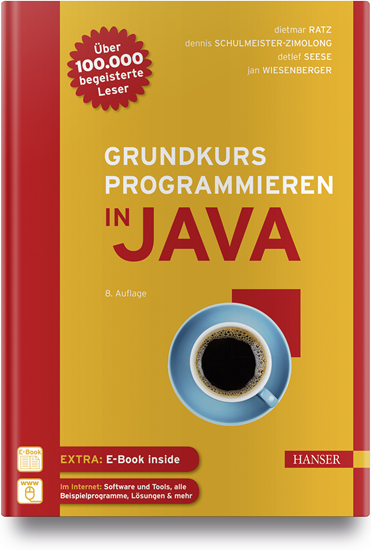
Grundkurs Programmieren in JAVA
Mit diesem Lehrbuch können Sie sowohl Java als auch das Programmieren lernen. Es setzt keinerlei Vorkenntnisse aus den Bereichen Programmieren, Programmiersprachen und Informatik voraus. Alle Kapitel sind mit Übungsaufgaben ausgestattet, die Sie zum besseren Verständnis bearbeiten können. Denn: Man lernt eine Sprache nur, wenn man sie auch spricht! Auf rund 750 Seiten finden Sie hier eine umfassende und aktuelle Einführung. Von den Grundlagen der Programmierung und den elementaren Sprachelementen über die Objektorientierung bis hin zu Threads und Datenströmen und zur Entwicklung von Anwendungen in Netzen lernen Sie alles, was Sie für den erfolgreichen Einstieg in die Programmierung benötigen. Aus dem InhaltEinstieg in das Programmieren in Java/Objektorientiertes Programmieren in Java/Grafische Oberflächen in Java/Threads, Datenströme und Netzwerkanwendungen/Abschluss, Ausblick und Anhang ExtraE-Book inside. Systemvoraussetzungen für E-Book inside: Internet-Verbindung und Adobe-Reader oder Ebook-Reader bzw. Adobe Digital Editions.

Programmieren in Java
- Von zahlreichen Hochschulen empfohlen: Der Einstieg in die Welt der Java-Programmierung mit diesem kompakten Klassiker! - Besonderen Schwerpunkt legen wir auf Grundlagen. Diese sind auch im Zeitalter leistungsfähiger Hilfsmittel unentbehrlich. - Topaktuell: Lernen Sie die objektorientierte Programmierung auf der Basis von Java 21. - Erhöhen Sie Ihren Lernerfolg mit den zahlreichen Übungsaufgaben. - Ihr exklusiver Vorteil: E-Book inside beim Kauf des gedruckten Buches Sie möchten sich Java von Grund auf aneignen? Dieses Standardwerk hat schon Tausende von Einsteigern zu Java-Pro s gemacht. Kompakt, aktuell und präzise bietet es alles, was für die Programmierung in Java wichtig ist. Diese Neuauflage wurde grundlegend überarbeitet. Ihr Fokus richtet sich darauf, Ihnen den Einstieg in die Programmierung mit Java 21 möglichst einfach zu machen. Von Anfang an nutzen wir dafür die leistungsfähige und komfortable Entwicklungsumgebung Eclipse. Von den elementaren Ausdrucksmöglichkeiten in Java und den Grundlagen der Objektorientierung bis hin zur Nebenläu gkeit sowie zur Programmierung in Netzwerken und Anbindung von Datenbanken finden Sie hier alle Themen, die für Einsteiger wichtig sind. Zum Vertiefen des Umgangs mit Entwurfsmustern dient die Programmierung grafischer Benutzeroberflächen. Zahlreiche Beispiele und Aufgaben in allen Kapiteln – von elementaren Übungen bis hin zu kleinen Projektarbeiten – helfen Ihnen, Ihr Wissen praktisch umzusetzen und zu festigen. AUS DEM INHALT // - Einstieg in Java - Elemente der Programmierung - Objektorientierte Programmierung - Grundlegende Klassen - Ein-/Ausgabe in Java - Nebenläufigkeit in Java: Threads - Grafikanwendungen in Java - Programmierung in Netzwerken - Anbindung von Datenbanken mit JDBC - Bearbeiten von XML in Java

Zephyr RTOS Embedded C Programming
These days the term Real-Time Operating System (RTOS) is used when referring to an operating system designed for use in embedded microprocessors or controllers. The “Real Time” part refers to the ability to implement applications that can rapidly responding to external events in a deterministic and predictable manner. RTOS-based applications have to meet strict deadline constraints while meeting the requirements of the application. One way of ensuring that urgent operations are handled reliably is to set task priorities on each task and to assign higher priorities to those tasks that need to respond in a more timely manner.Another feature of real-time applications is the careful design and implementation of the communication and synchronization between the various tasks. The Zephyr RTOS was developed by Wind River Systems, and subsequently open sourced. Its design and implementation are oriented towards the development of time critical IoT (Internet of Things) and IIoT (Industrial Internet of Things) applications, and, consequently it has a rich feature set for building both wireless and wired networking applications. However, with a rich feature set comes a fairly steep learning curve.This book covers the foundations of programming embedded systems applications using Zephyr's Kernel services. After introducing the Zephyr architecture as well as the Zephyr build and configuration processes, the book will focus on multi-tasking and inter-process communication using the Zephyr Kernel Services API. By analogy with embedded Linux programming books, this book will be akin a Linux course that focuses on application development using the Posix API. In this case, however, it will be the Zephyr Kernel Services API that will be the API being used as well as the Posix API features supported by Zephyr.WHAT YOU’LL LEARN* An Overview of the Cortex-M Architecture.* Advanced data structures and algorithms programming (linked lists, circular buffers and lists).* How to build Zephyr Applications, including setting up a Command Line Zephyr Development Environment on Linux.* Task scheduling and pre-emption patterns used in Real Time Operating Systems.* Scheduling, Interrupts and Synchronization, including threads, scheduling, and system threads.* Overview of Symmetric Multiprocessing (SMP) and Zephyr support for SMP. * Memory management, including memory heaps, memory slabs, and memory pools.WHO THIS BOOK IS FOREmbedded Systems programmers, IoT and IIoT developers, researchers, BLE application developers (Industrial Control Systems, Smart Sensors, Medical Devices, Smart Watches, Manufacturing, Robotics). Also of use to undergraduate and masters in computer science and digital electronics courses.Andrew Eliasz is the Founder and Head at Croydon Tutorial College as well as the Director of First Technology Transfer Ltd. First Technology Transfer runs advanced training courses and consults on advanced projects in IT, real time and embedded systems. Most courses are tailored to customers’ needs. Croydon Tutorial College evolved from Carshalton Tutorial College which was established to provide classes, distance level teaching, workshops and personal tuition in computer science, maths, and science subjects at GCSE, A Level, BTEC, undergraduate and masters levels. It has now changed its name and location to Croydon Tutorial College at Weatherill House Croydon. As well as teaching and tutoring they also provide mentoring and help for students having difficulties with assignments and projects (e.g., by suggesting how to add to a project to obtain a better grade, as well as reviewing project content and writing styles).1. Introduction.- 2. A Review of RTOS Fundamentals.- 3. Zephyr RTOS Application Development Environments and Zephyr Application Building Principles.- 4. Zephyr RTOS Multithreading.- 5. Message Queues, Pipes, Mailboxes and Workqueues.- 6. Using Filesystems in Zephyr Applications.- 7. Developing Zephyr BLE Applications.- 8. Zephyr RTOS and Ethernet, WiFi, and TCP/IP.- 9. Understanding and Working with the Device Tree, in general, and SPI and I2C in particular.- 10. Building Zephyr RTOS Applications Using Renode.- 11. Understanding and Using the Zephyr ZBus in Application Development.- 12. Zephyr Wi-Fi.
JavaScript Schnelleinstieg
Mit diesem Buch gelingt Ihnen der einfache Einstieg ohne Vorkenntnisse in JavaScript. Alle Grundlagen der Programmierung mit JavaScript werden in 14 Kapiteln kompakt und leicht verständlich erläutert: von den grundlegenden Programmiertechniken wie Variablen und Funktionen über objektorientierte Programmierung bis hin zur Entwicklung dynamischer Webseiten mit modernem JavaScript. Hierbei werden auch fortgeschrittene Themen wie das Document Object Model (DOM), Event Handling, synchrone und asynchrone Verarbeitung, die REST-API sowie das Speichern von Daten in Cookies und Web Storage behandelt. Zahlreiche Codebeispiele und Übungsaufgaben mit Lösungen zum Download helfen Ihnen, das neu gewonnene Wissen anzuwenden und zu vertiefen. So sind Sie perfekt auf den Einsatz von JavaScript und die Programmierung interaktiver Webseiten in der Praxis vorbereitet. Solide Grundkenntnisse in HTML und CSS werden vorausgesetzt. Aus dem Inhalt: * Alle Grundlagen kompakt und verständlich erklärt * Kontrollstrukturen, Arrays und objektorientierte Programmierung (OOP) * JSON als Austauschformat für strukturierte Daten * Dynamische Webseiten: DOM als Schnittstelle zwischen HTML und JavaScript * Behandlung von Ereignissen (Events) * Formulare prüfen und versenden * Animationen mit asynchronem JavaScript und Web Animations API * Kommunikation mit dem Webserver * Daten speichern mit Cookies / Web Storage * Programmcode und Lösungen zum Download Ulrike Häßler ist Informatikerin der ersten Tage und verfügt über jahrelange Erfahrung im Bereich der Webseitengestaltung mit HTML, CSS und JavaScript.

Virtual Threads, Structured Concurrency, and Scoped Values
Discover the exciting new APIs introduced by Java’s Project Loom. This quick guide covers all the essential concepts the Java developer needs in order to understand virtual threads, structured concurrency, and scoped values. Authors Ron Veen and David Vlijmincx clearly explain the superiority of virtual threads, introduced in Java 21, over the traditional Java threads of the past 25 years. Then they dive into how structured concurrency streamlines interactions by treating related threads as a unified unit of work, akin to the impact of structured programming on regular programming. From there, the authors explore the third Project Loom API and scoped values, clarifying their advantages over regular ThreadLocals and providing efficient usage insights. The book concludes with an exploration of common scheduling strategies. By the end of this book, you will have a solid understanding of the concepts behind Project Loom and will be able to immediately apply this knowledge to your own code. You Will * Discover what virtual threads are, why they were created, and how to use them in your code * Gain insight into how concurrency improves the observability of code * Write your own StructuredTaskScopes tailored to your needs * Understand why you should replace ThreadLocals with Scoped Values * Know the different strategies for multithreaded computer programs Who This Book is For Java developers of any level. This knowledge is so fundamental to staying relevant in the Java job market that every developer needs to understand it for their career development. Chapter 1: Virtual Threads.- Chapter 2: Structured Concurrency.- Chapter 3: Scoped Values.- Chapter 4: Concurrency Patterns.

Clean SAPUI5
Optimieren Sie Ihren SAPUI5-Code für bessere Lesbarkeit und Wartbarkeit! Entdecken Sie bewährte Methoden von Experten in diesem Buch, um JavaScript-Funktionen effektiv zu nutzen und Ihren SAPUI5-Code zu verbessern. Module, Klassen, Funktionen, Namen, Variablen, Literalen, Kommentaren, Code-Metriken: Übernehmen Sie Best Practices für Formatierung, Testen, Implementierung und vieles mehr! Aus dem Inhalt: JavaScriptModule und KlassenFunktionenNamensgebungVariablen und LiteraleKontrollstrukturFehlerbehandlungFormatierungStatische Code-PrüfungTestenImplementierung Einleitung ... 17 1. Einführung ... 25 1.1 ... Was ist Clean SAPUI5? ... 26 1.2 ... Erste Schritte mit Clean SAPUI5 ... 28 1.3 ... Umgang mit Legacy-Code ... 30 1.4 ... Code automatisch prüfen ... 32 1.5 ... Wie hängt Clean SAPUI5 mit anderen Leitfäden zusammen? ... 32 1.6 ... Zusammenfassung ... 34 2. JavaScript und SAPUI5 ... 35 2.1 ... Funktionen von JavaScript ES6+ ... 36 2.2 ... TypeScript ... 119 2.3 ... Zusammenfassung ... 131 3. Projektstruktur ... 133 3.1 ... Komponenten in SAPUI5 ... 133 3.2 ... Wichtige Artefakte ... 136 3.3 ... Freestyle-Anwendungen ... 145 3.4 ... SAP Fiori Elements ... 147 3.5 ... Bibliotheksprojekte ... 155 3.6 ... Model-View-Controller-Assets ... 158 3.7 ... Zusammenfassung ... 161 4. Module und Klassen ... 163 4.1 ... Controller-Inflation ... 164 4.2 ... Modullebenszyklus ... 199 4.3 ... Wiederverwendbarkeit und Testbarkeit ... 208 4.4 ... Servicemodule vs. Klassenmodule ... 219 4.5 ... Zusammenfassung ... 226 5. Funktionen ... 229 5.1 ... Funktionsdefinition ... 229 5.2 ... Funktionsobjekt ... 231 5.3 ... Instanzmethoden ... 233 5.4 ... Event-Handler und Callbacks ... 236 5.5 ... Ausführungskontext der Callback-Funktion ... 236 5.6 ... Getter und Setter ... 238 5.7 ... Anonyme Funktionen ... 241 5.8 ... Funktionsparameter ... 243 5.9 ... Promises ... 258 5.10 ... Generatoren ... 265 5.11 ... Funktionskörper ... 266 5.12 ... Funktionen aufrufen ... 274 5.13 ... Closures ... 277 5.14 ... Zusammenfassung ... 278 6. Namensgebung ... 281 6.1 ... Beschreibende Namen ... 282 6.2 ... Domänenbegriffe ... 283 6.3 ... Entwurfsmuster ... 285 6.4 ... Konsistenz ... 285 6.5 ... Namen kürzen ... 287 6.6 ... Füllwörter ... 288 6.7 ... Casing ... 289 6.8 ... Klassen und Enums ... 291 6.9 ... Funktionen und Methoden ... 292 6.10 ... Variablen und Parameter ... 294 6.11 ... Private Elemente ... 300 6.12 ... Namensräume ... 302 6.13 ... Control-IDs ... 304 6.14 ... Ungarische Notation ... 305 6.15 ... Alternative Regeln ... 307 6.16 ... Zusammenfassung ... 309 7. Variablen und Literale ... 311 7.1 ... Variablen ... 311 7.2 ... Literale ... 316 7.3 ... Zusammenfassung ... 335 8. Kontrollfluss ... 337 8.1 ... Bedingungen ... 338 8.2 ... Schleifen ... 342 8.3 ... Bedingte Komplexität ... 345 8.4 ... Zusammenfassung ... 353 9. Fehlerbehandlung ... 355 9.1 ... »throw«- und »try/catch«-Anweisungen ... 355 9.2 ... Fehlerobjekte verwenden ... 357 9.3 ... Fehlerbehandlung über Meldungen ... 359 9.4 ... Fehlerbehandlung mit Controls ... 361 9.5 ... Best Practices für die Fehlerbehandlung ... 365 9.6 ... Zusammenfassung ... 369 10. Formatierung ... 371 10.1 ... Motivation ... 371 10.2 ... Vertikale und horizontale Formatierung ... 372 10.3 ... Textbereich ein- oder ausrücken ... 382 10.4 ... XML-Views ... 385 10.5 ... Weitere Hinweise ... 391 10.6 ... Formatierung für TypeScript in SAPUI5 ... 395 10.7 ... Erstellen und Pflegen eines Codestil-Leitfadens ... 407 10.8 ... Formatierungswerkzeuge ... 409 10.9 ... Zusammenfassung ... 415 11. Kommentare ... 417 11.1 ... Drücken Sie Ihre Absicht im Code aus ... 418 11.2 ... Das Gute: Kommentarplatzierung und -nutzung ... 419 11.3 ... Das Schlechte: Zu vermeidende oder umzustrukturierende Kommentare ... 431 11.4 ... Das Hässliche: Sonderkommentare ... 442 11.5 ... Zusammenfassung ... 445 12. Statische Codeprüfungen und Codemetriken ... 447 12.1 ... Linting ... 449 12.2 ... Codemetriken ... 469 12.3 ... Zusammenfassung ... 491 13. Testen ... 493 13.1 ... Prinzipien ... 494 13.2 ... Zu testender Code ... 508 13.3 ... Injektion ... 510 13.4 ... Testmethoden und Journeys ... 516 13.5 ... Testdaten ... 519 13.6 ... Assertions ... 523 13.7 ... Zusammenfassung ... 529 14. TypeScript und verwandte Technologien ... 531 14.1 ... TypeScript ... 531 14.2 ... UI5 Web Components ... 547 14.3 ... Fundamental Library ... 556 14.4 ... Zusammenfassung ... 560 15. Wie Sie Clean SAPUI5 umsetzen ... 561 15.1 ... Gemeinsames Verständnis der Teammitglieder ... 562 15.2 ... Kollektive Code Ownership ... 562 15.3 ... Clean Code Developer Initiative ... 564 15.4 ... Den Broken-Window-Effekt angehen ... 566 15.5 ... Code-Reviews und Lernen ... 570 15.6 ... Clean Code Advisor ... 574 15.7 ... Lerntechniken ... 574 15.8 ... Continuous Learning in funktionsübergreifenden Teams ... 579 15.9 ... Zusammenfassung ... 582 Die Autoren ... 583 Index ... 585

ABAP RESTful Application Programming Model
SAP hat die ABAP-Entwicklung revolutioniert! Erfahren Sie, wie Sie mit Core Data Services, Behavior Definitions und UI-Annotationen Anwendungen entwickeln, die für SAP S/4HANA optimiert sind – ob on-premise oder in der Cloud. Die Autoren führen Sie in die neuen Entwicklungstools und -technologien ein und zeigen Ihnen das optimale Vorgehen in End-to-End-Beispielen. Diese zweite Auflage wurde umfassend erweitert: jetzt mit ABAP Cloud, Erweiterbarkeitsfunktionen und den neuen Business-Objekt-Interfaces. Aus dem Inhalt: REST-ArchitekturCore Data Services (CDS)Verhaltensdefinition und -implementierungDefinition und Binding von Business ServicesFelddefinitionen, Assoziationen und AktionenEntity Manipulation Language (EML)SAP Fiori ElementsEclipse, Visual Studio Code und SAP Business Application StudioImplementierungstypen Managed und Unmanaged Business-Objekt-InterfacesErweiterbarkeit von ABAP-AnwendungenABAP-Cloud-Programmiermodell Vorwort ... 17 Einleitung ... 19 TEIL I. Konzepte des ABAP RESTful Application Programming Models ... 25 1. Einführung in das ABAP RESTful Application Programming Model ... 27 1.1 ... Was ist das ABAP RESTful Application Programming Model? ... 28 1.2 ... Architektur und Konzepte des ABAP RESTful Application Programming Models ... 49 1.3 ... Entwicklungsobjekte des ABAP RESTful Application Programming Models ... 56 1.4 ... ABAP Development Tools als Entwicklungswerkzeug ... 62 1.5 ... Qualitative Eigenschaften des ABAP RESTful Application Programming Models ... 63 1.6 ... Verfügbarkeit des ABAP RESTful Application Programming Models ... 67 1.7 ... Die Rolle des ABAP RESTful Application Programming Models im ABAP-Cloud-Entwicklungsmodell ... 71 2. Core Data Services: Datenmodellierung ... 79 2.1 ... Was sind Core Data Services? ... 80 2.2 ... Aufbau und Syntax von Core Data Services ... 84 2.3 ... Assoziationen ... 99 2.4 ... Annotationen ... 104 2.5 ... Zugriffskontrollen ... 110 2.6 ... Erweiterbarkeit von CDS-Entitäten ... 116 2.7 ... Weitere CDS-Funktionalität ... 124 2.8 ... Virtuelles Datenmodell ... 132 2.9 ... CDS-Sprachelemente zur Modellierung von Geschäftsobjekten ... 137 3. Verhaltensdefinition ... 141 3.1 ... Was ist eine Verhaltensdefinition? ... 142 3.2 ... Verhaltensdefinition in den ABAP Development Tools bearbeiten ... 155 3.3 ... Implementierungstypen ... 165 3.4 ... Strict-Modus ... 170 3.5 ... Entitätsverhaltensdefinition ... 171 3.6 ... Behavior Pool definieren ... 172 3.7 ... Nummernvergabe ... 175 3.8 ... Feldeigenschaften ... 180 3.9 ... Feld-Mappings ... 183 3.10 ... Standardoperationen für eine CDS-Entität ... 186 3.11 ... Spezifische Operationen für eine CDS-Entität ... 190 3.12 ... Konkurrierende Zugriffe und Sperrverhalten ... 205 3.13 ... Interne Geschäftslogik ... 210 3.14 ... Berechtigungsprüfungen ... 222 3.15 ... Draft-Handling ... 228 3.16 ... Ereignisse ... 243 3.17 ... Übergreifende Konzepte ... 247 4. Entity Manipulation Language: Zugriff auf Geschäftsobjekte ... 257 4.1 ... Datentypen ... 258 4.2 ... EML-Operationen ... 262 4.3 ... Verwendung von EML außerhalb von Verhaltensimplementierungen ... 274 4.4 ... Konkrete Anwendungsfälle ... 277 5. Verhaltensimplementierung ... 283 5.1 ... Business Object Provider API ... 283 5.2 ... Laufzeitverhalten des ABAP RESTful Application Programming Models ... 284 5.3 ... Schnittstellen für den Interaktionshandler und den Speicherhandler ... 288 5.4 ... Interaktionshandler ... 289 5.5 ... Speicherhandler ... 314 5.6 ... Ereignisse ... 324 6. Business-Services ... 331 6.1 ... Projektionsschicht ... 332 6.2 ... Servicedefinition ... 336 6.3 ... Service-Binding ... 337 6.4 ... Business-Services im SAP Gateway Client testen ... 341 6.5 ... UI-Services mit der SAP-Fiori-Elements-Vorschau testen ... 344 6.6 ... BO-Interfaces ... 345 7. Erweiterbarkeit von Geschäftsobjekten ... 355 7.1 ... Einführung in das Erweiterungskonzept ... 355 7.2 ... Erweiterungsoptionen ... 360 7.3 ... Ein Standardgeschäftsobjekt erweitern ... 376 8. Anwendungsoberflächen und SAP Fiori Elements ... 407 8.1 ... Entwicklungswerkzeuge ... 408 8.2 ... SAP-Fiori-Elements-Oberflächen für RAP-Anwendungen ... 412 TEIL II. Praktische Anwendungsentwicklung mit dem ABAP RESTful Application Programming Model ... 447 9. Anwendungsfälle ... 449 9.1 ... Einsatzgebiete des ABAP RESTful Application Programming Models ... 449 9.2 ... Abgrenzung der verschiedenen Implementierungstypen ... 450 9.3 ... Entscheidungskriterien zur Auswahl des Implementierungstyps ... 452 10. Managed Scenario: Entwicklung einer Anwendung mit SAP Fiori Elements ... 457 10.1 ... Beschreibung des Anwendungsfalls ... 458 10.2 ... Datenmodell aufbauen ... 458 10.3 ... Verhaltensdefinitionen erstellen ... 473 10.4 ... Business-Service definieren ... 480 10.5 ... SAP-Fiori-Elements-Oberfläche erstellen ... 485 10.6 ... Anreicherung um eine Ermittlung ... 493 10.7 ... Anreicherung um eine Validierung ... 498 10.8 ... Anreicherung um eine Aktion ... 502 10.9 ... Generierung und Deployment der Anwendung ... 505 10.10 ... Datei-Upload ... 512 11. Managed Scenario mit Unmanaged Save: Bestehende Anwendung integrieren ... 517 11.1 ... Beschreibung des Anwendungsfalls ... 518 11.2 ... Datenmodell aufbauen ... 522 11.3 ... Verhaltensdefinition erstellen ... 535 11.4 ... Funktion »Bestellung anlegen« realisieren ... 537 11.5 ... Funktion »Bestellung löschen« realisieren ... 565 11.6 ... Business-Services definieren ... 571 11.7 ... Berechtigungsprüfungen realisieren ... 575 11.8 ... SAP-Fiori-Elements-Oberfläche erstellen ... 581 12. Unmanaged Scenario: Vorhandenen Quellcode wiederverwenden ... 587 12.1 ... Beschreibung des Anwendungsfalls ... 588 12.2 ... Beschreibung der bestehenden Anwendung ... 589 12.3 ... Datenmodell erweitern ... 596 12.4 ... Verhaltensdefinition erstellen ... 603 12.5 ... Verhaltensimplementierung erstellen ... 607 12.6 ... Business-Service definieren ... 622 13. Besonderheiten in der Cloud-Umgebung ... 627 13.1 ... Technische Grundlagen ... 628 13.2 ... Identity and Access Management ... 636 13.3 ... SAP-Fiori-Apps bereitstellen und Berechtigungen vergeben ... 639 13.4 ... Business-Services konsumieren ... 648 Anhang ... 653 A ... Literaturverzeichnis ... 653 Das Autorenteam ... 655 Index ... 657

DevOps mit SAP
Entdecken Sie, wie DevOps Ihre SAP-Entwicklungspipeline verbessern kann! Erfahren Sie, was DevOps genau ist und welche Tools Sie für Versionskontrolle, Codierung, Testautomatisierung, Bereitstellung und Monitoring einsetzen. Lernen Sie das DevOps-Portfolio von SAP für On-Premise-, Cloud- oder hybride Systemen kennen. Aus dem Inhalt: Für On-Premise, Cloud und HybridWerkzeuge wie Git, Maven, Jenkins und Co.Continuous Integration and Delivery (CI/CD)DevOps in SAP S/4HANA und SAP BTPVerbesserte Versionsverwaltung Richtlinien für alle EntwicklungsphasenEffizientes Application Lifecycle ManagementOperation MonitoringSicherheitstools und -konzepteBest Practices für den Einsatz Danksagung ... 15 Einleitung ... 17 1. Einführung in DevOps ... 27 1.1 ... Was ist DevOps? ... 27 1.2 ... Kontinuierliche Integration und Auslieferung ... 33 1.3 ... Wie funktioniert DevOps? ... 36 1.4 ... Historie von DevOps ... 42 1.5 ... Mythen und Missverständnisse über DevOps ... 43 1.6 ... Wer braucht DevOps? ... 45 1.7 ... DevOps-Kultur ... 48 1.8 ... Herausforderungen bei der Implementierung von DevOps ... 50 1.9 ... Zusammenfassung ... 57 2. DevOps-Tools ... 59 2.1 ... Tools zur Code- und Versionskontrolle ... 59 2.2 ... Build-Tools ... 65 2.3 ... Testautomatisierungstools ... 72 2.4 ... Bereitstellungstools ... 84 2.5 ... Überwachungstools ... 97 2.6 ... DevOps-Portfolio von SAP ... 102 2.7 ... Zusammenfassung ... 107 3. DevOps für SAP-On-Premise-Systeme ... 109 3.1 ... Einführung in DevOps in SAP S/4HANA ... 109 3.2 ... abapGit ... 117 3.3 ... Change and Transport System ... 136 3.4 ... Verbessertes Change and Transport System ... 145 3.5 ... Zentrales Change and Transport System ... 150 3.6 ... Kontinuierliche Integration für ABAP On-premise mit Git-fähigem CTS ... 155 3.7 ... SAP HANA Transport für ABAP ... 159 3.8 ... Kontinuierliches Testen in ABAP ... 162 3.9 ... ABAP-Pipeline für kontinuierliche Integration und Auslieferung ... 171 3.10 ... End-to-End-DevOps-Szenario für SAP S/4HANA ... 176 3.11 ... Zusammenfassung ... 180 4. DevOps mit SAP Business Technology Platform ... 181 4.1 ... DevOps-Portfolio von SAP BTP ... 181 4.2 ... Services für die Planungsphase ... 184 4.3 ... Services für die Entwicklungs-, Build- und Testphasen ... 216 4.4 ... Services für die Freigabe- und Bereitstellungsphasen ... 231 4.5 ... Services für die Betriebs- und Überwachungsphasen ... 238 4.6 ... Ein End-to-End-DevOps-Szenario für Cloud-Landschaften mit SAP BTP ... 242 4.7 ... Zusammenfassung ... 246 5. DevOps für SAP BTP, ABAP-Umgebung ... 247 5.1 ... Einführung in SAP BTP, ABAP-Umgebung ... 248 5.2 ... Tools für die kontinuierliche Integration und Auslieferung in SAP BTP, ABAP-Umgebung ... 253 5.3 ... Entwicklung von Anwendungen mit SAP Business Application Studio ... 267 5.4 ... SAP Cloud ALM für das Testmanagement ... 278 5.5 ... SAP Cloud Transport Management für SAP BTP, ABAP-Umgebung ... 287 5.6 ... Zusammenfassung ... 290 6. DevOps für hybride SAP-Systeme ... 291 6.1 ... Einführung in das hybride Änderungsmanagement ... 292 6.2 ... Verfügbare Tools und ihr Zweck ... 299 6.3 ... Tool-Integration beim Änderungsmanagement in hybriden Szenarien ... 313 6.4 ... Kontinuierliche Entwicklung ... 322 6.5 ... Betriebsüberwachung mit SAP Solution Manager ... 326 6.6 ... DevOps für SAP Data Intelligence ... 334 6.7 ... End-to-End-DevOps-Szenario für eine hybride Landschaft ... 340 6.8 ... Zusammenfassung ... 344 7. Best Practices ... 345 7.1 ... Kontinuierliche Integration und kontinuierliche Auslieferung ... 346 7.2 ... Microservices ... 358 7.3 ... Infrastructure as Code ... 360 7.4 ... Überwachung und Protokollierung ... 362 7.5 ... Kommunikation und Zusammenarbeit ... 363 7.6 ... Fail-Fast ... 364 7.7 ... Zusammenfassung ... 366 8. Sicherheit ... 367 8.1 ... Gängige Sicherheit-Tools und -Konzepte ... 368 8.2 ... Sicherheitsbezogene Codeanalysen ... 370 8.3 ... Automatisierte Sicherheitstests ... 397 8.4 ... Überwachung von Sicherheitslücken ... 399 8.5 ... Implementierung ... 403 8.6 ... Zusammenfassung ... 404 9. Ausblick ... 405 9.1 ... Aufkommende DevOps-Technologien ... 405 9.2 ... DevOps für SAP BTP, Kyma-Laufzeit ... 410 9.3 ... Zukünftige Richtungen von DevOps in SAP ... 410 9.4 ... Die ersten Schritte auf Ihrer DevOps-Reise ... 414 9.5 ... Wie man auf dem Laufenden bleibt ... 415 9.6 ... Zusammenfassung ... 418 Die Autoren ... 419 Index ... 421
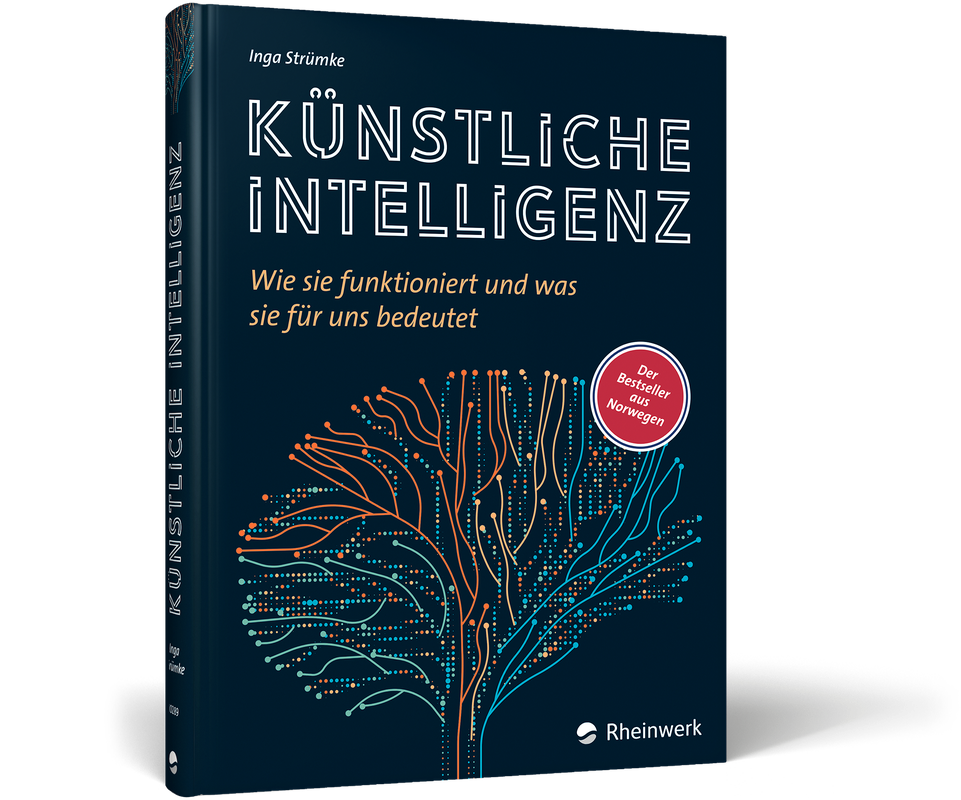
Künstliche Intelligenz
Künstliche Intelligenz. Wie sie funktioniert und was sie für uns bedeutet. In übersetzter deutscher Erstauflage aus dem September 2024, ein Bestseller in Norwegen.Entdecken Sie die Grundlagen und Schlüsselkonzepte der Künstlichen Intelligenz in diesem bahnbrechenden Buch und finden Sie Antworten auf die großen Fragen, die uns derzeit alle beschäftigen: Wie funktioniert diese Technologie eigentlich? Welche Auswirkungen hat sie auf Gesellschaft, Ethik und Philosophie? Wie schnell entwickelt sie sich und wie wird sie unser Leben in Zukunft beeinflussen?Der norwegische Bestseller hat in ganz Skandinavien den Nerv der Zeit getroffen. Denn es gelingt der Wissenschaftlerin Inga Strümke, die komplexen Themen rund um KI und maschinelles Lernen auf eine Weise zu erklären, die sowohl für Fachleute als auch für Laien verständlich ist. Können Menschen mit ihrem Versuch, Künstliche Intelligenz zu erschaffen, überhaupt Erfolg haben? Und erfassen sie die Konsequenzen der Technologie?Mit ihrem Fachwissen als Physikerin und KI-Expertin an der NTNU in Trondheim und am Simula Metropolitan Center for Digital Engineering in Oslo bringt sie Licht in das oft missverstandene Feld der Künstlichen Intelligenz. Sie zeigt, wie maschinelles Lernen funktioniert, diskutiert die ethischen Herausforderungen und entmystifiziert die Ängste, die viele Menschen gegenüber dieser Technologie haben. Ob Tech-Neuling oder erfahrener Entwickler, dieses Buch wird Ihr Verständnis von Künstlicher Intelligenz vertiefen und erweitern. Aus dem Norwegischen von Christel Hildebrandt.Was KI ist, wo sie herkommt und was sie für uns bedeutet1. Wie KI-Systeme entworfen werden und aus Daten lernenDieses Buch bietet einen umfassenden Überblick von den frühen theoretischen Konzepten bis hin zu modernen Anwendungen. Lernen Sie die grundlegenden Prinzipien des maschinellen Lernens und der neuronalen Netze kennen. Auch ohne technisches Hintergrundwissen verständlich.2. Wie ein verantwortungsvoller Umgang mit KI möglich istVielen potenziellen Vorteilen durch KI stehen Risiken und Herausforderungen wie Datenschutz, Voreingenommenheit oder Verdrängung von Arbeitsplätzen gegenüber. Nur im differenzierten Dialog ist eine verantwortungsvolle Entwicklung möglich.3. Die Zukunft der Mensch-KI-Interaktion gestaltenKI kann für die menschliche Gesellschaft unkontrollierbar werden. Erkunden Sie die potenziellen Szenarien, damit wir auch vorbereitet sind auf Fortschritte und Gefährdungen.Aus dem InhaltGrundlagen der Künstlichen IntelligenzMaschinelle Lernen und dessen UnterartenNeuronale Netze und Deep LearningBewusstsein und IntelligenzEthik in der Künstlichen IntelligenzBias und Fairness in KI-SystemenRegulierung und GovernanceEntwicklung nachhaltiger KI-SystemeDatenschutz und Datensicherheit bei KI-AnwendungenAnwendung von KI in verschiedenen BranchenGesellschaftliche AuswirkungenDie Zukunft der Mensch-KI-InteraktionLeseprobe (PDF-Link)Über die Autorin:Inga Strümke ist eine norwegische Physikerin, spezialisiert auf Künstliche Intelligenz und Maschinenlernen. Sie wurde 1989 in Gummersbach, Deutschland, geboren und wuchs in Narvik, Norwegen auf. Strümke absolvierte ein Masterstudium in theoretischer Physik an der NTNU und promovierte in Teilchenphysik an der Universität Bergen. Sie arbeitet an der NTNU und am Simula Metropolitan Center for Digital Engineering. Strümke ist auch für ihre Arbeit in der Ethik der KI bekannt und hat einen Preis für Wissenschaftskommunikation erhalten. Sie veröffentlichte 2023 das Buch »Maskiner som tenker«, welches den Brageprisen erhielt.

Fit fürs Studium - Statistik (3. Auflg.)
Fit fürs Studium – Statistik. 3., aktualisierte Auflage aus August 2024Statistik gehört in vielen Studiengängen zum unverzichtbaren Handwerkszeug. Die Crux dabei: Nur weil Sie sich für Psychologie, Ernährung, Wirtschaft oder Soziales interessieren, haben Sie nicht unbedingt die passende Schulmathematik parat. Kein Problem: Dieses Buch knüpft an intuitives Denken an. Es führt Sie mit vielen Beispielen durch die Grundbegriffe der Statistik, sodass sich der Sinn von Mittelwerten, Hypothesentests und Co. ganz einfach erschließt.Sie lernen nicht nur, die jeweiligen Berechnungen durchzuführen, sondern auch, mit Datenmaterial eigenständig umzugehen, die richtigen Fragen zu stellen und Ergebnisse sinnvoll und anschaulich grafisch darzustellen. So sind Sie auf Ihre Aufgaben im Studium gut vorbereitet: sowohl auf die erste Hausarbeit mit echten Daten, als auch auf die manchmal gefürchtete Statistik-Vorlesung. Geeignet für alle Studiengänge.Vom Würfel zur Wissenschaft1. Statistik – und zwar ganz von vornFreuen Sie sich auf Beispiele, die sich ohne Vorkenntnisse erschließen und Sie in Wahrscheinlichkeitsrechnung und Statistik einführen. Vom Würfelglück und der Frage, wie man Daten sinnvoll darstellt, geht es Schritt für Schritt sicher in komplexere Themen hinein. Dabei werden mathematische Symbole und Konzepte allgemeinverständlich erklärt.2. Der Reihe nach: beschreibende, schließende & beurteilende StatistikWissen Sie, warum das arithmetische Mittel nicht immer ein sinnvoller »Durchschnitt« ist oder wie mit Statistik am häufigsten »gelogen« wird? Nach den ersten Kapiteln bestimmt – und Sie sind fit in beschreibender Statistik. Erst danach geht es darum, aus Daten Schlüsse zu ziehen und wissenschaftliche Hypothesen zu beurteilen.3. So macht Wissenschaft richtig Spaß!Für die beurteilende Statistik kommt das Rechnen mit Wahrscheinlichkeiten hinzu. Und das kann richtig Spaß machen! Lassen Sie sich darauf ein, »P(E)« neu zu entdecken und Ihre eigene Intuition ins Spiel zu bringen. Nach und nach bekommen Sie für die Methoden realer Forschung ein solides Gespür.Aus dem InhaltGrundbegriffe der StatistikHäufigkeitsverteilungenLagemaßzahlenStreuungsmaßzahlenKovarianz und KorrelationGrundlagen der WahrscheinlichkeitsrechnungBedingte WahrscheinlichkeitenKombinatorikZufallsgrößen und ErwartungswerteNormalverteilung, Binomialverteilung und Co.Wie man Hypothesen richtig testetStichproben und ihre FallstrickeÜber den Autor: Benno Grabinger ist Gymnasiallehrer und Fachberater Mathematik i. R. sowie langjähriger Autor zu mathematikdidaktischen Themen. Seine Schwerpunkte sind die Didaktik der Wahrscheinlichkeitsrechnung und Statistik sowie IT-gestützter Mathematikunterricht.Leseprobe (PDF-Link)

Agile Spiele - kurz & gut (2. Auflg.)
Agile Spiele - kurz & gut (2. Auflg.)Spiele und Simulationen unterstützen Agile Coaches und Scrum Master optimal dabei, agile Prinzipien und Praktiken zu veranschaulichen – und sie machen Spaß! Mittlerweile sind sie fester Bestandteil des Werkzeugkoffers von agilen Moderatorinnen und Moderatoren. Dieses Buch beschreibt über 50 Spiele, die sich in der Praxis besonders bewährt haben.Vorgestellt werden Spiele aus den Kategorien: Vermittlung von agilen PrinzipienSimulationen von agilen PraktikenKommunikation Spiele zur Eröffnung, zur Auflockerung und zum Abschluss von agilen Workshops und Trainings sowie Energizer für zwischendurch komplettieren den Werkzeugkoffer.Über die Autoren:Marc Bleß und Dennis Wagner – beide seit vielen Jahren als Agile Coaches tätig – erläutern, was bei der Moderation von agilen Spielen zu beachten ist und wann welches Spiel eingesetzt werden kann. In dieser 2. Auflage zeigen sie auch, wie die Spiele in Onlineworkshops genutzt werden können und welche Tools und Techniken dafür benötigt werden. Zudem haben die Autoren interessante neue Spiele ergänzt.

JavaScript Schnelleinstieg
Mit diesem Buch gelingt Ihnen der einfache Einstieg ohne Vorkenntnisse in JavaScript.Alle Grundlagen der Programmierung mit JavaScript werden in 14 Kapiteln kompakt und leicht verständlich erläutert: von den grundlegenden Programmiertechniken wie Variablen und Funktionen über objektorientierte Programmierung bis hin zur Entwicklung dynamischer Webseiten mit modernem JavaScript.Hierbei werden auch fortgeschrittene Themen wie das Document Object Model (DOM), Event Handling, synchrone und asynchrone Verarbeitung, die REST-API sowie das Speichern von Daten in Cookies und Web Storage behandelt.Zahlreiche Codebeispiele und Übungsaufgaben mit Lösungen zum Download helfen Ihnen, das neu gewonnene Wissen anzuwenden und zu vertiefen. So sind Sie perfekt auf den Einsatz von JavaScript und die Programmierung interaktiver Webseiten in der Praxis vorbereitet.Solide Grundkenntnisse in HTML und CSS werden vorausgesetzt.AUS DEM INHALT:* Alle Grundlagen kompakt und verständlich erklärt* Kontrollstrukturen, Arrays und objektorientierte Programmierung (OOP)* JSON als Austauschformat für strukturierte Daten* Dynamische Webseiten: DOM als Schnittstelle zwischen HTML und JavaScript* Behandlung von Ereignissen (Events)* Formulare prüfen und versenden* Animationen mit asynchronem JavaScript und Web Animations API* Kommunikation mit dem Webserver* Daten speichern mit Cookies / Web Storage* Programmcode und Lösungen zum DownloadUlrike Häßler ist Informatikerin der ersten Tage und verfügt über jahrelange Erfahrung im Bereich der Webseitengestaltung mit HTML, CSS und JavaScript.

Die Modularität von Java 9
Entwickeln Sie modulare Anwendungen mit dem Java Platform Module System, dem am meisten erwarteten Feature von Java 9. Sie werden die Wartbarkeit und Leistung Ihrer Java-Anwendungen verbessern, indem Sie nur die Module einsetzen, die benötigt werden, und deren Implementierungsdetails kapseln.Bis jetzt war Java monolithisch. Die Verwendung eines beliebigen Teils von Java bedeutete die Einbindung der gesamten Laufzeitumgebung, ein Ansatz, der für die wachsende Zahl von IoT-Geräten wie Fitnessmonitoren, Küchengeräten, Spielzeugen und Spielen usw. nicht geeignet ist. Dieses Buch zeigt einen neuen Weg auf, wie Java vom kleinsten Fußabdruck im kleinsten Gerät über Desktop-PCs bis hin zu Serverplattformen skaliert werden kann.Mit Java 9 Modularity Revealed lernen Sie, Ihre Projekte zuverlässiger und skalierbarer als je zuvor zu machen, indem Sie die wichtigste Funktion von Java 9 nutzen - das Java Platform Module System, besser bekannt als Project Jigs.aw. Sie werden lernen, wie Sie einen der Hauptprobleme der Java-Programmierung vermeiden können, nämlich widersprüchliche Klassennamen aus verschiedenen Modulen oder Paketen. Sie werden lernen, benutzerdefinierte Laufzeit-Images zu erstellen, die eine minimale und kompaktere JRE darstellen und nur die Module enthalten, die Sie benötigen. Außerdem lernen Sie, wie Sie bestehende Java-Anwendungen mit Hilfe verschiedener Ansätze und Werkzeuge in modulare Anwendungen umwandeln können. Das Endergebnis ist eine neue Fähigkeit, verschiedene Module zusammenzustecken, ohne Angst vor Namensraum- und anderen Konflikten zu haben, und Sie können alles einsetzen, von kleinen Geräten bis hin zu großen Servern.Dieses Buch enthält Codebeispiele und Erläuterungen.WAS SIE LERNEN WERDEN* Java-Anwendungen mit dem neuen, in Java 9 eingeführten modularen System erstellen * ErstellenSie Ihre eigene JRE, die nur aus den von Ihnen benötigten Modulen besteht * Anpassung Ihrer Testtechniken an modulare AnwendungenIhre Abhängigkeiten von anderen Modulen aufzulösen* Aktivieren Sie Module, die nur bestimmte Pakete exportieren Bestehende Java-Anwendungen in modulare Anwendungen umwandeln * Verbesserung der Wartbarkeit und Leistung von Java-AnwendungenFÜRWEN DIESES BUCH BESTIMMT ISTErfahrene Java-Programmierer, die über die neue Modularitätsunterstützung in Java 9 auf dem Laufenden bleiben und sich informieren möchtenALEXANDRU JECAN IST Softwareentwickler, Autor, Trainer und Redner und lebt in München, Deutschland. Er hat einen Abschluss in Informatik von der Technischen Universität Cluj-Napoca, Rumänien. Alexandru bietet professionelle Inhouse-Schulungen zu verschiedenen Softwaretechnologien in ganz Deutschland an. Außerdem spricht er auf technischen Konferenzen und Benutzergruppen in Europa und den USA über verschiedene Themen im Zusammenhang mit der Softwareentwicklung. Er wurde vom deutschen JavaMagazin zum "Autor des Monats" gekürt.Einführung.- Kapitel 1: Modulare Programmierkonzepte.- Kapitel 2: Projekt Jigsaw.- Kapitel 3: Modulares JDK und Quellcode.- Kapitel 4: Definieren und Verwenden von Modulen.- Kapitel 5: Modulare Laufzeitbilder.- Kapitel 6: Dienste.- Kapitel 7: jLink: Der Java Linker.- Kapitel 8: Migration.- Kapitel 9: Die neue Modul-API.- Kapitel 10: Fortgeschrittene Themen.- Kapitel 11: Testen modularer Anwendungen.- Kapitel 12: Integration mit Tools.
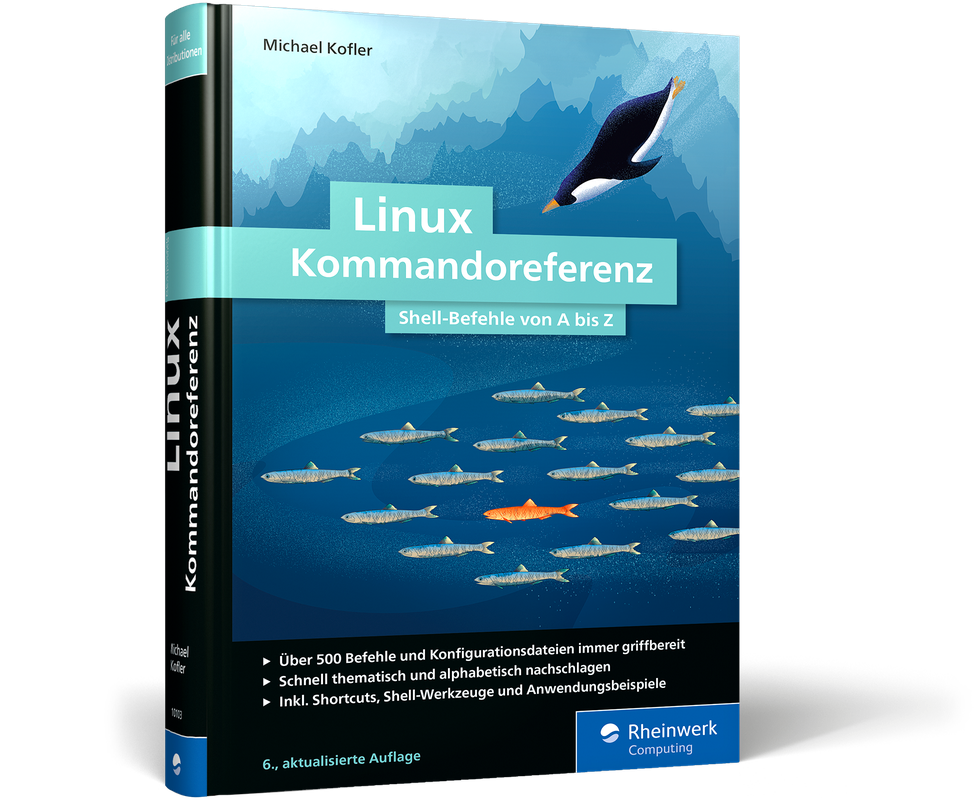
Linux Kommandoreferenz (6. Auflage)
Linux Kommandoreferenz. Shell-Befehle von A bis Z. In 6., aktualisierte Auflage (2024). Mit der Kommandoreferenz nutzen Sie die Shell voll aus. Sie liefert Ihnen einen strukturierten Überblick über alle Linux-Befehle, erklärt ihre Verwendung und zeigt Ihnen Praxisbeispiele zu den wichtigsten Anwendungsfälle. Für den Einstieg finden Sie verständliche Erklärungen zu allen Werkzeugen, und wenn Sie bereits intensiver mit Linux arbeiten, profitieren Sie von Hinweisen zu distributionsspezifischen Abweichungen und der kommentierten Übersicht über die Konfigurationsdateien. Über 500 Befehle aus allen Bereichen, thematischer und alphabetischer Zugriff auf Kommandos, sofort einsetzbare Praxisbeispiele!Die Linux-Grundausstattung1. Befehle schnell und einfach findenDie Referenz ermöglicht eine rasche alphabetische oder thematische Suche von Kommandos. Bekannte Befehle schlagen Sie so schnell nach. Neue Kommandos finden Sie einfach durch die thematische Zuordnung.2. Kommandos verstehenViel mehr als bloße Funktionsbeschreibung: An zahlreichen Anwendungsbeispielen lernen Sie den Einsatz der Kommandos und Optionen kennen – distributionsspezifische Besonderheiten inklusive. Und weil sich Linux mittlerweile auch unter Windows ganz leicht ausführen lässt, beschreibt die Kommandoreferenz sogar das Windows-Kommando wsl.3. Echter PraxisnutzenWas bedeuten die Spalten der /etc/fstab? Wie löscht vim die aktuelle Zeile? Wo speichert systemd Unit Files? Diese Antworten sowie die Syntax zentraler Konfigurationsdateien und Übersichten zu häufig gebrauchten Tastenkürzeln finden Sie hier!Aus dem InhaltÜber 500 KommandosSyntaxreferenzReferenz der TastenkürzelDateisystem- und Netzwerk-AdministrationSELinux, AppArmor, iptables und nftPaketverwaltung, Snap und FlatpackDrucker-, Datenbank- und Server-AdministrationCloud und Virtualisierung: aws, docker, kvm, virshWLAN, Bluetooth und weitere HardwareSystemstart/-stopp, Init-System, GRUBZertifikate: acme.sh, certbot, opensslWSL und Windows-IntegrationLeseprobe (PDF-LInk)Über den AutorMichael Kofler studierte Telematik an der TU Graz. Er ist einer der erfolgreichsten und vielseitigsten Computerbuchautoren. Zu seinen Themengebieten zählen neben Linux auch Python, Java, Kotlin und die IT-Sicherheit. Viele seiner Bücher wurden übersetzt. Michael Kofler arbeitet zudem als Software-Entwickler, Berater sowie als Lehrbeauftragter an zwei Fachhochschulen.

Programmierung in Python
Wer heute das Programmieren lernen möchte, kommt nicht daran vorbei, sich mit einer der beliebtesten Programmiersprachen für Einsteiger und Profis zu befassen: Python. Mit Python hat ihr Erfinder, Guido van Rossum, einen Nerv der Zeit getroffen, denn das Konzept dahinter bietet viele Ansätze, Lösungen und Vorgehensweise für Probleme, die andere Sprachen in dieser Form nicht integrieren. Dieses Buch ist ein idealer Einstieg in die Programmierung mit Python. Ausführlich erläutert der Autor die elementaren Grundlagen, die nötig sind, um mit dieser Sprache Programme zu erstellen und zu pflegen. Daneben zeigt er, wie sich die OOP (objektorientierte Programmierung) mit Python realisieren lässt und wie man Module und API-Schnittstellen integriert. Diverse weiterführende Themen wie die Erstellung grafischer Oberflächen oder der Zugriff auf Dateien und Datenbanken runden das Fachbuch ab. Einfache Beispiele veranschaulichen die grundsätzliche Anwendung der verschiedenenTechniken und machen das Buch dadurch zu einer unbedingten Empfehlung für Einsteiger und Praktiker, die die Programmierung mit Python lernen wollen. Der Inhalt * Grundlagen * Tools * Grundlegende Konzepte und die Syntax * Anweisungen * Datentypen, Variablen und Literale * Ausdrücke, Operatoren und Operanden * Funktionen * Sequenzielle Datenstrukturen * Objektorientierte Programmierung in Python * Exceptionhandling * String-Verarbeitung * Datei-, Datenträger- und Datenbankzugriffe * Umgang mit Datum und Zeit * Grafische Oberflächen (GUI) mit Python Die Zielgruppen * Praktiker, die Python lernen wollen * Einsteiger, die mit Python das Programmieren lernen wollen * Auszubildende zum Fachinformatiker Der Autor Ralph Steyer ist Diplom-Mathematiker und hat sich 1996 nach fünf Jahren als Programmierer bei einer Versicherung als Freiberufler im Bereich EDV-Schulung, Programmierung und Beratung selbstständig gemacht. Spezialgebiete sind die Internetprogrammierung und OOP. Er unterrichtet in Firmen und Fachhochschulen und veröffentlicht regelmäßig Zeitungsartikel, Videotrainings und Fachbücher. Wer heute das Programmieren lernen möchte, kommt nicht daran vorbei, sich mit einer der beliebtesten Programmiersprachen für Einsteiger und Profis zu befassen: Python. Mit Python hat ihr Erfinder, Guido van Rossum, einen Nerv der Zeit getroffen, denn das Konzept dahinter bietet viele Ansätze, Lösungen und Vorgehensweise für Probleme, die andere Sprachen so nicht integrieren. Das Potential dieser einfachen und übersichtlichen Programmiersprache haben auch viele Universitäten erkannt, die mittlerweile in den Anfängerkursen der Informatik-bezogenen Studiengänge Python statt Java als Einsteigersprache lehren. Der klare Programmierstil legt darüber hinaus eine hervorragende Grundlage für das spätere Erlernen weiterer Sprachen. Denn Python unterstützt nicht nur die objektorientierte und aspektorientierte, sondern auch die strukturierte und funktionale Programmierung. So wird der Programmierer nicht zu einem einzigen Programmierstil gezwungen, sondern kannflexibel das am besten geeignete Paradigma für die jeweilige Aufgabe wählen. Der universelle Zugang, der es möglich macht, die Erfahrungen aus anderen Programmierkonzepten mehr oder weniger direkt weiter zu nutzen, ist ein weiterer Grund für den Erfolg von Python. Dieses Buch ist ein idealer Einstieg in die Programmierung mit Python. Ausführlich erläutert der Autor die elementaren Grundlagen, die nötig sind, um mit dieser Sprache Programme zu erstellen und zu pflegen. Daneben zeigt er, wie sich die OOP mit Python realisieren lässt und wie man Module und API-Schnittstellen integriert. Diverse weiterführende Themen wie die Erstellung grafischer Oberflächen oder der Zugriff auf Dateien und Datenbanken runden das Fachbuch ab. Einfache Beispiele veranschaulichen die grundsätzliche Anwendung der verschiedenen Techniken und machen das Buch dadurch zu einer unbedingten Empfehlung für Einsteiger und Praktiker, die die Programmierung mit Python lernen wollen. Einleitung und Grundlagen – Bevor es richtig losgeht.- Erste Beispiele – Der Sprung ins kalte Wasser.-Built-in-Functions – Modularisierung durch Unterprogramme.- Grundlegende Begriffe – Kommentare, SheBang und Strukturanalysen.- Anweisungen – Dem Computer Befehle geben.- Datentypen, Variablen und Literale – Die Art der Information.- Ausdrücke, Operatoren und Operanden – Die Verarbeitung von Daten.- Kontrollstrukturen – Die Steuerung des Programmflusses.- Funktionen in Python – Modularisierung mit „Unterprogrammen“.- Sequenzielle Datenstrukturen – Mehrere Informationen gemeinsam verwalten.- Objektorientierte Programmierung in Python – Klassen, Objekte, Eigenschaften und Methoden.- Exceptionhandling – Ausnahmsweise.- String-Verarbeitung in Python – Programmierte Textverarbeitung.- Datei-, Datenträger- und Datenbankzugriffe – Dauerhafte Daten.- Umgang mit Datum und Zeit – Terminsachen.- Grafische Oberflächen (GUI) mit Python – tkinter & Co als GUI-Framework. Ralph Steyer ist Diplom-Mathematiker und hat sich 1996 nach fünf Jahren als Programmierer bei einer Versicherung als Freiberufler im Bereich EDV-Schulung, Programmierung und Beratung selbstständig gemacht. Spezialgebiete sind die Internetprogrammierung und OOP. Er unterrichtet in Firmen und Fachhochschulen und veröffentlicht regelmäßig Zeitungsartikel, Videotraining und Fachbücher.
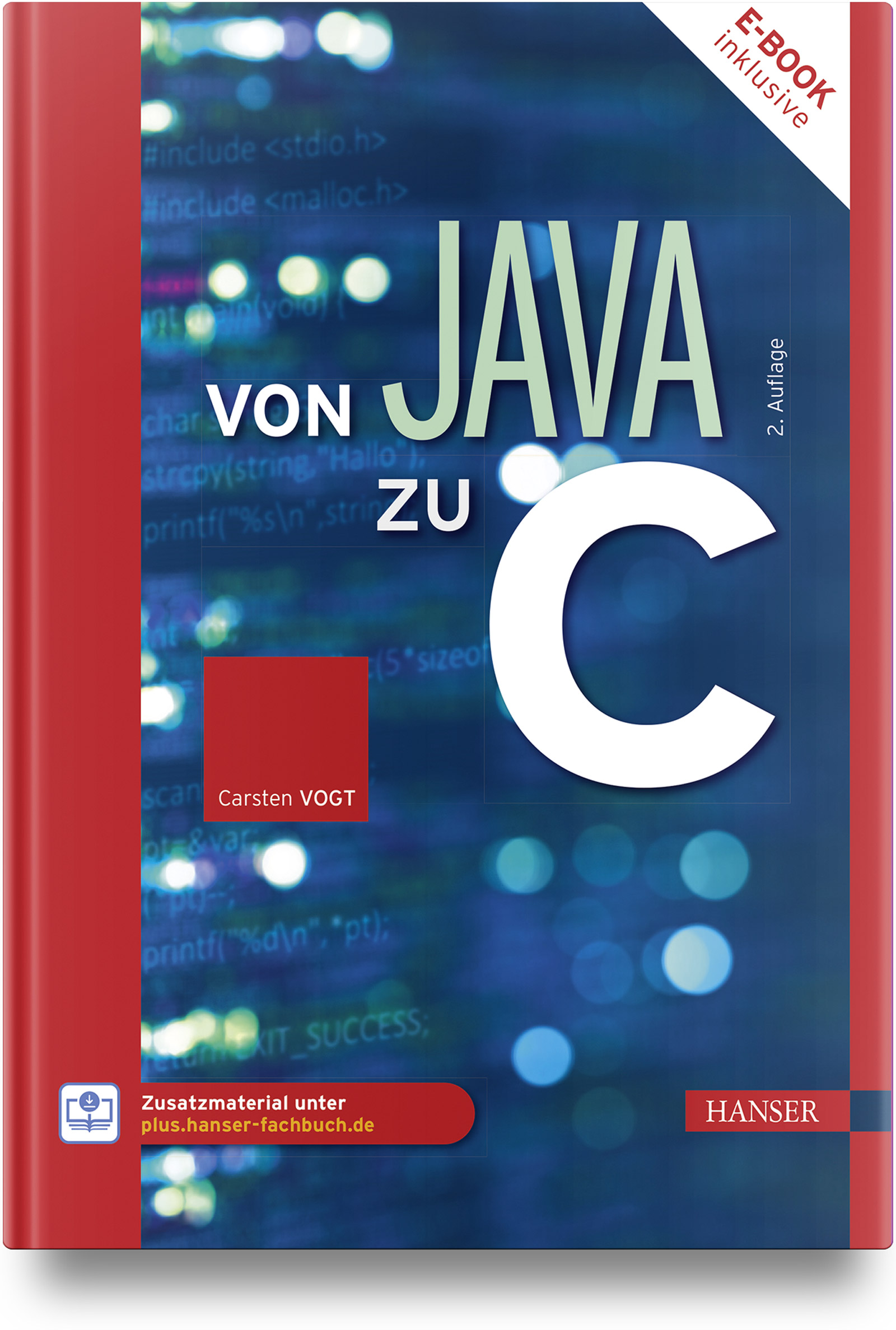
Von Java zu C (2. Auflage)
Von Java zu C. 2. Auflage.Das Buch gibt eine Einführung in die Programmiersprache C und setzt dabei Kenntnisse in der Sprache Java voraus. Java wird nämlich oft als erste Programmiersprache gelehrt, während in weiterführenden Studienfächern und in der Berufspraxis auch C eine wichtige Rolle spielt. Kompakte Schnelleinstiege zu Beginn der einzelnen Kapitel ermöglichen eine rasche Orientierung über die Möglichkeiten von C im Vergleich zu Java. Die Besonderheiten von C werden dann jeweils im Detail diskutiert.Profitieren wird man daher auch, wenn man schon einmal mit C in Berührung gekommen ist und nun seine Kenntnisse vertiefen möchte. Zwei Schwerpunkte des Buchs sind die Programmierung mit Zeigern/Pointern, die es in Java so nicht gibt, und von dynamischen Datenstrukturen, die Java durch vordefinierte Klassen bereitstellt. Zudem werden einfache und strukturierte Datentypen, Kontrollstrukturen, Funktionen, Ein-/Ausgabe und die C-Standardbibliothek behandelt. Viele Programmbeispiele zeigen die Anwendung der Konzepte. Anhand von Übungsaufgaben kann man sein neu erworbenes Wissen praktisch ausprobieren.Aus dem Inhalt:Struktur und Übersetzung von C-ProgrammenKontrollstrukturenDatenorganisationZeigerFunktionenEin-/Ausgabe und DateizugriffeDynamische DatenstrukturenStandardbibliothekLeseprobe (PDF-Link)Prof. Dr. Carsten Vogt lehrt am Institute of Computer and Communication Technology der Technischen Hochschule Köln Betriebssysteme, Verteilte Systeme und Programmierung von Mobilgeräten.

Von Java zu C
- 2. Auflage des Klassikers „C für Java-Programmierer“ - Systematische Einführung in C mit Konzentration auf die Unterschiede von C zu Java - Schnelleinstiege für eilige Leser:innen sowie zahlreiche Beispiele und Übungen - Umfangreicher Anhang zum Nachschlagen - Mit Zusatzmaterial: die Beispielprogramme aus dem Buch, die Lösungen der Übungsaufgaben und weitere Informationen - Ihr exklusiver Vorteil: E-Book inside beim Kauf des gedruckten Buches Das Buch gibt eine Einführung in die Programmiersprache C und setzt dabei Kenntnisse in der Sprache Java voraus. Java wird nämlich oft als erste Programmiersprache gelehrt, während in weiterführenden Studienfächern und in der Berufspraxis auch C eine wichtige Rolle spielt. Kompakte Schnelleinstiege zu Beginn der einzelnen Kapitel ermöglichen eine rasche Orientierung über die Möglichkeiten von C im Vergleich zu Java. Die Besonderheiten von C werden dann jeweils im Detail diskutiert. Profitieren wird man daher auch, wenn man schon einmal mit C in Berührung gekommen ist und nun seine Kenntnisse vertiefen möchte. Zwei Schwerpunkte des Buchs sind die Programmierung mit Zeigern/Pointern, die es in Java so nicht gibt, und von dynamischen Datenstrukturen, die Java durch vordefinierte Klassen bereitstellt. Zudem werden einfache und strukturierte Datentypen, Kontrollstrukturen, Funktionen, Ein-/Ausgabe und die C-Standardbibliothek behandelt. Viele Programmbeispiele zeigen die Anwendung der Konzepte. Anhand von Übungsaufgaben kann man sein neu erworbenes Wissen praktisch ausprobieren. AUS DEM INHALT // - Struktur und Übersetzung von C-Programmen - Kontrollstrukturen - Datenorganisation - Zeiger - Funktionen - Ein-/Ausgabe und Dateizugriffe - Dynamische Datenstrukturen - Standardbibliothek
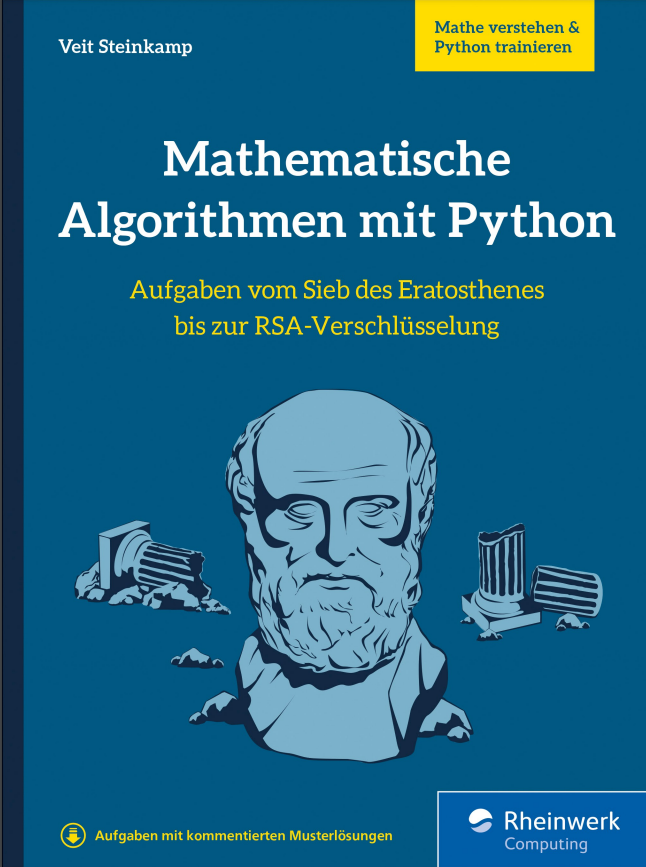
Mathematische Algorithmen mit Python
Tauchen Sie in die Welt der Algorithmen ein und erforschen Sie die Verbindung zwischen Programmierung und Mathematik. Dr. Veit Steinkamp löst mit Ihnen Aufgaben aus verschiedenen Bereichen und zeigt, wie Rechnungen in Code umgesetzt werden. Sie lernen die grundlegenden Programm- und Datenstrukturen Pythons kennen und erfahren, welche Module Ihnen viel Arbeit abnehmen können. Rasch programmieren Sie Algorithmen zum Lösen von Gleichungssystemen nach, automatisieren Kurvendiskussionen und berechnen Integrale. Abstrakte Zusammenhänge werden so deutlich, und ganz nebenbei verbessern Sie Ihre Python-Fähigkeiten und programmieren geschickter und gekonnter. Aus dem InhaltPython installieren und anwendenDaten- und ProgrammstrukturenModule: NumPy, SymPy, MatplotlibZahlenGleichungssystemeFolgen und ReihenFunktionenDifferenzial- und IntegralrechnungDifferenzialgleichungenAusgleichsrechnungenStatistikFraktale Geometrie Leseprobe (PDF-Link)Autor: Dr. Veit Steinkamp hat Elektrotechnik und Deutsch für das Lehramt studiert und dieses Wissen an beruflichen Schulen und Fachhochschulen weitergegeben.
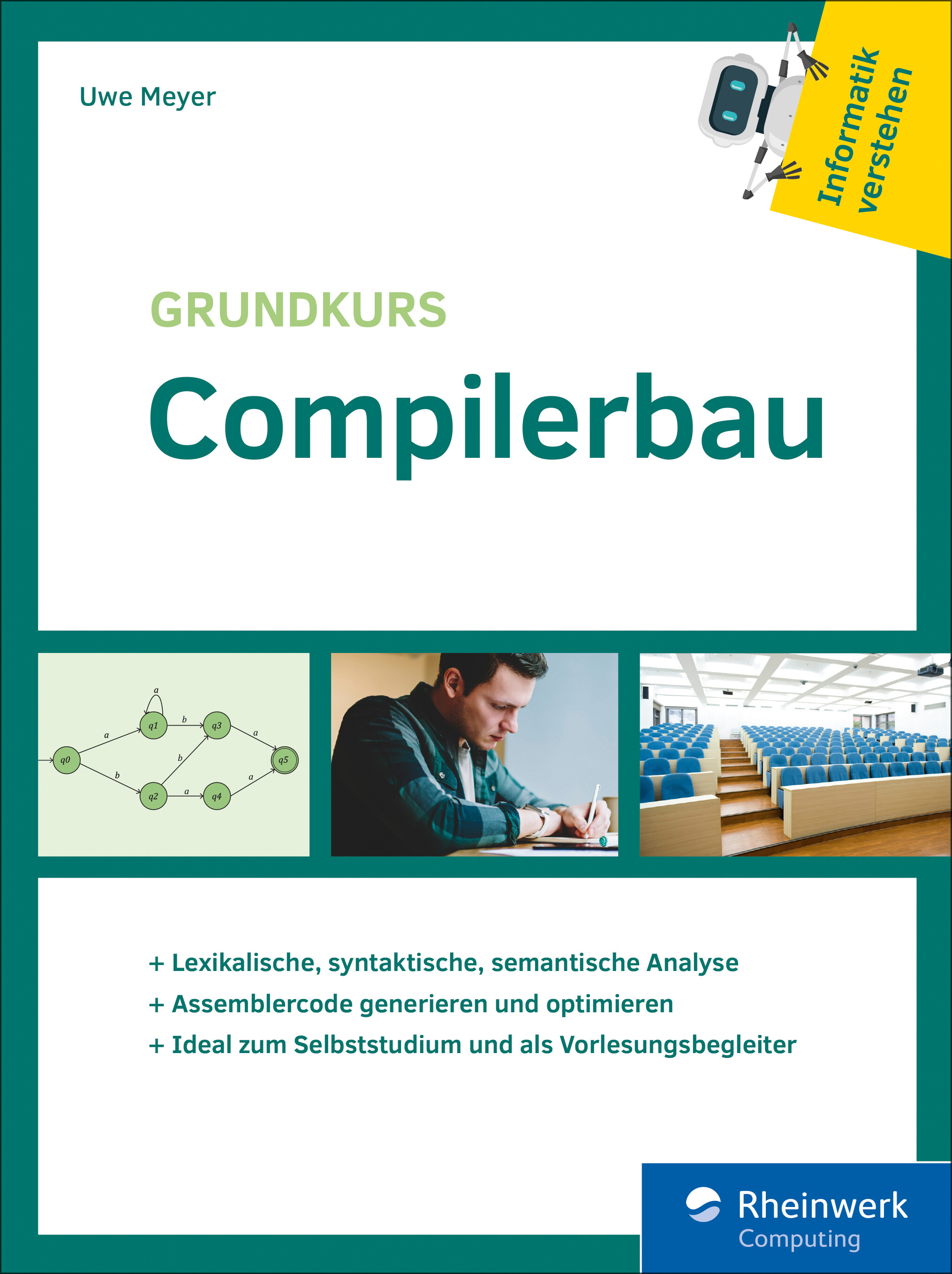
Grundkurs Compilerbau
Compiler anschaulich und gründlich erklärt.Wer programmiert, nutzt Compiler! Der Compilerbau ist eine der ältesten Disziplinen der Informatik, und ohne Compiler gäbe es gar keine Programmiersprachen, Frameworks oder Anwendungen. In diesem Grundkurs aus der Reihe »Informatik verstehen« lernen Sie, wie Compiler funktionieren, und machen sich Schritt für Schritt mit dem Fundament der Programmiersprachen vertraut.Prof. Uwe Meyer bereitet Ihnen die Grundlagen und die Funktionsweise des Compilerbaus modern und zeitgemäß auf. Er führt Sie von den Begriffsdefinitionen, Paradigmen und Konzepten der Programmiersprachen bis hin zur Generierung von Assemblercode und seiner Optimierung. Übungen und Codebeispiele helfen Ihnen dabei, das Gelernte schnell in die Praxis umzusetzen und Ihr Wissen zu vertiefen.Aus dem Inhalt:Sprache und CompilerKonzepte und Paradigmen von ProgrammiersprachenLexikalische AnalyseSyntaxanalyseSemantische Analyse VariablenallokationCode generierenCode optimierenAusblick und ForschungsfragenLeseprobe (PDF-Link)

SAP Gateway und OData
Sie wollen externe Programme an Ihre SAP-Systeme anbinden? Dieses Buch zeigt Ihnen, wie Sie SAP Gateway einsetzen, um mobile Apps, SAP-Fiori-Apps, Social-Media-Auftritte oder HTML5-Anwendungen mit SAP-Systemen zu verknüpfen. Sie lernen, Gateway-Services mit dem OData-Protokoll zu entwickeln und an das Backend anzubinden. Zahlreiche Programmierbeispiele verdeutlichen, wie die Services in den verschiedenen Anwendungstypen konsumiert werden. In dieser vierten Auflage finden Sie zudem aktuelle Informationen zum ABAP RESTful Application Programming Model und zur Anbindung neuer Lösungen wie SAP Build Apps. Aus dem Inhalt: OData und RESTInstallation und KonfigurationArchitektur und SchnittstellenintegrationEntwicklungswerkzeugeServiceerstellung und -registrierungABAP RESTful Application Programming ModelSAPUI5 und SAP FioriSAP Business Application StudioMobile AnwendungsentwicklungSocial-Media-AnwendungsentwicklungAnbindung von Microsoft-AnwendungenServiceerweiterungen für SAP S/4HANAAdministration und Sicherheit Vorwort ... 19 Einleitung ... 21 Danksagung ... 25 TEIL I. Einstieg ... 29 1. Einführung in SAP Gateway ... 31 1.1 ... Moderne Geschäftsanwendungen ... 32 1.2 ... SAP Gateway für moderne Geschäftsanwendungen ... 44 1.3 ... SAP Gateway in SAP S/4HANA ... 49 1.4 ... Installation und Deployment ... 51 1.5 ... SAP Gateway im Kontext anderer relevanter SAP-Produkte ... 57 1.6 ... Zusammenfassung ... 63 2. Einführung in OData ... 65 2.1 ... OData und REST ... 65 2.2 ... Struktur eines OData-Service ... 74 2.3 ... OData-Operationen ... 83 2.4 ... OData-Abfrageoptionen ... 87 2.5 ... OData in SAP-Lösungen ... 105 2.6 ... OData-Funktionen von SAP Gateway ... 114 2.7 ... Was ist anders in OData 4.0? ... 118 2.8 ... Zusammenfassung ... 122 3. Architektur und Integration ... 123 3.1 ... Gateway-Prinzipien ... 124 3.2 ... SAP-Gateway-Architektur ... 125 3.3 ... Integration mit anderen SAP-Technologien ... 137 3.4 ... ABAP-Programmiermodell für SAP Fiori ... 141 3.5 ... ABAP RESTful Application Programming Model ... 150 3.6 ... Zusammenfassung ... 159 4. Deployment-Optionen, Installation und Konfiguration ... 161 4.1 ... Einführung in das Deployment von SAP Gateway ... 161 4.2 ... Vorbereitung für Installation und Konfiguration ... 174 4.3 ... Schnellstartanleitung ... 176 4.4 ... Installation und Konfiguration im Detail ... 184 4.5 ... Zusammenfassung ... 197 TEIL II. Serviceerstellung ... 199 5. Einführung in die Erstellung von OData-Services mit SAP Gateway ... 201 5.1 ... Serviceerstellung -- Möglichkeiten ... 202 5.2 ... Prozess der Serviceerstellung ... 206 5.3 ... SAP Gateway -- Entwicklungswerkzeuge ... 210 5.4 ... Serviceerstellung -- Schritt für Schritt ... 221 5.5 ... OData-Channel ... 245 5.6 ... Zusammenfassung ... 251 6. Serviceentwicklung ... 253 6.1 ... Definition des Datenmodells ... 254 6.2 ... Serviceregistrierung im SAP-Backend-System ... 284 6.3 ... Service-Stub-Erzeugung ... 290 6.4 ... Serviceverwaltung ... 292 6.5 ... Iterative Serviceimplementierung und Modellerweiterung ... 297 6.6 ... Zusammenfassung ... 374 7. Servicegenerierung ... 377 7.1 ... Generierung auf Basis einer RFC-/BOR-Schnittstelle ... 380 7.2 ... Generierung über Suchhilfen ... 417 7.3 ... Generierung über Redefinition ... 419 7.4 ... Generierung auf Basis einer analytischen Query ... 428 7.5 ... Zusammenfassung ... 440 8. ABAP-Programmiermodell für SAP Fiori ... 441 8.1 ... Entwicklung von CDS Views ... 443 8.2 ... Modellierte Datenquellen ... 450 8.3 ... Referenzierte Datenquellen ... 456 8.4 ... OData-Services annotieren ... 461 8.5 ... ABAP-Programmiermodell für SAP Fiori mit klassischen Schnittstellen ... 465 8.6 ... ABAP-Programmiermodell für SAP Fiori mit BOPF ... 475 8.7 ... Zusammenfassung ... 489 9. ABAP RESTful Application Programming Model ... 491 9.1 ... Datenmodellierung ... 494 9.2 ... Business-Service-Provisionierung ... 506 9.3 ... Servicekonsumierung ... 519 9.4 ... Transaktionales Verhalten ... 523 9.5 ... Eine App mithilfe der ADT generieren ... 544 9.6 ... Entity Manipulation Language ... 549 9.7 ... Business-Objekt-Merkmale ... 554 9.8 ... Zusammenfassung ... 559 TEIL III. Anwendungsentwicklung ... 561 10. SAPUI5-Applikationsentwicklung ... 563 10.1 ... Entwicklung von Webapplikationen ... 564 10.2 ... Einführung in SAP Fiori und SAPUI5 ... 565 10.3 ... Erstellung einer SAPUI5-Anwendung ... 571 10.4 ... Zusammenfassung ... 574 11. SAP Business Application Studio ... 575 11.1 ... SAP Business Application Studio einrichten ... 576 11.2 ... Verbindung mit SAP Gateway einrichten ... 580 11.3 ... SAP Business Application Studio Dev Space erstellen ... 583 11.4 ... OData-Beispielservices ... 587 11.5 ... SAPUI5-Anwendungsentwicklung ... 589 11.6 ... Zusammenfassung ... 604 12. Erweiterbarkeit ... 605 12.1 ... Redefinition und Erweiterung von SAP Gateway OData-Services ... 606 12.2 ... Erweitern von OData-Services in SAP S/4HANA und SAP S/4HANA Cloud Public und Private Edition ... 637 12.3 ... Erweitern von SAP-Fiori-Apps mit SAPUI5-Flexibilität ... 660 12.4 ... Zusammenfassung ... 666 13. Entwicklung mobiler Apps ... 669 13.1 ... Übersicht über Entwicklungsansätze ... 671 13.2 ... SAP Mobile Development Kit (SAP MDK) ... 672 13.3 ... Native mobile Applikationen ... 690 13.4 ... Zusammenfassung ... 707 14. Social-Media-Applikationsentwicklung ... 709 14.1 ... PHP ... 710 14.2 ... Facebook/Meta ... 715 14.3 ... X ... 723 14.4 ... Sina Weibo ... 728 14.5 ... Zusammenfassung ... 738 15. Entwicklung von Unternehmensanwendungen ... 739 15.1 ... Microsoft Excel ... 740 15.2 ... Microsoft SharePoint/Office 365 ... 749 15.3 ... Microsoft Visual C# Windows Desktop ... 757 15.4 ... Microsoft Active Server Pages .NET ... 762 15.5 ... Zusammenfassung ... 762 16. Lifecycle Management: Qualitätssicherung, Service-Deployment und Operations ... 765 16.1 ... Testen ... 766 16.2 ... Service-Deployment ... 775 16.3 ... Operations ... 786 16.4 ... DevOps und Entwicklung mit SAP Gateway ... 795 16.5 ... Zusammenfassung ... 797 17. Sicherheit ... 799 17.1 ... Sicherheit von Netzwerk und Kommunikation ... 799 17.2 ... Benutzerverwaltung und Berechtigungen ... 810 17.3 ... Single Sign-on und Authentifizierungsmechanismen ... 812 17.4 ... Empfohlene Authentifizierungsmechanismen ... 822 17.5 ... Zusammenfassung ... 840 Anhang ... 841 A ... Weiterführende Konzepte ... 841 Die Autoren ... 865 Index ... 869
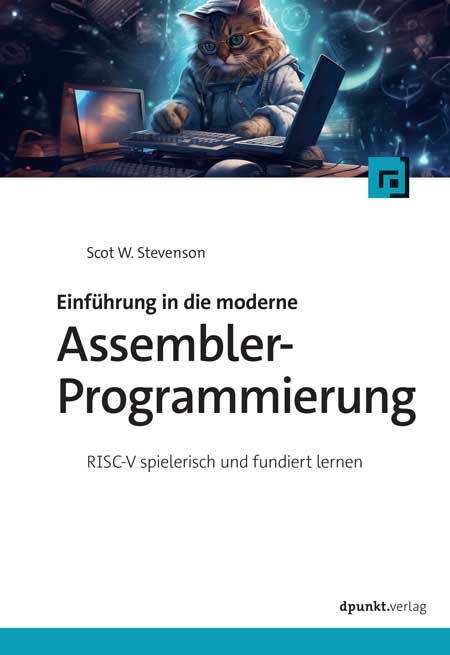
Einführung in die moderne Assembler-Programmierung
Einführung in die moderne Assembler-Programmierung. RISC-V spielerisch und fundiert lernen.Wir nutzen dabei den offenen Prozessor-Standard RISC-V, der auch gezielt für Forschung und Lehre entwickelt wurde. Das macht die Sache für alle einfacher, denn der Kern-Befehlssatz, den wir hier vorstellen, umfasst weniger als 50 Instruktionen. Noch besser: Wer RISC-V lernt, lernt fürs Leben, denn der Befehlssatz ist »eingefroren« und ändert sich nicht mehr.Leseprobe (PDF-Link)Über den Autor:Scot W. Stevenson programmiert seit den Tagen von Acht-Bit-Prozessoren, wie dem 6502 in Assembler. Vom Bytegeschiebe konnten ihn weder sein Medizinstudium, ein Graduiertenkolleg Journalismus, mehr als zwei Jahrzehnte als Nachrichtenredakteur noch ein Blog über die USA abbringen. Er behauptet trotzdem, jederzeit damit aufhören zu können.Für alle, die speziell RISC-V-Assembler-Programmierung lernen wollen, gehen wir im Mittelteil den Aufbau des Prozessors durch, wobei der Schwerpunkt auf der Software liegt. Wir stellen die einzelnen Befehle vor, warnen vor Fallstricken und verraten Tricks. Die Schwachstellen des Standards werden beleuchtet und der Einsatz von KI als Hilfsmittel besprochen. Als offener, freier Standard wird RISC-V auch zunehmend für Hobby- und Studentenprojekte eingesetzt, wo der Compiler nur schlecht oder gar nicht an die Hardware angepasst ist, falls es überhaupt einen gibt.Der letzte Teil zeigt, dass dieses Buch auch aus schierer Begeisterung für Assembler heraus entstand. Wer sich diebisch über jedes eingesparte Byte freut, wird es lieben.

Machine Learning - kurz & gut
Der kompakte Schnelleinstieg in Machine Learning und Deep Learning - Die 3. Auflage des Bestsellers wurde ergänzt durch Kapitel zu Large Language Models wie ChatGPT und zu MLOps - Anhand konkreter Datensätze lernst du einen typischen Workflow kennen: vom Datenimport über Datenbereinigung, Datenanalyse bis hin zur Datenvisualisierung - Nicht nur für zukünftige Data Scientists und ML-Profis geeignet, sondern durch seine durchdachte Didaktik auch für Interessierte, die nur am Rande mit ML zu tun haben, wie z.B. Softwareentwickler*innen Machine Learning beeinflusst heute beinahe alle Bereiche der Technik und der Gesellschaft. Dieses Buch bietet Interessierten, die einen technischen Hintergrund haben, die schnellstmögliche Einführung in das umfangreiche Themengebiet des maschinellen Lernens und der statistischen Datenanalyse. Dabei werden folgende Themen behandelt und mit praktischen Beispielen veranschaulicht: - Datenvorbereitung, Feature-Auswahl, Modellvalidierung - Supervised und Unsupervised Learning - Neuronale Netze und Deep Learning - Reinforcement Learning - LLMs – moderne Sprachmodelle - MLOps – Machine Learning für die Praxis Anhand von Beispieldatensätzen lernst du einen typischen Workflow kennen: vom Datenimport über Datenbereinigung, Datenanalyse bis hin zur Datenvisualisierung. Mit den Codebeispielen kannst du in Jupyter Notebooks experimentieren. Sie basieren auf Python und den Bibliotheken Scikit-Learn, Pandas, NumPy, TensorFlow und Keras. Nach der Lektüre dieses Buchs hast du einen Überblick über das gesamte Thema und kannst Ansätze einordnen und bewerten. Das Buch vermittelt dir eine solide Grundlage, um erste eigene Machine-Learning-Modelle zu trainieren und vertiefende Literatur zu verstehen.

Generative Artificial Intelligence
This book explains the field of Generative Artificial Intelligence (AI), focusing on its potential and applications, and aims to provide you with an understanding of the underlying principles, techniques, and practical use cases of Generative AI models.The book begins with an introduction to the foundations of Generative AI, including an overview of the field, its evolution, and its significance in today’s AI landscape. It focuses on generative visual models, exploring the exciting field of transforming text into images and videos. A chapter covering text-to-video generation provides insights into synthesizing videos from textual descriptions, opening up new possibilities for creative content generation. A chapter covers generative audio models and prompt-to-audio synthesis using Text-to-Speech (TTS) techniques. Then the book switch gears to dive into generative text models, exploring the concepts of Large Language Models (LLMs), natural language generation (NLG), fine-tuning, prompt tuning, and reinforcement learning. The book explores techniques for fixing LLMs and making them grounded and indestructible, along with practical applications in enterprise-grade applications such as question answering, summarization, and knowledge-based generation.By the end of this book, you will understand Generative text, and audio and visual models, and have the knowledge and tools necessary to harness the creative and transformative capabilities of Generative AI.WHAT YOU WILL LEARN* What is Generative Artificial Intelligence?* What are text-to-image synthesis techniques and conditional image generation?* What is prompt-to-audio synthesis using Text-to-Speech (TTS) techniques?* What are text-to-video models and how do you tune them?* What are large language models, and how do you tune them?WHO THIS BOOK IS FORThose with intermediate to advanced technical knowledge in artificial intelligence and machine learningSHIVAM SOLANKI is an accomplished Senior Advisory Data Scientist leading the AI team for a worldwide partner ecosystem to solve challenging problems using Artificial Intelligence (AI). Shivam holds a master’s degree from Texas A&M University with major coursework in Applied Statistics. Throughout his career, he has delved into various AI fields, including Machine Learning, Deep Learning, and Natural Language Processing (NLP). His expertise extends to Generative AI, where his practical experience and in-depth knowledge empower him to navigate its intricacies. As a researcher in Artificial Intelligence, Shivam has filed two patents for Machine Learning and Natural Language Processing (NLP), co-authored a book on Deep Learning, and published a paper in Generative AI.DRUPAD KHUBLANI is a skilled Senior Data Scientist and part of the revenue management team in a real estate company. His leadership in partnering with teams across marketing, call center operations, product management, customer experience, and operations has cultivated a wealth of experience, empowering him to extract actionable insights and co-create innovative solutions Drupad completed his graduate and postgraduate studies from the Indian Institute of Technology (Indian School of Mines) and Texas A&M University. Collaborating with Dr. Jean-Francois Chamberland on the development of technology to identify obstacles and gauge distances using only a monocular camera highlights Drupad's inventive approach and dedication to real-world applications, alongside his accomplishments in both the commercial and academic arenas.Chapter 1: Introduction to Generative AI.- Chapter 2: Text-to-Image Generation.- Chapter 3: From Script to Screen: Unveiling Text-to-Video Generation .- Chapter 4: Bridging Text and Audio in Generative AI.- Chapter 5: Introduction to Language Models (LLMs).- Chapter 6: Generative LLMs.- Chapter 7: Advanced Techniques for LLMs.- Chapter 8: Building Demo Applications using LLMs.- Chapter 9: Enterprise-Grade Apps using LLMs.

Deep Reinforcement Learning with Python
Gain a theoretical understanding to the most popular libraries in deep reinforcement learning (deep RL). This new edition focuses on the latest advances in deep RL using a learn-by-coding approach, allowing readers to assimilate and replicate the latest research in this field.New agent environments ranging from games, and robotics to finance are explained to help you try different ways to apply reinforcement learning. A chapter on multi-agent reinforcement learning covers how multiple agents compete, while another chapter focuses on the widely used deep RL algorithm, proximal policy optimization (PPO). You'll see how reinforcement learning with human feedback (RLHF) has been used by chatbots, built using Large Language Models, e.g. ChatGPT to improve conversational capabilities.You'll also review the steps for using the code on multiple cloud systems and deploying models on platforms such as Hugging Face Hub. The code is in Jupyter Notebook, which canbe run on Google Colab, and other similar deep learning cloud platforms, allowing you to tailor the code to your own needs.Whether it’s for applications in gaming, robotics, or Generative AI, Deep Reinforcement Learning with Python will help keep you ahead of the curve.WHAT YOU'LL LEARN* Explore Python-based RL libraries, including StableBaselines3 and CleanRL * Work with diverse RL environments like Gymnasium, Pybullet, and Unity ML* Understand instruction finetuning of Large Language Models using RLHF and PPO* Study training and optimization techniques using HuggingFace, Weights and Biases, and Optuna WHO THIS BOOK IS FORSoftware engineers and machine learning developers eager to sharpen their understanding of deep RL and acquire practical skills in implementing RL algorithms fromscratch.Nimish is a seasoned entrepreneur and an angel investor, with a rich portfolio of tech ventures in SaaS Software and Automation with AI across India, the US and Singapore. He has over 30 years of work experience. Nimish ventured into entrepreneurship in 2006 after holding leadership roles at global corporations like PwC, IBM, and Oracle.Nimish holds an MBA from Indian Institute of Management, Ahmedabad, India (IIMA), and a Bachelor of Technology in Electrical Engineering from Indian Institute of Technology, Kanpur, India (IITK).Chapter 1: Introduction to Reinforcement Learning.- Chapter 2: The Foundation – Markov Decision Processes.- Chapter 3: Model Based Approaches.- Chapter 4: Model Free Approaches.- Chapter 5: Function Approximation and Deep Reinforcement Learning.- Chapter 6: Deep Q-Learning (DQN).- Chapter 7: Improvements to DQN.- Chapter 8: Policy Gradient Algorithms.- Chapter 9: Combining Policy Gradient and Q-Learning.- Chapter 10: Integrated Planning and Learning.- Chapter 11: Proximal Policy Optimization (PPO) and RLHF.- Chapter 12: Introduction to Multi Agent RL (MARL).- Chapter 13: Additional Topics and Recent Advances.