

Programmierung

Learn Data Science Using Python
Harness the capabilities of Python and gain the expertise need to master data science techniques. This step-by-step book guides you through using Python to achieve tasks related to data cleaning, statistics, and visualization.You’ll start by reviewing the foundational aspects of the data science process. This includes an extensive overview of research points and practical applications, such as the insightful analysis of presidential elections. The journey continues by navigating through installation procedures and providing valuable insights into Python, data types, typecasting, and essential libraries like Pandas and NumPy. You’ll then delve into the captivating world of data visualization. Concepts such as scatter plots, histograms, and bubble charts come alive through detailed discussions and practical code examples, unraveling the complexities of creating compelling visualizations for enhanced data understanding.Statistical analysis, linear models, and advanced data preprocessing techniques are also discussed before moving on to preparing data for analysis, including renaming variables, variable rearrangement, and conditional statements. Finally, you’ll be introduced to regression techniques, demystifying the intricacies of simple and multiple linear regression, as well as logistic regression.WHAT YOU’LL LEARN* Understand installation procedures and valuable insights into Python, data types, typecasting* Examine the fundamental statistical analysis required in most data science and analytics reports* Clean the most common data set problems* Use linear progression for data predictionWHO THIS BOOK IS FORData Analysts, data scientists, Python programmers, and software developers new to data science.Engy Fouda is an adjunct lecturer at SUNY New Paltz teaching Intro to Data Science using SAS Studio and Introduction to Machine Learning using Python. She is an Apress and Packt Publishing author. Currently, she teaches SAS Fundamentals, Intermediate SAS, Advanced SAS, SAS SQL, Introduction to Python, Python for Data Science, Docker Fundamentals, Docker Enterprise for Developers, Docker Enterprise for Operations, Kubernetes, and DCA and SAS exams test-prep courses tracks at several venues as a freelance instructor.She also works as a freelance writer for Geek Culture, Towards Data Science, and Medium Partner Program. She holds two master’s degrees: one in journalism from Harvard University, the Extension School, and the other in computer engineering from Cairo University. Moreover, she earned a Data Science Graduate Professional Certificate from Harvard University, the Extension School. She volunteers as the chair of Egypt Scholars board and is former executive manager and former Momken team leader (Engineering for the Blind). She is the author of the books _Learn Data Science Using SAS Studio _and _A Complete Guide to Docker for Operations and Development _published by Apress and a co-author of _The Docker Workshop_ published by Packt.Chapter 1: Data Science in Action.- Chapter 2: Getting Started.- Chapter 3: Data Visualization.- Chapter 4: Statistical Analysis and Linear Models.- Chapter 5: Advanced Data Pre-processing and Feature Engineering.- Chapter 6: Preparing Data for Analysis.- Chapter 7: Regression.

SQL Essentials For Dummies
A RIGHT-TO-THE-POINT GUIDE ON ALL THE KEY TOPICS OF SQL PROGRAMMINGSQL Essentials For Dummies is your quick reference to all the core concepts of SQL—a valuable common standard language used in relational databases. This useful guide is straightforward—with no excess review, wordy explanations, or fluff—so you get what you need, fast. Great for a brush-up on the basics or as an everyday desk reference, this book is one you can rely on.* Strengthen your understanding of the basics of SQL* Review what you've already learned or pick up key skills* Use SQL to create, manipulate, and control relational databases* Jog your memory on the essentials as you work and get clear answers to your questionsPerfect for supplementing classroom learning, reviewing for a certification, and staying knowledgeable on the job, SQL Essentials For Dummies is the convenient, direct, and digestible reference you've been looking for.RICHARD BLUM is a network and systems administrator. He has worked with database systems such as Microsoft SQL Server, PostgreSQL, and MySQL. Rich also teaches online courses in programming. ALLEN G. TAYLOR is author of more than 40 books, including SQL For Dummies. He also teaches database development through a leading online education provider.

Java Essentials For Dummies
SWIFTLY BRUSH UP ON THE FOUNDATIONS OF JAVA PROGRAMMINGJava Essentials For Dummies is a reliable and succinct reference on the core components of Java—the multifaceted general-purpose language used for desktop, mobile, and web applications. This straightforward book gets right to the point—eliminating review material and wordy explanations—so you get what you need, fast.* Strengthen your understanding of the basics of coding with Java* Review what you've already learned or pick up key skills* Use Java to build a variety of applications and more* Jog your memory on the essentials as you work and get clear answers to your questionsPerfect for supplementing classroom learning, reviewing for a certification, or staying knowledgeable on the job, Java Essentials For Dummies is a direct reference that's great to keep on hand as an everyday desk reference. DOUG LOWE is a computer programming guru and author of more than 30 tech books, including Java All-in-One For Dummies. PAUL MCFEDRIES is a long-time technical author with more than 100 published titles, including Web Coding & Development All-in-One For Dummies.

Python für Ingenieure und Naturwissenschaftler (5. Auflg.)
Python für Ingenieure und NaturwissenschaftlerIdeal für Einsteiger:innen und Umsteiger:innenSie möchten Python als erste Programmiersprache erlernen oder die grundlegenden mathematisch-naturwissenschaftlichen Python-Bibliotheken kennen lernen? Dieses Buch bietet einen Einstieg in die Programmierung und die mathematischen Anwendungen von Python.Es eignet sich besonders für Studierende im Nebenfach Informatik, z.B. Ingenieur:innen oder Naturwissenschaftler:innen, und setzt keine Vorkenntnisse voraus. Auch Personen mit Programmiererfahrung finden in diesem Buch einen Einstieg in die wichtigsten mathematisch-naturwissenschaftlichen Python-Bibliotheken.Schwerpunkte des Buches sind die mathematischen Anwendungen sowie die Arbeit mit Numpy, Matplotlib, Sympy, Scipy, Scikit-Image und VPython. Mit zahlreichen Aufgaben und ausführlich kommentierten Lösungen.Neu in der 5. Auflage: Kapitel "Funktionales Programmieren" und "Einführung in die Gestaltung grafischer Benutzeroberflächen mit Tkinter" sowie neue Unterkapitel bei "Numerische Berechnungen mit Numpy" und "Numerische Analysen mit Scipy".Über den Autor:Prof. Dr. Hans-Bernhard Woyand lehrt Maschinenbau-Informatik an der Bergischen Universität Wuppertal und ist Autor zahlreicher Bücher.

Cross-Plattform-Apps mit .NET MAUI entwickeln (2. Auflg.)
- Praktischer Leitfaden für den schnellen Einstieg mit sofort anwendbaren Codebeispielen- Migration von Xamarin.Forms-App nach .NET MAUI- Mit durchgängigem, praxisorientiertem Beispiel- Neu in der 2. Auflage: XAML-Grundlagen, eigene Steuerelemente entwickeln, Scannen von Barcodes, Lokalisierung von Apps, Deployment in die App StoresProgrammieren Sie bereits Desktop- oder Webanwendungen mit C# und .NET und möchten nun auch Apps für Android, iOS und macOS entwickeln? Dann ist dies das richtige Buch für Sie. Der langjährige Microsoft MVP André Krämer zeigt Ihnen, wie Sie mit C# 12 und .NET 8 innovative Apps für Android, iOS, macOS und Windows entwickeln können. Machen Sie mehr aus Ihrem Wissen und gehen Sie den nächsten Schritt in Ihrer Karriere zum .NET-App-Entwickler!Was erwartet Sie in diesem Buch?Praxisorientiert: Entwickeln Sie eine innovative Lebens - mittelverwaltungs-App, die reale Herausforderungen wie Lebensmittelverschwendung adressiert. Dieses Projekt vermittelt nicht nur grundlegende Fähigkeiten, sondern auch fortgeschrittene Techniken der modernen App-Entwicklung. Umfassend: Von der einheitlichen Codebasis über Oberflächendesign und Datenbankanbindung bis hin zum Zugriff auf Geräte-APIs – dieses Buch deckt alles ab, was Sie benötigen, um sofort loslegen zu können.End-To-End: Von der Planung über die Entwicklung bis hin zum Deployment: Dieses Buch führt Sie kompetent durch alle Phasen der App-Entwicklung. Alle Codebeispiele finden Sie im zugehörigen Git-Hub-Repository.AUS DEM INHALT //• Schnelleinstieg: Ihre erste App mit .NET MAUI in einer Stunde• Überblick über .NET for Android, .NET for iOS und .NET MAUI• Architektur von Cross- Plattform-Apps• XAML-Grundlagen• Eingabeformulare anlegen• Eingabevalidierung• Eigene Steuerelemente entwickeln• Navigation und die .NET MAUI Shell• Listen/Bilder, Icons und Schriftarten• Styles und Themes in .NET MAUI• Lokalisierung• Aufruf von Webservices• Lokale Datenhaltung• Geräte-APIs aufrufen, Barcodes scannen• Deployment in die App Stores Dipl.-Inform. (FH) André Krämer, Msc., ist Geschäftsführer der Quality Bytes GmbH in der Nähe von Koblenz. Der mehrfache Microsoft MVP (Most Valuable Professional) hat für LinkedIn Learning mehr als 30 Videotrainings veröffentlicht. Er ist Sprecher auf Entwicklerkonferenzen und schreibt für Entwicklermagazine. Seine Schwerpunkte sind .NET MAUI, ASP.NET, Azure DevOps, TX Text Control und Microsoft Azure. Er setzt .NET MAUI bei der Entwicklung eigener Apps sowie in zahlreichen Schulungen und Beratungsprojekten ein.
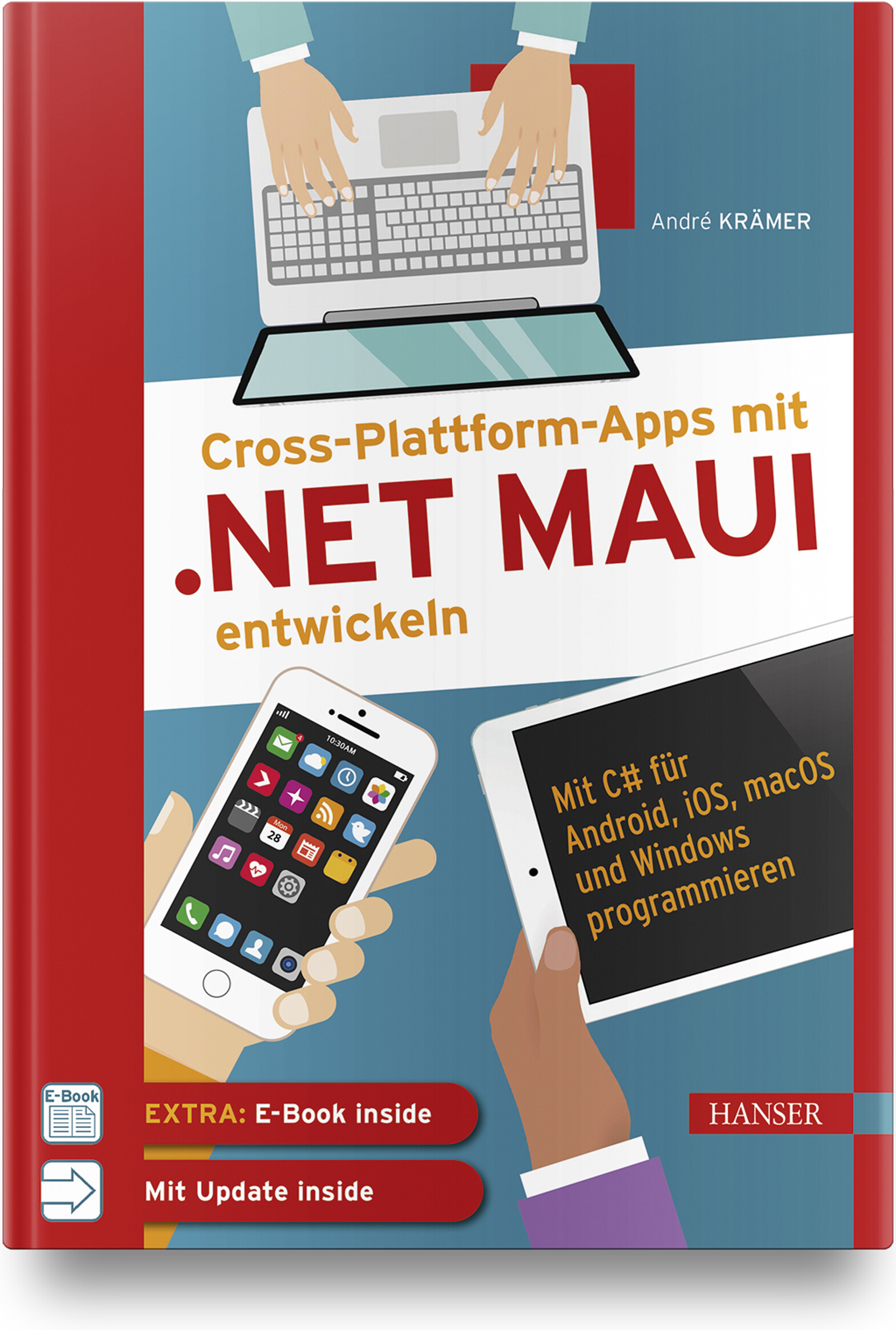
Cross-Plattform-Apps mit .NET MAUI entwickeln
Mit C# für Android, iOS, macOS und Windows programmierenSie möchten Apps entwickeln, die sowohl mobil (iOS, Android) als auch auf dem Windows-Desktop nativ lauffähig sind? Schritt für Schritt führt André Krämer (Microsoft MVP) Sie in die Welt der Cross-Plattform-Entwicklung mit .NET MAUI und C# ein. Von der einheitlichen Codebasis über die Oberflächengestaltung und Datenbankanbindung bis zum Zugriff auf Geräte-APIs und dem Deployment lernen Sie hier alles, um plattformübergreifende Apps zu entwickeln und zu veröffentlichen.Im Laufe der Lektüre dieses Buches programmieren Sie eine Beispiel-App für ein fiktives Restaurant und vertiefen dabei das in den Kapiteln erworbene Wissen.Das Buch setzt Grundkenntnisse in der Programmierung mit C# voraus. Erfahrung mit XAML ist von Vorteil, jedoch nicht erforderlich.Sämtliche Beispiele des Buchs finden Sie im zugehörigen GitHub-Repository.Autor:Dipl.-Inform. (FH) André Krämer, Msc., ist Geschäftsführer der Quality Bytes GmbH in der Nähe von Koblenz. Der mehrfache Microsoft MVP (Most Valuable Professional) hat für LinkedIn Learning mehr als 30 Videotrainings veröffentlicht. Er ist Sprecher auf Entwicklerkonferenzen und schreibt für Entwicklermagazine. Seine Schwerpunkte sind .NET MAUI, Xamarin, ASP.NET, Azure DevOps und Microsoft Azure. Er setzt .NET MAUI und Xamarin bei der Entwicklung eigener Apps sowie in zahlreichen Schulungen und Beratungsprojekten ein.

SQL Essentials For Dummies
A RIGHT-TO-THE-POINT GUIDE ON ALL THE KEY TOPICS OF SQL PROGRAMMINGSQL Essentials For Dummies is your quick reference to all the core concepts of SQL—a valuable common standard language used in relational databases. This useful guide is straightforward—with no excess review, wordy explanations, or fluff—so you get what you need, fast. Great for a brush-up on the basics or as an everyday desk reference, this book is one you can rely on.* Strengthen your understanding of the basics of SQL* Review what you've already learned or pick up key skills* Use SQL to create, manipulate, and control relational databases* Jog your memory on the essentials as you work and get clear answers to your questionsPerfect for supplementing classroom learning, reviewing for a certification, and staying knowledgeable on the job, SQL Essentials For Dummies is the convenient, direct, and digestible reference you've been looking for.RICHARD BLUM is a network and systems administrator. He has worked with database systems such as Microsoft SQL Server, PostgreSQL, and MySQL. Rich also teaches online courses in programming. ALLEN G. TAYLOR is author of more than 40 books, including SQL For Dummies. He also teaches database development through a leading online education provider.

Java Essentials For Dummies
SWIFTLY BRUSH UP ON THE FOUNDATIONS OF JAVA PROGRAMMINGJava Essentials For Dummies is a reliable and succinct reference on the core components of Java—the multifaceted general-purpose language used for desktop, mobile, and web applications. This straightforward book gets right to the point—eliminating review material and wordy explanations—so you get what you need, fast.* Strengthen your understanding of the basics of coding with Java* Review what you've already learned or pick up key skills* Use Java to build a variety of applications and more* Jog your memory on the essentials as you work and get clear answers to your questionsPerfect for supplementing classroom learning, reviewing for a certification, or staying knowledgeable on the job, Java Essentials For Dummies is a direct reference that's great to keep on hand as an everyday desk reference. DOUG LOWE is a computer programming guru and author of more than 30 tech books, including Java All-in-One For Dummies. PAUL MCFEDRIES is a long-time technical author with more than 100 published titles, including Web Coding & Development All-in-One For Dummies.
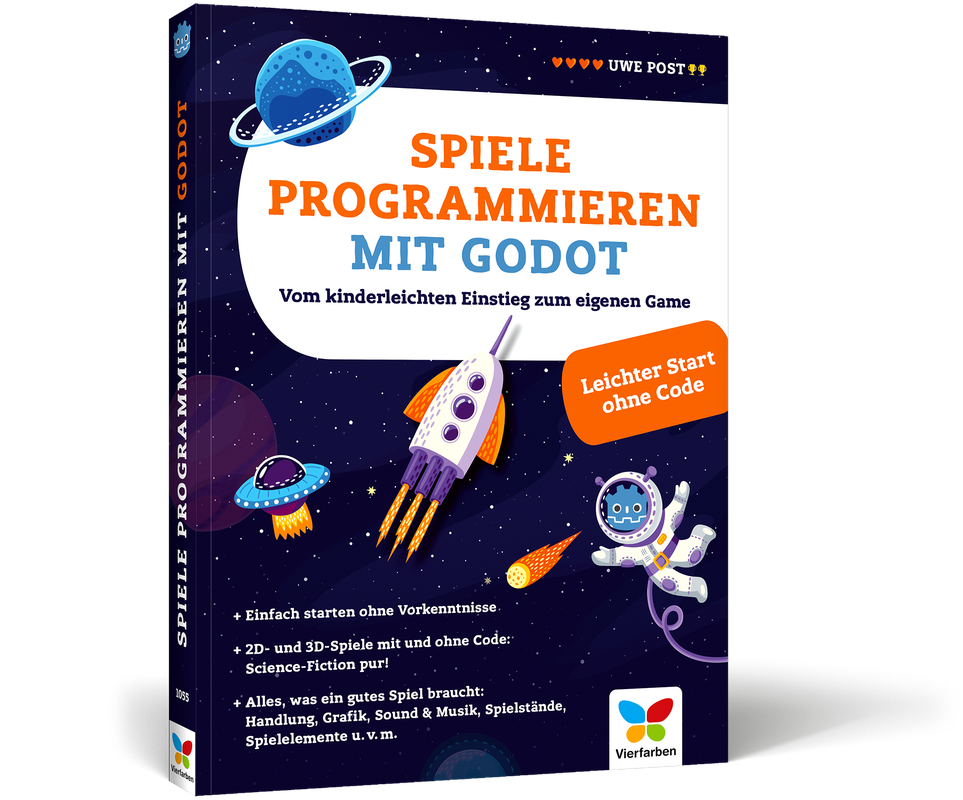
Spiele programmieren mit Godot
Spiele programmieren mit GodotKreiere deine eigenen Spiele mit Godot – ganz einfach! In diesem Buch lernst du Schritt für Schritt, wie du mit Godot coole Games programmiert, auch wenn du noch keinerlei Vorkenntnisse hast. Zu Beginn startest du mit bunten Beispielen in Scratch und lernst so spielerisch die Grundlagen der Programmierung kennen. Dann geht's weiter mit richtigen Projekten in Godot: Entwirf eine spannende Story, erschaffe deine Spielwelt mit Grafik und Sound, und programmiere Gegenstände und Charaktere. So entwickelst du nach und nach dein eigenes Jump-and-Run-Game. Lass deiner Kreativität freien Lauf und teile deine Spiele mit Freunden!Leseprobe (PDF)Aus dem Inhalt:Erste Schritte mit Scratch: ganz ohne Code zu deinen ersten SpielenDie Entwicklungsumgebung von Godot kennenlernenDein erstes Godot-Spiel: ein WeltraumabenteuerEine spannende Geschichte überlegen und grafisch umsetzenSchleichen, Sammeln und Türme bauen in deinem selbst kreierten RaumschiffGegenstände, Gegner und Spielmechaniken programmierenMenüs, Spielstände und eine packende Soundkulisse erschaffenHindernisparcours in 3D bauen und mit Freunden im Splitscreen spielenIdeen und Anleitungen für noch mehr eigene SpieleÜber den Autor:Uwe Post hat ein Diplom in Physik und Astronomie und entwickelt Smartphone-Apps und -Spiele. Er schreibt Fachartikel in Computerzeitschriften, allerdings deutlich mehr Science-Fiction-Geschichten.
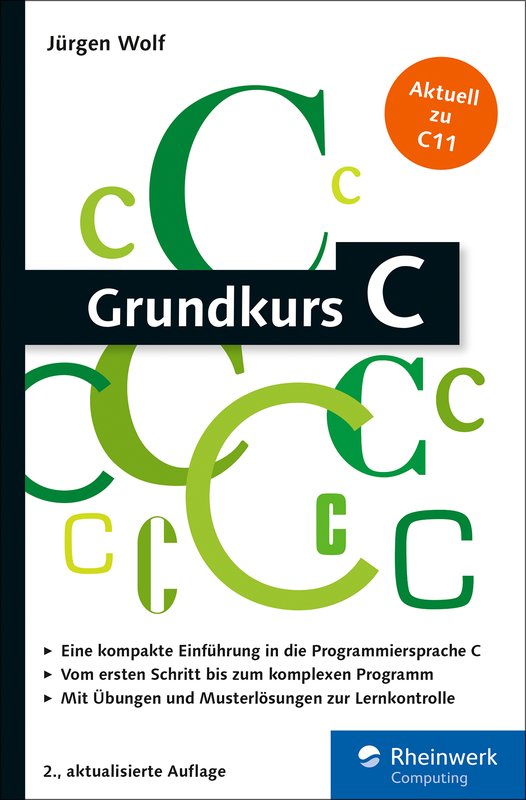
Grundkurs C
Die kompakte und aktuelle Einführung im praktischen Taschenbuch-Format. Alle Sprachgrundlagen werden kurz und übersichtlich dargestellt; viele Codebeispiele und Tabellen sowie eine Funktionsreferenz machen das Buch zum nützlichen Begleiter. Das lernen Sie mit diesem Buch: 1. Basiswissen C Das Buch ist ideal geeignet für alle, die Basiswissen zu C erwerben oder ihre Kenntnisse auffrischen wollen. Das Buch ist so aufgebaut, dass Sie von den grundlegenden Sprachelementen hin zu den komplexeren Strukturen in C geführt werden. 2. Überblick über Programmierthemen Jedes Thema, seien es Schleifen, Funktionen, Arrays oder Zeiger, wird in einem eigenen Kapitel behandelt. So können Sie schnell nachschlagen, was Sie an Informationen benötigen. Wenn Sie bislang noch nicht in C programmiert haben und die Sprache lernen wollen, gehen Sie einfach das Buch vom Anfang bis zum Ende durch. 3. C im Selbststudium lernen Ideal für Selbstlerner: Die Inhalte bauen stets aufeinander auf und werden durch viele kurze Codebeispiele verdeutlicht. Zu jedem Kapitel laden Aufgaben Sie ein, selbst Hand anzulegen und sich zu vergewissern, dass Sie alles verstanden haben.

Wie funktioniert eigentlich KI?
KI Verstehen leicht gemacht! Hinter den Kulissen von ChatGPT und Co. läuft eine Vielzahl mathematischer Prozesse ab, die Künstliche Intelligenz aus eingespeisten Daten ihre Schlüsse ziehen lässt. Aber wie genau findet die KI Antworten auf unsere Fragen? Was kann sie leisten und was nicht? Paul Wilmott ist langjähriger Spezialist für mathematische Modelle und Autor des Buches „Grundkurs Machine Learning“. Er erklärt Ihnen ganz einfach, mit vielen Beispielen und praktischen Projekten zum Ausprobieren, wie Künstliche Intelligenz eigentlich funktioniert. So verstehen Sie KI von einer kleinen Einführung in die Geschichte der Künstlichen Intelligenz über Regression bis zum maschinellen Lernen! Aus dem Inhalt: Eine kleine Geschichte der KIJargon und GrundlegendesNächste NachbarnRegressionClusteringEntscheidungsbäumeNeuronale NetzeReinforcement Learning Vorwort ... 9 1. Einleitung ... 17 1.1 ... Definitionssache ... 17 1.2 ... Sorry, das hier ist ein Mathematikbuch! ... 18 1.3 ... ChatGPT ... 19 2. Eine kleine Geschichte der KI ... 21 2.1 ... Psychohistorie ... 21 2.2 ... Der Turing-Test und die Geburtsstunde der KI ... 22 2.3 ... Michie und die Streichholzschachteln ... 22 2.4 ... Deep Blue ... 26 2.5 ... DeepMind ... 27 2.6 ... Gute Nachrichten! ... 28 2.7 ... Schlechte Nachrichten ... ... 31 2.8 ... Die »Drei Gesetze der Robotik« ... 37 3. Etwas Fachjargon, mathematische und technische Grundlagen ... 39 3.1 ... Fachjargon und mathematische Konzepte ... 39 3.2 ... Technische Grundlagen ... 56 4. Mehr zu: K-Nearest-Neighbours ... 61 4.1 ... Wofür K-Nearest-Neighbours eingesetzt werden ... 61 4.2 ... Im Detail ... 62 4.3 ... Aus dem Leben gegriffen: Ein Beispiel ... 66 4.4 ... Dein Projekt ... 70 5. Mehr zu: Regression ... 73 5.1 ... Wofür Regression eingesetzt wird ... 74 5.2 ... Im Detail ... 75 5.3 ... Aus dem Leben gegriffen: Ein Beispiel ... 78 5.4 ... Dein Projekt ... 84 6. Mehr zu: Clustering ... 89 6.1 ... Wofür Clustering eingesetzt wird ... 90 6.2 ... Im Detail ... 91 6.3 ... Aus dem Leben gegriffen: Ein Beispiel ... 93 6.4 ... Dein Projekt ... 96 7. Mehr zu: Entscheidungsbäumen ... 99 7.1 ... Wofür Entscheidungsbäume eingesetzt werden ... 100 7.2 ... Im Detail ... 101 7.3 ... Aus dem Leben gegriffen: Ein Beispiel ... 103 7.4 ... Dein Projekt ... 105 8. Mehr zu: Neuronalen Netzen ... 111 8.1 ... Wofür neuronale Netze eingesetzt werden ... 111 8.2 ... Im Detail ... 112 8.3 ... Aus dem Leben gegriffen: Ein Beispiel ... 115 8.4 ... Dein Projekt ... 118 9. Mehr zu: Reinforcement Learning ... 121 9.1 ... Wofür Reinforcement Learning eingesetzt wird ... 122 9.2 ... Im Detail ... 123 9.3 ... Aus dem Leben gegriffen: Ein Beispiel ... 125 9.4 ... Dein Projekt ... 131 Anhang ... 137 Nachwort ... 137 Datensammlung ... 137 Danksagung ... 139 Über Paul Wilmott ... 140 Index ... 141

Comprehensive Hypertext Markup Language (HTML).
This course is intended for aspiring web designers and developers who need to comprehend HTML thoroughly as well as its straightforward overview and useful examples. You'll have all the tools you need from this course to get started using HTML and advance to a greater degree of proficiency. This book, written in the author's approachable and simple-to-read style, covers all the most recent innovations and advancements in responsive web design, such as strategies for greater accessibility, changeable fonts and font loading, and the most recent color manipulation features reaching browsers.Additionally, the author has written a book on JavaScript. A Comprehensive manual for creating dynamic, responsive websites and applications. This book shows off JavaScript's potential for developing web applications by mixing in-depth theory instruction with enjoyable assignments that will push your limits. To gain a thorough knowledge of the ideas, you can experiment with them in your own editor or browser console as you learn them.

Practical C++ STL Programming
Learn how to use the classes, algorithms, and other programming constructs of C++ STL. This comprehensive and practical guide covers a broad range of STL programming topics and highlights numerous programming constructs from the C++20 and C++23 standards. Mastering use of STL can be daunting for both new and experienced C++ programmers. It doesn’t help that the ISO C++ specification documents are meticulous and verbose. This book is organized to help you quickly understand C++ STL programming, focusing on the real-world aspects of its usage. Rather than spend time providing extensive explanations of the inner workings of STL, author Daniel Kusswurm judiciously explores these intricacies only when they advance the reader’s understanding of a particular topic. This book is accompanied by over 100 source code examples, designed to accelerate learning by emphasizing practical use cases. It coincides with the C++20 and C++23 standards and works with any OS platform that supports these standards including Windows (Visual C++), Linux (GNU C++) and macOS (clang). After reading Practical C++ STL Programming, you’ll be able to exploit the computational capabilities of STL to implement a wide variety of software algorithms and solve unique programming challenges. You will: * Explore STL capabilities, including how to generate formatted output, utilize sequence containers, apply utility classes, exploit smart pointers, manipulate associative containers, and exercise container adaptors. * Apply algorithms and iterators to perform a wide variety of container operations including sorts, searches, insertions, removals, and erasures. * Utilize ranges and range iterators, adaptors, views, compositions, projections, and factories. * Perform file and directory operations using STL’s file system classes. * Execute chronological calculations and formatting using the time classes. * Employ STL’s random number generation and distribution classes. * Implement numerical processing algorithms using STL’s std::valarray and std:complex classes. * Accelerate program performance using STL’s concurrency classes and algorithm execution policies. Learn how to use the classes, algorithms, and other programming constructs of C++ STL. This comprehensive and practical guide covers a broad range of STL programming topics and highlights numerous programming constructs from the C++20 and C++23 standards. Mastering use of STL can be daunting for both new and experienced C++ programmers. It doesn’t help that the ISO C++ specification documents are meticulous and verbose. This book is organized to help you quickly understand C++ STL programming, focusing on the real-world aspects of its usage. Rather than spend time providing extensive explanations of the inner workings of STL, author Daniel Kusswurm judiciously explores these intricacies only when they advance the reader’s understanding of a particular topic. This book is accompanied by over 100 source code examples, designed to accelerate learning by emphasizing practical use cases. It coincides with the C++20 and C++23 standards and works with any OS platform that supports these standards including Windows (Visual C++), Linux (GNU C++) and macOS (clang). After reading Practical C++ STL Programming, you’ll be able to exploit the computational capabilities of STL to implement a wide variety of software algorithms and solve unique programming challenges. What You Will Learn * Explore STL capabilities, including how to generate formatted output, utilize sequence containers, apply utility classes, exploit smart pointers, manipulate associative containers, and exercise container adaptors. * Apply algorithms and iterators to perform a wide variety of container operations including sorts, searches, insertions, removals, and erasures. * Utilize ranges and range iterators, adaptors, views, compositions, projections, and factories. * Perform file and directory operations using STL’s file system classes. * Execute chronological calculations and formatting using the time classes. * Employ STL’s random number generation and distribution classes. * Implement numerical processing algorithms using STL’s std::valarray and std:complex classes. * Accelerate program performance using STL’s concurrency classes and algorithm execution policies. Who This Book Is For Software developers and programmers who understand the basic syntax and semantics of C++ and want/need to learn how to use STL’s classes and algorithms, or programmers who have experience using STL as specified by the C++11/14/17 standards and are interested in learning how to use the new STL classes and algorithms of C++20/23. Computer science/engineering students or hobbyists who want to learn about or better understand the capabilities of STL. Prologue.- Chapter 1: C++ Review.- Chapter 2: Formatted I/O.- Chapter 3: Sequence Containers – Part 1.- Chapter 4: Sequence Containers – Part 2.- Chapter 5: General Utilities Library.- Chapter 6: Smart Pointers.- Chapter 7: Associative Containers.- Chapter 8: Unordered Associative Containers.- Chapter 9: Container Adaptors.- Chapter 10: Algorithms – Part 1.- Chapter 11: Algorithms – Part 2.- Chapter 12: Algorithms – Part 3.- Chapter 13: Algorithms – Part 4.- Chapter 14: Ranges – Part 1.- Chapter 15: Ranges – Part 2.- Chapter 16: Time Library.- Chapter 17: File Systems.- Chapter 18: Numerical Processing – Part 1.- Chapter 19: Numerical Processing – Part 2.- Chapter 20: Concurrency – Part 1.- Chapter 21: Concurrency – Part 2.- Appendix A: Source Code and Development Tools.- Appendix B: References and Resources. Daniel Kusswurm has 40+ years of professional experience as a software developer, computer scientist, and author. During his career, he has developed innovative software for medical devices, scientific instruments, and image processing applications. On many of these projects, he successfully utilized ISO C++ and the standard template libraries to create quality software and solve unique programming challenges. His educational background includes a BS in electrical engineering technology from Northern Illinois University along with an MS and PhD in computer science from DePaul University. Kusswurm is the author multiple computer programming books including Modern X86 Assembly Language Programming (Third Edition), Modern Arm Assembly Language Programming, and Modern Parallel Programming with C++ and Assembly Language, all published by Apress.
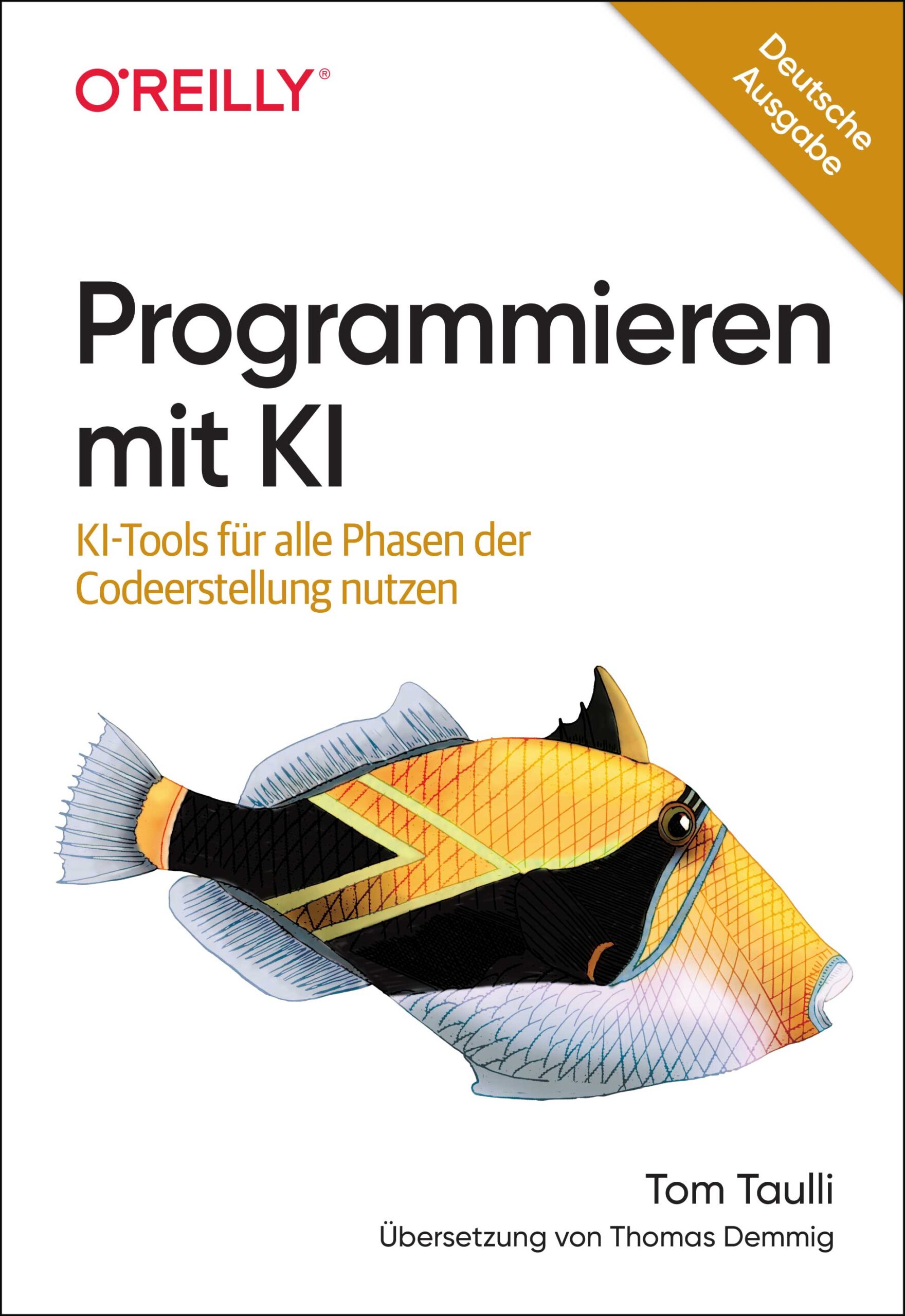
Programmieren mit KI
Der praktische Einstieg in die KI-basierte Programmierung (1. Auflage, Oktober 2024)Nutzen Sie das Potenzial der neuesten KI-Technologien für Ihre Arbeit: Dieser praktische Leitfaden zeigt den Einsatz von KI-Assistenten für die gesamte Softwareentwicklung – einschließlich Planung, Design und Debugging. Sie erfahren, wie Sie eine breite Palette von Werkzeugen verwenden können, um schneller und effizienter zu programmieren – von allgemeinen LLMs (ChatGPT, Gemini und Claude) bis hin zu codespezifischen Systemen (GitHub Copilot, Tabnine, Cursor und Amazon CodeWhisperer).Tom Taulli – bekannt für seinen lockeren und unterhaltsamen Schreibstil – stellt eine modulare Programmiermethodik vor, die optimal auf die Art und Weise abgestimmt ist, wie Prompts KI-generierten Code erzeugen. Er beschreibt auch, wie LLMs genutzt werden können, um eine Programmiersprache zu lernen, Code zu erklären oder Code von einer Sprache in eine andere zu konvertieren. Das Buch behandelt:Die zentralen Funktionen von KI-basierten EntwicklungstoolsVor- und Nachteile sowie Use Cases beliebter Systeme, einschließlich GitHub CopilotDie Einsatzmöglichkeiten von ChatGPT, Gemini, Claude und anderen LLMs für die ProgrammierungKI-Entwicklungswerkzeuge für den gesamten Lebenszyklus der Softwareentwicklung, einschließlich Requirements, Fehlerbehebung und DokumentationPrompt Engineering für die ProgrammierungDen Einsatz von KI-Assistenz für mühsame Aufgaben wie die Erstellung regulärer AusdrückeDie Verwendung von KI-basierten Low-Code- und No-Code-ToolsAutoreninfo:Tom Taulli ist ein Autor, Berater und Investor, der zahlreiche Bücher, darunter den Titel Artificial Intelligence Basics, verfasst hat. Er schreibt auch für Publikationen wie AIBusiness.com, Inc.com, Barrons.com, eSecurity Planet und Kiplingers.com und hat für O'Reilly und Pluralsight Kurse zu Themen wie generative KI, Datenbanken und Python entwickelt.Zielgruppe:Programmierer*innen Softwareentwickler*innen

Kubernetes Best Practices (2. Auflg.)
Kubernetes Best Practices, die Übersetzung der 2. Auflage, Oktober 2024.In diesem praktischen Leitfaden teilen Brendan Burns und drei weitere Kubernetes-Experten ihre bewährten Vorgehensweisen beim Erstellen von Anwendungen mit Kubernetes mit Ihnen. Sie bündeln jahrzehntelange Erfahrungen aus den unterschiedlichsten Anwendungsbereichen und von Unternehmen, die Kubernetes erfolgreich in der Produktion einsetzen. Konkrete Codebeispiele sowie Strategien zur Fehlervermeidung und -behebung helfen Ihnen bei der Umsetzung in die Praxis.Dieses Buch ist die Übersetzung der zweiten englischen Auflage. Es ist ideal für alle, die mit den grundlegenden Kubernetes-Konzepten vertraut sind und die neuesten Best Practices lernen möchten. Aus dem Inhalt:- Patterns für die Überwachung und Sicherung Ihrer Systeme sowie Verwaltung von Upgrades, Rollouts und Rollbacks- Integration von Diensten und Legacy-Anwendungen - Ausführen von Workloads für Machine Learning in Kubernetes- Sicherstellen der Pod- und Container-Sicherheit- Verstehen von Themen, die für die erfolgreiche Implementierung von Kubernetes immer wichtiger werden, wie z. B. Chaos Engineering/Testing, GitOps, Service Mesh und ObservabilityÜber die Autoren:Brendan Burns ist ein angesehener Ingenieur bei Microsoft Azure und Mitbegründer des Open-Source-Projekts Kubernetes. Er entwickelt seit mehr als einem Jahrzehnt Cloud-Anwendungen.Eddie Villalba ist Engineering Manager und Application Platform Practice Lead für Nordamerika bei Google Cloud. Er leitet ein Team von Ingenieuren, das sich darauf konzentriert, Kunden beim Aufbau von containeroptimierter Plattformen für skalierbare, zuverlässige verteilte Anwendungen zu unterstützen.Dave Strebel ist Global Cloud Native Architect bei Microsoft Azure mit Schwerpunkt auf Open Source Cloud und Kubernetes. Er ist stark in das Open-Source-Projekt Kubernetes involviert, unterstützt das Kubernetes-Release-Team und leitet die SIG-Azure.Lachlan Evenson ist Principal Program Manager im Container Compute Team bei Microsoft Azure. Er hat zahlreichen Menschen beim Einstieg in Kubernetes geholfen, sowohl durch praxisnahe Schulungen als auch mit seinen Vorträgen auf Konferenzen.

Kubernetes Best Practices
Praktische Anleitungen und Vorlagen zum Bauen erfolgreicher Kubernetes-Anwendungen - Bewährte Vorgehensweisen aus dem Arbeitsalltag von Kubernetes-Mitbegründer Brendan Burns - Praxisnaher Überblick über viele aktuelle und zentrale Themen - Mit Codebeispielen aus erfolgreichen Kubernetes-Projekten In diesem praktischen Leitfaden teilen Brendan Burns und drei weitere Kubernetes-Experten ihre bewährten Vorgehensweisen beim Erstellen von Anwendungen mit Kubernetes mit Ihnen. Sie bündeln jahrzehntelange Erfahrungen aus den unterschiedlichsten Anwendungsbereichen und von Unternehmen, die Kubernetes erfolgreich in der Produktion einsetzen. Konkrete Codebeispiele sowie Strategien zur Fehlervermeidung und -behebung helfen Ihnen bei der Umsetzung in die Praxis. Dieses Buch ist die Übersetzung der zweiten englischen Auflage. Es ist ideal für alle, die mit den grundlegenden Kubernetes-Konzepten vertraut sind und die neuesten Best Practices lernen möchten. Aus dem Inhalt: - Patterns für die Überwachung und Sicherung Ihrer Systeme sowie Verwaltung von Upgrades, Rollouts und Rollbacks - Integration von Diensten und Legacy-Anwendungen - Ausführen von Workloads für Machine Learning in Kubernetes - Sicherstellen der Pod- und Container-Sicherheit - Verstehen von Themen, die für die erfolgreiche Implementierung von Kubernetes immer wichtiger werden, wie z. B. Chaos Engineering/Testing, GitOps, Service Mesh und Observability

Eigene Spiele erstellen mit Roblox - So einfach!
* ERSCHAFFE DEINE EIGENEN ROBLOX-SPIELE - GANZ OHNE VORWISSEN* SPIELEND LEICHT VON DEN ERSTEN SCHRITTEN BIS ZU CLEVEREN TRICKS* SPAẞ AM PROGRAMMIEREN MIT EINFACHEN SCHRITT-FÜR-SCHRITT-ANLEITUNGEN UND SPANNENDEN AUFGABEN* AKTUELL ZUR NEUEN VERSION VON ROBLOX STUDIO MIT DEUTSCHEN MENÜS.Mit diesem Buch erstellst du kinderleicht deine eigenen Spiele mit Roblox, der beliebtesten Online-Spieleplattform für Kinder und Jugendliche. Dafür brauchst du nichts weiter als einen Computer mit Internetverbindung und dieses Buch.Mithilfe einfacher Schritt-für-Schritt-Anleitungen und anschaulicher Bilder findest du dich schnell in Roblox Studio zurecht und entwirfst deine ersten eigenen Gegenstände und Spielwelten. Du lernst die Roblox-Programmiersprache Lua von Grund auf kennen und erstellst damit ganz einfach tolle Spiele wie deinen eigenen Obby-Hindernisparcours, ein Escape Game mit Zeitlimit, ein Murmelspiel mit Kollisionserkennung und ein Autorennen mit coolen Spezialeffekten.Du lernst, wie du alle Features aus den Spielen an deine Vorstellungen anpasst und beliebig kombinierst. So bist du bestens gerüstet, deine eigenen Ideen mit Roblox Studio umzusetzen und deine Spiele online mit deinen Freunden zu teilen.SPIELE UND PROJEKTE:* Coole Modelle: Tränke, Truhen, Schilder und mehr* Obby-Hindernisparcours mit unsichtbaren Fallen, Förderbändern, Drehbalken und mehr* Escape Game für mehrere Spieler mit Labyrinth, zufälligem Zielpunkt und Zeitlimit* Murmelspiel mit Kollisionserkennung* Autorennen mit tollen Extras wie SpeedUps und Feuerschweif* Noch mehr Features für deine Spiele: Benutzeroberflächen, Punktezähler, Animationen und mehrTanja Köhler lebt und arbeitet als freie Architektin bei München und ist Lehrbeauftragte an der TU München. Dort unterrichtet sie Architekturinformatik und Games Engineering. Zudem betreibt sie ein Studio für Programmierung und Computerspieledesign für Kinder und Jugendliche: www.nextlevel-gauting.de

The Joys of Hashing
Build working implementations of hash tables, written in the C programming language. The new and revised Second Edition has been enhanced with simplified code and more comprehensive explanations, aimed at improving clarity and comprehension while exploiting the latest features in C programming.This book starts with simple first attempts devoid of collision resolution strategies. It then progresses through improvements and extensions illustrating different design ideas and approaches, followed by experiments to validate the choices. You will learn how hash tables, when implemented and used appropriately, are exceptionally efficient data structures for representing sets and lookup tables, providing low overhead, constant time, insertion, deletion, and lookup operations._The Joys of Hashing_ walks you through the implementation of efficient hash tables and the pros and cons of different design choices when building tables. The source code used in the book is available on GitHub for your re-use and experiments.WHAT YOU WILL LEARN* Master the basic ideas behind hash tables* Carry out collision resolution, including strategies for handling collisions and their consequences for performance* Resize or grow and shrink tables as needed* Store values by handling when values must be stored with keys to make general sets and mapsWHO THIS BOOK IS FORThose with at least some prior programming experience, especially in C programming.Thomas Mailund is a former associate professor in bioinformatics at Aarhus University, Denmark, and currently Senior Software Architect at the quantum computing company Kvantify. He has a background in math and computer science, including experience programming and teaching in C and R programming languages. For the last decade, his main focus has been on genetics and evolutionary studies, particularly comparative genomics, speciation, and gene flow between emerging species.1. The Joys of Hashing.- 2. Hash Keys, Indices and Collisions.- 3. Collision Resolution, Load Factor and Performance.- 4. Resizing.- 5. Adding Application Keys and Values.- 6. Heuristic Hash Functions.- 7. Universal Hashing.- 8. Conclusions.

Introduction to Python and Large Language Models
Gain a solid foundation for Natural Language Processing (NLP) and Large Language Models (LLMs), emphasizing their significance in today’s computational world. This book is an introductory guide to NLP and LLMs with Python programming.The book starts with the basics of NLP and LLMs. It covers essential NLP concepts, such as text preprocessing, feature engineering, and sentiment analysis using Python. The book offers insights into Python programming, covering syntax, data types, conditionals, loops, functions, and object-oriented programming. Next, it delves deeper into LLMs, unraveling their complex components.You’ll learn about LLM elements, including embedding layers, feedforward layers, recurrent layers, and attention mechanisms. You’ll also explore important topics like tokens, token distributions, zero-shot learning, LLM hallucinations, and insights into popular LLM architectures such as GPT-4, BERT, T5, PALM, and others. Additionally, it covers Python libraries like Hugging Face, OpenAI API, and Cohere. The final chapter bridges theory with practical application, offering step-by-step examples of coded applications for tasks like text generation, summarization, language translation, question-answering systems, and chatbots.In the end, this book will equip you with the knowledge and tools to navigate the dynamic landscape of NLP and LLMs.WHAT YOU’LL LEARN* Understand the basics of Python and the features of Python 3.11* Explore the essentials of NLP and how do they lay the foundations for LLMs.* Review LLM components.* Develop basic apps using LLMs and Python.WHO THIS BOOK IS FORData analysts, AI and Machine Learning Experts, Python developers, and Software Development Professionals interested in learning the foundations of NLP, LLMs, and the processes of building modern LLM applications for various tasks.DILYAN GRIGOROV is a software developer with a passion for Python software development, generative deep learning & machine learning, data structures, and algorithms. He is an advocate for open source and the Python language itself. He has 16 years of industry experience programming in Python and has spent 5 of those years researching and testing Generative AI solutions. Dilyan is a Stanford Student in the Graduate Program on Artificial Intelligence in the classes of people like Andrew Ng, Fei-Fei Li and Christopher Manning. He has been mentored by software engineers and AI experts from Google and Nvidia. His passion for AI and ML stems from his background as an SEO specialist dealing with search engine algorithms daily. He enjoys engaging with the software community, often giving talks at local meetups and larger conferences. In his spare time, he enjoys reading books, hiking in the mountains, taking long walks, playing with his son, and playing the piano.Chapter 1: Evolution and Significance of Large Language Models.- Chapter 2: What Are Large Language Models?.- Chapter 3: Python for LLMs.- Chapter 4: Python and Other Programming Approaches.- Chapter 5: Basic overview of the components of the LLM architectures.- Chapter 6: Applications of LLMs in Python.- Chapter 7: Harnessing Python 3.11 and Python Libraries for LLM Development.

ChatGPT in Softwareprojekten
ChatGPT in Softwareprojekten. Mit KI Codequalität, Anforderungen und Dokumentation verbessern (1. Auflage, Oktober 2024)Entwicklerinnen, Projektmanager und Softwarearchitekten erfahren in diesem Praxisbuch, wie sie ChatGPT und andere Sprachmodelle nutzen, um ihre eigene Produktivität und die ihres Teams erheblich zu steigern. Sprachmodelle können Entwickler effektiv unterstützen, indem sie Code strukturieren, optimieren und automatisiert kommentieren. Auch Anforderungsdefinitionen und Dokumentationen sind für den Informationsfluss im Projekt enorm wichtig, zählen aber häufig zu den ungeliebten Aufgaben. ChatGPT kann hier eingesetzt werden, um zeitraubende manuelle Arbeiten abzukürzen und konsistentere Dokumente zu erstellen.Dieser praktische Einstieg zeigt anhand von vielfältigen Beispielen, wie Sie die neuen Möglichkeiten der Sprachmodelle für Ihre Arbeit nutzen können. Das Buch erläutert:mit welchen Prompting-Strategien Sie die besten Ergebnisse erzielen und welche Risiken bestehenwas gute Software auszeichnet und wie Sie mit ChatGPT die Codestruktur verbessern, Code optimieren und automatisiert kommentieren lassenwie Sie Anforderungen mit ChatGPT auf Konsistenz und Vollständigkeit prüfen und Vorschläge zur Priorisierung erhaltenwie Sie User Stories mit LLMs strukturieren und Dokumente für unterschiedliche Zielgruppen aufbereitenwie Sie Dokumentationen zu APIs, Datenmodellen, Programmabläufen und Algorithmen mit LLMs erstellenAutoreninfo:Patrick Schnell ist Softwareentwickler, Informatiker und Geschäftsführer der schnell.digital, einer innovativen Softwareagentur. Mit über 17 Jahren Projekterfahrung entwickelt er maßgeschneiderte Lösungen für verschiedenste Branchen. Seine Leidenschaft gilt neuen Technologien wie KI, NoSQL-Datenbanken oder der Hybrid-App-Entwicklung. Als Autor und Speaker teilt er sein umfangreiches Wissen und inspiriert andere Entwickler durch Fachartikel und Vorträge. Patrick Schnell motiviert sein Team, stets innovative und zukunftsorientierte Lösungen zu entwickeln, um den Anforderungen der Kunden gerecht zu werden.Zielgruppe: Entwickler*innen, Architekt*innen und Projektmanager*innen v.a. in KMUs
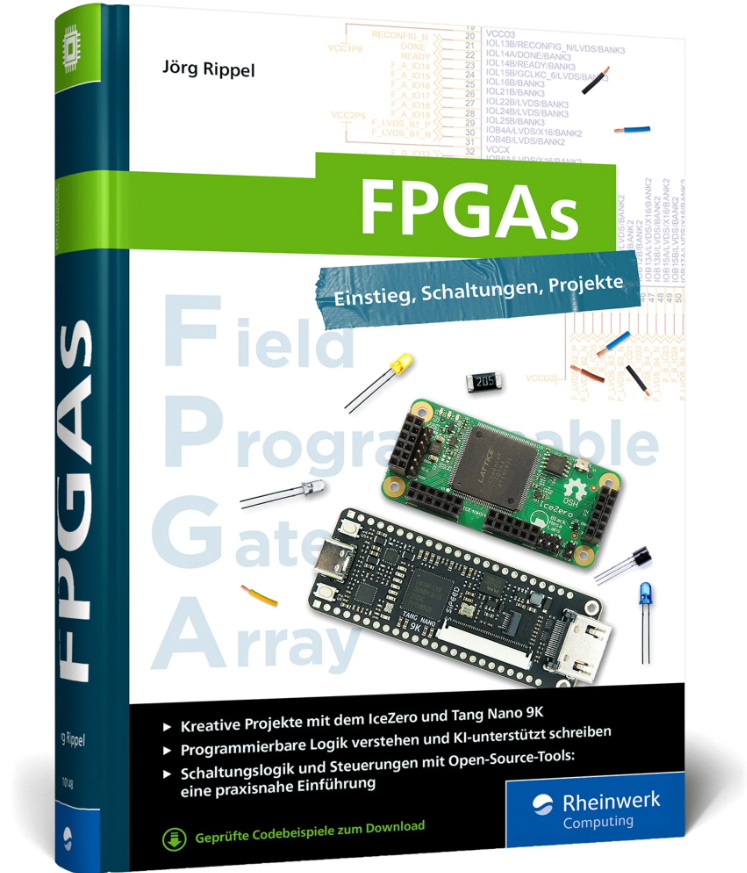
FPGAs - Einstieg, Schaltungen, Projekte
FPGAs. Einstieg, Schaltungen, Projekte.Field Programmable Gate Arrays – kurz FPGAs – sind die ideale Basis für anspruchsvolle Maker-Projekte. Dank effizienter Parallelverarbeitung und hoher Flexibilität lassen sich mit diesen frei programmierbaren Logikbausteinen komplexe digitale Schaltungen mühelos realisieren.In diesem Praxisbuch zeigt Ihnen Jörg Rippel anhand kreativer Beispielprojekte mit den benutzerfreundlichen FPGAs von Lattice und Gowin Semiconductor, wie Sie Ideen schnell umsetzen. Durch den Einsatz einer Chat-KI generieren Sie ohne Vorkenntnisse den benötigten Verilog-Code. Im Handumdrehen basteln Sie Lichteffekte oder Animationsanzeigen, verarbeiten Sensordaten und realisieren Ihr persönliches Traumprojekt.FPGAs für Maker und Kreative1. Alles für den EinstiegDieser Leitfaden stellt Ihnen das IceZero-Board mit dem iCE40HX FPGA von Lattice Semiconductor sowie das Sipeed Tang Nano 9K Board mit dem Gowin GW1NR-9C FPGA im Detail vor. Sie richten sich eine passende Raspberry-Pi-Entwicklungsumgebung mit Open-Source-Toolchain ein und lernen alle Grundlagen für die Arbeit mit programmierbarer Logik.2. Programmieren mit KIDie Hardwarebeschreibungssprache Verilog können Sie in 50 bis 100 Stunden erlernen – oder Sie lassen sich von ChatGPT oder GitHub Copilot für den Einstieg unterstützen. Jörg Rippel zeigt Ihnen, wie Sie künstliche Intelligenz nutzen, um blitzschnell Code zu erstellen, der Ihrem FPGA-Design Leben einhaucht.3. Setzen Sie Ihr Traumprojekt umMit FPGAs können Sie viel mehr machen als nur LEDs blinken lassen. Die vielen Beispielprojekte, Anleitungen, Praxishinweise und Verilog-Codebeispiele helfen Ihnen, um Ihr ganz persönliches Traumprojekt umzusetzen. Mit dabei: Zugriff auf Displays, Sensoren, SPI- und I2C-Schnittstellen, die Arbeit mit Zufallszahlen, Testbenches und Simulationen und einer lizenzfreien Entwicklungsumgebung .Aus dem InhaltGrundlagen der FPGAs und hardwarenahen ProgrammierungEffizientes Pairprogramming mit künstlicher Intelligenz wie ChatGPTPraxisnaher Einstieg: FPGAs programmieren und die Toolchain beherrschenAnbindung und Verarbeitung von Sensordaten über gängige SchnittstellenInteraktive Steuerung und Kommunikation über serielle VerbindungenSteuern von Displays, RGB-LEDs und vielfältigen AusgabenTestbenchsysteme entwickeln zum Simulieren und DebuggenEinrichten der Open-Source-Entwicklungsumgebung auf dem Raspberry PiLeseprobe (PDF-Link)Über den AutorDas Basteln mit elektronischen Geräten gehörte schon immer zu Jörg Rippels Hobbys. Privat beschäftigt er sich gerne mit Mikrocontroller- und Mikrocomputing-Projekten, beruflich hat er mehr als 20 Jahre in verschiedenen IT-Unternehmen und in der Luft- und Raumfahrtindustrie gearbeitet.Als Systemingenieur lag sein Schwerpunkt auf der Zusammenführung und Pflege komplexer Systeme, die aus vielen verschiedenen technischen Bereichen bestehen. Heute lebt er mit seiner Frau im Grünen und schraubt gerne an kreativen Projekten, wobei es auch immer mal wieder Probleme gibt und nicht immer alles beim ersten Versuch funktioniert. Trotzdem – oder gerade deswegen – macht ihm die Arbeit mit Elektronik immer Spaß. Sein Wissen teilt er in Fachbüchern und Beiträgen. Ausbildungen und Studiengänge in Elektronik, Funktechnik und Informatik haben dafür gesorgt, dass er ein breites Wissen zu allerlei elektrischen Geräten hat. Dazu gehören die Erstellung von analogen und digitalen Robotern, der Bau von Computern, das Betreiben von Amateurfunk und Satellitenfunk, das Design von Schaltungen und Platinenlayouts, die Arbeit mit 8- und 32-Bit-Mikrocontrollern und die Programmierung in verschiedenen Sprachen.

SAP Build
Automatisieren Sie Prozesse, entwickeln Sie mühelos Apps und erstellen Sie schnell Business Sites mit den neuen Low-Code-Lösungen von SAP Build! Sie erfahren alles über die strategische Nutzung der Tools, effektive Implementierungsstrategien und wertvolle Praxistipps, um Ihre digitale Transformation voranzutreiben. Aus dem Inhalt: Das intelligente UnternehmenZielgruppen und EntwicklungGovernance Erweiterung und Integration mit SAP S/4HANASAP Build Process AutomationSAP Build AppsSAP Build Work ZoneKünstliche IntelligenzSAP Build CodePraktische Anwendungsfälle Liebe Leserin, lieber Leser, ... 4 Einleitung ... 17 Zielgruppe ... 17 Zielsetzung ... 18 Aufbau des Buches ... 18 Danksagungen ... 21 Ausgangslage und Herausforderungen intelligenter Unternehmen ... 23 1. Herausforderungen intelligenter Unternehmen ... 25 1.1 ... Definition: Das intelligente Unternehmen ... 25 1.2 ... Ausgangslage ... 26 1.3 ... Herausforderungen ... 29 1.4 ... Zusammenfassung ... 49 2. Problemlösungen ... 51 2.1 ... Methodische Problemlösung ... 51 2.2 ... Fachliche Problemlösung ... 56 2.3 ... Zusammenfassung ... 61 SAP Build im Kontext des intelligenten Unternehmens ... 63 3. Was ist das Leitbild von SAP Build? ... 65 3.1 ... Ziel ... 65 3.2 ... Sinn und Motivation ... 72 3.3 ... Übersicht der Key Capabilities ... 77 3.4 ... Zusammenfassung ... 111 4. Zielgruppen von SAP Build ... 113 4.1 ... Citizen Developer und Pro Code Developer im Überblick ... 114 4.2 ... SAP Build für Citizen Developer ... 115 4.3 ... SAP Build für Pro Code Developer ... 135 4.4 ... SAP Build für IT-Administrator*innen und Endanwender*innen ... 141 4.5 ... Zusammenfassung ... 142 5. Entwicklung mit SAP Build ... 145 5.1 ... Die Low-Code-Methode ... 145 5.2 ... Das SAP-Build-Portfolio ... 158 5.3 ... Entwicklung von Ende-zu-Ende-Prozessen ... 167 5.4 ... Zusammenfassung ... 199 6. Systeme mit SAP Build erweitern ... 201 6.1 ... Erweiterbarkeit ... 201 6.2 ... Keep the Core Clean ... 208 6.3 ... SAP Build mit Drittanbietern integrieren ... 218 6.4 ... Zusammenfassung ... 221 7. Governance mit SAP Build ... 223 7.1 ... Motivation ... 223 7.2 ... Schatten-IT und ihre Risiken ... 224 7.3 ... Definition und Einordnung ... 226 7.4 ... SAP-Build-Governance-Triade ... 228 7.5 ... Implementierung von SAP-Build-Governance ... 234 7.6 ... Zusammenfassung ... 244 8. KI mit SAP Build ... 245 8.1 ... Motivation ... 246 8.2 ... Generative KI und traditionelle KI ... 247 8.3 ... KI auf der SAP Business Technology Platform ... 250 8.4 ... Beispielhafte Integration von KI in SAP Build ... 254 8.5 ... Ausblick: Generative KI im SAP-Umfeld ... 263 8.6 ... Zusammenfassung ... 266 Key Capabilities von SAP Build ... 267 9. SAP Build Process Automation ... 269 9.1 ... Funktionen ... 270 9.2 ... Hyperautomatisierung ... 281 9.3 ... SAP Signavio in Zusammenhang mit SAP Build Process Automation ... 286 9.4 ... Zusammenfassung ... 288 10. SAP Build Apps ... 291 10.1 ... Beschreibung und Zielsetzung ... 291 10.2 ... Low-Code-Apps entwickeln ... 295 10.3 ... Fusion-Team-Entwicklung ... 328 10.4 ... Zusammenfassung ... 330 11. SAP Build Work Zone ... 331 11.1 ... Häufige Ausgangssituation bei SAP-Kunden ... 332 11.2 ... Zentraler Einstiegspunkt und Portallösungen ... 334 11.3 ... Mobiler Zugang ... 346 11.4 ... Technologie und Architektur ... 348 11.5 ... Integration von Applikationen und Prozessen ... 351 11.6 ... Erweiterbarkeit und Anpassungen ... 354 11.7 ... Vergleich der zentralen Einstiegspunkte ... 359 11.8 ... Zusammenfassung ... 363 Use Cases für verschiedene Geschäftsbereiche ... 365 12. Use Case: Automatisierte Erfassung von Nachhaltigkeitsdaten mit SAP Build für ein CSRD-Reporting ... 367 12.1 ... Nachhaltigkeitsreporting im Allgemeinen ... 368 12.2 ... Scope-3-Emissionen im Rahmen der CSRD verstehen und berichten ... 371 12.3 ... Architektur ... 373 12.4 ... Prozessbeschreibung ... 377 12.5 ... Ergebnisse, Mehrwert und Risiken ... 383 12.6 ... Fazit und Zusammenfassung der erreichten Ziele ... 386 12.7 ... Ausblick und Ausbau des Use Cases ... 387 12.8 ... Zukünftige Entwicklungen und Erweiterungen ... 389 12.9 ... Zusammenfassung ... 391 13. Use Case: Hotdesking mit SAP Build Apps ... 393 13.1 ... Beschreibung der Idee ... 393 13.2 ... Lösungsbeschreibung ... 395 13.3 ... Zusammenfassung ... 436 14. Use Case: Ein zentrales Applikationsportal mit SAP Build ... 437 14.1 ... Die Bedeutung von Portalen in Unternehmen ... 438 14.2 ... Ausgangssituation und Herausforderungen ... 440 14.3 ... Entscheidung für SAP Build Work Zone ... 441 14.4 ... Schritte zur Implementierung ... 445 14.5 ... Ergebnisse und Vorteile ... 468 14.6 ... Zusammenfassung ... 474 15. Use Case: SAP Build im Bereich Human Resources ... 475 15.1 ... Motivation ... 476 15.2 ... Verstehen der HR-Landschaft ... 476 15.3 ... Low-Code im HR-Bereich ... 482 15.4 ... Anwendungsfall: Gehaltsvorschlag ... 484 15.5 ... Weitere Einsatzpotenziale im Kontext HR ... 504 15.6 ... Zusammenfassung ... 507 Umsetzungsempfehlungen und Perspektiven ... 509 16. Empfehlungen für den Einsatz ... 511 16.1 ... Projekt qualifizieren ... 512 16.2 ... Erste Schritte mit SAP Build ... 518 16.3 ... Praktische Umsetzung ... 521 16.4 ... Wartung, Instandhaltung und Erweiterung ... 536 16.5 ... Grenzen von SAP Build ... 540 16.6 ... Fazit ... 543 17. Ausblick: Pro-Code-Entwicklung mit SAP Build ... 545 17.1 ... Grundlagen von SAP Build Code ... 546 17.2 ... Tieferer Einstieg in SAP Build Code ... 549 17.3 ... Einsatzmöglichkeiten ... 552 17.4 ... Zusammenfassung und Ausblick ... 553 1. Das Autorenteam ... 557 Index ... 561

IT-Freelancer
Der Einstieg in die Selbstständigkeit bringt viele Vorteile und auch einige Herausforderungen mit sich – besonders in der IT-Branche ist der Reiz groß, als Consultant flexibel zu arbeiten und sich die spannendsten Projekte herauszusuchen. Willst du den Schritt wagen? Der Start in die ersten Projekte als IT-Freelancer wirkt erstmal überwältigend: Erfülle ich überhaupt alle Voraussetzungen, um loslegen zu können? Was muss ich jetzt ganz konkret wissen? Welche Projekte sind spannend für mich? Und wie akquiriere ich meine ersten Kunden? Antworten auf all diese Fragen liefert Maurice Knopp, der seine langjährige Berufserfahrung als IT-Consultant und Softwareentwickler in diesem Buch teilt. Hier bekommst du praxisorientiert und für den Arbeitsalltag optimiert Tools und Tipps für die Durchführung deines ersten Projekts sowie Hinweise für die nachhaltige Planung deiner Selbstständigkeit in der Zukunft. Starte jetzt in das Abenteuer Freelance! Aus dem Inhalt: Passt die Freiberuflichkeit zu dir? Das Berufsbild des IT-FreiberuflersIT-Projekttypen im ÜberblickSichtbarkeit in BusinessnetzwerkenProjektauswahl und -bewerbungDas Steuer-SetupEinarbeitung – die ersten Wochen im ProjektHardware- und SoftwaresetupWeiterbildung und PersönlichkeitsentwicklungGezielter Einsatz von KI-Tools zur ArbeitserleichterungRechtliches und (Alters-)Vorsorge
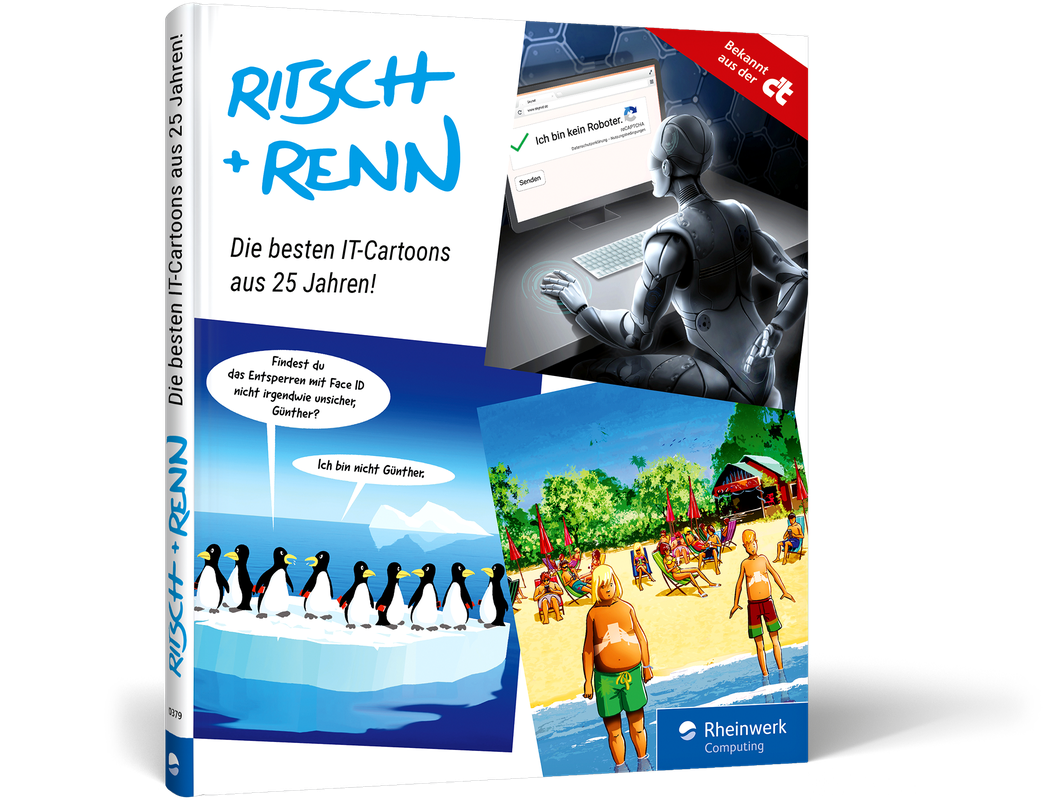
Ritsch + Renn. Die besten IT-Cartoons aus 25 Jahren
Ritsch + Renn. Die besten IT-Cartoons aus 25 Jahren.Die IT-Welt steckt voller Absurditäten: Computer, die mehr Arbeit machen, als sie uns abnehmen, Technik, die nervt, anstatt zu begeistern, und dann noch Smartphones, die fragen, ob man ein Roboter ist. Ritsch und Renn bieten eine kurze Pause vom alltäglichen IT-Wahnsinn und nehmen die Welt der Technik auf humorvolle Weise unter die Lupe. Ob selbstfahrende Autos, die ihre Insassen an der Raststätte vergessen haben, Sticheleien gegen die Verschlimmbesserungen der neuesten Windows-Version oder sogar Gott beim Online-Shopping, all das haben Ritsch und Renn in den „Schlagseiten“ des Computermagazins c't festgehalten. Mal kurios, mal völlig absurd, mal nah an der Realität, aber immer lustig. In diesem Buch finden Sie eine Sammlung der besten Cartoons aus 25 Jahren „Schlagseiten“ mit exklusivem, unveröffentlichtem Material, Skizzen und Hintergrundinfos.Abschalten und loslachen1. Witzig, absurd, einfach zum LachenVon Admins, Windows und überhitzten PCs bis zu Smartphones, Social Media und KI, gibt es kein Thema, zu dem Ritsch und Renn keine Pointe haben.2. 25 Jahre SchlagseitenDie Schlagseiten haben mehr zu bieten als nur witzige Pointen. Die Cartoons von Ritsch und Renn sind auch ein Abbild von 25 Jahren IT-Geschichte.3. Neues unveröffentlichtes MaterialMit Skizzen und Hintergrundinfos geben die beiden Cartoonisten einen spannenden Einblick in ihre Arbeit.25 Jahre Ritsch und RennEine Auswahl der lustigsten WerkeÜber 150 CartoonsZeitreise durch 25 Jahre IT-HumorEin Blick in die WerkstattFür IT-Profis, Nerds und alle, die am digitalen Alltag Spaß habenÜber die Autoren: Harald Ritsch ist ein international erfolgreicher Illustrator. Begonnen hat er mit dem Zeichnen von Comics und Cartoons, einer Leidenschaft, die er heute noch mit seinem Kompagnon Marcus Renn, einem Texter und Konzeptentwickler, begeistert auslebt.Marcus Renn ist ein leidenschaftlicher Ideenentwickler, Texter, Mediendesigner, Humorist und Universitätslektor in Wien.