

Allgemein

Angular Performance Optimization
Welcome to the book Angular Performance Optimization. In this book, I will show you all the ways you can optimize the performance of your Angular application. You already know about changeDetection and lazyLoading, but there's more to do. Let us get started. Hello, I am Abdelfattah Ragab, a professional software developer with more than 20 years of experience. I am an expert in Angular, CSS, graphic design and all web related technologies. I have published numerous books on modern CSS layouts and Angular as well as complete business solutions for e-commerce and the like. I hope you enjoy my books. With kind regards.

Innovation Empowerment in Construction 4.0 by the CDR-Approach
This is a publication-based dissertation. The book examines the promotion of innovation in construction 4.0 through the CDR approach. This opens up a new scientific research field for digital breakthroughs. It raises awareness, explains and enables access to innovative technologies such as digitalization and AI in the construction industry and highlights the associated ethical aspects. This research comes to the conclusion that the human factor forms the basis for designing a socially sustainable digital transformation. The new findings show how innovative technology can support people more efficiently, productively, safely and meaningfully. It specifically addresses responsibility in the corporate environment and develops the key factors for success without neglecting the necessary legal, political, social and educational framework. The aim of this book is to improve and strengthen the transfer of knowledge between research and practice on the basis of scientific communication without language barriers. In this way, the book offers broader access for readers, not only for experts, researchers, designers, implementers, doers and visionaries. The book encourages an interdisciplinary, integrative and constructive dialogue in order to avoid disciplinary silo thinking. The diversity of potential and innovations in the industry is offset by the industry's enormous responsibility to use sustainable, human-controlled AI to achieve the 17 UN SDGs and climate goals and to increase its global competitiveness on the basis of a European quality seal. Surprise and aha effects are inevitable. The book invites key players, everyone involved and everyone who sets new standards, to help shape the digital change in the construction industry and become innovative. The book promotes a new culture of thinking and learning and strengthens the entrepreneurial will to innovate. Opening a new gap in scientific knowledge with this book ultimately leads to a new discipline. In addition, it expands the interdisciplinary dialogue around the globe to find new ways to assume corporate digital responsibility and adapt the framework conditions. The book provides new ideas for defining individual digital corporate strategies. 1. Introduction.- 2. Scientific approach.- 3. Calls for Action.- 4. Cumulative Part of Dissertation.- 5. Discussion.- 6. Results - Digitization and AI need new Culture of Thinking in Construction 4.0.- 7. Limitations and Future work.- 8. Conclusion.- 9. Literature References.

Geography of Order and Chaos in Mechanics
Introductory Survey.- Analytical Mechanics and Integrable Systems.- Perturbation Theory.- Numerical Tools I.- Numerical Tools II.- The Kepler Problem.- The KEPLER Program.- Some Perturbed Keplerian Systems.- The Multi Body Gravitational Problem.- But to What Extent is a Solar System Stable.- Final Remarks and Perspectives.

Building Intelligent Apps with .NET and Azure AI Services
This comprehensive book equips you with the knowledge and skills you need to develop intelligent solutions by leveraging the capabilities of Azure AI Services. The book adopts a practical and example-based approach to help you easily grasp the subject matter and apply it effectively.The book begins by covering essential topics that lay the foundation for understanding Azure AI Services. You will know how to provision Azure AI Services and seamlessly integrate them into your .NET applications. Through detailed and illustrative examples, you will be guided step-by-step in building intelligent solutions that target a range of platforms. In addition to the core concepts, the book delves into various AI services, offering practical guidance on building solutions for a wide array of scenarios. From text translation to image classification, you will learn how to harness the power of Azure AI Services to solve complex problems.The book presents near-production scenarios and includes carefully crafted lab exercises to provide you with a hands-on learning experience.WHAT YOU WILL LEARN* Understand various Azure AI services required to build intelligent apps* Perform language-based document classification with Azure AI Language Service* Build a multi-language text translator app with .NET MAUI* Integrate GenAI capabilities to your applications by leveraging Azure OpenAIWHO THIS BOOK IS FORDevelopers, cloud architects, and tech enthusiasts looking forward to building scalable and intelligent solutions using Azure AI Services and .NETASHIRWAD SATAPATHI works as a software engineer at Microsoft and has expertise in building scalable applications with .NET Core. He has a deep understanding of building full-stack applications using .NET and Azure PaaS and Serverless offerings. And he is an active blogger in the C# developer community. He has been awarded the C# Corner Most Valuable Professional (MVP) - September 2020, and September 2021, for his remarkable contributions to the developer community.Ashirwad is an active speaker and delivers sessions on Blazor and Microsoft Azure. He has spoken for multiple communities such as Microsoft Reactor Bangalore, UTF, Konfhub Tech Conferences, and Serverless Days Amsterdam. And he is an active community organizer and member of Utkal Techies Forum (UTF), a developer community based out of Odisha, India, and helps organize events for the community. He is a member of the Outreach Committee of .NET Foundation. And he has started Serverless Days Bhubaneswar and hosts virtual sessions to build awareness among the developer community in the region about Serverless technologies and making them proficient enough to build highly scalable and efficient serverless applications.Chapter 1: Introduction.- Chapter 2: Build a language-based document classifier with Azure Functions.- Chapter 3: Build a multi-language text translator app with Azure Functions.- Chapter 4: Build a desktop app with .NET MAUI to generate texts from audio files.- Chapter 5: Build a desktop app with .NET MAUI to extract text from images.- Chapter 6: Build a web app to extract data from invoices using Azure AI Document Intelligence.- Chapter 7: Build a Content flagging app with Azure AI Content Safety.- Chapter 8: Build a text summarizer with Azure OpenAI.

Copilot for Microsoft 365
Become a master of productivity with Copilot for Microsoft 365! Copilot and the technology behind it are _so new_ that you’ll need a thorough walkthrough from start to finish or you’ll be left behind. If it feels overwhelming now, it’s only going to get worse as more companies race to compete in releasing their generative AI apps. It doesn’t matter if you are young or old, fresh from the university or an industry veteran—generative AI is here to stay, and managers will expect their employees to know how to use it. Beginners wondering what Microsoft Copilot is will walk away with a thorough understanding of what it does, what it will cost, how to access and use it, and what enterprise-grade security it offers.This book contains a brief introduction to generative AI for readers who are unfamiliar with the overall concept or have little to no experience chatting with AI. It discusses large language models, responsible AI, and how Copilot integrates with Microsoft Graph and enterprise data such as email, calendar, chats, meetings, contacts, and documents. You will learn what subscriptions are covered and enjoy chapters on how to make use of Copilot in Word, Excel, PowerPoint, Outlook, Teams, and Microsoft Graph-grounded chat to increase productivity that’s specific to data within your organization.Author Jess Stratton’s practical examples are clear and will reassure you that Copilot and generative AI is a tool to help you be the best professional you can be, instead of replacing you. Written by a professional trainer who makes learning fun with clear step-by-step examples and screenshots, you will enjoy this book and discover how Copilot for Microsoft 365 can help you solve problems, accomplish tasks faster, and communicate better.WHAT YOU WILL LEARN* Understand what Generative AI is and how to write a prompt* See how Copilot is safely integrated with your enterprise data* Gain insight into how companies are working to remove bias and create AI responsibly* Dive into each way Copilot can help you in Word, Excel, PowerPoint, Outlook, Teams, and Microsoft Graph-grounded chatWHO THIS BOOK IS FOREnd users, managers, stakeholders, decisions makers, Microsoft 365 users who get overwhelmed starting projects or who would like to gain more time back in their day, and _anyone_ who would like to learn some Internet history and discover what all the fuss is about over generative AIJESS STRATTON, aka Nerd Girl Jess, is a tech trainer, productivity expert, and former Senior Staff Instructor with lynda.com/LinkedIn Learning. With over 50 published courses in the LinkedIn Learning library and thousands of hours of live teaching and webinars, she specializes in Microsoft 365, productivity, and the Google Workspace suite of products. Her courses on Excel have over one million views on LinkedIn Learning and some have even been featured on Delta’s in-flight entertainment systems. She has owned and operated a successful brick-and-mortar boutique style computer learning facility, and currently has a podcast titled Nerd Girl Jess Untangles Tech. You can find her at nerdgirljess.com.Chapter 1: An Introduction to Chat and Generative AI.- Chapter 2: An Introduction to Microsoft Copilot.- Chapter 3: A (Brief) Introduction to Responsible AI.- Chapter 4: Accessing Copilot.- Chapter 5: Copilot in Word.- Chapter 6: Copilot in Excel.- Chapter 7: Copilot in PowerPoint.- Chapter 8: Copilot in Outlook.- Chapter 9: Copilot in Teams.- Chapter 10: Copilot in Microsoft Graph-Grounded Chat.- Chapter 11: A (Brief) Talk About Copilot in the Microsoft Ecosystem.

KI ist Chefsache!
Wettbewerbsvorteil KI - die besten Strategien und Impulse für Unternehmer und Unternehmen!Die Künstliche Intelligenz verstehen und im Unternehmen richtig nutzen ist Chefsache: Unternehmer stehen vor wichtigen Entscheidungen, denn KI wird die Grundlage für das Business der Zukunft und ein entscheidender Wettbewerbsfaktor.Die KI-Experten Oliver Schwartz und Michael Gebert haben den Unternehmerblick auf die digitale Transformation und liefern Strategien und Impulse für den Weg in die Zukunft - mit Mut zur Innovation.Sie vermitteln relevantes Grundlagenwissen, erweitern mit vielen Praxisbeispielen den Blick auf den Business-Einsatz von Künstlicher Intelligenz und blicken in die Zukunft der Geschäfts- und Arbeitswelt.Mit diesem Buch für Unternehmer, Selbständige und Führungskräfte lernen Sie die Künstliche Intelligenz verstehen und können Chancen und Risiken sicher bewerten. Sie erfahren Wissenswertes über die sich verändernden rechtlichen Rahmenbedingungen und die entscheidenden ethischen Aspekte. Damit schaffen Sie zukunftsfähige Strukturen für die KI-Nutzung in Ihrem Team und Unternehmen.Oliver Schwartz ist Experte für strategische Kommunikation mit mehr als 25 Jahren Erfahrung als Manager in internationalen Technologieunternehmen. Seine Expertise bringt er heute in Beratungsmandate mit Unternehmen, Vorständen und GeschäftsführerInnen und als Interimsmanager ein. Wissen und Impulse rund um KI in Business und Gesellschaft teilt er in Veröffentlichungen, als Autor, Vortrags-Redner und als Podcaster.Dr. Michael Gebert ist visionärer Unternehmer und international gefragter Keynote-Sprecher. Er blickt auf 30 Jahre strategisches Denken und innovatives Handeln zurück. Als Positivist mit solidem betriebswirtschaftlichen Hintergrund und einer Promotion in Schwarmintelligenz, beschäftigt er sich leidenschaftlich mit dem ethisch akzeptablen Einsatz von KI-Innovationen und dezentralen Strukturen im Unternehmensumfeld.Vorwort der Autoren: Wie positiv stehen Sie der Künstlichen Intelligenz und der damit verbundenen Revolution in der Geschäftswelt gegenüber? 9IMPULS- VORWORT ZUM TEIL 1Werden Sie zum KI- Profiteur, nicht zum Opfer 15Von Julien BackhausTEIL 1 KÜNSTLICHE INTELLIGENZ VERSTEHEN1 Grundlagen-Wissen 232 Die (echte) Geschichte der KI 313 Maschinelles Lernen und Sprachmodelle 394 General AI und Super-Intelligenz 475 Integrationsfähigkeit und Resilienz 556 Die ethische und rechtliche Debatte 637 Grundlagen der unternehmensrelevanten Regulierung 71IMPULS-VORWORT ZUM TEIL 2Emergenz von menschinduzierter Intelligenz 83Von Dr Joachim SchwerinTEIL 2 KI IM UNTERNEHMEN RICHTIG NUTZEN8 KI ist Chefsache! 939 Mit Strategie und Zielen an die KI rangehen 10110 Chancen und Risiken bewerten 10911 Interne Kommunikation: KI-Policy im Unternehmen 11712 Mut zur Innovation und zu Visionen 12513 Ein Blick in die Welt: Impulse und Blaupausen 13314 KI im Mittelstand und in kleinen Unternehmen 141IMPULS- VORWORT ZUM TEIL 3Die Revolution jenseits der Trends 153von Prof Tim BruystenTEIL 3 BLICK IN DIE ZUKUNFT15 Wie die KI sich weiterentwickelt 16516 Datenknappheit vs Datenexplosion 17317 Veränderung der rechtlichen Rahmenbedingungen 18118 Die Rolle von KI im Unternehmen 2030 (und danach) 18919 KI-Arbeitswelten der Zukunft aus Mitarbeitenden-Sicht 19720 Transformationsschleusen für Schlüsselindustrien 20521 Als Unternehmer zukunftssichere Strukturen schaffen 213Schlusswort der Autoren: Auf den Fokus kommt es an! 225ANHANGKI Expertenforum 229Die Autoren 230Von den Autoren empfohlene Literatur und weitere Informationsquellen 233Stichwortverzeichnis 237

Zero Trust Sicherheit
Verstehen Sie, wie Zero-Trust-Sicherheit in Ihr Unternehmen integriert werden kann und sollte.Dieses Buch deckt die Komplexität von Unternehmensumgebungen ab und liefert die realistischen Anleitungen und Anforderungen, die Ihr Sicherheitsteam benötigt, um eine Reise zu Zero Trust erfolgreich zu planen und auszuführen und gleichzeitig mehr Wert aus Ihrer bestehenden Unternehmenssicherheitsarchitektur zu ziehen.Nach der Lektüre dieses Buches werden Sie in der Lage sein, eine glaubwürdige und vertretbare Zero-Trust-Sicherheitsarchitektur für Ihr Unternehmen zu entwerfen und eine schrittweise Umstellung zu implementieren, die zu deutlich verbesserter Sicherheit und optimierten Abläufen führt.Zero Trust Sicherheit hat sich zu einem wichtigen Branchentrend entwickelt, und dennoch herrscht immer noch Unsicherheit darüber, was es bedeutet.Bei Zero Trust geht es darum, die zugrundeliegende Philosophie und den Ansatz für die Unternehmenssicherheit grundlegend zu ändern - weg von veralteten und nachweislich ineffektiven perimeterzentrierten Ansätzen hin zu einem dynamischen, identitätszentrierten und richtlinienbasierten Ansatz.Diese Art von Umstellung kann eine Herausforderung sein. Ihr Unternehmen hat bereits Sicherheitsressourcen wie Verzeichnisse, IAM-Systeme, IDS/IPS und SIEM implementiert und in Betrieb genommen, und es kann schwierig sein, dies zu ändern. Zero Trust Sicherheit deckt die gesamte Bandbreite der Unternehmenssicherheit und IT-Architekturen ab und bietet fundierte architektonische Anleitungen und technische Analysen mit dem Ziel, den Weg Ihres Unternehmens zu Zero Trust zu beschleunigen.WAS SIE LERNEN WERDEN* Sie verstehen die Sicherheitsprinzipien von Zero Trust und warum es wichtig ist, diese zu übernehmen* Erkennen der Sicherheits- und Betriebsvorteile von Zero Trust* Treffen Sie fundierte Entscheidungen darüber, wo, wann und wie Sie Zero Trust Sicherheitsarchitekturen einsetzen* Entdecken Sie, wie sich der Weg zu Zero Trust auf Ihr Unternehmen und Ihre Sicherheitsarchitektur auswirken wird* Sie sind in der Lage, Ihre Reise in Richtung Zero Trust zu planen und gleichzeitig Projekte zu identifizieren, die Ihrem Unternehmen unmittelbare Sicherheitsvorteile bringen können.FÜR WEN IST DIESES BUCH GEDACHT?Sicherheitsverantwortliche, -architekten und -praktiker sowie CISOs, Sicherheitsarchitekten in Unternehmen, Sicherheitsingenieure, Netzwerksicherheitsarchitekten, Lösungsarchitekten und Zero-Trust-StrategenJASON GARBIS ist Gründer und Leiter von Numberline Security, einem Beratungsunternehmen, das Unternehmen bei der Vorbereitung, Definition und Umsetzung von effektiven Zero Trust-Sicherheitsstrategien unterstützt. Jason hat mehrere Bücher verfasst, darunter Zero Trust Security: An Enterprise Guide und Getting Started With Zero Trust. Er ist Co-Vorsitzender der Zero Trust Working Group bei der Cloud Security Alliance und tritt häufig als Redner bei Branchenkonferenzen auf. Jason ist CISSP-zertifiziert, hat einen BS in Computerwissenschaften von der Cornell University und einen MBA von Northeastern. Beruflich hat er Erfahrung in den Bereichen Identitätsmanagement, Unternehmenssicherheitsarchitekturen, Netzwerksicherheit und Sicherheitsstrategie. Zuvor war er als Chief Product Officer bei Appgate tätig und hatte Positionen bei Sicherheitsunternehmen wie RSA und Aveksa inne.JERRY W. CHAPMAN ist Cybersicherheitsexperte mit dem Schwerpunkt Identität. Mit mehr als 25 Jahren Branchenerfahrung hat Jerry W. Chapman zahlreiche Kunden erfolgreich bei der Entwicklung und Implementierung ihrer IAM-Strategien für Unternehmen beraten, die sowohl den Sicherheits- als auch den Geschäftszielen entsprechen.Als IAM-Branchenexperte bietet Jerry Anleitung, Unterstützung und Vordenkerdienste in mehreren Cybersicherheitsbereichen, wobei er sich auf die Positionierung von Identität als Kernkomponente in der Sicherheitsarchitektur von Unternehmen konzentriert.Jerry ist in der technischen Arbeitsgruppe der Identity Defined Security Alliance (IDSA) aktiv, wo er der ursprüngliche technische Architekt der Gruppe war.Jerry ist ein zertifizierter Forrester Zero Trust Strategist, hat einen BS in Computer Information Systems von der DeVry University und macht derzeit einen Abschluss in angewandter Mathematik von der Southern New Hampshire University.Teil I: Überblick.- Kapitel 1: Einführung.- Kapitel 2: Was ist Zero Trust?.- Kapitel 3: Zero-Trust-Architekturen.- Kapitel 4: Zero Trust in der Praxis.- Teil II: Zero Trust und Komponenten der Unternehmensarchitektur.- Kapitel 5: Identitäts- und Zugriffsmanagement.- Kapitel 6: Netzwerkinfrastruktur.- Kapitel 7: Netzwerkzugangskontrolle.- Kapitel 8: Intrusion Detection and Prevention Systems.- Kapitel 9: Virtual Private Networks.- Kapitel 10: Firewalls der nächsten Generation.- Kapitel 11: Security Operations.- Kapitel 12: Privileged Access Management.- Kapitel 13: Data Protection.- Kapitel 14: Infrastructure and Platform as a Service.- Kapitel 15: Software as a Service.- Kapitel 16: IoT Devices and "Things".- Teil III: Putting It All Together.- Kapitel 17: A Zero Trust Policy Model.- Kapitel 18: Zero Trust Scenarios.- Kapitel 19: Making Zero Trust Successful.- Kapitel 20: Conclusion.- Kapitel 21: Afterword.- Appendix A: Further Reading.-

Income Statement Semantic Models
This comprehensive guide will teach you how to build an income statement semantic model, also known as the profit and loss (P&L) statement.Author Chris Barber— a business intelligence (BI) consultant, Microsoft MVP, and chartered accountant (ACMA, CGMA)—helps you master everything from designing conceptual models to building semantic models based on these designs. You will learn how to build a re-usable solution based on the trial balance and how to expand upon this to build enterprise-grade solutions. If you want to leverage the Microsoft BI platform to understand profit within your organization, this is the resource you need.WHAT YOU WILL LEARN* Modeling and the income statement: Learn what modelling the income statement entails, why it is important, and how income statements are constructed* Calculating account balances: Learn how to optimally calculate account balances using a Star Schema* Producing external income statement semantic models: Learn how to produce external income statement semantic models as they enable income statements to be analyzed from a range of perspectives and can be explored to reveal the underlying accounts and journal entries* Producing internal income statement semantic models: Learn how to create multiple income statement layouts and further contextualize financial information by including percentages and non-financial information, and learn about the various security and self-service considerationsWHO THIS BOOK IS FORTechnical users (solution architects, Microsoft Fabric developers, Power BI developers) who require a comprehensive methodology for income statement semantic models because of the modeling complexities and knowledge needed of the accounting process; and finance (management accountants) who have hit the limits of Excel and have started using Power BI, but are unsure how income statement semantic models are builtCHRIS BARBER is a chartered accountant (ACMA, CGMA) and Microsoft MVP. He has trained over 1,000 people on how to build income statements in Power BI, delivered multiple talks on using the Microsoft BI stack within finance at various in-person and online events, and runs StarSchema.co.uk.PART I: MODELLING AND THE INCOME STATEMENT.-_ _Chapter 1: What is an income statement semantic model?.-_ _Chapter 2: How to Construct an Income Statement.- Chapter 3: Building a Reusable Solution.- Chapter 4: Why model the income statement?.- PART II: CALCULATING ACCOUNT BALANCES _- _Chapter 5: Conceptual Account Balance Models.- Chapter 6: Logical Account Balance Models.- Chapter 7: The Trial Balance Semantic Model.- Chapter 8: A Journal Entry Semantic Model.- PART III: PRODUCING EXTERNAL INCOME STATEMENT SEMANTIC MODELS_.- _Chapter 9: The Four Subtotal and Subset Types.- Chapter 10: External Reporting Logical Models.- Chapter 11: External Reporting Semantic Models.- PART IV: PRODUCING INTERNAL INCOME STATEMENT SEMATIC MODELS_.- _Chapter 12: Internal Reporting Logical Models.- Chapter 13: Internal Reporting Semantic Models.- Chapter 14: Security and Self-service Considerations.- Chapter 15: Review of the Sixteen Challenges.

Getting Started with Azure OpenAI
Learn to develop AI solutions using Azure SDK for .NET and deploy them on Microsoft Azure infrastructure. The book will teach you how to deploy Azure OpenAI services using Azure PowerShell, Azure CLI, and Azure API, as well as how to develop a variety of AI solutions using Azure AI services and tools.The book starts with an introduction to Azure AI and OpenAI, followed by a thorough n exploration of the necessary tools and services for deploying OpenAI in Azure. It covers Azure PowerShell, Copilot, and Azure CLI, and includes guidance on using Terraform with Azure OpenAI resources. Subsequently, detailed discussions on developing the Azure .NET SDK for Azure OpenAI and AI Services, alongside its use cases, are provided. Progressing further, readers will gain insight into initiating with Azure AI Studio and building Copilot with its help. Finally, various Azure AI services and AI tools are covered, encompassing GitHub Copilot for code writing and management.After reading the book, you will be able to develop AI solutions in Azure and deploy its services in OpenAI.WHAT YOU WILL LEARN:* Develop a Copilot using Azure AI Studio* Access Azure AI and OpenAI services using API* Deploy Azure AI Services using Azure CLI , PowerShell and Terraform* The use of Postman to connect to Azure OpenAIWHO THIS BOOK IS FOR:This book will be helpful for System Administrators and Azure AdministratorsShimon Ifrah is a Solution Architect, writer, tech blogger, and author with over 15 years of experience in the design, management, and deployment of information technology systems, applications, and networks. In the last decade, Shimon has specialized in cloud computing and containerized applications on Microsoft Azure, Azure AI, Microsoft 365, Azure DevOps, and .NET. Shimon also holds over 20 vendor certificates from Microsoft, AWS, VMware, Oracle, and Cisco. During his career in the IT industry, he has worked for some of the world's largest managed services and technology companies, assisting them in designing and managing systems used by millions of people every day. He is based in Melbourne, Australia.Chapter 1 – Introduction to Azure AI and OpenAI.- Chapter 2 - Tools and Services Deployment.- Chapter 3 - Azure .NET SDK for Azure OpenAI and AI Services.- Chapter 4- Use .NET to Create AI Apps.- Chapter 5 - Introduction to Assistants.- Chapter 6 – GPT-4, DALL-E and Whisper.

Creative Approaches Towards Development of Computing and Multidisciplinary IT Solutions for Society
THIS BOOK CONTAINING 33 CHAPTERS PROVIDES AN INSIGHTFUL LOOK AT CREATIVE APPROACHES TOWARD THE ACCELERATED DEVELOPMENT OF COMPUTING AND MULTIDISCIPLINARY IT SOLUTIONS FOR SOCIETY.Technology is advancing on all fronts and is opening new and innovative adaptations to our modern world every single day causing huge shifts in practices and patterns. These new technologies allow us opportunities to gain insights into the discoveries of creative and innovative approaches. The book covers emerging next-generation computing research, developments of computing, and multidisciplinary ICT solutions in seven themes:* The first theme concerns the emerging research into next-generation computing like cloud computing, cyber security, and gaming;* The second theme pertains to information technology in the textile industry;* The third theme zeroes in on the adoption of ICT for digitalization, artificial intelligence, and machine learning;* The fourth theme addresses online collaboration in the creative process;* The fifth theme covers the development of computing and multidisciplinary ICT solutions for salient disciplines like education, governance, commerce, and business communication;* The sixth theme provides a security assessment and defense strategies for banking and financial institutions; * The seventh theme covers creative approaches towards the implementation of the 4th Industrial Revolution.AUDIENCEThe book has a wide audience comprising specialists in artificial intelligence, information technology, software engineers, data and cyber security scientists, as well as those in the applied areas such as business, finance, industry and manufacturing. Policymakers and consultants will find this book useful as well. ANCHIT BIJALWAN, PHD, is an academician, researcher, consultant, and mentor with 18 years of teaching experience for graduate, and postgraduate students. He works at the School of Computing and Innovative Technologies, British University Vietnam. In 2018, he was awarded an International Research Award from the International Research Association, London, UK. RICK BENNETT, PHD, is a Deputy Vice-Chancellor of British University Vietnam. Raised and educated in London, England, Rick completed his PhD from University of Sydney, Australia. In addition, he continues to work on a series of Creative Outreach Projects that aim to assist communities in less fortunate parts of the world – including Kenya, Uganda, Sri Lanka, and the Philippines. JYOTSNA G.B, PHD, is the Head Academic Quality at the British University Vietnam. She is an academician, author, and researcher with diverse multinational work experience in teaching undergraduate and postgraduate students. Dr. Jyotsna has 15 years of teaching experience with various reputed universities in India, Africa, and Vietnam. She has published over 15 research papers in reputed national and international journals and conferences and authored three books. SACHI NANDAN MOHANTY, PHD, is in the School of Computer Science and Engineering (SCOPE) at VIT-AP University, Amaravati, Andhra, Pradesh, India. He has edited 25 books and published 60 international journals of international repute. His research areas include data mining, big data analysis, cognitive science, fuzzy decision-making, brain-computer interface, cognition, and computational intelligence. In 2015, he was awarded the first prize of the Best Thesis Award by the Computer Society of India. Preface xxvPART 1: EMERGING RESEARCH IN NEXT GENERATION COMPUTING LIKE CLOUD COMPUTING, CYBERSECURITY, AND GAMING 11 Deploying Virtual Desktop Infrastructure with Open-Source Platform for Higher Education 3Hung Vu Duy, Thu Nguyen Xuan, Trang Ha Mai Huyen, Tuan Nguyen Dinh, Tung Nguyen Khanh, Tinh Hoang Quy, Phong Bui Hai, Thang Tran Van and Trung Tran2 Enhancing Intrusion Detection Effectiveness Through an Enhanced Hierarchical Communication Architecture 17Thu Nguyen Xuan, Trang Ha Mai Huyen, Trung Tran and Ngoc Le Anh3 Enhanced SDN Security Using Mobile Agent 25Nguyen Minh Phuc,, Nguyen Ai Viet, Tran Quy Nam, Long Cu Kim and Vijender Kumar Solanki4 Understanding the Impact and Implications of Emagnet and Pastebin in Cybersecurity 37Shivam Mishra, Sundaram Mishra, Satyam Mishra, Phung Thao Vi and Yan Chi Toh5 Mitigating the Threat of Multi-Factor Authentication (MFA) Bypass Through Man-in-the-Middle Attacks Using EvilGinx2 59Sundaram Mishra, Shivam Mishra, Yan Chi Toh, Satyam Mishra and Phung Thao Vi6 Implementation of Rule-Based DDoS Solution in Software-Defined Network 79Kim Gyoung Tae, Anchit Bijalwan and Hamza Mutaher7 Securing Network Data with a Novel Encryption Scheme 107Viju Prakash Maria John, Tadesse Birara Akele and Alemu Jorgie Mohammed8 A Robust Authentication Technique for Client-Server Secure Login 123Lê Duy Anh, Hamza Mutaher and Anchit Bijalwan9 Application of a Web-Based Food Ordering Platform to Minimize Food Wastage and Prevent Theft 141Le Hoang Minh, Anchit Bijalwan and Hamza MutaherPART 2: IT IN THE TEXTILE INDUSTRY 16910 Research Design Machine Maintenance Management Software Module for Garment Industry 171Vu Thi Duom, La Thi Ngoc Anh, Le Thi Dung and Le Tieu ThanhPART 3: ADOPTION OF ICT FOR DIGITALIZATION, ARTIFICIAL INTELLIGENCE, AND MACHINE LEARNING 18911 Performance Comparison of Prediction of a Hydraulic Jump Depth in a Channel Using Various Machine Learning Models 191Nguyen Minh Ngoc and Bui Hai Phong12 Creating a Video from Facial Image Using Conditional Generative Adversarial Network 207Bui Thanh Hung, Ho Vo Hoang Duy and Vo Quoc Huy13 Deep Learning Framework for Detecting, Classifying, and Recognizing Invoice Metadata 221Nhat Quang Doan, Van Tang Nguyen, Anh Tuan Giang, Van Trung Doan and Dang Bui Hai14 Artificial Neural Network-Based Approach for Molecular Bitter Prediction 237Huynh Quoc Anh Bui, Trong Hop Do and Thanh Binh Nguyen15 An Efficiency Improvement of the N-Beats Model for Sale Forecast Problem 251Huy Nguyen Dinh, Trong Hop Do and Thanh Binh Nguyen16 Generative Pre-Trained Transformer for Vietnamese Community-Based COVID-19 Question Answering 265Tam Minh Vo and Khiem Vinh Tran17 Identification and Classification of Plant Leaf Diseases Using Data Augmentation and Deep Convolutional Neural Networks 279Phong Bui Hai, Nguyen Ngoc Bao, Nguyen Canh Thai, Pham Hong Phuc, Nguyen Quang Minh, Le Chi Luan, Nguyen Quang Trung and Pham Van Khuong18 Tourists’ Perception of Technology Adoption in the Tourism Industry and Innovative Strategies for Integration 291Nguyen Thi Van HanhPART 4: ONLINE COLLABORATION IN THE CREATIVE PROCESS 30319 Security for 5G Networks is Based on Pseudo-Random Sequences 305Long Tran Huy, Quynh Le Chi, Canh Duong Tran, Chinh Tran Thien, Ngoc Le, Anh Thu Le, Huy Le and Phuong Thao Le20 Navigating the Digital Information Flow the Influence of the Internet on the Choice of Technology in Creative Processes of Interactive Art 321Le Minh Cat Tuong and Gaja Ortega Alex21 Learning Space Using Adaptive Models 339Shruthi T. GopiPART 5: DEVELOPMENT OF COMPUTING AND MULTIDISCIPLINARY ICT SOLUTIONS FOR SALIENT DISCIPLINES LIKE EDUCATION, GOVERNANCE, COMMERCE AND BUSINESS COMMUNICATION 34722 Loan Credit Prediction Using Deep Learning Approach 349Bui Thanh Hung and Luu Hoang Ngoc Trinh23 User Interface Design and Usability in Information Systems 359Phung Thao Vi, Satyam Mishra and Nguyen Van Tanh24 RobotGPT: A Voice-Based Robot Integrated with Edge Computing Technology 373Van Dai Pham, Ba Anh Luu, Tan Dat Ly, Khang Minh Vuong, Thai Anh Bui and Anh Ngoc Le25 Peer-to-Peer Electricity Trading: A Business Solution Based on Blockchain for Developing Renewable Energy in Vietnam 383Cong-Doan Truong, Ha Duc Minh Chau and Le Anh Ngoc26 Designing Software to Digitize Data of Shirt Sewing Technology Process 395Bui Thi Phuong Thao, La Thi Ngoc Anh and Le Tieu ThanhPART 6: SECURITY ASSESSMENT AND DEFENCE STRATEGIES FOR BANKING AND FINANCIAL INSTITUTIONS 41327 Analysis of the Preconditions for the Introduction of a Central Bank Digital Currency and Some Recommendations for Central Banks 415Phuong Anh Pham, Nhat Minh Nguyen and Thi Minh Trang Nguyen28 Efficient Face Mask Detection for Banking Information Systems 435Cong-Doan Truong, Satyam Mishra, Nguyen Quang Long and Le Anh Ngoc29 Corporate Governance in Vietnam: Case from Private Sector 455Jyotsna Ghildiyal BijalwanPART 7: CREATIVE APPROACHES TOWARDS IMPLEMENTATION OF THE 4TH INDUSTRIAL REVOLUTION 46930 Leveraging BIM Technology for Fire Prevention and Fighting Design, Appraisal and Management in Vietnam 471Nguyen Van Tam, To Thi Huong Quynh and Nguyen Viet Phuong31 Assessing the Feasibility of Smart Cities and Promoting an Intelligent Urban System for Vietnam 483Dao Thi Nhu, To Thi Huong Quynh and Le Hoang Trung32 Design and Implementation of a Secured Enterprise Network Infrastructure 509Nguyen Dang Hieu, Hamza Mutaher and Anchit Bijalwan33 Platform Software for Building Web SCADA Applications 529Cong Pham Chi, Thai Trinh Hai, Long Tran Huy, Linh Le Ba, Ngoc Le and Nghia Hoang TrongAcknowledgement 546References 546Index 549

Agile Spiele - kurz & gut (2. Auflg.)
Agile Spiele - kurz & gut (2. Auflg.)Spiele und Simulationen unterstützen Agile Coaches und Scrum Master optimal dabei, agile Prinzipien und Praktiken zu veranschaulichen – und sie machen Spaß! Mittlerweile sind sie fester Bestandteil des Werkzeugkoffers von agilen Moderatorinnen und Moderatoren. Dieses Buch beschreibt über 50 Spiele, die sich in der Praxis besonders bewährt haben.Vorgestellt werden Spiele aus den Kategorien: Vermittlung von agilen PrinzipienSimulationen von agilen PraktikenKommunikation Spiele zur Eröffnung, zur Auflockerung und zum Abschluss von agilen Workshops und Trainings sowie Energizer für zwischendurch komplettieren den Werkzeugkoffer.Über die Autoren:Marc Bleß und Dennis Wagner – beide seit vielen Jahren als Agile Coaches tätig – erläutern, was bei der Moderation von agilen Spielen zu beachten ist und wann welches Spiel eingesetzt werden kann. In dieser 2. Auflage zeigen sie auch, wie die Spiele in Onlineworkshops genutzt werden können und welche Tools und Techniken dafür benötigt werden. Zudem haben die Autoren interessante neue Spiele ergänzt.

IT-Unternehmensarchitektur
Das Standardwerk zur IT-Unternehmensarchitektur - Handbuch für den Aufbau eines systematischen IT-Alignments - mit Fokus auf praktischer Anwendbarkeit und vielen Beispielen aus der Praxis - aktuell zu TOGAF 10 und prominenten Themen wie Digitalisierung und Cybersicherheitsarchitekturen Gegenstand von IT-Unternehmensarchitektur ist es, ein Portfolio aus Software und IT-Infrastruktur so auszurichten, dass ein optimaler Nutzen für das anwendende Unternehmen entsteht. Dieses Buch gibt eine systematische Einführung in die Grundlagen, die Anwendung und die Vorbereitung für den Einsatz von IT-Unternehmensarchitektur in der Praxis. Es beschreibt im Detail, wie IT-Verantwortliche dabei unterstützt werden können, das Softwareportfolio eines Unternehmens im Hinblick auf die Zielerreichung zu optimieren. Das Spektrum der Aufgaben reicht dabei von der Erarbeitung der IT-Strategie über den Bebauungsplan bis hin zur Tagesarbeit der IT-Governance und Architektur-Governance. Schwerpunkte des Buches sind: - Anpassung der Prozesse der IT-Unternehmensarchitektur an die Bedürfnisse des Unternehmens durch einen musterbasierten Ansatz. - Bezug zu gängigen Frameworks wie TOGAF, COBIT oder ITIL. - Berücksichtigung von immer wichtiger werdenden Aspekten wie Compliance und IT-Sicherheit, die einen wachsenden Anteil an der Arbeit des IT-Managements einnehmen. Die 4. Auflage wurde vollständig überarbeitet und aktualisiert. Neue Entwicklungen im Bereich der businessorientierten Unternehmensarchitektur, z. B. das Open-Source-Tool EDGY und Muster für digitale Strategien, wurden ebenso berücksichtigt wie technologische Trends im IT-Risikomanagement und in der IT-Sicherheit.

ISO 29119 - Die Softwaretest-Normen verstehen und anwenden
Know-how zur ISO-Norm 29119 aus erster Hand - Matthias Daigl ist Mitautor der Normenreihe 29119 und Editor von Teil 5 - Leitfaden für alle, die ein modernes Software-Testkonzept erstellen wollen und dabei Wert auf Normen-Konformität legen - mit vielen Hintergrundinformationen sowie ausführlichen Fallstudien aus den unterschiedlichsten Anwendungsbereichen Die ISO/IEC/IEEE ISO 29119 beschreibt bewährte Praktiken für das Software und Systems Engineering – Software Testing. Dieses Buch gibt eine praxisorientierte Einführung und einen fundierten Überblick und zeigt insbesondere die Umsetzung der Anforderungen aus der ISO 29119 an die Testaktivitäten auf. Der Aufbau des Buches spiegelt die Struktur der Normenreihe wider: - Entstehungsgeschichte und Kontext - Inhalte der Normenreihe ISO 29119 - Konzepte und Definitionen (Teil 1) - Testprozesse (Teil 2) - Testdokumentation (Teil 3) - Testverfahren (Teil 4) - Keyword-Driven Testing (Teil 5) - Anwendungsbeispiele Etwas kompakter werden auch die Technical Reports zur Anwendung der Normen im agilen Umfeld (ISO 29119 – Teil 6), beim Testen KI-basierter Systeme (ISO 29119 – Teil 11) und beim Testen biometrischer Systeme (ISO 20119 – Teil 13) behandelt. Das Buch richtet sich in erster Linie an Praktiker, die einen leichteren Einstieg in die Normenreihe und eine Hilfestellung bei der Umsetzung der ISO 29119 in der Praxis suchen. Die 2. Auflage wurde in vielen einzelnen Aspekten aktualisiert. Darüber hinaus wurde ein zusätzliches Projektbeispiel für den neu hinzugekommenen Teil 5 der Norm zu Keyword-Driven Testing aufgenommen.

Azure Adventures with C#
Harness the power of Azure to create cutting-edge applications, services, and infrastructure. This book is a comprehensive guide designed to help experienced C# developers master the fundamentals of Microsoft Azure. Whether you're new to Azure or looking to deepen your cloud expertise, this book provides a solid foundation in Azure basics, and resource organization, and covers some of the most commonly used Azure resources. It also includes C# solutions and bicep scripts to deploy infrastructure on Azure.The book starts with Azure fundamentals covering its structure, resource management, and pricing followed by its resource organization. You will then go through the latest version of Azure Functions and its implementation. Storage account features such as containers and queues are discussed next along with securing your applications with Managed Identity. You will learn how to manage, save, and maintain data in Azure using SQL Server and understand the advanced systems for message delivery. And you will learn about the Virtual Network and how Azure resources can be isolated from other services and from the Internet, if needed.After reading the book, you will be able to build, deploy, and manage Azure as a scalable and robust cloud solution.WHAT YOU WILL LEARN* Create a REST API using Azure Functions* Use messaging services such as Account Storage Queues, Event Grid, or Service Bus* Use trigger in Azure Function for various services in Azure* Secure solutions using Managed Identity and Virtual Networks* Store data in Account Storage and databasesWHO THIS BOOK IS FORC# developers who want to improve their knowledge and be more competitive, DevOps who desire to automate infrastructure deployment for Azure Cloud, architects who want to familiarize themselves with the fundamental services of the Azure platformMICHAŁ ŚWITALIK is a Software Engineer with over eight years of experience. Since the beginning of his journey, he always loved to share his knowledge with others. He shares his knowledge through lectures inside his company, for students, or through blog posts, and by being a mentor for trainees. Michał has diverse knowledge across Azure, SharePoint, and Microsoft 365 environments. He always loves to develop himself and doesn’t avoid hard and complex solutions for his clients.Currently working as a Principal Software Engineer at Volvo, Michał's main responsibilities are to provide secure and stable solutions for his company. He watches other team members to have the same standards in their projects. Additionally, he brings new technologies or ideas and improves ways of working to stay up to date.Michał's Microsoft Certificates: Azure Solutions Architect Expert, Azure Developer AssociateChapter 1: Introduction to Azure.- Chapter 2: Azure Function.- Chapter 3: Application Insights.- Chapter 4: Storage Account.- Chapter 5: Event Grid.- Chapter 6: Service Bus.- Chapter 7: SQL Server.- Chapter 8: Managed Identity.- Chapter 9: Virtual Network.

Was denkt die KI über die KI?
Das Buch "Was denkt die KI über die KI?" besteht aus Antworten der künstlichen Intelligenz (KI) auf menschliche Fragen über die KI. Das Werk ist in sechs Hauptteile gegliedert: 1. Grundlagen: Was bedeutet Denken und was bedeutet KI? Es werden die Grundbegriffe erklärt und die Fähigkeiten von KIs im Vergleich zum menschlichen Denken diskutiert. 2. Anwendungsbereiche der KI: Es wird beleuchtet, wie KI verschiedene Berufsfelder wie Medizin, Architektur, Personalwesen und viele andere revolutionieren könnte. 3. KI und Ethik: Hier werden ethische Fragen und die Verantwortlichkeiten im Umgang mit KI behandelt, einschließlich der Entscheidungsgewalt von KIs in kritischen Situationen. 4. Risiken der KI und deren Regulierung: Dieser Teil widmet sich den Risiken, die mit der Nutzung von KI verbunden sind, und diskutiert mögliche regulatorische Maßnahmen. 5. KI und Fake News: Die Rolle der KI bei der Erzeugung und Verbreitung von Falschinformationen wird untersucht, sowie ihre Fähigkeiten, echte von gefälschten Informationen zu unterscheiden. 6. KI und der Mensch: Abschließend wird die Beziehung zwischen KI und Mensch betrachtet, wie KI unsere Wahrnehmung von Technologie beeinflusst und welche Ängste und Hoffnungen damit verbunden sind. Das Buch schließt mit einem Anhang, der wichtige Begriffe erläutert, die im Zusammenhang mit KI stehen. Es wird betont, dass die menschliche Überprüfung von KI-Aussagen unerlässlich bleibt, insbesondere bei Fragen, die tiefe ethische und kulturelle Verständnisse erfordern. Olivier Hofmann: Olivier Hofmann wurde 1962 in Zürich geboren. Er hat Betriebswirtschaft studiert und befasst sich mit vielen interdisziplinären Fragestellungen.

Modeling and Optimization of Signals Using Machine Learning Techniques
EXPLORE THE POWER OF MACHINE LEARNING TO REVOLUTIONIZE SIGNAL PROCESSING AND OPTIMIZATION WITH CUTTING-EDGE TECHNIQUES AND PRACTICAL INSIGHTS IN THIS OUTSTANDING NEW VOLUME FROM SCRIVENER PUBLISHING.Modeling and Optimization of Signals using Machine Learning Techniques is designed for researchers from academia, industries, and R&D organizations worldwide who are passionate about advancing machine learning methods, signal processing theory, data mining, artificial intelligence, and optimization. This book addresses the role of machine learning in transforming vast signal databases from sensor networks, internet services, and communication systems into actionable decision systems. It explores the development of computational solutions and novel models to handle complex real-world signals such as speech, music, biomedical data, and multimedia. Through comprehensive coverage of cutting-edge techniques, this book equips readers with the tools to automate signal processing and analysis, ultimately enhancing the retrieval of valuable information from extensive data storage systems. By providing both theoretical insights and practical guidance, the book serves as a comprehensive resource for researchers, engineers, and practitioners aiming to harness the power of machine learning in signal processing. Whether for the veteran engineer, scientist in the lab, student, or faculty, this groundbreaking new volume is a valuable resource for researchers and other industry professionals interested in the intersection of technology and agriculture. CHANDRA SINGH is an assistant professor in the Department of Electronics and Communication Engineering at Sahyadri College of Engineering and Management, Mangalore, India, and is pursuing a PhD from VTU Belagavi, India. He has four patents, he has published over 25 papers in scientific journals, and he is the editor of seven books. RATHISHCHANDRA R. GATTI, PHD, is an associate professor at Jawaharlal Nehru University, Delhi, India. With over 20 years of industrial, research, and teaching experience under his belt, he also has four patents, has published over 40 papers in scientific journals, and is the editor of seven research books and one journal. K.V.S.S.S.S.SAIRAM, PHD, is a professor and Head of the Electronics and Communication Engineering Department at the NMAM Institute of Technology, Nitte, India. He has 25 years of experience in teaching and research and has published over 50 papers in international journals and conferences. He is also a reviewer for several journals. MANJUNATHA BADIGER, PHD, is an assistant professor at Sahyadri College of Engineering and Management, Adyar, Mangalore, Karnataka, India. He has over 12 years of experience in academics, research, and administration. He earned his PhD in machine learning in 2024 at Visvesvaraya Technological University. NAVEEN KUMAR S., MTECH, is an assistant professor at the Sahyadri College of Engineering and Management. Previously he was an assistant professor at JSS Academy of Technical Education, Noida, India. He obtained his MTech in automotive electronics from Sri Jayachamarajendra College of Engineering, Mysore, India. VARUN SAXENA, PHD, received his PhD in electromagnetic ion traps from IIT Delhi, New Delhi, in 2018. He is currently an assistant professor at the School of Engineering, Jawaharlal Nehru University, New Delhi. Preface xix1 LAND USE AND LAND COVER MAPPING OF REMOTELY SENSED DATA USING FUZZY SET THEORY-RELATED ALGORITHM 1Adithya Kumar and Shivakumar B.R.1.1 Introduction 21.2 Image Classification 51.3 Unsupervised Classification 71.4 Supervised Classification 81.5 Overview of Fuzzy Sets 91.6 Methodology 111.7 Results and Discussion 161.8 Conclusion 212 ROLE OF AI IN MORTALITY PREDICTION IN INTENSIVE CARE UNIT PATIENTS 23Prabhudutta Ray, Sachin Sharma, Raj Rawal and Dharmesh Shah2.1 Introduction 242.2 Background 242.3 Objectives 252.4 Machine Learning and Mortality Prediction 262.5 Discussions 342.6 Conclusion 342.7 Future Work 352.8 Acknowledgments 352.9 Funding 352.10 Competing Interest 353 A SURVEY ON MALWARE DETECTION USING MACHINE LEARNING 41Devika S. P., Pooja M. R. and Arpitha M. S.3.1 Background 413.2 Introduction 423.3 Literature Survey 443.4 Discussion 533.5 Conclusion 534 EEG DATA ANALYSIS FOR IQ TEST USING MACHINE LEARNING APPROACHES: A SURVEY 55Bhoomika Patel H. C., Ravikumar V. and Pavan Kumar S. P.4.1 Related Work 574.2 Equations 624.3 Classification 644.4 Data Set 654.5 Information Obtained by EEG Signals 694.6 Discussion 704.7 Conclusion 725 MACHINE LEARNING METHODS IN RADIO FREQUENCY AND MICROWAVE DOMAIN 75Shanthi P. and Adish K.5.1 Introduction 765.2 Background on Machine Learning 775.3 ML in RF Circuit Modeling and Synthesis 865.4 Conclusion 936 A SURVEY: EMOTION DETECTION USING FACIAL REORGANIZATION USING CONVOLUTIONAL NEURAL NETWORK (CNN) AND VIOLA-JONES ALGORITHM 97Vaibhav C. Gandhi, Dwij Kishor Siyal, Shivam Pankajkumar Patel and Arya Vipesh Shah6.1 Introduction 986.2 Review of Literature 996.3 Report on Present Investigation 1016.4 Algorithms 1026.5 Viola-Jones Algorithm 1046.6 Diagram 1056.7 Results and Discussion 1076.8 Limitations and Future Scope 1116.9 Summary and Conclusion 1117 POWER QUALITY EVENTS CLASSIFICATION USING DIGITAL SIGNAL PROCESSING AND MACHINE LEARNING TECHNIQUES 115E. Fantin Irudaya Raj and M. Balaji7.1 Introduction 1167.2 Methodology for the Identification of PQ Events 1177.3 Power Quality Problems Arising in the Modern Power System 1187.4 Digital Signal Processing-Based Feature Extraction of PQ Events 1247.5 Feature Selection and Optimization 1297.6 Machine Learning-Based Classification of PQ Disturbances 1317.7 Summary and Conclusion 1418 HYBRIDIZATION OF ARTIFICIAL NEURAL NETWORK WITH SPOTTED HYENA OPTIMIZATION (SHO) ALGORITHM FOR HEART DISEASE DETECTION 145Shwetha N., Gangadhar N., Mahesh B. Neelagar, Sangeetha N. and Virupaxi Dalal8.1 Introduction 1468.2 Literature Survey 1478.3 Proposed Methodology 1498.4 Artificial Neural Network 1528.5 Software Implementation Requirements 1638.6 Conclusion 1709 THE ROLE OF ARTIFICIAL INTELLIGENCE, MACHINE LEARNING, AND DEEP LEARNING TO COMBAT THE SOCIO-ECONOMIC IMPACT OF THE GLOBAL COVID-19 PANDEMIC 173Biswa Ranjan Senapati, Sipra Swain and Pabitra Mohan Khilar9.1 Introduction 1749.2 Discussions on the Coronavirus 1759.3 Bad Impacts of the Coronavirus 1809.4 Benefits Due to the Impact of COVID-19 1869.5 Role of Technology to Combat the Global Pandemic COVID-19 1909.6 The Role of Artificial Intelligence, Machine Learning, and Deep Learning in COVID-19 1989.7 Related Studies 2039.8 Conclusion 20310 A REVIEW ON SMART BIN MANAGEMENT SYSTEMS 209Bhoomika Patel H. C., Soundarya B. C. and Pooja M. R.10.1 Introduction 20910.1.1 Internet of Things (IoT) 21010.2 Related Work 21110.3 Challenges, Solution, and Issues 21310.4 Advantages 21611 UNLOCKING MACHINE LEARNING: 10 INNOVATIVE AVENUES TO GRASP COMPLEX CONCEPTS 219K. Vidhyalakshmi and S. Thanga Ramya11.1 Regression 22011.2 Classification 22211.3 Clustering 22711.4 Clustering (k-means) 22711.5 Reduction of Dimensionality 23011.6 The Ensemble Method 23311.7 Transfer of Learning 24011.8 Learning Through Reinforcement 24111.9 Processing of Natural Languages 24211.10 Word Embeddings 24211.11 Conclusion 24312 RECOGNITION ATTENDANCE SYSTEM ENSURING COVID-19 SECURITY 245Praveen Kumar M., Ramya Poojary, Saksha S. Bhandary and Sushmitha M. Kulal12.1 Introduction 24612.2 Literature Survey 24612.3 Software Requirements 24812.4 Hardware Requirements 24912.5 Methodology 25212.6 Building the Database 25312.7 Pi Camera for Extracting Face Features 25512.8 Real-Time Testing on Raspberry Pi 25612.9 Contactless Body Temperature Monitoring 25612.10 Raspberry-Pi Setting Up an SMTP Email 25812.11 Uploading to the Database 25912.12 Updating the Website 26012.13 Report Generation 26012.14 Result 26212.15 Discussion 26712.16 Conclusion 26713 REAL-TIME INDUSTRIAL NOISE CANCELLATION FOR THE EXTRACTION OF HUMAN VOICE 271Vinayprasad M. S., Chandrashekar Murthy B. N. and Yashwanth S. D.13.1 Introduction 27213.2 Literature Survey 27313.3 Methodology 27513.4 Experimental Results 27813.5 Conclusion 28014 MACHINE LEARNING-BASED WATER MONITORING SYSTEM USING IOT 283T. Kesavan, E. Kaliappan, K. Nagendran and M. Murugesan14.1 Introduction 28314.2 Smart Water Monitoring System 28414.3 Sensors and Hardware 28614.4 PowerBI Reports 28814.5 Conclusion 29115 Design and Modelling of an Automated Driving Inspector Powered by Arduino and Raspberry Pi 295Raghunandan K. R., Dilip Kumar K., Krishnaraj Rao N.S. Krishnaprasad Rao and Bhavya K.15.1 Introduction 29615.2 Literature Survey 29615.3 Results 30615.4 Conclusion 30916 KALMAN FILTER-BASED SEIZURE PREDICTION USING CONCATENATED SERIAL-PARALLEL BLOCK TECHNIQUE 313Purnima P. S. and Suresh M.16.1 Introduction 31416.2 Prior Work 31416.3 Proposed Method 31616.4 Serial-Parallel Block Concatenation Approach 31816.5 Algorithm 31916.6 Kalman Filter 32016.7 Results and Discussion 32116.8 Conclusion 32317 CURRENT ADVANCEMENTS IN STEGANOGRAPHY: A REVIEW 327Mallika Garg, Jagpal Singh Ubhi and Ashwani Kumar Aggarwal17.1 Introduction 32817.2 Evaluation Parameters 32917.3 Types of Steganography 33017.4 Traditional Steganographic Techniques 33217.5 CNN-Based Steganographic Techniques 33617.6 GAN-Based Steganographic Techniques 33817.7 Steganalysis 34017.8 Applications 34117.9 Dataset Used for Steganography 34117.10 Conclusion 34418 HUMAN EMOTION RECOGNITION INTELLIGENCE SYSTEM USING MACHINE LEARNING 349Bhakthi P. Alva, Krishma Bopanna N., Prajwal S., Varun A. Naik and Lahari Vaidya18.1 Introduction 35018.2 Literature Review 35018.3 Problem Statement 35218.4 Methodology 35318.5 Results 35518.6 Applications 35518.7 Conclusion 35718.8 Future Work 35719 COMPUTING IN COGNITIVE SCIENCE USING ENSEMBLE LEARNING 361Om Prakash Singh19.1 Introduction 36219.2 Recognition of Human Activities 36319.3 Methodology 36619.4 Applying the Boosting-Based Ensemble Learning 36919.5 Human Activity Features Computability 37319.6 Conclusion 378References 378About the Editors 383Index 385

Marketing with AI For Dummies
STAY AHEAD IN THE MARKETING GAME BY HARNESSING THE POWER OF ARTIFICIAL INTELLIGENCEMarketing with AI For Dummies is your introduction to the revolution that’s occurring in the marketing industry, thanks to artificial intelligence tools that can create text, images, audio, video, websites, and beyond. This book captures the insight of leading marketing executive Shiv Singh on how AI will change marketing, helping new and experienced marketers tackle AI marketing plans, content, creative assets, and localized campaigns. You’ll also learn to manage SEO and customer personalization with powerful new technologies.* Peek at the inner workings of AI marketing tools to see how you can best leverage their capabilities* Identify customers, create content, customize outreach, and personalize customer experience with AI* Consider how your team, department, or organization can be retooled to thrive in an AI-enabled world* Learn from valuable case studies that show how large organizations are using AI in their campaignsThis easy-to-understand Dummies guide is perfect for marketers at all levels, as well as those who only wear a marketing hat occasionally. Whatever your professional background, Marketing with AI For Dummies will usher you into the future of marketing.SHIV SINGH is a future-focused business executive who has developed and executed cutting-edge marketing strategies, tools, and techniques for some of the world’s largest brands. He is also the trailblazing author of Social Media Marketing For Dummies and Savvy, Navigating Fake Companies, Leaders & News. Along the way, he has served as VP and Global Social Media Lead for Razorfish, Head of Digital for PepsiCo Beverages, SVP Innovation Go-to-Market for Visa, and most recently, as the Chief Marketing and Customer Experience Officer for LendingTree, where he managed a media budget of $650 million and led a team of 150 marketers. INTRODUCTION 1About This Book 1Foolish Assumptions 3Icons Used in This Book 3Beyond the Book 4Where to Go from Here 4PART 1: GETTING STARTED WITH MARKETING WITH AI 5CHAPTER 1: A BRIEF HISTORY OF AI 7Early Technological Advances 7Alan Turing and Machine Intelligence 8The Dartmouth Conference of 1956 10Machine Learning and Expert Systems Emerge 12An AI Winter Sets In 14The Stanford Cart: From the ’60s to the ’80s 15More AI Developments in the 1980s 16Rapid Advancements of AI in the 1990s and Beyond 17CHAPTER 2: EXPLORING AI BUSINESS USE CASES 23Automating Customer Service 24Enhancing Product and Technology with AI 28Accelerating Research and Development 32Giving Marketing an AI Boost 36Optimizing Sales with AI 39Adding AI to Legal Activities 41CHAPTER 3: LAUNCHING INTO THE AI MARKETING ERA 45Ready or Not: AI Is Your New Marketing Copilot 46Watching AI Upend the Corporate World 48Taking Foundational Steps Toward AI Marketing 49Adopting a Strategic Framework for Entering the AI Era 54PART 2: EXPLORING FUNDAMENTAL AI STRUCTURES AND CONCEPTS 61CHAPTER 4: COLLECTING, ORGANIZING, AND TRANSFORMING DATA 63Defining Data in the Context of AI 64Choosing Data Collection Methods for Marketing with AI 67Putting Your Marketing Data in Its Place 69Understanding Data via Manual and Automated Systems 71Preparing the Data for Use by AI Algorithms and Models 72CHAPTER 5: MAKING CONNECTIONS: MACHINE LEARNING AND NEURAL NETWORKS 77Examining the Process of Machine Learning 78Understanding Neural Networks 79Supervised and Unsupervised Learning 81Exploring Reinforcement Learning 83Mastering Sequences and Time Series 85Developing Vision and Image Processing in AI 88Tools for Machine Learning and Neural Networks 91CHAPTER 6: ADDING NATURAL LANGUAGE PROCESSING AND SENTIMENT ANALYSIS 93Demystifying the Backbone of NLP 94Elevating NLP with Machine Learning 96Examining Transformers and Attention Mechanisms 98Unpacking Sentiment Analysis 99Catching the feeling 100Understanding language nuances 100Integrating social media analytics 101Challenges for NLP and Sentiment Analysis 101Engaging Best Practices for Using NLP and Sentiment Analysis 102CHAPTER 7: COLLABORATING VIA PREDICTIONS, PROCEDURES, SYSTEMS, AND FILTERING 105Understanding Predictive Analytics 106Putting AI Procedures into Practice 111The AI System Development Lifecycle 112Understanding Filtering in AI 114CHAPTER 8: GETTING COMFORTABLE WITH GENERATIVE AI 119Changing the Game with Generative AI 120Getting to Know GPT Models 125Creating New Text, Images, and Video 126Introducing Major Consumer-Facing Generative AI Models 128Addressing the Challenges of Using Generative AI Models 129PART 3: USING AI TO KNOW CUSTOMERS BETTER 133CHAPTER 9: SEGMENTATION AND PERSONA DEVELOPMENT 135Exploring Behavioral Segmentation Elements 136Sourcing the Right Customer Data 137Seeing How AI Performs Segmentation 139Refining, Validating, and Enhancing Segmentation Models 140Aligning Persona Development 142Leveraging AI Personas for All Business Efforts 144Employing Synthetic Customer Panels 147CHAPTER 10: LEAD SCORING, LTV, AND DYNAMIC PRICING 151Working Together: Three Core Concepts 152Scoring Leads with the Help of AI 154Calculating Lifetime Value to Affect Lead Scoring 159Turning Lead Scoring and LTV Insights into Dynamic Pricing 162CHAPTER 11: CHURN MODELING AND MEASUREMENT WITH AI 165Getting the Scoop on Churn Modeling 166Ramping Up Your Measurement Operations 173Checking Out Tools for Churn Modeling and Measurement Operations 180PART 4: TRANSFORMING BRAND CONTENT AND CAMPAIGN DEVELOPMENT 181CHAPTER 12: USING AI FOR IDEATION AND PLANNING 183Engaging AI to Ideate on Behalf of Human Beings 184Deciding whether AI Hallucinations Are a Feature or a Bug 187Following Practical Steps for Idea Generation with AI 190Deciding on AI Ideation Tools to Use 193CHAPTER 13: PERFECTING PROMPTS FOR CONVERSATIONAL INTERFACES 197Reviewing Use Cases for Conversational Interfaces 198Writing Strong Prompts to Guide AI Responses 201Good and Bad Marketing Prompt Design Examples 205Refining and Iterating Strong Prompts 206Fighting AI Bias in Prompt Writing 207Using Prompt Design Apps 209CHAPTER 14: DEVELOPING CREATIVE ASSETS 211Trying Out an AI-Generated Where’s Waldo? Illustration 212Exploring an Approach for Creating Visual Assets with AI 214Enhancing Existing Creative Assets 219Fine-Tuning Creativity with AI Tools and Techniques 222Choosing AI Tools for Creating Visual Assets 227CHAPTER 15: SEARCH ENGINE OPTIMIZATION (SEO) IN THE AI ERA 229Describing Search Generative Experiences (SGEs) 230Strategies for SEO Success in the AI Era 232Enhancing the User Experience with AI 235Maximizing Your SEO Efforts 236Knowing the AI Tools to Use with SEO 242CHAPTER 16: PERFORMING A/B TESTING WITH AI 245Examining the Fundamentals of A/B Testing 246Surveying A/B Testing Extensions 249Gathering AI Tools for A/B Testing 253CHAPTER 17: FINE-TUNING CONTENT WITH LOCALIZATION AND TRANSLATION 255Exploiting AI for Localization and Translation 256Adopting Core Strategies for Localization 262Examining Real-Time Localization and Translation Solutions 265PART 5: TARGETING GROWTH MARKETING AND CUSTOMER FOCUS WITH AI 269CHAPTER 18: APPLYING AI TO PERFORMANCE MARKETING 271Examining Google Performance Max 272Exploring Meta Advantage+ Campaigns 276Inspecting Amazon Ads 281Taking Stock of TikTok Advertising 285AI Tools for Performance Marketing 287CHAPTER 19: E-MAIL AND SMS MARKETING WITH AI 289Tracking E-mail and SMS Marketing 290Adding the Power of AI to E-mail and SMS Marketing 292AI-Powered E-mail and SMS Marketing Tools 297CHAPTER 20: DIVING INTO PERSONALIZED MARKETING 299Adapting Marketing to Meet Consumer Personalization Preferences 300Examining Personalization Concepts 302Unlocking the Deeper Value of Personalization with Generative AI 305Making Personalization Operational with AI 307AI Tools to Help with Personalization 316CHAPTER 21: LEADING YOUR BUSINESS IN THE AI ERA 319Following Steps for Integrating AI into Your Business 320Building AI Capability within Marketing 323Integrating Marketing with the Rest of the Enterprise 328Organizing for the Future 332CHAPTER 22: ADDRESSING ETHICAL, LEGAL, AND PRIVACY CONCERNS WITH AI 335Operating Principles for Ethical AI 336Using All Data Responsibly 340Fighting Bias in Data and Results 344Protecting Copyright and Intellectual Property 346Facing the Deepfake Problem 347Saving Human Beings from Artificial Intelligence 351PART 6: THE PART OF TENS 355CHAPTER 23: TENS PITFALLS TO AVOID WHEN MARKETING WITH AI 357Ignoring Qualitative Insights 357Depending Solely on Generated Personas 358Relying Only on AI for Creative Briefs 358Bypassing Human Creativity 359Losing Your Brand Voice 359Neglecting Emerging Media Channels 360Over-Optimizing for Short-Term Goals 360Creeping Customers Out 361Ignoring the Value of the Human Touch 362Relying Solely on AI for ROI Analysis 362CHAPTER 24: TEN FUTURE AI DEVELOPMENTS TO WATCH FOR 365Quantum Computing–Aided AI 365Autonomous Creative Campaigns 366Cognitive AI Systems for Deep Insights 367AI-Driven Virtual Reality Experiences 367Neural Interface for Marketing Insights 368AI-Curated Personal Digital Realities 368Synthetic Media for Dynamic Content 369Predictive World Modeling 370AI as a Customer Behavior Simulator 370Molecular-Level Product Customization 371Index 373
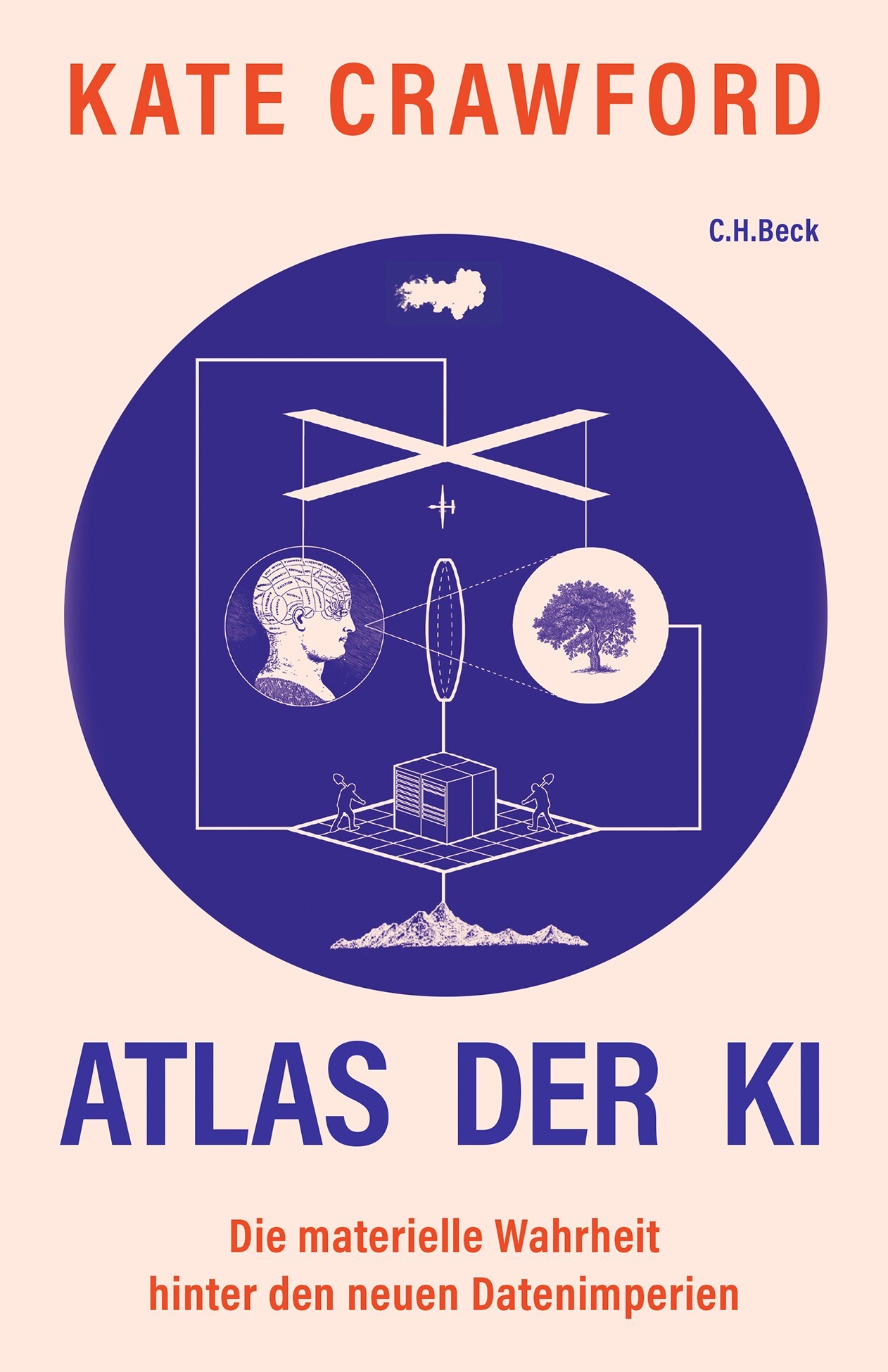
Atlas der KI (3. Auflg.)
Wir tendieren dazu, künstliche Intelligenz als eine wundersame und körperlose Form der maschinellen Klugheit zu betrachten. Von der preisgekrönten Wissenschaftlerin Kate Crawford lernen wir hingegen, dass KI in Wahrheit weder künstlich noch intelligent ist, sondern in ihrer materiellen Wirklichkeit auf Ressourcenausbeutung und Machtkonzentration hinausläuft.Crawford nimmt uns mit auf eine faszinierende Reise zu Lithiumminen und Klickfabriken, zu automatisierten Arbeitsplätzen und riesigen Datenarchiven, zu AI-Trainingscamps und zum algorithmischen Kriegsführungsteam des Pentagon. Auf diese Weise zeichnet sie einen Atlas der künstlichen Intelligenz, der die verschiedenen Bereiche ihrer konkreten Realität kartiert, um unser kritisches Auge zu schulen. Gestützt auf ein Jahrzehnt originärer Forschung zeigt Crawford, dass KI in erster Linie eine Technologie der Extraktion ist – der Abschöpfung von Mineralien, billiger Arbeitskraft und einer unermesslichen Anzahl von Daten. Das planetare Netzwerk der KI schädigt unsere Umwelt massiv, vertieft soziale Ungleichheiten und bedroht demokratische Prinzipien. Crawfords Buch liefert uns einen dringlichen Bericht, was auf dem Spiel steht, wenn große Unternehmen und staatliche Institutionen KI nutzen, um die Welt umzugestalten.Leseprobe (PDF-Link)Über die Autorin:Kate Crawford ist eine international führende Wissenschaftlerin für Künstliche Intelligenz und ihre Auswirkungen. Sie ist Professorin an der University of Southern California in Los Angeles, Forschungsleiterin bei Microsoft Research in New York und war die erste Gastprofessorin für KI und Justiz an der École Normale Supérieure in Paris. Ihr Buch «Atlas of AI» wurde mehrfach ausgezeichnet, in mehr als zehn Sprachen übersetzt und vom New Scientist und der Financial Times zu einem der Bücher des Jahres gekürt. Das Time Magazine hat sie in die TIME100-Liste als eine der einflussreichsten Personen im Bereich KI aufgenommen.

Datenmanagement und Datenanalyse
Derzeit wird kaum noch ernsthaft bestritten, dass die Daten eines Unternehmens ein wichtiges Wirtschaftsgut darstellen und in erheblicher Weise zum Erfolg beitragen können. Allerdings gilt es, nicht nur den Wert der Daten zu erkennen, sondern diese auch in den zugehörigen Geschäftsprozessen gewinnbringend einzusetzen. Als zwingende Voraussetzung erweist sich dabei, eine organisatorische und technische Basis zu etablieren, die nachhaltig darauf ausgerichtet ist, die fachlichen Ausgabenstellungen bestmöglich zu unterstützen. Unter dem Oberbegriff Datenmanagement werden dazu diejenigen Führungs- und Durchführungstätigkeiten diskutiert, die einen tragfähigen Rahmen für den Umgang mit Daten in der Organisation aufspannen. Daneben erweisen sich vor allem die Verfahren zur Auswertung und Analyse der verfügbaren Datenbestände als leistungsfähige Instrumente, um langfristige Wettbewerbsvorteile zu erlangen. Vor diesem Hintergrund widmet sich das vorliegende Buch den stetig an Bedeutung gewinnenden Themenfeldern Datenmanagement und Datenanalyse, denen insbesondere im Rahmen der digitalen Transformation eine große Bedeutung zukommt.PROF. DR. PETER GLUCHOWSKI leitet den Lehrstuhl für Wirtschaftsinformatik, insbesondere Systementwicklung und Anwendungssysteme, an der Technischen Universität in Chemnitz und konzentriert sich dort mit seinen Forschungsaktivitäten auf das Themengebiet Business Intelligence. Er beschäftigt sich seit rund 20 Jahren mit Fragestellungen, die den praktischen Aufbau dispositiver bzw. analytischer Systeme zur Entscheidungsunterstützung betreffen. Seine Erfahrungen aus unterschiedlichsten Praxisprojekten sind in zahlreichen Veröffentlichungen zu diesem Themenkreis dokumentiert.Einführung.- Abgrenzung und Definition: Daten, Information, Wissen.- Datenwert.- Datenarten.- Datenarchitekturen.- Big Data.- Verarbeitung der Daten (Data Processing).- Speicherung von Daten.-Datenübertragung.- Management von Daten in Unternehmen.- Datenstrategie.- Data Governance.- Datenmanagement.- Datenanalyse.- Begriffliche Einordnung.- Anwendungsdomänen von Analytics.- Methoden der Data Analytics.- Vorgehensmodelle für Data-Analytics-Projekte.

Der dynamikrobuste Strategieprozess
Strategiearbeit braucht ein Upgrade. Strategie muss omnipräsent werden. Kürzere Zyklen lassen die Strategie schneller an das reale Marktgeschehen anpassen. Zudem lässt sie sich im Tagesgeschäft deutlich besser verankern. Mit dem dynamikrobusten Strategieprozess liefert Roman P. Büchler einen zukunftsfähigen Ansatz für unsichere Zeiten.ROMAN P. BÜCHLER ist Gründer, Inhaber und Geschäftsführer der FORAN GmbH in St. Gallen in der Schweiz. Nach vielen Jahren erfolgreicher Tätigkeit als Verwaltungsrat, CEO und Unternehmensberater mit den Tätigkeits-Schwerpunkten Strategieentwicklung und Digitale Transformation entschloss er sich, seinen Überzeugungen zu folgen. Er gründete die FORAN, um Führungskräfte und Organisationen zu begleiten und sie auf einer höherenWirkungsebene zu unterstützen. Der Experte für Leadership, Digitale Transformation und Organisationsberatung hat als Autor bereits zahlreiche Fachartikel publiziert und zwei Bücher zu den Themen strategisches IT-Management und Leadership herausgegeben.Warum Strategiearbeit ein Upgrade braucht.- Dynamikrobust – Strategie für unsichere Zeiten.- Der moderne Strategieprozess -Das grosse Zielbild- Agile Ansätze in derStrategiearbeit-Die omnipräsente Strategie-Der Strategieprozess und seine Elemente (Backlog, Planung, Sprint, Review, Retrospektive, Strategieprozess-Owner und Strategie-Team).- Die Strategie der Zukunft.- Die Wirkung und was Sie gewinnen.

Künstliche Intelligenz im Supply Chain Management - Potenziale und Grenzen der KI
Komplexität, Vernetzung und Digitalisierung prägen heute die moderne Geschäftswelt. Die Notwendigkeit für Unternehmen, ihre Liefernetzwerke künftig resilienter gegen externe Einflüsse aufzustellen, ist bereits heute deutlich erkennbar. Veränderungen durch Klimawandel, Pandemien oder Versorgungsengpässe erschweren die Handhabung. KI-Technologien können dabei eine wertvolle Unterstützung leisten. Das vorliegende Buch soll ein grundlegendes Verständnis über die KI-Technologien vermitteln und insbesondere den Fokus auf die Konzeptentwicklung im SCM legen.DR.-ING. ALEXANDER GOUDZ ist wissenschaftlicher Mitarbeiter am Lehrstuhl Transportsysteme und –logistik an der Universität Duisburg-Essen. Seine Tätigkeitsschwerpunkte sind u.a. Anwendungen der Blockchain-Technologie und Künstlicher Intelligenz in der Logistik.SIBEL ERDOGAN studierte Wirtschaftsingenieurwesen an der Universität Duisburg-Essen. Es ist ihr ein besonderes Anliegen, KI den Menschen zugänglich zu machen..- Einleitung..- Grundlagen der KI.- Digitalisierung der Supply Chain..- Anwendungsgebiete und aktuelle Forschung zur künstlichen Intelligenz im SCM..- Fazit.

Microsoft Lists Essentials
Unlock the full potential of Microsoft Lists, an indispensable tool within the Microsoft 365 suite for tracking and organizing information. This book is your comprehensive guide, from the fundamentals to the advanced capabilities of Microsoft Lists, and will help you improve productivity and foster collaboration. Whether you’re making a basic to-do list or managing a complex inventory system, Lists is built for a broad spectrum of users, from beginners to professionals, catering to diverse enterprise and consumer use cases.The book provides thorough coverage of a wide array of topics, from the history of the product and initial setup to the entire set of features it offers. Insights are presented on using templates, optimizing columns, managing your lists, mastering the views, JSON features, and the various sharing and collaboration tools to utilize the product for maximum productivity. The book includes the latest features, such as commenting, Lists forms, real-time presence, and an in-depth look at the mobile experience.This guidebook is designed to transform your approach to information tracking and management. It offers practical examples, scenarios, and step-by-step instructions, complemented by rich visuals. The book is ideal for enterprises seeking to boost team productivity and also for individuals who wish to manage information with friends and family.WHAT YOU WILL LEARN* Optimize information management and manage lists like a pro, with list templates, custom columns, views, and JSON customization* Boost collaboration through sharing and commenting, and by employing Microsoft's security and privacy features* Maintain productivity on the go by navigating and managing lists on mobile devices, keeping your information accessible anywhere* Enhance productivity by connecting Microsoft Lists with other products in the Microsoft 365 ecosystemWHO THIS BOOK IS FORBusiness professionals. IT administrators, and individuals keen on leveraging Microsoft Lists within the Microsoft 365 ecosystemNAVEED AHMED is based in Toronto, Canada. He is a distinguished user experience designer with a career of over a decade, working at the intersection of technology and human-centric design. During his tenure with industry leaders, such as Microsoft, Adobe, and Red Hat, Naveed has made significant contributions to the design excellence of products that have reached millions of users worldwide. Between 2018 and 2023, Naveed played a critical role within the OneDrive & SharePoint team at Microsoft. As a Senior Design Manager, he was pivotal in shaping the UX Design for Microsoft Lists. His efforts were key to modernizing the product and enhancing the user experience across numerous web features, and with the launch of its mobile apps.Chapter 1: Introduction to Microsoft Lists.- Chapter 2: Getting Started with Microsoft Lists.- Chapter 3: Basics of List Creation.- Chapter 4: Columns and Column Formatting.- Chapter 5: Working with Lists.- Chapter 6: Mastering List Views.- Chapter 7: Collaboration in Lists.- Chapter 8: Lists on the go: Mobile & tablet apps.- Chapter 9: Advanced Productivity with Lists.- Chapter 10: Appendix 1: Supported CSS Styles in JSON Formatting.

Digitales Ökosystem für Innovationen in der Landwirtschaft
Dieses Buch präsentiert die neuesten Erkenntnisse auf dem Gebiet des digitalen Ökosystems für Innovationen in der Landwirtschaft. Das Buch ist in zwei Abschnitte mit dreizehn Kapiteln unterteilt, die sich mit spezialisierten Bereichen befassen. Es gibt dem Leser einen Überblick über die Rahmenbedingungen und Technologien, die an der Digitalisierung der Landwirtschaft beteiligt sind, sowie über die Methoden zur Datenverarbeitung, Entscheidungsfindung und innovativen Dienste/Anwendungen zur Förderung digitaler Transformationen in der Landwirtschaft. Die Kapitel wurden von Experten verfasst, die ihre Erfahrungen in verständlicher Sprache durch Fallstudien, geeignete Illustrationen und Tabellen teilen. Der Inhalt wurde entwickelt, um die Bedürfnisse der Geoinformatik, Datenwissenschaften, Landwirtschafts- und Umweltwissenschaften von Universitäten, landwirtschaftlichen Universitäten, technologischen Universitäten, Forschungsinstituten und akademischen Hochschulen weltweit zu erfüllen.Es unterstützt Planer, politische Entscheidungsträger und Erweiterungswissenschaftler bei der Planung und nachhaltigen Bewirtschaftung von Landwirtschaft und natürlichen Ressourcen.

Statistical Learning Tools for Electricity Load Forecasting
Introduction.- Part I: A Toolbox of Models.- Additive Modelling of Electricity Demand with mgcv.- Probabilistic GAMs: Beyond Mean Modelling.- Functional Time Series.- Random Forests.- Aggregation of Experts.- Mixed Effects Models for Electricity Load Forecasting.- Part II: Case Studies: Models in Action on Specific Applications.- Disaggregated Forecasting of the Total Consumption.- Aggregation of Multi-Scale Experts.- Short-Term Load Forecasting using Fine-Grained Data.- Functional State Space Models.- Forecasting Daily Peak Demand using GAMs.- Forecasting During the Lockdown Period.