

Software

Grundkurs Grafik und Gestaltung
Wer sich zum ersten Mal mit dem Thema Layout, Grafikdesign und Gestaltung beschäftigt, hat viele Fragen. Wo soll ich anfangen, wenn ich vor einer leeren weißen Seite stehe, die »gestaltet« werden will? Welche Formate bieten sich an? Welche Schriften passen am besten zusammen? Wie erzeuge ich Aufmerksamkeit? Und gilt das alles auch fürs Web? Da ist es gut, ein verlässliches Lern- und Praxisbuch zur Hand zu haben, das die Geheimnisse guter Gestaltung verständlich erklärt. Claudia Korthaus führt Sie Schritt für Schritt in die Welt der Gestaltung ein. Sie zeigt Ihnen, welche Grundregeln es zu beachten gilt und wie Sie sie auf die verschiedenen Bereiche wie Layout, Farbe, Bilder und Schriften anwenden können. Dank zahlreicher Beispiele, Vorher-nachher-Vergleichen und praktischer Checklisten lernen Sie schnell, worauf es bei guter Gestaltung ankommt und erstellen schon bald ansprechende Designs, die auch Profis überzeugen. So werden Sie fit für Ausbildung und Studium! Aus dem Inhalt: Drei Regeln für die GestaltungSeitenformat und SatzspiegelGestaltungsrasterElemente gekonnt platzierenFormen und GestaltgesetzeFarbharmonie und -kontrastFarbsysteme und TechnikBildwirkungDie richtige SchriftwahlSchriftkombinationenKorrekte DruckausgabeGestaltung, Farbe und Schrift im Web 1. Grundlagen der Gestaltung ... 18 1.1 ... Variabeln in der Gestaltung ... 18 1.2 ... Für jede Leseart die richtige Typografie ... 23 1.3 ... Reihenfolge der Gestaltung ... 26 1.4 ... Die erste Grundregel: Blickfang ... 32 1.5 ... Die zweite Grundregel: Gruppen ... 37 1.6 ... Die dritte Grundregel: Wiedererkennung ... 41 1.7 ... Zusammengefasst: Gestaltungsgrundlagen ... 47 2. Layout ... 52 2.1 ... Die Raumaufteilung ... 52 2.2 ... Wie finde ich das optimale Format? ... 53 2.3 ... Optimales Teilungsverhältnis:Goldener Schnitt und Co. ... 59 2.4 ... Wie entsteht ein Satzspiegel? ... 62 2.5 ... Das Gestaltungsraster ... 72 2.6 ... Wozu Spalten -- und wie viele? ... 81 2.7 ... Tipps für ein professionelles Layout ... 86 2.8 ... Seiten im Web ... 92 2.9 ... Webdesign für verschiedene Endgeräte ... 95 2.10 ... Zusammengefasst: Layout ... 103 3. Formen ... 106 3.1 ... Welche Wirkung haben Formen? ... 106 3.2 ... Die richtige Gewichtung ... 111 3.3 ... Gestaltgesetze ... 114 3.4 ... Anordnung und Kombination ... 120 3.5 ... Formen im Web ... 129 3.6 ... Zusammengefasst: Formen ... 132 4. Farben ... 138 4.1 ... Wieso wirken Farben? ... 138 4.2 ... Farbe verstehen ... 141 4.3 ... Der Farbkreis ... 148 4.4 ... Farbkontrast ... 150 4.5 ... Farbharmonie ... 153 4.6 ... Wie Farben wirken ... 158 4.7 ... Farbwahl am Beispiel ... 169 4.8 ... Farbe im Webdesign ... 173 4.9 ... Zusammengefasst: Farbe ... 178 5. Bilder ... 182 5.1 ... Ein Bild, was ist das eigentlich? ... 182 5.2 ... Woher nehmen und nicht stehlen? ... 184 5.3 ... Die Bildwirkung ... 187 5.4 ... Die Technik dahinter ... 205 5.5 ... Bilder im Web ... 210 5.6 ... Zusammengefasst: Bilder ... 215 6. Schrift ... 218 6.1 ... Schriften wirken ... 218 6.2 ... Die Schriftklassifikation ... 220 6.3 ... Die richtige Schrift wählen ... 233 6.4 ... Schriften kombinieren ... 241 6.5 ... Texte gestalten ... 254 6.6 ... Effekte ... 276 6.7 ... Schrift im Web ... 281 6.8 ... Schrifttechnik ... 292 6.9 ... Schriftpraxis am Beispiel ... 295 6.10 ... Zusammengefasst: Schrift ... 302 7. Ausgabe ... 306 7.1 ... Farbwiedergabe im Druck ... 306 7.2 ... Farbmanagement ... 308 7.3 ... Farbe in Photoshop und InDesign ... 311 7.4 ... Drucktechnische Besonderheiten ... 317 7.5 ... Papier ... 321 7.6 ... Datenübergabe per PDF ... 325 7.7 ... Zusammengefasst: Ausgabe ... 331 Index ... 335

GIMP 3
VIELE BEISPIELE UND KLEINE PROJEKTE MIT GIMPGIMP ist kostenlos, frei verfügbar und steht mit der neuen Version 3 den professionellen und oft teuren Software-Produkten in nichts nach. In diesem Buch zeigt Ihnen Winfried Seimert ausführlich, wie Sie GIMP anwenden und eigene Fotos bearbeiten können. Dabei geht er Schritt für Schritt vor und erklärt alles anhand leicht nachvollziehbarer Beispiele und kleiner Projekte.GANZ EINFACH FOTOS BEARBEITEN UND RETUSCHIERENNachdem Sie die Benutzeroberfläche kennengelernt haben, erfahren Sie, wie Sie Fotos mit ein paar schnellen Klicks optimieren können. Sie lernen sowohl, wie Sie Ihre Bilder freistellen, um nur bestimmte Bereiche zu bearbeiten, als auch, wie Sie die hilfreichen Ebenen sinnvoll nutzen. Außerdem demonstriert der Autor, wie Sie z.B. trübe Himmel aufhübschen, unerwünschte Bildteile entfernen oder sogar mithilfe der verschiedenen Filter beeindruckende Kunstwerke erstellen.Lassen Sie Ihrer Kreativität freien Lauf, wenden Sie das Erlernte sofort an Ihren eigenen Fotos an und erzielen Sie tolle Bild-Ergebnisse!AUS DEM INHALT:* Basiswissen GIMP* Arbeiten mit Bilddateien* Grundlegende Bildbearbeitung* Separieren und Freistellen* Einsatz von Ebenen* Bilder im rechten Licht* Fotos retuschieren* Werkzeug- und Trickkiste* GIMP erweiternWINFRIED SEIMERT ist IT-Dozent, Consultant und Autor zahlreicher Fachbücher insbesondere zu den Themen Software und Betriebssysteme. Dabei hat er immer den Komfort des Anwenders im Blick und erklärt entsprechend praxisnah. So erfreuen sich seine Bücher aufgrund ihrer durchdachten Strukturierung bereits seit Mitte der neunziger Jahre großer Beliebtheit.

PHP, MySQL, & JavaScript All-In-One For Dummies
LEARN THE ESSENTIALS OF CREATING WEB APPS WITH SOME OF THE MOST POPULAR PROGRAMMING LANGUAGESPHP, MySQL, & JavaScript All-in-One For Dummies bundles the essentials of coding in some of the most in-demand web development languages. You'll learn to create your own data-driven web applications and interactive web content. The three powerful languages covered in this book form the backbone of top online apps like Wikipedia and Etsy. Paired with the basics of HTML and CSS—also covered in this All-in-One Dummies guide—you can make dynamic websites with a variety of elements. This book makes it easy to get started. You'll also find coverage of advanced skills, as well as resources you'll appreciate when you're ready to level up.* Get beginner-friendly instructions and clear explanations of how to program websites in common languages* Understand the basics of object-oriented programming, interacting with databases, and connecting front- and back-end code* Learn how to work according to popular DevOps principles, including containers and microservices* Troubleshoot problems in your code and avoid common web development mistakesThis All-in-One is a great value for new programmers looking to pick up web development skills, as well as those with more experience who want to expand to building web apps. RICHARD BLUM is a highly experienced programmer and systems administrator. He is also author of the most recent editions of Linux For Dummies and Linux All-in-One For Dummies.
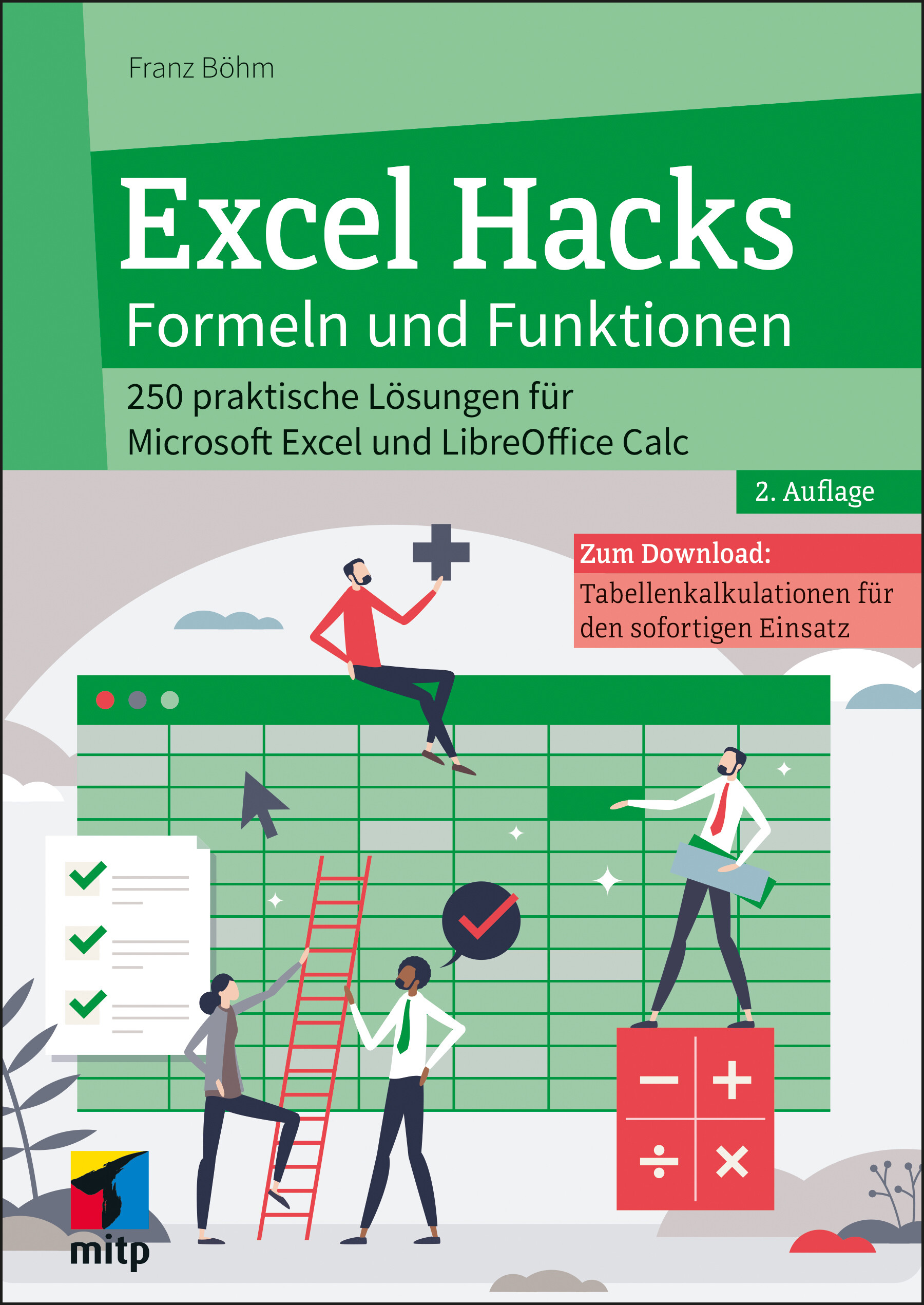
Excel Hacks (2. Auflg.)
250 sofort anwendbare Lösungen für Ihre TabellenkalkulationMit Microsoft Excel oder LibreOffice Calc können Sie all Ihre Aufgaben der Tabellenkalkulation bewältigen – vorausgesetzt, Sie kennen die passenden Funktionen und wissen, wie man sie effektiv kombiniert. Dieses Buch liefert Ihnen 250 erprobte Lösungen für typische Problemstellungen im Alltag und Beruf.Von Datum bis Datenbank: Verständliche Lösungen für alle AnforderungenOb Datums- und Uhrzeitberechnungen, Umsatzermittlung, statistische Auswertungen, bedingte Formatierungen oder die Arbeit mit Datenbanken – dieses Buch bietet Ihnen zu jedem Thema praxiserprobte Lösungen. Dank leicht verständlicher Schritt-für-Schritt-Anleitungen ist es ideal für Einsteiger und Fortgeschrittene geeignet.Sofort starten mit fertigen BeispieldateienAlle Formeln und fünf umfassende Beispielanwendungen – darunter ein Urlaubskalender und ein Haushaltsbuch – stehen zum Download bereit. Die Dateien sind im Excel-Format (.xlsx) und im Calc-Format (.ods) verfügbar und können unabhängig von der Softwareversion direkt eingesetzt werden.Aus dem Inhalt: Datums- und Uhrzeitfunktionen Geburtstage und Feiertage Kapital und Anlagen Zinsen, Kredite und Abschreibung Informationsfunktionen Umsatz- und Gewinnermittlung Rangfolgen und Runden Rechenfunktionen in der Praxis Textfunktionen Bedingte Formatierungen Tabellen und Datenbanken: Zeilen und Spalten Zellinhalte suchen und anzeigen Zellbereiche auswerten Tabellenkalkulation mit Copilot Anwendungen zum Download: Haushaltsbuch Quittungsformular Urlaubskalender Jahreskalender SternzeichenberechnungLeseprobe (PDF)
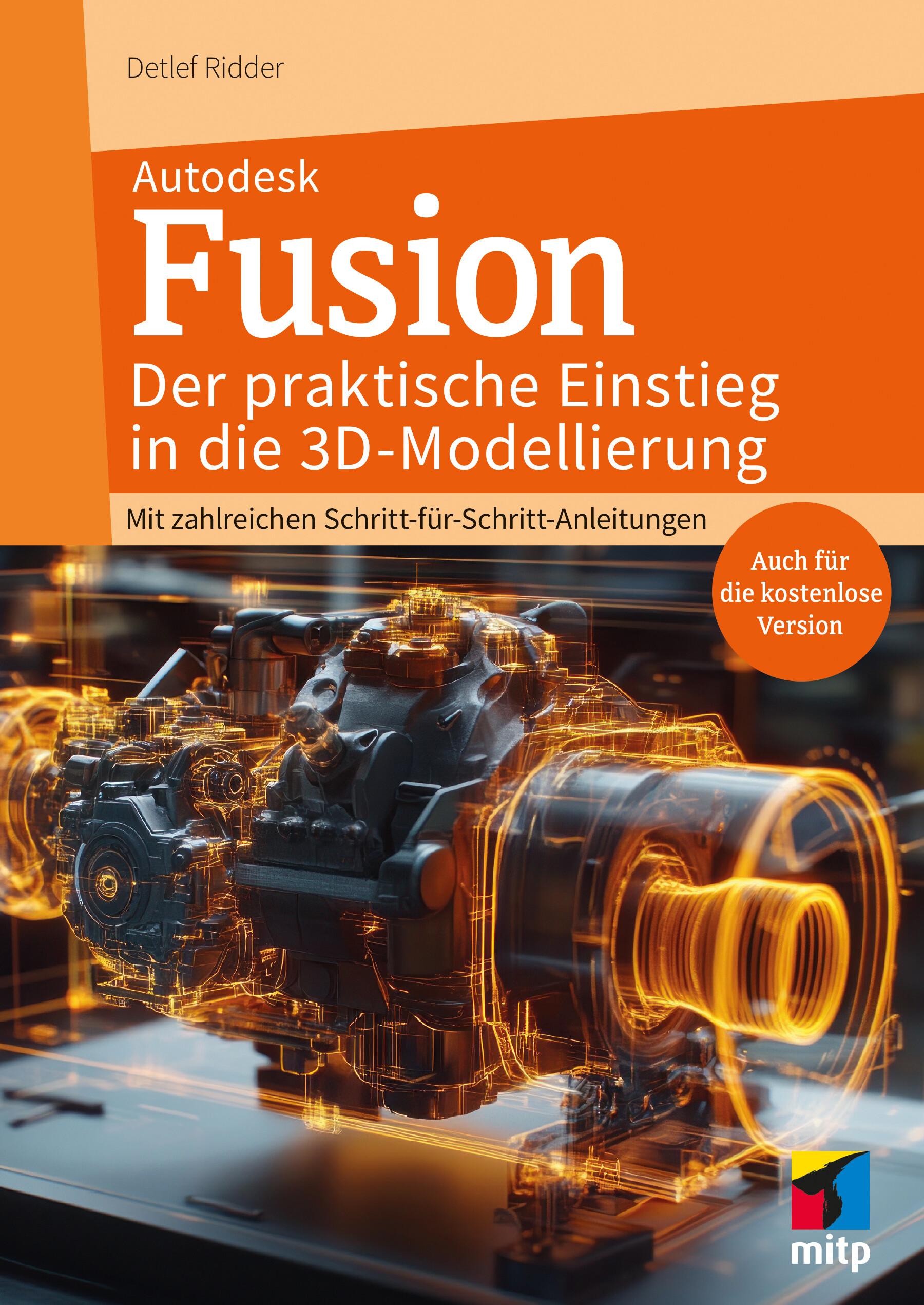
Autodesk Fusion
Learning by DoingDieses Workshop-Buch führt Sie Schritt für Schritt in die Arbeit mit Autodesk Fusion ein. Anhand anschaulicher Beispiele und klar strukturierter Übungen lernen Sie die wichtigsten Funktionen des leistungsstarken CAD-Programms von Grund auf kennen. Ob einfache Bauteile, komplexe Baugruppen oder animierte Explosionsdarstellungen: Sie wenden das Gelernte sofort praktisch an.Einfach erklärt – auch ohne CAD-Erfahrung leicht verständlichDie Anleitungen sind so gestaltet, dass sie sich leicht nachvollziehen lassen – ganz gleich, ob Sie beruflich mit CAD arbeiten, als Student erste Erfahrungen sammeln oder als Maker Ihre Projekte verwirklichen möchten. Dank zahlreicher Abbildungen und präziser Erläuterungen eignet sich das Buch ideal für den Einstieg.Perfekt abgestimmt auf die kostenlose Fusion-VersionAlle Projekte und Übungen sind auf die kostenlose Version von Autodesk Fusion für Privatanwender ausgerichtet und lassen sich damit ohne Einschränkungen umsetzen. Gleichzeitig bilden sie eine solide Grundlage für den professionellen Einsatz mit der kostenpflichtigen Vollversion.Aus dem Inhalt: Volumenkörper über Skizzen modellieren Einfache Volumenkörper mittels Extrusion (Austragung) und Rotation (Drehen) Gebogene Teile mittels Sweep mit Pfaden Bohrungen und Gewinde Modellieren über Flächen Zusammenfügen von Einzelkörpern zu Baugruppen Einfügen von Zukaufteilen aus Katalogen Gelenke definieren und Animation von Bewegungen Fotorealistische Darstellungen Ableiten technischer Zeichnungen mit Ansichten und Schnitten Erstellen von Werkzeugbahnen zur Fertigung auf NC-Maschinen Datenausgabe für 3D-DruckLeseprobe (PDF)

Metaversum
Die Entwicklung des Internets, insbesondere des WWW, stößt aktuell an ihre Grenzen – sowohl technisch als auch sozio-kulturell und ökonomisch. Als Lösung wird ein neues Internet versprochen, das die Grenzen der realen und der virtuellen Welt überwinden und Realität und Digitalität verschmelzen soll – das Metaversum. Technische, semantische und organisatorische Details greifen hierzu eng ineinander. Was aber bedeutet dies bei genauerer Betrachtung? Welche technisch-technologischen Herausforderungen müssen bewältigt werden, um ein solches Verschmelzen zu erreichen? Welche ökonomischen Möglichkeiten eröffnen sich– und welche verbieten sich möglicherweise? Wie kann erreicht werden, dass ein offenes und für jeden benutzbares Metaversum entsteht? Und wie kann vermieden werden, dass auch in diesem neuen Metaversum wenige große Anbieter ihre proprietären Ideen durchsetzen? Für diese Fragen soll dieses Buch Antworten aufzeigen. In der vorliegenden Auflage wurden zudem aktuelle Trends sowie der Beitrag der künstlichen Intelligenz zum Metaversum ergänzt.DR. PETER HOFFMANN, einerseits Hochschullehrer für Wirtschaftsinformatik, andererseits Medieninformatiker mit Herz und Seele, beschäftigt sich seit mittlerweile mehr als 20 Jahren mit den Fragen danach, was „digitale Medien“ und „virtuelle Welten“ eigentlich sind und wie der Benutzer mit ihnen interagieren kann.Metaversum?.- Woher … wohin … oder: was überhaupt.- Das Verschmelzen von Welten und …versen.- Eine andere Dimension: Ökonomisches Verschmelzen.- Was nicht fehlen darf: Kritik.- Die wirkliche Vision.- Jetzt ist die Zeit zum Bauen!.- Nachtrag 1 - Weil es so aktuell ist: Künstliche Intelligenz im Metaversum?.

Praxisbuch Windows-Sicherheit
Das Lehr- und Experimentierwerk zur Windows-SicherheitsarchitekturDieses Buch ist ein Muss für alle, die die Low-Level-Implementierungen des Windows-Betriebssystems verstehen müssen, um neue Schwachstellen zu entdecken oder sich gegen bekannte zu schützen. Entwickler*innen, DevOps und Sicherheitsforschende finden hier einen unvergleichlichen Einblick in die Schlüsselelemente und Schwachstellen des Betriebssystems, der sogar die offizielle Dokumentation von Microsoft übertrifft. James Forshaw, renommierter Bug Hunter und Sicherheitsexperte, stellt anhand von sorgfältig ausgearbeiteten PowerShell-Beispielen, mit denen experimentiert und modifiziert werden kann, die wichtigsten Themen der Windows-Sicherheit vor. Er deckt dabei alles von der grundlegenden Analyse der Ressourcensicherheit bis hin zu fortgeschrittenen Techniken wie der Verwendung der Netzwerkauthentifizierung ab. Interaktive PowerShell-Beispiele helfen Ihnen, das Systemverhalten aktiv zu testen und zu manipulieren. Sie lernen dabei, wie Windows Dateien und die Registrierung sichern, Zugriff auf eine Ressource gewährt oder die Authentifizierung sowohl lokal als auch über ein Netzwerk implementiert.Es behandelt:Die Sicherheitsarchitektur von Windows, einschließlich des Kernels und der Anwendungen im BenutzermodusDer Windows Security Reference Monitor (SRM), einschließlich Zugriffstoken, Abfrage und Einstellung des Sicherheitsdeskriptors einer Ressource sowie Zugriffskontrolle und AuditingInteraktive Windows-Authentifizierung und Speicherung von Anmeldeinformationen im Security Account Manager (SAM) und Active DirectoryMechanismen von Netzwerk-Authentifizierungsprotokollen, einschließlich NTLM und KerberosÜber den Autor:James Forshaw ist ein renommierter Experte für Computersicherheit im Project-Zero-Team von Google. In seiner mehr als 20-jährigen Erfahrung bei der Analyse und Ausnutzung von Sicherheitsproblemen in Microsoft Windows und anderen Produkten hat er Hunderte Sicherheitslücken in Microsoft-Plattformen entdeckt. Andere zitieren häufig seine Forschungsergebnisse, die er in Blogs, in Vorträgen oder durch neuartige Tools präsentiert, und er hat zahlreiche Forscher in der Branche inspiriert. Wenn er nicht gerade die Sicherheit andere Produkte knackt, arbeitet James als „Abwehrspieler“, berät Teams bei ihrem Sicherheitsdesign und verbessert die Chromium Windows Sandbox, um Milliarden von Nutzern weltweit zu schützen.Richtet sich an:System- und NetzwerkadminsMitarbeitende in der IT-SicherheitProgrammierer*innenStudierende (Informatik, IT-Sicherheit)

Barrierefreie Webentwicklung
Barrierefreie Websites gemäß Barrierefreiheitsstärkungsgesetz – technische Umsetzung und Best PracticesSpätestens zum 28. Juni 2025 muss das Barrierefreiheitsstärkungsgesetz angewendet werden. Dies bedeutet nicht nur eine gesetzliche Verpflichtung für viele Unternehmen, sondern bietet auch Vorteile: Barrierefreie Websites erreichen eine größere Zielgruppe, sorgen für eine bessere UX und stärken das Markenimage.Dieses praxisorientierte Buch ist essenziell für alle, die sich mit der Erstellung barrierefreier Webinhalte befassen. Maria Korneeva vermittelt die Grundlagen der digitalen Barrierefreiheit und die relevanten rechtlichen Rahmenbedingungen und Richtlinien, darunter das Barrierefreiheitsstärkungsgesetz (BFSG), die Web Content Accessibility Guidelines (WCAG) und EN 301 549. Anhand von anschaulichen Beispielen lernen Sie, Barrieren im Web selbst zu erleben und zu verstehen. Zudem erhalten Sie verständliche Anleitungen und praxisnahe Codebeispiele, die Ihnen helfen, Barrierefreiheit erfolgreich in Ihre Projekte zu integrieren. Automatisierte Tests unterstützen Sie schließlich dabei, die langfristige Einhaltung der Barrierefreiheitsanforderungen sicherzustellen.Bedeutung und Vorteile digitaler BarrierefreiheitGesetzliche Vorgaben, Normen und Richtlinien (inkl. BFSG, EAA und WCAG)Umgang mit ScreenreadernGrundsätze der Barrierefreiheit: Responsiveness, Farbgestaltung, Tastaturbedienbarkeit, AlternativtexteSemantisches HTML, ARIA, Accessibility Tree, zugänglicher Name und BeschreibungBarrierefreie Implementierung von Navigation, Links, Buttons, Bildern, Cookie-Bannern, Tabellen, Formularen und weiteren UI-ElementenBarrierefreiheit von Web Components und Single Page ApplicationsTools für automatisierte BarrierefreiheitschecksLinters und Plug-ins für Unit- und End-to-End-TestsIntegration in CI/CD-PipelinesKünstliche Intelligenz, zukunftsweisende Entwicklungen und aktuelle Einschränkungen Maria Korneeva ist Frontend Technology Lead und Google Developer Expert mit Fokus auf Angular und Barrierefreiheit. Sie arbeitet freiberuflich an der Entwicklung von Frontend-Anwendungen und leitet Workshops zu Web-Technologien. Ihre Erkenntnisse aus dem Coding-Alltag teilt sie gerne auf Konferenzen und Meetups.Richtet sich an:Webentwickler*innenInformatikstudierendeTeam-LeadsTech-Leads
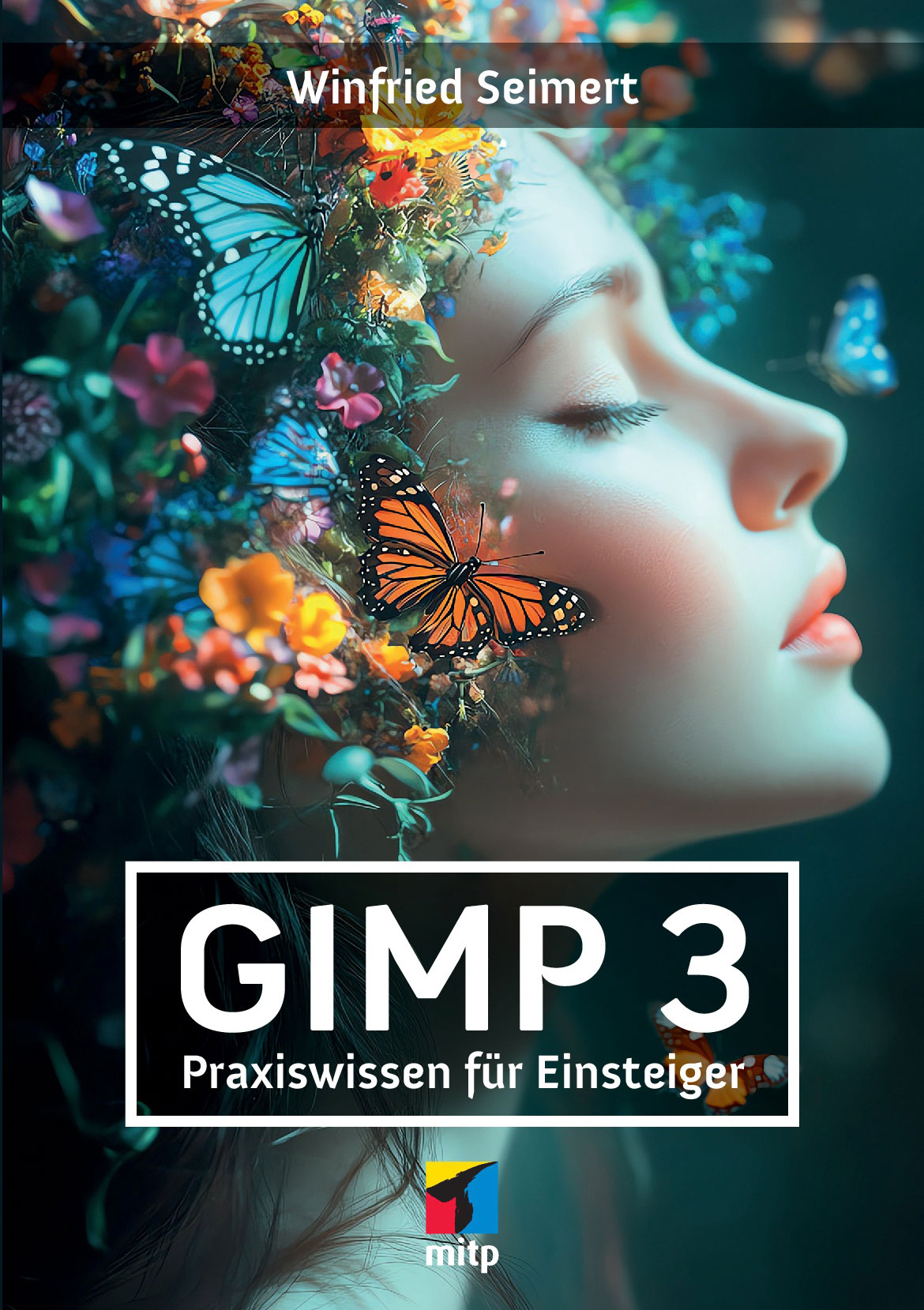
Gimp3 - Praxiswissen für Einsteiger
Viele Beispiele und kleine Projekte mit GIMPGIMP ist kostenlos, frei verfügbar und steht mit der neuen Version 3 den professionellen und oft teuren Software-Produkten in nichts nach. In diesem Buch zeigt Ihnen Winfried Seimert ausführlich, wie Sie GIMP anwenden und eigene Fotos bearbeiten können. Dabei geht er Schritt für Schritt vor und erklärt alles anhand leicht nachvollziehbarer Beispiele und kleiner Projekte.Ganz einfach Fotos bearbeiten und retuschierenNachdem Sie die Benutzeroberfläche kennengelernt haben, erfahren Sie, wie Sie Fotos mit ein paar schnellen Klicks optimieren können. Sie lernen sowohl, wie Sie Ihre Bilder freistellen, um nur bestimmte Bereiche zu bearbeiten, als auch, wie Sie die hilfreichen Ebenen sinnvoll nutzen. Außerdem demonstriert der Autor, wie Sie z.B. trübe Himmel aufhübschen, unerwünschte Bildteile entfernen oder sogar mithilfe der verschiedenen Filter beeindruckende Kunstwerke erstellen.Lassen Sie Ihrer Kreativität freien Lauf, wenden Sie das Erlernte sofort an Ihren eigenen Fotos an und erzielen Sie tolle Bild-Ergebnisse!Aus dem Inhalt: Basiswissen GIMP Arbeiten mit Bilddateien Grundlegende Bildbearbeitung Separieren und Freistellen Einsatz von Ebenen Bilder im rechten Licht Fotos retuschieren Werkzeug- und Trickkiste GIMP erweiternLeseprobe (PDF-Link)Über den Autor:Winfried Seimert ist IT-Dozent, Consultant und Autor zahlreicher Fachbücher insbesondere zu den Themen Software und Betriebssysteme. Dabei hat er immer den Komfort des Anwenders im Blick und erklärt entsprechend praxisnah. So erfreuen sich seine Bücher aufgrund ihrer durchdachten Struktur seit vielen Jahren großer Beliebtheit.

Autodesk Fusion - Der praktische Einstieg in die 3D-Modellierung
Learning by Doing Dieses Workshop-Buch führt Sie Schritt für Schritt in die Arbeit mit Autodesk Fusion ein. Anhand anschaulicher Beispiele und klar strukturierter Übungen lernen Sie die wichtigsten Funktionen des leistungsstarken CAD-Programms von Grund auf kennen. Ob einfache Bauteile, komplexe Baugruppen oder animierte Explosionsdarstellungen: Sie wenden das Gelernte sofort praktisch an. Einfach erklärt - auch ohne CAD-Erfahrung leicht verständlich Die Anleitungen sind so gestaltet, dass sie sich leicht nachvollziehen lassen - ganz gleich, ob Sie beruflich mit CAD arbeiten, als Student erste Erfahrungen sammeln oder als Maker Ihre Projekte verwirklichen möchten. Dank zahlreicher Abbildungen und präziser Erläuterungen eignet sich das Buch ideal für den Einstieg. Perfekt abgestimmt auf die kostenlose Fusion-Version Alle Projekte und Übungen sind auf die kostenlose Version von Autodesk Fusion für Privatanwender ausgerichtet und lassen sich damit ohne Einschränkungen umsetzen. Gleichzeitig bilden sie eine solide Grundlage für den professionellen Einsatz mit der kostenpflichtigen Vollversion. Aus dem Inhalt: * Volumenkörper über Skizzen Modellieren * Einfache Volumenkörper mittels Extrusion (Austragung) und Rotation (Drehen) * Gebogene Teile mittels Sweep mit Pfaden * Bohrungen und Gewinde * Modellieren über Flächen * Zusammenfügen von Einzelkörpern zu Baugruppen * Einfügen von Zukaufteilen aus Katalogen * Gelenke definieren und Animation von Bewegungen * Fotorealistische Darstellungen * Ableiten technischer Zeichnungen mit Ansichten und Schnitten * Erstellen von Werkzeugbahnen zur Fertigung auf NC-Maschinen * Datenausgabe für 3D-Druck Detlef Ridder hat langjährige Erfahrung im Bereich CAD und bereits zahlreiche Bücher zu AutoCAD, Inventor, Revit und Archicad veröffentlicht. Er gibt Schulungen zu diesen Programmen und zu CNC und weiß daher, welche Themen für Einsteiger besonders wichtig sind.

Excel Hacks - Formeln und Funktionen
* Funktionen von Excel oder Calc effektiv kombinieren, um alltägliche Aufgaben zu lösen * Leicht verständliche Schritt-für-Schritt-Anleitungen für Alltag und Beruf * Zum Download: Alle Lösungen als Tabellenkalkulation für den sofortigen Einsatz * Geeignet für alle Versionen von Microsoft Excel (2024 und älter sowie Microsoft 365) und LibreOffice Calc 250 sofort anwendbare Lösungen für Ihre Tabellenkalkulation Mit Microsoft Excel oder LibreOffice Calc können Sie all Ihre Aufgaben der Tabellenkalkulation bewältigen - vorausgesetzt, Sie kennen die passenden Funktionen und wissen, wie man sie effektiv kombiniert. Dieses Buch liefert Ihnen 250 erprobte Lösungen für typische Problemstellungen im Alltag und Beruf. Von Datum bis Datenbank: Verständliche Lösungen für alle Anforderungen Ob Datums- und Uhrzeitberechnungen, Umsatzermittlung, statistische Auswertungen, bedingte Formatierungen oder die Arbeit mit Datenbanken - dieses Buch bietet Ihnen zu jedem Thema praxiserprobte Lösungen. Dank leicht verständlicher Schritt-für-Schritt-Anleitungen ist es ideal für Einsteiger und Fortgeschrittene geeignet. Sofort starten mit fertigen Beispieldateien Alle Formeln und fünf umfassende Beispielanwendungen - darunter ein Urlaubskalender und ein Haushaltsbuch - stehen zum Download bereit. Die Dateien sind im Excel-Format (.xlsx) und im Calc-Format (.ods) verfügbar und können unabhängig von der Softwareversion direkt eingesetzt werden. Aus dem Inhalt: * Datums- und Uhrzeitfunktionen * Geburtstage und Feiertage * Kapital und Anlagen * Zinsen, Kredite und Abschreibung * Informationsfunktionen * Umsatz- und Gewinnermittlung * Rangfolgen und Runden * Rechenfunktionen in der Praxis * Textfunktionen * Bedingte Formatierungen * Tabellen und Datenbanken: * Zeilen und Spalten * Zellinhalte suchen und anzeigen * Zellbereiche auswerten * Tabellenkalkulation mit Copilot * Anwendungen zum Download: * Haushaltsbuch * Quittungsformular * Urlaubskalender * Jahreskalender * Sternzeichenberechnung Franz Böhm beschäftigt sich bereits seit über 20 Jahren intensiv mit Microsoft Excel und den freien Varianten OpenOffice/LibreOffice Calc und kennt daher die Gemeinsamkeiten, aber auch die Unterschiede dieser Programme sowie Lösungswege für alle Problemstellungen.

DDD 4 Developers
Neue, spannende Konzepte für DDD-Enthusiasten und Softwaremodellierer - Fokus auf Implementierungsdetails von DDD für komplexe Anwendungen - Praxisnahe Muster für die Umsetzung mit anschaulichen Beispielen - Behandlung realer Frage- und Problemstellungen in Softwareentwicklungsprojekten In den letzten Jahrzehnten hat sich Domain-Driven Design (DDD) als Technik der Wahl etabliert, um der enormen und zunehmenden Komplexität der Fachdomänen in der Softwaremodellierung zu begegnen. Christopher Rudoll zeigt, was die Prinzipien des Domain-Driven Design über die zentralen Tätigkeiten der Domänenmodellierung und des Prozessdesigns hinaus in der ganz konkreten Implementierungspraxis bedeuten und wie sie sich auf Fragestellungen in der täglichen Arbeit von Softwareentwicklern anwenden lassen. Dabei wird deutlich, dass DDD nicht nur mit Event Storming und der Identifikation von Bounded Contexts zu tun hat, sondern auch in Detailfragen der Implementierung sehr hilfreiche Leitlinien bieten kann. Solche Leitlinien werden in Form von Patterns und Antipatterns anhand von Code und UML-Beispielen ausführlich erläutert. Aus dem Inhalt: - Supple Design – Evansʼ Prinzipien - Ontologie – Abbildung der Welt in Software - Semantik – Abbildung sprachlicher Konzepte in Software - Konzeptuelle Räume – kognitive Grundlagen der Konzeptbildung - Die (lästige) Realität – Fallstricke und Stolpersteine Das Buch bietet sowohl für DDD-Enthusiasten und Softwaremodellierer als auch für Business-Analysten und Architekten neue, spannende Konzepte. Es erweitert den Werkzeugkasten eines jeden Entwicklers.

Samsung Galaxy - Stiftung Warentest Praxisratgeber
Das umfassende Handbuch für alle, die ihr Samsung Galaxy wirklich verstehen wollenMit diesem Buch aus der Stiftung-Warentest-Reihe "Digitale Welt einfach erklärt" werden Sie Schritt für Schritt mit Ihrem Samsung-Smartphone vertraut – ganz ohne Vorwissen. Ob Galaxy S25, S24, Fold oder Flip – dieser Ratgeber begleitet Sie von der Ersteinrichtung bis hin zu fortgeschrittenen Funktionen wie Sicherheitseinstellungen, Datenschutz oder der Nutzung von künstlicher Intelligenz (KI) mit Gemini. Leicht verständlich erklärt, praxisnah illustriert und systematisch aufgebaut – ideal für Einsteiger und fortgeschrittene Nutzer.Sie lernen, wie Sie Apps aus dem Google Play Store und den Galaxy Apps sinnvoll nutzen, Widgets und Benachrichtigungen personalisieren oder Fotos und Videos mit der leistungsstarken Kamera aufnehmen. Erfahren Sie alles über die besten Einstellungen, den Umgang mit der Samsung Health App oder wie Sie Ihr Gerät vor Schadsoftware und Datenverlust schützen. Auch smarte Funktionen wie Sprachassistenten, VPN oder Samsung DeX werden verständlich erklärt.Mit hilfreichen Tipps zur Akkupflege, Gerätesicherheit, Bixby-Einstellungen und nützlichen Alltags-Apps rüstet Sie dieser Leitfaden für alle digitalen Herausforderungen.- Alle wichtigen Funktionen Schritt für Schritt erklärt – ideal für Anfänger und Profis- Mit zahlreichen Tipps zu Samsung One UI, Kamera, Datenschutz & Sicherheit- Inklusive Einrichtung von Mail, Kalender, Cloud-Diensten, WhatsApp und Messenger-Apps- Extra-Kapitel zu Samsung Health, KI, Bixby, Smart Switch & VPN- Praktisches Nachschlagewerk mit Stichwortregister und ScreenshotsHolen Sie das Beste aus Ihrem Samsung Galaxy heraus und machen Ihr Mobiltelefon zum leistungsstarken Alltagsbegleiter!

Unlocking Python
A FUN AND PRACTICAL GUIDE TO LEARNING PYTHON WITH A SPECIAL FOCUS ON DATA SCIENCE, WEB SCRAPING, AND WEB APPLICATIONSIn Unlocking Python: A Comprehensive Guide for Beginners, veteran software engineer, educator, and author Ryan Mitchell delivers an intuitive, engaging, and practical roadmap to Python programming. The author walks you through the vocabulary, tools, foundational knowledge, and occasional pop-culture references you'll need to hone your skills with this popular programming language. You'll learn how to install and run Python on your own machine, get up and coding with the language quickly, and best practices for programming both independently and in the workplace. You'll also find:* Key concepts in computer and data science explained from the ground up* Advanced Python topics such as logging, unit testing, multiprocessing, and interacting with databases.* Introductions to some of Python's most popular third-party libraries: Flask, Django, Scrapy, Scikit-Learn, Numpy, and Pandas* Amusing anecdotes from the trenches of industryPerfect for tech-savvy professionals at any stage of their careers who are interested in diving into Python programming. Unlocking Python is also a must-read for readers who work in a technical role but are interested in getting more directly involved with programming, as well as non-Python programmers who want to apply their technical skill to a new language. RYAN MITCHELL is the author of Unlocking Python (Wiley), Web Scraping with Python (O’Reilly), and multiple courses on LinkedIn Learning including Python Essential Training. She holds a master’s degree in software engineering from Harvard University Extension School and has worked as principal software engineer and data scientist on the search team at the Gerson Lehrman Group for the last six years. PART I: PROGRAMMINGCHAPTER 1: INTRODUCTION TO PROGRAMMING 3Programming as a Career 4Myths About Programmers 4How Computers Work 7A Brief History of Modern Computing 12The Unix Operating System 12Modern Programming 13Talking About Programming Languages 14Problem-Solving as a Programmer 17CHAPTER 2: PROGRAMMING TOOLS 21Shell 21Version Control Systems 25Authenticating with GitHub with SSH Keys 27Integrated Development Environments 33Web Browsers 34CHAPTER 3: ABOUT PYTHON 37The Python Software Foundation 38The Zen of Python 39The Python Interpreter 40The Python Standard Library 41Third-Party Libraries 42Versions and Development 43PART II: PYTHONCHAPTER 4: INSTALLING AND RUNNING PYTHON 47Installing Python 47Windows 48macOS 48Linux 49Installing and Using pip 50Windows 51macOS 51Linux 51Installing and Using Jupyter for IPython files 52Virtual Environments 54Anaconda 56CHAPTER 5: PYTHON QUICKSTART 59Variables 59Data Types 62Operators 67Arithmetic Operators 67Operators and Assignments 69Comparison Operators 70Identity Operators 71Boolean Operators 73Membership Operators 73Control Flow 74If and Else 75For 76While 76Functions 78Classes 80Everything Is an Object 82Data Structures 82Lists 83Dictionaries 84Tuples 86Sets 86Exercises 88CHAPTER 6: LISTS AND STRINGS 91String Operations 91String Methods 92List Operations 95Slicing 97List Comprehensions 100Exercises 103CHAPTER 7: DICTIONARIES, SETS, AND TUPLES 105Dictionaries 105Dictionary Comprehensions 108Reducing to Dictionaries 110Sets 112Tuples 114Exercises 116CHAPTER 8: OTHER TYPES OF OBJECTS 119Other Numbers 119Dates 124Bytes 129Exercises 132CHAPTER 9: ITERABLES, ITERATORS, GENERATORS, AND LOOPS 135Iterables and Iterators 135Generators 137Looping with Pass, Break, Else, and Continue 139Assignment Expressions 143Walrus Operators 143Recursion 144Exercises 148CHAPTER 10: FUNCTIONS 149Positional Arguments and Keyword Arguments 149Functions as First-Class Objects 155Lambda Functions 158Namespaces 160Decorators 163Exercises 168CHAPTER 11: CLASSES 171Static Methods and Attributes 173Inheritance 175Multiple Inheritance 178Encapsulation 182Polymorphism 186Exercises 188CHAPTER 12: WRITING CLEANER CODE 189PEP 8 and Code Styles 189Comments and Docstrings 190Documentation 194Linting 196Formatting 199Type Hints 200PART III: ADVANCED TOPICSCHAPTER 13: ERRORS AND EXCEPTIONS 207Handling Exceptions 207Else and Finally 210Raising Exceptions 212Custom Exceptions 214Exception Handling Patterns 217Exercises 223CHAPTER 14: MODULES AND PACKAGES 225Modules 225Import This 228Packages 229Installing Packages 235Exercises 240CHAPTER 15: WORKING WITH FILES 243Reading Files 243Writing Files 247Binary Files 250Buffering Data 252Creating and Deleting Files and Directories 254Serializing, Deserializing, and Pickling Data 256Exercises 259CHAPTER 16: LOGGING 261The Logging Module 261Handlers 266Formatting 269Exercises 272CHAPTER 17: THREADS AND PROCESSES 275How Threads and Processes Work 275Threading Module 276Locking 280Queues 283Multiprocessing Module 285Exercises 292CHAPTER 18: DATABASES 293Installing and Using SQLite 294Installing SQLite 294Using SQLite 296Query Language Syntax 297Using SQLite with Python 300Object Relational Mapping 303Exercises 306CHAPTER 19: UNIT TESTING 307The Unit Testing Framework 309Setting Up and Tearing Down 312Mocking Methods 314Mocking with Side Effects 318PART IV: PYTHON FRAMEWORKSCHAPTER 20: REST APIS AND FLASK 323HTTP and APIs 323Getting Started with Flask Applications 327APIs in Flask 330Databases 333Authentication 336Sessions 338Templates 342CHAPTER 21: DJANGO 345Installing Django and Starting Django 346Databases and Migrations 351Django Admin Interface 353Models 355More Views and Templates 358More Resources 361CHAPTER 22: WEB SCRAPING AND SCRAPY 363Installing and Using Scrapy 364Parsing HTML 366Items 371Crawling with Scrapy 372Item Pipelines 376CHAPTER 23: DATA ANALYSIS WITH NUMPY AND PANDAS 379NumPy Arrays 380Pandas DataFrames 383Cleaning 387Filtering and Querying 391Grouping and Aggregating 393CHAPTER 24: MACHINE LEARNING WITH MATPLOTLIB AND SCIKIT-LEARN 397Types of Machine Learning Models 398Exploratory Analysis with Matplotlib 400Building Supervised Models with Scikit-Learn 409Evaluating Classification Models with Scikit-Learn 415Index 421

Clean Apex Code
Many developers excel at building solutions in Apex but lack formal training in the core principles of professional software engineering. This book changes that and provides a no-nonsense guide for experienced Salesforce developers ready to master the art of software design.Pragmatic, approachable, and to the point, this book focuses on essential practices like modularity, coupling, cohesion, and testing—not just to write better code, but to improve how teams deliver software. By emphasizing object-oriented programming, dependency injection, and boundaries, it equips you to design systems that are easier to maintain, test, and scale. With fast, reliable tests as a cornerstone, you’ll learn how great design enables true continuous integration and high-performance software delivery.Through actionable examples and clear explanations, you’ll learn how to design better systems, reduce complexity, and create codebases that stand the test of time. If you’re serious about your craft, _Clean Apex Code_ will give you the tools and mindset to think like a professional software engineer and deliver software at a higher level.WHAT YOU WILL LEARN* Use better names in all software constructs to improve readability and maintainability* Apply core software design principles to Apex development* Embrace modularity, abstraction, and boundaries to simplify complex systems* Leverage dependency injection, and mocking to write fast, modular tests* Practice real continuous integration with reliable, high-speed testingWHO THIS BOOK IS FORExperienced Salesforce developers and professional software engineersPABLO GONZALEZ started his career as a Salesforce developer and later moved into product management, where he focuses on building tools that make life easier for developers. He’s worked on Salesforce DevOps products like HappySoup, Salto, and AutoRABIT, blending his technical skills with his love for solving practical problems.He’s passionate about good software engineering practices and believes the best way to get the most out of Salesforce is to approach it with an engineering mindset. Pablo’s goal is to give Salesforce engineering teams the tools and knowledge they need to succeed — and enjoy their work more.Originally from Costa Rica, Pablo now lives in Ireland with his wife and daughter. He loves trying new foods and sharing good meals with family and friends.Chapter 1: Refactoring Apex code: First steps.- Chapter 2: Naming: Simple Techniques for Better Software Design.- Chapter 3: Doing One Thing: Abstraction, Boolean Parameters, and Design Patterns.- Chapter 4: How long should methods be: length, depth and subtasks.- Chapter 5: Comments don’t lie, developers do.- Chapter 6: Null, validations and guard clauses.- Chapter 7: Cascading failures in trigger boundaries.- Chapter 8: Object-Oriented Programming in Apex.- Chapter 9: Software Design Principles.- Chapter 10: Modularity, Coupling and Cohesion.- Chapter 11: Dependency Injection and Boundaries.- Chapter 12: Unit Tests, Stubs and Mocking the Salesforce Database.- Chapter 13: The Apex Well-Architected Framework.

Computer für Senioren
Computer für SeniorenComputer einschalten, Buch aufschlagen, loslegen! So einfach kann Ihr Start mit Windows 11 sein. Mit diesem Werk bringen Sie sich alles rund um Ihren neuen PC selbst bei, und das ganz ohne Vorwissen: im Internet surfen, E-Mails schreiben, Fotos bearbeiten, Briefe ausdrucken – der Autor Philip Kiefer zeigt Ihnen alle nötigen Schritte am Bild und kommt ohne komplizierte Fachbegriffe aus. Die Anleitungen eignen sich für PC und Notebook gleichermaßen. So macht der Einstieg in die digitale Welt Spaß!Den Computer einrichten, im Internet surfen, E-Mails schreiben, Fotos ansehen, Geräte anschließen u. v. m.Für PC und NotebookAktuell zu Windows 11Aus dem InhaltAlles problemlos einrichtenSich am Bildschirm zurechtfindenPC und Notebook mit Maus und Touchpad bedienenIm Internet surfenE-Mails schreiben und empfangenKamera und Drucker anschließenFotos verschönern und präsentierenTexte schreiben und ausdruckenSicher sein vor Viren & Co.Texte und Bilder geordnet ablegen und schnell auffindenZum Autor:Philip Kiefer zählt zu den renommiertesten Computer-Fachbuchautoren Deutschlands und zeichnet sich besonders durch sein Talent aus, komplexe technische Inhalte leicht verständlich zu vermitteln.

Scaling Enterprise Solutions with Large Language Models
Artificial Intelligence (AI) is the bedrock of today's applications, propelling the field towards Artificial General Intelligence (AGI). Despite this advancement, integrating such breakthroughs into large-scale production-grade enterprise applications presents significant challenges. This book addresses these hurdles in the domain of large language models within enterprise solutions.By leveraging Big Data engineering and popular data cataloguing tools, you’ll see how to transform challenges into opportunities, emphasizing data reuse for multiple AI models across diverse domains. You’ll gain insights into large language model behavior by using tools such as LangChain and LLamaIndex to segment vast datasets intelligently. Practical considerations take precedence, guiding you on effective AI Governance and data security, especially in data-sensitive industries like banking.This enterprise-focused book takes a pragmatic approach, ensuring large language models align with broader enterprise goals. From data gathering to deployment, it emphasizes the use of low code AI workflow tools for efficiency. Addressing the challenges of handling large volumes of data, the book provides insights into constructing robust Big Data pipelines tailored for Generative AI applications. _Scaling Enterprise Solutions with Large Language Models_ will lead you through the Generative AI application lifecycle and provide the practical knowledge to deploy efficient Generative AI solutions for your business.WHAT YOU WILL LEARN* Examine the various phases of an AI Enterprise Applications implementation.* Turn from AI engineer or Data Science to an Intelligent Enterprise Architect.* Explore the seamless integration of AI in Big Data Pipelines.* Manage pivotal elements surrounding model development, ensuring a comprehensive understanding of the complete application lifecycle.* Plan and implement end-to-end large-scale enterprise AI applications with confidence.WHO THIS BOOK IS FOREnterprise Architects, Technical Architects, Project Managers and Senior Developers.Arindam Ganguly is an experienced Data Scientist in one of the leading Multi-National Software Service Firm where he is responsible for developing and designing intelligent solutions leveraging his expertise in Artificial Intelligence and Data Analytics. He has over 8 years of experience delivering enterprise products and applications and has proven skill sets in developing and managing a number of software products with various technical stacks.Arindam also is well-versed in developing automation and hyper-automation solutions leveraging automated workflow engines and integrating them with AI. Additionally, he is the author of _Build and Deploy Machine Learning Solutions using IBM Watson_, which teaches how to build artificial intelligent applications using the popular IBM Watson toolkit.Chapter 1_Machine Learning Primer.- Chapter 2_Natural Language Processing Primer.- Chapter_3: RNN to Transformer and BERT.- Chapter_4: Large Language Models.- Chapter_5: Retrieval Augmented Generation.- Chapter_6: LLM Evaluation and Optimization.- Chapter_7: AI Governance and Responsible AI.- Chapter_8: Adding Intelligence to a Large Enterprise Applications.- Chapter_9: Data Pipelines in Generative AI.- Chapter_10: Putting it all Together.

Anwendungsbezogenes Projektmanagement
Die Intention dieses Buches ist es, Projektleitern zu helfen handwerkliche Fehler im Projektmanagement zu vermeiden und sie in ihrer Professionalität zu unterstützen. Neben einem ausführlichen IT-Praxisfall sind Mustervorlagen eines Projektauftrags sowie eines Projektabschlussberichts enthalten. Mit der zweiten Auflage wurden die Facetten des Projektmanagements erweitert und um agiles Projektmanagement ergänzt. Gleichzeitig dient das Buch aber auch als Grundlage für Hochschulkurse zum Projektmanagement. Es ist durch die Kombination aus langjähriger, intensiver Projektleitererfahrung sowie akademischer Betrachtung des Themas in Vorlesungen an verschiedenen Universitäten und Hochschulen entstanden.CHRISTIAN BÄR ist Professor für Wirtschaftsinformatik mit Schwerpunkt Projektmanagement und verbindet, als Chief Technology Officer der DATEV eG, die Lehre mit der Praxis.JENS FIEGE ist Geschäftsführer bei der b4value.net GmbH. Er hat umfassende Erfahrungen im klassischen und agilen Projektmanagement und war Lehrbeauftragter der DHBW Mannheim.MARKUS WEIẞ ist als Product Owner bei der DATEV eG für die Steuerung eines Softwareentwicklungsbereichs verantwortlich und daneben als Dozent tätig.MARTIN ERTEL ist als Projektleiter für den Aufbau eines Entwicklungsstandorts in Polen und als Staffing Manager für das Staffing von Entwicklungsprojekten bei der DATEV eG verantwortlich.Teil I: Pragmatische und methodische Vorgehensweise.-Begriffsbestimmungen und Definitionen.- Projektwürdigkeitsanalyse.- Projektorganisation und Durchführung.- SMART formulierter Projektauftrag.- Rahmenbedingungen für die Projektsteuerung.- Projektkoordination.- Projektcontrolling.- Projektabschluss.- Teil II: Praxisfall.- Das Softwareprojekt bei der Muster GmbH.- Index.

3D-Spiele programmieren mit Unity
Komplette 2D- und 3D-Spiele Schritt für Schritt entwickelnFiguren animieren sowie Landschaften und Gebäude gestaltenSpielend programmieren lernen für Einsteiger Ganz einfach eigene 3D-Spiele entwickeln Hans-Georg Schumann zeigt detailliert und leicht verständlich, wie Einsteiger mit der beliebten Spiele-Engine Unity eigene 3D-Spiele entwickeln können. Folgen Sie dem Autor Schritt für Schritt, wie verschiedene Elemente eines 3D-Spiels erstellt werden: sowohl 2D- als auch 3D-Landschaften und Bauwerke, verschiedenste Charaktere mit diversen Eigenschaften und Bewegungsfähigkeiten, Features wie Sound und Effekte u.v.m. Landschaften und Charaktere entwerfen Sie beginnen mit einem kleinen Jump & Run-Spiel in 2D und lernen dann Schritt für Schritt, eigene Spielwelten in 3D zu erschaffen. Dabei erfahren Sie, wie man Landschaften mit Vegetation und Seen gestaltet. Außerdem bauen Sie einfache Gebäude und erschaffen einen Gegner, den Sie animieren und der mit der Zeit todbringende Eigenschaften erhält. Dabei eignen Sie sich ganz nebenbei das Programmieren in C# an und lernen alle Bausteine kennen, um eigene Ideen umzusetzen. Realitätsnah mit hervorragenden Effekten Das Unity-Entwicklungssystem erzeugt tolle Effekte, die dem Spiel das nötige Reality-Gefühl geben. Alles, was Sie zum Programmieren Ihrer Projekte benötigen, gibt es als Paket zum kostenlosen Download. Aus dem Inhalt: Unity starten und ein erstes kleines Spiel in 2D erstellenIn die Script-Programmierung mit C# einsteigenEinen Charakter entwerfen und ihm Eigenschaften gebenEin Jump & Run-Spiel entwickelnDas Prinzip von 3D verstehen und ein Terrain mit Bäumen und Wasser gestaltenGanze Bauwerke entstehen lassenDie Figur klettern, schwimmen und sogar tauchen lassenEine Fantasie-Kreatur entwerfen und durch Animation lebendig werden lassenStrahlen, Partikel und Sound einbindenKünstliche Intelligenz nutzenEnergiekontrolle und andere Features aufrüstenInstallationshilfe und Fehlerbehebung Zum Download unter www.mitp.de/0923: Die wichtigsten Projekte aus dem Buch Systemvoraussetzungen: Windows 10 oder 11 Hans-Georg Schumann war Informatik- und Mathematiklehrer und ist erfolgreicher Fachbuchautor zu den Themen Programmierung und PC-Anwendungen.

Grafik und Gestaltung
Gestalten Sie jetzt noch besser mit der 4. Auflage des Standardwerks! Der Grafikdesigner Markus Wäger führt Sie in diesem Buch auf über 700 Seiten in die Welt der Gestaltung ein. Er erklärt Ihnen, wie Sie mit Formen, Farben, Typografie und Bildern ein perfektes Ergebnis erreichen – sei es nun eine einfache Visitenkarte oder das Layout für ein ganzes Magazin. Sie erfahren alles zur richtigen Farbwahl, zu Schriftkombinationen, Lesbarkeit, Rastern, Bildqualität und vielem mehr. Ansprechende Beispiele, liebevoll gestaltete Grafiken und genaue Analysen helfen Ihnen dabei, das Gelernte in Ihren eigenen Gestaltungsprojekten anzuwenden. Zahlreiche Tipps und Tricks aus der Praxis, erprobte Arbeitsweisen und Erfahrungswerte des Autors machen das Buch zu einer wahren Fundgrube, die Sie bei Ihrer Arbeit als Nachschlagewerk und Inspirationsquelle nutzen können. Kurzum: Mit diesem Buch an Ihrer Seite sind kreative und professionelle Layouts kein Problem mehr. Das Buch ist speziell auch für angehende Mediengestalter ein unverzichtbarer Begleiter! Aus dem Inhalt: GestaltungsregelnFormenlehre, Proportionen, FormateFarbräume, FarbgestaltungBildgestaltungSchrift und SatzLesetypografieGestaltungsrasterCorporate Design, GestaltungsmedienDTP-Grundlagen, Druckwissen Vorwort ... 14 1. Grundlagen ... 16 1.1 ... Was ist Grafikdesign? ... 17 1.2 ... Gutes Design ... 32 1.3 ... Die wichtigste Gestaltungsregel ist Schauen ... 36 2. Wahrnehmung ... 38 2.1 ... Visuelle Wahrnehmung ... 39 2.2 ... Wahrnehmungsgesetze ... 89 3. Farbe ... 108 3.1 ... Physik der Farben ... 109 3.2 ... Farbkreise ... 128 3.3 ... Eigenschaften der Farben ... 131 3.4 ... Farbsysteme ... 140 3.5 ... Harmonie und Kontrast ... 192 3.6 ... Wirkung und Bedeutung ... 216 4. Form ... 246 4.1 ... Punkt ... 247 4.2 ... Linie ... 251 4.3 ... Fläche ... 257 4.4 ... Gestaltcharakter ... 260 4.5 ... Grundformen ... 269 4.6 ... Proportionen ... 277 5. Schrift ... 290 5.1 ... Grundlagen ... 291 5.2 ... Schriftentwicklung: Antike bis Mittelalter ... 306 5.3 ... Die Entwicklung der Antiqua ... 320 5.4 ... Entwicklung im 19. Jahrhundert ... 336 5.5 ... Entwicklung im 20. Jahrhundert ... 343 5.6 ... Schrift im 21. Jahrhundert ... 383 5.7 ... Klassifizierung der Schriftformen ... 393 5.8 ... Eigenschaften und Charakter ... 402 5.9 ... Zeichen und Zeichensätze ... 432 6. Lesetypografie ... 450 6.1 ... Lesearten ... 452 6.2 ... Makrotypografie ... 471 6.3 ... Mikrotypografie ... 502 7. Gestaltungsraster ... 510 7.1 ... Raster im Design von Grafiken, Logos und Symbolen ... 511 7.2 ... Rastersysteme zur Layoutgestaltung ... 514 7.3 ... Raster im UI/UX-Design ... 538 8. Layoutdesign ... 552 8.1 ... Layout ... 554 8.2 ... Usability ... 555 8.3 ... Gestaltungsprinzipien ... 564 8.4 ... Bildkomposition ... 596 9. Kommunikationsdesign ... 608 9.1 ... Idee und Konzeption ... 610 9.2 ... Visuelle Kommunikation ... 629 9.3 ... Logogramm ... 651 9.4 ... Bilder ... 658 9.5 ... Storytelling ... 665 10. Corporate Design ... 682 10.1 ... Corporate Identity (CI) ... 683 10.2 ... Marke und Branding ... 691 10.3 ... Kernelemente des Corporate Designs ... 701 Index ... 752
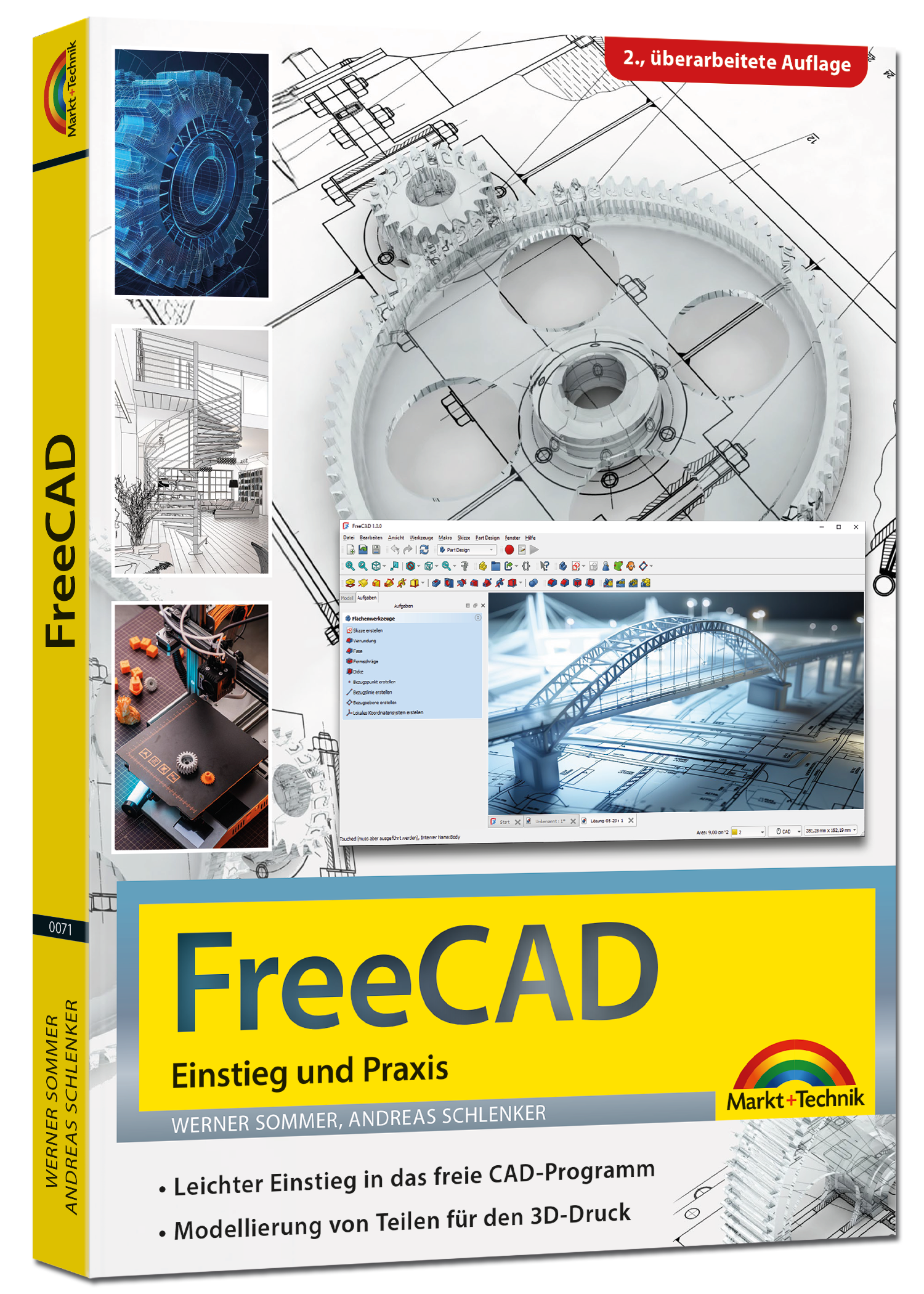
FreeCAD - Einstieg und Praxis (2. Auflg.)
FreeCAD ist ein parametrisches 3D-Konstruktionsprogramm, das in der aktuellen Version mit deutlich veränderter Oberfläche aufwartet. Mit dieser professionellen CAD-Software erstellen Sie geometrische 2D- und 3D-Modelle sowie technische Zeichnungen.Auch architektonische Anwendungen lassen sich damit anfertigen. Um Sie mit dem großen Funktionsumfang des Programms vertraut zu machen, werden die wichtigsten Arbeitsbereiche ausführlich vorgestellt. Anhand zahlreicher Beispiele und Übungsaufgaben wird viel Praxiswissen vermittelt: Sie erstellen Modelle für den 3D-Druck, gestalten Gebäude, nutzen Funktionen für die CNC-Steuerung sowie die FEM-Berechnung.Aus dem Inhalt Ein erster Rundgang durch FreeCAD Eine Schachfigur modellieren: der Turm Alles über Skizzen und Randbedingungen Der Arbeitsbereich Part Design Technische Zeichnungen im Arbeitsbereich TechDraw erstellen Variantenkonstruktion: der Arbeitsbereich Spreadsheet Baugruppen erstellen FreeCAD für die Architektur: der Arbeitsbereich BIM Zeichnungen von Architektur-Modellen CNC-Programme erzeugen: der Arbeitsbereich CAM Festigkeit von Bauteilen berechnen: der Arbeitsbereich FEM Weitere Add-ons: ein Überblick

Vorgehensmuster für Softwarearchitektur (4. Auflg.)
Vorgehensmuster für SoftwarearchitekturEgal ob »Agile«, »Lean«, »Cloud« oder »Flow« – moderne Vorhaben in der Softwareentwicklung arbeiten dynamisch, hoch flexibel und ergebnisorientiert. Auch Softwarearchitektur kann zielorientiert und pragmatisch entstehen, durch Entwicklungsteams gemeinsam getrieben sein oder »Just-in-time« festgelegt werden. Einen Konflikt zwischen Dynamik und Architektur gibt es nicht. Alles, was es braucht, sind zeitgemäße Praktiken und das richtige Mindset. Dieses Buch beinhaltet kein weiteres Vorgehensmodell für die Softwareentwicklung. Stattdessen werden leichtgewichtige Bausteine guter Architekturarbeit vorgestellt, die problemorientiert eingesetzt werden können, um das eigene Vorhaben zu verbessern.Das ermöglicht ein schrittweises Lernen und Adaptieren neuer Praktiken, ohne große Einstiegshürde. In der bewährten Struktur von Mustern wird ein übliches Problem aus dem Alltag von Entwicklungsvorhaben geschildert und mit einer methodischen Lösung versehen. Die Lösungen referenzieren aufeinander, sind kombinierbar und ergeben insgesamt das Bild einer neuen Architekturdisziplin. Aus dem InhalAus dem InhaltRisikogetriebene SoftwarearchitekturDie Rolle Architecture OwnerArchitekturarbeit in BacklogsArchitekturvisionWalking SkeletonArchitekturprinzipienDer Pfad des geringsten Widerstands2-Speed-ArchitectureArchitektur-RadarNFR-Tests und Chaos EngineeringArchitektur-CommunitiesArchitektur-KataÜber den AutorStefan Toth ist Gesellschafter und Geschäftsführer der embarc GmbH. Er unterstützt Entwicklungsvorhaben und -organisationen als Softwarearchitekt, agiler Coach und Berater. Die Verzahnung von technischen, methodischen und organisatorischen Themen steht dabei oft im Zentrum seiner Arbeit.

Design und Management von IT-Services
Handbuch für den qualitätsgesicherten Aufbau des IT-Servicemanagements im UnternehmenUnterstützung für IT-Unternehmen, die sich serviceorienterit und marktfähig aufstellen oder weiterentwickeln wollenZahlreiche Praxistipps, Checklisten und Templates für die sofortige Umsetzung im IT-BetriebInterviews mit IT-Service-Managern und CIOsDieses Handbuch bietet einen praxisorientierten Leitfaden für den Aufbau des IT-Servicemanagements oder die Optimierung eines ganzheitlichen Servicebetriebs im Unternehmen. Dabei wird mit »DAMOS« (Design And Management Of Services) ein Konzept zur Einführung, Steuerung, Überwachung und Weiterentwicklung von qualitätsgesicherten Services im Unternehmen vorgestellt. Mit den beschriebenen Praktiken können bestehende Services oder Strukturen (z.B. ein Servicekatalog) evaluiert, verglichen und auf Korrektheit überprüft werden. Konzeptionsfehler werden so frühzeitig vor der Implementierung erkannt und vermieden, bevor sie zu einem späteren Zeitpunkt hohe Kosten verursachen.Auf diese Weise ist es möglich, ein ITIL-zertifizierbares Servicemanagement aufzubauen, ohne über langjährige Service-Expertise oder umfassende ITIL-Kenntnisse verfügen zu müssen. Sowohl für Einsteiger als auch für Experten bietet das Buch eine ideale Unterstützung zu ITIL. Denn DAMOS liefert konkrete Handlungsanweisungen vom Service Backlog über SLAs und Service Value Chains bis hin zum Service Value System. Die Struktur des Buches spiegelt eine systematische Herangehensweise wider, die dabei hilft, sowohl theoretische als auch praktische Kenntnisse effektiv zu erwerben und anzuwenden.Über den Autor:Dr. Robert Scholderer ist Principal Service Level Manager und Geschäftsführer der Scholderer GmbH und seit über 28 Jahren als IT-Consultant für Konzerne tätig. Er erstellt, verwaltet und bewertet SLAs und IT-Servicekataloge für Kunden und deren Lieferanten. In seiner beruflichen Laufbahn hat er fundierte Erfahrungen in allen Feldern dieses Buches gesammelt. Robert Scholderer ist bei allen namhaften Schulungsunternehmen als Trainer zu den Themen IT-Servicekatalog, Service Level Agreements, Service Owner, Servicedesk und Self-Service-Portal tätig.Im Jahr 2001 meldete er ein Verfahren und eine Anordnung zur Qualitätsüberwachung von IT-Services zum Patent an, bei dem die in einem SLA festgeschriebenen Leistungen mit Sollvereinbarungen und Schadensersatzangaben verknüpft und abgespeichert werden und die so gewonnenen Daten zur kundenspezifischen Steuerung von Servicesimulatoren dienen. Im Jahr 2018 hat er mit ITSL (IT Standard Service Language) eine neue Standardsprache für IT-Infrastruktur und SLAs als Alternative zu ITIL auf den Markt gebracht. 2019 ging der erste Prototyp seines Service-Design-Tools SEAMLESS an den Start.Von 2009 bis 2013 war Robert Scholderer Mitglied des Beirats der central europe computer measurement group (cecmg) und wurde 2021 zum ersten Vorsitzenden des itSMF in Österreich gewählt. Für sein unternehmerisches Wirken und die von ihm für SLA entwickelten Modelle wie SOUSIS oder den IT-Servicekatalog CECAR wurde er mehrfach mit Innovationspreisen ausgezeichnet.

Quantencomputing
In Erstauflage aus dem Mai 2025: Grundlagen, Algorithmen, Anwendung. Mit Python-Beispielen zur direkten Umsetzung.Was ist ein Qubit? Können sie wirklich zwei Zustände gleichzeitig annehmen? Und was bedeutet Quantenüberlegenheit? Quantencomputing schafft eine neue Dimension in der Verarbeitung von Informationen und liefert Ansätze für Probleme, die bisher nicht effizient gelöst werden können.In diesem Leitfaden gibt Ihnen Dr. Kaveh Bashiri einen ausführlichen Einblick in die Grundlagen und Anwendungsszenarien des Quantencomputings. Sie lernen zunächst das theoretische Fundament kennen, bevor Sie auf diesem Verständnis bahnbrechende Quantenalgorithmen nachvollziehen. Dabei erwartet Sie ein praxisorientierter Zugang mit vielen Beispielen, die Sie selbst in Qiskit programmieren können.Mehr als Einsen und Nullen. Grundlagen verstehen Qubits, Gatter, Superposition: Die mathematischen Grundlagen des Quantencomputings werden verständlich erklärt und eingeordnet. Auf diesem Fundament starten Sie eigene Programmierexperimente. Mit Qiskit arbeiten Wenn Sie mit Quantencomputern arbeiten wollen, brauchen Sie nicht unbedingt die Ausstattung eines Forschungslabors. Mit Qiskit emulieren Sie die Funktion echter Quantenrechner und probieren Quantenalgorithmen ganz einfach aus. Von der Theorie zur Anwendung Viele Aspekte des Quantencomputings sind noch Zukunftsmusik, und trotzdem ist der Einfluss groß. In einem Ausblick erfahren Sie, welche Auswirkungen die Quantentheorie auf die Informatik hat und wie Sie die Entwicklung von Kryptografie-Algorithmen beeinflusst. Aus dem Inhalt: Hintergründe und Theorie Warum brauchen wir überhaupt Quantencomputer? Mathematische Grundlagen: Lineare Algebra, Dirac-Notation, Wahrscheinlichkeitstheorie Von der klassischen Informatik zu den Quanten Elemente der Quantenmechanik Quantenschaltkreismodelle und Qubits Quantenverschränkungen Algorithmen und Anwendung: Deutsch-Jozsa, Simon, Shor, Grover und mehr Post-Quanten-Kryptografie Über den Autor: Dr. Kaveh Bashiri arbeitet in der IT-Sicherheit und beschäftigt sich hauptsächlich mit kryptografischen Auswirkungen von Quantenalgorithmen sowie mit Post-Quanten-Verfahren.