

Computer und IT

Java All-in-One For Dummies
Get started writing Java® code—the easy way Java® code is the go-to language for developing Android apps and all sorts of other things. With Java All-in-One For Dummies, you can write your first lines of code in Java and work your way to advanced stuff like Internet of Things (IoT) programming, JavaFX, and Java for the web. Easy-to-follow instructions, fun practice, and a time-tested instructional approach will shorten your learning journey. With eight mini-books in one, consider this the only Java book you’ll need as your take your knowledge to the next level, and the next, and the next. 8 Mini-books Inside… Java BasicsProgramming BasicsObject-Oriented ProgrammingStrings and Other Data TypesData StructuresAlgorithmsProgramming TechniquesJavaFX A beginning coder’s resource for learning the most popular coding language With Java All-in-One For Dummies, you get 8 books in one, for the most well-rounded Java knowledge on the market. Updated for Java 19, this book includes all the major changes to the programming language, so you won’t fall behind. Start by learning the basics of Java—you can do it, even if you’ve never written a line of code in your life. Then go in-depth, with all the info you need on object-oriented programming, Java FX, Java web development, and beyond. Grab a hot cup of java and settle in to learn some Java, with friendly For Dummies guidance! Learn the basics of computer programming and get started with the Java languageMaster strings, arrays, and collectionsDiscover the most recent Java updates and the latest in programming techniquesLaunch or further your career as a coder with easy-to-follow instruction This is the go-to Dummies guide for future and current coders who need an all-inclusive guide Java to take their knowledge to the next level. Introduction 1 Book 1: Java Basics 5 Chapter 1: Welcome to Java 7 Chapter 2: Installing and Using Java Tools 17 Chapter 3: Working with TextPad 31 Book 2: Programming Basics 37 Chapter 1: Java Programming Basics 39 Chapter 2: Working with Variables and Data Types 59 Chapter 3: Working with Numbers and Expressions 97 Chapter 4: Making Choices 127 Chapter 5: Going Around in Circles (or, Using Loops) 149 Chapter 6: Pulling a Switcheroo 177 Chapter 7: Adding Some Methods to Your Madness 195 Chapter 8: Handling Exceptions 215 Book 3: Object-Oriented Programming 237 Chapter 1: Understanding Object-Oriented Programming 239 Chapter 2: Making Your Own Classes 253 Chapter 3: Working with Statics 273 Chapter 4: Using Subclasses and Inheritance 283 Chapter 5: Using Abstract Classes and Interfaces 305 Chapter 6: Using the Object and Class Classes 327 Chapter 7: Using Inner Classes and Anonymous Classes 355 Chapter 8: Working with Packages and the Java Module System 365 Book 4: Strings and Other Data Types 387 Chapter 1: Working with Strings 389 Chapter 2: Using Regular Expressions 411 Chapter 3: Working with Dates and Times 429 Chapter 4: Using the BigDecimal Class 451 Book 5: Data Structures 471 Chapter 1: Introducing Data Structures 473 Chapter 2: Using Arrays 503 Chapter 3: Using the ArrayList Class 535 Chapter 4: Using the LinkedList Class 549 Chapter 5: Creating Generic Collection Classes 561 Chapter 6: Using Maps and Trees 575 Book 6: Algorithms 595 Chapter 1: Introducing Algorithms 597 Chapter 2: Using Recursion 613 Chapter 3: Sorting 625 Chapter 4: Searching 637 Book 7: Programming Techniques 657 Chapter 1: Programming Threads 659 Chapter 2: Using Functional Programming and Lambda Expressions 689 Chapter 3: Consuming Web Services with HttpClient 705 Book 8: JavaFX 727 Chapter 1: Hello, JavaFX! 729 Chapter 2: Handling Events 751 Chapter 3: Setting the Stage and Scene Layout 769 Chapter 4: Using Layout Panes to Arrange Your Scenes 791 Chapter 5: Getting Input from the User 825 Chapter 6: Choosing from a List 841 Index 869 Doug Lowe is an accomplished technology writer of more than 30 books. He is a tech guru on all things computer programming. His expertise covers networking, Microsoft® Office, programming, and computer building. He is the author of the previous edition of Java All-in-One For Dummies.
Skalierbare KI/ML-Infrastrukturen
Evaluieren, Automatisieren, Praxis Moderne KI/ML-Modelle brauchen leistungsstarke Infrastrukturen. Wie Sie abseits der Hypes resiliente, hochautomatisierte und autoskalierbare Systeme für Produktiv-Workloads aufbauen, zeigt Ihnen Oliver Liebel in diesem Wegweiser. Sie erfahren, wie Sie NVIDIAs Datacenter-GPUs nahtlos in Hypervisoren und moderne Container-Infrastrukturen integrieren, sie Operator-gestützt mit Kubernetes bzw. OpenShift verwalten und daraus praxistaugliche Setups machen, die im Unternehmenseinsatz und echten Business Cases bestehen.Betrachtet wird der ganze Infrastruktur-Stack, mit Fokus auf effizienter Vollautomation: Von On-Premises-Installationen auf vSphere oder Cloud-Setups auf GCP und AWS über Plattform-Automation per IaaS/IaC sowie den GPU- und Network-Operatoren bis hin zu einem Ausblick auf AI End-to-End-Tool-Stacks.Aus dem Inhalt: KI/ML: Grundlagen und Use CasesInfrastruktur planen: On-Premises, Cloud oder Hybrid?Technischer Background: KI/ML mit NVIDIA-GPUsGPU-Modi: Passthrough-MIG vs. MIG-backed vGPU vs. vGPUNVIDIA-GPUs auf vSphere On-Prem implementierenNVIDIA AI EnterpriseKI/ML-Cluster mit Kubernetes und OpenShiftGPU-spezifische OperatorenGPU-Cluster mit OpenShiftVon CI/CD über GitOps zu MLOpsML-Pipelines & AI End-to-EndAutor:Dipl.-Ing. Oliver Liebel ist LPI-zertifizierter Linux-Enterprise-Experte, Partner von Red Hat und SUSE und steht in engem Kontakt mit NVIDIAs EGX-Abteilung.

Outlook 2021 (4. Auflage)
Die Anleitung in Bildern Lernen Sie Outlook 2021 von Grund auf kennen und erfahren Sie, wie Sie E-Mails schreiben, einen Terminkalender führen, Aufgaben und Erinnerungen anlegen und Outlook zu Ihrem persönlichen Adressbuch machen. Schritt für Schritt begleitet Sie der Outlook-Experte Otmar Witzgall durch das Programm, sodass Sie es schnell privat oder bei der Arbeit einsetzen und die tägliche Informationsflut locker im Griff behalten werden. Ob Ein- oder Umsteiger, dieses Buch zeigt Ihnen, wie Sie Outlook 2021 mühelos einsetzen.Aus dem Inhalt:Outlook kennenlernen und einrichtenE-Mails schreiben und versendenDen Posteingang verwaltenOrdnung in Ihre E-Mails bringenViren und unerwünschte Werbung abwehrenFortgeschrittene E-Mail-Funktionen nutzenEin Adressbuch anlegen und verwendenTermine planen und Aufgaben organisierenMit Notizen arbeitenOutlook 2021 anpassenOutlook-Dateien sichernAutor: Otmar Witzgall arbeitet als selbstständiger Trainer für Microsoft Outlook. Er kennt die Software seit der ersten Version 1997 und gibt seine Expertise in Seminaren und Kursen sowie in seinem Outlook-Blog oder auf YouTube in Form von Video-Tutorials weiter.
Python 3 - Das umfassende Handbuch (7. Auflage)
Das Python-Handbuch zum Lernen und Nachschlagen! Ob Sie erst anfangen, mit Python zu arbeiten oder bei Ihrer Arbeit etwas nachschlagen möchten – in diesem Buch lernen Sie alles, was Sie zu Python 3 wissen müssen. Angefangen mit einer Einführung in die Sprache bietet es eine Sprachreferenz, die Beschreibung der Standardbibliothek und ausführliche Informationen zu professionellen Themen und verschiedenen Anwendungsbereichen. Von der GUI-Programmierung über die Webentwicklung bis zu Data Science: Dieses Buch macht den persönlichen Werkzeugkasten perfekt.Aus dem Inhalt: Sprachgrundlagen und objektorientierte ProgrammierungReguläre AusdrückeDatums- und ZeitfunktionenThread-ProgrammierungGUI-ProgrammierungWebentwicklung mit DjangoMigration von Python 2.x nach 3Mathematische ModuleWissenschaftliches RechnenData ScienceAutoren:Dr. Johannes Ernesti hat am Karlsruher Institut für Technologie (KIT) in angewandter Mathematik promoviert.Dr. Peter Kaiser hat am Karlsruher Institut für Technologie (KIT) in humanoider Robotik promoviert. Seit Mai 2019 arbeitet er als Research Scientist bei DeepL.Leseprobe (PDF-Link)

SAP Data Warehouse Cloud
Lernen Sie die neue Cloud-Lösung für das Data Warehousing mit SAP kennen. Hier erfahren Sie, wie Sie SAP Data Warehouse Cloud in Ihre Gesamtarchitektur integrieren. Die Lösung wird detailliert vorgestellt: Spaces anlegen und verwalten, auf Datenquellen zugreifen, Auswertungen erstellen. Auch die Anbindung an SAP BW/4HANA und Self-Service-Szenarien werden erläutert. Aus dem Inhalt: ArchitekturModellierungsansätzeDas Space-KonzeptRepository ExplorerData BuilderTabellen und ViewsBusiness BuilderStory BuilderReplikation und MonitoringSicherheit und BerechtigungenÜbernahmen von Querys und ModellierungsobjektenUmfangreiche Praxisbeispiele Vorwort und Einleitung ... 19 TEIL 1. Einführung ... 25 1. Data Warehousing mit SAP im Wandel ... 27 1.1 ... Technologische und konzeptionelle Entwicklungen ... 27 1.2 ... Geänderte Rahmenbedingungen in Fachbereich und IT ... 39 1.3 ... Die Zukunft: Data Warehousing in der Cloud ... 45 2. Einführung in SAP Data Warehouse Cloud ... 51 2.1 ... Einordnung und Positionierung ... 51 2.2 ... Grundlegende Funktionalitäten ... 53 2.3 ... Überblick über Architektur und Modellierung ... 63 2.4 ... Grundkonzepte der Implementierung ... 70 2.5 ... Zusammenfassung ... 88 TEIL 2. Funktionen von SAP Data Warehouse Cloud ... 91 3. Verwaltung von Verbindungen, Dateien und Artefakten ... 93 3.1 ... Space-Konzept ... 93 3.2 ... Space-Management ... 97 3.3 ... Repository Explorer ... 108 3.4 ... Verbindungen ... 115 3.5 ... Zusammenfassung ... 126 4. Datenmodellierung mit dem Data Builder ... 129 4.1 ... Die Objekte des Data Builders ... 132 4.2 ... Tabellen und Remote-Tabellen ... 144 4.3 ... CSV-Datei-Import ... 163 4.4 ... Grafische Views ... 169 4.5 ... SQL-Views ... 183 4.6 ... Datenflüsse ... 197 4.7 ... Intelligente Suche ... 206 4.8 ... Entity-Relationship-Modelle ... 216 4.9 ... Aufgabenketten ... 218 4.10 ... Berechtigungen ... 219 4.11 ... Zusammenfassung ... 219 5. Datenaufbereitung mit dem Business Builder ... 221 5.1 ... Navigation im Business Builder ... 224 5.2 ... Geschäftsentitäten ... 227 5.3 ... Faktenmodelle ... 251 5.4 ... Verbrauchsmodelle ... 259 5.5 ... Perspektiven ... 265 5.6 ... Datenvorschau ... 268 5.7 ... Berechtigungsszenario ... 273 5.8 ... SAP-BW/4HANA-Modellübertragung ... 274 5.9 ... Zusammenfassung ... 285 6. Reporting mit SAP Analytics Cloud ... 287 6.1 ... Verbindung mit SAP Data Warehouse Cloud ... 289 6.2 ... Navigation in SAP Analytics Cloud ... 291 6.3 ... Berichte in SAP Analytics Cloud erstellen ... 293 6.4 ... Zusammenfassung ... 306 7. Verwalten und Überwachen der Datenintegration ... 307 7.1 ... Überblick zu Datenintegrationsszenarien ... 308 7.2 ... Verwalten der Datenintegration ... 315 7.3 ... Datenintegrationsaufgaben einplanen ... 322 7.4 ... Überwachung von Datenintegrationsaufgaben ... 328 7.5 ... Zusammenfassung ... 354 8. Benutzer und Rollen ... 355 8.1 ... Rollen verstehen und verwalten ... 356 8.2 ... Benutzer einrichten und pflegen ... 366 8.3 ... Aktivitäten in SAP Data Warehouse Cloud überwachen ... 382 8.4 ... Datenzugriffskontrolle ... 387 8.5 ... Berechtigungsübernahme aus SAP BW ... 405 8.6 ... Zusammenfassung ... 422 9. Weitere Konfigurationen in SAP Data Warehouse Cloud ... 423 9.1 ... Datenintegration ... 425 9.2 ... Tenant-Links ... 434 9.3 ... Konfiguration der Sicherheit ... 435 9.4 ... Audit ... 437 9.5 ... Überwachung ... 439 9.6 ... IP-Erlaubtliste ... 441 9.7 ... Aufgabenprotokolle ... 442 9.8 ... Datenbankzugriffe ... 444 9.9 ... Tenant Configuration und SAP BW Bridge ... 446 9.10 ... Systemkonfiguration ... 450 9.11 ... Konfiguration der Datenquelle ... 450 9.12 ... Administration der Sicherheit ... 452 9.13 ... App-Integration ... 453 9.14 ... Benachrichtigungen ... 455 9.15 ... Zusammenfassung ... 456 10. Transport von Artefakten ... 457 10.1 ... Überblick der Transporte ... 458 10.2 ... Export von Artefakten ... 462 10.3 ... Import von Artefakten ... 469 10.4 ... Zusammenfassung ... 474 11. Datenmodelle im Kontext von SAP BW und SAP BW Bridge ... 475 11.1 ... Konzepte und Begriffe der SAP-BW-Modellierung ... 476 11.2 ... Mögliche Architekturoptionen ... 485 11.3 ... Datenmigration und Konvertierung nach SAP BW/4HANA ... 495 11.4 ... SAP BW Bridge ... 500 11.5 ... BW-Modellierung ... 518 11.6 ... ABAP-Entwicklungswerkzeuge ... 524 11.7 ... Integriertes-SAP-BW-Cockpit ... 530 11.8 ... Zusammenfassung ... 536 12. Content-Netzwerk ... 537 12.1 ... Inhalte aus dem Content-Netzwerk ... 538 12.2 ... Voraussetzungen für die Nutzung des Content-Netzwerks ... 541 12.3 ... Importieren aus dem Content-Netzwerk ... 545 12.4 ... Zusammenfassung ... 550 13. Data Marketplace und Data Sharing Cockpit ... 551 13.1 ... Data Marketplace ... 552 13.2 ... Data Sharing Cockpit ... 558 13.3 ... Zusammenfassung ... 561 TEIL 3. Einsatzszenarien für SAP Data Warehouse Cloud ... 563 14. Architekturen und Szenarien für den Einsatz von SAP Data Warehouse Cloud ... 565 14.1 ... Szenario 1: Self-Service-Ansätze ... 566 14.2 ... Szenario 2: Hybride Modellierung zur Erweiterung einer SAP-BW-Lösung ... 567 14.3 ... Szenario 3: Echtzeit-Datenanalyse und Reporting ... 569 15. Szenario 1: Self-Service ... 571 15.1 ... Space Management ... 573 15.2 ... CSV-Datei-Upload mit dem Data Builder ... 577 15.3 ... Business Builder ... 586 15.4 ... Zusammenfassung ... 596 16. Szenario 2: Hybride Modellierung zur Erweiterung einer SAP-BW-Lösung ... 597 16.1 ... Überblick über das hybride Szenario ... 598 16.2 ... Migration nach SAP BW Bridge ... 602 16.3 ... Übernahme der Modellkomponenten nach SAP Data Warehouse Cloud ... 623 16.4 ... Vorbereitung externer Modelle ... 628 16.5 ... Erstellen kombinierter Modelle ... 629 16.6 ... Zusammenfassung ... 640 17. Szenario 3: Echtzeit-Datenanalyse und Reporting ... 641 17.1 ... Übersicht zum Szenario ... 642 17.2 ... SAP Business Content für Sales Analysis aktivieren ... 643 17.3 ... Verwendung des SAP Business Contents für Sales Analysis ... 651 17.4 ... Modellierung und Auswertung in der Business-Schicht ... 665 17.5 ... Datenintegration, Monitoring und Optimierung ... 680 17.6 ... Zusammenfassung ... 689 18. Ausblick ... 691 18.1 ... Ausblick auf die zukünftige Entwicklung der Rahmenbedingungen ... 691 18.2 ... Strategische Investitionsfelder von SAP ... 698 Anhang ... 701 A. Literaturverzeichnis ... 701 Das Autorenteam ... 703 Index ... 707
SAP SuccessFactors Employee Central
Straffe HR-Prozesse und zufriedene Mitarbeitende: Lernen Sie, wie Sie Ihre Personalarbeit mit Employee Central auf ein neues Level heben. Schritt für Schritt wird erklärt, wie Sie mit modernster Cloud-Software Mitarbeiter- und Organisationsdaten verwalten, Arbeitszeiten erfassen sowie Gehalt und Zusatzleistungen im Griff behalten. Arbeiten Sie effektiv mit Massenänderungen, nutzen Sie die EC-Standardprozesse, Geschäftsregeln und Workflows, um das Beste aus Ihrem HR-System herauszuholen! Aus dem Inhalt: Grundlagenobjekte (Foundation Objects)PlanstellenmanagementMitarbeiterdatenOrganisationsmanagementGehalt und ZusatzleistungenZeitwirtschaftIntegration mit SAP FieldglassMassenänderungenDokumentenerzeugungReportingRollenbasierte BerechtigungenErweiterbarkeitDaten und SchnittstellenÜberblick über Employee Central Payroll Vorwort des Autorenteams ... 17 Einleitung ... 19 1. Employee Central -- Überblick und Implementierung ... 25 1.1 ... Employee Central auf einen Blick ... 26 1.2 ... Employee Central in die Systemlandschaft einbinden ... 34 1.3 ... Implementierung vorbereiten ... 37 2. Grundlagen der Arbeit in Employee Central ... 51 2.1 ... Mitarbeiterstatus ... 51 2.2 ... Ereignisse und Ereignisgründe ... 54 2.3 ... Workflows nutzen ... 66 2.4 ... Geschäftsregeln ... 101 3. Grundlagenobjekte ... 115 3.1 ... Was sind Grundlagenobjekte? ... 115 3.2 ... Kategorien von Grundlagenobjekten ... 117 3.3 ... Verknüpfungen und Vererbung bei Grundlagenobjekten ... 123 3.4 ... Grundlagenobjekte konfigurieren ... 125 3.5 ... Daten für Grundlagenobjekte erstellen ... 134 4. Planstellenmanagement ... 141 4.1 ... Mit Planstellen arbeiten ... 142 4.2 ... Planstellenmanagement einrichten ... 155 4.3 ... Planstellenmanagement im Zusammenspiel mit weiteren SAP-SuccessFactors-Modulen ... 164 4.4 ... Übersicht über die Firmenstruktur ... 166 5. Mitarbeiterdaten ... 171 5.1 ... Zeitscheiben und Historie nutzen ... 172 5.2 ... Ansichten auf Mitarbeiterdaten ... 174 5.3 ... Self-Services für Mitarbeitende und Vorgesetzte ... 198 5.4 ... Transaktionen zur Pflege des Mitarbeiterlebenszyklus ... 203 5.5 ... Konfiguration ... 209 6. Zusatzleistungen ... 213 6.1 ... Globale Zusatzleistungen ... 213 6.2 ... Grundlagen der Konfiguration ... 214 6.3 ... Globale Zusatzleistungen in ESS ... 218 6.4 ... Länderspezifische Zusatzleistungen ... 222 6.5 ... US-spezifische Zusatzleistungen ... 224 7. Zeitmanagement ... 227 7.1 ... Übersicht über das Zeitmanagement ... 227 7.2 ... Abwesenheit ... 238 7.3 ... Arbeitszeiterfassungsbogen ... 259 7.4 ... Employee Central Time Tracking ... 261 8. Weitere Beschäftigungsarten abbilden ... 271 8.1 ... Grundlegende Konzepte ... 272 8.2 ... Auslandseinsatz ... 272 8.3 ... Mehrfachbeschäftigung ... 285 8.4 ... Auswirkungen von mehreren Beschäftigungsverhältnissen auf andere Module und Prozesse ... 290 8.5 ... Kontingentarbeitende ... 296 9. Dokumentgenerierung ... 301 9.1 ... Dokumentgenerierungsvorlage erstellen ... 302 9.2 ... E-Mail-Einstellungen für eine Dokumentgenerierungsvorlage erstellen ... 305 9.3 ... Inhalte von Feldern in der Dokumentvorlage zuordnen ... 306 9.4 ... Ein Dokument generieren ... 309 10. Reporting ... 317 10.1 ... Bericht-Center ... 318 10.2 ... Überblick verfügbarer Reporttypen im Bericht-Center ... 319 11. Rollenbasierte Berechtigungen ... 355 11.1 ... Einführung in rollenbasierte Berechtigungen ... 356 11.2 ... Berechtigungsgruppen verwalten ... 362 11.3 ... Berechtigungsrollen verwalten ... 366 11.4 ... Berechtigungspflege für MDF-Objekte ... 374 11.5 ... Berechtigungen im Kontext von Employee Central ... 376 11.6 ... Best Practice: Einfachheit, Klarheit und Skalierbarkeit ... 382 12. Erweiterbarkeit ... 387 12.1 ... Metadata Framework ... 388 12.2 ... MDF-Erweiterungen ... 391 12.3 ... Eine Erweiterung erstellen ... 394 12.4 ... Daten mit einer Standarderweiterung pflegen ... 418 12.5 ... Erweiterung einer Standard-MDF-Erweiterung ... 420 12.6 ... SAP Business Technology Platform ... 422 13. Daten und Schnittstellen für Employee Central ... 427 13.1 ... Vorüberlegungen zu Datenimporten für die Migration ... 428 13.2 ... Daten importieren ... 432 13.3 ... Daten exportieren ... 465 13.4 ... Berechtigungen für Importe und Exporte pflegen ... 472 13.5 ... Daten aus SAP ERP Human Capital Management migrieren ... 476 14. Employee Central mit anderen SAP-SuccessFactors-Modulen integrieren ... 477 14.1 ... Benutzerdatendatei ... 479 14.2 ... SAP SuccessFactors Recruiting ... 481 14.3 ... SAP SuccessFactors Onboarding ... 484 14.4 ... SAP SuccessFactors Succession ... 485 14.5 ... SAP-SuccessFactors-Stellenprofile ... 485 14.6 ... SAP SuccessFactors Learning ... 487 14.7 ... SAP SuccessFactors Compensation/Variable Pay ... 487 14.8 ... SAP SuccessFactors Workforce Analytics ... 489 14.9 ... SAP SuccessFactors Employee Central Payroll ... 490 15. Employee Central Payroll ... 493 15.1 ... Vorabüberlegungen zur Einbindung von Employee Central Payroll ... 494 15.2 ... Daten aus Employee Central zur Nutzung in Employee Central Payroll ... 504 15.3 ... Kerndaten von Employee Central Payroll ... 518 15.4 ... Abrechnungsaufgaben in Employee Central zur Pflege von Daten in Employee Central Payroll verwenden ... 533 15.5 ... Gehaltsabrechnung über das Payroll Control Center verwalten ... 537 15.6 ... Besonderheiten beim Einsatz von Employee Central Payroll ... 550 16. Tipps für den Betrieb und Ausblick ... 557 16.1 ... Tipps für den Betrieb ... 557 16.2 ... Aktueller Einsatz und Ausblick ... 562 Das Autorenteam ... 567 Index ... 569

Outlook 2021
Lernen Sie Outlook 2021 von Grund auf kennen und erfahren Sie, wie Sie E-Mails schreiben, einen Terminkalender führen, Aufgaben und Erinnerungen anlegen und Outlook zu Ihrem persönlichen Adressbuch machen. Schritt für Schritt begleitet Sie der Outlook-Experte Otmar Witzgall durch das Programm, sodass Sie es schnell privat oder bei der Arbeit einsetzen und die tägliche Informationsflut locker im Griff behalten werden. Egal ob Ein- oder Umsteiger, dieses Buch zeigt Ihnen, wie Sie Outlook 2021 mühelos einsetzen. Aus dem Inhalt: Outlook kennenlernen und einrichtenE-Mails schreiben und versendenDen Posteingang verwaltenOrdnung in Ihre E-Mails bringenViren und unerwünschte Werbung abwehrenFortgeschrittene E-Mail-Funktionen nutzenEin Adressbuch anlegenDas Adressbuch für E-Mails verwendenTermine planenAufgaben organisierenMit Notizen arbeitenOutlook anpassenOutlook-Daten sichern 1. Outlook kennenlernen und einrichten ... 8 Ein E-Mail-Konto anlegen ... 10 Outlook mit Active-Sync-Konto verbinden ... 14 Outlook manuell mit POP-Konto verbinden ... 18 Die Benutzeroberfläche kennenlernen ... 22 Outlook per Touchscreen bedienen ... 28 Mit Ordnern arbeiten ... 30 Zwischen Outlook-Bereichen navigieren ... 32 Die Outlook-Hilfe nutzen ... 34 2. E-Mails verfassen und versenden ... 36 Empfänger, Betreff und Co. eingeben ... 38 Eine E-Mail an mehrere Empfänger versenden ... 42 Text eingeben ... 44 Die E-Mail als Entwurf speichern ... 48 Die E-Mail versenden ... 50 Weitere Sendeoptionen festlegen ... 52 Den Versand überprüfen ... 54 Dateien und Fotos anhängen ... 56 Text gestalten ... 60 Mit Formatvorlagen und Designs arbeiten ... 64 Eine Signatur anfügen ... 68 3. Den Posteingang verwalten ... 70 E-Mails empfangen und lesen ... 72 E-Mails beantworten oder weiterleiten ... 74 Einen Anhang öffnen und speichern ... 78 Lese- und Übermittlungsbestätigung verwenden ... 82 Lesebereich und Ansichten einstellen ... 84 Eine E-Mail drucken ... 88 4. Nachrichten effizient organisieren ... 90 E-Mails ordnen, verschieben und löschen ... 92 Unterhaltungen aufräumen ... 96 E-Mails automatisch verschieben ... 98 E-Mails suchen ... 104 Suchordner verwenden ... 108 E-Mails kategorisieren ... 110 Nachrichten zur Nachverfolgung kennzeichnen ... 112 Ordner aufräumen ... 114 Nachrichten endgültig löschen ... 120 5. Viren und unerwünschte Werbung abwehren ... 122 Einen Virenscan durchführen ... 124 Spam blockieren ... 128 Versehentlich blockierte Mails zurückholen ... 130 Sicherheitsmaßnahmen festlegen ... 132 6. Fortgeschrittene E-Mail-Funktionen nutzen ... 138 E-Mails filtern und sortieren ... 140 Abläufe mit QuickSteps vereinfachen ... 144 Nachrichten per RSS abonnieren ... 148 Mit Schnellbausteinen Zeit gewinnen ... 150 7. Ein Adressbuch anlegen ... 152 Einen Kontakt hinzufügen ... 154 Einen Kontakt neu anlegen ... 156 Kontakte bearbeiten ... 158 Kontaktordner erstellen ... 162 Kontakte sortieren und filtern ... 164 Kontakte suchen ... 166 Einem Kontakt Dateien und Notizen hinzufügen ... 168 Kontaktgruppen einrichten ... 170 Kontakte in eine Excel-Datei übertragen ... 172 Kontakte aus Excel importieren ... 176 8. Das Adressbuch für E-Mails verwenden ... 182 Empfänger aus dem Adressbuch wählen ... 184 Eine E-Mail an eine Kontaktgruppe senden ... 186 Visitenkarte abspeichern ... 188 Einen Kontakt als Visitenkarte weitergeben ... 190 9. Termine planen ... 192 Einen Termin anlegen ... 194 Die Erinnerungsfunktion nutzen ... 198 Aus regelmäßigen Terminen eine Serie machen ... 200 Einem Termin Dateien hinzufügen ... 202 Feiertage im Kalender anzeigen ... 204 Geburtstage eintragen ... 206 Besprechungen organisieren ... 210 Eine E-Mail als Termin übernehmen ... 214 Kalenderdaten weitergeben ... 218 Kalender drucken ... 220 10. Aufgaben organisieren ... 222 Aufgaben anlegen und bearbeiten ... 224 Die Anzeige von Aufgaben ändern ... 228 An Aufgaben erinnert werden ... 230 Wiederkehrende Aufgaben festlegen ... 232 Dateien und Notizen anhängen ... 234 11. Mit Notizen arbeiten ... 236 Eine Notiz erstellen ... 238 Notizen einfärben ... 240 Notizen sortieren ... 242 Notizen per E-Mail versenden ... 244 12. Outlook verwalten und anpassen ... 246 Das Menüband anpassen ... 248 Schnell auf Befehle zugreifen ... 252 Kontoeinstellungen ändern ... 254 Kalenderoptionen ändern ... 256 Einstellungen für Aufgaben vornehmen ... 258 Optionen für den Bereich Personen anpassen ... 260 Mehr Übersicht in den Listenansichten ... 262 Outlook mit Word und Co. verwenden ... 264 13. Outlook-Daten sichern ... 268 Alte Daten archivieren ... 270 Daten sichern ... 274 Daten wiederherstellen ... 278 Mit Datendateien arbeiten ... 282 Wichtige Tasten und Tastenkombinationen ... 284 Glossar ... 286 Stichwortverzeichnis ... 294

Die Kunst der agilen Entwicklung (2. Auflage)
Grundlagen, Methoden und PraktikenUm agile Entwicklung zu meistern, müssen Sie im Team lernen, unzählige Möglichkeiten von Moment zu Moment zu bewerten und intuitiv die beste Vorgehensweise auszuwählen.Dieses Buch beschreibt umfassend und praxisorientiert die Grundlagen, Methoden und Praktiken agiler Softwareentwicklung. James Shore gibt wertvolle Ratschläge für den Projektstart, inkrementellen Entwurf, Continuous Integration, iterative Planung und testgetriebene Entwicklung sowie die Bereitstellung und Refactoring von Software, die aus über zwei Jahrzehnten Erfahrung mit Agilität stammen. Er bringt den State of the Art aus Extreme Programming, Scrum, Lean, DevOps und mehr in ein zusammenhängendes Ganzes und vermittelt darüber hinaus, dass Agilität zu meistern auch bedeutet, in Abhängigkeit von Projektgegebenheiten und der Organisation, in der Software entwickelt wird, Praktiken anzupassen.Diese 2. Auflage ist vollständig überarbeitet und von Grund auf neu geschrieben worden und berücksichtigt dabei die Weiterentwicklung auf dem Gebiet der agilen Entwicklung der letzten 14 Jahre. Neu aufgenommen wurden Themen wie agile Skalierung, DevOps, die Arbeit mit Remote-Teams sowie das Agile Fluency Model zur Einführung und Anpassung von Agilität an die Bedürfnisse des Unternehmens. Autor:James Shore leitet seit 1999 Teams, die agile Entwicklung praktizieren. Er kombiniert ein tiefes Verständnis der agilen Ideen mit jahrzehntelanger praktischer Erfahrung in der Entwicklung und nutzt diese Erfahrung, um Menschen dabei zu unterstützen, zu verstehen, wie alle Aspekte von Agilität zusammenpassen, um herausragende Ergebnisse zu erzielen. James hat den Gordon Pask Award der Agile Alliance für Beiträge zur agilen Praxis erhalten, ist Moderator mehrerer Screencasts zur Softwareentwicklung und Mitbegründer des Agile Fluency Model. Er ist online unter jamesshore.com zu finden.Zielgruppe: Programmierer*innenSoftwareentwickler*innenProduktverantwortlicheProjektmanager*innenQualitätsverantwortlicheManagementStudierende

Java für Dummies (8. Auflg.)
Sie wollen in Java einsteigen oder Ihre Kenntnisse erweitern? »Java für Dummies« ist gleichzeitig Lehrbuch und unverzichtbares Nachschlagewerk für alle Java-Programmierer. Basiswissen zur objektorientierten Programmierung wird genauso vermittelt wie das Prinzip der Wiederverwendbarkeit von Programmbausteinen. Außerdem lernen Sie, wann Variablen innerhalb oder außerhalb von Methoden deklariert werden sollten, wo die Grenzen von Arrays liegen und wie Code mit Exceptions absturzsicher gemacht wird. Diese Auflage von »Java für Dummies« berücksichtigt die Neuerungen der Version Java 17. Barry Burd ist Mathematiker und Professor für Informatik. Er hat alle Auflagen von "Java für Dummies" und "Mit Java programmieren lernen für Dummies" verfasst und schreibt häufig Artikel über Java für Online-Publikationen.Einleitung 23TEIL I: LOS GEHT’S 27Kapitel 1: Alles über Java 29Kapitel 2: Alles über Software 41Kapitel 3: Die grundlegenden Bausteine verwenden 53TEIL II: EIGENE JAVA-PROGRAMME SCHREIBEN 75Kapitel 4: Das Optimum aus Variablen und ihren Werten herausholen 77Kapitel 5: Den Programmablauf mit entscheidungsfindenden Befehlen steuern 115Kapitel 6: Den Programmablauf mit Schleifen steuern 151TEIL III: DAS GROẞE GANZE: OBJEKTORIENTIERTE PROGRAMMIERUNG 169Kapitel 7: Die Sache mit der objektorientierten Programmierung 171Kapitel 8: Zeit und Geld sparen: Code wiederverwenden 211Kapitel 9: Neue Objekte entwerfen 243TEIL IV: INTELLIGENTE JAVA-TECHNIKEN 267Kapitel 10: Variablen und Methoden richtig platzieren 269Kapitel 11: Arrays verwenden, um mit Werten zu jonglieren 301Kapitel 12: Sammlungen und Streams verwenden (wenn Arrays nicht mehr ausreichen) 327Kapitel 13: Gut aussehen, wenn sich die Dinge unerwartet ändern 357Kapitel 14: Namen in Programmteilen gemeinsam nutzen 385Kapitel 15: Referenztypen 411Kapitel 16: Jonglieren mit Java 429Kapitel 17: Datenbankverbindungen aufbauen und nutzen mit Java 449TEIL V: DER TOP-TEN-TEIL 459Kapitel 18: Zehn Ratschläge für neue Softwareentwickler 461Kapitel 19: Zehn Websites für Java 467Abbildungsverzeichnis 469Stichwortverzeichnis 475

SQL für Dummies (8. Auflg.)
Daten und Datenbanken sind quasi überall. Mit der Standardabfragesprache SQL können Daten in relationalen Datenbanken einfach, strukturiert und zielsicher abgefragt werden. Erfahren Sie in diesem Buch, das kein Vorwissen voraussetzt, wie Sie Datenbanken erstellen, Daten ordnen und abfragen und wie Sie SQL-Anweisungen in Programme und Websites einbinden. Nutzen Sie dieses Buch auch als Nachschlagewerk. Ganz wichtig: Sie lernen auch, wie Sie Ihre Datenbanken und Daten schützen und wie Sie typische Fehler vermeiden. Allen G. Taylor ist Datenbank-Experte und Autor vieler Computerbücher, insbesondere über Datenbanksysteme.Über den Autor 9Einleitung 25TEIL I: GRUNDBEGRIFFE 29Kapitel 1: Grundlagen relationaler Datenbanken 31Kapitel 2: SQL-Grundlagen 45Kapitel 3: Die Komponenten von SQL 77TEIL II: DATENBANKEN MIT SQL ERSTELLEN 105Kapitel 4: Eine einfache Datenbankstruktur erstellen und verwalten 107Kapitel 5: Eine relationale Datenbank mit mehreren Tabellen erstellen 131TEIL III: DATEN SPEICHERN UND ABRUFEN 163Kapitel 6: Daten einer Datenbank bearbeiten 165Kapitel 7: Temporale Daten verarbeiten 183Kapitel 8: Das Angeben von Datenwerten 197Kapitel 9: SQL-Wertausdrücke – fortgeschrittener Teil 225Kapitel 10: Daten zielsicher finden 237Kapitel 11: Relationale Operatoren 267Kapitel 12: Mit verschachtelten Abfragen tief schürfen 289Kapitel 13: Rekursive Abfragen 307TEIL IV: KONTROLLMECHANISMEN 317Kapitel 14: Datenbanken schützen 319Kapitel 15: Daten schützen 335Kapitel 16: SQL in Anwendungen nutzen 355TEIL V: SQL IN DER PRAXIS 369Kapitel 17: Datenzugriffe mit ODBC und JDBC 371Kapitel 18: SQL und XML 381TEIL VI: SQL FÜR FORTGESCHRITTENE 401Kapitel 19: Cursor 403Kapitel 20: Prozedurale Möglichkeiten mit dauerhaft gespeicherten Modulen schaffen 413Kapitel 21: Fehlerbehandlung 431Kapitel 22: Trigger 443TEIL VII: DER TOP-TEN-TEIL 449Kapitel 23: Zehn häufige Fehler 451Kapitel 24: Zehn Tipps für Abfragen 455Anhang A: Wie kommt man zu einer Datenbankumgebung? 459Anhang B: SQL: Reservierte Wörter 465Abbildungsverzeichnis 467Stichwortverzeichnis 471

Cybersecurity All-in-One For Dummies
OVER 700 PAGES OF INSIGHT INTO ALL THINGS CYBERSECURITYCybersecurity All-in-One For Dummies covers a lot of ground in the world of keeping computer systems safe from those who want to break in. This book offers a one-stop resource on cybersecurity basics, personal security, business security, cloud security, security testing, and security awareness. Filled with content to help with both personal and business cybersecurity needs, this book shows you how to lock down your computers, devices, and systems—and explains why doing so is more important now than ever. Dig in for info on what kind of risks are out there, how to protect a variety of devices, strategies for testing your security, securing cloud data, and steps for creating an awareness program in an organization.* Explore the basics of cybersecurity at home and in business* Learn how to secure your devices, data, and cloud-based assets* Test your security to find holes and vulnerabilities before hackers do* Create a culture of cybersecurity throughout an entire organizationThis For Dummies All-in-One is a stellar reference for business owners and IT support pros who need a guide to making smart security choices. Any tech user with concerns about privacy and protection will also love this comprehensive guide. This All-in-One gathers the expertise of the leading For Dummies authors in the world of cybersecurity, including JOSEPH STEINBERG, author of Cybersecurity For Dummies; KEVIN BEAVER, author of Hacking For Dummies; TED COOMBS, author of Cloud Security For Dummies; and IRA WINKLER, author of Security Awareness For Dummies. BOOK 1: CYBERSECURITY BASICS 5Chapter 1: What Exactly Is Cybersecurity? 7Chapter 2: Getting to Know Common Cyberattacks 23Chapter 3: The Bad Guys You Must Defend Against 49BOOK 2: PERSONAL CYBERSECURITY 69Chapter 1: Evaluating Your Current Cybersecurity Posture 71Chapter 2: Enhancing Physical Security 93Chapter 3: Cybersecurity Considerations When Working from Home 103Chapter 4: Securing Your Accounts 113Chapter 5: Passwords 131Chapter 6: Preventing Social Engineering Attacks 147BOOK 3: SECURING A BUSINESS 169Chapter 1: Securing Your Small Business 171Chapter 2: Cybersecurity and Big Businesses 195Chapter 3: Identifying a Security Breach 211Chapter 4: Recovering from a Security Breach 229Chapter 5: Backing Up 249Chapter 6: Resetting Your Device 277Chapter 7: Restoring from Backups 287BOOK 4: SECURING THE CLOUD 311Chapter 1: Clouds Aren’t Bulletproof 313Chapter 2: Getting Down to Business 333Chapter 3: Developing Secure Software 349Chapter 4: Restricting Access 377Chapter 5: Implementing Zero Trust 407Chapter 6: Using Cloud Security Services 429BOOK 5: TESTING YOUR SECURITY 451Chapter 1: Introduction to Vulnerability and Penetration Testing 453Chapter 2: Cracking the Hacker Mindset 473Chapter 3: Developing Your Security Testing Plan 485Chapter 4: Hacking Methodology 497Chapter 5: Information Gathering 507Chapter 6: Social Engineering 513Chapter 7: Physical Security 529BOOK 6: ENHANCING CYBERSECURITY AWARENESS 541Chapter 1: Knowing How Security Awareness Programs Work 543Chapter 2: Creating a Security Awareness Strategy 553Chapter 3: Determining Culture and Business Drivers 559Chapter 4: Choosing the Best Tools for the Job 573Chapter 5: Measuring Performance 589Chapter 6: Assembling Your Security Awareness Program 601Chapter 7: Running Your Security Awareness Program 621Chapter 8: Implementing Gamification 641Index 655
R All-in-One For Dummies
A DEEP DIVE INTO THE PROGRAMMING LANGUAGE OF CHOICE FOR STATISTICS AND DATAWith R All-in-One For Dummies, you get five mini-books in one, offering a complete and thorough resource on the R programming language and a road map for making sense of the sea of data we're all swimming in. Maybe you're pursuing a career in data science, maybe you're looking to infuse a little statistics know-how into your existing career, or maybe you're just R-curious. This book has your back. Along with providing an overview of coding in R and how to work with the language, this book delves into the types of projects and applications R programmers tend to tackle the most. You'll find coverage of statistical analysis, machine learning, and data management with R.* Grasp the basics of the R programming language and write your first lines of code* Understand how R programmers use code to analyze data and perform statistical analysis* Use R to create data visualizations and machine learning programs * Work through sample projects to hone your R coding skillThis is an excellent all-in-one resource for beginning coders who'd like to move into the data space by knowing more about R.JOSEPH SCHMULLER is a cognitive scientist and statistical analyst. His recent work in the For Dummies series includes the 5th edition of Statistical Analysis with Excel For Dummies along with Statistical Analysis with R For Dummies and R Projects For Dummies.Introduction 1BOOK 1: INTRODUCING R 5Chapter 1: R: What It Does and How It Does It 7Chapter 2: Working with Packages, Importing, and Exporting 37BOOK 2: DESCRIBING DATA 51Chapter 1: Getting Graphic 53Chapter 2: Finding Your Center 93Chapter 3: Deviating from the Average 103Chapter 4: Meeting Standards and Standings 113Chapter 5: Summarizing It All 125Chapter 6: What’s Normal? 145BOOK 3: ANALYZING DATA 163Chapter 1: The Confidence Game: Estimation 165Chapter 2: One-Sample Hypothesis Testing 181Chapter 3: Two-Sample Hypothesis Testing 207Chapter 4: Testing More than Two Samples 233Chapter 5: More Complicated Testing 257Chapter 6: Regression: Linear, Multiple, and the General Linear Model 279Chapter 7: Correlation: The Rise and Fall of Relationships 315Chapter 8: Curvilinear Regression: When Relationships Get Complicated 335Chapter 9: In Due Time 359Chapter 10: Non-Parametric Statistics 371Chapter 11: Introducing Probability 393Chapter 12: Probability Meets Regression: Logistic Regression 415BOOK 4: LEARNING FROM DATA 423Chapter 1: Tools and Data for Machine Learning Projects 425Chapter 2: Decisions, Decisions, Decisions 449Chapter 3: Into the Forest, Randomly 467Chapter 4: Support Your Local Vector 483Chapter 5: K-Means Clustering 503Chapter 6: Neural Networks 519Chapter 7: Exploring Marketing 537Chapter 8: From the City That Never Sleeps 557BOOK 5: HARNESSING R: SOME PROJECTS TO KEEP YOU BUSY 573Chapter 1: Working with a Browser 575Chapter 2: Dashboards — How Dashing! 603Index 639

Visual Data Insights Using SAS ODS Graphics
SAS ODS graphics users will learn in this book how to visually understand and communicate the significance of data to deliver images for quick and easy insight, with precise numbers.Many charts or plots require the viewer to run the eye from a bar end or plot point to some point on an axis, and then to interpolate between tick marks to estimate the value. Some design choices can lead to wrong conclusions or mistaken impressions. Graphic software relies on defaults to deliver something if you make a minimal effort, but that something is not likely to be exactly what you want.VISUAL DATA INSIGHTS USING SAS ODS GRAPHICS provides examples using experience-based design principles. It presents examples of bar charts, pie charts, and trend lines or time series plots, the graph types commonly used in business, other organizations, and the media for visual insight into data. Newer graphs are also included: dot plots, needle plots, waterfall charts, butterfly charts, heat maps, bubble plots, step plots, high-low plots, and donut charts. In addition, there are basic tools of statistics: scatter plots, box plots, histograms, fit and confidence plots, and distributions.Author LeRoy Bessler introduces unique creations, including sparsely annotated time series, maximally informative bar charts, better box plots, histograms based on interesting atypical rationales, and much more.The examples use SAS sample data sets as input. Any SAS user can experiment with the code presented to see what else is possible, or adapt it to repurpose the design and apply it with a customized version of that code.WHAT YOU’LL LEARN* Create graphs that are easily and quickly interpreted, and without ambiguity* Supply precise data values that are correct on the graph and correctly associated with the graphic visual elements* Take advantage of widely applicable (but not necessarily available elsewhere) design examples* Avoid bad practices that are encouraged by poor examples elsewhere* Get past sub-optimal designs and results that are built into software defaults* Take advantage of less familiar capabilities available in the softwareWHO THIS BOOK IS FORSAS software users who want to understand their data and/or visually deliver their resultsLEROY BESSLER has been a devotee of computer graphics tools in SAS since 1981, and is an award-winning, internationally recognized expert on data visualization. He has been on a continuing quest to find and promote best graphic designs and practices for delivering visual data insights. His book is a long-in-the-making and gradually evolved guiding compendium of his design principles for communication-effective data visualization, with widely applicable examples. He shares his SAS software knowledge, experience, and ideas at conferences in the USA and overseas, and contributes quarterly articles to the VIEWS Newsletter for SAS users.INTRODUCTIONABOUT THIS BOOKPART I: DESIGN PRINCIPLESCHAPTER 1: PRINCIPLES OF COMMUNICATION-EFFECTIVE GRAPHIC DESIGNA. Joseph Pulitzer on Communication (principles for Press are universally applicable)B. Accelerate/Facilitate Visual Data Insights with SimplicityC. The Effects of Needless ComplexityD. SimplicityE. EleganceF. Sparse Image Focuses AttentionG. Sparse Graph more easily, more quickly interpretedH. Whenever possible, make graph title a headlineI. Text readability—often wrongly assumed by graph creatorsJ. Is what the creator sees what the viewer sees?K. How assure text readabilityL. We read horizontallyM. Axis LabelsN. Image Plus Precise Numbers—Both Are NecessaryO. Annotation or On-Image TableP. Sparse Line AnnotationQ. Y Axis for Time Series PlotsR. Ranking and Subsetting InformationS. Scrolling on Web GraphsT. Maximizing Information Delivery in Titles and SubtitlesU. 3DCHAPTER 2: PRINCIPLES OF COMMUNICATION-EFFECTIVE USE OF COLORA. When and Why Color: Communication, Not DecorationB. Benefits of Boring Black and WhiteC. Contrast with BackgroundD. Always Bad Backgrounds1) Image Backgrounds (continuous tone color)2) Color Gradient Backgrounds3) Textured BackgroundsE. Visual DominanceF. Other Choices for Text EmphasisG. Monitor Color vs HardCopy ColorH. ConsistencyI. Purpose/Significance Assumed Even If UnintendedJ. Color-CodingK. Thickness of Lines and TextL. Size of Plot Markers and Legend Color BlocksM. Maximum Number of Distinguishable Shades of One HueN. Other TipsO. Color Control with ODS Graphics Attribute MapsP. Multi-Line Plot That Obviates Need for a LegendPART II: WIDELY APPLICABLE EXAMPLES YOU CAN USECHAPTER 3: TECHNICAL INTRODUCTIONA. Outer Structure of ODS Graphics Code in ExamplesB. Inner Structure of ODS Graphics Code in ExamplesC. Text Parts of ODS Graphics ImagesD. BordersE. From Defaults through Customization for a Simple ExampleF. What FollowsCHAPTER 4: CHARTS FOR DATA IN CATEGORIESA. Getting Your Charts In OrderB. Pie Charts1) The Perils of Pie Chartsa) 3D Pie Charts are ALWAYS misleadingb) Labels Can Collide If All Outsidec) Labels Can Be Hard To Read If Inside If Insufficient Color Fill Contrastd) Slices Too Small To Be Seen Are Not Necessarily a Probleme) Reason to Avoid the OTHER Collective Pie Slice2) Pie Chart Alternativesa) Default Colors vs Better Background for Inside-Of-Slice Labelsb) All Inside Labelsc) All Outside Labels for Name/Category, Value, Percentd) Label Collisions Probleme) Collision Problem Solvedf) Maximally Informative CallOut Labelsg) Default Legendh) Maximally Informative Legendi) The Ineffable Incontrovertible Insightful Power of Simplicity: The Pac-Man Pie Chart—the Extremes of OtherC. Donut ChartsD. Horizontal Bar Charts1) Default Chart2) Easy Bar Annotation3) Adding Percent of Total Measurement4) Key Design Principlesa) Ranking; Show Them What’s Importantb) Subsetting: Let Part Stand for the Whole5) The Maximally Informative Horizontal Bar Chart6) Interlinked Subsets Images Only7) A Tall Horizontal Bar Chart: The Complement of a Subset8) “Nested” Bar Charts (Web Charts)9) Clustered Bar Chart10 Dot Chart11 When to use alphabetical order for bar labels12 ButterFly ChartE. Vertical Bar Charts1) Basic2) Alternative to the Always Unsatisfactory Stacked Bar Chart3) Bar Over Bar (Overlay) Chart4) Needle Plot5) WaterFall ChartsF. Panels of Bar ChartsG. Other Charts Data with a Single Categorical Key1) Series Chart with Block Chart2) Needle Plot with Block ChartH. Single Categorical Key But Two Measurement Variables: Vertical Bar Chart with Overlaid Line ChartI. Charts for Two Categorical Keys1) Bubble Chart2) Heat Mapa) Defaultb) Improvedc) Alternative with Simpler CodeCHAPTER 5: PLOTS FOR TIME-DEPENDENT DATAA. Best Use of Vertical Axis SpaceB. CurveLabels vs LegendC. Single-Line Plots1) Simple2) Band Plot3) With Band As OverLay “Companion” to Highlight Part of Plotted AreaD. All the ways to present a v e r y l o n g plotE. Multiple Line Plots Concurrently Displayed1) Overlaid2) Overlaid and Using Line Color Control3) Overlaid and Using Data Labels and, to Eliminate Need for Legend, Curve Labels4) Overlaid and Using XAxis Table, No Legend or CurveLabels Needed5) In a PanelF. The Ineffable Incontrovertible Insightful Power of Simplicity: Annotated SparseLines1) Single2) Stacked or PaneledG. Spark Tables - SparkLines Used in a TableH. Other Ways To Present Time Series Data1) Needle Plot2) Step Plot3) High-Low Open-Close Plot for Virtual Multi-Line PlotI. Vertical Bar Charts to Show Date/Time DependenceJ. Animation To Show Time EvolutionK. Other Alternatives to Providing Numbers1) Limiting Labels to Y Values by Using Needle Plot to Get to X axis precisely2) Use DropLines to Both Axes3) Using TEXT Statements4) Using ODS Graphics Annotation [LIGHT HERE, a usage example is provided for the US By-State Population Map]L. When all on-image annotation methods are infeasible, or declined1) Web Graph Linked to Excel Table and Back2) Graph and Table Composite in Excel WorkSheet3) Graph and Table Composite in PowerPoint Slide4) Graph and Table Composite in Word Document5) Graph and Table Composite in PDF FileCHAPTER 6: LOOKING FOR RELATIONSHIPS BETWEEN TWO VARIABLESA. Scatter Charts1) SGSCATTER with PLOT Statement vs SGPLOT with SCATTER Statement2) Annotation with DataLabels3) Highly Informative DataLabels4) DropLines Instead of DataLabels5) Annotation with the TEXT Statement6) PROC SGSCATTER Panel of One Y Variable vs Two X Variables7) PROC SGSCATTER Panel of Two Y Variables vs One X Variable8) PROC SGSCATTER Panel of Three Y Variables vs One X Variable9, 10, 11) Use PROC SGPANEL and SCATTER statement to create above examples—possibly retain just this solution12} Overlay of Two Scatter Plots for Different Values of a Categorical Variable (e.g., Gender) to See Correlations and Differences in the y-x Relationship13) SGPANEL of two Gender-Specific SCATTER plots for data in Item 1213) Horizontal or Vertical Panel of the Above Overlay with the Two Individual Scatter Plots as Companion Images for Clarity15) Annotated Scattter Plot using SGPLOT and SCATTER Statement16) Add x values to annotation and suppress the superfluous axis17) Replace y,x annotation with names of people whose data is plotted18) Maximal annotation with Name, y, x19) SGPANEL other examples TBD, maybe noneB. Fit and Confidence Plots1) Introduction2) ELLIPSE3) Linear Regression Plot4) Cubic Regression Plot5) LOESS Fit6) SPLINE7) Penalized B-Spline PlotC. VLINE Plus VBAR on the Same ChartCHAPTER 7: DISTRIBUTION OF A SINGLE VARIABLEA. Histogram1) Basic2) With Density Plot3) With Fringe PlotB. Density Plot with Fringe PlotC. Box PlotsCHAPTER 8: MAPS FOR DATA WITH GEOGRAPHIC KEYSA. Examples for various types of unit area1) By Country2) By State3) By County4) By Point Location, such as CityB. Rationales for Range Setting for the Measurement ReportedC. Automating implementation of the rationaleD. Annotating the map for maximal information communicationE. The “For Color” Map Problem Solved—Color Coding for MapsF. What to do for a unit area that is too tiny to be readily visiblePART III: OTHER FEATURESCHAPTER 9: WAYS TO ENHANCE YOUR GRAPHA. Attribute MapsB. Reference LinesC. Inserting Text with INSET and TEXT StatementsCHAPTER 10: OTHER WAYS TO DELIVER DATA VISUALIZATIONA. Graph and Table Composite in Excel WorkSheetB. Graph and Table Composite in & Other Examples in PowerPoint SlidesC. Graph and Table Composite in Word DocumentD. Graph and Table Composite in PDF FileE. So you want to build an InfoGraphic1) Creating the elements as individual images2) Assembling a composite from those images3) Creating an image file from the slideCHAPTER 11: MISCELLANEOUS TIPSA. Positioning of Titles in ODS Graphics ImagesB. Title and Footnote Text Handling in Web GraphsC. Pseudo-3D Effects That Introduce No Distortion or Needless ComplexityPART IV: APPENDIXESAPPENDIX A: ADDITIONAL RESOURCES1. SAS-Institute-provided Documentation2. Other Resources at support.sas.com3. Online Conference Proceedings (not available from SAS Institute)4. Online Newsletters5. Blogs6. Others TBDAPPENDIX B: POSSIBLE LENGTHY CODE FOR SOME EXAMPLES

Practical Debugging at Scale
Overhaul your debugging techniques and master the theory and tools needed to debug and troubleshoot cloud applications in production environments. This book teaches debugging skills that universities often avoid, but that typically consume as much as 60% of our time as developers. The book covers the use of debugger features such as tracepoints, object marking, watch renderers, and more. Author Shai Almog presents a scientific approach to debugging that is grounded in theory while being practical enough to help you to chase stubborn bugs through the maze of a Kubernetes deployment.Practical Debugging at Scale assumes a polyglot environment as is common for most enterprises, but focuses on JVM environments. Most of the tooling and techniques described are applicable to Python, Node, and other platforms, as well as to Java and other JVM languages. The book specifically covers debugging in production, an often-neglected discipline but an all too painful reality. You’ll learn modern techniques around observability, monitoring, logging, and full stack debugging that you can put to immediate use in troubleshooting common ailments in production environments.YOU WILL LEARN:* The scientific method underlying the process of debugging* Debugger capabilities such as tracepoints and marker objects* The correct use of less understood features such as exception breakpoints* Techniques for tracing issues in production Kubernetes environments* Observability and monitoring to resolve production problems* Industry best practices for common tooling such as logging * Profiling to understand performance and memory problems WHO THIS BOOK IS FORDevelopers in Java and JVM-related languages who want to improve their debugging skills and production reliability; and developers of cloud applications who are facing the pain of production bugs that are hard to replicate and fixSHAI ALMOG is an entrepreneur, open source hacker, speaker, author, blogger, Java rockstar, and more. He is a former Sun (later Oracle) developer with more than 30 years of experience. Shai has built JVMs, development tools, mobile phone environments, banking systems, startup/enterprise backends, user interfaces, development frameworks, and much more. He speaks at conferences all over the world and has shared the stage with luminaries such as James Gosling (father of Java). Shai is an award-winning, highly rated speaker with deep technical experience to share and he has a knack for engaging his audience. IntroductionPART I. BASICS1. Know Your Debugger2. The Checklist3. The Auxiliary Tools4. Logging, Testing, and Fail Fast5. Time Travel DebuggingPART II. THE MODERN PRODUCTION ENVIRONMENT6. Debugging Kubernetes7. Serverless Debugging8. Fullstack Debugging9. Observability and Monitoring10. Developer ObservabilityPART III. IN PRACTICE11. Tools of Learning12. Performance and Memory13. Security14. Bug Strategies
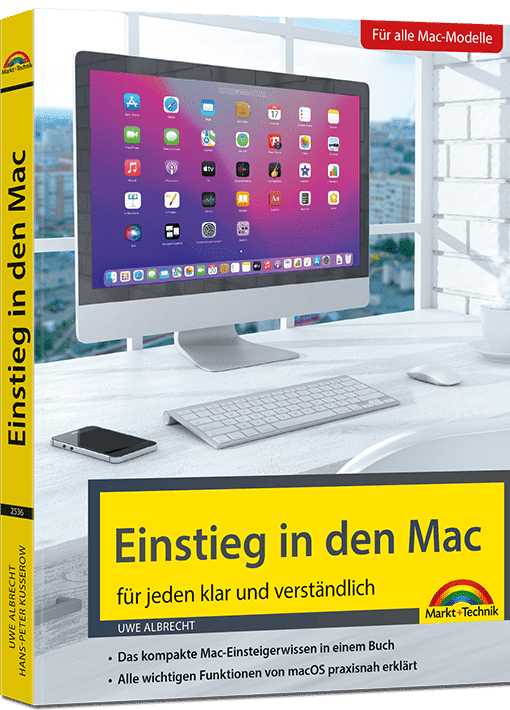
Einstieg in den Mac (3. Auflage)
Sie haben sich gerade einen Mac gekauft und möchten ihn von Grund auf kennenlernen, sodass Sie ihn schnell und sicher beherrschen.Dabei unterstützt Sie dieses Buch. Der bekannte Mac-Autor Uwe Albrecht führt Sie Schritt für Schritt in den Mac und sein Betriebssystem macOS ein.Sie machen sich mit der Benutzeroberfläche, dem Finder und iCloud Drive vertraut, richten Ihren Mail-Account ein, surfen mit Safari und nutzen die erweiterten Sicherheitseinstellungen, sodass Sie Ihren Mac-Alltag unbeschwert genießen können.Übersicht - Aus dem InhaltDie Ersteinrichtung Ihres MacsSchreibtisch, Finder und iCloud DriveSinnvolle SystemeinstellungenMit Safari surfenE-Mails einrichten und verwaltenViele hilfreiche AppsBackup mit Time MachineAutor: Uwe Albrecht ist 1962 in Stuttgart Bad-Cannstatt im schönen Baden-Württemberg geboren. Nach seiner Schulzeit wandte er sich zunächst einer Handwerkslehre zu, beendete diese mit der Gesellenprüfung und studierte anschließend Biologie, Informatik, Geschichte und Wissenschaftsgeschichte. An das Hochschulstudium schloss er eine Promotion in Wissenschaftsgeschichte und württembergischer Landesgeschichte an, die er neben seiner Tätigkeit als freiberuflicher Journalist und Autor mittlerweile erfolgreich abgeschlossen hat.Seit 1987 arbeitet Uwe Albrecht mit zahlreichen unterschiedlichen Computersystemen und den dazugehörigen Programmen, angefangen von DOS und Unix bis Windows und Linux. 1995 folgte eines der ersten Powerbooks und seitdem sind im Heimbüro tagtäglich iMacs und MacBooks im Einsatz. Natürlich darf auch ein PC oder Notebook mit dem jeweils aktuellen Windows nicht fehlen. Auch was Smartphones und Tablets anbelangt, werden sowohl Geräte mit iOS als auch mit Android oder Windows 10 genutzt. Seit seiner Markteinführung in Deutschland im November 2007 ist das iPhone in der jeweils aktuellen Version der unverzichtbare Begleiter in Alltag und Berufsleben geworden, seit kurzem ergänzt durch die Apple Watch.Den umfassenden und fundierten Kenntnissen der erwähnten Hardwareplattformen, Betriebssysteme und Anwendungsprogramme, schließt sich die jahrelange kreative Arbeit mit der Fotokamera vornehmlich im Bereich der Natur- und Tierfotografie an – mit einer analogen Kamera bis hin zur einer semiprofessionellen DSLR von Nikon sowie der spiegellosten Olympus OM-D M1.

Pro Deep Learning with TensorFlow 2.0
This book builds upon the foundations established in its first edition, with updated chapters and the latest code implementations to bring it up to date with Tensorflow 2.0.Pro Deep Learning with TensorFlow 2.0 begins with the mathematical and core technical foundations of deep learning. Next, you will learn about convolutional neural networks, including new convolutional methods such as dilated convolution, depth-wise separable convolution, and their implementation. You’ll then gain an understanding of natural language processing in advanced network architectures such as transformers and various attention mechanisms relevant to natural language processing and neural networks in general. As you progress through the book, you’ll explore unsupervised learning frameworks that reflect the current state of deep learning methods, such as autoencoders and variational autoencoders. The final chapter covers the advanced topic of generative adversarial networks and their variants, such as cycle consistency GANs and graph neural network techniques such as graph attention networks and GraphSAGE.Upon completing this book, you will understand the mathematical foundations and concepts of deep learning, and be able to use the prototypes demonstrated to build new deep learning applications.WHAT YOU WILL LEARN* Understand full-stack deep learning using TensorFlow 2.0* Gain an understanding of the mathematical foundations of deep learning * Deploy complex deep learning solutions in production using TensorFlow 2.0* Understand generative adversarial networks, graph attention networks, and GraphSAGEWHO THIS BOOK IS FOR:Data scientists and machine learning professionals, software developers, graduate students, and open source enthusiasts.SANTANU PATTANAYAK works as a Senior Staff Machine Learning Specialist at Qualcomm Corp R&D and is the author of Quantum Machine Learning with Python, published by Apress. He has more than 16 years of experience, having worked at GE, Capgemini, and IBM before joining Qualcomm. He graduated with a degree in electrical engineering from Jadavpur University, Kolkata and is an avid math enthusiast. Santanu has a master’s degree in data science from the Indian Institute of Technology (IIT), Hyderabad. He also participates in Kaggle competitions in his spare time, where he ranks in the top 500. Currently, he resides in Bangalore with his wife.Chapter 1: Mathematical FoundationsChapter Goal: Setting the mathematical base for machine learning and deep learning .No of pages 100Sub -Topics1. Linear algebra2. Calculus3. Probability4. Formulation of machine learning algorithms and optimization techniques.Chapter 2: Introduction to Deep learning Concepts and Tensorflow 2.0Chapter Goal: Setting the foundational base for deep learning and introduction to Tensorflow 2.0 programming paradigm.No of pages: 75Sub - Topics:5. Deep learning and its evolution.6. Evolution of the learning techniques: from perceptron based learning to back-propagation7. Different deep learning objectives functions for supervised and unsupervised learning.8. Tensorflow 2.09. GPUChapter 3: Convolutional Neural networksChapter Goal: The mathematical and technical aspects of convolutional neural networkNo of pages: 801. Convolution operation2. Analog and digital signal3. 2D and 3D convolution, dilation and depth-wise separable convolution4. Common image processing filter5. Convolutional neural network and components6. Backpropagation through convolution and pooling layers7. Translational invariance and equivariance8. Batch normalization9. Image segmentation and localization methods (Moved from advanced Neural Network to here, to make room for Graph Neural Networks )Chapter 4: Deep learning for Natural Language ProcessingChapter Goal: Deep learning methods and natural language processing No of pages:Sub - Topics:1. Vector space model2. Word2Vec3. Introduction to recurrent neural network and LSTM4. Attention5. Transformer network architecturesChapter 5: Unsupervised Deep Learning MethodsChapter Goal: Foundations for different unsupervised deep learning techniquesNo of pages: 60Sub - Topics:1. Boltzmann distribution2. Bayesian inference3. Restricted Boltzmann machines4. Auto Encoders and variation methodsChapter 6: Advanced Neural NetworksChapter Goal: Generative adversarial networks and graph neural networksNo of pages: 70Sub - Topics:1. Introduction to generative adversarial networks2. CycleGAN, LSGAN Wasserstein GAN3. Introduction to graph neural network4. Graph attention network and graph SAGEChapter 7: Reinforcement LearningChapter Goal: Reinforcement Learning using Deep LearningNo of pages: 50Sub - Topics:1. Introduction to reinforcement learning and MDP formulation2. Value based methods3. DQN4. Policy based methods5. Reinforce and actor critic network in policy based formulations6. Transition-less reinforcement learning and bandit methods
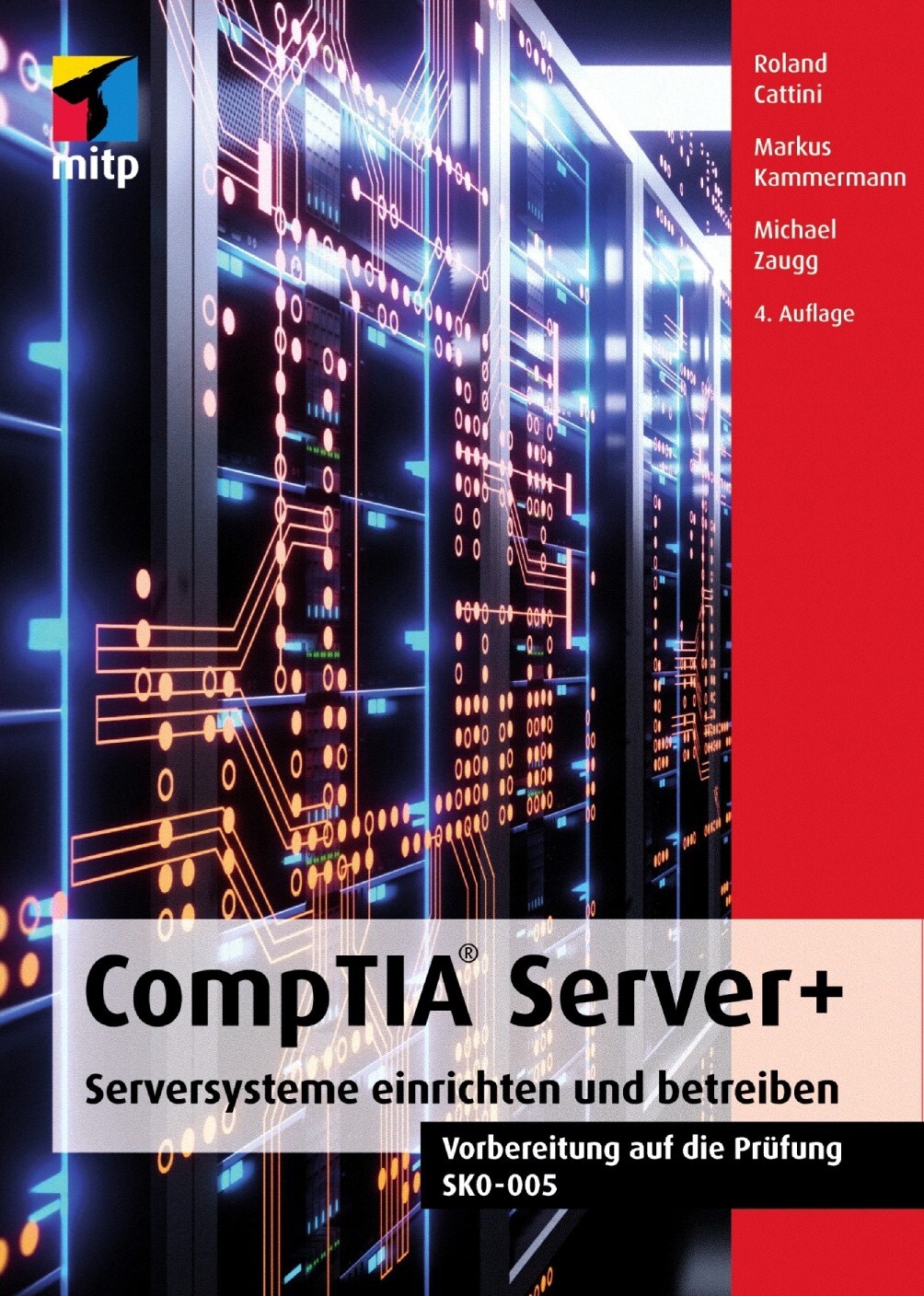
CompTIA Server+ (4. Auflg.)
Serversysteme einrichten und betreiben. Vorbereitung auf die Prüfung SK0-005. 4. Auflage 2023.Die Prüfung CompTIA Server+ richtet sich an IT-Fachleute und Administratoren und weist die Fähigkeiten nach, Server in Rechenzentren sowie in lokalen und hybriden Umgebungen zu installieren, zu verwalten und Fehler zu beheben. Die Zertifizierung ist nicht auf eine einzige Plattform beschränkt, so dass Sie die Aufgaben in jeder Umgebung ausführen können. Das Zertifikat ist international anerkannt.Die Prüfung SK0-005 teilt sich in diese Fachgebiete auf:Server-Hardware: Installation und ManagementServeradministrationSicherheit und Disaster RecoveryFehlerbehebungSie lernen in diesem Buch die Eigenschaften, den Einsatz und die Konfiguration von Servern von Grund auf kennen, sowohl was die Hardware als auch was die spezifischen Betriebs-systeme und Applikationen von Servern anbelangt.Des Weiteren erläutern die Autoren die Planung und die physischen Umgebungsbedingungen von Servern sowie aktuelle Themen wie z.B. Hochverfügbarkeit, Cloud Computing und Skripterstellung. Außerdem werden wichtige Fragen zur Sicherheit, Datensicherung und zum Disaster Recovery ausführlich behandelt.So können Sie sich das für die Zertifizierung benötigte Fachwissen aneignen und ein praxistaugliches Verständnis der Thematik entwickeln, das Sie in Ihrem Arbeitsalltag bei der Server-Administration voranbringt.Aus dem Inhalt:Server-Hardware: Prozessoren, Arbeitsspeicher, BIOS/UEFIStorage-Lösungen und -technologien: SSD, SAS, SATA, Fibre Channel, iSCSIFehlertoleranz: RAID, EnergieversorgungServer installieren und aktualisierenHardware im Netzwerk: Kabel, Netzwerkkarten, ÜbertragungsgeräteTCP/IP: IPv4 und IPv6Serverrollen: Datei- und Druckdienste, Internet- und Maildienste, NetzwerkdiensteNetzwerkbetriebssysteme: Windows Server, UNIX/Linux und deren InstallationKonfigurationsbetrachtungen: Dateisystem, Kontingentierung, Verzeichnisdienste, GruppenrichtlinienServer Management: Remote-Verbindungen, Ereignisprotokolle, MonitoringSpeichertechnologien, Virtualisierung und Cloud-DiensteDeployment- und VirtualisierungsszenarienPhysische, technische und organisatorische SicherheitDatensicherung in Theorie und PraxisDisaster Recovery PlanningUnterhalt und Troubleshooting in der PraxisDie CompTIA Server+-Prüfung: Fragen, Antworten sowie ein Simulationstest in EnglischÜber die Autoren:Roland Cattini ist von Beruf Betriebs- und Elektroingenieur und befasst sich seit Windows NT-Zeiten als Microsoft-Experte mit Servern. Er ist aktiv in der Installation und Weiterbildung, nicht nur selber als MCSE, MCT, MCDBA, MCTS und MCITP, sondern auch als Trainer für Expertenschulungen in der Schweiz.Markus Kammermann, ausgebildeter ICT-Projektleiter und CompTIA Server+-Techniker, ist seit mehr als zwanzig Jahren in der System- und Netzwerktechnik tätig, fast ebenso lang als Ausbilder und Autor. Er engagiert sich zudem als Dozent in der höheren beruflichen Bildung.Michael Zaugg ist der UNIX- und Linux-Spezialist unter den drei Autoren. Er arbeitet als Network- und Security-Manager und betreut mit seinem Team eine ganze Reihe verschiedener Unix- und Linux-Server.Leseprobe (PDF-Link)

Internet of Things Using Single Board Computers
Rapidly prototype and program new IoT and Edge solutions using low-cost Maker tech, such as those from Arduino, Raspberry Pi and Nvidia. With a focus on the electronics, this book allows experienced computer science students as well as researchers, practitioners, and even hobbyists to dive right into actual engineering of prototypes and not just theoretical programming and algorithms.You'll learn to interface sensors, work with various communication mediums, incorporate wired and wireless communication protocols, and more with these single board computers. All while working in the popular Python programming language. Additionally, you’ll discover both scripting-based and drag and drop solutions for different problems. As well as a variety of useful, data gathering approaches. Then you can apply what you’ve learned to IoT projects and troubleshooting Industry 4.0 problems.The rapid growth of technology and new development initiatives has made the Internet of Things and Edge analytics an inevitable platform in all engineering domains. The need for sophisticated and ambient environments controlled by tech has resulted in an exponential growth of automation and artificial intelligence. Internet of Things Using Single Board Computers reflects these recent developments while providing a low-cost, easy ramp into the fields of IoT using single board computers and Python programming.WHAT YOU'LL LEARN* Program Arduino, Raspberry Pi, and Nvidia boards for rapid prototyping in IoT and Edge environments* Interface sensors, communication mediums, and wired and wireless communications into your programs and projects.* Study practical applications of these low-cost solutions in fields such as home automation, smart cities, electrical vehicle charging, and more.WHO THIS BOOK IS FOREngineers and hobbyists working on Internet of Things prototypes and applications. Basic skills in electronics and a working knowledge of Python are recommended. Engineers and scientists working on smart environment projects and smart city applications will also benefit.DR. G. R. KANAGACHIDAMBARESAN completed his Ph.D. at Anna University Chennai in 2017. He is currently an Associate Professor in the Department of CSE at Vel Tech Rangarajan Dr. Sagunthala R&D Institute of Science and Technology. His main research interests include Body Sensor Networks and Fault Tolerant Wireless Sensor Networks. He has published several articles and undertaken consultancy activities for leading MNC companies. He has also guest-edited special issue volumes and books and served as an editorial review board member for peer-reviewed journals. He is presently working on several government sponsored research projects like ISRO, DBT, and DST. Presently, he is the Editor in chief for the Next Generation Computer and Communication Engineering series. INTERNET OF THINGS USING SINGLE BOARD COMPUTERSChapter 1: An Overview of IoTChapter 2: IoT ArchitectureChapter 3: Programming Through pythonChapter 4: Wireless Technology for IoTChapter 5: Building IoT with Raspberry PiChapter 6: Home AutomationChapter 7: Smart Cities and Smart GridsChapter 8: Electric Vehicle ChargingChapter 9: Agriculture

Numerical Methods Using Kotlin
This in-depth guide covers a wide range of topics, including chapters on linear algebra, root finding, curve fitting, differentiation and integration, solving differential equations, random numbers and simulation, a whole suite of unconstrained and constrained optimization algorithms, statistics, regression and time series analysis. The mathematical concepts behind the algorithms are clearly explained, with plenty of code examples and illustrations to help even beginners get started.In this book, you'll implement numerical algorithms in Kotlin using NM Dev, an object-oriented and high-performance programming library for applied and industrial mathematics. Discover how Kotlin has many advantages over Java in its speed, and in some cases, ease of use. In this book, you’ll see how it can help you easily create solutions for your complex engineering and data science problems.After reading this book, you'll come away with the knowledge to create your own numerical models and algorithms using the Kotlin programming language.WHAT YOU WILL LEARN* Program in Kotlin using a high-performance numerical library* Learn the mathematics necessary for a wide range of numerical computing algorithms* Convert ideas and equations into code* Put together algorithms and classes to build your own engineering solutions* Build solvers for industrial optimization problems* Perform data analysis using basic and advanced statisticsWHO THIS BOOK IS FORProgrammers, data scientists, and analysts with prior experience programming in any language, especially Kotlin or Java.HAKSUN LI, PHD, is founder of NM Group, a scientific and mathematical research company. He has the vision of “Making the World Better Using Mathematics”. Under his leadership, the firm serves worldwide brokerage houses and funds, multinational corporations and very high net worth individuals. Haksun is an expert in options trading, asset allocation, portfolio optimization and fixed-income product pricing. He has coded up a variety of numerical software, including SuanShu (a library of numerical methods), NM Dev (a library of numerical methods), AlgoQuant (a library for financial analytics), NMRMS (a portfolio management system for equities), and supercurve (a fixed-income options pricing system). Prior to this, Haksun was a quantitative trader/quantitative analyst with multiple investment banks. He has worked in New York, London, Tokyo, and Singapore. Additionally, Haksun is the vice dean of the Big Data Finance and Investment Institute of Fudan University, China. He was an adjunct professor with multiple universities. He has taught at the National University of Singapore (mathematics), Nanyang Technological University (business school), Fudan University (economics), as well as Hong Kong University of Science and Technology (mathematics). Dr. Haksun Li has a B.S. and M.S. in pure and financial mathematics from the University of Chicago, and an M.S. and a PhD in computer science and engineering from the University of Michigan, Ann Arbor.1: Introduction to Numerical Methods in Kotlin.-2: Linear Algebra.-3: Finding Roots of Equations.-4: Finding Roots of Systems of Equations.-5: Curve Fitting and Interpolation.-6: Numerical Differentiation and Integration.-7: Ordinary Differential Equations.-8: Partial Differential Equations.-9: Unconstrained Optimization.-10: Constrained Optimization.-11: Heuristics.-12: Basic Statistics.-13: Random Numbers and Simulation.-14: Linear Regression.-15: Time Series Analysis.-References.Table of ContentsAbout the Authors...........................................................................................................iPreface............................................................................................................................ii1. Why Kotlin?..............................................................................................................61.1. Kotlin in 2022.....................................................................................................61.2. Kotlin vs. C++....................................................................................................61.3. Kotlin vs. Python................................................................................................61.4. Kotlin in the future .............................................................................................62. Data Structures.......................................................................................................72.1. Function...........................................................................................................72.2. Polynomial ......................................................................................................73. Linear Algebra .......................................................................................................83.1. Vector and Matrix ...........................................................................................83.1.1. Vector Properties .....................................................................................83.1.2. Element-wise Operations.........................................................................83.1.3. Norm ........................................................................................................93.1.4. Inner product and angle ...........................................................................93.2. Matrix............................................................................................................103.3. Determinant, Transpose and Inverse.............................................................103.4. Diagonal Matrices and Diagonal of a Matrix................................................103.5. Eigenvalues and Eigenvectors.......................................................................103.5.1. Householder Tridiagonalization and QR Factorization Methods..........103.5.2. Transformation to Hessenberg Form (Nonsymmetric Matrices)...........104. Finding Roots of Single Variable Equations .......................................................114.1. Bracketing Methods ......................................................................................114.1.1. Bisection Method ...................................................................................114.2. Open Methods...............................................................................................114.2.1. Fixed-Point Method ...............................................................................114.2.2. Newton’s Method (Newton-Raphson Method) .....................................114.2.3. Secant Method .......................................................................................114.2.4. Brent’s Method ......................................................................................115. Finding Roots of Systems of Equations...............................................................125.1. Linear Systems of Equations.........................................................................125.2. Gauss Elimination Method............................................................................125.3. LU Factorization Methods ............................................................................125.3.1. Cholesky Factorization ..........................................................................125.4. Iterative Solution of Linear Systems.............................................................125.5. System of Nonlinear Equations.....................................................................126. Curve Fitting and Interpolation............................................................................146.1. Least-Squares Regression .............................................................................146.2. Linear Regression..........................................................................................146.3. Polynomial Regression..................................................................................146.4. Polynomial Interpolation...............................................................................146.5. Spline Interpolation .......................................................................................147. Numerical Differentiation and Integration...........................................................157.1. Numerical Differentiation .............................................................................157.2. Finite-Difference Formulas...........................................................................157.3. Newton-Cotes Formulas................................................................................157.3.1. Rectangular Rule....................................................................................157.3.2. Trapezoidal Rule....................................................................................157.3.3. Simpson’s Rules.....................................................................................157.3.4. Higher-Order Newton-Coles Formulas..................................................157.4. Romberg Integration .....................................................................................157.4.1. Gaussian Quadrature..............................................................................157.4.2. Improper Integrals..................................................................................158. Numerical Solution of Initial-Value Problems....................................................168.1. One-Step Methods.........................................................................................168.2. Euler’s Method..............................................................................................168.3. Runge-Kutta Methods...................................................................................168.4. Systems of Ordinary Differential Equations.................................................169. Numerical Solution of Partial Differential Equations..........................................179.1. Elliptic Partial Differential Equations...........................................................179.1.1. Dirichlet Problem...................................................................................179.2. Parabolic Partial Differential Equations........................................................179.2.1. Finite-Difference Method ......................................................................179.2.2. Crank-Nicolson Method.........................................................................179.3. Hyperbolic Partial Differential Equations.....................................................1710..................................................................................................................................1811..................................................................................................................................1912. Random Numbers and Simulation ....................................................................2012.1. Uniform Distribution .................................................................................2012.2. Normal Distribution...................................................................................2012.3. Exponential Distribution............................................................................2012.4. Poisson Distribution ..................................................................................2012.5. Beta Distribution........................................................................................2012.6. Gamma Distribution ..................................................................................2012.7. Multi-dimension Distribution ....................................................................2013. Unconstrainted Optimization ............................................................................2113.1. Single Variable Optimization ....................................................................2113.2. Multi Variable Optimization .....................................................................2114. Constrained Optimization .................................................................................2214.1. Linear Programming..................................................................................2214.2. Quadratic Programming ............................................................................2214.3. Second Order Conic Programming............................................................2214.4. Sequential Quadratic Programming...........................................................2214.5. Integer Programming.................................................................................2215. Heuristic Optimization......................................................................................2315.1. Genetic Algorithm .....................................................................................2315.2. Simulated Annealing .................................................................................2316. Basic Statistics..................................................................................................2416.1. Mean, Variance and Covariance................................................................2416.2. Moment......................................................................................................2416.3. Rank...........................................................................................................2417. Linear Regression .............................................................................................2517.1. Least-Squares Regression..........................................................................2517.2. General Linear Least Squares....................................................................2518. Time Series Analysis ........................................................................................2618.1. Univariate Time Series..............................................................................2618.2. Multivariate Time Series ...........................................................................2618.3. ARMA .......................................................................................................2618.4. GARCH .....................................................................................................2618.5. Cointegration .............................................................................................2619. Bibliography .....................................................................................................2720. Index .....................................................................................................

Functional Python Programming, 3rd edition
Not enough developers understand the benefits of functional programming, or even what it is. Author Steven Lott demystifies the approach, teaching you how to improve the way you code in Python and make gains in memory use and performance. If you’re a leetcoder preparing for coding interviews, this book is for you.Starting from the fundamentals, this book shows you how to apply functional thinking and techniques in a range of scenarios, with Python 3.10+ examples focused on mathematical and statistical algorithms, data cleaning, and exploratory data analysis. You'll learn how to use generator expressions, list comprehensions, and decorators to your advantage. You don't have to abandon object-oriented design completely, though – you'll also see how Python's native object orientation is used in conjunction with functional programming techniques.By the end of this book, you'll be well-versed in the essential functional programming features of Python and understand why and when functional thinking helps. You'll also have all the tools you need to pursue any additional functional topics that are not part of the Python language.

Software Development with Go
Gain insights into the different challenges that can be solved using Go, with a focus on containers, Linux, security, networking, user interfaces and other relevant cloud based topics. This book reviews the necessary tools to create container-based cloud solutions with Go, a programming language that was born out of the need to address scalable, high availability cloud computing architecture needs inside Google.Go, also known as Golang, has been adopted across different industries and products with many popular Open Source projects that power cloud computing technologies such as Docker and Kubernetes being written with Go. As the complexity of cloud technology increases, so does the need for people to understand how things work under-the-hood and to fix them when they’re broken.WHAT YOU WILL LEARN* Understand how the various components of a container-based system works* Tackle complex technical issues using Go* Integrate tools that can be used as part of your daily operational needs* Build system-based productsWHO THIS BOOK IS FORDevelopers and Engineers familiar with Go who want to know how different parts of the system work and who want to write command line tools. It will also be beneficial to programmers who already have a system-level understanding and want to use Go to build tools for existing projects and applications.NANIK TOLARAM is a big proponent of open source software with over 20 years of industry experience. He has dabbled in different programming languages, including Java, C, and C++. He has developed products from the ground up working in early startup companies. He is a software engineer at heart, but loves to write technical articles and share his knowledge with others.He learned to program with Go during the COVID 19 pandemic and hasn't looked back.SOFTWARE DEVELOPMENT WITH GOPART 1: SYSTEM PROGRAMMINGChapter 1 - System CallsChapter 2 - System Calls Using GoChapter 3 - Accessing proc File SystemPART 2: CONTAINERSChapter 4 - Simple ContainersChapter 5 - Containers with NetworkingChapter 6 - Docker SecurityPART 3: APPLICATION SECURITYChapter 7 - Gosec and ASTChapter 8 – ScorecardPART 4: NETWORKINGChapter 9 - Simple NetworkingChapter 10 - System NetworkingChapter 11 - Google gopacketChapter 12 - Epoll LibraryPART 5: SECURING LINUXChapter 13 - Vulnerability ScannerChapter 14 – CrowdSecPART 6: TERMINAL USER INTERFACEChapter 15 - ANSI and UIChapter 16 - TUI FrameworkPART 7: LINUX SYSTEMChapter 17 – systemdChapter 18 – cadvisor

Beginning Spring Data
Use the popular Spring Data project for data access and persistence using various Java-based APIs such as JDBC, JPA, MongoDB, and more.This book shows how to easily incorporate data persistence and accessibility into your microservices, cloud-native applications, and monolithic enterprise applications. It also teaches you how to perform unit and performance testing of a component that accesses a database. And it walks you through an example of each type of SQL and NoSQL database covered.After reading this book, you’ll be able to create an application that interacts with one or multiple types of databases, and conduct unit and performance testing to analyze possible problems. Source code is available on GitHub.WHAT YOU’LL LEARN* Become familiar with the Spring Data project and its modules for data access and persistence* Explore various SQL and NoSQL persistence types* Uncover the persistence and domain models, and handle transaction management for SQL* Migrate database changes and versioning for SQL* Dive into NoSQL persistence with Redis, MongoDB, Neo4j, and Cassandra* Handle reactive database programming and access with R2DBC and MongoDB* Conduct unit, integration, and performance testing, and moreWHO THIS BOOK IS FORExperienced Java software application developers; programmers with experience using the Spring framework or the Spring Boot micro frameworkANDRES SACCO is a Technical Lead at Prisma. He has experience using languages such as Java, PHP, and NodeJs. He also has experience using Spring. In his previous job, Andres helped find alternative ways to optimize the transference of data between microservices, which reduced the cost of infrastructure by 55%. He also has written internal courses about new technologies and articles on Medium. Andres shares his knowledge of using different types of databases, depending on the situation. He has experience with various types of testing, to search for problems in queries or repositories that access the database. Part I - IntroductionChapter 1: Architecture of the ApplicationsChapter 2: Spring Basics and BeyondChapter 3: Spring Data and Persistence TypesPart II - SQL PersistenceChapter 4: Persistence and Domain ModelChapter 5: Transaction ManagementChapter 6: Versioning or Migrate the Changes of the DatabasePart III - NO-SQL PersistenceChapter 7: Redis key/value DatabaseChapter 8: MongoDB Document DatabaseChapter 9: Neo4j Graph DatabaseChapter 10: Cassandra wide-column DatabaseChapter 11: Reactive access w/R2DBC and MongoDBChapter 12: Unit/Integration TestingChapter 13: Performance TestingChapter 14: Best PracticesPart I - IntroductionThis part or section contains all the introduction about the basics of the Spring and the architecture of theapplication to use the persistence.Chapter 1: Architecture of the applicationsChapter Goal: In this chapter, the readers will see the different ways of structuring one application and thebest practices to organize all the things related to persistence like the use of DAO (repositories on Spring).• Small history of the methods of persistence (Plain query using the class of Java, ORM)• Different types of architectureso Layerso Hexagonal or onion• Persistence design patterso DAO (Repositories in Spring)o Data Transfer Object (DTO)Chapter 2: Spring basics and beyondChapter Goal: In this chapter, the readers will see the different ways of structuring one application and thebest practices to organize all the things related to persistence like the use of DAO (repositories on Spring).• Spring’s Architecture• Dependency Injection and Inversion of Control• Basic Application SetupChapter 3: Spring Data and different types of persistenceChapter Goal: This chapter will provide a full explanation about Spring Data, how it works and what this librarydoes behind the scenes.• How the Spring Data works• How the Repositories workso Using interfaceso Defining a custom implementationPart II - SQL persistenceThis part or section contains the information about different aspects of the persistence of databases whichhave a rigid schema. Also, the readers will see different strategies of deploying the changes on the schemas.Chapter 4: Persistence and domain modelChapter Goal: In this chapter, the readers will learn the basics about persistence and how it works behind thescenes. Also, the readers will see how to create validations in the schema like the size of the column and thedifferent types of relationship between entities.• JPA configuration using annotationso Entity, Ido Types of relationshipso Pre-update, pre-persist• Ways to define the querieso Using specificationso Define SQL• How validate the schema• Types of InherenceChapter 5: Transaction managementChapter Goal: In this chapter, the readers will learn the basics of the transactions and some concepts of ACID.• Definition of ACID• Isolation Levels• Transactional levelsChapter 6: Versioning or migrate the changes of the databaseChapter Goal: In this chapter the readers will see different tools or strategies to include the changes of thedatabases, e.g use Liquibase/Flyway, running the scripts manually, or using the auto-update of the Spring.Also, this chapter will include some mechanism to move the data from one column to another using featureflags.• Mechanism to migrate the changes• Tools to versioning the changeso Liquibaseo Flyway• Using Feature Flags to new featureso What is a Feature flag?o Benefits of use this approacho Common librariesPart III - NO-SQL persistenceIn this section the idea is to cover one example of each type of the databases NO-SQL like key/value,document, graph, and wide-column database. The idea is not to cover all more than one example of a type ofdatabase because most of them have certain operations similar.Chapter 7: Redis key/value databaseChapter Goal: In this chapter, the readers will see how to run a database and save the information using aspecific key. Also, this chapter will show the readers to create a serializer to persist data that is complex andsome best practices like persist the information in async mode.The last point is how to configure the TTL in the information that the readers persist in the database.• What is Redis and which are the benefits?• Connecting with multiples Redis• Persist synchronous or asynchronous• Object Mapping and ConversionChapter 8: MongoDB Document databaseChapter Goal: In this chapter, the readers will see how to run a mongo database and how to persist theinformation with the definition of the entities using the different operations that are permitted on MongoDB.• What is a document store?• Setting up a Mongo• Access using repositories• Manage transactions in a programmatic wayChapter 9: Neo4j Graph databaseChapter Goal: In this chapter, the readers will see how to run a database and how to create different types ofqueries. Also the reader will see the different aspects of the persistence of the information and the use ofreactive approach.• Modeling the problem as a Grapho Cases of usero Benefits• Persisting the domain• Manage transactionsChapter 10: Cassandra wide-column databaseChapter Goal: In this chapter, the readers will see how to configure the database on Spring and thedeclaration of the entities that need to be used to persist the information. Also, the different ways topersist or modify the information on Cassandra.The last point is how to configure the TTL in the information that the readers persist in the database.• What is Cassandra and how works?• Configuration for Cassandra• Access using repositories• Defining a TTLPart IV – Advanced, testing and best practicesThis part covers some aspects of any type of database to create different types of tests and validate theperformance of the queries. Also, this section covers some best practices to reduce the possible problems ormistakes in the applications that access a database.Chapter 11: Reactive accessChapter Goal: This chapter needs to cover how you can access and obtain the information in a reactive way.• What is reactive access?• Modifying queries to be reactiveo R2DBCo MongoDBChapter 12: Unit/Integration testingChapter Goal: This chapter needs to cover more in detail how you can write unit tests without using anexistent database but using the same motor of the database, to do this the reader will use Test Cointainerswith Junit 5 which is the standard to write unit tests.• Unit Testing with Mocks• Integration Testing with a Databaseo What is Test containers?o Test Containers vs embeddedo How you can use it?o Possible problems in the pipelineChapter 13: Performance testingChapter Goal: In this chapter the reader will use some tools like Gatling or QuickPerform to see how tocreate a performance test and analyze if the queries have some issue related with the use ofCPU/memory.• How check or analyze the performance of the queries?• Analyzing the complexity of queries• Performance test of an endpoint that access to a DBChapter 14: Best practicesChapter Goal: In this chapter the reader will know some strategies to improve the performance of thedatabase including some mechanism of cache to reduce the number of times that anyone accesses toobtain information.• Access to the information◦ Master-slave• Using cache to reduce the accessed to DB• Compress the information• Lazy Loading Issues• Pagination and ways to reduce the response

Perspective Warps and Distorts with Adobe Tools: Volume 2
Gain skills in illustration and logo manipulation that will enhance your designs and make them more appealing--either in your portfolio or for your client’s next graphic project.As Adobe's Photoshop and Illustrator have evolved, new and unique features have been added to these programs that offer different options for warping and distorting graphics and shapes. For the beginner and intermediate student or graphic artist, choosing or knowing which distort or warp tool to use among so many available can become overwhelming and confusing.This book primarily focuses on teaching how to work with various warping tools and effect filters in Illustrator, though you will also be using or comparing graphics from Adobe Photoshop. Knowing how to work between these two applications is a crucial part of understanding how to successfully manipulate your designs. In Illustrator, you'll see how to alter vector graphics, and learn how to do this with your Layers panel in various non-destructive ways.Some of the tools mentioned in this book will be familiar to you, as you may have used them frequently. However, others are well hidden, are new, or perhaps you have never considered that you could use that tool, dialog box, or filter effect to warp or distort.WHAT YOU WILL LEARN* Become proficient in using the warping and distorting tools and effects in Illustrator* Discover how to add perspective to your design or make them look three dimensional * Work with the Appearance panel, Graphic Styles, and Symbols* Combine older tools and newer, enhanced onesWHO THIS BOOK IS FORBeginner- and Intermediate-level readers interested in pursuing careers as graphic artists, photographers, or video artists/animators.Jennifer Harder has worked in the graphic design industry for over ten years. She has a degree in graphic communications and is currently teaching Acrobat, InDesign, and Dreamweaver courses at Langara College.Chapter 1: Introduction to Warps in IllustratorSub -Topics• Setting up the Workspace• Illustrator Panel Review• Saving Your FileChapter 2: Pen and Shape Tools ReviewSub - Topics:• Pen Tools & Curvature Tool• Selection & Direct Selection, Group Selection Tool• Shape tools (Rectangle, Rounded Rectangle, Ellipse, etc.)• Align Panel• Pathfinder Panel• ProjectChapter 3: Working with the Scale, Sheer, Reshape and Free Transform ToolsSub - Topics:• Move (Selection Tool)• Rotate Tool• Reflect Tool• Scale Tool• Shear Tool• Transform Each• Reshape Tool• Free Transform Tools• ProjectChapter 4: Working with Puppet Warp ToolSub - Topics:• Puppet Warp Tool• ProjectChapter 5: Working with Shape Warp (Liquify) ToolsSub – Topics:• Width Tool• Warp Tool• Twirl Tool• Pucker Tool• Bloat Tool• Scallop Tool• Crystalize Tool• Wrinkle Tool• ProjectChapter 6: Working with the Blend ToolSub – Topics: • Blend Tool and Options• Symbols and the Blend Tool• ProjectChapter 7: Warping PatternsSub - Topics:• Pattern Introduction• Repeating Patterns with the Object Menuo Radial Repeato Grid Repeato Mirror Repeat• Pattern Library and Pattern Options Panel• Customizing your Capture Pattern from the Libraries Panel• Patterns and Brushes• ProjectsChapter 8: Gradients, Mesh Tool, and TransparencySub - Topics:• Working with the Gradient Panel and Gradient Toolo Linear Gradiento Radial Gradiento Freeform Gradient• Mesh Tool• Project• Transparency Panel• Gradients and Transparency in Brush PanelChapter 9: Creating Envelope DistortsSub - Topics: • Envelope Distorts on Objects and Type• Make with Warp• Make with Mesh• Make with Top Object• ProjectChapter 10: Working with Text PathsSub - Topics:• Type Tool• Vertical Type Tool• Area Type Tool and Vertical Area Type Toolo Text Wrap• Type on a Path Tool and Vertical Type on a Path Tool• Touch Type Tool• ProjectChapter 11: Working with Effect FiltersSub - Topics:• Illustrator Effectso 3D and Materialso Convert to Shapeo Crop Markso Distort & Transform o Patho Pathfindero Rastero Stylizeo SVG Filterso Warp• Photoshop Effectso Effect Gallery o Blur, Pixelate and Video Effectso Graphic Styles Panel Reviewo Graphic Styles and Symbolso Projecto Where to Acquire Additional effectsChapter 12: Working with Symbol Warping ToolsSub - Topics:• Symbol Creation (Symbol Review)• Symbol Sprayer Tool• Symbol Shifter Tool• Symbol Scruncher Tool• Symbol Sizer Tool• Symbol Spinner Tool• Symbol Stainer Tool• Symbol Screener Tool• Symbol Styler Tool• Creating Graphic Styles for SymbolsChapter 13: Working with 3D and PerspectiveSub - Topics:• Perspective Grid & Perspective Selection Tools• Effect > 3D and Materials (3D Classic)o Rotate (Classic)o Revolve (Classic)o Extrude & Bevel (Classic)• Effect > 3D and Materials Panelo Projecto Rotateo Materialso Revolveo Extrude & Bevelo Inflate• Project• Graph Tools and 3D Effect for creating beginner Infographic IdeaChapter 14: How can I use my warped designs between other Adobe Apps?Sub - Topics:• Workflow of Photoshop and Illustrator Graphics to Other Adobe Applicationso InDesigno Animateo Dreamweavero Saving Exported files or Assets from Photoshop and Illustratoro Other Adobe Applications

Spielkonsolen und Heimcomputer 1972 bis 2022 (5. Auflage)
50 Jahre Bildschirmspaß und digitale Action, chronologisch und fundiert in Klartext, Technik-Tabellen und über 800 Fotos.Die stark erweiterte und aktualisierte Neuauflage des beliebten Fachbuchs zu Videospiel-Hardware zeigt alle Konsolen, Handhelds und Computer aus Amerika, Japan und Europa, präsentiert klassische Software in authentischen Pixeln, nennt Hintergründe und historische Facts. 550 Traumgeräte, Millionenseller von Atari VCS über Commodore Amiga und SNES zu PS5 und Steam Deck, aber auch Entgleisungen und exotische Varianten präsentiert Spielkonsolen und Heimcomputer in durchgehend farbigen Kapiteln und ausführlichen Anhängen - für Alle, die ihr Leben lang spielen, sammeln und wissen wollen. Eine Zeitreise durch die Spielepochen, von der elektromechanischen Urzeit in die Ultra-HD-Gegenwart und von dort in die VR-Zukunft! Über 500 Traumgeräte, Millionenseller vom Commodore 64 zum iPad, vom Atari-Telespiel zur Xbox, und ebenso Flops, Entgleisungen und exotische Varianten präsentiert Spielkonsolen und Heimcomputer in durchgehend farbigen Kapiteln und ausführlichen Anhängen – für alle, die ihr Leben lang spielen, sammeln und wissen wollen. Das Buch wird gelobt als „geeignetes Nachschlagewerk“ und „empfehlens-werte Lektüre“ (c‘t), als „sehr verständlich (...) sehr unterhaltsam“ (Gamestar) oder einfach als „Ass“ (ComputerBILDSpiele) und „Pflichtlektüre“ (PlayZone), und wächst von einst 144 auf 288 Seiten: Eine Zeitreise durch die Spielepochen, von der elektromechanischen Urzeit bis in die Ultra-HD- und VR-Zukunft!Der Autor Winnie Forster, Publizist und Fachmann für digitale Medien, sitzt seit 1982 an der Tastatur, seit 1990 in der Computer- und Videospielbranche. Er war leitender Redakteur beim legendären PowerPlay-Magazin, Mitbegründer von Video Games und – als Redaktionsleiter des Fachverlages Cybermedia – des Multiformat-Magazins Man!ac, das er 1995 ins Netz bringt. Im 21. Jahrhundert arbeitet und spielt Forster am bayerischen Ammerse.Der Autor Winnie Forster, Publizist und Fachmann für digitale Medien, sitzt seit 1982 an der Tastatur, seit 1990 in der Computer- und Videospielbranche. Er war leitender Redakteur beim legendären PowerPlay-Magazin, Mitbegründer von Video Games und – als Redaktionsleiter des Fachverlages Cybermedia – des Multiformat-Magazins Man!ac, das er 1995 ins Netz bringt. Im 21. Jahrhundert arbeitet und spielt Forster am bayerischen Ammersee.