

Allgemein

Mastering PostgreSQL Administration
This book is your one-stop resource on PostgreSQL system architecture, installation, management, maintenance, and migration. It will help you address the critical needs driving successful database management today: reliability and availability, performance and scalability, security and compliance, cost-effectiveness and flexibility, disaster recovery, and real-time analytics—all in one volume. Each topic in the book is thoroughly explained by industry experts and includes step-by-step instructions for configuring the features, a discussion of common issues and their solutions, and an exploration of real-world scenarios and case studies that illustrate how concepts work in practice. You won't find the book's comprehensive coverage of advanced topics, including migration from Oracle to PostgreSQL, heterogeneous replication, and backup & recovery, in one place—online or anywhere else. What You Will Learn Install PostgreSQL using source code and yum installationBack up and recoverMigrate from Oracle database to PostgreSQL using ora2pg utilityReplicate from PostgreSQL to Oracle database and vice versa using Oracle GoldenGateMonitor using Grafana, PGAdmin, and command line toolsMaintain with VACUUM, REINDEX, etc. Who This Book Is For Intermediate and advanced PostgreSQL users, including PostgreSQL administrators, architects, developers, analysts, disaster recovery system engineers, high availability engineers, and migration engineers

Einführung in die Wirtschaftsinformatik
Das Buch gibt eine fundierte und praxisbezogene Einführung in das Gebiet der Wirtschaftsinformatik. Aufbauend auf den bewährten Vorgängerauflagen von Stahlknecht und Hasenkamp wurde die 14. Auflage überarbeitet, strukturell weiterentwickelt und aktualisiert. Die Schwerpunkte umfassen u.a. generative KI, rechtliche Neuerungen für KI, Anwendungsentwicklung mit Low-Code/No-Code, Rechnernetze und Computing. Zusatznutzen: Laden Sie die Springer Nature Flashcards-App kostenlos herunter und überprüfen Sie Ihr Wissen.

Practical Marko
With the recent evolution of frontend frameworks toward the server, there has been a growing interest in server-side rendering and optimizing for the server to unlock greater performance gains. In this context, this book explores Marko JS—a View framework that is heavily optimized for both the server and the client—and discusses techniques using Marko that can help enterprises achieve significant performance improvements. Focusing on techniques involving Marko, you will learn about topics such as Progressive Rendering, HTML Streaming, server-sent events, and event source APIs. Alongside these techniques, the book will teach you how to accelerate the development of Marko apps quickly and easily using its meta-framework, Marko Run, as well as how to achieve distributed and decoupled applications at scale via server-side micro-frontends that allow for the transclusion of one application into another. A key area of emphasis in the book is the technique of Progressive Rendering, which differs from traditional server-side rendering techniques, where rendering is fully awaited until the entire HTML is generated before being sent. Finally, the book helps you apply these techniques in practical scenarios and teaches you how to build a sample application. By reading this book, you will not only become intimately familiar with high-performance server-side techniques in Marko but also gain expertise in applying these techniques to real-world use cases. What You'll Learn: How to build high performance websites through techniques – Progressive Rendering and HTML StreamingAchieve decoupled and distributed applications via a new paradigm of micro-frontends called micro-frames.Gain familiarity with advanced, efficient server-side rendering techniques for optimizing page load time using Marko, via its meta framework Marko-run. Who is this book for: Web developers, front-end engineers, full stack engineers, programmers

Security-System Engineering
Das Anliegen des Buches ist es, das Wechselspiel zwischen geschäftlichen Anforderungen, geschäftlichen IT-Systemen und notwendigen Sicherheitsfunktionen strukturierter und methodischer zu erfassen. Hierzu wird die Herangehensweise verfolgt, etablierte System-Engineering Ansätze - wie etwa der ISO 15288 - auf das Ökosystem der Informationssicherheit zu übertragen. Informationssicherheit aus dem Kochbuch.- Security-System - Security und System.- Security-Systems-Engineering.- Business Kontext.- Security Kontext.- Security-Requirements.- Security-System Model.- Sicherheitsarchitektur.- Security Controls Management.- Security-Systems Management.

Datenschutzrechtliche Rollenzuweisungen
Die Arbeit evaluiert die praktische Effektivität und Schlüssigkeit des europäischen Datenschutzrechts in Bezug auf unterschiedliche Rollenzuweisungen. Um auf allgegenwärtige Strukturverschiebungen bei der Verarbeitung personenbezogener Daten und drohende Beeinträchtigungen für die Rechte Betroffener durch differenzierte Rollenzuweisungen zu reagieren, kommt der ganzheitlichen Fortentwicklung des Verantwortlichkeits- und Beteiligungsgefüges eine zentrale Bedeutung zu. Voraussetzung für vereinheitlichte Rollenzuweisungen auf europäischer Ebene ist die Entwicklung eines kohärenten Gesamtkonzepts, das sowohl die rechtlichen Voraussetzungen und Grenzen klar umreißt als auch allgemeingültige Regulierungsprinzipien festlegt. Nur ein im Kern harmonisierter Regelungsrahmen kann beteiligten Akteuren als Orientierungshilfe dienen, die – vorgeschaltet zur konkreten Einzelfallbetrachtung – dazu beiträgt, dass grundlegende Wertungen des europäischen Datenschutzrechts gewahrt werden. Einleitung.- Verarbeitung personenbezogener Daten im Strukturwandel.- Dimensionen des europäischen Datenschutzes.- Die gesetzlichen Grundlagen des die Rollenbilder betreffenden Normengefüges.- Einzelfallbezogene Rollenzuweisungen durch den EuGH.- Kritische Analyse der EuGH-Rechtsprechung.- Korrekturansätze und Gestaltungsspielräume unter dem bestehenden Regelungsgefüge.- Grundstrukturen und Musterfälle künftiger Rollenzuweisungen.- Schlussbetrachtung.

API Development with Laravel
API Development with Laravel is your quick start guide to understanding and developing APIs in Laravel. Concepts are presented in an easy-to-follow and digestable manner. The concepts are not only clearly explained but practical examples are used to show how they are implemented. During the course of this book, you’ll learn how to build a RESTful Payment Processing API of your own. The book is written in a straight-forward manner ensuring your time is not wasted. We will start with an a general introduction to APIs before focusing on RESTful APIs in particular. We then look at setting up our development environments after which, we will look at why Laravel is a tool of choice for API development, exploring Laravel concepts for API development. We'll then start the implementation of our project using concepts we have learned. Finally, we'll look at how to deploy our project. You Will Learn To: * Develop Laravel-powered RESTful APIs * Build a Payment Processing API * Test your APIs * Deploy your APIs * Document and version control your APIs * Make APIs secure with security best practices This Book Is For: Anyone interested in acquiring knowledge about API development. The ideal reader should possess the ability to navigate a computer's file system, as well as the skills to create, open, and manage files and folders. Additionally, familiarity with web browsers and the capability to navigate between different websites is essential. A willingness to use the command line and an understanding of basic programming concepts, particularly in PHP, is also recommended. Part I: Fundamentals of Lavavel APIs.- Chapter 1. Introduction To APIs.-Chapter 2. Laravel, Development And Test Tools Installation.- Chapter 3. Laravel For API Development.- Chapter 4. Laravel For API Development: Further Steps.- Part II: Payment Processor API Development.- Chapter 5. Magic Link and Dashboard Implementation.- Chapter 6. Endpoints Implementation and Documentation.- Chapter 7. Automated Functional Testing with EchoAPI.- Chapter 8. Webhook and Asynchronous Notifications Implementation.- Chapter 9. Deploying And Scaling Your API Using CapRover.

Securing the Enterprise
Cybersecurity is no longer just an IT issue; it is a business-critical function requiring executive oversight and strategic implementation. This book offers a practical approach to cybersecurity leadership, risk management, and frameworks such as NIST, MITRE ATT&CK, and Zero Trust. The book blends executive strategy with hands-on cybersecurity methodologies, providing a holistic understanding for CXOs, CISOs, and IT security professionals. By exploring real-world case studies and breaches, such as SolarWinds and Colonial Pipeline, this book equips you with proactive defense strategies, governance insights, and the technical knowledge required to secure enterprise infrastructures effectively. What You Will Learn * Align cybersecurity with business strategy and executive decision making * Cover practical implementation of frameworks such as NIST CSF, ISO 27001, and Zero Trust * Respond to cyber incidents and build a resilient security culture * Understand key cybersecurity principles, including threat intelligence and risk management * Study advanced cybersecurity topics, including AI-driven threats, ransomware, and cloud security Who This Book Is For Cybersecurity professionals, CISOs, CIOs, IT security architects, and risk managers; plus business executives, Chief Experience Officers (CXOs), board members, compliance officers, graduate students in cybersecurity Part 1: Foundations of Cybersecurity.- Chapter 1: Introduction to Cybersecurity.- Chapter 2: Core Cybersecurity Concepts.- Chapter 3: The Threat Landscape.- Part 2: The Role of Leaders in Cybersecurity.- Chapter 4: The Role of CXOs & Executive Leaders.- Chapter 5: The Role of the Board of Directors.- Chapter 6: The CISO Role & Responsibilities.- Chapter 7: Leadership & Communication.- Chapter 8: CISO Skills & Competencies.- Part 3: Cybersecurity Frameworks & Regulations.- Chapter 9: Key Cybersecurity Frameworks.- Chapter 10: Compliance & Regulations.- Chapter 11: Implementing a Security Program.- Part 4: Advanced Topics in Cybersecurity.- Chapter 12: Cloud Security.- Chapter 13: Security Information & Event Management (SIEM).- Chapter 14: AI & Machine Learning in Cybersecurity.- Chapter 15: IoT Security.- Chapter 16: Blockchain & Cryptocurrency Security.- Chapter 17: Zero Trust Architecture (ZTA).- Part 5: Cybersecurity Tabletop Exercises (TTXs) & Case Studies.- Chapter 18: Cybersecurity Tabletop Exercises (TTXs).- Chapter 19: Notable Cybersecurity Incidents & Lessons Learned.- Chapter 20: Future of Cybersecurity.- Chapter 21: Tabletop Exercise - A Critical Tool for Incident Preparedness.- Chapter 22: David vs. Goliath: Cybersecurity's Constant Struggle.

The Low-Code AI Maturity Model
Written from the perspective of an experienced IT expert, this book leverages a maturity model framework to guide organizations through each stage of adopting, securing, scaling, and tracking the value of low-code AI responsibly and efficiently. Unlike other works that focus only on AI’s technical aspects, this book boasts a practical roadmap for responsible AI adoption and provides a clear, structured maturity model that guides organizations from foundational steps to advanced, responsible AI practices. In a world where organizations are under pressure to innovate quickly and responsibly, this book provides a structured approach, addressing essential elements such as data management, governance, ethics and compliance in low-code AI environments. Each chapter represents a maturity level, from foundational to optimized, offering readers insights, practical steps and examples to support their journey. The Low-Code AI Maturity Model takes a comprehensive look into the transformative potential of low-code and AI. What You Will Learn * Identify, assess and mitigate risks to ensure stable and reliable AI deployments * Implement robust governance, aligning with compliance standards and ethical principles at each maturity stage * Evaluate the real business value and ROI of AI projects, empowering data-driven decision-making Who This Book Is For IT leaders, decision-makers, and technology enthusiasts interested in the transformative potential of low-code and AI Part 1: Leadership and Culture.- Chapter 1: Foundational: Leadership and Culture.- Chapter 2: Emerging: Leadership and Culture.- Chapter 3: Operationalized: Leadership and culture.- Chapter 4: Integrated Excellence: Leadership and Culture.- Part 2: Establishing Trust and Governance.- Chapter 5: Foundational: EstablishingTrust and Governance.- Chapter 6: Emerging: Establishing Trust and Governance.- Chapter 7: Operationalized: Establishing Trust and Governance.- Chapter 8: Integrated Excellence:Establishing Trust and Governance.- Part 3: Data Readiness and Security.- Chapter 9: Foundational: Data Readiness and Security.- Chapter 10: Emerging: Data Readiness and Security- Chapter 11: Data Readiness and Security: Operationalized Stage.- Chapter 12: Data Readiness and Security: Integrated Excellence Stage.- Chapter 13: The Journey Forward: Leadership in the Age of Low-Code AI.

IoT Product Development Using ESP32 Microcontrollers
Develop a comprehensive understanding of IoT product development using ESP32 microcontrollers. This book takes readers on a journey from sensor interface example to an ESP32-based product example where we discuss all aspects of a product including rapid prototyping, cloud interface, product provision, and device fleet management. We will start with an introduction to the ESP32 microcontroller series and discuss programming language options for the ESP32 platform. Next, we explore publishing sensor data to the cloud using the ESP32. This is followed by a review of using the ESP32 to pull data from a public source and display it using a visual aid. The next few chapters demonstrate the construction of a low-cost Bluetooth sensor node using the ESP32, data aggregation with the ESP32, where collect and publish data aggregated from low-power radio networks, and the development of edge devices using the ESP32. The final chapter shows how to build an ESP32-enabled product that publishes data to the cloud, giving you confidence to start building on your own. What You Will Learn · Learn about the rich and powerful features of the ESP32 family of microcontrollers · Get a thorough idea of rapid prototyping tools and techniques for IoT product development · Understand the various communication protocols and standards available for IoT product development Who Is This Book For Readers with some experience with electronics and at least one programming language will be able to make the most of this book. Chapter 1. Introduction to the ESP32 Platform.- Chapter 2. Building a Weather Station.- Chapter 3. Visual Aid for Air Quality.- Chapter 4. Building Bluetooth Products using ESP32.- Chapter 5. Low Power & Long Range Radios with ESP32.- Chapter 6. Building TinyML Products.- Chapter 7. Let’s Build a Product!.

AI Strategy and Security
AI will fundamentally change the way business is conducted across most industries. Organizations that excel at leveraging secure, responsible AI to advance their strategic objectives will have a distinct advantage. Those that do not may see their market share erode. This book provides a guide for organizations to integrate AI in alignment with the organization's strategic goals. The framework provides a roadmap for adopting secure, responsible, and resilient AI, from initial strategy development to ongoing operations that will help advance market leadership. Part one of the book discusses laying a solid foundation to ensure successful AI integration, beginning with developing an AI strategy aligned with strategic business objectives, such as product and service differentiation, market expansion, and process optimization. Part Two takes a deep dive into ensuring secure and safe AI adoption. It proposes a secure-by-design approach to AI development that considers AI-specific attack vectors and associated security practices throughout the AI lifecycle. Developing and deploying secure, responsible, and resilient AI is not a one-time effort. Therefore, Part Three discusses operationalizing AI and integrating it throughout the enterprise to ensure continued success. This section focuses on scaling AI applications and continuous improvement, including establishing metrics and conducting a post-deployment ROI evaluation. Finally, it discusses how to foster a culture of AI innovation and excellence, ensuring that AI becomes a way of doing business. What You Will Learn: * Develop an AI integration strategy aligned with the organization's strategic goals and objectives. * Incorporate a secure-by-design approach to AI integration that considers AI-specific attack vectors and applies traditional and AI-specific defense methods, such as adversarial development, model behavior monitoring, drift analysis, input validation and filtering, and output filtering. * Establish an AI governance and risk management framework to ensure ongoing compliance with applicable legislation, industry standards, organizational policies, and responsible AI principles. * Operationalize and scale AI applications to ensure resilient production usage and facilitate continuous improvement. * Foster a culture of AI innovation and excellence, ensuring that AI becomes a way of doing business. Who This Book is for: The primary audience includes business leaders, AI practitioners, AI executives, AI governance professionals, and cybersecurity leaders looking to integrate AI as a strategic differentiator and to enhance business operations. Higher education would be a secondary audience. Chapter 1, Strategy Development.- Chapter 2, Assess AI Readiness.- Chapter 3, The Team.- Chapter 4, Securing AI.- Chapter 5, Governance and Risks.- Chapter 6, Ensuring Responsible AI.- Chapter 7, Regulations and Standards.- Chapter 8, Operationalizing AI.- Chapter 9, Continuous Improvement.- Chapter 10, AI as a Way of Doing Business.- Chapter 11, The AI Adoption and Management Framework.

GitHub Copilot and AI Coding Tools in Practice
Learn the current state of generative AI coding tools like GitHub Copilot, what the underlying models mean, and how to use them across the full development life-cycle. Look ahead to the near future of AI-generated software and understand how software developers can stay relevant in the industry. Many companies have predicted that human coders will soon be redundant due to AI-generated code, but there is a big gap between the expectations and what is actually happening on the ground. A closer look at the current state of the tools and research in this area will offer realism and guidance to developers worried regarding redundancy. Close the gap between hype and practical applications by receiving context and clear technical information on usage, understanding, and deployment of these tools. What You Will Learn: * How to use coding and software AI tools * How software AI tools work * How software AI tools fit in an industry context * How to use AI tools across the SDLC – it's more than just faster coding Who This Book is For All software industry participants interested in mastering AI-generated code. Chapter 1: Current State of Play - The High Level View.- Chapter 2: Using an AI Coding Agent.- Chapter 3: Large Language Models - Under the Hood.- Chapter 4: Prompt Engineering with AI Coding Agents.- Chapter 5: Customizing and Extending Copilot.- Chapter 6: Security in the Time of Copilot.- Chapter 7: Designing Applications with Copilot.- Chapter 8: Infrastructure, DevOps and Monitoring with Copilot and AI.- Chapter 9: Databases and AI.- Chapter 10: Copilot and Data Science.- Chapter 11: Code Migrations and Refactoring.- Chapter 12: Testing Augmentation with AI.- Chapter 13: Management Challenges Introducing AI.- Chapter 14: Surviving as a Software Engineer.- Chapter 15: Introducing and Integrating Copilot in an Organization.

Creative Machines
Praise for Creative Machines “Creative Machines challenges the illusion of either/or—inviting us to embrace the transformative power of and. It’s a visionary call to dissolve the artificial boundaries between art and technology, the physical and digital, prose and code. This isn’t about machines becoming human— it’s about humans fully realizing our potential.” —HANNAH GELLER, Emmy-nominated Producer “This book hits at exactly the right moment. In an industry flooded with fast tech, Creative Machines asks the deeper questions: about artistry, AI, and where we actually want this to go.” —DANIEL ROWLAND, Oscar-winning, Grammy-nominated Audio Engineer and Producer “Creative Machines opens up a critical and often overlooked part of the AI conversation: how these tools are actually used by real people in creative workflows.” —MATEI ZAHARIA, CTO of Databricks and Professor at the University of California, Berkeley A BOLD AND EYE-OPENING JOURNEY INTO AI’S POWER TO TRANSFORM HUMAN CREATIVITY Creative Machines: AI, Art & Us, by renowned generative AI researcher and pioneer, Maya Ackerman, is an exciting and original new discussion of the rise of creative artificial intelligence. She takes you on a journey that begins with the earliest AI trailblazers and concludes with examinations of the contemporary, cutting-edge tools shaping music, art, and human imagination today. Ackerman demolishes the hype and misinformation that surrounds generative AI to reveal the opportunities and dangers that the technology actually presents. She draws on psychology, neuroscience, and her own data-driven research to explain how generative artificial intelligence can enhance the brilliance and expose the blind spots in human creativity. Creative Machines is an exciting and practical walk-through of the creative and imaginative dimensions of our humanity—our ingenuity, biases, intelligence, and identities—and how we can build on them using AI. It’s a must-read for developers, founders, ethicists, artists, business leaders, and anyone else interested in harnessing the latest developments in tech to discover new ways of doing business, creating art, and explaining the world around us. A bold and thought-provoking journey into AI's power to transform human creativity In Creative Machines: AI, Art & Us, world-renowned AI researcher and generative AI pioneer, Maya Ackerman, takes you on a thrilling journey into the rise of creative AI, from its earliest pioneers to the cutting-edge tools shaping music, art, and human imagination today. Ackerman cuts through the hype, revealing the true capabilities and limitations of generative AI while championing its potential to amplify human creativity rather than replace it. Drawing on psychology, philosophy, and her own cutting-edge research, she reveals how generative AI exposes both the brilliance and the blind spots of human society—our ingenuity, our biases, our assumptions about intelligence and identity. The book contains: The hidden history and explosive growth of AI-generated creativityExplorations of the true capabilities and limitations of creative AIA visionary framework for using AI as a tool to enhance, rather than hinder, human creativityA bold new perspective on AI ethics and why fixing AI is not enough Perfect for entrepreneurs, tech leaders, developers, ethicists, and creative professionals, Creative Machines offers deep insights, compelling stories, and a visionary perspective on AI's impact on human society. An essential read for anyone doing their best to navigate the rapidly evolving landscape of generative AI. MAYA ACKERMAN, PHD, is an internationally renowned leader in generative AI, pioneering the next chapter of creativity. As CEO and Co-Founder of WaveAI, one of the earliest generative AI startups, she has enabled millions to explore new frontiers in creative expression through AI. An Associate Professor at Santa Clara University, Dr. Ackerman is widely known for her research on AI and creativity. Dr. Ackerman’s insights have been featured in NBC News, NPR, Forbes, and more. Her work champions the role of AI in amplifying—rather than replacing—human creativity.

Language Models kompakt
Sie möchten in die Welt der Large Language Models eintauchen? Dieses handliche Buch hilft Ihnen, das nötige Grundlagenwissen aufzubauen, um das Innenleben von LLMs zu verstehen und erste praktische Erfahrungen zu sammeln. Es führt Schritt für Schritt in die Sprachmodellierung ein, beginnend mit Machine Learning und neuronalen Netzen über RNNs und Transformern bis zu aktuellen LLM-Architekturen. Das Buch unterstützt Sie dabei:die mathematischen Grundlagen des Machine Learnings und der neuronalen Netze zu verstehen und zu beherrschendrei Architekturen von Language Models in Python zu erstellen und zu trainierenein Transformer-Sprachmodell von Grund auf in PyTorch zu programmierenmit LLMs zu arbeiten und effektive Prompt-Engineering- und Feinetuning-Techniken kennenzulernenHalluzinationen zu vermeiden und Modelle zu bewertenÜber den Autor:Andriy Burkov hat einen Doktortitel in Künstlicher Intelligenz und ist ein anerkannter Experte für Machine Learning und Natural Language Processing. Bei Fujitsu und Gartner hat er zahlreiche produktionsreife KI-Projekte in verschiedenen Geschäftsbereichen erfolgreich geleitet. Seine Bücher wurden in zwölf Sprachen übersetzt und werden als Lehrbücher an vielen Universitäten weltweit verwendet. Seine Arbeit hat Millionen von Praktikern und Forschern im Bereich Machine Learning weltweit beeinflusst.

Language Models kompakt
Der schnellste Weg, um die Mechanismen von LLMs zu verstehen - Dieses Buch ist eine sehr komprimierte und gleichzeitig gut verständliche Einführung in die Entwicklung von Large Language Models - Ideal für alle, die sich schnell und fundiert in die Grundlagen von LLMs einarbeiten wollen - Vom Bestseller-Autor Andriy Burkov, der in seiner renommierten »Hundred-Page«-Reihe zu Machine-Learning-Themen Konzepte besonders klar und knapp erklärt Sie möchten in die Welt der Large Language Models eintauchen? Dieses handliche Buch hilft Ihnen, das nötige Grundlagenwissen aufzubauen, um das Innenleben von LLMs zu verstehen und erste praktische Erfahrungen zu sammeln. Es führt Schritt für Schritt in die Sprachmodellierung ein, beginnend mit Machine Learning und neuronalen Netzen über RNNs und Transformern bis zu aktuellen LLM-Architekturen. Bestseller-Autor Andriy Burkov – bekannt für seine »Hundred-Page«-Reihe zu Machine-Learning-Themen – macht die komplexen Ideen leicht zugänglich, indem er gut verständliche Erklärungen der Mathematik, zahlreiche Illustrationen und den Python-Code ausgewogen einsetzt. Auf der Website zum Buch finden Sie direkt ausführbare Codeschnipsel und PyTorch-Implementierungen in Jupyter Notebooks, die die Konzepte perfekt veranschaulichen. Das Buch unterstützt Sie dabei: - die mathematischen Grundlagen des Machine Learnings und der neuronalen Netze zu verstehen und zu beherrschen - drei Architekturen von Language Models in Python zu erstellen und zu trainieren - ein Transformer-Sprachmodell von Grund auf in PyTorch zu programmieren - mit LLMs zu arbeiten und effektive Prompt-Engineering- und Feinetuning-Techniken kennenzulernen - Halluzinationen zu vermeiden und Modelle zu bewerten
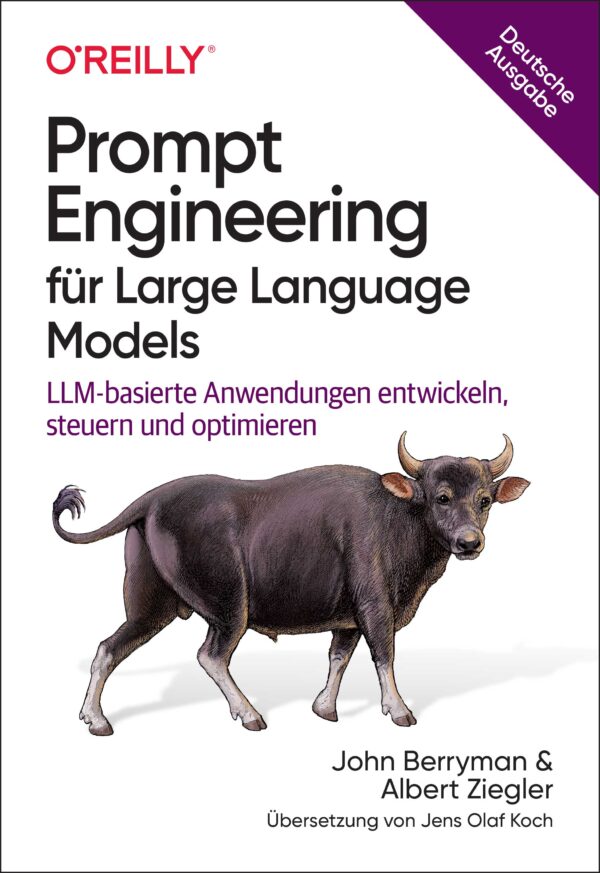
Prompt Engineering für Large Language Models
LLM-Anwendungen effektiv steuern: von der Prompt-Optimierung bis zur Workflow-IntegrationLLMs als leistungsstarke Bausteine für Anwendungen nutzenDen richtigen Prompt und Kontext für nützliche Ergebnisse gestaltenVon der Erfahrung der GitHub-Copilot-Entwickler profitierenFortgeschrittene Konzepte wie Conversational Agency und Workflow-Steuerung meisternLarge Language Models (LLMs) revolutionieren die Welt. Sie bieten die Möglichkeit, Aufgaben zu automatisieren und komplexe Probleme zu lösen. Eine neue Generation von Softwareanwendungen nutzt diese Modelle als zentrale Bausteine und erschließt in praktisch allen Bereichen völlig neues Potenzial. Um zuverlässig auf diese Funktionen zugreifen zu können, sind jedoch neue Fähigkeiten erforderlich.Mit diesem Buch eignen Sie sich die Kunst und die Techniken des Prompt Engineering an und schöpfen die Möglichkeiten von LLMs voll aus.Die Branchenexperten John Berryman und Albert Ziegler erklären, wie man effektiv mit KI kommuniziert und Ideen in ein sprachmodellfreundliches Format umwandelt. Durch das Erlernen der konzeptionellen Grundlagen und der praktischen Techniken erwerben Sie das Wissen und die nötige Sicherheit, um die nächste Generation von LLM-basierten Anwendungen zu entwickeln.Aus dem Inhalt:Verstehen Sie die LLM-Architektur und erfahren Sie, wie Sie am besten mit ihr interagieren können.Entwerfen Sie eine umfassende Strategie zur Erstellung von Prompts für eine Anwendung.Sammeln, sortieren und präsentieren Sie Kontextelemente, um eine effiziente Eingabeaufforderung zu erstellen.Erlernen Sie spezifische Techniken, um Prompts zu erstellen, wie Few-Shot-Prompting, Chain-of-Thought-Prompting und RAG.Leseprobe (PDF-Link)Über die Autoren: John Berryman ist Gründer von Arcturus Labs, einem Unternehmen, das sich auf die Entwicklung von LLM-basierten Anwendungen spezialisiert hat. Er war einer der ersten Entwickler bei GitHub Copilot und arbeitete dort an Chat- und Code-Vervollständigungsfunktionen. John ist außerdem Suchmaschinenexperte und Autor des Fachbuchs „Relevant Search“ (Manning).Albert Ziegler ist Head of AI beim KI-Cybersicherheitsunternehmen XBOW. Als einer der Gründungsentwickler von GitHub Copilot, dem ersten erfolgreichen LLM-Produkt im industriellen Maßstab, entwarf er dessen Systeme für die Modellinteraktion und das Prompt Engineering.

Becoming Quantum Safe
“The book Becoming Quantum Safe is a timely and essential guide for business and technology leaders. As quantum computing accelerates, the risks to today’s cryptographic systems are no longer theoretical. This book offers practical strategies and a clear roadmap to help organizations navigate the quantum era with confidence and build a secure digital future.” —ARVIND KRISHNA, CEO and Chairman, IBM A practical guide to navigating cryptographic challenges in the era of quantum computing. Becoming Quantum Safe: Protect Your Business and Mitigate Risks with Post-Quantum Cryptography and Crypto-Agility is a definitive, pragmatic guide designed for CISOs, CTOs, CIOs, CROs, CCOs, CDOs, DPOs, security leaders, and technology executives who need to understand and act on the quantum computing threat to current cryptography. This comprehensive playbook delivers step-by-step strategies to transition to Post-Quantum Cryptography (PQC)—ensuring your organization remains secure, compliant, and resilient in the quantum era. Authored by leading experts in cybersecurity, cryptography, and quantum technologies, this book demystifies the quantum threat, explains the vulnerabilities in today’s encryption, and provides a clear, actionable roadmap to achieve crypto-agility and implement quantum safe cryptography. What You Will Learn: How Quantum Computing Threatens Current Encryption Understand the real risks quantum computing poses to RSA, ECC, and other widely used encryption. Gain explanations of Shor’s Algorithm, Grover’s Algorithm, and how they impact classical cryptography.Practical Crypto-Agility Strategies Learn how to build a crypto-agile enterprise—one that can rapidly adopt, test, deploy, and manage new cryptographic standards without disrupting business operations.A Roadmap to Post-Quantum Cryptography (PQC) Adoption Follow a proven, step-by-step framework to transition from classical to quantum safe cryptography. Identify key milestones, address operational challenges, and implement solutions that safeguard data, operations, and digital trust.Learning from Real-World Enterprises Across Industries Insights from global enterprises in banking, financial services, government, telecommunications, healthcare, and retail embarking on their journey to quantum safe. A practical guide to navigating cryptographic challenges in the era of quantum computing. Becoming Quantum Safe: Implementing Post-Quantum Cryptography to Mitigate Risks and Protect Your Business is a is a definitive, pragmatic guide designed for CISOs, CTOs, CIOs, CROs, CCOs, CDOs, DPOs, security leaders, and technology executives who need to understand and act on the challenge posed by quantum computing to current cryptography. This comprehensive playbook delivers step-by-step strategies for transitioning to Post-Quantum Cryptography (PQC)—ensuring your organization remains secure, compliant, and resilient in the quantum era. Authored by leading experts in cybersecurity, cryptography, and quantum technologies, this book demystifies the quantum threat, explains the vulnerabilities in today's encryption, and provides clear, actionable guidance to achieve crypto-agility and implement quantum-safe cryptography. What You Will Learn: What is Quantum Computing and how it Threatens Current Encryption Understand the basics of quantum computing and the challenges it poses to RSA, ECC, and other widely used encryption. Gain explanations of Shor's Algorithm, Grover's Algorithm, and how they impact classical cryptography.Practical Crypto-Agility Strategies Learn how to build a crypto-agile enterprise—one that can rapidly adopt, test, deploy, and manage new cryptographic standards without disrupting business operations.A Roadmap to Post-Quantum Cryptography (PQC) Adoption Follow a proven, step-by-step framework to transition from classical to quantum-safe cryptography. Identify key milestones, address operational challenges, and implement solutions that safeguard data, operations, and digital trust. Learn about the consortia work that brings together players in the ecosystem and how one can leverage the work being done to accelerate the quantum safe journey.Case Studies Across Industries See how global leaders in banking, financial services, government, telecommunications, healthcare, and retail are adopting post-quantum cryptography to mitigate risks, achieve compliance, and future-proof their security infrastructure. Why This Book Matters Now: The quantum threat to encryption is real and time-sensitive. Quantum computers will render today's encryption obsolete, exposing sensitive data, customer trust, and business continuity. Regulatory pressures are rising. Governments and standards bodies across the globe are mandating quantum-safe transitions.Organizations that embrace crypto-agility today will lead the future, maintaining a secure competitive edge in a quantum-powered world. JAI SINGH ARUN spearheads global business strategy, product management, engineering, and go-to-market execution for IBM Quantum Safe. RAY HARISHANKAR is an IBM Fellow in the Quantum team. He leads business and technical strategy for IBM Quantum Safe. WALID RJAIBI is a Distinguished Engineer and Chief Architect for Quantum Safe at IBM Research. He leads innovations to make the world quantum safe.

The Ethics of Artificial Intelligence
The Ethics of Artificial Intelligence discusses the need for ethics accompanying developments in artificial intelligence, from the point of view of different disciplinary fields and sectors of activity. Artificial intelligence is profoundly restructuring our practices, creating new methods and significantly influencing the way we think and interact, at the level of individuals, organizations and societies, whether in our private, public or professional lives. This book begins with a rather conceptual approach, particularly focusing on the possible future of AI. It then highlights the urgent need to establish an ethical framework for the uses associated with AI, illustrating two booming sectors of activity. Finally, it discusses the ethics of AI in professional sectors that are undergoing major changes because of the digitization of their activities. Franck Debos is a lecturer in SIC at the Université de Nice Côte d'Azur, France. His research interests include issues associated with the ethics of AI, smart cities and digital uses.

Show AI--Don't Tell It
Praise forSHOW AI—DON’T TELL IT “Finally, a playbook that shows how to unlock AI’s power with business leaders, not just engineers, and demystifies the path from vision to real value.” —MARY SHEA, PHD, Former Principal Analyst at Forrester, Co-Founder & Chief Growth Officer at Meerkat “Her step-by-step methodology is the essential AI guide for driving collaborative, secure innovation, fast.” —ROB BENCE, VP of Technology & Cybersecurity at Tepper Sports and Entertainment, Owners of the Carolina Panthers “Critical resource for business leaders—this book fills in all the gaps between LLMs and making money!” —CHRIS GERMANN, Advisor to CMOs, Independent Consultant, Former Gartner VP, CIO Research Program “If you want to turn skeptics into champions, show them exactly how AI changes the game for your business.” —GREG NICHOLS, President of Technology Partners, AI Investor “Dr. Lisa delivers the field guide for leaders ready to secure the future by pairing advanced technology with courageous human leadership.” —JULIE VIDA, Retired Naval Commander, Cybersecurity Board Director, Former Splunk Chief Strategy Advisor “Every services partner chasing AI deals needs a blueprint like this for turning strategy into action and pipeline into revenue.” —JUSTIN SLAGLE, Former Microsoft Director, Global Systems Integrators, Founder & CEO of The Partner Masters The secret to AI adoption? Stop explaining the tech—help your organization visualize business success. Stakeholders don't invest in AI because they understand the tech—they invest when its business impact is clear and undeniable. In Show AI—Don't Tell It, AI executive and business strategist Dr. Lisa Palmer reveals how to use visual storytelling to make AI's value tangible, turning complex ideas into clear business outcomes that drive buy-in, adoption, and scale. Instead of vague theories and hype, this book provides clear frameworks, practical tools, and proven visualization techniques to help leaders secure funding, accelerate implementation, and maximize AI's impact. Applying her Bold AI Leadership Model, Dr. Palmer lays out a structured approach to AI success: Mindset: The four Applied AI Guiding Principles—Business Value, Speed with Rigor, Simplicity, and Human-Centricity—keep AI initiatives focused, efficient, and impactful.Strategic Priorities: The five AI Success Pillars—Value Creation, Customer-Centricity, Collaborative Teams, Cultural Shifts, and Data as a Strategic Asset—ensure AI drives measurable business results.Practical Tools: The Visualization Tool Decision Framework, featuring over 20 strategic visualization tools, helps leaders simplify complexity, overcome resistance, and communicate AI's impact with clarity and confidence. A must-read for executives, business leaders, and AI practitioners, Show AI—Don't Tell It provides the mindset, strategy, and tools needed to translate AI's potential into tangible value. Whether you're seeking stakeholder buy-in, funding approval, or faster adoption, this book shows you exactly how to use visual storytelling to accelerate business success with AI. DR. LISA PALMER is an Applied AI Executive Advisor, global keynote speaker, and the founder of an AI venture blending cutting-edge AI software with human expertise. Her unique value lies in having been a technology buyer, seller, advisor, and researcher—giving her a 360-degree perspective on how to turn AI into practical, profitable, people-friendly results.
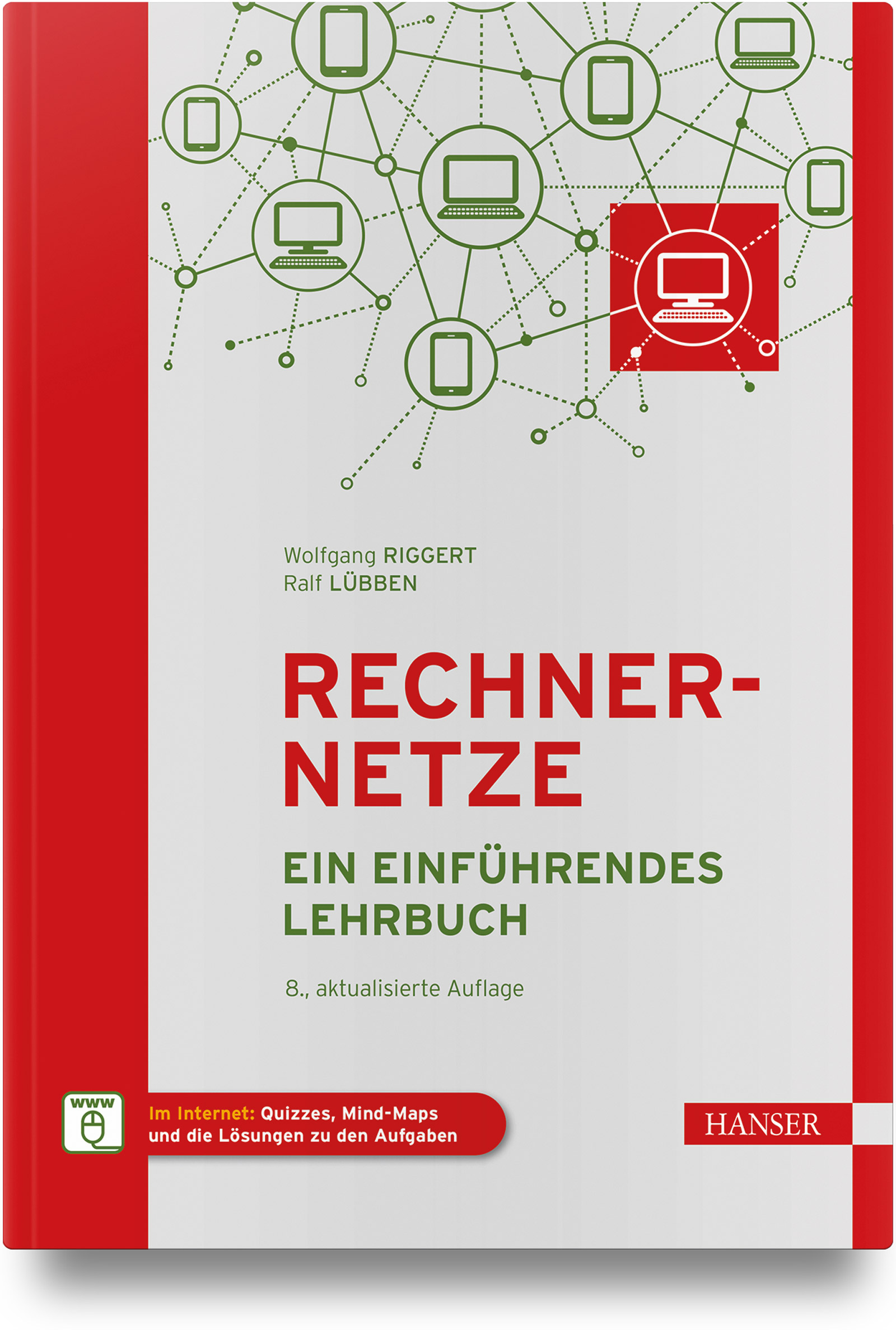
Rechnernetze (8. Auflg.)
Ein einführendes Lehrbuch in 8. Auflage aus dem September 2025.Dieses einführende Lehrbuch für Studierende der Informatik und ingenieurwissenschaftlicher Studiengänge an Hochschulen und Berufsakademien vermittelt praxisnah und leicht verständlich die Grundlagen der Netzwerktechnik und der Netzwerkarchitektur. Es erläutert die Voraussetzungen, die Funktionsweise und die technischen Hintergründe von Computernetzwerken.Das Buch befähigt nicht nur zur Beurteilung der Technik, sondern hilft auch, praktische Abwägungen und Entscheidungen bei der Netzwerkplanung zu treffen. Es zeigt neben den Basiskomponenten, Übertragungsverfahren und Verbindungskomponenten auch strategische Aspekte, Trends und zukünftige Entwicklungslinien und vermittelt die Grundlagen zu Strategien und Methoden der Computervernetzung.Neu in der achten Auflage:Neue Transportprotokolle und Sicherheit in Transportkontrollen: Transport Layer Security (TLS), QUIC; Erweiterung Routing-Protokolle: Border Gateway Protocol (BGP); Sicherheit bei der Namensauflösung: DNS über HTTPS; neuer WLAN-Standard: Wifi7; Trends im Ethernet: automotive Ethernet, Time Sensitive Networking; Standards im und Organisation des Internets.Auf plus.hanser-fachbuch.de finden Sie zu diesem Titel digitales Zusatzmaterial: Lehrvideos, Quizzes zur Lernkontrolle, Mind-Maps der wichtigsten Konfigurationsbefehle für Cisco Router/Switches und die Lösungen zu den Aufgaben.

The Hypermodernity Factory
The digital regime and its bio-anthropotechnology, characteristic of hypermodernity, are giving rise to unprecedented living and working conditions. Relational, inter-individual and exchange systems are being transformed. Technologies bring new ways of communicating, speaking, writing, organizing and controlling tasks. They are explicit, but their reticularities also operate invisibly, underground. However, they define powerful norms for work. Beyond the digital object, at the heart of the computerization process of the last fifty years in France, a progressive transformation of the work regime has taken place. As our social ecologies adapt, adopt, conform and metamorphose, conflict, polemics and sometimes creative resistance emerge. The Hypermodernity Factory is based on an investigation carried out within an administrative department of Inria (the French public institute for research into information technology and techniques) – then in the midst of a social crisis – to discern psychic and collective individuation processes, in a context of instability and specific communication difficulties. Immersed in these almost disruptive anthropotechnical conditions, and subject to unavoidable processes of subjectivation, the subject of office life, from manager to employee, finds themselves in a confused situation; they are constantly living a complex experience of their own in the hybrid, dynamic evolution of the digital regime. Anaïs Djouad, after various assignments in the public and private sectors, became a game designer during the serious games boom. In 2022, she defended her sociology thesis at the EHESS; she is now a sociologist and teacher.

Driving Innovation through AI and Digital Twin for 6G Powered Sustainable Ultra Smart Cities
This book presents the 6G powered integration of Artificial Intelligence (AI) and Digital Twin (DT) technology for sustainable smart cities. In the context of smart cities, 6G, AI and DT hold enormous potential for transformation by boosting city infrastructure and planning, streamlining healthcare facilities, and improving transportation. 6G offers high speed and low latency seamless transfer of vast amounts of data which, when analysed with sophisticated AI models, enhance the decision-making capabilities for smart city infrastructure and urban planning. DT technology, through continuous monitoring and virtual modeling of urban ecosystems, enables predictive maintenance for energy distribution, water management and waste management in a smart city landscape for environmental sustainability. Driving Innovation through AI and Digital Twin for 6G Powered Sustainable Ultra Smart Cities covers the 6G technological innovations, trends and concerns, as well as practical challenges encountered in the implementation of AI and DT for transforming smart cities for a sustainable future. Ashu Taneja is Associate Professor at the Centre for Research Impact and Outcome (CRIO), Chitkara University, India. Abhishek Kumar is a Senior Member of IEEE and works as Assistant Director and Professor in the Computer Science & Engineering Department at Chandigarh University, India. Suresh Vishnudas Limkar is Assistant Professor at the Department of Computer Science and Engineering at the Central University of Jammu, India. Mariya Ouaissa is Professor of Cybersecurity and Networks at the Faculty of Sciences Semlalia, Cadi Ayyad University, Morocco. Mariyam Ouaissa is Assistant Professor of Networks and Systems at ENSA, Chouaib Doukkali University, Morocco.


Fit fürs Studium - Informatik (3. Auflg.)
Informatik – das Studium ist spannend und der Abschluss ist gefragt, aber gerade der Beginn hält einige Herausforderungen bereit. Programmierung ist dabei nicht alles. Mit Rechnerarchitektur, Komplexitätsberechnungen, formalen Kalkülen und nicht zuletzt einer guten Portion Mathematik tut sich leichter, wer vorbereitet an den Start geht.Dieses Buch ist der ideale Brückenkurs für alle, die einen besonders gut verständlichen Einstieg in die komplexen Themen der Informatik suchen. Die Autoren kennen typische Einstiegsprobleme und gehen auch schwierige Themen mit Schwung und didaktischem Feingefühl an. Diagramme, Beispiele und Aufgaben mit Musterlösungen helfen Ihnen, alles zu verstehen. So gehen Sie gut vorbereitet ins Studium.Aus dem Inhalt:Algorithmen und ihre KomplexitätFormale SprachenDatenstrukturen und CodierungBetriebssysteme und CompilerVerschlüsselungSoftwareentwicklung im TeamWichtiges aus der MathematikProgrammierung in PythonKünstliche IntelligenzWie werde ich Informatiker?Über die Autoren:Arne Boockmeyer ist Doktorand an der Professur für Betriebssysteme und Middleware am Hasso-Plattner-Institut in Potsdam.Philipp Fischbeck kennt typische Hürden beim Lernen aus seiner Arbeit mit Jugendlichen in Schüler*innen-Workshops und mit Studierenden als Tutor und Dozent am Hasso-Plattner-Institut.Stefan Neubert hat zahlreiche Informatik-Workshops und -Camps für Schüler*innen entwickelt und durchgeführt.
Künstliche Intelligenz für Alltag und Beruf
Künstliche Intelligenz für Alltag und BerufFür alle, die KI nicht nur verstehen, sondern sinnvoll nutzen und mitgestalten wollen!Die Künstliche Intelligenz verändert unsere Welt in rasantem Tempo – im privaten Alltag ebenso wie im Berufsleben. Dieses Buch bietet eine umfassende Einführung in die transformative Kraft der KI und zeigt, wie sie Lebensqualität, Produktivität und Entscheidungsprozesse neu definiert. Gleichzeitig beleuchtet es kritisch die ethischen, gesellschaftlichen und technologischen Herausforderungen, die mit dieser Entwicklung einhergehen.Ob im Management, im Ingenieurwesen oder im täglichen Leben – anhand zahlreicher praxisnaher Beispiele und fundierter Analysen erhalten Leserinnen und Leser einen vielschichtigen Einblick in die Wirkweise und Auswirkungen moderner KI-Systeme.Beschrieben werden u. a. private bzw. berufliche Anwendungen wie Spracherkennung, Finanzprognosen, maschinelles Sehen, medizinische Diagnosesysteme und Mensch-Maschine-Interaktionen. Ethische Herausforderungen und Fairnessprobleme werden aufgezeigt, um eine Vertrauenskrise zu vermeiden.Dieses Buch ist nicht nur ein informativer Leitfaden, sondern auch ein Denkanstoß: Es lädt dazu ein, die Rolle der KI in einer global vernetzten Welt zu hinterfragen, neue Kompetenzprofile zu entdecken und sich aktiv an der Gestaltung einer fairen, inklusiven und nachhaltigen Technologiezukunft zu beteiligen.Leseprobe (Link)Prof. Dr. Günter Hofbauer lehrt und forscht an der Technischen Hochschule Ingolstadt. Seine Schwerpunkte liegen im Innovations- und Technologiemanagement im internationalen Kontext. Der Forschungsschwerpunkt fokussiert sich auf die Anwendung der künstlichen Intelligenz in der Industrie, aber auch im Alltag. Er forscht als Gastprofessor an der Shenzhen Technology University in China.Dr. Ruimei Zhou ist Dekanin an der L.K. Group Industrial Technology Empowerment Akademie in Shenzhen, an der KI-Anwendungen gelehrt werden. Davor war sie tätig im Management der Shenzhen Artificial Intelligence Industry Association und des Standing Committee of the All-China Federation of Industry and Commerce Artificial Intelligence Committee. Sie hat mehr als 20 Jahre Management-Erfahrung in der Industrie und drei Jahre Lehrtätigkeit an einer Universität.