

Programmierung

Python for MATLAB Development
MATLAB can run Python code!Python for MATLAB Development shows you how to enhance MATLAB with Python solutions to a vast array of computational problems in science, engineering, optimization, statistics, finance, and simulation. It is three books in one:* A thorough Python tutorial that leverages your existing MATLAB knowledge with a comprehensive collection of MATLAB/Python equivalent expressions* A reference guide to setting up and managing a Python environment that integrates cleanly with MATLAB* A collection of recipes that demonstrate Python solutions invoked directly from MATLABThis book shows how to call Python functions to enhance MATLAB's capabilities. Specifically, you'll see how Python helps MATLAB:* Run faster with numba* Distribute work to a compute cluster with dask* Find symbolic solutions to integrals, derivatives, and series summations with SymPy* Overlay data on maps with Cartopy* Solve mixed-integer linear programming problems with PuLP* Interact with Redis via pyredis, PostgreSQL via psycopg2, and MongoDB via pymongo* Read and write file formats that are not natively understood by MATLAB, such as SQLite, YAML, and iniWHO THIS BOOK IS FORMATLAB developers who are new to Python and other developers with some prior experience with MATLAB, R, IDL, or Mathematica.ALBERT DANIAL is an aerospace engineer with 30 years of experience, currently working for Northrop Grumman near Los Angeles. Before Northrop Grumman, he was a member of the NASTRAN Numerical Methods team at MSC Software and a systems analyst at SPARTA. He has a Bachelor of Aerospace Engineering degree from the Georgia Institute of Technology, and Masters and Ph.D. degrees in Aeronautics and Astronautics from Purdue University. He is the author of cloc, the open source code counter.Al has used MATLAB since 1990 and Python since 2006 for algorithm prototyping, earth science data processing, spacecraft mission planning, optimization, visualization, and countless utilities that simplify daily engineering work. Chapter 1: IntroductionGoal: Describe the book’s goals, what to expect, what benefit to gain.• Learn Python through MATLAB Equivalents• Is Python really free?• What About Toolboxes?• I already know Python. How do I call Python functions in MATLAB?• What you won’t find in this book• Beyond MATLABPart I – Learning Python through MATLAB comparisonsChapter 2: InstallationGoal: Create a working Python installation on the computer with MATLAB• Downloads• Post-Install Checkout• ipython, IDE’s• Python and MATLAB Versions Used in This BookChapter 3: Language BasicsGoal: Learn the basic mechanics of Python• Assignment• Printing• Indentation• Indexing• `for` Loops• `while` Loops• `if` Statements• Functions• Comments• Line Continuation• Exceptions• Modules and PackagesChapter 4: Data ContainersGoal: Learn about lists, dictionaries, etc, and how these compare to MATLAB matrices and cell arrays• NumPy Arrays• Strings• Python Lists and MATLAB Cell Arrays• Python Tuples • Python Sets and MATLAB Set Operations• Python Dictionaries and MATLAB Maps• Structured Data• Tables• Caveat: ```=`'' copies a reference for non-scalars!Chapter 5: Date and TimeGoal: Learn about measuring, storing, and converting temporal values.• Time• Dates• Timezones• Time Conversions to and from `datetime` ObjectsChapter 6: Input and OutputGoal: Learn about reading and writing data, with emphasis on numeric data and scientific file formats like HDF and NetCDF.• Reading and Writing Text Files• Reading and Writing Binary Files• Reading and Writing Pickle Files• Reading and Writing `.mat` files• Command Line Input • Interactive Input• Receiving and Sending over a Network• Interacting with DatabasesChapter 7: Interacting with the File SystemGoal: Show how Python manages file system operations.• Reading Directory Contents• Finding Files• Deleting Files• Creating Directories• Deleting Directories• Walking Directory TreesChapter 8: Interacting with the Operating System and External ExecutablesGoal: Show how to make system calls in Python and how these differ from MATLAB.• Reading, setting environment variables• Calling External Executables• Inspecting the Process Table and Process ResourcesPart II – MATLAB with PythonChapter 9: MATLAB/Python IntegrationGoal: Show how to make system calls in Python and how these differ from MATLAB.• MATLAB’s `py` Module• System calls and File I/O• TCP/IP ExchangeChapter 10: Object Oriented ProgrammingGoal: Demonstrate Python’s OO semantics compared to MATLAB• Classes• Custom Exceptions• Performance ImplicationsChapter 11: NumPy and SciPyGoal: Introduce Python’s numeric and scientific computing capability. This is by far the largest chapter in the book.• NumPy Arrays• Linear Algebra• Sparse Matrices• Interpolation • Curve Fitting• Statistics• Finding Roots• Optimization • Differential Equations• Symbolic Mathematics• Unit SystemsChapter 12: PlottingGoal: Demonstrate how publication-quality plots are produced in Python alongside MATLAB equivalents• Point and Line Plots• Area Plots• Animations• Plotting on Maps• 3D Plots• Making plots in batch modeChapter 13: Tables and DataframesGoal: Show Pandas dataframes in comparison to MATLAB tables (and how the former pre-dates the latter by five years)• Loading tables from files• Table summaries• Cleaning data• Creating tables programmatically• Sorting rows• Table subsets• Iterating over rows• Pivot tables• Adding columns• Deleting columns• Joins across tablesChapter 14: High Performance ComputingGoal: Demonstrate techniques for profiling Python code and making computationally intensive Python code run faster. Significant performance advantages over MATLAB are shown.• Paths to faster Python code• Reference Problems• Reference Hardware and OS• Baseline performance• Profiling Python Code• Vectorization• Cython• Pythran• Numba• Linking to C, C++, Fortran• Distributed memory parallel processingChapter 15: `py` Module ExamplesGoal: A collection of examples that show how Python enables the core MATLAB product to perform tasks that would either require a Toolbox or less-vetted code from the MathWorks’ user contributed FileExchange.• Read a YAML File• Write a YAML File• Compute Laplace Transforms• Interact with Redis• Units• Propagate a satellite’s orbit• Controls• Plotting on mapsChapter 16: Language WartsGoal: Identify MATLAB and Python language ‘features’ that often cause beginners grief.• Dangerous language features• MATLAB• Python• Common Errors

Java For Dummies
LEARN TO WRITE PRACTICAL, REUSABLE CODE WITH THE STRAIGHT FORWARD TUTORIALS AND TIPS IN THE NEWEST EDITION OF THIS FOR DUMMIES BESTSELLERDo you speak Java? No, we’re not talking about your morning cup ‘o joe. We mean the world’s most popular programming language that runs on almost any computer!If you’re looking to get started—or up your game—with Java, then Java For Dummies is the guide you need.In this book, you’ll:* Take control of your program flow* Program with classes, objects, and methods* Use Java's functional programming features* Explore Java 17, the latest long-term support releaseThis up-to-date handbook covers the latest developments in Java, including the new ‘switch’ statement syntax. So, if you’re ready to dive into one of the most practical (and coolest!) programming languages around, it’s time you picked upJava For Dummies.DR. BARRY BURD holds an M.S. in Computer Science from Rutgers University and a Ph.D. in Mathematics from the University of Illinois. Barry is also the author of Beginning Programming with Java For Dummies, Java for Android For Dummies, and Flutter For Dummies.INTRODUCTION 1About This Book 1Foolish Assumptions 2Icons Used in This Book 3Beyond the Book 4Where to Go from Here 4PART 1: GETTING STARTED WITH JAVA 5CHAPTER 1: ALL ABOUT JAVA 7What You Can Do with Java 8Why You Should Use Java 9Gaining Perspective: Where Java Fits In 10Object-Oriented Programming (OOP) 12Object-oriented languages 13Objects and their classes 15What’s so great about an object-oriented language? 15Objects and classes are everywhere 18What’s Next? 19CHAPTER 2: ALL ABOUT SOFTWARE 21Get Ready for Java 21The Inside Scoop 23What is a compiler? 24What is a Java virtual machine? 27Developing Software 31Spoiler Alert! 32CHAPTER 3: USING THE BASIC BUILDING BLOCKS 33Speaking the Java Language 33The grammar and the common names 34The words in a Java program 35Checking Out Java Code for the First Time 37Understanding a Simple Java Program 38The Java class 38The Java method 40The main method in a program 41How you finally tell the computer to do something 43Brace yourself 45And Now, a Few Comments 49Adding comments to your code 49What’s Barry’s excuse? 53Using comments to experiment with your code 53PART 2: WRITING YOUR OWN JAVA PROGRAMS 55CHAPTER 4: MAKING THE MOST OF VARIABLES AND THEIR VALUES 57Varying a Variable 58Assignment statements 60The types of values that variables may have 61How to hold the line 64Numbers without decimal points 65Combining declarations and initializing variables 67Experimenting with JShell 69What Happened to All the Cool Visual Effects? 72The Atoms: Java’s Primitive Types 73The char type 73The boolean type 76The Molecules and Compounds: Reference Types 78An Import Declaration 82Creating New Values by Applying Operators 84Initialize once, assign often 87The increment and decrement operators 89Assignment operators 93CHAPTER 5: CONTROLLING PROGRAM FLOW WITH DECISION-MAKING STATEMENTS 97Making Decisions (Java if Statements) 98Guess the number 98She controlled keystrokes from the keyboard 99Creating randomness 102The if statement 103Equal, equal 104Brace yourself 105Your intent to indent 105Elseless in Helsinki 106Using Blocks in JShell 108Forming Conditions with Comparisons and Logical Operators 109Comparing numbers; comparing characters 109Comparing objects 110Look! 113Java’s logical operators 115Vive les nuls! 118(Conditions in parentheses) 119The Nesting Habits of if Statements 121Choosing among Many Alternatives 124Java’s glorious switch statement 124A switch in time saves 14 127Your grandparents’ switch statement 130Free fall 131CHAPTER 6: CONTROLLING PROGRAM FLOW WITH LOOPS 135Repeating Instructions Over and Over Again (Java while Statements) 136Count On Me 139The anatomy of a for statement 141The world premiere of “Al’s All Wet” 142You Can Always Get What You Want 145The root of the matter 148Reading a single character 149File handling in Java 150Block on the while side 151PART 3: WORKING WITH THE BIG PICTURE: OBJECT-ORIENTED PROGRAMMING 155CHAPTER 7: THE INSIDE SCOOP 157Defining a Class (What It Means to Be an Account) 158Declaring variables and creating objects 163Initializing a variable 166Using an object’s fields 167One program; several classes 167Declaring a public class 167Defining a Method within a Class (Displaying an Account) 169An account that displays itself 170The display method’s header 172Sending Values to and from Methods (Calculating Interest) 173Passing a value to a method 176Returning a value from the getInterest method 178Giving Your Numbers a Makeover 180Hide-and-Seek 185Good programming 185Public lives and private dreams: Making a field inaccessible 188Enforcing rules with accessor methods 190Barry’s Own GUI Class 190CHAPTER 8: SAVING TIME AND MONEY: REUSING EXISTING CODE 199What It Means to Be an Employee 200The last word on employees 200Putting your class to good use 202Cutting a check 206Working with Disk Files (a Brief Detour) 207Storing data in a file 207Repeat after me 208Reading from a file 209Who moved my file? 212You moved your file! 212Reading a line at a time 213Clean up after yourself 215Defining Subclasses (What It Means to Be a Full-Time or Part-Time Employee) 216Creating a subclass 218Creating subclasses is habit-forming 220Using Subclasses 221Making types match 223The second half of the story 224Changing the Payments for Only Some of the Employees 225A Java annotation 227Using methods from classes and subclasses 228CHAPTER 9: CONSTRUCTING NEW OBJECTS 233Defining Constructors (What It Means to Be a Temperature) 234What is a temperature? 235What is a temperature scale? (Java’s enum type) 235Okay, so then what is a temperature? 236What you can do with a temperature 238Constructing a temperature; a slow-motion replay 240Some things never change 243Doing Something about the Weather 246Building better temperatures 246Constructors for subclasses 248Using all this stuff 249The default constructor 250A Constructor That Does More 254Classes and methods from the Java API 256Live dangerously 257PART 4: SMART JAVA TECHNIQUES 259CHAPTER 10: PUTTING VARIABLES AND METHODS WHERE THEY BELONG 261Defining a Class (What It Means to Be a Baseball Player) 262Another way to beautify your numbers 263Using the Player class 264One class; nine objects 266Don’t get all GUI on me 266Some facts about potatoes 268Making Static (Finding the Team Average) 270Why is there so much static? 272Meet the static initializer 272Displaying the overall team average 273The static keyword is yesterday’s news 276Could cause static; handle with care 276Experiments with Variables 279Putting a variable in its place 280Telling a variable where to go 283Passing Parameters 287Pass by value 288Returning a result 290Pass by reference 290Returning an object from a method 292Epilogue 294CHAPTER 11: USING ARRAYS TO JUGGLE VALUES 295Getting Your Ducks All in a Row 295Creating an array in two easy steps 298How to book hotel guests 299Tab stops and other special things 301Make life easy for yourself 302Stepping through an array with the enhanced for loop 304Do you have a room? 306Writing to a file 308When to close a file 309Arrays of Objects 311Using the Room class 313Yet another way to beautify your numbers 316The conditional operator 317How to Argue with Your Code 318Settling the argument 319Checking for the right number of program arguments 321CHAPTER 12: USING COLLECTIONS AND STREAMS (WHEN ARRAYS AREN’T GOOD ENOUGH) 323Arrays Have Limitations 324Collection Classes to the Rescue 325Using an ArrayList 325Using generics 328Wrap it up 331Are we done yet? 333Once and again 333So many collection classes! 335Functional Programming 336Problem-solving the old-fashioned way 337Lambda expressions 339A black sheep among the lambdas 341A taxonomy of lambda expressions 342The interpretation of streams 342Why bother? 348Method references 351CHAPTER 13: LOOKING GOOD WHEN THINGS TAKE UNEXPECTED TURNS 355Garbage In 356The parameter in a catch clause 360Do it yourself 362Who will catch the exception? 364Catching two or more exceptions at a time 371The Buck Stops Here, Except When It Doesn’t 372Catch it soon 374Catch it later 375Checked or unchecked? 377Try, Try Again! 380CHAPTER 14: SHARING NAMES AMONG THE PARTS OF A JAVA PROGRAM 385Access Modifiers 386Classes and Their Members 386Public and Private Access for Members 387Drawing on a frame 390Putting a package in its place 392Making a frame 394Default Access for Members 396Switching to Default access 398Accessing default members within a package 400Protected Access for Members 402A class in one package and a subclass in another 402Two classes in the same package 404Access Modifiers for Java Classes 408Public classes 408Nonpublic classes 409From Classes Come Modules 410CHAPTER 15: FANCY REFERENCE TYPES 411Java’s Types 411The Java Interface 412Declaring two interfaces 413Implementing interfaces 415Putting the pieces together 417Abstract Classes 420Caring for your pet 423Using all your classes 425Relax! You’re Not Seeing Double! 427CHAPTER 16: JAVA’S JUGGLING ACT 431Juggling Two or More Calls 432Events and event handling 435Follow the thread 436Don’t miss this 437Inside the actionPerformed method 439Some Events Aren’t Button Clicks 440The Inner Sanctum 446CHAPTER 17: USING JAVA DATABASE CONNECTIVITY 451Creating a Database and a Table 452Seeing what happens when you run the code 453Using SQL commands 454Connecting and disconnecting 455Putting Data in the Table 456Retrieving Data 457Destroying Data 459One Step Beyond 461PART 5: THE PART OF TENS 463CHAPTER 18: TEN PACKS OF JAVA WEBSITES 465This Book’s Website 465For Business Issues Related to This Book 465Download the Java Development Kit 466Your Grandparents’ Java Download Site 466The Horse’s Mouth 466Join Java User Groups 466Find the Latest News about Java 466Find News, Reviews, and Sample Code 466Got a Technical Question about Anything? 467Become Involved in the Future of Java 467CHAPTER 19: TEN BITS OF ADVICE FOR NEW SOFTWARE DEVELOPERS 469How Long Does It Take to Learn Java? 470Which of Your Books Should I Read? 470Are Books Other than Yours Good for Learning Java and Android Development? 471Which Computer Programming Language(s) Should I Learn? 471Which Skills Other than Computer Coding Should I Learn? 471How Should I Continue My Learning as a Software Developer? 472How Else Should I Continue My Learning as a Developer? 472How Can I Land a Job Developing Software? 473I Still Don’t Know What to Do with My Life 473If I Have Other Questions, How Can I Contact You? 474Index 475

Hands-on Machine Learning with Python
Here is the perfect comprehensive guide for readers with basic to intermediate level knowledge of machine learning and deep learning. It introduces tools such as NumPy for numerical processing, Pandas for panel data analysis, Matplotlib for visualization, Scikit-learn for machine learning, and Pytorch for deep learning with Python. It also serves as a long-term reference manual for the practitioners who will find solutions to commonly occurring scenarios.The book is divided into three sections. The first section introduces you to number crunching and data analysis tools using Python with in-depth explanation on environment configuration, data loading, numerical processing, data analysis, and visualizations. The second section covers machine learning basics and Scikit-learn library. It also explains supervised learning, unsupervised learning, implementation, and classification of regression algorithms, and ensemble learning methods in an easy manner with theoretical and practical lessons. The third section explains complex neural network architectures with details on internal working and implementation of convolutional neural networks. The final chapter contains a detailed end-to-end solution with neural networks in Pytorch.After completing Hands-on Machine Learning with Python, you will be able to implement machine learning and neural network solutions and extend them to your advantage.WHAT YOU'LL LEARN* Review data structures in NumPy and Pandas * Demonstrate machine learning techniques and algorithm* Understand supervised learning and unsupervised learning * Examine convolutional neural networks and Recurrent neural networks* Get acquainted with scikit-learn and PyTorch* Predict sequences in recurrent neural networks and long short term memoryWHO THIS BOOK IS FORData scientists, machine learning engineers, and software professionals with basic skills in Python programming.Ashwin Pajankar holds a Master of Technology from IIIT Hyderabad, and has over 25 years of programming experience. He started his journey in programming and electronics with BASIC programming language and is now proficient in Assembly programming, C, C++, Java, Shell Scripting, and Python. Other technical experience includes single board computers such as Raspberry Pi and Banana Pro, and Arduino. He is currently a freelance online instructor teaching programming bootcamps to more than 60,000 students from tech companies and colleges. His Youtube channel has an audience of 10000 subscribers and he has published more than 15 books on programming and electronics with many international publications.Aditya Joshi has worked in data science and machine learning engineering roles since the completion of his MS (By Research) from IIIT Hyderabad. He has conducted tutorials, workshops, invited lectures, and full courses for students and professionals who want to move to the field of data science. His past academic research publications include works on natural language processing, specifically fine grain sentiment analysis and code mixed text. He has been the organizing committee member and program committee member of academic conferences on data science and natural language processing.Chapter 1: Getting Started with Python 3 and Jupyter NotebookChapter Goal: Introduce the reader to the basics of Python Programming language, philosophy, and installation. We will also learn how to install it on various platforms. This chapter also introduces the readers to Python programming with Jupyter Notebook. In the end, we will also have a brief overview of the constituent libraries of sciPy stack.No of pages - 30Sub -Topics1. Introduction to the Python programming language2. History of Python3. Python enhancement proposals (PEPs)4. Philosophy of Python5. Real life applications of Python6. Installing Python on various platforms (Windows and Debian Linux Flavors)7. Python modes (Interactive and Script)8. Pip (pip installs python)9. Introduction to the scientific Python ecosystem10. Overview of Jupyter Notebook11. Installation of Jupyter Notebook12. Running code in Jupyter NotebookChapter 2: Getting Started with NumPyChapter Goal: Get started with NumPy Ndarrays and the basics of NumPy library. The chapter covers the instructions for installation and basic usage of NumPy.No of pages: 10Sub - Topics:1. Introduction to NumPy2. Install NumPy with pip33. Indexing and Slicing of ndarrays4. Properties of ndarrays5. Constants in NumPy6. Datatypes in datatypesChapter 3 : Introduction to Data VisualizationChapter goal – In this chapter, we will discuss the various ndarray creation routines available in NumPy. We will also get started with Visualizations with Matplotlib. We will learn how to visualize the various numerical ranges with Matplotlib.No of pages: 15Sub - Topics:1. Ones and zeros2. Matrices3. Introduction to Matplotlib4. Running Matplotlib programs in Jupyter Notebook and the script mode5. Numerical ranges and visualizationsChapter 4 : Introduction to PandasChapter goal – Get started with Pandas data structuresNo of pages: 10Sub - Topics:1. Install Pandas2. What is Pandas3. Introduction to series4. Introduction to dataframesa) Plain Text Fileb) CSVc) Handling excel filed) NumPy file formate) NumPy CSV file readingf) Matplotlib Cbookg) Read CSVh) Read Exceli) Read JSONj) Picklek) Pandas and webl) Read SQLm) ClipboardChapter 5: Introduction to Machine Learning with Scikit-LearnChapter goal – Get acquainted with machine learning basics and scikit-Learn libraryNo of pages: 101. What is machine learning, offline and online processes2. Supervised/unsupervised methods3. Overview of scikit learn library, APIs4. Dataset loading, generated datasetsChapter 6: Preparing Data for Machine LearningChapter Goal: Clean, vectorize and transform dataNo of Pages: 151. Type of data variables2. Vectorization3. Normalization4. Processing text and imagesChapter 7: Supervised Learning Methods - 1Chapter Goal: Learn and implement classification and regression algorithmsNo of Pages: 301. Regression and classification, multiclass, multilabel classification2. K-nearest neighbors3. Linear regression, understanding parameters4. Logistic regression5. Decision treesChapter 8: Tuning Supervised LearnersChapter Goal: Analyzing and improving the performance of supervised learning modelsNo of Pages: 201. Training methodology, evaluation methodology2. Hyperparameter tuning3. Regularization in linear regression4. Regularization in logistic regression5. Regularization in decision trees6. Crossvalidation, K-fold cross validation7. ROC CurveChapter 9: Supervised Learning Methods - 2Chapter Goal: Learn more algorithmsNo of Pages: 151. Naive bayes2. Support vector machines3. Visualization of decision boundariesChapter 10: Ensemble Learning MethodsChapter Goal: Learn the in-depth background of ensemble learning methodsNo of Pages: 101. Bagging vs boosting2. Random forest3. Adaboost4. Gradient boostingChapter 11: Unsupervised Learning MethodsChapter Goal: Detailed theory and practically oriented introduction to dimensionality reduction and clustering algorithmsNo of Pages: 201. Dimensionality reduction2. Principle components analysis3. Clustering4. K-Means method5. Density-based methodChapter 12: Neural Networks and Pytorch BasicsChapter Goal: Understand the basics of neural networks, deep learning, and PytorchNo of Pages: 101. Introduction to Pytorch, tensors2. Tensor operations3. ExercisesChapter 13: Feedforward Neural NetworksChapter Goal: In-depth introduction to basic dense neural networks along with necessary mathematical background and implementation. (chapter might split into two while writing)No of Pages: 201. Perceptron model2. Neural network and activation functions3. Multiclass classification4. Cost functions and gradient descent5. Backpropagation6. Pytorch gradients7. Linear regression with PyTorch8. Basic dense network with PyTorch for regression9. Basic dense network with Pytorch for classificationChapter 14: Convolutional Neural NetworkChapter Goal: Explore details behind CNNs and implement two solutions for image classificationNo of Pages: 201. Dense network for digits classification2. Image filters and kernels3. Convolutional layers4. Pooling layers5. CNN for digits classification6. CNN for image classificationChapter 15: Recurrent Neural NetworkChapter Goal: Understand sequence networks and implement them for forecasting values (or text classification)No of Pages: 151. Introduction to recurrent neural networks2. Vanishing gradient problem3. LSTM4. RNN batches, LSTM5. Text classification Problem (or forecasting problem)Chapter 16: Bringing It All TogetherChapter Goal: Discuss, conceptualize, design, and develop end to endNo of Pages: 201. Project 12. Project 2

Python 3 für Studium und Ausbildung
Programmierkenntnisse sind heute eine Kompetenz, die nicht nur in IT-nahen Berufen vorausgesetzt wird. Dieses Buch richtet sich besonders an alle, die Python in Studium und Ausbildung lernen und keine Vorkenntnisse in der Programmierung haben. Die Ausrichtung des Studiengangs spielt dabei keine Rolle. Alle Themen werden fachunabhängig erläutert und die Übungen und praktischen Beispiele decken viele unterschiedliche Anwendungsbereiche ab, so dass Sie auf die verschiedensten Aufgaben optimal vorbereitet sind. Sie werden Schritt für Schritt in die Programmiertechniken eingeführt: von den Grundlagen (Datentypen, Kontrollstrukturen, Funktionen) über die Entwicklung komplexer Anwendungen mit grafischer Benutzungsoberfläche bis hin zur Anbindung an SQL-Datenbanken, Datenvisualisierung und wissenschaftlichem Rechnen mit Arrays (NumPy). Dabei lernen Sie auch, gut lesbare Programmtexte und sauberen Code zu schreiben, und erfahren, wie Sie Fehler finden und von Anfang an vermeiden können. Zahlreiche praktische Programmierübungen helfen Ihnen, Ihr Wissen zu festigen und sich auf Prüfungssituationen vorzubereiten. Die Lösungen zu allen Übungen inklusive Programmcode finden Sie auf der Verlagsseite zum kostenlosen Download.Aus dem Inhalt: Alle Grundlagen einfach erklärtObjektorientierte ProgrammierungMit Modulen arbeiten und eigene Module erstellenVerarbeiten von Texten und BildernGrafische Benutzungsoberflächen mit tkinterSQL-Datenbanken mit sqlite3Wissenschaftliches Rechnen mit NumPyDatenvisualisierung mit MatplotlibNutzung von CoLab und PythonAnywhereWebprogrammierung mit CGI und WSGIAgile Softwareentwicklung Über den Autor: Michael Weigend hat an der Universität Potsdam in Informatik promoviert. Er war für mehr als 30 Jahre als Lehrer tätig und hat 20 Jahre lang an der FernUniversität Hagen Seminare zur Didaktik der Informatik gegeben. An der Universität Münster hält er im Rahmen eines Lehrauftrags Vorlesungen zur Python-Programmierung. Michael Weigend engagiert sich in mehreren nationalen und internationalen Communities für den Computer-Einsatz in der Bildung, darunter Constructionism, International Federation for Information Processing (TC 3 Computers in Education) , Bebras – International Contest on Informatics and Computational Thinking. Er hat über 60 wissenschaftliche Artikel veröffentlicht und mehrere Bücher zu den Themen Programmierung, Web Development und visuelle Modellierung geschrieben.
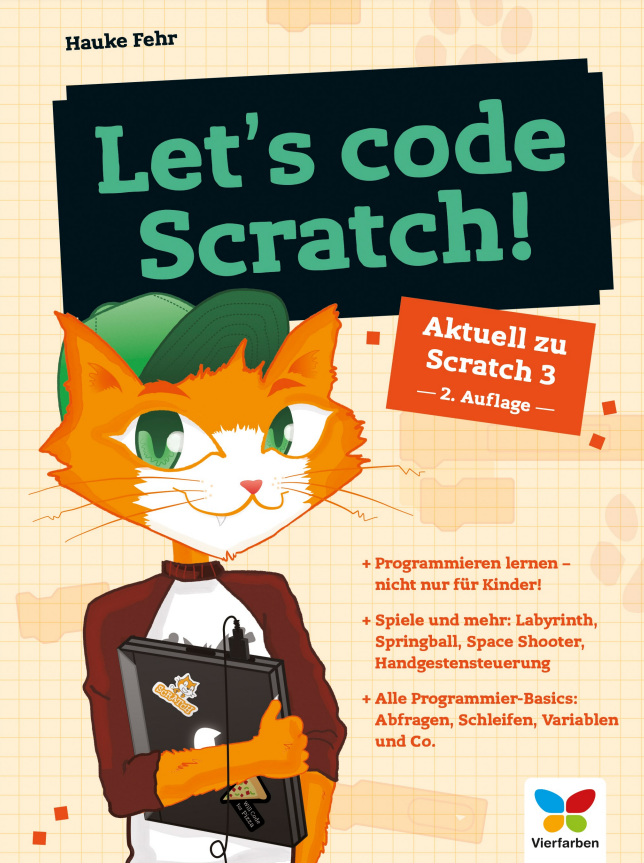
Let's code Scratch! (2. Auflage)
Werde ein echter Programmierer und schreibe deine eigenen Spiele und andere Programme: Scratch ist eine Programmiersprache extra für Kinder und Jugendliche, die leicht zu erlernen ist. Du brauchst kein Vorwissen und lernst in tollen Projekten schrittweise alle Funktionen kennen. Setze dein Wissen ein, um Bälle hüpfen, Katzen tanzen oder Luftballons zerplatzen zu lassen. Deiner Kreativität sind keine Grenzen gesetzt. Ganz nach dem Motto von Scratch: Ausdenken, entwickeln, teilen.Aus dem Inhalt:Scratch installierenScratch im Browser nutzenDie wichtigsten BefehleDein erstes Spiel: Der springende BallDas magische LabyrinthWürfel-, Zahlen- und RatespieleSchreibe dein eigenes Jump'n'RunEigene Spiele mit anderen teilenAlle Projekte auch zum Download Leseprobe (PDF)Autor:Hauke Fehr programmiert seit über 30 Jahren Apps für verschiedene Einsatzzwecke. Die Wissensvermittlung liegt ihm dabei besonders am Herzen.

Data Science in der Praxis
Der ideale Einstieg in Data Science für Praktiker! Ob mit oder ohne Mathematikkenntnisse – Sie bekommen hier den Rundumblick, den Sie für Ihre Projekte brauchen. So heben Sie den Schatz, den Daten darstellen können, wenn man sie richtig befragt. Sie lernen die einschlägigen Analysemethoden kennen, bekommen eine Einführung in die Programmiersprache R und erfahren, wie Sie maschinelles Lernen einsetzen. Und zwar inklusive dazugehöriger Werkzeuge wie Notebooks, die die Data-Science-Programmierung heutzutage so zugänglich machen. Und weil es mit der Technik allein nicht getan ist, geht das Buch auch auf Probleme der Projektdurchführung ein, beleuchtet verschiedene Anwendungsfelder und vergisst auch nicht, ethische Aspekte anzusprechen. Mit vielen Beispielen, Hinweisen für den Fehlerfall, Entscheidungshilfen und weiteren Praxistipps. Aus dem Inhalt: Erste Schritte mit R und RStudioGrundbegriffe der StatistikVorbereitung: Daten reinigen und transformierenk-Means ClusteringLineare und nichtlineare RegressionVorhersagen, Clustering, KlassifizierungTipps und Werkzeuge für alle ProjektphasenIhre Anwendung als REST-API bereitstellenKI und Maschinelles Lernen einsetzenAnomalieerkennung, Warenkorbanalyse und viele weitere AnwendungsfälleMachine Learning: Modelle richtig trainieren Materialien zum Buch ... 13 1. Einleitung ... 15 1.1 ... Warum dieses Buch? ... 15 1.2 ... Das Zeitalter der Daten -- alles nur ein Hype? ... 16 1.3 ... Warum nun Data Science? ... 17 1.4 ... Warum Data Science mit R? ... 19 1.5 ... Für wen ist dieses Buch? ... 20 1.6 ... Kann man Data Science ohne Mathe lernen? ... 20 1.7 ... Wie Sie dieses Buch verwenden können ... 22 1.8 ... Materialien und Kontakt ... 22 1.9 ... Danksagungen ... 22 2. Machine Learning, Data Science und künstliche Intelligenz ... 25 2.1 ... Aus der Geschichte lernen -- alles nur ein Hype? ... 25 2.2 ... Begriffsdefinitionen ... 34 3. Ablauf eines Data-Science-Projekts ... 39 3.1 ... Der allgemeine Ablauf eines Data-Science-Projekts ... 39 3.2 ... Business Understanding: Welches Problem soll gelöst werden? ... 43 3.3 ... Grundsätzliche Ansätze im Machine Learning ... 47 3.4 ... Performancemessung ... 49 3.5 ... Kommunikation mit Stakeholdern ... 57 3.6 ... Aus dem Labor in die Welt: Data-Science-Applikationen in Produktion ... 58 3.7 ... Die verschiedenen Rollen in einem Data-Science-Projekt ... 59 4. Einführung in R ... 67 4.1 ... R: kostenlos, portierbar und interaktiv ... 67 4.2 ... Installation und Konfiguration von R und RStudio ... 74 4.3 ... Erste Schritte mit R ... 89 5. Explorative Datenanalyse ... 111 5.1 ... Daten: Sammlung, Reinigung und Transformation ... 112 5.2 ... Notebooks ... 117 5.3 ... Das Tidyverse ... 123 5.4 ... Datenvisualisierung ... 137 5.5 ... Datenanalyse ... 148 6. Anwendungsfall Prognosen ... 159 6.1 ... Lineare Regression ... 159 6.2 ... Anomalie-Erkennung ... 176 7. Clustering ... 185 7.1 ... Hierarchisches Clustering ... 185 7.2 ... k-Means ... 197 8. Klassifikation ... 207 8.1 ... Anwendungsfälle für eine Klassifikation ... 207 8.2 ... Trainings- und Testdaten erstellen ... 209 8.3 ... Decision Trees ... 217 8.4 ... Support Vector Machines ... 221 8.5 ... Naive Bayes ... 226 8.6 ... XG Boost: Der Newcomer ... 232 8.7 ... Klassifikation von Text ... 238 9. Weitere Anwendungsfälle ... 245 9.1 ... Warenkorbanalyse -- Association Rules ... 245 9.2 ... k-nearest Neighbours ... 254 10. Workflows und Werkzeuge ... 267 10.1 ... Versionierung mit Git ... 267 10.2 ... Mit großen Datenmengen umgehen ... 277 10.3 ... Applikationen via API bereitstellen ... 287 10.4 ... Applikationen erstellen mit Shiny ... 292 11. Ethischer Umgang mit Daten und Algorithmen ... 307 11.1 ... Datenschutz ... 307 11.2 ... Ethik: Gegen Profiling und Diskriminierung ... 317 12. Was kommt nach diesem Buch? ... 325 12.1 ... Projekte, Projekte, Projekte ... 325 12.2 ... Wer hilft Ihnen jetzt weiter? ... 329 12.3 ... RSeek ... 335 Anhang ... 337 A ... Typische Fehlermeldungen und geeignete Lösungen ... 339 B ... Glossar ... 343 C ... Literatur ... 347 Index ... 353

Introducing Software Verification with Dafny Language
Get introduced to software verification and proving correctness using the Microsoft Research-backed programming language, Dafny. While some other books on this topic are quite mathematically rigorous, this book will use as little mathematical symbols and rigor as possible, and explain every concept using plain English. It's the perfect primer for software programmers and developers with C# and other programming language skills.Writing correct software can be hard, so you'll learn the concept of computation and software verification. Then, apply these concepts and techniques to confidently write bug-free code that is easy to understand. Source code will be available throughout the book and freely available via GitHub.After reading and using this book you'll be able write correct, big free software source code applicable no matter which platform and programming language you use.WHAT YOU WILL LEARN* Discover the Microsoft Research-backed Dafny programming language* Explore Hoare logic, imperative and functional programs* Work with pre- and post-conditions* Use data types, pattern matching, and classes* Dive into verification examples for potential re-use for your own projectsWHO THIS BOOK IS FORSoftware developers and programmers with at least prior, basic programming experience. No specific language needed. It is also for those with very basic mathematical experience (function, variables).BORO SITNIKOVSKI has over ten years of experience working professionally as a software engineer. He started programming with assembly on an Intel x86 at the age of ten. While in high school, he won several prizes in competitive programming, varying from 4th, 3rd, and 1st place. He is an informatics graduate - his bachelor’s thesis was titled “Programming in Haskell using algebraic data structures”, and his master’s thesis was titled “Formal verification of Instruction Sets in Virtual Machines”. He has also published a few papers on software verification. Other research interests of his include programming languages, mathematics, logic, algorithms, and writing correct software. He is a strong believer in the open-source philosophy and contributes to various open-source projects. In his spare time, he enjoys some time off with his family.Introduction: Languages and SystemsChapter 1: Our First ProgramChapter 2: LogicChapter 3: ComputationChapter 4: Mathematical FoundationsChapter 5: ProofsChapter 6: SpecificationsChapter 7: Mathematical InductionChapter 8: Verification ExercisesChapter 9: Implementing a Formal SystemConclusionBibliographyAppendix A: Gödel’s Theorems

Java 17 Recipes
Quickly find solutions to dozens of common programming problems encountered while building Java applications, with recipes presented in the popular problem-solution format. Look up the programming problem that you want to resolve. Read the solution. Apply the solution directly in your own code. Problem solved!Java 17 Recipes is updated to reflect changes in specification and implementation since the Java 9 edition of this book. Java 17 is the next long-term support release (LTS) of the core Java Standard Edition (SE) version 17 which also includes some of the features from previous short term support (STS) releases of Java 16 and previous versions.This new edition covers of some of the newest features, APIs, and more such as pattern matching for switch, Restore Always-Strict-Floating-Point-Semantics, enhanced pseudo-random number generators, the vector API, sealed classes, and enhancements in the use of String. Source code for all recipes is available in a dedicated GitHub repository.This must-have reference belongs in your library.WHAT YOU WILL LEARN* Look up solutions to everyday problems involving Java SE 17 LTS and other recent releases* Develop Java SE applications using the latest in Java SE technology* Incorporate Java major features introduced in versions 17, 16, and 15 into your codeWHO THIS BOOK IS FORProgrammers and developers with some prior Java experience.JOSH JUNEAU has been developing software and enterprise applications since the early days of Java EE. Application and database development have been his focus since the start of his career. He became an Oracle database administrator and adopted the PL/SQL language for performing administrative tasks and developing applications for the Oracle database. In an effort to build more complex solutions, he began to incorporate Java into his PL/SQL applications and later developed standalone and web applications with Java. Josh wrote his early Java web applications utilizing JDBC and servlets or JSP to work with backend databases. Later, he began to incorporate frameworks into his enterprise solutions, such as Java EE and JBoss Seam. Today, he primarily develops enterprise web solutions utilizing Java EE and other technologies. He also includes the use of alternative languages, such as Jython and Groovy, for some of his projects. Over the years, Josh has dabbled in many different programming languages, including alternative languages for the JVM, in particular. In 2006, Josh began devoting time to the Jython Project as editor and publisher of the Jython Monthly newsletter. In late 2008, he began a podcast dedicated to the Jython programming language. Josh was the lead author for The Definitive Guide to Jython, Oracle PL/SQL Recipes, and Java 7 Recipes, and a solo author of Java EE 7 Recipes and Introducing Java EE 7, which were all published by Apress. He works as an application developer and system analyst at Fermi National Accelerator Laboratory, and he also writes technical articles for Oracle and OTN. He was a member of the JSR 372 and JSR 378 expert groups, and is an active member of the Java Community, helping to lead the Chicago Java User Group’s Adopt-a-JSR effort. When not coding or writing, Josh enjoys spending time with his wonderful wife and five children, especially swimming, fishing, playing ball, and watching movies. To hear more from Josh, follow him on Twitter at @javajuneau.LUCIANO MANELLI earned a PhD in computer science from the IT department, University of Bari-Aldo Moro. His PhD focused on grid computing and formal methods, and he published the results in international publications. Luciano obtained several certificates in the IT sector, and, in 2014, began working for the Port Network Authority of the Ionian Sea–Port of Taranto, after working for 13 years for InfoCamere SCpA. He has worked mainly in the design, analysis, and development of large software systems; research and development; testing; and production with roles of increasing responsibility in several areas over the years. Luciano has developed a great capability to make decisions in a technical and business context and is mainly interested in project management and business process management. In his current position, he deals with port community systems and software innovation. Additionally, he has written several IT books and is a contract professor at the Polytechnic of Bari (foundations of computer science), and at the University of Bari-Aldo Moro (programming for web, computer science, and computer lab).1. Getting Started with Java 172. Java 17 Enhancements3. Strings4. Numbers and Dates5. Object-Oriented Java6. Lambda Expressions7. Data Structures and Collections8. Input and Output9. Exceptions and Logging10. Concurrency11. Debugging and Unit Testing12. Unicode, Internationalization, and Currency Codes13. Working with Databases14. JavaFX Fundamentals15. Graphics with JavaFX16. Media with JavaFX17. Java Web Applications18. Nashorn and Scripting19. E-mail20. JSON and XML Processing21. Networking22. Java Modularity

Introducing Blockchain with Java
Create your own crypto currency by implementing blockchain technology using Java. This step-by-step guide will teach you how to create a user interface using Java FX and implement SQLite DB using JDBC Driver for the blockchain.INTRODUCING BLOCKCHAIN WITH JAVA includes numerous exercises and test questions to help you solidify what you have learned as you progress through the book, and provides ideas on expanding the codebase to make it your own. You will have access to a fully-functioning repository with Java code.Upon completing this book, you will have the knowledge necessary to program your own blockchains with Java and you will have a completed project for your portfolio.WHAT YOU WILL LEARN* Know the most important theoretical concepts of the blockchain* Code the blockchain in Java* Create a user interface with JavaFX* Implement SQLite DB using JDBC Driver* Create a P2P multi-threaded app * Create your own cryptocurrency app with full functionality* Implement blockchain technology on a P2P network from scratch using Java, JavaFX, and SQLWHO THIS BOOK IS FORAnyone with a basic level knowledge of: Java or similar object-oriented programming language, FXML or HTML or similar markup language, and SQLSPIRO BUZHAROVSKI is a full-stack software developer in the IT sector. He has a degree in mechanical engineering and has worked as an engineer in the oil and gas sector for more than six years. His interests include Java frameworks, blockchain, and the latest high-tech trends. Inspiration for this book came while working as a technical reviewer on the Apress book by Boro Sitnikovski, Introducing Blockchain with Lisp: Implement and Extend Blockchains with the Racket Language.1. Introduction to Blockchain . . . . . . . .1.1. Motivation and basic definitions . .1.2. Encryption . . . . . . . . . . . . . . .1.2.1. Functions . . . . . . . . . . . .1.2.2. Symmetric-key algorithm . .1.2.3. Asymmetric-key algorithm .1.3. Hashing . . . . . . . . . . . . . . . . .1.4. Smart contracts . . . . . . . . . . . .1.5. Bitcoin . . . . . . . . . . . . . . . . . .1.6. Example workflows . . . . . . . . . .Summary . . . . . . . . . . . . . . . . . . .2. Blockchain Core - Model . . . . . . . .2.1 Block.java . .2.2. Transaction.java . . . . . . . . . . . . . . .2.3. Wallet.java . . . . . . . . . . . . . . . . .Summary . . . . . . . . . . . . . . . . .3. Database Setup. . . . . . . .3.1. SQLite Database Browser Quick Setup .3.2. Blockchain.db3.3. Wallet.db . . . . . . . . . . . . . . . . . .3.4 JDBC Driver for SQLite setup3.5 Writing your App init() method.Summary . . . . . . . . . . . . . . . . . . .4. Service Layer Implementation. . . . . .4.1. BlockData.java44.2. WalletData.javaSummary . . . . . . . . . . . . . . . . .5. UI – View Layer. . . . . .5.1. SceneBuilder Quick Setup5.2. Creating Your Views3.2.1. MainWindow.fxml . . . . . . . . . . . . . . . .3.2.2. AddNewTransactionWindow.fxml . . . . . . . . . . . . . . . .5.3. Creating Your View Controllers5.3.1 MainWindowController.java5.3.1 AddNewTransactionController.javaSummary . . . . . . . . . . . . . . . . .6. Network Handlers – Networking Layer. . . . . .6.1. UI Thread6.2. Peer Client Thread6.3. Peer Server Handler – Multithreading requests 6.3.1 Peer Request Thread6.4. Mining ThreadSummary . . . . . . . . . . . . . . . . .
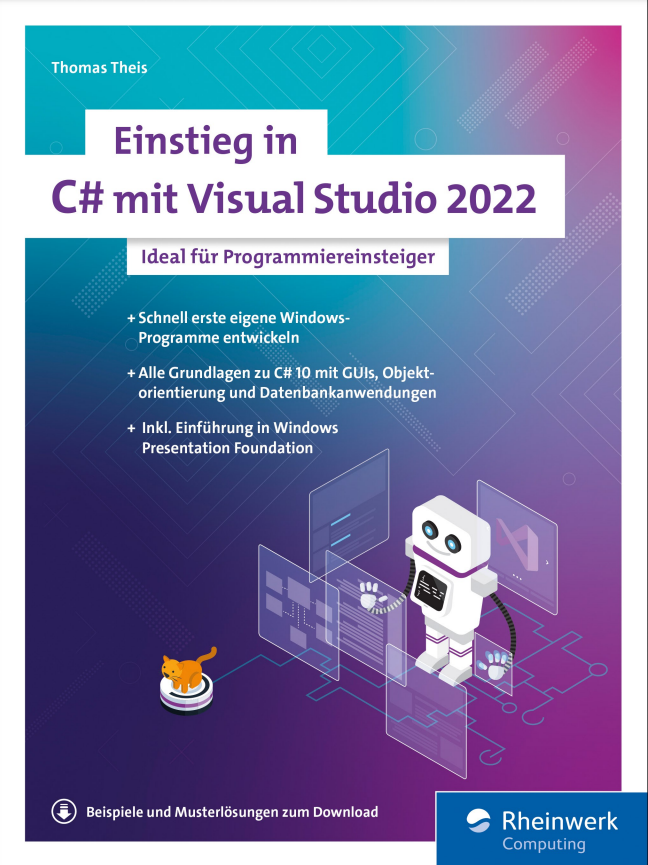
Einstieg in C# mit Visual Studio 2022
Ideal für ProgrammiereinsteigerC#-Programmierung leicht gemacht! An einfach nachvollziehbaren Beispielen lernen Sie alle wichtigen Themen rund um die Programmierung mit C#. Thomas Theis ist spezialisiert darauf, gerade Anfängern einen guten Einstieg zu ermöglichen. Das gelingt ihm dank anschaulicher Beispiele und klar verständlicher Sprache. Dieses Buch führt Sie von der Installation von Visual Studio 2022 zu den Sprachgrundlagen und stellt Ihnen objektorientierte Programmierung, Fehlerbehandlung, das Erstellen von Datenbankanwendungen sowie die Entwicklung von GUIs einsteigergerecht vor.Aus dem Inhalt:Einführung in Visual Studio 2022C#-SprachgrundlagenObjektorientiert programmierenGUIs entwickelnProgrammieren mit der WPFDatenbankanwendungenZeichnen mit GDI+Leseprobe (PDF)Autor:Thomas Theis, Dipl.-Ing. für Technische Informatik, verfügt über langjährige Erfahrung als EDV-Dozent, unter anderem an der Fachhochschule Aachen.

Clean ABAP
Schluss mit unleserlichen ABAP-Programmen! Dieses offizielle Begleitbuch zum Repository »Clean ABAP« auf GitHub zeigt Ihnen, wie Sie intuitiv verständlichen und leicht zu wartenden Code schreiben. Gespickt mit Best Practices zu Namenskonventionen, Kommentaren und Formatierungen, ist dieser Leitfaden unverzichtbar für den Programmieralltag. Aus dem Inhalt: Klassen und InterfacesMethodenNamen von ObjektenVariablen und LiteraleInterne TabellenKontrollflussKommentareFormatierungFehlerbehandlungUnit-TestsPaketeClean ABAP im Team umsetzen Einleitung ... 17 1. Einführung ... 23 1.1 ... Was ist Clean ABAP? ... 23 1.2 ... Wie kann ich mit Clean ABAP anfangen? ... 26 1.3 ... Wie gehe ich mit Legacy-Code um? ... 28 1.4 ... Wie kann ich Code automatisch prüfen? ... 30 1.5 ... Wie steht Clean ABAP im Verhältnis zu anderen Programmierleitfäden? ... 32 1.6 ... Wie kann ich mich in der Clean-ABAP-Community engagieren? ... 33 1.7 ... Zusammenfassung ... 34 2. Die Programmiersprache ABAP ... 35 2.1 ... Legacy-Code ... 35 2.2 ... Performance ... 38 2.3 ... Objektorientierte vs. prozedurale Programmierung ... 41 2.4 ... Funktionale vs. prozedurale Sprachkonstrukte ... 49 2.5 ... Obsolete Sprachelemente ... 52 2.6 ... Entwurfsmuster ... 54 2.7 ... Zusammenfassung ... 56 3. Klassen und Interfaces ... 59 3.1 ... Objektorientierung ... 59 3.2 ... Geltungsbereich und Sichtbarkeit ... 90 3.3 ... Konstruktoren ... 99 3.4 ... Zusammenfassung ... 111 4. Methoden ... 113 4.1 ... Objektorientierte Programmierung ... 113 4.2 ... Parameter ... 121 4.3 ... Methodeninhalt ... 137 4.4 ... Methoden aufrufen ... 148 4.5 ... Zusammenfassung ... 153 5. Namen ... 155 5.1 ... Gute Namen ... 155 5.2 ... Eigenheiten von ABAP ... 162 5.3 ... Affixe: Präfixe, Suffixe und Infixe ... 163 5.4 ... Mit Legacy-Code umgehen ... 166 5.5 ... Zusammenfassung ... 167 6. Variablen und Literale ... 169 6.1 ... Variablen ... 170 6.2 ... Konstanten ... 177 6.3 ... Zeichenketten ... 186 6.4 ... Boolesche Ausdrücke ... 188 6.5 ... Reguläre Ausdrücke ... 191 6.6 ... Das Schlüsselwort REDUCE ... 193 6.7 ... Zusammenfassung ... 196 7. Interne Tabellen ... 197 7.1 ... Die richtige Tabellenart verwenden ... 198 7.2 ... DEFAULT KEY vermeiden ... 200 7.3 ... Zeilen hinzufügen mit INSERT INTO TABLE und APPEND TO ... 201 7.4 ... Prüfen, ob eine Tabelle eine bestimmte Zeile enthält ... 202 7.5 ... Tabelleninhalte abfragen ... 204 7.6 ... Die Anweisung LOOP AT ... WHERE ... und verschachtelte IF-Anweisungen ... 206 7.7 ... Unnötige Tabellenabfragen identifizieren ... 207 7.8 ... Tabellenzeilen blockweise und Zeile für Zeile bearbeiten ... 208 7.9 ... DESCRIBE TABLE und die Funktion LINES ... 209 7.10 ... Zusammenfassung ... 210 8. Kontrollfluss ... 211 8.1 ... Das Schlüsselwort IF ... 212 8.2 ... Schachtelungstiefe ... 217 8.3 ... Bedingungen ... 218 8.4 ... Das Schlüsselwort CASE ... 225 8.5 ... Die Anweisung DO 1 TIMES ... 229 8.6 ... Zusammenfassung ... 233 9. Kommentare ... 235 9.1 ... Präziser Code benötigt keine Kommentare ... 235 9.2 ... Kommentare richtig platzieren und verwenden ... 238 9.3 ... Kommentare, die Sie vermeiden sollten ... 239 9.4 ... FIXME-, TODO- und XXX-Kommentare ... 242 9.5 ... Spezielle Kommentare: ABAP Doc, Pragmas und Pseudokommentare ... 244 9.6 ... Zusammenfassung ... 245 10. Formatierung ... 247 10.1 ... Einen konsistenten Stil verfolgen ... 248 10.2 ... Den Code fürs Lesen optimieren ... 249 10.3 ... Der Pretty Printer ... 250 10.4 ... Wie viele Anweisungen pro Zeile? ... 252 10.5 ... Zeilenlänge ... 252 10.6 ... Code straffen ... 254 10.7 ... Leerzeilen ... 255 10.8 ... Zuweisungen ausrichten ... 256 10.9 ... Variablendeklarationen ausrichten ... 257 10.10 ... Wohin mit den Klammern? ... 257 10.11 ... Methodenparameter formatieren ... 258 10.12 ... Zusammenfassung ... 263 11. Fehlerbehandlung ... 265 11.1 ... Nachrichten ... 265 11.2 ... Rückgabewerte ... 269 11.3 ... Ausnahmen ... 274 11.4 ... Ausnahmen auslösen und behandeln ... 284 11.5 ... Zusammenfassung ... 291 12. Unit Tests ... 293 12.1 ... Testklassen ... 294 12.2 ... Testmethoden ... 304 12.3 ... Die getestete Klasse ... 309 12.4 ... Namen von Testklassen und -methoden ... 310 12.5 ... Assertions ... 313 12.6 ... Test-Doubles ... 325 12.7 ... Test-Seams ... 337 12.8 ... Konzepte zum Umgang mit Unit Tests ... 339 12.9 ... Zusammenfassung ... 343 13. Pakete ... 345 13.1 ... Allgemeine Paketkonzepte ... 345 13.2 ... Paketkonzept in ABAP ... 347 13.3 ... Optionen für das Paketdesign ... 353 13.4 ... Paketprüfungen ... 358 13.5 ... Konsequenzen einer mangelhaften oder fehlenden Paketstrategie ... 367 13.6 ... Zusammenfassung ... 368 14. Wie Sie Clean ABAP umsetzen ... 369 14.1 ... Gemeinsames Verständnis der Teammitglieder ... 370 14.2 ... Den Broken-Window-Effekt angehen ... 374 14.3 ... Code-Reviews und Lernen ... 378 14.4 ... Clean Code Advisor ... 382 14.5 ... Lerntechniken ... 382 14.6 ... Continuous Learning in funktionsübergreifenden Teams ... 387 14.7 ... Zusammenfassung ... 390 Das Autorenteam ... 391 Index ... 393

Beginning ReactJS Foundations Building User Interfaces with ReactJS
QUICKLY LEARN THE MOST WIDELY USED FRONT-END DEVELOPMENT LANGUAGE WITH EASE AND CONFIDENCEReact JS Foundations: Building User Interfaces with ReactJS - An Approachable Guide walks readers through the fundamental concepts of programming with the explosively popular front-end tool known as React JS. Written by an accomplished full-stack engineer, speaker, and community organizer, React JS Foundations teaches readers how to understand React and how to begin building applications with it. The book:* Explains and clarifies technical terminology with relevant and modern examples to assist people new to programming understand the language* Helps experienced programmers quickly get up to speed with React* Is stocked throughout with practical and applicable examples of day-to-day React workPerfect for beginner, intermediate, and advanced programmers alike, React JS Foundations will quickly bring you up to speed on one of the most useful and widely used front-end languages on the web today. You can start building your first application today. ABOUT THE AUTHORCHRIS MINNICK is an accomplished author, trainer, and web developer with experience working on web and mobile projects with both small and large companies. The companion website at www.reactjsfoundations.com provides code listings for each chapter, plus examples and downloads that can be used to test out the various ReactJS techniques in the book. Introduction XxviiCHAPTER 1: HELLO, WORLD! 1React without a Build Toolchain 1Interactive “Hello, World” with Create React App and JSX 7Summary 9CHAPTER 2: THE FOUNDATION OF REACT 11What’s in a Name? 11UI Layer 12Virtual DOM 13The Philosophy of React 14Thinking in Components 15Composition vs. Inheritance 15React Is Declarative 16React Is Idiomatic 17Why Learn React? 17React vs.... 18React vs. Angular 18React vs. Vue 19What React Is Not 19React Is Not a Web Server 20React Is Not a Programming Language 20React Is Not a Database Server 21React Is Not a Development Environment 21React Is Not the Perfect Solution to Every Problem 21Summary 21CHAPTER 3: JSX 23JSX Is Not HTML 23What Is JSX? 30How JSX Works 30Transpiler . . . Huh? 31Compilation vs. Transpilation 31JSX Transform 31Introducing Babel 31Eliminating Browser Incompatibilities 33Syntax Basics of JSX 33JSX Is JavaScript XML 33Beware of Reserved Words 33JSX Uses camelCase 33Preface Custom Attributes in DOM Elements with data-34JSX Boolean Attributes 34Use Curly Braces to Include Literal JavaScript 35Remember to Use Double Curly Braces with Objects 35Put Comments in Curly Braces 35When to Use JavaScript in JSX 36Conditionals in JSX 36Conditional Rendering with if/else and Element Variables 36Conditional Rendering with the && Operator 37Conditional Rendering with the Conditional Operator 38Expressions in JSX 38Using Children in JSX 40React Fragments 40Summary 41CHAPTER 4: ALL ABOUT COMPONENTS 43What Is a Component? 43Components vs. Elements 44Components Define Elements 44Elements Invoke Components 45Built-in Components 47HTML Element Components 47Attributes vs. Props 52Passing Props 52Accessing Props 52Standard HTML Attributes 54Non-Standard Attributes 56Custom Attributes 56User-DefinedComponents 56Types of Components 56Class Components 57Stepping through a React Class Component 68React.Component 68Importing React.Component 68The Class Header 69The Constructor Function 69Managing State in Class Components 71The Render Function 73Creating and Using Props 74Function Components 76What Are Function Components? 79How to Write Function Components 79Optimizations and Function Component Shortcuts 80Managing State in Function Components 83Differences between Function and Class Components 84React Component Children 84this.props.children 85Manipulating Children 86React.Children 86isValidElement 87cloneElement 87The Component Lifecycle 89Mounting 90constructor() 90static getDerivedStateFromProps 90render 90componentDidMount() 90Updating 90shouldComponentUpdate 91getSnapshotBeforeUpdate 91componentDidUpdate 92Unmounting 92componentWillUnmount 92Error Handling 92getDerivedStateFromError 92componentDidCatch 92Improving Performance and Avoiding Errors 92Avoiding Memory Leaks 93React.PureComponent 96React.memo 97React.StrictMode 98Rendering Components 98Rendering with ReactDOM 98Virtual DOM 100Other Rendering Engines 101React Native 101ReactDOMServer 102React Konsul 103react-pdf 103Component Terminology 103Summary 104CHAPTER 5: REACT DEVTOOLS 105Installation and Getting Started 105Inspecting Components 107Working with the Component Tree 108Searching for Components 110Using the Search Input Box 110Using Regular Expressions 110Filtering Components 112Selecting Components 114Editing Component Data in DevTools 114Working with Additional DevTools Functionality 118Profiling 119Summary 121CHAPTER 6: REACT DATA FLOW 123One-WayData Flow 123Understanding One-WayData Flow 124Why One-WayData Flow? 125Props 126Components Receive Props 126Props Can Be Any Data Type 126Props Are Read-Only 127Validating Incoming Props with PropTypes 129What Is PropTypes? 130Getting Started with PropTypes 131What Can PropTypes Validate? 133Default Props 141React State 145What Is state? 146Initializing state 146Initializing state in Class Components 146Initializing State in Function Components 147The Difference between state and props 149Updating state 149Updating a Class Component’s state with setState 150Updating state with Function Components 154What to Put in State 161Building the Reminders App 161What Not to Put in State 168Where to Put State 168Lifting State Up 170About the key Prop 177Filtering the Reminders 183Implementing the isComplete Changing Functionality 188Converting to Class Components 190Summary 198CHAPTER 7: EVENTS 199How Events Work in React 199What Is SyntheticEvent? 201Using Event Listener Attributes 202The Event Object 203Supported Events 204Event Handler Functions 211Writing Inline Event Handlers 211Writing Event Handlers in Function Components 212Writing Event Handlers in Class Components 213Binding Event Handler Functions 214Using bind 215Using Arrow Functions 216Passing Data to Event Handlers 218Summary 219CHAPTER 8: FORMS 221Forms Have State 221Controlled Inputs vs. Uncontrolled Inputs 222Updating a Controlled Input 223Controlling an Input in a Function Component 224Controlling an Input in a Class Component 224Lifting Up Input State 226Using Uncontrolled Inputs 228Using Different Form Elements 229Controlling the Input Element 230Controlling a textarea 230Controlling a Select Element 231Preventing Default Actions 231Summary 232CHAPTER 9: REFS 233What Refs Are 233How to Create a Ref in a Class Component 234How to Create a Ref in a Function Component 234Using Refs 234Creating a Callback Ref 236When to Use Refs 238When Not to Use Refs 238Examples 239Managing Focus 239Automatically Selecting Text 239Controlling Media Playback 241Setting Scroll Position 241Summary 242CHAPTER 10: STYLING REACT 243The Importance of Styles 243Importing CSS into the HTML File 244Using Plain Old CSS in Components 245Writing Inline Styles 247JavaScript Style Syntax 248Why to Use Inline Styles 249Why Not to Use Inline Styles 249Improving Inline Styles with Style Modules 249CSS Modules 250Naming CSS Module Files 251Advanced CSS Modules Functionality 252Global Classes 252Class Composition 252CSS-in- JS and Styled Components 253Summary 255CHAPTER 11: INTRODUCING HOOKS 257What Are Hooks? 257Why Were Hooks Introduced? 257Rules of Hooks 259The Built-in Hooks 259Managing State with useState 260Setting the Initial State 262Using the Setter Function 262Passing a Value to a Setter 263Passing a Function to a Setter 263Setter Function Value Comparison 264Hooking into the Lifecycle with useEffect 264Using the Default useEffect Behavior 265Cleaning Up After Effects 265Customizing useEffect 266Running Asynchronous Code with useEffect 270Subscribing to Global Data with useContext 272Combining Logic and State with useReducer 273Memoized Callbacks with useCallback 275Caching Computed Values with useMemo 278Solving Unnecessary Renders 278Solving Performance Problems 279Accessing Children Imperatively with useRef 279Customizing Exposed Values with useImperativeHandle 280Updating the DOM Synchronously with useLayoutEffect 281Writing Custom Hooks 281Labeling Custom Hooks with useDebugValue 283Finding and Using Custom Hooks 285use-http 285react-fetch-hook 286axios-hooks 286react-hook- form 286@rehooks/local-storage 287use-local- storage- state 287Other Fun Hooks 288Lists of Hooks 288Summary 288CHAPTER 12: ROUTING 289What Is Routing? 289How Routing Works in React 291Using React Router 293Installing and Importing react-router- dom 293The Router Component 294Selecting a Router 294Using the Router Component 295Linking to Routes 296Internal Linking with Link 296Internal Navigation with NavLink 298Automatic Linking with Redirect 302Creating Routes 302Restricting Path Matching 304Using URL Parameters 304The component Prop 305Render Props 306Switching Routes 307Rendering a Default Route 308Routing with Redirect 308Behind the Scenes: location, history, and match 309The history Object 310The location Object 313The match Object 313React Router Hooks 317useHistory 317useLocation 317useParams 317useRouteMatch 317Summary 318CHAPTER 13: ERROR BOUNDARIES 319The Best Laid Plans 319What Is an Error Boundary? 320Implementing an Error Boundary 323Building Your Own ErrorBoundary Component 323getDerivedStateFromErrors Is a Static Method 324getDerivedStateFromErrors Runs During the Render Phase 325getDerivedStateFromErrors Receives the Error as a Parameter 325getDerivedStateFromErrors Should Return an Object for Updating State 325Testing Your Boundary 326Logging Errors with ComponentDidCatch() 327Using a Logging Service 328Resetting the State 333Installing a Pre-Built ErrorBoundary Component 334What Can’t an Error Boundary Catch? 336Catching Errors in Error Boundaries with try/catch 336Catching Errors in Event Handlers with react-error- boundary 337Summary 338CHAPTER 14: DEPLOYING REACT 339What Is Deployment? 339Building an App 339Running the build Script 340Examining the build Directory 340The Built index.html 341The static Directory 342asset-manifest. json 342What’s in a Name? 343How Is a Deployed App Different? 343Development Mode vs. Production 343Putting It on the Web 344Web Server Hosting 344Node Hosting 345Deploying with Netlify 345Enabling Routing with Netlify 347Enabling Custom Domains and HTTPS 348Summary 349CHAPTER 15: INITIALIZE A REACT PROJECT FROM SCRATCH 351Building Your Own Toolchain 351Initializing Your Project 352The HTML Document 352The Main JavaScript File 353The Root Component 353Running in the Browser 354How Webpack Works 357Loaders 358Plugins 358Automating Your Build Process 358Making an HTML Template 359Development Server and Hot Reloading 360Testing Tools 360Installing and Configuring ESLint 360ESLint Configuration 361How to Fix Errors 362Testing with Jest 363Creating NPM Scripts 364Structuring Your Source Directory 365Grouping by File Type 366Grouping by Features 367Summary 367CHAPTER 16: FETCHING AND CACHING DATA 369Asynchronous Code: It’s All About Timing 369JavaScript Never Sleeps 370Where to Run Async Code in React 374Ways to Fetch 376Getting Data with Fetch 377Getting Data with Axios 377Using Web Storage 379Two Types of Web Storage 379When to Use Web Storage 380When Not to Use Web Storage 380Web Storage Is Synchronous 380Working with localStorage 381Storing Data with localStorage 381Reading Data from localStorage 382Removing Data from localStorage 384Summary 385CHAPTER 17: CONTEXT API 387What Is Prop Drilling? 387How Context API Solves the Problem 388Creating a Context 388Creating a Provider 389Consuming a Context 390Using Context in a Class Component 390Using Context in a Function Component 391Common Use Cases for Context 391When Not to Use Context 392Composition as an Alternative to Context 392Example App: User Preferences 396Summary 398CHAPTER 18: REACT PORTALS 399What Is a Portal? 399How to Make a Portal 399Why Not Just Render Multiple Component Trees? 403Common Use Cases 403Rendering and Interacting with a Modal Dialog 404Managing Keyboard Focus with Modals 409Summary 411CHAPTER 19: ACCESSIBILITY IN REACT 413Why Is Accessibility Important? 413Accessibility Basics 414Web Content Accessibility Guidelines (WCAG) 414Web Accessibility Initiative –Accessible Rich Internet Applications (WAI-ARIA) 415Implementing Accessibility in React Components 415ARIA Attributes in React 416Semantic HTML 416Form Accessibility 417Focus Control in React 418Skip Links 418Managing Focus Programmatically 419Media Queries in React 420Media Queries in Included CSS 421Using useMediaQuery 422Summary 422CHAPTER 20: GOING FURTHER 425Testing 425Mocha 426Enzyme 426Chai 427Assert 427Expect 428Should 428Karma 428Nightwatch.js 428Server-SideRendering 429Flux 430Redux 430GraphQL 432Apollo 433React Native 434Next.js 434Gatsby 434People to Follow 435Useful Links and Resources 435Summary 436Index 437
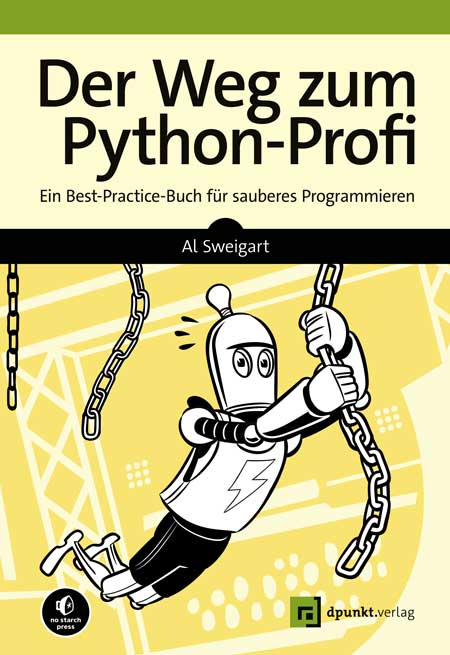
Der Weg zum Python-Profi
Ein Best-Practice-Buch für sauberes Programmieren. Der Brückenschlag zu einer anderen Ebene der Python-Programmierung.Sie haben ein grundlegendes Python-Programmiertutorial absolviert oder bereits erste Erfahrungen im Programmieren. Was ist der nächste Schritt auf dem Weg zur fähigen, kompetenten Softwareentwickler:in? Der Weg zum Python Profi ist mehr als eine bloße Sammlung meisterhafter Tipps für das Schreiben von sauberem Code. Es zeigt Ihnen, wie Sie die Kommandozeile bedienen und andere professionelle Tools wie Code-Formatierer, Type Checkers, Linters und Versionskontrolle verwenden können. Al Sweigart führt Sie durch bewährte Praktiken für die Einrichtung Ihrer Entwicklungsumgebung, die Benennung von Variablen und die Verbesserung der Lesbarkeit und geht dann auf Dokumentation, Organisation, Leistungsmessung, objektorientiertes Design und sogar Big-O-Algorithmus-Analyse ein. Die Hinweise und Anleitungen des Buchs werden Ihre Programmierfähigkeiten deutlich verbessern - nicht nur in Python, sondern in jeder Sprache.Sie werden lernen:wie Sie Pythons automatisches Formatierungswerkzeug Black für sauberen Code verwendenwie Sie häufige Fehlerquellen erkennen und sie mit Static analyzers aufspürenwie Sie die Dateien in Ihren Code-Projekten mit dem Cookiecutter-Template-Tool strukturierenerschließen Sie sich funktionale Programmiertechniken wie Lambda- und Funktionen höherer Ordnungwie Sie die Geschwindigkeit Ihres Codes mit den in Python integrierten Modulen timeit und cProfile verbessern könnenwie Sie Ihre Kommentare und Dokumentationsstrings informativ gestalten und wie oft Sie sie schreiben solltenAutor: Al Sweigart arbeitet als Softwareentwickler und bringt Jugendlichen und Erwachsenen das Programmieren bei. Er ist Autor mehrerer Bücher für Einsteiger, u.a. „Eigene Spiele programmieren mit Python“.

C++ Software Interoperability for Windows Programmers
Get up-to-speed quickly and connect modern code written in C#, R, and Python to an existing codebase written in C++. This book for practitioners is about software interoperability in a Windows environment from C++ to languages such as C#, R, and Python. Using a series of example projects, the book demonstrates how to connect a simple C++ codebase packaged as a static or dynamic library to modern clients written in C#, R, and Python. The book shows you how to develop the in-between components that allow disparate languages to communicate.This book addresses a fundamental question in software design: given an existing C++ codebase, how does one go about connecting that codebase to clients written in C#, R, and Python? How is the C++ functionality exposed to these clients? One answer may be to rewrite the existing codebase in the target language. This is rarely, if ever, feasible and this book’s goal is to save you the pain and the high cost of throwing out valuable existing code by showing you how to make that older code function alongside and with the more modern languages that are commonly in use today. The knowledge you will gain from reading this book will help you broaden your architectural choices and take advantage of the growing amount of talent around newer languages.WHAT YOU WILL LEARN* Build components that connect C++ to other languages* Translate between the C++ type system and the type systems of C#, R, and Python* Write a managed assembly targeting the .NET framework* Create C++ packages for use in R/Studio* Develop Python modules based on high-performance C++ code* Overcome the difficulties and pitfalls involved in cross-language developmentWHO THIS BOOK IS FORSoftware developers who are looking for ways to extend existing systems written in C++ using modern languages. Readers should have some programming experience, particularly in C++. Readers should also be familiar with common development tools such as Visual Studio, R/Studio, Visual Studio Code, and CodeBlocks.ADAM GLADSTONE is a software developer with more than 20 years of experience in investment banking, building software mostly in C++ and C#. For the last few years, he has been developing data science and machine learning skills, particularly in Python and R after completing a degree in Math & Statistics. He currently works at Virtu Financial Inc. in Madrid as an Analyst Programmer. In his free time, he develops tools for natural language processing.IntroductionPART I. C++1. Preliminaries2. C++ Components and C++ ClientsPART II. C++/CLI AND .NET3. Building a C++/CLI Wrapper4. C# Clients: Consuming the Managed WrapperPART III. R AND RCPP5. Building an R Package6. Exposing Functions using RcppPART IV. PYTHON7. Building a Python Extension Module8. Module Development with Boost and PyBind9. ConclusionPART V. APPENDIXESA. Boost LibrariesB. Cmake

Beginning Scala 3
Learn the latest version of Scala through simple, practical examples. This book introduces you to the Scala programming language, its object-oriented and functional programming characteristics, and then guides you through Scala constructs and libraries that allow you to assemble small components into high-performance, scalable systems.Beginning Scala 3 explores new Scala 3 language features such as Top-level declarations, Creator applications, Extension methods to add extra functionality to existing types, and Enums. You will also learn new ways to manipulate types via Union types, intersection, literal, and opaque type aliases. Additionally, you’ll see how Implicits are replaced by given and using clauses.After reading this book, you will understand why Scala is judiciously used for critical business applications by leading companies such as Twitter, LinkedIn, Foursquare, the Guardian, Morgan Stanley, Credit Suisse, UBS, and HSBC – and you will be able to use it in your own projects.WHAT YOU WILL LEARN* Get started with Scala 3 or Scala language programming in general* Understand how to utilitze OOP in Scala* Perform functional programming in Scala* Master the use of Scala collections, traits and implicits* Leverage Java and Scala interopability* Employ Scala for DSL programming* Use patterns and best practices in ScalaWHO THIS BOOK IS FORThose with a background in Java and/or Kotlin who are new to Scala. This book is also for those with some prior Scala experience who want to learn Scala version 3.DAVID POLLAK has been writing commercial software since 1977. He wrote the award-winning Mesa spreadsheet, which in 1992 was the first real-time spreadsheet. Wall Street companies traded billions of dollars a day through Mesa. In 1996, David sold his company to CMP Media and became CTO of CMP Media's NetGuide Live and was one of the first large-scale users of Java and WebLogic to power an Internet site. In 1998, David released Integer, the world's first browser-accessible, multiuser spreadsheet. Since 2000, David has been consulting for companies including Hewlett-Packard, Pretzel Logic/WebGain, BankServ, Twitter, and SAP. David has been using Scala since 2006 and is the lead developer of the Lift Web framework.VISHAL LAYKA is the chief technology officer of Star Protocol. He is involved in the architecture, design, and implementation of distributed business systems, and his focus is on consulting and training with the JVM languages. His language proficiencies include Java, Groovy, Scala, and Haskell. Vishal is also the lead author of Beginning Groovy, Grails, and Griffon (Apress, 2012). When he needs a break from technology, Vishal reads eclectically from calculus to star formation.ANDRES SACCO has been a professional developer since 2007, working with a variety of languages, including Java, Scala, PHP, NodeJs, and Kotlin. Most of his background is in Java and the libraries or frameworks associated with it, but since 2016, he has utilized Scala as well, depending on the situation. He is focused on researching new technologies to improve the performance, stability, and quality of the applications he develops.BEGINNING SCALA 3 (3E)1. Getting started with Scala2. Basics of Scala3. OOP in Scala4. Functional programming in Scala5. Pattern matching6. Scala Collections7. Traits8. Types and Implicits9. Scala and Java Interoperability10. SBT11. Building web applications with Scala12. DSL13. Scala Best practices

Learn JavaFX 17
This unique in-depth tutorial shows you how to start developing rich-client desktop applications using your Java skills and provides comprehensive coverage of JavaFX 17's features. Each chapter starts with an introduction to the topic at hand, followed by a step-by-step discussion of the topic with small snippets of code. The book contains numerous figures aiding readers in visualizing the GUI that is built at every step in the discussion. This book has been revised to include JavaFX 17 and earlier releases since previous edition.It starts with an introduction to JavaFX and its history. It lists the system requirements and the steps to start developing JavaFX applications. It shows you how to create a Hello World application in JavaFX, explaining every line of code in the process. Later in the book, authors Kishori Sharan and Peter Späth discuss advanced topics such as 2D and 3D graphics, charts, FXML, advanced controls, and printing. Some of the advanced controls such as TableView, and WebView are covered at length in separate chapters.This book provides complete and comprehensive coverage of JavaFX 17 features; uses an incremental approach to teach JavaFX, assuming no prior GUI knowledge; includes code snippets, complete programs, and pictures; covers MVC patterns using JavaFX; and covers advanced topics such as FXML, effects, transformations, charts, images, canvas, audio and video, DnD, and more. So, after reading and using this book, you'll come away with a comprehensive introduction to the JavaFX APIs.WHAT YOU WILL LEARN* How to build JavaFX User Interfaces and Java clients* What are properties, bindings, observable collections, stages, scenes; how to use these* How to play with colors, styling nodes and event handling* How to add user interactivity (mouse, keyboard, DnD)* How to do tables, trees and tree tables* How to do 2D shapes, text nodes, 3D shapes* How to apply effects, transformations, animations, images* How to draw; play audio and videoWHO IS THIS BOOK FOR:Developers new to the JavaFX platform. Some prior Java experience is recommended.KISHORI SHARAN has earned a Master of Science in Computer Information Systems degree from Troy State University, Alabama. He is a Sun Certified Java 2 programmer. He has vast experience in providing training to professional developers in Java, JSP, EJB, and Web technology. He possesses over ten years of experience in implementing enterprise level Java application.PETER SPÄTH graduated in 2002 as a physicist and soon afterward became an IT consultant, mainly for Java-related projects. In 2016, he decided to concentrate on writing books on various aspects, but with a main focus on software development. With two books about graphics and sound processing, three books on Android app development, and a beginner’s book on Jakarta EE development, the author continues his effort in writing software development-related literature.Chapter 1. Getting Started with JavaFXChapter 2. Properties and BindingsChapter 3. Observable CollectionsChapter 4. Managing StagesChapter 5. Making ScenesChapter 6. Understanding NodesChapter 7. Playing with ColorsChapter 8. Styling NodesChapter 9. Event HandlingChapter 10. Understanding Layout PanesChapter 11. Model-View-Controller PatternChapter 12. Understanding ControlsChapter 13. Understanding TableViewChapter 14. Understanding TreeViewChapter 15. Understanding TreeTableViewChapter 16. Browsing Web PagesChapter 17. Understanding 2D ShapesChapter 18. Understanding Text NodesChapter 19. Understanding 3D ShapesChapter 20. Applying EffectsChapter 21. Understanding TransformationsChapter 22. Understanding AnimationChapter 24. Understanding ImagesChapter 25. Drawing on a CanvasChapter 26. Understanding Drag-and-DropChapter 27. Understanding Concurrency in JavaFXChapter 28. Playing Audios and VideosChapter 29. Understanding FXMLChapter 30. Printing

C# 10.0 All-in-One For Dummies
LOOK SHARP—LEARN OR REFRESH YOUR C# SKILLS WITH THE LATEST VERSIONC# is one of the most popular programming languages, and frequent updates help it keep pace as the world of coding changes. You can keep pace too, thanks to C# 10.0 All-in-One For Dummies, where you'll learn the basics of the language itself, how to code in Visual Studio, and how to take advantage of the new features in the latest release. At every stage of your career, you'll need to know the cutting-edge trends and techniques that clients want. This book has your back, with info on object-oriented programming, writing secure code, building web applications, and more. The six standalone mini-books you'll find inside this all-in-one will take you through the changes to C# and the practical applications and dev tools that you need to know. New features covered include records, init only setters, top-level statements, pattern matching enhancements, fit and finish features, and a lot more. Plus, this version is packed with more examples and code snippets, so you can sharply see C# in action!* Learn the very basics of C# programming, even if you have no prior experience* Refresh your knowledge of the language and learn how to use the new features in the 10.0 version release* Read six mini-books on hot coding topics like object-oriented programming, Visual Studio, and Windows 10 development* Enhance your employability and join the 6.5-million-strong community of C# developersYou need an easy-to-read C# guide that will help you understand the incoming updates, and this For Dummies reference is it. JOHN PAUL MUELLER is an author and technical editor with experience in application development, database management, machine learning, and deep learning. He has written hundreds of books and articles helping everyday people learn everything from networking to database management.INTRODUCTION 1About This Book 1Foolish Assumptions 2Icons Used in This Book 3Beyond the Book 3Where to Go from Here 4BOOK 1: THE BASICS OF C# PROGRAMMING 5CHAPTER 1: CREATING YOUR FIRST C# CONSOLE APPLICATION 7Getting a Handle on Computer Languages, C#, and NET 8What’s a program? 8What’s C#? 9What’s NET? 9What is Visual Studio 2022? 10Creating Your First Console Application 11Creating the source program 11Taking it out for a test drive 17Making Your Console App Do Something 17Reviewing Your Console Application 18The program framework 19Comments 19The meat of the program 19Replacing All that Ceremonial Code: Top-Level Statements 20Introducing the Toolbox Trick 21Saving code in the Toolbox 22Reusing code from the Toolbox 22Interacting with C# Online 23Working with Jupyter Notebook: The Short Version 23CHAPTER 2: LIVING WITH VARIABILITY — DECLARING VALUE-TYPE VARIABLES 25Declaring a Variable 26What’s an int? 27Rules for declaring variables 28Variations on a theme: Different types of int 28Representing Fractions 30Handling Floating-Point Variables 31Declaring a floating-point variable 31Examining some limitations of floating-point variables 32Using the Decimal Type: Is It an Integer or a Float? 34Declaring a decimal 35Comparing decimals, integers, and floating-point types 35Examining the bool Type: Is It Logical? 36Checking Out Character Types 36The char variable type 36Special chars 37The string type 37What’s a Value Type? 39Comparing string and char 40Calculating Leap Years: DateTime 41Declaring Numeric Constants 43Changing Types: The Cast 44Letting the C# Compiler Infer Data Types 46CHAPTER 3: PULLING STRINGS 49The Union Is Indivisible, and So Are Strings 50Performing Common Operations on a String 51Comparing Strings 52Equality for all strings: The Compare() method 52Would you like your compares with or without case? 56What If I Want to Switch Case? 56Distinguishing between all-uppercase and all-lowercase strings 56Converting a string to upper- or lowercase 57Looping through a String 58Searching Strings 59Can I find it? 59Is my string empty? 60Using advanced pattern matching 60Getting Input from Users in Console Applications 61Trimming excess white space 62Parsing numeric input 62Handling a series of numbers 64Joining an array of strings into one string 66Controlling Output Manually 67Using the Trim() and Pad() methods 67Using the Concatenate() method 69Go Ahead and Split() that concatenate program 71Formatting Your Strings Precisely 72Using the String.Format() method 72Using the interpolation method 77StringBuilder: Manipulating Strings More Efficiently 77CHAPTER 4: SMOOTH OPERATORS 81Performing Arithmetic 81Simple operators 82Operating orders 82The assignment operator 84The increment operator 84Performing Logical Comparisons — Is That Logical? 85Comparing floating-point numbers: Is your float bigger than mine? 86Compounding the confusion with compound logical operations 87Matching Expression Types at TrackDownAMate.com 89Calculating the type of an operation 89Assigning types 91Changing how an operator works: Operator overloading 92CHAPTER 5: GETTING INTO THE PROGRAM FLOW 95Branching Out with if and switch 96Introducing the if statement 97Examining the else statement 100Avoiding even the else 101Nesting if statements 102Running the switchboard 104Here We Go Loop-the-Loop 110Looping for a while 111Doing the do while loop 114Breaking up is easy to do 115Looping until you get it right 116Focusing on scope rules 120Looping a Specified Number of Times with for 120A for loop example 121Why do you need another loop? 122Nesting loops 123CHAPTER 6: LINING UP YOUR DUCKS WITH COLLECTIONS 125The C# Array 126The argument for the array 126The fixed-value array 127The variable-length array 129Initializing an array 132Processing Arrays by Using foreach 133Working with foreach loops in a standard way 133Relying on GetEnumerator support 134Sorting Arrays of Data 136Using var for Arrays 139Loosening Up with C# Collections 140Understanding Collection Syntax 141Figuring out 142Going generic 142Using Lists 143Instantiating an empty list 143Creating a list of type int 144Converting between lists and arrays 144Searching lists 144Performing other list tasks 145Using Dictionaries 145Creating a dictionary 145Searching a dictionary 146Iterating a dictionary 146Array and Collection Initializers 147Initializing arrays 148Initializing collections 148Using Sets 149Performing special set tasks 149Creating a set 150Adding items to a set 150Performing a union 151Performing an intersection 152Performing a difference 153CHAPTER 7: STEPPING THROUGH COLLECTIONS 155Iterating through a Directory of Files 156Using the LoopThroughFiles program 156Getting started 157Obtaining the initial input 157Creating a list of files 159Formatting the output lines 160Displaying the hexadecimal output 161Running from inside Visual Studio 163Iterating foreach Collections: Iterators 164Accessing a collection: The general problem 164Letting C# access data foreach container 167Accessing Collections the Array Way: Indexers 169Indexer format 169An indexer program example 170Looping Around the Iterator Block 173Creating the required iterator block framework 174Iterating days of the month: A first example 176What a collection is, really 177Iterator syntax gives up so easily 178Iterator blocks of all shapes and sizes 180CHAPTER 8: BUYING GENERIC 187Writing a New Prescription: Generics 188Generics are type-safe 188Generics are efficient 189Classy Generics: Writing Your Own 190Shipping packages at OOPs 190Queuing at OOPs: PriorityQueue 191Unwrapping the package 194Touring Main() 196Writing generic code the easy way 197Saving PriorityQueue for last 198Using a (nongeneric) Simple Factory class 201Understanding Variance in Generics 205Contravariance 206Covariance 208CHAPTER 9: SOME EXCEPTIONAL EXCEPTIONS 209Using an Exceptional Error-Reporting Mechanism 210About try blocks 211About catch blocks 211About finally blocks 212What happens when an exception is thrown 213Throwing Exceptions Yourself 215Can I Get an Exceptional Example? 216Working with Custom Exceptions 220Planning Your Exception-Handling Strategy 221Some questions to guide your planning 221Guidelines for code that handles errors well 222How to find out which methods throw which exceptions 223Grabbing Your Last Chance to Catch an Exception 225Throwing Expressions 226CHAPTER 10: CREATING LISTS OF ITEMS WITH ENUMERATIONS 229Seeing Enumerations in the Real World 230Working with Enumerations 231Using the enum keyword 231Creating enumerations with initializers 233Specifying an enumeration data type 234Creating Enumerated Flags 235Defining Enumerated Switches 237Working with Enumeration Methods 238BOOK 2: OBJECT-ORIENTED C# PROGRAMMING 241CHAPTER 1: SHOWING SOME CLASS 243A Quick Overview of Object-Oriented Programming 244Considering OOP basics 244Extending classes to meet other needs 244Keeping objects safe 245Working with objects 246Defining a Class and an Object 246Defining a class 247What’s the object? 249Accessing the Members of an Object 250Working with Object-Based Code 250Using the traditional approach 250Using the C# 9.0 approach 252Discriminating between Objects 253Can You Give Me References? 254Classes That Contain Classes Are the Happiest Classes in the World 256Generating Static in Class Members 257Defining const and readonly Data Members 259CHAPTER 2: WE HAVE OUR METHODS 261Defining and Using a Method 262Method Examples for Your Files 263Understanding the problem 264Working with standard coding methods 265Applying a refactoring approach 268Working with local functions 271Having Arguments with Methods 273Passing an argument to a method 273Passing multiple arguments to methods 274Matching argument definitions with usage 276Overloading a method doesn’t mean giving it too much to do 276Implementing default arguments 278Using the Call-by-Reference Feature 280Defining a Method with No Return Value 281Returning Multiple Values Using Tuples 282Using a tuple 283Relying on the Create() method 284Creating tuples with more than two items 284CHAPTER 3: LET ME SAY THIS ABOUT THIS 287Passing an Object to a Method 288Comparing Static and Instance Methods 290Employing static properties and methods effectively 291Employing instance properties and methods effectively 293Expanding a method’s full name 295Accessing the Current Object 296What is the this keyword? 298When is the this keyword explicit? 299Using Local Functions 300Creating a basic local function 300Using attributes with local functions 301CHAPTER 4: HOLDING A CLASS RESPONSIBLE 303Restricting Access to Class Members 303A public example of public BankAccount 304Jumping ahead — other levels of security 306Why You Should Worry about Access Control 307Accessor methods 308Working with init-only setters 309Access control to the rescue — an example 311Defining Class Properties 313Static properties 315Properties with side effects 315Accessors with access levels 316Using Target Typing for Your Convenience 316Dealing with Covariant Return Types 319Getting Your Objects Off to a Good Start — Constructors 320The C#-Provided Constructor 321Replacing the Default Constructor 322Constructing something 324Initializing an object directly with an initializer 326Seeing that construction stuff with initializers 326Initializing an object without a constructor 327Using Expression-Bodied Members 329Creating expression-bodied methods 329Defining expression-bodied properties 329Defining expression-bodied constructors and destructors 330Defining expression-bodied property accessors 330Defining expression-bodied event accessors 331CHAPTER 5: INHERITANCE: IS THAT ALL I GET? 333Why You Need Inheritance 334Inheriting from a BankAccount Class (a More Complex Example) 335Working with the basic update 336Tracking the BankAccount and SavingsAccount classes features 339IS_A versus HAS_A — I’m So Confused_A 342The IS_A relationship 342Gaining access to BankAccount by using containment 343The HAS_A relationship 345When to IS_A and When to HAS_A 346Other Features That Support Inheritance 346Substitutable classes 346Invalid casts at runtime 347Avoiding invalid conversions with the is operator 348Avoiding invalid conversions with the as operator 349CHAPTER 6: POLY-WHAT-ISM? 353Overloading an Inherited Method 354It’s a simple case of method overloading 354Different class, different method 355Peek-a-boo — hiding a base class method 355Polymorphism 361Using the declared type every time (Is that so wrong?) 362Using is to access a hidden method polymorphically 364Declaring a method virtual and overriding it 365Getting the most benefit from polymorphism 368C# During Its Abstract Period 368Class factoring 369The abstract class: Left with nothing but a concept 373How do you use an abstract class? 374Creating an abstract object — not! 377Sealing a Class 377CHAPTER 7: INTERFACING WITH THE INTERFACE 379Introducing CAN_BE_USED_AS 379Knowing What an Interface Is 381How to implement an interface 382Using the newer C# 8.0 additions 383How to name your interface 386Why C# includes interfaces 386Mixing inheritance and interface implementation 387And he-e-e-re’s the payoff 387Using an Interface 388As a method return type 389As the base type of an array or collection 389As a more general type of object reference 390Using the C# Predefined Interface Types 390Looking at a Program That CAN_BE_USED_AS an Example 391Creating your own interface at home in your spare time 391Implementing the incomparable I Comparable interface 392Creating a list of students 394Testing everything using Main() 395Unifying Class Hierarchies 396Hiding Behind an Interface 399Inheriting an Interface 401Using Interfaces to Manage Change in Object-Oriented Programs 402Making flexible dependencies through interfaces 403Abstract or concrete: When to use an abstract class and when to use an interface 404Doing HAS_A with interfaces 405CHAPTER 8: DELEGATING THOSE IMPORTANT EVENTS 407E.T., Phone Home — The Callback Problem 408Defining a Delegate 408Pass Me the Code, Please — Examples 411Delegating the task 411First, a simple example 412Considering the Action, Func, and Predicate delegate types 413A More Real-World Example 415Putting the app together 416Setting the properties and adding event handlers 418Looking at the workhorse code 419Shh! Keep It Quiet — Anonymous Methods 421Defining the basic anonymous method 421Using static anonymous methods 422Working with lambda discard parameters 424Stuff Happens — C# Events 424The Observer design pattern 425What’s an event? Publish/Subscribe 425How a publisher advertises its events 426How subscribers subscribe to an event 427How to publish an event 427How to pass extra information to an event handler 428A recommended way to raise your events 429How observers “handle” an event 430CHAPTER 9: CAN I USE YOUR NAMESPACE IN THE LIBRARY? 433Dividing a Single Program into Multiple Source Files 434Working with Global using Statements 435Dividing a Single Program into Multiple Assemblies 437Executable or library? 437Assemblies 437Executables 438Class libraries 439Putting Your Classes into Class Libraries 439Creating the projects for a class library 439Creating a stand-alone class library 440Adding a second project to an existing solution 442Creating the code for the library 445Using a test application to test a library 446Going Beyond Public and Private: More Access Keywords 448Internal: For CIA eyes only 448Protected: Sharing with subclasses 451Putting Classes into Namespaces 453Declaring a namespace 454Using file-scoped namespaces 456Relating namespaces to the access keyword story 456Using fully qualified names 458Working with partial classes 459Working with Partial Methods 463Defining what partial methods do 463Creating a partial method 464CHAPTER 10: IMPROVING PRODUCTIVITY WITH NAMED AND OPTIONAL PARAMETERS 465Exploring Optional Parameters 466Working with optional value parameters 466Avoiding optional reference types 468Looking at Named Parameters 470Using Alternative Methods to Return Values 470Output (out) parameters 471Working with out variables 471Returning values by reference 472Dealing with null Parameters 473CHAPTER 11: INTERACTING WITH STRUCTURES 475Comparing Structures to Classes 476Considering struct limits 476Understanding the value type difference 477Determining when to use struct versus class 477Creating Structures 478Defining a basic struct 478Including common struct elements 479Using supplemental struct elements 482Working with Read-only Structures 485Working with Reference Structures 487Using Structures as Records 489Managing a single record 489Adding structures to arrays 489Overriding methods 490Using the New Record Type 491Comparing records to structures and classes 491Working with a record 492Using the positional syntax for property definition 493Understanding value equality 494Creating safe changes: Nondestructive mutation 494Using the field keyword 495BOOK 3: DESIGNING FOR C# 497CHAPTER 1: WRITING SECURE CODE 499Designing Secure Software 500Determining what to protect 500Documenting the components of the program 501Decomposing components into functions 502Identifying potential threats in functions 502Building Secure Windows Applications 503Authentication using Windows logon 503Encrypting information 507Deployment security 507Using System.Security 508CHAPTER 2: ACCESSING DATA 509Getting to Know System.Data 510How the Data Classes Fit into the Framework 512Getting to Your Data 512Using the System.Data Namespace 513Setting up a sample database schema 513Creating the data access project 514Connecting to a data source 514Working with the visual tools 519Writing data code 521CHAPTER 3: FISHING THE FILE STREAM 525Going Where the Fish Are: The File Stream 525Streams 526Readers and writers 527StreamWriting for Old Walter 528Using the stream: An example 529Using some better fishing gear: The using statement 534Pulling Them Out of the Stream: Using StreamReader 537More Readers and Writers 539Exploring More Streams than Lewis and Clark 541CHAPTER 4: ACCESSING THE INTERNET 543Getting to Know System.Net 544How Net Classes Fit into the Framework 545Understanding the System.Net subordinate namespaces 545Working with the System.Net classes 548Using the System.Net Namespace 549Checking the network status 549Downloading a file from the Internet 551Emailing a status report 553Logging network activity 556CHAPTER 5: CREATING IMAGES 559Getting to Know System.Drawing 560Graphics 561Pens 562Brushes 563Text 563How the Drawing Classes Fit into the Framework 564Using the System.Drawing Namespace 565Getting started 565Setting up the project 567Handling the score 567Creating an event connection 569Drawing the board 570Printing the score 572Starting a new game 574CHAPTER 6: PROGRAMMING DYNAMICALLY! 575Shifting C# Toward Dynamic Typing 576Employing Dynamic Programming Techniques 578Putting Dynamic to Use 580Classic examples 580Making static operations dynamic 581Understanding what’s happening under the covers 581Running with the Dynamic Language Runtime 582Using Static Anonymous Functions 585BOOK 4: A TOUR OF VISUAL STUDIO 587CHAPTER 1: GETTING STARTED WITH VISUAL STUDIO 589Versioning the Versions 590An overview of Visual Studio 2022 updates 590Community edition 592Professional edition 594Enterprise edition 594MSDN 595Installing Visual Studio 596Breaking Down the Projects 597Exploring the Create a New Project dialog box 600Understanding solutions and projects 601CHAPTER 2: USING THE INTERFACE 603Designing in the Designer 604Universal Windows Platform (UWP) application 604Windows Presentation Foundation (WPF) 607Windows Forms 609Data View 609Paneling the Studio 610Solution Explorer 610Properties 613The Toolbox 614Server Explorer 615Class View 617Coding in the Code Editor 618Exercising the Code Editor 618Exploring the auxiliary windows 619Using the Tools of the Trade 621The Tools menu 622Building 623Using the Debugger as an Aid to Learning 623Stepping through code 623Going to a particular code location 624Watching application data 625Viewing application internals 626CHAPTER 3: CUSTOMIZING VISUAL STUDIO 627Setting Options 628Environment 629Language 630Neat stuff 631Creating Your Own Templates 632Developing a project template 632Developing an item template 635BOOK 5: WINDOWS DEVELOPMENT WITH WPF 639CHAPTER 1: INTRODUCING WPF 641Understanding What WPF Can Do 642Introducing XAML 643Diving In! Creating Your First WPF Application 644Declaring an application-scoped resource 647Making the application do something 648Whatever XAML Can Do, C# Can Do Better! 650CHAPTER 2: UNDERSTANDING THE BASICS OF WPF 653Using WPF to Lay Out Your Application 654Arranging Elements with Layout Panels 655The Stack panel 656The Wrap panel 660The Dock panel 661Canvas 662The Grid 662Putting it all together with a simple data entry form 669Exploring Common XAML Controls 672Display-only controls 672Basic input controls 674List-based controls 677CHAPTER 3: DATA BINDING IN WPF 681Getting to Know Dependency Properties 682Exploring the Binding Modes 683Investigating the Binding Object 683Defining a binding with XAML 684Defining a binding with C# 686Editing, Validating, Converting, and Visualizing Your Data 687Validating data 693Converting your data 697Finding Out More about WPF Data Binding 705CHAPTER 4: PRACTICAL WPF 707Commanding Attention 708Traditional event handling 708ICommand 709Routed commands 710Using Built-In Commands 711Using Custom Commands 713Defining the interface 713Creating the window binding 714Ensuring that the command can execute 714Performing the task 715Using Routed Commands 717Defining the Command class 717Making the namespace accessible 718Adding the command bindings 718Developing a user interface 718Developing the custom command code-behind 719CHAPTER 5: PROGRAMMING FOR WINDOWS 10 AND ABOVE 721What is the Universal Windows Platform (UWP)? 722Devices Supported by the UWP 725Creating Your Own UWP App 726Configuring Developer Mode 726Defining the project 732Creating an interface 734Adding some background code 738Choosing a test device 739Working with NET Core Applications 740BOOK 6: WEB DEVELOPMENT WITH ASP.NET 743CHAPTER 1: CREATING A BASIC ASP.NET CORE APP 745Understanding the ASP.NET Core Templates 746Starting with nothing using ASP.NET Core Empty 746Creating a basic app using the ASP.NET Core Web App 748Fumbling around with HTTPS-enabled sites 749Building in business logic using ASP.NET Core App (Model-View-Controller) 751Developing a programming interface using ASP.NETCore Web API 752An overview of those other weird templates 753Developing a Basic Web App 754Creating the project 754Considering the development process 756Adding web content 757Making some basic changes to the first page 759CHAPTER 2: EMPLOYING THE RAZOR MARKUP LANGUAGE 761Avoiding Nicks from Razor 762Comparing Razor to its predecessors 762Considering the actual file layout 763Understanding the syntax rules for C# 766Working with some Razor basics 767Creating Variables 770Keeping Things Logical 771Starting simply by using if 771Sleeping at the switch 771Implementing Loops 772Creating an array 772Performing tasks a specific number of times using for 773Processing an unknown number of times using for each and while 773CHAPTER 3: GENERATING AND CONSUMING DATA 775Understanding Why These Projects Are Important 776Serialized Data Isn’t for Breakfast 777Developing a Data Generator and API 778Creating the WeatherForecast project 778Making the data believable 781Looking at the API configuration 783Checking the API for functionality 784Creating a Consumer Website 786Creating the RetrieveWeatherForecast project 786Developing a user interface 787Getting and deserializing the data 789Seeing the application in action 793Index 795

Go programmieren für Dummies
Go ist eine der neueren Programmiersprachen, die Softwareentwickler in ihrer Werkzeugkiste haben sollten. Die Sprache wurde mit dem Ziel entwickelt, besonders gut lesbar, benutzerfreundlich und effizient zu sein, und ist eine gute Wahl für Entwickler, die Anwendungen für die Cloud erstellen. Dieses Buch zeigt Ihnen die ersten Schritte in Go. Steigen Sie ein und beginnen Sie mit dem Schreiben von Code, der Daten aus der Cloud holt und sie in die Hände der Benutzer legt.Wei-Meng Lee ist Gründer des Unternehmens Developer Learning Solutions, das Schulungen zu den neuesten mobilen Technologien anbietet. Nach dem Motto »Learning by Doing« legt er in seinen Kursen besonderen Wert auf Praxisorientierung und schafft es dank seiner langjährigen Erfahrung, komplexe Technologietrends verständlich zu erklären. Wei-Meng Lee schreibt regelmäßig für Online- und Printpublikationen und ist Autor mehrerer Bücher.

Pro Go
Best-selling author Adam Freeman explains how to get the most from Go, starting from the basics and building up to the most advanced and sophisticated features. You will learn how Go builds on a simple and consistent type system to create a comprehensive and productive development experience that produces fast and robust applications that run across platforms.Go, also known as Golang, is the concise and efficient programming language designed by Google for creating high-performance, cross-platform applications. Go combines strong static types with simple syntax and a comprehensive standard library to increase programmer productivity, while still supporting features such as concurrent/parallel programming.Each topic is covered in a clear, concise, no-nonsense approach that is packed with the details you need to learn to be truly effective. Chapters include common problems and how to avoid them.WHAT YOU WILL LEARN* Gain a solid understanding of the Go language and tools* Gain in-depth knowledge of the Go standard library* Use Go for concurrent/parallel tasks* Use Go for client- and server-side development WHO THIS BOOK IS FORExperienced developers who want to use Go to create applicationsADAM FREEMAN is an experienced IT professional who has held senior positions in a range of companies, most recently serving as chief technology officer and chief operating officer of a global bank. Now retired, he spends his time writing and long-distance running.Part 1 - Understanding the Go Language1. Your First Go App2. Putting Go in Context3. Using the Go Tools4. Basic Types, Values, and Pointers5. Operations and Conversions6. Flow Control7. Using Arrays, Slice, and Maps8. Defining and Using Functions9. Using Function Types10. Defining Structs11. Using Methods and Interfaces12. Creating and Using Packages13. Type and Interface Composition14. Using Goroutines and Channels15. Error HandlingPart 2 - Using the Go Standard Library16. String Processing and Regular Expressions 17. Formatting and Scanning Strings 18. Math Functions and Data Sorting 19. Dates, Times, and Durations 20. Reading and Writing Data 21. Working with JSON Data 22. Working with Files 23. Using HTML and Text Templates 24. Creating HTTP Servers 25. Creating HTTP Clients 26. Working with Databases 27. Using Reflection 28. Using Reflection, Part 2 29. Using Reflection, Part 3 30. Coordinating Goroutines 31. Unit Testing, Benchmarking, and LoggingPart 3 - Applying Go32. Creating a Web Platform33. Middleware, Templates, and Handlers34. Actions, Sessions, and Authorization 35. SportsStore: A Real Application 36. SportsStore: Cart and Database 37. SportsStore: Checkout and Administration 38. SportsStore: Finishing and Deployment
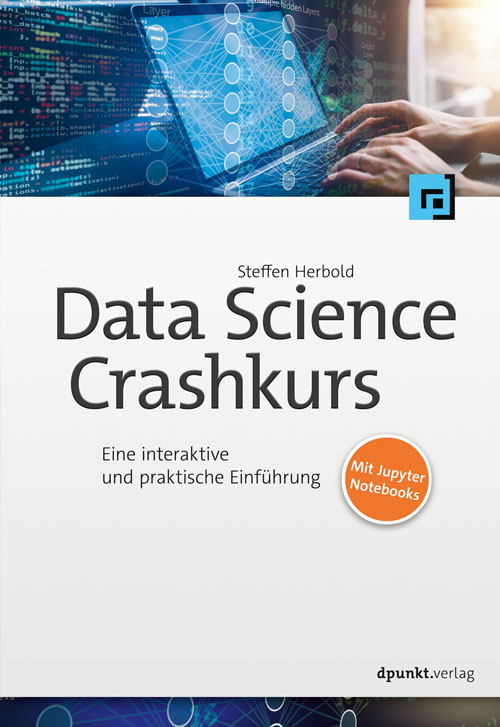
Data-Science-Crashkurs
Eine interaktive und praktische Einführung: Data Science praxisnah erklärt»Data Science Crashkurs« bietet einen praxisnahen Einstieg in Data Science, angereichert mit interaktiven Elementen, der die Breite der Möglichkeiten der Datenanalyse aufzeigt. Dieses Buch geht tief genug, um Vorteile, Nachteile und Risiken zu verstehen, aber steigt dennoch nicht zu tief in die zugrunde liegende Mathematik ein. Es wird nicht nur erklärt, wofür wichtige Begriffe wie Big Data, maschinelles Lernen oder Klassifikation stehen, sondern auch anschaulich mit zahlreichen Beispielen aufgezeigt, wie Daten analysiert werden. Ein breiter Überblick über Analysemethoden vermittelt das nötige Wissen, um in eigenen Projekten geeignete Methoden auszuwählen und anzuwenden, um das gewünschte Ergebnis zu erreichen. Der benötigte Python-Quelltext, der z.B. zur Durchführung von Analysen oder zur Erstellung von Visualisierungen verwendet wird, ist in Form von Jupyter-Notebooks frei verfügbar. Zielgruppe: Data ScientistsDatenanalyst*innenDaten- und InformationsverantwortlicheStudierende der Informatik und Wirtschaftsinformatik Autor: Dr. Steffen Herbold ist Professor für Methoden und Anwendungen maschinellen Lernens am Institut für Software und Systems Engineering der Technischen Universität Clausthal, wo er die Forschungsgruppe AI Engineering leitet. Zuvor hat er an der Universität Göttingen promoviert und habilitiert und am Karlsruher Institut für Technologie einen Lehrstuhl vertreten. In der Forschung beschäftigt er sich mit der Entwicklung und Qualitätssicherung der Lösung von Problemen durch maschinelles Lernen, z.B. zur effizienteren Softwareentwicklung, der Prognose von Ernteerträgen oder auch der Erkennung von aeroakustischen Geräuschquellen.

Numerical Methods Using Java
Implement numerical algorithms in Java using NM Dev, an object-oriented and high-performance programming library for mathematics.You’ll see how it can help you easily create a solution for your complex engineering problem by quickly putting together classes.Numerical Methods Using Java covers a wide range of topics, including chapters on linear algebra, root finding, curve fitting, differentiation and integration, solving differential equations, random numbers and simulation, a whole suite of unconstrained and constrained optimization algorithms, statistics, regression and time series analysis. The mathematical concepts behind the algorithms are clearly explained, with plenty of code examples and illustrations to help even beginners get started.WHAT YOU WILL LEARN* Program in Java using a high-performance numerical library* Learn the mathematics for a wide range of numerical computing algorithms* Convert ideas and equations into code* Put together algorithms and classes to build your own engineering solution* Build solvers for industrial optimization problems* Do data analysis using basic and advanced statisticsWHO THIS BOOK IS FORProgrammers, data scientists, and analysts with prior experience with programming in any language, especially Java.HAKSUN LI, PHD, is founder of NM Group, a scientific and mathematical research company. He has the vision of “Making the World Better Using Mathematics”. Under his leadership, the firm serves worldwide brokerage houses and funds, multinational corporations and very high net worth individuals. Haksun is an expert in options trading, asset allocation, portfolio optimization and fixed-income product pricing. He has coded up a variety of numerical software, including SuanShu (a library of numerical methods), NM Dev (a library of numerical methods), AlgoQuant (a library for financial analytics), NMRMS (a portfolio management system for equities), and supercurve (a fixed-income options pricing system). Prior to this, Haksun was a quantitative trader/quantitative analyst with multiple investment banks. He has worked in New York, London, Tokyo, and Singapore.Additionally, Haksun is the vice dean of the Big Data Finance and Investment Institute of Fudan University, China. He was an adjunct professor with multiple universities. He has taught at the National University of Singapore (mathematics), Nanyang Technological University (business school), Fudan University (economics), as well as Hong Kong University of Science and Technology (mathematics). Dr. Haksun Li has a B.S. and M.S. in pure and financial mathematics from the University of Chicago, and an M.S. and a PhD in computer science and engineering from the University of Michigan, Ann Arbor.Table of ContentsAbout the Authors...........................................................................................................iPreface............................................................................................................................ii1. Why Java?..............................................................................................................61.1. Java in 2020.....................................................................................................61.2. Java vs. C++....................................................................................................61.3. Java vs. Python................................................................................................61.4. Java in the future .............................................................................................62. Data Structures.......................................................................................................72.1. Function...........................................................................................................72.2. Polynomial ......................................................................................................73. Linear Algebra .......................................................................................................83.1. Vector and Matrix ...........................................................................................83.1.1. Vector Properties .....................................................................................83.1.2. Element-wise Operations.........................................................................83.1.3. Norm ........................................................................................................93.1.4. Inner product and angle ...........................................................................93.2. Matrix............................................................................................................103.3. Determinant, Transpose and Inverse.............................................................103.4. Diagonal Matrices and Diagonal of a Matrix................................................103.5. Eigenvalues and Eigenvectors.......................................................................103.5.1. Householder Tridiagonalization and QR Factorization Methods..........103.5.2. Transformation to Hessenberg Form (Nonsymmetric Matrices)...........104. Finding Roots of Single Variable Equations .......................................................114.1. Bracketing Methods ......................................................................................114.1.1. Bisection Method ...................................................................................114.2. Open Methods...............................................................................................114.2.1. Fixed-Point Method ...............................................................................114.2.2. Newton’s Method (Newton-Raphson Method) .....................................114.2.3. Secant Method .......................................................................................114.2.4. Brent’s Method ......................................................................................115. Finding Roots of Systems of Equations...............................................................125.1. Linear Systems of Equations.........................................................................125.2. Gauss Elimination Method............................................................................125.3. LU Factorization Methods ............................................................................125.3.1. Cholesky Factorization ..........................................................................125.4. Iterative Solution of Linear Systems.............................................................125.5. System of Nonlinear Equations.....................................................................126. Curve Fitting and Interpolation............................................................................146.1. Least-Squares Regression .............................................................................146.2. Linear Regression..........................................................................................146.3. Polynomial Regression..................................................................................146.4. Polynomial Interpolation...............................................................................146.5. Spline Interpolation .......................................................................................147. Numerical Differentiation and Integration...........................................................157.1. Numerical Differentiation .............................................................................157.2. Finite-Difference Formulas...........................................................................157.3. Newton-Cotes Formulas................................................................................157.3.1. Rectangular Rule....................................................................................157.3.2. Trapezoidal Rule....................................................................................157.3.3. Simpson’s Rules.....................................................................................157.3.4. Higher-Order Newton-Coles Formulas..................................................157.4. Romberg Integration .....................................................................................157.4.1. Gaussian Quadrature..............................................................................157.4.2. Improper Integrals..................................................................................158. Numerical Solution of Initial-Value Problems....................................................168.1. One-Step Methods.........................................................................................168.2. Euler’s Method..............................................................................................168.3. Runge-Kutta Methods...................................................................................168.4. Systems of Ordinary Differential Equations.................................................169. Numerical Solution of Partial Differential Equations..........................................179.1. Elliptic Partial Differential Equations...........................................................179.1.1. Dirichlet Problem...................................................................................179.2. Parabolic Partial Differential Equations........................................................179.2.1. Finite-Difference Method ......................................................................179.2.2. Crank-Nicolson Method.........................................................................179.3. Hyperbolic Partial Differential Equations.....................................................1710..................................................................................................................................1811..................................................................................................................................1912. Random Numbers and Simulation ....................................................................2012.1. Uniform Distribution .................................................................................2012.2. Normal Distribution...................................................................................2012.3. Exponential Distribution............................................................................2012.4. Poisson Distribution ..................................................................................2012.5. Beta Distribution........................................................................................2012.6. Gamma Distribution ..................................................................................2012.7. Multi-dimension Distribution ....................................................................2013. Unconstrainted Optimization ............................................................................2113.1. Single Variable Optimization ....................................................................2113.2. Multi Variable Optimization .....................................................................2114. Constrained Optimization .................................................................................2214.1. Linear Programming..................................................................................2214.2. Quadratic Programming ............................................................................2214.3. Second Order Conic Programming............................................................2214.4. Sequential Quadratic Programming...........................................................2214.5. Integer Programming.................................................................................2215. Heuristic Optimization......................................................................................2315.1. Genetic Algorithm .....................................................................................2315.2. Simulated Annealing .................................................................................2316. Basic Statistics..................................................................................................2416.1. Mean, Variance and Covariance................................................................2416.2. Moment......................................................................................................2416.3. Rank...........................................................................................................2417. Linear Regression .............................................................................................2517.1. Least-Squares Regression..........................................................................2517.2. General Linear Least Squares....................................................................2518. Time Series Analysis ........................................................................................2618.1. Univariate Time Series..............................................................................2618.2. Multivariate Time Series ...........................................................................2618.3. ARMA .......................................................................................................2618.4. GARCH .....................................................................................................2618.5. Cointegration .............................................................................................2619. Bibliography .....................................................................................................2720. Index .....................................................................................................

Pro Jakarta Persistence in Jakarta EE 10
Learn to use the Jakarta Persistence API and other related APIs as found in the Jakarta EE 10 platform from the perspective of one of the specification creators. A one-of-a-kind resource, this in-depth book provides both theoretical and practical coverage of Jakarta Persistence usage for experienced Java developers.Authors Lukas Jungmann, Mike Keith, Merrick Schincariol, Massimo Nardone take a hands-on approach, based on their wealth of experience and expertise, by giving examples to illustrate each concept of the API and showing how it is used in practice. The examples use a common model from an overarching sample application, giving you a context from which to start and helping you to understand the examples within an already familiar domain.After completing this in-depth book, you will have a full understanding of persistence and be able to successfully code applications using its annotations and APIs. The book also serves as an excellent reference guide.WHAT YOU WILL LEARN* Use Jakarta Persistence in the context of enterprise applications* Work with object relational mappings (ORMs), collection mappings and more* Build complex enterprise Java applications that persist data long after the process terminates* Connect to and persist data with a variety of databases, file formats, and more* Use queries, including the Jakarta Persistence Query Language (Jakarta Persistence QL)* Carry out advanced ORM, queries and XML mappings* Package, deploy and test your Jakarta persistence-enabled enterprise applicationsWHO THIS BOOK IS FORExperienced Java programmers and developers with at least some prior experience with Jakarta EE or Java EE platform APIs.LUKAS JUNGMANN is the specification project co-lead for Jakarta Persistence, and the lead for a number of other Jakarta Specification projects including Jakarta Activation, Mail, XML Binding, SOAP with Attachments, and XML Web Services. He is a contributor to Jakarta Platform, JSON Processing, JSON Binding specification projects and is lead for a number of implementation projects of various Jakarta specifications including EclipseLink, Eclipse Metro and Eclipse Angus. He holds a Bachelor’s degree in Applied Informatics from University of Finance and Administration in Prague, Czech Republic, and has over 15 years’ experience working with Enterprise Java related technologies. He has spoken at numerous conferences around the world. He is employed as a software developer at Oracle in Prague, Czech Republic, and is married with three kids and one cat.MIKE KEITH is a co-specification lead for JPA 1.0 and a member of the JPA 2.0 and JPA 2.1 expert groups. He sits on a number of other Java Community Process expert groups and the Enterprise Expert Group (EEG) in the OSGi Alliance. He holds a Masters degree in Computer Science from Carleton University, and has over 20 years experience in persistence and distributed systems research and practice.He has written papers and articles on JPA and spoken at numerous conferences around the world. He is employed as an architect at Oracle in Ottawa, Canada,and is married with four kids and two dogs.MERRICK SCHINCARIOL is a senior engineer for the Oracle OC4J Java EE Container. He was a lead engineer for Oracle's EJB 3.0 release and co-author of Pro EJB 3: Java Persistence API. Before joining Oracle, Merrick developed enterprise and large-scale systems for the telecommunications industry.MASSIMO NARDONE has more than 23 years of experiences in Security, Web/Mobile development, Cloud and IT Architecture and has been programming and teaching how to program with Android, Perl, PHP, Java, VB, Python, C/C++ and MySQL for more than 20 years. He currently works as Chief Information Security Office (CISO) for Cargotec Oyj and he is member of the ISACA Finland Chapter Board. Massimo has provided technical review for more than 40 IT books, and is the coauthor of Pro Android Games (Apress, 2015).* Introduction * Getting Started * Enterprise Applications * Object Relational Mapping * Collection Mapping * Entity Manager * Using Queries * Java Persistence Query Language * Criteria * Advanced Object Relational Mapping * Advanced Queries * Advanced Topics * XML Mapping Files * Packaging and Deployment * Testing

Handbuch für Softwareentwickler
Das Standardwerk für professionelles Software Engineering. Jeder Entwickler weiß, dass es mit der Kenntnis von Sprachen und Programmierplattformen nicht getan ist. Wer erfolgreich Software entwickeln möchte, sollte mit vielen Fachgebieten und Methoden vertraut sein – von der Architektur über Datenhaltung, Anforderungsmanagement, Sicherheitsfragen bis zum Projektmanagement. Hier finden Sie eine umfassende Behandlung dieser Themenvielfalt. Das Autorenteam gibt praktische Empfehlungen zu grundlegenden und aktuellen Fragen der professionellen Softwareentwicklung. Das theoretische Fundament und die gut erläuterten Fachbegriffe sind dabei niemals Selbstzweck, sondern stehen im Dienst der Kunst, für Ihre Kunden gute Software zu entwickeln Aus dem Inhalt: Grundlagen: Algorithmen und DatenstrukturenAnforderungsanalyse, Planung und EntwurfGelungene User InterfacesKundenzufriedenheit und BenutzerfreundlichkeitMigration – vom Altsystem zur zeitgemäßen AnwendungDatensicherheit, Datenschutz und VerschlüsselungGuter Code und QualitätsmaßstäbePlattformübergreifende EntwicklungParallelprogrammierungSoftwaretestingMobile Computing im Enterprise-UmfeldÜberblick über Werkzeuge wie Entwicklungsumgebungen und Versionsverwaltung Materialien zum Buch ... 20 Vorwort ... 21 TEIL I. Überblick ... 23 1. Überblick ... 25 1.1 ... Berufswunsch Softwareentwickler ... 25 1.2 ... Über dieses Buch ... 32 1.3 ... Quellen der zitierten Statistiken ... 37 2. Programmierung als Kern der Softwareentwicklung ... 39 2.1 ... Die Programmierung ... 39 2.2 ... Paradigmen der Softwareentwicklung ... 43 2.3 ... Objektorientierte Programmentwicklung ... 44 2.4 ... Programmiersprachen ... 66 2.5 ... Essenzielle Sprachmerkmale ... 76 2.6 ... Fazit und Ausblick ... 106 2.7 ... Literatur und Links ... 107 3. Algorithmen und Datenstrukturen ... 109 3.1 ... Algorithmen als Kernelemente des Programms ... 110 3.2 ... Entwurf von Algorithmen ... 115 3.3 ... Sortieren und Suchen als Basisalgorithmen ... 128 3.4 ... Elementare Datenstrukturen ... 148 3.5 ... Zusammenfassung und Ausblick ... 170 3.6 ... Literatur und Links ... 172 TEIL II. Der Softwarelebenszyklus ... 175 4. Softwareprojekte professionell planen ... 177 4.1 ... Der Wasserfall ... 178 4.2 ... Iterative Entwicklung -- schrittweise zum Ziel ... 183 4.3 ... Das V-Modell -- eine Struktur hauptsächlich für Projekte der öffentlichen Hand ... 185 4.4 ... Bessere Risikobeherrschung durch das Spiralmodell ... 186 4.5 ... Agile Ansätze -- der Komplexität und Unsicherheit mit Flexibilität begegnen ... 187 4.6 ... Softwareentwicklung und die Schnittstellen zum Projektmanagement ... 199 4.7 ... Ist Agilität heute alternativlos? ... 207 4.8 ... Literatur und Links ... 209 5. Die Anforderungsanalyse -- Startpunkt der Entwicklung ... 211 5.1 ... Überblick und Zielstellung ... 211 5.2 ... Ausgangssituation und Notwendigkeit ... 214 5.3 ... Anforderungen ermitteln ... 218 5.4 ... Klassische Anforderungsanalyse ... 237 5.5 ... Agile Anforderungsanalyse ... 248 5.6 ... Toolunterstützung ... 252 5.7 ... Fazit ... 256 5.8 ... Literatur und Links ... 256 6. Der Entwurf des Softwaresystems ... 259 6.1 ... Die Softwarearchitektur als Basis für Erfolg und Wartbarkeit eines Softwaresystems ... 260 6.2 ... Architekturparadigmen ... 266 6.3 ... Entwurfsmuster als Baupläne ... 291 6.4 ... Entwurfsunterstützung durch grafische Modellierung ... 297 6.5 ... Weitere Entwurfsentscheidungen ... 301 6.6 ... Erfolgreiche Entwürfe mithilfe von Prototypen ... 304 6.7 ... Zusammenfassung und Fazit ... 312 6.8 ... Literatur und Links ... 313 7. Die Implementierung schafft den Kern der Anwendung ... 315 7.1 ... Die Entwicklung der Benutzerschnittstelle ... 316 7.2 ... Die Businesslogik umsetzen ... 346 7.3 ... Die Datenwelt anbinden ... 348 7.4 ... Zusammenfassung und Fazit ... 351 7.5 ... Literatur und Links ... 351 8. Testen als Voraussetzung für fehlerarme Software ... 353 8.1 ... Zur Notwendigkeit von Softwaretests ... 354 8.2 ... Testgetriebene Entwicklung ... 355 8.3 ... Ein Überblick über wichtige Testarten ... 357 8.4 ... Testmethoden ... 361 8.5 ... Testebenen ... 369 8.6 ... Technik des Testens ... 387 8.7 ... Fazit und Zusammenfassung ... 391 8.8 ... Literatur und Links ... 391 9. Distribution -- das Produkt muss zum Kunden ... 393 9.1 ... Die Softwaredistribution im Überblick ... 394 9.2 ... Automatisierte Softwareverteilung ... 405 9.3 ... Verbesserte Zusammenarbeit durch DevOps ... 408 9.4 ... Die Nutzung der App Stores ... 411 9.5 ... Die Technik der Softwarebereitstellung ... 417 9.6 ... Fazit ... 437 9.7 ... Literatur und Links ... 437 10. Vom Altsystem zur zeitgemäßen Anwendung ... 439 10.1 ... Technologien im Wandel ... 440 10.2 ... Notwendigkeit einer Softwaremigration ... 442 10.3 ... Ziele einer Softwaremigration ... 444 10.4 ... Planung der Migration ... 444 10.5 ... Migrationsstrategien ... 447 10.6 ... Arten der Migration ... 451 10.7 ... Wirtschaftlichkeitsbetrachtungen ... 453 10.8 ... Stolpersteine ... 454 10.9 ... Eine Fallstudie ... 455 10.10 ... Literatur und Links ... 473 TEIL III. Technologien und Methoden ... 475 11. Webtechnologien ... 477 11.1 ... Einführung ... 477 11.2 ... Zusammenspiel von HTML, CSS und JavaScript ... 478 11.3 ... Die Struktur einer Webseite mit HTML ... 480 11.4 ... HTML Basics ... 481 11.5 ... Das Layout und das Design einer Webseite mit CSS ... 487 11.6 ... Logik und Interaktion mit JavaScript ... 504 11.7 ... Klassenbibliotheken und Frameworks ... 519 11.8 ... Fazit ... 529 11.9 ... Literatur und Links ... 529 12. Apps für mobile Systeme ... 531 12.1 ... Arten von Apps ... 533 12.2 ... Native Apps ... 535 12.3 ... Web-Apps ... 553 12.4 ... Hybride Apps ... 555 12.5 ... Plattformübergreifende Ansätze ... 557 12.6 ... Auswahlkriterien ... 571 12.7 ... Sensoren ... 577 12.8 ... Emulation und Simulation ... 584 12.9 ... Backend as Service ... 591 12.10 ... Fazit ... 599 12.11 ... Literatur und Links ... 599 13. Plattform- und geräteübergreifende Entwicklung ... 601 13.1 ... Nutzerinnen und Nutzer im Fokus ... 602 13.2 ... Ansätze für die plattformübergreifende Entwicklung ... 604 13.3 ... Ein Beispiel mit RAD Studio ... 614 13.4 ... Fazit ... 617 13.5 ... Literatur und Links ... 618 14. Parallelprogrammierung ... 619 14.1 ... Systemtechnische Ebene ... 620 14.2 ... Anwendungsebene ... 626 14.3 ... Programmiertechnische Ebene ... 634 14.4 ... Zusammenfassung ... 638 14.5 ... Literatur und Links ... 638 15. Kundenzufriedenheit durch Nutzerorientierung ... 641 15.1 ... Die Nutzer im Fokus ... 644 15.2 ... Benutzerschnittstellen im Wandel ... 648 15.3 ... Gestaltung von Benutzeroberflächen ... 660 15.4 ... Literatur und Links ... 668 16. Datensicherheit und Datenschutz ... 671 16.1 ... Begriffe und Angrenzungen ... 674 16.2 ... Überblick über die Datenschutz-Grundverordnung ... 676 16.3 ... Datenschutz und Cloud-Computing ... 679 16.4 ... Technischer Datenschutz ... 681 16.5 ... Fazit ... 697 16.6 ... Literatur und Links ... 697 17. Grundlagen der Datenhaltung ... 699 17.1 ... Datenbank -- ein Ort, um Ordnung zu halten ... 699 17.2 ... Phasen der Datenbankentwicklung ... 708 17.3 ... Relationale Datenbanken ... 711 17.4 ... NoSQL-Datenbanken ... 726 17.5 ... Fazit und Ausblick ... 735 17.6 ... Literatur und Links ... 735 18. Werkzeugunterstützung ... 737 18.1 ... Die Rolle von Werkzeugen ... 738 18.2 ... Integrierte Entwicklungsumgebungen als Multifunktionswerkzeuge ... 739 18.3 ... Versionsverwaltungen als Voraussetzung für eine erfolgreiche Entwicklung ... 744 18.4 ... Weitere Softwaretools für die Entwicklung ... 754 18.5 ... Fazit und Ausblick ... 758 18.6 ... Literatur und Links ... 759 19. Qualitätssicherung und Clean Code Development ... 761 19.1 ... Das Verständnis von Softwarequalität ... 761 19.2 ... Ansätze zur Bestimmung der Softwarequalität ... 764 19.3 ... Softwarequalität zwischen Nutzen und Kosten ... 769 19.4 ... Qualität verbessern ... 771 19.5 ... Eine gesunde Fehlerkultur ... 786 19.6 ... Fazit und Zusammenfassung ... 793 19.7 ... Literatur und Links ... 793 TEIL IV. Trends ... 795 20. Enterprise Mobile Computing ... 797 20.1 ... Einsatzszenarien ... 798 20.2 ... Bring Your Own Device ... 807 20.3 ... Technische Aspekte für Enterprise Mobile Computing ... 817 20.4 ... Fazit und Ausblick ... 829 20.5 ... Literatur und Links ... 829 21. Internet of Things ... 831 21.1 ... Stand heute und Zukunftsszenarien ... 832 21.2 ... IoT-Infrastruktur ... 841 21.3 ... Hardware auf kleinstem Raum ... 850 21.4 ... Fallbeispiel: Windows 10 auf dem Raspberry Pi ... 854 21.5 ... Fazit und Ausblick ... 866 21.6 ... Literatur und Links ... 867 22. Cloud-Computing ... 869 22.1 ... Grundlagen des Cloud-Computings ... 870 22.2 ... Ökonomische Gesichtspunkte ... 876 22.3 ... Cloud-Computing als Werkzeug der Softwareentwicklung ... 881 22.4 ... Fazit ... 885 22.5 ... Literatur und Links ... 885 Index ... 887

PyTorch kompakt
Syntax, Design Patterns und Codebeispiele für Deep-Learning-Modelle Mit diesem benutzerfreundlichen Nachschlagewerk zu PyTorch haben Sie kompaktes Wissen zu einem der beliebtesten Frameworks für Deep Learning immer zur Hand. Der Autor Joe Papa bietet Ihnen mit dieser Referenz den sofortigen Zugriff auf Syntax, Design Patterns und gut nachvollziehbare Codebeispiele. Sie erhalten eine Fülle an gesammelten Informationen, die Ihre Entwicklungsarbeit beschleunigen und die Zeit minimieren, die Sie mit der Suche nach Details verbringen. Leseprobe (PDF-Link)Inhaltsverzeichnis (PDF-Link)Zielgruppe:Data ScientistsSoftwareentwickler*innenDatenanalyst*innenStudierende der Informatik Autor: Joe Papa verfügt über 25 Jahre Erfahrung in Forschung und Entwicklung und ist Gründer von TeachMe.AI. Seinen Abschluss „Master of Science in Electrical Engineering“ hat er an der Universität Rutgers erworben. Bei Booz Allen Hamilton und Perspecta Labs hat er KI-Forschungsteams mit PyTorch geleitet. Joe hat Hunderte von Datenwissenschaftlern als Mentor betreut und mehr als 6.000 Studenten auf der ganzen Welt auf Udemy unterrichtet.