

Software
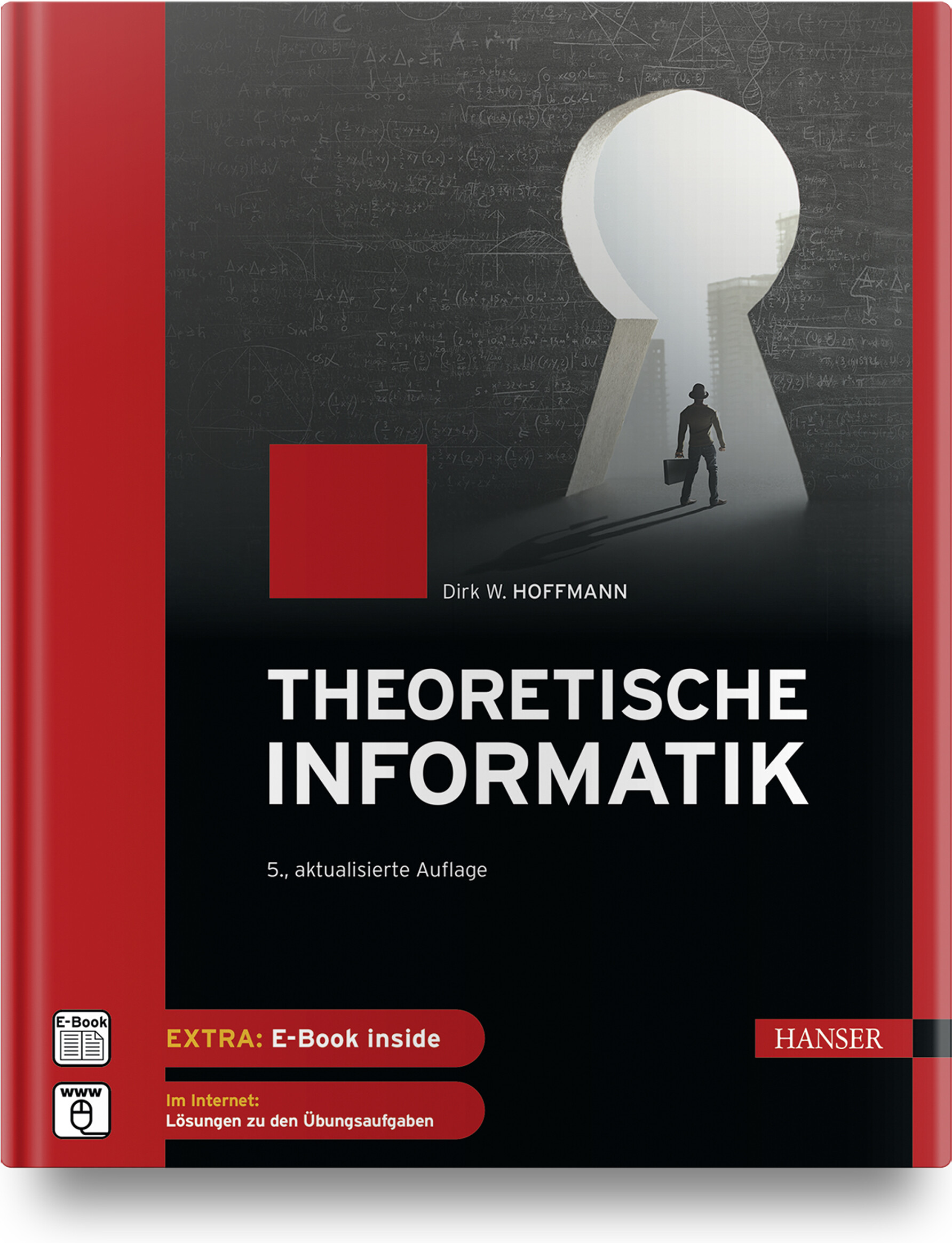
Theoretische Informatik (5. Auflage)
Das Buch führt umfassend in das Gebiet der theoretischen Informatik ein und behandelt den Stoffumfang, der für das Bachelor-Studium an Universitäten und Hochschulen in den Fächern Informatik und Informationstechnik benötigt wird. Die Darstellung und das didaktische Konzept verfolgen das Ziel, einen durchweg praxisnahen Zugang zu den mitunter sehr theoretisch geprägten Themen zu schaffen. Theoretische Informatik muss nicht trocken sein! Sie kann Spaß machen und genau dies versucht das Buch zu vermitteln. Die verschiedenen Methoden und Verfahren werden anhand konkreter Beispiele eingeführt und durch zahlreiche Querverbindungen wird gezeigt, wie die fundamentalen Ergebnisse der theoretischen Informatik die moderne Informationstechnologie prägen. Das Buch behandelt die Themengebiete: Logik und Deduktion, Automatentheorie, formale Sprachen, Entscheidbarkeitstheorie, Berechenbarkeitstheorie und Komplexitätstheorie. Die Lehrinhalte aller Kapitel werden durch zahlreiche Übungsaufgaben komplettiert, so dass sich die Lektüre neben der Verwendung als studienbegleitendes Lehrbuch auch bestens zum Selbststudium eignet. Aus dem Inhalt: Grundlagen der theoretischen InformatikMathematische GrundlagenLogik und DeduktionFormale SprachenEndliche AutomatenBerechenbarkeitstheorieKomplexitätstheorie Leseprobe (PDF)Autor: Prof. Dr. Dirk W. Hoffmann ist Dozent an der Fakultät für Informatik und Wirtschaftsinformatik der Hochschule Karlsruhe – Technik und Wirtschaft.
Office 2021 for Macs For Dummies
TURN YOUR MAC INTO A PRODUCTIVITY POWERHOUSE WITH OFFICE 2021!Long gone are the days when Microsoft's powerful office suite was just for Windows users. Mac enthusiasts are also able to pop open ubiquitous apps like Word, Excel, and PowerPoint on their preferred desktop or laptop! But if you're new to Microsoft Office on the Mac—or you just need a hand with some of its latest features—you should check out Office 2021 For Macs For Dummies.This handy guide will show you how to conquer the essentials of all the key apps that make Office 2021 such a productivity booster. You'll also discover:* Brand-new features, like an improved dark mode and better accessibility capabilities* How to share documents directly in a collaborative setting How Microsoft's Text Predictions work in various apps in Office 2021Ideal for Mac-lovers who can't escape the lure of Microsoft's iconic office software, Office 2021 For Macs For Dummies is a can't-miss resource that will help you successfully blend the reliable computing power of your Mac or MacBook with the productivity power of Microsoft Office. BOB LEVITUS has written nearly 100 reference books on Apple technologies. He’s the author or coauthor of macOS For Dummies,iPad For Dummies, and iPhone For Dummies, among others.DWIGHT SPIVEY probably wrote the rest of the For Dummies books on Apple products, including iPhone For Seniors For Dummies, iPad For Seniors For Dummies, and Apple Watch For Seniors For Dummies.Introduction 1About This Book 1Foolish Assumptions 2Icons Used in This Book 2Beyond the Book 3Where to Go from Here 3PART 1: INTRODUCTION TO MICROSOFT OFFICE FOR MAC 5CHAPTER 1: OVERVIEW FROM 10000 FEET 7The Many Faces of Office for Mac 7Installing Office 9Getting a Microsoft account 9Downloading and installing Office 9Keeping Your Apps Up-to-Date 11CHAPTER 2: A SWEET SUITE: INTRODUCING THE OFFICE APPS 13What’s New and Good 15The suite life 15Word 18PowerPoint 18Excel 19Outlook 19What’s New but Bad 20Together They’re Better 21CHAPTER 3: COMMON FEATURES IN ALL OFFICE APPS 23Using Menus in Office Apps 23Toolbars Ribbons and Panes: Think “Visual” Menus 25The Quick Access toolbar 26Reveling in the ribbon 26Panes are anything but a pain 28Customizing the Quick Access Toolbar Ribbon Tabs and Keyboard Shortcuts 29Customize the Quick Access toolbar 29Customize ribbon tabs and menus 30Creating ribbon tabs and tab groups 32Customizing keyboard shortcuts 32Creating and Saving Documents 34Using the gallery to open templates or recent documents 34Saving a document 36Saving and Using Documents in the Cloud 39Saving a file on a OneDrive or SharePoint location 40Sharing a file you’ve saved using OneDrive or SharePoint 41Opening a file you’ve saved on your OneDrive or SharePoint location 41Understanding App Preferences 42App preferences: Why? 42App preferences: How? 42Help: It’s more than just a Beatles movie 44Official Microsoft websites 46PART 2: MASTERING MICROSOFT WORD 47CHAPTER 4: GETTING TO KNOW MICROSOFT WORD 49Using a Variety of Versatile Views 50Print layout view 51Web layout view 51Outline view 53Draft view 54Focus view 54Full screen view 56Immersive reader view 57Zoom, zoom, zoom 58Getting around in Your Document 59A scroll new world: Navigating by using the mouse or trackpad 59Navigating by using keyboard navigation 61CHAPTER 5: CREATING DOCUMENTS 65Adding Text and Graphics to Your Document 65Entering text in your document 66Inserting an image in your document 66Selecting Text for Editing and Formatting 71Formatting Text Paragraphs and Images 74Changing the look of the font 74Changing the look of paragraphs 76Changing the look of images 79Copying Words and Images from Other Sources 83Dragging and dropping 83Copying and pasting 84Working with Other Document Elements 85Adding elements by using the ribbon 86Modifying elements by using the ribbon 87Removing elements 87CHAPTER 6: REFINING AND EDITING DOCUMENTS WITH WORD 89Moving Text and Images in Your Documents 90Moving items easily within a document 90Using special Word features that make moving stuff easier 91Check It Out: Checking Your Spelling Grammar and Hyphenation 93Double-checking your spelling and grammar 94Utilizing Word’s built-in editor 95Correcting your errors automatically with AutoCorrect 98Hypnotic hyphenation 101Discovering the Reference Tools 102The thoroughly terrific thesaurus 102The online reference tools 104Saving Time with the Find and Replace Feature 108Finding and replacing text 108Using Find and Replace to make formatting changes 109Using advanced search options to do more 110CHAPTER 7: USING TEMPLATES AND OTHER DESIGN ELEMENTS 113Canned Design: Working with Word Templates 114Getting started with the Document Gallery 114Sample project: Starting a custom newsletter from a template 114Creating a customized version of a Word template 116Saving your customized template 116Adding Basic Design Elements to Your Document 118Imagine that: Adding and resizing an image 119Moving images around documents 119Creating headers and footers 121Adding lines to your header or footer 124Arranging text with some help from tabs 125Setting Tabs Margins and Other Types of Indents 126Setting tabs 126Making your margins 129Working with indents 130Columns and Lists and Text Boxes (Oh My) 132Column creation 132Lists made easy (and pretty) 134Text anywhere with text boxes 135Working with Tables 136Creating a table 136Formatting a table 139CHAPTER 8: THIS AND THAT: ADVANCED AND COLLABORATION FEATURES 143Going in Style: Defining Styles for Easy Formatting 144The easy way: Defining a style by example 144The harder way: Defining a style by dialog 147Customizing Interface Elements 147Customizing ribbon tabs and menus 148Create ribbon tabs and tab groups 149Customizing the Quick Access toolbar 150Customizing keyboard shortcuts 152Creating a Table of Contents Automatically 154Using Collaboration Features 157Turning on the Track Changes feature 158Accepting or rejecting changes 160Addressing Envelopes and Creating Labels 162Creating and printing an envelope 162Creating labels 164Creating Web Pages 167PART 3: POWERFUL PRESENTATIONS WITH MICROSOFT POWERPOINT 169CHAPTER 9: GETTING TO KNOW MICROSOFT POWERPOINT 171Viewing Slides with Various Views 172Normal view 173Slide sorter view 174Slide show view 174Notes page view 176Presenter view 176Reading view 177Planning Your Presentation: A Few Tips for Making Your Slide Shows Better 178Use the 10/20/30 rule 178Start with an outline 179CHAPTER 10: CREATING SLIDE SHOWS 181Getting Started 182Giving Your Presentation a Visual Theme 182Using a theme as is 182Customizing a theme’s colors or fonts 184Using Laborsaving Slide Layouts 186Mastering slide masters 186Working with title and text objects 191Working with PowerPoint Objects 193Formatting tables 194Creating a chart 196Get smart: Use SmartArt 199More media: Adding images movies or sounds 201Using Quick Styles and Effects 203Aligning arranging and distributing objects 206CHAPTER 11: MAKING YOUR SLIDE SHOWS SING 213Using Transitions to Create a Polished-Looking Presentation 214Applying transitions 214Transition options 216Using Custom Animation 217Animating text or graphics 217Animating a chart or SmartArt graphic 223Creating Interactivity with Action Buttons 224Share and Share Alike 226Printing hard copy 226Exporting (saving) your presentations as files 229CHAPTER 12: PRESENTATION PROWESS 237Working with the Basic PowerPoint Tools 238Ribbon and Quick Access toolbar customization 238Proofing and reference tools 241Commenting on slides 242Templates and other miscellaneous tools 244Using Hyperlinks 244Recording Narration 246Making the Most of Your PowerPoint Presentation 247Rehearsing and setting slide timings 247Using the presenter tools 249Working with a single display 250PART 4: CRUNCHING DATA WITH MICROSOFT’S MOST EXCELLENT EXCEL 253CHAPTER 13: GETTING TO KNOW MICROSOFT EXCEL 255Interfacing with Excel’s User Interface 256Understanding the Concept of Rows Columns and Cells 257Using the Views 258Navigating within Your Worksheets 258CHAPTER 14: CRUNCHING NUMBERS (AND DATA) WITH EXCEL 261Working with Templates 262Choosing a local template 262Working with online templates 263Entering Formatting and Editing Data in Cells 264Copying and Pasting Data (and Formatting) between Cells 266AutoFilling Cells 268Understanding Formulas and Functions 269Creating a formula 269Keeping track of Excel formulas with Formula Builder 270Using the Error Checking Feature 273Sorting and Filtering Data 275Sorting data 275Using filters to narrow your data searches 276Finding and Replacing Data 277CHAPTER 15: ENHANCING AND PRINTING YOUR EXCEL SPREADSHEETS 281Creating and Formatting Charts 282Including Pictures and Shapes 285Adding Formatting and Special Effects 288Creating and Sorting Custom Lists 291Creating a custom list 292Sorting a list 292Adding Headers and Footers 293Creating a header or footer 293Editing a header or footer 294Printing Your Spreadsheets 295Preparing for printing with Page Setup 296Ready set print 298CHAPTER 16: ADVANCED SPREADSHEETING 299Customizing Excel 300Preferences 300Conditional Formatting 304Naming a Cell Range 307Working with Multiple Worksheets 307Hyperlinking 308Collaboration and Revision Tracking (aka Change Tracking) 310Saving a workbook online 310Tracking your changes 312Accepting and rejecting your changes 313PART 5: MICROSOFT OUTLOOK: MIRACULOUS MANAGER OF MOST THINGS 315CHAPTER 17: GETTING TO KNOW OUTLOOK 317Taking a Quick Tour of Outlook 318The Mail module 318The Calendar module 319The People module 320The Notes and Tasks modules 320CHAPTER 18: EMAILING WITH OUTLOOK 323Setting Up Outlook for Email 323Setting up your email automatically 324Setting up your email account manually 327Sending Receiving and Managing Your Email 330Creating and sending messages 330Receiving messages 336Managing your email 340CHAPTER 19: MANAGING YOUR AFFAIRS WITH OUTLOOK 345Scheduling Events with Calendar 346Managing Your Crew with the People Module 353Adding and removing contacts 353Working with contacts 356Delving into the Home tab 360Tracking Progress with the Tasks Module 363Understanding Notes 365CHAPTER 20: GETTING ADVANCED WITH OUTLOOK 367Customizing: It’s Not Just for Hot Rods Anymore 367Reducin’ the ribbon 368Concentrating on columns 368Hiding showing and rearranging interface elements 369The fast way to start an advanced search 370What’s Your Preference? 371Your personal preferences 371Roll over Beethoven and catch the email preferences 373Everything but the Kitchen Sync 375“New” Outlook? Yes Please! 376PART 6: THE PART OF TENS 379CHAPTER 21: TEN UNSUNG OFFICE FEATURES AND MICROSOFT APPS FOR MAC 381The Developer Ribbon Tab 381A Multitude of Fonts 382Icons Gallery 383Import Outlook Archives 384Microsoft Teams 384Outlook Profile Manager 386Microsoft Remote Desktop 386Microsoft Edge 387Microsoft To Do 388Microsoft OneNote 388CHAPTER 22: TEN TIMESAVING SHORTCUTS AND TIPS FOR ENHANCED PRODUCTIVITY 389Memorize Keyboard Shortcuts 389Get to Know Your Preferences 390Save a Document as a PDF File 391Save Time by Using the Share ➪ Email (as Attachment) Menu Item 392Focus on the Task at Hand 393Use the Open Recent Feature to Open Items from the Dock 393Get Help 393Use Format Painter 394Speak Your Mind with Dictation 394Don’t Forget Your Free OneDrive 395CHAPTER 23: TEN WAYS TO CUSTOMIZE OFFICE 397Modify the Quick Access Toolbar 397Modify Existing Ribbon Tabs and Tab Groups 398Create a New Ribbon Tab or Tab Group for Frequently Used Commands 399Focus with Full Screen 400Deal with Frequently Used Documents 401Remove Unused Keyboard Shortcuts 401Change an Existing Keyboard Shortcut 402Create a New Keyboard Shortcut 402Create Your Own Templates 403Experiment with Dark Mode 403Index 405

Git Schnelleinstieg
Mit diesem Buch erhalten Sie einen schnellen und praxisbezogenen Einstieg in Git. Der Autor behandelt die gängigen Befehle, die Sie beim täglichen Arbeiten mit Git brauchen. Sie lernen anhand eines Projekts, welche Befehle es gibt, wie diese arbeiten und wie Sie auftretende Probleme lösen können. Neben alltäglichen Funktionen finden Sie auch seltener gebrauchte Kommandos, die aber ebenfalls wichtig sind.Im zweiten Teil des Buchs werden fortgeschrittene Themen behandelt. Der Schwerpunkt liegt auf dem Einsatz von Git in Teams, darunter etwa das Hosten verteilter Repositories mit GitHub und GitLab. Ein weiteres Kapitel behandelt die Workflows, die je nach Anzahl der beteiligten Personen, Branches und Repositories eines Projekts variieren.Darüber hinaus gibt Ihnen der Autor hilfreiche Informationen für den Umstieg von Subversion. Ein Kapitel zu häufig gestellten Fragen rundet diesen Praxiseinstieg ab.Das Buch richtet sich an Einsteiger, aber auch Leser mit grundlegender Erfahrung können hier noch viel lernen. So gelingt es Ihnen, Git in Kürze in der Praxis einzusetzen.Sujeevan Vijayakumaran ist seit über einem Jahrzehnt begeisterter Git-Nutzer und berät seit 2020 als Solutions Architect für GitLab Kunden bei der technologischen Umsetzung von DevOps.

Keyword-Driven Testing
Grundlage für effiziente Testspezifikation und AutomatisierungWirksame und gleichzeitig kosteneffiziente Tests sind ein wesentlicher Erfolgsfaktor beim Softwaretest. Dazu verhilft die Methode »schlüsselwortbasierter Test« oder »Keyword-Driven Testing«, mit der Tests aus wiederverwendbaren Bausteinen zusammengesetzt werden. Diese Bausteine werden dem Team als Test-Know-how zur Verfügung gestellt, das jederzeit abgerufen werden kann. Die Autoren bieten einen fundierten Überblick über die technischen und organisatorischen Aspekte des Keyword-Driven Testing und vermitteln das notwendige Praxiswissen, um Keyword-gesteuerte Tests zu erstellen sowie Keywords auszuwählen und zu strukturieren. Auch auf die Herausforderungen und Werkzeuge für das Keyword-Driven Testing wird eingegangen. Im Einzelnen werden behandelt: Unterschiedliche Ansätze für Keyword-Driven TestingAuswahl und Strukturierung von Keywords sowie QualitätssicherungNormen im Testen und speziell zu KeywordsTestautomatisierungsarchitekturKeyword-Driven Testing FrameworksPraxis mit Robot Framework Verbindung mit Testpraktiken wie Test-Driven, Behavior-Driven oder Acceptance Test-Driven Development Autoren: Matthias Daigl ist Product Owner bei der imbus AG. Er ist als Sprecher auf internationalen Konferenzen unterwegs, arbeitet in Arbeitsgruppen des German Testing Board, des ISTQB® und im Normungsausschuss von DIN und ISO mit, war Editor der Norm ISO/IEC/IEEE 29119-5 „Keyword-Driven Testing“ und ist Autor des Buches „ISO 29119: Die Softwaretest-Normen verstehen und anwenden“. René Rohner ist Product Owner des Value Streams Testautomatisierung sowie Senior Berater mit den Spezialgebieten Keyword-Driven Testing und Testautomatisierung bei der imbus AG. Er ist als Softwareentwickler, Trainer und Chairman of the Board der Robot Framework® Foundation international im Bereich des Keyword-Driven Testing tätig. Nach dem Lesen des Buches haben Sie ein fundiertes Verständnis für die unterschiedlichen Facetten des Keyword-Driven Testing, kennen die Vorteile und Werkzeuge und können so selbst entscheiden, wie Sie Keyword-gesteuerte Tests gestalten und welche der beschriebenen Konzepte Sie in der Praxis einsetzen möchten. Zielgruppe: Testanalyst*innenTestmanager*innenTestautomatisierer*innenQualitätsmanager*innenSoftwareentwickler*innen

Security Awareness For Dummies
MAKE SECURITY A PRIORITY ON YOUR TEAMEvery organization needs a strong security program. One recent study estimated that a hacker attack occurs somewhere every 37 seconds. Since security programs are only as effective as a team’s willingness to follow their rules and protocols, it’s increasingly necessary to have not just a widely accessible gold standard of security, but also a practical plan for rolling it out and getting others on board with following it. Security Awareness For Dummies gives you the blueprint for implementing this sort of holistic and hyper-secure program in your organization.Written by one of the world’s most influential security professionals—and an Information Systems Security Association Hall of Famer—this pragmatic and easy-to-follow book provides a framework for creating new and highly effective awareness programs from scratch, as well as steps to take to improve on existing ones. It also covers how to measure and evaluate the success of your program and highlight its value to management.* Customize and create your own program * Make employees aware of the importance of security * Develop metrics for success * Follow industry-specific sample programs Cyberattacks aren’t going away anytime soon: get this smart, friendly guide on how to get a workgroup on board with their role in security and save your organization big money in the long run.Introduction 1PART 1: GETTING TO KNOW SECURITY AWARENESS 5Chapter 1: Knowing How Security Awareness Programs Work 7Chapter 2: Starting On the Right Foot: Avoiding What Doesn’t Work 19Chapter 3: Applying the Science Behind Human Behavior and Risk Management 33PART 2: BUILDING A SECURITY AWARENESS PROGRAM 51Chapter 4: Creating a Security Awareness Strategy 53Chapter 5: Determining Culture and Business Drivers 61Chapter 6: Choosing What to Tell The Users 75Chapter 7: Choosing the Best Tools for the Job 89Chapter 8: Measuring Performance 107PART 3: PUTTING YOUR SECURITY AWARENESS PROGRAM INTO ACTION 119Chapter 9: Assembling Your Security Awareness Program 121Chapter 10: Running Your Security Awareness Program 143Chapter 11: Implementing Gamification 165Chapter 12: Running Phishing Simulation Campaigns 181PART 4: THE PART OF TENS 207Chapter 13: Ten Ways to Win Support for Your Awareness Program 209Chapter 14: Ten Ways to Make Friends and Influence People 215Chapter 15: Ten Fundamental Awareness Topics 221Chapter 16: Ten Helpful Security Awareness Resources 227Appendix: Sample Questionnaire 233Index 253

LabVIEW für Dummies
Ganz unverhofft müssen Sie sich mit LabVIEW beschäftigen? Dieses Buch hilft Ihnen dabei sich in diesem grafischen Programmiersystem zurechtzufinden. Die Autorinnen erklären Ihnen die Grundlagen von grafischer Programmierung und erläutern was Virtuelle Instrumente (VIs) sind. Sie führen Sie in die Arbeit in Projekten mit LabVIEW ein, zeigen Ihnen was Sie bei der Fehlersuche beachten sollten, wie Sie Datentypen und Datenstrukturen verwenden und vieles mehr. Dabei kommt auch das klassische Programmieren nicht zu kurz und so werden Sie sich schneller als Sie denken in LabVIEW zurechtfinden. Corinna Meiwald studierte bis 2017 Bio- und Nanotechnologie, schloss das Studium mit dem Master ab und arbeitet seitdem als Softwareentwicklerin und Projektleiterin in der Prüfmittelentwicklung.Melanie von der Crone hat ebenso einen Master in Bio- und Nanotechnologie und arbeitet seit ihrem Studienabschluss für Siku/Wiking Modellwelt.ÜBER DIE AUTOREN9Melanie von der Crone 9Corinna Meiwald 9Idee zum Buch 9EINLEITUNG 19Über dieses Buch 19Konventionen in diesem Buch 19Was Sie nicht lesen müssen 20Törichte Annahme über den Leser 20Wie dieses Buch aufgebaut ist 21Symbole, die in diesem Buch verwendet werden 22Wie es weitergeht 22TEIL I: DIE ENTWICKLUNGSUMGEBUNG IN LABVIEW 23KAPITEL 1: LABVIEW – DIE ETWAS ANDERE ART DER PROGRAMMIERUNG25Datenflussprinzip 26Benutzeroberfläche 28Frontpanel und dessen Elemente 30Menüleiste vom Frontpanel 30Starten, Beenden, Pausieren 31Beschriftungen 32Ausrichten der Elemente 32Hilfen 33Blockdiagramm 34Menüleiste im Blockdiagramm 35Debugging 35Clean_Up Diagram 36Connector Pane 36Werkzeuge und Paletten 36Tools Palette 37Controls Palette 39Functions Palette 42Kontextmenü 43Kontextmenü im Frontpanel 44Kontextmenü im Blockdiagramm 48Drähte im Blockdiagramm 50Einstellung von Programmeigenschaften 51Regeln für die Programmierung in LabVIEW 60Übungen zu LabVIEW 60Lösungen zu LabVIEW 61KAPITEL 2: BLACK JACK 163Struktogramme 63Anweisungsblock 64Schleifen 64Fallunterscheidungen 65Beispiel für ein Struktogramm 65Black Jack-Regeln 66Spielablauf 68Struktogramm für Black Jack 69KAPITEL 3: WENN DER UMFANG ZUNIMMT: ARBEITEN IN PROJEKTEN73Was ist ein Projekt in LabVIEW? 73Hierarchien 76LabVIEW Librarys (Bibliotheken) 77Abhängigkeiten (Dependencies) in Projekten 79Fehler beim Starten eines VIs (LOAD WARNING SUMMARY) 84Build-Spezifikationen 86Übungen 87Lösungen 88TEIL II: GRUNDLAGEN DER PROGRAMMIERUNG 89KAPITEL 4: DATENTYPEN IN LABVIEW UND WOFÜR SIE VERWENDET WERDEN91Grundlagen zur Zahlendarstellung 92Numerische Datentypen 95Vorzeichenlose Ganzzahlen (U8, U16, U32, U64) 96Vorzeichenbehaftete Ganzzahlen (I8, I16, I32, I64) 97Überlauf und Unterlauf 98Gleitpunktzahlen 99Numerische Elemente in LabVIEW 102Boolesche Daten 104Strings & Pfade 107String 107Pfade 110Rings und Enums 113Bilder und Farben 117Picture 117Color Box 117Variant 120Arrays 122Cluster 128Custom Control (CC) 131Zugriffe auf Datentypen in LabVIEW 135Property Nodes 136Invoke Nodes 139Variable in LabVIEW 140Übungen 146Lösungen 147Erstellen eines Custom Controls für Black Jack 148KAPITEL 5: FUNKTIONEN, VIS UND VIM149Einfache numerische Funktionen 151Coercion Dot 155Vergleichsfunktionen 156Boolesche Funktionen 157And und Nand 157Or, Nor, Exclusive Or und Not Exclusive Or 158Not 160Compound Arithmetic 1602D Picture-Funktionen 161Variant-Funktionen 165To Variant 165Set Variant Attribute 166Get Variant Attribute 168String- und Pfadfunktionen 169String Length 170Concatenate Strings 170String Subset 171Formatbezeichner für Strings 172Build & Strip Path 178Array-Funktionen 179Initialize Array 179Index Array 180Shuffle 1D Array.vim 183Delete From Array 183Build Array 185Transpose 2D Array 187Sort 1D Array.vim 188Reverse 1D Array 189Insert Into Array 190Cluster-Funktionen 194Unbundle (By Name) 195Bundle (By Name) 197Veränderung von Daten im Cluster 199Konvertierung von Datentypen 200Konvertierung numerischer Datentypen 200Konvertierung von Strings 204Black Jack 211Funktion zum Karten mischen 211Funktionen für den Vorgang des Kartenziehens 211Funktionen für die Bewertung des Spiels 212KAPITEL 6: DAS PROGRAMM BEKOMMT EINE STRUKTUR 217Schleifen 217For-Schleife 218While-Schleife 222Entscheidungsstrukturen 224Select/Auswahl 224Case-Struktur 226Tunnel & Shift Register 231Indexing Enabled (Indexing)/Indexing Disabled (Last Value) 232Leerer Tunnel & USE DEFAULT IF UNWIRED 233Concatenating Tunnel 233Conditional Tunnel 235Shift Register 237Unterprogramm (SubVI) 242Sequenz 247Ereignisstruktur 250Timing-Funktionen 254Tick Count (ms) 255High Resolution Relative Seconds.vi 256Wait (ms) 257Wait Until Next ms Multiple 258Unterschied zwischen Wait (ms) und Wait Until Next ms Multiple 259State Machine (Zustandsautomat) 260Grundlagen zur State Machine (Zustandsautomat) 260Realisierung einer State Machine in LabVIEW 261Übungen zu Schleifen, Shift Register und Timing 263Übungen zu For-Schleifen 263Übungen zu While-Schleifen 264Übungen zu Shift Registern 265Übungen zu Timing 266Aufgaben zu Automaten 266Lösungen zu den Übungsaufgaben 266State Machine beim Black Jack 270Die For-Schleife bei Black Jack 275Die Ereignisstruktur bei Black Jack 275Der CROUPIER‘S GAME-Case bei Black Jack 280KAPITEL 7: BLACK JACK 2283Programmbeschreibung 283VI Analyzer-Toolkit 291Analyze VIs 293KAPITEL 8: WENN GAR NICHTS FUNKTIONIERT: DEBUGGING UND ERRORHANDLING301Fehler zur Erstellungszeit 301Ausführungsfehler 303Highlight Execution 303Sonden-Werkzeug 304Verbindungswerte speichern 305Setzen von Breakpoints 306Programmcode schrittweise ausführen (Single Stepping) 307Fehlerbehandlung in LabVIEW 309Fehler-Cluster 309Fehler-Ring 311Simple Error Handler.vi 314Clear Errors.vi 315Case-Struktur mit Error 315Übungen 316Lösungen 316TEIL III: DATENVERARBEITUNG UND ANSTEUERUNGKAPITEL 9: DATENVERARBEITUNG319Verarbeitung von Dateien in LabVIEW 319Öffnen und Schließen von Dateien 321Open/Create/Replace File 321Close File 325Textdateien 325Read (from) Text File 326Write (to) Text File 327Tabellenkalkulation 329Write Delimited Spreadsheet.vi 329Read Delimited Spreadsheet.vi 332Diagramme und Graphen 334Waveform Chart und Waveform Graph 335XY Graph 343Intensity Chart∖Graph 345Formula Node 347Übungsaufgaben zu Datenverarbeitung 351Files 351Textdateien 351Tabellenkalkulation 351Diagramme und Graphen 351Formula Node 352Lösungen zu Datenverarbeitung 353Files 353Textdateien 353Tabellenkalkulation 355Diagramme und Graphen 355Formula Node 356KAPITEL 10: HARDWARESTEUERUNG357National Instruments Measurement and Automation Explorer (NI MAX) 357VISA 363Treiber einbinden 366TEIL IV: TOP-TEN PART 371KAPITEL 11: ZEHN GÄNGIGE SCHNITZER BEIM PROGRAMMIEREN IN LABVIEW373Beschriftung 376Wire verläuft unter Element 377Initialisierung 378Property Nodes 378Dokumentation 378Icon 379Kommentare 379Coercion Dot 379Wire verläuft von rechts nach links 380Buntes Frontpanel 380Abbildungsverzeichnis 381Stichwortverzeichnis 393
Adobe Photoshop Lightroom Classic For Dummies
LEARN TO MAKE YOUR DIGITAL PHOTOS *POP* WITH EASY-TO-FOLLOW HELP USING AI-POWERED SOFTWARE FROM ADOBEWith no prior photography or editing experience necessary, AdobePhotoshop Lightroom Classic For Dummies delivers a must-have walkthrough for taking your photos to the next level using Adobe’s powerful consumer software. You’ll learn the fundamentals of opening your pictures, managing your photo library, and fixing common problems—like redeye and poor lighting—before jumping into more advanced topics, like creating slideshows and troubleshooting problems. The perfect place to begin learning how to improve your family photos, AdobePhotoshop Lightroom Classic For Dummies also helps you discover:* How to take control of and organize your photo library* How to apply common artificial intelligence-powered photo enhancements with the click of a mouse* Ways to share your photos with the world, both digitally and on paperThe premier jumping-off point for aspiring photo editors everywhere, this book is a can’t-miss resource for anyone who wants to make the most of their digital photo collection and for professionals who want to expand their design skillset by learning Adobe Lightroom Classic. ROB SYLVAN is a photographer, educator, and writer. Rob also authors and curates tutorials found within the Photoshop and Lightroom applications, is a Canon Product Educator, writes for LightroomKillerTips.com, regularly contributes to Photoshop User magazine, and teaches at photography industry conferences such as Adobe MAX, Photoshop World, PHOTOPLUS, and more.Introduction 1PART 1: GETTING STARTED WITH LIGHTROOM CLASSIC 7Chapter 1: Getting to Know Adobe Photoshop Lightroom Classic 9Chapter 2: Working with Catalogs 27Chapter 3: Lightroom Classic Basics That You Should Know 47PART 2: MANAGING YOUR PHOTOS WITH LIGHTROOM CLASSIC 67Chapter 4: Tackling the Lightroom Classic Import Process 69Chapter 5: Viewing and Finding Photos in the Library 91Chapter 6: Getting Organized with the Library 117Chapter 7: Exploring the Library Module’s Advanced Features 141PART 3: WORKING IN LIGHTROOM CLASSIC’S DIGITAL DARKROOM 163Chapter 8: Editing Photos in the Develop Module 165Chapter 9: Solving Problems and Saving Time 185Chapter 10: Taking Your Photos to the Next Level 209PART 4: SHARING YOUR WORK WITH THE WORLD 237Chapter 11: Exporting Copies and Using External Editors 239Chapter 12: Designing a Book 267Chapter 13: Producing a Slideshow 285Chapter 14: Printing Your Work 305Chapter 15: Creating a Web Gallery 327PART 5: THE PART OF TENS 343Chapter 16: Ten Things to Know About Using Lightroom Classic and Lightroom Together 345Chapter 17: Ten Things to Know About Organizing and Editing in Lightroom 353Chapter 18: Ten Things to Know About Using the Lightroom Mobile Camera 365Index 373
OCP Oracle Certified Professional Java SE 17 Developer Study Guide
AN EFFECTIVE AND PRACTICAL STUDY AID TO THE NEW OCP JAVA SE 17 DEVELOPER CERTIFICATION EXAMIn the OCP Oracle Certified Professional Java SE 17 Developer Study Guide: Exam 1Z0-829, you'll find accessible and essential test prep material for the in-demand and practical OCP Java SE 17 Developer certification. Providing comprehensive coverage of all OCP Java SE 17 exam objectives and competencies, the Study Guide offers you access to all the skills and knowledge you'll need to succeed on the test and in the field as a new or experienced Java developer.This book provides material on records, sealed classes, text blocks, dates, streams, controlling program flow, using the Java object-oriented approach, handling exceptions, working with arrays and collections, and more. You'll also get:* Intuitively organized information that aligns with the competencies tested on the exam and those required by real-world Java developers* Opportunities to practice and develop skills that remain in high demand in the IT industry* Access to the Sybex online learning center, with chapter review questions, full-length practice exams, hundreds of electronic flashcards, and a glossary of key termsPerfect for anyone prepping for the brand-new OCP Java SE 17 credential, OCP Oracle Certified Professional Java SE 17 Developer Study Guide: Exam 1Z0-829 is also a can't-miss reference for practicing and aspiring Java developers seeking to learn or reinforce their foundational skills in Java programming and improve their performance on the job.ABOUT THE AUTHORSSCOTT SELIKOFF has been a professional Java Enterprise architect for over 20 years. He currently works as a Staff Software Engineer at Google, specializing in Architecture and Cloud Services. He is a Leader of the Garden State Java User Group, helping to facilitate discussions and exchange of ideas within the community. JEANNE BOYARSKY is a Java Champion and has worked as a Java developer for a major bank for more than 20 years. She is a senior moderator at CodeRanch, and trains and mentors students of all levels, including the programming department of a FIRST robotics team. Introduction xxiiiAssessment Test xlvCHAPTER 1 BUILDING BLOCKS 1Learning about the Environment 2Major Components of Java 2Downloading a JDK 3Understanding the Class Structure 4Fields and Methods 4Comments 5Classes and Source Files 7Writing a main() Method 8Creating a main() Method 8Passing Parameters to a Java Program 9Understanding Package Declarations and Imports 11Packages 12Wildcards 13Redundant Imports 13Naming Conflicts 15Creating a New Package 16Compiling and Running Code with Packages 16Compiling to Another Directory 18Compiling with JAR Files 20Creating a JAR File 20Ordering Elements in a Class 21Creating Objects 23Calling Constructors 23Reading and Writing Member Fields 24Executing Instance Initializer Blocks 24Following the Order of Initialization 25Understanding Data Types 26Using Primitive Types 27Using Reference Types 29Distinguishing between Primitives and Reference Types 30Creating Wrapper Classes 31Defining Text Blocks 32Declaring Variables 34Identifying Identifiers 35Declaring Multiple Variables 36Initializing Variables 38Creating Local Variables 38Passing Constructor and Method Parameters 40Defining Instance and Class Variables 41Inferring the Type with var 41Managing Variable Scope 45Limiting Scope 45Tracing Scope 46Applying Scope to Classes 47Reviewing Scope 48Destroying Objects 48Understanding Garbage Collection 48Tracing Eligibility 49Summary 51Exam Essentials 52Review Questions 54CHAPTER 2 OPERATORS 65Understanding Java Operators 66Types of Operators 66Operator Precedence 67Applying Unary Operators 69Complement and Negation Operators 70Increment and Decrement Operators 71Working with Binary Arithmetic Operators 72Arithmetic Operators 72Numeric Promotion 75Assigning Values 77Assignment Operator 77Casting Values 77Compound Assignment Operators 81Return Value of Assignment Operators 82Comparing Values 83Equality Operators 83Relational Operators 84Logical Operators 87Conditional Operators 88Making Decisions with the Ternary Operator 90Summary 92Exam Essentials 92Review Questions 94CHAPTER 3 MAKING DECISIONS 101Creating Decision- Making Statements 102Statements and Blocks 102The if Statement 103The else Statement 104Shortening Code with Pattern Matching 106Applying switch Statements 110The switch Statement 110The switch Expression 115Writing while Loops 121The while Statement 121The do/while Statement 123Infinite Loops 123Constructing for Loops 124The for Loop 124The for- each Loop 129Controlling Flow with Branching 131Nested Loops 131Adding Optional Labels 132The break Statement 133The continue Statement 135The return Statement 137Unreachable Code 138Reviewing Branching 139Summary 139Exam Essentials 140Review Questions 142CHAPTER 4 CORE APIS 155Creating and Manipulating Strings 156Concatenating 157Important String Methods 158Method Chaining 169Using the StringBuilder Class 170Mutability and Chaining 171Creating a StringBuilder 172Important StringBuilder Methods 172Understanding Equality 175Comparing equals() and == 175The String Pool 176Understanding Arrays 178Creating an Array of Primitives 179Creating an Array with Reference Variables 180Using an Array 182Sorting 183Searching 184Comparing 185Using Methods with Varargs 187Working with Multidimensional Arrays 188Calculating with Math APIs 190Finding the Minimum and Maximum 190Rounding Numbers 191Determining the Ceiling and Floor 191Calculating Exponents 192Generating Random Numbers 192Working with Dates and Times 192Creating Dates and Times 193Manipulating Dates and Times 197Working with Periods 199Working with Durations 202Period vs. Duration 204Working with Instants 205Accounting for Daylight Saving Time 206Summary 208Exam Essentials 209Review Questions 210CHAPTER 5 METHODS 219Designing Methods 220Access Modifiers 221Optional Specifiers 222Return Type 224Method Name 226Parameter List 226Method Signature 227Exception List 227Method Body 228Declaring Local and Instance Variables 228Local Variable Modifiers 229Effectively Final Variables 230Instance Variable Modifiers 231Working with Varargs 232Creating Methods with Varargs 232Calling Methods with Varargs 233Accessing Elements of a Vararg 234Using Varargs with Other Method Parameters 234Applying Access Modifiers 235Private Access 235Package Access 236Protected Access 237Public Access 242Reviewing Access Modifiers 242Accessing static Data 243Designing static Methods and Variables 243Accessing a static Variable or Method 244Class vs. Instance Membership 245Static Variable Modifiers 248Static Initializers 250Static Imports 251Passing Data among Methods 253Passing Objects 253Returning Objects 255Autoboxing and Unboxing Variables 256Overloading Methods 258Reference Types 259Primitives 260Autoboxing 261Arrays 261Varargs 261Putting It All Together 262Summary 263Exam Essentials 264Review Questions 265CHAPTER 6 CLASS DESIGN 275Understanding Inheritance 276Declaring a Subclass 276Class Modifiers 278Single vs. Multiple Inheritance 279Inheriting Object 279Creating Classes 281Extending a Class 281Applying Class Access Modifiers 282Accessing the this Reference 283Calling the super Reference 284Declaring Constructors 286Creating a Constructor 286The Default Constructor 287Calling Overloaded Constructors with this() 289Calling Parent Constructors with super() 292Initializing Objects 297Initializing Classes 297Initializing final Fields 298Initializing Instances 300Inheriting Members 304Overriding a Method 305Redeclaring private Methods 311Hiding Static Methods 311Hiding Variables 313Writing final Methods 314Creating Abstract Classes 315Introducing Abstract Classes 315Declaring Abstract Methods 317Creating a Concrete Class 318Creating Constructors in Abstract Classes 320Spotting Invalid Declarations 321Creating Immutable Objects 323Declaring an Immutable Class 323Performing a Defensive Copy 325Summary 326Exam Essentials 327Review Questions 330CHAPTER 7 BEYOND CLASSES 345Implementing Interfaces 346Declaring and Using an Interface 346Extending an Interface 348Inheriting an Interface 349Inserting Implicit Modifiers 351Declaring Concrete Interface Methods 353Working with Enums 361Creating Simple Enums 361Using Enums in switch Statements 363Adding Constructors, Fields, and Methods 364Sealing Classes 367Declaring a Sealed Class 367Compiling Sealed Classes 368Specifying the Subclass Modifier 369Omitting the permits Clause 370Sealing Interfaces 372Reviewing Sealed Class Rules 372Encapsulating Data with Records 373Understanding Encapsulation 374Applying Records 375Understanding Record Immutability 377Declaring Constructors 378Customizing Records 381Creating Nested Classes 382Declaring an Inner Class 382Creating a static Nested Class 386Writing a Local Class 387Defining an Anonymous Class 389Reviewing Nested Classes 391Understanding Polymorphism 392Object vs. Reference 393Casting Objects 395The instanceof Operator 397Polymorphism and Method Overriding 397Overriding vs. Hiding Members 399Summary 401Exam Essentials 402Review Questions 404CHAPTER 8 LAMBDAS AND FUNCTIONAL INTERFACES 419Writing Simple Lambdas 420Looking at a Lambda Example 420Learning Lambda Syntax 422Coding Functional Interfaces 426Defining a Functional Interface 426Adding Object Methods 427Using Method References 429Calling static Methods 430Calling Instance Methods on a Particular Object 430Calling Instance Methods on a Parameter 432Calling Constructors 433Reviewing Method References 433Working with Built- in Functional Interfaces 434Implementing Supplier 435Implementing Consumer and BiConsumer 436Implementing Predicate and BiPredicate 438Implementing Function and BiFunction 439Implementing UnaryOperator and BinaryOperator 440Checking Functional Interfaces 441Using Convenience Methods on Functional Interfaces 442Learning the Functional Interfaces for Primitives 443Working with Variables in Lambdas 445Listing Parameters 446Using Local Variables inside a Lambda Body 448Referencing Variables from the Lambda Body 449Summary 450Exam Essentials 451Review Questions 452CHAPTER 9 COLLECTIONS AND GENERICS 463Using Common Collection APIs 464Using the Diamond Operator 465Adding Data 466Removing Data 466Counting Elements 467Clearing the Collection 467Check Contents 468Removing with Conditions 468Iterating 469Determining Equality 470Using the List Interface 471Comparing List Implementations 472Creating a List with a Factory 472Creating a List with a Constructor 473Working with List Methods 474Converting from List to an Array 476Using the Set Interface 477Comparing Set Implementations 477Working with Set Methods 478Using the Queue and Deque Interfaces 479Comparing Deque Implementations 480Working with Queue and Deque Methods 480Using the Map Interface 483Comparing Map Implementations 484Working with Map Methods 484Calling Basic Methods 486Iterating through a Map 487Getting Values Safely 487Replacing Values 488Putting if Absent 488Merging Data 488Comparing Collection Types 490Sorting Data 492Creating a Comparable Class 492Comparing Data with a Comparator 496Comparing Comparable and Comparator 497Comparing Multiple Fields 498Sorting and Searching 500Sorting a List 503Working with Generics 503Creating Generic Classes 504Understanding Type Erasure 506Implementing Generic Interfaces 509Writing Generic Methods 510Creating a Generic Record 512Bounding Generic Types 512Putting It All Together 517Summary 519Exam Essentials 520Review Questions 521CHAPTER 10 STREAMS 531Returning an Optional 532Creating an Optional 533Dealing with an Empty Optional 534Using Streams 536Understanding the Pipeline Flow 536Creating Stream Sources 539Using Common Terminal Operations 541Using Common Intermediate Operations 549Putting Together the Pipeline 553Working with Primitive Streams 557Creating Primitive Streams 557Mapping Streams 560Using Optional with Primitive Streams 562Summarizing Statistics 564Working with Advanced Stream Pipeline Concepts 565Linking Streams to the Underlying Data 565Chaining Optionals 566Using a Spliterator 569Collecting Results 570Summary 578Exam Essentials 579Review Questions 581CHAPTER 11 EXCEPTIONS AND LOCALIZATION 591Understanding Exceptions 592The Role of Exceptions 592Understanding Exception Types 593Throwing an Exception 596Calling Methods That Throw Exceptions 598Overriding Methods with Exceptions 599Printing an Exception 600Recognizing Exception Classes 600RuntimeException Classes 601Checked Exception Classes 604Error Classes 605Handling Exceptions 605Using try and catch Statements 606Chaining catch Blocks 607Applying a Multi- catch Block 609Adding a finally Block 611Automating Resource Management 615Introducing Try- with- Resources 615Basics of Try- with- Resources 616Applying Effectively Final 620Understanding Suppressed Exceptions 621Formatting Values 624Formatting Numbers 624Formatting Dates and Times 625Customizing the Date/Time Format 626Supporting Internationalization and Localization 629Picking a Locale 630Localizing Numbers 632Localizing Dates 637Specifying a Locale Category 638Loading Properties with Resource Bundles 639Creating a Resource Bundle 640Picking a Resource Bundle 641Selecting Resource Bundle Values 643Formatting Messages 645Using the Properties Class 645Summary 646Exam Essentials 647Review Questions 648CHAPTER 12 MODULES 661Introducing Modules 662Exploring a Module 663Benefits of Modules 664Creating and Running a Modular Program 664Creating the Files 665Compiling Our First Module 666Running Our First Module 668Packaging Our First Module 669Updating Our Example for Multiple Modules 669Updating the Feeding Module 670Creating a Care Module 670Creating the Talks Module 672Creating the Staff Module 674Diving into the Module Declaration 675Exporting a Package 676Requiring a Module Transitively 677Opening a Package 679Creating a Service 680Declaring the Service Provider Interface 681Creating a Service Locator 682Invoking from a Consumer 684Adding a Service Provider 685Reviewing Directives and Services 686Discovering Modules 687Identifying Built- in Modules 688Getting Details with java 690Describing with jar 693Learning about Dependencies with jdeps 693Using the -- jdk- internals Flag 695Using Module Files with jmod 696Creating Java Runtimes with jlink 696Reviewing Command- Line Options 697Comparing Types of Modules 700Named Modules 701Automatic Modules 701Unnamed Modules 704Reviewing Module Types 704Migrating an Application 704Determining the Order 705Exploring a Bottom- Up Migration Strategy 706Exploring a Top- Down Migration Strategy 707Splitting a Big Project into Modules 709Failing to Compile with a Cyclic Dependency 709Summary 711Exam Essentials 712Review Questions 713CHAPTER 13 CONCURRENCY 721Introducing Threads 722Understanding Thread Concurrency 723Creating a Thread 724Distinguishing Thread Types 725Managing a Thread’s Life Cycle 727Polling with Sleep 727Interrupting a Thread 729Creating Threads with the Concurrency API 730Introducing the Single- Thread Executor 730Shutting Down a Thread Executor 731Submitting Tasks 732Waiting for Results 733Scheduling Tasks 737Increasing Concurrency with Pools 739Writing Thread- Safe Code 740Understanding Thread- Safety 740Accessing Data with volatile 741Protecting Data with Atomic Classes 742Improving Access with Synchronized Blocks 744Synchronizing on Methods 746Understanding the Lock Framework 747Orchestrating Tasks with a CyclicBarrier 751Using Concurrent Collections 754Understanding Memory Consistency Errors 754Working with Concurrent Classes 755Obtaining Synchronized Collections 757Identifying Threading Problems 758Understanding Liveness 758Managing Race Conditions 761Working with Parallel Streams 761Creating Parallel Streams 762Performing a Parallel Decomposition 762Processing Parallel Reductions 764Summary 770Exam Essentials 770Review Questions 772CHAPTER 14 I/O 785Referencing Files and Directories 786Conceptualizing the File System 786Creating a File or Path 789Operating on File and Path 793Using Shared Functionality 793Handling Methods That Declare IOException 797Providing NIO.2 Optional Parameters 797Interacting with NIO.2 Paths 799Creating, Moving, and Deleting Files and Directories 805Comparing Files with isSameFile() and mismatch() 809Introducing I/O Streams 811Understanding I/O Stream Fundamentals 811Learning I/O Stream Nomenclature 812Reading and Writing Files 817Using I/O Streams 817Enhancing with Files 820Combining with newBufferedReader() and newBufferedWriter() 822Reviewing Common Read and Write Methods 823Serializing Data 824Applying the Serializable Interface 825Marking Data transient 827Ensuring That a Class Is Serializable 827Storing Data with ObjectOutputStream and ObjectInputStream 828Understanding the Deserialization Creation Process 830Interacting with Users 832Printing Data to the User 832Reading Input as an I/O Stream 833Closing System Streams 833Acquiring Input with Console 834Working with Advanced APIs 837Manipulating Input Streams 838Discovering File Attributes 840Traversing a Directory Tree 843Searching a Directory 847Review of Key APIs 848Summary 850Exam Essentials 851Review Questions 852CHAPTER 15 JDBC 863Introducing Relational Databases and SQL 864Identifying the Structure of a Relational Database 866Writing Basic SQL Statements 867Introducing the Interfaces of JDBC 868Connecting to a Database 870Building a JDBC URL 870Getting a Database Connection 871Working with a PreparedStatement 873Obtaining a PreparedStatement 874Executing a PreparedStatement 875Working with Parameters 878Updating Multiple Records 881Getting Data from a ResultSet 882Reading a ResultSet 882Getting Data for a Column 885Using Bind Variables 887Calling a CallableStatement 887Calling a Procedure without Parameters 888Passing an IN Parameter 889Returning an OUT Parameter 889Working with an INOUT Parameter 890Comparing Callable Statement Parameters 891Using Additional Options 891Controlling Data with Transactions 892Committing and Rolling Back 892Bookmarking with Savepoints 894Reviewing Transaction APIs 895Closing Database Resources 895Summary 897Exam Essentials 898Review Questions 900Appendix Answers to the Review Questions 909Chapter 1: Building Blocks 910Chapter 2: Operators 913Chapter 3: Making Decisions 916Chapter 4: Core APIs 921Chapter 5: Methods 924Chapter 6: Class Design 927Chapter 7: Beyond Classes 932Chapter 8: Lambdas and Functional Interfaces 936Chapter 9: Collections and Generics 939Chapter 10: Streams 942Chapter 11: Exceptions and Localization 945Chapter 12: Modules 949Chapter 13: Concurrency 951Chapter 14: I/o 955Chapter 15: Jdbc 959Index 963

Modern Data Engineering with Apache Spark
Leverage Apache Spark within a modern data engineering ecosystem. This hands-on guide will teach you how to write fully functional applications, follow industry best practices, and learn the rationale behind these decisions. With Apache Spark as the foundation, you will follow a step-by-step journey beginning with the basics of data ingestion, processing, and transformation, and ending up with an entire local data platform running Apache Spark, Apache Zeppelin, Apache Kafka, Redis, MySQL, Minio (S3), and Apache Airflow.Apache Spark applications solve a wide range of data problems from traditional data loading and processing to rich SQL-based analysis as well as complex machine learning workloads and even near real-time processing of streaming data. Spark fits well as a central foundation for any data engineering workload. This book will teach you to write interactive Spark applications using Apache Zeppelin notebooks, write and compile reusable applications and modules, and fully test both batch and streaming. You will also learn to containerize your applications using Docker and run and deploy your Spark applications using a variety of tools such as Apache Airflow, Docker and Kubernetes.Reading this book will empower you to take advantage of Apache Spark to optimize your data pipelines and teach you to craft modular and testable Spark applications. You will create and deploy mission-critical streaming spark applications in a low-stress environment that paves the way for your own path to production.WHAT YOU WILL LEARN* Simplify data transformation with Spark Pipelines and Spark SQL* Bridge data engineering with machine learning* Architect modular data pipeline applications* Build reusable application components and libraries* Containerize your Spark applications for consistency and reliability* Use Docker and Kubernetes to deploy your Spark applications* Speed up application experimentation using Apache Zeppelin and Docker* Understand serializable structured data and data contracts * Harness effective strategies for optimizing data in your data lakes* Build end-to-end Spark structured streaming applications using Redis and Apache Kafka* Embrace testing for your batch and streaming applications* Deploy and monitor your Spark applications WHO THIS BOOK IS FORProfessional software engineers who want to take their current skills and apply them to new and exciting opportunities within the data ecosystem, practicing data engineers who are looking for a guiding light while traversing the many challenges of moving from batch to streaming modes, data architects who wish to provide clear and concise direction for how best to harness and use Apache Spark within their organization, and those interested in the ins and outs of becoming a modern data engineer in today's fast-paced and data-hungry worldSCOTT HAINES is a full stack engineer with a current focus on real-time, highly available, trustworthy analytics systems. He works at Twilio as a Principal Software Engineer on the Voice Insights team, where he helps drive Spark adoption, creates streaming pipeline architectures, and helps to architect and build out a massive stream and batch processing platform.Prior to Twilio, Scott worked writing the backend Java APIs for Yahoo Games as well as the real-time game ranking and ratings engine (built on Storm) to provide personalized recommendations and page views for 10 million customers. He finished his tenure at Yahoo working for Flurry Analytics where he wrote the alerts and notifications system for mobile devices. PART I. THE FUNDAMENTALS OF DATA ENGINEERING WITH SPARK1. Introduction to Modern Data Engineering2. Getting Started with Apache Spark3. Working with Data4. Transforming Data with Spark SQL and the DataFrame API5. Bridging Spark SQL with JDBC6. Data Discovery and the Spark SQL Catalog7. Data Pipelines & Structured Spark ApplicationsPART II. THE STREAMING PIPELINE ECOSYSTEM8. Workflow Orchestration with Apache Airflow9. A Gentle Introduction to Stream Processing10. Patterns for Writing Structured Streaming Applications11. Apache Kafka & Spark Structured Streaming12. Analytical Processing & InsightsPART III. ADVANCED TECHNIQUES13. Advanced Analytics with Spark Stateful Structured Streaming14. Deploying Mission Critical Spark Applications on Spark Standalone15. Deploying Mission Critical Spark Applications on Kubernetes

Einführung in JavaFX/OpenJFX
Das JavaFX-Framework gibt es schon seit einigen Jahren, hat aber mit den ersten Versionen fast nur noch den Namen gemeinsam. Seit der Version 2 hat JavaFX jedoch einen festen und ausgereiften Stand erreicht und ist mittlerweile die aktuelle Technologie im Java-Umfeld, um leistungsfähige und moderne grafische Benutzeroberflächen (GUI) erstellen zu können. Dieses Buch stellt Ihnen dazu eine Vielzahl an Widgets und Komponenten samt dem JavaFX-API vor. Es zeigt Ihnen auch, wie Sie mit Hilfe des APIs sowohl aus Java heraus, aber auch über einen XML-basierenden Ansatz (FXML) samt einem visuellen Designer-Tool (Scene Builder) grafische User-Interfaces erstellen können. So können Sie sogar ohne Java-Kenntnisse eine leistungsfähige und moderne GUI erstellen, aber auch Kenntnisse in anderen GUI-Technologien wie Swing übertragen und sogar diese Komponenten in JavaFX integrieren. RALPH STEYER ist Diplom-Mathematiker und seit 1996 im Bereich EDV-Schulung, Programmierung und Beratung selbstständig. Seine Spezialgebiete sind die Internetprogrammierung und OOP. Das Umfeld von JavaFX - Grundlagen zu Java - Einführung und Grundlagen zu JavaFX - JavaFX-Applikationen mit FXML - Java-Oberflächen mit XML und Web-Technologien - Der Scene Builder - Java-Oberflächen mit der Maus erzeugen - JavaFX UI

Praxiswissen Joomla! 4
DAS BEWÄHRTE STANDARDWERK ZU JOOMLA! JETZT AKTUALISIERT AUF VERSION 4 * Alles zu Joomla! 4 von den Grundlagen bis zum Profiwissen * Mit dem durchgehenden Beispielprojekt direkt praktisch einsteigen * Verständliche Schritt-für-Schritt-Anleitungen mit vielen Praxistipps Sie möchten Schritt für Schritt und ohne langwieriges Ausprobieren eine eigene Website mit Joomla! aufsetzen? Dann ist dieser praxisorientierte Leitfaden zur Joomla!-Version 4 genau das Richtige für Sie. Tim Schürmann führt Sie anhand eines Beispielprojekts in den Aufbau und die Pflege eines Webauftritts ein und behandelt dabei das komplette Joomla!-Themenspektrum von den Grundlagen bis hin zum Profiwissen. Sie erfahren, wie Sie Joomla! installieren, Bilder und Texte verwalten, Ihrer Webpräsenz mit Templates ein unverwechselbares Look-and-feel geben und Ihre Website um zusätzliche Funktionen wie einen Kalender, Kommentarmöglichkeiten oder eine eigene Erweiterung ergänzen. Kapitel zu Suchmaschinenoptimierung, Barrierefreiheit und Datenbankpflege runden das Handbuch ab. Es deckt umfassend die in Joomla! enthaltenen Funktionen ab und eignet sich daher sowohl als Einstieg als auch als Nachschlagewerk.

Excel 2021 für Dummies
Wenn schon der Gedanke an Excel-Arbeitsblätter Ihnen Kopfschmerzen bereitet, ist dieses Buch das richtige für Sie. Im Handumdrehen können Sie Arbeitsblätter erstellen und bearbeiten, Zellen formatieren, Formeln eingeben, Diagramme erstellen und bearbeiten, Diagramme einfügen, Datenbankformulare entwerfen und vieles mehr. Außerdem erhalten Sie eine leicht verständliche Anleitung für fortgeschrittene Excel-Fertigkeiten, wie das Hinzufügen von Hyperlinks zu Arbeitsblättern, das Speichern von Arbeitsblättern als Webseiten, das Hinzufügen von Arbeitsblattdaten zu einer bestehenden Webseite und vieles mehr. Greg Harvey schrieb vor mehr als zwanzig Jahren sein erstes Computerbuch und die Liste seiner Bestseller wurde stetig länger, unter anderem gehen alle Ausgaben von »Excel für Dummies« auf sein Konto.Über den Autor 13EINLEITUNG 25Über dieses Buch 25Wie Sie dieses Buch nutzen können 26Was Sie nicht lesen müssen 26Törichte Annahmen über den Leser 26Wie dieses Buch aufgebaut ist 27Teil I: Für den Anfang: Das absolute Minimum 27Teil II: Ändern nach Lust und Laune 27Teil III: Den Datenüberblick behalten 27Teil IV: Hier geht’s zur Datenanalyse 27Teil V: Ein Leben nach den Arbeitsblättern 28Teil VI: Der Top-Ten- Teil 28Konventionen in diesem Buch 28Symbole, die in diesem Buch verwendet werden 29Wie es weitergeht 30TEIL I: FÜR DEN ANFANG: DAS ABSOLUTE MINIMUM 31KAPITEL 1: DAS GROẞE EXCEL-BENUTZEREXPERIMENT 33Die Benutzeroberfläche von Excel 34Backstage mit der Registerkarte »Datei« 36Das vielseitige Menüband 37Die Symbolleiste für den Schnellzugriff anpassen 42Viel Spaß mit der Bearbeitungsleiste 47Was der Arbeitsblattbereich zu bieten hat 48Die informative Statusleiste 55Excel starten und beenden 56Excel über das Startmenü starten 56Excel über das Suchfeld von Windows starten 57Excel aus dem Windows-Tablet- Modus starten 57Excel beenden 58Hilfe ist unterwegs 59Sie wünschen bitte? 60KAPITEL 2: DIE ERSTE ARBEITSMAPPE 63Die Arbeit beginnt 64Das Wichtigste zur Dateneingabe 65Das ABC der Dateneingabe 66Welche Daten sind denn Ihr Typ? 68Text (weder Fisch noch Fleisch) 69Jede Menge Zahlen 70Formeln, die der Aufgabe gewachsen sind 76Würden Sie mir das bitte mal markieren? 79Vorfahrt achten! 79Wenn Formeln spinnen 80Fehlersuche und -bekämpfung 81Einmal AutoKorrektur, bitte 82Die Regeln der Zellbearbeitung 83Keine Angst vor der Dateneingabe 85Ohne AutoVervollständigen bin ich ein Nichts 85Abrakadabra – AutoAusfüllen! 86AutoAusfüllen mit der Blitzvorschau 93Symbole einfügen 95Das große Zellcursorspringen 95Do it again, Excel! 96Funktionieren die Funktionen? 97Viel Spaß beim Einfügen von Funktionen 98Formeln bearbeiten 100Lassen Sie addieren! 101Und jetzt noch die Summe via Schnellanalyse ermitteln 104Jetzt wird gespeichert 105Den Standardspeicherort ändern 108Der Unterschied zwischen dem XLSX-und dem XLS-Format 109Die Arbeitsmappe als PDF speichern 109AutoWiederherstellen – die Rettung nach dem Crash 110TEIL II: ÄNDERN NACH LUST UND LAUNE 113KAPITEL 3: EIN BISSCHEN GLANZ FÜR NÜCHTERNE ZAHLEN 115Sie haben die Wahl! 116Zellauswahl à la Maus 116Zellauswahl mit der Tastatur 120Der Tabellenformatvorlagenkatalog 123Integrierte Tabellenformatvorlagen an eigene Vorstellungen anpassen 125Eine eigene Tabellenformatvorlage basteln 125Zellen mit den Optionen der Registerkarte »Start« formatieren 127Zellen direkt an der Quelle mit der Minisymbolleiste formatieren 130Auch ein Dialogfeld zeigt Format 131Für jede Zahl das richtige Format 132Nicht immer ist es so, wie es scheint 137Und jetzt ein Datum 138Maßgeschneiderte Zahlenformate 139Wem die Spaltenbreite nicht passt … 139Das ist doch die Zeilenhöhe! 140Das Arbeitsblattversteckspiel 141Das ist aber schriftartig! 142Alles in Reih und Glied bringen 144Die Sache mit dem Einzug 145Ausrichten in der Vertikalen 145Alles im Umbruch 146Richtungsänderungen 148Raum ist in der kleinsten Zelle 150Auf den äußeren Rahmen kommt es an 150Füllfarben, Muster und Fülleffekte 152Zellen mit Format 153Neue Formatvorlagen für den Katalog erstellen 153Benutzerdefinierte Formatvorlagen von einer Arbeitsmappein eine andere kopieren 154Den Formatierungspinsel schwingen 154Bedingte Formatierung 156Grafische bedingte Formatierung 157Zellen je nach Wert hervorheben 158Mit der Schnellanalyse formatieren 159KAPITEL 4: ÄNDERUNGEN DURCHFÜHREN, OHNE CHAOS ANZURICHTEN 161Arbeitsmappen, wo seid ihr? 162Der Bildschirm »Öffnen« 163Das Dialogfeld »Öffnen« 164Die Einstellungen für die zuletzt verwendeten Dateien ändern 165Mehr als eine Arbeitsmappe gleichzeitig öffnen 166Wo habe ich diese Arbeitsmappe bloß abgelegt? 166Was es noch im Dialogfeld »Öffnen« gibt 167Bitte rückgängig machen! 168Das Rückgängigmachen rückgängig machen 168Wenn mit »Rückgängig« nichts mehr vorwärtsgeht 169Ziehen bis zum Ablegen 169Kopieren mit »Ziehen und Ablegen« 171Darf ich mal eben dazwischen? 172Die Formel und das AutoAusfüllen 173Alles relativ 174Absolut richtig 175Man muss auch einfügen können 177Kopieren – so oft Sie wollen 178Und noch mehr Optionen fürs Einfügen 179Einfügen mit dem Aufgabenbereich »Zwischenablage« 181Auch beim Einfügen sollte man wählerisch sein 182Inhalt oder Zelle löschen, das ist hier die Frage 184Inhalte löschen 185Das absolute Ende für einen Zellbereich 185Vorsicht, Einfügearbeiten! 186Tippfehlern den Garaus machen 187KAPITEL 5: UND JETZT ALLES AUFS PAPIER GEBRACHT 191Einen prüfenden Blick auf Arbeitsblätter im Seitenlayout werfen 192Einen prüfenden Blick auf Arbeitsblätter in der Seitenansicht werfen 194Das aktuelle Arbeitsblatt drucken 196Auf der Jagd nach der perfekten Seite 198Die Werkzeuge der Gruppe »Seite einrichten« 199Die Werkzeuge der Gruppe »An Format anpassen« 205Die Werkzeuge der Gruppe »Blattoptionen« 205Von Kopf bis Fuß 206Kopf-und Fußzeilen von der Stange 207Kopf-und Fußzeilen selbst gemacht 208Alles an seinem Platz 212Auch Formeln wollen gedruckt werden 214TEIL III: DEN DATENÜBERBLICK BEHALTEN 217KAPITEL 6: IHRE DATEN IN DEN GRIFF KRIEGEN 219Zoom, zoom, zoom, Fenster zoom herum 220Wer klopft da an mein Unterfenster? 222Eingefrorene Zeilen-undSpaltenüberschriften 224Elektronische Notizen 226Notizen in Zellen einfügen 227Notizen im Überblick 228Kommentare bearbeiten 229Notizen drucken 230Kommentare 230Einen Kommentar einfügen 231Kommentare einblenden und ausblenden 232Kommentare bearbeiten 232Auf einen Kommentar antworten 233Wie heißt denn die Zelle? 233Das Kind beim Namen nennen 234Auch Formeln verwenden Namen 236Wie heißt denn die Konstante? 237Wer suchet, der findet 239Aufgepasst bei Zellersatzteilen 242Mit der intelligenten Suchfunktion recherchieren 243Manuell neu berechnen 245Schutzmaßnahmen ergreifen 246KAPITEL 7: MIT MEHREREN ARBEITSBLÄTTERN JONGLIEREN 249Was ich an Arbeitsblättern so mag 250Blatt für Blatt aneinandergereiht 251Gruppenarbeit (oder alle für einen) 253Mal mehr, mal weniger 254Jedem Register seinen Namen 255Jedem Register seine Farbe 256Arbeitsblätter nach Belieben anordnen 256In Arbeitsblättern »fensterln« 257Arbeitsblätter Seite an Seite vergleichen 262Von Arbeitsmappe zu Arbeitsmappe 263Fassen wir zusammen 266TEIL IV: HIER GEHT’S ZUR DATENANALYSE 271KAPITEL 8: WAS WÄRE, WENN …? 273»Was wäre wenn« mit Datentabellen spielen 274Datentabelle mit einer Variablen 274Datentabelle mit zwei Variablen 277»Was wäre wenn« mit der Zielwertsuche spielen 280»Was wäre wenn« mit dem Szenario-Manager spielen 282Verschiedenste Szenarien 282Szenarien im Überblick 285KAPITEL 9: PIVOTTABLES – DIE ULTIMATIVE DATENAUSWERTUNG 287Was man mit PivotTables so alles machen kann 288Eine PivotTable mithilfe der Schnellanalyse bauen 288Eine PivotTable auf Empfehlung 290Eine PivotTable selbst basteln 292Eine PivotTable formatieren 295Das PivotTable-Format überarbeiten 295Die Werte einer PivotTable formatieren 295PivotTable-Daten filtern und sortieren 296PivotTables nach Filter filtern 296Nach Zeilen-und Spaltenbeschriftungen filtern 297PivotTables mit Datenschnitten filtern 298PivotTables mit einer Zeitachse filtern 299PivotTables sortieren 301PivotTables umstrukturieren 301Die angezeigten Daten in einer PivotTable ändern 301Die Struktur einer PivotTable ändern 302Die zusammenfassende Funktion in einer PivotTable ändern 302PivotCharts – die grafische Darstellung von PivotTable-Daten 304Ein PivotChart in ein separates Diagrammblatt stecken 305Ein PivotChart filtern 306Ein PivotChart formatieren 306TEIL V: EIN LEBEN NACH DEN ARBEITSBLÄTTERN 307KAPITEL 10: EIN BILD SAGT MEHR ALS TAUSEND WORTE 309Professionelle Diagramme zaubern 310Diagramme auf Empfehlung 310Diagramme à la carte 311Diagramme via Schnellanalyse 313Fertigdiagramme 315Mal größer, mal kleiner, mal hier, mal dort 316Ein eingebettetes Diagramm in ein separates Diagrammblatt verschieben 317Diagrammtyp und –formatvorlage auswählen 317Diagrammelemente bearbeiten 318Dem Diagramm einen Titel geben 321Und noch mehr Grafiken 323Mit Sparklines Daten interpretieren 323Mit Textfeldern texten 326Onlinebilder einfügen 3283D-Bilder einfügen 330Lokal gespeicherte Bilder einfügen 331Bilder bearbeiten 3322D-Bilder formatieren 3333D-Bilder formatieren 335Formen vom Feinsten 336Piktogramme hinzufügen 337Mit WordArt werkeln 338Smarte SmartArts 339Bildschirmabbildungen gefällig? 342Eigene Designs entwerfen 342Mit überlappenden grafischen Objekten arbeiten 343Übereinanderliegende Grafiken neu ordnen 343Grafische Objekte gruppieren 345Mal sichtbar, mal unsichtbar 345Nur das Diagramm aufs Papier bringen 346Gemeinsame genutzte Arbeitsmappen barrierefrei machen 346KAPITEL 11: ZAHLEN UND FAKTEN GRIFFBEREIT 351Tabellen erstellen 351Daten in die Excel-Tabelle eingeben 353Scroll me up, Scotty 357Heureka! Ich hab’s gefunden! 358Daten von A bis Z (oder wie bringe ich Ordnung in das Chaos) 360Nach einem Feld sortieren 361Nach mehreren Feldern sortieren 361Daten in Tabellen filtern 364Nur die Top 10 bitte 366Einsatzbereite Datumsfilter 367Selbst geschnitzte Filter 367Externe Daten in eine Tabelle importieren 370Eine Access-Datenbanktabelleimportieren 370Daten über Webabfragen importieren 373KAPITEL 12: ERWEITERN, VERKNÜPFEN, AUTOMATISIEREN UND GEMEINSAM NUTZEN 375Mit Office-Add- Ins arbeiten 376Spezielle Excel-Add- Ins einsetzen 378Arbeitsblätter mit Hyperlinks ausstatten 380Aufgaben mit Makros automatisieren 383Makros aufzeichnen 383Makros ausführen 387Makros in das Menüband aufnehmen 388Makros in die Symbolleiste für den Schnellzugriff aufnehmen 390Arbeitsblätter gemeinsam nutzen 391Arbeitsmappen auf OneDrive freigeben 391Einen Freigabelink abrufen 395Arbeitsmappe per E-Mailweitergeben 395Arbeitsmappen online bearbeiten 396TEIL VI: DER TOP-TEN- TEIL 401KAPITEL 13: DIE TOP TEN FÜR ANFÄNGER 403Excel über das Startmenü von Windows starten 403Beim Starten von Excel auch gleich eine vorhandene Arbeitsmappe öffnen 403Einen nicht sichtbaren Teil des Arbeitsblatts sichtbar machen 403Eine neue Arbeitsmappe (mit einem leeren Arbeitsblatt) erstellen 404Eine geöffnete Arbeitsmappe auf dem Bildschirm(vor allen anderen) anzeigen 404Irgendetwas in Ihr Arbeitsblatt eingeben 404Zelleninhalte überarbeiten 404Einen der vielen Befehle aus dem Menüband wählen 405Zum allerersten Mal speichern 405Excel nach getaner Arbeit wieder verlassen 405KAPITEL 14: DIE TOP TEN FÜR ALLE 407Du sollst das Speichern nicht vergessen 407Du sollst deine Arbeitsmappe mit einem klangvollen Namen versehen 407Du sollst die Daten in deinen Arbeitsblättern eng zusammenhalten 407Du sollst alle Formeln mit einem Gleichheitszeichen beginnen 408Du sollst deine Zellen markieren, bevor du sie bearbeitest 408Du sollst auf »Rückgängig« klicken, wenn du einen Fehler gemacht hast 408Du sollst Zeilen und Spalten nur nach sorgfältiger Prüfungeinfügen oder löschen 408Du sollst das Arbeitsblatt vor dem Drucken in der Seitenlayoutansicht prüfen 409Du sollst die Berechnung von riesigen Mappen auf manuell umstellen 409Du sollst deine Arbeitsmappen vor dem Zugriff anderer schützen 409Abbildungsverzeichnis 411Stichwortverzeichnis 419
Adobe Premiere Pro CC For Dummies
WHEN THE FILMING STOPS, THE REAL VIDEO PRODUCTION WORK BEGINSEver wonder how your favorite video creators regularly put out such slick content? They're probably using Adobe Premiere Pro CC, a go-to video production app for both professional and amateur video creators.Adobe Premiere Pro CC For Dummies walks you through each step of editing and producing slick and stylish videos that stand up to what the pros post. From transferring your digital movie files from your camera or phone to your computer all the way to uploading your latest creation to YouTube or the web, this book has the info you need to bring your ideas to life.If you're new to video production, you can begin at the beginning with the handbook's user-friendly guide to the basics of setting clips on the timeline and making them flow seamlessly. Or, if you've already got a few videos under your belt, you can skip right to the more advanced material, like special effects and handy tricks of the trade.You’ll also find:* Instruction on joining video clips into a continuous final product, complete with transitions, special effects, and more* Advice on improving sound, getting rid of color errors, and customizing the look of your videos with filters and aftereffects* Straightforward guides to adding voiceovers and soundtracks to your videosSo, if you're new to Adobe Premiere Pro CC—or digital video editing in general—Adobe Premiere Pro CC For Dummies is the first and last resource you'll need to start editing like a pro.JOHN CARUCCI is not a celebrity, though he certainly brushes up against the stars of stage and screen on a regular basis in his role as an Entertainment TV Producer with the Associated Press. Along with hobnobbing with actors and musicians, John is also author of Digital SLR Video & Filmmaking For Dummies and two editions of GoPro Cameras For Dummies.INTRODUCTION 1About this Book 1How this book is organized 2Icons Used in the Book 3Beyond the book 4PART 1: GETTING FAMILIAR WITH THE ADOBE PREMIERE PRO UNIVERSE 5CHAPTER 1: PERUSING THE PREMIERE PRO LANDSCAPE 7Understanding What Premiere Pro Can Do 8Dissecting the Workspace 8Breaking down the interface 9Ingesting and Editing 9Understanding the panels 10Getting around the workspace 10Having a Panel Discussion 11Knowing the Project panel 11Spending some time with the Timeline panel 13Making the most of the Source and Program Monitors 14Grasping the Effects and Effect Controls panels 15Feeling out the other panels 16Using the libraries 18Tooling Around the Toolbar 18CHAPTER 2: UNDERSTANDING THE PREMIERE PRO WORKSPACE 21Identifying Your Needs 22Working with your computer platform 22Are you a Mac? 22Or are you a PC? 24Naming PC models is a little harder 24The systems are not that far apart 26Look before you leap on your PC 26Understanding Workstation Requirements 27Determining if your computer is right 28Breaking down the differences between Mac and PC 29Respecting the graphics card 29Needing GPU acceleration 30Random access memory 30More Hard Drive Space, Please 30Solid-state drives 31Conventional hard drives 31Not all hard drives are created equal 32Scratch disks 32Managing other computer components 33Keying into keyboard types 33Eeek, a mouse! 33USB-C is the new black 34Looking at Capture Gear 34Smartphone capture 34Top-of-the-line video cameras 35Broadcast video camera 36Consumer-level camcorders 36Digital single-lens reflex 37Point-and-shoot video options 37Mirrorless camera 38Going GoPro 39Card readers and capture devices 39Audio recorders 40Going to the videotape 40Defining Users 41Neophyte user 42Intermediate 42Professional photographer 42Video enthusiast 43Social media influencer 43CHAPTER 3: ADJUSTING PREMIERE PRO TO SUIT YOUR NEEDS 45Setting Up Your Workspace 45Subscribing and installing software 46Feeling welcome 46Using workspace presets 46Edit workspace order 49Adding a clip description 49Customizing and saving your workspace 49Moving panels 50Saving your workspace 50Hiding workspace presets 51Using a second monitor 51Using your iPad as a second monitor 52Set up your iPad monitor 53Using a broadcast monitor 53Breaking down keyboard shortcuts 54Personalizing keyboard commands 55Single Key shortcuts 56Using a skin 56Setting your scratch disk 56Render files 57Pointing in the right direction 57Tweaking Program Settings 57Setting preferences 58Optimizing performance 60Fine-tuning your setup 60Customizing the Windows 61Doing the panel dance 61Sizing the monitor 61What’s inside counts 62Adjusting the timeline 63Modifying the Project panel 63Freestyling with Freeform 63Understanding the Audio Mixers 64Audio Clip Mixer 66PART 2: GATHERING CONTENT 67CHAPTER 4: SORTING OUT THE ELEMENTS OF VIDEO PRODUCTION 69Defining Digitized Video 69Binary refinery 70Digital Video 70High Definition is the flavor of the day 71Fawning over 4K 71Vying with VHS 72Explaining Digital Video Fundamentals 72Understanding how video works 72Dealing with aspect ratio 73Frame rates 73Understanding timecode 74Understanding formats 74Breaking down the best file types 74Capturing Great Video 75Controlling the camera 75Arranging the scene 77Understanding shot lingo 79Lighting the scene 80Waiting for the sun 80Communicating through light 81On-camera video lights 81The French call it mise-en-scène 83CHAPTER 5: PREPPING YOUR MOVIE PROJECTS 85Starting Your Project 86Creating a project 86Opening an existing project 88Tweaking the Settings 88Project settings 88Title safe margins 89Getting those preferences right 89Timeline preferences 91Auto Save preferences 91Playback preferences 92Scratching the scratch drive surface 92Making a Sequence 94Setting each sequence 94Making a custom setting 94Adjusting the Timeline 96Increasing the height of the video and audio tracks 97Fill the screen with a panel 98CHAPTER 6: IMPORTING MEDIA INTO A PROJECT 101Starting Your Project 102Ingesting media 102Adobe Bridge 103Transferring from a card reader 103Editing directly from a card 105Capturing tape from a camcorder 105Downloading clips 107Importing media 107Adding music and audio clips 108Recording ADR 108Sound effects 108Adding a soundtrack 109Finding the right music 109Grabbing royalty-free music from the web 110Prepping still images for the timeline 111Organizing Media 112Creating bins 113Color coding your bins 113Tagging with metadata 113Understanding data types 115Move it on over 115Entering data 116Bins versus tags 116PART 3: EDITING YOUR MASTERPIECE 117CHAPTER 7: PREPARING YOUR VIDEO FOR EDITING 119Getting the Lowdown on Your Clips 120Analyzing clip details 120Keeping bins lean and clean 121Playing clips smoothly 121Altering playback resolution 122Knowing how far can you go 122Changing playback resolution 123Working the In and Out Points 123Setting In and Out points 123Using markers 125More than a bookmark 125Types of markers 125Making your mark 126The Markers panel 127Modifying Clips 128Scrubbing through the clip 128Using keys 128Using the arrow keys 128Marking the scrubbed clip 128Adjusting clip duration 129Changing speeds 129Rate Stretch tool 130Here’s how to use it 130Reversing the action 130Understanding Clip/Speed Duration 131Rippling through the Ripple tools 131Ripple Edit tool 132The Rolling Edit tool 132CHAPTER 8: EDITING IN THE TIMELINE 133Managing Your Sequence 134Populating the timeline 134Adding clips 134Backing it up a bit 135Moving clips 136Dragging clips into the timeline 136Adding clips through the Program panel 136Source Patching and Targeting 137What you drag isn’t always what you get 138Fine Tuning Your Clips 139Trimming clips 139Handling enough clip frames to trim 140Naming clips 140Expanding to see waveforms 141Freezing frames 141Choosing Insert Frame Hold Segment 143Advanced Timeline Tricks 143More advanced clip movement 143Using the Track Select tool 143Overwrite a clip with an adjacent clip 143Considering the three-point edit 144Back-timing edits 145Trying a four-point edit 146Making the right choice 147CHAPTER 9: TRANSITIONING BETWEEN CLIPS 149Choosing Effective Transitions 150Perusing the transition palette 151Why do you need transitions? 151Grasping Transition 101 153Setting default transitions 155Apply default transitions 156Controlling transitions 156Using clip handles 158Advanced Transition Techniques 158Planning for your transitions 159The one-sided transition 159Differentiating transitions in the timeline 159Changing and deleting transitions 159Copying and pasting transitions 160Plug in to your transitions 160CHAPTER 10: FINISHING YOUR EDITED VIDEO 161Exercising Video Correction 161Fixing exposure issues 162Tweaking those tones 162Adjusting color 163Cropping to fill the frame 163What can you do about it? 164Correcting Color and Tone 165Grasping Lumetri Color 165Understanding the Lumetri Color Landscape 166Adjusting tone 167Making a quick correction 169Codec limits 170Using color for style 170Matching color in the scene 171Using Video Scopes 171Accessing the scopes 172Different scopes for different folks 173Defining the “scope” of terms 174Exploring Some Advanced Techniques 175Making adjustment layers 175Making an informed decision 176Using Comparison view 176Removing a color cast 177Adding punch to the clip 178Quickly correct luminance 178Color correction with an Adjustment Layer 179CHAPTER 11: CONSTRUCTING THE VIDEO COMPOSITE 181Understanding Compositing 182Layering clips 182Adjusting opacity to reveal 183Messing with opacity 183Using the Opacity and Blend modes 184Striking the right balance between clips 184Let’s look at the Blend modes 187Introducing the Blend modes 187Applying a Blend mode to an adjustment layer 192Transform effect and adjustment layers 192Merging clips in a nest 192Working with the nested clip 193Understanding alpha channels 193Creating an image mask 195Working with Keyframes 195How keyframes work 195Keyframing in action 196Compositing with Special Effects 199Keen on green screen 199Blue too for chroma 199Shooting your very own chroma key 199Putting your green-screen composite together 201Fine-tuning your key 202Layering video 202Making clips side-by-side 204CHAPTER 12: CHOOSING COOL EFFECTS FOR YOUR MOVIE 207Understanding Effects 207Enhancing the look of your video 208Improving the scene with Lighting Effects 208Controlling Lighting Effects 209Breaking down light types 210Scaling video 212Cropping video 214Making Corrections 215Dealing with shaky footage 215Understanding Warp Stabilization 215Warp Stabilization settings 216Blurring video 217Using Blur under a still image 217Making video sharper 219Creating a mosaic 219Removing effects 220Adding a timecode 221Playing with Your Clips 222Flipping video 222Changing speeds 223Time lapsing your video 224Trying Turbulent Displace 224CHAPTER 13: WORKING WITH AUDIO 227Understanding Your Audio Needs 227Sound matters 228Defining great sound 228Adjusting audio levels 229Mixing audio 230Get those levels right 230Simplifying varying audio levels 231Beginning with Recording the Audio 232Considerations for capturing audio 233Be aware of sound on the scene 233Working with Audio in Your Movie 235Linking and unlinking tracks 235Working with separate tracks 237Navigating the Essential Sound Panel 239Using the Essential Sound panel 239Working with audio tracks in the Essential Sound panel 240Organization is key 241Assigning audio track roles 241Delving into the Dialogue presets 241Looking into the Music option 243Effecting the SFX track 244Adjusting Ambience 245Making voices sound better 246CHAPTER 14: DAZZLING WITH TITLES AND GRAPHICS 249Understanding Titles and Motion Graphics 250Using the Text Tool 250Navigating the Essential Graphics panel 250Browsing the templates 250Using Text to Speech 251Creating a transcript 252Creating Captions 253Understanding Create Captions Controls 254Editing text 255Editing Graphics 255Searching for a graphic is easy 256The Browse section 256The Edit section 257Putting words on the screen 258Breaking down text adjustments 258Replacing fonts 258Create graphics 260Adjusting graphics 260Making a text layer 260Creating titles 261Adding static titles 261Title Safe and Action Safe 262Making a graphic title 263Smartening up your movie 263Crediting your movie 263Arranging your opening movie credits 264Closing credits 265Adding credits to your movie 266Making your own rolling credits 266Identifying a subject with a lower third 270Tweaking fonts 270Making a (simple) motion title 271PART 4: FINISHING OFF YOUR PROJECT 275CHAPTER 15: FINALIZING YOUR PROJECT 277Being Your Own QC Monitor 278Watching and studying 278Assuring clip continuity 278Matching audio levels 280Checking graphics and titles 280Previewing the Timeline 280Casting a critical eye 281Having gap insurance 281Watching on an external monitor 282Viewing the meters 282Listening on speakers 283Being a good listener 283Hearing with your eyes closed 283Fine-Tuning Video for Export 284Pre-export process 284Being efficient 284Bumping up the preview quality 285Avoiding crashes 286Checking the timeline closely 288Dividing the export 288Relinking media 289Grabbing freeze frames 290Here’s how to make a freeze frame 291Exporting a JPEG sequence 292CHAPTER 16: KICKING OUT YOUR MOVIE 295Exporting Your Movie 295Familiarizing yourself with the Export panel 297Choosing a format 297Introducing the presets 298Understand the top video file extensions 298Popular file formats 299Checking the Summary 300The lower section of the Export panel 300Bitrate Setting 300Checking the right boxes 301Knowing the difference between file containers and codecs 302Setting output names for delivery 303Choosing the Right File Format for Your Needs 304Exporting uncompressed video as a master file 304Pre-export checklist 305Exporting a portion of the movie 306Pointing the file to a folder 306Saving settings for future exports 306Converting outside Premiere Pro 307CHAPTER 17: SPANNING THE GLOBE WITH YOUR MOVIE 309Showing Your Movie 310On your computer 310Watching on a smartphone 310Tablet viewing 311Projecting on a screen 311Playing on a home theater 312Cast a movie on your iPhone or iPad 313A warning about intellectual property 313Using the World’s Largest Screening Room 314Uploading your movie 314Sharing videos on YouTube 315Sharing video on Vimeo 317Using Social Media 320Showing your movie on Facebook 321Instagram 321Twitter video is meant to be short 323Twitter video upload requirements 324TikTok 324Sharing your Movie 325WeTransfer 325iCloud 326iCloud Drive 326Dropbox 327Hightail 327Google Drive 327Going Old School 328Burning to DVD 328DVD creation software 330Export to tape 330Color bars 331Adding a good leader 332PART 5: THE PART OF TENS 333CHAPTER 18: TEN IDEAS FOR MAKING FANTASTIC MOVIES 335Making Your Own Brady Bunch Opening (Or Something Like It) 336Exploiting Montage Editing 337Showing Restraint While Using Plug-ins 338Transforming Your Movie to Film Noir 339Making Still Images Move (The Ken Burns Effect) 340Adding a voiceover 340Producing Your Own News Segment 341Using Transitions to Help Tell the Story 342Applying a Filter Over Your Movie 343Having Fun by Reversing Motion 344CHAPTER 19: TEN ESSENTIAL PREMIERE PRO PLUG-INS 345Knocking Out Your Movie with the Cine Punch Bundle 346Roll with Motion Array Premiere Pro Transitions 346Making Your Still Photo “Pop” Using Photo Montage 2 347Producing the Look of Film Stock with Film Convert Nitrate 347Emulating Star Wars Opening Titles with the Free Star Titler 347Sweetening Up Audio with Accusonus ERA 5 Bundle 348Prettying Up Your Subject’s Skin Tones with Make Up Artist 3 348Adding Pizazz between Shots with Andy’s Swish Transitions 348Making Seamless Time-Lapse and Slow-Motion Video with Flicker Free 349Simulating Beams of Light Coming through Portals with Light Rays 349CHAPTER 20: TEN TIPS FOR MAKING VIDEO EASIER TO EDIT 351Shooting Movies “Horizontally” with Your Smartphone 352Producing Better Video to Edit by Keeping It Steady 353Shooting to Edit for Quicker Turnaround 354Taking Advantage of Natural Light 356Handling Each Shot for Your Edit 357Seeing True Video Quality with a Calibrated Monitor 358Adding Drives for Scratch Space 358Ditching the Pinhole for a Microphone 359Using an Audio Recorder for Great Sound 360Converting Master Files into the Right Format 360Index 363

Beginning PyQt
Learn GUI application development from the ground up by building simple projects that teach the fundamentals of using PyQt6. This 2nd edition includes updated code, programs, and new chapters to get you started using the newest version. Taking a practical approach, each chapter will gradually teach more advanced and diverse concepts to aid you in designing and customizing interesting and professional applications.You'll start by learning important concepts related to GUI development, and then jump right into building different and exciting projects in every chapter. Along the way, you’ll discover new widgets, layouts, and other concepts that will help you to build better UIs. You'll also construct more elaborate GUIs, covering topics that include storing data using the clipboard, graphics and animation, support for SQL databases, multithreading applications, and building modern-looking interfaces.Using this knowledge, you’ll be able to build a photo editor, games, a text editor, a working web browser, and an assortment of other GUIs. In the end, this book will guide you through the process of creating UIs to help you bring your own ideas to life. Find out what you need to begin making your own applications with PyQt!WHAT YOU'LL LEARN* Develop cross-platform UIs with PyQt and Python* Use PyQt’s many widgets and apply them by building real applications* Build larger applications through a step-by-step approach and break the code into smaller chunks for deeper understanding* Work with more complex applications in PyQt, covering SQL databases, multithreading, web browsers, and more* Create modern-looking UIs with Qt Quick and QtQml using the latest version of PyQtWHO THIS BOOK IS FORPython developers who are looking to begin creating user interfaces and want to utilize the latest version of PyQt to gets started. Having prior knowledge of PyQt or other Python UI toolkits is not necessary to begin using this book.JOSHUA WILLMAN is a software engineer with more than 12 years of experience developing applications in mainly Python and C++. His career has allowed him to participate in many different fields, from robotics, machine learning, and computer vision, to UI development, game development, and more. His first experience with PyQt was building an interface for simplifying the labeling process of datasets for machine learning. Ever since then, he’s been hooked!In recent years, his passion for programming and all things visual has allowed him to participate in numerous projects. These include designing educational courses for mobile robotics and computer vision using Arduino and Raspberry Pi, building GUI applications, and working as a solo indie game developer. He currently works as a robotics engineer, a technical writer, and a content creator (learning web development in his spare time in order to build his own platform, redhuli.io). When he’s not working, he enjoys tinkering on robotics projects and spending time with his wonderful wife and daughter.He is also the author of two books with Apress:• Beginning PyQt: A Hands-on Approach to GUI Programming (1st Edition)• Modern PyQt: Create GUI Applications for Project Management, Computer Vision, and Data AnalysisBEGINNING PYQT (2E)Chapter 1: Getting Started with PyQtChapter 2: Building a Simple GUIChapter 3: Adding More Functionality with WidgetsChapter 4: Learning About Layout ManagementChapter 5: Menus, Toolbars, and MoreChapter 6: Styling Your GUIsChapter 7: Handling Events in PyQtChapter 8: Creating GUIs with Qt DesignerChapter 9: Working with the ClipboardChapter 10: Presenting Data in PyQtChapter 11: Graphics and Animation in PyQTChapter 12: Creating Custom WidgetsChapter 13: Working with QT QuickChapter 14: Introduction to Handling DatabasesChapter 15: Managing ThreadsChapter 16: Extra ProjectsAppendix: Reference Guide for PyQT6

Gamedesign für Dummies Junior
Spiele zu entwickeln ist dein Traum? Worauf wartest du? Mit der Programmiersprache Scratch ist es sehr einfach, die Zutaten für ein Spiel zu erstellen. Mit Scratch kannst du zeichnen, animieren, musizieren, programmieren, Sounds aufnehmen und Texte als Sprache ausgeben. Wie du dann daraus ein cooles Spiel machst, erklärt dir dieses Buch. In den Kapiteln werden verschiedene Projekte beschrieben, die du nur nachmachen musst. Nichts kann schief gehen. Schritt für Schritt steigst du immer tiefer ins Programmieren und Designen ein. Und je mehr Tipps und Tricks du kennst, desto einfacher kannst du deine eigenen Ideen umsetzen.Bestens geeignet für Kinder und Jugendliche ab 10 Jahren. Johanna Janiszewski ist professionelle Spieleentwicklerin und Game Designerin. Sie führt ihr eigenes Spielestudio "Tiny Crocodile Studios" in Berlin und entwickelte das Kinderspiel "Monkey Swag", welches 2018 den Deutschen Computerspielpreis als bestes Kinderspiel gewann. Für den Verband der deutschen Spielebranche "game" ist sie Regionalvertreterin für Berlin-Brandenburg. Daneben hält sie Workshops zur Spieleentwicklung für alle Altersgruppen und ist Autorin von "Unity für Dummies".Lisa Ihde studiert im Master "IT-Systems Engineering" am Hasso-Plattner-Institut Potsdam. Nebenbei leitet sie (Spiele-)Programmierworkshops für Kinder und Jugendliche und hat international an Game Jams teilgenommen. Sie war Jurorin beim Deutschen Multimediapreis, wo auch Scratch-Spiele von Kindern ausgezeichnet werden. Um die Diversität in der Spielebranche zu stärken, entwickelte sie mit Frauen aus sechs Ländern digitale Spiele - gefördert durchs Goethe-Institut. Sie ist Autorin von "Meine eigene Homepage für Dummies Junior" und von "3D-Grafiken designen und animieren für Dummies Junior".Wilfried Elmenreich ist Professor an der Alpen-Adria-Universität Klagenfurt, wo er im Masterstudiengang "Game Studies and Engineering" Lehrveranstaltungen zu Computerspielproduktion und Brettspieldesign abhält. Er ist Autor von Anleitungen im deutschsprachigen Scratch-Wiki und hat auf der Spieleplattform itch.io einen Game Jam für Scratch-Spiele organisiert. Zudem gibt er für Jugendliche gerne Kurse zur Spieleentwicklung mit Scratch und ist Autor mehrerer Bücher.EINFÜHRUNG 8Hallo, zukünftige Gamedesign-Profis! 8Über Gamedesign 8Über Scratch 9Über dieses Buch 10Über dich 10Über die Symbole, die wir in diesem Buch verwenden 11KAPITEL 1: AUF DIE PLÄTZE 13Erstelle deinen Scratch-Account 13Erste Schritte mit Scratch – die Benutzeroberfläche 14Der Zaubertrick 16Die Spielfigur 17Der Soundeffekt 20Das Hintergrundbild 21Fühler, wechsle dich! 23Ordnung ist das halbe Leben 26Das Projekt speichern 26Das Projekt laden 26Dein Projekt veröffentlichen 27Andere Projekte entdecken 28Zauber-Fangspiel 30KAPITEL 2: SPAẞ BEIM FENSTERPUTZEN 35Das Projekt vorbereiten 36Einen Fleck zeichnen 36Den Countdown für den Spielstart zeichnen 37Die Auswertung für das Spielende zeichnen 40Die Figuren zurechtrücken 40Jubelschreie finden 42Variablen anlegen 43Die Variablen zurechtrücken 46Mehr Möglichkeiten dank Erweiterungen 47Das Spiel programmieren 483 2 1 Los! 48Alles vollklecksen 51Die Flecken wegwischen 54Spielende 56Eine neue Bestzeit erreichen 57Ideen zum Gamedesign 59Spielspaß durch Zahlen 59Balancing-Werte 60Die Spielidee verändern 61KAPITEL 3: HÖHLENEXPEDITION 63Die Spielfigur 64Steuerung für die Spielfigur 65Animieren der Spielfigur 69Begrenzen der Spielfigurbewegung 71Helm hinzufügen 72Die Höhle 73Vorsicht, Stalaktiten! 75Die Stalaktiten spüren 80Helme zählen 81Betreten der nächsten Höhle 83Neue Höhlenhintergründe für die Bühne 84Höhlen mitzählen und Spiel mit der Zeit schwieriger machen 85Game Over! 86Ideen zum Gamedesign 87Balancing 87Gehen oder Rennen? 88Noch mehr Balancingwerte 90Zugänglichkeit und Spielspaß 91Was mache ich hier eigentlich?! 92Die Spielmechanik verändern 92Geräusche hinzufügen 93Nett sein oder auslachen? 93KAPITEL 4: VIRTUELLES HAUSTIER 95Das Projekt vorbereiten 96Hast du ʽnen Vogel? 96Zeichne den Vogel 96Entferne den Hintergrund 97Zeichne das Hintergrundbild für die Bühne 98Wir haben da etwas vorbereitet 100Das Bühnenbild hochladen 100Die Vogelbilder hochladen 101Den Vogel zurechtrücken 102Es dem Vogel gemütlich machen 105Die Objekte zurechtrücken 106Geheime Orte einfügen 107Dem Vogel durch Programmieren »Leben« einhauchen 108Den Vogel kitzeln 108Eigene Blöcke für eigene Ideen 110Dem Vogel beibringen zu schlafen 111Dem Vogel das Fliegen beibringen 113Dem Vogel noch mehr beibringen 114Den Vogel selbst entscheiden lassen 118Musik programmieren und kombinieren 119Ideen zum Gamedesign 121Der Vogelsimulator 121Selbst kreativ werden 122Ein kleines Spiel hinzufügen 123KAPITEL 5: NOTARZT, EIN 3D-PROJEKT! 126Projekt anlegen und Bühnenbild zeichnen 128Straße 129Unser Fahrzeug 133Berge und Himmel am Horizont einbauen 136Die Straße verschiebbar machen 138Andere Fahrzeuge hinzufügen 139Der Unfall 142Ideen zum Gamedesign 145Punkte sammeln 145Das Fahrzeug ändern 146Spurwechsel des anderen Fahrzeugs 148KAPITEL 6: WELTRAUM-ABENTEUER 149Springen und Laufen 150Vorbereitung des Spiels 150Dein Hunde-Astronaut 150Der Weltraum – unendliche Weiten 153Die Plattformen 154Hindernisse 155Sterne 157Steuerung deines Astronauts 159Starteinstellungen 159Lauf, Hund, Lauf! 161Hoch hinaus! 164Schwerkraft 165Plattform-Berührung 168Berührung von Hindernissen und Fall in Schluchten 170Ordentlich punkten! 171Sterne erzeugen 171Sterne sammeln 173Von Level zu Level 174Bereite die Level vor 174Nächstes Level aufrufen 176Ideen zum Gamedesign 178Tipps fürs Leveldesign 178Ziel und Endsequenz einbauen 179KAPITEL 7: EIGENE PROJEKTE ENTWICKELN 183Eine Idee entwickeln 184Nutze deine Erfahrung 184Der Zufall kann dir helfen 184Andere fragen 185Gamedesign-Fragenbeantworten 185Dein Spiel entwickeln 188Fange klein an 188Die »Einkaufsliste« schreiben 189Bilder und Geräusche von anderen 189Testen, testen und noch mehr testen 191Selber testen 191Mit anderen testen 191Macht’s Spaß? 191Wenn mal etwas schiefgeht 192Detektivarbeit 192Mach mal Pause 193Einen Schritt zurückgehen 194Fehler passieren auch den Besten 194Mache Sicherheitskopien 194Man lernt nie aus 195Noch mehr Anleitungen 195Remixen, Verändern, Lernen 196Andere um Hilfe bitten 197Das Scratch-Wiki 198Dein Spiel veröffentlichen 198Aufmerksamkeit für das Spiel bekommen 199Zwei Tipps zum Schluss 200Bleib dran 200Niemand ist perfekt 200Zum Wiederfinden 201Über die Autoren 205

Office 2021 Alles-in-einem-Band für Dummies
Verfassen Sie morgens einen Brief in Word, nehmen Sie vor dem Mittagessen an einer Microsoft-Teams-Besprechung teil, kneten Sie nachmittags Ihre Zahlen in Excel und beantworten Sie den ganzen Tag E-Mails in Outlook? Dieses Buch hilft Ihnen, all diese Aufgaben effizient zu bewältigen. Es bietet Anleitungen zu den wichtigsten Office-Anwendungen - Word, Excel, PowerPoint, Outlook - sowie zu den Tools, die die Zusammenarbeit mit Kollegen an anderen Standorten zum Kinderspiel machen: Microsoft Teams, OneDrive, SharePoint. Egal, ob Sie neu in Office sind oder nur eine Auffrischung für die neuesten Updates brauchen, dieses Buch beantwortet Ihre Fragen. Peter Weverka ist IT-Bestseller-Autor. Er hat zahlreiche Titel in der "... für Dummies"-Reihe veröffentlicht und ist bekannt für seinen humorvollen Schreibstil.Über den Autor 7EINLEITUNG29Über Office 2021 und Microsoft 365 30Über dieses Buch 31Törichte Annahmen über die Leser 31Konventionen in diesem Buch 32Symbole, die in diesem Buch verwendet werden 32BUCH I: DIE STANDARDWERKZEUGE 33KAPITEL 1: DAS A UND O VON OFFICE35Microsoft 365 und Office 2021 im Überblick 35Ihr Microsoft-365- Konto verwalten 40Die Office-Oberfläche kennenlernen 41Ihre Dateien speichern 49In den Fenstern »Speichern unter« und »Öffnen« navigieren 50Dateien öffnen und schließen 53Dateieigenschaften lesen und speichern 54Dateien mit einem Kennwort schützen 55Eine Datei mit einem Kennwort schützen 55KAPITEL 2: MIT DEM TEXT RINGEN61Text bearbeiten 61Text markieren 62Text diktieren, nicht tippen 65Das Aussehen von Text ändern 66Schnelle Wege zur Groß-undKleinschreibung 74Symbole und fremdsprachige Zeichen eingeben 76Hyperlinks erstellen 77KAPITEL 3: SCHNELLE TECHNIKEN, DIE SIE KENNEN SOLLTEN83Befehle rückgängig machen und wiederholen 83Vergrößern und Verkleinern 85Eine Datei in mehreren Fenstern anzeigen 87Tippfehler im Vorbeigehen korrigieren 88Text mit dem Befehl »AutoKorrektur« schnell eingeben 89BUCH II: WORD 2021 UND WORD FÜR MICROSOFT 365 93KAPITEL 1: TECHNIKEN FÜR SCHNELLES ARBEITEN MIT WORD 95Den Word-Bildschirmkennenlernen 95Ein neues Dokument erstellen 97Die Dokumente besser im Blick haben 100Text schnell auswählen 105Sich schnell in Dokumenten bewegen 106Eine komplette Datei in ein Dokument einfügen 110Lassen Sie Word laut vorlesen 111Schnelle Eingabe von Informationen in digitalisierter Form 112KAPITEL 2: TEXT UND SEITEN GESTALTEN117Absätze und Formatierung 117Einen Abschnittsumbruch zum Ändern der Formatierung einfügen 118Zeilen manuell umbrechen 121Eine neue Seite beginnen 121Randeinstellungen festlegen und ändern 122Absätze und erste Zeilen einziehen 125Seiten nummerieren 127Kopf-und Fußzeilen in Seiten einfügen 130Den Abstand zwischen Zeilen festlegen 134Den Abstand zwischen Absätzen festlegen 135Nummerierte Listen und Listen mit Aufzählungszeichen erstellen 136Mit Tabulatoren arbeiten 139Silbentrennung 142KAPITEL 3: WORD-FORMATVORLAGEN145Alles über Formatvorlagen 145Text und Absätzen eine Formatvorlage zuweisen 147Eine neue Formatvorlage erstellen 152Eine Formatvorlage bearbeiten 155Dokumentvorlagen erstellen und verwalten 156KAPITEL 4: MIT TABELLEN ARBEITEN163Tabellenterminologie verstehen 163Eine Tabelle erstellen 164Text und Zahlen eingeben 167Verschiedene Teile einer Tabelle markieren 167Das Layout der Tabelle festlegen 168Text in Spalten und Zeilen ausrichten 173Zellen verbinden und teilen 174Überschriften auf Folgeseiten wiederholen 175Tabellen formatieren 177Mit Formeln in Tabellen rechnen 180Tabellentricks 181KAPITEL 5: KORREKTURHILFEN VERWENDEN187Rechtschreibfehler korrigieren 188Grammatikfehler korrigieren 192Verfeinern Sie Ihre Arbeit mit dem Editor 194Text suchen und ersetzen 196Mit dem Thesaurus die richtigen Worte finden 204Fremdsprachige Texte überprüfen 206Fremdsprachigen Text übersetzen 208KAPITEL 6: DESKTOP-PUBLISHING MIT WORD211Mit Designs experimentieren 211Seiten herausputzen 212Diagramme, SmartArts, Formen, Onlinegrafiken und Fotos verwenden 215Mit dem Zeichenbereich arbeiten 216Objekte relativ zur Seite und zum Text positionieren und ausrichten 218Mit Textfeldern arbeiten 222Initiale einfügen 224Elegante Effekte durch Wasserzeichen 225Im Zeitungsstil arbeiten: Text in Spalten setzen 226Dokumente im Querformat ausdrucken 228Auf verschiedenen Papierformaten drucken 229Ein Onlinevideo in ein Dokument einfügen 229KAPITEL 7: MIT WORDS UNTERSTÜTZUNG BÜROARBEITEN ERLEDIGEN231Teile eines Dokuments hervorheben 231Ein Dokument kommentieren 232Änderungen im Dokument nachverfolgen 236Eine Adresse auf einen Briefumschlag drucken 242Ein einzelnes Adressetikett (oder eine Seite desselben Etiketts) drucken 243Briefe, Etiketten und Umschläge in Serienproduktion 245BUCH III: EXCEL 2021 UND EXCEL FÜR MICROSOFT 365 253KAPITEL 1: UND LOS GEHT’S MIT EXCEL255Eine neue Excel-Arbeitsmappe erstellen 255Excel kennenlernen 257Datums-und Uhrzeitwerte eingeben 262Listen und Datenreihen mit der »AutoAusfüllen«-Funktion rasch eingeben 266Zahlen, Datums-und Uhrzeitwerte formatieren 268Regeln für die Datenüberprüfung definieren 270KAPITEL 2: ARBEITSBLÄTTER OPTIMIEREN273Arbeitsblattdaten bearbeiten 273Sich in einem Arbeitsblatt bewegen 274Eine optimale Ansicht für das Arbeitsblatt 275Das Arbeitsblatt mit Excel 2021 kommentieren 279Das Arbeitsblatt mit Excel für Microsoft 365 mit Notizen versehen 281Mit Kommentaren arbeiten 282Zellen in einem Arbeitsblatt markieren 284Daten löschen, kopieren und verschieben 285Mit den Arbeitsblättern in einer Arbeitsmappe arbeiten 286Verhindern, dass andere Arbeitsblätter ändern 288KAPITEL 3: FORMELN UND FUNKTIONEN ZUM VERARBEITEN VON ZAHLEN291Grundlegendes zu Formeln 291Grundlagen zum Eingeben von Formeln 297Methoden zum schnellen Eingeben von Formeln 298Formeln von einer Zelle in eine andere kopieren 303Fehler in Formeln erkennen und korrigieren 305Mit Funktionen arbeiten 308Ein Blick auf einige sehr nützliche Funktionen 313MITTELWERT zur Berechnung des arithmetischen Mittels 314KAPITEL 4: EIN ARBEITSBLATT LEICHTER LESBAR UND VERSTÄNDLICH MACHEN323Ein Arbeitsblatt gestalten 323Ein Arbeitsblatt mit Rahmen und Farben verzieren 329Ein Arbeitsblatt drucken 335KAPITEL 5: INTELLIGENTE METHODEN ZUM ANALYSIEREN VON DATEN343Schnelle Analysen mit Excel 343Daten mit bedingter Formatierung hervorheben 347Informationen in Listen verwalten 348Vorhersagen mit dem Befehl »Zielwertsuche« 352Was-wäre- wenn- Analysen mit Datentabellen durchführen 354Daten mit PivotTables analysieren 357BUCH IV: POWERPOINT 2021 UND POWERPOINT FÜR MICROSOFT 365 363KAPITEL 1: ERSTE SCHRITTE IN POWERPOINT365Sich mit PowerPoint vertraut machen 365Der PowerPoint-Bildschirm 367Ein Schnelldurchgang durch PowerPoint 369Eine neue Präsentation erstellen 370Ratschläge zum Erstellen überzeugender Präsentationen 373Neue Folien für Ihre Präsentation erstellen 375Ansichten in PowerPoint 379Folien markieren, verschieben und löschen 381Ein Fotoalbum zusammenstellen 383Ausgeblendete Folien für alle Eventualitäten 386KAPITEL 2: IHRER PRÄSENTATION EIN ANSPRECHENDES ERSCHEINUNGSBILD GEBEN389Designs und Folienhintergründe 389Ein Design für Ihre Präsentation auswählen 393Eigene Hintergrundformate erstellen 393Den Hintergrund einzelner oder einiger weniger Folien ändern 400Die Foliengröße wählen 401Folienmaster und Masterformate für ein konsistentes Design verwenden 401KAPITEL 3: DEN TEXT EINGEBEN405Texteingabe 405Spaß mit Textfeldern und Textformen 409Das automatische Anpassen von Text an Textrahmen und Textfelder steuern 411Text in Rahmen und Textfeldern ausrichten 414Aufzählungs-und nummerierte Listen 415Kopf-und Fußzeilen in Folien einfügen 419KAPITEL 4:PRÄSENTATIONEN LEBENDIGER GESTALTEN423Ihren Präsentationen Leben einhauchen 423Informationen in einer Tabelle präsentieren 424Übergänge und Animationen 427Sounds in Präsentationen einsetzen 431Videos auf Folien abspielen 434KAPITEL 5:EINE PRÄSENTATION VORFÜHREN441Alles über Notizen 441Eine Präsentation proben und die benötigte Zeit messen 442Ihre Präsentation vorführen 444Eine Präsentation vorführen, ohne anwesend zu sein 451BUCH V: OUTLOOK 2021 UND OUTLOOK FÜR MICROSOFT 365 461KAPITEL 1: EINFÜHRUNG IN OUTLOOK 463Was ist Outlook eigentlich? 463In den Outlook-Appsnavigieren 464Elemente kategorisieren 465Nach abhandengekommenen Elementen in Ordnern suchen 467Eine Sofortsuche durchführen 468E-Mails, Kontakteinträge, Aufgaben und andere Elemente löschen 470In Ordnern Ordnung schaffen 471KAPITEL 2: DEN ORDNER »PERSONEN« VERWALTEN475Kontaktinformationen eingeben und bearbeiten 475Kontaktgruppen zum Senden von Nachrichten an Gruppen 479Gemeinsame Nutzung von Kontakten mit Arbeitskollegen 482Inhalte des Ordners »Kontakte« ausdrucken 484KAPITEL 3: MIT E-MAILS ARBEITEN487Ein E-Mail- Konto einrichten 487E-Mails adressieren und senden 488Dateien und Fotos verschicken 494E-Mails empfangen 496E-Mails im Fenster »Posteingang« lesen 497Mit empfangenen Dateien arbeiten 499Verfahren zum Organisieren von E-Mails 500Alles, was Sie über E-Mail- Ordner wissen müssen 504Ja, Sie können Junkmail verhindern (in Grenzen) 506BUCH VI: MIT DIAGRAMMEN UND GRAFIKEN ARBEITEN 509KAPITEL 1: DIAGRAMME ERSTELLEN511Diagrammerstellung – die Grundlagen 511Den richtigen Diagrammtyp auswählen 514Die Rohdaten für ein Diagramm eingeben 515Ein Diagramm in einer Arbeitsmappe, auf einer Seite oder Folie verschieben 518Das Aussehen eines Diagramms ändern 519Ein Diagramm als Vorlage speichern, damit Sie es wieder verwenden können 525Aus der (Diagramm-) Trickkiste 526Probleme mit Diagrammen lösen 529KAPITEL 2: SMARTART-GRAFIKEN ERSTELLEN531SmartArt-Grafiken erstellen – die Grundlagen 531Die Ausgangsgrafik erstellen 534Größe und Position einer SmartArt-Grafik ändern 536Die Formen einer SmartArt-Grafik anordnen 536Text in SmartArt-Formen einfügen 542Die Richtung einer SmartArt-Grafik ändern 544Das Erscheinungsbild einer SmartArt-Grafik festlegen 545Das Erscheinungsbild von SmartArt-Formen ändern 546Eine SmartArt-Grafik ohne Vorlage konstruieren 549KAPITEL 3: MIT GRAFIKEN UND FOTOS ARBEITEN551Alles, was Sie über Grafikformate wissen müssen 551Eine Grafik in eine Office-Datei einfügen 554Bilder retuschieren 558Bilder zum Einsparen von Speicherplatz komprimieren 565KAPITEL 4: LINIEN, FORMEN UND ANDERE OBJEKTE ZEICHNEN UND BEARBEITEN567Die Grundlagen: Linien, Pfeile und Formen erstellen 568Mit Linien, Pfeilen und Verbindungen arbeiten 569Mit Formen arbeiten 574Freihandzeichnungen erstellen 578Verzieren Sie Ihre Arbeit mit Piktogrammen 581Ein 3D-Modell einfügen 582WordArt zum Verschönern von Buchstaben und ganzen Wörtern 583Mit Objekten arbeiten 584Größe und Proportionen eines Objekts ändern 588Farbe, Linienfarbe und Transparenz eines Objekts ändern 589Objekte verschieben und positionieren 594BUCH VII: OFFICE – EIN SCHRITT WEITER 603KAPITEL 1: OFFICE-PROGRAMME ANPASSEN605Das Menüband anpassen 605Registerkarten-,Gruppen-undDie Symbolleiste für den Schnellzugriff anpassen 612Die Statusleiste anpassen 617Den Office-Hintergrund und das Office-Design wechseln 617Tastenkombinationen in Word ändern 618KAPITEL 2: DOKUMENTE WEITERGEBEN623Der gute alte Ausdruck 623Eine Office-Datei als PDF unter die Leute bringen 625Mit den Office-Apps für Microsoft 365 eine Datei per E-Mail verschicken 626Mit den Office-Apps in Office 2021 eine Datei per E-Mail verschicken 628Eine Office-Datei als Webseite speichern 629BUCH VIII: MICROSOFT TEAMS 633KAPITEL 1: ERSTE SCHRITTE IN MICROSOFT TEAMS635Ein Hoch auf Teams! 636Navigation in Teams 638Filtern und Suchen 649Wer ist wer im Team? 653Nützliche Extras in Teams 655KAPITEL 2: TEAMS UND KANÄLE663Ihr erstes eigenes Team 663Teamkanäle 672KAPITEL 3: KOMMUNIKATION IN KANÄLEN UND PRIVATEN CHATS679Vorteile von Kanalunterhaltungen gegenüber privaten Chats 680Private Chats 694Anlegen einer Buddyliste 702KAPITEL 4: DATEIVERWALTUNG IN TEAMS 705Ihr Dateiverzeichnis in Teams: die Dateien-App und die Dateien-Registerkarte 705Erstellen, Hochladen und Teilen von Dateien in Teams und Chats 707KAPITEL 5: BESPRECHUNGEN IN TEAMS721Sinn und Zweck von Kanalbesprechungen 721Planen von Besprechungen 723Beitreten zu einer Besprechung 727Verfügbare Optionen in Besprechungen 730Abrufen von Ressourcen nach einer Besprechung 745BUCH IX: GEMEINSAME DATEINUTZUNG UND ZUSAMMENARBEIT 749KAPITEL 1: GEMEINSAME NUTZUNG VON DATEIEN UND ZUSAMMENARBEIT751Wissen, wann man OneDrive, SharePoint oder Teams verwenden sollte 752Microsoft-365- Dateien mit Ihren Geräten synchronisieren 754Bei der Dateibearbeitung den Durchblick behalten 758Wiederherstellen gelöschter Dateien mit dem Papierkorb 761Kopieren und Verschieben von Dateien zwischen SharePoint, OneDrive und Teams 762Teilen von Dateien außerhalb Ihrer Organisation 763KAPITEL 2: DAS MEISTE AUS ONEDRIVE HERAUSHOLEN767Erste Schritte in OneDrive 767Verwalten Ihrer OneDrive-Inhalte 769Anzeigen von Dateien und Ordnern, die andere für Sie freigegeben haben 776Verwalten von Datei-undOrdnerberechtigungen 777Hinzufügen von SharePoint-und Teams-Dateien zu OneDrive 778KAPITEL 3: ZUSAMMENARBEITEN IN SHAREPOINT781Erste Schritte mit SharePoint 781Eine Einführung in Teamwebsites 784Arbeiten mit Dokumentbibliotheken 799Arbeiten mit Spalten und Ansichten 806Ein kurzer Blick auf Microsoft-Listen 810Abbildungsverzeichnis 813Stichwortverzeichnis 825

The Definitive Guide to Jakarta Faces in Jakarta EE 10
Learn and master the new features in the new Eclipse Jakarta Faces (formerly JavaServer Faces or JSF) web framework in this definitive guide written by two of the driving forces of the Faces project and the co-creators of the OmniFaces library. Authors Bauke Scholtz and Arjan Tijms take you through real-world examples that demonstrate how these new features are used with other APIs in Jakarta EE. You’ll see the new and exciting ways Jakarta Faces applications can use to communicate between a client and a server, such as using WebSockets, invoking bean methods directly from Ajax, executing client-side JavaScript when Ajax calls complete, and moreAlong the way you’ll broaden your knowledge of Faces components and web APIs best practices, and learn a great deal about the internals of Faces and the design decisions that have been made when building the Faces API. For example, you’ll see what artefacts are now CDI injectable, how CDI changed Faces internally, and what some of the caveats are when working with the CDI versions of a Faces artefact.Furthermore, you'll build an example application from scratch. After reading The Definitive Guide to Jakarta Faces in Jakarta EE 10, you'll be ready to build your own efficient and secure web applications.WHAT YOU WILL LEARN* Leverage the new features in Jakarta Faces in Jakarta EE in your existing applications* Integrate Faces and CDI* Use the brand new Component Search Expression framework, which enables you to more easily locate components from your template* Extend the Component Search Expression framework with your own search operators* Work with the different ways of mapping requests to Faces, make your application use extension-less URLs, and programmatically inspect which resources are present in your application* Master the best practices for web application development and see which are obsoleteWHO THIS BOOK IS FORExisting JSF or Java developers who need to create a web UI. No prior knowledge of Faces is required, but the book does skew towards the more experienced developer. Concepts such as dependency injection and MVC are assumed to be known, as is a general knowledge about HTML, HTTP and other web standards.BAUKE SCHOLTZ is an Oracle Java Champion, a member of the JSF 2.3 Expert Group and the main creator of the JSF helper library OmniFaces. He is on the internet more commonly known as BalusC who is among the top users and contributors on Stack Overflow. Bauke has integrated several OmniFaces solutions into JSF 2.3. He is a web application specialist and consults or has consulted for these Mercury1 Limited, MyTutor, Nava Finance, LinkPizza, ZEEF, M4N/Zanox, ITCA, RDC and more clients from fintech, affiliate marketing, social media and more as part of his 17 years of experience. This book offers Bauke the opportunity to go into depth as to answering most frequently asked questions and correctly solving most commonly encountered problems while using JSF.ARJAN TIJMS works for Payara Services Ltd and is a JSF (JSR 372) and Security API (JSR 375) Expert Group member. He is the co-creator of the popular OmniFaces library for JSF that was a 2015 Duke’s Choice Award winner, and is the main creator of a set of tests for the Java EE authentication SPI (JASPIC) that has been used by various Java EE vendors. Arjan holds an MSc degree in Computer Science from the University of Leiden, The Netherlands. Writing about this topic was a natural choice for Arjan; He has already written much about it at his blog and would like to expand that by contributing to a book.1. History2. From Zero To Hello World3. Components4. Form Components5. Validation and Conversion6. Output Components7. Facelets Templating8. Backing Beans9. Exception Handling10. WebSocket Push11. Custom Components12. Search Expressions13. Security14. Localization15. Extensions

R 4 Quick Syntax Reference
This handy reference book detailing the intricacies of R covers version 4.x features, including numerous and significant changes to syntax, strings, reference counting, grid units, and more.Starting with the basic structure of R, the book takes you on a journey through the terminology used in R and the syntax required to make R work. You will find looking up the correct form for an expression quick and easy. Some of the new material includes information on RStudio, S4 syntax, working with character strings, and an example using the Twitter API.With a copy of the R 4 Quick Syntax Reference in hand, you will find that you are able to use the multitude of functions available in R and are even able to write your own functions to explore and analyze data.WHAT YOU WILL LEARN* Discover the modes and classes of R objects and how to use them* Use both packaged and user-created functions in R* Import/export data and create new data objects in R* Create descriptive functions and manipulate objects in R* Take advantage of flow control and conditional statements* Work with packages such as base, stats, and graphicsWHO THIS BOOK IS FORThose with programming experience, either new to R, or those with at least some exposure to R but who are new to the latest version. Margot Tollefson is a self-employed consulting statistician residing in the tiny town of Stratford in the corn and soybean fields of north-central Iowa. She started using the S-Plus language in the early 1990s and was happy to switch to R about ten years ago. Margot enjoys writing her own functions in R - to do plots and simulations, as well as to implement custom modeling and use published statistical methods. She earned her graduate degrees in statistics from Iowa State University in Ames, Iowa.Part 1: R Basics1. Downloading R and Setting Up a File System2. The R Prompt3. Assignments and OperatorsPart 2: Kinds of Objects4. Modes of Objects5. Classes of ObjectsPart 3: Functions6. Packaged Functions7. User Created Functions8. How to Use a FunctionPart 4: I/O and Manipulating Objects9. Importing/Creating Data10. Exporting from R11. Descriptive Functions and Manipulating ObjectsPart 5: Flow control12. Flow Control13. Examples of Flow Control14. The Functions ifelse() and switch()Part 6: Some Common Functions, Packages and Techniques15. Some Common Functions16. The Packages base, stats and graphics17. The Tricks of the Trade

Smartphone mit Android 12
Sie haben sich gerade ein Android-Smartphone gekauft oder möchten Ihr Gerät auf die neue Android-Version updaten?Dann ist dies das richtige Buch für Sie. Anschaulich führt Sie der Android-Experte Christian Immler durch die täglich genutzten Android-Funktionen wie Telefonieren, Surfen, Mailen, Nachrichten senden und empfangen, Fotografieren, Termine und Kontakte verwalten. Die neuen Funktionen von Android 12 sind ebenfalls Thema. Und natürlich auch die Sicherheit: Insidertipps verraten Ihnen, wie Sie ein gestohlenes oder verlorenes Android-Smartphone wiederfinden und Ihr Gerät vor ungewollten Zugriffen schützen.Autor: Christian Immler (* 17. August 1964 in Dortmund) ist ein deutscher Sachbuchautor. Er hat bisher mehr als 100 Titel zu Software- und Internetthemen veröffentlicht. Das Spektrum reicht von Einsteigerliteratur zu Windows bis hin zu Profithemen. Einen besonderen Namen machte er sich mit seinen Veröffentlichungen zu Spezialgebieten wie 3ds max, Knoppix, Palm OS und Windows Mobile. Viele seiner Bücher wurden in mehrere Sprachen übersetzt. Weiterhin betätigt sich Christian Immler als Journalist für verschiedene Computerzeitschriften und Onlinemedien und schreibt Originalhandbücher für Softwareprodukte.
Microsoft 365 Mobilität und Sicherheit
Original Microsoft Prüfungstraining MS-101: mit dem Original zum Erfolg!Bereiten Sie sich auf die Microsoft-Prüfung MS-101 vor und zeigen Sie, dass Sie die erforderlichen Fähigkeiten und Kenntnisse für die Verwaltung von Mobilität und Sicherheit in Microsoft 365 sowie die damit verbundenen Verwaltungsaufgaben in der Praxis beherrschen. Dieses Prüfungstraining wurde für erfahrene IT-Profis entwickelt und konzentriert sich auf das kritische Denken und den Scharfsinn bei der Entscheidungsfindung, die für den Erfolg auf der Ebene des Microsoft Certified Expert (MCE) erforderlich sind.Das Training ist entsprechend der in der Prüfung bewerteten Fähigkeiten aufgebaut. Es enthält strategische Was-wäre-wenn-Szenarien und behandelt die folgenden Themenbereiche:Moderne Gerätedienste implementierenMicrosoft 365-Sicherheits- und -Bedrohungsmanagement implementierenMicrosoft 365-Governance und -Compliance verwaltenEs wird vorausgesetzt, dass Sie als Microsoft 365 Enterprise Administrator an der Evaluierung, Planung, Migration, Bereitstellung und Verwaltung von Microsoft 365-Diensten beteiligt sind.Diese Prüfung konzentriert sich auf das Wissen, das erforderlich ist für:die Implementierung von Mobile Device Management (MDM)die Verwaltung der Geräte-Compliancedie Planung von Geräten und Appsdie Planung der Windows 10-Bereitstellungdie Implementierung von Cloud App Security (CAS)Threat Management und Windows Defender Advanced Threat Protection (ATP)die Verwaltung von Sicherheitsberichten und -warnungendie Konfiguration von Data Loss Prevention (DLP)die Implementierung von Azure Information Protection (AIP)die Verwaltung von Data Governance, Auditing und eDiscoveryDie Microsoft-Zertifizierung:Das Bestehen dieser Prüfung und der Prüfung MS-100 sowie der Erwerb einer Microsoft 365 Workload-Administrator-Zertifizierung oder der MCSE-Productivity-Zertifizierung erfüllt Ihre Anforderungen für die Zertifizierung zu Microsoft 365 Certified: Enterprise Administrator Expert. Damit weisen Sie nach, dass Sie in der Lage sind, Microsoft 365-Dienste zu bewerten, zu planen, zu migrieren, bereitzustellen und zu verwalten.Inhalt (PDF-Link)Leseprobe, Kapitel 1 (PDF-Link)Die Autoren:Charles Pluta ist technischer Berater sowie Microsoft Certified Trainer (MCT) und hat zahlreiche Zertifizierungsprüfungen und Prüfungshandbücher für verschiedene Technologieanbieter geschrieben. Außerdem arbeitet er mehrmals im Jahr als Sprecher und Trainer bei großen Konferenzen, hat ein Diplom in Computer Networking und mehr als 15 Zertifizierungen.Bob Clements ist auf die Verwaltung von Unternehmensgeräten spezialisiert. Er verfügt über Branchenzertifizierungen im Bereich Client-Verwaltung und Administration für Windows, Mac und Linux sowie über umfangreiche Erfahrungen bei der Entwicklung, Implementierung und Unterstützung von Gerätemanagementlösungen für Unternehmen des privaten und öffentlichen Sektors.Brian Svidergol entwirft und entwickelt Infrastruktur-, Cloud- und Hybrid-Lösungen. Er besitzt zahlreiche Branchenzertifizierungen, darunter den Microsoft Certified Solutions Expert (MCSE) Cloud Platform and Infrastructure. Er ist Autor mehrerer Bücher, die alles von Infrastrukturtechnologien vor Ort bis hin zu hybriden Cloud-Umgebungen abdecken. Er verfügt über umfangreiche praktische Erfahrungen in Design-, Implementierungs- und Migrationsprojekten von Startup- bis hin zu Fortune-500-Unternehmen.

Modern Parallel Programming with C++ and Assembly Language
Learn the fundamentals of x86 Single instruction multiple data (SIMD) programming using C++ intrinsic functions and x86-64 assembly language. This book emphasizes x86 SIMD programming topics and technologies that are relevant to modern software development in applications which can exploit data level parallelism, important for the processing of big data, large batches of data and related important in data science and much more.Modern Parallel Programming with C++ and Assembly Language is an instructional text that explains x86 SIMD programming using both C++ and assembly language. The book’s content and organization are designed to help you quickly understand and exploit the SIMD capabilities of x86 processors. It also contains an abundance of source code that is structured to accelerate learning and comprehension of essential SIMD programming concepts and algorithms.After reading this book, you will be able to code performance-optimized AVX, AVX2, and AVX-512 algorithms using either C++ intrinsic functions or x86-64 assembly language.WHAT YOU WILL LEARN* Understand the essential details about x86 SIMD architectures and instruction sets including AVX, AVX2, and AVX-512.* Master x86 SIMD data types, arithmetic instructions, and data management operations using both integer and floating-point operands.* Code performance-enhancing functions and algorithms that fully exploit the SIMD capabilities of a modern x86 processor.* Employ C++ intrinsic functions and x86-64 assembly language code to carry out arithmetic calculations using common programming constructs including arrays, matrices, and user-defined data structures.* Harness the x86 SIMD instruction sets to significantly accelerate the performance of computationally intense algorithms in applications such as machine learning, image processing, computer graphics, statistics, and matrix arithmetic.* Apply leading-edge coding strategies and techniques to optimally exploit the x86 SIMD instruction sets for maximum possible performance. WHO THIS BOOK IS FORIntermediate to advanced programmers/developers in general. Readers of this book should have previous programming experience with modern C++ (i.e., ANSI C++11 or later) and Assembly. Some familiarity with Microsoft’s Visual Studio or the GNU toolchain will be helpful. The target audience for Modern X86 SIMD Programming are experienced software developers, programmers and maybe some hobbyists.DANIEL KUSSWURM has over 35 years of professional experience as a software developer, computer scientist, and author. During his career, he has developed innovative software for medical devices, scientific instruments, and image processing applications. On many of these projects, he successfully employed C++ intrinsic functions, x86 assembly language, and SIMD programming techniques to significantly improve the performance of computationally intense algorithms or solve unique programming challenges. His educational background includes a BS in electrical engineering technology from Northern Illinois University along with an MS and PhD in computer science from DePaul University. Daniel Kusswurm is also the author of Modern X86 Assembly Language Programming (ISBN: 978-1484200650), Modern X86 Assembly Language Programming, Second Edition (ISBN: 978-1484240625), and Modern Arm Assembly Language Programming (ISBN: 978 1484262665), all published by Apress.Modern X86 SIMD Programming – Outline Page 1 of 7D. Kusswurm – F:\ModX86SIMD\Outline\ModernX86SIMD_Outline (v1).docxIntroductionThe Introduction presents an overview of the book and includes concise descriptions of each chapter. It also summaries thehardware and software tools required to use the book’s source code.OverviewTarget AudienceChapter DescriptionsSource CodeAdditional ResourcesChapter 1 – SIMD FundamentalsChapter 1 discusses SIMD fundamentals including data types, basic arithmetic, and common data manipulation operations.Understanding of this material is necessary for the reader to successfully comprehend the book’s subsequent chapters.What is SIMD?Simple C++ example (Ch01_01)Brief History of x86 SIMD Instruction Set ExtensionsMMXSSE – SSE4.2AVX, AVX2, and AVX-512SIMD Data TypesFundamental types128b, 256b, 512bInteger typesPacked i8, i16, i32, i64 (signed and unsigned)Floating-point typesPacked f16/b16, f32 and f64Little-endian storageSIMD ArithmeticIntegerAddition and subtractionWraparound vs. saturatedMultiplicationBitwise logicalFloating-pointAddition, subtraction, multiplication, division, sqrtHorizontal addition and subtractionFused multiply-accumulate (FMA)SIMD OperationsIntegerMin & maxComparesShuffles, permutations, and blends Size promotions and reductionsFloating-pointMin & maxComparesShuffles, permutations, and blendsSize promotions and reductionsModern X86 SIMD Programming – Outline Page 2 of 7D. Kusswurm – F:\ModX86SIMD\Outline\ModernX86SIMD_Outline (v1).docxMasked movesConditional execution and merging (AVX-512)SIMD Programming OverviewC++ compiler optionsC++ SIMD intrinsic functionsAssembly language functionsTesting for AVX, AVX2, and AVX-512Chapter 2 – AVX C++ Programming - Part 1Chapter 2 teaches AVX integer arithmetic and other operations using C++ intrinsic functions. It also discusses how to code afew simple image processing algorithms using C++ intrinsic functions and AVX instructions.Basic Integer ArithmeticAddition (Ch02_01)Subtraction (Ch02_02)Multiplication (Ch02_03)Common Integer OperationsBitwise logical operations (Ch02_04)Arithmetic and logical shifts (Ch02_05)Image Processing AlgorithmsPixel minimum and maximum (Ch02_06) Pixel mean (Ch02_07)Chapter 3 – AVX C++ Programming - Part 2Chapter 3 is similar to the previous chapter but emphasizes floating-point instead of integer values. This chapter alsoexplains how to employ C++ intrinsic functions to perform SIMD arithmetic operations using floating-point arrays andmatrices.Basic Floating-Point Arithmetic Addition, subtraction, etc. (Ch03_01)Compares (Ch03_02)Conversions (Ch03_03)Floating-Point ArraysArray mean and standard deviation (Ch03_04, Ch03_05)Array square roots and compares (Ch03_06, Ch03_07)Floating-Point MatricesMatrix column means (Ch03_08, Ch03_09)Chapter 4 – AVX2 C++ Programming - Part 1Chapter 4 describes AVX2 integer programming using C++ intrinsic functions. This chapter also highlights the coding of moresophisticated image processing functions using the AVX2 instruction set.Basic Integer ArithmeticAddition and subtraction (Ch04_01) Pack and unpack operations (Ch04_02)Size promotions (Ch04_03)Image Processing AlgorithmsPixel clipping (Ch04_04)RGB to grayscale (Ch04_05)Modern X86 SIMD Programming – Outline Page 3 of 7D. Kusswurm – F:\ModX86SIMD\Outline\ModernX86SIMD_Outline (v1).docxThresholding (Ch04_06)Pixel conversions (Ch04_07)Chapter 5 – AVX2 C++ Programming - Part 2Chapter 5 explains how to accelerate the performance of commonly used floating-point algorithms using C++ intrinsicfunctions and the AVX2 instruction set. The source code examples in this chapter also demonstrate use of FMA (fusedmultiply-add) arithmetic.Floating-Point ArraysLeast squares with FMA (Ch05_01)Floating-Point MatricesMatrix multiplication (Ch05_02, Ch05_03)Matrix (4x4) multiplication (Ch05_04, Ch05_05)Matrix (4x4) vector multiplication (Ch05_06)Matrix inversion (Ch05_07, Ch05_08)Chapter 6 – AVX2 C++ Programming - Part 3Chapter 6 is a continuation of the previous chapter. It focuses on more advanced algorithms and SIMD programmingtechniques.Signal ProcessingBrief overview of convolution arithmetic1D ConvolutionsVariable and fixed width kernels (Ch06_01, Ch06_02)2D ConvolutionsNon-separable kernel (Ch06_03)Separable kernel (Ch06_04)Chapter 7 – AVX-512 C++ Programming - Part 1Chapter 7 explains AVX-512 integer arithmetic and other operations using C++ intrinsic functions. It also discusses how tocode a few basic image processing algorithms using the AVX-512 instruction set.Integer ArithmeticAddition and subtraction (Ch07_01)Masked arithmetic (Ch07_02)Image ProcessingRGB to grayscale (Ch07_03)Image thresholding (Ch07_04)Image statistics (Ch07_05)Chapter 8 – AVX-512 C++ Programming - Part 2Chapter 8 describes how to code common and advanced floating-point algorithms using C++ intrinsic functions and the AVX512 instruction set.Floating-Point ArithmeticAddition, subtraction, etc. (Ch08_01)Masked operations (Ch08_02)Floating-Point ArraysArray mean and standard deviation (Ch08_03)Modern X86 SIMD Programming – Outline Page 4 of 7D. Kusswurm – F:\ModX86SIMD\Outline\ModernX86SIMD_Outline (v1).docxFloating-Point MatricesCovariance matrix (Ch08_04)Matrix multiplication (Ch08_05, Ch08_06)Matrix (4x4) vector multiplication (Ch08_07)Signal Processing1D convolution using variable and fixed width kernels (Ch08_08)2D convolutions using separable kernel (Ch08_09)Chapter 9 – Supplemental C++ SIMD ProgrammingChapter 9 examines supplemental x86 SIMD programming topics including instruction set detection, how to use SIMD mathlibrary functions, and SIMD operations using text strings.Instruction set detection (Ch09_01)SIMD Math Library FunctionsRectangular to polar coordinate conversions (Ch09_02)Body surface area calculations (Ch09_03)SIMD String OperationsString length (Ch09_04)Chapter 10 – X86 Processor ArchitectureChapter 10 explains x86 processor architecture including data types, register sets, memory addressing modes, and conditioncodes. Knowledge of this material is necessary for the reader to successfully understand the subsequent x86 assemblylanguage programming chapters.Data typesFundamental data typesNumerical data types SIMD data typesStringsInternal architectureGeneral-purpose registersRFLAGS registerMXCSR registerScalar FP and SIMD registersMemory addressingCondition codesChapter 11 – Core Assembly Language Programming – Part 1Chapter 11 teaches fundamental x86-64 assembly language programming and basic instruction use. Understanding of thismaterial is required to comprehend the source code examples in subsequent chapters.Integer ArithmeticAddition and subtraction (Ch11_01)Multiplication (Ch11_02)Division (Ch11_03)Mixed integer types and stack arguments (Ch11_04)Integer OperationsMemory addressing modes (Ch11_05)Simple for-loops (Ch11_06)Modern X86 SIMD Programming – Outline Page 5 of 7D. Kusswurm – F:\ModX86SIMD\Outline\ModernX86SIMD_Outline (v1).docxCompares (Ch11_07)Text StringsString instructions (Ch11_08)Chapter 12 – Core Assembly Language Programming – Part 2Chapter 12 is a continuation of the previous chapter. Topics discussed include scalar floating-point arithmetic, floating-pointarrays, and function calling conventions.Scalar Floating-Point ArithmeticSingle-precision arithmetic (Ch12_01)Double-precision arithmetic (Ch12_02)Compares (Ch12_03)Conversions (Ch12_04)Scalar Floating-Point Arrays Mean, SD (Ch12_05)Function Calling ConventionStack frames (Ch12_06)Using non-volatile general-purpose registers (Ch12_07)Using non-volatile SIMD registers (Ch12_08)Macros for function prologues and epilogues (Ch12_09)Chapter 13 – AVX Assembly Language Programming – Part 1Chapter 13 explains AVX integer arithmetic and other operations using x86-64 assembly language. It also describes how tocode a few simple image processing algorithms using assembly language.Integer ArithmeticAddition and subtraction (Ch13_01)Multiplication (Ch13_02)Common Integer Operations Bitwise logical operations (Ch13_03)Arithmetic and logical shifts (Ch13_04)Image Processing AlgorithmsPixel minimum and maximum (Ch13_05)Pixel mean (Ch13_06)Chapter 14 – AVX Assembly Language Programming – Part 2Chapter 14 is similar to the previous chapter but uses floating-point instead of integer values. This chapter also illustrateshow to employ x86-64 assembly language to perform SIMD arithmetic operations using arrays and matrices.Basic Floating-Point ArithmeticAddition and subtraction, etc. (Ch14_01)Compares and size conversions (Ch14_02)Floating-Point ArraysArray mean and standard deviation (Ch14_03)Array square roots and compares (Ch14_04)Floating-Point MatricesMatrix column means (Ch14_05)Modern X86 SIMD Programming – Outline Page 6 of 7D. Kusswurm – F:\ModX86SIMD\Outline\ModernX86SIMD_Outline (v1).docxChapter 15 – AVX2 Assembly Language Programming – Part 1Chapter 15 describes AVX2 integer programming using x86-64 assembly language. This chapter also highlights the coding ofmore sophisticated image processing functions using the AVX2 instruction set.Integer ArithmeticAddition and subtraction (Ch15_01)Image ProcessingPixel clipping (Ch15_02)RGB to grayscale (Ch15_03)Thresholding (Ch15_04)Pixel conversions (Ch15_05)Chapter 16 – AVX2 Assembly Language Programming – Part 2Chapter 16 explains how to enhance the performance of frequently used floating-point algorithms using x86-64 assemblylanguage and the AVX2 instruction set.Floating-Point ArraysLeast squares with FMA (Ch16_01)Floating-Point MatricesMatrix multiplication (Ch16_02)Matrix (4x4) multiplication (Ch16_03)Matrix (4x4) vector multiplication (Ch16_04)Signal Processing1D convolutions using fixed and variable width kernels (Ch16_05)Chapter 17 – AVX-512 Assembly Language Programming – Part 1Chapter 17 highlights AVX-512 integer arithmetic and other operations using x86-64 assembly language. It also discusseshow to code a few simple image processing algorithms using the AVX-512 instruction set.Integer ArithmeticAddition and subtraction (Ch17_01)Compares, merge masking, and zero-masking (Ch17_02)Image ProcessingPixel clipping (Ch17_03)Image statistics (Ch17_04)Chapter 18 – AVX-512 Assembly Language Programming – Part 2Chapter 18 explains how to code common and advanced floating-point algorithms using x86-64 assembly language and theand the AVX-512 instruction set.Floating-Point ArraysCorrelation coefficient (Ch18_01)Merge and zero masking (Ch18_02)Embedded rounding and broadcasts (Ch18_03)Floating-Point MatricesMatrix (4x4) vector multiplication (Ch18_04)Signal Processing 1D convolutions using fixed and variable width kernels (Ch18_05)Modern X86 SIMD Programming – Outline Page 7 of 7D. Kusswurm – F:\ModX86SIMD\Outline\ModernX86SIMD_Outline (v1).docxAppendix A – Source Code and Development ToolsAppendix A describes how to download, install, and execute the source code. It also includes some brief usage notesregarding Visual Studio and the GNU C++ compiler.Source Code Download InformationSoftware Development ToolsMicrosoft Visual StudioGNU C++ compilerAppendix B – References and Additional ResourcesAppendix B contains a list of references that were consulted during the writing of this book. It also lists supplementalresources that the reader can consult for additional x86 SIMD programming information.X86 SIMD Programming ReferencesAlgorithm ReferencesC++ ReferencesAdditional Resources

Python for MATLAB Development
MATLAB can run Python code!Python for MATLAB Development shows you how to enhance MATLAB with Python solutions to a vast array of computational problems in science, engineering, optimization, statistics, finance, and simulation. It is three books in one:* A thorough Python tutorial that leverages your existing MATLAB knowledge with a comprehensive collection of MATLAB/Python equivalent expressions* A reference guide to setting up and managing a Python environment that integrates cleanly with MATLAB* A collection of recipes that demonstrate Python solutions invoked directly from MATLABThis book shows how to call Python functions to enhance MATLAB's capabilities. Specifically, you'll see how Python helps MATLAB:* Run faster with numba* Distribute work to a compute cluster with dask* Find symbolic solutions to integrals, derivatives, and series summations with SymPy* Overlay data on maps with Cartopy* Solve mixed-integer linear programming problems with PuLP* Interact with Redis via pyredis, PostgreSQL via psycopg2, and MongoDB via pymongo* Read and write file formats that are not natively understood by MATLAB, such as SQLite, YAML, and iniWHO THIS BOOK IS FORMATLAB developers who are new to Python and other developers with some prior experience with MATLAB, R, IDL, or Mathematica.ALBERT DANIAL is an aerospace engineer with 30 years of experience, currently working for Northrop Grumman near Los Angeles. Before Northrop Grumman, he was a member of the NASTRAN Numerical Methods team at MSC Software and a systems analyst at SPARTA. He has a Bachelor of Aerospace Engineering degree from the Georgia Institute of Technology, and Masters and Ph.D. degrees in Aeronautics and Astronautics from Purdue University. He is the author of cloc, the open source code counter.Al has used MATLAB since 1990 and Python since 2006 for algorithm prototyping, earth science data processing, spacecraft mission planning, optimization, visualization, and countless utilities that simplify daily engineering work. Chapter 1: IntroductionGoal: Describe the book’s goals, what to expect, what benefit to gain.• Learn Python through MATLAB Equivalents• Is Python really free?• What About Toolboxes?• I already know Python. How do I call Python functions in MATLAB?• What you won’t find in this book• Beyond MATLABPart I – Learning Python through MATLAB comparisonsChapter 2: InstallationGoal: Create a working Python installation on the computer with MATLAB• Downloads• Post-Install Checkout• ipython, IDE’s• Python and MATLAB Versions Used in This BookChapter 3: Language BasicsGoal: Learn the basic mechanics of Python• Assignment• Printing• Indentation• Indexing• `for` Loops• `while` Loops• `if` Statements• Functions• Comments• Line Continuation• Exceptions• Modules and PackagesChapter 4: Data ContainersGoal: Learn about lists, dictionaries, etc, and how these compare to MATLAB matrices and cell arrays• NumPy Arrays• Strings• Python Lists and MATLAB Cell Arrays• Python Tuples • Python Sets and MATLAB Set Operations• Python Dictionaries and MATLAB Maps• Structured Data• Tables• Caveat: ```=`'' copies a reference for non-scalars!Chapter 5: Date and TimeGoal: Learn about measuring, storing, and converting temporal values.• Time• Dates• Timezones• Time Conversions to and from `datetime` ObjectsChapter 6: Input and OutputGoal: Learn about reading and writing data, with emphasis on numeric data and scientific file formats like HDF and NetCDF.• Reading and Writing Text Files• Reading and Writing Binary Files• Reading and Writing Pickle Files• Reading and Writing `.mat` files• Command Line Input • Interactive Input• Receiving and Sending over a Network• Interacting with DatabasesChapter 7: Interacting with the File SystemGoal: Show how Python manages file system operations.• Reading Directory Contents• Finding Files• Deleting Files• Creating Directories• Deleting Directories• Walking Directory TreesChapter 8: Interacting with the Operating System and External ExecutablesGoal: Show how to make system calls in Python and how these differ from MATLAB.• Reading, setting environment variables• Calling External Executables• Inspecting the Process Table and Process ResourcesPart II – MATLAB with PythonChapter 9: MATLAB/Python IntegrationGoal: Show how to make system calls in Python and how these differ from MATLAB.• MATLAB’s `py` Module• System calls and File I/O• TCP/IP ExchangeChapter 10: Object Oriented ProgrammingGoal: Demonstrate Python’s OO semantics compared to MATLAB• Classes• Custom Exceptions• Performance ImplicationsChapter 11: NumPy and SciPyGoal: Introduce Python’s numeric and scientific computing capability. This is by far the largest chapter in the book.• NumPy Arrays• Linear Algebra• Sparse Matrices• Interpolation • Curve Fitting• Statistics• Finding Roots• Optimization • Differential Equations• Symbolic Mathematics• Unit SystemsChapter 12: PlottingGoal: Demonstrate how publication-quality plots are produced in Python alongside MATLAB equivalents• Point and Line Plots• Area Plots• Animations• Plotting on Maps• 3D Plots• Making plots in batch modeChapter 13: Tables and DataframesGoal: Show Pandas dataframes in comparison to MATLAB tables (and how the former pre-dates the latter by five years)• Loading tables from files• Table summaries• Cleaning data• Creating tables programmatically• Sorting rows• Table subsets• Iterating over rows• Pivot tables• Adding columns• Deleting columns• Joins across tablesChapter 14: High Performance ComputingGoal: Demonstrate techniques for profiling Python code and making computationally intensive Python code run faster. Significant performance advantages over MATLAB are shown.• Paths to faster Python code• Reference Problems• Reference Hardware and OS• Baseline performance• Profiling Python Code• Vectorization• Cython• Pythran• Numba• Linking to C, C++, Fortran• Distributed memory parallel processingChapter 15: `py` Module ExamplesGoal: A collection of examples that show how Python enables the core MATLAB product to perform tasks that would either require a Toolbox or less-vetted code from the MathWorks’ user contributed FileExchange.• Read a YAML File• Write a YAML File• Compute Laplace Transforms• Interact with Redis• Units• Propagate a satellite’s orbit• Controls• Plotting on mapsChapter 16: Language WartsGoal: Identify MATLAB and Python language ‘features’ that often cause beginners grief.• Dangerous language features• MATLAB• Python• Common Errors
Java For Dummies
LEARN TO WRITE PRACTICAL, REUSABLE CODE WITH THE STRAIGHT FORWARD TUTORIALS AND TIPS IN THE NEWEST EDITION OF THIS FOR DUMMIES BESTSELLERDo you speak Java? No, we’re not talking about your morning cup ‘o joe. We mean the world’s most popular programming language that runs on almost any computer!If you’re looking to get started—or up your game—with Java, then Java For Dummies is the guide you need.In this book, you’ll:* Take control of your program flow* Program with classes, objects, and methods* Use Java's functional programming features* Explore Java 17, the latest long-term support releaseThis up-to-date handbook covers the latest developments in Java, including the new ‘switch’ statement syntax. So, if you’re ready to dive into one of the most practical (and coolest!) programming languages around, it’s time you picked upJava For Dummies.DR. BARRY BURD holds an M.S. in Computer Science from Rutgers University and a Ph.D. in Mathematics from the University of Illinois. Barry is also the author of Beginning Programming with Java For Dummies, Java for Android For Dummies, and Flutter For Dummies.INTRODUCTION 1About This Book 1Foolish Assumptions 2Icons Used in This Book 3Beyond the Book 4Where to Go from Here 4PART 1: GETTING STARTED WITH JAVA 5CHAPTER 1: ALL ABOUT JAVA 7What You Can Do with Java 8Why You Should Use Java 9Gaining Perspective: Where Java Fits In 10Object-Oriented Programming (OOP) 12Object-oriented languages 13Objects and their classes 15What’s so great about an object-oriented language? 15Objects and classes are everywhere 18What’s Next? 19CHAPTER 2: ALL ABOUT SOFTWARE 21Get Ready for Java 21The Inside Scoop 23What is a compiler? 24What is a Java virtual machine? 27Developing Software 31Spoiler Alert! 32CHAPTER 3: USING THE BASIC BUILDING BLOCKS 33Speaking the Java Language 33The grammar and the common names 34The words in a Java program 35Checking Out Java Code for the First Time 37Understanding a Simple Java Program 38The Java class 38The Java method 40The main method in a program 41How you finally tell the computer to do something 43Brace yourself 45And Now, a Few Comments 49Adding comments to your code 49What’s Barry’s excuse? 53Using comments to experiment with your code 53PART 2: WRITING YOUR OWN JAVA PROGRAMS 55CHAPTER 4: MAKING THE MOST OF VARIABLES AND THEIR VALUES 57Varying a Variable 58Assignment statements 60The types of values that variables may have 61How to hold the line 64Numbers without decimal points 65Combining declarations and initializing variables 67Experimenting with JShell 69What Happened to All the Cool Visual Effects? 72The Atoms: Java’s Primitive Types 73The char type 73The boolean type 76The Molecules and Compounds: Reference Types 78An Import Declaration 82Creating New Values by Applying Operators 84Initialize once, assign often 87The increment and decrement operators 89Assignment operators 93CHAPTER 5: CONTROLLING PROGRAM FLOW WITH DECISION-MAKING STATEMENTS 97Making Decisions (Java if Statements) 98Guess the number 98She controlled keystrokes from the keyboard 99Creating randomness 102The if statement 103Equal, equal 104Brace yourself 105Your intent to indent 105Elseless in Helsinki 106Using Blocks in JShell 108Forming Conditions with Comparisons and Logical Operators 109Comparing numbers; comparing characters 109Comparing objects 110Look! 113Java’s logical operators 115Vive les nuls! 118(Conditions in parentheses) 119The Nesting Habits of if Statements 121Choosing among Many Alternatives 124Java’s glorious switch statement 124A switch in time saves 14 127Your grandparents’ switch statement 130Free fall 131CHAPTER 6: CONTROLLING PROGRAM FLOW WITH LOOPS 135Repeating Instructions Over and Over Again (Java while Statements) 136Count On Me 139The anatomy of a for statement 141The world premiere of “Al’s All Wet” 142You Can Always Get What You Want 145The root of the matter 148Reading a single character 149File handling in Java 150Block on the while side 151PART 3: WORKING WITH THE BIG PICTURE: OBJECT-ORIENTED PROGRAMMING 155CHAPTER 7: THE INSIDE SCOOP 157Defining a Class (What It Means to Be an Account) 158Declaring variables and creating objects 163Initializing a variable 166Using an object’s fields 167One program; several classes 167Declaring a public class 167Defining a Method within a Class (Displaying an Account) 169An account that displays itself 170The display method’s header 172Sending Values to and from Methods (Calculating Interest) 173Passing a value to a method 176Returning a value from the getInterest method 178Giving Your Numbers a Makeover 180Hide-and-Seek 185Good programming 185Public lives and private dreams: Making a field inaccessible 188Enforcing rules with accessor methods 190Barry’s Own GUI Class 190CHAPTER 8: SAVING TIME AND MONEY: REUSING EXISTING CODE 199What It Means to Be an Employee 200The last word on employees 200Putting your class to good use 202Cutting a check 206Working with Disk Files (a Brief Detour) 207Storing data in a file 207Repeat after me 208Reading from a file 209Who moved my file? 212You moved your file! 212Reading a line at a time 213Clean up after yourself 215Defining Subclasses (What It Means to Be a Full-Time or Part-Time Employee) 216Creating a subclass 218Creating subclasses is habit-forming 220Using Subclasses 221Making types match 223The second half of the story 224Changing the Payments for Only Some of the Employees 225A Java annotation 227Using methods from classes and subclasses 228CHAPTER 9: CONSTRUCTING NEW OBJECTS 233Defining Constructors (What It Means to Be a Temperature) 234What is a temperature? 235What is a temperature scale? (Java’s enum type) 235Okay, so then what is a temperature? 236What you can do with a temperature 238Constructing a temperature; a slow-motion replay 240Some things never change 243Doing Something about the Weather 246Building better temperatures 246Constructors for subclasses 248Using all this stuff 249The default constructor 250A Constructor That Does More 254Classes and methods from the Java API 256Live dangerously 257PART 4: SMART JAVA TECHNIQUES 259CHAPTER 10: PUTTING VARIABLES AND METHODS WHERE THEY BELONG 261Defining a Class (What It Means to Be a Baseball Player) 262Another way to beautify your numbers 263Using the Player class 264One class; nine objects 266Don’t get all GUI on me 266Some facts about potatoes 268Making Static (Finding the Team Average) 270Why is there so much static? 272Meet the static initializer 272Displaying the overall team average 273The static keyword is yesterday’s news 276Could cause static; handle with care 276Experiments with Variables 279Putting a variable in its place 280Telling a variable where to go 283Passing Parameters 287Pass by value 288Returning a result 290Pass by reference 290Returning an object from a method 292Epilogue 294CHAPTER 11: USING ARRAYS TO JUGGLE VALUES 295Getting Your Ducks All in a Row 295Creating an array in two easy steps 298How to book hotel guests 299Tab stops and other special things 301Make life easy for yourself 302Stepping through an array with the enhanced for loop 304Do you have a room? 306Writing to a file 308When to close a file 309Arrays of Objects 311Using the Room class 313Yet another way to beautify your numbers 316The conditional operator 317How to Argue with Your Code 318Settling the argument 319Checking for the right number of program arguments 321CHAPTER 12: USING COLLECTIONS AND STREAMS (WHEN ARRAYS AREN’T GOOD ENOUGH) 323Arrays Have Limitations 324Collection Classes to the Rescue 325Using an ArrayList 325Using generics 328Wrap it up 331Are we done yet? 333Once and again 333So many collection classes! 335Functional Programming 336Problem-solving the old-fashioned way 337Lambda expressions 339A black sheep among the lambdas 341A taxonomy of lambda expressions 342The interpretation of streams 342Why bother? 348Method references 351CHAPTER 13: LOOKING GOOD WHEN THINGS TAKE UNEXPECTED TURNS 355Garbage In 356The parameter in a catch clause 360Do it yourself 362Who will catch the exception? 364Catching two or more exceptions at a time 371The Buck Stops Here, Except When It Doesn’t 372Catch it soon 374Catch it later 375Checked or unchecked? 377Try, Try Again! 380CHAPTER 14: SHARING NAMES AMONG THE PARTS OF A JAVA PROGRAM 385Access Modifiers 386Classes and Their Members 386Public and Private Access for Members 387Drawing on a frame 390Putting a package in its place 392Making a frame 394Default Access for Members 396Switching to Default access 398Accessing default members within a package 400Protected Access for Members 402A class in one package and a subclass in another 402Two classes in the same package 404Access Modifiers for Java Classes 408Public classes 408Nonpublic classes 409From Classes Come Modules 410CHAPTER 15: FANCY REFERENCE TYPES 411Java’s Types 411The Java Interface 412Declaring two interfaces 413Implementing interfaces 415Putting the pieces together 417Abstract Classes 420Caring for your pet 423Using all your classes 425Relax! You’re Not Seeing Double! 427CHAPTER 16: JAVA’S JUGGLING ACT 431Juggling Two or More Calls 432Events and event handling 435Follow the thread 436Don’t miss this 437Inside the actionPerformed method 439Some Events Aren’t Button Clicks 440The Inner Sanctum 446CHAPTER 17: USING JAVA DATABASE CONNECTIVITY 451Creating a Database and a Table 452Seeing what happens when you run the code 453Using SQL commands 454Connecting and disconnecting 455Putting Data in the Table 456Retrieving Data 457Destroying Data 459One Step Beyond 461PART 5: THE PART OF TENS 463CHAPTER 18: TEN PACKS OF JAVA WEBSITES 465This Book’s Website 465For Business Issues Related to This Book 465Download the Java Development Kit 466Your Grandparents’ Java Download Site 466The Horse’s Mouth 466Join Java User Groups 466Find the Latest News about Java 466Find News, Reviews, and Sample Code 466Got a Technical Question about Anything? 467Become Involved in the Future of Java 467CHAPTER 19: TEN BITS OF ADVICE FOR NEW SOFTWARE DEVELOPERS 469How Long Does It Take to Learn Java? 470Which of Your Books Should I Read? 470Are Books Other than Yours Good for Learning Java and Android Development? 471Which Computer Programming Language(s) Should I Learn? 471Which Skills Other than Computer Coding Should I Learn? 471How Should I Continue My Learning as a Software Developer? 472How Else Should I Continue My Learning as a Developer? 472How Can I Land a Job Developing Software? 473I Still Don’t Know What to Do with My Life 473If I Have Other Questions, How Can I Contact You? 474Index 475

Python 3 für Studium und Ausbildung
Programmierkenntnisse sind heute eine Kompetenz, die nicht nur in IT-nahen Berufen vorausgesetzt wird. Dieses Buch richtet sich besonders an alle, die Python in Studium und Ausbildung lernen und keine Vorkenntnisse in der Programmierung haben. Die Ausrichtung des Studiengangs spielt dabei keine Rolle. Alle Themen werden fachunabhängig erläutert und die Übungen und praktischen Beispiele decken viele unterschiedliche Anwendungsbereiche ab, so dass Sie auf die verschiedensten Aufgaben optimal vorbereitet sind. Sie werden Schritt für Schritt in die Programmiertechniken eingeführt: von den Grundlagen (Datentypen, Kontrollstrukturen, Funktionen) über die Entwicklung komplexer Anwendungen mit grafischer Benutzungsoberfläche bis hin zur Anbindung an SQL-Datenbanken, Datenvisualisierung und wissenschaftlichem Rechnen mit Arrays (NumPy). Dabei lernen Sie auch, gut lesbare Programmtexte und sauberen Code zu schreiben, und erfahren, wie Sie Fehler finden und von Anfang an vermeiden können. Zahlreiche praktische Programmierübungen helfen Ihnen, Ihr Wissen zu festigen und sich auf Prüfungssituationen vorzubereiten. Die Lösungen zu allen Übungen inklusive Programmcode finden Sie auf der Verlagsseite zum kostenlosen Download.Aus dem Inhalt: Alle Grundlagen einfach erklärtObjektorientierte ProgrammierungMit Modulen arbeiten und eigene Module erstellenVerarbeiten von Texten und BildernGrafische Benutzungsoberflächen mit tkinterSQL-Datenbanken mit sqlite3Wissenschaftliches Rechnen mit NumPyDatenvisualisierung mit MatplotlibNutzung von CoLab und PythonAnywhereWebprogrammierung mit CGI und WSGIAgile Softwareentwicklung Über den Autor: Michael Weigend hat an der Universität Potsdam in Informatik promoviert. Er war für mehr als 30 Jahre als Lehrer tätig und hat 20 Jahre lang an der FernUniversität Hagen Seminare zur Didaktik der Informatik gegeben. An der Universität Münster hält er im Rahmen eines Lehrauftrags Vorlesungen zur Python-Programmierung. Michael Weigend engagiert sich in mehreren nationalen und internationalen Communities für den Computer-Einsatz in der Bildung, darunter Constructionism, International Federation for Information Processing (TC 3 Computers in Education) , Bebras – International Contest on Informatics and Computational Thinking. Er hat über 60 wissenschaftliche Artikel veröffentlicht und mehrere Bücher zu den Themen Programmierung, Web Development und visuelle Modellierung geschrieben.