

Computer und IT

Excel 2021 - Stufe 2
- Profiwissen im praktischen Einsatz- Was-wäre-wenn-Analysen, Pivot-Tabellen, Makros u. v. m.- Ausgewählte Funktionen von A wie Anzahl2 bis Z wie ZufallszahlSie arbeiten erfolgreich mit Excel? Dann sind Sie auch mit den wichtigsten Funktionen vertraut. Doch Excel bietet noch weit mehr, darunter viel zu wenig bekannte nützliche Werkzeuge wie Power Query oder PivotTables! Wie Sie damit Ihre Arbeitsvorgänge deutlich effizienter gestalten, zeigt Ihnen dieses Buch. Lernen Sie hilfreiche und neue Funktionen kennen und für komplexe Berechnungen einsetzen. Neben Auswertungs-, Logik-, Datums-, Text- und Verweisfunktionen kommen auch Pivot-Tabellen, der Import externer Daten, die Möglichkeiten der bedingten Formatierung, Werkzeuge zur Datenanalyse (Was-wäre-wenn) sowie Makros und besondere Diagrammtypen nicht zu kurz. Mit leicht nachvollziehbaren Anleitungen, anschaulichen Bildern und vielen praktischen Beispielen begleitet Sie dieses Buch auf dem Weg zum Excel-Profi. Freuen Sie sich auf zahlreiche Tipps der Autorin und profitieren Sie von ihrer langjährigen Erfahrung als Dozentin in der Erwachsenenbildung!Aus dem Inhalt:- Formeln und Funktionen, auch verschachtelt, eingeben - Eingabefehler durch Datenüberprüfung vermeiden- Auswertungs- und Statistikfunktionen verwenden- Nachschlage- und Verweisfunktionen einsetzen- Ausgewählte Datums-, Logik- und Textfunktionen- Daten aus mehreren Tabellen zusammenführen- Was-wäre-wenn-Analysen- Daten aus externen Quellen abrufen und aufbereiten (Power Query)- Tabellen mit PivotTable und PivotChart auswerten- Besondere Diagrammtypen (Histogramm, Wasserfall, Geodaten)- Makros und Steuerelemente einsetzen

Samsung Galaxy S21 FE 5G
Die verständliche Anleitung für Ihr Smartphone- Alle Funktionen & Einstellungen auf einen Blick- Schritt für Schritt erklärt – mit praktischen TippsMit diesem smarten Praxisbuch gelingt Ihnen der schnelle und sichere Einstieg in Ihr Smartphone. Lernen Sie das Samsung Galaxy S21 FE kennen und beherrschen! Anschauliche Anleitungen, Beispiele und Bilder zeigen Ihnen gut nachvollziehbar, wie Sie Ihr mobiles Gerät optimal handhaben – von der Ersteinrichtung und Personalisierung über die große Funktionsvielfalt bis zu den wichtigsten Anwendungen. Nutzen Sie darüber hinaus die übersichtlichen Spicker-Darstellungen: Damit können Sie jene Bedienungsschritte, die man am häufigsten braucht, aber immer wieder vergisst, auf einen Blick finden und umsetzen. Freuen Sie sich auf viele hilfreiche Tipps und legen Sie ganz einfach los! Aus dem Inhalt:- Alle Bedienelemente des Samsung Galaxy S21 FE auf einen Blick- Ersteinrichtung und Tipps zum Umzug- Google-Konto erstellen und verwalten- Die Benutzeroberfläche Ihres Smartphones personalisieren- Apps aus dem Play Store herunterladen- Kontakte anlegen und im Adressbuch verwalten- Anrufe tätigen und SMS austauschen - Nachrichten über Mail und WhatsApp versenden und empfangen- Uhr, Kalender, Maps und andere praktische Apps nutzen - Fotos sowie Videos aufnehmen, verwalten und teilen- Ins Internet gehen über WLAN und mobile Daten - Updates, Datenschutz und Sicherheit

Kanban - mehr als Zettel
- Was hat es mit der Kanban-Methode auf sich? - Worin unterscheiden sich Board, System und Methode? - Wie geht man mit Widerstand bei der Einführung um? - Was passiert, wenn wir die Menge paralleler Arbeit limitieren? - Wer übernimmt die Verantwortung für Dienstleistung und ihre Verbesserung? - Neu in der 2. Auflage: das Thema „Elektronische Werkzeuge“ sowie vertiefende Inhalte - Ihr exklusiver Vorteil: E-Book inside beim Kauf des gedruckten Buches Jan hat ein Problem, denn er steht kurz davor, rauszufliegen. Dabei hat er gerade erst angefangen! Sein Unternehmen ist in einer Krise und schuld daran ist natürlich Jans Abteilung. Keine seiner althergebrachten Techniken funktioniert und die Mitarbeitenden sind an ihrer Belastungsgrenze. Seine Partnerin rät ihm zur Kanban-Methode: Sie soll die Grundlage sein, die Leistung der Abteilung zu verbessern. Eigentlich wäre ihm jeder Strohhalm recht, gleichzeitig fürchtet er den Widerstand seiner Mitarbeitenden und seines Chefs gegen ein evolutionäres Vorgehen. Aber Anja zeigt ihm, wie er diese Widerstände mit der Kanban-Methode bewältigen kann. Er beginnt gemeinsam mit seinen Mitarbeitenden die Methode auszuprobieren und macht nach und nach aus Gegnern Komplizen. Aber können sie damit auch das Unternehmen retten? Florian Eisenberg beschreibt in diesem Business-Roman den Weg eines Abteilungsleiters im Spannungsfeld zwischen Kunden, Mitarbeitenden und Management. Dabei wird deutlich, dass der Einsatz der Kanban-Methode die bestehenden Denkprozesse in Bezug auf das Management immer wieder hinterfragt. WEITERE INHALTE // - Kanban als Management-Methode verstehen - Mit Widerstand umgehen - Kundenbeziehungen gestalten - Evolutionäre Verbesserung implementieren - Kanban-Kadenzen

Office 2021 und Microsoft 365 – Praxisbuch
Lernen Sie den optimalen Umgang mit OfficeDieses praktische Handbuch hilft Ihnen, Office 2021 bzw. Microsoft 365 auf dem PC, Notebook oder Tablet im Nu zu beherrschen. Ob im Büro, Studium, in der Ausbildung, für private Anlässe oder Ihren Verein, konkrete Fallbeispiele und leicht nachvollziehbare Praxislösungen unterstützen Sie dabei, Ihre Office-Projekte umzusetzen. So finden Sie sich mühelos in Word, Excel, Outlook und PowerPoint zurecht, erstellen Dokumente, Tabellen und Präsentationen und machen sie dank Cloud-Anbindung überall verfügbar.Mit diesem preislich sehr attraktiven Nachschlagewerk sind Sie für den Office-Alltag gut gerüstet.Aus dem Inhalt:Die Highlights von Office 2021: Was ist neu, was ist anders?Die wichtigsten Arbeiten im optimalen Umgang mit OfficeWord – Texte überzeugend gestaltenExcel – Daten übersichtlich aufbereitenPowerPoint – beeindruckend präsentierenOutlook – Mailen und OrganisierenOptimale Zusammenarbeit zwischen den Office-ModulenOffice goes mobile – Arbeiten in der CloudLeseprobe (PDF-Link)

Einstieg in SAPUI5
Lernen Sie die UI-Technologie von SAP mit all ihren Funktionen kennen. Ob Anfängerin, Junior-Entwickler oder Dynpro-Profi – dieses praktische Einsteigerbuch vermittelt Ihnen, wie Sie Webanwendungen mit SAPUI5 entwickeln. Dank der Beispiele zu den neuen Entwicklungsumgebungen Visual Studio Code und SAP Business Application Studio sowie nützlicher Gestaltungstipps gelingt Ihnen der Einstieg in SAPUI5 mühelos. Aus dem Inhalt: Erste Schritte in SAPUI5 und OpenUI5JavaScript, CSS3 und HTML5Entwicklungsumgebung einrichtenLaufzeitumgebungSystemanbindung mit ODataSAP Fiori AppsSAP Business Application StudioVisual Studio Code Einleitung ... 13 Zum Aufbau des Buches ... 14 Danksagung ... 16 Danksagung zur dritten Auflage ... 17 1. HTML5 und CSS3 ... 19 1.1 ... Einführung in HTML5 ... 20 1.2 ... Einführung in CSS ... 34 2. JavaScript ... 45 2.1 ... Grundlagen ... 45 2.2 ... Variablen ... 56 2.3 ... Operatoren ... 59 2.4 ... Kontrollstrukturen - Bedingungen und Schleifen ... 62 2.5 ... Document Object Model ... 73 2.6 ... Ereignisse ... 80 3. jQuery ... 83 3.1 ... Grundlagen ... 83 3.2 ... Selektoren und Ereignisse ... 84 3.3 ... DOM-Manipulation ... 92 3.4 ... AJAX ... 96 4. Entwicklungsumgebung einrichten ... 105 4.1 ... SAP Business Application Studio ... 105 4.2 ... Visual Studio Code ... 112 4.3 ... ECMAScript6-Entwicklung ... 116 4.4 ... Vergleich von Visual Studio Code mit SAP Business Application Studio ... 118 5. Erste Schritte in SAPUI5 ... 119 5.1 ... Webentwicklung auf dem SAP NetWeaver Application Server ABAP ... 120 5.2 ... Model-View-Controller-Architekturmuster ... 128 5.3 ... SAPUI5-Entwicklungsprojekt anlegen ... 130 5.4 ... SAPUI5-Demokit ... 142 5.5 ... Ihre ersten SAPUI5-Anwendungen ... 144 5.6 ... Debugging ... 162 6. SAPUI5-Laufzeitumgebung ... 169 6.1 ... Initialisierung der Anwendung ... 169 6.2 ... Modelle zur Datenbindung ... 195 6.3 ... Datenbindungstypen ... 216 7. Weitere Techniken in SAPUI5 ... 239 7.1 ... SAPUI5-Datentypisierung ... 239 7.2 ... Layoutanpassungen ... 248 7.3 ... Components ... 266 7.4 ... Fragments ... 290 7.5 ... Kundeneigene Controls ... 298 7.6 ... Kommunikation mit dem SAP-Backend ... 303 8. Systemanbindung mit OData ... 309 8.1 ... Open Data Protocol ... 309 8.2 ... SAP Gateway ... 314 8.3 ... OData-Service implementieren ... 315 8.4 ... OData-Service konsumieren ... 337 8.5 ... Smart Controls ... 362 8.6 ... Mit Mockdaten arbeiten ... 368 9. Beispielentwicklung einer Portalanwendung ... 371 9.1 ... User-Interface-Design entwerfen ... 371 9.2 ... Datenmodell erstellen ... 379 9.3 ... Benutzeroberfläche implementieren ... 380 10. Beispielentwicklung einer SAP-Fiori-App ... 447 10.1 ... Mobile Lösungen mit SAPUI5 entwickeln ... 449 10.2 ... Anwendungsbeispiel ... 452 10.3 ... Bereitstellung über das SAP Fiori Launchpad ... 464 Über den Autor ... 475 Index ... 477

SAP S/4HANA - Systemadministration
Ein neues System bringt neue Herausforderungen in der Administration mit sich. Auch wenn Ihnen viele Werkzeuge des SAP NetWeaver Application Server ABAP weiterhin zur Verfügung stehen, müssen Sie mit Einführung von SAP S/4HANA Ihren Fokus erweitern. In diesem Buch lernen Sie die neuen SAP-Fiori-Apps zur Systemadministration kennen und erfahren, wie Sie SAP-HANA-Datenbank, ABAP-Plattform und Frontend-Server stets im Blick behalten. Aus dem Inhalt: Betriebs- und MigrationskonzepteArchitektur und KomponentenProzesse und SchnittstellenKonfiguration und WartungBerechtigungsverwaltungBackup und RecoveryTransportwesenHintergrundverarbeitungOutput ManagementSystemsicherheitMonitoring und AlertsHochverfügbarkeit Einleitung ... 19 1. Einführung in die Architektur von SAP S/4HANA ... 25 1.1 ... Die SAP-HANA-Plattform ... 27 1.2 ... Die ABAP-Plattform ... 35 1.3 ... Bedienoberfläche ... 39 1.4 ... SAP Business Technology Platform ... 48 2. Bereitstellung und Betrieb von SAP S/4HANA ... 51 2.1 ... Betriebskonzepte ... 52 2.2 ... Bereitstellungskonzepte ... 60 2.3 ... Werkzeuge zur Bereitstellung von SAP S/4HANA ... 82 3. Prozesse und Komponenten von SAP S/4HANA ... 95 3.1 ... ABAP-Plattform ... 95 3.2 ... SAP-HANA-Plattform ... 128 3.3 ... Hardware und Betriebssystem ... 147 4. Konfiguration der ABAP-Plattform ... 161 4.1 ... Profilparameter pflegen ... 161 4.2 ... Betriebsarten ... 170 4.3 ... Speicherverwaltung ... 179 4.4 ... Mit Aufgabenlisten arbeiten ... 190 4.5 ... SAP Gateway und SAP-Fiori-Frontend-Server einrichten ... 195 4.6 ... Starten und Stoppen der ABAP-Plattform ... 201 5. Administration und Konfiguration der SAP-HANA-Plattform ... 211 5.1 ... Administrationswerkzeuge ... 211 5.2 ... Konfiguration der SAP-HANA-Datenbank ... 233 5.3 ... Starten und Stoppen der SAP-HANA-Plattform ... 239 5.4 ... Backup und Recovery ... 246 6. Konfiguration der Systemlandschaft ... 263 6.1 ... Grundlagen ... 263 6.2 ... Mandanten verwalten ... 271 6.3 ... Transportwesen konfigurieren ... 298 6.4 ... Systemkopien ... 338 7. Benutzer und Berechtigungen ... 351 7.1 ... Grundlagen der Benutzer- und Berechtigungsverwaltung ... 352 7.2 ... Benutzer und Berechtigungen der ABAP-Plattform ... 352 7.3 ... Benutzer und Berechtigungen der SAP-HANA-Plattform ... 402 7.4 ... Externe Werkzeuge zur Benutzer- und Berechtigungsadministration ... 409 7.5 ... Benutzer- und Berechtigungsverwaltung in SAP S/4HANA Cloud ... 411 8. Hintergrundverarbeitung ... 415 8.1 ... Grundlagen der Hintergrundverarbeitung ... 415 8.2 ... Einplanung von Jobs ... 418 8.3 ... Überwachung der Hintergrundverarbeitung ... 429 8.4 ... Technisches Job-Repository ... 436 8.5 ... Anwendungsjobs ... 439 8.6 ... Jobverwaltung über den SAP Solution Manager ... 442 9. Ausgabeverwaltung in SAP S/4HANA ... 445 9.1 ... Frameworks und Formulartechnologien ... 445 9.2 ... Ablauf einer Ausgabe ... 446 9.3 ... Anlegen von Ausgabegeräten ... 447 9.4 ... Gängige Ausgabemethoden ... 450 9.5 ... Arbeiten mit Spool-Aufträgen ... 454 9.6 ... Zentrale Druckerverwaltung ... 457 9.7 ... Drucken in SAP S/4HANA Cloud ... 460 10. Konnektivität ... 463 10.1 ... Remote Function Call ... 464 10.2 ... IDoc-Schnittstelle ... 491 10.3 ... Unified Connectivity ... 497 10.4 ... Cloud Connector ... 503 10.5 ... SAP Application Interface Framework ... 506 11. Sicherheitsfunktionen ... 509 11.1 ... Secure by Default ... 509 11.2 ... SAP Security Baseline Template ... 511 11.3 ... SAP-EarlyWatch-Bericht ... 511 11.4 ... Sicherheitshinweise ... 513 11.5 ... Verbindungssicherheit ... 518 11.6 ... Zugriffskontrolle des RFC-Gateways ... 529 11.7 ... Verschlüsselung der Daten ... 532 11.8 ... Auditing ... 533 12. Systemüberwachung und Fehleranalyse des AS ABAP ... 539 12.1 ... Server- und Prozessübersicht ... 539 12.2 ... Benutzersitzungen ... 545 12.3 ... Systemlog ... 549 12.4 ... Kurzdumps ... 552 12.5 ... Verbuchung ... 558 12.6 ... Sperreinträge ... 562 12.7 ... Snapshots ... 564 12.8 ... Häufig benötigte Standardwerkzeuge ... 566 12.9 ... Überwachung und Fehleranalyse von SAP Fiori ... 575 12.10 ... Ganzheitliche Überwachung ... 583 13. Überwachung der SAP-HANA-Plattform ... 593 13.1 ... Arbeiten mit Alerts ... 593 13.2 ... Überwachung der Systemressourcen ... 598 13.3 ... Traces und Diagnosedateien ... 611 13.4 ... Transaktionale Probleme ... 624 13.5 ... Administration nicht mehr reagierender Systeme ... 629 14. Softwarewartung ... 631 14.1 ... Die Release-Strategie für SAP S/4HANA ... 631 14.2 ... Die Release-Strategie für SAP HANA ... 634 14.3 ... Service und Support ... 636 14.4 ... Anbindung an das SAP Support Portal ... 645 14.5 ... Hinweis-Assistent ... 652 14.6 ... Upgrade oder Update von SAP S/4HANA ... 660 14.7 ... Update von SAP HANA ... 677 15. Hochverfügbarkeit ... 685 15.1 ... Hochverfügbarkeit der ABAP-Plattform ... 686 15.2 ... Hochverfügbarkeit von SAP HANA ... 689 15.3 ... Hochverfügbarkeit beim Betrieb von AS ABAP und SAP HANA auf einem Host ... 694 Anhang ... 697 A ... Checklisten zur Systemadministration ... 699 B ... Wichtige Transaktionscodes ... 707 C ... Nützliche Programme ... 715 D ... Nützliche Funktionsbausteine ... 719 E ... Nützliche Tabellen ... 721 F ... Wichtige SAP-Hinweise ... 723 Der Autor ... 727 Index ... 729

Einstieg in VBA mit Excel
Sie möchten Berechnungen automatisieren, eigene Dialogfelder erstellen und ganz einfach Excel in jeder Hinsicht an Ihre Bedürfnisse anpassen? Dieses Buch zeigt Ihnen, wie Sie Ihr Ziel schnell und einfach erreichen. Unser Autor Thomas Theis führt Sie Schritt für Schritt in VBA ein und zeigt Ihnen an zahlreichen Praxisbeispielen, wie Sie Makros für die verschiedensten Anwendungszwecke erstellen. Die Erläuterungen sind anschaulich und verständlich, so dass sich auch Programmieranfänger mühelos zurechtfinden werden. Das Buch enthält zahlreiche Übungsaufgaben inklusive Musterlösungen und ist somit perfekt zum Selbststudium geeignet. Aus dem Inhalt: Erste SchritteMakros aufzeichnen & anpassenObjekte & EreignisseGrundlagen von VBAFehler finden & vermeidenVBA für FortgeschritteneDiagramme & GrafikenVBA- & Worksheet-FunktionenDaten im- & exportierenAuf Access, Outlook & Word zugreifenEin- & Ausgabedialoge entwickelnVBA in der PraxisÜbungen & LösungenViele Beispielprojekte Materialien zum Buch ... 16 Geleitwort des Fachgutachters ... 17 1. Einführung ... 19 1.1 ... Was wird besser durch Makros und VBA? ... 19 1.2 ... Mit Makros arbeiten ... 21 1.3 ... Visual Basic Editor ... 31 1.4 ... Makrocode verstehen und ändern ... 34 1.5 ... Makro per Schaltfläche ausführen ... 36 1.6 ... Relative Verweise verwenden ... 37 1.7 ... Persönliche Makroarbeitsmappe ... 39 1.8 ... Code schreiben für einfache Ausgaben ... 40 1.9 ... Microsoft 365 ... 44 1.10 ... Web-Apps ... 45 2. Grundlagen von Objekten und Ereignissen ... 47 2.1 ... Objekthierarchie und Auflistungen ... 47 2.2 ... Arbeitsmappen bearbeiten ... 48 2.3 ... Tabellenblätter bearbeiten ... 56 2.4 ... Auf Zellen und Zellbereiche zugreifen ... 63 2.5 ... Ereignisprozeduren schreiben ... 88 3. Grundlagen der Programmierung mit VBA ... 93 3.1 ... Allgemeines ... 93 3.2 ... Variablen und Datentypen ... 95 3.3 ... Operatoren ... 103 3.4 ... Verzweigungen ... 113 3.5 ... Schleifen ... 118 4. Fehlerbehandlung ... 131 4.1 ... Eine Anwendung entwickeln ... 131 4.2 ... Syntaxfehler ... 132 4.3 ... Laufzeitfehler ... 133 4.4 ... Logische Fehler und Debugging ... 137 5. Mehr über die Programmierung mit VBA ... 141 5.1 ... Gültigkeitsbereiche ... 141 5.2 ... Datenfelder ... 143 5.3 ... Prozeduren und Funktionen ... 154 5.4 ... Benutzerdefinierter Datentyp ... 171 5.5 ... Modular programmieren ... 174 5.6 ... Module exportieren und importieren ... 177 6. Mehr über Objekte ... 181 6.1 ... Objektkatalog ... 181 6.2 ... Objekte referenzieren ... 182 6.3 ... Mit »With« auf Objekte zugreifen ... 184 6.4 ... Mit Objektvariablen arbeiten ... 185 6.5 ... For-Each-Schleife ... 190 6.6 ... Collections ... 192 6.7 ... Hauptobjekt »Application« ... 193 6.8 ... Filtern ... 195 7. Diagramme und Grafiken ... 199 7.1 ... Diagramm erstellen ... 200 7.2 ... Diagramm ändern ... 204 7.3 ... Diagramm verwalten ... 208 7.4 ... Beispiel: Formatiertes Kreisdiagramm ... 211 7.5 ... Shapes ... 214 7.6 ... WordArt ... 224 7.7 ... Bedingte Formatierungen ... 226 7.8 ... Sparklines ... 232 7.9 ... SmartArt ... 236 7.10 ... Grafiken aus Bilddateien ... 237 8. VBA- und Worksheet-Funktionen ... 243 8.1 ... Formeln zuweisen und lesen ... 244 8.2 ... Benutzereingaben ... 246 8.3 ... Einfacher Dialog mit dem Benutzer ... 251 8.4 ... Zeichenketten ... 259 8.5 ... Datum und Uhrzeit ... 265 8.6 ... Weitere Funktionen ... 273 9. Externe Daten ... 281 9.1 ... Ein Überblick ... 281 9.2 ... Einfache Textdateien ... 282 9.3 ... CSV-Dateien ... 286 9.4 ... Dateien mit wahlfreiem Zugriff ... 289 9.5 ... Mit Dateien arbeiten ... 295 9.6 ... Daten mit MS Word austauschen ... 301 9.7 ... Daten mit MS Outlook austauschen ... 311 9.8 ... Daten mit MS Access austauschen ... 332 9.9 ... Export in PDF-Dateien ... 347 10. Dialogfelder ... 355 10.1 ... Integrierte Dialogfelder ... 355 10.2 ... Eigene Dialogfelder ... 359 10.3 ... Mit Steuerelementen arbeiten ... 363 11. Funktionen aus Excel 2021 ... 377 11.1 ... Gleichmäßige Abfolge von Werten ... 377 11.2 ... Bereich mit zufälligen Werten ... 379 11.3 ... Alle unterschiedlichen Werte ... 382 11.4 ... Zellbereich filtern ... 384 11.5 ... Zellbereich sortieren ... 387 12. Beispielprojekte ... 391 12.1 ... Memory ... 391 12.2 ... Snake ... 400 12.3 ... Vokabeln ... 409 12.4 ... Puzzle ... 416 A. Lösungen der Übungsaufgaben ... 429 Index ... 449

Windows 11 (3. Auflg.)
So bedienen Sie Windows 11 schneller und besser. In diesem Buch finden Sie alle Tipps und Tricks, die Ihnen den Windows-Alltag leichter machen. Schreiben Sie E-Mails, spielen Sie Musik und Filme ab, bearbeiten Sie Fotos, oder sichern Sie Ihre Daten. Folgen Sie den Anleitungen einfach Bild für Bild, und bedienen Sie Windows noch besser und geschickter. Aus dem Inhalt: Windows schneller machenInternet und Netzwerk einrichtenFotos verwalten und bearbeitenDesktop und Startseite anpassenMusik und Filme abspielenMehrere Benutzer anmeldenMit Dateien und Ordnern arbeitenDen PC warten und pflegenTipps für E-Mails und OneDriveApps effizienter nutzenUnter der Haube: Die Registry

Softwaretesten nach ISTQB für Dummies (2. Auflage)
Soll in Ihrem Unternehmen neue Software eingeführt werden und Sie müssen sie testen? Und Sie wissen nicht, wie Sie das angehen sollen? Oder wollen Sie als Entwickler über den Tellerrand schauen und sich auch mit dem Softwaretesten beschäftigen? Dieses Buch erläutert alle vom ISTQB® Certified Tester Foundation Level geforderten Lerninhalte sowohl für den Anwender mit Fachkenntnissen, der Software später einsetzen wird, als auch für den Programmierer. Die Übungen sind leicht in die eigene Praxis übertragbar und sorgen für eine optimale Prüfungsvorbereitung. Darüber hinaus wird für alle Testaktivitäten gezeigt, wie diese jeweils im klassischen oder im agilen Kontext aussehen.Leseprobe (PDF-Link)Autor:Maud Schlich coacht seit mehr als 25 Jahren Testmanager und Qualitätssicherungsteams im klassischen und im agilen Kontext. Sie ist Certified Tester Full Advanced Level, seit 2007 Mitglied des German Testing Board und lebt in Dannenfels in der Nordpfalz.

Twitch For Dummies
FIND YOUR OWN STREAMING SUCCESS WITH DUMMIESTwitch For Dummies will get you up to date with Twitch, the breakthrough streaming platform where you can set up a channel, increase your viewership, and find your people. Step-by-step guides and helpful, real-life examples get you ready to go live and, who knows, maybe even earn a little money while having fun online. Check out this new edition for all the details on the new Creator Dashboard interface, streaming in the metaverse, and details you need to know to get the world watching. This handy reference even covers the latest Twitch integrations for streaming from your mobile devices. Community-based entertainment has never been hotter, and Dummies shows you how to get on board.* Discover why the streaming platform Twitch is taking the world by storm* Set up your first channel, stream gameplay, create highlight reels, and find viewers* Understand the ad revenue structure so you can earn cash from your stream* Get current on going live from the latest console models to Virtual RealityThis is the perfect Dummies guide for new and established Twitch streamers who want to improve their audience and skills.TEE MORRIS, an early adopter of podcasting, is no stranger to building audiences and releasing original content online. Now he adds Twitch to his online arsenal of creativity, managing his own streaming channel featuring a variety of gaming, cooking, and talk shows. Tee is co-author of Podcasting For Dummies, 4th Edition, a contributor to Making YouTube Videos, 2nd Edition (Dummies Junior), and a writer of science fiction and fantasy, including the award-winning steampunk series The Ministry of Peculiar Occurrences.Foreword xiINTRODUCTION 1About This Book 1How to Use This Book 2Icons Used in This Book 3Beyond the Book 4Where to Go from Here 4PART 1: GETTING YOUR GAME ON 5CHAPTER 1: WELCOME TO THE WORLD OF TWITCH 7Creating a Twitch Account 8Press X to begin: The basics 9“New Twitch, who dis?”: Completing the Profile 11All in the details: Channel and Videos settings 13Controlling the signal: From privacy to connected third parties 16Learning at the Feet of Masters: Following and Subscribing to Twitch Channels 17Following on Twitch 18Subscribing on Twitch 19Other Twitch Resources 22CHAPTER 2: TURNING A CONSOLE INTO A STREAMER’S STUDIO 25What’s Your Preferred Platform? 26PlayStation 27Xbox 30Nonessentials That Are Essential 33Video cameras 33Audio gear 34Laptop computer or mobile device (on a stand) 35Green screen 35Virtual assistants 35CHAPTER 3: MAKING FIRST IMPRESSIONS 39Creating a Complete Twitch Channel 40Creating an Info Panel 40Deciding which Info Panels to create 42Editing and deleting Info Panels 44Streaming Off Your Console 47Setting up your PlayStation for streaming 48Setting up your Xbox for streaming 50CHAPTER 4: AND WE’RE LIVE! (WAIT, WE’RE LIVE?!) 55Streaming Your First Gameplay 56OMG! I’m live! What do I do now?! 57Wrapping up your stream 59Post-Show Production: What to Do After a Stream 61Take a bow: Social media shout-outs 61YouTube: Your content, on demand 62Creating a highlight 65CHAPTER 5: SETTING SCHEDULES AND MANAGING SOCIAL MEDIA 69Same Bat-Time, Same Bat-Channel: Setting Your Schedule 70From start to finish: A basic schedule 71Your own pocket of time: The length of your stream 73Consistency and Communication 75Notifications on Twitch 76Notifications on Social Media 78Notifications on Discord 80When Life Happens: Changes in the Schedule 84CHAPTER 6: IMPROVING YOUR STREAM: BEING YOUR OWN HARSHEST CRITIC 87G, PG, PG-13, or R: What’s the Rating? 88Setting the Mature Content option 90The parameters of adult content 91Popularity Versus Pleasure: What Are You Streaming? 92Streaming popular games 93Streaming games you enjoy 94Streaming retro games 96Beyond Consoles: Streaming without Video Games 98PART 2: CREATING YOUR BROADCASTING STUDIO 105CHAPTER 7: STREAMING WITHOUT CONSTRAINTS: STREAMING FROM A PC 107Looking under the Hood: What a PC Needs 108The computer processor 108Cooling systems 109Random access memory 111Graphics card 111Capture card 111Power supply 112Setting Up Your Console 112Making Creativity and Interactivity Happen with StreamElements and OBS 114Downloading a template from Nerd or Die 115Setting up OBS with StreamElements 117Incorporating your template 118Customizing your template 120Adding a camera to your template 122Adding a console to your template 124Setting Up Audio: Easier Said than Done 125Setting up your audio in OBS 126Using Discord as your Party Chat solution 128CHAPTER 8: BELLS & WHISTLES: NIFTY ADD-ONS FOR YOUR TWITCH STREAM131Stand By for Stream: Introduction and Intermission B-roll 132Second-in-Command: Channel Moderators 135StreamElements: Your Friendly Neighborhood Virtual Assistant 137Say it again and again: Using custom commands 138Locking it down: Spam protection 139Complete Control: The Elgato Stream Deck 142CHAPTER 9: ALL THE WORLD’S YOUR STAGE 147Quiet on the Set: A Critical Look at Your Twitch Studio 148Couchcasting 148Streaming from the office studio 149Streaming from the set 150Twitch on the Go: Streaming from a Mobile Phone 152Setting up your mobile stream with Streamlabs 155Customizing your mobile stream on Streamlabs 157Live from the Metaverse: Streaming in Virtual Reality 160Setting up your PC for VR streaming 161Launching a VR stream 163PART 3: LEVELLING UP WITH TWITCH 169CHAPTER 10: LET’S GOOOOO, CHAT: WELCOME TO THE SHOW! 171Announcing Who, What, Where: Your Show Intro 172Gittin’ Gud at Multitasking: Responding to Chat 173Checking in with Chat in real time 174Checking in with Chat at specific points 175Creating Content for Two (or More): Hosting Interviews 176Extending interview requests 177Asking really great questions 178Avoiding really bad questions 180Taking a Bow: Ending Your Stream 182CHAPTER 11: IN BETWEEN THE STREAMS 185Meanwhile, at Penguin’s Secret Lair: Your Channel between Streams 186Why host other streamers? 187Selecting other streamers 189Twitch on Demand: Past Broadcasts 192Past broadcasts on Twitch 193Past broadcasts on YouTube 194Highlight Reels, Revisited 195Creating highlight reels with iMovie 196Leveling up: video editing with HitFilm Express 200CHAPTER 12: FROM HOBBY TO SIDE HUSTLE TO FULL-TIME JOB? 207Semi-Pro: The Affiliate Streamer 209Expressing yourself: Emotes 210Patrons of the Arts: Subscribers 215Expressing your loyalty: Subscriber badges 216A penny for your thoughts: Bits 217Skipping the intermediary: the Tip 218Achievement Unlocked: Partnership 219Why become a Twitch Partner? 220The checklist for a Twitch Partner 221Show Me the Money: Revenue Opportunities 222This Twitch stream is sponsored by 222Affiliate programs: Working together 223So, Chat, let me tell you about this amazing product from 223Show me your swag! 224Don’t Quit Your Day Job Just Yet 224PART 4: BEYOND THE CONSOLE 227CHAPTER 13: BUILDING YOUR TWITCH COMMUNITY 229Check Me Out Now: Publicizing Your Stream 230Twitter 230TikTok 231Instagram 234Hover 236YouTube 239Creating a social media strategy 241Who Is “The Fam” and Why Do They Matter? 241Oh hai, Mark: Talking to Chat 242The Fam includes other streamers too 243The Community Board: Discord 244Setting up channels 244Share with the class: Talking to your Chat 246Family Matters: The Unseen Community Members 247The significant other 248When your kids want to stream 249CHAPTER 14: TWITCH ETIQUETTE 251Don’t Let the Door Hit You on the Way Out: Bad Behavior on Twitch 252Yo, check out my stream 252Hey, Streamer! Hey! Listen! Pay attention to ME! 253Well, I support this stream, so you owe me 254They See Me Trollin’ and Hatin’ 255You just earned a timeout, kiddo: Muting trolls in stream 256Hate raids 259Not-So-Merry Melodies: Twitch, the RIAA, and the DMCA 262What the DMCA is 263When the DMCA leveled up 264The simple (but complicated) relationship between the RIAA and Twitch 264Where to find stream-safe music 265Positive Impressions: Putting your best foot forward on Twitch 266CHAPTER 15: GAME OVER: TWITCH OUTSIDE OF GAMING 269Game On: The Rise of Esports 269NASA TV: Going Live in the Sky 272The Food of Love on Twitch: Music 273Harping on a passion: Meadow Fox 273Sing a song: Ashley Abbink and Camila Knight 274The Sounds of Serenity: ASMR 276Phasmo for Real: Old Spirits Investigations Live 277Gaming for Good: Charity Streaming 279Remembering rule 1: Charity streaming is not about you! 279Setting up a Tiltify profile 280Doing a little prep before you get started 284PART 5: THE PART OF TENS 287CHAPTER 16: TEN (OR MORE) LIFE LESSONS FROM TWITCH 289Twitch Enabled Me to Take Center Stage 290Twitch Opened the World to Me 290Twitch Helped Me Realize I Am Not Alone 290Success Is Waiting for You If You’re Willing to Work for It 291Twitch Encourages Me to Look for Improvement 291You Always Have Someone Watching Your Back 291Twitch Can Surprise You in the Best of Ways 292One Life Lesson from Twitch 292It’s a Glimpse of How Good We Can Be 293Twitch Took My Education and Leveled It Up 293Twitch Restored My Faith in People 293To Thine Own Self Be True 294Twitch Doesn’t Believe in a Comfort Zone, and That’s a Good Thing 294Twitch Opened Doors I Didn’t Know Existed 294There Are a Lot of Good People in the World — Connect with Them 295Twitch Taught Me the Power of Community 295If You Have Something to Share, You Have to Make It Happen 296Twitch Proves the Power of Paying It Forward 296CHAPTER 17: TEN FINAL THOUGHTS FROM A TEEMONSTER ON TWITCH 297Five Lessons from Five Years 297Grow at your own pace 298Don’t let life pass you by 298Stream fearlessly 299Make yourself your stream’s top priority 300Stream because you love it 300Five Goals for the Streams to Come 301Don’t define yourself by analytics 301A good mantra to focus on: My stream is a fun place to be 302Remember, there’s no silver bullet to success 303To thine own self be true 304Partnership is not the endgame 304Index 307

Corona und die anderen Wissenschaften
Die Corona-Pandemie hat die gesamte Welt weitestgehend unvorbereitet getroffen, Entscheidungsträger*innen auf allen gesellschaftlichen Ebenen vor enorme Herausforderungen gestellt und ihnen schwerwiegende Entscheidungen unter weitestgehend unbekannten Voraussetzungen abverlangt. Gerade deswegen braucht es ein stärkeres Hinhören, was die anderen Wissenschaften, denen weniger Aufmerksamkeit zukam als etwa der Virologie, Epidemiologie, Pneumologie, zur Bewältigung beizutragen haben: Was können wir aus den vielfältigen Perspektiven der vielen anderen Wissenschaften zur Bewältigung der Corona-Krise und zukünftiger Pandemien lernen? Welche Erkenntnisse der vielen anderen Fächer wurden in den zurückliegenden Jahren und Monaten nicht ausreichend wahrgenommen und beherzigt? Welchen gesamtgesellschaftlichen Beitrag können diese Fächer zur Krisenbewältigung leisten und welche Voraussetzungen müssen dafür erfüllt sein?PETER KLIMCZAK (Priv.-Doz. Dr. phil. et Dr. rer. nat. habil.) forscht als Senior Research Fellow der Alexander von Humboldt Foundation an der University of Wroclaw zu digitalen/sozialen Medien, kognitiven Systemen sowie dem Einsatz künstlicher Sprachen in den Medien- und Kulturwissenschaften.DENIS NEWIAK (Dr. des.) promovierte an der Brandenburgischen Technischen Universität und forscht zu Ästhetiken und Narrativen der Einsamkeit in aktuellen Fernsehserien sowie deren gemeinschaftsstiftenden Funktionen und lehrt Medien-, Film- und Fernsehtheorie sowie Kommunikations- und Organisationsmanagement.CHRISTER PETERSEN (Prof. Dr. phil.) ist Inhaber des Lehrstuhls für Angewandte Medienwissenschaften an der Brandenburgischen Technischen Universität. Seine Forschungsschwerpunkte liegen auf den Gebieten der Methodologie der Medienwissenschaften sowie der Semiotik technischer, politischer und künstlerischer Medien.Einleitung.- Wahrheitsrelativismus, Wissenschaftsskeptizismus und die politischen Folgen.- Von Fakes und Frauds: Können wissenschaftliche „Hoaxes“ ein legitimes Erkenntnisinstrument sein?.- Fiction, Fake and Fact.- Stranger than Fiction.- Die marxistisch-leninistische Faschismusdefinition und der Mauerbau.- Vorsicht: mögliche „Fake News“ – ein technischer Ansatz zur frühen Erkennung.- Fake News technisch begegnen – Detektions- und Behandlungsansätze zur Unterstützung von NutzerInnen.- NewsDeps: Visualizing the Origin of Information in News Articles.

Pro C# 10 with .NET 6
Welcome to the most comprehensive foundational guide available on the topic of C# coding and .NET. This book goes beyond “do this, to achieve this” to drill down into the core stuff that makes a good developer, great. This expanded 11th edition delivers loads of new content on Entity Framework, Razor Pages, Web APIs and more. You will find the latest C# 10 and .NET 6 features served up with plenty of “behind the curtain” discussion designed to expand developers’ critical thinking skills when it comes to their craft. Coverage of ASP.NET Core, Entity Framework Core, and more sits alongside the latest updates to the new unified .NET platform, from performance improvements to Windows Desktop apps on .NET 6, updates in XAML tooling, and expanded coverage of data files and data handling. Going beyond the latest features in C# 10, all code samples are rewritten for this latest release.Dive in and discover why this essential classic is a favorite of C# developers worldwide. Gain a solid foundation in object-oriented development techniques, attributes and reflection, generics and collections, and numerous advanced topics not found in other texts (such as CIL opcodes and emitting dynamic assemblies). PRO C# 10 WITH .NET 6 will build your coding confidence putting C# into practice, and exploring the .NET universe and its vast potential on your own terms.WHAT YOU WILL LEARN* Explore C# 10 features and updates in records and record structs, global and implicit using directives, file level namespaces, extended property patterns, and more* Develop applications with C# and modern frameworks for services, web, and smart client applications* Hit the ground running with ASP.NET Core web applications using MVC and Razor Pages, including view components, custom tag helpers, custom validation, GDPR support, and areas* Build ASP.NET RESTful services complete with versioning, enhanced swagger, and basic authentication* Embrace Entity Framework Core for building real-world, data-centric applications, with deeply expanded coverage new to this edition including SQL Server temporal table support* Dive into Windows Desktop Apps on .NET 6 using Windows Presentation Foundation* Understand the philosophy behind .NET* Discover the new features in .NET 6, including single file applications, smaller container images, and moreWHO THIS BOOK IS FORDevelopers of any level who want to either learn C# and .NET or want to take their skills to the next level.“Amazing! Provides easy-to-follow explanations and examples. I remember reading the first version of this book; this is a ‘must-have’ for your collection if you are learning .NET!”– Rick McGuire, Senior Application Development Manager, Microsoft“Phil is a journeyman programmer who brings years of experience and a passion for teaching to make this fully revised and modernized ‘classic’ a ‘must-have’. Any developer who wants full-spectrum, up-to-date coverage of both the C# language and how to use it with .NET and ASP.NET Core should get this book.”– Brian A. Randell, Partner, MCW Technologies and Microsoft MVPANDREW TROELSEN has more than 20 years of experience in the software industry. Over this time he has worked as a developer, educator, author, public speaker, and now team lead and lead engineer. He is the author of numerous books in the Microsoft universe. He holds a master of science degree in software engineering (MSSE) from the University of St. Thomas and another in computational linguistics (CLMS) from the University of Washington.PHIL JAPIKSE is an international speaker, Microsoft MVP, ASPInsider, Professional Scrum Trainer, and a passionate member of the developer community. He is the lead director of the Cincinnati .NET User Group and the Cincinnati Software Architect Roundtable, and he founded the CincyDeliver conference, Currently, he works as a Director of Consulting and Enterprise Architect. Follow him on his blog (skimedic.com) or on Twitter @skimedic.Part 1: Introducing C# and .NET 61 Introducing C# and .NET (Core) 62 Building C# ApplicationsPart 2: Core C# Programming3 Core C# Programming Constructs, Part 14 Core C# Programming Constructs, Part 2Part 3: Object Oriented Programming with C#5 Understanding Encapsulation6 Understanding Inheritance and Polymorphism7 Understanding Structured Exception Handling8 Working with Interfaces9 Understanding Object LifetimePart 4: Advanced C# Programming10 Collections and Generics11 Advanced C# Language Features12 Delegates, Events, and Lambda Expressions13 LINQ To Objects14 Processes, AppDomains, and Load Contexts15 Multithreaded, Parallel, and Async ProgrammingPart 5: Programming with .NET Core Assemblies16 Building and Configuring Class Libraries17 Type Reflection, Late Binding, Attributes, and Dynamic Types18 Understanding CIL and the Role of Dynamic AssembliesPart 6: File Handling, Object Serialization, and Data Access19 File I/O and Object Serialization20 Data Access with ADO.NETPart 7: Entity Framework Core21 Introducing Entity Framework Core22 Exploring EF Core23 Build a Data Access Layer with Entity Framework Core24 Test Driving the Autolot Data Access LayerPart 8: Windows Client Development25 Introducing Windows Presentation Foundation and XAML26 WPF Controls, Layouts, Events, and Data Binding27 WPF Graphics Rendering Services28 WPF Resources, Animations, Styles, and Templates29 WPF Notifications, Validations, Commands, and MVVMPart 9: ASP.NET Core30 Introducing ASP.NET Core31 Diving into ASP.NET Core32 RESTful Services with ASP.NET Core33 Web Applications using MVC34 Web Applications using Razor Pages
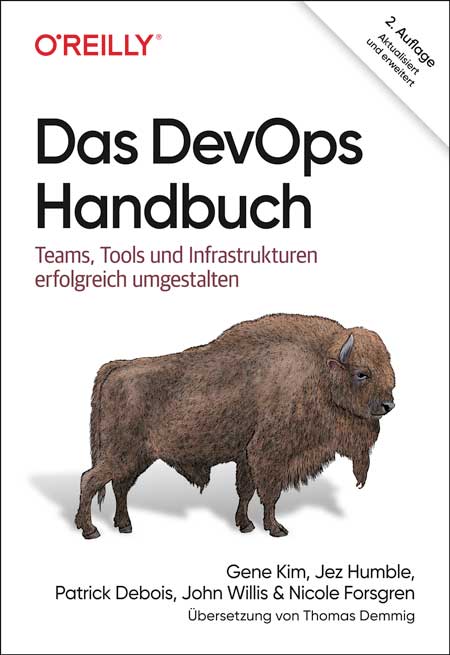
Das DevOps-Handbuch (2. Auflage)
Teams, Tools und Infrastrukturen erfolgreich umgestaltenDie IT ist heute das Herzstück eines jeden Unternehmens, unabhängig vom Geschäftsmodell oder Produkt. DevOps-Praktiken werden daher immer häufiger nicht nur in der IT-Abteilung genutzt, sondern im gesamten Unternehmen eingeführt. Diese Entwicklung veranschaulichen auch die zahlreichen neuen Fallstudien beispielsweise von Adidas oder American Airlines, um die die Neuauflage dieses Standardwerks erweitert wurde.Das DevOps-Handbuch – jetzt aktualisiert und durch neueste Erkenntnisse und Methoden ergänzt – erläutert, wie die DevOps-Philosopie praktisch implementiert wird: Sie lernen konkrete Tools und Techniken kennen, die Ihnen helfen, Software schneller und sicherer zu produzieren. Zudem stellt das Autorenteam Ihnen Maßnahmen vor, die die Zusammenarbeit aller Abteilungen optimieren, die Arbeitskultur verbessern und die Profitabilität Ihres Unternehmens steigern.Die 2. Auflage wurde vollständig aktualisiert und durch die neuesten Forschungsergebnisse und 15 neue Case Studies erweitert.Themen des Buchs sind: Die Drei Wege: Die obersten Prinzipien, von denen alle DevOps-Maßnahmen abgeleitet werdenEinen Ausgangspunkt finden: Eine Strategie für die DevOps-Transformation entwickeln, Wertketten und Veränderungsmuster kennenlernen, Teams schützen und fördernFlow beschleunigen: Den schnellen Fluss der Arbeit von Dev hin zu Ops ermöglichen durch eine optimale Deployment-Pipeline, automatisierte Tests, Continuous Integration und Continuous DeliveryFeedback verstärken: Feedback-Schleifen verkürzen und vertiefen, Telemetriedaten erzeugen und Informationen unternehmensweit sichtbar machenKontinuierliches Lernen ermöglichen: Eine »Just Culture« aufbauen und ausreichend Zeit reservieren, um das firmenweite Lernen zu fördern
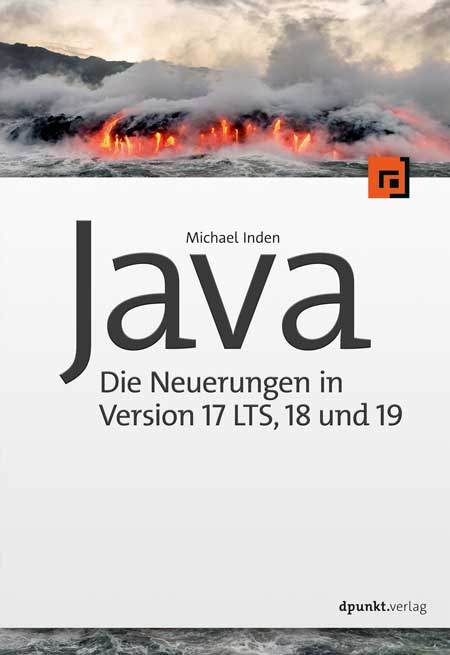
Java - die Neuerungen in Version 17 LTS, 18 und 19
Dieses Buch von Michael Inden eignet sich für alle, die ihr Java-Wissen auf den neuesten Stand bringen und es durch eine Vielzahl an Übungen festigen möchten. Es beschreibt alle wichtigen Neuerungen in Java 17 – der aktuellen LTS-Version – sowie in den brandaktuellen Versionen 18 und 19.»Java – die Neuerungen in Version 17 LTS, 18 und 19« behandelt alle wesentlichen Änderungen der aktuellen Java-Versionen. Einen Schwerpunkt bildet die Beschreibung einer Vielzahl an Syntaxverbesserungen. Beispiele sind die prägnantere Syntax bei switch sowie die mehrzeiligen Strings und records, welche die Definition von Werteklassen erleichtern. Auch das immer populärer werdende Pattern Matching für instanceof und switch wird vorgestellt. Nicht nur in der Syntax, sondern auch in den APIs finden sich einige Neuerungen, etwa der HTTP/2-Support sowie diverse Detailverbesserungen, beispielsweise im Stream-API. Schließlich werden nennenswerte Neuerungen in der JVM beschrieben, unter anderem Direct Compilation, die JShell zum interaktiven Ausprobieren, JMH zum Erstellen von Microbenchmarks sowie jpackage zum Bereitstellen von installierbaren Distributionen.Zielgruppe: Java-Programmierer*innenSoftwareentwickler*innenAutor: Dipl.-Inform. Michael Inden ist Oracle-zertifizierter Java-Entwickler. Nach seinem Studium in Oldenburg hat er bei diversen internationalen Firmen in verschiedenen Rollen etwa als Softwareentwickler, -architekt, Consultant, Teamleiter, CTO sowie Leiter Academy gearbeitet. Nach rund 1,5 Jahren als freiberuflicher Autor und Trainer ist er seit Januar 2022 als Head of Development in Zürich tätig.Michael Inden hat über zwanzig Jahre Berufserfahrung beim Entwurf komplexer Softwaresysteme gesammelt und an diversen Fortbildungen sowie mehreren Java-One-Konferenzen teilgenommen. Sein besonderes Interesse gilt dem Design qualitativ hochwertiger Applikationen sowie dem Coaching. Sein Wissen gibt er gerne als Trainer in internen und externen Schulungen und auf Konferenzen weiter, etwa bei der JAX/W-JAX, JAX London, Oracle Code One, ch.open sowie bei der Java User Group Switzerland.

Lean UX
DAS STANDARDWERK FÜR AGILE UX-TEAMS * Die erfolgreichen Methoden von Lean Startup im UX-Design einsetzen * Von den Lean-UX-Prinzipien bis zur Integration der -Praktiken im Team und Unternehmen * Für UX-Designer*innen, Scrum Master und Manager*innen Lean UX ist ein Synonym für modernes Produktdesign und -entwicklung. Durch die Kombination von menschenzentriertem Design, agilen Arbeitsweisen und einem ausgeprägten Geschäftssinn machen Designer*innen, Produktmanager*innen, Entwickler*innen und Scrum Master auf der ganzen Welt Lean UX heute zum führenden Ansatz für digitale Produktteams. In der dritten Auflage dieses preisgekrönten Buches helfen Ihnen die Autoren Jeff Gothelf und Josh Seiden, sich auf das Produkterlebnis und nicht auf die Ergebnisse zu konzentrieren. Sie lernen Taktiken für die Integration von User Experience Design, Produktentdeckung, agilen Methoden und Produktmanagement kennen. Und Sie erfahren, wie Sie Ihr Design in kurzen, iterativen Zyklen vorantreiben können, um zu ermitteln, was für Unternehmen und Benutzer*innen am besten funktioniert. Lean UX führt Sie durch diesen Wandel – zum Besseren. - Erleichtern Sie Ihrem Team den Lean-UX-Prozess mit dem Lean-UX-Canvas. - Stellen Sie sicher, dass jedes Projekt mit klaren kundenzentrierten Erfolgskriterien beginnt. - Verstehen Sie die Rolle des Designers in einem agilen Team. - Stellen Sie sicher, dass die Designarbeit in jedem Sprint stattfindet. - Bauen Sie Produktentdeckung in die "Geschwindigkeit" Ihres Teams ein.
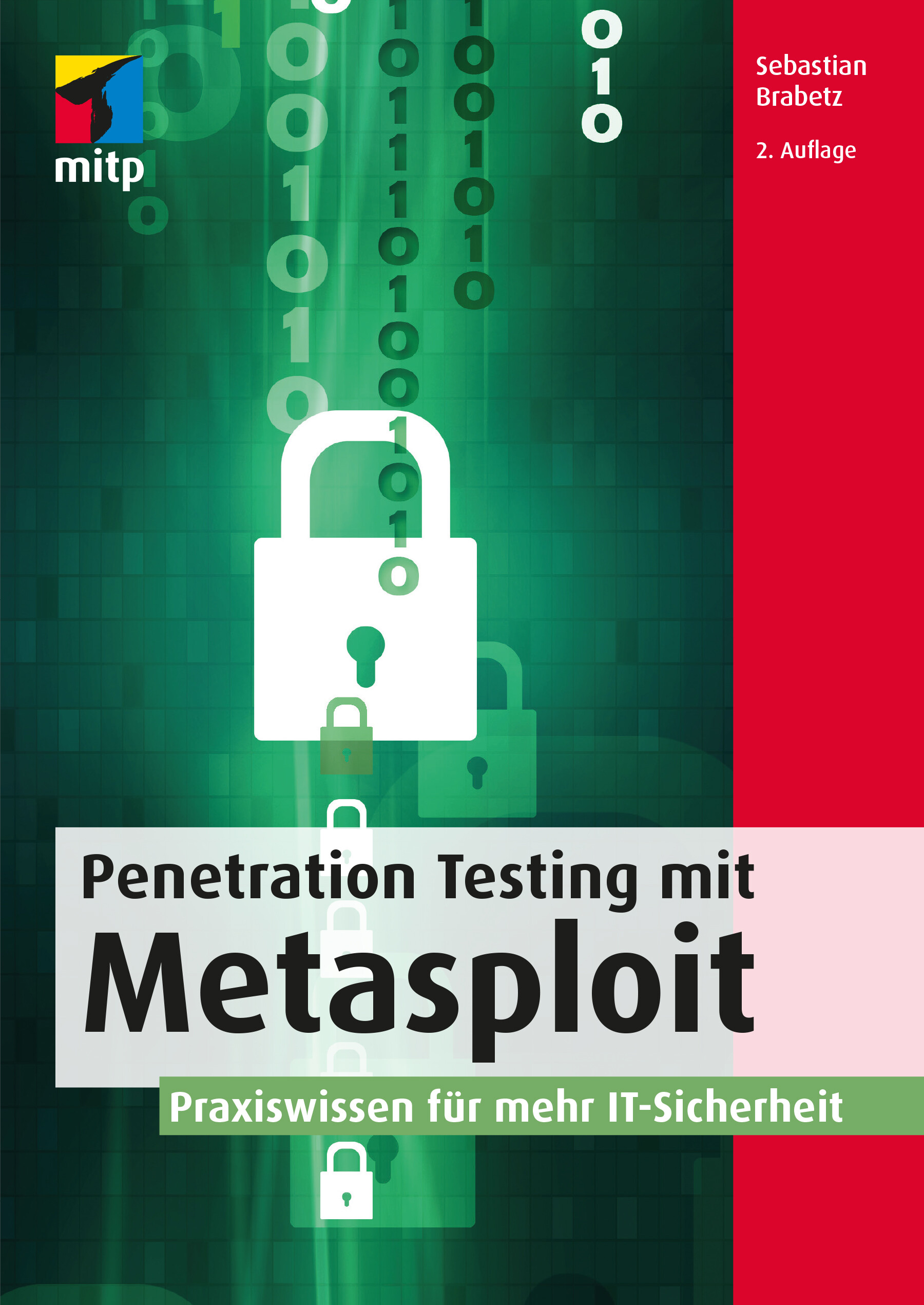
Penetration Testing mit Metasploit (2. Auflg.)
Metasploit ist ein mächtiges Werkzeug, mit dem auch unerfahrene Administratoren gängige Angriffsmethoden verstehen und nachstellen können, um Sicherheitslücken im System aufzuspüren. Der Autor erläutert in diesem Buch gezielt alle Funktionen von Metasploit, die relevant für Verteidiger (sogenannte Blue Teams) sind, und zeigt, wie sie im Alltag der IT-Security wirkungsvoll eingesetzt werden können.Als Grundlage erhalten Sie das Basiswissen zu Exploits und Penetration Testing und setzen eine Kali-Linux-Umgebung auf. Mit dem kostenlos verfügbaren Portscanner Nmap scannen Sie Systeme auf angreifbare Dienste ab. Schritt für Schritt lernen Sie die Durchführung eines typischen Hacks mit Metasploit kennen und erfahren, wie Sie mit einfachen Techniken in kürzester Zeit höchste Berechtigungsstufen in den Zielumgebungen erlangen.Schließlich zeigt der Autor, wie Sie Metasploit von der Meldung einer Sicherheitsbedrohung über das Patchen bis hin zur Validierung in der Verteidigung von IT-Systemen und Netzwerken einsetzen. Dabei gibt er konkrete Tipps zur Erhöhung Ihres IT-Sicherheitslevels. Zusätzlich lernen Sie, Schwachstellen mit dem Schwachstellenscanner Nessus zu finden, auszuwerten und auszugeben.So wird Metasploit ein effizienter Bestandteil Ihrer IT-Sicherheitsstrategie. Sie können Schwachstellen in Ihrem System finden und Angriffstechniken unter sicheren Rahmenbedingungen selbst anwenden sowie fundierte Entscheidungen für Gegenmaßnahmen treffen und prüfen, ob diese erfolgreich sind.Aus dem Inhalt:Metasploit: Hintergrund und HistorieKali-Linux-Umgebung aufsetzenPentesting-GrundlagenSchwachstellen und ExploitsNmap-ExkursMetasploit-BasicsMetasploit in der VerteidigungHacking-PraxisbeispieleAnti-Virus-EvasionNessus-SchwachstellenscannerGlossar Autoreninfo (Stand: Mai 2020):Sebastian Brabetz ist als Geschäftsleiter verantwortlich für die Professional Security Services bei der mod IT GmbH und ist zertifiziert als Offensive Security Certified Professional (OSCP).Er arbeitet im Bereich IT Security in allen Bereichen vom Consulting über defensives Schwachstellen-Management und Incident Response bis hin zu offensiven Penetrationstests. U.a. gibt er Workshops zu den Themen Pentesting und Metasploit.

Blockchain Security from the Bottom Up
THE GOLD STANDARD IN UP-TO-DATE BLOCKCHAIN CYBERSECURITY HANDBOOKSIn Blockchain Security from the Bottom Up: Securing and Preventing Attacks on Cryptocurrencies, Decentralized Applications, NFTs, and Smart Contracts, accomplished blockchain and cybersecurity consultant and educator Howard E. Poston delivers an authoritative exploration of blockchain and crypto cybersecurity. In the book, the author shows you exactly how cybersecurity should be baked into the blockchain at every layer of the technology’s ecosystem. You’ll discover how each layer can be attacked and learn how to prevent and respond to those attacks in an environment of constant technological change and evolution. You’ll also find:* Illuminating case studies of real-world attacks and defenses at various layers in the blockchain ecosystem* Thorough introductions to blockchain technology, including its implementations in areas like crypto, NFTs, and smart contracts* Comprehensive explorations of critical blockchain topics, including protocols, consensus, and proof of workA can’t-miss resource for blockchain and cybersecurity professionals seeking to stay on the cutting-edge of a rapidly evolving area, Blockchain Security from the Bottom Up will also earn a place on the bookshelves of software developers working with cryptocurrencies and other blockchain implementations. HOWARD E. POSTON III is an independent blockchain consultant, educator, and content creator who has developed and taught over a dozen courses covering cybersecurity topics. He holds a master’s degree in Cybersecurity from the Air Force Institute of Technology and is a Certified Ethical Hacker. He has developed and facilitated blockchain security courses for major companies.CHAPTER 1 INTRODUCTION TO BLOCKCHAIN SECURITY 1The Goals of Blockchain Technology 2Anonymity 2Decentralization 2Fault Tolerance 2Immutability 3Transparency 3Trustless 3Structure of the Blockchain 3The Blockchain Network 5The Blockchain Node 5A Blockchain Block 6A Blockchain Transaction 7Inside the Blockchain Ecosystem 8Fundamentals 8Primitives 9Data Structures 9Protocols 9Consensus 9Block Creation 10Infrastructure 10Nodes 10Network 11Advanced 11Smart Contracts 11Extensions 11Threat Modeling for the Blockchain 12Threat Modeling with STRIDE 12Spoofing 12Tampering 12Repudiation 13Information Disclosure 13Denial of Service 13Elevation of Privilege 13Applying STRIDE to Blockchain 14Conclusion 14CHAPTER 2 FUNDAMENTALS 15Cryptographic Primitives 15Public Key Cryptography 16Introducing “Hard” Mathematical Problems 16Building Cryptography with “Hard” Problems 18How the Blockchain Uses Public Key Cryptography 19Security Assumptions of Public Key Cryptography 20Attacking Public Key Cryptography 20Hash Functions 25Security Assumptions of Hash Functions 25Additional Security Requirements 27How the Blockchain Uses Hash Functions 28Attacking Hash Functions 31Threat Modeling for Cryptographic Algorithms 32Data Structures 33Transactions 33What’s In a Transaction? 33Inside the Life Cycle of a Transaction 34Attacking Transactions 34Blocks 37Inside a Block 37Attacking Blockchain Blocks 38Threat Modeling for Data Structures 39Conclusion 39CHAPTER 3 PROTOCOLS 43Consensus 43Key Concepts in Blockchain Consensus 44Byzantine Generals Problem 44Security via Scarcity 45The Longest Chain Rule 46Proof of Work 46Introduction to Proof of Work 47Security of Proof of Work 48Proof of Stake 53Introduction to Proof of Stake 53Variants of Proof of Stake 54Security of Proof of Stake 54Threat Modeling for Consensus 59Block Creation 59Stages of Block Creation 60Transaction Transmission 60Block Creator Selection (Consensus) 60Block Building 61Block Transmission 61Block Validation 61Attacking Block Creation 62Denial of Service 62Frontrunning 63SPV Mining 65Threat Modeling for Block Creation 65Conclusion 65CHAPTER 4 INFRASTRUCTURE 67Nodes 67Inside a Blockchain Node 68Attacking Blockchain Nodes 68Blockchain- Specific Malware 69Denial-of-Service Attacks 70Failure to Update 71Malicious Inputs 72Software Misconfigurations 73Threat Modeling for Blockchain Nodes 74Networks 74Attacking the Blockchain Network 75Denial-of-service Attacks 75Eclipse/Routing Attacks 76Sybil Attacks 78Threat Modeling for Blockchain Networks 80Conclusion 80CHAPTER 5 ADVANCED 83Smart Contracts 83Smart Contract Vulnerabilities 84General Programming Vulnerabilities 85Blockchain- Specific Vulnerabilities 94Platform-Specific Vulnerabilities 103Application- Specific Vulnerabilities 119Threat Modeling for Smart Contracts 128Blockchain Extensions 128State Channels 129State Channel Security Considerations 129Sidechains 130Sidechain Security Considerations 131Threat Modeling for Blockchain Extensions 132Conclusion 133CHAPTER 6 CONSIDERATIONS FOR SECURE BLOCKCHAIN DESIGN 137Blockchain Type 137Public vs. Private 138Benefits of Public vs. Private Blockchains 138Open vs. Permissioned 139Benefits of Open vs. Permissioned Blockchains 139Choosing a Blockchain Architecture 140Privacy and Security Enhancements 140Zero-Knowledge Proofs 140Stealth Addresses 141Ring Signatures 141Legal and Regulatory Compliance 142Designing Secure Blockchains for the Future 143Index 145

Lean UX (3. Auflage)
Mit agilen Teams erfolgreiche Produkte designen Lean UX ist ein Synonym für modernes Produktdesign und -entwicklung. Durch die Kombination von menschenzentriertem Design, agilen Arbeitsweisen und einem ausgeprägten Geschäftssinn machen Designer:innen, Produktmanager:innen, Entwickler:innen und Scrum Master auf der ganzen Welt Lean UX heute zum führenden Ansatz für digitale Produktteams.In der dritten Auflage dieses preisgekrönten Buches helfen Ihnen die Autoren Jeff Gothelf und Josh Seiden, sich auf das Produkterlebnis und nicht auf die Ergebnisse zu konzentrieren. Sie lernen Taktiken für die Integration von User Experience Design, Produktentdeckung, agilen Methoden und Produktmanagement kennen. Und Sie erfahren, wie Sie Ihr Design in kurzen, iterativen Zyklen vorantreiben können, um zu ermitteln, was für Unternehmen und Benutzer:innen am besten funktioniert. Lean UX führt Sie durch diesen Wandel – zum Besseren.Erleichtern Sie Ihrem Team den Lean-UX-Prozess mit dem Lean-UX-Canvas.Stellen Sie sicher, dass jedes Projekt mit klaren kundenzentrierten Erfolgskriterien beginnt.Verstehen Sie die Rolle der Designer:innen in einem agilen Team.Stellen Sie sicher, dass die Designarbeit in jedem Sprint stattfindet.Bauen Sie Produktentdeckung in die »Geschwindigkeit« Ihres Teams ein.Zielgruppe: UX-/Produktdesigner*innenProduktmanager*innenScrum MasterManager*innen von UX-TeamsAutoren: Jeff Gothelf unterstützt Unternehmen bei der Entwicklung besserer Produkte und Führungskräfte bei der Entwicklung einer Kultur, die bessere Produkte hervorbringt. Er begann als Software-Designer und arbeitet heute als Coach, Berater und Keynote-Speaker, der Unternehmen dabei hilft, die Lücken zwischen geschäftlicher Agilität, digitaler Transformation, Produktmanagement und menschenzentriertem Design zu schließen.Josh Seiden ist Designer, Autor und Coach. Er hilft Teams dabei, echte Probleme für Kunden zu lösen und Mehrwert für Unternehmen zu schaffen. Als Coach hilft er Teams, ihre Arbeitsweise zu verbessern, eine effektivere Zusammenarbeit aufzubauen und die Reise der Produktentwicklung zu genießen.

Xiaomi 12 / 12 Pro / 12X
Die verständliche Anleitung für Ihr Smartphone:- Alle Funktionen & Einstellungen auf einen Blick- Schritt für Schritt erklärt – mit praktischen TippsMit diesem smarten Praxisbuch gelingt Ihnen der schnelle und sichere Einstieg in Ihr Smartphone. Lernen Sie das Xiaomi 12 / 12 Pro / 12X von Grund auf kennen und beherrschen! Anschauliche Anleitungen, Beispiele und Bilder zeigen Ihnen gut nachvollziehbar, wie Sie Ihr mobiles Gerät optimal handhaben – von der Ersteinrichtung und Personalisierung über die große Funktionsvielfalt bis zu den wichtigsten Anwendungen. Nutzen Sie darüber hinaus die übersichtlichen Spicker-Darstellungen: Damit können Sie jene Bedienungsschritte, die man am häufigsten braucht, aber immer wieder vergisst, auf einen Blick finden und umsetzen. Freuen Sie sich auf viele hilfreiche Tipps und legen Sie ganz einfach los!Aus dem Inhalt:- Alle Bedienelemente des Xiaomi 12 / 12 Pro / 12X- Ersteinrichtung und Tipps zum Umzug- Google-Konto erstellen und verwalten- Die Benutzeroberfläche Ihres Smartphones personalisieren- Apps aus dem Play Store herunterladen- Kontakte anlegen und im Adressbuch verwalten- Anrufe tätigen und SMS austauschen - Nachrichten über Mail und WhatsApp versenden und empfangen- Uhr, Kalender, Maps und andere praktische Apps nutzen - Fotos sowie Videos aufnehmen, verwalten und teilen- Ins Internet gehen über WLAN und mobile Daten - Updates, Datenschutz und Sicherheit
Teach Yourself VISUALLY Python
A SIMPLE, STRAIGHTFORWARD, AND HANDS-ON ROADMAP TO THE WORLD OF COMPUTER PROGRAMMING WITH PYTHONTeach Yourself VISUALLY: Python is your personal guide to getting you started in programming. As one of the world's most popular—and most accessible—coding languages, Python is your gateway into the wide and wonderful world of computer science. This hands-on guide walks you through Python step by clearly illustrated step, from writing your very first Python code in a terminal window or the VS Code app through to creating your own lists, dictionaries, and custom classes.In the book, you’ll learn to:* Install Python and the tools you need to work with it on Windows, macOS, and Linux* Work with files and folders, manipulate text, and create powerful functions that do exactly what you want* Write clean code that makes decisions effectively, repeats actions as needed, and handles any errors that occurA must-have resource for aspiring programmers starting from the very beginning, Teach Yourself VISUALLY: Python is also an indispensable handbook for programmers making a transition from another language.CHAPTER 1 GETTING READY TO WORK WITH PYTHONUnderstanding What Python Is and Does 4Choose the Right Version of Python 6Install Python on Windows 8Install Python on the Mac 12Install Python on Linux If Necessary 14Learn About Development Tools for Python 16Download and Install Visual Studio Code 20Get Started with Visual Studio Code and Apply a Theme 22Install Visual Studio Code Extensions for Python 24Configure Visual Studio Code for Working with Python 26CHAPTER 2 WRITING AND RUNNING YOUR FIRST PYTHON CODEUnderstanding the main() Function 30Create and Save a New Script in Visual Studio Code 32Write and Run Code in Visual Studio Code 34Execute Python Commands in a Terminal Window 38Run a Python Script in a Terminal Window 39Understanding Comments in Python 40Add Comments to Your Code 42Grasp Importing Modules and Objects 44Import Modules and Use Their Methods 48CHAPTER 3 GETTING STARTED WITH VARIABLESUnderstanding Variables and Their Usage 52Understanding Python’s Data Types 54Work with Integers 58Work with Floating‐Point Values 60Work with Boolean Values 62Work with Tuples 64Work with Sets 66Start Working with Strings 68Start Working with Lists 70Start Working with Dictionaries 72Convert Data from One Type to Another 74CHAPTER 4 WORKING WITH FILES AND DIRECTORIESUnderstanding Working with Files and Directories 78Load the os Module and List Files and Directories 80Navigate Among Directories 82Create and Delete Directories 84Rename, Move, and Copy Files and Directories 88Get Information About the User and System 92Split a File Path into Its Components 94Understanding Python’s open() Function 96Understanding Python’s Ways of Closing Files 97Open a File If It Exists; If Not, Create It 98Check an Open File’s Status and Close It 100Write Data to a File 102Open a File for Both Reading and Writing 104Append Data to a File 106Read a Text File 108CHAPTER 5 WORKING WITH PYTHON’S OPERATORSMeet the Arithmetic Operators 112Work with the Arithmetic Operators 114Meet the Assignment Operators 116Work with the Assignment Operators 117Meet the Comparison Operators 118Work with the Comparison Operators 119Meet the Logical Operators 120Work with the Logical Operators 121Meet the Identity Operators 122Work with the Identity Operators 123Meet the Membership Operators 124Work with the Membership Operators 125Meet the Bitwise Operators 126Work with the Bitwise Operators 127CHAPTER 6 MAKING DECISIONS WITH IF STATEMENTSLearn the Essentials of if Statements 130Understanding the if Statement 132Create an if Statement 133Understanding the if else Statement 134Create an if else Statement 135Understanding the if elif Statement 136Create an if elif Statement 137Understanding the if elif else Statement 138Create an if elif else Statement 139Understanding Nested if Statements 140Create Nested if Statements 141Chapter 7 Repeating Actions with LoopsUnderstanding Python’s Loops 144Understanding How for Loops Work 146Create for Loops 148Understanding How while Loops Work 150Create while Loops 152Understanding break Statements in Loops 154Using a break Statement to Exit a Loop Early 155Understanding continue Statements in Loops 156Using a continue Statement in a Loop 157Understanding else Statements in Loops 158Using an else Statement in a Loop 159Understanding Loop Nesting 160Nest Loops to Create Complex Repetition 161CHAPTER 8 WORKING WITH FUNCTIONSUnderstanding Functions and Their Syntax 164Understanding Function Parameters and Returns 166Using Python’s Built‐In Functions 168Create a Function with Parameters and a Return 172Create a Function with a Parameter But No Return 173Create a Function with No Parameters But a Return 174Create a Function with No Parameters and No Return 176Create a Function That Returns Multiple Values 177Create a Function with Optional Parameters 178CHAPTER 9 WORKING WITH TEXTLearn the Essentials of Strings 182Create Single‐Line Strings 184Create Multiline Strings 186Meet Python’s String Methods 188Return Information About a String 190Transform and Clean Up a String 192Return Part of a String via Slicing 194Concatenate and Repeat Strings 196Search for One String Inside Another String 198Check and Change String Capitalization 200Meet Python’s Tools for Building Strings 204Build Strings with the Interpolation Operator 210Build Strings with the .format Method 212Build Strings with f‐Strings 214Build Strings with Template Strings 216CHAPTER 10 HANDLING ERRORSUnderstanding the Various Types of Errors 220Identify Common Python Errors 222Meet the try except Block 224Cause Errors and Trap Exceptions 226Raise an Exception Manually 228Add an else Block or a finally Block 229Create Nested try except Blocks 230Create Custom Exceptions 232CHAPTER 11 WORKING WITH LISTS AND DICTIONARIESUnderstanding Lists and Their Use 236Create a List 238Meet Python’s List Methods 239Add Items to a List 240Remove Items from a List 242Locate Items and Access Data in a List 244Sort the Items in a List 246Understanding Dictionaries and Their Use 248Create a Dictionary and Return Values 250Meet Python’s Dictionary Methods 251Create a Dictionary from an Existing Iterable 252Add Key/Value Pairs to a Dictionary 254Remove Key/Value Pairs from a Dictionary 256Return Keys and Values from a Dictionary 258CHAPTER 12 WORKING WITH CLASSESUnderstanding Classes and Instances 262Create a Class and Instantiate Instances 264Understanding Class and Instance Attributes 266Set Class and Instance Attributes 268Grasp Class, Instance, and Static Methods 270Create an Instance Method 274Create a Class Method 275Create a Static Method 276Review the Class’s Code 277Index 278

Cloud Attack Vectors
Cyberattacks continue to increase in volume and sophistication, targeting everything owned, managed, and serviced from the cloud. Today, there is widespread consensus—it is not a matter of if, but rather when an organization will be breached. Threat actors typically target the path of least resistance. With the accelerating adoption of cloud technologies and remote work, the path of least resistance is shifting in substantive ways. In recent years, attackers have realigned their efforts, focusing on remaining undetected, monetization after exploitation, and publicly shaming organizations after a breach.New, innovative, and useful products continue to emerge and offer some cloud protection, but they also have distinct limitations. No single, standalone solution or strategy can effectively protect against all cloud attack vectors or identify all malicious activity. The simple fact is that the cloud is based on a company’s assets being offered as services. As a result, the best security any organization can achieve is to establish controls and procedures in conjunction with services that are licensed in the cloud.Cloud Attack Vectors details the risks associated with cloud deployments, the techniques threat actors leverage, the empirically-tested defensive measures organizations should adopt, and shows how to improve detection of malicious activity.WHAT YOU’LL LEARN* Know the key definitions pertaining to cloud technologies, threats, and cybersecurity solutions* Understand how entitlements, permissions, rights, identities, accounts, credentials, and exploits can be leveraged to breach a cloud environment* Implement defensive and monitoring strategies to mitigate cloud threats, including those unique to cloud and hybrid cloud environments* Develop a comprehensive model for documenting risk, compliance, and reporting based on your cloud implementationWHO THIS BOOK IS FORNew security professionals, entry-level cloud security engineers, managers embarking on digital transformation, and auditors looking to understand security and compliance risks associated with the cloud MOREY J. HABER is Chief Technology Officer at BeyondTrust. He has more than 20 years of IT industry experience and is author of the book Privileged Attack Vectors and Asset Attack Vectors. Morey joined BeyondTrust in 2012 as a part of the eEye Digital Security acquisition. He currently oversees BeyondTrust technology for vulnerability, privileged, and remote access management solutions. In 2004, Morey joined eEye as the Director of Security Engineering and was responsible for strategic business discussions and vulnerability management architectures in Fortune 500 clients. Prior to eEye, he was a Development Manager for Computer Associates, Inc. (CA), responsible for new product beta cycles and named customer accounts. Morey began his career as a Reliability and Maintainability Engineer for a government contractor building flight and training simulators. He earned a Bachelors of Science in Electrical Engineering from the State University of New York at Stony Brook.BRIAN CHAPPELL is Chief Security Strategist for Beyond Trust, EMEA & APAC, and is a multi-skilled individual with a passion for delivering best practice solutions that help customers run their businesses more effectively and securely. His specialties include: cybersecurity solutions, IT strategy and implementation, project management, global IT operations management, sales engineering, software development, and enterprise and solutions architecture.CHRISTOPHER HILLS is a Security Strategist focused on Privileged Access Management (PAM) and Identity and Access Management (IAM). He is Security Strategist for BeyondTrust's Privileged Access Management Solutions, enforcing Privileged Password Management and Privileged Session Management, Privileged Endpoint Management, and Secure Remote Access which utilizes a single pane of glass for all management aspects, including Automated Account Discovery, Privileged Management and Elevation, Audit and Compliance, and Behavior & Reporting. His responsibilities include: IAM/PAM focus, strategy, mentoring, leadership, customer and prospect liaison, thought leadership, background reference, business development, customer-facing GRC, and working closely with global sales and marketing organizations to help support GTM efforts while assisting with critical sales opportunities and key marketing events.FORWARDINTRODUCTIONCHAPTER 1. CLOUD COMPUTINGSoftware as a ServicePlatform as a ServiceInfrastructure as a ServiceFunction as a ServiceX as a ServiceDesktop as a ServiceData Center as a ServiceManaged Software as a ServiceBackend as a ServiceCHAPTER 2. CLOUD PROVIDERSAmazon Web ServicesMicrosoft AzureGoogle Cloud PlatformOracle CloudAlibabaOther ServicesCHAPTER 3. CLOUD DEFINITIONSIdentitiesAccountsEntitlementsPrivilegesRightsPermissionsContainersSegmentationMicrosegmentationInstancesChapter 4. Asset ManagementDiscoveryCHAPTER 5. ATTACK VECTORSEntitlementsVulnerabilitiesHardeningConfigurationsCredentialsS3 BucketsIdentitiesEntitlementsAPIAuthenticationCertificatesPhishingRemote AccessSupply Chain – 3rd Party MSP/MSSPChapter 6. MitigationsHardeningPatch ManagementPAMCIEMCIAMCWPPChapter 7. Regulatory ComplianceSecurity QuestionnairesSOCType IType IIType IIICloud Security AllianceCCMCAIQCIS ControlsPCI DSSISONISTFedRampChapter 8. ArchitecturesZero TrustCloud-NativeHybridEphemeral ImplementationsAccountsInstancesPrivilegesCHAPTER 9. Imposter SyndromeCHAPTER 10. RECOMMENDATIONSCHAPTER 11. CONCLUSION

Digitale Notizen mit GoodNotes
Mit GoodNotes erstellst und verwaltest du deine Notizen schnell und einfach auf dem iPad oder dem iPhone. Egal ob in der Schule, im Studium, beruflich oder privat: Die vielfältigen Funktionen der umfangreichen App ermöglichen es dir, verschiedenste Inhalte wie Notizen, Fotos, gescannte Dokumente, PDF-Dateien und Sketchnotes miteinander zu kombinieren und das Potenzial deines digitalen Notizbuchs voll auszuschöpfen.Die Autorin führt dich Schritt für Schritt durch die Menüs und alle wichtigen Funktionen von GoodNotes: vom Erstellen eines Notizbuchs über den Import verschiedener Dateiformate bis hin zur Datensicherung. Du lernst, wie du eigene Vorlagen und Sticker erstellst, Dokumente einscannst, die Handschrifterkennung nutzt und GoodNotes ganz nach deinen Bedürfnissen einrichtest und anpasst.Darüber hinaus gibt dir die Autorin einen praktischen Leitfaden für die klare Strukturierung deiner Notizen an die Hand und zeigt dir, wie du dich mit GoodNotes selbst organisierst und online mit anderen zusammenarbeitest.Ein farbiges Kapitel rund um die kreative Gestaltung deiner Notizen mit Schmuckschrift, Farben, Sketchnotes und mehr sowie eine Vielzahl von Beispielen als Inspiration für den Einsatz von GoodNotes im Alltag runden dieses Praxisbuch ab.Zahlreiche Tipps und Best Practices helfen dir, GoodNotes effektiv zu nutzen und optimal in deine Arbeitsabläufe einzubinden. So bist du bestens darauf vorbereitet, deine Notizen von der »Papierwelt« auf die »digitale Welt« umzustellen.Aus dem Inhalt:Tipps für die passende HardwareNotizbücher anlegen und organisierenStiftwerkzeuge, Auswahlfunktion, Bilder einfügen und mehrEffizient arbeiten mit der Suchfunktion, Gliederungen, Favoriten und VorlagenImportfunktion und Dokumente scannenLernkarten, Präsentationen und Online-ZusammenarbeitKreative Gestaltung mit Farben, Schmuckschriften und StickernInspiration für Mindmaps, Mitschriften, Kalender, Bullet Journals und mehrNotizen exportieren und druckenSchritt für Schritt auf digitale Notizen umsteigen Autorin:Andrea Rawanschad ist Enthusiastin für handschriftliche Notizen mit klarer Struktur und kreativer Gestaltung sowie Expertin für Selbstorganisation. Digital, denn sie ist bekennender GoodNotes-Fan und organisiert ihren gesamten beruflichen und privaten Alltag mit Hilfe der App. Als Inhaberin der LIKE PAPER Andrea Rawanschad GmbH berät und begleitet sie Menschen bei der Umstellung auf digitale Notizen mit GoodNotes.
ERP-Systeme erfolgreich implementieren
Mit Enterprise Resource Planning werden Personal und Ressourcen in einem Unternehmen termingemäß und bedarfsgerecht geplant, gesteuert und verwaltet. Dabei geht es nicht primär um die Entwicklung oder Produktion von Software, sondern um die Installation einer fertigen Software und deren Adaption an eine Organisation. Ein ERP-Projekt beinhaltet daher immer individuelle und bedarfsgerechte Anpassungen – sowohl an der eingesetzten Standard-Software als auch im Unternehmen.Friedhelm Espeter zeigt in diesem Buch, wie Sie bei der Implementierung von ERP-Systemen erfolgreich vorgehen. Dabei erfahren Sie insbesondere, inwiefern agiles Prozessmanagement von Vorteil ist, um nicht nur die Vorgaben zu Zeit, Budget und Qualität zu erfüllen, sondern auch um die richtige Balance zwischen Änderungen an der Software und in den Unternehmensprozessen zu finden.Zudem lernen Sie, wie Sie die Risiken der Zeit- und Kostenüberschreitung durch agile Beweglichkeit und Anpassungsfähigkeit reduzieren, um Business-Software erfolgreich einzuführen. Darüber hinaus wird besonderer Wert auf die praktischen Aspekte des agilen Ansatzes z.B. in Form von Workshops und Best Practices gelegt.Die hier dargestellten methodischen Vorgehensweisen basieren auf den 25-jährigen Erfahrungen des Autors in der Implementierung von ERP-Software. Eingeflossen sind die Methoden Triton Target der ehemaligen Fa. Baan, AIM for Business Flows der Fa. Oracle und das von Barry W. Boehm entwickelte Spiralmodell.Aus dem Inhalt:Implementierungsmethoden verstehen: Geschäftsprozesse, Testworkshops, Test-skripts und -casesPraktisches Vorgehen bei der agilen Einführung von Business-SoftwareKauf, Beratung und Projekt-SetupNotwendige Schritte in der EvaluierungsphaseDie verschiedenen Zyklen der ImplementierungsphaseErforderliche Anpassungen vornehmen, Daten übernehmen und Software testenChange-Management: Veränderungsprozesse aktiv steuernDurchführung von ValidierungsworkshopsAufbau der Projekt-InfrastrukturGelungener Systemübergang und effektives Projektmanagement Autor:Friedhelm Espeter, Projektmanager (PMP/PMI) und Scrum Master (PSM I), arbeitet seit mehr als 30 Jahren als Projektmanager bei der Implementierung von Standard-Software. Er war Manager bei namhaften amerikanischen und europäischen Softwarehäusern und arbeitet heute als Berater zu Projekt-Management-Services speziell im ERP-Umfeld.

Kubernetes Application Developer
Write efficient, smart, and optimized code for containerized applications on public and private clouds at a generic level. This book shows you how to set up microservices that are robust, scalable, and capable of running on GKE (Google Kubernetes Service), AKS (Azure Kubernetes Service), ECS (Elastic Container Service), or even on a vanilla K8S cluster.The book covers the nuts and bolts of container orchestration engines (COEs) and explains how to install and configure them. It also covers creation and deployment of a sample application on COEs. You will learn how to integrate different applications such as OAuth and how to test them and secure them using Istio Citadel. You also will be taught how to create HPA rules for microservices and scale only those microservices that require it, making your stack intelligent. In the concluding chapter, the book explains how to build a SaaS solution from scratch, running on the cloud with automated deployments accessed publicly via a secured ingress K8S controller.By the end of the book, you will have a good understanding of developing microservices and how to design and create a software solution on the cloud.WHAT YOU WILL LEARN* Build software on Kubernetes in the most optimized way* Interact with Kubernetes using client SDKs in Python, Go, nodejs, etc.* Create a testing and deployment CI/CD system for software stacks* Secure your application using Istio, without writing code* Access microservices using ingress controllers and scale them using HPA rulesWHO THIS BOOK IS FORSoftware and system engineers and developersPRATEEK KHUSHALANI is a Cloud Architect at Google and works as a full stack developer in developing cloud based accelerators. Prior to Google, he worked as software developer at IBM and worked as an individual contributor on the development of SDN networking of the IBM public cloud. He has worked across industries such as software, retail, and R&D prototypes, with a focus on cloud computing and machine learning. At Google, he contributes to the development of tools which help accelerate customer's migration journey to Google Cloud Platform. Prateek has strong expertise in developing and designing IaaS, PaaS, and SaaS solutions for both public and private clouds. He holds a bachelor's degree from Birla Institute of Technology, Mesra. He is an open-source contributor and is an active writer on tech blogs.•Chapter 1, Cloud Computing and KubernetesChapter Goal:o What is cloud computingo What is Kuberneteso Different distributions of Kuberneteso Setting up a K8S cluster- for workshop purposeso Common commands of K8So Place of Kubernetes from an architecture point of view.•Chapter 2, Creating Applications on KubernetesChapter Goal:o Create an Apache http servero Create a Java Tomcat war-based servero Create a gRPC API servero Create a Rest API servero Differences when creating applications on Kubernetes.o How will the application be actually called in a production based cluster.•Chapter 3, Testing of Applications on KubernetesChapter Goal:o Creating a CI system for testing.o Using of Pytest, go test, behave and other best testing tools based on programming language.o Adding a simple CD system stage.o Coverage of code and mock of applications to replicate real time scenarios.•Chapter 4, Security of ApplicationsChapter Goal:o Creating a book inventory application composed of UI, API and DBo Using cloud services instead of reinventing the wheelo Using and understand Istio for TLS Encryption and monitoring.o Understanding authentication/authorization and RBAC systems.o Leverage all the services available rather than developing things to secure all microservices.•Chapter 5, Networking of ApplicationsChapter Goal:o Understanding the basics of networking in Kubernetes.o How containers/pod reach each other via overlay networking.o Different ways networking is configured in Kubernetes cluster.o Using name-based DNS routing in applications rather than IP’so Understanding load balancers and the features provided by it.o Using Istio to create a service mesh of microservices and see the flow of traffic between them.o Configuring Kubernetes objects such as Ingress, Service, Endpoints.•Chapter 6, Scaling of Software SolutionChapter Goal:o Identify which microservice of the solution is becoming a bottlenecko Creating HPA rules in Kubernetes to scale specific microservice.o Use case and real-world problems and solutions to them via scaling.•Chapter 7, Building a SaaS SolutionChapter Goal:o Start with nothing but a simple k8s cluster.o Create microservice with your own hands one by one.o Identify what all services are required for building a sample SaaS e commerce solution.o Creating/Configuring a UI, API, DB, business logic, monitoring software stack.o Architecting the entire solution.o Bring the stack up and testing it against load and autoscaling the solution to support any number of requests.