

Programmierung

Programmieren auf der SAP BTP
Entdecken Sie die modernen Entwicklungsmethoden auf der SAP BTP! Dieses Buch führt Sie systematisch in die cloud-native Softwareentwicklung mit CAP, ABAP Cloud und SAP Build ein. Anhand praktischer Beispiele lernen Sie, wie Sie Datenmodelle erstellen, Services implementieren und intuitive Benutzeroberflächen gestalten. Aus dem Inhalt: Event- und API-gesteuerte KommunikationCloud Application Programming ModelCore Data ServicesABAP CloudABAP RESTful Application Programming ModelDatenmodellierungLow-Code-Entwicklung mit SAP BuildAnbindung von KI-ServicesDevOps und Sicherheit Vorwort ... 13 Einleitung ... 15 1. SAP Business Technology Platform: strategische Grundlagen und Architektur ... 21 1.1 ... Clean Core ... 22 1.2 ... Entwicklungsmöglichkeiten ... 34 1.3 ... Fünf Säulen der SAP BTP ... 37 1.4 ... Event- und API-gesteuerte Kommunikation ... 55 1.5 ... Zusammenfassung ... 56 2. SAP Cloud Application Programming Model ... 59 2.1 ... Grundlagen vom SAP Cloud Application Programming Model ... 60 2.2 ... Entwicklung mit dem SAP Cloud Application Programming Model ... 75 2.3 ... Deployment-Strategien ... 150 2.4 ... Entwicklungstools und -umgebungen für CAP-Projekte ... 158 2.5 ... Zusammenfassung ... 162 3. ABAP in der Cloud und ABAP RESTful Application Programming Model ... 165 3.1 ... Cloud-basierte ABAP-Entwicklung ... 166 3.2 ... Core Data Services im ABAP RESTful Application Programming Model ... 175 3.3 ... Anwendungen entwickeln ... 217 3.4 ... Anwendungen deployen ... 235 3.5 ... Entwicklungstools und -umgebungen ... 235 3.6 ... Zusammenfassung ... 238 4. SAP Build ... 239 4.1 ... No-, Low- und Pro-Code im Vergleich ... 240 4.2 ... SAP-Build-Produktportfolio ... 242 4.3 ... SAP Build Apps ... 247 4.4 ... SAP Build Process Automation ... 280 4.5 ... SAP Build Work Zone ... 318 4.6 ... SAP Build Code ... 341 4.7 ... Application Lifecycle Management ... 350 4.8 ... Zusammenfassung ... 351 5. Events und APIs ... 353 5.1 ... Was versteht man unter Events? ... 354 5.2 ... SAP Event Mesh auf der SAP BTP ... 355 5.3 ... Systeme an SAP Event Mesh anbinden ... 360 5.4 ... API Management und Integration ... 389 5.5 ... Zusammenfassung ... 394 6. Künstliche Intelligenz auf der SAP BTP ... 395 6.1 ... KI-Services und -Werkzeuge auf der SAP BTP ... 398 6.2 ... Anbindung von SAP AI Core und SAP AI Launchpad ... 415 6.3 ... Integration von KI in der Entwicklung ... 431 6.4 ... SAP HANA Cloud und KI ... 469 6.5 ... Zusammenfassung ... 484 7. DevOps und Sicherheit ... 487 7.1 ... DevOps-Prinzipien in der SAP-Entwicklung ... 488 7.2 ... Versionsverwaltung mit Git ... 490 7.3 ... Transportmanagement mit CI/CD ... 497 7.4 ... Fehlerbehandlung ... 516 7.5 ... Zusammenfassung ... 525 Autorenteam ... 527 Index ... 529

JavaScript (4. Auflage)
Meistern Sie JavaScript – von den Grundlagen bis zum professionellen Einsatz! Dieses umfassende Handbuch verbindet einen verständlichen Einstieg mit zahlreichen Praxisbeispielen und erprobten Techniken für die tägliche Entwicklungsarbeit. Philip Ackermann vermittelt Ihnen JavaScript von Grund auf und bietet fortgeschrittenen Nutzern zugleich ein zuverlässiges Nachschlagewerk. Die praxisnahen Beispielanwendungen können Sie direkt übernehmen und für eigene Projekte einsetzen. Steigen Sie ein in das JavaScript-Ökosystem und erstellen Sie leistungsstarke Backend-Anwendungen mit Node.js oder native mobile Apps. Außerdem lernen Sie, die Leistungsfähigkeit von KI in JavaScript zu nutzen – vom lokalen Chatbot bis zur Bilderkennung direkt im Browser. Aus dem Inhalt: JavaScript von Grund auf lernenInteraktive Webseiten entwickelnDaten dynamisch nachladenModerne Browser-APIs nutzenProfessionelle ProgrammierparadigmenAsynchrone Programmierung verstehenServerseitige Anwendungen mit Node.jsNative Mobile-Apps entwickelnDesktop-Anwendungen mit ElectronIntelligente KI-Anwendungen programmierenProfessioneller WorkflowUmfassendes Nachschlagewerk

Diskrete Mathematik für Algorithmen
Das Lehrbuch bietet eine umfassende Einführung in wesentliche Themen der diskreten Mathematik und der Anwendung in Algorithmen und Datenstrukturen. Es wird auf das Wesentliche fokussiert, die Ideen der Konzepte erklärt und abstraktes Denken geschult. Durch die Programmierung in Python werden die Konzepte praktisch umgesetzt. Neben zahlreichen kleineren Anwendungen behandelt das Buch vertieft die Themen Kryptographie, Kanalcodierung, Hashing, Schaltungen, Zahlensysteme, Machine Learning, Matrizenmultiplikation und Pagerank-Algorithmen. Detaillierte Lösungen zu den theoretischen und Pythonaufgaben ermöglichen ein Selbststudium. Das Buch eignet sich für Studierende der Informatik und Wirtschaftsinformatik an Fachhochschulen und Universitäten und in Teilen für Leistungskurse an Gymnasien.

Python Automation For Dummies
Boost your productivity with Python® automations Interested in streamlining your workflow, increasing your productivity, and saving time? In this book, veteran tech educator and author Alan Simpson walks you through the steps to use Python to wrangle your data, manage your files, create shortcuts, locate and organize information, and interact with artificial intelligence. This easy-to-follow guide will expand your productivity toolkit, demonstrating how to use accessible Python code to make your life and job easier. Inside … Review Python basicsManage your filesOrganize your dataSpeed up researchAutomate your scheduleOptimize your workAvoid routine workFocus on important tasks Streamline Your Workflow and Boost Productivity with Python Automation In today's workplaces, there's a high demand for know-how on the Python programming language, especially for writing time-saving scripts that can simplify routine work tasks. Python Automation For Dummies delivers, with simple explanations of how you can use Python to automatically wrangle data files, manage media files, create shortcuts, find and organize web data, and even analyze social media for trends. With this easy-to-follow Dummies guide, you can upskill, expand your productivity, and speed up the process of generating data-driven insights. You'll even learn to enhance your Python automations with AI, for workflows that are faster and smarter. Review the basics of Python coding and follow steps for automating all sorts of tasksManage large file sets, organize and analyze data, and speed up research processesAutomate scheduling and other time-consuming tasks—and optimize work with AIFree up time and resources by automating routine work, so you can foucs on more important issues This is a great Dummies resource for Python developers interested in applying the popular coding language to make workflows more efficient. Alan Simpson is a veteran technology writer and educator with extensive experience covering topics from programming languages to the Windows operating system. He’s the author of Windows 11 For Dummies, 2nd Edition, and a co-author of Python All-in-One For Dummies.

Django REST APIs Demystified
This book is designed to help you master API development using the Django REST Framework (DRF). Written for seasoned developers, this book offers practical, hands-on guidance to becoming an expert in using DRF, providing in-depth coverage of the framework's features and best practices and their application in API development. The book will introduce you to and enable you to grasp advanced DRF topics such as authentication, permissions, throttling, caching, API versioning, and schema generation. Each chapter of the book focuses on a specific topic and introduces a standalone Django application that will ensure a structured and isolated learning experience for you. Real-world examples and step-by-step instructions provide a practical approach to building DRF APIs. The book also aids you in exploring customizing DRF for complex use cases, integrating third-party tools, and writing unit tests for secure, robust APIs. Special attention is given to working with multi-application Django projects, offering conventions to avoid conflicts and ensure clear API documentation. By the end of this book, you will have the skills to build secure, scalable, and maintainable APIs using DRF. Whether you're working on a startup, enterprise project, or personal venture, this book equips you with the knowledge and tools to create efficient, future-proof APIs. What You Will Learn How to manage and structure complex multi-application projects without conflicts, leveraging best practicesOptimizing API Performance and Implementing advanced techniques like throttling, caching, and efficient query handling to enhance API performance.Use versioning, customization, and extensible patterns to create APIs that adapt to evolving business requirements Who Is This Book For: Web developers, front-end engineers, full stack engineers, API documentation specialists, technical leads Chapter 1 - REST API Concepts.- Chapter 2 - Project Setup and Configuration.- Chapter 3 - Getting Started with Django REST Framework.- Chapter 4 - Postman.- Chapter 5 - Serializers and Views.- Chapter 6 - ViewsSets and Routers.

Mastering Algorithms with Python
Gain a solid understanding of algorithms and improve your problem-solving abilities using Python code. With practical examples and clear explanations, this book bridges the gap between dense academic texts and overly simple industry guides. Focusing on the logic behind essential algorithms such as Breadth First Search (BFS), Depth First Search (DFS), Divide-and-Conquer, Greedy Methods, and Dynamic Programming, the book provides ample examples, from easy to more advanced. By connecting these concepts to real-world examples, such as chess strategies and the Seam Carving, the book helps readers better grasp and apply algorithms. Each chapter also includes fully implemented Python code, making it a practical reference. Mastering Algorithms with Python is ideal for IT professionals looking to enhance their skills and approach algorithms with clarity and confidence. What You Will Learn · Understand foundational algorithms such as BFS, DFS, Divide-and-Conquer, Greedy Methods, Dynamic Programming through practical examples · Implement algorithms in Python with step-by-step guidance and fully functional code for future reference · Build a solid foundation in advanced concepts such as Minimum Spanning Trees, Fast Fourier Transform, and Monte Carlo Tree Search · Quickly review Python essentials, including data types, flow control, generators, decorators, and classes to enhance your algorithmic understanding Who This Book Is For Software developers, data scientists, machine learning professionals and any curious learners about computer algorithms. Chapter 1: Recursion.- Chapter 2: Divide and Conquer.- Chapter 3: Greedy Algorithm.- Chapter 4: Dynamic Programming.- Chapter 5: RSA Cryptosystem.- Chapter 6: Monte Carlo.- Chapter 7: A Tale of Ten Cities.- Chapter 8: Chess.- Appendix: A Quick Review of Python.- Appendix B: Environment Setup and Package Installation.- Appendix C: References.

Fit fürs Studium - Elektrotechnik
Das Studium der Elektrotechnik hält so manche Herausforderung bereit, und zwar von Beginn an. Bereiten Sie sich gezielt vor: Mit diesem Buch spüren Sie Wissenslücken aus dem »Schulstoff« auf und schließen sie auch gleich. Uwe Post klärt wichtige Grundkonzepte anschaulich und verständlich. Nutzen Sie Simulationssoftware, um Schaltungen ohne spezielle Hardware direkt am Computer zu testen. Mit Übungen und Lösungen, ideal zum Selbststudium. So gehen Sie gut vorbereitet an den Start!Aus dem Inhalt:Mathematische GrundlagenSpannung, Strom und WiderstandMagnetfelder und InduktionGleich- und WechselrichterWie Motoren und Generatoren funktionierenDigitale Schaltkreise und LogikbausteinePraktische Projekte mit MikrocontrollernKomplettes InhaltsverzeichnisLeseprobe (pdf-link)Über den Autor:Uwe Post, Jahrgang 1968, ist Diplom-Physiker, IT-Profi, Fachbuch- und Science-Fiction-Autor. Außerdem unterrichtet er privat – und dabei geht es meist um den Übergang von der Schule zum Studium.

Java - Der Grundkurs (5. Auflg.)
Java-Grundlagen im Taschenbuchformat. Aktuell zu Java LTS 25.Java ist das Fundament der modernen Softwareentwicklung und Grundlage unzähliger IT-Projekte. Michael Kofler führt Sie mit diesem Grundkurs in die Programmiersprache ein und vermittelt Ihnen alle Konzepte, die Sie für den Einstieg brauchen. Von einfachen Beispielen bis zum objektorientierten Programm finden Sie in diesem Buch alles übersichtlich und auf den Punkt präsentiert. Aktuell zu Java LTS 25.Die kompakte Einführung: Das Fundament Lernen Sie Datentypen, Klassen und andere Grundbegriffe der Reihe nach kennen. Alle Beispiele sind im Unterricht erprobt und führen von kompakten Konsolenprogrammen zu einfachen grafischen Oberflächen. Auffrischen und Nachschlagen Objektorientierung, Schnittstellen, Vererbung, Fehlerbehandlung: Dieser Grundkurs zeigt Ihnen, wie Sie gut mit Java arbeiten. Falls Sie Ihre Kenntnisse auffrischen oder etwas nachschlagen möchten, können Sie jedes Thema schnell finden und die Kapitel auch separat lesen. Aufgaben und Lösungen Zu allen Kapiteln finden Sie Aufgaben und Lösungen, mit denen Sie Ihren Lernfortschritt im Blick behalten. Sie bekommen Hilfe bei der Installation von Java und IntelliJ und dem Einsatz von KI-Tools, können das Buch aber auch mit einer anderen Entwicklungsumgebung verwenden. Aus dem Inhalt: Sprachgrundlagen Pair Programming mit KI: Java mit Ki-Tools lernen Installation von Java und IntelliJ IDEA Schleifen, Verzweigungen und Methoden Objektorientierung, Vererbungen und Schnittstellen Vererbung und Interfaces Exceptions (Fehlerbehandlung) Umgang mit Datum und Uhrzeit Listen, Sets und Maps Lambda-Ausdrücke Generische Klassen und Methoden Einführung in GUIs mit JavaFX

Mathematik nach Feierabend
Mathematische Prinzipien unterhaltsam erklärt. Mit vielen Knobeleien, Geschichten und Rätseln.Mathematik muss nicht schwierig sein! In diesem Buch finden Sie kleine Geschichten und Rätseleien, die Ihnen grundlegende mathematische Prinzipien näherbringen. Dazu brauchen Sie lediglich Ihre Vorkenntnisse aus der Mittelstufe, ein bisschen Zeit und eine gute Portion Neugier. Der erfahrene Didaktiker Benno Grabinger sorgt mit intuitiven Beispielen aus dem Alltag und kleinen Mitmach-Projekten mit Tabellenkalkulationen für Unterhaltung und viele Aha-Momente. Lernen Sie Mathematik von einer neuen Seite kennen!Mathematik neu entdeckt Mathematik für Mathe-Muffel Um die mathematischen Zusammenhänge in diesem Buch zu verstehen, brauchen Sie nur Ihre Vorkenntnisse aus der Mittelstufe. Der Autor erklärt prägnant und intuitiv die grundlegenden Begriffe und Sachverhalte aus der Welt der Mathematik. Praxisbeispiele zum Mitmachen Mit Excel, Calc oder Numbers können Sie selber aktiv werden: Kleine Projekte zum Ausprobieren zeigen Ihnen, mit welchen Handgriffen und Befehlen Sie eine Tabellenkalkulation verwenden können. Unterhaltsame Rätseleien aus Kunst und Kultur Wie lange dauern eigentlich Glückssträhnen? Wie verläuft die Naht um einen Tennisball? Was bewirkt der Goldene Schnitt? Was ist das Hexen-Einmaleins? Verblüffende Antworten auf all diese Fragen und mehr finden Sie in diesem Buch. Aus dem Inhalt: Roulette und das Gesetz der großen Zahlen Chevalier de Méré und die Kombinatorik Dreieckszahlen und der goldene Schnitt Palindromzahlen Die Mathematik der Tennisbälle Magische Quadrate Lotto und Gewinnwahrscheinlichkeiten Figurierte Zahlen Wurstpellen und die Ellipsengleichung Das Reuleaux-Dreieck Leseprobe (PDF-Link)Hier können Sie das Material zum Buch herunterladen: Die Übungsdateien in Excel und Numbers sowie kurze Tutorial-Filme zu den Übungen.

Mastering LangChain
This book provides a comprehensive exploration of LangChain, empowering you to effectively harness large language models (LLMs) for Gen AI applications. It focuses on practical implementation and techniques, making it a valuable resource for learning LangChain. The book starts with foundational topics such as environment setup and building basic chains, then delves into key components such as prompt templates, tool integration, and memory management. You will also explore practical topics such as output parsing, embedding models, and developing chatbots and retrieval-augmented generation (RAG) systems. Additional chapters focus on integrating LangChain with other AI tools and deploying applications while emphasizing best practices for AI ethics and performance. By the time you finish this book, you’ll have the know-how to confidently build Generative AI solutions using LangChain. Whether you're exploring practical applications or curious about the latest trends, this guide gives you the tools and insights to solve real-world AI problems. You’ll be ready to design smart, data-driven applications—and rethink how you approach Generative AI. What You Will Learn Understand the core ideas, architecture, and essential features of the LangChain framework Create advanced LLM-driven workflows and applications that address real-world challenges Develop robust Retrieval-Augmented Generation (RAG) systems using LangChain, vector databases, and proven best practices for retrieving and generating high-quality responses Who This Book Is For Data scientists and AI enthusiasts with basic Python skills who want to use LangChain for advanced development, and Python developers interested in building data-responsive applications with large language models (LLMs) Chapter 1: Introduction to LangChain.- Chapter 2: Core Components of LangChain.- Chapter 3: Advanced Components and Integrations.- Chapter 4: Building Chatbots.- Chapter 5: Building Retrieval-Augmented Generation (RAG) Systems.- Chapter 6: LangServe, LangSmith, and LangGraph: Deploying, Optimizing, and Designing Language Model Workflows.- Chapter 7: LangChain and NLP.- Chapter 8: Building AI Agents with LangGraph.- Chapter 9: LangChain Framework Integration.- Chapter 10: Deploying LangChain Applications.- Chapter 11: Best Practices and Practical Aspects.

KI-Projekte programmieren mit Python
KI-Programmierung leicht gemacht - praktische Projekte ohne überflüssige Mathematik Einsatz mächtiger Bibliotheken wie TensorFlow, SpaCy und music21 - auch ohne Vorkenntnisse in PythonMit Programmieraufgaben, Bildern zur Veranschaulichung, Übungsfragen und vielen Anregungen zum Ausprobieren.Starte direkt mit echten KI-ProjektenMit diesem Buch startest du direkt durch: Du lernst künstliche Intelligenz, indem du selbst programmierst - praxisnah, kreativ und verständlich. Schritt für Schritt entwickelst du spannende KI-Anwendungen mit wenigen Codezeilen: vom Chatbot über Bilderkennung bis hin zur Musik- und Bildgenerierung. Du experimentierst mit maschinellem Lernen und verstehst, wie lernende Systeme wirklich funktionieren. Alles, was du brauchst, sind grundlegende Programmierkenntnisse.Alles dabei - von den Python-Grundlagen bis zu modernen KI-BibliothekenDank klarer Erklärungen und anschaulicher Beispiele findest du dich auch als Einsteiger schnell zurecht. Du lernst alle wichtigen Techniken kennen und setzt sie direkt um - von einfachen Klassifikationsmodellen bis hin zu generativer KI mit GANs, RNNs und Diffusionsmodellen. Dabei nutzt du professionelle Bibliotheken wie NumPy, TensorFlow, Matplotlib, SpaCy und music21.Programmieren, verstehen, experimentierenJedes Kapitel lädt zum Mitmachen ein - mit abwechslungsreichen Aufgaben, anschaulichen Abbildungen und vielen Ideen zum Ausprobieren. Du lernst, wie du KIs mit eigenen Daten trainierst oder Daten aus dem Internet nutzt, um spannende Anwendungen zu entwickeln. Die Programme kannst du entweder lokal auf deinem Rechner umsetzen oder du arbeitest im Browser mit Google Colab.Aus dem Inhalt: Grundlagen der künstlichen Intelligenz Generative und diskriminierende KI KI programmieren mit Python-Bibliotheken: NumPy Matplotlib TensorFlow SpaCy music21 Sprachmodelle und Natural Language ProcessingÜberwachtes, unüberwachtes und Verstärkungslernen Künstliche neuronale Netze Bildgenerierung mit GAN und CNN Text erzeugen mit RNN und LSTM Musik komponieren mit music21 Zahlreiche Aufgaben mit LösungenLeseprobe & Inhalt (PDF-Link)Programmbeispiele (zip-Link)Über den Autor:Michael Weigend war viele Jahre als Lehrer tätig und hält an der Universität Münster Vorlesungen zur Python-Programmierung. In seinen Büchern legt er besonderen Wert auf leicht verständliche Erklärungen und visuelle Lehrmethoden.
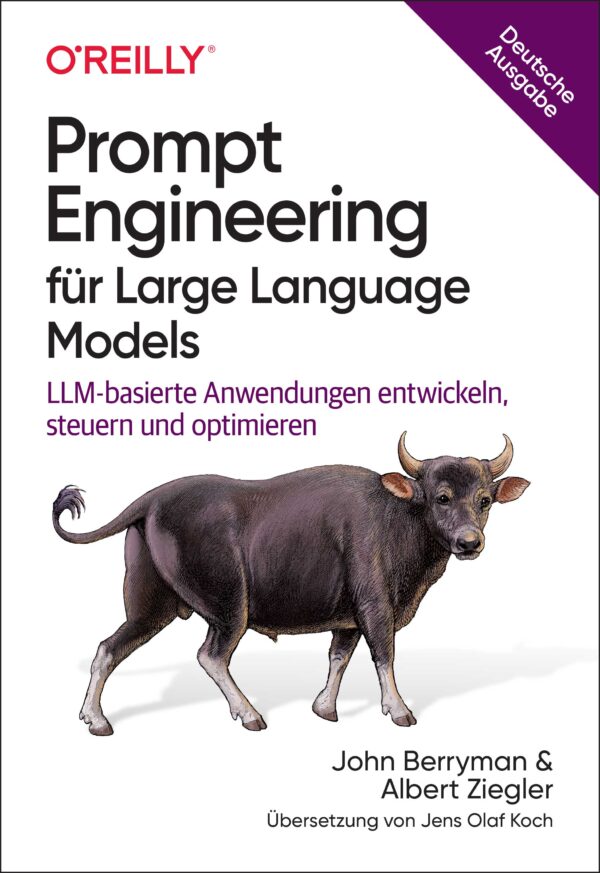
Prompt Engineering für Large Language Models
LLM-Anwendungen effektiv steuern: von der Prompt-Optimierung bis zur Workflow-IntegrationLLMs als leistungsstarke Bausteine für Anwendungen nutzenDen richtigen Prompt und Kontext für nützliche Ergebnisse gestaltenVon der Erfahrung der GitHub-Copilot-Entwickler profitierenFortgeschrittene Konzepte wie Conversational Agency und Workflow-Steuerung meisternLarge Language Models (LLMs) revolutionieren die Welt. Sie bieten die Möglichkeit, Aufgaben zu automatisieren und komplexe Probleme zu lösen. Eine neue Generation von Softwareanwendungen nutzt diese Modelle als zentrale Bausteine und erschließt in praktisch allen Bereichen völlig neues Potenzial. Um zuverlässig auf diese Funktionen zugreifen zu können, sind jedoch neue Fähigkeiten erforderlich.Mit diesem Buch eignen Sie sich die Kunst und die Techniken des Prompt Engineering an und schöpfen die Möglichkeiten von LLMs voll aus.Die Branchenexperten John Berryman und Albert Ziegler erklären, wie man effektiv mit KI kommuniziert und Ideen in ein sprachmodellfreundliches Format umwandelt. Durch das Erlernen der konzeptionellen Grundlagen und der praktischen Techniken erwerben Sie das Wissen und die nötige Sicherheit, um die nächste Generation von LLM-basierten Anwendungen zu entwickeln.Aus dem Inhalt:Verstehen Sie die LLM-Architektur und erfahren Sie, wie Sie am besten mit ihr interagieren können.Entwerfen Sie eine umfassende Strategie zur Erstellung von Prompts für eine Anwendung.Sammeln, sortieren und präsentieren Sie Kontextelemente, um eine effiziente Eingabeaufforderung zu erstellen.Erlernen Sie spezifische Techniken, um Prompts zu erstellen, wie Few-Shot-Prompting, Chain-of-Thought-Prompting und RAG.Leseprobe (PDF-Link)Über die Autoren: John Berryman ist Gründer von Arcturus Labs, einem Unternehmen, das sich auf die Entwicklung von LLM-basierten Anwendungen spezialisiert hat. Er war einer der ersten Entwickler bei GitHub Copilot und arbeitete dort an Chat- und Code-Vervollständigungsfunktionen. John ist außerdem Suchmaschinenexperte und Autor des Fachbuchs „Relevant Search“ (Manning).Albert Ziegler ist Head of AI beim KI-Cybersicherheitsunternehmen XBOW. Als einer der Gründungsentwickler von GitHub Copilot, dem ersten erfolgreichen LLM-Produkt im industriellen Maßstab, entwarf er dessen Systeme für die Modellinteraktion und das Prompt Engineering.
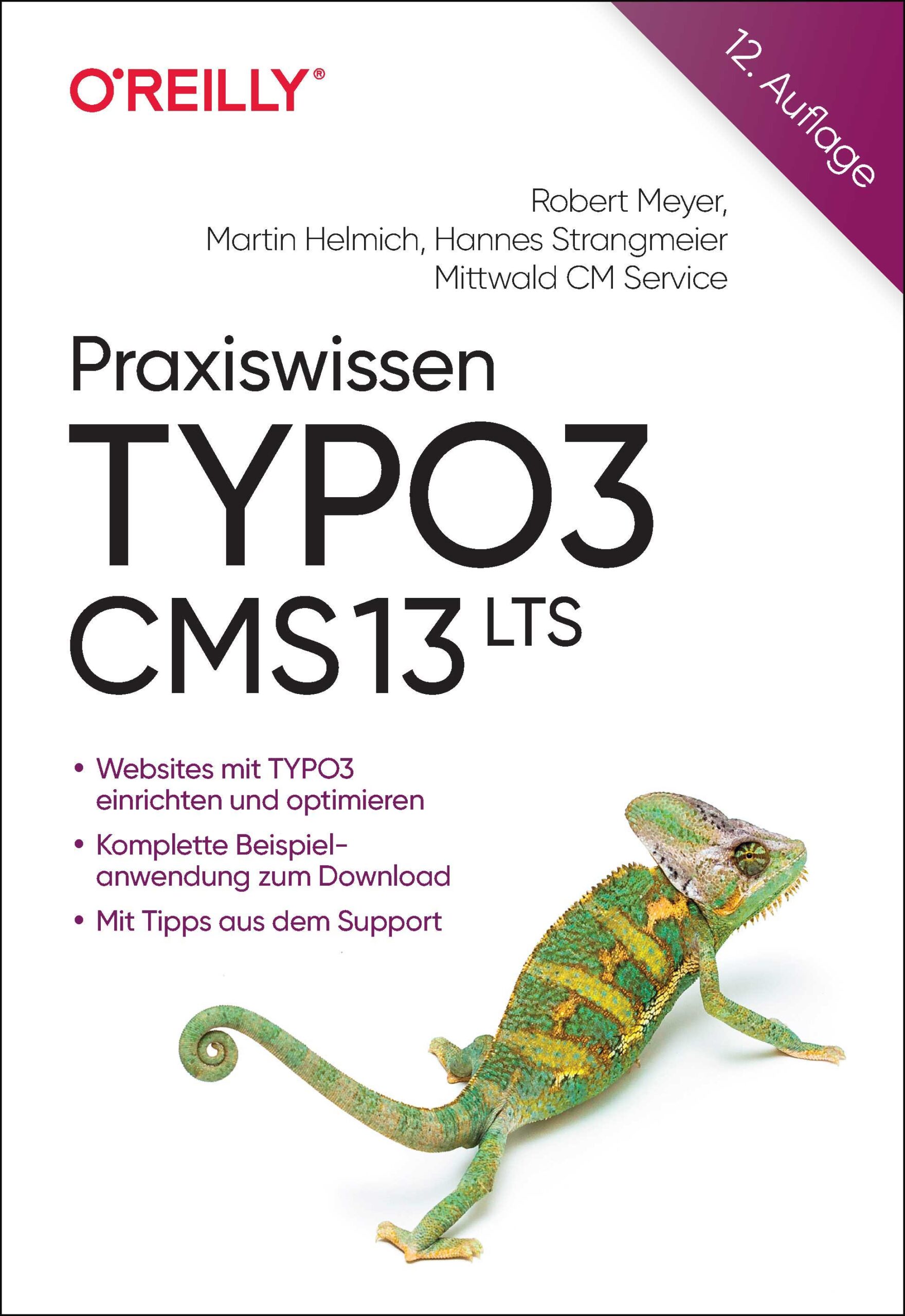
Praxiswissen TYPO3 CMS 13 LTS (12., aktualisierte Auflage) dpunkt
Mit der richtigen Anleitung gelingt der Einsatz von TYPO3 ohne Probleme. Das beweist dieses Buch, das sich seit Jahren als Standardwerk für den TYPO3-Einstieg bewährt hat. Praxiswissen TYPO3 CMS 13 LTS ist eine verständliche Einführung in das beliebte Content-Management-System, die sich auch an TYPO3-Einsteiger ohne ausgeprägte Programmierkenntnisse richtet.Robert Meyer, Martin Helmich und Hannes Strangmeier erklären Zusammenhänge detailliert, gut nachvollziehbar und immer praxisbezogen. Sie vermitteln das nötige Handwerkszeug, um responsive Websites mit TYPO3 erfolgreich einzurichten und zu optimieren. Für die 12. Auflage wurde das Buch komplett überarbeitet und aktualisiert, es deckt jetzt TYPO3 in der LTS-Version 13.4 ab.TYPO3 installieren und kennenlernenInstallieren Sie TYPO3 auf allen Betriebssystemen mit der Entwicklungsumgebung DDEV – oder nutzen Sie für Linux den PHP-Paketmanager Composer – und machen Sie sich mit den Funktionen des Backends vertraut.TypoScript und Templates verstehenLernen Sie die objektorientierte Struktur, die Sprachsyntax und die wichtigsten Objekte der Konfigurationssprache TypoScript kennen und setzen Sie HTML/CSS-basierte Fluid-Templates ein.Inhalte auf der Website darstellenFormatieren Sie redaktionelle Inhalte, integrieren Sie Suchfunktionen, realisieren Sie Mehrsprachigkeit, eine Druckoption für Artikel sowie zugriffsgeschützte Bereiche.Responsive Webdesign umsetzenLegen Sie das Layout Ihrer Website von Anfang an responsive an, sodass sie auf verschiedenen Ausgabegeräten optimal nutzbar ist.Erweiterungen integrierenErfahren Sie anhand des News-Plug-ins, wie und wo TYPO3-Erweiterungen im System verankert werden und wie Sie diese Erweiterungen an Ihre eigenen Bedürfnisse anpassen.Das Backend anpassenLernen Sie, wie Sie die Benutzerrechte für Redakteurinnen und Redakteure optimal einstellen und das TYPO3-Backend an ihre Bedürfnisse anpassen. Erfahren Sie zudem, wie Sie eine Trennung von Entwurfsarbeits- und Live-Umgebung erreichen.Leseprobe (PDF-Link)

Language Models kompakt
Sie möchten in die Welt der Large Language Models eintauchen? Dieses handliche Buch hilft Ihnen, das nötige Grundlagenwissen aufzubauen, um das Innenleben von LLMs zu verstehen und erste praktische Erfahrungen zu sammeln. Es führt Schritt für Schritt in die Sprachmodellierung ein, beginnend mit Machine Learning und neuronalen Netzen über RNNs und Transformern bis zu aktuellen LLM-Architekturen. Das Buch unterstützt Sie dabei:die mathematischen Grundlagen des Machine Learnings und der neuronalen Netze zu verstehen und zu beherrschendrei Architekturen von Language Models in Python zu erstellen und zu trainierenein Transformer-Sprachmodell von Grund auf in PyTorch zu programmierenmit LLMs zu arbeiten und effektive Prompt-Engineering- und Feinetuning-Techniken kennenzulernenHalluzinationen zu vermeiden und Modelle zu bewertenÜber den Autor:Andriy Burkov hat einen Doktortitel in Künstlicher Intelligenz und ist ein anerkannter Experte für Machine Learning und Natural Language Processing. Bei Fujitsu und Gartner hat er zahlreiche produktionsreife KI-Projekte in verschiedenen Geschäftsbereichen erfolgreich geleitet. Seine Bücher wurden in zwölf Sprachen übersetzt und werden als Lehrbücher an vielen Universitäten weltweit verwendet. Seine Arbeit hat Millionen von Praktikern und Forschern im Bereich Machine Learning weltweit beeinflusst.

Coding For Dummies, All New Edition
Create apps and sites with code Getting to know the foundations of coding is an essential step toward creating your own digital apps, managing big data sets, or launching a technology career. This book helps you understand the essentials of writing code and applying it to real-world projects. Start with the essentials of how code works and which coding languages drive tech. You also learn how to code using Python and JavaScript, two of the most popular programming languages. This book is the key that unlocks your coding education journey. Inside… Learn key coding conceptsExplore the most popular programming languagesTackle the essentials of Python® codingCreate dynamic web pages with JavaScript®Add AI to your coding toolbox Your first step toward thinking like a coder Coding For Dummies is one of the most popular get-started guides for new coders. This all- new edition demystifies essential coding concepts before diving into building simple apps in Python and JavaScript. For anyone brand-new to writing code, this book is an ideal first step, because you'll get an overview of how coding works, the essential tools of coding, and how to apply coding in different ways. Plus, you'll get insight into how new tools like AI can quickly boost your coding know-how. Enter the world of code with this easy-to-follow Dummies guide! Learn the basics of coding, including key concepts you'll need in every coding languageGet a rundown of the most popular language, and start coding in JavaScript and PythonFollow step-by-step instructions to build your first appsDiscover how AI can help you become a better, faster coder Looking for a foundation in the basics of coding, plus simple tasks to help you get started? Coding For Dummies is the book for you. Paul McFedries is an experienced programmer, tech expert, educator, and author. He’s spent a lifetime teaching complex technology topics to everyday people by focusing on straightforward, simple solutions and techniques. He’s the author of HTML, CSS, & JavaScript All-in-One For Dummies and Web Coding & Development All-in-One For Dummies.

Programmieren lernen mit Scratch (2. Auflg.)
Eigene Spiele erstellen mit Scratch – ganz ohne VorwissenSpielend leicht von den ersten Schritten bis zu cleveren TricksSpaß am Programmieren mit spannenden Aufgaben und einfachen Schritt-für-Schritt-Anleitungen Mit Scratch erstellst du kinderleicht deine eigenen Spiele und andere spannende Programme. Dafür brauchst du nichts weiter als einen Computer mit Internetverbindung und dieses Buch. Mithilfe ganz einfacher Schritt-für-Schritt-Anleitungen und vieler Bilder erstellst du schnell dein erstes Spiel und begibst dich auf die Spur von Spieleklassikern wie Pong. Sobald du dich mit Scratch vertraut gemacht hast, programmierst du sogar dein eigenes Escape Game. Schließlich wirst du selbst zum Forscher und führst spannende Experimente durch. Dabei untersuchst du zum Beispiel Planeten in deinem selbst programmierten Scratch-Planetarium. Am Ende lernst du, wie du in Scratch deine eigenen Blöcke erstellen kannst, um noch kreativer zu werden. Damit bist du bestens gerüstet, deine Ideen mit Scratch umzusetzen und später mit einer anderen Programmiersprache durchzustarten. Spiele und Projekte: Interaktive Collage und digitale GlückwunschkartePong, Formel 1 und Ballon-SpielVokabel-Spiel und WitzmaschineEscape Game mit verschiedenen Räumen und RätselnSpannende Experimente: Mondlandung, Planetarium, Applausometer, Golf-Spiel und mehr Michael Weigendwar mehr als 30 Jahre lang als Lehrer tätig und hält an der Universität Münster im Rahmen eines Lehrauftrags Vorlesungen zur Python-Programmierung. Er engagiert sich in mehreren nationalen und internationalen Communities für den Computer-Einsatz in der Bildung, darunterConstructionism,IFIP TC3(Computers in Education) und derInformatik-Biber-Wettbewerb.

Coding For Kids For Dummies
A coding book for kids! Ever see a cool game or digital toy and wonder, ‘Hey, can I make one of those?’ Well, now you can! In this book, you’ll discover how to design and code real computer programs that are fun and foundational to future work on apps and websites. It’s packed with hands-on projects, examples, and tools. Inside: Get started writing your own working code immediatelyBuild games, animations, interactive toys, and simulations you loveLevel up your coding skills with easy practice projectsCreate computer models to recognize images and text with artificial intelligence It's never too early to learn how to code! Coding For Kids For Dummies helps you learn the basics of coding the fun way. This book walks you through the essentials of coding with 12 exciting projects. You'll learn what coding is, how to make digital toys and games on your computer, and how to start writing your first lines of code! With step-by-step instructions and activities, this book makes it simple to get started. And when you see error messages, don't panic! All new coders make mistakes—this book helps you figure them out and fix them, so your code will be good to go. Along the way, you'll be boosting your creativity, getting better at logical thinking, and learning a skill that will open the door to fun hobbies and careers. So get coding! Learn basic coding concepts and skillsCreate your own digital toys and gamesFigure out how to turn your ideas into codeGet involved in the online coding community Kids who want to learn how to code (and the parents who want to encourage them) can get off to a great start with Coding For Kids For Dummies. Camile McCue, PhD, is an educator and author who loves teaching kids all things STEM, computer science, and entrepreneurship. Camille has written over a dozen books with Wiley, all aimed at building confidence and capability in using technology.

Roboter-Autos mit dem ESP32
Für kleine und große Maker: Roboter-Autos mit dem ESP32. Bauen, programmieren, steuern. Aus dem September 2025, empfohlen vom Make Magazin.Wer braucht schon einen Telsa, wenn man sein eigenes E-Auto bauen kann?Dein Flitzer wird zwar ein bisschen kleiner als ein richtiges Auto werden, dafür kannst du ihn selbst bauen, programmieren und steuern. Ingmar Stapel zeigt dir in diesem Buch, welche Werkzeuge und Teile du brauchst und wie sie zusammenpassen. Für die Programmierung gibt es ausführliche Codebeispiele und die Unterstützung eines KI-Helfers. Und zum krönenden Abschluss bringst du deinem Auto bei, selbstständig durch die Wohnung zu fahren. Dein Roboter-Auto im Selbstbau Mit einigen Handgriffen und überraschend wenigen Teilen baust du dir dein eigenes Auto. Der ESP32 ist das Gehirn, das alles steuert. Das Chassis kannst du im 3D-Druck erstellen oder selbst basteln, und auch die restlichen Teile sind schnell besorgt. Wie alles zusammenpasst, zeigen dir detaillierte Schritt-für-Schritt-Anleitungen. Programmierung mit KI Programmierung kann ganz einfach sein, wenn du dir ein bisschen Hilfe holst. Zusammen mit künstlicher Intelligenz liest du Sensoren aus, bestimmst GPS-Koordinaten und schreibst Code, der deinen Roboter steuert. Tipps zum richtigen Prompting sorgen dafür, dass die KI genau das macht, was du willst. Du behältst immer die Kontrolle und verstehst, was dein Auto macht. Autonomes Fahren Du kannst dein Auto natürlich mit einem Controller selbst fahren – aber wäre es nicht auch cool, der KI das Lenkrad zu überlassen? Mit dem OpenBot-Framework und einem Smartphone trainierst du dein eigenes Modell, mit dem dein Auto ganz alleine fährt. Aus dem Inhalt: Werkzeuge und Teile Das Chassis aus dem 3D-Druck Antrieb, Akku und Verkablung: die Energie für dein Auto Das Gehirn: das ESP32 Dev Kit Schritt für Schritt: die Montage des Autos Programmierung mit KI: richtiges Prompting, ohne den Überblick zu verlieren Steuerung programmieren: umfassende Codebeispiele, die zeigen, wie's geht Sensoren auslesen, Spuren folgen und immer im Gleichgewicht bleiben Autonom fahren mit Ultraschallsensor und GPS-Modul Dein Auto wird smart: das OpenBot-Framework Daten sammeln und KI trainieren Leseprobe (PDF-Link) Über den Autoren: Ingmar Stapel studierte Technische Informatik und ist aktuell als KI-Experte, Projektleiter und Enterprise Technical Architect international tätig; daneben beschäftigt er sich seit Jahren mit Robotik. Dieses Wissen teilt er gerne auf Vorträgen zum Thema Robotik mit Interessierten aus der Bastler-Szene.

C# mit .NET (9. Auflage)
Der ideale Begleiter für Ihre tägliche Arbeit mit C# und .NET! Von den Sprachgrundlagen über LINQ und asynchroner Programmierung bis zur Erstellung komplexer GUI-Anwendungen mit XAML und der Anbindungen von Datenbanken und KI ist alles dabei. Dieses umfassende Handbuch führt Sie professionell durch die Praxis!Aus dem Inhalt:Das erste Projekt aufsetzenSchleifen, Variablen, Methoden und mehr.NET kennenlernenAsynchron mit async/await und TPLLINQDatenbankanbindungCloud-Entwicklung mit AzureCross-Plattform mit XAML2D-GrafikEntity FrameworkEinführung in KI mit .NETUnit-Tests und VersionskontrolleKomplettes InhaltsverzeichnisLeseprobe (pdf-link)Über die Autoren:Andreas Kühnel beschäftigt sich seit über 25 Jahren mit der Programmierung. Er ist seit 1995 als Microsoft Certified Trainer (MCT) zertifiziert und war langjährig als IT-Trainer tätig.Dr. Fabian Deitelhoff arbeitet nach seiner Promotion zu "Source Code Comprehension" als Head of IT und freiberuflicher Softwareentwickler im .NET- und Webumfeld.

Fit fürs Studium - Informatik (3. Auflg.)
Informatik – das Studium ist spannend und der Abschluss ist gefragt, aber gerade der Beginn hält einige Herausforderungen bereit. Programmierung ist dabei nicht alles. Mit Rechnerarchitektur, Komplexitätsberechnungen, formalen Kalkülen und nicht zuletzt einer guten Portion Mathematik tut sich leichter, wer vorbereitet an den Start geht.Dieses Buch ist der ideale Brückenkurs für alle, die einen besonders gut verständlichen Einstieg in die komplexen Themen der Informatik suchen. Die Autoren kennen typische Einstiegsprobleme und gehen auch schwierige Themen mit Schwung und didaktischem Feingefühl an. Diagramme, Beispiele und Aufgaben mit Musterlösungen helfen Ihnen, alles zu verstehen. So gehen Sie gut vorbereitet ins Studium.Aus dem Inhalt:Algorithmen und ihre KomplexitätFormale SprachenDatenstrukturen und CodierungBetriebssysteme und CompilerVerschlüsselungSoftwareentwicklung im TeamWichtiges aus der MathematikProgrammierung in PythonKünstliche IntelligenzWie werde ich Informatiker?Über die Autoren:Arne Boockmeyer ist Doktorand an der Professur für Betriebssysteme und Middleware am Hasso-Plattner-Institut in Potsdam.Philipp Fischbeck kennt typische Hürden beim Lernen aus seiner Arbeit mit Jugendlichen in Schüler*innen-Workshops und mit Studierenden als Tutor und Dozent am Hasso-Plattner-Institut.Stefan Neubert hat zahlreiche Informatik-Workshops und -Camps für Schüler*innen entwickelt und durchgeführt.
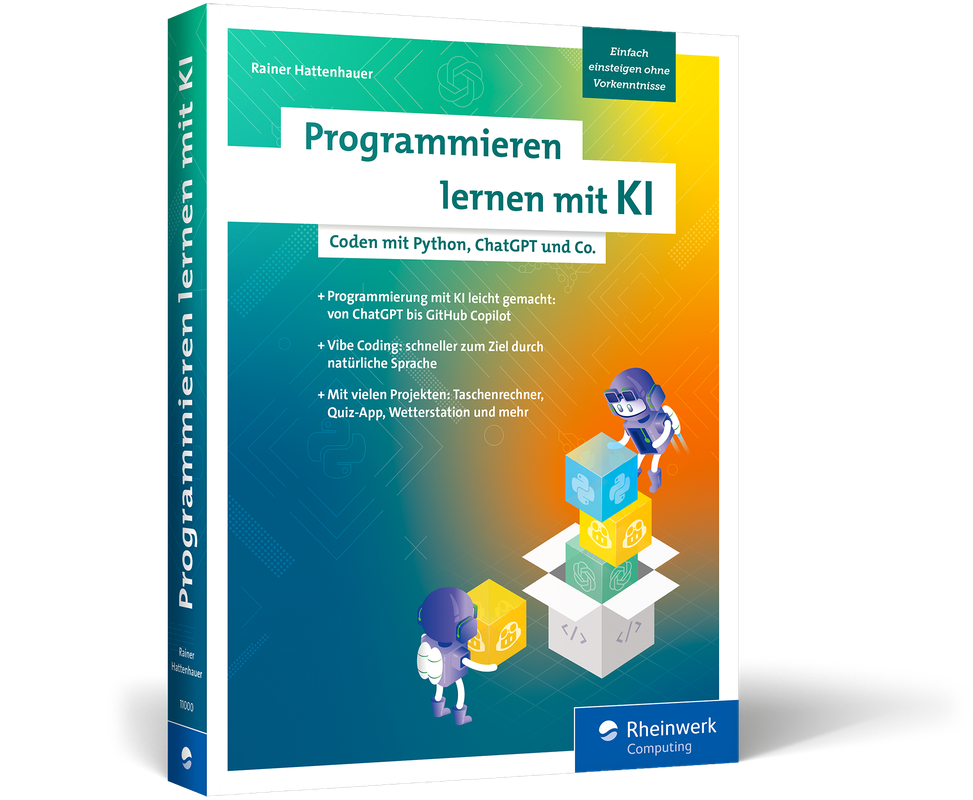
Programmieren lernen mit KI
Programmierung mit KI leicht gemacht – von der Idee zum funktionierenden Programm! Dieses Buch zeigt dir, wie du mithilfe von KI-Tools wie ChatGPT & Co. ganz einfach programmieren lernst, auch ohne Vorkenntnisse. Rainer Hattenhauer verbindet klassische Programmierthemen mit modernen KI-Methoden. Lerne die wichtigsten KI-Assistenten kennen, richte deine Entwicklungsumgebung ein und starte direkt mit ersten Projekten durch: vom einfachen Taschenrechner über Datenverarbeitung bis hin zu grafischen Benutzeroberflächen. Schritt für Schritt steigerst du die Komplexität und erweiterst dein Coding-Know-how. Fortgeschrittene Themen wie Objektorientierung, Datenbanken, App-Entwicklung, Hardware-Projekte und ein Ausflug ins Machine Learning runden das Werk ab.Aus dem Inhalt:KI-gestützter Einstieg ins ProgrammierenDie perfekte Entwicklungsumgebung einrichtenErste Programme schreiben (lassen)Mit Variablen, Verzweigungen und Schleifen arbeitenDaten verarbeiten und visualisierenGUIs und Grafiken programmierenHardware-Projekte mit dem Funduino CubeFortgeschrittene Themen: OOP, Datenbanken, AppsAusflug ins maschinelle LernenTroubleshooting und Optimierung mit KILeseprobe (pdf-Link)

Programmieren mit PHP
Programmieren mit PHP: Einstieg in die serverseitige Webprogrammierung. Erstauflage aus Oktober 2025.Dieses Einsteigerbuch zu PHP vermittelt grundlegende Konzepte und Techniken der Programmiersprache PHP. Leser lernen, wie man einfache Webanwendungen entwickelt, HTML mit PHP dynamisch kombiniert und Formulardaten verarbeitet. Quasi nebenbei wird damit auch ein grundlegender Einstieg in die allgemeinen Konzepte der Programmierung vermittelt.Das Buch führt durch grundlegende Syntax, Variablen, Kontrollstrukturen (wie Schleifen und Bedingungen), Funktionen sowie den Umgang mit Datenbanken (meist mit MySQL). Es bietet praktische Übungen, um Leser Schritt für Schritt in die Erstellung interaktiver Webseiten und die Verarbeitung von Benutzereingaben einzuführen. Am Ende ist der Leser in der Lage, einfache, datenbankgestützte Webanwendungen zu programmieren.Aus dem Inhalt: Voraussetzungen Einführung in PHP Was ist PHP? Das Konzept von PHP Historie und die verschiedenen Versionen Die aktuelle Version 8 Informationen zu PHP Notwendige Software Installation und Konfiguration Editoren und IDEs Webserver direkt installieren und verwalten PHP direkt installieren PEAR MySQL/MariaDB direkt installieren und verwalten XAMPP – ein Rundumsorglospaket Mit XAMPP arbeiten PHP-Code in Webseiten HTML-Grundlagen Grundgerüst einer Webseite Ressourcen in eine Webseite einbinden Webseiten über den Webserver aufrufen SSI und PHP-Skripte über den Webserver aufrufen und ausführen Webseiten mit PHP generieren bzw. PHP in HTML einbinden Aufruf von PHP-Dateien über den Browser Daten im Browser ausgeben Übungen und Praxis CGI und die Datenübergabe zum Client Grundlagen des Datenverkehrs im WWW CGI GET und POST Übungen und Praxis Grundlegende Sprachelemente in PHP Codieren von PHP-Skripten Anweisungsarten und Techniken Kommentare Literale und Token Interpretation und andere Varianten der Übersetzung Grundlagen zur Fehlersuche in PHP-Skripten Übungen und Praxis Datentypen, Variablen und Operatoren Datentypen Variablen Konstanten Vordefinierte Variablen und Konstanten Die verfügbaren Operatoren in PHP Übungen und Praxis Kontrollstrukturen Kontrollstrukturen einsetzen Die verschiedenen Arbeiten Entscheidungsanweisungen Schleifen Sprunganweisungen Übungen und Praxis Funktionen Was sind Funktionen bzw. allgemein Unterprogramme? Standardfunktionen in PHP Funktionen erstellen und aufrufen Mit Funktionen arbeiten Der Gültigkeitsbereich von Variablen PHP-Dateien einbinden mit include() und require() Übungen und Praxis Arrays Grundlagen zu Arrays Indizierte eindimensionale Arrays Assoziative eindimensionale Arrays Arrays mit der Kurzschreibweise erstellen Mehrdimensionale indizierte Arrays Mehrdimensionale assoziative Arrays Array-Funktionen Arrays und Schleifen (foreach und Iterationsfunktionen) Superglobale Arrays Übungen und Praxis Mit Formularen arbeiten Interaktion mit PHP Formulare mit PHP auswerten Übungen und Praxis Externe Dateien Externe Dateien nutzen Dateien öffnen, lesen und schließen Verschiedene Datei-Funktionen Allgemeine Datei- und Verzeichnisoperationen Übungen und Praxis Zeichenketten-Funktionen Unterschiedliche Aktionen bei Zeichenketten Arrays und Zeichenketten Reguläre Ausdrücke nutzen Übungen und Praxis Umgang mit Datum und Uhrzeit Datum und Zeit ermitteln Datum und Zeit formatieren Datumsangabe anpassen Verschiedene Datum- und Zeitfunktionen Übungen und Praxis Umgang mit Sessions Was sind Sessions? Cookies & Co. Mit Sessions arbeiten Session starten bzw. fortsetzen Daten in einer Session speichern Daten einer Session abrufen Session-Daten und Session löschen Übungen und Praxis Kurzeinblick in OOP Was ist OOP? Das Verhältnis von PHP zu OOP Objekte in PHP verwenden Übungen und Praxis Grundlagen des Datenbankzugriffs mit MySQL/MariaDB Was ist ein DBMS? Die Datenbanken MySQL und MariaDB Zugriff mit dem DB-Client auf Konsolenebene MySQL-Datenbanken mit phpMyAdmin verwalten PHP und der Zugriff auf MySQL/MariaDB mysql vs mysqli vs PDO MySQL-Abfragen Rückgabe aus MySQL-Abfrage auswerten Formulardaten in einer MySQL-Datenbank speichern Übungen und Praxis Quellen Stichwortverzeichnis

Programmieren lernen
Grundlagen für Studium und Beruf - praxisnah und sprachunabhängig.Sie möchten programmieren lernen, wissen aber nicht, mit welcher Sprache Sie beginnen sollen? Dieses Buch bietet Ihnen einen leicht verständlichen Einstieg in die Welt der Programmierung – ganz ohne Vorkenntnisse. Statt sich auf eine bestimmte Programmiersprache zu beschränken, vermittelt es Ihnen die grundlegenden Konzepte, die in jeder modernen Sprache von Bedeutung sind.Sie lernen Schritt für Schritt die Funktionsweise von Variablen, Schleifen, Verzweigungen, Arrays, Datentypen sowie die Prinzipien der objektorientierten Programmierung mit Klassen und Vererbung kennen. Anhand von einfachen Codebeispielen werden die Inhalte anschaulich erläutert und lassen sich mühelos jede Sprache übertragen.Unabhängig davon, für welche Sprache Sie sich entscheiden, legen Sie mit diesem Buch ein solides Fundament, um Ihre Programmierkenntnisse in der Praxis einzusetzen. Aus dem Inhalt: Grundlagen aller modernen Programmiersprachen Daten abbilden: Variablen, Datentypen, Arrays und Collections Berechnungen und logische Operatoren Programmfluss kontrollieren: Schleifen, Verzweigungen und Funktionen Objektorientierte Programmierung: Klassen, Objekte und Vererbung Entwicklungsumgebung und Fehlersuche Programmieren in der Praxis Entscheidungshilfe für die erste Programmiersprache Übungen mit Lösungen im Anhang Leseprobe (PDF-Link) Über den Autor:Nach fast zwei Jahrzehnten als Programmierer betreut Andreas Hofmann als Scrum Master Softwareteams in der agilen Softwareentwicklung.

Mastering Text Analytics
This book is a comprehensive guide to mastering Natural Language Processing (NLP), a rapidly growing field in AI-powered text and data analytics. It equips you with tools and techniques to extract valuable insights from both structured and unstructured data, enabling you to uncover insights beyond the reach of traditional data analysis methods and stay competitive in this evolving domain.The book starts with foundational concepts, such as collecting and extracting data for NLP projects, before progressing to advanced topics like applications of transfer learning in NLP and Large Language Models (LLMs). Each chapter emphasizes real-world applications and includes practical case studies to ensure the knowledge is immediately applicable. Throughout the book, readers will find Python code demonstrations, hands-on projects, and detailed explanations of key concepts. Special features include business use cases from industries like healthcare and customer service, practice exercises to reinforce learning, and explorations of emerging NLP technologies. These elements make the book not only informative but also highly engaging and interactive.By the end of the book, the reader will have a solid foundation in Generative AI techniques to apply them to complex challenges. Whether you’re a budding data scientist or a seasoned professional, this guide will help you harness the power of AI-driven text and data analytics effectively.What you will learn:* Understand NLP with easy-to-follow explanations, examples, and Python implementations.* Explore techniques such as transformers, word embeddings, and pragmatic analysis in real-world contexts.* Work with real-world datasets and apply pre-processing, tokenization, and text extraction using NLP libraries.* How to build complete NLP pipelines from data collection to model implementation, including sentiment analysis and chatbots.* Learn state-of-the-art methods like deep learning techniques in NLP, large language models (LLMs), and zero-shot learning in NLP.Who this book is for:This book is tailored for data scientists, machine learning engineers, AI practitioners, and software developers seeking to learn NLP techniques and apply them to solve problems.Chapter 1. Natural Language Processing: An Introduction.- Chapter 2. Collecting and Extracting the Data for NLP Projects.- Chapter 3. NLP Data Preprocessing Tasks Involving Strings & Python Regular Expressions.- Chapter 4. NLP Data Preprocessing Tasks with nltk.- Chapter 5. Lexical Analysis.- Chapter 6. Syntactic and Semantic Techniques in NLP.- Chapter 7. Advanced Pragmatic Techniques and Specialized Topics in NLP.- Chapter 8. Transformers, Generative AI, & LangChain.- Chapter 9. Advancing with LangChain & OpenAI.- Chapter 10. Case Study on Symantec Analysis.